The Elephant and Donkey in the Room: Time-Varying Effects of Political Dissimilarity on Social Interactions at Work During U.S. Elections
Abstract
Political polarization is recognized as a global risk. Although emerging studies on political dissimilarity at work highlight important implications for how employees behave and interact, findings are at times inconsistent. To provide a more nuanced understanding of when and why political dissimilarity disrupts workplace interactions, we draw on the social identity approach and threat processing to examine how political dissimilarity shapes perceptions of work relationships and behavior before and after election events. Across three studies, we demonstrate that political dissimilarity’s effects depend on political macro events and thus become temporally activated. Study 1, an experience sampling field study during the 2020 U.S. presidential election, showed no significant impact of political dissimilarity on negative interpersonal interactions before the election, but significance emerged on election day and persisted for six days after the election. In Study 2, an online experiment during the 2022 U.S. midterm elections, we found that actual political dissimilarity indirectly influenced negative interpersonal interactions via reduced social mindfulness after the election but not beforehand. Study 3, a longitudinal experiment over four weeks during the 2024 U.S. presidential election, replicated the election effect, demonstrating that these effects persisted for at least two weeks and were mediated by cognitive (i.e., perspective-taking) and affective (i.e., empathic concern) subdimensions of social mindfulness. Our findings highlight political orientation as a critical dimension of workplace dissimilarity. Although its impact may be subdued, it becomes pronounced during macro-political events, shaping workplace interactions in significant ways, with the political dissimilarity effects being more easily reactivated in the postelection phase.
Funding: Data collection was partially supported by an Add-on Fellowship for Interdisciplinary Economics and Interdisciplinary Business Administration from the Joachim Herz Foundation, awarded to M. Reinwald. P. Bamberger’s involvement in this project was supported by a grant from the Henry Crown Institute of Business Research in Israel.
Supplemental Material: The online appendices are available at https://doi.org/10.1287/orsc.2024.18538.
Introduction
In recent years, political debates have become more polarized in many democratic societies, such as the United States (Iyengar and Westwood 2015), the United Kingdom (Iyengar et al. 2012), and other European countries (Röllicke 2023, Wagner 2024). Indeed, political polarization is seen as one of the most significant global risks (World Economic Forum 2024). The workplace is not immune to such polarization. Although individuals often seek political similarity in private relationships (Gordon et al. 2025), the workplace provides “greater exposure to people of dissimilar perspectives than does discussion in contexts such as the family, the neighborhood, or the voluntary association” (Mutz and Mondak 2006, p. 140). This exposure creates the potential for political dissimilarity—the degree to which a focal employee differs from coworkers regarding political orientation—to shape work interactions and work outcomes (Swigart et al. 2020).
Researchers are only just beginning to examine this important phenomenon, yet initial evidence suggests its significance. An individual’s political dissimilarity from their coworkers has been linked to lower positive attitudes (Henderson and Jeong 2022), greater workplace incivility and reduced well-being (He et al. 2019), negative affect after overhearing political conversations (Rosen et al. 2024), and reduced trust in politically dissimilar coworkers (Solomon 2025). Together, these studies highlight that political dissimilarity can be a consequential, if often overlooked, form of workplace dissimilarity.
However, the growing literature on political dissimilarity at work faces a critical challenge because research also reports inconsistent findings. For example, He et al. (2019) found that political dissimilarity during the 2012 U.S. election was linked to antisocial behavior, whereas Henderson and Jeong (2022) did not observe such effects outside an election period. Mixed findings of political dissimilarity also extend outside the workplace, such as in romantic relationships (see Gordon et al. (2025) for a review). These inconsistencies do not imply that political dissimilarity is unimportant; rather, they suggest that its effects may be contingent, emerging more strongly under certain boundary conditions and through specific mechanisms. This puzzle underscores the need for a more nuanced understanding of when and why political dissimilarity disrupts workplace interactions.
In essence, scholars have primarily assumed that the impact of political dissimilarity on behavior remains stable over time (Swigart et al. 2020) rather than considering the possibility that macro events may bring political dissimilarity to the forefront at work. Politically dissimilar individuals may try to suppress their political identity at work to self-protect and instead draw on other relevant social identities in the workplace (e.g., professional identity, team identity, organizational identity) (Ashforth and Johnson 2001). This may, however, be impossible during macro events such as elections, protests, the passage of controversial laws, government breakdowns, or politically motivated violence. Accordingly, events outside the organization (Leigh and Melwani 2019) may heighten the salience of employees’ political orientation, thereby shaping perceptions and behavior at work (Roth et al. 2017). The potential importance of such events introduces a temporal element into the study of political dissimilarity. Unfortunately, both dynamic accounts of political dissimilarity and multilevel approaches that account for political macro-events are largely absent in dissimilarity research more broadly (van Dijk et al. 2017, Nkomo et al. 2019) and specifically in political dissimilarity research. Given the rise of political polarization and the potential for increasing government instability in some democratic societies, the frequency and intensity of political events are likely to grow (World Economic Forum 2024). Without a better understanding of when and how political dissimilarity becomes relevant in the workplace, organizations may overlook its consequences and misattribute the drivers of negative interactions.
To address this issue, we draw from the social identity approach (Haslam 2011) and insights on threat processing (LeDoux 2015) to develop a multilevel model that examines how election events amplify the prominence of political dissimilarity in daily work interactions. More specifically, we theorize that elections as macro events increase identity threat for politically dissimilar individuals and thereby reduce social mindfulness—the tendency to be thoughtful of others and consider their needs before making decisions (van Lange and van Doesum 2015). When events heighten identity threats among politically dissimilar individuals, the experienced threat reduces capacity for socially mindful behavior, leading to increased negative interpersonal interactions. We test our model across a series of three studies.
Our work extends research in several ways. First, we contribute to dissimilarity research by examining political dissimilarity among coworkers as an understudied construct (Johnson and Roberto 2018, Swigart et al. 2020). Unlike surface-level dissimilarity, such as gender and ethnicity, political dissimilarity represents a deeper, more complex form of dissimilarity. Political dissimilarity can be easily suppressed (Clair et al. 2005), particularly because it is typically not directly relevant to work tasks. However, political events like elections heighten the salience of political identities, bringing them to the forefront. Thereby, we address calls in diversity research for multilevel studies that integrate macro political contexts (Joshi and Neely 2018, Nkomo et al. 2019).
Second, we offer a novel perspective on the temporal element in political dissimilarity effects. Although our first contribution emphasizes the context-dependent nature of political dissimilarity, our second contribution focuses on its temporal dynamics. We explain why prior studies have reported inconsistent effects of political dissimilarity on employee outcomes. By taking a temporal perspective, our study extends previous work (van Dijk et al. 2017, Reinwald and Kunze 2020) that emphasized gradual change (e.g., via contact or persistent discrimination). In contrast, we show that dissimilarity effects can also shift rapidly in response to macro events.
Third, we identify social mindfulness (van Lange and van Doesum 2015) as an important mechanism that drives the temporal effects of political dissimilarity on interpersonal interactions. By highlighting this subtle, yet impactful psychological process, we offer new insights into how identity-threatening macro events influence interactions with dissimilar others. Specifically, we enrich prior social identity research by highlighting that negative behaviors toward politically dissimilar others are not necessarily targeted to deliberately hurt or differentiate from the outgroup (Hewstone et al. 2002, Dovidio and Gaertner 2010). Instead, negative interpersonal interactions occur due to a less deliberate shift in attention to oneself, making individuals less mindful of others’ needs.
Theoretical Background
Political Dissimilarity in the Workplace
Political orientation is conceptualized as a unidimensional construct that distinguishes between “left/liberal and right/conservative” (Kivikangas et al. 2021). In contemporary politics, “being left” or “being right” refers to the question of what goods and services should be provided by the state (McDonald et al. 2007). For instance, being more on the left often entails greater support for government involvement in providing goods, services, and social welfare (e.g., healthcare, education, and housing) (McDonald et al. 2007). Parties, such as the Democratic Party and the Republican Party in the United States, are the most meaningful social entities on the left-right spectrum. Hence, we focus on political orientations reflecting an individual’s affiliation with a political group. Our work reflects this binary nature of partisan affiliation in the United States, as past research suggests that individuals primarily identify with either the Democratic or Republican Party. Even self-identified independents tend to lean toward one of these parties, and their behavior is often indistinguishable from that of self-identified partisans (Keith et al. 1992, Hawkins and Nosek 2012).
Building on dissimilarity research (Chattopadhyay 1999), we define political dissimilarity as the degree to which the focal employee differs from immediate coworkers regarding political orientation. Accordingly, political dissimilarity can be described as an individual-within-the-group concept (Klein et al. 1994), focusing on a person’s difference from coworkers and its linkage to that person’s outcomes. Research suggests that people have a generally accurate perception of other people’s political orientation at work and their political dissimilarity relative to their immediate coworkers. According to a survey (SHRM 2019), 42% of U.S. employees have personally experienced political disagreement in the workplace, and 44% witnessed or observed political disagreement. Yet, even when employees do not talk about political views, political orientation can manifest in visible life choices, purchasing decisions, and work-related behavior (Carney et al. 2008, Baumgaertner et al. 2018), making it perceptible to others, including through subtle cues such as office decoration and organization. Conservative offices have been found to be “more conventional, less stylish, and less comfortable in comparison with liberal offices” (Carney et al. 2008, p. 832). Consequently, even without explicit political discussions, employees infer colleagues’ political orientations from these observable cues.
Importantly, impressions of colleagues’ political orientations in most workplaces are formed based on general cues rather than extensive political discussions. Therefore, we focus on the dissimilarity between a focal individual’s party affiliation and that of their colleagues rather than the precise ideological distance between their political positions. This emphasis on general political dissimilarity is rooted in social identity theory, which highlights broad distinctions between in- and outgroup members as drivers of dissimilarity outcomes (Haslam 2011). In the workplace context, political dissimilarity is most salient when individuals perceive themselves as belonging to distinct political groups (i.e., Democrat versus Republican) rather than through subtle variations in ideological stance.1
Political dissimilarity is distinct from other forms of dissimilarity. Although surface-level attributes like gender or ethnicity are stable, easily visible, and thus persistently salient (Harrison et al. 1998), political dissimilarity is less easily detectable and, thus, potentially more context dependent. Still, when activated, political dissimilarity can evoke strong responses as political dissimilarity reflects deeply ingrained ideological beliefs about societal values and individuals often infer negative qualities such as selfishness, hypocrisy, closed-mindedness, or a lack of trustworthiness and morality from political differences (Iyengar et al. 2012, Solomon 2025). Moreover, political dissimilarity—unlike other work-related deep-level dissimilarities, such as differences in personality or experiences—may initially appear less relevant to organizational contexts due to the established “no politics at work” policy in many workplaces (Swigart et al. 2020). However, its relevance may become pronounced during macro-political events, where heightened identity salience can intensify polarized interactions.
Political Dissimilarity and Election Events
The social identity approach (Haslam 2011) offers a useful theoretical lens through which to understand political dissimilarity effects and how they are activated. The theory suggests that individuals possess several social identities (e.g., job, organization, demographics), which they use to construe their self-image, the perceptions of others, and ultimately their interpersonal behaviors (Chattopadhyay et al. 2004). These identities vary in salience depending on appropriateness in a given context (Ashforth and Johnson 2001). In the workplace, professional identities and readily observable demographic identities are typically activated and more dominant, whereas deep-level personal identities, such as political identity, remain less salient (Ashforth and Johnson 2001). For politically dissimilar individuals in the workplace, this tendency to suppress political identity is particularly pronounced. Employees in the political minority often avoid emphasizing aspects of their identity that might set them apart to minimize intergroup tensions and avoid threats from the majority (Chattopadhyay 1999). Instead, they emphasize aspects that facilitate association with the majority group and more strongly identify with inclusive categories such as the organization (Ashforth and Johnson 2001, Hogg 2012). This suppression is facilitated by the fact that political identity is often not directly related to tasks and roles, allowing it to remain a subdued element of an employee’s self-concept.
At the same time, dissimilarity research suggests that dissimilarity effects at work are dependent on contextual factors shaping the salience of respective attributes and engagement with the differences (Guillaume et al. 2017). Although contextual factors from within the organization play an important role, we argue that a realistic portrayal of political dissimilarity effects requires the consideration of macro-political events. In their political affiliation model, Roth et al. (2017) suggest that elections, as category-relevant events, heighten the relevance of political orientation in the workplace. Such events underscore the importance of understanding the temporal dimension of interactions among politically (dis)similar coworkers during elections.
Interactive Effect of Political Dissimilarity and Election Events on Interpersonal Interactions
Employees tend to suppress their political identity to avoid intergroup tensions and instead align with more inclusive workplace identities (Kreiner et al. 2006, Leigh and Melwani 2019). However, this shifts when external events heighten the salience of political identity. For more politically dissimilar individuals, any event that heightens the salience of political identity is likely to elicit an identity threat. An identity threat can take different forms and refers to “experiences indicating potential harm to the value, meanings, or enactment of an identity” (Petriglieri 2011, p. 644). This threat is characterized by fears of discrimination, devaluation, or exclusion (Chattopadhyay 1999), with those in the minority being particularly vulnerable (Emerson and Murphy 2014, George et al. 2023).
In the context of political dissimilarity, we argue that an identity threat arises particularly from threats to the enactment of political identity (George et al. 2023). A threat to identity enactment arises when individuals feel constrained in expressing their political orientation either explicitly (e.g., through comments or in discussions) or implicitly (e.g., through visible life choices, purchasing decisions, and work-related behavior linked to a particular political orientation; Carney et al. 2008) due to concerns about potential judgment or exclusion.
We propose that election day itself marks the peak of political identity salience because it serves as the point of closure—the moment when political identity shifts from something fluid to something finalized. Before election day, individuals may still refine, reconsider, or negotiate their political stance. However, once the election concludes, their position is effectively “locked in,” whether they voted or abstained. This closure heightens political self-awareness, solidifies affiliations, and reinforces distinctions between political ingroups and outgroups, making political identity more salient in workplace interactions. For instance, research shows that elections reinforce the connections to political parties (Bølstad et al. 2013) and increase party identification (Dinas 2014). Moreover, election day itself is filled with cues that bring political identity to the forefront: all-day news coverage on polling and results, discussions with (often like-minded) family and friends. These factors combine to make election day the critical moment when political identity peaks. Consequently, employees with politically dissimilar coworkers become more aware of and identify more strongly with their political party, which intensifies the sensitivity to and experience of threats to the enactment of their political identity.
Prior research suggests that threats, such as those induced by political dissimilarity, activate a defensive mindset prioritizing self-preservation (LeDoux 2014, 2015), setting the stage for more negative interactions between coworkers (Emerson and Murphy 2014). More specifically, studies indicate that threats inhibit nonessential physiological systems and activate physiological support systems necessary for defense (LeDoux 2015). This response leads to a narrowed focus on the threat with the tendency to overweight others’ more negative and aversive behaviors (Baumeister et al. 2001). The diversion of cognitive resources toward ensuring one’s own well-being and, accordingly, an inward focus (Gale et al. 2024), sets a context that is ripe for negative social interactions (Brown et al. 2016).
In contrast, in the absence of an election event, political identity is less salient, and employees are less likely to experience identity threat. In the absence of external political triggers, politically dissimilar employees can more easily downplay their political identity and align themselves with a broader, inclusive identity, such as their group or organizational identity (Kreiner et al. 2006), and therefore experience less threat when interacting with politically dissimilar coworkers. Hence, interactions between politically dissimilar coworkers tend to be more neutral, and negative interpersonal interactions are less pronounced.
The presence of an election event moderates the effect of an individual’s political dissimilarity on negative interpersonal interactions, such that dissimilarity results in more negative interpersonal interactions after the election event (versus before).
Social Mindfulness as an Underlying Mechanism
Building on the logic above, we propose that the negative interpersonal actions emerging from political dissimilarity after the election day may stem from a subtle, less deliberate mechanism. The heightened salience of political dissimilarity after an election event creates perceived threats that divert cognitive resources toward self-preservation, leaving fewer resources to recognize and respond to others’ needs (Gale et al. 2024, van Lange and van Doesum 2015). Accordingly, we suggest that social mindfulness serves as a critical mechanism explaining why politically dissimilar individuals are more likely to perceive and engage in negative interpersonal interactions in the aftermath of election events (Figure 1).
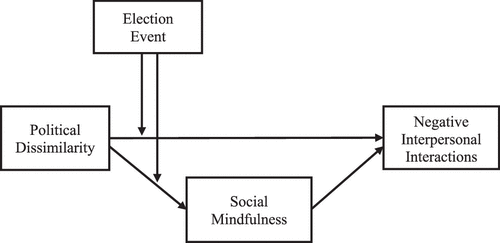
Social mindfulness refers to “being thoughtful of others in the present moment and considering their needs and wishes before making a decision” (van Lange and van Doesum 2015, pp. 18–19). It captures an individual’s ability to take another’s interests into account in one’s own actions and translate social cues appropriately to cultivate a sense of consideration toward others. In other words, social mindfulness is a form of interpersonal benevolence (van Doesum et al. 2021). Although individuals can differ in their general tendency to act in a socially mindful manner, van Lange and van Doesum (2015, p. 19) argue that as a state, social mindfulness can “also be activated by contextual variables,” and that “it is also possible, if not likely, that social mindfulness can be affected by variables linked to cognitive control.” For example, research suggests that social mindfulness is malleable and can be activated through events, interventions, and leader behaviors (Song et al. 2018, Gerpott et al. 2020).
Building on prior literature (Song et al. 2018, Fasbender et al. 2020, Gerpott et al. 2020), we differentiate between two subdimensions of social mindfulness: a cognitive one, perspective-taking (considering and understanding others’ needs), and an affective one, empathic concern (feeling emotional resonance with others’ states). Indeed, van Doesum et al. (2013) emphasize that perspective-taking and empathic concern are related but distinct dimensions of social mindfulness as social mindfulness requires both the “skill to see it” (taking another’s perspective) and the “will to do it” (motivated empathetic concern for others). Without perspective-taking, individuals may fail to notice how their actions affect others, whereas without empathic concern, they may notice but lack motivation to act considerately. Consistent with the view that they are related but nonredundant aspects of the same higher-order construct, the overarching social mindfulness construct showed moderate positive links to both perspective-taking and empathic concern (van Doesum et al. 2013). Taken together, the higher-order construct of social mindfulness provides a parsimonious account of the general construct and a look into the subdimensions, a nuanced account of why perceived political dissimilarity after elections reduces people’s willingness and ability to act in ways considerate of others.
We propose that election events create a threat for politically dissimilar individuals, making them less socially mindful on both the cognitive and affective subdimensions and, in turn, heightening negative interactions. More specifically, consistent with the logic presented earlier, when individuals feel that the enactment of their political identity is at risk, they devote their attention to self-preservation, prioritizing their own well-being and reducing their consideration for others. In other words, the processing of threat increases cognitive load, which van Lange and van Doesum (2015) argue limits the cognitive resources available and their motivation to perceive and act upon the interests of others. Because this inward shift does not require deliberate awareness or planning (Gordon and Arian 2001, LeDoux 2015), our social identity theorizing suggests that when an election event elicits an identity threat, individuals become less able and willing to take others’ perspectives into account in nonjudgmental and compassionate ways.
Moreover, for two main reasons, election events can have lasting effects on politically dissimilar employees, persisting for days or even weeks. First, threat fosters selective information processing, making dissimilar individuals less socially mindful. To the extent that individuals’ processing of social cues is framed and hence guided by threat-based concepts, they are likely to be more self- rather than other-oriented, focusing on their well-being and less mindful of others’ interests and needs. Indeed, a significant body of research suggests that the experience of threat increases individual self-protection, reduces the consideration of others, and biases information search and processing (Frey 1981, Gordon and Arian 2001, Jonas et al. 2003, Yen et al. 2021). For instance, Frey (1981) demonstrates that a threat to individuals’ self-esteem through negative performance feedback makes individuals biased in their information-seeking behavior toward information discrediting the feedback. Similarly, work by Yen et al. (2021) shows that individuals facing existential threats pay more attention to themselves and use more first-person singular pronouns. This selective processing demonstrates that identity threats heighten sensitivity to relevant cues, altering individuals’ social mindfulness and how they process social interactions.
Second, theories of cognitive associative processes suggest that threat stimuli amplify reliance on automatic associations (Morewedge and Kahneman 2010) that undermine social mindfulness. These processes “produce a comprehensive and internally consistent interpretation of the present situation” (Morewedge and Kahneman 2010, p. 436). For instance, Woolum et al. (2017) found that activating rudeness concepts leads to a perception of more rudeness throughout the day. Similarly, politically dissimilar individuals are likely to perceive more negative interactions after elections because threat activates a threat-oriented associative network, which negatively colors subsequent interactions. Therefore, immediately after election events, politically dissimilar individuals are likely to exhibit heightened sensitivity to relevant cues, such as discussions or subtle signals of political affiliation, reinforcing the perception of threat. This sensitivity, likely lasting for several days, prolongs negative interactions.
In turn, decreased social mindfulness likely underlies negative social interactions at work during election events, such as interpersonal conflict. With diminished social mindfulness, individuals become less attentive and less willing to consider others’ feelings and needs, making them more likely to act without regard for the consequences of their behavior (van Lange and van Doesum 2015). Hence, individuals will prioritize their own well-being and outcomes when interacting with others at work at the cost of their coworkers, thereby increasing the potential for interpersonal conflict and uncivil behavior toward others.
The election-moderated political dissimilarity effect on negative interpersonal interactions is mediated by social mindfulness, such that the indirect effect will be stronger when an election event is present (versus absent).
Overview of Studies
We test our model across three studies—a field study and two experiments—with a constructive replication approach.2 Study 1 used a daily experience sampling design over 10 working days around the 2020 U.S. presidential election to examine how perceived political dissimilarity affects negative interpersonal interactions at work (Hypothesis 1). This field study offered high external validity by capturing a wide range of interactions before, during, and after election day but raised concerns about percept-percept bias due to the subjective measure of political dissimilarity and negative interpersonal interactions. In addition, it does not offer insights into the underlying mechanism. To address this and offer enhanced internal validity, Study 2 employed a simulation-based experiment using an ultimatum game, where we manipulated political dissimilarity and used the timing of the survey around the 2022 U.S. midterm elections as an external treatment. This allowed us to focus on a more limited range of negative interpersonal interaction behaviors and offered initial insights into the social mindfulness mechanism (Hypothesis 2). Study 3, a longitudinal field experiment conducted over the course of four weeks during the 2024 U.S. presidential election, further replicated the temporal election effect and offered a rigorous test of the social mindfulness mechanism.
Study 1: Method
Sample and Procedure
We collected data from U.S. employees before and after the U.S. Presidential election on November 3, 2020. Data collection included a general kick-off survey and experience sampling with daily follow-up surveys. The general questionnaire was administered two to nine days before the experience sampling daily surveys. The experience sampling surveys took place on ten consecutive working days between October 29 and November 11. We measured political dissimilarity in the general survey and interpersonal conflict with daily follow-up surveys between 4:00 p.m. and 11:59 p.m. each day. Study 1 received ethical approval from the Ethics Committee at LMU Munich School of Management.
For data collection, we cooperated with a reputable commercial panel provider (Kantar Group), chosen based on their high-quality panel and expertise in recruiting participants for intricate research designs, such as experience sampling. The cooperation with the panel provider allowed us to specify inclusion criteria. To be eligible for the study, participants needed to be U.S. citizens with permanent residence in the U.S., had to be 18 years or older, had to be employed in a full-time job, and had to regularly interact with coworkers. Additionally, participants had to clearly indicate their likely vote preference (i.e., Biden or Trump). Moreover, individuals had to provide their consent in the kick-off survey to be recontacted for the daily follow-up surveys. Participants also had to pass one attention check in the baseline survey to be included in the sample. Of the 309 individuals who met the criteria and completed the baseline survey, 98 did not complete any of the daily surveys and had to be excluded. Every participant with at least one valid daily survey was included in the analyses (Singer and Willett 2003). Moreover, we treated daily observations as missing when an individual did not work or when an individual did not or very rarely interact with their colleagues on a given day. This resulted in a final sample of 147 individuals who provided a total of 966 valid daily surveys (mean of 6.6 daily surveys).
Participants in the sample were predominantly female (59.9%) and White (83.0%). They had an average age of 53.0 years (range = 22–70 years), an average organizational tenure of 13.1 years, and reported working an average of 7.9 hours per day. A large share of respondents (47.6%) worked for companies with more than 250 employees. The highest educational degree obtained by participants was a college degree (43.5%), followed by a postgraduate work/degree (27.9%). Participants were from 34 states, representing a mix of predominantly Democratic-leaning (e.g., California, Maryland), Republican-leaning (e.g., Alabama, Kentucky), and swing states (e.g., North Carolina; Pennsylvania).
Measures
Perceived Political Dissimilarity.
We asked respondents how similar they are to the other work group members in terms of their political orientation (Riordan and Wayne 2008, Kammeyer-Mueller et al. 2011). Participants responded based on a five-point Likert scale ranging from (1) “no one is similar to me” to (5) “everyone is similar to me” (see Online Appendix 1A for the item). We recoded the responses such that higher scores indicate higher levels of dissimilarity. Although perceived dissimilarity does not necessarily match actual dissimilarity, perceptions of dissimilarity have been shown to have similar effects as actual dissimilarity (Cunningham 2007; see also supplementary analyses for Study 2 and 3).
Negative Interpersonal Interactions.
Following prior work (Dimotakis et al. 2011), we operationalized negative interpersonal interactions in terms of perceptions of interpersonal conflict among coworkers. Interpersonal conflict reflects “disagreements that are associated with feelings of animosity” (Meier et al. 2013, p. 144), and as such, a wide range of hedonically negative interpersonal interactions whether implicit or explicit. We adapted the three-item scale on interpersonal conflict by Jehn and Mannix (2001) to capture the extent to which an individual experienced emotional conflict in the workgroup on a daily level (see Online Appendix 1A for items). The mean alpha across daily surveys was 0.95.
Controls.
First, we controlled demographic dissimilarity to ensure that political dissimilarity accounts for effects beyond those established for demographic dissimilarity. We controlled for gender, age, and race dissimilarity using the same measurement approach as for political dissimilarity. Second, we controlled if individuals believed in systematic election fraud during the 2020 U.S. election with three response options: yes (reference category), no, unsure. After the 2020 U.S. Presidential election, Donald Trump refused to concede, alleging widespread and unparalleled voter fraud. By controlling for fraud concerns, we ensure that changes in our outcome are accurately attributed to the election event itself, rather than to emerging suspicions of fraud. We modeled this variable as time-invariant. Third, we controlled for sleep quality as individuals may get less sleep on election nights and thus may change their perceptions and behaviors. Daily sleep quality was assessed using the one-item measure by Gabriel et al. (2018) rated on a five-point scale. Fourth, we controlled for coworker interaction on a daily level to avoid the possibility that interpersonal conflict is confounded with the interaction level. We referenced three items from McAllister (1995) to the day-level and used a seven point response scale (1 = never to 7 = always; average alpha = 0.79). Fifth, we controlled for daily remote work as past work suggests that remote work reduces the likelihood of negative interactions (Doering and Tilcsik 2025). We used a dummy variable capturing whether an individual worked at the company’s facilities on a given day. Finally, we included state dummies to control for unobserved confounds at the state level (Hill et al. 2021).
Analytic Approach
To test if the election event enhances the dissimilarity effect on negative interpersonal interactions (Hypothesis 1), we conducted discontinuous growth curve modeling (DGCM) in a random coefficient framework (Singer and Willett 2003). DGCM is particularly suited to modeling the effects of discontinuous events such as elections. The approach allowed us to model change in interpersonal conflict before and after the election and examine how political dissimilarity shapes the trajectory of conflict.
Given our interest in how the level of negative interpersonal interactions changes with the election event and develops in the postelection period, we used a time coding procedure that allowed us to capture the change in negative interpersonal interactions on election day relative to the pre-election levels and the postelection development. We modeled the negative interpersonal interaction trajectory using a set of three growth variables that allowed us to disentangle the trajectory before the election (time variable), the transition directly following the election (election variable), and the trajectory following the election (postelection trend variable) (Bliese and Lang 2016). First, the time variable captures the baseline rate of change in interpersonal interactions. Second, the election variable captures the vertical transition effect between the election day (November 3) and the next workday (November 4). We coded this variable as zero for all pre-election days and the election day and one for all postelection days. Thus, the election variable measures how the level of negative interpersonal interactions changed with the election. Of note, the election variable in the model is interpreted relative to the time variable and indicates a change relative to the general time trend. Third, the postelection variable captures the relative trend after the election and takes values of zero up to the first day after the election and then increases by increments of one with each postelection day. The coding of the three growth variables is summarized in Online Appendix 1B, and the substantial meaning is graphically illustrated in Online Appendix 1C.
We modeled time-varying variables as level-1 and time-invariant variables as level 2 predictors (Singer and Willett 2003). Continuous time-variant predictors were person-mean centered and continuous time-invariant predictors grand-mean centered. We modeled all hypothesized time-variant effects with random slopes and all time-variant level 1 controls with fixed slopes to reduce model complexity. Analyses were conducted in Stata SE 18.
Study 1: Results
Hypothesis Testing
Table 1 reports the descriptive statistics and correlations, and Table 2 reports the regression results.
|

Table 1. Study 1 Descriptives and Correlations
| Variable | Mean | Standard deviation | 1 | 2 | 3 | 4 | 5 | 6 | 7 | 8 | 9 | 10 | |
|---|---|---|---|---|---|---|---|---|---|---|---|---|---|
| 1 | Interpersonal Conflict | 1.62 | 1.03 | — | 0.11 | 0.05 | −0.17* | 0.20* | −0.04 | 0.07 | −0.01 | 0.35** | 0.04 |
| 2 | Political Dissimilarity | 3.06 | 0.76 | 0.14** | — | 0.25** | 0.16 | 0.10 | −0.05 | −0.01 | −0.23** | −0.27** | −0.00 |
| 3 | Gender Dissimilarity | 2.54 | 0.82 | 0.07* | 0.30** | — | 0.15 | 0.16* | 0.17* | 0.03 | −0.11 | −0.13 | 0.12 |
| 4 | Age Dissimilarity | 3.30 | 0.81 | −0.14** | 0.13** | 0.14** | — | 0.12 | 0.01 | −0.01 | −0.01 | −0.13 | −0.01 |
| 5 | Race Dissimilarity | 2.63 | 1.07 | 0.16** | 0.10* | 0.16** | 0.07* | — | −0.00 | 0.05 | −0.11 | 0.02 | 0.16 |
| 6 | Fraud Belief (No) | 0.61 | 0.49 | −0.02 | −0.03 | 0.16** | 0.00 | 0.02 | — | −0.52** | −0.03 | −0.19* | 0.13 |
| 7 | Fraud Belief (Unsure) | 0.15 | 0.36 | 0.09** | −0.01 | 0.01 | −0.04 | 0.08* | −0.52** | — | −0.09 | 0.04 | 0.00 |
| 8 | Sleep Quality | 3.61 | 0.65 | −0.06 | −0.16** | −0.08* | −0.02 | −0.10** | −0.04 | −0.06 | — | 0.25** | 0.09 |
| 9 | Coworker Interaction | 4.16 | 0.97 | 0.27** | −0.25** | −0.12** | −0.13** | 0.00 | −0.16** | 0.05 | 0.16** | — | −0.16* |
| 10 | Remote Work | 0.53 | 0.45 | 0.04 | 0.05 | 0.10** | −0.06 | 0.12** | 0.11* | 0.01 | 0.09** | −0.13** | — |
Notes. Correlations below the diagonal are at Level 1 (n = 966). To obtain Level 1 correlations involving Level 2 variables, the Level 2 variables were assigned to each Level 1 instance. Because nesting is not accounted for in these correlations, significance tests should be interpreted with caution. Correlations above the diagonal are at Level 2 (n = 147). Level 1 variables were averaged and assigned to each Level 2 instance.
*p < 0.05; **p < 0.01.
|
Table 2. Study 1 Discontinuous Growth Model Results for Hypothesis 1 (Predicting Interpersonal Conflict)
| Variable | Model 1 | Model 2 | Model 3 | Model 4 | Model 5 | |||||
|---|---|---|---|---|---|---|---|---|---|---|
| Coefficient | Standard error | Coefficient | Standard error | Coefficient | Standard error | Coefficient | Standard error | Coefficient | Standard error | |
| Intercept | 1.42*** | 0.27 | 1.42*** | 0.27 | 1.41*** | 0.27 | 1.42*** | 0.27 | 1.66*** | 0.10 |
| Gender Dissimilarity | 0.04 | 0.10 | 0.01 | 0.10 | 0.01 | 0.10 | 0.02 | 0.10 | ||
| Age Dissimilarity | −0.34*** | 0.10 | −0.36*** | 0.10 | −0.36*** | 0.10 | −0.36*** | 0.10 | ||
| Race Dissimilarity | 0.19* | 0.08 | 0.19* | 0.08 | 0.18* | 0.08 | 0.18* | 0.08 | ||
| Fraud Belief (No) | 0.11 | 0.20 | 0.14 | 0.20 | 0.15 | 0.20 | 0.15 | 0.20 | ||
| Fraud Belief (Unsure) | 0.21 | 0.26 | 0.26 | 0.26 | 0.26 | 0.26 | 0.26 | 0.26 | ||
| Sleep Quality | −0.03 | 0.04 | −0.03 | 0.04 | −0.03 | 0.04 | −0.03 | 0.04 | ||
| Coworker Interaction | 0.09* | 0.04 | 0.09* | 0.04 | 0.09* | 0.04 | 0.08* | 0.04 | ||
| Remote Work | −0.10 | 0.09 | −0.10 | 0.09 | −0.10 | 0.09 | −0.10 | 0.09 | ||
| Time | 0.00 | 0.04 | 0.00 | 0.04 | 0.00 | 0.04 | 0.00 | 0.04 | −0.01 | 0.04 |
| Election | −0.01 | 0.12 | −0.02 | 0.12 | −0.00 | 0.12 | −0.01 | 0.12 | 0.02 | 0.12 |
| Post-Election Trend | −0.02 | 0.05 | −0.02 | 0.05 | −0.02 | 0.05 | −0.02 | 0.05 | −0.01 | 0.05 |
| Political Dissimilarity (PD) | 0.16 | 0.11 | 0.07 | 0.12 | 0.14 | 0.11 | 0.04 | 0.12 | ||
| Election × PD | 0.18* | 0.08 | 0.17* | 0.08 | ||||||
| Post-Election Trend × PD | 0.03 | 0.02 | ||||||||
| State dummies included | Yes | Yes | Yes | Yes | No | |||||
| −2 log likelihood | 2,339.66 | 2,337.77 | 2,333.09 | 2,335.87 | 2,389.45 | |||||
| AIC | 2,451.66 | 2,451.78 | 2,449.09 | 2,451.87 | 2,423.45 | |||||
Note. n = 966 at the day level and 147 at the person level.
*p < 0.05; **p < 0.01; ***p < 0.001 (two-tailed).
We first inspected within- and between-person variance components based on intercept-only models. The ICC1 (intraclass correlation coefficient) for interpersonal conflict (ICC1 = 0.65) indicated that the construct varied substantially between persons and within persons across time. Building our DGCM, we first modeled the effects of the three time variables (i.e., time, election, postelection trend) on interpersonal conflict while accounting for the influence of covariates. We specified random effects for the three time variables (Table 2, Model 1). This model fitted the data significantly better (likelihood ratio = 83.27, p < 0.001; ΔAIC = 65.27) than a model where the effects of the three-time variables were not allowed to vary across individuals.3
Hypothesis 1 states that the association between an individual’s political dissimilarity and negative interpersonal interactions varies across time and becomes stronger following the election event. We found that political dissimilarity significantly interacted with the election term both in our default model with controls (coefficient = 0.18, p = 0.03) and the no-control model (coefficient = 0.17, p = 0.03). The interaction effect is illustrated in Figure 2, where we plotted the temporal patterning of interpersonal conflict for different levels of political dissimilarity. To estimate how the dissimilarity effect varies across time (i.e., the vertical distance between the trajectories in Figure 2), we estimated the dissimilarity effect before and after the election. Results show that the dissimilarity effect is not significant (coefficient = 0.07, p = 0.54) before the election event. However, the dissimilarity effect becomes significant (coefficient = 0.25, p = 0.04) following the election event, supporting Hypothesis 1.
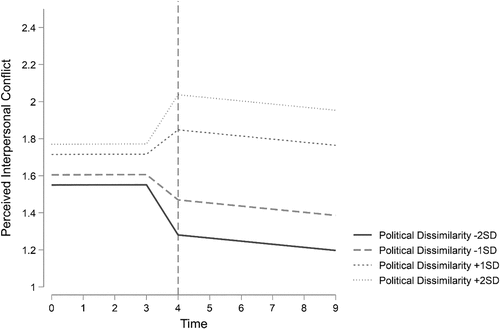
Note. Vertical line indicates the day after the election.
We also find that politically dissimilar individuals perceive higher levels of interpersonal conflict in the observed postelection period relative to the pre-election period. Conversely, politically similar individuals perceive lower levels of interpersonal conflict in the observed postelection period. Figure 2 displays relatively stable perceptions of conflict in the postelection period (i.e., six days after the election). This is statistically confirmed by a nonsignificant postelection trend (coefficient = −0.02; p = 0.72).
To further probe the robustness of the postelection trend in interpersonal conflict, we introduced an interaction term between the postelection trend variable and political dissimilarity to test if the stability of the postelection trend holds for both politically dissimilar and similar individuals. We found no significant interaction (coefficient = 0.03, p = 0.16) and concluded that interpersonal conflict levels remain relatively stable for dissimilar and similar individuals after the initial change with the election event.
Supplementary Analyses
Robustness of the DGCM.
Because growth models can be sensitive to specification choices, we conducted a series of robustness checks of our DGCM. The results, reported in Online Appendix 1D, were consistent with our main findings and support the appropriateness of the DGCM.
Asymmetric Political Dissimilarity Effect.
Our measurement of political dissimilarity does not capture the specific party affiliation of a person. Thus, we examined whether the effect of political dissimilarity is asymmetric (Reinwald and Kunze 2020) by comparing the reactions of Democrats and Republicans to political dissimilarity. The three-way interaction between the election event, political dissimilarity, and party affiliation on conflict was nonsignificant (coefficient = 0.06, p = 0.76). Accordingly, the dissimilarity effect in Study 1 does not notably differ between Democrats and Republicans.
Study 2: Method
Study 2, an online simulation-based experiment with Republicans and Democrats, centered on the political dissimilarity effects around the U.S. midterm elections in November 2022. Study 2 received ethical approval from the Institutional Review Board (IRB) at the Rotterdam School of Management (RSM), Erasmus University. To qualify for the study, participants had to be from the United States, at least 18 years old (current voting age in most states), and affiliated with either the Democratic Party or the Republican Party. We designed the study to identify the causal effect of political dissimilarity before and after an election in a more controlled setting, to measure social mindfulness as the underlying mechanism, and to study actual negative interactions among participants. The study was preregistered on aspredicted (https://aspredicted.org/5PT_MZM).
Sample
The study included 489 participants from Prolific.4 We relied on quota-sampling to recruit an equal number of Democrats and Republicans. On average, participants were 39.07 years old (standard deviation (SD) = 13.69), 49.08% of them identified as women, 79.35% identified as being White, and 71.17% held an associate degree or higher.
Experimental Setting and Procedure
We conducted a 2 (political dissimilarity: high or low) × 2 (election event: yes or no) between-subject experiment. On the starting page of the experiment, we informed participants that they would engage in an online business simulation together with four other team members and that they could earn a bonus based on their decisions and the decisions of their team members. Please refer to Online Appendix 2B for a more detailed overview of the experimental procedure.
At the start of the experiment, we asked participants to indicate their political orientation by choosing a photo that best represents their political orientation. We presented participants with photos of potential voters from the last U.S. election. Four photos (two men, two women) displayed individuals in office environments wearing buttons indicating their affiliation with the Democratic Party, and four photos displayed individuals with buttons and backgrounds indicating their affiliation with the Republican Party (for material, see Online Appendix 2A). Our goal was to provide participants with a sense of choice while maintaining consistency in the team’s composition with respect to the political affiliations of other team members. The inclusion of four pictures per affiliation accounted for variability in participants’ preferences for demographic attributes and reduced the likelihood that participants would focus exclusively on the associated political labels. The other demographic attributes were held constant in all conditions. We used pretested photos with neutral mimics and similar attractiveness ratings (based on 2,514 ratings provided) from the London Faces database (DeBruine and Jones 2021) and randomized the displaying order.
After choosing the picture that best described their political orientation, we informed participants that they were now matched with four other participants, ostensibly connected online and serving as their team colleagues. Next, we provided participants with information on their ostensible team colleagues. To manipulate political dissimilarity, we showed participants their team colleagues’ choices from the political orientation picture task (see the Conditions section). The participants then proceeded to the “team” exercise. We asked them to work on a team simulation (i.e., filler task) and informed them that their “team members” would do the same. In the exercise, participants read a short case of a bookstore and were asked to develop two ideas for increasing the bookstore’s performance (adapted from Hu and Liden (2015)). While allegedly waiting for their team members to finish the task, participants proceeded to the social mindfulness task.
Next, we measured participants’ social mindfulness and asked them to answer demographic questions. Afterward, we informed participants that the automatized creativity rating of their ideas is now in—and that they, together with another member from their “team” did equally well in the bookstore task—and thus both would be eligible for a bonus. We then informed participants that they will be randomly paired with one of their team members in a negotiation task to determine the bonus split. The bonus negotiation task was designed as a single-person ultimatum game with an uncertain pie size (SimanTov-Nachlieli and Bamberger 2021) and was utilized in measuring negative interpersonal interaction. To ensure that participants understood the rules of the ultimatum game, they had to pass three comprehension questions before they could proceed. After the ultimatum game, we measured political orientation and manipulation checks and thanked, debriefed, and informed participants about their bonus pay.
Conditions
We manipulated political dissimilarity in the team and used the timing of the experiment around the midterm elections to manipulate the election event. To manipulate political dissimilarity, we used the photo task at the beginning of the experiment. After indicating their own political orientation through a photo choice, we displayed the picture choices of all four team colleagues. In the high political dissimilarity condition, we displayed photos of people from the other political camp (based on the participant’s choice), whereas participants in the low dissimilarity condition saw pictures of people from their own political camp.
The presence of the election event was manipulated by the timing of the experiment. We filled half of the required sample one week before the midterm elections in 2022 and half of the sample on the day after the election event. Runs completed on the day after the election were classified as treated and runs before the election were classified as nontreated. A general summary of the experimental procedure is provided in Online Appendix 2B.
Measures
Social Mindfulness.
To measure social mindfulness, we utilized the social decision-making paradigm by van Doesum et al. (2013). Following van Doesum et al. (2021), we provided participants with the following instructions: “In this task, we want to learn more about you and your preferences. You will be randomly paired with one person from your team. Imagine that you both get to choose one of the objects we will show you in a minute. There are only a few objects left. Once taken, these will not be replaced. The computer has decided that you always get to choose first.” Participants played 24 trials. Twelve of the trials were social mindfulness trials and the other 12 were control trials. Participants viewed 12 separate categories of products presented in fully randomized order (for an example of one experimental and one control trial, see Online Appendix 2C). In the social mindfulness trials, participants could choose between two identical objects and one object that differed in a single aspect (e.g., two blue baseball caps and one yellow one). The rationale behind the paradigm is that a participant choosing an object of which two are available would still leave all options for the other team member (e.g., a blue and a yellow cap). In contrast, a participant choosing the unique object (e.g., the yellow cap) would leave the other participant no option other than taking or leaving the remaining object (e.g., the blue cap). A choice leaving the other participant with options was coded as a mindful choice (one) and a decision leaving no choice as unmindful (zero). The social mindfulness score was calculated as the share of socially mindful choices among all 12 experimental trials. The study material was taken from van Lange and van Doesum (2015).
Negative Interpersonal Interaction.
To measure negative interactions with peers, we drew on the single-person ultimatum game with uncertain pie size (SimanTov-Nachlieli and Bamberger 2021). This form of the ultimatum game asks each participant to play against one of the team members in splitting the bonus. Participants were informed that the team member will be someone different from the team member involved in the social mindfulness task and they would be randomly assigned to one of two roles: the proposer or the responder (in fact, all participants were proposers). The proposer suggests a split of the available bonus between both participants and the responder can either accept or reject the suggestion. If accepted, both players receive the proposed amount; if rejected, both receive nothing. Only the proposer knows the actual amount of bonus available to be divided between the two players. The proposer can decide if (s)he communicates the actual amount of bonus available or lies about the amount to increase the likelihood that the responder accepts a lower bonus. For instance, a proposer could tell that there is $4 available to be divided when, in fact, $10 is available and accordingly suggest a “fair” split of $2 per partner. If this suggestion is accepted, the proposer would receive $8, and the responder would receive $2. Following SimanTov-Nachlieli and Bamberger (2021), we calculate two interrelated measures to capture negative interpersonal behavior: the deception by the participant, calculated as the total amount of bonus available ($10) minus the proposer’s claim (lie-sum) and the amount of money the proposer decided to forward to the responder (forward-sum). For instance, a proposer who tells the other participant that they have $4 (instead of the actual $10) to split and suggests forwarding $2 has a lie-sum of $6 and a forward-sum of $2.
Manipulation Check.
We assessed the effectiveness of our political dissimilarity manipulation at the end of the experiment using three items (α = 0.93) rated on a five-point scale (see Online Appendix 2D). We found that participants in the dissimilarity condition rated dissimilarity significantly higher (MDissimilar = 4.32, SDDissimilar = 0.91) compared with the similarity condition (MSimilar = 1.60, SDSimilar = 0.67; F [1, 487] = 1405.84, p < 0.001). We also checked at the end of the experiment if the timing of the survey influenced the saliency of the election event. We used three items (see Online Appendix 2D) rated on a five-point Likert scale (α = 0.95). For individuals who participated the day after the election, we observed higher salience of the election compared with individuals who participated before the election (MBeforeElection = 3.56, SDBeforeElection = 1.20; MAfterElection = 3.82, SDAfterElection = 1.00; F [1, 487] = 6.90, p = 0.009).
Analytic Approach
To test the conditional indirect effect of political dissimilarity, we used linear regression analysis in Stata 18 SE and used the Monte Carlo method (Selig and Preacher 2008) with 20,000 repetitions to calculate 95% confidence intervals for the conditional indirect effects. We dummy-coded our dissimilarity (1 = dissimilarity; 0 = similarity) and election variable (1 = election; 0 = no election).
Study 2: Results
Hypothesis Testing
Table 3 displays descriptives and correlations, and Tables 4 and 5 present the regression results. Hypothesis 1 proposes that the election event moderates the political dissimilarity effect on negative interpersonal interactions. We observed an interaction effect on forward-sum significant at the 10% level (coefficient = −0.50, p = 0.08) but not for lie-sum (coefficient = 0.66, p = 0.22). This reveals mixed support for Hypothesis 1.
|
Table 3. Study 2 Descriptives and Correlations
| Variable | Mean | Standard deviation | 1 | 2 | 3 | 4 | |
|---|---|---|---|---|---|---|---|
| 1 | Political Dissimilarity | 0.51 | 0.50 | ||||
| 2 | Election Event | 0.47 | 0.50 | −0.01 | |||
| 3 | Social Mindfulness | 0.62 | 0.25 | −0.10* | 0.02 | ||
| 4 | Lie-sum | 1.93 | 2.98 | 0.10* | −0.01 | −0.23** | |
| 5 | Forward-sum | 4.14 | 1.59 | −0.08 | 0.01 | 0.23** | −0.79** |
Note. n = 489.
*p < 0.05; **p < 0.01.
|
Table 4. Study 2 Regression Results for Hypothesis 1
| Variable | Model 1: Lie-sum | Model 2: Forward-sum | ||
|---|---|---|---|---|
| Coefficient | Standard error | Coefficient | Standard error | |
| Intercept | 1.79*** | 0.26 | 4.13*** | 0.14 |
| Political Dissimilarity | 0.31 | 0.37 | −0.02 | 0.20 |
| Election Event | −0.39 | 0.38 | 0.29 | 0.20 |
| Political Dissimilarity × Election Event | 0.66 | 0.54 | −0.50† | 0.29 |
Note. n = 489.
†p < 0.10; *p < 0.05; **p < 0.01; ***p < 0.001 (two-tailed).
|
Table 5. Study 2 Regression Results for Hypothesis 2
| Variable | Model 1: Social mindfulness | Model 2: Lie-sum | Model 3: Forward-sum | |||
|---|---|---|---|---|---|---|
| Coefficient | Standard error | Coefficient | Standard error | Coefficient | Standard error | |
| Intercept | 0.61*** | 0.02 | 3.28*** | 0.39 | 3.36*** | 0.21 |
| Political Dissimilarity | −0.00 | 0.03 | 0.49† | 0.26 | −0.18 | 0.14 |
| Election Event | 0.06* | 0.03 | ||||
| Political Dissimilarity × Election Event | −0.10* | 0.05 | ||||
| Social Mindfulness | −2.58*** | 0.53 | 1.42*** | 0.28 | ||
Note. n = 489.
†p < 0.10; *p < 0.05; **p < 0.01; ***p < 0.001 (two-tailed).
Hypothesis 2 suggests that social mindfulness mediates the conditional effect of political dissimilarity on negative interpersonal behavior toward peers, such that the indirect effect is stronger after an election. We found a significant interaction effect between political dissimilarity and the election dummy on social mindfulness (coefficient = −0.10; p = 0.02). The interaction pattern is plotted in Figure 3. In line with our prediction, planned contrasts tests (with Bonferroni correction) showed that before the election there was no significant difference in social mindfulness between the high and low dissimilarity condition (contrast = −0.00, standard error (SE) = 0.03, 95% CI [−0.08, 0.08]). However, after the election, the high dissimilarity group reported significantly lower social mindfulness relative to the low dissimilarity group (contrast = −0.11, SE = 0.03, 95% CI [−0.19, −0.02]). Also, simple slope analyses revealed that political dissimilarity reduces social mindfulness after an election (coefficient = −0.11, SE = 0 0.03, p = 0.001) but not before an election (coefficient = −0.00, SE = 0.03, p = 0.92).
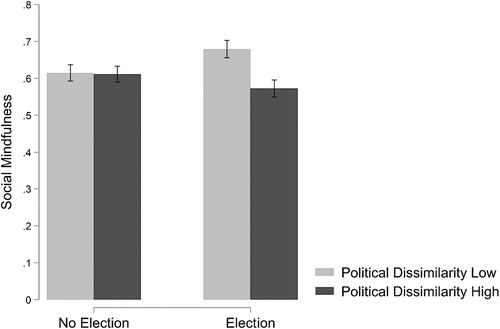
Note. Error bars are standard errors.
We then tested the effect of social mindfulness on the two indicators of negative social interactions (i.e., lie-sum, and forward-sum). We found that social mindfulness significantly reduces the extent to which participants lie about the actual bonus to be split (coefficient = −2.58; p < 0.001) and increases the amount of money forwarded to the peer (coefficient = 1.42; p < 0.001). In the last step, we tested for conditional indirect effects. We found that political dissimilarity has significant indirect effects on participants in the election condition (estimate for lie-sum: coefficient = 0.28, 95% CI [0.10, 0.50]; estimate for forward-sum: coefficient = −0.15, 95% CI [−0.27, −0.05]) but does not exhibit significant effects for participants in the nonelection condition (estimate for lie-sum: coefficient = 0 0.01, 95% CI [−0.15, 0.17]; estimate for forward-sum: coefficient = −0.00, 95% CI [−0.09, 0.08]). Accordingly, we find support for Hypothesis 2.
Supplementary Analyses
Asymmetric Political Dissimilarity Effect.
Like in Study 1, we examined whether the effect of political dissimilarity is asymmetric by comparing the reactions of Democrats and Republicans to political dissimilarity. The three-way interaction between the election event, political dissimilarity, and party affiliation on social mindfulness was nonsignificant (coefficient = 0.05, p = 0.61). This suggests that the observed dissimilarity effect in Study 2 is symmetric, where Democrats and Republicans show a similar reduction in social mindfulness with the election when being dissimilar.
Continuous Political Dissimilarity Effect.
In addition, we examined the effect of political dissimilarity beyond the binary high versus low experimental condition. In the experiment, we manipulated objective political dissimilarity by randomly assigning individuals to either a similarity or dissimilarity condition. To ensure that our findings were not artifacts of categorizing political dissimilarity into two extreme conditions, we included a subjective measure of perceived political dissimilarity, adapted from Study 1. Participants rated the item, “How similar is your political orientation to that of the other members of your team?” on a five-point scale ranging from very dissimilar (one) to very similar (five). This approach allowed us to test for a more continuous effect of perceived political dissimilarity. Consistent with our hypothesis, we recoded the item so that higher scores indicated greater perceived dissimilarity. When using this measure, we again found significant interactions between the election term and political dissimilarity on social mindfulness (coefficient = −0.03, p = 0.04).
Party Identification as Moderator.
We considered party identification as a moderator of the political dissimilarity effect to test if political dissimilarity effects are more pronounced for individuals who strongly identify with their political party. To capture party identification, we used the five-item identification scale by Mael and Ashforth (1992) (α = 0.83). The two-way interaction between political dissimilarity and party identification (coefficient = 0.03, p = 0.24) and the three-way interaction with the election event (coefficient = 0.07, p = 0.21) were nonsignificant. This suggests that the effects of political dissimilarity are driven more by the recognition of broad group differences (e.g., belonging to opposing political parties) than by the strength of an individual’s attachment to their political group.
Study 3: Method
Study 3, a field experiment, was conducted over four weeks around the U.S. Presidential elections in November 2024. Study 3 was reviewed and approved by the IRB at RSM. To qualify for the study, participants had to be from the United States, at least 18 years old (the current voting age in most states), and affiliated with either the Democratic Party or the Republican Party. As elements from the experiment in Study 2 were retained, we only invited participants who had not already participated in Study 2. The study was designed to replicate the causal effect of political dissimilarity before and after an election, measure social mindfulness using alternative operationalizations due to weaknesses in the paradigm used in Study 2, and examine the temporal effects of dissimilarity on negative interactions among participants over a longer period, extending up to two weeks after the election. The study was preregistered on aspredicted (https://aspredicted.org/cp8j-nk8j.pdf).
Sample
The final sample included 469 participants from Prolific.5 The participants provided 1,719 weekly responses (3.7 per person). We relied on quota sampling to recruit a relatively equal number of Democrats and Republicans. On average, participants were 40.34 years old (SD = 12.73), 63.11% identified as women, 66.95% identified as white, and 79.74% held an associate degree or higher.
Experimental Setting and Procedure
Participants were randomly assigned to one of two political dissimilarity conditions: a team with members politically dissimilar to themselves or a team with politically similar members. The election treatment was determined by the timing of the experiment, with participants completing tasks before the U.S. Presidential election on November 5, 2024 (no election event), and after the election (election event). Each participant completed one experimental trial prior to the election (October 30) and three additional trials, spaced one week apart, following the election.
Participants were hired as gig workers to work on a collaborative work task for cite-helper.com, a fictional startup developing a citation management platform. To enhance experimental realism, we created a professional-looking website for cite-helper.com, detailing the company’s mission, goals, and background (see Online Appendix 3C). This setup was designed to immerse participants in a realistic work scenario to foster engagement. Participants were informed that they would work in teams of five to complete tasks such as correcting citations and providing feedback on the platform’s design. They were also told they would receive further weekly tasks over four weeks, with compensation including fixed payments for each task and a performance-based bonus paid at the end of the final task. Additionally, participants were made aware that cite-helper.com collaborates with researchers to refine task design and platform usability, which explains why they would occasionally be asked to answer questions about their experience.
At the start of the experiment, participants were asked several questions about demographics, their political orientation, and their first name. Following a slightly adapted procedure from Study 2, participants were told that they had been paired with four other participants, and our algorithm selected a photo from our database that best represents their team members and their respective backgrounds. We used the same four pretested photos from Study 2 but adapted the buttons to fit the 2024 Presidential election (see also Online Appendix 3E for the experimental materials). To manipulate political dissimilarity, we displayed the team colleagues’ choices from the political orientation picture task.
Participants then proceeded to the “team” exercise, designed as a typical task for freelance editors at cite-helper.com. Participants were asked to correct in-text citations in a provided manuscript paragraph using the adapted citation guidelines of the American Psychological Association (APA7). The task served as a realistic, engaging filler activity and mirrored the type of work the startup aimed to facilitate. Although waiting for their team members to complete the task and for feedback on their performance, participants proceeded with the social mindfulness measures.
We measured participants’ social mindfulness using alternative measures compared with Study 2 (i.e., perspective-taking and empathic concern) and collected demographic information. Subsequently, we followed the same procedure as in Study 2. We told participants that they would be paired with another team member in a negotiation task to determine the bonus split. This task was based on a single-person ultimatum game (SimanTov-Nachlieli and Bamberger 2021). After the ultimatum game, we conducted manipulation checks. Using the same general procedure, the same participants were reinvited for three follow-up tasks over the next three weeks. We added additional tasks alongside the basic citation correction tasks to enhance experimental realism. In the second week, participants provided ideas to improve worker performance on the cite-helper.com platform. In the third week, participants rated one (fictitious) idea for improvement suggested by team members in the prior week. In the fourth week, participants ranked three ideas generated in the prior rounds based on their perceived impact on performance. After the last week, participants were thanked, debriefed, and informed about their bonus payments.
Conditions
We used the same manipulations as in Study 2. We manipulated political dissimilarity in the team by showing participants pictures that included signals of team colleagues’ political orientation and used the timing of the experiment around the Presidential elections to manipulate the election event. Runs completed on the day after the election were classified as treated, and runs before the election were classified as nontreated. A general summary of the experimental procedure is provided in Online Appendix 3D.
Measures
Social Mindfulness.
The social decision-making paradigm used in Study 2 to measure social mindfulness has limitations. Prior research (Altmann and Roth 2023) has raised concerns about the paradigm’s mixed reliability and its weaker-than-expected associations with core components of social mindfulness, such as the affective aspect of empathy. These issues question the degree to which the measure fully captures both the cognitive and affective dimensions of the social mindfulness construct.6
To address these limitations, we adopted alternative operationalizations of social mindfulness. Drawing on prior studies (Fasbender et al. 2020, Gerpott et al. 2020), we assessed social mindfulness by directly measuring the two subdimensions of social mindfulness: (1) the cognitive aspect of perspective-taking and (2) the affective aspect of empathic concern for others. We adapted scales from Davis (1980) to fit the study context, using five items to assess state-like perspective-taking and four items to assess state-like empathic concern. All items can be found in Online Appendix 3A. Participants indicated their agreement with the statements on a seven-point scale. Both measures demonstrated satisfactory reliability (mean α of perspective-taking = 0.83 and mean α of empathic concern = 0.82).
Negative Interpersonal Interaction.
As in Study 2, we captured negative interpersonal interaction using the same single-person ultimatum game with uncertain pie size and used lie-sum and forward-sum scores as indicators.
Manipulation Check.
At the end of the experiment, we evaluated the effectiveness of our political dissimilarity manipulation using the same three items from Study 2 (α = 0.89). We find that participants in the dissimilarity condition reported significantly higher perceived dissimilarity scores in the initial week (MDissimilar = 3.61, SDDissimilar = 1.03) compared with those in the similarity condition (MSimilar = 2.39, SDSimilar = 0.92; F [1, 467] = 183.41, p < 0.001). We also examined whether the timing of the survey influenced participants’ perceptions of the election event’s salience based on the same items from Study 2 (mean α across Week 1–2 = 0.92). Individuals who completed the survey the day after the election reported significantly greater salience of the election (= 4.35) compared with those who participated prior to the election ( = 4.07) as indicated by a multilevel model accounting for the temporal nesting of observations (coefficient = 0.28, p < 0.001).
Analytic Approach
Like in Study 1, we used a DGCM in a random coefficient framework to test the temporal effects of political dissimilarity on social mindfulness and negative interactions. We modeled the trajectory using two growth variables: an election variable and a postelection variable. Given that we had only one time point before the election, we simplified our DGCM compared with Study 1 (Bliese and Lang 2016). We did not specify a pre-election time variable, which would have been perfectly collinear with the other two time variables. The election variable captures the immediate transition effect associated with the election event. This variable was coded as zero for the pre-election wave and one for all postelection waves. Second, the postelection variable captures the linear trend in the outcome over time following the election. It was coded as zero for the pre-election wave and the first postelection wave and then incrementally increased by one for each subsequent postelection wave. This variable allows us to model changes in our outcomes during the postelection period. The coding and meaning of the growth terms are summarized in Online Appendix 3B.
To test the indirect effects on negative interpersonal interactions via social mindfulness, we employed the Monte Carlo method with 20,000 repetitions to calculate the confidence intervals. We modeled the election and postelection effects as random. All analyses were conducted in Stata SE 18.
Study 3: Results
Hypothesis Testing
See Table 6 for descriptives and Tables 7 and 8 for regression results.
|
Table 6. Study 3 Descriptives and Correlations
| Variable | Mean | Standard deviation | 1 | 2 | 3 | 4 | 5 | 6 | 7 | 8 | 9 | 10 | 11 | 12 | 13 | 14 | 15 | 16 | |
|---|---|---|---|---|---|---|---|---|---|---|---|---|---|---|---|---|---|---|---|
| 1 | Political Dissimilarity (T1) | 0.50 | 0.50 | ||||||||||||||||
| 2 | Perspective-taking (T1) | 4.93 | 1.08 | −0.03 | |||||||||||||||
| 3 | Perspective-taking (T2) | 4.77 | 1.33 | −0.15** | 0.57** | ||||||||||||||
| 4 | Perspective-taking (T3) | 4.81 | 1.26 | −0.15** | 0.62** | 0.73** | |||||||||||||
| 5 | Perspective-taking (T4) | 4.90 | 1.33 | −0.18** | 0.61** | 0.72** | 0.77** | ||||||||||||
| 6 | Empathic concern (T1) | 4.98 | 1.07 | −0.07 | 0.69** | 0.56** | 0.58** | 0.56** | |||||||||||
| 7 | Empathic concern (T2) | 4.74 | 1.32 | −0.16** | 0.53** | 0.80** | 0.71** | 0.69** | 0.66** | ||||||||||
| 8 | Empathic concern (T3) | 4.80 | 1.36 | −0.17** | 0.55** | 0.68** | 0.80** | 0.75** | 0.66** | 0.79** | |||||||||
| 9 | Empathic concern (T4) | 4.83 | 1.40 | −0.12* | 0.52** | 0.65** | 0.72** | 0.83** | 0.64** | 0.77** | 0.83** | ||||||||
| 10 | Lie-sum (T1) | 1.68 | 2.46 | 0.01 | −0.03 | −0.04 | 0.01 | −0.09 | 0.00 | −0.05 | −0.04 | −0.10* | |||||||
| 11 | Lie-sum (T2) | 1.99 | 2.69 | 0.07 | −0.01 | −0.12* | −0.06 | −0.05 | −0.04 | −0.13** | −0.07 | −0.08 | 0.43** | ||||||
| 12 | Lie-sum (T3) | 1.86 | 2.53 | 0.08 | −0.05 | −0.08 | −0.09 | −0.10 | −0.07 | −0.15** | −0.16** | −0.13** | 0.39** | 0.54** | |||||
| 13 | Lie-sum (T4) | 1.83 | 2.47 | 0.09 | −0.11* | −0.15** | −0.14** | −0.20** | −0.13** | −0.19** | −0.21** | −0.21** | 0.37** | 0.53** | 0.67** | ||||
| 14 | Forward-sum (T1) | 4.54 | 1.80 | 0.00 | −0.02 | 0.01 | −0.03 | 0.02 | 0.11* | 0.11* | 0.07 | 0.08 | −0.23** | −0.22** | −0.26** | −0.24** | |||
| 15 | Forward-sum (T2) | 4.29 | 1.81 | −0.05 | 0.03 | 0.16 | 0.04 | 0.12* | 0.11* | 0.22** | 0.13** | 0.17** | −0.19** | −0.32** | −0.33** | −0.37** | 0.43** | ||
| 16 | Forward-sum (T3) | 4.35 | 1.77 | −0.01 | 0.02 | 0.10 | 0.09 | 0.14** | 0.10* | 0.22** | 0.16** | 0.21** | −0.17** | −0.27** | −0.40** | −0.41** | 0.38** | 0.56** | |
| 17 | Forward-sum (T4) | 4.35 | 1.71 | −0.06 | 0.01 | 0.06 | 0.14** | 0.13** | 0.12* | 0.18** | 0.20** | 0.21** | −0.15** | −0.25** | −0.37** | −0.45** | 0.40** | 0.49** | 0.62** |
Note. n = 469–395 individuals per pairwise correlation at each time point.
*p < 0.05; **p < 0.01.
|
Table 7. Study 3 Discontinuous Growth Model Results for Hypothesis 1
| Variable | Model 1: Lie-sum | Model 2: Forward-sum | ||
|---|---|---|---|---|
| Coefficient | Standard error | Coefficient | Standard error | |
| Intercept | 1.64*** | 0.16 | 4.54*** | 0.12 |
| Election | 0.12 | 0.17 | −0.16 | 0.12 |
| Post-Election Trend | −0.08 | 0.06 | 0.02 | 0.04 |
| Political Dissimilarity (PD) | 0.07 | 0.23 | 0.00 | 0.17 |
| Election × PD | 0.36 | 0.23 | −0.14 | 0.16 |
| −2 log likelihood | 7,572.27 | 6,380.14 | ||
| AIC | 7,596.27 | 6,404.14 | ||
Note. n = 1,718 observations from 469 individuals.
†p < 0.10; *p < 0.05; **p < 0.01; ***p < 0.001 (two-tailed).
|
Table 8. Study 3 Discontinuous Growth Model Results for Hypothesis 2
| Variable | Model 1: Mediator | Model 2:Lie-sum | Model 3:Forward-sum | |||
|---|---|---|---|---|---|---|
| Coefficient | Standard error | Coefficient | Standard error | Coefficient | Standard error | |
| Panel A: Perspective-taking mediator | ||||||
| Intercept | 4.96*** | 0.07 | 2.91*** | 0.30 | 3.73*** | 0.21 |
| Post-Election Trend | 0.06* | 0.03 | 0.01 | 0.06 | −0.05 | 0.04 |
| Election | −0.02 | 0.07 | ||||
| Political Dissimilarity (PD) | −0.06 | 0.10 | 0.24 | 0.19 | −0.05 | 0.13 |
| Election × PD | −0.31*** | 0.09 | ||||
| Perspective-taking | −0.25*** | 0.05 | 0.15*** | 0.04 | ||
| −2 log likelihood | 4,649.27 | 7,602.52 | 6,411.80 | |||
| AIC | 4,673.27 | 7,618.52 | 6,427.80 | |||
| Panel B: Empathic concern mediator | ||||||
| Intercept | 5.05*** | 0.07 | 2.84*** | 0.31 | 3.41*** | 0.21 |
| Post-Election Trend | 0.04† | 0.02 | 0.00 | 0.06 | −0.04 | 0.04 |
| Election | −0.12† | 0.06 | ||||
| Political Dissimilarity (PD) | −0.14 | 0.10 | 0.24 | 0.18 | −0.03 | 0.13 |
| Election × PD | −0.23** | 0.09 | ||||
| Empathic Concern | −0.23*** | 0.05 | 0.21*** | 0.04 | ||
| −2 log likelihood | 4,506.34 | 7,605.46 | 6,397.06 | |||
| AIC | 4,530.34 | 7,621.46 | 6,413.06 | |||
Note. n = 1,719 observations from 469 individuals.
†p < 0.10; *p < 0.05; **p < 0.01; ***p < 0.001 (two-tailed).
For the two indicators of social mindfulness—perspective-taking and empathic concern—the ICC1 values indicated that a significant portion of the variance existed both within and between individuals (perspective-taking ICC1 = 0.65; empathic concern ICC1 = 0.70). Similarly, for our indicators of negative interpersonal interactions (lie-sum ICC1 = 0.48; forward-sum ICC1 = 0.47), the results highlight the need to model both within- and between-person variability over time. Next, we built DGCMs to analyze the impact of political dissimilarity, the election event, and their interaction on the indicators of social mindfulness. We included random effects for the temporal predictors (election and postelection trend) to allow these effects to vary. The inclusion of random effects significantly improved the model fit when predicting perspective-taking (likelihood ratio = 82.26, p < 0.001; ΔAIC = 72.26), empathic concern (likelihood ratio = 134.86, p < 0.001; ΔAIC = 124.86), lie-sum (likelihood ratio = 46.23, p < 0.001; ΔAIC = 36.23), and forward-sum (likelihood ratio = 39.08, p < 0.001; ΔAIC = 29.08), suggesting meaningful variation in the temporal patterns of social mindfulness.7
Hypothesis 1 predicts an effect of political dissimilarity directly on negative interpersonal interactions moderated by the election event. We did not find significant interaction effects between political dissimilarity and the election event on lie-sum (coefficient = 0.36, p = 0.11) and forward-sum (coefficient = −0.14, p = 0.37). Thus, we do not find support for a conditional direct effect on negative interpersonal interactions as proposed in Hypothesis 1.
Hypothesis 2 predicts that the relationship between political dissimilarity and social mindfulness would be moderated by the election event, such that the negative effect of political dissimilarity on social mindfulness would intensify during the election. Consistent with this hypothesis, we observed a significant interaction between political dissimilarity and the election term for both perspective-taking (coefficient = −0.31, p < 0.001) and empathic concern (coefficient = −0.23, p = 0.007). These interaction effects are depicted in Figure 4, which shows the temporal trajectories of social mindfulness for individuals in the political dissimilarity and similarity conditions.
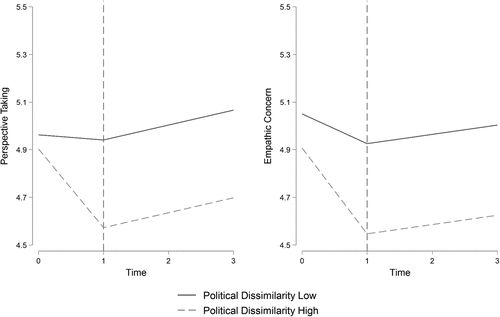
Note. Vertical line indicates the first postelection wave.
To better understand how the effect of political dissimilarity varied over time, we conducted simple slope analyses. Results revealed that before the election, political dissimilarity did not significantly influence either perspective-taking (coefficient = −0.06, p = 0.552) or empathic concern (coefficient = −0.14, p = 0.146). However, following the election, political dissimilarity significantly reduced both perspective-taking (coefficient = −0.37, p < 0.001) and empathic concern (coefficient = −0.38, p < 0.001). Perspective-taking, in turn, predicted lie-sum (coefficient = −0.25, p < 0.001), and forward-sum (coefficient = 0.15, p < 0.001). Similarly, empathic concern had significant effects on lie-sum (coefficient = −0.23, p < 0.001) and forward-sum (coefficient = 0.21, p < 0.001). In line with these findings, we also found significant indirect dissimilarity effects on lie-sum and forward-sum through perspective-taking after the election (estimate for lie-sum: coefficient = 0.09, 95% CI [0.03, 0.16]; estimate for forward-sum: coefficient = −0.05, 95% CI [−0.10, −0.02]) but not before the election (estimate for lie-sum: coefficient = 0.01, 95% CI [−0.04, 0.07]; estimate for forward-sum: coefficient = −0.01, 95% CI [−0.04, 0.02]). A similar pattern was found for empathic concern as the mechanism, with significant indirect dissimilarity effects after the election (estimate for lie-sum: coefficient = 0.09, 95% CI [0.03, 0.16]; estimate for forward-sum: coefficient = −0.08, 95% CI [−0.14, −0.03]) but not before the election (estimate for lie-sum: coefficient = 0.03, 95% CI [−0.01, 0.09]; estimate for forward-sum: coefficient = −0.03, 95% CI [−0.08, 0.01]). Together the findings provide strong support for Hypothesis 2.
In addition, we tested the stability of the dissimilarity effect in the postelection phase. Specifically, we tested if the postelection trends in the social mindfulness outcomes differ between individuals with low versus high political dissimilarity. To test this, we included an interaction between the postelection term and political dissimilarity in our DGCM. The interaction terms between the postelection variable and political dissimilarity were nonsignificant for perspective-taking (coefficient = −0.05, p = 0.355) and empathic concern (coefficient = 0.03, p = 0.498), indicating that the differences in both outcomes right after the election event were stable for political dissimilar and similar individuals across the three postelection measurements. Accordingly, in the last week (i.e., 14 days after the election), we still found significant political dissimilarity effects for perspective-taking (coefficient = −0.42, p < 0.001) and empathic concerns (coefficient = −0.34, p = 0.010).
Supplementary Analyses
Robustness of the DGCM.
To address potential concerns about model specification and overfitting, we conducted additional robustness checks of our DGCM. These analyses, reported in Online Appendix 3F, confirmed the stability of our findings.
Asymmetric Political Dissimilarity Effect.
As in Studies 1 and 2, we explored the asymmetry of the political dissimilarity effect between Democrats and Republicans. Our analysis revealed a significant three-way interaction between the election event, political dissimilarity, and party affiliation on empathic concern (coefficient = −0.59, p = 0.001) but not on perspective-taking (coefficient = −0.25, p = 0.157). For the significant effect on empathic concern, Democrats experienced a sustained drop in empathic concern after the election when exposed to political dissimilarity, whereas Republicans did not. This finding suggests that, although the election triggers the dissimilarity effect for both Democrats and Republicans in the cognitive subdimension of social mindfulness (perspective-taking), the affective response (empathic concern) is primarily observed among Democrats. This may be because Democrats feel particularly threatened by the election outcome, given their clear defeat during the 2024 election. Further, the finding highlights the important distinction between the cognitive and affective components of social mindfulness.
Continuous Political Dissimilarity Effect.
We examined the effect of political dissimilarity beyond the binary high versus low condition used in the experiment. Like in Study 2, we included the same subjective measure of perceived political dissimilarity (“How similar is your political orientation to that of the other members of your team?”) rated on a five-point scale. When using this measure in its recoded form, we again found significant interactions between the election term and political dissimilarity on perspective-taking (coefficient = −0.18, p < 0.001) and empathic concern (coefficient = −0.15, p < 0.001).
Alternative Mechanisms.
We explored the robustness of our social mindfulness mechanism. To rule out feelings of uniqueness as an alternative explanation for why dissimilar individuals selected unique objects (Study 2) and demonstrated less care for their team members (Study 3), we measured feelings of uniqueness using five items we developed to capture state uniqueness in our specific experimental context based on items from Lynn and Snyder (2002) included in the Week 1 survey (α = 0.95). A sample item reads as “I was motivated to show what makes me different from others.” The effect of political dissimilarity on uniqueness was nonsignificant (coefficient = 0.02, p = 0.837). In addition, the interaction effect between the election term and political dissimilarity on perspective-taking (coefficient = −0.31, p = 0.001) and empathic concern (coefficient = −0.24, p = 0.007) remained significant when controlling for baseline feelings of uniqueness. Together, this suggests that uniqueness is not an alternative mechanism.
General Discussion
Elections are an inherent feature of democratic societies, and recent election results around the globe have demonstrated a growing political polarization, which represents a major global risk. Our research extends the study of political dissimilarity as a relevant construct in organizational research and provides a temporal understanding of how political dissimilarity effects unfold over time. Our experience sampling study (Study 1), conducted over a total of 10 days before and after the U.S. Presidential election of 2020, revealed that employees with high (low) political dissimilarity experienced an increase (decrease) in perceived negative interpersonal interactions (e.g., interpersonal conflicts) during the election event. These effects persisted during the observed postelection period of six days. Importantly, these effects remained robust even after accounting for commonly studied workplace dissimilarity attributes, such as age, gender, and race. Moreover, our simulation-based experiment (Study 2), conducted during the U.S. midterm elections of 2022, revealed an indirect effect of political dissimilarity on negative interpersonal interactions through social mindfulness during the election phase, but not in the pre-election phase. We further replicated the temporal dissimilarity effect through a longitudinal experiment in the field during the U.S. Presidential election 2024 (Study 3) and showed that the effects on negative interactions persisted for at least two weeks. These effects were mediated by the cognitive (perspective-taking) and affective (empathic concern) subdimensions of social mindfulness.
Theoretical Implications
Political Dissimilarity and Contextual Events.
Our work extends dissimilarity research by examining political dissimilarity among coworkers as a previously understudied construct and highlighting contextual events in understanding the dissimilarity effects. Although other social science disciplines have accumulated substantial research on the importance of political orientation for social behavior, organizational research on political dissimilarity is still emerging. Research on political dissimilarity in the private domain has found that people tend to dislike and distrust supporters of the other political camp (Iyengar et al. 2019) with implications for dating behavior and partner choice (Huber and Malhotra 2017), friendship networks (Huber and Malhotra 2017), and family ties (Chen and Rohla 2018). Our findings add to the initial studies on political dissimilarity in the organization domain. However, they suggest that simply extrapolating the negative findings from the private to the work domain does not capture the actual complexity of political dissimilarity at work. In line with the social identity approach, our research suggests that politically dissimilar individuals tend to suppress aspects of their political identity when they enter the workplace outside of election periods. However, they are less able to do so during macro-political events.
Specifically, our research underscores the importance of macro events that heighten the salience of political identity in shaping dissimilarity effects within organizations. This insight supports earlier calls for multilevel models that consider the influence of macro-societal contexts on dissimilarity effects (Joshi and Neely 2018, Nkomo et al. 2019). At the same time, our focus on election events broadens the set of societal events considered relevant for diversity research (Joshi and Neely 2018, Leigh and Melwani 2019). We posit that other macro events—such as national referendums (e.g., Brexit), high-stake Supreme Court rulings (e.g., abortion rights decisions), major legislative acts (e.g., the passing or repeal of key policies like healthcare reform), or large-scale protests (e.g., the Black Lives Matter movement)—can similarly heighten political identity salience and trigger the kinds of downstream effects observed in our studies. Like election days, these events crystallize political commitments, dominate media attention, and reinforce group alignment. They mark moments that force individuals to solidify their stance while public discourse remains saturated with discussions. Given the rising tide of political polarization in many democratic societies, such events are likely to become more frequent and intense. As polarization deepens, the line between personal identity and workplace behavior becomes more blurred, further amplifying the potential for political dissimilarity effects to disrupt interpersonal interactions.
Temporal Effects of Political Dissimilarity.
Our work highlighting the role of contextual events on political dissimilarity also has important implications for our understanding of the temporality of political dissimilarity as those contextual events introduce a temporal component into the study of political dissimilarity. In so doing, we build on and further advance recent studies that have explored the dynamic effects of demographic dissimilarity (van Dijk et al. 2017, Reinwald and Kunze 2020), with some researchers suggesting that dissimilarity effects can gradually change over time (Reinwald and Kunze 2020, Korman et al. 2025). We highlight that attribute-relevant events can activate dissimilarity effects and result in an abrupt outburst of more negative social interactions.
This view sheds light on the inconsistent effects of political dissimilarity at work observed in recent studies. The importance of election times when studying political dissimilarity may explain why a prior study by He et al. (2019) conducted during the 2012 U.S. election found political dissimilarity effects on employee antisocial behavior, whereas the study by Henderson and Jeong (2022) conducted outside of an election period did not find such effects. By showing that negative consequences of political dissimilarity are prevalent during and following (but not before) elections, our study demonstrates the importance of temporal aspects when studying political dissimilarity.
Importantly, our theorizing and results also imply that the abrupt outburst of more negative social interactions with an election event can also result in a sustained shift in interaction patterns, as Study 3 showed that political dissimilarity effects can persist for at least two weeks postelection. This aligns with our theorizing that once these effects are activated, they may become more easily reactivated by contextual cues that might not have been perceived as threatening prior to the election. When individuals experience identity threats, they may develop a heightened sensitivity to potentially threatening further environmental cues (Kaiser et al. 2006). The heightened identity threat following an election event may lead individuals to interpret even relatively neutral cues as threatening. Although not explicitly subject to our theoretical model, we explored this rationale further. We examined whether received reframing efforts—defined as the extent to which a focal individual was encouraged by others to consider and explore alternative perspectives on political issues (based on Baer et al. (2018))—moderate the effects of political dissimilarity before and after the election. Although such reframing efforts are intended to be positive and de-escalatory, they could also be perceived as threatening. When we included a three-way interaction between political dissimilarity, the election event, and daily reframing efforts in Study 1, we found a significant three-way interaction (coefficient = 0.18, p = 0.02). After the election, political dissimilarity significantly increased negative interpersonal interactions when reframing efforts were high (coefficient = 0.32, p = 0.009). In contrast, this effect was not present before the election (coefficient = 0.00, p = 0.99). These results suggest that the activation of political dissimilarity effects during macro-political events not only heightens their immediate impact but creates a prolonged sensitivity to politically charged cues. This suggests that election events may not only lead to a short-term abrupt increase in negative interpersonal interactions but may also impair later interactions.
Social Mindfulness as Mechanism.
Our work advances social identity theory by identifying a previously overlooked mechanism that explains how identity threat leads to negative interpersonal interactions. Specifically, we highlight social mindfulness as a critical link in this process. Our findings illuminate employees’ subjective experience when interacting with politically dissimilar colleagues, revealing that identity threats can subtly and unintentionally disrupt workplace interactions. Rather than being driven by deliberate intentions, behaviors toward out-group members may stem from more automatic, threat-based process that diminishes social mindfulness. We show that macro-political events exacerbate these effects, as politically dissimilar individuals experience situational spikes in identity threat, reducing their ability and willingness to consider politically dissimilar others’ needs and interests. In line with the conceptualization of social mindfulness, we also find evidence that this effect operates through both subdimensions of social mindfulness: perspective-taking (cognitive) and empathic concern (affective), supporting their role as subdimensions of an overarching construct (van Doesum et al. 2013). At the same time, the less deliberate and situationally driven social mindfulness mechanism sheds light on why managing interactions in diverse teams can be challenging, and why diversity training—often focused on reflective processing and deliberate action—can yield inconsistent results (Bezrukova et al. 2016).
Notably, although we find consistent evidence for the indirect effect of political dissimilarity and election events on negative interpersonal interactions via social mindfulness, evidence for a direct interaction effect is less consistent. Our field study (Study 1) supported the direct effect, whereas the experimental studies (Studies 2 and 3) did not. One likely reason lies in our operationalization of negative interpersonal interactions in the experimental settings. To capture consequential behavior, we used the Ultimatum Game, measuring deception about an available bonus and willingness to share it. Although consequential, this task represents a narrow and relatively extreme form of negative interaction, limiting its domain coverage. At the same time, the fact that social mindfulness and its cognitive and affective subdimensions predicted even such extreme behaviors demonstrates that subtle, less deliberate processes can nevertheless have powerful consequences. Still, we encourage future research to test our model with a broader range of workplace behaviors, including less extreme outcomes such as incivility, a low-intensity form of deviant workplace behavior (Schilpzand et al. 2016).
Limitations and Future Research
Our work has limitations that need to be addressed in future research. First, the generalizability of our findings may be constrained, as all our studies were conducted during U.S. elections. The U.S. two-party system may amplify the effects observed, as social identity dynamics are theorized to be strongest when two dominant identity groups of relatively equal size exist (Carton and Cummings 2012). However, research has also shown that the effects of political orientations at work can extend beyond the U.S. context to multiparty systems in Europe (Mönke et al. 2024). Similarly, we expect that other political macro events that increase the salience of the political identity may generate similar dissimilarity dynamics. We therefore encourage future studies to replicate and extend our findings in other contexts and involve other events to test the broader applicability of our framework.
Second, we have not theorized about the role of political affiliation in shaping dissimilarity effects, even though it is plausible that these effects are asymmetric and vary depending on whether individuals identify as conservative or liberal. Liberals and conservatives differ in their values, which can result in asymmetric reactions to political dissimilarity (Solomon 2025). At the same time, individuals on the losing side of a political election may experience greater threat—such as Republicans after the 2020 U.S. Presidential election (Study 1) or Democrats following the 2024 election (Study 3)—which may amplify the effects of dissimilarity. Our supplementary analyses provide mixed evidence: no significant asymmetries in Studies 1 and 2, but in Study 3, empathic concern decreased more strongly among Democrats with the electoral loss. This may indicate that even being aligned with the winning side of an election does not strongly prevent identity threat, as the challenges arise from being politically dissimilar to the majority within the group context, rather than from the election outcome itself. In a similar vein, we found no evidence that party identification moderated the observed effects of political dissimilarity. Although partisans can detach from their Democratic or Republican identities, this detachment does not reliably mitigate out-group animus (West and Iyengar 2022). At the same time, the absence of robust asymmetric effects may reflect limited power to detect three-way interactions in complex longitudinal models. Accordingly, we acknowledge this ambiguity as a limitation and call for future research to examine when and why asymmetries in political dissimilarity effects emerge.
Practical Implications
Our findings highlight the critical need for leaders and human resource representatives to recognize the role of political dissimilarity in shaping workplace dynamics, particularly during election times, and to abandon the illusion of “no politics at work.” Although many organizations implicitly uphold this principle, our results demonstrate that employees with dissimilar political orientations are likely to experience negative interpersonal interactions with coworkers in the aftermath of election events. This underscores the importance of proactive measures to address the effects of political dissimilarity, focusing both on reducing perceived threats and on fostering social mindfulness during election times.
To reduce the perceived threat in politically dissimilar individuals, organizations may foster inclusive work climates—a shared understanding among employees that inclusive behaviors are expected, promoted, and valued within an organization—which have been shown to benefit demographically diverse organizations (Dwertmann et al. 2016). Creating an inclusive climate within an organization can be a key factor in reducing the threat of political dissimilarities. An inclusive climate involves a mutual understanding among leaders and employees that all kinds of differences are valuable and appreciated. By fostering an environment of openness and acceptance, individuals with different political orientations may feel more comfortable expressing their views and engaging in productive dialogue with others. This can help increase understanding across orientations and reduce negative interpersonal interactions.
At the same time, such inclusive climates might not be enough to buffer the effects of political dissimilarity in charged election times. Employees may be prone to less reflective threat responses that reduce social mindfulness. Hence, organizations may take countermeasures to increase social mindfulness during those times. In the face of upcoming elections, organizations might offer training in social mindfulness. Although it may be unrealistic to expect such interventions to establish a pluralistic value framework that fully respects all perspectives represented among employees, as inclusion interventions aim to do, social mindfulness interventions can still produce meaningful short-term effects. For instance, van Doesum et al. (2013) showed that social mindfulness in individuals can be increased by reminding individuals to keep another person’s best interests in mind when making a decision. Such reminders may overrule less reflective exclusionary tendencies and nudge individuals to consider the needs of others. Such social mindfulness interventions may be further enriched through elements from resilience interventions, where individuals learn to cope with threatening situations, which may also help in preventing the uncovered threat responses (Forbes and Fikretoglu 2018).
1 However, to explore potential nuances in political dissimilarity further, we have included supplementary analyses in each study.
2 In addition to testing our model across these three studies, we conducted a supplemental study during the 2024 U.S. Presidential election using a separate dataset examining the degree to which political dissimilarity at work in the context of an election event elicits identity threat. We report this identity threat study in Online Appendix 4.
3 Based on Singer and Willett (2003), we also tested for autoregressive structure in Model 1 but did not find a significant model improvement over a model without autoregressive structure (likelihood ratio = 0.59, p = 0.44).
4 We recruited 580 participants. As specified in the preregistration, we removed participants based on the following criteria: (1) 49 participants who failed at least one of the attention checks, (2) 21 participants who reported having no general political affiliation with one of the major parties (Republican or Democrat), (3) 45 participants who did not report consistent political orientation between the experimental task at the beginning of the experiment and the validation at the end, (4) 3 participants who reported a suspicion that their team colleagues were bogus, and (5) 6 participants who were identified as outliers on the social mindfulness test based on exceptional Cook’s distance scores > 99th percentile. A similar pattern for the political dissimilarity × election interaction on social mindfulness was obtained when applying the 4/n threshold for outlier exclusion (coefficient = −0.08; p = 0.07). Because some participants were excluded for multiple reasons, the final sample consisted of 489 participants.
5 Based on our preregistration, we advertised 500 participant spots on Prolific. We also included participants who were timed out on Prolific due to technical problems when submitting the survey but completed the whole survey. This resulted in 503 participants. As preregistered, we removed participants based on the following criteria: (1) 23 participants who failed at least one of the attention checks in the Week 1 survey, (2) 7 participants who reported having no general political affiliation with one of the major parties (Republican or Democrat), (3) 2 participants who reported a suspicion that their team colleagues were bogus, and (4) 2 participants who wrote nonsense responses for the filler task. As we did not rely on the social mindfulness paradigm from Study 2 but rather on more established survey scales, we did not exclude participants identified as outliers on the social mindfulness paradigm.
6 Mirroring these concerns, we did not find that social mindfulness measured with the paradigm by van Doesum et al. (2013) mediated the effects in Study 3.
7 We also tested for autoregressive structures but did not find a significant (p < 0.05) model improvement.
References
- (2023) Testing the social mindfulness paradigm: Longitudinal evidence of its unidimensionality, reliability, validity, and replicability in a sample of health care providers. Plos One 18(2):e0281738.Crossref, Google Scholar
- (2001)
Which hat to wear? The relative salience of multiple identities in organizational contexts . Hogg MA, Terry DJ, eds. Social Identity Processes in Organizational Contexts (Psychology Press, New York), 31–48.Google Scholar - (2018) Pacification or aggravation? The effects of talking about supervisor unfairness. Acad. Management J. 61(5):1764–1788.Crossref, Google Scholar
- (2001) Bad is stronger than good. Rev. General Psych. 5(4):323–370.Crossref, Google Scholar
- (2018) The influence of political ideology and trust on willingness to vaccinate. PLoS One 13(1):e0191728.Crossref, Google Scholar
- (2016) A meta-analytical integration of over 40 years of research on diversity training evaluation. Psych. Bull. 142(11):1227–1274.Crossref, Google Scholar
- (2016) Understanding relative and absolute change in discontinuous growth models: Coding alternatives and implications for hypothesis testing. Organ. Res. Methods 19(4):562–592.Crossref, Google Scholar
- (2013) Tactical voting and party preferences: A test of cognitive dissonance theory. Political Behav. 35(1):429–452.Crossref, Google Scholar
- (2016)
The hypo-egoic expression of mindfulness in social life . Brown KW, ed. The Oxford Handbook of Hypo-Egoic Phenomena, Oxford Library of Psychology Series (Oxford University Press Incorporated, Oxford, UK), 147–159.Crossref, Google Scholar - (2008) The secret lives of liberals and conservatives: Personality profiles, interaction styles, and the things they leave behind. Political Psych. 29(6):807–840.Crossref, Google Scholar
- (2012) A theory of subgroups in work teams. Acad. Management Rev. 37(3):441–470.Crossref, Google Scholar
- (1999) Beyond direct and symmetrical effects: The influence of demographic dissimilarity on organizational citizenship behavior. Acad. Management J. 42(3):273–287.Crossref, Google Scholar
- (2004) Identifying the ingroup: A closer look at the influence of demographic dissimilarity on employee social identity. Acad. Management Rev. 29(2):180–202.Crossref, Google Scholar
- (2018) The effect of partisanship and political advertising on close family ties. Science (1979) 360(6392):1020–1024.Google Scholar
- (2005) Out of sight but not out of mind: Managing invisible social identities in the workplace. Acad. Management Rev. 30(1):78–95.Crossref, Google Scholar
- (2007) Perceptions as reality: The influence of actual and perceived demographic dissimilarity. J. Bus. Psych. 22(1):79–89.Crossref, Google Scholar
- (1980) A multidimensional approach to individual differences in empathy. JSAS Catalog. Selected Doc. Psychol. 10(1):85. Google Scholar
- (2021) Face Research Lab London set. Accessed March 3, 2023, https://figshare.com/articles/dataset/Face_Research_Lab_London_Set/5047666.Google Scholar
- (2011) An experience sampling investigation of workplace interactions, affective states, and employee well-being. J. Organ. Behav. 32(4):572–588.Crossref, Google Scholar
- (2014) Does choice bring loyalty? Electoral participation and the development of party identification. Amer. J. Political Sci. 58(2):449–465.Crossref, Google Scholar
- (2025) Location matters: Everyday gender discrimination in remote and on-site work. Organ. Sci. 36(2):547–571.Link, Google Scholar
- (2010)
Intergroup bias . Fiske ST, Gilbert DT, Lindzey G, eds. Handbook of Social Psychology (John Wiley & Sons, Hoboken, NJ), 1084–1121.Crossref, Google Scholar - (2016) Disentangling the fairness & discrimination and synergy perspectives on diversity climate: Moving the field forward. J. Management 42(5):1136–1168.Google Scholar
- (2014) Identity threat at work: How social identity threat and situational cues contribute to racial and ethnic disparities in the workplace. Cultural Diversity Ethnic Minority Psych. 20(4):508–520.Crossref, Google Scholar
- (2020) Motivated to be socially mindful: Explaining age differences in the effect of employees’ contact quality with coworkers on their coworker support. Personality Psych. 73(3):407–430.Crossref, Google Scholar
- (2018) Building resilience: The conceptual basis and research evidence for resilience training programs. Rev. General Psych. 22(4):452–468.Crossref, Google Scholar
- (1981) The effect of negative feedback about oneself and cost of information on preferences for information about the source of this feedback. J. Experiment. Soc. Psych. 17(1):42–50.Crossref, Google Scholar
- (2018) Helping others or helping oneself? An episodic examination of the behavioral consequences of helping at work. Personality Psych. 71(1):85–107.Crossref, Google Scholar
- , et al. (2024) Rudeness and team performance: Adverse effects via member social value orientation and coordinative team processes. J. Appl. Psych. 109(12):1948–1971.Crossref, Google Scholar
- (2023) When “who I am” is under threat: Measures of threat to identity value, meanings, and enactment. J. Appl. Psych. 108(12):1952–1978.Crossref, Google Scholar
- (2020) Respectful leadership and followers’ knowledge sharing: A social mindfulness lens. Human Relations 73(6):789–810.Crossref, Google Scholar
- (2001) Threat and decision making. J. Conflict Resolution 45(2):196–215.Crossref, Google Scholar
- (2025) I love you but I hate your politics: The role of political dissimilarity in romantic relationships. J. Personality Soc. Psych. 129(4):692–713.Crossref, Google Scholar
- (2017) Harnessing demographic differences in organizations: What moderates the effects of workplace diversity? J. Organ. Behav. 38(2):276–303.Crossref, Google Scholar
- (1998) Beyond relational demography: Time and the effects of surface-and deep-level diversity on work group cohesion. Acad. Management J. 41(1):96–107.Crossref, Google Scholar
- (2011) Psychology in Organizations, 2nd ed. (SAGE Publications, London).Google Scholar
- (2012) Motivated independence? Implicit party identity predicts political judgments among self-proclaimed Independents. Personality Soc. Psych. Bull. 38(11):1437–1452.Crossref, Google Scholar
- (2019) Political identity dissimilarity, workplace incivility, and declines in well‐being: A prospective investigation. Stress Health 35(3):256–266.Crossref, Google Scholar
- (2022) Political affiliation dissimilarity: Exploring lone affiliate employees’ work attitudes and experiences. Stress Health 38(2):249–260.Crossref, Google Scholar
- (2002) Intergroup bias. Annual Rev. Psych. 53(1):575–604.Crossref, Google Scholar
- (2021) Endogeneity: A review and agenda for the methodology-practice divide affecting micro and macro research. J. Management 47(1):105–143.Crossref, Google Scholar
- (2012)
Uncertainty-identity theory . van Lange PAM, Kruglanski AW, Higgins ET, eds. Handbook of Theories of Social Psychology (SAGE, London), 62–80.Crossref, Google Scholar - (2015) Making a difference in the teamwork: Linking team prosocial motivation to team processes and effectiveness. Acad. Management J. 58(4):1102–1127.Crossref, Google Scholar
- (2017) Political homophily in social relationships: Evidence from online dating behavior. J. Politics 79(1):269–283.Crossref, Google Scholar
- (2015) Fear and loathing across party lines: New evidence on group polarization. Amer. J. Political Sci. 59(3):690–707.Crossref, Google Scholar
- (2012) Affect, not ideology. A social identity perspective on polarization. Public Opinion Quart. 76(3):405–431.Crossref, Google Scholar
- (2019) The origins and consequences of affective polarization in the United States. Annual Rev. Political Sci. 22(1):129–146.Crossref, Google Scholar
- (2001) The dynamic nature of conflict: A longitudinal study of intragroup conflict and group performance. Acad. Management J. 44(2):238–251.Crossref, Google Scholar
- (2018) Right versus left: How does political ideology affect the workplace? J. Organ. Behav. 39(8):1040–1043.Crossref, Google Scholar
- (2003) Connecting terror management and dissonance theory: Evidence that mortality salience increases the preference for supporting information after decisions. Personality Soc. Psych. Bull. 29(9):1181–1189.Crossref, Google Scholar
- (2018) A structural-emergence model of diversity in teams. Annual Rev. Organ. Psych. Organ. Behav. 5(1):361–385.Crossref, Google Scholar
- (2006) Prejudice expectations moderate preconscious attention to cues that are threatening to social identity. Psych. Sci. 17(4):332–338.Crossref, Google Scholar
- (2011) Perceived similarity, proactive adjustment, and organizational socialization. J. Vocational Behav. 78(2):225–236.Crossref, Google Scholar
- (1992) Myth of the Independent Voter (University of California Press, Berkeley, CA).Crossref, Google Scholar
- (2021) Moral foundations and political orientation: Systematic review and meta-analysis. Psych. Bull. 147(1):55–94.Crossref, Google Scholar
- (1994) Levels issues in theory development, data collection, and analysis. Acad. Management Rev. 19(2):195–229.Crossref, Google Scholar
- (2025) How political context affects immigrant newcomers’ social undermining dynamics and well-being at work. Acad. Management J. 68(3):540–566.Crossref, Google Scholar
- (2006) On the edge of identity: Boundary dynamics at the interface of individual and organizational identities. Human Relations 59(10):1315–1341.Crossref, Google Scholar
- (2014) Coming to terms with fear. Proc. Natl. Acad. Sci. USA 111(8):2871–2878.Crossref, Google Scholar
- (2015) Anxious. The Modern Mind in the Age of Anxiety (Oneworld Publications, London).Google Scholar
- (2019) # BlackEmployeesMatter: Mega-threats, identity fusion, and enacting positive deviance in organizations. Acad. Management Rev. 44(3):564–591.Crossref, Google Scholar
- (2002)
Uniqueness seeking . Snyder CR, Lopez SJ, eds. Handbook of Positive Psychology (Oxford University Press, Oxford, UK), 395–410.Google Scholar - (1992) Alumni and their alma mater: A partial test of the reformulated model of organizational identification. J. Organ. Behav. 13(2):103–123.Crossref, Google Scholar
- (1995) Affect-and cognition-based trust as foundations for interpersonal cooperation in organizations. Acad. Management J. 38(1):24–59.Crossref, Google Scholar
- (2007) Cross-temporal and cross-national comparisons of party left-right positions. Election Stud. 26(1):62–75.Crossref, Google Scholar
- (2013) Relationship and task conflict at work: Interactive short-term effects on angry mood and somatic complaints. J. Occupational Health Psych. 18(2):144–156.Crossref, Google Scholar
- (2024) Politics speak louder than skills: Political similarity effects in hireability judgments in multiparty contexts and the role of political interest. J. Appl. Psych. 109(1):1–12.Crossref, Google Scholar
- (2010) Associative processes in intuitive judgment. Trends Cognition Sci. 14(10):435–440.Crossref, Google Scholar
- (2006) The workplace as a context for cross-cutting political discourse. J. Politics 68(1):140–155.Crossref, Google Scholar
- (2019) Diversity at a critical juncture: New theories for a complex phenomenon. Acad. Management Rev. 44(3):498–517.Crossref, Google Scholar
- (2011) Under threat: Responses to and the consequences of threats to individuals’ identities. Acad. Management Rev. 36(4):641–662.Crossref, Google Scholar
- (2020) Being different, being absent? A dynamic perspective on demographic dissimilarity and absenteeism in blue-collar teams. Acad. Management J. 63(3):660–684.Crossref, Google Scholar
- (2008) A review and examination of demographic similarity measures used to assess relational demography within groups. Organ. Res. Methods 11(3):562–592.Crossref, Google Scholar
- (2023) Polarisation, identity and affect - Conceptualising affective polarisation in multi-party systems. Election Stud. 85(1):102655.Crossref, Google Scholar
- (2024) Hidden consequences of political discourse at work: How and why ambient political conversations impact employee outcomes. J. Appl. Psych. 109(6):795–810.Crossref, Google Scholar
- (2017) The role of political affiliation in employment decisions: A model and research agenda. J. Appl. Psych. 102(9):1286–1304.Crossref, Google Scholar
- (2016) Workplace incivility: A review of the literature and agenda for future research. J. Organ. Behav. 37(S1):57–88.Crossref, Google Scholar
- (2008) Monte Carlo method for assessing mediation: An interactive tool for creating confidence intervals for indirect effects [Computer software]. Accessed December 17, 2024, http://quantpsy.org/.Google Scholar
SHRM (2019) Politics in the workplace. Accessed September 24, 2025, https://www.shrm.org/content/dam/en/shrm/topics-tools/news/hr-magazine/SHRM-Politics-in-the-Workplace-Survey-Oct-2019.pdf.Google Scholar- (2021) Pay communication, justice, and affect: The asymmetric effects of process and outcome pay transparency on counterproductive workplace behavior. J. Appl. Psych. 106(2):230–249.Crossref, Google Scholar
- (2003) Applied Longitudinal Data Analysis: Modeling Change and Event Occurrence (Oxford University Press, Oxford, UK).Crossref, Google Scholar
- (2025) Liberal versus conservative distrust: A construal-level approach to dissimilarity in the workplace. J. Appl. Psych. 110(6):755–775.Crossref, Google Scholar
- (2018) A social mindfulness approach to understanding experienced customer mistreatment: A within-person field experiment. Acad. Management J. 61(3):994–1020.Crossref, Google Scholar
- (2020) Working while liberal/conservative: A review of political ideology in organizations. J. Management 46(6):1063–1091.Crossref, Google Scholar
- (2017) Microdynamics in diverse teams: A review and integration of the diversity and stereotyping literatures. Acad. Management Ann. 11(1):517–557.Crossref, Google Scholar
- (2013) Social mindfulness: Skill and will to navigate the social world. J. Personality Soc. Psych. 105(1):86–103.Crossref, Google Scholar
- (2021) Social mindfulness and prosociality vary across the globe. Proc. Natl. Acad. Sci. USA 118(35):e2023846118.Crossref, Google Scholar
- (2015) Social mindfulness and social hostility. Current Opinion Behav. Sci. 3(1):18–24.Crossref, Google Scholar
- (2024) Affective polarization in Europe. Eur. Political Sci. Rev. 16(3):378–392.Crossref, Google Scholar
- (2022) Partisanship as a social identity: Implications for polarization. Political Behav. 44(2):807–838.Crossref, Google Scholar
- (2017) Rude color glasses: The contaminating effects of witnessed morning rudeness on perceptions and behaviors throughout the workday. J. Appl. Psych. 102(12):1658–1672.Crossref, Google Scholar
World Economic Forum (2024) The Global Risks Report 2024. Accessed January 8, 2025, https://www3.weforum.org/docs/WEF_The_Global_Risks_Report_2024.pdf.Google Scholar- (2021) Does awareness of death strengthen awareness of self? The effects of existential threat on self-focus. Current Psych. 40(5):1–6.Crossref, Google Scholar
Max Reinwald is assistant professor of management at the University of Mannheim Business School, University of Mannheim (Germany). He received his doctoral degree from University of Konstanz (Germany). His research focuses on diversity and relational demography, responsible leadership, and change management.
Rouven Kanitz is assistant professor of organizational change at Rotterdam School of Management, Erasmus University (Netherlands), and incoming professor of leadership and strategic change at WU Vienna University of Economics and Business (Austria). He received his doctoral degree in management from Ludwig-Maximilians-Universität München (Germany). His research examines how organizations can effectively lead strategic change and navigate its human side.
Peter Bamberger is the Simon Domberger Chair in Organization and Management at the Coller School of Management, Tel Aviv University. He received his PhD from Cornell University. His research interests include rewards management, peer relations in team contexts, and employee well-being, with a particular emphasis on how cognitive processes impact each of these domains.
Julia Backmann is professor and head of the chair for transformation of work and the codirector of the Research Center for Business Transformation in Times of Radical Change (ChanCe) at the University of Münster. Before joining the University of Münster, she worked as an assistant professor at the University College Dublin and the LMU Munich. She received her PhD from the WHU (Germany). Her research interests include leadership and teamwork in challenging contexts and the future of work.
Martin Hoegl is professor and head of the Institute for Leadership and Organization at Ludwig-Maximilians-Universität (LMU) München (Munich, Germany). Before joining LMU Munich, he served on the faculties of Washington State University (United States), Bocconi University (Italy), and WHU (Germany). His main research interests include leadership, collaboration, and innovation in organizations.