


Technology (Non)Emergence: How System Interdependencies Among Activities by Heterogeneous Actors Shaped Alternative Solar Technology Trajectories
Abstract
We examine industry and technology (non)emergence by integrating actor-centric and systems perspective literature streams. We use historical methods to analyze rich data tracking investments by actors spanning private, public, and academic sectors in the solar photovoltaics context. The industry took several decades after commercialization to emerge; moreover, silicon and thin film technologies experienced divergent fates despite firm takeoff. By uncovering critical interdependencies across activities by different actors, we show that, whereas attention by all actors to developing various elements of technological systems is necessary for emergence, it may not be sufficient. The industry emerged after activities by technology producers, industry associations, and government agencies ensured stable institutional support that stimulated latent demand (by utilities and end consumers) and created reinforcing loops among activities by technology producers and research institutes for solar technologies to become a viable alternative to fossil fuels. Moreover, silicon experienced additional reinforcing loops in demand-side and supply-side ecosystems, wherein technology producers and equipment manufacturers leveraged adjacent mature supply chains to meet demand-side scale and reliability requirements in fast growing markets. In contrast, thin film experienced balancing loops wherein nascent firm-specific supply side alliances could not address these demand side needs. These findings showcase how dominant designs may emerge even when there is no ex ante competitive dynamics among technology producers: Although silicon may have benefited from first mover advantage at the technology level, our study highlights that ecosystem first mover advantages of silicon relative to thin film were particularly salient in their divergent fates.
Supplemental Material: The online appendices are available at https://doi.org/10.1287/orsc.2022.17185.
Introduction
The emergence of new technologies and industries is a critical and endogenous process that underlies economic growth (Romer 1990), contributes to satisfying new and evolving needs (Mokyr 1992), and explains differences in wealth and well-being of nations (Rosenberg and Birdzell 1986). For actors who contribute to this process, successful emergence of new technologies and industries manifests into their own success, in terms of achieving their purpose (Lounsbury et al. 2003, Baldwin et al. 2006, Sanderson and Simons 2014) and ensuring organizational survival (Klepper 2015), strategic renewal (Agarwal and Helfat 2009), and profitability (Mitchell 1991, Rothaermel and Hill 2005). This fundamental yet complex phenomenon is far from straightforward, which is perhaps why it has endured attention across levels of analysis from scholars employing different theoretical lenses.
At the actor level of analysis, multiple literature streams have focused on singular/small set of actors who engage in nascent technologies or industries (Moeen et al. 2020). Within this actor-centric perspective, technology producers—that is, firms who develop and commercialize the technology at the industry’s core—have been the predominant actor in studies adopting an entrepreneurship, evolutionary economics, technology management, or organizational ecology/theory lenses (Gort and Klepper 1982, Aldrich and Fiol 1994, Agarwal and Tripsas 2008, Eggers 2014). These studies relegate other actors to secondary positions in this process; even papers acknowledging the need for ecosystem development focus largely on technology producers (Adner and Kapoor 2010, Kapoor and Furr 2015). However, smaller but robust complementary literature streams have examined strategies and contributions of social movements (Hiatt et al. 2009, York and Lenox 2014), cooperative technical organizations (Rosenkopf and Tushman 1998, Garud et al. 2002), and policy makers (Ozcan and Gurses 2018, Wormald 2026) toward successful emergence. Recent reviews and conceptual papers (Lee et al. 2018, Agarwal et al. 2025) have begun an integration of insights across studies to underscore that successful emergence requires entry and investments by heterogenous actors and called for research explicitly examining the interplay of multiple actors and their roles in (non)emergence.
At the system level of analysis, parallel and complementary literature streams on innovation journeys (Garud and Rappa 1994, Garud et al. 2002), sectoral innovation systems (Nelson 1994, Malerba 2002), and technology innovation systems (Hekkert et al. 2007, Bergek et al. 2008) have highlighted that successful technology and industry emergence requires the formation and coalescing of multiple system elements. Although not entirely discounting the micro (actor) level, such a systems perspective focuses on coevolution of technologies and industries with their inputs and demands as critical features of the system enabling legitimation (Garud and Rappa 1994, Garud et al. 2002) and path dependencies in the diffusion process through key mechanisms of variation, learning (experimentation), and selection (Rosenberg 1982, Nelson 1994, Malerba 2002). Here, attention to all functional system elements and their feedback loops are vital for emergence (Hekkert et al. 2007, Bergek et al. 2008). Because the systems perspective takes a more macro view of technology and industry emergence, it often abstracts away from why and when actors engage in the process and how microlevel strategies reinforce or undermine each other for technology and industry (non)emergence.
Building on the above literature streams, our study examines the complexities of an enduring and important phenomenon based on two premises. First, there is value in integrating the actor-centric and systems perspectives. The actor-centric perspective examines microfoundations of individual system elements, but the piecemeal examination often discounts development of other elements and their potential interactions. The systems perspective focuses on development of the overall system, but the macro lens of system and temporal processes often discounts the strategies underlying elements formation. Second, given the relative scarcity of studies examining failure in technology and industry emergence (Moeen et al. 2020), there is value in a simultaneous examination of emergence and nonemergence, holding contextual factors constant. Such a study can shed light on whether nonemergence stems from an absence of essential actors, uneven engagement across system elements, or from fundamental interdependencies despite such engagement. Accordingly, we aim to answer the following research question: How do interactions among activities undertaken by heterogeneous actors to develop various elements of the system shape technology (non)emergence?
The U.S. solar photovoltaics (PV) industry between 1956 and 2020 is an ideal context satisfying both premises. First, it has been examined in both actor-centric (Kapoor and Furr 2015, Furr and Kapoor 2018, Hannah and Eisenhardt 2018) and system-level studies (Watanabe et al. 2000, Jacobsson et al. 2004, Vasseur and Kemp 2011), allowing for an assessment of the value added by an integrated perspective. Second, the industry allows for a case comparison of two alternative technologies—silicon and thin film. Although both technologies experienced successful commercialization and firm takeoff, only silicon achieved sales takeoff, whereas to date, thin film has failed to do so. The context thus permits us to keep “industry-level” factors constant to shed light on the mechanisms leading to divergent fates.
Building on the evolutionary economics tradition of history-friendly modeling (Rosenberg 1982, Nelson 1994, Malerba et al. 1999), which emphasizes path dependence, coevolution, and feedback processes, we use historical methods to iterate between theory and rich quantitative and qualitative data (Braguinsky and Hounshell 2016, Argyres et al. 2020, Pillai et al. 2024) to infer the best explanation for technology (non)emergence. In line with our interest in integrating actor-centric and systems perspectives, we adopt system dynamics reasoning (Richardson 1991, Sterman 2000), which treats feedback loops as the unit of analysis, alongside a causal description logic (Shadish et al. 2002), in which the temporal ordering of events helps trace historically plausible chains of events. Jointly, these approaches enable us to study how interactions unfolded over time to shape the solar PV industry’s emergence and divergent outcomes in silicon and thin film technologies.
Our study contributes to existing actor-centric literatures. Our key finding is that reinforcing and balancing loops contribute to success or failure of a technology and that these loops emerge at the nexus of strategies of different actors. This extends industry evolution and technology management literatures that have taken an actor-centric perspective and additionally placed primacy on technology producers. We find other actors (e.g., governments, demand-side actors) were at least equally important as technology producers. Moreover, the nonemergence of thin film was neither a result of strategic mistakes of thin film technology producers nor a consequence of an ex ante race for technological dominance among first movers. Rather, silicon benefited from an “ecosystem advantage” due to a serendipitous leverage of mature supply chains from adjacent industries for standardized, technology-level supply-side ecosystems, whereas thin film was hampered by the need to develop firm-specific ecosystems customized for different variants. These findings extend the innovation ecosystems literature by recognizing the importance of nonlinearities and feedback loops within a “linear value chain”: We show how demand- and supply-side ecosystems may reinforce or balance each other to impact a technological trajectory. This implies that a true ecosystem perspective requires simultaneous consideration of multiple actors and their nonlinear interdependencies.
Empirical work taking a systems perspective, for example, sectoral and technological innovation systems studies, has highlighted that nonemergence results from a lack of entry or insufficient contributions that prevent the creation of positive loops at the system level. By integrating the actor-centric perspective and embracing path dependencies (coevolution), our study highlights the understudied role of actor-level interdependencies to provide the microfoundations of system coevolution. With our comparison of two technological trajectories within the same industry, we extend work within the systems perspective by showing that failure may occur despite entry of actors across sectors, substantial resource commitments to various system elements, and aligned interests of actors for industry emergence. A resultant insight is that typical stock indicators of system’s “health” (e.g., number and variety of entrants) may conceal underlying mechanisms of how actor-level strategies may reinforce or balance each other for different outcomes.
Theoretical Background
As noted in the Introduction, the important and complex phenomenon of technology and industry emergence has attracted sustained scholarly attention across levels of analysis, theoretical lenses, and focal aspects. In our theoretical background, we synthesize key insights from multiple literature streams by distinguishing between two parallel, although sometimes overlapping, perspectives: actor-centric or systems.
Actor-Centric Perspective
Taking different vantage points and focusing on different actors, actor-centric studies provide deep insight into strategies for creating and scaling a novel technology in nascent industries (Agarwal et al. 2025).
Perhaps unsurprisingly, technology producers are the dominant focus of literature streams (industry evolution, technology management, organizational theory, institutional entrepreneurship) examining technology and industry emergence. Technology producers introduce new products, develop sales channels, and increase industry-wide capacity to create commercial viability (Golder and Tellis 1997, Agarwal and Bayus 2002). This requires major product innovations to attract users (Utterback and Abernathy 1975, Gort and Klepper 1982) and subsequent process innovations for scale economies, creating competitive pressures for shakeout and emergence of a dominant design (Klepper 1996). Moreover, technology producers balance collaboration and competition with suppliers and complementors to develop ecosystems and value chains that address both supply- and demand-side factors for technology scaling (Jacobides and Winter 2005, Adner and Kapoor 2010, Helfat and Campo-Rembado 2016, Moeen and Mitchell 2020, Wormald et al. 2021). Additionally, for successful diffusion, technology producers attend to legitimacy (Aldrich and Fiol 1994) and institutional (Suarez 2004, Moeen et al. 2020, Krabbe and Grodal 2023) needs. These include addressing regulatory ambiguities (Langlois 2003, Kapoor and Klueter 2020, Gao and McDonald 2022), navigating appropriability regimes (Teece 1986, Suarez 2004), and drawing upon societal trends to design their products (Krabbe and Grodal 2023). Producers also engage in battles to establish their own technology as the dominant standard (Garud et al. 2002).
Of note, the presence and relevance of other actors—consumers, suppliers, complementors, regulators—takes on two flavors. Predominantly, as noted above, other actors are the target of technology producers’ influence and relegated to passive or secondary positions in a battle among producers for technology dominance (Abernathy and Utterback 1978), ecosystem-related competitive-collaborative dynamics (Adner and Kapoor 2010), and institutional building efforts such as lobbying for regulatory changes (McGrath et al. 1992, Murmann 2003, Suarez 2004, Gao and McDonald 2022).
The second, lesser used, approach explicitly examines strategies of other actors in shaping technology and industry emergence. For example, organizational theorists have shown how social movements help create favorable institutional environments that facilitate the provision of critical resources and attraction of other actors to the new technology or industry (King and Lenox 2000, Lounsbury et al. 2003, Hiatt et al. 2009, Sine and Lee 2009, York and Lenox 2014, Lee et al. 2017). Similarly, industry associations and cooperative technical organizations contribute to standard settings that accelerate technology emergence or dominance (Rosenkopf and Tushman 1998, Garud et al. 2002). More recently, scholars have shifted attention to the importance of governments and their own experimentation with institutional arrangements on the evolution of born-global industries (Greenstein 2015, Wormald 2026).
Systems Perspective
Complementary research across literature streams such as sectoral innovation systems (Rosenberg 1982, Nelson 1994, Malerba 2002), innovation journeys (Garud and Rappa 1994, Garud et al. 2002), and technology innovation systems (Hekkert et al. 2007, Bergek et al. 2008) takes a systems perspective. This perspective highlights that successful emergence of technologies and industries rests on development and coalescence of different system elements. Although some studies acknowledge the role of various actors (Garud and Rappa 1994, Garud and Karnoe 2003), the predominant focus is on linking the coevolution of technologies and industries to macro-level processes (Rosenberg 1982, Nelson 1994, Malerba 2002) and structural system components (Suurs and Hekkert 2009, Quitzow 2015). These studies highlight the cumulativeness and path-dependencies as central mechanisms shaping emergence.
Work on sectoral innovation systems adopts a macro perspective to examine how and why evolution of technologies from science and emergence of commercial industries based on general purpose technologies require concomitant attention in the academic and public sectors (Nelson and Rosenberg 1993, Nelson 1994). Drawing on evolutionary biology, this literature emphasizes key mechanisms of variation, learning (experimentation), and selection (Rosenberg 1982, Nelson 1994, Malerba 2002). Using history-friendly models, it examines path dependencies and interactions among system elements to explain specific patterns of evolution (Malerba et al. 1999). In particular, the focus on path dependency explains how initial choices in the interactive and cumulative process may generate increasing returns and lock-in to dominant, yet potentially inferior, designs (Arthur 1988, Malerba 2002).
Relatedly, research on innovation journeys takes a process perspective to examine “distributed agency” among actors (e.g., producers, scientists, evaluators, and regulators) wherein the coemergence of knowledge, practices, artifacts, and rules reinforces technological paths (Dosi 1982, Garud and Rappa 1994, Garud and Karnoe 2003). For example, Garud and Karnoe (2003) highlight how bricolage versus breakthrough processes produced different technological pathways in the wind turbine industry in Denmark and the United States, given cumulative contributions by distributed agents with increasing embeddedness within the process.
A complementary stream on technological innovation systems focuses on functions, defined as processes underlying development of technological innovation systems (Bergek et al. 2008). Technologies diffuse when functions are successfully developed (Suurs and Hekkert 2009, Dewald and Truffer 2011, Hoppmann et al. 2014) and interact in planned and unplanned ways to generate positive feedback loops (Suurs and Hekkert 2009, Quitzow 2015). Within the German solar PV energy context, knowledge development and diffusion functions coevolved (Jacobsson et al. 2004), whereas additional positive feedback loops between institutional support and creation of market niches further contributed to adoption (Dewald and Truffer 2011); here consistency in each function was key (Vasseur and Kemp 2011).
Nonemergence is associated with underdeveloped functions due to limited or inconsistent investment (Jacobsson et al. 2004, Dewald and Truffer 2011, Hoppmann et al. 2013, Andreasen and Sovacool 2015), leading to negative feedback loops (Suurs and Hekkert 2009, Hoppmann et al. 2014, Andreasen and Sovacool 2015). For example, biomass digestion failed to emerge in Sweden and the Netherlands because of a negative feedback loop: an underdeveloped institutional function that then constrained the entrepreneurial function (Negro et al. 2007). Similarly, in Swedish marine energy, absence of search guidance and uneven resource mobilization increased uncertainty, hampering market formation (Andersson et al. 2017).
Need for an Integrative Perspective That Examines (Non)Emergence
Studies in the actor-centric perspective have each largely examined only one or a narrow set of actors providing rich insights on distinct aspects of technology and industry emergence. However, actor-centric studies offer limited insights on the holistic nature of the process and how the strategic actions of different actors may interact with each other at the system level. Work taking the systems perspective, in contrast, has highlighted that successful technology emergence requires different system elements or functions to emerge and coevolve. Yet, the micro strategies at the actor level, beyond recognizing that actors and investments across sectors or functions have to coevolve for robust system development, remain understudied.
Notwithstanding a few exceptions, the actor-centric and systems perspectives have developed in parallel, each with limited integration of insights from the other. Yet, a deeper understanding of technology and industry emergence requires examining how strategies undertaken by actors within and across sectors to address different elements of the system interact with each other for outcomes at the system level. There is thus the opportunity to integrate these two perspectives to gain a deeper understanding of technology and industry emergence that explicitly accounts for potential setbacks in emergence.
In doing so, we join recent work (Agarwal et al. 2014, Kapoor and Klueter 2020) that questions linear models of industry progression across milestones to successful emergence showcased in studies taking the perspective of producers (Moeen et al. 2020). This recent work notes that setbacks are more common than previously assumed, even in the absence of technological competition. For example, Kapoor and Klueter (2020) document reversals from positive to negative sentiment in technologies such as monoclonal antibodies and gene therapy, and Agarwal et al. (2014) provide evidence of “mini-shakeouts” in several industries—periods where innovations are abandoned after firm takeoff but before sales takeoff.
Moreover, an integrative perspective enables the examination of factors that may result in success or failure, beyond those identified in the few studies examining nonemergence. Because prior research disproportionately focuses on technologies and industries that achieved commercial success, we know a lot more about drivers of emergence than failure. It is unclear whether failure arises from system level factors such as inattention from different sectors or weak functions, as in the research noted above, or from actor level factors such as misaligned underlying interests, as in molecular manufacturing (Grodal and O’Mahony 2017) and Near Field Communication mobile payments (Ozcan and Santos 2015) or failures of business models, as in the electric cars industry circa 1900s (Kirsch and Mom 2002). In doing so, we respond to calls to address the relatively understudied phenomenon of technology nonemergence, as in Moeen et al. (2020, p. 240): “we are limited by the literature on industry evolution itself suffering from success bias, inasmuch as it draws disproportionately upon retrospective analysis of industries that ultimately achieved commercial viability and transitioned to become mature.”
Accordingly, the need for an integrative perspective and for understanding why and how technologies may fail to emerge motivates our research question: How do interactions among activities undertaken by heterogeneous actors to develop various elements of the system shape technology (non)emergence?
Empirical Context, Data, and Method
Our empirical context is the U.S. solar PV industry. Although the PV effect (generation of electricity from sunlight) was discovered in 1839, technological investments took steam only in 1954 when scientists at the Bell Laboratories pursued commercial applications (Jacobsson et al. 2004, Jones and Bouamane 2012). Initial research and development (R&D) centered on space applications, with the first deployment on the Vanguard satellite in 1958. Despite this long-standing interest and growing climate concerns, terrestrial use of solar energy remained limited for several decades. From the mid-1990s, the solar PV industry gained attention as a potential alternative to fossil fuels, driven in the United States by energy security considerations and globally by climate change mitigation efforts.
Two technologies fueled the solar PV industry: silicon and thin film. Silicon was used in solar PV from the 1950s (Jones and Bouamane 2012), but initially low efficiency and high costs limited its competitiveness with fossil fuels. These constraints, stemming from silicon’s relatively poor light absorption and material-intensive manufacturing processes (Hoppmann et al. 2013, 2020), stimulated innovation in thin film. Following technical breakthroughs in Cu2S/CdS cells in 1954, thin film development accelerated in the 1960s with first terrestrial and space applications in the 1970s (Jacobsson et al. 2004). Despite silicon’s earlier start, thin film used less material and early R&D successes led to rapid performance gains and achievement of pilot production in CdTe (Cadmium Telluride) and CIGS (Copper Indium Gallium Selenide) thin film, raising expectations that thin film had higher potential to compete with fossil fuels (Jacobsson et al. 2004). Nonetheless, both technologies were deemed highly promising, but uncertainty regarding whether either or both technologies could achieve parity with fossil fuels persisted, spurring investment (Jacobsson et al. 2004).
Although both silicon and thin film received dedicated attention and resources, silicon achieved a much stronger commercial performance relative to thin film (see details in Historical Narrative below). Our study focuses on the evolution of the U.S. solar PV industry1 and its technologies to understand how this difference emerged. The case-comparison of silicon and thin film within the same industry allows us to “hold constant” many key contextual factors that vary across industries (e.g., latent demand; dominant existing technologies as alternatives for satisfying needs), making the solar PV industry an ideal context to examine factors that influence technology (non)emergence. Moreover, the solar PV industry has been studied by literature streams taking both the actor-centric perspective, for example, industry evolution (Kapoor and Furr 2015, Furr and Kapoor 2018), and the systems perspective, for example, technology innovation systems (Jacobsson et al. 2004, Hoppmann et al. 2013, Hipp and Binz 2020), making it an appropriate context for integrating across these two perspectives. We next describe the data sources and analytical methods used in the study.
Data Sources
We compiled a rich panel database of qualitative and quantitative information at the industry, technology and actor level for the period 1956–2020 (see Table 1 for details and sources). Several iterations of data collection and triangulation across multiple sources ensured comprehensive coverage of the actors critical to the industry and the compilation of entire populations of actors when possible (Jick 1979).
|

Table 1. Overview of Data Sources
| Level | Qualitative/Quantitative data set and respective data sources | Figures/tables |
|---|---|---|
| Industry and technology level | ||
| Industry | Qualitative: Industry coverage: 1977–2019, annual
|
|
| Industry/technology | Quantitative:
| |
| Actor level | ||
| Technology producers | Quantitative:
| |
| Equipment providers | Quantitative:
Qualitative: Business histories of 13 largest equipment manufacturers for silicon and thin film solar (coverage varies by provider)
| |
| Utilities | Qualitative: Business histories of 10 largest utilities in the United States (coverage varies by utility)
|
|
| U.S. government agencies | Quantitative:
| |
| Industry associations | Quantitative: Data on industry associations lobbying (1998–2020, annual)
| |
| Investors | Quantitative: Data on firms’ financing (1975–2019, annual)
| |
Data Sources at the Industry and Technology Level.
We used qualitative data from various secondary sources (e.g., magazines such as Photon International and Solar Energy Industries Association (SEIA) reports) to compile a historical narrative of the industry (see methodological details below). We also collected technology-level quantitative data from reputable sources to track trends in technological performance and sales. We obtained technologies efficiency levels data from Progress in Photovoltaics: Research and Applications, a leading biannual academic publication in solar PV, levelized cost of energy (LCOE) data from Lazard’s Levelized Cost of Energy Analysis, the leading analysis of renewables cost competitiveness, and sales data from SEIA’s annual reports.
Data Sources at the Actor Level.
We accessed various data sources to compile quantitative and qualitative data sets for each actor that contributed to the solar PV industry. When possible, we triangulated across data sources to create the census of each type of actor. When not feasible, we collected data on key players within each type.
Solar Technologies Producers.
We assembled the census of technology producers2 triangulating across the proprietary i3 platform database,3 industry reports, and producers’ business histories. Data on their lobbying activities were collected from the OpenSecrets database. The quantitative data were augmented with qualitative data sourced from companies’ archived websites and press releases, which enabled us to track firm-level strategies (e.g., types of innovation pursued), pre-entry experience, and, indirectly, information of other actors interacting with the technology producers (e.g., alliances/contracting partners in ecosystem).
Equipment Providers.
From the i3 platform, we obtained the census of manufacturing equipment providers for the solar PV industry globally to reflect the global nature of the industry supply chain. The quantitative data are complemented by business histories of the 13 largest equipment providers assembled triangulating across press releases, media articles, and analysts’ reports, which enabled us to identify firm-level strategies for the development of solar PV equipment (e.g., development of standardized versus customized equipment).
Utilities.
We relied on press releases, media articles, and analysts’ reports to compile business histories of the 10 largest utilities in the United States, sampled across geographical areas (northeast, midwest, southeast, west pacific, west mountain). The business histories were key to understanding utilities’ perspective on solar PV and their strategies for adoption (e.g., view on centralized versus decentralized solar PV). Indirect information was also obtained from the technology producers’ business histories and the industry level data.
U.S. Government Agencies.
We obtained data on state-level demand-side support from the NC State University Database of State Incentives for Renewables and Efficiency (DSIRE). Data on technological grants, market-related complementary assets, and supply-side ecosystem were obtained from the Solar Energy Research Database provided by Department of Energy’s Solar Energy Technologies Office (SETO).
Industry Associations.
We also collected data on associations’ lobbying activities from the OpenSecrets database. Indirect information on their activities was gathered from the industry-level data described above.
Analytical Method
Consistent with an integrative perspective and the above compilation of quantitative and qualitative data, we use a historical methods research design that relies on hermeneutics, triangulation across sources, and temporal sequencing to arrive at explanations most consilient with the data (Braguinsky and Hounshell 2016, Argyres et al. 2020, Pillai et al. 2024). Specifically, we combine quantitative patterns with a historical account (Lipartito 2014) of the solar PV industry. This is particularly appropriate for examining evolutionary processes of industry emergence because it allows for the identification of the set of actors and actions that are critical for (non)emergence and to make an informed interpretation of the actors based on hermeneutic accounts of the context they operate in (Forbes and Kirsch 2011, Lippmann and Aldrich 2014).
We combine system dynamics reasoning (Richardson 1991, Sterman 2000) and causal description logic (Shadish et al. 2002). System dynamics reasoning shifts attention from individual variables or arrows (as in directed acyclic graphs (DAGs)) to feedback loops,4 capturing how strategies of heterogenous actors and systems elements interact recursively over time to generate either reinforcing (positive) or balancing (negative) dynamics. This approach aligns with history-friendly traditions in evolutionary economics and management (Rosenberg 1982, Nelson 1994, Malerba 2002) and our focus on system-level dynamics in the solar PV industry. Following a causal description logic, we rely on temporal ordering of events (i.e., the future cannot cause the past) to identify plausible chains of events that are most consistent with the observed outcomes. This uncovers what factor(s) changed when within complex chains of events. Such a combined approach allows us to draw on triangulated data to develop a historical-systemic explanation that (a) traces how reinforcing and balancing loops arose from the interplay of heterogenous actors’ strategies and (b) captures how these loops shaped the diverging trajectories of silicon and thin film.
To construct the industry and technology level historical account, we read through all the documents obtained from the data collection. Relying on the entirety of the qualitative data was critical to triangulate insights emerging from our analysis across different sources. This was necessary in our context because individual articles and reports may well be influenced by values held by individuals, and we sought to limit biases in the representation of the industry that could emerge from focusing on a subsample (e.g., newspapers with a political leaning). Focusing on the entire set was also necessary to understand the evolution of the industry. In our reading of these industry-level sources, we focused on understanding the sources of uncertainty in the industry, whether they were being addressed, and by which actors. The effort in examining all documents rewarded us with a rich stock of supporting quotes (see Online Appendices A and B).
Specifically, and as elaborated below, we iterated between theory and data to (1) construct a historical account and trends of the industry and its technologies and (2) conduct a case-comparison focusing on actors’ strategies and their interdependencies to explain divergent outcomes between silicon and thin film. In our findings, we present the quantitative data in figures and tables. For the qualitative data, we show one illustrative quote in the main text, given space constraints. Online Appendix A shows additional examples and number of similar quotes. Online Appendix B shows the coding of qualitative data to create relevant figures.
Step 1: Constructing a Historical Account and Trends for the Industry and Technologies.
We triangulate quantitative and qualitative data and draw on the industry evolution literature to construct a historical account of industry and technologies, map entry and exit of heterogeneous actors, and identify whether and when key milestones took place in our context (Moeen et al. 2020). In line with our focus on heterogeneous actors, we use quantitative data to chart not only entry and exit of all solar technology producers, but also all government agencies, venture capitalists, equipment providers, and research institutes. We contextualize these trends and gauge type and intensity of activities undertaken by each set of actors using qualitative data. When comprehensive population data were unavailable (e.g., utilities), we relied on subsamples of the largest players and corroborated findings by triangulating them with insights from the industry-level narrative. Alternatively, we relied on systematic quantitative data with full coverage of their actions to track populations of actors, such as lobbying to track industry associations.
Moreover, we chart industry and technology level sales and price. We contextualize these outcomes to the temporal sequencing of actor engagement in the industry based on the above trends and corroborate these with qualitative data. This step not only highlights when actors engaged, it also sets the stage for the case comparison of silicon and thin film and to identify potential explanations for their divergent outcomes.
Step 2: Determining Evolutionary Dynamics in Silicon and Thin Film Technologies.
We use a case-comparison method (Lippmann and Aldrich 2014) to understand the evolution in each of the silicon and thin film technological (eco)systems. To do so, we leverage the quantitative and qualitative data concurrently to identify critical differences that led to silicon emergence and thin film nonemergence.
Here, our data let us identify differences in actors’ trends and their investments to support development of different elements of the technology innovation system. We use the qualitative data described above to construct business histories for each technology producer, leading equipment manufacturers (top 13), and utilities (top 10) to move beyond entry and document how actors contributed to specific system functions in each technology. For each technology, we also identify key interdependencies across actors through temporal sequencing and reliance on hermeneutic accounts; that is, we situate key decisions made by key actors and resultant outcomes within their coevolving landscape (e.g., utilities’ responses to government mandates that resulted in growth of grid-connected markets).
As in the industry-level narrative, we reread the full data set and triangulated across sources to reduce biases in identifying strategic action. We systematically coded information related to these actions (e.g., nature of partnerships between technology producers and equipment providers, development of standardized versus customized manufacturing equipment by equipment providers). We also systematically coded actors’ stance on solar PV and each technology. For example, upon realizing that utilities discussed the difference between distributed and centralized applications, we coded quotes on this topic over time.
In summary, we combined quantitative and qualitative data to develop a fine-grained understanding of the actions taken over time, their underlying motivations, and how they jointly manifested in technology and industry level observed outcomes. Informed by the theoretical backdrop, we iterated between the steps above: insights emerging from Step 2 required further analysis of the historical account and overall industry trends (going back to Step 1), which then led to further refinements in the case-comparison (Step 2).
Historical Account and Trends in the Industry and Technologies
Entry of Heterogenous Actors
In keeping with our interest in integrating the actor and systems perspective, we tracked the contributions of heterogenous actors across system components, as each set contributed resources to the development of the industry and of each solar PV technology over time.
Technology Producers.
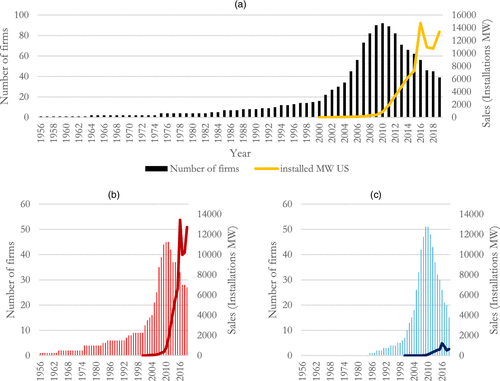
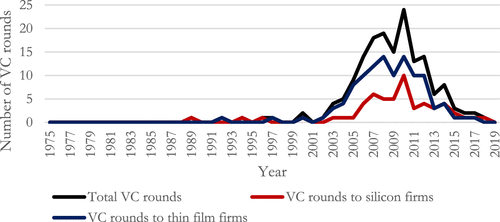
After commercialization, the industry’s early decades (1950s–mid-1990s) were characterized by limited actor number and diversity and low activity intensity. Figure 1 shows trends in entry of technology producers. Silicon technology producers were among the earliest entrants, with first movers entering in the late 1950s (Figure 1(b)). First movers among the thin film technology producers entered the industry in the 1980s (Figure 1(c)). Notably, despite earlier first commercialization in silicon, both technologies had fewer than 10 producers until 2000. The limited entry by technology producers is mirrored in low venture capital investments (critical to new ventures) in the industry (Figure 2). Producers’ takeoff and acceleration in VC investments occurred in the mid-1990s in each technology, at about the same time and with very similar entry rates, with silicon and thin film peaking at 54 and 59 producers, respectively.5 Subsequent industry shakeout affected both technologies. Despite similar entry patterns, fewer producers (55.56%; 30 of 54) exited silicon than thin film (74.58%; 44 of 59; Table 2, Panel B).
Source. Number of firms: i3 platform. Sales: Solar Energy Industry Association Annual Reports, 2011–2020.
Notes. (a) Solar PV industry. (b) Silicon. (c) Thin film.
Source. i3 platform, triangulated with technology producers’ business histories.
|
Table 2. Trends in Entry and Exit
| Silicon firms | Thin film firms | |
|---|---|---|
| Panel A: Number and types of entrants | ||
| Number and experience of companies that entered | 54 | 59 |
| Academia | 8 (8/54 = 15%) | 14 (14/59 = 24%) |
| Technology-related industries | 24 (24/54 = 44%) | 32 (32/59 = 54%) |
| Solar – Si | 10 (10/54 = 19%) | 2 (2/59 = 3%) |
| Solar – TF | 3 (3/54 = 6%) | 9 (9/59 = 15%) |
| Energy-related industries | 7 (7/54 = 13%) | 2 (2/59 = 3%) |
| User-related industries | 11 (11/54 = 20%) | 9 (9/59 = 15%) |
| Other industries | 8 (8/54 = 15%) | 10 (10/59 = 17%) |
| Panel B: Number and types of exits | ||
|---|---|---|
| Number and stage of companies that exited | 30 | 44 |
| R&D stage | 10 (10/30 = 33%) | 27 (27/44 = 61%) |
| R&D acquisition | 4 (4/10 = 40%) | 12 (12/27 = 44%) |
| Dissolution | 5 (5/10 = 50%) | 10 (10/27 = 37%) |
| Abandoned Solar | 1 (1/10 = 10%) | 5 (5/27 = 19%) |
| Manufacturing stage | 20 (20/30 = 67%) | 17 (17/44 = 39%) |
| Manufacturing capacity retained in solar PV | 10 (10/20 = 50%) | 3 (3/17 = 18%) |
| Manufacturing capacity repurposed in other industries | 3 (3/20 = 15%) | 6 (6/17 = 35%) |
| Dissolution | 3 (3/20 = 15%) | 7 (7/17 = 41%) |
| Industries where capacity was repurposed | Thin film solar; installer (×2) | Nanomaterials (×2); semiconductors; disk drive; PV reliability (downstream); glass |
Source. Panel A: Authors’ coding of technology producers’ business histories, triangulated with founders’ CVs. Panel B: Authors’ coding of technology producers’ business histories, based on reliable data being available for exits of firms in R&D stage (10 silicon and 27 thin film) and in manufacturing stage (16 each in silicon and thin film).
Table 2, Panel A, shows heterogeneity in solar producers’ pre-entry experience. Producers in both technologies leveraged upstream technical knowledge from university research or technically related industries (e.g., semiconductors, electronics). Silicon producers also relied on market knowledge gained in energy related industries (e.g., utilities) and other user-related industries (e.g., roofing for rooftop systems).
Government Agencies.
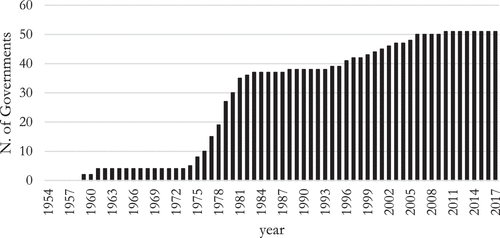
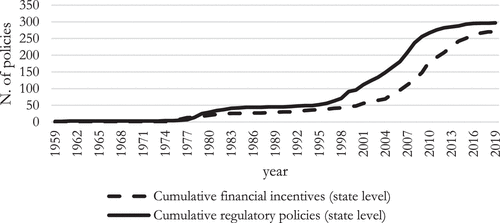
Although the solar PV industry’s earliest use (space) was by a government agency, government regulatory and financial support remained limited for several decades. We coded government entry as the first time that the federal or a state government either enacted supportive regulations (e.g., renewables portfolio standards) or provided resources (e.g., grants or subsidies). Figure 3 shows government engagement beginning in the 1960s. Yet, despite early presence, Figure 4 shows little activity, indicative of limited government interest in solar PV. Government involvement intensified in the later decades with policy-making activity picking up after 2000 and full participation of all 51 entities by 2010. Unlike technology producers, governments did not “exit” the industry; that is, no government to date has completely retracted its support. As discussed later, public agencies aided industry development and reduced institutional uncertainty by promoting solar energy adoption, without privileging a specific PV technology.
Source. NC State University and EnergySage’s DSIRE data set.
Source. NC State University and EnergySage’s DSIRE data set.
Industry Associations.
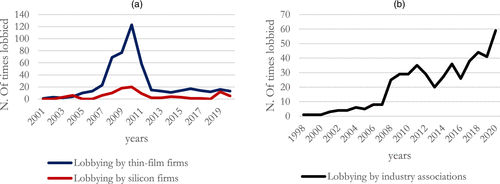
Industry participants also formed industry associations to advocate for the solar PV industry. For instance, the SEIA was founded in 1974 to promote solar energy adoption in the United States. Although there are no comprehensive data on the census of trade associations, we proxied activity level using lobbying intensity. Figure 5(b) shows limited industry associations activity in the industry’s early decades, with an increase during 2000s and an uptick in activities at the end of this decade.
Source. OpenSecrets data set.
Notes. (a) Lobbying by technology producers. (b) Lobbying by industry associations.
Equipment Providers.
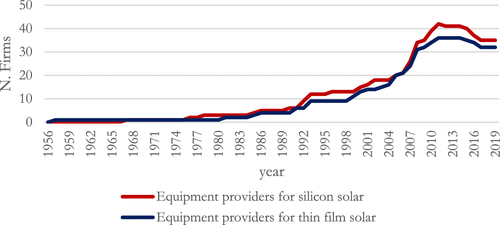
Figure 6 depicts global equipment provider engagement in the PV industry over time. We coded entry as the first year in which a provider offered manufacturing equipment for a given solar technology and exit as the year it stopped doing so. Equipment providers entered in the 1960s, at around the same time in each technology. Their participation in both technologies increased steadily over time, particularly after 2001, and peaked in the early 2010s. Figure 6 shows equipment providers exhibiting takeoff and shakeout patterns similar to those of technology producers in Figure 1. As discussed below, equipment providers were critical actors within the global manufacturing ecosystem of both silicon and thin film.
Source. i3 platform.
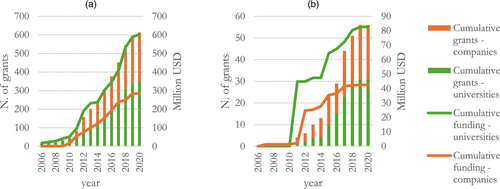
Research institutes also contributed to the development of the supply-side ecosystem. Although there are no census data for these actors, we infer their participation in publicly funded activities. Figure 7(b) shows an uptick in their activity from the 2010s.
Source. SETO’s Solar Energy Research Database. The legend refers to both panels.
Notes. (a) Demand-side ecosystem. (b) Supply-side ecosystem.
Utilities and Demand-Side Complementary Product Providers.
We also tracked utilities and other demand-side complementary product providers (e.g., smart meter and storage technologies firms). Because comprehensive entry and exit data are unavailable, we relied on quantitative and qualitative sources to assess participation. Specifically, we track engagement by utilities and their increased adoption of solar energy due to regulatory mandates from the business histories of the top 10 utilities in the country, which also allows us to track their resource mobilization. Utilities’ participation increased in later decades in response to regulatory pressure by procurement mandates (Figure 4). We inferred resource mobilization by demand-side ecosystem partners through their participation in publicly funded activities: Figure 7(a) shows increase in their activity in the 2010s.
Industry Outcomes: Sales and Price Trends in the Solar PV Industry and Technologies
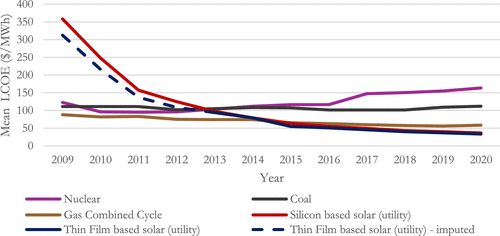
In addition to producer entry, evolutionary scholars track industry emergence through industry sales and price outcomes (Gort and Klepper 1982, Agarwal and Bayus 2002). Figure 1 depicts the sales in solar PV (Figure 1(a)) and in each of the two technologies (Figure 1, (b) and (c)), whereas Figure 8 depicts price, computed as the average LCOE for each technology, as also benchmarked by the LCOE of the dominant fossil fuel sources (e.g., coal, gas, nuclear).
Trends in sales and prices are consistent with trends in the engagement of heterogenous actors. During the early decades, low sales and high prices relative to fossil fuel reflected the limited diversity in actors (despite entry of technology producers), as well as low intensity of activity of those who engaged with the industry, particularly the weak engagement of governments, equipment providers, and demand-side partners. As a result, institutional support was unstable and resource mobilization uncertain. Boom periods during which the institutional support picked up and contributed to the development of the industry and its technologies—such as during the oil price shocks of the 1970s—were followed by busts when institutional support was retracted, slowing down the development of the industry6—for example, at the end of the 1970s when oil prices decreased. Given the limited number and diversity of actor participation and low activity level, early producer entry did not translate into sales takeoff.
After decades of limited progress, participation increased both in terms of numbers and diversity of actors from the mid-1990s, accompanied by an uptick in the intensity of activities. These shifts coincided with declining prices and sales takeoff. Figure 8 shows a sharp decline in LCOE of both silicon and thin film from the late 2000s through mid-2010s, with thin film maintaining slightly lower costs. Notably, both technologies achieved parity with fossil fuels by 2012 and subsequently became cheaper than coal and nuclear from 2013 and gas combined cycle by 2015. Given fossil fuels’ dominance, achieving parity was critical for industry growth. Unsurprisingly, Figure 1(a) depicts the classic industry evolution trend in sales: the industry experienced sales takeoff in 2010 and scaled rapidly thereafter.
Source. Lazard’s Levelized Cost of Energy Analysis, published between 2009 and 2020. Values for thin film between 2010 and 2012 are imputed.
Despite the potential for thin film’s technological superiority over silicon based on underlying properties (as noted above in the industry context description), similarities in investments, and comparability in LCOE, its sales trajectory diverged sharply from silicon. Although both technologies had similarly low sales in 2010, sales of silicon took off and contributed to 91% of total industry sales by the end of the study period (Figure 1(b)). This growth occurred even as silicon producers experienced a shakeout during the early 2010s. Table 2, Panel B, reveals that shakeout reflected asset consolidation typical of a maturing industry with economies of scale: Of the 30 silicon firms that exited, only 10 (33%) were still in the research phase, whereas others had developed significant manufacturing capacity. Fifty percent of this capacity (10 firms) was retained in the industry through their acquisition by other silicon producers.
In contrast, thin film sales remained weak, not contributing to sales takeoff (Figure 1(c)). The brief uptick declined alongside firm shakeout, and few exiting firms’ capabilities were retained in the industry. Among those that exited, 27 (61%) were still in the R&D phase, and only 39% (17) possessed manufacturing capacity (Table 2, Panel B). Of the latter, only three firms (18%) were acquired by other thin film firms. The manufacturing capacity of 13 firms (76%) was not retained in the solar PV industry, either because of firm dissolution (7 firms, 43%) or redeployment in other industries (6 firms, 38%).
The above patterns indicate that silicon achieved sales takeoff and sustained growth of capacity, whereas thin film experienced shakeout and withdrawal of resources. Anecdotal evidence further corroborates this quantitative pattern, as in the comment by the chief technology officer of a prominent thin film technology firm in 2016:
“There is no money going into CIGS and all this learning, this technology, this supply chain …we’re at risk for losing it.” (Pickerel 2016)
The emergence and growth (as measured by sales) in the solar PV industry thus corresponds to silicon’s emergence, whereas thin film failed to emerge successfully from a commercial standpoint.
Evolutionary Dynamics of Silicon and Thin Film Technologies
We iteratively integrate extensive and varied data with the theoretical backdrop to derive the following findings and infer the best explanation for technology (non)emergence. Our analysis focuses on the period after the mid-1990s, when solar PV development accelerated after decades of fluctuating interest.
Figure 9 anchors our findings and previews the emergent framework of system dynamics loops generated through heterogeneous actor engagement that shaped industry evolution and divergent technological outcomes. Consistent with our analytical approach—rather than isolated causal arrows—as the unit of explanation. Loops emerge from actors’ strategies which trigger chains of events that contribute to formation of different system elements and their coevolution. Reinforcing (positive) loops emerge when actions taken to develop one system element amplify the momentum of actions undertaken in other elements. Balancing (negative) loops emerge when actions that contribute to one system element slow down activity aimed toward development of other elements. Below, we present evidence for Figure 9 by identifying the micro actors and their strategies that contributed to the emergence of (a) reinforcing loops favoring solar energy adoption (R1 and R2), (b) additional reinforcing loops supporting silicon’s emergence (R3 and R4), and (c) balancing loops contributing to thin film’s nonemergence (B3 and B4).
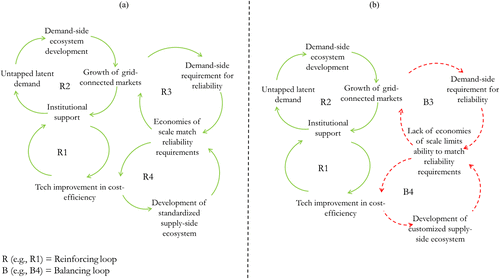
Industry-Level Reinforcing Loops (R1 and R2) on Institutional, Demand, and Technical Dimensions Contribute to Adoption of Solar Energy
Lobbying by Heterogenous Actors Contribute to Government Creating Stable Institutional Support.
Prior to the mid-1990s, latent demand for solar energy due to social concerns about climate change7 remained unrealized due to high prices relative to energy generated by fossil fuels. Figure 8 shows that, even as late as the 2010s, solar energy was on average three times more expensive than energy from traditional fossil fuels. From a technical perspective, both cost and efficiency were critical aspects that needed attention for solar to become a viable alternative to fossil fuels.
“Increasing efficiency and lowering costs have been the two most important goals during the more than 20 years the National Renewable Energy Laboratory has been conducting research on improving photovoltaic systems.” (Environment News Service 2001)
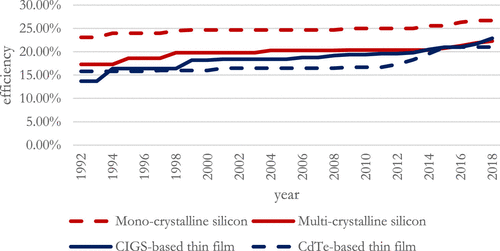
As alternative solar technologies, silicon and thin film tracked closely with each other though there were small tradeoffs: In terms of LCOE, thin film was a little less expensive, and in terms of efficiency, silicon variants were slightly superior, with the most used of each technology’s variants (CIGS-based thin film and multicrystalline silicon) running largely on par by 2000 (Figure 10).
Source. Progress in Photovoltaics: Research and Applications, Solar efficiency tables 1–52, 1993–2018.
After the 2000s, efforts by heterogeneous actors addressed the cost and efficiency challenges of solar energy. Moreover, government agencies recognized that in addition to advancing technologies (achieving lower costs and higher efficiencies), the viability of the industry required attention to market formation:
“Success to us involves working in three different ways—advancing technologies, putting in place smart policies, and stimulating markets. With those [efforts], we think we are now, and we will increasingly in the future make some real change in the overall U.S. energy picture.” (Dan Reicher, Assistant Secretary for Energy Efficiency and Renewable Energy, via Environment News Service 2000)
In turn, such recognition by government agencies was fostered by an increase in lobbying efforts of industry associations and producers of both technologies from the early 2000s onward (Figure 5, (a) and (b)). Notably, the lobbying did not promote any one technology per se but sought to obtain industry-level support for solar by appealing to concerns of climate change and national security. Industry associations (e.g., SEIA, American Council on Renewable Energy) and technology producers focused on obtaining subsidies and favorable regulations for solar energy adoption by consumers (e.g., creation/extension of solar investment tax credits and solar energy incentives). Federal, state, and local governments were receptive to these lobbying efforts, given the potential of solar PV to address national security (independence from oil-producing countries), address societal concerns regarding climate change, and create domestic manufacturing jobs.
“Solar energy is one of the best ways to reduce harmful emissions, improve air quality and facilitate energy independence away from fossil fuels and foreign oil sources. […] We are hopeful that this type of financial incentive will go a long way toward encouraging our homeowners to use the cleanest and most renewable source of energy known to man—the sun.” (Steve Levy, Suffolk County Executive (NY), U.S. Federal News 2005)
“New York Power Authority (NYPA) President and Chief Executive Officer Timothy S. Carey warned Tuesday that “the imperatives of fuel diversity and environmental protection demand that we focus on a new generation of clean energy sources.” “We must identify and develop the technologies that will best enable us to cut our dependence on oil from hostile or potentially hostile foreign sources, to combat global warming and other threats to our environment and to assure the reliable, affordable energy needed to fuel economic growth.” (U.S. Fed News 2006)
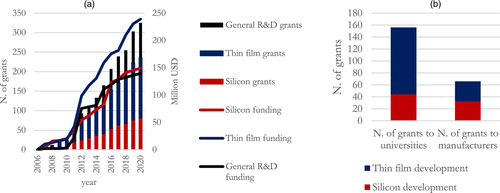
Actions by industry associations and technology producers, together with supportive government responses, contributed to increased resource mobilization for solar energy in the form of stable institutional support. For demand, Figure 4 shows an accelerated enactment of regulations and between 2001 and 2016. For the technologies, Figures 8 and 11 show an increase in R&D grants for ecosystem and technical development respectively from the mid-2000s, with a significant uptick in the 2010s. At the system level, such stable institutional support fostered two reinforcing loops, one on the technology side and one on the demand side, which facilitated the adoption of solar energy as an alternative to fossil fuels.
Source. SETO’s Solar Energy Research Database.
Notes. (a) Number of grants and fundings amount. (b) Distribution.
Institutional Support Promotes Technical Improvement.
On the technical side, stable institutional support implied increased R&D funding for both technologies, thin film more so than silicon (Figure 11(a)). Technology manufacturers and universities leveraged public funds to improve solar technologies. Figure 11(b) shows that grants to technology producers were equally distributed across technologies, whereas universities received more funding for thin-film research. This public support was widely viewed as critical to improving solar technologies.
“The growth in the solar industry during this period reflects a series of complex interactions between the private and public sectors, involving multiple feedback loops. These exchanges have enabled solar technology innovations to progress from the laboratory to the commercial marketplace.” (Jennings et al. 2008, p. 1)
The reinforcing loop between institutional support, and public and private R&D efforts contributed to technology-level performance improvements (Figure 8) to enable convergence of the LCOE of both solar technologies to those of fossil fuels by 2013. Figure 10 also shows steady improvements in the efficiency of both solar technologies from the 1990s. Although it started later than silicon in terms of solar applications, thin film’s improvement in efficiency was more rapid, and it approached the efficiency of multicrystalline silicon (the most widely used silicon variant) in 2014.
“Last week, researchers at the U.S. Department of Energy’s National Renewable Energy Laboratory said they had achieved a new efficiency record for one of those promising technologies, putting it within reach of the silicon cell mark. The new technology uses copper indium gallium selenide, or CIGS, to turn sunlight into electricity inside a thin film solar cell that is generally less expensive than versions relying on polysilicon. CIGS technology converts 19.9 percent of the sunlight hitting the cell into power, beating the previous mark of 19.5 percent and nearing the multi crystalline silicon cell record of 20.3 percent.” (Reuters News 2008)
“Now that the efficiency has improved, CdTe can compete commercially with silicon,” says Jonathan Major, a photovoltaics researcher at the University of Liverpool who developed the new magnesium chloride process. (Peplow 2014)
Institutional Support Helps Unlock Latent Demand for Solar Energy.
On the demand side, institutional support consisted of Renewable Portfolio Standards that mandated procurement of renewable energy by utilities, and financial incentives such as tax credits and rebates which helped to lower the price for adopting solar energy. Customers across different segments (e.g., residential, commercial, utilities) responded to these regulations and financial incentives, which were recognized as one of the critical drivers in unlocking latent demand and in fostering a stable market environment which allowed companies to grow, as illustrated by the quotes below.
“The rapid growth in PV deployment in recent years is largely policy-driven and such rapid growth would not be sustainable unless governments continue to expand financial incentives and policy mandates, as well as address regulatory and market barriers.” (Energy Weekly News 2010)
“The regulatory and policy environment for solar in the U.S. has generally been stable for the past few years. At the federal level, the industry has benefitted from the federal 30% Investment Tax, and most state policies have been reasonably clear and visible. As a result, businesses have been able to plan strategically and chart a clear course for expansion.” (SEIA 2014, p. 5)
Initial Adoption of Solar Energy Spurs Development of Demand-Side Ecosystem.
The mandates for utilities to invest in renewables increased adoption of solar energy in grid-connected markets, which made demand-side ecosystem issues salient. Relative to energy generated from fossil fuels, the intermittent production of solar energy8 required the development of storage technologies and of complementary technologies (e.g., smart meters) for a smart grid—an electricity grid that continuously balances energy demand and supply from multiple sources. Over time, the interdependence between institutional support, demand growth, and the demand-side complementary technologies was recognized as a critical issue to be addresses for adoption of solar energy at scale.
“That “smarter” grid will include expanded renewable energy sources and new copper wire transmission to connect these new sources to load centers. Sounds simple, but there is much more to it to get it right. Electricity is our one form of energy that is not capable of efficient or low-cost storage; the grid must remain perfectly balanced second by second, or the power system collapses, as it did in California during its 2000-2001 electric system crisis, or in the eastern United States in August 2003. There is much more to the grid than just poles and wires. It is a carefully balanced, second-by-second, replenished network of almost 5000 interconnected generating sources in the United States.” (Ferrey 2009, p. 977)
“A creative combination of government regulations and more advanced technology will be needed to integrate renewable energy sources such as solar and wind into electricity grids worldwide on a more significant scale.” (Associated Press Newswires 2010)
Government agencies, firms, and research institutes invested to develop storage and smart meter technologies. Government agencies provided R&D funding (Figure 7(a)), which was leveraged by firms and universities to develop these technologies. Importantly, given the government mandates facing them, utilities emerged as crucial actors in the process.
“Pressed by state-specific renewable power mandates, utilities are continuing to seek out solar and wind power even though they would likely have to pay higher prices for these resources should the federal tax credit support for them expire.” (Dow Jones News Service 2008)
“Utility PV continues to be the primary driver of installation growth in the US solar market.” (Platts Energy Trader 2017)
Accordingly, utilities partnered with universities and firms to pilot their smart grid applications, accelerating their commercial testing and adoption.
“Our goal is to use these demonstration projects as a foundation for how to efficiently manage renewable energy on our Colorado system, and to continue to provide our customers with insight into the energy choices they want and value,” said David Eves, president of Public Service Co. of Colorado… Most people think of battery storage systems to provide back up power for solar power installations, but they can do more, Eves said. Batteries can regulate voltage on distribution lines; they can increase the ability of the electric grid to use renewable generation; and they can store power produced when its cheap and release it when demand—and the cost of production—is high, he said.” (Proctor 2015)
Over time, the collective investments by diverse actors into developing, testing, and adopting complementary technologies promoted the transformation of the electrical grid into a smart grid capable of continuously balancing itself and withstanding higher volumes of solar energy. Such successful transition was demonstrated in 2017 when a solar eclipse became the ultimate field test of grid resiliency.
“We were able to balance the Duke Energy system to compensate for the loss of solar power over the eclipse period. Our system reacted as planned, and we were able to reliably and efficiently meet the energy demands of our customers in the Carolinas.” (Sammy Roberts, Duke Energy director of system operations, via SNL Power Daily with Market Report 2017)
Institutional Support Targeting Grid-Connected Markets Leads to Uneven Growth of Markets.
Across the four potential markets for solar energy—centralized grid-connected, decentralized grid-connected, building integrated, and integrated products—the above focus of regulatory policies on utility mandates for solar adoption and tax rebates fostered growth in the first two markets,
“State lawmakers have been helping enlarge both residential and utility solar markets through tax rebates, renewable energy requirements and financial assistance.” (State Legislatures 2011)
Against this backdrop of institutional support to solar energy, utilities preferred large-scale centralized grid-connected generation as a better fit for their existing business model.
“In the face of mounting opposition to the tone Xcel Energy Inc. has taken in promoting a solar program in Colorado, company Chairman, President and CEO Benjamin Fowke III on May 1 reiterated the utility’s position that large-scale projects are “the right way” to add solar power to its electric system, refusing to back away from language that has irked rooftop solar advocates.” (SNL Power Daily Market Report 2014)
“DTE Energy continues to explore large-scale solar energy projects as a cost-effective way to add solar energy to Michigan’s generation mix.” (Irene Dimitry, DTE Energy’s vice president of Business and Development, via PR Newswire 2015)
Utilities’ preference for centralized applications, jointly with other actors’ efforts to develop complementary technologies for the transformation of the smart grid, catalyzed uneven growth across the four markets with grid-connected applications, especially centralized ones, experiencing the fastest growth.
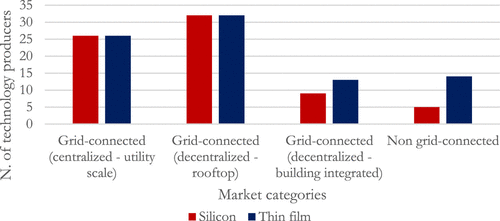
Financial incentives and regulatory policies stimulated the adoption of solar energy in general rather than prescribing the use of one or the other solar technology. Thus, both solar technologies could in principle take advantage of the growth of grid-connected, centralized markets described above. Figure 12 depicts the distribution of technology producers across the four main markets in the industry.9 Notably, there was an even presence of silicon and thin film technology producers in the fastest growing market, meaning that thin film and silicon producers were equally well positioned in the grid connected markets. Thin film producers leveraged thin film’s versatility (e.g., transparency, flexibility, integration into a wider range of materials) that enabled superior applications relative to silicon for markets such as portable, integrated products and selected building-integrated applications to target a wider variety of markets than silicon producers. Accordingly, thin film producers, in principle, also had more market opportunities to generate revenues for a larger share of overall industry sales.
Source. Authors’ coding of technology producers’ business histories.
This technology-agnostic demand development, together with performance improvements in both solar technologies, supported the emergence of solar energy as a potential alternative to fossil fuels, with sales taking off around 2010. At this stage, and consistent with prior research (Hoppmann et al. 2013, 2020), it was still unclear which technology, if any, would emerge and there remained the potential that both technologies could emerge and coexist within different market segments.
“At present no one technology appears to be gaining an advance over the others. Rather the situation seems to be that both silicon (crystalline or metallurgical) and thin film technologies are being used.” (Société Générale 2008)
“From both a technology and a long-term investment perspective, one of the lingering strategic questions in the renewable energy sector is which solar photovoltaic (PV) technology will eventually win the dominant share of the rapidly growing PV market in the United States and elsewhere.” (Power Market Today 2010a)
Demand-Side Actors Develop Requirements for Reliability and Economies Associated with Scale.
To develop and operate the large-scale centralized solar farms needed to fulfill increasing renewable energy requirements, utilities started to collaborate with engineering, procurement, and construction (EPCs) companies and to seek financing. Developers and financiers thus began participating in the industry as solar farms could be used as collateral for investment.
“Solar power used to be the almost exclusive domain of venture capital and, from a hard-nosed developer or banker’s point of view, the domain of what the industry dismissively refers to as “science experiments.” But the larger scale of the solar projects now being proposed has begun to attract talent and money from developers and financiers that think big, that is, utility scale, 100 MW or more per project.” (Global Power Report 2007)
“We are very interested in utility grade solar,” said Larry Kellerman, a managing director with Goldman Sachs’ fixed income, currency, and commodities group, in an interview. “We see tremendous potential, about 30,000 MW from about 1,000 MW now.” (Global Power Report 2007)
As continued cost and efficiency improvements made solar energy a viable alternative to fossil fuels (Figures 9 and 11), demand-side actors (utilities, EPC, and financiers) shifted attention to the long-term reliability of solar technologies. An examination of quotes from the top 10 U.S. utilities shows that, in the earlier phases of the industry, utilities emphasized cost-efficiency of solar panels, in line with the uncertainty regarding technical performance of solar technologies vis-à-vis fossil fuels on these two parameters.10 Over time, and particularly after sales takeoff, utilities showed concern for the reliability of solar panels. The industry-level qualitative data points to the same transition.
“As the focus in the PV industry is shifting away from pure growth, NREL and its partners around the world are addressing the critical needs of reliability and durability of modules. Reliability has become an even more central issue.” (Department of Energy Documents 2015)
“As the implementation of renewable energies continues to rise, so too do the opportunities for insurers.” (NUPAC 2017)
Reliability of technologies over a long lifespan was critical to reduce uncertainty for financiers and attract capital at lower costs. Solar panels that could generate energy reliably over a long lifespan were considered less risky, making it easier to attract capital (an issue termed bankability).
“For those banks that are making investments in renewable energy, and especially in solar energy, anything they can do to lower the risk profile of a project makes it easier to fund, especially during difficult financial times” (Inside Energy/Extra 2012)
“These [test] centers help demonstrate that products perform as predicted over time and in different climates, strengthening the bankability of emerging technologies and driving the market penetration of smarter, more efficient solar systems. [...] The RTCs collect data—managed through a common database—from PV and concentrated PV systems installed on the sites to develop a comprehensive set of processes, standards and guidelines to validate performance and reliability; demonstrate the investment worthiness of new products and accelerate their adoption; and establish a technical basis for bankability, a measure of a project’s risk to an investor. The lower the risk the more bankable it is, resulting in lower cost of capital for new projects.” (Joshua Stein, the Sandia solar systems engineer who heads the U.S. Regional Test Centers program, via Journal of Engineering 2016)
As uncertainty around cost and efficiency diminished, success in the rapidly growing utility segment increasingly depended on demonstrated reliability, often signaled through warranties. Manufacturing at scale became critical, not only for further costs and efficiency gains, but also to reduce variability in production and to guarantee reliably consistent, long-term panel performance.
“The success of solar energy depends on scalable technologies that produce reliable, efficient, and cost-effective modules.” (Helmut Frankenberger, CEO of Oerlikon Solar, via SKRIN Newswire 2012)
At this stage, the supply chains for large-scale manufacturing remained immature for both technologies. Thus, supply-side actors turned their attention to the development of the manufacturing ecosystem pursuing either in-house development or collaborating with equipment providers.
“The solar PV equipment industry for both c-Si and thin film approaches is immature. Basic processing tools such as for glass preparation (e.g., glass edgers, washers), laser scribing, encapsulation, lead hole drilling, and packaging, as well as more sophisticated tools like screen printers, and simulation and test equipment are typically purchased from third party vendors. Critical deposition, etch and anneal tools for semiconductor layer deposition are typically either designed in-house or in collaboration with equipment manufacturers.” (Deutsche Bank Solar Photovoltaics 2007)
The critical difference between silicon and thin film emerged from how technology producers and equipment providers developed manufacturing ecosystems necessary for meeting the generated demand.
Silicon Experiences Additional Reinforcing Loops (R3 and R4) in Supply-Side Ecosystem That Support Manufacturing at Scale
Supply-Side Actors Leverage Existing Knowledge to Develop a Standardized Supply-Side Ecosystem.
Table 3 shows silicon technology producers’ strategies for technical development that supported improvements in cost and efficiency. Most silicon producers pursued product innovation (46 of 48 entrants; 96%), such as reducing the quantity of semiconductor material used in solar cells, whereas fewer engaged in process innovations (17 of 48 entrants; 35%) necessary to developing new manufacturing methods.11
|
Table 3. Technical Innovation of Technology Producers
| Silicon firms | Thin film firms | |
|---|---|---|
| Product innovation | 46 (46/48 = 96%) | 36 (36/57 = 63%) |
| Process innovation | 17 (17/48 = 35%) | 40 (40/57 = 70%) |
Source. Authors’ coding of technology producers’ business histories, based on reliable data being available for 48 silicon and 57 thin film firms. An example of product innovation is new design in manufacturing (i.e., smaller cells; cells layering new types of semiconductor materials). An example of process innovation is the development of processes to manufacture thinner silicon wafers.
The need to develop a robust supply-side ecosystem to achieve economies of scale was addressed by multiple actors. Government agencies, cognizant of this need, provided institutional support in the form of grants to develop robust manufacturing systems (Figure 7(b)), which were leveraged by universities, technology producers, and equipment providers to develop new equipment and improve existing ones. Concurrently, equipment providers entered the industry to leverage their knowledge and capabilities to help develop manufacturing systems for large-scale production (see Figure 6).
Here, silicon benefited somewhat from the older age of the technology producers, but significantly more from leveraging the older and well-developed manufacturing ecosystems for silicon material in adjacent industries such as semiconductor, electronics and optics. Developing silicon-based equipment specific for the solar PV involved tailoring knowledge from these industries to the specific needs of solar PV. By addressing the challenges associated with adaptation of equipment, silicon technology producers and equipment providers leveraged these spillovers to develop standardized manufacturing equipment for redeployment in the solar PV industry. Technology producers leaned on these spillovers to focus on product innovation (Table 3) that could more easily be integrated with the knowledge adapted from adjacent industries. For example, Solaria, a California-based silicon solar company, relied on knowledge from the semiconductor and optics industries to develop solar technologies that fit the existing supply chain:
“Based in Fremont, Calif., Solaria Corp. focuses on solving the economics of solar power through cell and module innovations. The company’s technology platform applies existing science from the semiconductor and optics industries to create breakthrough cell and module innovations. Solaria’s extensive IP portfolio is initially focused on a reliable PV-maximizing process that, via solar cell singulation and optical concentration, yields two highly efficient cells from one. The resulting modules integrate seamlessly into the supply chain. Solaria is prepared to scale production to meet the solar industry’s rapidly increasing needs.” (Business Wire 2007)
These adaptation efforts accelerated the development of PV industry–specific equipment, leveraged by equipment providers to focus on standardization to address the scaling needs of the industry. The following quote illustrates how Spire Corporation, a large equipment provider, offered turnkey solutions tailored to scale production of silicon solar and satisfy developers of large-scale utility installations.
“Spire Corporation introduces a 100 megawatt turnkey solar module production line. The new turnkey manufacturing line includes all the equipment needed to produce solar photovoltaic modules with an output of 100 megawatts per year, as well as comprehensive training, process technology, automation and support. This module production line complements the Company’s integrated manufacturing systems for producing solar photovoltaic cells, modules and silicon wafers. The new production line has been developed in response to customers who are seeking to produce state-of-the-art modules for large photovoltaic installations.” (Business Wire 2006)
This standardization of solar-specific silicon equipment enabled equipment providers to serve multiple silicon producers through arm’s-length contracts rather than firm-specific alliances. Accordingly, Table 4 shows that 62.5% (20 of 32) of silicon producer relationships involved contractual transactions.
|
Table 4. Distribution of Relationships of Technology Producers for Different Types of Partners
| Silicon | Thin film | |||
|---|---|---|---|---|
| Number | Percentage | Number | Percentage | |
| Procurement/supply chain | ||||
| Total relationships | 32 | 100.0% | 23 | 100.0% |
| Alliance partnerships | 12 | 37.5% | 15 | 65.2% |
| Contractual transactions | 20 | 62.5% | 8 | 34.8% |
| Ratio of alliances to contractual transactions | 0.60 | 1.88 | ||
| Market-related | ||||
| Total relationships | 180 | 100.0% | 135 | 100.0% |
| Alliance partnerships | 94 | 52.2% | 83 | 61.5% |
| Contractual transactions | 86 | 47.8% | 52 | 38.5% |
| Ratio of alliances to contractual transactions | 1.09 | 1.60 | ||
| Utilities | ||||
| Total relationships | 45 | 100.0% | 35 | 100.0% |
| Alliance partnerships | 12 | 26.7% | 12 | 34.3% |
| Contractual transactions | 33 | 73.3% | 23 | 65.7% |
| Ratio of alliances to contractual transactions | 0.36 | 0.52 | ||
| Overall | ||||
| Total relationships | 354 | 100.0% | 470 | 100.0% |
| Alliance partnerships | 214 | 60.5% | 387 | 82.3% |
| Contractual transactions | 140 | 39.5% | 83 | 17.7% |
| Ratio of alliances to contractual transactions | 1.53 | 4.66 | ||
Source. Authors’ coding of technology producers’ business histories.
The positive externalities emanating from supply-side ecosystems in adjacent industries were further strengthened by global investments: Figure 13 shows that, although the United States had similar numbers of producers and equipment providers in each technology, this was not the case in the two other leading countries—Germany and China—contributing to worldwide solar development.12 The difference is starker for China: All the Chinese equipment providers focused on silicon. Thus, the global supply-side ecosystem for silicon developed very rapidly, giving an additional boost to scaling in the United States.
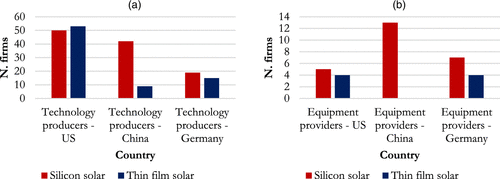
Source. i3 platform.
Notes. (a) Solar technology producers. (b) Equipment manufacturers.
Standardization of the Supply-Side Ecosystem Enables Economies of Scale and Meets Reliability Requirements.
Aligned efforts of heterogenous actors to leverage the mature supply-side ecosystems, standardize manufacturing equipment,13 focus on one semiconductor material, and global investments generated system-level knowledge that enabled the rapid scaling of silicon, which allowed it to keep pace with rising demand for renewable energy. At the firm level, this translated into most silicon technology producers transitioning to manufacturing (20 of 30 producers; 67%) with many firms quickly scaling manufacturing.
This rapid scaling and knowledge aggregation positioned silicon to meet the evolving requirements in grid connected markets where demand-side actors increasingly prioritized technology reliability and lifespan to reduce uncertainty for financiers. Figure 14 depicts the first time that technology producers began discussing issues of reliability, warranties and bankability. It shows that silicon technology producers began addressing reliability concerns early on: They began offering long-term warranties on their solar panels as early as 2001, with a significant increase in producers addressing this issue from 2010, as sales were taking off. Thus, their supply-side ecosystem strategies facilitated their alignment with the evolving preferences for reliability of utilities, developers, and financiers.
“Intangibles such as reliability, plentiful material supply, and safety [that] must also be considered, but are more difficult to quantify…. C-Si [silicon] will likely be the most expensive approach at the module level, however, it will compete effectively at the system level; not to mention that it is reliable and safe, material is abundant, an intense technology and manufacturing focus will drive costs lower, and a global infrastructure is emerging to exploit the technology.” (DB Solar Photovoltaics 2007)
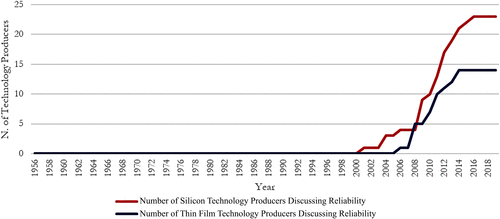
Source. Authors’ coding of technology producers’ business histories.
The ability of silicon to meet the evolving needs of demand-side actors contributed to silicon becoming the preferred choice in solar installations in the rapidly growing grid connected markets:
“Most of the growing number of installations of utility-scale solar photovoltaic (PV) operating capacity across the United States have been systems that make use of crystalline silicon panels.” (Foreign Affairs 2017)
Thus, the reinforcing loop between supply chain standardization, economies of scale, and technology producers’ innovation contributed to further performance improvements in silicon technology, and over time, links to the reinforcing loop between technological improvement and institutional support. This is despite thin film technology retaining a cost advantage per megawatt and higher versatility:
“Crystalline silicon is typically the technology of choice for solar PV project developers because of its higher cell efficiencies, space-efficient designs, and long module lifetimes. Thin-film modules, however, are often less expensive than crystalline silicon and can be more attractive to some project developers. Thin-film modules also can be more flexible, lighter, and easier to handle than crystalline silicon.” (Foreign Affairs 2017)
Thin Film Suffers from Balancing Loops (B3 and B4) in Supply-Side Ecosystem That Limits Manufacturing at Scale
Supply-Side Actors Had to Develop Customized Supply-Side Ecosystems.
In contrast to silicon technology producers, thin film ones pursued both product and process innovation (Table 3). Product innovation involved experiments with different semiconductor materials to optimize their chemical properties for solar energy (36 of 57 entrants, 63%), whereas process innovation focused on improving manufacturing for different thin film solar technologies (40 of 57 entrants, 70%).
Because thin film producers utilized a wide range of materials, their ecosystem development was necessarily diffused with each variant requiring material-specific configurations. Moreover, the manufacturing ecosystem for thin film in adjacent industries (e.g., electronics, display manufacturing) was less mature and robust than the one available for silicon, making recombination of knowledge more intensive in thin film than in silicon. A close examination of the business histories of thin film technology producers and ecosystem providers shows that both actors faced additional challenges to develop the supply-side ecosystem. To the extent that it was possible to reuse existing knowledge from adjacent industries and to leverage standardized knowledge from equipment providers, thin film technology producers used equipment developed in these related industries. However, even when doing so, thin film technology producers had to resolve extensive challenges to adapt the equipment to the use in the solar PV industry. For example, Nanosolar, a leading thin film producer, redeployed standard equipment from the coating industry but had to extensively modify it to fit solar PV production processes.
“One of the major benefits of printing solar cells is that standard equipment from the web-coating industry can be applied, including laboratory-scale, pilot-scale, and production-scale roll-to-roll web coating and drying systems. Nanosolar is working with leading providers of web coating equipment to refine and implement its processes.” (Nanosolar’s website 2004)
Alternatively, technology producers customized manufacturing equipment to their technology either via in-house integration of manufacturing equipment development as done by Xunlight:
“Xunlight designed, developed, engineered, and built its own manufacturing equipment.” (Hugin PR 2009)
or through firm-specific ecosystems in close collaboration with equipment providers, as by XsunX:
“XsunX, Inc., the developer of advanced, thin-film photovoltaic (TFPV) solar cell technologies and manufacturing processes, and Intevac, Inc., the world’s leading provider of magnetic media deposition equipment to the hard disk drive (HDD) industry, announce that they are working under a Joint Business Agreement to collaborate in the development of techniques and equipment for the production of commercially marketable processes and equipment for the manufacture of CIGS (copper indium gallium selenide) thin-film solar cells.” (PR Newswire 2009)
The pattern of close collaboration is also reflected in thin-film producers’ reliance on alliances versus contractual transactions for the development of the supply-side ecosystem: Table 4 shows a heavy reliance on firm-specific alliances (15 of 23 relationships; 65%), representing a 1.88 alliance-to-contract ratio.
Customization on the Supply-Side Ecosystem Limits Economies of Scale That Limit Ability to Meet Reliability Requirements.
Thin film producers initially transitioned to large scale manufacturing too—Table 2, Panel B, shows that 17 of 44 (39%) of thin film producers did so successfully. However, the supply-side strategies emphasizing customization, necessary given multiple technological variants and the targeting of multiple and varied solar application markets, limited the extent to which thin film technology producers could rely on knowledge generated by other firms in the solar PV industry and equipment providers. This fragmentation of knowledge at the system level and the limited availability of off-the-shelf equipment to rapidly build new production lines with minimal adaptation eventually slowed down their growth compared with their silicon counterpart that could rely on such off-the-shelf components. Thus, specificity of supply side-ecosystems (whether through in-house development or firm-specific equipment partnerships) coincided with higher scaling costs, limiting thin film from moving beyond the initial achieved scale as noted by industry experts:
“The only one who has done it so far is [Tempe, AZ-based] FirstSolar. That’s a company that essentially developed a first-of-kind technology and then duplicated it very quickly across the globe. Most other companies are really just ramping up their first production lines, and as a result they are not reaping any of the benefits yet of the growing PV market.” (Power Market Today 2010a)
As sales began taking off in 2010, despite the rapid increase in the number of technology producers focusing on offering long-term guarantees on solar panels, thin film technology producers lagged silicon ones on this aspect (see Figure 14) given difficulties in moving beyond the initial scale. Thus, the inability of the technology to benefit from positive externalities in supply-side ecosystems constrained its expansion beyond initial scale and its capacity to offer the reliability (in terms of bankability and warranties) required for success in the fastest growing market segments, as illustrated in the quotes below:
“Even as interest in the PV space generally soared last year, thin film had trouble living up to perhaps unrealistic hype and expectations. There were a lot of economic and other pressures, he said. This has been exacerbated by what’s known as the ‘bankability’ crisis. You have the global credit crisis, meaning there has been a lot less debt to go around and has made lenders a lot more risk-adverse in general in respect to PV.” (Power Market Today 2010b)
Furthermore, the new industry is still in flux. No single player is entrenched enough to guarantee it will be sticking around to provide replacement parts, service equipment, and honor warranties. In fact, just last month, Dow, one of the major producers of solar shingles, announced that it was pulling the plug on the product (though it will continue to support existing warranties).” (The Boston Globe 2016)
Of note, although customization gave thin film an advantage in markets such as building-integrated PV or integrated products, limited institutional support constrained market growth. As thin film producers struggled to scale and capture demand in the fastest growing markets, a wave of bankruptcies ensued.
Thus, the balancing loop associated with customized supply chains, limited scale economies, and producers exit resulted in thin film falling behind silicon. Despite lower cost per megawatt, thin film had higher overall costs (e.g., financing, warranties). Growing pessimism toward surviving firms increased uncertainty for developers and utilities about thin film long-term viability. Thus, thin film did not become the preferred choice in the fastest growing markets, nor could it capitalize on opportunities in other markets.
“A final challenge for thin film, and the one that has worsened the most over the past year, is the issue of bankability. As the corpses stack up – the most recent victims being US-based Uni-Solar and Germany’s Soltecture—it becomes harder for thin film manufacturers to convince investors they will still be around in ten or 20 years to stand behind their warranties. That leads to higher financing costs and further dents thin film’s waning cost advantage.” (Recharge 2012)
“Many developers are hesitant to bank on CIGS, mostly because of big names loudly going bankrupt or closing (Solyndra, Nanosolar, Miasolé and most recently TSMC Solar).” (Solar Power World 2016)
Discussion and Conclusion
Extensive and largely parallel literature streams examining technology and industry emergence have taken either an actor-centric or a systems perspective. Drawing on insights from each as a theoretical backdrop, we used historical methods to analyze rich quantitative and qualitative data from the solar PV industry and its two technologies—silicon and thin film. From an actor perspective, this approach allowed us to create hermeneutic accounts of who entered when, and what activities they focused on. From a systems perspective, it enabled us to examine how and why interactions among these activities created the temporal patterns and outcomes of (non)emergence. We next discuss the implications of our findings for the scholarly literature.
System-Dynamics Perspective Model for Technology (Non)Emergence
Our findings, anchored in Figure 9, show that industry and technology emergence reflect the interplay of reinforcing and balancing loops. Because both technologies benefited from substantial actor engagement, their divergent fates were not due to insufficient attention and investment by any or all actors. Instead, heterogenous actors’ strategies contributed to industry-level reinforcing dynamics that advanced solar energy adoption while generating technology-level differences. Rather than treating causality as linear and acyclic, our loop-based framework integrates actor-centric and systems perspective literatures to emphasize the feedback processes shaping coevolution at both micro (actor) and macro (system) levels.
Although technology producers entered the industry as early as the 1950s, limited and uneven engagement by other actors through the following decades constrained solar PV’s viability as an alternative to fossil fuels. Figure 9 reveals that after the 2000s, two reinforcing loops (R1 and R2) jointly supported industry growth. On the technical dimension, aligned actions by government agencies, technology producers, and industry associations contributed to a reinforcing loop (R1) driving sustained improvements in price and efficiency—which were critical to both technologies becoming viable alternatives to fossil fuels. On the demand dimension, aligned efforts by government agencies, utilities, technology producers and developers of complementary technologies for the smart grid generated another reinforcing loop (R2) that stimulated solar energy adoption and rapid growth in grid-connected markets, especially centralized ones.
Our analysis reveals that the above industry-level R1 and R2 loops were technology agnostic (arguably even favoring thin film), but follow-on technology-level loops were linked to the emergence of silicon and nonemergence of thin film. Although R1 and R2 contributed to industry scaling and sales takeoff, they also made salient the need for reliability (backed up by warranties) as a critical performance parameter for utilities, EPCs, and financiers investing in large-scale centralized application projects.
Figure 9(a) shows how silicon benefited from additional reinforcing loops that helped it to meet evolving requirements for reliability and economies of scale (R3). Here, the reinforcing loop for supply-side ecosystem (R4) emerged from serendipitous knowledge spillovers from mature silicon supply chains in adjacent industries and other countries (e.g., China and Germany). Specifically, silicon had an “ecosystem advantage”—Once silicon equipment was adapted from adjacent value chains to the specific requirements of the solar industry, technology producers and equipment providers could forge contractual relationships with each other due to relative ease of modification of existing designs and pursuit of standardization by both actors. In turn, this standardization facilitated alignment with evolving demand-side requirements in the fastest-growing markets and supported access to capital for scaling (intersection of R3 and R4).
In contrast, Figure 9(b) highlights how thin film was impaired by balancing loops that constrained its ability to match evolving demand-side requirements (B3). Here, the balancing loop for supply-side ecosystem (B4) reflected endemic factors that limited knowledge aggregation or spillovers: path dependencies created by multiple technical variants and incipient supply-side ecosystems implied that thin film technology producers and equipment providers had to invest in firm-specific alliances for customized equipment. The resultant lack of scale economies contributed to thin film’s inability to meet evolving demand-side requirements (intersection of B3 and B4) and capture growth in grid-connected markets.
Through the use of reinforcing and balancing loops, our study showcases how interdependencies among activities undertaken by heterogeneous actors positioned within various dimensions of the system shaped technology (non)emergence. Positive interactions contributed to industry takeoff, after government support (on both demand and supply sides) became consistent and stable.14 These positive interactions were technology-agnostic, both in the improvement of technological performance and in the growth of markets where solar energy could be leveraged. However, additional technology-specific interactions became key to the divergent fates. Supply-side and demand-side ecosystem interactions were reinforcing (positive) for silicon but balancing (negative) for thin film. Counterfactually, had markets grown evenly (particularly those where thin film had a technological advantage over silicon), or had maturity of supply-side ecosystems been similar for both technologies, thin film could also have successfully emerged and coexisted with silicon. Collectively, the loops in Figure 9 show how integrating both actor and system level perspectives help explain how interdependencies impacted emergence of silicon, but not thin film.
Dynamic Loops in Ecosystems Emphasize the Role of Interdependencies Across Heterogeneous Actors
By integrating system dynamics loops and the perspectives of heterogenous (beyond just one or few) actors, we contribute to research on industry emergence and technology management (Agarwal and Bayus 2002; Adner and Kapoor 2010; Eggers 2012; 2014; Moeen and Agarwal 2017). Although this literature conceptually recognizes technologies as complex systems of elements that need to reinforce each other, it has taken a linear perspective analytically (Kapoor and Furr 2015). In the solar PV context, for example, actor-centric studies note that silicon emerged as the winning technology but have been silent on mechanisms underlying this outcome, focusing instead on technology producers’ entry strategies (Kapoor and Furr 2015), survival differences across winning versus losing technology (Furr and Kapoor 2018), and of late entry and exit by suppliers and complementors and technology producers diversification into value chain activities (Szerb and Furr 2025). Such unitary focus in the above studies neglects the presence and choices of other actors, or relegates them to passive actors being orchestrated by technology producers. As a result, they are unable to fully explain how silicon eventually “won” and thin film eventually “lost.” In contrast, our integrated perspective reveals active participation by heterogeneous actors within the ecosystem; moreover, it uncovers interdependencies and nonlinearities in technology ecosystem development resulting in diverging paths for silicon and thin film, with implications for technology producers’ survival.
An important corollary is that the emergence of system dynamics loops was neither planned ex ante nor the consequence of strategic “mistakes” by thin film technology producers. Rather, thin film firms pursued strategies consistent with prescriptions from existing strategic and technology management studies recommending nascent stage strategies such as integration of capabilities, firm-specific alliances, and ecosystems (Adner and Kapoor 2010, Helfat and Campo-Rembado 2016, Moeen and Mitchell 2020, Wormald et al. 2021). Indeed, in-house integration and firm-specific ecosystems (customization) have been heralded as factors that increase the likelihood of technology dominance and competitive advantage (Adner and Kapoor 2010, Jacobides et al. 2018). In this case, however, such strategies were associated with knowledge fragmentation and weaker positive externalities at the technology level that limited the technology’s ability to take advantage of existing industry-level reinforcing loops (R1 and R2).
Although existence of multiple technological variants in thin film relative to silicon may have been a contributing factor to the thin film producers’ greater need for customization and adaptation, our study highlights that it was a nexus of factors operating at a system level rather than merely a consequence of decisions made by thin film technology producers alone. Here, we identify (a) the balancing loops that impeded coevolution of system elements and (b) the ex post competitive pressure by silicon, whose reinforcing loops enabled meeting the scaling needs of the solar PV industry. Thus, a true ecosystems perspective requires the simultaneous consideration of multiple actors and their interdependencies in impacting system dynamics rather than a singular focus on technology producers as architects who are solely responsible in terms of whether they adopted the “right” or “wrong” strategies. At any moment, any one actor, as in this case thin film technology producers, cannot possibly foresee how uncertain landscapes evolve due to such system level interdependencies, nor what ex post competitive pressures may be placed on a technology trajectory due to alternative technologies evolving at different scale and speed.
By integrating system dynamics loops and expanding the analysis to include heterogenous actors, we extend prior work in industry evolution which identified firm takeoff of technology producers as the condition for sales takeoff (Agarwal and Bayus 2002). We provide evidence that firm takeoff is a necessary but not sufficient condition for sales takeoff: Early presence of technology producers did not lead to sales takeoff. Consistent with studies taking a system perspective, studies examining nonfirm actors such as social movements, and recent work reviewing research on industry creation (Agarwal et al. 2025), we underscore that entry of other actors such as governments and industry associations contributed to the creation of a favorable institutional environment that created reinforcing loops toward sales takeoff, whereas equipment providers supported supply-side ecosystem development. In line with work emphasizing experimentation to build knowledge and reduce uncertainty (Knight 1921, Rosenberg 1982), our analysis shows that entry of actors spanning public, private, and academic sectors (Nelson and Rosenberg 1993) and path dependencies in their activity (Malerba 2002, Garud and Karnoe 2003) contributed to the development of demand, technology, institutions, and ecosystems aspects of the industry (Moeen et al. 2020, Agarwal et al. 2025).
Technology May Fail to Take Off Despite Entry of Heterogeneous Actors
Our study answers calls for industry evolution and market formation research examining both success and failure of technologies, given predominant focus on instances of successful emergence (Moeen et al. 2020, Struben et al. 2020). The few exceptions exploring nonemergence attribute failure to deferred resource commitment (Ozcan and Santos 2015) or divergent actor interests (Grodal and O’Mahony 2017). Within a systems perspective, failure has been linked to limited entry or investment by heterogenous actors in key system functions (Kamp 2002; Negro et al. 2007, 2008; Suurs and Hekkert 2009; Andersson et al. 2017), typically assessed through system-level indicators such as the number and diversity of actors or the variety of market niches (Hekkert et al. 2007; Negro et al. 2007; Dewald and Truffer 2011; Bergek 2019).
Consistent with prior work, we find that limited entry and inconsistent investment explain the early stagnation of the solar PV industry. Low efficiency, high costs, and unstable institutional support up to the 1990s deterred financiers and other ecosystem actors from investing, as noted by other scholars examining this industry (Watanabe et al. 2000, Jacobsson et al. 2004, Dewald and Truffer 2011, Vasseur and Kemp 2011). However, these factors do not explain the post-2000 divergence between PV technologies. Despite similarly “healthy” system indicators—such as substantial entry and investment, comparable actor diversity, and aligned interests—only silicon achieved large-scale commercial success. By integrating an actor-centric lens and examining how strategies of heterogeneous actors and their interdependencies contribute to system functions, we move beyond system-level indicators to address this gap (Bergek 2019). Thin film’s apparent system “health,” augmented by its flexibility across multiple markets, was undermined by interdependencies among government, utilities, and other demand-side actors that produced uneven growth across niches.
In doing so, we extend the systems perspective in two ways. First, we show that systems that appear robust in terms of variety and experimentation may nonetheless fail when interdependencies among actors generate counterbalancing dynamics. This positions actor-level interdependencies as a novel explanation for nonemergence, complementing existing ones (e.g., weak system functions, inattention from key sectors, misaligned interests). Second, we broaden the analytical boundary to consider supply- and demand-side ecosystems in their own right rather than treating them as part of entrepreneurial experimentation as primarily done by systems studies. Whereas prior research has focused mainly on research institutes, governments, and producer firms (the R1 and R2 loops), we shift attention to interactions among manufacturers, equipment suppliers, and demand-side actors (R3/B3 and R4/B4 loops) in shaping broader (eco)system evolution.
Silicon Emerged as a Dominant Standard due to an Ecosystem Advantage Rather Than Merely a First Mover Advantage of the Technology Producers
As noted in the research context, silicon was introduced earlier than thin film, raising the question of whether and how the maturity of silicon benefited its technological trajectory. We identify two analytically distinct forms of advantage: a technology-related first mover advantage, rooted in industry-specific learning, and an ecosystem-related first mover advantage, derived from the pre-existing maturity of supply chains in related industries. Although the age of silicon PV technology may have generated some learning effects from early experience, a more consequential advantage arose from the age and embeddedness of silicon supply chains across related sectors. This ecosystem maturity enabled silicon to experience the additional reinforcing loops described above (R3 and R4), in contrast to the balancing loops constraining thin film (B3 and B4).
Classic research on first mover advantage identifies isolating mechanisms such as learning effects, economies of scale, preemption of scarce assets, establishment of dominant standards, and the creation of switching costs that contribute to sustained competitive edge (Lieberman and Montgomery 1988, Schilling 2023). Our evidence suggests that these mechanisms do not explain the divergence between silicon and thin film trajectories. Within-industry learning effects were limited because production volumes remained modest until after 2000, constraining cumulative improvement. Economies of scale (Klepper 1996) was not a primary cause of silicon advantage given that industry sales took off after 2010; rather, it emerged as a consequence of system-level reinforcing dynamics. Similarly, silicon dominance was not predetermined through a priori standard setting (Rosenkopf and Tushman 1998) or ex ante intended competition (Abernathy and Utterback 1978, Anderson and Tushman 1990), but emerged endogenously. Nor did either technology preempt scarce resources, because both relied on similar public R&D infrastructures, policy support, and financial incentives. Likewise, switching costs and customer loyalty were negligible in the industry’s formative period given limited adoption and experimentation across market niches. In sum, canonical first mover mechanisms were either absent or became consequences of system dynamics rather than their causes.
Thin film’s trajectory further supports this interpretation. Developed to address silicon’s high costs and efficiency limitations, thin film achieved comparable performance before widespread commercialization. As Figure 10 illustrates, thin film efficiency increased rapidly prior to sales takeoff and reached parity with multicrystalline silicon by 2008—two years before industry expansion. Likewise, LCOE declined at similar rates across both technologies (Figure 8). Industry analyses (Hoppmann et al. 2013, 2020) note that, even into the 2010s, it remained uncertain which technology would ultimately provide the best cost-to-performance ratio. Thus, thin film’s nonemergence cannot be attributed to inferior technology or cost structure, further undermining explanations based on technology-level learning or early firm entry.
The contrasting trajectories point to an alternative mechanism that we term an ecosystem-related first mover advantage. Whereas extant research on first mover advantage has emphasized firm- and technology-level isolating mechanisms, our evidence highlights ecosystem maturity and cross-industry learning spillovers as systemic enablers of persistence. Suarez and Lanzolla (2007) argue that sustainability of first mover advantage depends on the coevolution of technological and market change within the focal industry. Our findings extend this logic by showing that the endurance of such advantage also depends on how adjacent ecosystems shape the pace and pattern of coevolution. In silicon’s case, long-established supply chains in related industries—notably semiconductors—had accumulated decades of process know-how, standardized equipment, and global manufacturing capabilities. These upstream ecosystems generated learning spillovers and replication economies that silicon producers could leverage to satisfy the evolving requirements of downstream actors such as utilities and project developers. Large-scale investments, especially in China, further amplified reinforcing feedbacks between manufacturing capacity, equipment standardization, and demand growth. Thin film producers, lacking comparable upstream maturity, faced fragmented supply chains and weaker cross-industry linkages, which limited their ability to meet the reliability and scale demands of the utilities that anchored the industry’s demand-side growth.
In highlighting this ecosystem-level mechanism, we extend research on first mover advantage by shifting the analytical focus from firm-level isolating mechanisms to the systemic conditions under which such mechanisms emerge. Our findings reveal that first mover advantages are not simply the outcome of early strategic action or superior technology but rather the manifestation of reinforcing or balancing system dynamics shaped by a technology’s ability to leverage mature ecosystems in adjacent industries. In contrast to existing views that treat these mechanisms as exogenous, we show that economies of scale, standard dominance, and customer lock-in arise endogenously once supply- and demand-side ecosystems align. This reconceptualization positions cross-ecosystem interdependencies as the core contingency shaping whether technological trajectories consolidate through reinforcing loops or destabilize through balancing ones.
Limitations and Future Research
Our single industry deep dive leverages rich contextual data to infer the best explanation for technology (non)emergence. Contextual factors may well limit its generalizability. Additional deep-dives into other technologies and industries can address this limitation and identify relevant contingencies. For example, the solar PV industry represented a context where support from institutional actors was key, given its regulated nature and perceived urgency for renewable fuels as a solution to the grand challenge of climate change. Here, we remained ideologically agnostic on the role of government intervention. Although we note that institutional engagement led to uneven growth of markets, we do not delve into normative implications of focusing attention and resources on some market segments or technologies and industries more than others. We also abstracted away from differences in salience and variance in societal beliefs (Mohliver et al. 2023), including through social construction of urgency and imperatives (Agarwal et al. 2021). Future studies can examine (non)emergence in relatively unregulated industries or as solutions to problems that do not constitute grand challenges. Doing so may reveal the range of actors, and how and why reinforcing and balancing loops may develop differently due to the confluence of their strategies.
To point, we hope additional studies extend beyond the producer-primacy narrative in industry/technology evolution studies to systematically identify patterns of entry and exit of other actors. Also, our study focused on activities (and underlying capabilities) of heterogeneous actors, noting their inducements in passing (e.g. positive societal desires for government agencies, government mandates to utilities). Future studies could unpack the interactions of inducements and capabilities in shaping activities within and across heterogeneous actors. These studies would move beyond trends in entry and exit to focus on underlying sources of these phenomena and their implications for industry and technology evolution.
We acknowledge that our study characterizes thin film as nonemergent, but it may well be a case of industry stall. Given latent demand in markets where thin film has significant technological advantages, future takeoff remains possible. Thin film may experience a pattern similar to that of the electric car, which stalled for more than 100 years (Kirsch 1996), and is only now successfully taking off. Also, our study focuses on thin film’s limited success as a stand-alone technology in the product market.15 Yet, the knowledge generated by thin film actors may very well find other uses within the industry. For instance, similarly to the emergence of hybrids in the automobile carburetor industry (Furr and Snow 2015), thin film knowledge has begun to be repurposed by silicon technology producers to create hybrid solar cells, thus supporting silicon technology producers gain further market share. Future work can examine how outcomes in one market (e.g., the product market) shape the success or failure of the same technology in other markets (e.g., technology or value chain markets), and how knowledge generated in firms that eventually failed may also contribute to the development of adjacent industries. This is particularly important for general purpose technologies deployable across multiple industries, where cross-industry and cross-value chain spillovers may play a central role in the evolution of general purpose technologies.
Moreover, although the sample period of our study ended in 2020, our framework is nonetheless useful for predicting outcomes when any one of the reinforcing or balancing loops changes course. For example, when the future of industries relies on institutional support as a critical catalyst, reversal of policies—such as recent changes in the U.S. approach toward renewable fuels in general and solar in particular—may well result in lower industry growth or stalls through a cascading sequence of effects. Termination of U.S. solar programs and tightened eligibility for tax credits will predictably create balancing loops within the system. This is consistent with industry observers expecting a boom–bust dynamic in which developers accelerate projects to qualify for remaining support, followed by declining demand and potential firm exit. Beyond these cyclical effects, our framework spotlights additional reverberating effects: Reduced demand in previously fast-growing markets and lower investment in technology and ecosystem development will likely slow technological improvement and increase perceived financing risk. In addition to capacity declines to meet lower demand, a reduction in pace of knowledge generation implies that apparent booms may well mask a deterioration of the system required for self-sustaining diffusion and paradoxically may result in an increased dependence on subsidies for the future of the industry.
Conclusion
Our study shows that technological and industry evolution are best understood as endogenous system processes rather than sequences of independent causal events. The divergent solar technologies trajectories show that success and failure stem from reinforcing and balancing loops arising from interdependencies among heterogeneous actors. By integrating actor-centric and systems perspectives, we show how microlevel strategic actions aggregate through feedback processes that amplify or dampen momentum. Technologies emerge when actions create system-level alignment and knowledge aggregation within reinforcing loops, whereas fragmentation and uneven growth across system elements generate balancing loops that dampen momentum. Importantly, these patterns are endogenous to the system: What appear as firm- or technology-level outcomes are in fact emergent properties of feedback processes spanning the system.
Embracing endogeneity as a defining feature of system-level inquiry shifts attention from identifying missing functions or weak actors toward explaining how their interactions generate distinct evolutionary dynamics. Although this orientation challenges conventional methodological expectations of isolating discrete, linear causal effects for strict causal inference, we argue that endogeneity represents a theoretical opportunity rather than an empirical limitation by foregrounding the recursive and path-dependent nature of technological change—(Rosenberg 1982, Nelson 1994, Malerba 2002, Hekkert et al. 2007, Bergek et al. 2008). Consistent with history-friendly studies, our analysis captures how microlevel actor strategies coalesce into macro-level loops that shape divergent trajectories of (non)emergence.
In doing so, our framework positions interdependence and feedback as core organizing principles of technological and industry evolution and provides a foundation for integrating actor-centric and systems perspectives to advance a more complete understanding of technology and industry (non)emergence.
The manuscript has benefited from comments from the editor Stefano Brusoni, three anonymous reviewers, Mahka Moeen, and seminar participants at the University of Maryland, Bocconi University, Bayes Business School, Baruch College, and conference presentations in annual meetings of the Academy of Management and Strategic Management Society. All errors are the authors’.
1 Although our focus is on the United States, the global solar PV industry ecosystem benefited substantially from investments by governments worldwide in both solar technologies. Although the U.S. government invested heavily to develop different variants of thin film solar (Hoppmann et al. 2020, Hoppmann 2021), China more heavily supported the development of silicon solar while still investing in thin film technologies (Huo and Zhang 2012). Germany funneled support to both, with a slightly greater emphasis on silicon (Vasseur and Kemp 2011, Quitzow 2015).
2 This includes all firms (planning on) manufacturing solar cells and modules. Firms within the extended ecosystem (e.g., upstream producers of semiconductor materials and equipment and downstream/complementary firms such as utilities, sales and installation services, balance-of-system complements) are included in other categories below. This categorization is in line with studies on solar technology producers (Kapoor and Furr 2015, Furr and Kapoor 2018), solar PV industry ecosystem (Hannah and Eisenhardt 2018), and solar value chain (Hipp and Binz 2020).
3 The “i3 platform” data are maintained by the Cleantech Group, a leading industry consulting firm specializing in renewables, and are widely used by corporations, investors, and governments and in scholarly studies of the solar PV industry (Zobel et al. 2017). The trends in industry entrants and descriptive statistics of their key characteristics based on this source are comparable to those reported in other scholarly studies (Kapoor and Furr 2015, Furr and Kapoor 2018) that use another proprietary data set compiled by Greentech Media.
4 Our combined approach is distinct from narrowly defined causal inference approaches (e.g., DAGs) that identify static and one-directional causal effects under assumptions of independence and no feedback loops. Such an approach is ill suited for a study of industry and technology emergence that seeks to integrate actor-centric and systems perspectives to identify the micro-foundations of system’s elements and their co-evolution. Studies of technologies and industry emergence are characterized by endogeneity in which prior “causes” are continually reshaped by subsequent developments, and where outcomes are themselves endogenous to system-level feedback, so they cannot be represented adequately by alternatives such as DAGs.
5 Each technology required high technology-specific investments, so firms rarely invested in both at the same time: Only four entrants (all startups) attempted to commercialize both silicon and thin film solar at the same time. Two firms are still active in the solar PV industry at the end of our study. One startup went bankrupt in 2010 and one startup left the solar PV industry but is still active as an unmanned aerial vehicle firm.
6 The instability of the institutional environment is noted also in other papers examining the PV context in the United States (Jones and Bouamane 2012).
7 Latent demand is exemplified by the following quote, which also draws attention to inconsistent institutional support during the period: “Solar energy enthusiasts have long dreamed of replacing fossil fuels and nuclear power, plagued by environmental and political concerns, with energy extracted from sunlight. The development of solar power has been sporadically accelerated in the past three decades by oil shortages, which led to Government subsidies for solar development, and by the need for virtually inexhaustible power supplies aboard space vehicles, which spurred technological innovation” (New York Times 1988, p. C1). Accessed March 29, 2021.
8 The issue is illustrated by this quote: “Primary electricity generation sources offer 24 hour per day availability; solar PV does not. Solar PV offers a rough equivalent of three to eight hours effective electricity generation in a day” (DB Solar Photovoltaics 2007, p. 19). Accessed April 8, 2021.
9 We also ran linear probability models for associations between technology and entry into each of the four markets. In the Online Appendix, Table C1, coefficients represent predicted probabilities of silicon relative to thin film firms. The high standard errors (low precision) in Models 1–3 suggest producers of either technology did not have any higher probabilities than the other of choosing utility-scale centralized market (Model 1), decentralized rooftop market (Model 2), or building-integrated solar market (Model 3). The coefficient for Model 4 (β = −0.607, p = 0.044) shows that thin film producers targeted nongrid connected markets (e.g., integrated products) more frequently than silicon producers. These regressions are consistent with both silicon and thin film producers being equally positioned to take advantage of the growth in grid connected markets, and thin film producers additionally positioned in other markets (e.g., integrated products) too.
10 In the presales takeoff period, 57% (8/14) of the quotes were technical performance and 43% (6/14) was about reliability. In the postsales takeoff period, 43% (10/23) of the quotes were about technical performance and 57% (13/23) of the quotes were about reliability.
11 Process innovations were not noted as prominently as product innovations in the silicon business histories, likely because as discussed below, silicon producers could rely on equipment providers for such innovations.
12 This is consistent with statistics reported in other research (Vasseur and Kemp 2011, Huo and Zhang 2012, Quitzow 2015, Binz et al. 2017, Binz and Anadon 2018).
13 We focus here on standardization of manufacturing equipment in silicon solar PV. This does not preclude variance in the quality of the products of different manufacturers; for example, some manufacturers such as SunPower focus on premium modules.
14 This fact is neither an endorsement of government support or of lobbying activity to garner government intervention, nor is it generalizable to other industry contexts. It simply reflects that for the solar PV industry context, consistent and stable government support was the critical catalyst for this industry to emerge as a viable alternative to fossil fuels. We deliberately abstain from making any value judgments of the fact.
15 We thank an anonymous reviewer for suggesting this interesting point.
References
- (1978) Patterns of industry innovation. Tech. Rev. 80(7):41–47.Google Scholar
- (2010) Value creation in innovation ecosystems: How the structure of technological interdependence affects firm performance in new technology generations. Strategic Management J. 31(3):306–333.Crossref, Google Scholar
- (2002) The market evolution and sales takeoff of product innovations. Management Sci. 48(8):1024–1041.Link, Google Scholar
- (2014) Abandoning innovation in emerging industries. Customer Needs Solutions 1:91–104.Crossref, Google Scholar
- (2025) Creating new industries: The generative role of heterogenous actors. Acad. Management Ann. 19(2):476–521.Crossref, Google Scholar
- (2009) Strategic renewal of organizations. Organ. Sci. 20(2):281–293.Link, Google Scholar
- (2021) Leveraging private enterprise: Incubation of new industries to address the public sector’s mission-oriented grand challenges. Strategy Sci. 6(4):385–411.Link, Google Scholar
- (2008) Technology and industry evolution. Shane S, ed. The Handbook of Technology and Innovation Management (Wiley, Hoboken, NJ), 1–55.Google Scholar
- (1994) Fools rush in? The institutional context of industry creation. Acad. Management Rev. 19(4):645–670.Crossref, Google Scholar
- (1990) Technological discontinuities and dominant designs: A cyclical model of technological change. Admin. Sci. Quart. 35:604–633.Crossref, Google Scholar
- (2017) The critical role of informed political direction for advancing technology: The case of Swedish marine energy. Energy Policy 101:52–64.Crossref, Google Scholar
- (2015) Hydrogen technological innovation systems in practice: Comparing Danish and American approaches to fuel cell development. J. Clean Production 94:359–368.Crossref, Google Scholar
- (2020) History‐informed strategy research: The promise of history and historical research methods in advancing strategy scholarship. Strategic Management J. 41(3):343–368.Crossref, Google Scholar
- (1988) Competing technologies, increasing returns and lock-ins by historical events. Econom. J. 99:116–131.Google Scholar
Associated Press (2010) Energy experts focus on policy, technology. Associated Press Newswires (December 9), https://apnews.com.Google Scholar- (2006) How user innovations become commercial products: A theoretical investigation and case study. Res. Policy 35(9):1291–1313.Crossref, Google Scholar
- (2019)
Technological innovation systems: A review of recent findings and suggestions for future research . Boons F, McMeekin A, eds. Handbook of Sustainable Innovation (Edward Elgar Publishing, Cheltenham, UK), 200–218.Crossref, Google Scholar - (2008) Analyzing the functional dynamics of technological innovation systems: A scheme of analysis. Res. Policy 37(3):407–429.Crossref, Google Scholar
- (2018) Unrelated diversification in latecomer contexts—The emergence of the Chinese solar photovoltaics industry. Environ. Innovation Soc. Transit 28:14–34.Crossref, Google Scholar
- (2017) Spatial lifecycles of cleantech industries: The global development history of solar photovoltaics. Energy Policy 101:386–402.Crossref, Google Scholar
- (2016) History and nanoeconomics in strategy and industry evolution research: Lessons from the Meiji‐Era Japanese cotton spinning industry. Strategic Management J. 37(1):45–65.Crossref, Google Scholar
Business Wire (2006) Spire Corp–SPIR: Announces 100 megawatt turnkey solar module production line. (September 5), https://www.businesswire.com.Google ScholarBusiness Wire (2007) Solaria secures solar cell supply agreement for 1.35 GW, announces $50M Series C round; long-term supply from Q-Cells positions Solaria for success. (July 23), https://www.businesswire.com.Google ScholarDepartment of Energy (2015) Assuring solar modules will last for decades. (April 13), https://www.energy.gov.Google ScholarDeutsche Bank (2007) Solar Photovoltaics Technology and Economics: Thin Films and Crystalline Silicon (Deutsche Bank, Frankfurt am Main, Germany), 1–48.Google Scholar- (2011) Market formation in technological innovation systems: Diffusion of photovoltaic applications in Germany. Indust. Innovation 18(03):285–300.Crossref, Google Scholar
- (1982) Technological paradigms and technological trajectories: A suggested interpretation of the determinants and directions of technical change. Res. Policy 11(3):147–162.Crossref, Google Scholar
Dow Jones News Service (2008) Utilities still seek renewable energy despite tax credit uncertainty. (May 21), https://www.dowjones.com.Google Scholar- (2012) Falling flat: Failed technologies and investment under uncertainty. Admin. Sci. Quart. 57(1):47–80.Crossref, Google Scholar
- (2014) Competing technologies and industry evolution: The benefits of making mistakes in the flat panel display industry. Strategic Management J. 35(2):159–178.Crossref, Google Scholar
Energy Weekly News (2010) Energy policy; new research on energy policy from Duke University summarized. (July 23), https://www.energyweeknews.com.Google ScholarEnergy/Extra (2012) DOE hopes wary solar-energy investors will be encouraged by new test sites. (December 3), https://insideenergy.org.Google ScholarEnvironment News Service (2000) Renewables and efficiency can ease energy squeeze. Environment News Service (October 4), https://www.ens-newswire.com.Google ScholarEnvironment News Service (2001) New solar technologies emerge to meet electricity demand. Environment News Service (April 25), https://www.ens-newswire.com.Google Scholar- (2009) Restructuring a green grid: Legal challenges to accommodate new renewable energy infrastructure. Environ. Law 39(4):977–1014.Google Scholar
- (2011) The study of emerging industries: Recognizing and responding to some central problems. J. Bus. Ventures 26(5):589–602.Crossref, Google Scholar
Foreign Affairs (2017) Utility solar photovoltaic capacity is dominated by crystalline silicon panel technology. (December 13), https://www.foreignaffairs.com.Google Scholar- (2018) Capabilities, technologies, and firm exit during industry shakeout: Evidence from the global solar photovoltaic industry. Strategic Management J. 39(1):33–61.Crossref, Google Scholar
- (2015) Intergenerational hybrids: Spillbacks, spillforwards, and adapting to technology discontinuities. Organ. Sci. 26(2):475–493.Link, Google Scholar
- (2022) Shaping nascent industries: Innovation strategy and regulatory uncertainty in personal genomics. Admin. Sci. Quart. 67(4):915–967.Crossref, Google Scholar
- (2003) Bricolage versus breakthrough: Distributed and embedded agency in technology entrepreneurship. Res. Policy 32(2):277–300.Crossref, Google Scholar
- (1994) A socio-cognitive model of technology evolution: The case of cochlear implants. Organ. Sci. 5(3):344–362.Link, Google Scholar
- (2002) Institutional entrepreneurship in the sponsorship of common technological standards: The case of Sun Microsystems and Java. Acad. Management J. 45(1):196–214.Crossref, Google Scholar
Global Power Report (2007) Solar power heats up, fueled by incentives and the prospects of utility-scale projects. (November 1).Google Scholar- (1997) Will it ever fly? Modeling the takeoff of really new consumer durables. Marketing Sci. 16(3):256–270.Link, Google Scholar
- (1982) Time paths in the diffusion of product innovations. Econom. J. 92(367):630–653.Google Scholar
- (2015) How the Internet Became Commercial: Innovation, Privatization, and the Birth of a New Network (Princeton University Press, Princeton, NJ).Crossref, Google Scholar
- (2017) How does a grand challenge become displaced? Explaining the duality of field mobilization. Acad. Management J. 60(5):1801–1827.Crossref, Google Scholar
- (2018) How firms navigate cooperation and competition in nascent ecosystems. Strategic Management J. 39(12):3163–3192.Crossref, Google Scholar
- (2007) Functions of innovation systems: A new approach for analysing technological change. Tech. Forecasting Soc. Change 74(4):413–432.Crossref, Google Scholar
- (2016) Integrative capabilities, vertical integration, and innovation over successive technology lifecycles. Organ. Sci. 27(2):249–264.Link, Google Scholar
- (2009) From Pabst to Pepsi: The deinstitutionalization of social practices and the creation of entrepreneurial opportunities. Admin. Sci. Quart. 54(4):635–667.Crossref, Google Scholar
- (2020) Firm survival in complex value chains and global innovation systems: Evidence from solar photovoltaics. Res. Policy 49(1):103876.Crossref, Google Scholar
- (2021) Hand in hand to Nowhereland? How the resource dependence of research institutes influences their co-evolution with industry. Res. Policy 50(2):104–145.Crossref, Google Scholar
- (2020) Why matter matters: How technology characteristics shape the strategic framing of technologies. Res. Policy 49(1):103882.Crossref, Google Scholar
- (2014) Compulsive policy-making: The evolution of the German feed-in tariff for solar photovoltaic power. Res. Policy 43(8):1422–1441.Crossref, Google Scholar
- (2013) The two faces of market support: How deployment policies affect technological exploration and exploitation in the solar photovoltaic industry. Res. Policy 42(4):989–1003.Crossref, Google Scholar
- (2009) Xunlight announces successful demonstration of wide-web roll-to-roll photovoltaic manufacturing process. (May 23), https://www.huginonline.com.Google Scholar
- (2012) Lessons from photovoltaic policies in China for future development. Energy Policy 51:38–45.Crossref, Google Scholar
- (2005) The co‐evolution of capabilities and transaction costs: Explaining the institutional structure of production. Strategic Management J. 26(5):395–413.Crossref, Google Scholar
- (2018) Towards a theory of ecosystems. Strategic Management J. 39:2244–2276.Crossref, Google Scholar
- (2004) Transforming the energy system: The evolution of the German technological system for solar cells. Tech. Anal. Strategic Management 16(1):3–30.Crossref, Google Scholar
- (2008) Historical analysis of investment in solar energy technologies. National Renewable Energy Laboratory (NREL), NREL/TP-520-43602.Google Scholar
- (1979) Mixing qualitative and quantitative methods: Triangulation in action. Admin. Sci. Quart. 24(4):602–611.Crossref, Google Scholar
- (2012) “Power from Sunshine”: A business history of solar energy. Harvard Business School Working Paper No. 12-105, Harvard Business School, Boston.Google Scholar
Journal of Engineering (2016) Sandia Labs tapped again to lead national solar evaluation centers. (May 23), https://www.engineering.com.Google Scholar- (2002) Learning in wind turbine development—A comparison between The Netherlands and Denmark. Thesis, Utrecht University, Utrecht, Netherlands.Google Scholar
- (2015) Complementarities and competition: Unpacking the drivers of entrants’ technology choices in the solar photovoltaic industry. Strategic Management J. 36(3):416–436.Crossref, Google Scholar
- (2020) Progress and setbacks: The two faces of technology emergence. Res. Policy 49(1).Crossref, Google Scholar
- (2000) Industry self-regulation without sanctions: The chemical industry’s responsible care program. Acad. Management J. 43(4):698–716.Crossref, Google Scholar
- (1996) The electric car and the burden of history: Studies in automotive systems rivalry in America. Doctoral dissertation, Stanford University, Stanford, CA.Google Scholar
- (2002) Visions of transportation: The EVC and the transition from service-to product-based mobility. Bus. History Rev. 76(1):75–110.Crossref, Google Scholar
- (1996) Entry, exit, growth, and innovation over the product life cycle. Amer. Econom. Rev. 86(3):562–583.Google Scholar
- (2015) Experimental Capitalism: The Nanoeconomics of American High-Tech Industries (Princeton University Press, Princeton, NJ).Crossref, Google Scholar
- (1921) Risk, Uncertainty and Profit (Hart, Schaffner, and Marx, New York).Google Scholar
- (2023) The aesthetic evolution of product categories. Admin. Sci. Quart. 68(3):734–780.Crossref, Google Scholar
- (2003) The vanishing hand: The changing dynamics of industrial capitalism. Industrial Corporate Change 12(2):351–385.Crossref, Google Scholar
- (2017) Market mediators and the trade-offs of legitimacy-seeking behaviors in a nascent category. Organ. Sci. 28(3):447–470.Link, Google Scholar
- (2018) Collective action and market formation: An integrative framework. Strategic Management J. 39(1):242–266.Crossref, Google Scholar
- (1988) First-mover advantages. Strategic Management J. 9(S1):41–58.Crossref, Google Scholar
- (2014) Historical sources and data. Bucheli M, Wadhwani RD, eds. Organizations in Time: History, Theory, Methods (Oxford University Press, Oxford, UK), 284–304.Google Scholar
- (2014) History and evolutionary theory. Bucheli M, Wadhwani RD, eds. Organizations in Time: History, Theory, Methods (University Press, Oxford, UK), 192–216.Google Scholar
- (2003) Social movements, field frames and industry emergence: A cultural–political perspective on US recycling. Socioeconom. Rev. 1(1):71–104.Crossref, Google Scholar
Malerba (2002) Sectoral systems of innovation and production. Res. Policy 31:247–264.Crossref, Google Scholar- (1999) History friendly models of industry evolution: The case of the computer industry. Industrial Corporate Change 8:3–40.Crossref, Google Scholar
- (1992) The role of executive team actions in shaping dominant designs: Towards the strategic shaping of technological progress. Strategic Management J. 13(52):137–161.Crossref, Google Scholar
- (1991) Dual clocks: Entry order influences on incumbent and newcomer market share and survival when specialized assets retain their value. Strategic Management J. 12(2):85–100.Crossref, Google Scholar
- (2017) Incubation of an industry: Heterogenous knowledge bases and modes of value capture. Strategic Management J. 38:566–587.Crossref, Google Scholar
- (2020) How do pre‐entrants to the industry incubation stage choose between alliances and acquisitions for technical capabilities and specialized complementary assets? Strategic Management J. 41(8):1450–1489.Crossref, Google Scholar
- (2020) Building industries by building knowledge: Uncertainty reduction over industry milestones. Strategy Sci. 5(3):218–244.Link, Google Scholar
- (2023) Corporate social counterpositioning: How attributes of social issues influence competitive response. Strategic Management J. 44(5):1199–1217.Crossref, Google Scholar
- (1992) The Lever of Riches: Technological Creativity and Economic Progress (Oxford University Press, Oxford, UK).Crossref, Google Scholar
- (2003) Knowledge and Competitive Advantage: The Coevolution of Firms, Technology, and National Institutions (Cambridge University Press, Cambridge, UK).Crossref, Google Scholar
Nanosolar website (2004) Process technology. (August 3), https://web.archive.org/web/20040803075753/http://www.nanosolar.com/processtech.htm.Google Scholar- (2007) Explaining the failure of the Dutch innovation system for biomass digestion—A functional analysis. Energy Policy 35(2):925–938.Crossref, Google Scholar
- (2008) The bumpy road of biomass gasification in the Netherlands: Explaining the rise and fall of an emerging innovation system. Tech. Forecasting Soc. Change 75(1):57–77.Crossref, Google Scholar
- (1994) The co-evolution of technology, industrial structure, and supporting institutions. Industrial Corporate Change 3(1):47–63.Crossref, Google Scholar
- (1993) Technical innovation and national systems. Nelson RR, ed. National Innovation Systems: A Comparative Analysis (Oxford University Press, Oxford, UK), 3–22.Google Scholar
NUPAC (2017) Charging up: The renewable energy market. (February 1).Google Scholar- (2018) Playing cat and mouse: Contests over regulatory categorization of dietary supplements in the United States. Acad. Management J. 61(5):1789–1820.Crossref, Google Scholar
- (2015) The market that never was: Turf wars and failed alliances in mobile payments. Strategic Management J. 36(10):1486–1512.Crossref, Google Scholar
- (2014) Thin-film solar cells freed from toxic processing. IEEE Spectrum. (June 25), https://spectrum.ieee.org.Google Scholar
- (2016) CIGS thin film: Solar’s black sheep is finding its feet. Solar Power World (January 4), https://www.solarpowerworldonline.com.Google Scholar
- (2024) From hypothesis testing towards inference to best explanation: A PEEBI testimonial structure for abductive studies in strategy. Preprint, submitted February 11, http://dx.doi.org/10.2139/ssrn.5073982.Google Scholar
Platts Energy Trader (2017) Solar PV installations in Q1 totaled 2,044 MW. (June 9), https://www.prnewswire.com/news-releases/us-solar-market-adds-2-gigawatts-of-pv-in-q1-2017-300470723.html?utm_source=chatgpt.com.Google ScholarPower Market Today (2010a) Major renewable question: Solar PV technology’s future? (March 30), https://www.powermarkettoday.com.Google ScholarPower Market Today (2010b) Thin-film solar PV technology faces reality check. (May 3), https://www.powermarkettoday.com.Google ScholarPR Newswire (2009) XsunX and Intevac team up to develop breakthrough thin-film photovoltaic manufacturing technology; XsunX and Intevac to leverage cross-industry expertise to improve thin film solar cells. (September 21).Google ScholarPR Newswire (2015) DTE Energy begins construction on solar array in Romulus. (August 3), https://www.prnewswire.com.Google Scholar- (2015) Xcel wants to test battery storage for solar power in Denver area. Bizjournals (October 30), https://www.bizjournals.com.Google Scholar
- (2015) Dynamics of a policy-driven market: The co-evolution of technological innovation systems for solar photovoltaics in China and Germany. Environment. Innovation Soc. Transit 17:126–148.Crossref, Google Scholar
Recharge (2012) Some rays of light amid the gloom for thin-film. (May 18), https://www.rechargenews.com.Google ScholarReuters News (2008) New solar CIGS cells creep up on silicon (April 2), https://www.reuters.com/article/business/environment/new-solar-cigs-cells-creep-up-on-silicon-idUSN02297477/.Google Scholar- (1991) Feedback Thought in Social Science and Systems Theory (University of Pennsylvania Press, Philadelphia).Google Scholar
- (1990) Endogenous technological change. J. Political Econom. 98(5, Part 2):S71–S102.Crossref, Google Scholar
- (1982) Inside the Black Box: Technology and Economics (Cambridge University Press, Cambridge, UK).Google Scholar
- (1986) How the West Grew Rich: The Economic Transformation of the Industrial World (Basic Books, New York).Google Scholar
- (1998) The coevolution of community networks and technology: Lessons from the flight simulation industry. Industrial Corporate Change 7(2):311–346.Crossref, Google Scholar
- (2005) Technological discontinuities and complementary assets: A longitudinal study of industry and firm performance. Organ. Sci. 16(1):52–70.Link, Google Scholar
- (2014) Light emitting diodes and the lighting revolution: The emergence of a solid-state lighting industry. Res. Policy 43(10):1730–1746.Crossref, Google Scholar
- (2023) Strategic Management of Technological Innovation (McGraw-Hill, New York).Google Scholar
- (2002) Experimental and Quasi-Experimental Designs for Generalized Causal Inference (Houghton Mifflin Company, Boston).Google Scholar
- (2009) Tilting at windmills? The environmental movement and the emergence of the U.S. wind energy sector. Admin. Sci. Quart. 54(1):123–155.Crossref, Google Scholar
SKRIN Newswire (2012) Hevel Solar partners with Oerlikon Solar to open first thin film research and development center in Russia. (February 22).Google ScholarSNL Power Daily Market Report (2014) Xcel Energy CEO reiterates that utility-scale is the ‘right way’ to add solar. (May 2), https://www.spglobal.com.Google ScholarSNL Power Daily with Market Report (2017) Solar PV installations in Q1 totaled 2,044 MW. (June 9), https://www.spglobal.com.Google ScholarSociété Générale (2008) Renewable energy: Silicon and solar PV: Still lots of questions and very few answers! Société Générale, Paris, 1.Google ScholarSolar Energy Industries Association (SEIA) (2014) U.S. Solar Market Insight Report 2014 Year in Review (Solar Energy Industries Association, Washington, DC), 1–5.Google ScholarState Legislatures (2011) Rise and shine: the clouds of high costs haven’t darkened the solar promise. (December 1), https://www.ncsl.org.Google Scholar- (2000) Business Dynamics: Systems Thinking and Modeling for a Complex World (McGraw-Hill, New York).Google Scholar
- (2020) Collective action problems and resource allocation during market formation. Strategy Sci. 5(3):245–270.Link, Google Scholar
- (2004) Battles for technological dominance: An integrative framework. Res. Policy 33(2):271–286.Crossref, Google Scholar
- (2007) The role of environmental dynamics in building a first mover advantage theory. Acad. Management Rev. 32(2):377–392.Crossref, Google Scholar
- (2009) Cumulative causation in the formation of a technological innovation system: The case of biofuels in the Netherlands. Tech. Forecasting Soc. Change 76(8):1003–1020.Crossref, Google Scholar
- (2025) The emergence and evolution of innovation ecosystems: Evidence from the solar PV ecosystem. Strategic Management J. 46(10):2605–2657.Crossref, Google Scholar
- (1986) Profiting from technological innovation: Implications for integration, collaboration, licensing and public policy. Res. Policy 15(6):285–305.Crossref, Google Scholar
The Boston Globe (2016) Don’t get burned by solar roof shingles. (July 29), https://www.bostonglobe.com.Google ScholarThe New York Times (1988) Advances propel solar energy into market. The New York Times (September 13), https://www.nytimes.com/1988/09/13/science/advances-propel-solar-energy-into-market.html.Google ScholarU.S. Fed News (2006) New York Power Authority chief cites need for clean energy sources. (November 7), https://www.usfednews.com.Google ScholarU.S. Federal News (2005) Suffolk County executive, environmentalists push to approve sales tax exemption for solar energy systems. (August 22), https://www.usfednews.com.Google Scholar- (1975) A dynamic model of process and product innovation. Omega (Westport) 3(6):639–656.Google Scholar
- (2011) The role of policy in the evolution of technological innovation systems for photovoltaic power in Germany and the Netherlands. Internat. J. Tech., Policy Management 11(3):307–327.Crossref, Google Scholar
- (2000) Industrial dynamism and the creation of a “virtuous cycle” between R&D, market growth and price reduction: The case of photovoltaic power generation (PV) development in Japan. Technovation 20(6):299–312.Crossref, Google Scholar
- (2026) Money matters: Regulatory uncertainty and emergence of the African mobile money industry. Working paper, University of North-Carolina Chapel Hill, Chapel Hill.Google Scholar
- (2021) David overshadows Goliath: Specializing in generality for internationalization in the global mobile money industry. Strategic Management J. 42(8):1459–1489.Crossref, Google Scholar
- (2014) Exploring the sociocultural determinants of de novo versus de alio entry in emerging industries. Strategic Management J. 35(13):1930–1951.Crossref, Google Scholar
- (2017) Open innovation in nascent ecosystems: The influence of system bottlenecks on firms’ patterns of collaboration. Working paper.Google Scholar
Mara Guerra is a senior lecturer at Bayes Business School, City St. Georges, University of London. She is interested in how strategies of firm and nonfirm actors shape the evolution of new industries.
Rajshree Agarwal is the Rudolph Lamone chair of strategy and entrepreneurship at the Robert H. Smith School of Business, University of Maryland. She is interested in the role of innovation and enterprise in the evolution of industries, firms, and individual careers.

