When the Headlines Fade, the Story Goes On: Investigating How Local Newspaper Decline Affects Firm CSR Engagement
Abstract
We investigate how the decline of local newspapers affects firms’ corporate social responsibility (CSR) engagement. Historically, local newspapers have shaped firms’ informational environments by providing two interconnected functions that influence local stakeholders’ perceptions: external monitoring and enhanced visibility of corporate behaviors. Their decline weakens both functions simultaneously, creating uncertainty about how firms adjust behaviors sensitive to scrutiny and public recognition. We develop a contingency framework explaining how firms respond to this dual erosion depending on the broader informational environment. We theorize that nonlocal informational intermediaries—national newspapers, financial analysts, and credit rating agencies—shape whether firms continue to experience credible accountability pressures or opportunities for public visibility, and that firms respond differently to local newspaper decline based on the availability of these intermediaries. When such intermediaries remain active, firms face sustained evaluative scrutiny and retain channels through which CSR activities can be communicated, increasing the strategic value of CSR. When they are absent, diminished oversight and limited visibility reduce both the pressures and incentives to maintain CSR, making retrenchment more likely. Interviews with journalists and corporate executives contextualize and refine the proposed mechanisms by illustrating how firms interpret the erosion of local oversight and visibility and navigate evolving informational ecosystems. Using a staggered difference-in-differences design exploiting local newspaper declines across U.S. counties from 1996 to 2014, we find evidence consistent with these heterogeneous responses. Our theory advances understanding of how firms strategically adapt their CSR engagement to evolving informational environments.
Supplemental Material: The online appendix is available at https://doi.org/10.1287/orsc.2024.18968.
Introduction
In today’s environment, managers go to great lengths to shape public perceptions of their firms and to protect their corporate reputations. The media are an important stakeholder in this process, which can help both shape public perceptions and spur firms into taking action (Bednar et al. 2013, Graf-Vlachy et al. 2020, Oliver et al. 2023). Among firm actions that could be impacted by media coverage are those activities related to corporate social responsibility (CSR). Firms often engage in CSR activities to meet stakeholder needs and enhance their public image (McDonnell and King 2013). Such activities are generally viewed positively by the media and are believed to confer long-term benefits (Flammer and Bansal 2017).
However, the relationship between media coverage and firm CSR engagement is theoretically complex. This complexity arises from both the diverse motivations behind firm CSR engagement and dynamic changes within the media industry. On one hand, there is an inherent tension between the extended time horizons required to realize the benefits of CSR and the pressure to produce immediate returns (Slawinski and Bansal 2015). This misalignment can deter firms from pursuing CSR initiatives that do not yield immediate gains, despite their potential for long-term value creation (Qian et al. 2019). On the other hand, shifts in the media environment have further complicated how firms weigh the reputational costs and benefits of CSR.
A particularly consequential change in the U.S. media landscape is the decline of local newspapers. Historically, local outlets played a central role in the informational environments of firms. They were geographically proximate, embedded in community life, and uniquely positioned to both amplify corporate initiatives and hold firms accountable (Gao et al. 2020, Kim et al. 2021, Heese et al. 2022, Choi and Valente 2023). Newspapers have long been understood to serve dual roles: acting as watchdogs to enforce firm accountability and as platforms to publicize positive firm initiatives (Chen and Meindl 1991, Deephouse 2000, Graffin et al. 2011, Bednar 2012). Over the past two decades, however, local newspapers have faced steep declines in circulation, staffing, and financial viability, resulting in widespread downsizing and closures across the United States (Gao et al. 2020, Pew Research Center 2023).
The implications of this disruption are profound. For some firms, the weakening of journalistic oversight removes an important source of accountability, reducing external pressures that once compelled them to invest in CSR. For others, the loss of visibility from local coverage creates incentives to intensify CSR efforts to try and preserve legitimacy and public recognition. These divergent logics suggest that the decline of local newspapers produces ambiguous outcomes for CSR engagement. A theoretical tension lies in how firms respond to the simultaneous erosion of oversight and visibility—two functions of the media that ordinarily work in tandem but now decline together—through their CSR efforts.
We suggest that the effects of local newspaper decline are not uniform but depend on the availability of nonlocal informational intermediaries that can substitute for the oversight and visibility functions once provided by local newspapers. A contingency perspective is necessary here because these two functions erode simultaneously, creating ambiguity about how firms recalibrate their CSR engagement. When both oversight and visibility weaken, firms face conflicting incentives: the erosion of oversight reduces external accountability pressures to engage in CSR, whereas the loss of visibility heightens the importance of CSR for sustaining legitimacy and public recognition. The balance between these countervailing forces depends on whether alternative, nonlocal intermediaries—such as national newspapers, financial analysts, and third-party rating agencies—can partially compensate for the erosion of oversight and visibility caused by local newspaper decline. By theorizing how such substitutes shape the informational environments surrounding firms, we aim to clarify the heterogeneous consequences of local newspaper decline for firm CSR engagement.
As part of our theory development, we conducted interviews with 22 local journalists and 20 executives from firms that interacted with local journalists (see Online Appendices 1 and 2 for details). Given the theoretical ambiguity noted above, these interviews complemented prior research by illuminating mechanisms and boundary conditions that existing theory could not fully explain (e.g., Vergne et al. 2018). Specifically, these interviews helped refine our assumptions about how firms interpret the implications of local newspaper decline, thereby anchoring our theoretical arguments in observed practice.
Our interviews yielded several insights that extend existing work on firm responses to local newspaper decline. Prior research has primarily emphasized the loss of oversight associated with local newspaper decline while implicitly assuming that no other intermediaries compensate for this loss (e.g., Gao et al. 2020, Heese et al. 2022). In contrast, journalists described a dual erosion of both oversight and visibility functions, and noted that nonlocal intermediaries—such as national newspapers, financial analysts, and third-party rating agencies—can, to some extent, substitute for the diminished monitoring and visibility-enhancing roles of local newspapers. Executives similarly recognized the erosion of these functions and emphasized that firms actively seek to sustain visibility amid local newspaper decline by leveraging alternative channels. This contrasts with prior research, which has largely focused on how weakened oversight enables opportunistic behavior or misconduct (e.g., Gao et al. 2020, Heese et al. 2022).
Our interviews also revealed that local newspapers operate under a distinct logic compared with national outlets. Whereas national media such as The Wall Street Journal or The New York Times target broad, nationally oriented audiences, local newspapers prioritize community relationships and locally relevant business coverage. As one journalist explained:
The main difference lies in the audience. The audience and intent behind a story differ significantly between local and national media. (Journalist #5)
Another noted:
When we cover businesses, we always try to find the local angle and talk about why it matters in our community. (Journalist #10)
This distinction underscores that local and nonlocal informational intermediaries (e.g., national newspapers) play complementary roles in shaping firms’ informational environments, implying that the consequences of local newspaper decline depend on how effectively nonlocal intermediaries compensate for the erosion of local oversight and visibility.
These interview insights lend plausibility to our contingency perspective by showing how substitute informational intermediaries are mobilized in practice. We therefore hypothesize that the impact of local newspaper decline on firm CSR engagement depends on the availability of nonlocal informational intermediaries. When such intermediaries are present and active, they preserve monitoring and visibility-enhancing mechanisms that sustain firms’ incentives to engage in CSR. When they are absent, the erosion of both oversight and visibility weakens these incentives, making CSR retrenchment more likely. Using a difference-in-differences (DiD) design that exploits the staggered decline of local newspapers across U.S. counties from 1996 to 2014, we find empirical evidence consistent with this prediction.
In addition to examining how firms adjust their CSR engagement, we also consider how they communicate their CSR efforts to the public. Because the decline of local newspapers constrains firms’ traditional visibility channels, some firms may seek to reclaim public attention by directly publicizing their CSR initiatives. We therefore complement our main analysis with evidence on firms’ CSR press releases, which capture their proactive communication of CSR activities. This analysis shows that firms not only increase CSR engagement but also amplify their messaging, consistent with our argument that local newspaper declines reshape both what firms do and how they communicate it.
Our study makes two contributions. First, it addresses a central theoretical tension in research on media coverage and corporate social responsibility: whether the decline of local newspapers weakens the pressure for firms’ accountability and thereby reduces CSR engagement, or instead motivates firms to expand CSR efforts to preserve legitimacy amid reduced visibility. We reconcile these competing views by developing a contingency perspective that specifies when and how nonlocal informational intermediaries—such as national newspapers, financial analysts, and rating agencies—can compensate for the weakened oversight and visibility functions caused by local newspaper decline. The contingency perspective we developed helps clarify the heterogenous impacts of local newspaper decline on firm CSR engagement, and reconcile mixed empirical findings linking media coverage and firm CSR engagement (e.g., Zyglidopoulos et al. 2012, Pan et al. 2022). In doing so, this study adds nuance to our understanding of firm behavior in an evolving media landscape.
Second, our study extends a small but growing body of research on local media and corporate behavior (e.g., Gao et al. 2020, Kim et al. 2021, Heese et al. 2022, Choi and Valente 2023). While prior studies emphasize how local newspaper decline increases agency costs by reducing external monitoring, they often implicitly treat local and national media as functionally similar. Drawing on insights from our interviews that reveal the distinct, community-oriented logic of local newspapers, we clarify how their decline reshapes firms’ informational environments, simultaneously weakening local oversight and reducing community visibility. We further theorize that the interplay between local and nonlocal informational intermediaries shapes heterogeneous firm responses to local newspaper decline. By highlighting these differences, our study invites renewed attention to the distinctive role of local newspapers in shaping firm adaptation within a changing information landscape.
Theory
The Role and Strategic Importance of CSR
Corporate social responsibility (CSR) has become a core mechanism through which firms manage relationships with key stakeholders and sustain legitimacy in dynamic institutional environments. Through CSR, firms demonstrate ethical conduct, community commitment, and environmental stewardship: behaviors that cultivate trust among employees, customers, investors, and regulators (Aguilera et al. 2007). These initiatives signal responsiveness to societal interests and reinforce organizational legitimacy (Suchman 1995). As expectations for responsible corporate behavior grow, some have suggested that CSR has evolved from discretionary philanthropy into a managerial imperative that shapes how firms are evaluated and rewarded by external audiences (Aguilera et al. 2007, Barnett 2007, Wernicke et al. 2022). CSR thus functions not merely as a moral obligation but as a strategic resource for navigating stakeholder pressures and institutional complexity (Luo et al. 2017).
Beyond its normative foundations, CSR plays a strategic role in the informational environments surrounding firms. In markets where organizations are continuously observed, interpreted, and judged by media, investors, analysts, and regulators, CSR acts as a signaling mechanism that conveys integrity, accountability, and alignment with stakeholder values (Deephouse 2000, Fombrun et al. 2000). By engaging in CSR, firms proactively shape their reputations while enhancing stakeholder trust and investor confidence (Barnett 2007, Wang et al. 2008, Flammer 2013). CSR can thus be viewed as an investment in intangible assets that mitigate reputational and regulatory risks with the potential to generate long-term returns (Orlitzky et al. 2003, Godfrey 2005, Vishwanathan et al. 2020). Managers, mindful of external evaluation and scrutiny, strategically deploy CSR initiatives to influence how their firms are perceived and to sustain favorable visibility and credibility in competitive informational environments (Wernicke et al. 2022).
The strategic value of CSR becomes particularly salient amid disruptions to the informational environment. Technological change, the decline of local newspapers, and fragmented public attention have reshaped how information about firms circulates and how corporate behavior is scrutinized. These shifts heighten uncertainty about how firms are perceived by stakeholders, making CSR a proactive adaptive strategy for sustaining legitimacy and visibility. By engaging in CSR, firms actively shape their informational environments, maintaining public presence, signaling responsiveness, and demonstrating accountability even as informational environments change and become increasingly uncertain. In this sense, CSR represents not only a defensive response but also a strategic adaptation—a dynamic capability that allows firms to anticipate shifting expectations, manage uncertainty, and realign stakeholder relationships within evolving informational environments (Hart 1995, Aragón-Correa and Sharma 2003, Bansal 2005, Flammer and Bansal 2017, Wu et al. 2026). Through CSR, firms proactively sustain reputational standing and legitimacy in contexts where visibility and accountability have become increasingly fluid.
Because CSR plays a critical role in shaping firms’ relationships with stakeholders, media coverage serves as a primary channel through which these efforts are interpreted, amplified, and valued (Deephouse and Heugens 2009). By publicizing CSR initiatives, media outlets not only enhance firms’ visibility but also signal transparency and accountability to their communities. These dual roles, amplifying recognition while reinforcing scrutiny, make the media a vital intermediary through which CSR generates strategic value and strengthens firms’ reputations (Zyglidopoulos et al. 2012, Cahan et al. 2015). When media outlets weaken or disappear, however, this mechanism deteriorates, leaving firms uncertain about whether and how their CSR efforts will be noticed, evaluated, or rewarded. The erosion of these visibility and oversight functions thus sets the stage for our theoretical examination of how firms recalibrate CSR strategies in response to local newspaper decline.1
The Dual Functions of Local Newspapers
Local newspapers serve two foundational roles: monitoring corporate behavior and enhancing corporate visibility. Prior research has extensively documented the monitoring role of local newspapers, showing that they can function as an external governance mechanism (Gao et al. 2020, Kim et al. 2021, Heese et al. 2022, Choi and Valente 2023). However, the visibility role, although recognized in broader media research, has received comparatively limited attention in the context of local media. To extend this literature and clarify how these dual functions operate in practice, we draw on insights from our interviews with local journalists and corporate executives. These interviews help contextualize and deepen our theoretical arguments by revealing how local newspapers simultaneously discipline and promote firms in their local informational environment.
A substantial body of research establishes that newspapers act as watchdogs, exposing misconduct and disciplining firms (Miller 2006, Dyck et al. 2008, Bednar 2012). Investigative reporting reduces information asymmetries, deters opportunism, and holds corporations accountable to societal standards (Johnson et al. 2005, Joe et al. 2009, Heese et al. 2022). Collectively, these studies confirm that media oversight serves as a critical external governance mechanism. Our interviews reinforce this well-established understanding but illustrate how journalists strive to uphold the watchdog ideal even under mounting resource constraints. Local journalists we interviewed repeatedly described their professional identity around watchdog reporting:
I think ‘watchdog’ is kind of the perfect word… We think that our purpose is to be the watchdog, uncover these things, and hold power to account. (Journalist #21)
Even under resource constraints, many editors emphasized that investigative work remains their newsroom’s “north star.” As one editor explained:
Investigative work is one of the first things to get lost when budgets are restrained. But it’s also the thing that bolsters us. This is how we show impact and hold people to account. (Journalist #12)
These testimonies underscore that accountability journalism, though increasingly strained, remains central to how local newspapers engage with firms, confirming what the literature identifies as a key governance role of local newspapers (Gao et al. 2020, Heese et al. 2022).
In contrast, the visibility role of local newspapers has received comparatively limited attention, particularly in the context of local media. Prior work shows that broadly speaking, media coverage can amplify firms’ positive activities and enhance their legitimacy among external audiences (Deephouse 2000, Pollock and Rindova 2003, Graffin et al. 2011). Yet few studies have explored how this visibility function operates in local informational environments, where local newspapers are embedded in the same social and economic networks as the firms they cover. Our interviews extend existing research by demonstrating that local coverage creates reciprocal benefits of visibility for both firms and communities, strengthening firms’ reputations while reinforcing local identity and civic engagement. Our interviews highlight how consequential visibility via local media is for both firms and communities.
Local journalists acknowledged this duality:
I, of course, try to be neutral, but I do definitely try to look for stories that people are actually going to be interested in. Sometimes those are the more negative stories—but not always. (Journalist #7)
Others described informal reciprocity with local firms:
I’ve worked at smaller local newspapers where there was an unspoken understanding of reciprocity. Business communities are part of local communities. It’s not a bad thing to tell stories of corporate social responsibility. (Journalist #22)
From the corporate side, executives consistently described local media as an “unbiased reputation builder.” A banking executive explained:
Every time home-for-good kits are distributed, we put out a press release for local coverage because we want the community to know we are serving them. (Executive #4)
Another executive emphasized the reputational payoff of reinvestment stories:
Even if it’s not a product we’re selling, to say that we’re reinvesting in the community—that’s a good story we want to show up. (Executive #5)
This visibility helps firms build goodwill with employees, regulators, and the broader community. As one journalist summarized, positive coverage strengthens civic pride and local economic development:
Coverage helps attract talent and showcase [our city] as more than just a ‘cow town.’ It highlights entrepreneurship and encourages startups, positively impacting the local economy. (Journalist #20)
Together, these insights reveal that local newspapers perform two intertwined yet distinct functions within firms’ information environments. The monitoring function, which is well established in prior literature, disciplines firms and constrains opportunistic behavior by enhancing transparency and public accountability. The visibility function, though conceptually recognized but less theorized in the context of local newspapers, enhances firms’ reputation, legitimacy, and connection with community by highlighting their positive contributions. Our interviews illustrate how these two functions coexist within the same local institutions and are often viewed by both journalists and executives as mutually reinforcing rather than contradictory.
The Decline of Local Newspapers and the Resulting Loss of Information
As information technology has developed, approaches to information dissemination have dramatically changed. The Internet and digital outlets have made it easier for information to be disseminated more efficiently at a much lower cost. Consequently, the newspaper industry has struggled over the past decades, as readers and advertising revenues have migrated to digital outlets. According to a report issued by the Pew Research Center (2023), U.S. daily newspaper circulation has dropped from 56 million in 2000 to 20.9 million in 2022, and advertising revenues have dropped nearly 80%. This decline has significant ramifications for newspapers, as on average they have shrunk their workforce by 60% since 2004 (Pew Research Center 2023), and many have transitioned to nondaily editions or permanently closed (Gao et al. 2020). These newspapers are often local outlets that serve as the primary sources of information on regional affairs (Choi and Valente 2023).
Prior research provides substantial evidence that the decline of local newspapers has a wide-ranging impact on the information environment of firms, as a well-functioning newspaper industry is expected to address the information frictions between firms and external constituents through journalistic reporting. While other news media, such as TV and radio stations, also produce journalistic content, local newspapers remain “the most significant providers of journalism in their communities” (Napoli and Mahone 2019). Although individual content creators and social media platforms such as X and Facebook have increasingly emerged as new sources of information, they do not provide the same level of journalistic output. These platforms typically disseminate news produced by local newspapers and other journalistic media. As Lally and Bennett (2023) noted, “Nobody else covers the local news in local communities like the local newspaper does.”
Consequently, the decline of local newspapers has often resulted in significant information loss with serious implications for local communities. For example, Schulhofer-Wohl and Garrido (2013) show that after The Cincinnati Post shuttered its doors, people were less informed about local political issues, and as a result, were less engaged. Interestingly, evidence of depressed voter turnout lasted for three years after the closure of The Cincinnati Post, suggesting that TV and radio stations may not always quickly or completely fill the information gap created by the decline of local newspapers. Other studies in this same vein corroborate the idea that reduced local news coverage reduces civic engagement (Snyder and Strömberg 2010, Hayes and Lawless 2015). Collectively, this research demonstrates that local newspapers play a critical role in shaping the local information environment and influencing individual behavior.
While the societal and political consequences of local newspaper decline are well documented, its implications for the corporate information environment remain less understood. Existing studies show that local newspaper declines weaken monitoring and increase agency costs by reducing external scrutiny (Gao et al. 2020, Heese et al. 2022). However, this work has largely focused on the loss of oversight, paying comparatively little attention to the erosion of visibility, as firms lose opportunities to publicize positive initiatives and engage local audiences. While prior research has seldom explored how this dual erosion of oversight and visibility unfolds in practice, our interviews complement and extend the literature on local media declines by illustrating how firms and journalists perceive and respond to this dual loss in practice.
Local journalists we spoke with confirmed how resource constraints have curtailed local newspapers’ watchdog function:
We used to have three reporters covering business. Now it’s one, and they don’t have time to dig deep. (Journalist #1)
Executives likewise recognized that reduced oversight weakens accountability pressures:
With fewer eyes watching, some firms just don’t feel the same pressure to do more than the minimum. (Executive #9)
These interviews corroborate prior research that the decline of local newspapers weakens external monitoring, while also illustrating how reductions in staff and reporting capacity tangibly erode the oversight function within local outlets.
At the same time, our interviews highlight an underexplored but equally important consequence: the loss of local visibility. Local newspapers have historically enhanced the visibility of firms’ activities, including the positive initiatives that they engage in. Gurun and Butler (2012) observe that local newspapers often positively slant news about firms headquartered nearby because a significant portion of their revenues comes directly from advertising by these firms. As Heese et al. (2022: 448) noted, “Advertising by local firms in local media creates a conflict of interest resulting in overly positive articles.” In this way, local newspapers were often “cheerleaders” for nearby firms (Gurun and Butler 2012: 562), enhancing the visibility of their activities in the information environment (Jacobs 2020). Consistent with this view, both journalists and executives in our interviews emphasized that local coverage historically served as a key vehicle for community engagement and recognition:
If you wanted your story out locally—say about an environmental project—the [local paper] was the outlet that mattered. (Executive #4)
Without such coverage, firms now feel a need to seek alternative ways to sustain their presence:
If the company believes that they’re no longer as visible in the community, then maybe they feel another pull to somehow regain that visibility or favorable publicity of the company. (Executive #9)
Interviewees also pointed to the dual nature of oversight. While some executives lamented the adversarial tone of local journalists, they nonetheless acknowledged its importance. One leader noted:
We have an adversarial relationship with some journalists… they’re critical. And at times, the feeling on our leadership might be that their take is overly negative. But that’s what kept us honest. (Executive #9)
This reflection underscores how the decline not only reduces visibility but also weakens the accountability mechanisms that previously disciplined firms.
Taken together, both prior research and our interviews indicate that the decline of local newspapers has stripped away their dual functions—oversight and visibility—leaving firms with fewer constraints on misconduct and fewer trusted platforms for public recognition. Our interviews reveal how the loss of both oversight and visibility unfolds in practice by showing how local journalists and executives perceive these changes and how the erosion of local journalism, in turn, reshapes firms’ information environments.
The Decline of Local Newspapers and Firms’ CSR Engagement
The decline of local newspapers disrupts the equilibrium of the information environment for firms, resulting in complex implications for firm adaptation, particularly in terms of CSR. The dual roles that local newspapers play (i.e., visibility enhancement and monitoring) further complicate the impact of this decline on firm CSR engagement.
On one hand, with the loss of visibility due to the decline of local newspapers, firms might feel compelled to increase their CSR activities to sustain their visibility in the information environment. Research has shown that increased CSR engagement facilitates greater analyst coverage (Hong and Kacperczyk 2009) and positive evaluations in analyst reports (Dhaliwal et al. 2011), both of which enhance visibility in its information environment. Increased visibility through CSR can bridge the information gap between firms and external constituents, yielding tangible benefits such as improved access to finance (Cheng et al. 2014), reduced cost of equity capital (Dhaliwal et al. 2011), more favorable credit ratings (Attig et al. 2013), and mitigated drops in stock market prices when negative events occur (Godfrey 2005). Thus, ramping up CSR activities serves as a strategic response to the decline of local newspapers, enabling firms to address the loss of visibility in this important channel.
Executives echoed this logic in our interviews. While we did not find direct quotes indicating that firms explicitly increased their CSR activities because executives are reluctant to frame CSR as a response to reduced media coverage, we observed consistent evidence of their intention to broadcast CSR more proactively through alternative channels. As one executive noted:
We have proactively adjusted by taking more ownership of our CSR storytelling. When local newspapers were stronger, we could rely on them to highlight our community engagement. Now, we have to actively push those stories through our own platforms—our website, social media, and direct outreach. (Executive #6)
Another described a similar shift toward direct engagement:
We’ve had to take more control over messaging. We now publish more of our own content and directly engage more with community groups to maintain visibility. (Executive #1)
On the other hand, the removal of the monitoring function that local newspapers provide could lead to a decrease in CSR activities. Without the scrutiny and accountability enforced by regular journalistic oversight, firms might perceive less external pressure to engage in CSR (Zyglidopoulos et al. 2012). This reduction in oversight could prompt firms to shift their focus toward immediate returns by deprioritizing CSR investments, especially if they believe these efforts will not be publicly recognized in a positive way. For example, one executive raised concerns about how local CSR efforts have become less newsworthy in an environment of shrinking newsrooms:
I think, simply because local media don’t have the staff anymore and the editorial teams, the coverage of that has diminished quite a bit. They’re interested in things they view as more sizable, more newsworthy. A company’s community involvement efforts, unless it’s on a pretty large scale, are generally not covered locally anymore. (Executive #2)
Not only does the erosion of local media reduce incentives to “do good” through CSR efforts, but it may also reduce accountability to stakeholders. As one journalist emphasized:
When newspapers go out of business … people are less engaged with their community. (Journalist #15)
Thus, the decline of local newspapers erodes accountability pressures for firms to be involved in local community-building activities.
Overall, the impact of local newspaper decline on firm CSR engagement can be quite varied, reflecting a nuanced balance between the need for visibility and the reduced pressure for accountability. The response of firms will likely depend on their specific circumstances. Some may choose to ramp up their CSR initiatives to compensate for lost media coverage, seeking to maintain or enhance public visibility despite potential costs. Conversely, others might scale back their CSR efforts, capitalizing on the reduced journalistic scrutiny to minimize expenses or reallocate resources without fearing the loss of visibility that the decline of local newspapers might otherwise cause. Ultimately, the strategic decisions regarding CSR engagement are likely contingent on how firms balance the need to enhance visibility against the potential to capitalize on reduced oversight.
A Contingency View of Local Newspaper Declines on Firm CSR Engagement
At first glance, the decline of local newspapers might seem to reduce firms’ incentives to engage in CSR. With fewer local journalists monitoring corporate conduct, firms face weaker external scrutiny. With fewer outlets publicizing their CSR initiatives, they have fewer opportunities for visibility and recognition. Both effects appear to point toward a straightforward decline in CSR engagement.
However, the implications of local newspaper decline are more complex. Local newspapers do not operate in isolation. Firms are embedded within a broader informational environment that includes other nonlocal intermediaries such as national newspapers, financial analysts, and rating agencies. These actors perform oversight and visibility functions by applying public scrutiny and providing exposure to key audiences. The effects of local newspaper decline are therefore not uniform but depend on the availability of these alternative, nonlocal informational intermediaries that can substitute for the oversight and visibility once provided by local outlets.
We focus on three nonlocal informational intermediaries: national newspapers, financial analysts, and rating agencies. These actors are the most relevant contingencies because they substitute for both oversight and visibility roles of local newspapers. National outlets extend investigative scrutiny and amplify recognition at a broader scale. Financial analysts impose discipline through their evaluations while enhancing the visibility of firm actions to investors. Rating agencies convert CSR activities into standardized metrics that are widely disseminated. Other potential intermediaries, such as social media or blogs, may increase visibility but lack the credibility and monitoring capacity of these established nonlocal informational intermediaries. By identifying these nonlocal informational intermediaries as contingencies, we clarify the conditions under which local newspaper decline leads firms to increase or decrease their CSR engagement.
The Influence of Nonlocal Informational Intermediaries
Nonlocal informational intermediaries, including national newspapers, financial analysts, and rating agencies, play important roles in shaping the information environment (Aguilera et al. 2015). These actors can substitute for the oversight and visibility functions historically performed by local newspapers.
When it comes to oversight, national newspapers sustain accountability through investigative reporting, uncovering misconduct that local outlets might once have exposed (Gamache and McNamara 2019, Hawn 2021). The executives we interviewed emphasized how their disciplining effect remains strong:
The bigger investigative pieces are more likely to come from national outlets with more resources. Local media organizations have been under such financial pressure that there’s been less on the investigative front. It does happen, but it’s less common now. (Executive #10)
Financial analysts likewise serve as oversight mechanisms by scrutinizing disclosures, flagging risks, and shaping investor perceptions (Lehmann 2019, Qian et al. 2019). Analysts engage in continuous, market-facing monitoring and information dissemination. Their reports update investors frequently and discipline management through visibility and reputation channels. As one executive noted:
We pay close attention to what the analysts say. If they flag something, we know investors will be watching. (Executive #4)
Credit rating agencies, in contrast, provide episodic, certification-based oversight tied to firms’ creditworthiness and financing conditions. Their scrutiny is narrower in scope, focused on debt risk rather than overall governance, but more institutionally consequential because ratings affect borrowing costs and access to capital. Rating agencies have increasingly incorporated CSR and related governance issues into their assessments, providing another layer of monitoring (Attig et al. 2013, Stellner et al. 2015). Their ratings shape how firms are evaluated by capital markets and investors, making CSR engagement more consequential for firms even in the absence of local newspaper scrutiny. Research shows that ratings influence managerial behavior by codifying responsibility into measurable criteria and by disciplining firms through the threat of reputational penalties (Aguilera et al. 2015, Christensen et al. 2021).
Beyond oversight, these intermediaries also substitute for the visibility once provided by local newspapers. National media amplify firms’ positive initiatives, reaching audiences beyond the local community (Deephouse 2000). Audience heterogeneity sharpens this contingency (Roulet and Clemente 2018, Dewan et al. 2024): whereas local outlets primarily targeted employees, consumers, and civic groups within a community, national newspapers speak to policymakers, investors, and global stakeholders. Importantly, the bar for visibility is much higher in these broader arenas. To attract attention from national media, analysts, or rating agencies, firms must elevate their CSR initiatives by undertaking more ambitious, quantifiable, or globally resonant activities than would have been required for coverage in local newspapers. Firms recalibrate their CSR efforts accordingly, shifting away from local or small-scale sponsorships toward highly visible national or broader-scale initiatives. As a result, they expand CSR strategically to maintain reputational visibility among nonlocal audiences. One executive described this transition:
When the local coverage dried up, we had to put more into sustainability reports and national initiatives. Otherwise, no one important was paying attention. If you want to draw broader attention, especially for a nationwide brand or new product launch, you need The Times or The Post to pick it up. Local papers don’t reach those markets anymore. (Executive #7)
Another corporate communication leader similarly observed:
We do prioritize national media over local media simply because that’s where there is a greater interest in and appetite for news about our firm [since the local media decline]. (Executive #2)
Financial analysts also enhance visibility by featuring CSR in their reports, signaling to investors that these activities reflect long-term value creation (Luo et al. 2015, Durand et al. 2019, Liu and Du 2024). Analyst surveys show that CSR has become increasingly important in investment decisions. According to the CFA Institute’s Future of Sustainability in Investment Management report (CFA Institute 2023), 94% of investment professionals now consider environmental, social, and governance (ESG) performance when making their investment choices, up from 78% in 2017. By seeking recognition in analyst coverage, firms elevate CSR efforts beyond community projects to initiatives legible to financial markets. A former Piper Jaffray CEO, Andrew Duff, in a 2017 CNBC interview, acknowledged the downside of a lack of analyst coverage, saying, “Not having an analyst can hurt a company by making it less attractive to investors” (CNBC 2017). This highlights that a company’s absence from analyst reports can create a visibility vacuum.
Rating agencies likewise amplify visibility by embedding CSR into evaluations that are widely disseminated to institutional investors. These ratings translate firm initiatives into visible, comparable signals of responsibility at a national and global scale. Prior work shows that ratings not only monitor firms but also shape external perceptions by making CSR activities more salient to investors and other stakeholders (Chatterji et al. 2016, Christensen et al. 2021). As one journalist we interviewed observed:
There are many different [rating] companies for ESG, and companies started publishing ESG reports to enable comparison across firms. (Journalist #9)
By publishing these benchmarks, rating agencies shape external perceptions by making CSR activities more salient and visible to investors and other stakeholders (Chatterji et al. 2016, Christensen et al. 2021). Thus, rating agencies provide firms with a channel to showcase CSR even when local media coverage has eroded.
We argue that the presence of nonlocal informational intermediaries such as national newspapers, financial analysts, and rating agencies is critical for understanding how firms interpret the consequences of local newspaper decline. When local newspapers decline but these nonlocal informational intermediaries continue their coverage, firms do not experience a significant decrease in scrutiny because these other intermediaries actively monitor corporate behaviors. As a result, firms are less inclined to reduce their CSR activities, since any cutbacks would likely be flagged or covered by these nonlocal informational intermediaries. In fact, firms may even be more motivated to increase their CSR initiatives. Not only does ongoing monitoring by these national intermediaries discourage CSR reduction, but positive coverage can also broadcast CSR efforts to broader audiences, ultimately enhancing firms’ visibility and reputation. Firms are increasingly turning to these nonlocal intermediaries as alternative channels for sharing their CSR stories, especially as local newspapers become less accessible. To attract the attention of these nonlocal intermediaries, firms must elevate their CSR initiatives significantly compared with what is required for coverage in local newspapers.
Conversely, when coverage by these alternative intermediaries is sparse, firms may interpret the decline of local newspapers as an opportunity to reduce CSR engagement. In such environments, the absence of strong oversight and visibility enhancement lowers the risks associated with cutting CSR investments. With fewer intermediaries scrutinizing and reporting on corporate practices, reducing CSR expenditures can yield immediate financial benefits without triggering significant public backlash or reputational harm. Moreover, even if firms considered increasing CSR to offset the loss of local newspaper coverage, the minimal reach and influence of the remaining watchdogs and information providers would offer scant returns on such efforts. Thus, in contexts where oversight and informational provision from the nonlocal informational intermediaries are weak, firms are more likely to take advantage of the decline-led reduction in scrutiny and scale back their CSR engagement for short-term gains.
Overall, we suggest that nonlocal informational intermediaries provide substitute mechanisms for the oversight and visibility once offered by local newspapers. When such intermediaries are active and attentive, firms remain accountable to public scrutiny and continue to benefit from visibility, leading them to sustain or expand CSR engagement in response to ongoing oversight and opportunities for broader recognition. Conversely, when these intermediaries are weak or absent, firms face diminished scrutiny and limited visibility, making retrenchment in CSR more likely as they prioritize immediate returns over reputational benefits. We therefore propose:
The impact of local newspaper decline on firm CSR engagement depends on the presence of nonlocal informational intermediaries that can substitute for the declining oversight and visibility functions of local media. When such intermediaries are extensive, firms will increase CSR engagement; when they are limited, firms will decrease CSR engagement.
When national newspaper coverage is extensive, firms will increase CSR engagement following local newspaper decline; when it is limited, firms will decrease CSR engagement.
When financial analyst coverage is extensive, firms will increase CSR engagement following local newspaper decline; when it is limited, firms will decrease CSR engagement.
When rating agency coverage is extensive, firms will increase CSR engagement following local newspaper decline; when it is limited, firms will decrease CSR engagement.
Research Design
Data and Sample
We use data on local newspaper declines originally compiled by Gao et al. (2020), who constructed their data set by combining information from the United States Newspaper Panel (Gentzkow et al. 2011) and the Editor and Publisher Yearbook. This data set tracks changes in daily newspaper availability across U.S. counties from 1996 to 2014, identifying 204 counties that experienced various forms of decline, including transitions to nondaily publications, mergers, and permanent closures. While their analysis is at the county level, ours focuses on firms. As a result, our sample includes fewer instances of newspaper decline because not every affected county has a publicly traded firm. Specifically, our initial sample of local newspaper declines consists of 78 counties that both experienced newspaper declines, as identified by Gao et al. (2020), and have public firms headquartered there.
We then use the above-mentioned timeframe to construct our sample from the universe of U.S. public firms covered in the MSCI (formerly KLD) database, which we match against firm-year observations available in Compustat. MSCI contains firm-level CSR data, and Compustat contains accounting data and additional firm-level information, including the zip codes (which we use to identify the location of the county) and industry classification. We manually collected data on coverage by national newspapers and CSR press releases from Factiva.2 We obtain data on analyst coverage from IBES and data on credit rating from Capital IQ S&P Credit Ratings. We further sourced the county-level GDP and county-level unemployment rates from the U.S. Bureau of Economic Analysis and the U.S. Bureau of Labor Statistics, respectively.
After excluding observations with missing data, our final sample consists of 3,441 firms, representing 21,342 firm-year observations. These firms are headquartered in 443 counties, 76 of which experienced local newspaper declines. Of these, 18 experienced permanent closures, 33 transitioned to nondaily publications, 22 underwent mergers, and 3 shifted to either a zoned or a fully online edition. Notably, each of these 76 counties had only one newspaper that experienced a single form of decline.
Measures
Dependent Variable.
We use MSCI data to measure CSR actions by firms. MSCI rates corporate socially responsible or irresponsible practices in seven aspects: community, diversity, environment, employee relations, human rights, product, and governance.3 We follow prior research (e.g., Flammer 2018, Jia et al. 2020, Wu et al. 2026) to exclude the governance aspects when measuring firm CSR engagement. In each of the six remaining aspects, MSCI evaluates the strengths and concerns of corporate acts, corresponding to corporate socially responsible and socially irresponsible practices, respectively. Following the conventional approach, we compute CSR score as the number of strengths net of the number of concerns (Jia et al. 2020, Wu et al. 2026), with a higher CSR score corresponding to a greater socially responsible engagement by the firm.
Independent Variables.
Post local newspaper declines is a dummy with a value of one if the firm-headquartered county has experienced any of the above-mentioned forms of local newspaper declines by year t, and zero otherwise (Gao et al. 2020).
Moderators.
National newspaper coverage is measured as the log-transformed number of news articles produced by The Wall Street Journal, The New York Times, The Washington Post, USA Today, and The Los Angeles Times that covers a given firm in a given year (Bednar 2012).
Analyst coverage is measured as the log-transformed number of forecasts a firm receives in a given year (He and Tian 2013).
Credit rating coverage is measured as the log-transformed number of ratings a firm receives in a given year (Jorion et al. 2005).
Control Variables.
As we use firm fixed effects to control for time-invariant firm-level characteristics, we additionally control for time-varying firm-level, industry-level, and county-level characteristics that may affect CSR actions by firms.
At the firm level, we control for firm size, measured as the book value of total assets (in thousands), because prior research has shown that larger firms are more likely to engage in CSR (Wickert et al. 2016). We also control for firm performance, measured as return on assets, that is, net income divided by total assets (Hubbard et al. 2017), because previous work has demonstrated that high-performing firms are more likely to engage in CSR (Itan et al. 2025).
At the industry level, because firms operating in controversial industries often view and practice CSR differently from those in other industries (Godfrey 2005), we control for socially contested industries, coded as 1 for firms in the alcoholic beverage, firearms, defense, gambling, forestry, mining, or tobacco sectors, and 0 otherwise (Koh et al. 2014). Because competition within an industry can nudge firms to use CSR engagement to differentiate themselves from their peers (Flammer 2015), we further control for industry competition, measured as the reverse-coded Herfindahl–Hirschman index of concentration, using total assets of the firms to capture market share (Wu and Klingebiel 2026).
At the county level, we control for county-level unemployment rate, county-level GDP (in hundreds of billions of chained 2012 dollars) and county-level liberalism (the ratio of Democratic to Republican votes in the most recent presidential election in the firm’s state), given that the institutional environment might impact firms’ decisions related to CSR engagement (Aguilera et al. 2007, Wu et al. 2026).
Identification Strategy
The natural experiment of staggered declines of local newspapers lends itself to a difference-in-differences (DiD) analysis (see Gao et al. 2020, Heese et al. 2022). The county-level declines of local newspapers created a quasi-random assignment of nearby firms into the treatment group (firms located in counties that have experienced local newspaper declines in a given year) and the rest into the control group (firms located in counties that have not experienced local newspaper declines in a given year). The DiD design helps to rule out the possibility that our findings might be driven by a spurious correlation, wherein CSR engagement was changing during our sampling period and local newspapers were declining due to disruptive forces in the industry at the same time. This is because, by employing a DiD design, we would expect that the changes in CSR engagement would share common trends over time between the treatment and control groups in the absence of local newspaper declines. Thus, if we identify any difference in the two groups’ CSR engagement, it should be driven by local newspaper declines.
Empirically, we estimated the following DiD regression:
Following prior DiD research (e.g., Qian et al. 2019, Jia et al. 2020, Wu et al. 2026), we lag moderators and control variables for one year. To account for serial correlation in the data, we cluster standard errors at the county level (Bertrand et al. 2004). Because our dependent variable contains negative values, fixed effects Poisson or negative binomial regressions are not applicable even though the measure is essentially count-based. Following prior studies employing similar measures (e.g., Qian et al. 2019, Jia et al. 2020, Wu et al. 2026), we therefore use fixed-effects linear regressions.
By holding a parallel trends assumption, which we will verify later, β captures the effect of interest, that is, the situational before-to-after CSR difference in the treatment group (firms located in counties that have experienced local newspaper declines in a given year), netting out trends from the control group (firms located in counties that have not experienced local newspaper declines in a given year), conditional on the availability of nonlocal information intermediaries.
Findings
Descriptive Statistics
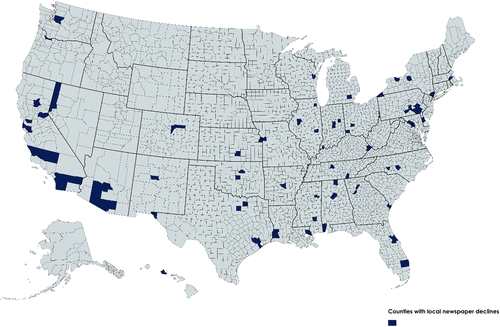
Figure 1 shows that declines of local newspapers are geographically widespread rather than concentrated in specific states. These declines occur in both left- and right-leaning states, suggesting that they are not driven by political ideology. Similarly, states with both high and low GDP levels experience comparable declines, indicating no clear link to macroeconomic conditions. These patterns suggest that declines of local newspapers are not necessarily driven by state-level political or economic factors.
To verify our claim that local newspaper declines reduce the coverage of local firms, we used the limited data available from Factiva to identify seven declining local newspapers that had previously covered 54 unique public firms.4 These firms were all headquartered in the same seven counties where the newspapers were based. Prior to their decline, the local newspapers featured these firms in an average of 9.95 articles. After the decline, the local newspaper coverage dropped sharply to just 0.65 articles on average. This difference is statistically significant (t-test: p < 0.001), supporting our assumption that local newspaper decline leads to a loss of firm-specific information.
Table 1 displays descriptive statistics and correlations. On average, firms are headquartered in counties with about two local newspapers, meaning that when a newspaper declines, it can have a significant impact. Approximately 24% of the firms in our sample experienced local newspaper declines during the sampling period, highlighting the relevance of this phenomenon. Additionally, negative CSR actions slightly outnumber positive ones, consistent with prior research (e.g., Davidson et al. 2018, Qian et al. 2019), resulting in a negative net score of our CSR measure.
|

Table 1. Descriptive Statistics and Correlations
| Mean | S.D. | 1 | 2 | 3 | 4 | 5 | 6 | 7 | 8 | 9 | 10 | 11 | ||
|---|---|---|---|---|---|---|---|---|---|---|---|---|---|---|
| 1. | CSR | −0.01 | 2.25 | |||||||||||
| 2. | Firm size (t − 1) | 9.44 | 48.67 | 0.16 | ||||||||||
| 3. | Firm performance (t − 1) | 0.03 | 0.15 | 0.08 | 0.00 | |||||||||
| 4. | Socially contested industries (t − 1) | 0.08 | 0.27 | −0.01 | 0.07 | 0.04 | ||||||||
| 5. | Industry competition (t − 1) | −0.05 | 0.06 | 0.01 | −0.16 | 0.02 | −0.08 | |||||||
| 6. | County-level unemployment rate (t − 1) | 0.06 | 0.02 | 0.01 | 0.01 | −0.03 | 0.03 | 0.07 | ||||||
| 7. | County-level GDP (t − 1) | 1.20 | 1.36 | 0.03 | 0.09 | −0.01 | −0.02 | −0.01 | 0.20 | |||||
| 8. | County-level liberalism (t − 1) | 0.58 | 0.14 | 0.15 | 0.12 | −0.05 | 0.03 | 0.01 | 0.26 | 0.42 | ||||
| 9. | National newspaper coverage (t − 1) | 1.13 | 1.37 | 0.29 | 0.33 | 0.04 | 0.12 | −0.05 | 0.13 | 0.12 | 0.20 | |||
| 10. | Analyst coverage (t − 1) | 2.02 | 0.79 | 0.27 | 0.19 | 0.09 | 0.09 | 0.00 | −0.04 | 0.05 | 0.06 | 0.42 | ||
| 11. | Credit rating coverage (t − 1) | 0.23 | 0.65 | 0.03 | 0.07 | −0.01 | 0.06 | 0.01 | −0.02 | 0.01 | 0.00 | 0.17 | 0.11 | |
| 12. | Post local newspaper declines | 0.15 | 0.36 | 0.04 | −0.01 | −0.01 | 0.00 | 0.03 | 0.12 | −0.04 | 0.03 | 0.05 | 0.05 | −0.01 |
Regressions
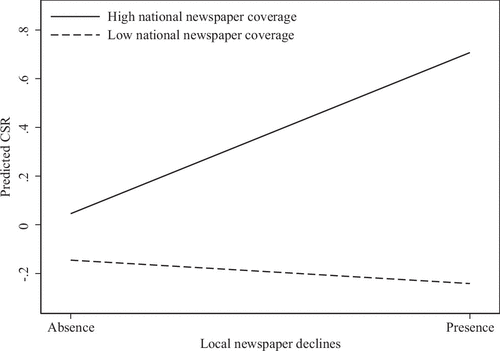
Table 2 presents the regression results from the DiD analysis. Since our focus is on the contingent impact of local newspaper declines on firm CSR engagement, Model 1 serves as the baseline model, including only the control variables, moderators, and independent variable. While post local newspaper declines have a net positive impact on firm CSR engagement (β = 0.35, p < 0.001), this does not imply that firms will always increase their CSR efforts in response to local newspaper decline. In Model 2, we introduce the interaction between post local newspaper declines and national newspaper coverage, revealing a positive moderating effect (β = 0.38, p < 0.001). In terms of economic significance, when firms receive high national newspaper coverage (one standard deviation above the mean), a decline in local newspaper coverage is associated with a 0.38-unit increase in their CSR score. Given that the average CSR strength is 1.3, this represents approximately a 29% increase in CSR.
|
Table 2. The Contingent Impact of Local Newspaper Declines on Firm CSR Engagement
| M1 | M2 | M3 | M4 | M5 | |
|---|---|---|---|---|---|
| Post local newspaper declines | 0.35*** | 0.28** | 0.18+ | 0.35*** | 0.18+ |
| (0.10) | (0.11) | (0.10) | (0.10) | (0.10) | |
| Post local newspaper declines × National newspaper coverage (t − 1) | 0.38*** | 0.23* | |||
| (0.11) | (0.10) | ||||
| Post local newspaper declines × Analyst coverage (t − 1) | 0.55*** | 0.43*** | |||
| (0.10) | (0.09) | ||||
| Post local newspaper declines × Credit rating coverage (t − 1) | 0.16*** | 0.13** | |||
| (0.04) | (0.04) | ||||
| National newspaper coverage (t − 1) | 0.17*** | 0.10* | 0.16*** | 0.17*** | 0.11** |
| (0.04) | (0.04) | (0.04) | (0.04) | (0.04) | |
| Analyst coverage (t − 1) | 0.07 | 0.07 | −0.00 | 0.07 | 0.01 |
| (0.05) | (0.05) | (0.05) | (0.05) | (0.05) | |
| Credit rating coverage (t − 1) | −0.03+ | −0.03* | −0.03* | −0.05** | −0.05** |
| (0.01) | (0.01) | (0.01) | (0.02) | (0.02) | |
| Firm size (t − 1) | 0.01* | 0.01* | 0.01* | 0.01* | 0.01* |
| (0.00) | (0.00) | (0.00) | (0.00) | (0.00) | |
| Firm performance (t − 1) | 0.38*** | 0.37*** | 0.37*** | 0.38*** | 0.37*** |
| (0.11) | (0.10) | (0.10) | (0.11) | (0.10) | |
| Socially contested industries (t − 1) | 0.05 | 0.03 | 0.05 | 0.05 | 0.03 |
| (0.19) | (0.19) | (0.19) | (0.19) | (0.19) | |
| Industry competition (t − 1) | 0.07 | −0.11 | −0.26 | 0.10 | −0.28 |
| (1.23) | (1.22) | (1.23) | (1.24) | (1.23) | |
| County-level unemployment rate (t − 1) | −0.64 | −0.65 | −0.27 | −0.61 | −0.35 |
| (2.35) | (2.30) | (2.29) | (2.35) | (2.27) | |
| County-level GDP (t − 1) | 0.17 | 0.15 | 0.12 | 0.17 | 0.12 |
| (0.21) | (0.20) | (0.19) | (0.21) | (0.19) | |
| County-level liberalism (t − 1) | 0.87 | 0.60 | 0.47 | 0.85 | 0.38 |
| (0.90) | (0.89) | (0.89) | (0.90) | (0.89) | |
| Constant | −0.80 | −0.62 | −0.53 | −0.79 | −0.47 |
| (0.63) | (0.61) | (0.59) | (0.63) | (0.59) | |
| Firm FE | Incl. | Incl. | Incl. | Incl. | Incl. |
| Year FE | Incl. | Incl. | Incl. | Incl. | Incl. |
| R2 | 0.65 | 0.65 | 0.65 | 0.65 | 0.65 |
| Observations | 21,342 | 21,342 | 21,342 | 21,342 | 21,342 |
Note. Standard errors in parentheses.
+p < 0.1; *p < 0.05; **p < 0.01; ***p < 0.001.
Figure 2 illustrates this interaction. When national newspaper coverage is higher, the decline of local newspapers appears to have a positive relationship with CSR engagement. This finding suggests that when national newspaper coverage is high, local newspaper decline does not substantially reduce external oversight, and national newspaper coverage helps disseminate CSR-related information more effectively. As a result, firms with greater national newspaper coverage are more likely to use CSR engagement to maintain visibility rather than exploit the loss of local newspaper oversight to reduce CSR efforts. In contrast, when national newspaper coverage is lower, the decline of local newspapers has a slightly negative relationship with CSR engagement. This finding suggests that under such conditions, local newspaper decline has a more significant impact on oversight, while the limited national newspaper coverage does little to amplify CSR-related information. Consequently, firms with less national newspaper coverage are more likely to slightly reduce their CSR engagement, taking advantage of the diminished scrutiny rather than using CSR as a compensatory visibility strategy.
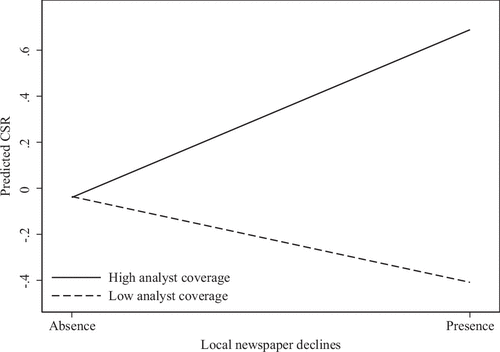
In Model 3, we introduce the interaction between post local newspaper declines and analyst coverage, which also shows a positive moderating effect (β = 0.55, p < 0.001). Economically speaking, for firms with high analyst coverage (one standard deviation above the mean), a decline in local newspaper coverage corresponds to a 0.55-unit rise in CSR: about a 42% increase relative to the average CSR strength of 1.3.
Figure 3 illustrates this interaction. The results are consistent with the idea that when analyst coverage is higher, the decline of local newspapers has a smaller impact on external oversight, as analyst coverage continues to provide scrutiny and accountability. Additionally, broader analyst coverage helps amplify CSR-related information, ensuring that firms remain visible despite the loss of local coverage. As a result, firms with greater analyst coverage are more likely to sustain or even increase their CSR engagement to maintain visibility rather than take advantage of the reduced local oversight to scale back their efforts. However, when analyst coverage is low, firms face a different dynamic. When both local and analyst scrutiny is weaker, firms experience less pressure to maintain their CSR engagement. Unlike those with stronger analyst coverage, these firms lack an effective platform to broadcast their CSR efforts, making CSR a less attractive tool for maintaining visibility. As a result, they are more likely to scale back their CSR activities, responding to the reduced oversight rather than seeking alternative ways to sustain their public presence.
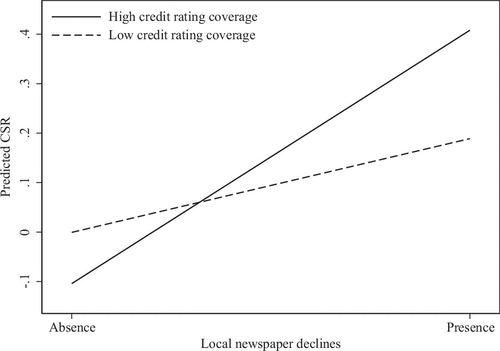
In Model 4, we examine the interaction between post local newspaper declines and credit rating coverage, which also shows a positive moderating effect (β = 0. 16, p < 0.001). In economic terms, firms with credit rating coverage one standard deviation above the mean experience a 0.16-unit increase in CSR following a decline in local newspaper coverage. Considering the sample mean CSR strength of 1.3, this effect corresponds to approximately a 12.3% increase.
Figure 4 illustrates this interaction. When credit rating coverage is high, firms significantly increase their CSR efforts, consistent with our expectation that they use CSR to enhance visibility in the information environment while avoiding scrutiny for diverting resources away from shareholders. However, when credit rating coverage is lower, firms still increase their CSR efforts, albeit to a lesser extent than firms with high credit rating coverage. This finding contrasts with our original expectation that firms with low credit rating coverage would reduce their CSR activity. One possible explanation could be that when credit rating coverage is low, firms engage in CSR to compensate for weaker external certification and to reassure investors and creditors of their reliability. In this way, CSR acts as a reputational substitute that helps maintain financial credibility in the absence of extensive credit rating oversight.5
Model 5 presents the full specification, which includes all moderating variables and their corresponding interaction terms. The results remain robust. Taken together, these findings support the contingent role of alternative nonlocal intermediaries in shaping how local newspaper declines influence firm CSR engagement. They highlight the nuanced and context-dependent nature of this relationship, suggesting that the impact of local newspaper declines on corporate behavior is not uniform but instead conditioned by the broader information environment in which firms operate.
Validity of the Identification Strategy
Parallel Trends.
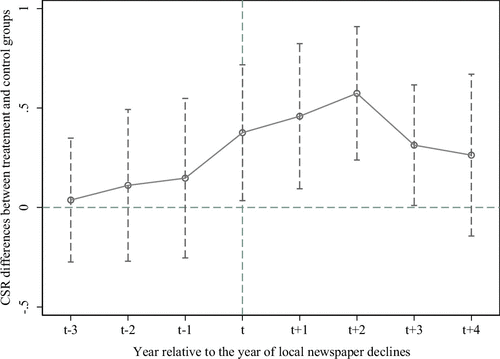
Like all DiD analyses, the validity of our estimation rests on a parallel-trends assumption. That is, absent the staggered decline of local newspapers, CSR actions by treated firms would have evolved over time in a similar way to those by the control firms. To visualize whether firms in the treatment and control groups have parallel trends prior to the decline of local newspapers, we plot the average difference in CSR actions between the treatment and control groups during the pre- and post- treatment periods (Angrist and Pischke 2009). As Figure 5 shows, the CSR difference between the treated and control firms is not statistically distinguishable in the years prior to the decline of local newspapers, thus providing evidence for the parallel-trends assumption.
Permutation Test.
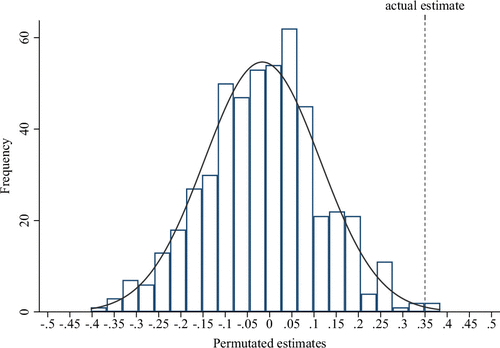
One might be concerned over the quasi-randomness of local newspaper decline, as the unobservable characteristics of the counties may confound our analysis. To check this, we follow recent DiD studies (Heese et al. 2022) and conduct a permutation test to further rule out concerns that our results might be driven by unobservable characteristics of the counties that encountered a decline of local newspapers. For each permutation, we first randomly sample 76 counties (equivalent to the actual number of counties in our study that faced a local newspaper decline), assuming that they are our placebo treatment counties. Next, we randomly assign a decline year to each of the placebo treatment counties. Then, we replicate our main analysis and record the regression coefficient of post local newspaper declines. We repeat this 500 times and plot the distribution of the resulting estimates. As Figure 6 shows, the permutated coefficients are close to zero and differ statistically and economically from the actual coefficient that we obtained in our main analysis (Model 1 in Table 2: β = 0.35, p < 0.001). The result of this permutation test indicates that our findings are unlikely subject to unobserved characteristics of the treated counties.
Goodman-Bacon Decomposition.
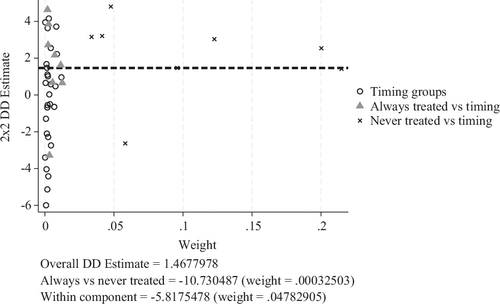
The recent DiD literature has acknowledged that two-way fixed-effect estimators in staggered DiD design may introduce a “bad comparison” problem that differs from a violation of the parallel-trends assumption but is similarly problematic (Goodman-Bacon 2021), resulting in staggered DiD estimates subject to under-identification issues (Borusyak et al. 2016).
To assess the likelihood that our results are biased, we implement Goodman-Bacon decomposition diagnostics on the two-way fixed-effect estimates.6Table 3 shows the exact decomposition results, and Figure 7 visualizes the decomposition DiD estimates and the overall DiD estimate. The fact that 81% of the overall DiD estimate comes from comparisons between never-treated and treated units is a good sign. This is the classic DiD comparison and is generally considered the most reliable for identifying causal effects. The large weight and high average DiD estimate (2.01) suggest that the treatment has a strong effect when comparing treated units to never-treated units.
|
Table 3. Goodman-Bacon Decomposition of Staggered DiD Coefficient Estimates
| DiD comparison | Average DiD estimate | Weight |
|---|---|---|
| Timing groups | 0.53 | 0.09 |
| Always treated vs. timing | 1.30 | 0.05 |
| Never treated vs. timing (as effective controls) | 2.01 | 0.81 |
| Always treated vs. Never treated | −10.48 | 0.0003 |
| Within | −5.81 | 0.05 |
Corroborative Evidence
CSR Press Releases.
Beyond examining firms’ CSR engagement efforts, it is crucial to explore how firms communicate these initiatives to the public. While engaging in CSR activities is a behavioral response, disseminating information about these efforts is another key component. If our theory development is plausible, it seems reasonable to further expect that some firms will not only increase their CSR engagement but will also increase their use of press releases to spread their news. To explore this possibility, we replicate our primary analysis using the number of CSR-related press releases as the dependent variable, measured as the log-transformed count of CSR press releases issued by a firm in a given year. As shown in Models 1–5 of Table 4, with the exception of models involving credit rating coverage, the results are largely consistent with our other results, suggesting that firms not only increase their CSR activities but also actively work to publicize them through formal communication channels.
|
Table 4. Corroborative Evidence: CSR Press Releases
| CSR press releases | CSR engagement | ||||||
|---|---|---|---|---|---|---|---|
| M1 | M2 | M3 | M4 | M5 | M6 | M7 | |
| Post local newspaper declines | 0.27** | 0.20* | 0.22* | 0.27** | 0.21* | 0.32** | 0.27* |
| (0.09) | (0.08) | (0.09) | (0.09) | (0.08) | (0.10) | (0.11) | |
| Post local newspaper declines × National newspaper coverage (t − 1) | 0.44*** | 0.46*** | |||||
| (0.12) | (0.14) | ||||||
| Post local newspaper declines × Analyst coverage (t − 1) | 0.17+ | −0.04 | |||||
| (0.10) | (0.10) | ||||||
| Post local newspaper declines × Credit rating coverage (t − 1) | −0.02 | −0.06 | |||||
| (0.08) | (0.08) | ||||||
| Post local newspaper declines × CSR press release (t − 1) | 0.22*** | ||||||
| (0.05) | |||||||
| CSR press release (t − 1) | 0.25*** | 0.19*** | |||||
| (0.03) | (0.03) | ||||||
| National newspaper coverage (t − 1) | 0.23*** | 0.14** | 0.22*** | 0.23*** | 0.14** | 0.14*** | 0.14*** |
| (0.05) | (0.05) | (0.05) | (0.05) | (0.05) | (0.03) | (0.03) | |
| Analyst coverage (t − 1) | −0.09* | −0.08* | −0.11** | −0.09* | −0.08* | 0.08+ | 0.08+ |
| (0.04) | (0.04) | (0.04) | (0.04) | (0.03) | (0.04) | (0.04) | |
| Credit rating coverage (t − 1) | −0.02 | −0.02 | −0.02 | −0.02 | −0.01 | −0.03+ | −0.03+ |
| (0.02) | (0.02) | (0.02) | (0.02) | (0.02) | (0.01) | (0.01) | |
| Firm size (t − 1) | 0.01+ | 0.01+ | 0.01+ | 0.01+ | 0.01+ | 0.01+ | 0.01+ |
| (0.00) | (0.00) | (0.00) | (0.00) | (0.00) | (0.00) | (0.00) | |
| Firm performance (t − 1) | 0.36* | 0.35* | 0.36* | 0.36* | 0.35* | 0.34** | 0.35** |
| (0.14) | (0.15) | (0.15) | (0.15) | (0.15) | (0.11) | (0.11) | |
| Socially contested industries (t − 1) | 0.02 | −0.01 | 0.02 | 0.02 | −0.01 | 0.02 | −0.00 |
| (0.32) | (0.32) | (0.32) | (0.32) | (0.32) | (0.18) | (0.19) | |
| Industry competition (t − 1) | 1.88 | 1.67 | 1.77 | 1.87 | 1.67 | 0.06 | −0.01 |
| (2.78) | (2.75) | (2.80) | (2.79) | (2.78) | (1.19) | (1.19) | |
| County-level unemployment rate (t − 1) | −1.45 | −1.47 | −1.33 | −1.45 | −1.51 | −0.79 | −1.00 |
| (3.48) | (3.50) | (3.47) | (3.47) | (3.50) | (2.29) | (2.30) | |
| County-level GDP (t − 1) | −0.00 | −0.02 | −0.02 | −0.00 | −0.02 | 0.17 | 0.16 |
| (0.17) | (0.16) | (0.16) | (0.17) | (0.16) | (0.20) | (0.20) | |
| County-level liberalism (t − 1) | −0.14 | −0.46 | −0.26 | −0.14 | −0.43 | 0.84 | 0.67 |
| (0.99) | (0.97) | (0.99) | (0.99) | (0.96) | (0.84) | (0.86) | |
| Constant | 0.65 | 0.86 | 0.74 | 0.65 | 0.84 | −0.75 | −0.64 |
| (0.72) | (0.71) | (0.72) | (0.72) | (0.71) | (0.60) | (0.60) | |
| Firm FE | Incl. | Incl. | Incl. | Incl. | Incl. | Incl. | Incl. |
| Year FE | Incl. | Incl. | Incl. | Incl. | Incl. | Incl. | Incl. |
| R2 | 0.47 | 0.48 | 0.47 | 0.47 | 0.48 | 0.65 | 0.66 |
| Observations | 21,342 | 21,342 | 21,342 | 21,342 | 21,342 | 21,342 | 21,342 |
Note. Standard errors in parentheses.
+p < 0.1; *p < 0.05; **p < 0.01; ***p < 0.001.
The absence of a moderating effect for credit rating coverage likely reflects the distinct communication dynamics associated with credit rating agencies. Unlike financial analysts, whose reports are publicly disseminated and often picked up by media outlets and thereby shape broader market and reputational narratives, credit rating agencies operate within a narrower, creditworthiness-oriented domain. Their evaluations are directed primarily at creditors and focus on quantitative indicators of creditworthiness and financial stability. As such, CSR-related press releases provide little information that would capture the attention of credit rating agencies or help firms disseminate their CSR news more broadly. By contrast, greater analyst coverage embeds firms more deeply within a broader public information environment, where CSR communications can enhance visibility and reputation. Consequently, press releases serve as an effective tool for firms with high analyst coverage to manage external perceptions, but not for those primarily scrutinized by credit rating agencies.
In a further analysis, we use CSR press releases as a moderator to examine whether a firm’s ability to disseminate CSR information influences the extent of its CSR engagement. The logic here is that firms more capable of communicating their CSR activities, that is, those issuing more CSR-related press releases, have stronger incentives to engage in CSR, as they can extract greater reputational benefits from those activities. In this context, the capacity for dissemination becomes a strategic asset: the more effectively a firm can share its CSR narrative, the more valuable CSR engagement becomes. Our findings support this view (see Model 7 of Table 4: β = 0.22, p < 0.001). We observe a positive moderating effect of CSR press release activity on the relationship between local newspaper decline and CSR engagement. This finding suggests that firms with a stronger communication infrastructure are better positioned to respond to the loss of traditional media coverage. Rather than viewing local newspaper decline purely as a constraint, these firms treat it as an opportunity to take control of their narrative and amplify their CSR messaging through their own channels.
Does CSR Engagement Improve Visibility Through Nonlocal Intermediaries?
Our theoretical framework assumes that firms engage in CSR partly because they expect such actions to enhance their visibility through nonlocal intermediaries. To empirically assess this assumption, we regress national newspaper coverage, analyst coverage, and credit rating coverage on firms’ CSR engagement, controlling for the same set of firm-, industry-, and county-level variables used in the main analysis. The results, reported in Table 5, show that higher CSR engagement is indeed associated with increased national newspaper coverage and greater analyst attention, but not with higher credit rating coverage.
|
Table 5. Corroborative Evidence: CSR Engagement Improves Visibility via Nonlocal Intermediaries
| M1 National newspaper coverage | M2 Analyst coverage | M3 Credit rating coverage | |
|---|---|---|---|
| CSR (t − 1) | 0.02*** | 0.01* | 0.00 |
| (0.00) | (0.00) | (0.00) | |
| Firm size (t − 1) | 0.01*** | −0.00 | 0.00** |
| (0.00) | (0.00) | (0.00) | |
| Firm performance (t − 1) | −0.01 | 0.26*** | −0.04 |
| (0.05) | (0.05) | (0.03) | |
| Socially contested industries (t − 1) | 0.15* | 0.03 | −0.01 |
| (0.06) | (0.02) | (0.04) | |
| Industry competition (t − 1) | 0.34 | 0.10 | 0.09 |
| (0.63) | (0.28) | (0.25) | |
| County-level unemployment rate (t − 1) | −0.94 | −0.95 | 0.13 |
| (1.26) | (0.58) | (0.56) | |
| County-level GDP (t − 1) | −0.01 | 0.01 | 0.01 |
| (0.06) | (0.04) | (0.04) | |
| County-level liberalism (t − 1) | 0.71+ | 0.05 | 0.18 |
| (0.40) | (0.23) | (0.25) | |
| Constant | 0.78** | 2.10*** | 0.09 |
| (0.24) | (0.14) | (0.16) | |
| Firm FE | |||
| Year FE | |||
| R2 | 0.82 | 0.89 | 0.25 |
| Observations | 21,342 | 21,342 | 21,342 |
Note. Standard errors in parentheses.
+p < 0.1; *p < 0.05; **p < 0.01; ***p < 0.001.
The positive associations with national newspaper and analyst coverage suggest that CSR engagement effectively raises a firm’s public profile within information environments that are reputationally oriented and broadly disseminated. CSR activities generate stories and signals that attract journalists and analysts, two groups whose outputs are visible to a wide range of stakeholders. In contrast, the null results for credit rating coverage are theoretically consistent with the nature of credit rating agencies’ operations. Credit rating agencies primarily focus on assessing firms’ quantitative indicators of creditworthiness and financial stability rather than their broader social or reputational positioning. CSR engagement, while potentially indicative of sound management, offers limited information directly relevant to a firm’s ability to service debt. Consequently, CSR efforts do little to affect whether or how often a firm is evaluated by credit rating agencies.
Taken together, these findings validate the central premise of our argument: CSR engagement enhances firms’ visibility and informational salience through intermediaries that operate within public and reputational domains (national media and analysts), but not through those that operate within private, financial, or certification-based domains (credit rating agencies). This distinction further underscores that firms’ CSR responses to local newspaper declines are strategically oriented toward maintaining or regaining visibility in arenas where public perception and reputation matter most.
Robustness Checks
Alternative CSR Measure.
Prior research also measures CSR engagement using CSR strength rather than the net CSR score (i.e., strengths minus concerns). To ensure that our findings are not sensitive to this measurement choice, we replicate our analyses using CSR strength as the dependent variable. As shown in Models 1–5 of Table 6, the results remain robust and consistent with those obtained using the net CSR score. In addition, we estimate two separate models: one using CSR strengths as the dependent variable while controlling for CSR concerns, and another using CSR concerns as the dependent variable while controlling for CSR strengths. The results from both models remain consistent with our main findings (see Models 6–9 of Table 6).
|
Table 6. Alternative CSR Measures
| M1 | M2 | M3 | M4 | M5 | M6 | M7 | M8 | M9 | |
|---|---|---|---|---|---|---|---|---|---|
| Post local newspaper declines | 0.34*** | 0.28** | 0.20* | 0.30*** | 0.16+ | 0.27** | 0.19* | 0.30*** | 0.16+ |
| (0.08) | (0.09) | (0.09) | (0.08) | (0.09) | (0.08) | (0.09) | (0.08) | (0.09) | |
| Post local newspaper declines × National newspaper coverage (t − 1) | 0.40*** | 0.29*** | 0.40*** | 0.28*** | |||||
| (0.07) | (0.05) | (0.07) | (0.06) | ||||||
| Post local newspaper declines × Analyst coverage (t − 1) | 0.48*** | 0.34*** | 0.48*** | 0.34*** | |||||
| (0.09) | (0.08) | (0.09) | (0.08) | ||||||
| Post local newspaper declines × Credit rating coverage (t − 1) | 0.18** | 0.13* | 0.19** | 0.13* | |||||
| (0.06) | (0.06) | (0.06) | (0.06) | ||||||
| CSR concerns (t − 1) | 0.09*** | 0.09*** | 0.09*** | 0.09*** | |||||
| (0.02) | (0.03) | (0.03) | (0.02) | ||||||
| National newspaper coverage (t − 1) | 0.25*** | 0.18*** | 0.24*** | 0.25*** | 0.19*** | 0.17*** | 0.23*** | 0.24*** | 0.18*** |
| (0.03) | (0.03) | (0.03) | (0.03) | (0.03) | (0.03) | (0.03) | (0.03) | (0.03) | |
| Analyst coverage (t − 1) | 0.05 | 0.05 | −0.01 | 0.05 | 0.01 | 0.05 | −0.01 | 0.05 | 0.01 |
| (0.04) | (0.04) | (0.04) | (0.04) | (0.04) | (0.04) | (0.05) | (0.04) | (0.04) | |
| Credit rating coverage (t − 1) | 0.00 | 0.00 | 0.00 | −0.01 | −0.01 | 0.00 | 0.00 | −0.02 | −0.01 |
| (0.01) | (0.01) | (0.01) | (0.01) | (0.01) | (0.01) | (0.01) | (0.01) | (0.01) | |
| Firm size (t − 1) | 0.01* | 0.01* | 0.01* | 0.01* | 0.01* | 0.01* | 0.01* | 0.01* | 0.01* |
| (0.00) | (0.00) | (0.00) | (0.00) | (0.00) | (0.00) | (0.00) | (0.00) | (0.00) | |
| Firm performance (t − 1) | 0.16* | 0.15+ | 0.15* | 0.16* | 0.15+ | 0.16* | 0.16* | 0.17* | 0.16* |
| (0.07) | (0.08) | (0.07) | (0.07) | (0.08) | (0.07) | (0.07) | (0.07) | (0.07) | |
| Socially contested industries (t − 1) | 0.29+ | 0.27+ | 0.29+ | 0.29+ | 0.27+ | 0.25+ | 0.27+ | 0.28+ | 0.26+ |
| (0.15) | (0.15) | (0.15) | (0.15) | (0.15) | (0.15) | (0.15) | (0.15) | (0.15) | |
| Industry competition (t − 1) | −0.87 | −1.06 | −1.16 | −0.85 | −1.20 | −0.94 | −1.05 | −0.73 | −1.08 |
| (1.18) | (1.16) | (1.16) | (1.19) | (1.15) | (1.14) | (1.14) | (1.17) | (1.14) | |
| County-level unemployment rate (t − 1) | 1.15 | 1.13 | 1.46 | 1.16 | 1.37 | 0.99 | 1.32 | 1.03 | 1.23 |
| (2.11) | (2.10) | (2.02) | (2.10) | (2.04) | (2.06) | (2.00) | (2.08) | (2.01) | |
| County-level GDP (t − 1) | 0.09 | 0.07 | 0.04 | 0.09 | 0.04 | 0.08 | 0.05 | 0.10 | 0.06 |
| (0.14) | (0.13) | (0.11) | (0.14) | (0.11) | (0.13) | (0.11) | (0.14) | (0.11) | |
| County-level liberalism (t − 1) | 0.32 | 0.03 | −0.02 | 0.31 | −0.14 | 0.08 | 0.02 | 0.35 | −0.09 |
| (0.88) | (0.86) | (0.86) | (0.88) | (0.86) | (0.85) | (0.85) | (0.86) | (0.84) | |
| Constant | 0.78 | 0.96+ | 1.01+ | 0.78 | 1.08* | 0.81 | 0.86 | 0.63 | 0.93+ |
| (0.57) | (0.55) | (0.54) | (0.57) | (0.54) | (0.54) | (0.54) | (0.57) | (0.53) | |
| Firm FE | Incl. | Incl. | Incl. | Incl. | Incl. | Incl. | Incl. | Incl. | Incl. |
| Year FE | Incl. | Incl. | Incl. | Incl. | Incl. | Incl. | Incl. | Incl. | Incl. |
| R2 | 0.75 | 0.76 | 0.76 | 0.75 | 0.76 | 0.76 | 0.76 | 0.76 | 0.76 |
| Observations | 21,342 | 21,342 | 21,342 | 21,342 | 21,342 | 21,342 | 21,342 | 21,342 | 21,342 |
Note. Standard errors in parentheses.
+p < 0.1; *p < 0.05; **p < 0.01; ***p < 0.001.
Alternative CSR Data Set.
To examine the robustness of our findings to different CSR data sources, we replicate our analyses using the overall ESG score from Thomson Reuters’ Asset4 database as an alternative to the MSCI KLD ratings used in our main models. Because Asset4 provides broader international coverage but includes fewer U.S. firms than KLD, the number of observations in this analysis is smaller. Nevertheless, the results remain largely consistent with our main findings, showing similar coefficient signs and significance levels (see Table 7). This suggests that our conclusions are not driven by the specific CSR data set employed.
|
Table 7. Alternative CSR Data Set
| M1 | M2 | M3 | M4 | M5 | |
|---|---|---|---|---|---|
| Post local newspaper declines | 1.50* | 0.64 | −0.64 | 1.61* | −0.65 |
| (0.73) | (0.80) | (1.06) | (0.72) | (1.07) | |
| Post local newspaper declines × National newspaper coverage (t − 1) | 1.02** | 0.64 | |||
| (0.32) | (0.39) | ||||
| Post local newspaper declines × Analyst coverage (t − 1) | 2.29*** | 1.84* | |||
| (0.68) | (0.81) | ||||
| Post local newspaper declines × Credit rating coverage (t − 1) | −0.33 | −0.30 | |||
| (0.30) | (0.28) | ||||
| National newspaper coverage (t − 1) | 0.04 | −0.23 | −0.03 | 0.04 | −0.18 |
| (0.31) | (0.31) | (0.31) | (0.31) | (0.32) | |
| Analyst coverage (t − 1) | 1.40* | 1.41* | 1.04+ | 1.40* | 1.12+ |
| (0.57) | (0.57) | (0.60) | (0.57) | (0.60) | |
| Credit rating coverage (t − 1) | 0.05 | 0.05 | 0.05 | 0.08 | 0.09 |
| (0.10) | (0.10) | (0.10) | (0.11) | (0.11) | |
| Firm size (t − 1) | 0.01 | 0.01 | 0.01 | 0.01 | 0.01 |
| (0.01) | (0.01) | (0.01) | (0.01) | (0.01) | |
| Firm performance (t − 1) | 4.68** | 4.58** | 4.74** | 4.63** | 4.62** |
| (1.62) | (1.61) | (1.62) | (1.62) | (1.61) | |
| Socially contested industries (t − 1) | 2.10* | 1.99* | 2.01* | 2.10* | 1.96* |
| (0.99) | (0.99) | (1.00) | (0.99) | (0.99) | |
| Industry competition (t − 1) | −16.25 | −16.79 | −19.12 | −16.41 | −19.05 |
| (14.97) | (14.85) | (15.12) | (14.97) | (15.06) | |
| County-level unemployment rate (t − 1) | −15.42 | −14.46 | −12.63 | −15.47 | −12.63 |
| (27.62) | (27.61) | (27.66) | (27.61) | (27.64) | |
| County-level GDP (t − 1) | 0.17 | 0.08 | −0.17 | 0.15 | −0.17 |
| (1.30) | (1.28) | (1.28) | (1.30) | (1.28) | |
| County-level liberalism (t − 1) | 3.43 | 2.19 | 2.07 | 3.49 | 1.61 |
| (11.77) | (11.88) | (11.98) | (11.76) | (12.01) | |
| Constant | 45.48*** | 46.46*** | 46.81*** | 45.45*** | 47.14*** |
| (7.53) | (7.57) | (7.58) | (7.52) | (7.59) | |
| Firm FE | Incl. | Incl. | Incl. | Incl. | Incl. |
| Year FE | Incl. | Incl. | Incl. | Incl. | Incl. |
| R2 | 0.82 | 0.82 | 0.82 | 0.82 | 0.82 |
| Observations | 5,969 | 5,969 | 5,969 | 5,969 | 5,969 |
Note. Standard errors in parentheses.
+p < 0.1; *p < 0.05; **p < 0.01; ***p < 0.001.
Discussion
Given the complexity of firms’ CSR motivations and the evolving local newspaper landscape, this study examines how firms adjust their CSR engagement in response to local newspaper decline. Drawing on a contingency perspective and insights from interviews with journalists and executives, we theorize that firms’ responses depend on how the broader media environment compensates for the loss of local oversight and visibility. Our interviews were instrumental in shaping this theoretical perspective, revealing how firms navigate the erosion of local oversight and visibility by relying on alternative channels to sustain public attention. When nonlocal informational intermediaries—such as national newspapers, financial analysts, and rating agencies—remain active, firms perceive the decline of local outlets less as a release from scrutiny and more as a challenge to sustain visibility. In such contexts, expanding CSR represents a strategic means to demonstrate accountability and improve visibility to broader audiences. Conversely, when these intermediaries are weak or absent, firms face both diminished monitoring and limited visibility, reducing the perceived risks of disengagement. Under these conditions, firms often view CSR retrenchment as a low-risk, cost-saving response that yields short-term financial benefits with little fear of public scrutiny. Overall, this research highlights how local newspaper declines interact with the broader informational context to shape heterogeneous corporate responses.
Contributions
Reconciling Mixed Findings in the Media-CSR Relationship.
This study reconciles long-standing inconsistencies in the literature linking media coverage and CSR engagement. Existing studies have yielded divergent conclusions: some view the media primarily as an oversight mechanism that disciplines firms through public scrutiny, thereby promoting responsible behavior (e.g., Bednar 2012, Zyglidopoulos et al. 2012). Others emphasize its visibility function, arguing that firms proactively engage in CSR to gain favorable media attention and enhance their legitimacy (e.g., Deephouse 2000, Vishwanathan et al. 2020). These perspectives have remained largely parallel, producing mixed findings because oversight and visibility are typically theorized as independent rather than interdependent logics that jointly shape firms’ responses to media attention.
We reconcile these perspectives by theorizing media oversight and visibility as dual, interacting functions embedded within a broader informational system. We argue that the impact of media coverage on CSR depends on how these two functions jointly operate within firms’ informational environments. The decline of local newspapers illustrates this dynamic: rather than exerting uniformly negative effects, the loss of local media generates ambiguous pressures on firms, as their CSR responses hinge on the configuration of other informational intermediaries—such as national newspapers, financial analysts, and credit rating agencies—that can partially substitute for lost local oversight and visibility. Media influence, in this view, is not monolithic but contingent, emerging from the interplay of multiple informational channels that jointly shape firms’ exposure to scrutiny and recognition.
This reconciliation advances our understanding of how the media shape CSR behavior by shifting the analytical focus from how much coverage firms receive to how informational environments are structured. Rather than treating media attention as a uniform or additive force, we conceptualize its influence as contingent on the configuration of informational intermediaries surrounding firms. This conceptualization suggests that what matters is not simply how much attention firms receive, but where attention originates, how it is distributed across intermediaries, and whether these intermediaries reinforce or counterbalance one another. In this view, media influence emerges not from a single channel of visibility or oversight, but from the networked architecture of informational ecosystems that jointly determine firms’ exposure to both scrutiny and recognition. This perspective encourages scholars to move beyond aggregate media metrics and instead analyze the structure of informational systems, such as the balance between local and nonlocal intermediaries, in shaping corporate behavior.
Together, these insights move the field beyond viewing media as a single external informational intermediary toward understanding it as a configurational component of an evolving informational ecosystem that shapes both corporate accountability and visibility. Our framework thus advances a more contextual and interdependent view of media functions, serving as a basis for understanding CSR behavior in an era of fragmented yet interconnected information flows.
The Understudied Interplay Between Local and Nonlocal Intermediaries.
This study extends emerging research on local media and corporate behavior by clarifying how local and nonlocal informational intermediaries jointly shape firms’ adaptation. Whereas most prior studies focus on national outlets such as The Wall Street Journal or The New York Times, we highlight the distinctive role of local newspapers within firms’ informational ecosystems. Building on insights from our interviews and contingency framework, we show that local and national newspapers differ not merely in scale but in the informational logics through which they influence firms. Local newspapers are embedded in community relationships and emphasize locally relevant business coverage, fostering both visibility and oversight within geographically bounded communities. In contrast, national media and other nonlocal intermediaries—such as financial analysts and rating agencies—operate through market-oriented mechanisms that emphasize broader shareholder and stakeholder interests, reputational evaluation, and nationwide dissemination. This multilevel configuration aligns with governance research showing that firms are subject to multiple external mechanisms that interact, substitute, and complement one another (Aguilera et al. 2015). We suggest that local and nonlocal intermediaries form an interdependent informational governance system that collectively disciplines and legitimizes firms through distinct yet complementary channels of scrutiny and visibility, reshaping how accountability and reputation are constructed across audiences.
This distinction has critical implications for understanding how firms respond to media decline. When local newspapers weaken but nonlocal informational intermediaries remain active, firms continue to face both oversight and visibility pressures, yet these pressures arise from distinct sources and follow different logics. National newspapers, financial analysts, and credit rating agencies can partially substitute for the oversight and visibility once provided by local journalism, but they do so through broader, more impersonal channels. These intermediaries expand the reach of scrutiny and recognition while reducing the proximity and contextual depth that once characterized local monitoring. Consequently, the decline of local newspapers changes not only the volume of information available about nearby firms but also its distribution and character, reconfiguring how and where firms are observed, evaluated, and made visible.
By highlighting this interplay between local and nonlocal media, our study challenges the common assumption that all media operate under similar logics. We show instead that these intermediaries perform both substitutive and complementary functions within a broader informational ecosystem—local outlets anchoring firm accountability and legitimacy in the community, and nonlocal outlets extending visibility and accountability to broader market audiences. In doing so, we enrich a growing body of work on local media and corporate behavior (e.g., Gao et al. 2020, Kim et al. 2021, Heese et al. 2022, Choi and Valente 2023) and invite renewed theoretical attention to how the reconfiguration of these informational layers reshapes firms’ adaptation, visibility, and accountability across evolving informational environments.
Limitations and Future Research Directions
Our work is not without limitations, some of which open promising avenues for future research. First, although we theorize that nonlocal informational intermediaries—such as national newspapers, financial analysts, and credit rating agencies—can substitute for local oversight and visibility, we do not examine the role of social and digital media. We focus on traditional media because they remain the primary producers of original, investigative, and verifiable news content that underpins corporate accountability. By contrast, most social and digital platforms primarily disseminate rather than generate such information, relying heavily on materials originally produced by legacy media. Nonetheless, their growing influence in shaping public attention introduces new informational dynamics that our study could not capture (Blankespoor et al. 2014). Future research could investigate how these digital channels alter the visibility and oversight functions of traditional intermediaries, clarifying whether they replicate, amplify, or distort the informational effects historically provided by local journalism.
Second, our analysis is situated within a single national context, which may limit the generalizability of our findings. The extent to which nonlocal intermediaries can substitute for local media likely depends on national variations in media structure, regulatory regimes, and stakeholder expectations. Comparative studies across countries with different media systems and institutional arrangements could reveal whether the mechanisms we identify are context-specific or reflect broader informational dynamics. Such work would help delineate the boundary conditions of media influence on CSR and enrich understanding of how informational ecosystems evolve under diverse institutional settings.
Finally, we assign firms’ exposure to local newspaper decline based on headquarters counties, even though many firms operate across multiple locations. This approach aligns with prior research and our interview evidence but cannot capture media exposure in nonheadquarters communities. Future work with more granular data on firms’ geographic footprints could examine how local media decline across multiple operating locations shapes CSR responses. Our use of MSCI CSR data presents a similar constraint, as MSCI does not distinguish locally oriented initiatives from broader efforts across different CSR types, limiting our ability to identify location-specific CSR activity. Mixed-methods designs that combine detailed geographic mappings of firm operations with richer measures of locally targeted CSR would allow future research to investigate these nuances more directly.
Conclusion
Local newspapers, long serving as bridges between firms and their communities, have played influential roles in shaping corporate behavior through both oversight and visibility. While prior research has focused primarily on the loss of oversight, our study shows that local newspaper decline creates a dual loss of both scrutiny and public recognition. Firms do not respond to this shift uniformly. Rather, their CSR engagement depends on the broader informational environment, particularly the presence of nonlocal intermediaries such as national media, financial analysts, and rating agencies that can substitute for local visibility and accountability. Our findings illuminate the complex and contingent relationship between media coverage and corporate social responsibility. We hope this study encourages further research on how transformations in the media ecosystem reshape firms’ adaptation and social engagement.
The authors sincerely thank Pengjie Gao, Chang Lee, and Dermot Murphy for generously sharing newspaper-related data, without which this research project would not be possible. The authors thank their editor, Abhinav Gupta, and three anonymous reviewers whose constructive feedback greatly improved their work. The authors are also grateful for the helpful comments from Ruth Aguilera, Rene Bakker, Joanna Campbell, Amanda Cowen, Panikos Georgallis, Maria Marchica, Ishva Minefee, and audience members at Erasmus University, Renmin University, the University of Kansas, ICGS Conference 2021, SMS Conference 2022, AoM Conference 2023, and GRONEN Reading Group 2023. Their appreciation also goes to Lifu Chen, Thuy Linh Ngo, and Iyad Sarroukh for their excellent research assistance in data collection and coding. Last but not least, the authors are thankful to their informants for their perspectives on the impact of local newspapers in the business environment.
1 Beyond the behavioral dimension of CSR engagement, communicating CSR initiatives constitutes another strategic response to shifts in visibility. As local newspapers decline, firms may seek to fill the resulting visibility gap by managing their narratives directly through corporate press releases and other self-directed channels, such as social media platforms (Blankespoor et al. 2014). These channels allow firms to maintain stakeholder awareness and signal responsibility even when third-party coverage wanes. In doing so, they reinforce the visibility function of CSR within an evolving information environment. As discussed later, our supplementary analysis of CSR press releases corroborates this visibility-based interpretation.
2 We attempted to quantify local newspaper coverage of public firms in our sample using the Factiva database but encountered several limitations. First, Factiva does not comprehensively include defunct local newspapers. For example, the Albuquerque Tribune, a now-defunct daily from Albuquerque, New Mexico, is absent from the database. Second, the database often omits company tags in local newspaper articles, particularly for the years preceding 2014, which hampers our ability to extract and accurately measure local coverage compared to national coverage. As a result, we were able to fully collect and quantify the coverage data for only seven local newspapers and 54 unique nearby firms. We discuss and validate our assumptions about local newspaper declines using this data in the Descriptive Statistics section.
3 We recognize that MSCI may consider media coverage as one of several inputs when assessing CSR performance. However, MSCI scores are primarily based on firm policies and actions across specific issue areas, using a range of sources—including company disclosures, regulatory filings, and third-party research—not solely media content. If a reduced media presence from a decline in local newspapers had a mechanical effect on MSCI scores, we would expect to see a drop in CSR ratings simply due to lower visibility, regardless of actual firm behavior. However, our findings suggest the opposite. As demonstrated in our empirical analysis (i.e., Model 1 of Table 2), firms exposed to local newspaper decline exhibit a net increase in CSR engagement. This indicates that our estimates are likely conservative—any downward bias from reduced media coverage would only understate the true effect.
4 To construct the measure of local newspaper coverage, we identified firm-level articles in Factiva using its keyword search field rather than proprietary firm identifiers, which are not consistently available across local outlets. Specifically, we queried each firm’s full name and common abbreviations (and, when applicable, ticker symbols) within individual newspaper sources using Boolean operators (e.g., “firm name” OR “ticker”). Following established practice in media coverage research (Bednar 2012, Bednar et al. 2013), we retained articles where the firm’s name appeared at least once in the headline or lead paragraph, excluding those that mentioned the firm only in lists, tables, or footnotes. For each firm-year, we then aggregated the number of qualifying articles across local newspapers and linked these counts to firm identifiers from other data sources, such as Compustat. This procedure ensures that our measure accurately captures meaningful firm-specific coverage by local newspapers.
5 We do not expect a similar compensatory effect when analyst coverage is low because the informational role of analysts differs fundamentally from that of credit rating agencies. These agencies serve as certifiers of firms’ creditworthiness; when their coverage is limited, firms can use CSR as a reputational substitute to reassure investors and creditors. By contrast, analysts function primarily as information intermediaries who monitor and disseminate firm information to the market. When analyst coverage is low, CSR engagement does little to substitute for the loss of such oversight and dissemination. In this case, reduced analyst coverage primarily weakens external scrutiny without offering firms a viable channel to restore visibility or credibility through CSR. Consequently, firms with low analyst coverage are less motivated to increase CSR engagement.
6 Since Goodman-Bacon decomposition diagnostics require a balanced panel (Goodman-Bacon 2021), we therefore convert our sample into a balanced sample before implementing Goodman-Bacon decomposition diagnostics.
References
- (2015) Connecting the dots: Bringing external corporate governance into the corporate governance puzzle. Acad. Management Ann. 9(1):483–573.Crossref, Google Scholar
- (2007) Putting the s back in corporate social responsibility: A multilevel theory of social change in organizations. Acad. Management Rev. 32(3):836–863.Crossref, Google Scholar
- (2009) Mostly Harmless Econometrics: An Empiricist’s Companion (Princeton University Press, Princeton, NJ).Crossref, Google Scholar
- (2003) A contingent resource-based view of proactive corporate environmental strategy. Acad. Management Rev. 28(1):71–88.Crossref, Google Scholar
- (2013) Corporate social responsibility and credit ratings. J. Bus. Ethics 117(4):679–694.Crossref, Google Scholar
- (2005) Evolving sustainably: A longitudinal study of corporate sustainable development. Strategic Management J. 26(3):197–218.Crossref, Google Scholar
- (2007) Stakeholder influence capacity and the variability of financial returns to corporate social responsibility. Acad. Management Rev. 32(3):794–816.Crossref, Google Scholar
- (2012) Watchdog or lapdog? A behavioral view of the media as a corporate governance mechanism. Acad. Management J. 55(1):131–150.Crossref, Google Scholar
- (2013) Burr under the saddle: How media coverage influences strategic change. Organ. Sci. 24(3):910–925.Link, Google Scholar
- (2004) How much should we trust differences-in-differences estimates? Quart. J. Econom. 119(1):249–275.Crossref, Google Scholar
- (2014) The role of dissemination in market liquidity: Evidence from firms’ use of twitter™. Accounting Rev. 89(1):79–112.Crossref, Google Scholar
- (2016) Revisiting event study designs: Robust and efficient estimation. Preprint, submitted August 20, http://dx.doi.org/10.2139/ssrn.2826228.Google Scholar
- (2015) Corporate social responsibility and media coverage. J. Banking Finance 59:409–422.Crossref, Google Scholar
CFA Institute (2023) Future of Sustainability in Investment Management (Charlottesville, VA).Google Scholar- (2016) Do ratings of firms converge? Implications for managers, investors and strategy researchers. Strategic Management J. 37(8):1597–1614.Crossref, Google Scholar
- (1991) The construction of leadership images in the popular press: The case of donald burr and people express. Admin. Sci. Quart. 36(4):521–551.Crossref, Google Scholar
- (2014) Corporate social responsibility and access to finance. Strategic Management J. 35(1):1–23.Crossref, Google Scholar
- (2023) The crisis in local newspapers and organizational wrongdoing: The role of community social connectedness. Organ. Sci. 34(5):1777–1799.Link, Google Scholar
- (2021) Mandatory CSR and sustainability reporting: Economic analysis and literature review. Rev. Accounting Stud. 26(3):1176–1248.Crossref, Google Scholar
CNBC (2017) Why dozens of public companies are ignored by analysts. Accessed October 6, 2017, https://www.cnbc.com/2017/10/06/why-dozens-of-public-companies-are-ignored-by-analysts.html.Google Scholar- (2018) Ceo materialism and corporate social responsibility. Accounting Rev. 94(1):101–126.Crossref, Google Scholar
- (2000) Media reputation as a strategic resource: An integration of mass communication and resource-based theories. J. Management 26(6):1091–1112.Crossref, Google Scholar
- (2009) Linking social issues to organizational impact: The role of infomediaries and the infomediary process. J. Bus. Ethics 86(4):541–553.Crossref, Google Scholar
- (2024) The ideological imperative: Corporate social responsibility and news media coverage of firms. Organ. Sci. 35(5):1930–1955.Link, Google Scholar
- (2011) Voluntary nonfinancial disclosure and the cost of equity capital: The initiation of corporate social responsibility reporting. Accounting Rev. 86(1):59–100.Crossref, Google Scholar
- (2019) Do investors actually value sustainability indices? Replication, development, and new evidence on CSR visibility. Strategic Management J. 40(9):1471–1490.Crossref, Google Scholar
- (2008) The corporate governance role of the media: Evidence from Russia. J. Finance 63(3):1093–1135.Crossref, Google Scholar
- (2013) Corporate social responsibility and shareholder reaction: The environmental awareness of investors. Acad. Management J. 56(3):758–781.Crossref, Google Scholar
- (2015) Does product market competition foster corporate social responsibility? Evidence from trade liberalization. Strategic Management J. 36(10):1469–1485.Crossref, Google Scholar
- (2018) Competing for government procurement contracts: The role of corporate social responsibility. Strategic Management J. 39(5):1299–1324.Crossref, Google Scholar
- (2017) Does a long‐term orientation create value? Evidence from a regression discontinuity. Strategic Management J. 38(9):1827–1847.Crossref, Google Scholar
- (2000) Opportunity platforms and safety nets: Corporate citizenship and reputational risk. Bus. Soc. Rev. 105(1):85–106.Crossref, Google Scholar
- (2019) Responding to bad press: How CEO temporal focus influences the sensitivity to negative media coverage of acquisitions. Acad. Management J. 62(3):918–943.Crossref, Google Scholar
- (2020) Financing dies in darkness? The impact of newspaper closures on public finance. J. Financial Econom. 135(2):445–467.Crossref, Google Scholar
- (2011) The effect of newspaper entry and exit on electoral politics. Amer. Econom. Rev. 101(7):2980–3018.Crossref, Google Scholar
- (2005) The relationship between corporate philanthropy and shareholder wealth: A risk management perspective. Acad. Management Rev. 30(4):777–798.Crossref, Google Scholar
- (2021) Difference-in-differences with variation in treatment timing. J. Econom. 225(2):254–277.Crossref, Google Scholar
- (2020) Media coverage of firms: Background, integration, and directions for future research. J. Management 46(1):36–69.Crossref, Google Scholar
- (2011) What’s all that (strategic) noise? Anticipatory impression management in CEO succession. Strategic Management J. 32(7):748–770.Crossref, Google Scholar
- (2012) Don’t believe the hype: Local media slant, local advertising, and firm value. J. Finance 67(2):561–598.Crossref, Google Scholar
- (1995) A natural-resource-based view of the firm. Acad. Management Rev. 20(4):986–1014.Crossref, Google Scholar
- (2021) How media coverage of corporate social responsibility and irresponsibility influences cross‐border acquisitions. Strategic Management J. 42(1):58–83.Crossref, Google Scholar
- (2015) As local news goes, so goes citizen engagement: Media, knowledge, and participation in US house elections. J. Politics 77(2):447–462.Crossref, Google Scholar
- (2013) The dark side of analyst coverage: The case of innovation. J. Financial Econom. 109(3):856–878.Crossref, Google Scholar
- (2022) When the local newspaper leaves town: The effects of local newspaper closures on corporate misconduct. J. Financial Econom. 145(2):445–463.Crossref, Google Scholar
- (2009) The price of sin: The effects of social norms on markets. J. Financial Econom. 93(1):15–36.Crossref, Google Scholar
- (2017) Higher highs and lower lows: The role of corporate social responsibility in CEO dismissal. Strategic Management J. 38(11):2255–2265.Crossref, Google Scholar
- (2025) Company performance and corporate social responsibility: Assessing the role of corporate governance. J. Governance Regulation 14(2, special issue):371–381.Crossref, Google Scholar
- (2020) Hype or help? Journalists’ perceptions of mispriced stocks. J. Econom. Behav. Organ. 178:550–565.Crossref, Google Scholar
- (2020) Do firms use corporate social responsibility to insure against stock price risk? Evidence from a natural experiment. Strategic Management J. 41(2):290–307.Crossref, Google Scholar
- (2009) Managers’ and investors’ responses to media exposure of board ineffectiveness. J. Financial Quant. Anal. 44(3):579–605.Crossref, Google Scholar
- (2005) The influence of the financial press on stockholder wealth: The case of corporate governance. Strategic Management J. 26(5):461–471.Crossref, Google Scholar
- (2005) Informational effects of regulation FD: Evidence from rating agencies. J. Financial Econom. 76(2):309–330.Crossref, Google Scholar
- (2021) Stop the presses! Or wait, we might need them: Firm responses to local newspaper closures and layoffs. J. Corporate Finance 69:102035.Crossref, Google Scholar
- (2014) Firm litigation risk and the insurance value of corporate social performance. Strategic Management J. 35(10):1464–1482.Crossref, Google Scholar
- (2023) Small, local paper uncovered and reported george santos scandal before november election. Accessed May 26, 2023, https://www.pbs.org/newshour/show/small-local-paper-uncovered-and-reported-george-santos-scandal-before-november-election#audio.Google Scholar
- (2019) Do corporate governance analysts matter? Evidence from the expansion of governance analyst coverage. J. Accounting Res. 57(3):721–761.Crossref, Google Scholar
- (2024) How does analyst coverage influence corporate social responsibility (CSR)? The governance-and information-based perspectives. PLoS One 19(4):e0302165.Crossref, Google Scholar
- (2017) Whose call to answer: Institutional complexity and firms’ CSR reporting. Acad. Management J. 60(1):321–344.Crossref, Google Scholar
- (2015) Corporate social performance, analyst stock recommendations, and firm future returns. Strategic Management J. 36(1):123–136.Crossref, Google Scholar
- (2013) Keeping up appearances: Reputational threat and impression management after social movement boycotts. Admin. Sci. Quart. 58(3):387–419.Crossref, Google Scholar
- (2006) The press as a watchdog for accounting fraud. J. Accounting Res. 44(5):1001–1033.Crossref, Google Scholar
- (2019) Local newspapers are suffering, but they’re still (by far) the most significant journalism producers in their communities. Accessed May 26, 2023, https://www.niemanlab.org/2019/09/local-newspapers-are-suffering-but-theyre-still-by-far-the-most-significant-journalism-producers-in-their-communities/.Google Scholar
- (2023) Media coverage of earnings announcements: How newsworthiness shapes media volume and tone. J. Management 49(4):1213–1245.Crossref, Google Scholar
- (2003) Corporate social and financial performance: A meta-analysis. Organ. Stud. 24(3):403–441.Crossref, Google Scholar
- (2022) Examining the relationship between negative media coverage and corporate social responsibility. Bus. Ethics Environ. Responsibility 31(3):620–633.Crossref, Google Scholar
Pew Research Center (2023) Newspapers fact sheet. Accessed November 10, 2023, https://www.pewresearch.org/journalism/fact-sheet/newspapers/.Google Scholar- (2003) Media legitimation effects in the market for initial public offerings. Acad. Management J. 46(5):631–642.Crossref, Google Scholar
- (2019) Financial analyst coverage and corporate social performance: Evidence from natural experiments. Strategic Management J. 40(13):2271–2286.Crossref, Google Scholar
- (2018) Let’s open the media’s black box: The media as a set of heterogeneous actors and not only as a homogenous ensemble. Acad. Management Rev. 43(2):327–329.Crossref, Google Scholar
- (2013) Do newspapers matter? Short-run and long-run evidence from the closure of The Cincinnati Post. J. Media Econom. 26(2):60–81.Crossref, Google Scholar
- (2015) Short on time: Intertemporal tensions in business sustainability. Organ. Sci. 26(2):531–549.Link, Google Scholar
- (2010) Press coverage and political accountability. J. Political Econom. 118(2):355–408.Crossref, Google Scholar
- (2015) Corporate social responsibility and eurozone corporate bonds: The moderating role of country sustainability. J. Banking Finance 59:538–549.Crossref, Google Scholar
- (1995) Managing legitimacy: Strategic and institutional approaches. Acad. Management Rev. 20(3):571–610.Crossref, Google Scholar
- (2018) Signal incongruence and its consequences: A study of media disapproval and CEO overcompensation. Organ. Sci. 29(5):796–817.Link, Google Scholar
- (2020) Strategic CSR: A concept building meta‐analysis. J. Management Stud. 57(2):314–350.Crossref, Google Scholar
- (2008) Too little or too much? Untangling the relationship between corporate philanthropy and firm financial performance. Organ. Sci. 19(1):143–159.Link, Google Scholar
- (2022) How much influence do CEOs have on company actions and outcomes? The example of corporate social responsibility. Acad. Management Discoveries 8(1):36–55.Crossref, Google Scholar
- (2016) Walking and talking corporate social responsibility: Implications of firm size and organizational cost. J. Management Stud. 53(7):1169–1196.Crossref, Google Scholar
- (2026) A behavioral theory of Leviathan Inc: State firms’ responses to performance shortfalls. Strategic Organ. 24(1):141–169.Crossref, Google Scholar
- (2026) Activism risk and corporate self‐regulation: Investigating how anti‐slapp laws impact firms’ institutional corporate social performance. Strategic Management J. 47(3):831–859.Crossref, Google Scholar
- (2012) Does media attention drive corporate social responsibility? J. Bus. Res. 65(11):1622–1627.Crossref, Google Scholar
Jun Ho Lee is assistant professor of strategy and international business at the School of Business, University of Kansas. He received his PhD in business administration from the University of Illinois at Urbana-Champaign. His research examines international corporate governance, stakeholder management, and corporate social responsibility, with particular emphasis on the role of media and other external governance mechanisms in shaping firm behavior.
Zhiyan Wu is a professor of strategy at the School of Management, Zhejiang University, where he also earned his PhD. His research focuses on sustainability, corporate governance, and political economy.
Michael Bednar is associate professor of business administration at Gies College of Business, University of Illinois. He received his PhD from the University of Texas. His research interests include corporate governance, executive leadership, and the relationship between media and organizations.