Banning Unsolicited Store Flyers: Does Helping the Environment Hurt Retailing?
Abstract
Retailers often use store flyers to communicate the availability, price, and promotions of their products. Many households inspect store flyers for promotions, and the majority still prefer to receive store flyers in print. Yet, many are said to throw out store flyers unread, creating excessive waste that is environmentally damaging because of the excess use of paper, ink, and logistics. Legislation to reduce the distribution and waste associated with unsolicited store flyers has been proposed, but if and how much such a cut in distribution would affect households’ grocery shopping behavior remain unclear. This paper investigates a recent policy change by seven Dutch municipalities that implemented a ban on unsolicited store flyers by moving from an opt-out policy to an opt-in policy at some point between 2018 and 2020. Using household scanner data, the authors assess changes in shopping behavior along nine comprehensive dimensions relevant to retailers, brand manufacturers, and policymakers using a stacked, synthetic difference-in-differences approach. Although store flyer distribution decreased by 50% under the new policy, the drastic change did not substantially affect grocery shopping behavior. These findings are robust to different time windows and modeling approaches.
History: Puneet Manchanda served as the senior editor.
Funding: This work was supported by the Marketing Science Institute [Grant 4001614]. Partial financial support was received from A Sustainable Future research platform.
Supplemental Material: The online appendix and data files are available at https://doi.org/10.1287/mksc.2023.0020.
Introduction
Store flyers, also known as store circulars or weekly ads, help retailers communicate about the availability, price, and promotions on the products in their assortment (Pieters et al. 2007). Even in the digital age, grocery retailers continue to invest in delivering physical store flyers to shoppers’ homes, an investment that can reach $1 million for a single run such that store flyers often account for the largest share of grocery retailers’ marketing budgets (Kapner 2015b, Vericast 2020). In the United States, more than 80% of shoppers frequently inspect weekly flyers for promotions, and 60% prefer to receive store flyers in print format (Kapner 2015a, Vericast 2020). Such reliance is not unique to the United States either; store flyers account for more than half of the average retail marketing budget for grocers in several European countries (Gázquez-Abad and Martínez-López 2016), where readership is also reported to be high. In the Netherlands, for example, 95% of all households that receive print store flyers read them, 86% use them, and 54% indicate that they would miss them if the flyers stopped appearing in their mailboxes (GfK/NMO 2024).
But, some environmental groups and policymakers doubt these claims, noting alternative evidence that many households throw out store flyers unread, creating unnecessary, excess uses of paper, ink, and logistics that have detrimental environmental implications (Retailtrends 2016). For example, in the Netherlands, a typical household receives approximately 1,300 store flyers annually, which could translate into 30 kilograms of paper waste per household (NOS 2021). In response to this concern, similar to several other national and regional governments (e.g., Australia, New Zealand, and Quebec), the Netherlands has introduced legislation to reduce waste because of store flyers and other unsolicited advertising mail (Woolf 2019, Haas 2021). Others, such as France and Luxembourg, are in the process of introducing similar legislation (Azira 2022, EUWID Pulp and Paper 2022).1
But, not all stakeholders agree on the environmental impact or that it comes without costs. For example, in the Netherlands, several municipalities are hesitant to adopt the legislation, being worried about its net impact on society. Indeed, these plans have prompted strong opposition from flyer distributors, who fear that banning unsolicited store flyers will lead to negative downstream consequences in the distribution ecosystem, such as job losses. As importantly, such a ban may hurt retailers’ business as large percentages of their sales involve products promoted through the flyers (Gedenk et al. 2010). The effects of such a ban on household shopping behavior remain an open question, however, that neither trade press nor academic literature have answered. The effects on grocery shopping behavior will depend on the extent to which households rely on store flyers in practice. Industry reports suggest that households use store flyers to decide not only where to buy their groceries but also, what to buy (GroceryDrive 2018, Vericast 2020). For households using store flyers to guide their shopping, no longer receiving flyers can increase their search costs and may influence their grocery shopping behavior. Households often visit multiple retail chains in a given week (Gauri et al. 2008, Guyt and Gijsbrechts 2020) and may stop visiting some of these chains when they no longer receive their flyers and learn of their promotions. For instance, a household may purchase most of its groceries at its “primary” chain A but may purchase another product (e.g., cereal) at chain B in a particular week, having seen a price discount for that product in chain B’s store flyer. Without receiving store flyers, the household may purchase all of its groceries at its primary chain A that week. In addition, without flyers, the household may buy the private label product that it always does instead of the brand advertised in chain B’s store flyer or may not buy the product at all.
However, if environmental groups and policymakers are correct in that most households throw out store flyers unread, a ban’s impact on shopping behavior is likely to be small. A common implementation of a ban on unsolicited store flyers is an opt-in approach in which only households that explicitly request flyers receive them. If households that use store flyers opt in to receive them and those who throw them out unread do not, waste can be reduced without any effects on shopping behavior. The policy change thus might act like an effective sorting mechanism.
Yet, we also might anticipate more nuanced outcomes because households make trade-offs between the benefits (e.g., learning about product availability, prices, and promotions, which can guide consumers’ shopping) and costs of receiving store flyers. A default change could lead to higher costs (Johnson and Goldstein 2003), which might shift the balance of the cost-benefit trade-off—and thus, households’ shopping behavior. The costs of receiving flyers involve not just opportunity costs but also environmental costs and the potential or perceived costs of contradicting social norms (cf. Johnson and Goldstein 2003). Indeed, retailers and flyer distributors fear that households may stick to the default option of not receiving store flyers because the additional costs are too high. That is, a default change may change the cost-benefit balance of receiving store flyers of a large group of households, leading to noticeable changes in shopping behavior. In this study, we aim to understand to what extent such concerns are warranted (i.e., whether a ban on unsolicited store flyers affects households’ grocery shopping behavior).
To answer this pertinent research question, we consider a recent policy change by seven Dutch municipalities that implemented a ban on unsolicited store flyers, by switching from an opt-out policy to an opt-in policy for households, at some point between 2018 and 2020. That is, they moved from a setting where households receive store flyers unless they explicitly opt out to a setting where store flyers are not delivered unless households explicitly request them. Using household panel scanner data from GfK, we assess the change in shopping behaviors of about 900 households across the seven affected municipalities using nine dimensions that are relevant to retailers, brand manufacturers, and policymakers: (1) total grocery expenditures, (2) total number of units purchased, (3) share of private labels, (4) share of purchases on promotion, (5) number of shopping trips, (6) number of different retail chains visited, (7) share of trips to traditional retailers versus hard discounters, (8) grocery expenditure at the primary chain, and (9) number of shopping trips to the primary chain.
As an identification strategy, we use the recently developed stacked synthetic difference-in-differences (SynthDID) approach (Arkhangelsky et al. 2021, Berman and Israeli 2022, Li et al. 2025) that enables us to compare households’ shopping behavior before and after the policy change relative to a set of control households in markets without the ban (i.e., still subject to the opt-out policy). The stacked SynthDID approach offers several advantages in our setting. First, it creates a synthetic control (SC) group that is matched on pretreatment purchase behavior, which enhances the compatibility and face validity of the control households vis-à-vis the treatment households. Second, it comes with a desirable bias-variance trade-off compared with alternative methods, such as difference-in-differences (DID) or synthetic control. Third, it reduces the risk of overfitting that can occur with synthetic control. Fourth, it accounts for the staggered implementation of the ban across municipalities, which renders the standard DID approach biased (Goodman-Bacon 2021).
The findings show that instituting an opt-in policy reduces the distribution of store flyers dramatically. Under the previous opt-out policy, close to 75% of all households received store flyers, whereas that level fell to 37.5% under the opt-in policy. Contrary to concerns by retailers and flyer distributors, the stacked SynthDID findings show that this drastic change does not substantially affect any of the nine dimensions of grocery shopping behavior of households in the treated areas. That is, the intent-to-treat (ITT) estimates are statistically not distinguishable from zero and are economically small. These findings remain remarkably robust to different time windows and modeling approaches. Results from a subgroup analysis, in which we estimate the local average treatment effect (LATE) for households that did not opt in (i.e., that stopped receiving store flyers), similarly show no economically meaningful change in behavior. Specifically, for eight of our nine dimensions of grocery shopping, we find small and insignificant effects, whereas for the share of purchases on promotions, we find a significant but economically small effect of less than a one-percentage-point decrease. We also provide policy-relevant insights as to whether some households are differentially affected from others by this legislative change. Our results provide limited evidence of this; only older and moderately price-sensitive households appear to be impacted as they modestly reduce their share of purchases on promotions. We explore three explanations for this lack of meaningful effects: retailers changing their marketing communication in treated municipalities, households switching to digital flyers rather than print flyers, or an overstated dependence of some households on store flyers. We find no evidence for the first two explanations. As such, our findings suggest that the 50% of households that no longer receive flyers after the ban did not rely on them and hence, were largely unresponsive to these marketing efforts.
Thus, this study contributes to academic literature, practice, and policy. Store flyers and feature promotions have been analyzed extensively in the marketing literature (Ailawadi and Gupta 2014), primarily in efforts to understand the implications of featuring certain products in store flyers (e.g., Van Lin and Gijsbrechts 2016, Guyt and Gijsbrechts 2018) or establish the role of store flyers in the conversion funnel (Seiler and Yao 2017). No study considers a situation in which households do not receive any unsolicited flyers at all. Our unique research setting makes it possible to ascertain reactions to banning unsolicited store flyers in a quasiexperimental way. Importantly, we study a ban on unsolicited store flyers through a change in the default option, not an outright ban, which forbids distribution to all households. As such, we evaluate to what extent retailers are hurt by an increasingly common policy where interested households could still opt in rather than evaluate the value of store flyers themselves.
Managerially, our findings provide relevant insights for both retailers and brand manufacturers. First, retailers that worry about a ban on unsolicited story flyers benefit from understanding its business impact. This is particularly relevant for traditional retailers, for which store flyers often are the main vehicle to communicate deals and promotions. Second, national brand manufacturers also rely heavily on feature promotions and may also lose from a ban. Yet, our results show that neither retailers nor manufacturers are meaningfully affected by a ban on unsolicited store flyers. These insights help retailers and manufacturers facing such bans understand their impact with greater confidence.
Finally, our results are relevant for policymakers. A ban on unsolicited store flyers could reduce substantial amounts of paper used as well as the energy and water used to produce and transport flyers. Yet, responsible policymakers also must acknowledge potentially unintended consequences of the legislation they propose, including potential adverse downstream consequences for flyer distributors, less than expected materialization of environmental benefits, and the risk of adverse implications of an opt-in default for grocers, which still heavily rely on store flyers. Critically, our findings indicate that at least concerns regarding changes in shopping behavior appear unfounded.
Relevant Literature
Store Flyers and Feature Advertising
Our study relates and contributes to the literature on store flyers and the promotions featured in these flyers, which are also known as feature ads. Store flyers are distributed regularly, often weekly or biweekly, to households, and they communicate the availability of products (i.e., a retailer’s assortment) and information on current prices (Pieters et al. 2007). As such, consumers may use store flyers for various reasons, including deciding what and how much to buy and which store to visit (Gauri et al. 2017). Store flyers are a form of advertising mail, and in terms of their effect on consumers’ decision process (the “mechanism”), store flyers and the information provided therein can guide consumers’ shopping behavior by creating awareness for promoted products and lowering search costs (similar to the effects of advertising) (Honka et al. 2019). That is, the information provided in the store flyer makes it easier to identify the best deals and to determine what to buy and which stores to visit such that they may, for instance, buy a certain national brand versus a private label product or visit an additional retail chain to benefit from its current promotions.
Academic research has shown that store flyers drive store traffic and sales (e.g., Guyt and Gijsbrechts 2020, Gabel et al. 2024). For instance, Gabel et al. (2024) show how households shifted their purchases from retailers that use store flyers to retailers that do not use them during a three-week suspension during the coronavirus disease 2019 pandemic. In further studying its value, many studies consider the composition of the store flyer (e.g., size, allocation of space to particular categories or brand types, and average depth of the discount) (Gijsbrechts et al. 2003, Gázquez-Abad and Martínez-López 2016). For example, Gijsbrechts et al. (2003) show that store flyers featuring deeper discounts are more effective for driving sales and traffic. Another subset of studies addresses the effect of individual feature promotions in the store flyers, which can increase both product sales and category purchases (e.g., Fox and Hoch 2005, Guyt and Gijsbrechts 2018). Their impact depends on specific factors, such as discount depth (Van Lin and Gijsbrechts 2016) and the type of retailer (traditional versus hard discounter) (Widdecke et al. 2023) or product (private labels versus national brands) (Lemon and Nowlis 2002). That is, some feature promotions may be more relevant for certain products or retailers.
Providing a more nuanced picture, Srinivasan and Bodapati (2006) show that feature advertising drives the store choice decisions of only certain consumers. Indeed, several studies indicate that not all consumers who receive store flyers use them to decide on their shopping (Gázquez-Abad et al. 2014, Van Lin and Gijsbrechts 2016). Moreover, using path-tracking data, Seiler and Yao (2017) find that feature advertising prompts existing consumers to buy more of the featured brand rather than encouraging more consumers to visit the product category.
However, among these various investigations of store flyers, their feature promotions, and their effects on consumers’ grocery shopping behavior, we find no study that addresses the effects of banning unsolicited store flyers. Summarizing the existing literature, two abstract findings can guide our intuition for the implications of a ban on unsolicited store flyers. First, store flyers can direct households’ shopping in terms of the choice of store and what and how much to buy (i.e., basket composition within a store). As such, it is important to cover a wide set of grocery shopping dimensions to understand the impact of a default change. Second, there appears to be considerable heterogeneity in the usage of the store flyer. In our setting, we also expect that not all households value store flyers equally and differ in whether they use them to guide their shopping. Some households may not use them at all because they see little benefit in the provided information, whereas others may use flyers more intensively. In the next section, we detail how a change in the default (i.e., from opt out to opt in) may translate into material changes to the shopping behavior of households.
The Effect of a Default Change
If households appreciate and want to use store flyers, a ban on unsolicited advertising would require them to opt in to continue receiving them. The policy change thus might act like a sorting mechanism, with little effect on behavior, because only households that did not use store flyers (but received them by default) stop receiving them, whereas households that derive benefits from them opt in and continue to receive them. Yet, we also might anticipate more nuanced outcomes because households make trade-offs between the benefits and costs of receiving store flyers. A default change could lead to higher costs (Johnson and Goldstein 2003), which might shift the balance of the cost-benefit trade-off—and thus, households’ shopping behavior. We discuss the effects below, after which we discuss the size of any potential imperfect sorting.
As explained above, the benefits of receiving print store flyers for households include learning about product availability, prices, and promotions, which can help consumers decide what and how much to buy and which store to visit. The costs of receiving flyers involve not just opportunity costs but also, environmental costs and the potential or perceived costs of contradicting social norms (cf. Johnson and Goldstein 2003). For example, with regard to the opportunity costs, households might resist the cognitive effort required to choose whether to (still) receive store flyers,2 in line with descriptions of people’s status quo bias (Samuelson and Zeckhauser 1988, Fernandez and Rodrik 1991). Such effort had not been required previously because households received store flyers by default. Once those flyers stop arriving, households must undertake some nontrivial cognitive effort to evaluate the benefits, such as the potential to learn about the retailer’s assortment or opportunities to save by reviewing the printed store flyers. If the cognitive efforts seem likely to outweigh the benefits, they might accept the new default option of not receiving store flyers. Furthermore, to obtain a mailbox sticker (e.g., filling in a form to receive it, learning where to obtain it, and seeking it out at a local office) and prepare their mailbox, households must engage in logistical efforts (Stantec 2024). According to the Dutch Directorate General for Public Works and Water Management, some households express aesthetic concerns about stickers on their mailbox too (Stantec 2024). Prior to the ban, these costs only applied to households that actively sought to opt out; after the ban, households would incur the costs of receiving store flyers. If the costs outweigh the perceived benefits, households likely accept the new default and no longer receive store flyers, even though they might derive benefits from them.
Default changes also offer institutional signals of societal norms (Tankard and Paluck 2016) and an implicit recommendation about whether receiving store flyers is (still) societally preferable. When receiving store flyers is the default (i.e., opt-out regime), households have little reason to pay attention to the negative (environmental) effects of receiving store flyers. When not receiving store flyers becomes the default (i.e., opt-in regime), households likely re-evaluate and recognize the potential negative effects guided by environmental regulations (Schultz 1999, Mettler and Soss 2004). According to queue theory, changing the default option affects the order and type of arguments considered, prompting earlier retrieval of more positive aspects of the default and negative features of the nondefault option (Dinner et al. 2011). In turn, we predict that the benefits provided by the store flyer get considered earlier in an opt-out regime, but environmental gains (by not receiving store flyers) are considered more in an opt-in regime. If social perceptions then suggest that continuing to receive print store flyers (which eventually end up in the trash) is not socially acceptable, they might lead to social judgments. If the perceived costs of receiving store flyers increase because of such re-evaluations of their environmental impact and social frictions, more households might accept the new default, even if they find the store flyer useful.
We predict that these cost shifts because of the default change affect many households and their decision to accept the new default or opt in to continue receiving flyers. But, for some households, such as those at extreme ends of the cost-benefit trade-off, such changes appear less likely. These households are either very positive or very negative about receiving store flyers, so they either opt in after the regulatory change or have opted out previously. But, because the cost increase can overwhelm the benefits of store flyers for shoppers who fall somewhere between these extremes, they may not choose to opt in (i.e., no longer receive store flyers), so the net balance of the trade-off could shift for a nontrivial group of households.
Empirically, there is evidence of default changes resulting in large shifts in other settings, such as organ donation (from 82% to 42%) (Johnson and Goldstein 2003). This combined with survey statistics suggesting that only roughly 50% would opt in of the households that currently receive store flyers (Markteffect 2022) suggests that many households may experience a shift in their net balance and stop receiving store flyers once an opt-in policy is in place. A priori, it is unclear whether these households predominantly consist of households that obtain few benefits from the flyer as policymakers suggest or households that do obtain substantial benefits as suggested by the industry. Importantly, according to supporters of the opt-in policy, the opt-out policy leads to imperfect sorting as there are many households that are receiving but not using flyers, whereas opponents typically argue that an opt-in policy leads to imperfect sorting as many households derive benefits from flyers but would stop receiving them.
To summarize, the degree to which shopping behaviors change because of the new default depends on the share of households that see a shift in their net balance and the degree to which they derive benefits from store flyers that drive their shopping behavior, which are empirical questions.
Setting and Data
Setting and Institutional Details
The setting of our study is the grocery market in the Netherlands, where many retailers rely on store flyers as one of their main communication vehicles.3 Between 2018 and 2020, seven municipalities introduced a ban on unsolicited store flyers. An opt-out approach has been in place since the early 1990s, and about 20%–30% of Dutch households had opted out of receiving store flyers. But, environmental groups and local politicians questioned its effectiveness. By 2016, Amsterdam was the first municipality to approve a ban such that its opt-in policy came into effect in January 2018. Flyer distributors questioned the legality of the policy and filed lawsuits, which delayed its approval and introduction in other municipalities. The courts ultimately ruled in favor of the municipalities, leading to the new policy implementation in Haarlem, Leiden, Tilburg, and Utrecht in January 2020; The Hague in July 2020; and Rotterdam in November 2020. However, several other municipalities have not banned unsolicited store flyers thus far and retained the opt-out policy as depicted in Figure 1.
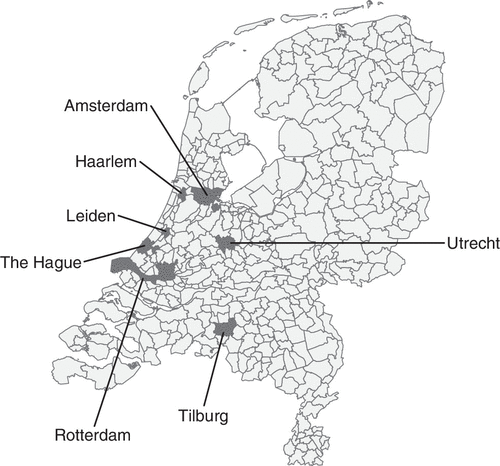
The most important driver in favor of adopting the opt-in policy, according to municipalities, is whether it could lead to a meaningful reduction in paper and environmental waste related to the printing and distribution of store flyers (Stantec 2024). Other drivers mentioned are a (potentially sizable) reduction in garbage collection costs and stimulating environmental awareness among its citizens. Municipalities that have not (yet) introduced a ban question the effectiveness of the policy in reducing paper and environmental waste and may expect other measures to be effective in that regard too. Additionally, municipalities differently evaluate how feasible implementation and enforcement of the policy are. Another factor is the degree to which municipalities evaluate the risks in terms of local business (and job losses). Lastly, municipalities have been cited as “not wanting the hassle” related to implementation in the form of legal issues (Stantec 2024). Indeed, as indicated above, the first municipality to introduce a ban (Amsterdam) dealt with numerous lawsuits, which may be too costly for smaller municipalities to bear.4
Mailbox stickers indicate households’ opt-out/opt-in preference (i.e., the treatment is at the household level). Before the ban was introduced, households could put a “no” sticker on their mailbox, indicating that they did not want to receive any unsolicited store flyers. After its introduction, households could put a “yes” sticker on their mailbox to indicate that they still want to receive such mail. The stickers are available online or at the local city hall free of charge. Any previously used “no” stickers remain valid but are equivalent to not using a sticker. Table 1 clearly details whether households receive store flyers (✓) or not (✗) according to these two approaches.5
|

Table 1. Receiving Store Flyers or Not Preban and Postban
| Mailbox sticker usage | Preban | Postban |
|---|---|---|
| Without sticker | ✓ | ✗ |
| “No” sticker | ✗ | ✗ |
| “Yes” sticker | N/A | ✓ |
Notes. Receiving store flyers is indicated by ✓. Not receiving store flyers is indicated by ✗. N/A, not applicable.
Data
We use GfK household scanner panel data for the period 2017–2021. These data contain purchase information of more than 10,000 households in any given year, representing a stratified national sample; for each trip made, they reveal the specific retail chain visited and exact purchase records (i.e., items and quantities bought, prices paid, whether the item is a private label product, and whether the item was purchased on promotion). We use these data to compute households’ weekly shopping behavior along nine dimensions: (1) total grocery expenditure, (2) total number of units purchased, (3) share of private labels, (4) share of purchases on promotion, (5) number of shopping trips, (6) number of different retail chains visited, (7) share of trips to traditional retailers versus hard discounters, (8) grocery expenditure at the primary chain, and (9) number of shopping trips to the primary chain. The share-based measures and the number of different retail chains visited are computed conditional on a trip observed in a given week. Next to their purchases, panelists also provide information about their demographics and home location (four-digit zip code and municipality). About 12% of the households live in one of the seven treated municipalities. To understand how the ban affects their receipt of store flyers, we also need data about their opt-out/opt-in choices (i.e., use of a mailbox sticker). We obtain these data from GfK and NOM, a Dutch media research organization, which survey a sample of panel households annually. In the first week of 2021, just after the latest introduction of the ban, we ran a survey of all treated households to supplement the data from GfK/NOM, asking households if they used a mailbox sticker and when they started using it. We obtained information about the decision to (not) opt in for about 60% of the treated households.6
Model-Free Evidence
Before presenting our model, we provide some descriptive statistics and model-free evidence regarding the distribution of store flyers and household shopping behavior. First, in terms of circulation, we observe that 37.5% of the households in municipalities with a ban opted in to receive the flyers. Prior to the ban, we observe an opt out of only 25.7%, implying that 74.3% of the households received flyers before the ban was introduced. Therefore, the number of flyers distributed declined by about 49.5% (from 74.3% to 37.5%). Second, when we compare households’ shopping behavior 52 weeks before versus after the ban, across all households living in the treatment municipalities, we find only small differences in the nine grocery shopping behaviors, even though circulation dropped by almost half (see Table 2, panel A). The largest difference that we observe is for the average number of shopping trips to the primary retail chain, which decreases from 1.49 to 1.39 (−6.7%). Yet, other developments could have affected household shopping behavior in the study period too. Indeed, a comparison of shopping behavior of households from municipalities where a ban was not (yet) present across the same period (in Table 2, panel B) shows a similar decrease. Despite retailers’ concerns that reducing their flyers’ distribution would hurt their business, this evidence suggests that the ban had only marginal effects on household shopping behavior. Still, the typical caveats with before and after comparisons apply, and we address these next.
|
Table 2. Descriptive Statistics of Household Shopping Behavior
| Preban | Postban | |||
|---|---|---|---|---|
| Mean | Standard deviation | Mean | Standard deviation | |
| Panel A: Households in treated municipalities | ||||
| Total grocery expenditure (in euros) | 55.08 | 40.58 | 58.08 | 42.70 |
| Total no. of units purchased | 45.02 | 35.66 | 45.68 | 35.75 |
| Share of private labels (%) | 53.71 | 22.92 | 53.47 | 22.90 |
| Share of purchases on promotion (%) | 21.58 | 18.50 | 21.17 | 17.94 |
| No. of shopping trips | 2.59 | 1.88 | 2.46 | 1.78 |
| No. of different retail chains visited | 1.96 | 1.04 | 1.91 | 1.02 |
| Trip share of HDs vs. traditional retailers (%) | 17.55 | 27.13 | 17.16 | 27.40 |
| Grocery expenditure at primary chain (in euros) | 37.44 | 34.98 | 38.18 | 37.28 |
| No. of shopping trips to primary chain | 1.49 | 1.19 | 1.39 | 1.19 |
| Panel B: Households in control municipalities | ||||
| Total grocery expenditure (in euros) | 60.30 | 41.54 | 62.17 | 43.06 |
| Total no. of units purchased | 50.46 | 37.17 | 50.44 | 37.05 |
| Share of private labels (%) | 55.98 | 23.57 | 56.06 | 23.44 |
| Share of purchases on promotion (%) | 20.24 | 17.73 | 20.28 | 17.52 |
| No. of shopping trips | 2.64 | 1.85 | 2.49 | 1.79 |
| No. of different retail chains visited | 2.06 | 1.05 | 2.01 | 1.04 |
| Trip share of HDs vs. traditional retailers (%) | 23.77 | 29.49 | 23.66 | 30.00 |
| Grocery expenditure at primary chain (in euros) | 39.88 | 35.17 | 39.82 | 36.85 |
| No. of shopping trips to primary chain | 1.46 | 1.14 | 1.35 | 1.11 |
Notes. Preban and postban refer to the 52 weeks before and after the ban, respectively. The number of treated (control) households was 892 (32,303) for variables unconditional on a trip observed in a week, and the number of treated (control) households was 361 (13,474) for variables conditional on a trip observed in a week. For a description of the sample selection process, see the section Estimation Sample (Treated and Control Households). The share of private labels is the percentage of private label units of total units purchased in a given week. The share of purchases on promotion is computed in a similar way. Aldi and Lidl are coded as hard discounters (HDs); all other retailers are coded as traditional retailers. The primary chain is defined as the chain to which the household allocated most of its expenditure prior to the introduction of the ban.
Method
We analyze the impact of introducing a ban on unsolicited store flyers by comparing changes in households’ shopping behavior using households from municipalities where a ban was introduced and households from municipalities where such a ban was not (yet) present. In terms of the comparative approach, two characteristics of our setting require special care. First, as Figure 1 indicates, the adoption of the ban has been limited and concentrated in larger cities in the western part of the Netherlands. The average household from the control municipalities thus may not only differ in location but also, may differ in other dimensions relevant to grocery shopping behavior compared with households in the treatment municipalities. Because our approach relies on a before-after-with-control household framework, we need an approach that ensures a good comparison group. Second, the ban was introduced in a staggered manner, so we need a model that can accommodate staggered treatments (Goodman-Bacon 2021). Before discussing our comparative approach in detail, we discuss how we select an identification strategy suitable for our study setting.
Identification Strategy
Commonplace methods to analyze such settings are the difference-in-differences method, the synthetic control method, and the recently proposed synthetic difference-in-differences method. Although these models all rely on a parallel trends assumption,7 these models differ in how control units and time periods are selected, reflected in different model restrictions. We summarize these differences in Table 3. The regular DID places the strongest restrictions by weighting all controls equally. The SC method relaxes this restriction and creates a weighted combination of controls with weights chosen such that the average pretreatment outcome of the controls is approximately equal to the average pretreatment outcome of the treated units (with the weights restricted to be positive and to sum to one and without allowing for a baseline difference between treated and control units; i.e., a “zero-intercept” restriction) (Li and Shankar 2024). Importantly, in our case, the treatment is not randomly allocated to municipalities in the Netherlands and tends to focus on the larger ones. Households living in control municipalities may be different from households living in treatment municipalities and exhibit different shopping behavior on average. Given these differences, equally weighting all households (as in DID) is theoretically unappealing, and a method like SC that flexibly adjusts the weight of each control household would be preferred. Indeed, by “dropping some controls that are (often weakly) negatively correlated or uncorrelated with the treated unit” (Li 2020, p. 2068), SC can reduce the estimation variance compared with DID. At the same time, as Arkhangelsky et al. (2021) note, SC weights tend to be sparse such that a few controls may be very influential (see Arkhangelsky et al. 2021, figure 1 on p. 4095). Yet, these few controls may be matched on noise (i.e., the SC method may overfit in the case of many potential controls) (see Abadie 2021 and Li and Sonnier 2023), challenging the validity of the counterfactual outcome and thereby, the validity of the estimated treatment effect. The synthetic difference-in-differences method proposed by Arkhangelsky et al. (2021) is attractive because it introduces a regularization parameter to increase the dispersion of the weights (such that none of the controls have a particularly strong influence), which is particularly attractive in the case of many potential controls (as is the case in our setting). It also allows for baseline differences between treated and control units (relaxing the “zero-intercept” restriction of the SC method), which together with the regularization parameter, enables a more balanced weighting with less sparse weights (Arkhangelsky et al. 2021, p. 4094). Next to that, the SynthDID method also introduces time weights next to unit weights that can further “remove bias and improve precision by eliminating [pretreatment] time periods that are very different from posttreatment periods” (Arkhangelsky et al. 2021, p. 4090), relaxing the equal-weights or zero-weights restriction of DID and SC, respectively.8 As Arkhangelsky et al. (2019, 2021) show, the SynthDID method comes with a good bias-variance trade-off, and the additional parameters come at limited costs of additional variance.9 Nevertheless, we note that estimates stemming from more restrictive approaches should be more precise if their respective assumptions hold.
|
Table 3. Comparing DID, Synthetic Control, and SynthDID
| Control units | Pretreatment time periods | |
|---|---|---|
| DID | Equally weighted but allowing for a baseline difference between treated and control units | Equally weighted but allowing for a baseline difference between pretreatment and posttreatment periods |
| Synthetic control | Weights chosen such that the weighted average pretreatment outcome of the controls is approximately equal to the average pretreatment outcome of the treated units | Zero weighted |
| SynthDID | Similarly weighted as in SC but regularized to increase the dispersion of the weights and allowing for a baseline difference between treated and control units | Weights chosen such that the weighted average of the pretreatment outcome of the controls is approximately equal to the posttreatment outcome of the same controls, allowing for a baseline difference between pretreatment and posttreatment periods |
Last, we note that in the case of a staggered adoption, we rely on an additional assumption, namely that of adoption exogeneity, which deals with the order of the treatment across cohorts. More specifically, the effect of each treatment should be mean independent of the cohort treatment sequence. This assumption “rules out the possibility that a group gets treated because it experiences negative shocks” (de Chaisemartin and D’Haultfoeuille 2020, p. 2968). As discussed in the Setting and Institutional Details section, there is no coordination across municipalities that would make this assumption untenable. We next discuss the SynthDID approach in more detail, which we use in our focal analysis. In the Results section, we show the results of the DID method as a robustness check.10
Synthetic Difference in Differences
The identification strategy relies on a stacked SynthDID approach (for similar approaches, see Berman and Israeli 2022 and Li et al. 2025), which not only can handle staggered introductions but also, minimizes pretreatment differences in the relevant grocery shopping behavior between households in treated and control municipalities. As noted above, the SynthDID estimator constructs a synthetic control group that matches the pretreatment outcomes of the treated households up to a constant. Importantly, matching on pretreatment outcomes allows us to indirectly match on unobservable factors. That is, to the degree that these factors cause covariation in pretreatment shopping behavior between treated and control households, they are implicitly included in the weighting approach (for a similar reasoning, see Abadie 2021). In addition, as explained above, SynthDID also allows for time-varying weights because some pretreatment periods may be more relevant in constructing the synthetic control. That is, the time weights allow for a focus on a subset of pretreatment time periods such that the weighted average of pretreatment periods predicts average posttreatment outcomes (up to a constant). In sum, what SynthDID does is to reweight control units and time periods and subsequently apply a DID. Next, we formally discuss the implementation of the staggered SynthDID for our setting. The staggered introduction of the ban requires careful computation and aggregation of treatment effects (such as to a common treatment time) to avoid making comparisons between units that are both already treated (Roth et al. 2023). Thus, to analyze the multiple introductions of the ban at different times, we follow Berman and Israeli (2022) and Li et al. (2025) and determine the effect of the ban per cohort (r) of introductions separately; then, we aggregate them into an overall treatment effect (Arkhangelsky et al. 2021, p. 4114). Formally, to evaluate the effect on grocery behavior Yitr of household i in week t in cohort r, we use
Estimation Sample (Treated and Control Households)
The total pool of eligible households for our estimation sample contains all households for which we have complete information (e.g., municipality in which they reside). The treatment group for each cohort consists of all households residing in a municipality that introduced a ban at that time. We begin with an intent-to-treat estimate, where we include all households within a treated municipality, regardless of whether they opt in. An ITT is a useful measure to understand the effect of the introduction of a ban at the population level (cf. the treatment of not receiving flyers anymore unless they opt in)11 as this is the level of implementation and interest for policymakers (Imbens and Rubin 2015, p. 514).12 Moreover, ITTs are advised in the presence of incomplete data on treatment compliance (Gupta 2011), which is the case for households’ opt-in decision. To estimate the effect of not receiving unsolicited flyers anymore, we also consider an LATE estimate for households that did not opt in and stopped receiving flyers.13 We report these in the Subgroup Analysis section.
In terms of the control households, we consider all households as potential controls for each cohort as long as the municipality in which they are located has not yet been treated. The degree to which any such household is relevant as a control for each treatment cohort is determined by the SynthDID procedure, which allocates weights according to the pretreatment period similarity between treatment and control households on the dependent variables. Table 4 specifies the timeline of the introduction of bans across cohorts and households serving as controls for each.
|
Table 4. Bans Across Cohorts and Treated and Control Groups
 |
For each of the cohorts, we use an analysis window of ±52 weeks around the introduction of the ban to ensure that pretreatment similarity encompasses any seasonal variations (see also Table 4).14 We only retain households in each cohort that are part of the household panel for the entire period. Furthermore, this analysis requires a balanced panel (i.e., no gaps or left or right censoring). Although for some dependent variables (e.g., grocery expenditure), we do not require the household to have made a trip to a store in all weeks to remain in the panel, for other dependent variables (e.g., share-based measures), we drop households for which we do not observe a trip in all weeks considered. Table 5 reveals the total number of households included. The total number of observations that we used to estimate our model equals 3,452,280 for dependent variables unconditional on a trip and 1,438,840 for dependent variables conditional on a trip. Online Appendix B contrasts average household characteristics of treated and control households, both overall and by cohort.
|
Table 5. Number of Households and Observations Used in SynthDID
| Variable | No. of households | No. of observations | ||
|---|---|---|---|---|
| Treated | Control | Total | ||
| Unconditional on the trip observed in a week | ||||
| Total grocery expenditure | 892 | 32,303 | 33,195 | 3,452,280 |
| Total no. of units purchased | ||||
| No. of shopping trips | ||||
| Grocery expenditure at primary chain | ||||
| No. of shopping trips to primary chain | ||||
| Conditional on the trip observed in a week | ||||
| Share of private labels | 361 | 13,474 | 13,835 | 1,438,840 |
| Share of purchases on promotion | ||||
| No. of different retail chains visited | ||||
| Trip share of HDs vs. traditional retailers | ||||
Notes. The total number of eligible households consists of all 15,486 households for which we have background information (e.g., municipality in which they reside). Of these households, 1,883 reside in a treatment municipality, and 13,603 reside in a control municipality. A household can be used as a control for multiple cohorts as long as it is not (or not yet) exposed to any treatment itself. The number of households reflects the treated and control households that are part of the panel for the entire 104-week period. The number of observations reflects the 104 weeks of data that we consider for each household. HD, hard discounter.
Online Appendix C shows the pretreatment outcomes for the SynthDID control and the treated group for all cohorts, which indicate that seasonality is similar for the SynthDID control and the treated group prior to the implementation of each ban. We also provide figures showing the average pretreatment evolution of the raw (i.e., unweighted) data series. To contrast the quality of the SynthDID control versus the raw data vis-à-vis the treated group, Table 6 shows the average pretreatment correlations by dependent variable across cohorts. On average, the outcomes of the SynthDID control are more highly correlated with the outcomes of the treated group (0.86) than the raw data (0.64) in the pretreatment period, but they are not so high as to cause concerns of overfitting.
|
Table 6. Pretreatment Correlation: Treated and Control
| Variable | Raw | SynthDID |
|---|---|---|
| Total grocery expenditure | 0.87 | 0.94 |
| Total no. of units purchased | 0.82 | 0.91 |
| Share of private label | 0.37 | 0.78 |
| Share of purchases on promotion | 0.64 | 0.82 |
| No. of shopping trips | 0.71 | 0.87 |
| No. of different retail chains visited | 0.51 | 0.82 |
| Trip share of HDs vs. traditional retailers | 0.17 | 0.77 |
| Grocery expenditure at primary chain | 0.81 | 0.92 |
| No. of shopping trips to primary chain | 0.83 | 0.92 |
| Average | 0.64 | 0.86 |
Notes. Correlations are averaged across cohorts. For SynthDID, the control households are weighted as described in the Synthetic Difference in Differences section. HD, hard discounter.
Results
Table 7 reveals that the effect of a ban on unsolicited store flyers on total grocery expenditures is 0.40 euro, with a standard error of 0.43. The 95% confidence interval ranges from −0.45 to 1.24 and includes zero. Irrespective of statistical significance, an effect of 0.40 indicates a change of less than 1% (i.e., mean spending across treated households prior to the ban was 55.08; 0.40/55.08 = 0.73%), with just 0.01 standard deviations (i.e., 0.40/40.58 = 0.01). That is, the effect appears, managerially and economically, unimportant. For the other dependent variables, we similarly find estimated parameters that are statistically not significant and economically small.15 Following suggestions by McShane et al. (2024), Online Appendix D shows interval estimate curves for each dependent variable for all levels from 0% to 99.9%. Importantly, across all dependent variables, the confidence interval includes zero across a wide range of values.
|
Table 7. SynthDID Estimates of the Impact of Introducing a Ban
| Variable | Estimate | 95% Confidence interval | p-value | ||
|---|---|---|---|---|---|
| Jackknife SE | Lower bound | Upper bound | |||
| Total grocery expenditure (in euros) | 0.40 | 0.43 | −0.45 | 1.24 | 0.36 |
| Total no. of units purchased | 0.09 | 0.36 | −0.62 | 0.80 | 0.81 |
| Share of private labels (%) | −0.26 | 0.38 | −1.02 | 0.49 | 0.49 |
| Share of purchases on promotion (%) | −0.41 | 0.26 | −0.92 | 0.10 | 0.12 |
| No. of shopping trips | 0.01 | 0.02 | −0.02 | 0.05 | 0.46 |
| No. of different retail chains visited | 0.00 | 0.01 | −0.03 | 0.02 | 0.88 |
| Trip share of HDs vs. traditional retailers (%) | −0.05 | 0.53 | −1.09 | 0.98 | 0.92 |
| Grocery expenditure at primary chain (in euros) | 0.19 | 0.40 | −0.60 | 0.98 | 0.64 |
| No. of shopping trips to primary chain | 0.00 | 0.01 | −0.02 | 0.03 | 0.74 |
Notes. Standard errors are derived using the jackknife method with the procedure outlined in Clarke et al. (2024). The bootstrap procedure leads to virtually similar standard errors. HD, hard discounter; SE, standard error.
To understand if the null results are driven by particular choices in our research design or a lack of power, we ran several robustness checks and conducted a power analysis. We first discuss and report the robustness checks. First, for outcome measures that are not expressed in shares, we estimate the same model for a log-transformed version of the dependent variables (i.e., total grocery expenditure, total number of units purchased, number of shopping trips, grocery expenditure at primary chain, and number of shopping trips to primary chain).16 Second, estimating the model using a ±52-week window might restrict the sample and decrease statistical power.17 Therefore, we re-estimate our SynthDID model using ±26-week and ±13-week windows and including all households for which we observe panel membership in these shorter windows such that we expand the set of eligible households.18 Third, considering that the ban was implemented in a staggered way, regulators may have paid special attention to the first ban in Amsterdam in 2018 as it predates the other implementations by at least two years. Thereafter, regulators in other municipalities may have adjusted the way that they implemented the subsequent bans. We recompute the estimates for Amsterdam only as well as for all other municipalities, dropping Amsterdam. Fourth, to understand if our SynthDID estimator yields different results from a staggered two-way fixed effects DID estimator, we estimate the main model using this method. We also re-estimate the SynthDID model restricting the time weights to be equal, which should result in more precise estimates in case such a restriction is warranted.19
Table 8 contains the parameter estimates for all robustness checks. Log transforming the measures does not alter the findings as all estimates are not significant and economically small. Changing the analysis window to ±26 or ±13 weeks does not substantially alter our findings either. The parameters are comparable in size, and they continue to fail to reach significance, despite the increase in the number of households in the sample. For this overlapping but slightly different sample, only the number of different retail chains visited appears to decrease somewhat in the analysis with a ±13-week window, yet the effect is economically negligible (0.03 fewer retail chains per week; i.e., it would take more than 33 weeks for a household to visit one retailer less). Notably, this small short-term effect goes to zero in the longer windows. The analysis that only includes Amsterdam (cohort 1) produces equally sized estimates, also without any parameters reaching significance at traditional levels. The results for the analysis without Amsterdam again are small, with no significant parameters. Using the staggered two-way fixed effects DID approach yields comparable parameter estimates. The results of a more restrictive SynthDID model in which we restrict the time weights to be equal but retain the unit weights with regularization show similar results as our focal model. Overall, the results of our robustness checks provide confidence in the validity of those obtained by our focal model.
|
Table 8. Robustness of Findings
| Variable | Focal | ln(Y) | Time windows | Specific cohorts | DID | Equal time weights | ||
|---|---|---|---|---|---|---|---|---|
| ±26 weeks | ±13 weeks | Cohort 1 only | Without cohort 1 | |||||
| Total grocery expenditure (in euros) | 0.40 [–0.45, 1.24] | 0.03 [–0.07, 0.13] | 0.34 [–0.50, 1.17] | 0.21 [–0.70, 1.12] | −0.43 [–1.77, 0.91] | 0.60 [–0.40, 1.60] | 0.70 [–0.20, 1.59] | 0.56 [–0.32, 1.45] |
| Total no. of units purchased | 0.09 [–0.62, 0.80] | 0.01 [–0.02, 0.04] | 0.01 [–0.69, 0.71] | 0.09 [–0.64, 0.82] | −0.38 [–1.57, 0.82] | 0.20 [–0.63, 1.03] | 0.39 [–0.37, 1.15] | 0.28 [–0.47, 1.02] |
| Share of private labels (%) | −0.26 [–1.02, 0.49] | — | −0.36 [–0.96, 0.25] | −0.19 [–0.80, 0.42] | −1.14 [–2.59, 0.31] | −0.01 [–0.89, 0.86] | −0.28 [–1.05, 0.48] | −0.29 [–1.06, 0.48] |
| Share of purchases on promotion (%) | −0.41 [–0.92, 0.10] | — | −0.33 [–0.79, 0.12] | −0.13 [–0.64, 0.39] | 0.00 [–1.03, 1.04] | −0.53 [–1.11, 0.06] | −0.42 [–0.94, 0.09] | −0.40 [–0.91, 0.10] |
| No. of shopping trips | 0.01 [–0.02, 0.05] | 0.01 [–0.01, 0.02] | 0.00 [–0.03, 0.04] | 0.00 [–0.03, 0.04] | 0.01 [–0.05, 0.07] | 0.01 [–0.03, 0.06] | 0.02 [–0.02, 0.06] | 0.02 [–0.02, 0.06] |
| No. of different retail chains visited | 0.00 [–0.03, 0.02] | 0.00 [–0.01, 0.01] | −0.02 [–0.04, 0.00] | −0.03 [–0.05, –0.01] | 0.04 [–0.01, 0.09] | −0.01 [–0.05, 0.02] | 0.00 [–0.03, 0.03] | 0.00 [–0.03, 0.03] |
| Trip share of HDs vs. traditional retailers (%) | −0.05 [–1.09, 0.98] | — | −0.05 [–0.80, 0.71] | 0.16 [–0.53, 0.85] | −1.11 [–3.28, 1.07] | 0.25 [–0.93, 1.43] | −0.22 [–1.26, 0.82] | −0.16 [–1.21, 0.90] |
| Grocery expenditure at primary chain (in euros) | 0.19 [–0.60, 0.98] | −0.04 [–0.18, 0.11] | 0.44 [–0.37, 1.25] | −0.05 [–0.89, 0.78] | 0.25 [–0.91, 1.42] | 0.17 [–0.77, 1.11] | 0.55 [–0.30, 1.41] | 0.37 [–0.48, 1.22] |
| No. of shopping trips to primary chain | 0.00 [–0.02, 0.03] | 0.00 [–0.01, 0.01] | 0.00 [–0.02, 0.03] | −0.01 [–0.03, 0.02] | 0.00 [–0.05, 0.05] | 0.01 [–0.02, 0.04] | 0.01 [–0.02, 0.04] | 0.01 [–0.02, 0.04] |
Notes. The 95% confidence intervals are in brackets; confidence intervals excluding zero are in bold. Standard errors/confidence intervals for SynthDID are derived using the jackknife procedure. For DID, we use two-way clustering by household and week (Berman and Israeli 2022). HD, hard discounter.
Alternatively, null results can be driven by a lack of power to detect meaningful effects. To confirm that our sample size offers sufficient power to detect economically meaningful effects, we calculate a minimum detectable effect (MDE). Rather than assess the required sample size (“How many observations are required to show an effect of X?”), we consider the effect as a function of sample size (i.e., “How small is the smallest effect that we can identify based on the sample size we have?”). In Online Appendix F, we detail how to calculate MDEs given our setting. We find the MDEs, like the treatment effects, to be economically small (e.g., we should be able recover a change in expenditure of as little as 1.09 euro on a weekly basis, where our SynthDID and DID estimates are 0.40 and 0.71, respectively), suggesting enough power to find that a meaningful effect should it be present. We provide all MDEs in Online Appendix F.
Subgroup Analysis
Thus far, our ITT analysis focused on the population level (i.e., the average change in behavior of all households in a municipality in which a ban is introduced, regardless of their decision to opt in or not). However, the effects can differ across households that opt in (and thus, continue to receive store flyers) or households that already opted out prior to the ban (and thus, continue to not receive flyers) on the one hand and households that do not opt in (and stop receiving such mail) on the other hand. To assess the effect of no longer receiving flyers or LATE, we zoom in on households for which implementing the municipality-level ban corresponded to such a change and contrast these to households for which no change in store flyer reception occurs. Formally, there are three subsamples20 for which we can analyze the impact of a ban: households that (1) previously received flyers and do not opt in (“compliers”), (2) previously received flyers and opt in to continue (“defiers”), and (3) already opted out prior to the ban and continue not to receive flyers (“always takers”).21 The first group experiences a material change after the implementation (i.e., they no longer receive flyers); store flyer reception does not change for other two groups. Online Appendix H provides household demographics for each group both overall and by cohort. For the subgroup analysis, we separately compare each subgroup with the control group from our main analysis and summarize the results in Table 9 (see Online Appendix I for the full results).22 For defiers and always takers, we find no statistically significant treatment effect across all dimensions as expected. Beyond lacking statistical significance, the estimated effects also center around zero and are economically small.23 This is in line with the proposed mechanism of search cost reduction and the heterogeneity across households herein. Defiers and always takers are more extreme in their evaluation of the benefits that they derive from receiving store flyers. For defiers, store flyers are likely to lower their search costs (to the extent that the benefits exceed the additional costs of opting in) such that they opt in to continue receiving flyers. The always takers already indicated not wanting to receive store flyers and opted out before, and they continue not receiving them. Compliers, on the other hand, are affected by the ban. They did not opt out before but do not seem to value the benefits to outweigh the hassle or environmental costs or find the costs to contradict the new social norm too high as they do not opt in after the legislation change. As such, they no longer learn about stores’ advertised promotions through the store flyer. Interestingly, for compliers as well, however, we find little change in any of the shopping measures. The results show a small decrease in the share of purchases of promotion ( = −0.97, p = 0.03), but economically, this change of less than one percentage point is small compared with the average share of purchases on promotion in the pretreatment period (21.6%).24
|
Table 9. Results Subgroup Analyses
| Variable | Compliers (without a sticker) | Defiers (opted in) | Always takers (opted out before) |
|---|---|---|---|
| Total grocery expenditure (in euros) | 0.18 [−1.11, 1.46] | 0.70 [−0.70, 2.10] | 0.19 [−1.52, 1.90] |
| Total no. of units purchased | −0.08 [−1.10, 0.95] | −0.03 [−1.28, 1.21] | 0.67 [−0.67, 2.01] |
| Share of private labels (%) | −0.55 [−1.91, 0.81] | −0.03 [−0.94, 0.88] | −0.25 [−2.45, 1.94] |
| Share of purchases on promotion (%) | −0.97 [−1.82, −0.11] | 0.27 [−0.45, 0.99] | −1.07 [−2.33, 0.18] |
| No. of shopping trips | 0.01 [−0.05, 0.07] | 0.00 [−0.06, 0.05] | 0.05 [−0.03, 0.13] |
| No. of different retail chains visited | −0.02 [−0.07, 0.02] | 0.01 [−0.03, 0.05] | 0.01 [−0.06, 0.09] |
| Trip share of HDs vs. traditional retailers (%) | −1.04 [−3.06, 0.97] | 0.21 [−0.61, 1.04] | 1.53 [−2.16, 5.21] |
| Grocery expenditure at primary chain | −0.02 [−1.28, 1.23] | 0.79 [−0.43, 2.01] | −0.66 [−2.40, 1.07] |
| No. of shopping trips to primary chain | 0.00 [−0.04, 0.04] | 0.01 [−0.02, 0.05] | 0.00 [−0.06, 0.06] |
Notes. The 95% confidence intervals are in brackets; confidence intervals excluding zero are in bold. The numbers of treated (control) households in the complier subgroup analysis are 344 (32,303) and 136 (13,474) for variables unconditional and conditional, respectively, on a trip observed in a week. The numbers of treated (control) households in the defier subgroup analysis are 372 (32,303) and 168 (13,474) for variables unconditional and conditional, respectively, on a trip observed in a week. The numbers of treated (control) households in the always-taker subgroup analysis are 176 (32,303) and 57 (13,474) for variables unconditional and conditional, respectively, on a trip observed in a week. HD, hard discounter.
Treatment Heterogeneity
Although we observe null effects across households, it might well be possible that some households were indeed affected by the change in regulation. For policymakers, it is relevant to know whether vulnerable segments (e.g., low-income or older households) are affected by the ban and adjust their shopping behavior. To shed light on this question, we split treated and control households into different subgroups depending on households’ (1) income (low, middle, or high), (2) age in years (<65 or ≥65 years old), (3) propensity to visit multiple retailers in pretreatment period (less than or equal to median or greater than median), and (4) price sensitivity (low, moderate, or high25). For each of these subgroups, we re-estimate Equation (1) for each dependent variable and present the results in Online Appendix J.26 Across the 90 sets of estimates (9 dependent variables × 10 household groups), we find only two significant effects. Older households and households that are moderately price sensitive (neither disagree nor agree with the statement) appear to reduce their share of purchases on promotion ( = −0.90, p = 0.03 and = −1.28, p = 0.02, respectively). Yet, the reduction is small compared with the pretreatment average of 21.6%; importantly, it does not seem to affect the households’ overall expenditures. Interestingly, we find no significant effects for households that are highly price sensitive but only for those that are moderately price sensitive. One explanation could be that larger numbers of the highly price-sensitive households have opted in to continue receiving store flyers. Indeed, our data show that about 39% of the highly price-sensitive households have opted in to continue to receive store flyers versus 32% of the moderately price-sensitive households.27 We explore the relationship between household characteristics and opting in more formally in the Profiling Households that (Do Not) Opt in to Receive Flyers section. We first consider three possible options that could explain a lack of meaningful changes in shopping behavior.
Explanations for a Lack of Meaningful Changes in Shopping Behavior
The preceding analyses show that banning unsolicited store flyers and switching to an opt-in system have no meaningful effect on household grocery shopping behavior, despite fears by retailers and flyer distributors that households may stick to the default option of not receiving store flyers because they find the process of opting in to be too much of a hassle or because the policy change changes what is socially desirable. As we discussed, the information provided in store flyers can guide consumers’ shopping behavior by creating awareness for promoted products and lowering search costs. Although households that strongly value store flyers are likely to have opted in to continue to receive store flyers and some households already opted out before the ban such that little changes for these groups, there is a large group of households that are meaningfully affected by the ban in terms of receiving store flyers. No longer receiving them means that they no longer hear about stores’ promotions through the flyer, which may increase their search costs. Yet, our results show that even for those households, there is no substantive change in their shopping behavior. What could explain this lack of meaningful changes in shopping behavior? Below, we discuss three possible options.
First, in response to the ban, retailers may have adjusted their marketing strategy in the treatment municipalities. In the Netherlands, the content for store flyers is determined at the national level by all retailers, and most other marketing tools (e.g., TV and radio advertising) similarly target the entire country. As the implementation of the ban is staggered, adjustments to retailers’ national media efforts are unlikely. Still, any such national changes would influence households in our treatment and control markets similarly. Retailers may have created regionally customized billboards in treatment municipalities. We interviewed a general manager of the largest Dutch grocery franchise chain and a marketing director of JCDecaux, the largest billboard provider in the Netherlands, to understand retailers’ possible reactions. The general manager signaled “a huge reliance on the store flyer” and also noted that costs saved because of the local bans had been redirected to other national advertising channels. The marketing director of the billboard provider identified “no change in sales” for billboard advertising in the treatment markets, explaining that billboards do not provide a perfect substitute for store flyers because of their general usage to highlight a few products, typically of only one brand. As such, we consider local adjustments in marketing strategy an unlikely explanation for the lack of a meaningful effect.
Second, after households stop receiving store flyers, they may have adopted its digital version. Store flyers are available on retailers’ websites and through apps, and several other websites aggregate flyers from all retailers. Although many households consider digital flyers inferior to print flyers (Progressive Grocer 2024, Stantec 2024),28 it is conceivable that compliers (who do not opt in to continue receiving print flyers) turn to digital versions. If so, households in treatment areas should display increased digital readership. To study this further, we use a single-wave survey conducted in January 2021 just after the latest introduction of the ban, and we obtain cross-sectional information from 2,186 households in treatment and control areas regarding their digital flyer readership (see Online Appendix K for the full details). We do not find evidence of higher readership of digital flyers in the treatment areas. Among households in the treatment area with the most recent ban implementation (i.e., Rotterdam in November 2020, two months prior to the survey), we also do not uncover any indicator that among digital flyer users, they started doing so at different times than households from control areas. Thus, although some households may use digital flyers, the absence of a difference between treatment and control municipalities suggests that increased adoption in response to the ban is unlikely to explain the lack of any meaningful effect.
A final explanation is that the widespread dependence on store flyers may not have been as high as retailers and flyer distributors seemed to believe. Previous literature already showed considerable heterogeneity in the usage of the store flyer, indicating that not all consumers who receive them use them to decide on their shopping (Gázquez-Abad et al. 2014, Van Lin and Gijsbrechts 2016) and that feature advertising only drives the store choice decision of certain consumers (Srinivasan and Bodapati 2006) and has only limited effects across the conversion funnel (Seiler and Yao 2017). Households that do not opt in and stop receiving store flyers after the ban may not have used flyers in the first place. Although they can no longer hear about stores’ advertised promotions through the flyer and their search costs could have gone up, our results suggest that they did not derive many benefits from store flyers and did not rely on them to guide their shopping behavior. Put differently, the store flyer does not seem to have been a search cost shifter for these households. The concerns of retailers and flyer distributors that households stick to the default option of not receiving store flyers because they find the process of opting in to be too much of a hassle or because the policy change changes what is socially desirable, therefore, seem ungrounded. Although households that find store flyers worth their while likely opted in and continue to receive store flyers, households that derived little benefit from them and did not use them but did not opt out before either no longer receive them. As such, it seems that the latter households actually stuck to the default of receiving store flyers because they found the process of opting out to be too much of a hassle or out of mere habit before the opt-in policy such that they were fine with the change. In other words, the default change seems to have improved the sorting of households.
Summarizing, a lack of a meaningful effect could be because of adjustments in marketing strategy in treated municipalities, because of an increased usage of the digital store flyer, or because complying households do not use store flyers to guide their stopping behavior in any meaningful way. As we explain above, the first two explanations are unlikely such that we conclude that the 50% of households that no longer receive store flyers were largely unresponsive to these costly marketing efforts, whereas those that actually find them worth their while opt in to keep receiving flyers. We seek a better profile of the potentially responsive households that opt in next.
Profiling Households That (Do Not) Opt in to Receive Flyers
Households that are prone to receive and read store flyers differ from other households on various dimensions, such as demographics and shopping-related characteristics (e.g., Gázquez-Abad et al. 2014, Van Lin and Gijsbrechts 2016). Furthermore, research into people’s general opt-in behaviors online (i.e., permission marketing) indicates that people who opt in differ from others in their demographics and online behavior (Kumar et al. 2014). Therefore, to profile households that opt in to continue receiving store flyers after the ban (the “defier” subgroup), we use a binary logit model to regress their opt-in choice (1 = opt in, 0 = otherwise) on (1) household grocery shopping behavior 52 weeks before the ban (averages of total grocery expenditure, number of units purchased, share of private labels, share of purchases on promotion, number of shopping trips, number of different retail chains visited, and trip share of hard discounters versus traditional retailers), (2) household demographics (household size, age of head of household, income class, and social class), (3) household price sensitivity (based on their response to the statement “When buying groceries, I don’t really pay attention to the price”), (4) their readership of digital flyers (based on their response to the survey that we previously reported), and (5) neighborhood characteristics obtained from Statistics Netherlands (percentage of households on social welfare, percentage of Western immigrants, percentage of non-Western immigrants, home ownership rate, average home value, population density, distance to the nearest grocery store, number of grocery stores in a 3-kilometer (km) radius, distance to the nearest department store, and number of department stores in a 5-km radius). We do not include grocery expenditure and number of shopping trips to the primary chain because they cause multicollinearity because of their correlation with total grocery expenditure and the number of shopping trips.
Column 2 in Table 10 contains the estimates. Not surprisingly, households that opt in (defiers) purchase a larger share of groceries on promotion (β = 2.60, p < 0.01), in line with findings on flyer readership by Van Lin and Gijsbrechts (2016). This corroborates the face validity of our estimates. In addition, the remainder shows a significant estimate for the average number of units purchased (β = 0.02, p = 0.05) such that households that purchase more units on a weekly basis also are more likely to opt in. In line with work on flyer readership by Gázquez-Abad et al. (2014) and Van Lin and Gijsbrechts (2016), we also find that households that opt in are more likely to be older (β = 0.24, p < 0.01) and of larger size (β = 0.25, p = 0.03). They also come from lower social classes (β = −0.18, p = 0.03) and reside in neighborhoods with a higher percentage of households on social welfare (β = 5.06, p < 0.01) and fewer grocery stores nearby (β = −0.03, p = 0.04). Interestingly, readership of digital flyers does not correlate with opting in (p = 0.59) such that readers of digital flyers seem to be as inclined to continue to receive print flyers as those who do not read digital flyers. This is in line with survey reports suggesting that households consider digital flyers inferior to print flyers (Progressive Grocer 2024, Stantec 2024), suggesting that digital replacements may be more of a complement than a substitute. The above analysis presents retailers with a profile of potentially responsive households. However, to also understand which households do not put a sticker on their mailbox (the compliers) or already opted out (the always takers), we present results from a similar analysis of these two groups in columns 3 and 4 in Table 10. Compliers seem less likely to reside in neighborhoods with a higher percentage of households on social welfare, but otherwise, they do not exhibit a discernible profile, possibly because they may be less extreme in their evaluation of the benefits of the store flyers. More interestingly, always takers exhibit (for the most part) opposite characteristics to households that continue to receive store flyers in that they tend to spend more on a weekly basis but buy fewer units, purchase less on promotion, are of smaller size and younger age, reside in more affluent neighborhoods, and have access to more grocery stores nearby. All in all, these household profiles provide actionable insights for retailers in that it can help them understand the characteristics of those who prefer to continue to receive store flyer and those who do not want to receive flyers
|
Table 10. Logit Model Estimates of Opt-in Choice (N = 620)
| Variable | Defiers (opted in) | Compliers (without a sticker) | Always takers (opted out before) |
|---|---|---|---|
| Estimate (SE) | Estimate (SE) | Estimate (SE) | |
| Household grocery shopping behavior in the year before introduction of the ban | |||
| Total grocery expenditure (in euros) | −0.01 (0.01) | −0.01 (0.01) | 0.03 (0.01)** |
| Total no. of units purchased | 0.02 (0.01)* | 0.01 (0.01) | −0.06 (0.01)** |
| Share of private labels (%) | 0.19 (0.75) | −0.71 (0.68) | 1.21 (0.85) |
| Share of purchases on promotion (%) | 2.60 (0.93)** | −0.70 (0.87) | −2.82 (1.13)* |
| No. of shopping trips | −0.04 (0.11) | −0.12 (0.11) | 0.23 (0.14) |
| No. of different retail chains visited | 0.32 (0.23) | 0.04 (0.22) | −0.55 (0.28) |
| Trip share of HDs vs. traditional retailers (%) | 0.73 (0.56) | 0.13 (0.54) | −1.19 (0.68) |
| Household demographics | |||
| Household sizea | 0.25 (0.11)* | 0.11 (0.10) | −0.39 (0.14)** |
| Age of head of householdb | 0.24 (0.06)** | 0.01 (0.05) | −0.22 (0.06)** |
| Income classc | 0.01 (0.02) | −0.01 (0.02) | 0.01 (0.03) |
| Social classd | −0.18 (0.08)* | 0.08 (0.08) | 0.11 (0.10) |
| Household price sensitivitye | −0.07 (0.11) | −0.08 (0.10) | 0.22 (0.13) |
| Reader of digital flyers | 0.10 (0.19) | 0.00 (0.18) | −0.04 (0.22) |
| Neighborhood characteristics | |||
| Households on social welfare (%) | 5.06 (1.58)** | −4.16 (1.57)** | −0.49 (1.62) |
| Western immigrants (%) | −0.63 (1.00) | 1.30 (0.91) | −0.77 (1.12) |
| Non-Western immigrants (%) | −0.64 (0.54) | 0.38 (0.49) | 0.56 (0.58) |
| Home-ownership rate (%) | 0.69 (0.37) | −0.19 (0.34) | −0.45 (0.40) |
| Average home value (in 100,000 euros) | −0.11 (0.09) | −0.05 (0.08) | 0.21 (0.10)* |
| Population density (1,000s of addresses per 1 km2) | 0.09 (0.11) | 0.12 (0.10) | −0.24 (0.12)* |
| Distance to the nearest grocery store (in km) | 0.32 (0.25) | 0.03 (0.25) | −0.56 (0.29) |
| No. of grocery stores in a 3-km radius | −0.03 (0.02)* | 0.00 (0.01) | 0.03 (0.02)* |
| Distance to the nearest department store (in km) | 0.01 (0.11) | −0.15 (0.11) | 0.23 (0.12) |
| No. of department stores in a 5-km radius | 0.08 (0.05) | −0.02 (0.04) | −0.07 (0.05) |
| Intercept | −4.54 (1.06)** | 0.16 (0.90) | 1.47 (1.06) |
| Maximum variance inflation factor | 8.06 | 8.05 | 7.93 |
Notes. The dependent variables are defined as one for households that opted in/without a sticker/already opted out before and zero otherwise. The model is estimated on households’ opt-in choice in the first year after the introduction of the ban, excluding households for which we impute their opt-in choice, households for which we do not observe a full year of shopping behavior before the introduction of the ban, and households for which we did not obtain their response to the statement on price sensitivity or readership of digital flyers. Variables in percentages are divided by 100 for readability. HD, hard discounter; SE, standard error.
a1 = 1 member, 2 = 2 members, 3 = 3 members, 4 = 4 members, and 5 = 5 or more members.
b1 = 12–19 years old, 2 = 20–24 years old, 3 = 25–29 years old, 4 = 30–34 years old, 5 = 35–39 years old, 6 = 40–44 years old, 7 = 45–49 years old, 8 = 50–54 years old, 9 = 55–64 years old, 10 = 65–74 years old, and 11 = 75 years old or older.
cNet monthly income: 1 = <700, 2 = 700–900, 3 = 900–1,100, 4 = 1,100–1,300, 5 = 1,300–1,500, 6 = 1,500–1,700, 7 = 1,700–1,900, 8 = 1,900–2,100, 9 = 2,100–2,300, 10 = 2,300–2,500, 11 = 2,500–2,700, 12 = 2,700–2,900, 13 = 2,900–3,100, 14 = 3,100–3,300, 15 = 3,300–3,500, 16 = 3,500–3,700, 17 = 3,700–3,900, 18 = 3,900–4,100, and 19 = >4,100.
d1 = D (lower), 2 = C, 3 = B minus, 4 = B plus, and 5 = A (upper) based on the education level and occupation of the head of the household.
eHousehold price sensitivity is based on a household’s response to the statement “When buying groceries, I don’t really pay attention to the price” (1 = completely agree, 2 = agree, 3 = neither agree nor disagree, 4 = disagree, and 5 = completely disagree).
*p < 0.05; **p < 0.01.
Discussion
Despite the growth of digital media, retailers seem to believe that store flyers remain a critical medium to inform consumers about advantageous price discounts and to keep their offerings at the top of consumers’ minds. But, if the expensive mailers, which require paper, ink, and logistics resources as well, get thrown away unread, they serve little business purpose and are also environmentally problematic. We study a ban on unsolicited store flyers by moving from an opt-out policy to an opt-in policy. Specifically, we investigate the extent to which such a change affects households’ grocery shopping behavior. The policy change resulted in a reduction of store flyer distribution by about 50%. Contrary to concerns by retailers, the results of a stacked synthetic difference-in-differences approach indicate that households’ grocery shopping behavior did not meaningfully change. The findings are robust to different time windows and modeling approaches. Additional purpose-designed survey data corroborate the notion that shifting to digital store flyer usage is an unlikely driver of these null effects. We also do not find evidence that retailers adjusted their marketing communication in treated municipalities in response to a ban. Zooming in on the compliers who were directly affected by the change in store flyer distribution and may face higher search costs, we find no evidence of a substantial change in grocery shopping behavior either.
Are there truly no changes then? Across all analyses and robustness checks, very small fractions of estimates are statistically different from zero, pointing to a shift in shopping behavior.29 For instance, our robustness check using a 13-week time window shows a small drop in the number of retail chains visited (i.e., 0.03 fewer retail chains per week), yet the effect disappears when using longer time windows. This may be suggestive of minor short-term effects in store patronage, yet we note that the effect is economically speaking very small. Further, in some of the subgroup analyses, we observe a small reduction in the share of purchases on promotion. Similarly, the magnitude of change of one percentage point is economically limited. Finally, our results also do not indicate that vulnerable segments or other household groups are differentially affected by the legislative change. We observe a one-percentage-point reduction in the share of purchases of promotion among older and moderately price-sensitive households, but the effect is again negligible. Importantly, our results show that their overall expenditures remain unchanged.
Overall, our results suggest a win-win-win scenario for retailers, consumers, and the environment. We thus hope that our study proves useful for policymakers writing legislation pertaining to physical advertising mail and retailers that rely on them while also stimulating further research at this important intersection of marketing and public policy. Our findings offer several contributions and insights, particularly for retail managers who even without a ban or policy change, might wonder whom to target store flyers. According to our results, around 50% of flyer distribution can be cut without any adverse effects on household expenditures, in line with the old advertising adage: “Half the money I spend on advertising is wasted; the trouble is, I don’t know which.” The profiling analysis suggests that household characteristics that correlate with reading flyers (e.g., promotion sensitivity) also correlate with opting in to receiving flyers, rendering concerns that households stick to the default option of not receiving flyers unwarranted. Instead, our results seem to suggest that the share of households that lose measurable benefits because of the various costs (opportunity, environmental, and violating social norms) of opting in is limited. As such, the ban may serve as a self-selection mechanism and improve the sorting of households.30 The results of our analysis further suggest that a purpose-designed survey that measures flyer usage and the likelihood to opt in when considering the various costs involved can be used to gain ex ante insights on the potential effect of a ban.
For retailers that have discontinued flyers unilaterally (and thus, no longer distribute them to interested households either), such as OBI, the do-it-yourself market leader in Germany, and REWE, the second-largest grocery retailer in Germany (Horizont 2022), our data also indicate that a sizeable segment of customers may still prefer to receive flyers. This is particularly worrisome as competitors can continue to distribute flyers without a ban. Anecdotal evidence supports such concerns. When Walmart temporarily stopped distributing its “Weekly Ad” in a handful of test markets in 2011 and 2012, store traffic fell (Kapner 2015a). It is worthwhile, however, to explicitly study such a one-sided withdrawal (by one retailer) and its effect on households’ shopping behavior versus other retailers that continue to send flyers.
Our study also contributes to the academic literature on retailing and promotions. More specifically, we contribute to the literature on store flyers and feature advertising by being the first to show how banning unsolicited store flyers and moving from an opt-out policy to an opt-in policy affects grocery shopping behavior. As we show, even this drastic change does not affect shopping behavior, in line with the arguments of Srinivasan and Bodapati (2006) and Seiler and Yao (2017) that store flyers appeal only to a certain segment of consumers and that they have only limited effects across the conversion funnel.
Finally, our insights are relevant for policymakers considering legislation to curb the distribution of store flyers (or advertising mail more generally). Along with different municipalities in the Netherlands, an opt-in default has been introduced in parts of Australia, Canada, and New Zealand. Other governments are considering a similar policy but face strong opposition from the industry, including retailers. In response to such opposition, policymakers can point to our results, which indicate that such fears are unfounded with respect to households’ shopping behavior and that an opt-in default can reduce waste without hurting their business. In terms of environmental savings, calculations based on inputs provided by the Association of Dutch Municipalities and flyer distributors show that the reduced distribution in the seven treatment municipalities alone (close to 1.5 million households in total) is similar to the annual energy consumption of approximately 1.7% for treated households (equal to 214,268 gigajoules) and 0.9% of the annual garbage (14,784 tons). Although somewhat more modest, the reduced distribution also could lower emissions by 0.3% for the treated households (14,481 tons of CO2) and decrease water usage by 0.4% (278,720 m3) per year.31 These environmental savings would roughly quadruple if the ban was rolled out nationally.32 Although these savings might be smaller compared with some other sustainability initiatives, our results suggest that the savings from a ban on unsolicited store flyers can be obtained without meaningfully affecting consumers or retailers that depend on them. Yet, it is important to note that next to environmental savings, governments considering similar legislation also need to take into account the downstream consequences on the distribution ecosystem, including job losses, when evaluating the societal benefits.33 Importantly, the dominant revenue source for flyer distributors is tied to the number of prints (Stantec 2024). A cut in distribution by 50% will significantly reduce this number. The industry employs 20,000 delivery drivers alone and was sized close to 700 million euros in 2023 (Verbeek 2023), and the potential halving in the number of prints is likely to have a sizeable impact on jobs and the industry in general. Indeed, the ban has not been rolled out nationwide as several municipalities share concerns about potential side effects (see also the Setting and Institutional Details section) (Stantec 2024).
We close by noting some limitations of our study, which suggest avenues for further research. Our study is the first to study the implementation of a ban on unsolicited store flyers. Reliance on these store flyers traditionally has been high in the Netherlands (Adformatie 2020), but store flyers are globally widespread. Our insights are promising for the many municipalities in the Netherlands that have not (yet) instituted such bans, but it is useful to determine if the observed null effects generalize across countries, some of which are in the process of implementing such changes (like France and Luxembourg). Second, we focus on grocery shopping contexts; other retailers, such as electronics and furniture retailers, that consumers visit less frequently and might not always be top of mind also rely heavily on store flyers. Their flyers also feature promotions, but creating awareness of these less-frequently visited retailers represents another major purpose. We leave it to future research to test whether our results generalize to other retail industries. Third, policymakers (and flyer distributors and retailers alike) are keen to understand the effects of the ban and to consider what implementation details might be revised. A national adoption of the ban may be on the horizon in the Netherlands as the Dutch government commissioned an exploratory report to study the legal and practical feasibility (Stantec 2024). Given the exploratory nature of this report, ample time remains until a potential adoption of a nationwide system. We encourage research into specific implementation details that might increase opt-in or opt-out rates (and who continues to receive flyers) and thereby, influence shopping behavior. Reception might differ substantially depending on how the ban is communicated and implemented, including an outright ban, in which case-interested households no longer receive flyers either. Such an outright ban would allow one to study the value of store flyers but requires either experimental geographical variation in applying these bans or sufficient exogenous variation in flyer reception at the individual level. Fourth, our results suggest that increased usage of digital flyers (e.g., apps) is no likely explanation for the lack of meaningful effects. Indeed, survey reports indicate that many consumers consider them inferior to print flyers (Progressive Grocer 2024, Stantec 2024), which could lead to a lower engagement with its content. Still, digital flyers come in many forms, and some retailers may be ahead in terms of digitization and provide a better experience. Future research could test how digital flyers should be presented to improve their experience and engagement.34 All in all, we hope that our study proves useful for policymakers concerned with legislation surrounding physical advertising mail and retailers that rely on them, and we hope than our study stimulates further research at the increasingly important intersection of marketing and public policy.
The authors thank Bart Bronnenberg, Els Gijsbrechts, and participants at various conferences for helpful comments on an earlier version. The authors are indebted to AiMark/GfK for providing the data. All authors certify that they have no affiliations with or involvement in any organization or entity with any financial interest or nonfinancial interest in the subject matter or materials discussed in this manuscript.
1 Most unsolicited advertising mail consists of store flyers, but current and proposed national policies address all of its forms. In interviews with flyer distributors, we confirmed that most bulk mail involves store flyers, and retailers represent the majority of their clients. Hereinafter, reflecting our research focus, we use the term “store flyers.”
2 A report commissioned by the Dutch Directorate General for Public Works and Water Management (Stantec 2024) indicates that about 10% of all households do not know which policy (opt in or opt out) is in effect in their municipality, giving credence to the claim that households might avoid investing effort into understanding whether they should deviate from the default option.
3 All but one of the national retail chains use store flyers, and across the other chains, there was no variation in distribution across municipalities before the ban. A separate analysis that assesses shopping behavior at this chain versus others shows that the new policy does not affect this chain differently.
4 Rotterdam, Utrecht, and the Hague also dealt with lawsuits surrounding the implementation (and its details). For an overview of all lawsuits, see Stantec (2024, appendix B).
5 In addition to indicating their preferences regarding unsolicited advertising mail, households can indicate their choice to receive community newspapers separately; the new policy does not apply to community newspapers. We provide more information on the implementation and different stickers in Online Appendix A.
6 A comparison of the demographics of households for which this information is available versus not shows negligible differences between the two groups in terms of age, household size, and social class. However, the information is more likely to be available for households in higher income brackets. In our analysis, we use a random forest algorithm to impute the sticker usage of other households using households’ income class as input (among other variables). As an alternative, we condition on households for which we have the information in our analysis.
7 Although DID relies on the assumption that a treated unit’s outcome would have been parallel to the average control unit’s outcomes in the absence of the treatment, both SC and SynthDID rely on the assumption that a treated unit’s outcome would have been parallel to a weighted average control unit’s outcome in the absence of the treatment. An untestable part of the identifying assumptions is that the correlation structure between treatment and (potentially weighted) control units continues into the posttreatment period.
8 Although our setting provides a theoretical rationale for the usage of unit weights, an equally strong motivation for the time weights is absent. In our main model and based on the empirical findings of Arkhangelsky et al. (2021), we include both types of weights, whereas in a robustness check, we restrict the time weights to be equal. Should such a restriction be warranted, our estimate for the treatment effect should be more precise in this restricted version.
9 Specifically, Arkhangelsky et al. (2019) show in simulations how SynthDID outperforms SC (both with and without penalized weights) in terms of both root mean squared error and bias in most cases (Arkhangelsky et al. 2019, tables 1, 2, 4, and 5). Next to SynthDID, other approaches have been introduced that relax some of the restrictions of DID and SC. A comparison of all of these approaches is beyond the scope of this paper, and we refer to Li and Van den Bulte (2023) and Li and Shankar (2024) for excellent discussions on some of these approaches.
10 As discussed, the SC method does not regularize the weights on the potential controls, resulting in potentially overfitting issues. We return to the SC method in the Results section.
11 The Food and Drug Administration, for example, requests ITT estimates for approval of new drugs (Pearl 2000, p. 261).
12 We mainly expect an effect for households that do not opt in and stop receiving store flyers. Including households for which the situation did not change may, therefore, dilute the effects. Nevertheless, other households may have adjusted their grocery shopping behavior too. For instance, previous research shows that opting in tends to make consumers more responsive to marketing communications (Godinho de Matos and Adjerid 2022). We explore this heterogeneity in a subgroup analysis where we report results separately for each set of households depending on their opt-in decision.
13 In the terminology of Imbens and Rubin (2015, p. 514), our ITT estimate reflects the assignment to treatment (i.e., default change), whereas our LATE estimate reflects the receipt of treatment (i.e., not receiving flyers anymore).
14 In robustness checks, we set the windows to one quarter (±13 weeks) and half a year (±26 weeks), which capture more short- and medium-term effects, respectively. We find substantively the same results across all three windows.
15 Next to grocery expenditure and the number of shopping trips to the primary chain, we also assessed changes in these variables at the secondary and tertiary retail chains and similarly did not find any significant changes.
16 The choice of functional form is important (Goldfarb et al. 2022) as it applies for DID frameworks (Roth et al. 2023). Our SynthDID approach maximizes the degree to which the treatment and control households have parallel trends in the pretreatment period. The assumptions that such parallel trends hold for the monotonic transformation of the dependent variable are relatively strict (Roth and Sant’Anna 2023). For the transformed dependent variables, we estimate another SynthDID regression that creates a control group based on the transformed rather than the original dependent variables, again increasing similarity in pretreatment trends.
17 In our main analyses for each cohort, we only include people who do not leave the panel throughout the estimation window (±52 weeks). Thus, our analysis is based on households that stay in the panel for at least two years. We also run our analyses on households that stay in the panel for the entire period (2017–2021) and find results that are substantially the same: For eight of the nine measures, the treatment effects are not significant. Only for the share of purchases of promotion do we find a small decrease of 0.74% points ( = −0.74, p = 0.02). However, we note that by conditioning on households that stay in the panel for the entire period, older households (which are more likely to stay in the panel) make up a larger share of the sample. Our treatment heterogeneity analysis reported in a next section shows an effect on the share of purchases on promotion for this group, and their effect thus gets a larger weight in the overall treatment effect. Regardless, economically, this change of less than one percentage point is small compared with the average share of purchases on promotion in the pretreatment period of 21.6%.
18 Using a time window of ±26 weeks (±13 weeks) expands the set of treated and control households to 1,000 (1,060) and 37,088 (41,149), respectively, for variables unconditional on a trip observed in a week and to 558 (713) and 21,496 (29,460), respectively, for variables conditional on a trip observed in a week.
19 As we discuss in Online Appendix E, the SC method leads to overfitting in our setting and is not considered as an alternative method here.
20 Our data contain information about the decision to (not) opt in for about 60% of the households in treatment municipalities. To include all households in the treatment municipalities, we use a random forest algorithm to impute the sticker usage of other households (see Online Appendix G). We obtain a hit rate of 94.8%; the results are virtually identical when we re-estimate our models using the 60% of households for which we have all information.
21 In our analysis, we consider a household’s opt-in decision in the year that the ban was implemented. Our data show that 95.1% of the households that opt in after implementation are still opted in one year later and that 95.8% of those who did not opt in continue to not opt in one year later. Nonetheless, to the extent that households may change their decision, we also redid the subgroup analysis using a ±13-week window and find similar results.
22 The subgroups are defined only for treated municipalities, so we have two alternative ways to analyze subgroup effects in a SynthDID framework. The first is to re-estimate the weights and for each subgroup, effectively altering the control group across the main analysis and subgroups, which would hamper comparability across the analyses. The second option runs a SynthDID for both subgroups using the weights and generated in the main analysis. This option guarantees that the control group is the same at the risk of having a control group pretrend that may not optimally match the subgroup’s pretrend. In line with Berman and Israeli (2022), we select the latter option. The results of the former option are virtually identical.
23 Combining defiers and always takers into a single “noncomplier” subgroup (for which there is no change in the reception of the story flyer) also does not change the results (see Online Appendix I).
24 As an alternative to using all households as controls in the subgroup analysis, we can impose certain rules that would qualify the eligibility of each control. Although we consider simple rules that would select the appropriate set of controls infeasible, we ran a robustness check in which we consider control households that receive flyers as controls for complier and defier subgroups and those control households that already opted out as controls for the always-taker subgroup. The results are substantively similar. We again find no statistically significant treatment effect for defiers and always takers and a small decrease in the share of purchases on promotion for compliers ( = −0.96, p = 0.03). In a second robustness check, we use the (to-be-treated) households from later cohorts that later also decide to not opt in as controls for the complier subgroup of the first cohort. For share of purchases on promotion, we find a similar effect size but with a larger p-value ( = −1.68, p = 0.11). The effects for the other eight shopping dimensions are of similar size and again not statically significant. Summarizing, using a subset of controls that are similar to the treated households before treatment or behave similarly when the treatment does happen yields substantively the same insights.
25 This is based on a question from GfK’s annual household survey: “When buying groceries, I don’t really pay attention to the price.” We categorize the answer options “completely agree” and “agree” as “low,” “neither agree nor disagree” as “moderate,” and “disagree” and “completely disagree” as “high.” In total, we have data for this question for 96% of all households (similar percentages for treated and control households).
26 The results are robust to using all control households and the same weights and as in the main analysis and to re-estimating Equation (1) using all control households (cf. same group control households; e.g., low income).
27 At the same time, compared with younger households, a larger share of older households opts in (34% versus 47%, respectively), whereas we still find a moderate effect on the share of purchases on promotion. This suggests that older households that do not opt in and stop receiving flyers were more likely to use flyers to guide their shopping behavior than younger households that do not opt in.
28 Survey reports suggest that digital flyers are not perfect substitutes as many consumers consider them inferior to the experience of reading a print flyer, potentially driven by the tactile experience of reading the print flyer (Progressive Grocer 2024, Stantec 2024). Such inferiority may lead to a lower engagement with its content.
29 A total of 9 of 212 estimates (4.2%) reported in Tables 7–9 and in the online appendix attain statistical significance at p < 0.05. Of the nine significant estimates, five are obtained using the robustness check using a synthetic control method, which shows signs of overfitting (see Online Appendix E). Ignoring the SC method, we obtain 4 significant estimates of 203 (equaling 2.0%).
30 It is likely that either preban or postban, the sorting was worse. Should a change in flyer reception not lead to a change in shopping behavior, one could consider that as evidence that those households were incorrectly sorted prior to the ban (i.e., they received flyers but did not use them), and the change in default improves the sorting. Nevertheless, in the postban setting, sorting may still be imperfect as households that have opted in may still be incorrectly sorted (e.g., they may opt in because of a fear of missing out, whereas in practice, their shopping behavior is unaffected by the store flyer).
31 To facilitate policy evaluation for municipalities, the Association of Dutch Municipalities provided a tool (“Milieu-impacttool Ja/Ja-sticker”) to assess environmental impacts according to the opt-in rate and estimates of production costs and waste collection costs (VNG 2020).
32 We predict households’ opt-in choice in the other municipalities if they would also introduce a ban using a similar approach as we used to impute missing values in the treatment municipalities (see Online Appendix G), excluding the opt-in choices of geographically close households and municipality dummies.
33 We thank the editor for suggesting this broader account of the societal benefits.
34 To measure a retailer’s level of digitization, one could look at the richness of retailer apps in terms of the number of features. In a robustness check, we assessed whether shopping behavior at retailers with lower versus higher digitization effort was differently affected but find no evidence for this. A retailer’s digitization effort may be correlated, however, with other retailer-specific factors, and we encourage experimental research into this matter.
References
- (2021) Using synthetic controls: Feasibility, data requirements, and methodological aspects. J. Econom. Literature 59(2):391–425.Crossref, Google Scholar
Adformatie (2020) The store circular is indispensable: Even a Tesla driver doesn’t have a “no” sticker. (November 11), https://www.adformatie.nl/gedragsverandering/de-folder-onmisbaar.Google Scholar- (2014)
Sales promotions . Winer RS, Neslin SA, eds. The History of Marketing Science (World Scientific–Now Publishers, Singapore), 463–497.Crossref, Google Scholar - (2019) Synthetic difference-in-differences. Working paper, CEMFI, Madrid.Google Scholar
- (2021) Synthetic difference-in-differences. Amer. Econom. Rev. 111(12):4088–4118.Crossref, Google Scholar
Azira (2022) “Oui Pub”: Mailbox flyers will soon be “opt in” rather than “opt out” in France—How should retailers adapt their media strategy? (June 22), https://azira.com/blogs/oui-pub-mailbox-flyers-will-soon-be-opt-in-rather-than-opt-out-in-france-how-should-retailers-adapt-their-media-strategy/.Google Scholar- (2022) The value of descriptive analytics: Evidence from online retailers. Marketing Sci. 41(6):1074–1096.Link, Google Scholar
- (2024) Synthetic difference-in-differences estimation. Stata J. 24(4):557–598.Crossref, Google Scholar
- (2020) Two-way fixed effects estimators with heterogeneous treatment effects. Amer. Econom. Rev. 110(9):2964–2996.Crossref, Google Scholar
- (2011) Partitioning default effects: Why people choose not to choose. J. Experiment. Psych. Appl. 17(4):332–341.Crossref, Google Scholar
EUWID Pulp and Paper (2022) Luxembourg’s action on postal ads draws criticism from outside its borders. Accessed June 9, 2022, https://www.euwid-paper.com/news/markets/luxembourgs-action-on-postal-ads-draws-criticism-from-outside-its-borders-090522/.Google Scholar- (1991) Resistance to reform: Status quo bias in the presence of individual-specific uncertainty. Amer. Econom. Rev. 81(5):1146–1155.Google Scholar
- (2005) Cherry-picking. J. Marketing 69(1):46–62.Crossref, Google Scholar
- (2024) Frontiers: The effect of an ad ban on retailer sales: Insights from a natural experiment. Marketing Sci. 43(4):723–733.Link, Google Scholar
- (2008) The temporal and spatial dimensions of price search: Insights from matching household survey and purchase data. J. Marketing Res. 45(2):226–240.Crossref, Google Scholar
- (2017) An empirical analysis of the impact of promotional discounts on store performance. J. Retailing 93(3):283–303.Crossref, Google Scholar
- (2016) Understanding the impact of store flyers on purchase behaviour: An empirical analysis in the context of Spanish households. J. Retailing Consumer Services 28(1):263–273.Crossref, Google Scholar
- (2014) Profiling the flyer-prone consumer. J. Retailing Consumer Services 21(6):966–975.Crossref, Google Scholar
- (2010)
Sales promotion. Krafft M, Mantrala MK, eds. Retailing in the 21st Century (Springer, Berlin), 393–407.Crossref, Google Scholar GfK/NMO (2024) Reach study for flyers 2023/2024. Accessed August 17, 2024, https://spotta.nl/resources/Pdf/Bereiksonderzoek%20Folders%202023%202024.pdf.Google Scholar- (2003) The impact of store flyers on store traffic and store sales: A geo-marketing approach. J. Retailing 79(1):1–16.Crossref, Google Scholar
- (2022) Consumer consent and firm targeting after GDPR: The case of a large telecom provider. Management Sci. 68(5):3330–3378.Link, Google Scholar
- (2022) Conducting research in marketing with quasi-experiments. J. Marketing 86(3):1–20.Crossref, Google Scholar
- (2021) Difference-in-differences with variation in treatment timing. J. Econometrics 225(2):254–277.Crossref, Google Scholar
GroceryDrive (2018) Study: Consumers prefer print to digital when it comes to ad circulars. Accessed February 10, 2018, https://www.grocerydive.com/news/grocery--study-consumers-prefer-print-to-digital-when-it-comes-to-ad-circulars/534350/.Google Scholar- (2011) Intention-to-treat concept: A review. Perspect. Clinical Res. 2(3):109–112.Crossref, Google Scholar
- (2018) On consumer choice patterns and the net impact of feature promotions. Internat. J. Res. Marketing 35(3):490–508.Crossref, Google Scholar
- (2020) Evaluating the effectiveness of retailer-themed super saver events. J. Marketing 84(2):92–113.Crossref, Google Scholar
- (2021) Solutions: How Amsterdam got rid of junk mail. Atlanta J. Constitution (December 6), https://www.ajc.com/opinion/solutions-how-amsterdam-got-rid-of-junk-mail/AAR7VVYP7ZAA7MLTM4VYMPOOFE/.Google Scholar
- (2019)
Empirical search and consideration sets . Dubé J-P, Rossi PE, eds. Handbook of the Economics of Marketing (North-Holland, Amsterdam), 193–257.Google Scholar Horizont (2022) Rewe will also stop using printed advertising brochures. Accessed August 17, 2022, https://www.horizont.net/marketing/nachrichten/ab-2023-auch-rewe-verzichtet-kuenftig-auf-gedruckte-werbeprospekte-201577.Google Scholar- (2015) Causal Inference in Statistics, Social, and Biomedical Sciences (Cambridge University Press, New York).Crossref, Google Scholar
- (2003) Do defaults save lives? Science 302(5649):1338–1339.Crossref, Google Scholar
- (2015a) Retailers can’t shake the circular habit. Wall Street J. (March 11), https://www.wsj.com/articles/retailers-cant-shake-the-circular-habit-1426113760.Google Scholar
- (2015b) Retailers cut back on newspaper circulars. Wall Street J. (August 18), https://www.wsj.com/articles/retailers-cut-back-on-newspaper-circulars-1439945338.Google Scholar
- (2014) Modeling customer opt-in and opt-out in a permission-based marketing context. J. Marketing Res. 51(4):403–419.Crossref, Google Scholar
- (2002) Developing synergies between promotions and brands in different price-quality tiers. J. Marketing Res. 39(2):171–185.Crossref, Google Scholar
- (2020) Statistical inference for average treatment effects estimated by synthetic control methods. J. Amer. Statist. Assoc. 115(532):2068–2083.Crossref, Google Scholar
- (2024) A two-step synthetic control approach for estimating causal effects of marketing events. Management Sci. 70(6):3734–3747.Link, Google Scholar
- (2023) Statistical inference for the factor model approach to estimate causal effects in quasi-experimental settings. J. Marketing Res. 60(3):449–472.Crossref, Google Scholar
- (2023) Augmented difference-in-differences. Marketing Sci. 42(4):746–767.Link, Google Scholar
- (2025) Can lower expert opinions lead to better consumer ratings?: The case of Michelin stars. Management Sci. Forthcoming.Google Scholar
Markteffect (2022) YES–YES sticker: And its implications for retail. Accessed May 22, 2022, https://markteffect.nl/nieuws/240/ja-ja-sticker-en-zijn-gevolgen-voor-de-retail.Google Scholar- (2024) “Statistical significance” and statistical reporting: Moving beyond binary. J. Marketing 88(3):1–19.Crossref, Google Scholar
- (2004) The consequences of public policy for democratic citizenship: Bridging policy studies and mass politics. Perspect. Politics 2(1):55–73.Crossref, Google Scholar
NOS (2021) Yes sticker on the rise: “27 million kilo of paper has been saved.” (October 8), https://nos.nl/artikel/2400839-ja-sticker-beleeft-opmars-er-is-27-miljoen-kilo-papier-bespaard.Google Scholar- (2000) Causality—Models, Reasoning, and Inference (Cambridge University Press, Cambridge, UK).Google Scholar
- (2007) Optimal feature advertising design under competitive clutter. Management Sci. 53(11):1815–1828.Link, Google Scholar
Progressive Grocer (2024) Yes, print ads are still relevant. (April 4), https://progressivegrocer.com/yes-print-ads-are-still-relevant.Google ScholarRetailtrends (2016) Amsterdam approves yes/yes sticker. (April 21), https://retailtrends.nl/news/44319/-amsterdam-stemt-in-met-ja-ja-sticker.Google Scholar- (2023) When is parallel trends sensitive to functional form? Econometrica 91(2):737–747.Crossref, Google Scholar
- (2023) What’s trending in difference-in-differences? A synthesis of the recent econometrics literature. J. Econometrics 235(2):2218–2244.Crossref, Google Scholar
- (1988) Status quo bias in decision making. J. Risk Uncertainty 1(1):7–59.Crossref, Google Scholar
- (1999) Changing behavior with normative feedback interventions: A field experiment on curbside recycling. Basic Appl. Soc. Psych. 21(1):25–36.Crossref, Google Scholar
- (2017) The impact of advertising along the conversion funnel. Quant. Marketing Econom. 15(3):241–278.Crossref, Google Scholar
- (2006) The impact of feature advertising on customer store choice. Preprint, submitted May 15, https://papers.ssrn.com/sol3/papers.cfm?abstract_id=901458.Google Scholar
Stantec (2024) Exploration of nationwide implementation of an opt-in system for unsolicited advertising mail. Accessed June 6, 2024, https://www.rijksoverheid.nl/documenten/rapporten/2024/06/05/bijlage-3-onderzoek-landelijke-invoering-opt-insysteem.Google Scholar- (2016) Norm perception as a vehicle for social change. Soc. Issues Policy Rev. 10(1):181–211.Crossref, Google Scholar
- (2016) The battle for health and beauty: What drives supermarket and drugstore category-promotion lifts? Internat. J. Res. Marketing 33(3):557–577.Crossref, Google Scholar
- (2023) Flyer distributor Spotta wants to bypass no-sticker. Financieel Dagblad (April 29), https://fd.nl/bedrijfsleven/1474782/folderbezorger-spotta-wil-nee-stickers-omzeilen.Google Scholar
Vericast (2020) Unprecedented times prove retailer circulars remain a powerful engagement tool. (June 11), https://web.archive.org/web/20230601213101/https://www.vericast.com/insights/blog/unprecedented-times-prove-retailer-circulars-remain-a-powerful-engagement-tool/.Google ScholarVNG (2020) Tool helps with decision over stickers for unsolicited advertising mail. Accessed December 24, 2020, https://web.archive.org/web/20230127080628/https://vng.nl/nieuws/tool-helpt-bij-besluit-over-stickers-ongeadresseerd-drukwerk.Google Scholar- (2023) Drivers of the synergy between price cuts and store flyer advertising at supermarkets and discounters. Internat. J. Res. Marketing 40(2):455–474.Crossref, Google Scholar
- (2019) Junk mail and windscreen wiper fliers could soon be regulated in Wellington. Stuff (June 21), https://www.stuff.co.nz/environment/113629701/junk-mail-and-windscreen-wiper-fliers-could-soon-be-regulated-in-wellington.Google Scholar