


Mind the Gaps: How Organization Design Shapes the Sourcing of Inventions
Abstract
An important problem for many firms is sustaining their rate of innovation by launching new products on an ongoing basis. Accordingly, firms need to replenish their innovation pipelines with new inventions as existing inventions are weeded out or reach fruition. The replenishment can be done through internally generated inventions or through externally sourced inventions via licensing, alliance, or acquisition modes. Drawing on incentives- and knowledge-based views of the firm, we consider the difference in managerial decision making between centralized and decentralized research and development (R&D) organization designs and how it impacts firms’ propensities to draw on externally sourced inventions. As compared with centralized designs, decentralized designs are associated with greater incentives for managers to replenish their firms’ pipelines but are limited in terms of intraorganizational knowledge flows that can facilitate the creation of inventions. We explore these mechanisms using a novel data set of firms’ sourcing decisions within the pharmaceutical industry between 1996 and 2015. We find that firms with decentralized R&D designs replenish their pipelines with a higher proportion of externally sourced inventions than do firms with centralized designs. This difference is found to be mainly attributed to external sourcing via licensing and for inventions of moderate novelty. This study offers an important contribution to the question of how firms organize for innovation, highlighting the relationship between internal R&D organization design and the external sourcing of inventions. In so doing, it illustrates that the choice of organization design in terms of centralization or decentralization can shape a firm’s locus of innovation.
Introduction
We allocate resources across the best internal and external opportunities we assess. The balance of internal R&D coupled with external programs and collaborations has generated the successful portfolio of current medicines and pipeline candidates we have today. —Robert A. Bradway, CEO Amgen, 2016
An important problem for innovating firms is to sustain their rate of innovation by launching new and improved products on an ongoing basis. To do so, firms continuously invest in research to generate inventions, followed by subsequent product development and, eventually, commercialization. However, such an innovation process is associated with a high degree of uncertainty regarding which inventions within the firms’ innovation pipelines will achieve successful commercialization (e.g., Leiponen and Helfat 2010). Accordingly, firms strive to continuously replenish their innovation pipelines with new inventions as existing inventions are weeded out or reach fruition (e.g., Vassolo et al. 2004, Chan et al. 2007, Klingebiel and Rammer 2014). Increasingly, as highlighted by the quote, they do so using a combination of internally generated and externally sourced inventions via licensing, alliance, or acquisition modes (Pisano 1990, Cassiman and Veugelers 2006, Arora et al. 2016).
The extant literature tends to explore the decision to create inventions internally or source them externally from a perspective of efficient coordination of transactions (Pisano 1990), the division of innovative labor (Arora and Gambardella 1994, Arora et al. 2001, Lee and Berente 2012), problem solving (Macher and Boerner 2012), and firm- or industry-level appropriability conditions (Pisano 1990, Laursen and Salter 2006). In so doing, these perspectives have tended to treat such decisions through the lens of efficient organizational choice for a given invention or a transaction. However, because of the uncertainty surrounding the generation and the commercialization of inventions, the decision to replenish and sustain pipelines is typically not only undertaken at the individual transactional level, but also at an aggregate pipeline level (e.g., Chan et al. 2007, Nishimura and Okada 2014). This is because the problem of replenishment is associated with the efficiency of generation and commercialization of inventions within a pipeline, whereas the problem of sourcing is associated with the efficiency of coordination and mitigating bargaining hazards with respect to a specific transaction.
In this study, we view firms’ sourcing of inventions in the context of firms’ replenishing and sustaining their innovation pipelines. We consider this decision based on how the focal firm is internally organized with respect to research and development (R&D), making an important distinction between centralized and decentralized designs. Prior studies tend to treat firms’ sourcing decisions as largely independent of their internal structures (e.g., Williamson 1979, Pisano 1990, Cassiman and Veugelers 2006). However, centralized and decentralized designs vary in terms of incentives and opportunities for invention, which are likely to influence firms’ propensity to source inventions externally or create them internally (e.g., Zenger and Hesterly 1997, Mayer and Argyres 2004). Specifically, as compared with a centralized design, the decentralized design is associated with greater incentives for managers of R&D units with respect to sustaining their firms’ innovativeness by continuously replenishing their firms’ innovation pipelines (e.g., DeSanctis et al. 2002). However, the decentralized design is limited in terms of the pool of knowledge available for recombination as a basis for generating new inventions internally (e.g., Karim and Kaul 2015). Sourcing inventions externally can help overcome internal knowledge constraints and ensure continual replenishment of firms’ pipelines (e.g., Nishimura and Okada 2014). Hence, firms with decentralized R&D designs are more likely to replenish their innovation pipelines with a higher proportion of externally sourced inventions than those with centralized R&D.
In addition, the effect of organization design on the external sourcing of inventions is likely to be more pronounced for inventions of moderate novelty that are more likely to draw on intraorganizational knowledge flows than for those of low and high novelty. Inventions of high novelty are likely to draw on external sources of knowledge regardless of the internal organization design, and those of low novelty are likely to draw on the local knowledge within the R&D unit. Further, among the different modes of external sourcing, licensing is most likely to be under the direct control of a decentralized R&D unit (DeSanctis et al. 2002, Van de Vrande 2013). In contrast, alliance and acquisition modes are more resource-intensive and, hence, are more likely to be centrally controlled (Kale et al. 2002, Van de Vrande et al. 2006, Van de Vrande 2013, Trichterborn et al. 2016) regardless of centralized or decentralized R&D design. Accordingly, the difference in the propensity to source external inventions between firms with centralized and those with decentralized R&D designs would be more pronounced for external sourcing via the licensing mode than that via the alliance or acquisition modes.
We explore these arguments within the context of the global pharmaceutical industry using a novel data set of 12,047 new drug candidates (i.e., inventions) sourced or created by 49 leading firms over the 20-year period 1996–2015. We supplement this data with 66 interviews with managers from 28 of these firms to probe the mechanisms through which centralized and decentralized R&D designs can influence invention sourcing decisions and to validate the operationalization of the organization design constructs.1 The pharmaceutical industry provides a suitable context for this study as the sourcing of externally created drug candidates (i.e., inventions) for subsequent development is well documented (e.g., Hoang and Rothaermel 2010, Macher and Boerner 2012, Klueter 2013). Further, we can observe firms’ drug development pipelines over an extended period of time and develop specific measures of firms’ organization designs that enable us to test our theoretical arguments.
On average, 37% of drug candidates used to replenish firms’ innovation pipelines in a typical year are sourced externally. Consistent with our arguments, this proportion is 35.6% for R&D organized in a centralized manner and 41.3% for when it is organized in a decentralized manner. The higher proportion of inventions sourced externally for firms with decentralized R&D compared with those with centralized R&D is confirmed via multivariate regression analysis at both the firm level and the drug candidate level. Further, this difference is found to be mainly attributed to external sourcing via licensing and not via alliances or acquisitions modes and for inventions of moderate novelty. These results are robust to a variety of alternate econometric specifications and approaches to help account for potential omitted variable and simultaneity biases. Our interviews with managers help to corroborate our findings and the underlying theoretical mechanisms.
These findings contribute to the strategy and the innovation literatures in several ways. First, by showing how firms’ internal organization designs with respect to R&D impact their propensities to draw on external sources of invention, it reaffirms an important but relatively underexplored link between two fundamental aspects of how firms organize for innovation (Arora et al. 2014, Grigoriou and Rothaermel 2017). In doing so, we also help to create a bridge between the literatures on organization design (Puranam et al. 2014) and firm boundaries (Williamson 1979, Puranam et al. 2014). Second, we illustrate how centralized and decentralized R&D designs may be associated with differences in incentive intensity and intraorganizational knowledge flows (Kapoor and Lim 2007, Argyres and Zenger 2012, Argyres et al. 2012) and how these features can translate into differences in firms’ invention sourcing strategies. In so doing, the study contributes to an integrated knowledge- and incentives-based theoretical perspective of how firms sustain their innovativeness. Finally, extant research on the sourcing of inventions generally analyzes the sourcing decision at an individual transaction level (e.g., Macher and Boerner 2012, West and Bogers 2014) but not on the extent to which firms draw on external sources of invention on an ongoing basis to replenish their innovation pipelines. The latter question that is explored in this study highlights that firms’ management of the innovation process is not only rooted in the problem of discovery and commercialization of focal inventions, but also in ensuring a robust pipeline of inventions.
Theory and Hypotheses
At the most basic level, the innovation process comprises the creation of inventions and their subsequent development into final products that are launched on a commercial basis. To sustain their innovativeness on an ongoing basis, firms typically maintain an innovation pipeline (e.g., Chan et al. 2007, Grönlund et al. 2010, Klingebiel and Rammer 2014). This is because a significant proportion of inventions may not eventually be commercially viable, and many of the products that are eventually launched may not be commercially successful. As inventions in the pipeline are weeded out or reach fruition, firms need to replenish and sustain their innovation pipelines with new inventions. The replenishment may occur through internally generated inventions or externally sourced inventions (Chan et al. 2007). Internally generated inventions are discovered through knowledge recombination facilitated by intraorganizational knowledge flows (Fleming 2001). External sourcing of inventions can enable firms to access inventions by drawing on external sources of knowledge and supplement their internal invention efforts (Rothaermel and Alexandre 2009, West and Bogers 2014). Such external sourcing of inventions can take a variety of different modes, such as licensing, acquisitions, or alliances (e.g., Arora et al. 2001).
Prior studies examining the decision by firms to source inventions externally or generate them internally tend to treat the decision at either the transaction or the firm level. The emphasis in the literature is to consider such a decision from a perspective of efficient coordination of transactions (Pisano 1990), the efficient division of innovative labor (Lee and Berente 2012), efficient problem solving (Macher and Boerner 2012), and the complementarity between firm-level internal and external R&D (Cassiman and Veugelers 2006). However, although these perspectives recognize the importance of externally sourced inventions, they are agnostic to the internal decision-making process as it relates to the ongoing management of firms’ innovation pipelines. Similarly, prior work tends to assume that decisions regarding external sourcing are made at the firm or transaction level (e.g., Williamson 1985a, b; Bidwell 2010; Weigelt and Miller 2013). However, decisions to source inventions may take place at the R&D unit level, which could be organized as a single centralized unit that supports different businesses or as multiple decentralized R&D units (e.g., DeSanctis et al. 2002).
We consider that an important objective of managers is to ensure their firms’ innovation pipelines are adequately stocked (Chan et al. 2007, Nishimura and Okada 2014). We build on prior work that highlights that the management of firms’ innovation pipelines is generally undertaken by R&D units (e.g., Mikkola 2001, DeSanctis et al. 2002). Firms can centralize R&D to obtain scale and scope benefits as well as undertake nonbusiness unit–specific R&D (e.g., Henderson and Cockburn 1996, Argyres and Silverman 2004). Alternatively, firms can decentralize R&D to enable the R&D units to focus on business-specific problems and be closer to end markets and customers (e.g., Baysinger and Hoskisson 1989, Sengul and Gimeno 2013, Arora et al. 2014). These are obviously two extreme ends of the organization design spectrum. Firms may have elements of R&D that consist of a combination of centralized and decentralized features, resulting in hybrid structures. However, for this study, we primarily focus on the dichotomy of centralized versus decentralized R&D and empirically control for other design features (Kay 1988). Managers within centralized and decentralized R&D units vary in terms of the scope of responsibility as it relates to innovation pipelines. Managers within centralized R&D units have responsibility for a firm’s innovation pipeline. In contrast, managers of individual decentralized R&D units ensure that their units continuously contribute to their firms’ overall pipelines but only have responsibility for the inventions that their units contribute (DeSanctis et al. 2002). In developing our theory, we draw on the knowledge- and incentives-based perspectives of the firm to examine how centralized and decentralized R&D designs may vary in terms of both incentives and opportunities for invention (e.g., Kapoor and Lim 2007, Argyres et al. 2012).
R&D Decentralization and the Sourcing of External Inventions
Managers of decentralized R&D units are subject to higher powered incentives than those of centralized R&D units as they have a greater degree of control over how they manage their innovation outputs, and their performance is more easily observed (Zenger 1994, Zenger and Hesterly 1997). It is well established that, as compared with centralized R&D units, decentralized R&D units face greater pressure to innovate and launch new products (Kay 1988, Baysinger and Hoskisson 1989, DeSanctis et al. 2002, Argyres and Silverman 2004) and managers leading decentralized R&D units also face greater career consequences from the failures associated with their units’ innovation outputs (Adner and Levinthal 2004).
The decentralized R&D design is also limited in terms of the ability of firms to recombine their knowledge across their various units as knowledge flows can be hindered (e.g., Zhang et al. 2007, Karim and Kaul 2015). This is because both the internal source and the internal recipient of the knowledge across the different decentralized R&D units may lack the motivation to transfer or utilize knowledge from other units (Szulanski 1996). For example, increased decentralization of R&D is likely to be associated with competition between units (Pfeffer and Sutton 1999, Haas and Hansen 2007). Moreover, Szulanski (1996) and Grant (1996) highlight that the highly tacit knowledge associated with the creation and refinement of inventions may require rich and frequent communications between the provider and recipient of the information. This necessitates a degree of “intimacy” between the recipient and source. If the recipient and source of the relevant knowledge are in separate organizational units, the more distant relationship between these units is likely to result in greater difficulties in the transfer of more tacit knowledge associated with the creation of inventions (Szulanski 1996). Thus, decentralization of R&D into multiple units hinders the flow of knowledge between these units as compared with the intraorganizational knowledge flows within a single centralized R&D unit. This can constrain the decentralized units’ ability to generate new inventions drawing on a broad array of knowledge (e.g., Argyres and Silverman 2004). Hence, on the one hand, managers in decentralized units are subject to high-powered incentives in ensuring their units’ contributions to their firms’ innovation pipelines, and on the other hand, the limited knowledge pool within their units hinders their ability to sustain the internal generation of new inventions.
In contrast, managers within centralized R&D units tend to be more independent from business units (Prahalad and Hamel 1990). Centralized R&D units are also likely to have greater intraorganizational knowledge flows and a have a broader pool of knowledge from which to draw, thereby facilitating the internal generation of inventions (e.g., Kay 1988, DeSanctis et al. 2002, Kim and Anand 2018). This is because such an organizational design reduces internal competition, enables knowledge sharing and transfer across a broad array of knowledge domains, and enhances opportunities for knowledge recombination (e.g., Argyres and Silverman 2004, Zhang et al. 2007, Karim and Kaul 2015). For example, Grigoriou and Rothaermel (2017) examine the relationship between internal copatenting networks of inventors and knowledge recombination. They find that networks that are highly clustered, as is more likely to be the case in a centralized design, tend to facilitate knowledge recombination and enhance the generation of inventions.
In deciding how to replenish their firms’ innovation pipelines, managers consider their R&D units’ abilities to create inventions internally and the opportunities for supplementing their internal inventions with external inventions. As discussed, compared with centralized units, decentralized R&D units are constrained in terms of recombining knowledge across the various units, thereby limiting their ability to generate new inventions internally. Combined with the fact that they are subject to higher powered incentives, managers within decentralized R&D units are more likely to replenish their firms’ pipelines with externally sourced inventions in order to ensure that their units contribute effectively to their firms’ innovation pipelines. Thus, we predict the following:
Firms with decentralized R&D units replenish their innovation pipelines with a higher proportion of externally sourced inventions than do firms with centralized R&D units.
R&D Decentralization and the Novelty of Inventions Sourced Externally
We next consider how the difference in the propensity to source external inventions between the centralized and decentralized R&D designs may vary with respect to the degree of novelty of inventions. We focus on novelty to the focal firm, specifically the extent to which the focal invention draws on a firm’s existing, internal knowledge base (Grant 1996, Galunic and Rodan 1998, Macher 2006). Thus, such inventions are novel to the focal firm but not necessarily to the world. We consider that managers may explore inventions of varying degrees of novelty to sustain their firms’ innovation pipelines (Klingebiel and Rammer 2014, Criscuolo et al. 2016). Some inventions may draw more on a firm’s preexisting knowledge base, whereas others may draw more on knowledge domains that are new to the firm (Fleming 2001, Fleming and Sorenson 2004).
As we outline in the arguments supporting Hypothesis 1, knowledge flows across decentralized R&D units are likely to be more limited than those within centralized R&D units, constraining their ability to recombine knowledge to generate inventions (e.g., Fleming 2001, Fleming and Sorenson 2004, Karim 2006, Karim and Kaul 2015). Thus, decentralization of R&D into multiple units can limit a firm’s ability to create inventions, especially if the knowledge required is dispersed throughout the firm as reduced intraorganizational knowledge flows hinder combination of these disparate stocks of knowledge.
For inventions of low novelty, firms with decentralized R&D units are unlikely to be hindered in their internally oriented invention efforts by these reduced intraorganizational knowledge flows. This is because the knowledge required to create such inventions is likely to be available locally within the relevant R&D unit, and as such, rich intraorganizational knowledge flows across the units are not as critical. For inventions of high novelty, firms are less likely to possess the relevant bundle of knowledge regardless of R&D structure and are, therefore, more likely to be dependent on external sources of inventions (Powell et al. 1996, Nicholls‐Nixon and Woo 2003, Monteiro and Birkinshaw 2017). Thus, for inventions of low and high novelty, there is unlikely to be a significant difference in the proportion of inventions that are externally sourced between firms with centralized and decentralized R&D units.
In contrast, for inventions of moderate novelty, the richer intraorganizational knowledge flows associated with centralized R&D units enable these firms to create such inventions internally more effectively than firms with decentralized R&D units are able. This is because these inventions of moderate novelty require recombination of diverse stocks of knowledge that are likely to be dispersed throughout a firm. As a result, firms with decentralized R&D units are more likely to seek inventions of moderate novelty from external sources than those with centralized R&D units. Thus, the difference in the propensity to draw on external sources of inventions between the centralized and the decentralized R&D designs is much more prominent for inventions of moderate novelty than those of low and high novelty, respectively:
The difference in the proportion of inventions sourced externally between firms with decentralized R&D units and those with centralized R&D units is greater for inventions of moderate novelty as compared with those of inventions of low and high novelty.
R&D Decentralization and the Mode of Sourcing of Inventions
Firms can access external inventions through a variety of modes, such as alliances, acquisitions, and licensing (Van de Vrande et al. 2006, Klueter et al. 2017). These modes represent different levels of resource commitments by firms. Licensing new inventions is low commitment, rapid to implement, and generally reversible (Vanhaverbeke et al. 2002, Moreira et al. 2020). Licensing is also more transactional with limited knowledge sharing between the licensee and licensor and primarily focused on providing firms with inventions to subsequently develop as opposed to building capabilities (Steensma and Corley 2000, Moreira et al. 2020). Licensing requires limited resources for its active management as inventions sourced in this manner can simply be incorporated into firms’ pipelines relatively quickly (e.g., Deloitte 2017). The structure of licensing agreements can also be highly flexible with multiple options available, such as up-front payments, milestone payments as the invention meets specific development milestones, and royalty payments based on a percentage of sales revenues or profits (e.g., Van de Vrande et al. 2006). As a result, decisions pertaining to the licensing mode tend to be under the purview of an individual R&D unit within a decentralized organization design.
In contrast, alliances and acquisitions are much more resource intensive and require broader organization-level buy-in (Capron and Mitchell 2012). Both modes require significant administrative overhead as two separate organizations have to be coordinated and information needs to flow freely between both organizations (Steensma and Corley 2000, Homburg and Bucerius 2006). This coordinative effort can take the form of careful negotiations and management of mutual expectations (e.g., Larsson et al. 1998). In the case of acquisitions, this coordination specifically consists of postmerger integration, and for alliances, it involves active management of the alliance relationship. Firms that frequently undertake acquisitions and alliances often form separate centralized organizational units to manage the activities associated with their effective implementation, thereby further driving up the resources required to undertake these modes of sourcing (Kale et al. 2002, Zhang et al. 2007, Trichterborn et al. 2016). These units also reduce the managerial discretion of individual decentralized R&D units regarding sourcing through these modes. Beyond these administrative costs, both acquisitions and alliances may involve significant up-front costs, such as cash or equity to acquire other firms or create joint ventures (Capron and Mitchell 2012). Both modes may also take a significant amount of time to yield results and could help to explain why they are generally undertaken for longer term R&D activities as opposed to short-term replenishment of innovation pipelines (Moreira et al. 2020). Further, centralized R&D units focused on knowledge and capability building are likely to find acquisitions and alliances relatively more attractive than licensing because of the greater ability to internalize more tacit knowledge (e.g., Mowery et al. 1996).
Together these arguments suggest that licensing provides highly incentivized managers in decentralized R&D units a lower cost, readily accessible, speedy source of new inventions that is under their direct control. In contrast, alliances and acquisitions are much more resource intensive, slower to implement, and less likely to be under the direct control of managers in decentralized R&D units. Therefore, managers of decentralized R&D units are more likely to utilize licensing over acquisitions or alliances for sourcing inventions externally. As a result, we expect that the difference in the proportion of inventions sourced externally between firms with centralized and decentralized R&D units is greater for the licensing mode than for the acquisition or alliance modes:
The difference in the proportion of inventions sourced externally between firms with decentralized R&D units and those with centralized R&D units is greater for the licensing mode as compared with those of the acquisition or alliance modes.
Methods
Research Context
The context for this study is the pharmaceutical industry over the 20-year period 1996–2015. The industry provides a rich context for testing the hypotheses. Pharmaceutical firms fill their innovation pipelines with a combination of both internally and externally sourced inventions (e.g., Pisano 1991, Schweizer 2005, Kapoor and Klueter 2015). In the study sample, the average proportion of externally sourced drug candidates ranged from 29% in 1996 to 49% in 2014 (Figure 1). Moreover, data on firms’ innovation pipelines and the modes of sourcing are publicly available because of regulatory requirements and the strategic importance of new product development. Firms also vary in their organization of R&D (Eklund 2019). For example, Roche chose to decentralize R&D into multiple units, whereas Amgen’s R&D is highly centralized. Finally, the conversion of drug candidates into final marketed products forms the lifeblood of large global pharmaceutical firms, ensuring that senior managers pay close attention to their innovation pipelines. With only a limited period of exclusivity afforded by patent protection, these firms are continuously looking to develop new drug candidates. This focus on new product development is illustrated by the large proportion of revenues that are dedicated to funding research and development with, on average, 13% of revenues being allocated to R&D, the highest of any industry (Jaruzelski et al. 2016).
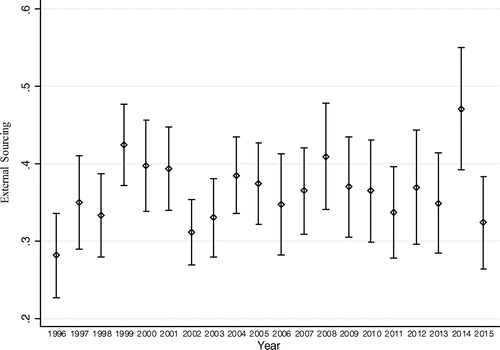
Note. 90% confidence intervals illustrated.
Data and Sample
The sample consists of 49 leading pharmaceutical firms over the period 1996–2015. The data set contains 12,047 drug candidates entering the firms’ pipelines during this period. The primary source of data is the Pharmaprojects clinical trial database (e.g., Chandy et al. 2006, Kapoor and Klueter 2015).2 This database provides an overview of the drug development pipelines of pharmaceutical firms. These data are supplemented with patent data from the European Patent Office Patstat database (e.g., Conti et al. 2013), company annual reports/financial filings, and financial data from Compustat. The unit of analysis is the firm-year, resulting in an overall data set of 762 firm-year observations.3
To enrich the quantitative analysis, 66 interviews were conducted with managers from 28 firms in the sample.4 The interviewees were senior-level R&D or business development managers who had a good understanding of their firms’ invention sourcing strategy. The interviews were conducted via teleconference, and each interview typically lasted between 30 and 90 minutes with questions distributed to the respondents in advance to enable suitable preparation. The interviewees help to confirm three of the key assumptions in our theoretical development. First, we assume that decentralized R&D units act independently of each other, contributing their separate inventions to a firm’s innovation pipeline. Interviews with managers from multiple firms with decentralized R&D units support this assumption. For example, a manager said, “We tended to see each asset team [R&D unit] as a silo with limited communication across silos.”
Second, we assume that a key focus of R&D managers is ensuring the replenishment and sustenance of their invention pipelines. Consistent with our theorizing, interviews with R&D and business development managers reveal that their decisions to draw on external sources of inventions are motivated by this issue. For example, a manager said, “The focus of external sourcing is in filling gaps in our development portfolios. There is often a sense of urgency in trying to fill these gaps, especially in the later stages of development. It often comes to the situation where the CEO looks at the pipeline and urges for gaps to be filled.” Another said, “The decision to source externally is moderately to strongly driven by gaps in the pipeline considered in the context of expected attrition rates and desired future product launches in the therapeutic areas of focus.” Another said, “We also will use external candidates to fill in gaps in the portfolio or to add scientific expertise not already within our portfolio; an example for us would be gene therapy.”
Third, we assume that licensing represents a lower resource commitment and is typically undertaken at the R&D unit level as compared with alliances and acquisitions, which both represent a higher level of commitment and tend to be more centrally managed. Several managers we interviewed highlighted this to be a valid assumption. One said, “Deals to obtain external drug candidates can vary tremendously in size. Smaller decisions such as licensing deals can be made at the local R&D unit level.” Another said, “There is a corporate BD [business development] group that reports up to the CFO; they tend to manage large deals, multiple asset deals or company acquisitions/alliances, etc. Each of the business units have BD groups that collaborate with the corporate function, but they also do smaller deals that would not meet a corporate threshold.”
Measures
Dependent Variables.
To test Hypothesis 1, the key dependent variable pertains to the proportion of inventions entering a firm’s innovation pipeline that are sourced externally in a focal year (External Sourcing). This is because our theory pertains to the extent to which firms replenish their innovation pipelines with externally sourced inventions.
Defining whether a drug candidate is internally created or externally sourced using the Pharmaprojects database requires a careful assessment of individual transactions between firms in which an individual drug candidate may be sold to another firm, a firm may acquire or merge with another firm, or drug candidates may be developed through alliances with other firms or through licensing agreements. A structured process is followed to determine this key variable. First, the originators and licensees of each drug candidate provided by the Pharmaprojects database are examined to provide an initial indication of whether a drug is internally developed or licensed from another firm. Second, to ensure that a drug candidate is allocated to the appropriate firm, other drug candidate transactions not captured by Pharmaprojects are examined using the Recap database to ensure that the allocated originators for a specific drug candidate did originally create the invention. The Recap database provides a comprehensive database of key transactions between firms at both the overall organizational level (i.e., mergers and acquisitions) and at the individual drug candidate level.5 Further details on the origin of the drug candidate are available from the “overview” section of the Pharmaprojects database. This information can be used to help validate whether a drug candidate was created by the originator of the project or sourced via an acquisition or alliance. If no evidence was obtained from either Recap or the overview section that a drug candidate was sourced externally, then it was designated as internally created. Further, if the drug candidate was externally sourced, drug candidates were then allocated to one of three subcategories (acquisition, alliance, license) based on the information from the Recap database and the overview section of the Pharmaprojects database.
To test Hypothesis 2, we construct three different variables based on the proportion of externally sourced inventions of low, moderate, and high novelty, respectively. We identify the degree of novelty of drug candidates that are sourced externally based on a review of the literature and our interviews with R&D managers. In our theorizing, we focus on the novelty at the level of the focal firm, and we consider how the firm’s knowledge base that is available for recombination can impact its ability to generate inventions. Thus, our measures focus on novelty to the focal firm and whether the knowledge associated with creating an invention is new to the firm. Novelty in drug candidates at the firm level often arises in the form of new mechanisms of action and the use of new materials within a given therapeutic domain (e.g., Swinney and Anthony 2011, Agarwal et al. 2013, Klueter 2013, Petrova 2014). We draw on these features of innovation within the pharmaceutical industry to develop a measure for a drug candidate’s degree of novelty. If both the mechanism of action and the origin of material in the broad therapeutic domain (e.g., oncology, diabetes, cardiovascular) are new to the firm, this drug candidate is considered to be of high novelty. If one of these is new, the drug candidate is considered to be of moderate novelty, and if neither is new, it is considered to be of low novelty. On average, 36% of drug candidates entering firms’ innovation pipelines are of low novelty, 54% are of moderate novelty, and 10% are of high novelty. The proportion of externally sourced drug candidates of low, moderate, and high novelty are then calculated for each firm-year. This is done by dividing the number of drug candidates entering a firm’s pipeline in a focal year that are externally sourced by the total number of drug candidates entering a firm’s pipeline for each of the three levels of novelty to create the three variables Low Novelty, Moderate Novelty, and High Novelty. For example, for inventions of low novelty, Low Novelty is estimated through dividing the number of drug candidates of low novelty entering firms’ pipelines through external sourcing by the total number of drug candidates of low novelty entering firms’ pipelines (via external sourcing and internal creation). As an additional analysis, we separately examine how the proportion of externally sourced inventions varies between firms with centralized and decentralized R&D based on whether the mechanism of action is new to the firm or the origin of material is new to the firm in the relevant therapeutic class.
To explore differences in the modes of external sourcing (Hypothesis 3), three related dependent variables are developed: the proportion of drug candidates sourced via licensing (License), acquisitions (Acquisition), and alliances (Alliance). These variables are estimated by dividing the number of drug candidates entering a firm’s pipeline in a focal year via a specific external mode (License, Acquisition, Alliance) by the total number of drug candidates entering a firm’s pipeline.
Independent Variable.
The variable R&D Decentralization is determined by examining whether firms’ R&D is organized into a single centralized unit or into multiple units. This is evaluated through a careful examination of firms’ annual reports, 10-Ks, 20-Fs, and DEF 14As.6 These data sources are used to develop a database of 15,129 executive roles for the sample of 49 firms over the period 1995–2015. This results in a total of 898 firm-years of data and an average of 16.8 executive roles per firm-year (standard deviation = 11.1). For diversified firms that operate beyond the pharmaceutical business, R&D units that pertain to the pharmaceutical business were focused upon, and R&D units dedicated to areas such as consumer products were excluded.
The variable R&D Decentralization is defined as a variable set to one if there are multiple R&D groups reporting to separate members within the top management team (TMT) and zero if the firm has a single centralized R&D group reporting to a TMT member. This method of developing structural measures is consistent with recent empirical approaches (e.g., Guadalupe et al. 2014, Girod and Whittington 2015, Albert 2018). It is possible that firms can have hybrid R&D structures that are partially centralized or decentralized (Argyres and Silverman 2004). Although this measure dichotomizes decentralization, interviews with R&D managers in 28 out of 49 firms in the sample indicated that the measure we use is a good proxy for the overall degree of R&D decentralization that they observe in their firms.
Control Variables.
The control variables and justification for their use are summarized in Table 1. Five sets of control variables are used in the regression analyses. First, additional structural design attributes are controlled for at the firm-year level, such as the degree of corporate decentralization. Second, a variety of firm-specific controls, such as R&D intensity, are utilized. Third, the degree of market competition firms’ face is also controlled for. Fourth, we control for the degree of diversification of the firm across therapeutic classes in its innovation pipeline as well as its overall business. Finally, a series of control variables are used related to the properties of firms’ drug candidates. A variety of fixed effects are used to control for differences in terms of years, therapeutic areas, and business segments.
|

Table 1. Summary of Control Variables Used in This Study
| Variable | Description | Rationale |
|---|---|---|
| 1. Organizational design controls (nonlagged) | ||
| R&D Functional Differentiation | This variable represents whether firms’ research and development units are integrated across both functions—research and development—or are separated into individual research and development units. This is developed using companies’ TMT compositions and set to zero if R&D is functionally integrated under a single head or one if it is functionally disintegrated into separate research and development units with separate heads in the top management team. | Firms with separate research and development units may have different preferences for sourcing drug candidates externally. For example, separate research units may have a greater preference for creating inventions internally, thereby leveraging their key resources and capabilities. In contrast in a functionally integrated R&D unit, there may be more pressure from development to source inventions externally. |
| Corporate Decentralization | This variable represents whether a firm is more functionally or divisionally aligned. This variable is estimated using the composition of firms’ TMTs (excluding CEO) and dividing the number of business unit leads by the total size of the top management team. The greater the value of this variable, the more decentralized a firm (Albert 2018). | More decentralized firms with multiple business units with well-defined innovation targets may place more pressure on R&D to build the stock and flow of their pipelines driving up the likelihood of replenishing the pipeline with externally sourced inventions. |
| Corporate Development Role | A dummy set to one if the focal firm has a business or corporate development manager role within the top management team in the relevant year | Firms with dedicated business development units may have access to more external sourcing opportunities. |
| 2. Firm-level controls (lagged one year) | ||
| Performance | The annual return on assets of the firm (Richard et al. 2009) | Higher performing firms may potentially develop a higher volume of inventions internally. |
| R&D Intensity | The annual spend on R&D by a firm as a proportion of annual revenues | Firms that spend a higher proportion of their sales on R&D may be incentivized to create more inventions internally (e.g., Mairesse and Mohnen 2004). |
| SG&A | Natural log of a firm’s selling, general, and administrative (SG&A) expenses | Potentially those firms with higher values of SG&A are more innovation focused and need to spend more on sales expenses to educate customers about the benefits of their new products. |
| Size | Natural log of the annual sales of each firm in the study sample | Larger firms may potentially generate more innovation outputs as they have access to more resources, such as a broader knowledge base. They are also likely to be more differentiated and, thus, decentralized. |
| Slack | Current ratio | Prior studies have indicated greater slack may help to drive the development of new innovations (Greve 2003). |
| New CEO | A dummy variable set to one if a new CEO was appointed in a specific firm-year | May be the catalyst for a reorganization or uptick in performance through, for example, accelerated sourcing of external drug candidates. |
| Total Patent Stock | Discounted total quantity of patent families granted by focal firm (Arora et al. 2014). A 15% discount rate is used. Similar “stock” measures of a firm’s experience in a specific knowledge domain have been used in prior studies (e.g., Henderson and Cockburn 1994, Hoang and Rothaermel 2010). | Controls for firms’ existing knowledge collected over a period of time which will impact whether firms decide to make or buy a specific invention. Also helps to control for firms’ internal inventive capability. |
| Patent Family Count | Number of patent families filed by firm in a specific focal year (e.g., Arora et al. 2014) | Firms filing more patents may be less likely to source inventions externally as they may have a more readily available source of internal inventions. |
| Originality | Mean originality of firms’ patent families (based on highest originality patent in family) per firm-year. Originality is based on technical classifications of back citations (Hall et al. 2001). | Firms with more original patents may be more able to create novel inventions in-house. |
| 3. Competition controls (lagged one year) | ||
| Competition | Measure of competition firms face across their development pipelines. Sum of squared market shares (by drug candidate count) of drug candidates within all development phases per therapeutic class weighted by contribution to pipeline (i.e., proportion of firms’ pipeline a therapeutic class represents across all phases) subtracted from one. Higher value signifies firms operate in more competitive therapeutic classes. | Controls for the degree of competition firms face across their pipeline of drug candidates. Firms in more competitive markets may be incentivized to innovate and organize differently; also competition for external drug candidates could be greater, limiting supply of available candidates. |
| 4. Diversification controls (lagged one year) | ||
| SBU | Reflects the total number of operating segments within a firm that report separate financials statements in their annual reporting documents. International Financial Reporting Standard (IFRS) 810 requires that firms disclose information about their operating segments; these represent distinct profit centers within a firm and are used by senior management to make strategic decisions. | Controls for general firm diversification. More diversified firms may limit R&D in pharmaceuticals and rely more on external sourcing of inventions. |
| Technical Diversity | Measure of technological diversity of firms’ R&D efforts based on a measure developed by Macher (2006). This is estimated using the sum of the squared proportions of drug candidates in each therapeutic class in a firm’s pipeline within a focal year and subtracted from one. The larger the value, the more diversified a firm’s pipeline is across therapeutic classes in a specific year. | Controls for the level of technological diversity of a firm’s R&D activities. Firms undertaking a broader array of technological activities are more likely to differentiate their R&D efforts (either by technical domain or function) as well as fragment into more business units, potentially increasing the likelihood of externally sourcing drug candidates. Further, firms will have a broader range of technical knowledge from which to draw. |
| Category Dummy Fixed Effects | Series of dummy variables representing whether a firm has operating segments in categories beyond pharmaceuticals. Specifically, consumer goods, medical devices, animal medication, bulk chemicals, nutrition. Also have dummy if firm has a generics business. These can vary by firm-year as firm acquires or divests specific businesses. | Control for diversification of firms’ businesses beyond pharmaceuticals |
| 5. Pipeline level controls (lagged one year) | ||
| Clinical Experience | Total stock of clinical trials across all phases estimated using the methodology described by Macher and Boerner (2012). However, the total stock of clinical trials (not just successful trials) across preclinical to phase 3 is used with a 15% discount rate. | Greater clinical trial experience in a therapeutic class may be another form of absorptive capacity (Cohen and Levinthal 1990) that may influence the make versus buy decision. Also controls for firm’s knowledge base with respect to undertaking clinical trials. |
| Internal Overall Pipeline | Total number of internally sourced drug candidates across all therapeutic classes in firms’ pipelines. | Controls for the size of the existing pipeline and whether firms have a proclivity to source externally |
| External Overall Pipeline | Total number of externally sourced drug candidates across all therapeutic classes in firms’ pipelines. | |
| Bio | Proportion of firms’ pipeline that are biotechnology candidates. | Firms focusing on biotechnology may source more externally because of access to many biotechnology start-ups. |
| NCE | Proportion of firms’ pipeline that consists of new chemical entities. New chemical entities include no chemical component that has been previously approved by the FDA (Petrova 2014).11 | Helps to control for degree of novelty of pipeline of drug candidates that are new to the world. |
| Progress | This is the proportion of a firm’s pipeline that moves forward at least one stage in the clinical development process per firm-year. | Controls for firms with very different rates of flow of inventions through their invention pipelines. Those with slower flow may need to resort to more external sourcing of inventions. |
| Therapeutic Category Fixed Effects | Series of dummies for each therapeutic category indicating whether a firm is actively developing drugs in this therapeutic category. | |
| 6. Other controls | ||
| Year Fixed Effects | Series of dummies for each year in sample | |
Analysis Approach
Our main analyses use the following regression equation:
For Hypothesis 1, Yi,tis External Sourcing. For Hypothesis 2, we conduct three separate regressions in which Yi,t is Low Novelty, Moderate Novelty, and High Novelty. Each of these analyses uses data for firms that source at least one drug candidate at the relevant novelty level (either internally or externally) in a given year. We then examine β1 across these three models to test Hypothesis 2. Similarly, for Hypothesis 3, we conduct three separate regressions in whihc Yi,t is License, Alliance, and Acquisition. We again examine β1 across these three models to test Hypothesis 3.
We also conduct a series of robustness tests. First, as across all Hypotheses 1–3, Yi,t is continuous and bounded between zero and one, OLS may not be an appropriate regression model as it is predicated on the assumption that the dependent variable is unbounded. Thus, we utilize an alternative fractional logit specification to determine whether this issue impacts our main results. Second, we test for whether simultaneity bias arises in our analyses as firms that source more inventions externally may choose to decentralize their R&D units; that is, Yi,t and X1i,t are switched in Equation (1). Third, there is a risk of omitted variable bias in which unobserved variables are correlated with the regression error term (εi,t in Equation (1)) and R&D Decentralization (X1i,t). For example, firms’ choices regarding organizational design may be correlated with their innovation capabilities and processes, which may also be correlated with their propensity to draw on external sources of inventions.
Results
Descriptive Statistics
Table 2 illustrates the descriptive statistics for the sample of firms in this study. On average, 37% of drug candidates entering a firm’s pipeline are externally sourced over this period. This level of external sourcing of drug candidates is consistent with other studies of the pharmaceutical industry (e.g., Hoang and Rothaermel 2010, Pfrang et al. 2017), providing some validation to the methodology that we used to operationalize firms’ external sourcing of inventions. Consistent with Hypothesis 1, the proportion of drug candidates sourced externally is 35.6% for firms with R&D organized in a centralized manner and 41.3% for when it is organized in a decentralized manner. From Table 2, it can also be seen that licensing is the main mode (16%) through which drug candidates are sourced externally, followed by alliances (12%) and acquisitions (9%). We also note the low correlation (0.04) between R&D and corporate decentralization, suggesting that these design choices are likely to be premised on different considerations.
|
Table 2. Descriptive Statistics
| Variable | Mean | Standard deviation | 1 | 2 | 3 | 4 | 5 | 6 | 7 | 8 | 9 | 10 | 11 | 12 | 13 | 14 | 15 | 16 | 17 | 18 | 19 | 20 | 21 | 22 | 23 | 24 | 25 | 26 | 27 | 28 | 29 |
|---|---|---|---|---|---|---|---|---|---|---|---|---|---|---|---|---|---|---|---|---|---|---|---|---|---|---|---|---|---|---|---|
| 1. External Sourcing | 0.374 | 0.223 | 1.00 | ||||||||||||||||||||||||||||
| 2. Low Novelty | 0.392 | 0.319 | 0.61 | 1.00 | |||||||||||||||||||||||||||
| 3. Moderate Novelty | 0.478 | 0.295 | 0.72 | 0.26 | 1.00 | ||||||||||||||||||||||||||
| 4. High Novelty | 0.589 | 0.419 | 0.46 | 0.15 | 0.25 | 1.00 | |||||||||||||||||||||||||
| 5. License | 0.159 | 0.158 | 0.51 | 0.29 | 0.31 | 0.22 | 1.00 | ||||||||||||||||||||||||
| 6. Alliance | 0.123 | 0.145 | 0.42 | 0.24 | 0.28 | 0.21 | −0.19 | 1.00 | |||||||||||||||||||||||
| 7. Acquisition | 0.092 | 0.156 | 0.53 | 0.32 | 0.39 | 0.21 | −0.11 | −0.14 | 1.00 | ||||||||||||||||||||||
| 8. R&D Decentralization | 0.126 | 0.332 | 0.07 | 0.12 | 0.07 | −0.03 | 0.12 | −0.07 | 0.04 | 1.00 | |||||||||||||||||||||
| 9. R&D Functional Differentiation | 0.228 | 0.420 | −0.05 | −0.03 | −0.01 | 0.00 | −0.05 | 0.09 | −0.10 | −0.13 | 1.00 | ||||||||||||||||||||
| 10. Corporate Decentralization | 0.261 | 0.244 | 0.03 | −0.01 | −0.04 | 0.03 | 0.16 | −0.06 | −0.06 | 0.04 | −0.17 | 1.00 | |||||||||||||||||||
| 11. Corporate Development Role | 0.289 | 0.454 | 0.06 | 0.01 | −0.06 | −0.01 | 0.05 | 0.02 | 0.01 | 0.08 | −0.02 | 0.06 | 1.00 | ||||||||||||||||||
| 12. Performance | 0.079 | 0.087 | −0.00 | −0.04 | −0.04 | −0.01 | 0.03 | 0.01 | −0.04 | −0.05 | −0.04 | 0.02 | −0.05 | 1.00 | |||||||||||||||||
| 13. R&D Intensity | 0.180 | 0.224 | −0.02 | 0.00 | −0.02 | −0.04 | −0.06 | 0.03 | 0.00 | 0.08 | 0.15 | −0.19 | 0.12 | −0.54 | 1.00 | ||||||||||||||||
| 14. SG&A | 7.868 | 1.378 | 0.06 | −0.04 | −0.19 | −0.09 | 0.10 | 0.04 | −0.07 | 0.06 | −0.02 | 0.12 | 0.08 | 0.25 | −0.10 | 1.00 | |||||||||||||||
| 15. Size | 8.684 | 1.490 | 0.06 | −0.03 | −0.16 | −0.05 | 0.13 | 0.01 | −0.06 | 0.05 | −0.05 | 0.17 | 0.03 | 0.37 | −0.38 | 0.91 | 1.00 | ||||||||||||||
| 16. Slack | 2.483 | 1.650 | −0.02 | 0.07 | 0.09 | 0.02 | −0.06 | −0.02 | 0.05 | −0.02 | 0.17 | −0.21 | −0.03 | −0.09 | 0.32 | −0.41 | −0.50 | 1.00 | |||||||||||||
| 17. New CEO | 0.113 | 0.317 | −0.03 | −0.06 | −0.09 | −0.02 | −0.01 | −0.01 | −0.03 | −0.03 | −0.02 | −0.00 | −0.01 | −0.03 | −0.03 | 0.06 | 0.06 | −0.03 | 1.00 | ||||||||||||
| 18. Total Patent Stock | 1.472 | 1.880 | 0.04 | −0.02 | −0.15 | −0.08 | 0.13 | −0.07 | −0.00 | 0.04 | −0.02 | 0.09 | 0.06 | 0.14 | −0.08 | 0.72 | 0.68 | −0.24 | 0.03 | 1.00 | |||||||||||
| 19. Patent Family Count | 0.235 | 0.250 | 0.04 | −0.04 | −0.18 | −0.06 | 0.15 | −0.02 | −0.08 | 0.09 | 0.03 | 0.17 | 0.00 | 0.21 | −0.12 | 0.68 | 0.64 | −0.27 | 0.03 | 0.74 | 1.00 | ||||||||||
| 20. Originality | 0.576 | 0.193 | −0.05 | −0.03 | −0.12 | −0.03 | −0.15 | 0.08 | 0.01 | −0.09 | 0.02 | 0.04 | −0.06 | −0.02 | 0.08 | −0.19 | −0.23 | 0.09 | −0.03 | −0.24 | 0.01 | 1.00 | |||||||||
| 21. Competition | 0.959 | 0.028 | −0.12 | 0.01 | 0.12 | 0.04 | −0.05 | 0.03 | −0.15 | −0.05 | 0.06 | −0.15 | −0.06 | −0.18 | 0.06 | −0.56 | −0.51 | 0.22 | −0.02 | −0.61 | −0.59 | 0.02 | 1.00 | ||||||||
| 22. SBU | 2.489 | 1.287 | −0.07 | −0.07 | −0.09 | −0.02 | 0.04 | −0.09 | −0.06 | −0.03 | −0.10 | 0.29 | −0.07 | −0.15 | −0.24 | 0.01 | 0.10 | −0.15 | −0.04 | 0.09 | 0.10 | −0.02 | −0.00 | 1.00 | |||||||
| 23. Technical Diversity | 0.753 | 0.175 | 0.02 | −0.11 | −0.26 | −0.07 | 0.06 | 0.04 | −0.08 | −0.01 | −0.01 | 0.26 | 0.18 | 0.07 | −0.02 | 0.48 | 0.42 | −0.24 | 0.01 | 0.33 | 0.43 | 0.12 | −0.33 | 0.17 | 1.00 | ||||||
| 24. Clinical Experience | 0.334 | 0.329 | 0.05 | −0.04 | −0.19 | −0.07 | 0.11 | −0.04 | −0.01 | 0.07 | −0.06 | 0.16 | 0.12 | 0.20 | −0.06 | 0.76 | 0.70 | −0.29 | 0.04 | 0.87 | 0.72 | −0.15 | −0.72 | 0.05 | 0.42 | 1.00 | |||||
| 25. Internal Overall Pipeline | 36.024 | 37.951 | −0.07 | −0.16 | −0.30 | −0.13 | 0.05 | −0.06 | −0.09 | 0.05 | −0.03 | 0.20 | 0.06 | 0.21 | −0.06 | 0.65 | 0.59 | −0.30 | 0.06 | 0.64 | 0.74 | 0.08 | −0.74 | 0.05 | 0.46 | 0.82 | 1.00 | ||||
| 26. External Overall Pipeline | 30.577 | 27.826 | 0.20 | 0.05 | −0.06 | 0.00 | 0.10 | 0.06 | 0.14 | 0.06 | −0.07 | 0.16 | 0.06 | 0.22 | −0.06 | 0.70 | 0.64 | −0.28 | 0.05 | 0.70 | 0.69 | −0.01 | −0.72 | 0.01 | 0.41 | 0.88 | 0.79 | 1.00 | |||
| 27. Bio | 0.239 | 0.192 | 0.08 | −0.04 | 0.13 | 0.05 | 0.07 | 0.12 | −0.07 | −0.11 | 0.16 | −0.12 | −0.02 | 0.02 | 0.03 | 0.05 | 0.03 | −0.04 | 0.00 | −0.01 | −0.10 | −0.15 | 0.12 | −0.11 | −0.34 | −0.01 | −0.11 | −0.00 | 1.00 | ||
| 28. NCE | 0.514 | 0.221 | −0.09 | −0.09 | −0.25 | −0.08 | 0.01 | −0.01 | −0.12 | −0.02 | 0.02 | 0.15 | 0.06 | 0.06 | −0.01 | 0.27 | 0.25 | −0.12 | −0.00 | 0.17 | 0.27 | 0.11 | −0.22 | 0.03 | 0.59 | 0.23 | 0.33 | 0.19 | −0.63 | 1.00 | |
| 29. Progress | 0.149 | 0.097 | 0.01 | 0.11 | −0.04 | 0.06 | −0.08 | 0.13 | −0.03 | −0.02 | 0.00 | −0.08 | −0.09 | 0.01 | 0.01 | −0.04 | −0.03 | 0.07 | −0.05 | −0.03 | −0.05 | 0.08 | 0.09 | −0.05 | −0.11 | −0.06 | −0.07 | −0.04 | −0.07 | −0.05 | 1.00 |
Main Analysis
Our main analyses using CEM OLS models are illustrated in Table 3. In Model 1, we observe that firms with a higher number of internal inventions and with fewer external inventions within their pipelines are less likely to source inventions externally. It seems that firms that have historically relied more on internal inventions continue to rely more on internally generated inventions. The estimated coefficient of R&D Decentralization is positive and statistically significant (p = 0.013), suggesting that firms with decentralized R&D units replenish their innovation pipelines with a higher proportion of externally sourced inventions. Based on Model 1, the proportion of externally sourced inventions for firms with decentralized R&D units is estimated to be 45.2%, on average, as compared with 38.2% for firms with centralized R&D units. Hence, as compared with firms with centralized R&D design, those with decentralized R&D designs, on average, source 18% more inventions externally. This provides support for Hypothesis 1.
|
| Model 1 | Model 2 | Model 3 | Model 4 | Model 5 | Model 6 | Model 7 | |
|---|---|---|---|---|---|---|---|
| Hypothesis | 1 | 2 | 2 | 2 | 3 | 3 | 3 |
| Dependent variable | External sourcing | Low noveltya | Moderate noveltya | High noveltya | Acquisition | Alliance | License |
| R&D Decentralization | 0.070* | 0.061 | 0.053* | −0.076 | −0.015 | −0.026 | 0.064* |
| (0.027) | (0.039) | (0.026) | (0.082) | (0.014) | (0.015) | (0.024) | |
| R&D Functional Differentiation | 0.005 | −0.026 | 0.010 | 0.120* | −0.019 | 0.006 | 0.000 |
| (0.045) | (0.051) | (0.035) | (0.059) | (0.018) | (0.018) | (0.021) | |
| Corporate Decentralization | 0.056 | −0.001 | 0.089 | 0.031 | −0.060+ | 0.034+ | 0.099* |
| (0.058) | (0.081) | (0.058) | (0.109) | (0.032) | (0.020) | (0.037) | |
| Corporate Development Role | 0.050 | 0.006 | −0.064* | −0.039 | −0.005 | 0.008 | −0.016 |
| (0.030) | (0.029) | (0.030) | (0.064) | (0.019) | (0.015) | (0.018) | |
| Performance | 0.357 | 0.357 | 0.131 | −0.078 | 0.068 | 0.066 | 0.162 |
| (0.260) | (0.352) | (0.245) | (0.411) | (0.137) | (0.102) | (0.136) | |
| R&D Intensity | 0.076 | 0.062 | −0.038 | −0.111 | 0.044 | 0.032 | −0.021 |
| (0.263) | (0.124) | (0.074) | (0.170) | (0.052) | (0.036) | (0.036) | |
| SG&A | −0.026 | −0.018 | −0.017 | 0.002 | −0.017 | 0.024* | −0.017 |
| (0.037) | (0.031) | (0.033) | (0.077) | (0.017) | (0.011) | (0.016) | |
| Size | 0.026 | 0.010 | 0.036 | 0.077 | 0.020 | 0.020 | −0.010 |
| (0.034) | (0.033) | (0.029) | (0.073) | (0.019) | (0.012) | (0.015) | |
| Slack | −0.011 | 0.014 | 0.013 | 0.008 | 0.011** | 0.000 | −0.000 |
| (0.014) | (0.009) | (0.012) | (0.018) | (0.003) | (0.003) | (0.004) | |
| New CEO | −0.070 | −0.028 | −0.065* | −0.174* | −0.042* | −0.022 | −0.013 |
| (0.073) | (0.054) | (0.031) | (0.080) | (0.017) | (0.019) | (0.020) | |
| Total Patent Stock | 0.013 | 0.003 | −0.013 | −0.042 | −0.007 | −0.009 | −0.001 |
| (0.021) | (0.022) | (0.018) | (0.047) | (0.010) | (0.008) | (0.009) | |
| Patent Family Count | 0.081 | −0.086 | −0.067 | −0.079 | 0.077 | −0.113* | 0.063 |
| (0.147) | (0.152) | (0.109) | (0.274) | (0.064) | (0.048) | (0.077) | |
| Originality | 0.245* | 0.039 | −0.129 | −0.165 | 0.052 | 0.029 | 0.029 |
| (0.116) | (0.136) | (0.184) | (0.278) | (0.070) | (0.056) | (0.052) | |
| Competition | 0.202 | −0.932 | −0.999 | 3.098 | −3.928** | 0.128 | 0.346 |
| (1.042) | (1.780) | (1.940) | (2.628) | (1.377) | (0.541) | (0.695) | |
| SBU | −0.052 | 0.252** | 0.066 | 0.167 | 0.054 | 0.110* | −0.036 |
| (0.076) | (0.092) | (0.099) | (0.156) | (0.047) | (0.050) | (0.043) | |
| Technical Diversity | −0.291 | −0.788* | −0.206 | −0.615 | −0.175 | −0.055 | −0.036 |
| (0.193) | (0.330) | (0.270) | (0.535) | (0.153) | (0.114) | (0.114) | |
| Clinical Experience | −0.206 | 0.067 | 0.251 | 0.363 | −0.046 | 0.103 | −0.020 |
| (0.173) | (0.198) | (0.161) | (0.476) | (0.109) | (0.070) | (0.085) | |
| Internal Overall Pipeline | −0.002* | −0.002+ | −0.001 | 0.000 | −0.003** | −0.001 | 0.001 |
| (0.001) | (0.001) | (0.001) | (0.003) | (0.001) | (0.000) | (0.001) | |
| External Overall Pipeline | 0.004* | −0.000 | −0.001 | −0.001 | 0.001 | −0.000 | −0.000 |
| (0.002) | (0.001) | (0.001) | (0.004) | (0.001) | (0.001) | (0.001) | |
| Bio | −0.185 | −0.915** | −0.114 | −0.193 | 0.077 | 0.038 | 0.188 |
| (0.161) | (0.210) | (0.306) | (0.408) | (0.126) | (0.065) | (0.135) | |
| NCE | −0.217 | −0.810** | −0.267 | −0.176 | −0.104 | 0.069 | 0.036 |
| (0.138) | (0.189) | (0.240) | (0.360) | (0.073) | (0.059) | (0.089) | |
| Progress | 0.117 | −0.055 | −0.140 | −0.274 | 0.027 | 0.131 | 0.026 |
| (0.188) | (0.260) | (0.251) | (0.557) | (0.117) | (0.100) | (0.066) | |
| Year fixed effects | Y | Y | Y | Y | Y | Y | Y |
| Business category fixed effects | Y | Y | Y | Y | Y | Y | Y |
| Therapeutic category fixed effects | Y | Y | Y | Y | Y | Y | Y |
| N | 361 | 488 | 551 | 309 | 601 | 601 | 601 |
| R2 | 0.488 | 0.387 | 0.371 | 0.369 | 0.560 | 0.346 | 0.314 |
Notes. Standard errors in parentheses. Errors clustered at firm level.
+p < 0.1, *p < 0.05, **p < 0.01.
aSample sizes vary as firms vary in whether they source or create low, medium, or high novelty inventions. If in a specific year a firm doesn’t source or create any inventions of a certain level of novelty, then this firm-year observation is dropped from the data set.
One of the leading firms in our sample, Pfizer, provides an illustrative example of this observed relationship between R&D Decentralization and External Sourcing. Pfizer decentralized its R&D organization in 2007 into a unit focused primarily on small molecules led by Martin Mackay and one focused on biotechnology led by Corey Goodman. In 2010, Pfizer reverted to a centralized R&D design under a single head (Mikael Dolsten). As can be seen in Figure 2, following decentralization of R&D in 2007, there was a significant increase in the proportion of externally sourced drug candidates for Pfizer. However, following centralization of R&D in 2010, Pfizer saw a decline in the proportion of drug candidates that it externally sourced (Figure 2).
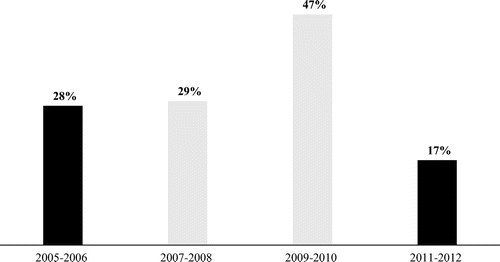
Note. Black bars represent that the firm had a centralized R&D unit, and gray bars represent firm had two decentralized R&D units.
Our interviews with senior R&D managers provide further insights into the observed relationships. For example, several of the interviewees whose firms shifted from centralized to decentralized R&D designs observed a change in the incentive regime and a greater emphasis on external sourcing. One said, “They [units] could execute and continue on strategies, a little bit more effectively without having the interference of the governance that a big bureaucratic organization has…the idea was that they were given kind of an independent budget. They still fell under the corporate governance of big deals where, you know, $100 million would require board level approval.” Another shared the “idea of creating this small nimble biotech within Company X, that would be independent from a governance standpoint, from a funding standpoint.” Another talked about “two [R&D] divisions which were going to be matrix divisions so we would have our own functions within our divisions…and honestly, that was a massive change within the company. I mean, the company just could not accept the fact that there were two therapeutically driven [R&D] organizations. They were so functionally driven…I think that really triggered off lot more partnering with the outside world. So I think that’s for sure. I had a small BD organization within my division which played an important role in the unit’s five-year plan.”
Models 2–4 are used to test Hypothesis 2. We estimate the proportion of externally sourced inventions for inventions of low, moderate and high novelty in three separate models. For inventions of moderate novelty (Model 3), the coefficient for R&D Decentralization is positive and statistically significant (p-value = 0.049). In contrast, the coefficients for R&D Decentralization for inventions of low (Model 2) and high novelty (Model 3) are not statistically different from zero. That is, for inventions of low and high novelty, the proportion of externally sourced inventions do not differ systematically between firms with centralized R&D and those with decentralized R&D, respectively. For inventions of moderate novelty, however, the proportion of externally sourced inventions for firms with decentralized R&D is higher (estimated to be 51.8%) as compared with firms with centralized R&D (estimated to be 46.6%). These findings provide support for Hypothesis 2.
In Table 3, Models 5–7 illustrate the results from the regression models estimating the proportion of externally sourced inventions via acquisitions, alliances, and licensing, respectively. The coefficient estimate for R&D Decentralization is positive and statistically significant for the licensing mode (Model 7) (p-value = 0.012), but the equivalent coefficient estimates are statistically insignificant for the acquisition and alliance modes (Models 5 and 6). Based on Model 7, firms with decentralized R&D units source 21.3% of their inventions using licensing as compared with 14.9% for firms with centralized R&D units. Thus, firms with decentralized R&D units source 43% more inventions through licensing than firms with centralized R&D units. This supports Hypothesis 3. Thus, the findings in Models 2–7 suggest that the difference in the external sourcing of inventions between centralized and decentralized R&D designs primarily manifests itself through inventions of moderate novelty and via the licensing mode.8
Robustness Checks
We conduct three sets of robustness checks, which are briefly outlined in Table 4. The online appendix contains more detailed information and results. First, we use a fractional logit regression model. This model is better suited for dependent variables bounded between zero and one. Second, to address potential omitted variable bias concerns, we conduct three different analyses. We instrument for R&D Decentralization using a measure of firms’ artificial intelligence (AI) capability as proxied through a count of patents within the AI domain. Consistent with the relevance criterion, AI patent count is negatively correlated with the degree of firms’ R&D Decentralization as firms that tend to centralize R&D are associated with more nonbusiness unit–specific technologies, such as AI (DeSanctis et al. 2002, Argyres and Silverman 2004). The instrument meets the exclusion criterion as firms develop AI capabilities for many applications beyond drug discovery, and during the period of our study (1995–2015), AI capability development was still in a nascent stage. Thus, a count of AI patents is unlikely to have an impact on firms’ creation of new drug candidates or sourcing of external candidates during the period of observation (Schuhmacher et al. 2020). In addition, we shift the unit of analysis from the firm-year to the individual drug candidate level (i.e., drug candidates entering the pipeline). We examine the likelihood of any individual drug candidate being externally sourced. This enables us to control for sources of unobserved heterogeneity that we cannot control for at the firm-year level, for example, a specific therapeutic class of drug candidate, a portfolio size in specific therapeutic class. Finally, we also repeat all our analyses using firm fixed effects. Third, to address a potential concern with simultaneity bias such that greater external sourcing of inventions may require firms to decentralize their R&D activities, we undertake two additional analyses. We conduct Granger causality tests to determine whether R&D Decentralization temporally precedes External Sourcing (Granger 1969). We also instrument for R&D Decentralization using its lagged value and conduct the main analyses using two-stage OLS regression models (Reed 2015). All three sets of robustness checks provide results that are consistent with our main analyses and give us greater confidence with respect to the inferences.
|
Table 4. Summary of Robustness Checks
| Robustness check | Key results | Online appendix reference |
|---|---|---|
| Fractional logit regression | Table A1 | |
| Instrumental variable regression using artificial intelligence patent count | Table A2 | |
| Change unit of analysis to drug candidate | Table A3 | |
| Main analyses repeated with additional firm-fixed effects | Table A4 | |
| Granger causality test |
| Table A5 |
| Instrumental variable regression using lagged value of R&D Decentralization |
| Page 4 |
Post Hoc Analysis of Mechanisms
To further explore the mechanisms underlying our theoretical arguments and to identify conditions under which incentives- or knowledge-based mechanisms may be more pronounced, we conducted a series of additional analyses. For the incentives-based mechanism, these analyses focus on examining the differences in incentives between firms with centralized and decentralized R&D units and the conditions under which incentives to source inventions externally are magnified or diminished. For the knowledge-based mechanism, the analyses examine differences in terms of the diversity of firms’ knowledge bases and the extent to which inventions draw on tacit or codified knowledge. The key results from these analyses are outlined in Table 5 and detailed in the online appendix.
|
Table 5. Post Hoc Analyses of Incentives and Knowledge-Flow Mechanisms
| Rationale | Analysis | Key results | Online appendix reference |
|---|---|---|---|
| Provides support for incentives mechanism | Examine how managerial incentives vary between firms with centralized and decentralized R&D units |
| Table A6 |
| Assess how level of investment associated with external sourcing can influence incentives for managers in decentralized R&D units to source externally |
| Table A7 | |
| Examine how decrease in innovation pipeline size can shape incentives to source externally |
| Table A8 | |
| Provides support for knowledge-flow mechanism | Assess how tacitness of knowledge impacts importance of effective knowledge flows and subsequent propensity to source inventions externally |
| Table A10 |
| Assess how decreased knowledge flows can impact propensity to source inventions externally |
| Figure A1 |
We explore the incentives-based mechanisms through three separate analyses. First, consistent with our theoretical arguments, compensation analysis illustrates that R&D managers in decentralized R&D units are subject to higher powered incentives than managers in centralized R&D units as illustrated by R&D managers in decentralized units having a greater component of their compensation being dependent on performance. Second, incentives to source inventions externally are likely to decrease if these inventions are more costly to source. Consistent with this argument, we observe that the proportion of external inventions sourced by firms with decentralized R&D units declines relative to the proportion sourced by firms with centralized R&D units for drug candidates in later stages of clinical development, which are more costly to source. Third, incentives to source inventions externally are likely to increase if firms have experienced a decrease in the size of their innovation pipelines. Accordingly, we observe that the difference in the proportion of externally sourced inventions between firms with centralized and decentralized R&D units increases when firms experience a greater decrease in the size of their innovation pipelines.
We explore the knowledge flow mechanism using two analyses. Specifically, we examine how the tacitness and diversity of knowledge associated with the internal creation of inventions can shape firms’ propensity to source inventions externally. First, we consider how different types of inventions may entail different levels of tacit knowledge and that rich intraorganizational knowledge flows would be even more critical for inventions entailing high levels of tacit knowledge. Consistent with this argument, we observe that, for inventions based on a new origin of material in a specific therapeutic class, managers in decentralized R&D units (relative to those in centralized R&D units) are even more likely to turn to external sources. Second, we also observe that managers in decentralized R&D units source more inventions externally (relative to those in centralized R&D units) when their firms have a narrower body of knowledge that further limits rich intraorganizational knowledge recombination. Together, these analyses provide further evidence for our arguments that the decision to source inventions externally is shaped by both incentives- and knowledge-based considerations.
Discussion and Conclusion
Delivering a constant stream of new products to market is critical to firms’ competitiveness in many industries. In managing their firms’ innovation outputs, managers have to replenish their firms’ pipelines on an ongoing basis as inventions reach the market or fall by the wayside. This replenishment can be done using internally generated or externally sourced inventions. Existing accounts of such decisions focus on the overall division of innovative labor in the industry, the complementarity between internal and external R&D, and the efficiency of problem solving and transaction costs (e.g., Pisano 1990, Cassiman and Veugelers 2006, Macher and Boerner 2012, Arora et al. 2016). We offer a perspective in which firms’ external sourcing of inventions can be influenced by their internal organization design: the centralization or decentralization of R&D.
We argue that firms with decentralized R&D units engender greater incentives for unit managers to progress inventions to market as compared with firms with centralized R&D units. However, decentralization of R&D comes at the cost of reduced intraorganizational knowledge flows, limiting the R&D units’ abilities to generate inventions internally. Thus, managers in firms with decentralized R&D units are more likely to externally source inventions to replenish their pipelines. Further, we suggest that these differences in terms of intraorganizational knowledge flows between centralized and decentralized R&D units would manifest most prominently in the case of external sourcing of inventions of moderate novelty. Finally, we propose that differences in terms of managerial incentives between centralized and decentralized R&D units would manifest most prominently in the case of external sourcing via the licensing mode as compared with the alliance and acquisition modes. The evidence from the sourcing decisions of 12,047 drug candidates by 49 leading firms within the global pharmaceutical industry during 1996–2015 offers strong support for these arguments.
These findings offer several contributions to the innovation and strategy literatures. First, they highlight an important relationship between firms’ internal organization designs and their external sourcing of inventions. Arora et al. (2014) is among the early studies to systematically examine such a relationship between firms’ internal R&D organization designs and their external sourcing of knowledge via acquisitions. Their analysis covers multiple industries and uses information on firms’ patents to identify both internal organization design and whether patents (as a proxy for knowledge) were generated internally or sourced externally via acquisitions. We shed further light on these relationships by focusing on the problem of firms’ replenishing their innovation pipelines. By directly theorizing about firms’ innovation pipelines, we are able to evaluate a variety of external modes of sourcing (i.e., license, alliance, acquisition) and the novelty of the inventions themselves. In so doing, we highlight how centralized and decentralized designs may vary in terms of both internal knowledge flows and the usage of high-powered incentives, thereby affecting firms’ propensities to source inventions externally. More broadly, this study offers an important illustration of the value of linking internal organizational design features with firms’ external sourcing decisions.
Second, we illustrate an important trade-off between centralized and decentralized R&D designs as it relates to management of innovation pipelines. Managers within decentralized R&D units face greater incentives as their outcomes are more observable than those of managers in a centralized R&D unit in which the link between action and outcome may be less apparent (Zenger and Hesterly 1997). This can spur decentralized units to generate higher levels of innovation productivity. However, decentralized R&D units are disadvantaged in terms of reduced intraorganizational knowledge flows, limiting the opportunities for inventive recombination of knowledge and constraining innovativeness. Our findings illustrate that such a disadvantage is particularly relevant for inventions of moderate novelty, and that firms with decentralized R&D designs can overcome their internal knowledge flow limitations by external sourcing of inventions, especially through the licensing mode.
Finally, extant research generally analyzes the invention sourcing decision in terms of individual transactions (e.g., West and Bogers 2014). However, less attention has been paid to sourcing of inventions as a means for firms’ replenishment of their innovation pipelines. Our findings highlight that examining individual transactions or inventions in isolation may not provide a complete picture of managerial decision making related to external sourcing. Instead, one needs to also account for such decisions in the context of managers replenishing their innovation pipelines and maintaining a robust flow of inventions.
This study has several limitations that can provide avenues for future research. First, organization design is an endogenous choice, and unobserved factors may correlate with both the choice of a firm’s organization design and the proportion of externally sourced inventions. Although we use multiple approaches to rule out concerns regarding omitted variable bias, these concerns cannot be fully eliminated with the archival research design. Second, concerns regarding external validity may arise because of the focus on a single industry context. Multiple industries follow a similar product development process to the pharmaceutical industry, such as aerospace, chemicals, consumer electronics, consumer products, semiconductors, and software (e.g., Griffin 1997, Barczak et al. 2009, Grönlund et al. 2010). For example, consumer products firm Procter & Gamble (P&G) decentralized its R&D unit and ended up sourcing a greater proportion of inventions externally through its “Connect and Develop” program.9 More than 40% of P&G’s new products now originate externally. Our findings are particularly applicable to industries that have active markets for technology shaped by the tightness of the appropriability regimes and the asymmetry between firms in terms of complementary assets (Teece 1986, Gans and Stern 2003). Finally, our operationalization of R&D decentralization is dichotomous. Although the operationalization matched well with our understanding of firms’ R&D designs that we gained from our fieldwork, firms may still vary in the extent to which they are decentralized along a continuum. We address this issue partially by using a continuous measure deployed by Arora et al. (2014) in the robustness checks section. However, this measure is limited in that it relies on firms’ assignments of patents to the corporate parent or subsidiaries being an accurate reflection of their organization designs. Future research could consider a finer grained operationalization of R&D decentralization.
Despite these and other limitations, the study offers an important contribution to the question of how firms organize for innovation, highlighting the relationship between internal R&D organization design and the external sourcing of inventions. In so doing, it illustrates that the choice of organization design in terms of centralization or decentralization can shape a firm’s locus of innovation.
The authors express their sincere appreciation to the editor and the two anonymous reviewers for their feedback and suggestions to improve the paper. The authors thank Ankur Chavda, Emilie Feldman, Thomas Klueter, Daniel Levinthal, Mahka Moeen, Luis Rios, and the participants of the 2018 Wharton Innovation Doctoral Symposium for their helpful comments. The authors gratefully acknowledge the financial support provided by the Mack Institute for Innovation Management at the Wharton School of the University of Pennsylvania and the Strategy Research Foundation Dissertation Research Program. All errors are authors’ own.
1 This paper is part of a broader research project, and the interviews that were conducted focused on several issues around organization design and R&D in addition to those considered in this paper.
2 Please see https://pharmaintelligence.informa.com/products-and-services/data-and-analysis/pharmaprojects.
3 The sample is developed using 2004–2006 annual prescription drug sales as defined by Pharmaceutical Executive magazine’s Top 50 Pharmaceutical Companies (Klueter et al. 2017). Over this period, 64 firms appear in the top 50 list. The 15 excluded firms are either private firms or do not provide sufficient information on key variables in their public filings. These excluded firms are in the lower half (26–50 ranking in terms of pharmaceutical sales) in one or more of the three years in the 2004–2006 period. Using the midpoint of the sample enables the examination of firms that have at least 10 years of history within the sample timeframe prior to any significant merger and aquisition event. Thirty-three out of the 49 sample firms were still in the top 50 pharmaceutical firms in 2015, 13 firms had been acquired by other firms in the sample, and three firms had divested their pharmaceutical businesses. Upon acquisition or divestment of their pharmaceutical business, these 16 firms dropped out of the sample.
4 The intent of this qualitative research is to understand the fit between our theory and the data and to ensure the validity of some of our key measures and assumptions.
5 Please see https://clarivate.com/products/cortellis/cortellis-deals-intelligence/.
6 10-Ks are the financial returns publicly listed firms are obliged to provide to the U.S. Securities and Exchange Commission (SEC). 20-Fs are largely equivalent to 10-Ks but are submitted by “foreign private issuers,” namely non-U.S. firms that have shares listed on U.S. exchanges. DEF 14As are filed with the SEC typically in conjunction with an annual shareholder meeting in which several items have to be voted upon by the firms’ shareholders.
7 We use the CEM STATA Routine (http://gking.harvard.edu/cem) to perform this analysis.
8 Further, in our theoretical development for Hypothesis 3, we suggest that the alliance and acquisition modes are more likely to be centrally managed than the licensing mode. This is even more likely to be the case if the firm has a centralized corporate development group that manages these larger deals (Kale et al. 2002, Trichterborn et al. 2016). Consistent with these arguments, we find that firms with decentralized R&D units source a lower proportion of inventions through acquisitions when they have centralized corporate development units as compared with the proportion when these firms do not have such centralized corporate development units. The results are presented in the online appendix.
9 Please see https://iveybusinessreview.ca/1085/proctor-gambled-lost/.
10 Please see https://www.iasplus.com/en/standards/ifrs/ifrs8.
11 Please see http://avisolcapital.com/what-is-nmence/.
References
- (2004) What is not a real option: Considering boundaries for the application of real options to business strategy. Acad. Management Rev. 29(1):74–85.Crossref, Google Scholar
- (2013) Novelty in the target landscape of the pharmaceutical industry. Nature Rev. Drug Discovery 12(8):575.Google Scholar
- (2018) Organizational module design and architectural inertia: Evidence from structural recombination in universal banking. Organ. Sci. 29(5):890–911.Link, Google Scholar
- (2004) R&D, organization structure, and the development of corporate technological knowledge. Strategic Management J. 25(89):929–958.Crossref, Google Scholar
- (2012) Capabilities, transaction costs, and firm boundaries. Organ. Sci. 23(6):1643–1657.Link, Google Scholar
- (2012) Organizational economics of capability and heterogeneity. Organ. Sci. 23(5):1213–1226.Link, Google Scholar
- (1994) Evaluating technological information and utilizing it: Scientific knowledge, technological capability, and external linkages in biotechnology. J. Econom. Behav. Organ. 24(1):91–114.Crossref, Google Scholar
- (2014) Make, buy, organize: The interplay between research, external knowledge, and firm structure. Strategic Management J. 35(3):317–337.Crossref, Google Scholar
- (2016) The acquisition and commercialization of invention in American manufacturing: Incidence and impact. Res. Policy 45(6):1113–1128.Crossref, Google Scholar
- (2001) Markets for technology and their implications for corporate strategy. Indust. Corporate Change 10(2):419–451.Crossref, Google Scholar
- (2009) Perspective: Trends and drivers of success in NPD practices: Results of the 2003 PDMA best practices study. J. Product Innovation Management 26(1):3–23.Crossref, Google Scholar
- (1989) Diversification strategy and R&D intensity in multiproduct firms. Acad. Management J. 32(2):310–332.Crossref, Google Scholar
- (2010) Problems deciding: How the structure of make-or-buy decisions leads to transaction misalignment. Organ. Sci. 21(2):362–379.Link, Google Scholar
- (2012) Build, Borrow, or Buy: Solving the Growth Dilemma (Harvard Business Press, Boston).Google Scholar
- (2006) In search of complementarity in innovation strategy: Internal R&D and external knowledge acquisition. Management Sci. 52(1):68–82.Link, Google Scholar
- (2007) Strategic management of R&D pipelines with cospecialized investments and technology markets. Management Sci. 53(4):667–682.Link, Google Scholar
- (2006) From invention to innovation: Conversion ability in product development. J. Marketing Res. 43(3):494–508.Crossref, Google Scholar
- (1990) Absorptive capacity: A new perspective on learning and capacity. Admin. Sci. Quart. 35(1):128–152.Crossref, Google Scholar
- (2013) Learning to be Edison: Inventors, organizations, and breakthrough inventions. Organ. Sci. 25(3):833–849.Link, Google Scholar
- (2016) Evaluating novelty: The role of panels in the selection of R&D projects. Acad. Management J. 60(2):433–460.Crossref, Google Scholar
Deloitte (2017) External Innovation: How Biopharma Companies Are Bolstering R&D Pipelines Through Deal-Making (Deloitte Center for Health Solutions).Google Scholar- (2002) Organizational designs for R&D. Acad. Management Executive 16(3):55–66.Google Scholar
- (2019) Great Idea, Now What? Three Essays Examining the Relationship Between Organization Design and Commercialization of Knowledge (University of Pennsylvania, Philadelphia).Google Scholar
- (2001) Recombinant uncertainty in technological search. Management Sci. 47(1):117–132.Link, Google Scholar
- (2004) Science as a map in technological search. Strategic Management J. 25(8–9):909–928.Crossref, Google Scholar
- (1998) Resource recombinations in the firm: Knowledge structures and the potential for Schumpeterian innovation. Strategic Management J. 19(12):1193–1201.Crossref, Google Scholar
- (2003) The product market and the market for “ideas”: Commercialization strategies for technology entrepreneurs. Res. Policy 32(2):333–350.Crossref, Google Scholar
- (2015) Change escalation processes and complex adaptive systems: From incremental reconfigurations to discontinuous restructuring. Organ. Sci. 26(5):1520–1535.Link, Google Scholar
- (1969) Investigating causal relations by econometric models and cross-spectral methods. Econometrica 37(3):424–438.Crossref, Google Scholar
- (1996) Toward a knowledge based theory of the firm. Strategic Management J. 17(S2):109–122.Crossref, Google Scholar
- (2003) Organizational Learning from Performance Feedback: A Behavioral Perspective on Innovation and Change (Cambridge University Press, Cambridge, UK).Crossref, Google Scholar
- (1997) PDMA research on new product development practices: Updating trends and benchmarking best practices. J. Product Innovation Management 14(6):429–458.Crossref, Google Scholar
- (2017) Organizing for knowledge generation: Internal knowledge networks and the contingent effect of external knowledge sourcing. Strategic Management J. 38(2):395–414.Crossref, Google Scholar
- (2010) Open innovation and the stage-gate process: A revised model for new product development. California Management Rev. 52(3):106–131.Crossref, Google Scholar
- (2014) Who lives in the C-suite? Organizational structure and the division of labor in top management. Management Sci. 60(4):824–844.Link, Google Scholar
- (2007) Different knowledge, different benefits: Toward a productivity perspective on knowledge sharing in organizations. Strategic Management J. 28(11):1133–1153.Crossref, Google Scholar
- (2001) The NBER patent citations data file: Lessons, insights and methodological tools. NBER Working Paper 8498, University of California at Berkeley, Berkeley, CA.Google Scholar
- (1994) Measuring competence: Exploring firm effects in pharmaceutical research. Strategic Management J. 15(S1):63–84.Crossref, Google Scholar
- (1996) Scale, scope, and spillovers: The determinants of research productivity in drug discovery. RAND J. Econom. 27(1):32–59.Crossref, Google Scholar
- (2010) Leveraging internal and external experience: Exploration, exploitation, and R&D project performance. Strategic Management J. 31(7):734–758.Crossref, Google Scholar
- (2006) Is speed of integration really a success factor of mergers and acquisitions? An analysis of the role of internal and external relatedness. Strategic Management J. 27(4):347–367.Crossref, Google Scholar
- (2011) Causal inference without balance checking: Coarsened exact matching. Political Anal. 20(1):1–24.Crossref, Google Scholar
Jaruzelski B, Staack V, Shinozaki A (2016) 2016 global innovation 1000 study: Software-as-a-catalyst Strategy & Business (October 25, 2016/Winter 2016/Issue 85).Google Scholar- (2002) Alliance capability, stock market response, and long-term alliance success: The role of the alliance function. Strategic Management J. 23(8):747–767.Crossref, Google Scholar
- (2015) Decoding the adaptability-rigidity puzzle: Evidence from pharmaceutical incumbents’ pursuit of gene therapy and monoclonal antibodies. Acad. Management J. 58(4):1180–1207.Crossref, Google Scholar
- (2007) The impact of acquisitions on the productivity of inventors at semiconductor firms: A synthesis of knowledge-based and incentive-based perspectives. Acad. Management J. 50(5):1133–1155.Crossref, Google Scholar
- (2006) Modularity in organizational structure: The reconfiguration of internally developed and acquired business units. Strategic Management J. 27(9):799–823.Crossref, Google Scholar
- (2015) Structural recombination and innovation: Unlocking intraorganizational knowledge synergy through structural change. Organ. Sci. 26(2):439–455.Link, Google Scholar
- (1988)
The R&D function: Corporate strategy and structure . Dosi G, Freeman C, Nelson R, Siverberg G, Soete C, eds. Technical Change and Economic Theory (Pinter, London), 283–294.Google Scholar - (2018) Knowledge complexity and the performance of inter‐unit knowledge replication structures. Strategic Management J. 39(7):1959–1989.Crossref, Google Scholar
- (2014) Resource allocation strategy for innovation portfolio management. Strategic Management J. 35(2):246–268.Crossref, Google Scholar
- (2013) Searching for Needles in a Haystack: Three Essays on the Role of R&D Partnerships in the Bio-Pharmaceutical Industry (University of Pennsylvania, Philadelphia).Google Scholar
- (2017) Standard vs. partnership-embedded licensing: Attention and the relationship between licensing and product innovations. Res. Policy 46(9):1629–1643.Crossref, Google Scholar
- (1998) The interorganizational learning dilemma: Collective knowledge development in strategic alliances. Organ. Sci. 9(3):285–305.Link, Google Scholar
- (2006) Open for innovation: The role of openness in explaining innovation performance among UK manufacturing firms. Strategic Management J. 27(2):131–150.Crossref, Google Scholar
- (2012) Digital innovation and the division of innovative labor: Digital controls in the automotive industry. Organ. Sci. 23(5):1428–1447.Link, Google Scholar
- (2010) Innovation objectives, knowledge sources, and the benefits of breadth. Strategic Management J. 31(2):224–236.Crossref, Google Scholar
- (2006) Technological development and the boundaries of the firm: A knowledge-based examination in semiconductor manufacturing. Management Sci. 52(6):826–843.Link, Google Scholar
- (2012) Technological development at the boundaries of the firm: A knowledge‐based examination in drug development. Strategic Management J. 33(9):1016–1036.Crossref, Google Scholar
- (2004) The importance of R&D for innovation: a reassessment using French survey data. J. Tech. Transfer 30(1–2):183–197.Google Scholar
- (2004) Learning to contract: Evidence from the personal computer industry. Organ. Sci. 15(4):394–410.Link, Google Scholar
- (2001) Portfolio management of R&D projects: Implications for innovation management. Technovation 21(7):423–435.Crossref, Google Scholar
- (2017) The external knowledge sourcing process in multinational corporations. Strategic Management J. 38(2):342–362.Crossref, Google Scholar
- (2020) Competition, technology licensing-in, and innovation. Organ. Sci. 31(4):1012–1036.Link, Google Scholar
- (1996) Strategic alliances and interfirm knowledge transfer. Strategic Management J. 17(S2):77–91.Crossref, Google Scholar
- (2003) Technology sourcing and output of established firms in a regime of encompassing technological change. Strategic Management J. 24(7):651–666.Crossref, Google Scholar
- (2014) R&D portfolios and pharmaceutical licensing. Res. Policy 43(7):1250–1263.Crossref, Google Scholar
- (2009) Estimating standard errors in finance panel data sets: Comparing approaches. Rev. Financial Stud. 22(1):435–480.Crossref, Google Scholar
- (2014)
Innovation in the pharmaceutical industry: The process of drug discovery and development. Ding M, Eliashberg J, Stremersch S, eds. Pharmaceutical Industry Emerging Practices, Research, and Policies (Springer-Verlag, New York), 19–81.Google Scholar - (1999) The Knowing-Doing Gap: How Smart Companies Turn Knowledge into Action (Harvard Business Press, Boston).Google Scholar
- (2017) External Innovation: How Biopharma Companies Are Bolstering R&D Pipelines Through Deal-Making (Deloitte). https://www2.deloitte.com/us/en/insights/industry/health-care/biopharma-companies-deals-research-development.html.Google Scholar
- (1990) The R&D boundaries of the firm: An empirical analysis. Admin. Sci. Quart. 35(1):153–176.Crossref, Google Scholar
- (1991) The governance of innovation: Vertical integration and collaborative arrangements in the biotechnology industry. Res. Policy 20(3):237–249.Crossref, Google Scholar
- (1996) Interorganizational collaboration and the locus of innovation: Networks of learning in biotechnology. Admin. Sci. Quart. 41(1):116–145.Crossref, Google Scholar
- (1990) The core competence of the corporation. Harvard Bus. Rev. (May–June):79–91.Google Scholar
- (2014) What’s “new” about new forms of organizing? Acad. Management Rev. 39(2):162–180.Crossref, Google Scholar
- (2015) On the practice of lagging variables to avoid simultaneity. Oxford Bull. Econom. Statist. 77(6):897–905.Crossref, Google Scholar
- Richard PJ, Devinney TM, Yip GS, Johnson G (2009) Measuring organizational performance: Towards methodological best practice. J. Management 35(3):718–804.Google Scholar
- (2009) Ambidexterity in technology sourcing: The moderating role of absorptive capacity. Organ. Sci. 20(4):759–780.Link, Google Scholar
- (2020) The upside of being a digital pharma player. Drug Discovery Today 25(9):1569–1574.Crossref, Google Scholar
- (2005) Organizational integration of acquired biotechnology companies into pharmaceutical companies: The need for a hybrid approach. Acad. Management J. 48(6):1051–1074.Crossref, Google Scholar
- (2013) Constrained delegation: Limiting subsidiaries’ decision rights and resources in firms that compete across multiple industries. Admin. Sci. Quart. 58(3):420–471.Crossref, Google Scholar
- (2000) On the performance of technology-sourcing partnerships: The interaction between partner interdependence and technology attributes. Acad. Management J. 43(6):1045–1067.Crossref, Google Scholar
- (2011) How were new medicines discovered? Nature Rev. Drug Discovery 10(7):507–519.Crossref, Google Scholar
- (1996) Exploring internal stickiness: Impediments to the transfer of best practice within the firm. Strategic Management J. 17(S2):27–43.Crossref, Google Scholar
- (1986) Profiting from technological innovation: Implications for integration, collaboration, licensing and public policy. Res. Policy 15(6):285–305.Crossref, Google Scholar
- (2016) How to improve acquisition performance: The role of a dedicated M&A function, M&A learning process, and M&A capability. Strategic Management J. 37(4):763–773.Crossref, Google Scholar
- (2013) Balancing your technology‐sourcing portfolio: How sourcing mode diversity enhances innovative performance. Strategic Management J. 34(5):610–621.Crossref, Google Scholar
- (2006) Choosing governance modes for external technology sourcing. R&D Management 36(3):347–363.Crossref, Google Scholar
- (2002) External technology sourcing through alliances or acquisitions: An analysis of the application-specific integrated circuits industry. Organ. Sci. 13(6):714–733.Link, Google Scholar
- (2004) Non‐additivity in portfolios of exploration activities: A real options‐based analysis of equity alliances in biotechnology. Strategic Management J. 25(11):1045–1061.Crossref, Google Scholar
- (2013) Implications of internal organization structure for firm boundaries. Strategic Management J. 34(12):1411–1434.Crossref, Google Scholar
- (2014) Leveraging external sources of innovation: A review of research on open innovation. J. Product Innovation Management 31(4):814–831.Crossref, Google Scholar
- (1979) Transaction-cost economics: The governance of contractual relations. J. Law Econom. 22(2):233–261.Crossref, Google Scholar
- (1985a)
Contractual man . The Economic Institutions of Capitalism (Free Press, New York), 43–63.Google Scholar - (1985b)
The governance of contractual relations . The Economic Institutions of Capitalism (Free Press, New York), 68–84.Google Scholar - (1994) Explaining organizational diseconomies of scale in R&D: Agency problems and the allocation of engineering talent, ideas, and effort by firm size. Management Sci. 40(6):708–729.Link, Google Scholar
- (1997) The disaggregation of corporations: Selective intervention, high-powered incentives, and molecular units. Organ. Sci. 8(3):209–222.Link, Google Scholar
- (2007) Technological knowledge base, R&D organization structure and alliance formation: Evidence from the biopharmaceutical industry. Res. Policy 36(4):515–528.Crossref, Google Scholar
John Eklund is an assistant professor of management and organization at the Marshall School of Business, University of Southern California. He received his PhD from the Wharton School at the University of Pennsylvania. His research focuses on how incumbent firms’ organizational design choices, management of technological change and managerial attentional focus can impact their innovation and overall performance outcomes.
Rahul Kapoor is a professor of management at the Wharton School, University of Pennsylvania. He received his PhD from INSEAD. In his research, he explores the strategies pursued by established and emerging firms in technology-based industries. He focuses on how firms organize for innovation and manage technological and industry-level changes.

