Dual Demands, Attention, and Organizational Learning: Spatial and Temporal Replication of Routines in Scaling Organizations
Abstract
The replication of routines is fundamental to knowledge transfer and retention in organizations. Because research on routine replication has historically been divided, proceeding within knowledge transfer (spatial replication) or knowledge retention (temporal replication), respectively, our understanding of how replicating routines in new organizational units (knowledge transfer) affects an organization’s capacity to maintain adherence to those routines over time at existing units (knowledge retention) remains limited. Drawing on the organizational learning and related evolutionary economics literature on routines as well as the multiple goals literature and using data on a Fortune 100 franchise chain being scaled in the United States with thousands of outlets opened over a period of 10 years, we examine whether and how knowledge transfer affects knowledge retention. Our primary thesis is that knowledge transfer and knowledge retention create competing demands for limited attention and therefore the need to allocate attention between them. We posit that this gives rise to a negative relationship between the spatial (knowledge transfer) and temporal (knowledge retention) replication of routines, although the effect can be mitigated by organizational learning from experience. We find robust empirical support for our propositions, pointing to important attention and learning mechanisms that shape the organizational capacity to simultaneously navigate knowledge transfer and retention demands, that is, replicate routines across both space and time.
Funding: This work was supported by Project PID2024-160548NB-I00 funded by MICIU/AEI /10.13039/501100011033 and by FEDER, EU as well as by by Fundação para a Ciência e a Tecnologia [UID/00124/2025, UID/PRR/124/2025, Nova School of Business and Economics] and LISBOA2030 [DataLab2030 - LISBOA2030-FEDER 01314200].
Supplemental Material: The online appendix is available at https://doi.org/10.1287/orsc.2022.16528.
Introduction
Organizational learning research has well established that the replication of routines is fundamental to achieving both knowledge transfer and knowledge retention in organizations (Nelson and Winter 1982, Argote et al. 2021). Much of the extant research has focused on routine replication as knowledge transfer, that is, the spatial replication of routines in new organizational units (Terwiesch and Xu 2004, Szulanski and Jensen 2006, Williams 2007, Winter et al. 2012, D’Adderio 2014, Lawrence 2020). A smaller body of work has examined routine replication as knowledge retention, that is, the temporal replication of routines by adhering to said routines over time at existing units (Epple et al. 1991, Darr et al. 1995, Knott 2001, Anand et al. 2012). Research on both replication processes has grown considerably over the years because an organization’s ability to transfer and retain knowledge internally confers a variety of performance advantages (Argote and Ingram 2000, Winter and Szulanski 2001).
Because research on routine replication has historically been divided, proceeding within knowledge transfer (spatial replication) and knowledge retention (temporal replication), respectively, our understanding of how replicating routines in new organizational units (knowledge transfer) affects an organization’s capacity to monitor adherence to those routines over time at existing units (knowledge retention) remains limited to a few anecdotal accounts (Bradach 1998, Chliova and Ringov 2017). Yet, the challenge of simultaneously pursuing knowledge transfer and knowledge retention is inherent in virtually all organizations and is particularly pertinent in multiunit chain organizations—the prototypical “replicator” organizations (Winter and Szulanski 2001, Argote et al. 2003, Argote 2024) such as Pizza Hut, H&R Block, or Jiffy Lube. Opening new outlets that replicate a standard set of required routines (Jonsson and Foss 2011, Winter et al. 2012, Ansari et al. 2014) is their main form of growth. Yet, corresponding financial gains may not materialize if those routines are not continuously adhered to in existing outlets. Because these organizations seek to manage both demands but face challenges in doing so, this lacuna represents an important intersection of organizational learning research and serves as the basis for our study.
To examine whether and how the replication of required routines in new outlets affects adherence to the same routines in existing outlets, we draw on the organizational learning and related evolutionary economics literature on organizational routines (Nelson and Winter 1982, Argote et al. 2021), the attention-based view (Ocasio 1997), and the literature on multiple goals (Obloj and Sengul 2020, Audia and Greve 2021). Studies of multiple goals proffer that organizations should allocate attention to multiple goals or demands sequentially based on priorities and feedback (Cyert and March 1963, Audia and Greve 2021, Madsen and Desai 2024). Yet, competition for scarce attention between two competing goals comes with a cost (Joseph and Wilson 2018) and has been shown to have negative implications for a variety of organizational behaviors (Ocasio 2011, Nicolini and Korica 2021, Mack et al. 2023, Rhee 2024). Thus, our primary thesis is that knowledge transfer and knowledge retention can generate competing demands for limited attention and a corresponding need for allocating attention between them. This gives rise to a negative relationship between the spatial and temporal replication of routines, the mitigation of which is facilitated by organizational learning from experience that limits the negative effect of attentional dilution.
The setting for our study is a Fortune 100 nonfood franchise chain whose U.S. operations are observed over a period of 10 years. As with most chain organizations, it was organized around geographic area units tasked with the simultaneous pursuit of (1) opening new outlets in which a standard set of required routines is replicated (knowledge transfer, spatial replication) and (2) monitoring adherence to the standard set of required routines in existing outlets over time (knowledge retention, temporal replication) (Bradach 1998, Garvin and Levesque 2008). We argue that because these two demands compete for scarce area unit attention, there is a deleterious effect of knowledge transfer on knowledge retention. This main effect is attenuated by area unit learning from experience related to (1) knowledge retention, area unit experience with adherence-related failures of existing outlets; (2) knowledge transfer, area unit experience with irregular rhythm of scaling (opening new outlets). We posit that the effect is further attenuated by outlet-level learning from operating experience. Using a decade’s worth of monthly data on replication of routines in the thousands of U.S. outlets of one of the world’s largest chain organizations that was being scaled up, we empirically test and find robust support for our hypotheses.
This paper contributes to the organizational learning and related evolutionary economics literature on the role of replication of organizational routines in knowledge transfer and knowledge retention (Nelson and Winter 1982; Madsen and Desai 2010, 2024; Argote and Miron-Spektor 2011; Argote et al. 2021). Research on knowledge transfer and knowledge retention, and spatial and temporal replication of organizational routines, respectively, has proceeded by examining each process in isolation (Winter 2010, 2017; Argote et al. 2021; Argote 2024). By considering both processes, we provide theory and evidence on the relationship between the two organizational learning processes, that is, whether and when knowledge transfer (spatial routine replication) affects knowledge retention (temporal routine replication), and expand theory on the mechanisms behind knowledge retention.
This paper also contributes to the growing literature on multiple goals (Audia and Greve 2021). A subset of studies in that literature, mostly grounded in the behavioral theory of the firm (BToF), have considered the relationship among multiple goals and their consequences for problem-solving, behavioral, and performance outcomes (Ethiraj and Levinthal 2009, Hu and Bettis 2018, Salvato and Rerup 2018, Gaba and Greve 2019, Obloj and Sengul 2020, Audia and Greve 2021). This work proceeds from an assumption of sequential attention (Greve 2008) but largely overlooks its costs. A separate body of work, grounded in the attention-based view (ABV), has documented and theorized the importance of sustained attentional focus (Ocasio 2011, Mack et al. 2023), especially for managing multiple demands (Nicolini and Korica 2021, Brielmaier and Friesl 2023, Madsen and Desai 2024, Rhee 2024, Eklund et al. 2025). By connecting these streams of work with organizational learning theory, our theory provides further insights into not only whether the allocation of scarce attention affects the pursuit of multiple demands but also when based on the conditioning effects of organizational learning from experience. We offer predictions that differ from those of earlier work (Nicolini and Korica 2021), in that we explicitly recognize the contribution of different types of experience in limiting the potential attentional dilution caused by managing multiple demands. Finally, this paper also contributes to and discusses implications for extant theories on growth and scaling.
Routine Replication as Knowledge Retention and Transfer
The replication of routines across space and time is fundamental for organizational knowledge transfer and retention and thus for the growth and financial performance of organizations (Nelson and Winter 1982, Winter and Szulanski 2001, Argote and Miron-Spektor 2011, Argote et al. 2021). Although the pursuit of knowledge transfer and retention is common in organizations, it is especially important in multiunit chain organizations (Argote and Ingram 2000, Winter and Szulanski 2001, Argote et al. 2003, Winter et al. 2012, Argote 2024), which have become prevalent across a wide variety of industries (Winter et al. 2012, Argote and Fahrenkopf 2016, Lawrence 2020).
Critical to their operations, chains are typically subdivided into geographic area units that play an important intermediary or bridging role between the corporate headquarters and the outlets of the chain in a given area (Bradach 1998, Garvin and Levesque 2008, Kalnins and Lafontaine 2013). Although headquarters’ role is to discover a standard set of value-creating routines suitable for large scale replication, area units’ role is to open new outlets in which that set of required routines is replicated as well as to monitor and ensure that the set of required routines is continuously adhered to at existing outlets in their area (Nelson and Winter 1982, Winter and Szulanski 2001). Both of these demands must be met by area units: The former (replication in new outlets) is typically the primary driver of growth, yet corresponding financial gains may not materialize if the latter (adherence in existing outlets) cannot be maintained over time (Bradach 1997, Szulanski and Jensen 2006, Ater and Rigbi 2015).
Area Units and Knowledge Transfer to New Outlets: Replicating Routines Across Space
Organizational learning and evolutionary economics scholars have long argued that in a world of dynamic Schumpeterian competition firms compete on the speed of replication of successful bundles of productive routines in new organizational units, markets, and locations. Superior speed/ease of knowledge transfer is thus a raison d’être for organizations (Nelson and Winter 1982, Kogut and Zander 1992, Zander and Kogut 1995, Argote and Ingram 2000, Brynjolfsson et al. 2008, Argote 2024). Building on that theoretical foundation and related research, the nascent literature on scaling has also shown keen interest in understanding firms’ speed of scaling via the spatial transfer/replication of a successful system of routines and its consequences (Reuber et al. 2021, Giustiziero et al. 2023, Jansen et al. 2023, Tippmann et al. 2023, Coviello et al. 2024).
Knowledge transfer to new outlets, that is, replicating a chain’s value-creating standard set of required routines in new outlets, enables a chain to realize economies of scale (Chandler 1990), increase legitimacy (Zimmerman and Zeitz 2002), defend against or pre-empt would-be imitators (Eisenmann et al. 2006), and/or better compete with more established competitors (Schilling 2002). Yet, opening new outlets tends to involve a significant commitment of organizational attention (Garud et al. 2010), and when the allocation of this limited resource (Ocasio 1997, 2011) is not managed judiciously, it can lead to errors, value destruction, and failure (Joseph and Wilson 2018). In order to open new outlets in which required routines are replicated, area units closely involve themselves in selecting and training outlet owners/managers, selecting outlet sites, and helping with the design and construction of outlets (Bradach 1998, Garvin and Levesque 2008). An area unit must perform these critical activities before a new outlet’s first day of operation, and they are fundamental for the outlet’s subsequent success (Salvaneschi 1996, Kalnins and Mayer 2004).
Area Units and Knowledge Retention in Existing Outlets: Replicating Routines over Time
Knowledge retention, that is, ensuring continued adherence to required routines in existing outlets over time, is fundamental to the operation of a chain organization. Lapses in adherence to the standard set of required routines substantially increase outlets’ likelihood of failure (Winter et al. 2012) and can impede both outlet and overall chain performance in a variety of ways. For one, a lack of adherence to required routines exposes an outlet to the risk of being perceived as an illegitimate member of the chain and thus being penalized by customers (Zuckerman 1999, Hsu and Hannan 2005, Barthélemy 2008). Moreover, it makes the outlet incompatible with the common operating, logistics, support, feedback, and control systems of the chain, diminishing its ability to draw support and resources from the rest of the organization (Szulanski and Jensen 2006). Furthermore, decay in adherence to the set of required routines has negative externalities for the chain as a whole (El Akremi et al. 2011), jeopardizing its brand name and reputation and lowering chain-wide economies of scale (Barthélemy 2008).
Chains typically task their area units with the important responsibility of continuous monitoring of adherence to required routines at outlets in their area. Rich Bachman, a KFC executive, described the challenge of ensuring ongoing adherence to required routines in the thousands of geographically dispersed KFC outlets in the following way: “We are running thousands of identical factories. They need to be the same because customers need to get what they expect…the details of the business are crucial.” (Bradach 1998, p. 85). Area unit attention is needed to perform this role through regular on-site visits, inspections, and field audits (Bradach 1997, Greve and Baum 2001, Garvin and Levesque 2008).
Dual Demands, Attention Allocation, and Routine Replication
Organizations often face the challenge of simultaneously pursuing multiple performance goals or, more generally, demands (Cyert and March 1963, Gavetti et al. 2012). For instance, airlines simultaneously strive for safety and profitability (Gaba and Greve 2019), whereas manufacturing firms seek to concurrently decrease costs and increase revenues (Obloj and Sengul 2020). Demands may be congruent and mutually reinforcing or, more commonly, in conflict, whereby the satisfaction of one comes at the expense of achieving another. Often, progress made in pursuit of one demand may inadvertently undermine performance toward others (Ethiraj and Levinthal 2009, Hu and Bettis 2018).
Foundational Carnegie perspective work establishes that to deal with the cognitive burden and potential discord commonly associated with multiple demands on attention (Sundaram and Inkpen 2004, Ethiraj and Levinthal 2009, Audia and Greve 2021), decision makers resort to sequential attention (Greve 2008, Gaba and Greve 2019), whereby decision makers allocate their attention back and forth between demands (March and Shapira 1992, Ocasio 2011, Stevens et al. 2015). This results in competition for limited attention and costly reallocation of attention between different demands: in our case between scaling by opening new outlets in which the set of required routines is replicated (knowledge transfer) on one hand and monitoring adherence to said routines in existing outlets (knowledge retention) on the other.
Posing dual demands on area units’ attention creates two problems with attentional processing. First, it creates competing claims on attention, which is a limited resource (Ocasio 1997, 2011). Scholars have documented that, although attention benefits the activity of focus (Weick and Sutcliffe 2006, Rerup 2009, Ocasio 2011, Ocasio and Joseph 2014), it diverts attention from parallel activities (Yu et al. 2005, Huckman and Zinner 2008, Joseph and Wilson 2018, Eklund et al. 2025). Second, it requires that managers regulate attention between the dual demands on a continual basis. Because focus promotes a “deep but relatively narrow awareness of what goes on in a specific context” (Rerup 2009, p. 878), the process of (re)allocating attention back and forth between different stimuli and activities carries a cost (Ocasio and Wohlgezogen 2010). That is, the attentional fragmentation limits the organization’s ability to maintain (some) periods of sustained attentional focus—or what is known as attentional vigilance (Ocasio 2011, Rhee 2024)—which is needed for the transfer and retention of knowledge (Ocasio et al. 2020). The resulting attentional dilution can be expected to be particularly significant in terms of its impact on the pursuit of knowledge retention, that is, the continual monitoring of adherence to required routines at existing outlets. This is because there are many more factors competing for attention in the case of knowledge transfer (i.e., opening new outlets in new locations) than in the case of knowledge retention (Argote et al. 2021, Argote 2024).
The following quote illustrates the problem in chains (our setting) where demands for scaling up rapidly by opening new outlets in which the standard set of required routines is replicated (knowledge transfer) on one hand and monitoring existing outlets to ensure their continued adherence to said required routines over time (knowledge retention) on the other hand compete for attention:
“We [at Pizza Hut] added three units to one market…and it simply was too fast; we’re still trying to get things settled down there. Opening a new restaurant required a disproportionate amount of management time compared with managing existing units…a district manager at Hardee’s, estimated that over half of her time for several weeks was devoted to opening a single unit. At the same time, she was responsible for the management of several existing units. She personified the Pizza Hut vice president’s worry that excessive growth could cause a firm to lose control of its base.” (Bradach 1998, p. 66)
Hence, ceteris paribus, allocating more attention to scaling (opening new outlets in which required routines are replicated) can be expected to adversely affect the level of attentional resources available to an area unit for the purpose of monitoring and ensuring adherence to required routines at existing outlets in its area. Therefore, our baseline hypothesis is as follows.
Speed of scaling (knowledge transfer) in an area is positively related to lack of adherence to required routines (knowledge retention) in that area.
Organizational Learning and Attentional Processing
The degree to which organizations can maintain attention focus on a given activity, as well as deal with dilution caused by the allocation of limited attention across multiple activities, may be a function of prior experience with the particular demands. Experience gets encoded in the organizations’ structures, routines, and practices (Argote 1999), and as a result, organizational learning can significantly impact attentional processing.
Organizational learning has two broad effects on attentional processing. First, behavioral theory of the firm established that organizations learn through feedback, and when failure occurs, it signals that current activities or assumptions are inadequate (Madsen and Desai 2010). Efforts to restore performance are initiated, and experience provides organizations with the knowledge needed to alter behavior (Argote and Ophir 2002, Argote and Miron-Spektor 2011). As experience accumulates and organizations learn, the frequency of subsequent failure decreases (Argote 1993), and the corresponding intensity of attentional demands subsides.
The other effect of experience is the capacity to better “modulate their focus of attention among multiple decision tasks to deal with interruptions” (Ocasio et al. 2020, p. 7). Ocasio (2025) refers to this capacity for modulation as attentional control, which allows for processing of multiple demands quasi-simultaneously by switching back and forth between different stimuli (Ocasio 2011). Attentional control reflects the processing to focus on relevant stimuli, suppressing distractions, and shifting attention when needed. Importantly for our study, ABV and cognitive neuroscience suggests that attention is not entirely fixed; it can be enhanced through targeted cognitive interventions (Tang et al. 2015) and repeated engagement (Ocasio 2011), with the temporal rhythm of experience having a significant influence. That is, the control of attention can be learned over time (Fernandez-Duque et al. 2000).
In our case, the relevant area unit experience related to the above learning (from failure and rhythm of experience) reflects the two demands faced by area units: (1) area unit experience with adherence-related failures of existing outlets and (2) area unit experience with the rhythm of scaling new outlets. We also explore the moderating effect of outlet-level learning from operating experience as subunit experience, due to reduced risk, increased trust, autonomy, and alignment, can significantly affect how a supervising unit allocates attention to monitoring (Ocasio 1997, 2011). In our case, outlet-level learning from experience can affect area unit attentional processing and attention allocation among outlets in their area, as well as, correspondingly, area unit allocation of attention between monitoring (knowledge retention) and scaling (knowledge transfer).
Area Unit Experience with Adherence-Related Failures of Existing Outlets
The first type of experience that may condition the relationship between speed of scaling and adherence to required routines is the experience that an area unit has with adherence-related failures of outlets under its purview. Failure experience related to knowledge retention may provide the area unit with a better understanding of the causes of outlet problems and the formulation of solutions (Morris and Moore 2000, Haunschild and Sullivan 2002, Madsen 2009, Dahlin et al. 2018, Madsen and Desai 2024). At the same time, it can provide the area unit with experience handling “fire alarms,” limiting the negative impact of reallocating attention and thus reducing the dilutive impact on attention.
Learning from failure refers to the identification of problems, the determination of their causes, and the development and implementation of solutions to prevent or reduce the likelihood of their future occurrence (Morris and Moore 2000, Haunschild and Sullivan 2002, Madsen 2009, Dahlin et al. 2018, Madsen and Desai 2024). With greater adherence-related failure experience, the area unit gains a better understanding of outlet compliance problems and their underlying causes, as well as the cultivation of useful solutions that can effectively address the problems. Greater failure experience by the area unit is especially useful in that it can help better identify true problems rather than idiosyncratic events or exceptions (Kim et al. 2009) and deal with problems that are highly complex (Madsen and Desai 2024) in a manner that reduces demands on attention.
When learning from outlet failures associated with lack of adherence to required routines, area units are also more likely to encode that learning for a longer period of time. Prior studies suggest that learning from failures depreciates at a slower rate when the failures are related to core aspects of the firm. For example, Kim et al. (2023) find that learning from product failure is greater when those products are associated with the firm’s core knowledge and capabilities. Madsen and Desai (2024) find that learning from experience with past failures will be enhanced when the failures are more closely related to routines that continue to be used in the firm. In our case, those routines concern core, contractually required routines articulated in the franchise agreement.
Also, adherence-related failures are likely to prompt area units to put in place mechanisms that reduce the disruptive nature of reallocating attention. Research has shown that decision makers come to develop a set of practices and tools (i.e., infrastructure) to match the challenges of the attentional demands they face (Nicolini and Korica 2021, Nicolini and Mengis 2024). These tools would allow area units to prioritize multiple issues over time, concentrating on the most important matters while steering clear of being bogged down by secondary concerns. Developing and sustaining such mechanisms helps area units avoid challenges such as becoming overstretched, losing focus on essential tasks, or neglecting critical priorities. In our case, this involves compliance checklists and key performance indicators that monitor outlet health and compliance, as well as dedicated review meetings with managers/owners at the outlet location.
Greater area unit experience with adherence-related failures of outlets is also likely to decrease the need for allocating subsequent attention to outlets under its purview because surviving outlets are likely to have fewer subsequent problems (Madsen and Desai 2010). Learning from failure has been shown to improve performance and innovativeness (Desai 2015, Haunschild et al. 2015, Maslach 2016, Madsen and Desai 2024), as well as reduce future failure occurrences (Haunschild and Sullivan 2002, Baum and Dahlin 2007, Madsen and Desai 2010). Failures provide opportunities, greater motivation, and greater capacity to learn (Dahlin et al. 2018) because they tend to prompt reflections on what has gone wrong and how to improve relevant processes (Cyert and March 1963, Levitt and March 1988, Darr et al. 1995, Haunschild and Sullivan 2002, Say and Vasudeva 2020) in order to reduce subsequent failures.
In sum, area unit learning from experience with adherence-related outlet failures should reduce the demands on attention posed by the simultaneous pursuit of knowledge transfer and knowledge retention. Thus, we hypothesize the following.
The positive relation between speed of scaling (knowledge transfer) and lack of adherence to required routines (knowledge retention) is attenuated by area unit experience with adherence-related failures.
Area Unit Experience with an Irregular Rhythm of Scaling New Outlets
The second type of experience that may attenuate the relationship between speed of scaling and lack of adherence to required routines is the experience that an area unit has with the pacing (rhythm) of its scaling. A regular rhythm of scaling implies that an area unit’s speed of scaling has been more regular, that is, more uniform, homogeneous in the past. An irregular rhythm of scaling implies that an area unit’s speed of scaling has been more irregular, that is, more heterogeneous, variable over time, in the past.
An irregular pacing of scaling should be consequential for the relationship between scaling and adherence because the rate at which organizations acquire experience can affect their process of learning (Argote et al. 1990, Madsen 2009, Park 2023, Madsen and Desai 2024). Research has shown that heterogeneous experience enhances firms’ learning efficacy and contributes to firm performance (Haunschild and Sullivan 2002, Schilling et al. 2003, Tang and Sullivan 2014). Heterogeneous experience can aid organizational learning because such experience reflects exposure to more diverse information. More diverse information provides managers with a more nuanced understanding of the target process (Haunschild and Sullivan 2002) and allows them to better generalize between situations that share superficial similarities on the surface but have significant underlying dissimilarities (Gick and Holyoak 1987, Cohen and Bacdayan 1994). For example, Tyre and Von Hippel (1997) find that engineers often need to explore a problem in multiple settings before they can understand and resolve the problem. Also, heterogeneity provides insights since the variance helps focus attention on latent causes and a better understanding of the underlying causal structure of problems. For example, Schilling et al. (2003) find that variation in experience increases learning rates more than homogenous experience does because variation yields abstract knowledge that may be complex and difficult to articulate.
Consequently, irregular rhythm of scaling and corresponding heterogeneity of experience should prompt a deeper understanding of the role of contextual differences. For example, Haunschild and Sullivan (2002) find that heterogeneity may force an organization to shift attention from given individuals as the cause of the problem and look more closely for underlying situational or environmental causes, avoiding the “blame the operator” problem. Along similar lines, Li et al. (2013) find that heterogeneity aids decision makers in making sense of the organization’s situation and its environment and facilitates the selection of the most useful external knowledge in devising solutions. In our case, this means that when opening new outlets, area units can better account for differences in external conditions, thereby limiting the attentional dilution caused by scaling.
Thus, over time, the organizational learning associated with the experience of managing the attention demands associated with an irregular speed of scaling is likely to make an area unit more effective at dealing with a greater variety of problems across a greater variety of conditions. This is because accumulating a stock of heterogeneous experience tends to trigger search for and development of better solutions (Kim et al. 2009). In sum, area unit experience with an irregular rhythm of scaling can be expected to give rise to learning that reduces the need for, and negative impact of, attention allocation between the two competing demands of knowledge transfer and knowledge retention. Thus, we hypothesize the following.
The positive relation between speed of scaling (knowledge transfer) and lack of adherence to required routines (knowledge retention) is attenuated by area unit experience with an irregular rhythm of scaling.
Outlet-Level Operating Experience
A third kind of experience that may affect an area unit’s management of dual demands (knowledge transfer and knowledge retention) is the operating experience of the outlets under its supervision. Area units need to make choices about the basis on which to distribute scarce attention available for monitoring among the outlets in their area. Outlets with a more limited operating experience will require more attention because needed processes and systems (e.g., management information and performance evaluation systems, field auditors, mystery shoppers, etc.) need to be set up, fine-tuned, and institutionalized (Bradach 1997, 1998). Outlets with a more limited operating experience are also likely to require greater attention because they are more likely to experience unexpected problems, problems whose causes area units may not yet understand deeply enough nor have readily available solutions for.
Although experienced outlets are more likely to see themselves as more autonomous, less in need of area unit monitoring and guidance, they are also more likely to adhere to required routines. The longer an outlet has been in operation, the more likely the owner or managers have developed relationship with the area unit, raising expectations that required corporate politics will be followed. What is more, the activities of longer-tenured, more experienced outlets are more likely to reflect the corporate code and corresponding corporate policies (Joseph et al. 2023). For example, Levinthal and Pham (2024) found that when a key performance goal is set by the corporate office, subunit policy choices that result in higher performance on that metric will be preferred (in our case, required operating routines). By extension, subunits will continue to support the persistence of those goals because their activities have been configured to be aligned with them.
Moreover, with greater outlet operating experience, a focal outlet is more likely to have learned first-hand the costs associated with lapses in adherence to required routines, thereby motivating consistent and continuous adherence to them (Bradach 1997, Sutton and Rao 2014). In our case, continual lapses in adherence may eventually also lead to nonrenewal of the franchise contract, which more experienced outlets are likely to seek to avoid.
As a result, the need for allocating attention toward monitoring (knowledge retention) and away from scaling (knowledge transfer) for an area unit would be commensurately reduced. In sum, focal outlet operating experience can be expected to, on average, attenuate and regulate an area unit’s attention allocation related to monitoring the focal outlet. Thus, we hypothesize the following.
The positive relation between speed of scaling (knowledge transfer) and lack of adherence to required routines (knowledge retention) is attenuated for outlets with greater operating experience.
Data and Methods
Data and Sample
The empirical setting for our study is a franchise chain. Franchises have been identified in the literature on replication of routines as the prototypical “replicator” organizations (Knott 2001, Winter and Szulanski 2001, Argote et al. 2003, Winter et al. 2012, Gupta et al. 2015, Lawrence 2020). Franchise chains create and operate a large number of similar outlets in different geographic locations, based on a standard set of required routines (Winter and Szulanski 2001, Szulanski and Jensen 2006, Winter et al. 2012). Because of the geographic dispersion of outlets, agency problems, and the arms-length interface between the franchisor and franchisees, the franchisor cannot ensure consistent adherence to the chain′s required routines at all outlets at all times (Szulanski and Jensen 2006, El Akremi et al. 2011, Winter et al. 2012). As a result, virtually all franchise chains, and chain organizations in general, create an intermediate layer of geographic area units tasked with monitoring and ensuring that the chain’s set of required routines are continuously and fully adhered to (temporal replication, knowledge retention) at outlets in their area of supervision. At the same time, area units are typically also responsible for scaling the franchise chain by opening new outlets at new locations in their area of supervision in which the set of required routines of the chain is replicated (spatial replication; knowledge transfer). As area units pursue both goals and therefore face dual demands on attention, they offer an appropriate context in which to examine the relationship between knowledge transfer and knowledge retention as well as the mechanisms governing the relationship.
The primary data for this study come from a proprietary data set obtained from a large, U.S.-based, nonfood franchise chain specializing in services for individual consumers and the small-office/home-office (SOHO) market. The services in question span multiple Standard Industry Classification (SIC) codes, including Business Services (7389), Office Supplies (5112), and Photocopying Services (7334). The data set comprises monthly updated indicators for all U.S. outlets of the franchise chain collected by the franchisor over the 10-year period from 1991 to 2000. All outlets of the chain are franchised rather than company owned, with franchised outlets being opened and operated in all 50 U.S. states during the period of observation. Figure 1 depicts the distribution of the outlets of the franchise chain across the United States at three points in time during the period of observation. To obtain greater insight into the functioning of the franchise chain, we informed our quantitative data gathering and analysis with qualitative data obtained via semistructured interviews with headquarters, area unit, and outlet managers of the focal chain. The qualitative data were collected during a visit to the headquarters of the franchise organization, attendance at one of its annual conventions, and appointments with the managers of several area units and individual outlets. The executives interviewed at the company headquarters and annual convention were in charge of general management, operations, training, and franchisee relations. The average interview lasted approximately one hour.
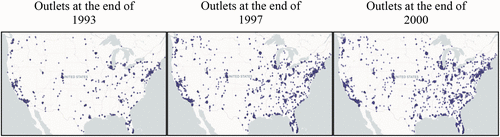
The franchise chain was chosen and considered suitable as a research setting for several reasons, including the following: (i) representativeness, structure, operations, and growth patterns representative of a franchise chain of its size1; (ii) age, old enough to have an established business model and a well-defined set of required routines that based on prior experience were considered replicable and worth replicating across all locations, yet young enough to still be actively scaling through the creation of thousands of new outlets over the period of observation; (iii) size and use of area units, large enough to ensure a sufficient number of outlets for the study, as well as large enough to use a formal geographical area unit structure comprised of area units (the area units reported directly to corporate headquarters and were in charge of opening new outlets in their area and monitoring existing ones); (iv) data access and quality, we were able to obtain full access to fine-grained, survival-bias-free longitudinal data that tracked all variables of interest in all outlets of the organization on a monthly basis over 10 years, offering a rare opportunity to subject our theory and hypotheses to an empirical test.
As in a typical franchise chain, the franchisor was mainly responsible for developing a standard value-creating set of required routines for doing business and facilitating its transfer to individual franchisees. Since its inception in 1980, the franchisor had been exploring and perfecting its set of required routines, which was stabilized in the second half of the 1980s and remained unchanged during our entire period of observation (1991–2000). The duration of the franchise contract between the franchisor and a franchisee was 10 years, with the possibility of contract renewals of the same duration. New franchisees underwent a compulsory two-week training at the company headquarters, half of which consisted of hands-on training at an existing training/pilot center. This training ensured that all franchisees had a good understanding of the franchise, especially of the required routines and how to implement them effectively in their franchise outlet. Although all franchisees were contractually obliged to adhere to all required routines, the franchisor was aware that franchisees might deviate, a problem also documented by prior research (Szulanski and Jensen 2006, El Akremi et al. 2011, Winter et al. 2012). Reflecting this concern, a senior executive we interviewed at the chain’s headquarters pointed out the following: “We have a concept that is sound, but the real power of it lies in what that individual franchisee does.”
This was a major reason why the franchisor created area units (referred to as “area franchisees”) and tasked them with continuously monitoring that all outlets in their area fully adhered to the chain’s standard set of required routines (ensuring the temporal replication of required routines; knowledge retention). As a senior executive at the headquarters of the franchise chain remarked in an interview: “More control…leads to consistency, which is the greatest challenge in franchising…we have to rely locally on the area franchisees [area units].” Area units monitored adherence to required routines by regularly visiting the chain’s outlets in the area under their supervision and analyzing their operations. One of the area units we interviewed explained: “I tell people [franchisees]…it is you…, it is the image you portray, it is the product that you carry, it is utilizing the vendors that we have made arrangements with…it is utilizing those products.”
In addition, area units were also responsible for scaling the franchise chain by contracting franchisees for the opening of new outlets in their area in which the set of required routines of the chain was replicated (spatial replication of routines; knowledge transfer). Explaining the dual demands placed on area unit attention, a senior executive at the headquarters of the franchise chain pointed out that “Most of the time and attention is on area franchisees [area units], not directly with center franchisees [individual outlets]. …area franchisees [area units] are focused on selling individual franchises…as well as monitoring existing franchised outlets.” One of the senior executives at the headquarters explained that “Instead of us…trying to directly franchise out…units across the U.S., we put in an intermediary infrastructure…the area franchisees [area units] have the responsibility of selling franchises [franchised outlets].”
Scaling demands significant area unit attention, because opening new outlets involves critical decisions that are fundamental to the subsequent success of the new outlets (Salvaneschi 1996, Kalnins and Mayer 2004). For instance, another area unit manager we interviewed remarked “We do significant demographic analysis as a component of our site selection…with the information we can collect within an area on consumers, on businesses, on so many different levels, we can really pinpoint exactly which site is closest to our critical mass of customers within that local area.”
Over our observation period, area units scaled the chain organization at different rates. For instance, one area unit opened 17 new outlets in a year, whereas another area unit opened 3 outlets in the same year. The franchisor tied area units’ incentives to their goals of scaling the chain, on the one hand, and monitoring adherence to required routines, on the other, by splitting the initial franchisee fee and ongoing franchise royalties paid by each franchisee with area units. The percentage of the initial franchise fee and ongoing royalties that area units were entitled to was the same for all area units and remained the same for the entire observation period.
The area units were legally independent agents whose operation was based on long-term (10-year) contracts with the franchisor, which were automatically renewed unless either party objected. Given that they received a fixed percentage of the initial franchise fee and ongoing royalties from each franchisee in their area, the area units had high-powered incentives to remain in the system for the long run. No area unit left/joined the chain or transitioned to manage a different area during the observation period. It is worth noting that the observation period followed a decade of growth and consolidation of the franchise chain: a decade during which some areas were consolidated (i.e., brought under the supervision of a single high-performing area unit). Senior executives at the headquarters pointed to that initial decade of exploration, selection, and consolidation, as well as to the substantial commitment and lock-in to the system of their remaining area units (and, correspondingly, the substantial gains they would forfeit if they were to leave the system) as drivers of the lack of changes/turnover during our observation period.
The high frequency of the franchise chain data (monthly) provided a rare insight into how required routines were replicated at the outlets of the franchise chain. Adherence to the set of required routines was considered essential to meet customers’ expectations of the franchise chain’s value proposition. A senior executive we interviewed at the headquarters of the franchise organization emphasized “Customers expect to get the same type of products and services from all [outlets] around the country or their neighborhood. Omitting any of those typically causes confusion and dissatisfaction, hurting our brand overall.” Relatedly, another executive at the headquarters added: “[If] you want to control the brand you want to control consistency…by mandating a consistent approach to service.” Furthermore, the executive identified as a key reason for the underperformance of some of their franchise outlets: “Their [franchise outlet’s] financial performance is impeded because they’re not following the [chain’s] recommended approach.” Monitoring by area units was considered vital for maintaining adherence to required routines as “… being constantly watched…contributed to the fear…they could be in here right now and I could be failing!” (Bradach 1998, p. 89). If outlets were not continuously monitored, lapses in adherence could multiply and grow out of control (Bradach 1997, 1998; Garvin and Levesque 2008; Kalnins and Lafontaine 2013). Thus, another executive at headquarters emphasized emphatically: “What’s critically important, in my opinion, is the constant monitoring of the system.”
The internal franchise chain data were supplemented with publicly available information on outlets’ local geographic markets drawn from the U.S. Census Bureau’s County Business Patterns database (https://www.census.gov) and ESRI Inc.’s annual Sourcebook of America and Sourcebook of Zip Code Demographics. The observation period extended from 1991, the first year for which detailed outlet-level data became available, to 2000, the last year for which outlet-level data were made available. The final sample includes all 2,444 outlets founded during the 1991–2000 observation period. These outlets were observed from inception until the end of the observation period or failure, that is, until they were permanently closed, as indicated by the franchisor’s internal information system, yielding a final sample of 144,631 outlet-month observations.
Measures
Dependent Variable.
Our dependent variable is the extent to which individual outlets do not comply with the set of required routines of the franchise chain (Nonadherence to Required Routines). Following prior research (Nelson and Winter 1982, Anand et al. 2012), we investigated required routines such as established norms and targeted rules for accomplishing day-to-day tasks at outlets of the franchise chain. Adherence to required routines is critical to achieving consistent offerings of products/services at chain outlets conforming to the standards established by the franchisor. Ideally, in measuring adherence to required routines, the incidence and quality of all routines would be directly measured across every outlet over time. Although such data might be obtainable on a small scale, empirical research based on multiyear panel datasets has relied on product lines to measure lack of adherence to underlying routines (Karim and Mitchell 2000, Mitchell and Shaver 2003, Parmigiani and Howard-Grenville 2011, Winter et al. 2012). Although examining product lines is a coarse operationalization of the extent of nonadherence to required routines, to our knowledge it provides the best broadly available and cross-outlet comparable measure of the state of adherence to required routines.
The franchisor designated the provision of thirteen products and services as required products/services that all outlets of the chain should implement. They included products/services targeting the SOHO market, such as mail-box rental, photocopy services, mail services, shipping, shipping supplies, office supplies, packaging materials, printing, and so on. The franchisor had worked extensively to develop a set of standard products/services that allowed for economies of scale through nationwide customer accounts and partnerships with suppliers such as Xerox, FedEx, and UPS. The required products and services had been documented to contribute to unit performance across a multitude of diverse locations and market conditions. They were, thus, considered replicable and worth replicating in all U.S. locations/markets of the organization. As mentioned during our interview with a top executive of the organization, the objective was that “a number of different kinds of business services can be provided in an efficient and consistent way across different locations.” Top management deemed the set of required products/services to be the universal “core of the business model.” The number and general nature of the required products/services remained the same during our observation period.
The franchise chain, like virtually all chain organizations, distinguished between mandatory/required routines and discretionary/optional routines in its template for replication (Winter and Szulanski 2001, Jonsson and Foss 2011, Winter et al. 2012, Ansari et al. 2014). Franchise outlets were free to selectively adopt routines designated as optional by the franchisor, depending on their specific context. However, our focus is on contractually required routines, as these represent the routines that the franchisor sought to replicate consistently across all outlets.
A persistent challenge that the franchisor faced was that not all franchisees implemented the standard set of required products and services in its entirety all the time. Although the franchise contract specified that the implementation of such products and services was indeed required and included provisions that appeared to give the franchisor the right to terminate a franchise contract in the case of violations, in practice, the continuous and full adherence to the set of required products/services prescribed in a franchise contract was notoriously difficult to enforce through litigation, as documented by prior research (Bradach 1997). The franchisor’s most potent leverage was the threat to not renew the franchise contract upon expiration, which was usually only a distant possibility, given the long-term multiyear duration of the franchise contract. The most effective way of ensuring that all franchise outlets consistently implemented all contractually required products/services was having area units continuously monitor adherence at outlets in their area of supervision.
We therefore operationalize Nonadherence to Required Routines as the extent to which a focal outlet does not adhere to the set of required product/services of the franchisor in a given period. Specifically, the measure of Nonadherence to Required Routines is calculated as the number of required products/services that are not implemented by a focal outlet in a given period (month, in this case). Monthly data for the implementation of required product/services are available for all outlets of the franchise system, allowing us to capture all outlets’ extent of Nonadherence to Required Routines in each time period (month) over the entire 10-year period of observation.
Independent Variables.
Our main independent variables are (1) Speed of Scaling; (2) Adherence-Related Failure Experience; (3) Irregular Rhythm of Scaling; and (4) Outlet Operating Experience. The franchise chain we study partitions the territory of the United States into areas managed by area units. Aside from achieving adherence to required routines, another main responsibility of area units is scaling the franchise chain in their area, which creates competing demands for area unit attention. We measured Speed of Scaling as the number of outlets an area unit opened in their area in a given month. To measure Adherence-Related Failure Experience, we followed extant literature on learning from failures (Baum and Ingram 1998; Chuang and Baum 2003; Kim and Miner 2007; Madsen and Desai 2010, 2024) and modified the measure used there based on our theory. In the literature on learning from failures, failure experience is typically measured as the cumulative number of failures experienced by a focal organization over its lifetime or within a given period. We followed that approach focusing on outlet failures, that is, permanent closures of outlets, and counted outlet failures in which outlets’ mean adherence to required routines over their lifetime was at least one standard deviation lower than the mean adherence to required routines of all outlets under the supervision of the focal area unit. Thus, we measured Adherence-Related Failure Experience as the total number of outlet failures experienced by an area unit up to the focal period (month). Because scholars have suggested that the effects of experience decay over time (Argote et al. 1990), we also re-estimated our models with alternative measures that discount prior Adherence-Related Failure Experience, using common functional forms (Baum and Ingram 1998, Kim and Miner 2007), as well as models that consider only recent adherence-related failure experience (Madsen and Desai 2010). The results with these alternative measures are essentially the same and are reported as robustness checks in the Robustness Checks section. Consistent with prior research on the rhythm of organizational activities (Laamanen and Keil 2008, Hashai et al. 2018), we measured Irregular Rhythm of Scaling as a time-variant variable, using the standard deviation of the Speed of Scaling of an area unit over the period commencing from the start of the period of observation in 1991 to the focal period (i.e., month). Alternatively, as a robustness check, we also measured area units’ Irregular Rhythm of Scaling as a time-invariant variable, using standard deviation for the entire period of observation, which produced qualitatively the same results (see the robustness section for details). Finally, following some prior research (Vermeulen and Barkema 2002), for both the time-variant and time-invariant measures, as a robustness check we also used kurtosis (instead of the standard deviation) of area units’ Speed of Scaling, which again yielded qualitatively identical results (see the Robustness Checks section). To measure Outlet Operating Experience, we used the time elapsed since the inception of the focal unit. In particular, we measured Outlet Operating Experience as the number of months an outlet had been in operation. Then, we divided this measure by twelve to express it in years.
Control Variables.
We included a number of control variables in our models to account for possible confounding effects that may correlate with Speed of Scaling and Nonadherence to Required Routines. We controlled for the possibility that outlets’ past growth might affect their adherence to required routines. Specifically, we measured Outlet Growth as the average monthly revenue growth rate of each outlet over the preceding three months. We also controlled for Outlet Size, measured as the focal outlet’s total monthly revenue in tens of thousands of U.S. dollars. Total monthly revenue figures are in real, inflation-adjusted dollars, obtained using the U.S. Consumer Price Index for 1991–2001, as reported by the Bureau of Labor Statistics. If outlets owned by multioutlet owners exhibit differences in their implementation of required routines, compared with outlets under single-outlet ownership, multioutlet ownership might be a potential confounder of the effects of our main explanatory variables. We therefore controlled for the impact of multioutlet ownership. We measured Multioutlet Owner Size as the total number of outlets owned by the focal outlet’s owner in a given period. The proximity of other same-chain outlets has been found to influence focal outlet performance (Kalnins 2003). We controlled for that impact by including a variable measured as the natural logarithm of the distance in miles to the closest same-chain outlet (Distance to Closest Same-Chain Outlet). The measure was updated for openings and closings of franchise outlets; that is, it was time-variant. To rule out alternative explanations for the moderating effect of Adherence-Related Failure Experience we controlled for Current Outlet Failures (measured as the total of number of outlet failures in the current period).
In addition, prior research has also documented that characteristics of the set of routines being replicated, in particular its knowledge discreteness (Williams 2007) and template performance (Lawrence 2020), can affect adherence. Such characteristics of the required routines being replicated have been controlled for by our research design, because in our analysis, they did not vary across outlets or over time. The required routines of the franchise chain were the same for all outlets and remained the same over the entire observation period.
Moreover, the franchisor partitions the territory of the United States into areas, akin to the territorial groupings present in virtually all large chain organizations. Each area spans a geographic area larger than the combination of a few zip codes or cities but smaller than a state. Each area unit of the franchise chain is in charge of a specific area. The franchise chain has 72 area units and an average of 41 outlets per area, with the number of outlets per area steadily increasing over time as new outlets have been opened. We controlled for Number of Outlets in the Area, measured as the number of outlets in a given area in a given period. To account for the potential influence of the adherence of other outlets on the focal outlet, we control for Peer Nonadherence. This is measured as the average level of nonadherence to required routines of all outlets in the area, excluding the focal outlet, in a given month.
According to the data provided by the franchise chain, the area units and the areas under their supervision did not change over our observation period, and therefore any stable unobserved area unit or area differences that may be correlated with outlet adherence to required routines would be controlled for in the franchise outlet fixed effects specification that we used to test our hypotheses. To further address any concerns related to potential omitted variables bias, we performed instrumental variable regressions which yielded identical results (see the Robustness Checks section).
We also accounted for differences in local demand conditions by including a control for Per-Capita Income, measured as the average per-capita income (in $10,000s) in a focal outlet’s five-digit zip code in a given year. We controlled for local population size differences, measured as the Population Size (in 10,000s) of each outlet’s five-digit zip code in a given year. The data used to construct the population size and per-capita income measures described above were drawn from ESRI Inc.’s annual Sourcebook of America and Sourcebook of Zip Code Demographics. To further account for heterogeneity in the local conditions faced by individual outlets we added control variables for local conditions at the zip code level. We collected the complete Census Bureau ZIP Code Industry data, which contain information on local markets. We first created a variable, Number of People Employed, which measures the number of people employed in a given zip code area as a proxy for the potential customers in that zip code area. We further constructed additional controls to better account for the possible effects of differences in local competition across local markets. To do so, we used and aggregated information on direct competitors of the franchise chain, based on the major SIC (or North American Industry Classification System) codes that the organization operates in: SIC codes Business Services (7389), Office Supplies (5112), and Photocopying Services (7334). We defined a competitor as a business that operates in any of these three SIC codes. For every zip code where an outlet of the chain is located, we gathered data on competitors, as defined above from the U.S. Census Bureau’s County Business Patterns data set (https://www.census.gov). We created four variables that measured the number of competitors of different sizes in the zip code, Number of Competitors (up to 49 employees), Number of Competitors (from 50 to 99), Number of Competitors (from 100 to 249 employees), and Number of Competitors (250 or more employees), and used their natural logarithm as control variables. Finally, we scaled all independent and control variables by dividing them by 10 to enhance the visualization and interpretation of the estimated coefficients reported in our models.
Models
We used franchise outlet fixed effects ordinary least squares panel regressions to test our hypotheses. We opted to use franchise outlet and area-unit fixed effects to account for outlet and area unit time-invariant unobservable heterogeneity, which could correlate with our error term and our main explanatory variables. We also controlled for time effects by including month and year fixed effects (month dummies and year dummies) in all models. Moreover, we used standard errors clustered at the area unit level to account for a potential serial correlation of observations for franchise outlets under the supervision of the same area unit. To address potential concerns that Speed of Scaling may be endogenous, we further estimated all models using instrumental variables models (Shaver 1998, Hamilton and Nickerson 2003, Semadeni et al. 2014) as described in our Robustness Checks section. Moreover, we used Poisson models (Blevins et al. 2015) and Logistic models (Hoetker 2007) as additional robustness checks (described in our Robustness Checks section). All model specifications yielded qualitatively identical and quantitatively similar results.2
Results
Table 1 reports descriptive statistics and simple pairwise correlations between the variables used to test our hypotheses. The pairwise correlations and the mean of variance inflation factors (mean variance inflation factor (VIF): 1.32) associated with our explanatory variables raised no significant concerns regarding multicollinearity.
|

Table 1. Descriptive Statistics and Correlation Matrix
| Variables | Mean | Standard deviation | (1) | (2) | (3) | (4) | (5) | (6) | (7) | (8) | (9) | (10) | |
|---|---|---|---|---|---|---|---|---|---|---|---|---|---|
| (1) | Nonadherence to Required Routines | 0.9770 | 1.0524 | ||||||||||
| (2) | Speed of Scaling | 0.6758 | 1.4664 | −0.0159 | |||||||||
| (3) | Outlet Operating Experience | 3.2209 | 2.2528 | −0.0306 | −0.0797 | ||||||||
| (4) | Adherence-Related Failure Experience | 6.2927 | 10.6436 | −0.0650 | 0.1220 | 0.1587 | |||||||
| (5) | Irregular Rhythm of Scaling | 0.9927 | 0.6657 | −0.0711 | 0.4172 | −0.0009 | 0.4285 | ||||||
| (6) | Outlet Size | 2.9683 | 3.5921 | −0.1159 | −0.0303 | 0.2362 | 0.0211 | −0.0710 | |||||
| (7) | Distance to Closest Same-Chain Outlet | 1.5751 | 1.1609 | 0.0091 | −0.0111 | −0.0729 | −0.1336 | −0.0708 | −0.0414 | ||||
| (8) | Number of Outlets in the Area | 88.4773 | 86.7275 | −0.0572 | 0.3492 | 0.1084 | 0.6679 | 0.2968 | −0.0366 | −0.0913 | |||
| (9) | Outlet Growth | 0.1851 | 1.6488 | 0.0354 | 0.0478 | −0.1020 | −0.0221 | −0.0102 | −0.0281 | 0.0245 | −0.0213 | ||
| (10) | Multioutlet Owner Size | 1.3230 | 0.7770 | −0.0084 | −0.0063 | 0.0206 | 0.0254 | 0.0187 | 0.0342 | −0.0897 | 0.0288 | −0.0082 | |
| (11) | Current Outlet Failures | 0.0378 | 0.2029 | −0.0060 | 0.0259 | −0.0018 | 0.1237 | 0.1759 | −0.0084 | −0.0120 | 0.2165 | −0.0089 | −0.0007 |
| (12) | Peer Nonadherence | 0.9725 | 0.4388 | 0.2505 | −0.0348 | −0.0212 | −0.1499 | −0.1607 | 0.0013 | 0.0344 | −0.1278 | 0.0198 | −0.0173 |
| (13) | Per-Capita Income | 2.3601 | 0.9979 | −0.0118 | −0.0085 | 0.1772 | 0.2000 | 0.0763 | −0.0098 | −0.3441 | 0.1335 | −0.0274 | 0.0756 |
| (14) | Population Size | 2.8705 | 1.4744 | 0.0416 | −0.0057 | 0.0694 | 0.0386 | 0.0098 | 0.0962 | −0.2353 | 0.0111 | −0.0082 | −0.0172 |
| (15) | Number of People Employed | 9.1137 | 1.2254 | 0.0496 | 0.0254 | 0.0454 | 0.0248 | 0.0440 | 0.0051 | −0.1906 | 0.0407 | 0.0000 | −0.0060 |
| (16) | Number of Competitors (up to 49 employees) | 2.0229 | 0.8089 | 0.0315 | 0.0515 | −0.0615 | 0.0132 | 0.0384 | −0.0048 | −0.3530 | 0.0169 | 0.0029 | −0.0301 |
| (17) | Number of Competitors (50 to 99 employees) | 0.1337 | 0.3116 | 0.0314 | 0.0125 | −0.0451 | −0.0204 | −0.0044 | −0.0031 | −0.2125 | −0.0188 | 0.0021 | −0.0343 |
| (18) | Number of Competitors (100 to 249 employees) | 0.0684 | 0.2234 | 0.0283 | 0.0239 | −0.0375 | 0.0101 | 0.0091 | −0.0122 | −0.1259 | 0.0106 | 0.0024 | −0.0307 |
| (19) | Number of Competitors (250 or more employees) | 0.0266 | 0.1404 | 0.0345 | −0.0077 | −0.0222 | −0.0199 | −0.0259 | −0.0015 | −0.0698 | −0.0324 | −0.0004 | −0.0134 |
Notes. Correlation coefficient in bold indicates significance at the 0.05 level. Sample size n = 144,631.
Table 2 reports the results of fixed effects ordinary least squares panel regression estimations. Model 1 reports a baseline estimation that includes only control variables. Model 2 tests the effect of area units’ Speed of Scaling on Nonadherence to Required Routines at outlets under their supervision in order to test Hypothesis 1. The coefficient of Speed of Scaling is positive and significant (0.05035, p < 0.01), providing empirical support for Hypothesis 1. To estimate the economic significance of nonadherence, we estimated the impact of Nonadherence to Required Routines on Outlet Sales. The effect is quite sizeable. Nonadherence to Required Routines (measured as a dummy that takes a value of one if an outlet exhibits less than full adherence to the set of required routines in a given time period and zero otherwise) reduces Outlet Sales by 5.53% on average.
|
Table 2. Fixed Effects Panel Regression Models of Nonadherence to Required Routines
| Variables | Model 1 | Model 2 | Model 3 | Model 4 | Model 5 | Model 6 |
|---|---|---|---|---|---|---|
| Speed of Scaling | 0.05035*** | 0.07642*** | 0.15017*** | 0.14396** | 0.27025*** | |
| (0.01522) | (0.02508) | (0.05011) | (0.06020) | (0.06401) | ||
| Speed of Scaling × Adherence-Related Failure Experience | −0.02934*** | −0.02495** | ||||
| (0.00761) | (0.01056) | |||||
| Speed of Scaling × Irregular Rhythm of Scaling | −0.42268*** | −0.45919*** | ||||
| (0.15862) | (0.17078) | |||||
| Speed of Scaling × Outlet Operating Experience | −0.34722* | −0.33141* | ||||
| (0.17587) | (0.17768) | |||||
| Adherence-Related Failure Experience | −0.04318*** | −0.04182*** | −0.04340*** | −0.04334*** | −0.04242*** | |
| (0.01122) | (0.01107) | (0.01124) | (0.01122) | (0.01114) | ||
| Irregular Rhythm of Scaling | −0.02400 | −0.03520 | 0.03600 | −0.04507 | 0.01152 | |
| (0.17583) | (0.17793) | (0.18228) | (0.18521) | (0.19111) | ||
| Outlet Operating Experience | −0.45408 | −0.45304 | −0.45347 | −0.43512 | −0.43443 | |
| (0.66391) | (0.66367) | (0.66390) | (0.66695) | (0.66668) | ||
| Outlet Size | −0.27778*** | −0.28017*** | −0.28009*** | −0.27988*** | −0.27909*** | −0.27875*** |
| (0.04787) | (0.04739) | (0.04739) | (0.04739) | (0.04706) | (0.04708) | |
| Number of Outlets in the Area | 0.00752* | 0.01189*** | 0.01233*** | 0.01177*** | 0.01456*** | 0.01468*** |
| (0.00378) | (0.00387) | (0.00395) | (0.00390) | (0.00427) | (0.00429) | |
| Outlet Growth | 0.18441*** | 0.18434*** | 0.18392*** | 0.18330*** | 0.18159*** | 0.18024*** |
| (0.06324) | (0.06321) | (0.06311) | (0.06302) | (0.06222) | (0.06198) | |
| Multioutlet Owner Size | −0.44363 | −0.45513* | −0.45483* | −0.45628* | −0.45732* | −0.45822* |
| (0.27035) | (0.26889) | (0.26903) | (0.26895) | (0.26904) | (0.26923) | |
| Total Current Failures | −0.04452 | −0.02658 | −0.02745 | −0.02131 | −0.02569 | −0.02075 |
| (0.06743) | (0.06604) | (0.06552) | (0.06574) | (0.06642) | (0.06533) | |
| Peer Outlet Behavior | 0.21400*** | 0.21030*** | 0.21001*** | 0.20958*** | 0.20980*** | 0.20879*** |
| (0.02788) | (0.02792) | (0.02797) | (0.02789) | (0.02789) | (0.02789) | |
| Population Size | 0.08166 | 0.06648 | 0.06494 | 0.06544 | 0.06724 | 0.06477 |
| (0.31492) | (0.31414) | (0.31434) | (0.31403) | (0.31474) | (0.31492) | |
| Per-Capita Income | 0.38904* | 0.38861* | 0.38750* | 0.38722* | 0.38825* | 0.38583* |
| (0.22615) | (0.22425) | (0.22420) | (0.22360) | (0.22426) | (0.22333) | |
| Distance to Closest Same-Chain Outlet | −0.22220 | −0.16164 | −0.16126 | −0.16043 | −0.15982 | −0.15827 |
| (0.20124) | (0.19989) | (0.19981) | (0.19990) | (0.19985) | (0.19982) | |
| Number of People Employed | −0.01955 | −0.02054 | −0.02070 | −0.02035 | −0.02026 | −0.02019 |
| (0.03571) | (0.03414) | (0.03416) | (0.03410) | (0.03426) | (0.03423) | |
| Number of Competitors (up to 49 employees) | −0.42103* | −0.41981* | −0.41862* | −0.42040* | −0.41773* | −0.41744* |
| (0.23331) | (0.23966) | (0.23935) | (0.23932) | (0.23968) | (0.23914) | |
| Number of Competitors (50 to 99 employees) | −0.61930*** | −0.61866*** | −0.61773*** | −0.61790*** | −0.61733*** | −0.61576*** |
| (0.22056) | (0.22114) | (0.22105) | (0.22082) | (0.22097) | (0.22061) | |
| Number of Competitors (100 to 249 employees) | −0.14518 | −0.11621 | −0.11732 | −0.11652 | −0.11329 | −0.11470 |
| (0.40024) | (0.39987) | (0.39927) | (0.39975) | (0.40080) | (0.40016) | |
| Number of Competitors (250 or more employees) | 1.20770* | 1.17214* | 1.17298* | 1.17474* | 1.16962* | 1.17327* |
| (0.61418) | (0.60800) | (0.60782) | (0.60749) | (0.60753) | (0.60707) | |
| Constant | 1.66328*** | 1.47153*** | 1.49407*** | 1.47183*** | 1.44655*** | 1.44476*** |
| (0.14697) | (0.29728) | (0.29710) | (0.29850) | (0.29074) | (0.29184) | |
| Observations | 144,631 | 144,631 | 144,631 | 144,631 | 144,631 | 144,631 |
| Number of outlets | 2,444 | 2,444 | 2,444 | 2,444 | 2,444 | 2,444 |
| Area unit fixed effects | Yes | Yes | Yes | Yes | Yes | Yes |
| Outlet fixed effects | Yes | Yes | Yes | Yes | Yes | Yes |
| Year fixed effects | Yes | Yes | Yes | Yes | Yes | Yes |
| Month fixed effects | Yes | Yes | Yes | Yes | Yes | Yes |
Note. Robust standard errors in parentheses.
*, **, and *** significant at 10%, 5%, and 1%, respectively.
Models 3–5 test Hypotheses 2–4, which posit moderators of the relationship between Speed of Scaling and Nonadherence to Required Routines. In Model 2, the coefficient of the interaction between the area units’ Speed of Scaling and their Adherence-Related Failure Experience is negative and significant (−0.02934, p < 0.01), lending empirical support for Hypothesis 2. Model 5 tests the interaction effect of Speed of Scaling and Irregular Rhythm of Speed of Scaling, which is negative and significant (−0.42268, p < 0.01), supporting Hypothesis 3. In Model 4, to test Hypothesis 4, we introduce the interaction between the area units’ Speed of Scaling and Outlet Operating Experience. Consistent with Hypothesis 4, the coefficient of the above interaction term is negative and significant (−0.34722, p < 0.10). Finally, Model 6 reports a full model that tests all four hypotheses simultaneously. The estimated coefficients of Speed of Scaling and its interaction terms that test Hypotheses 1–4 are similar in sign and significance to the ones reported in Models 2–5.
Robustness
Instrumental Variable Regressions
To identify the effect of Speed of Scaling on Nonadherence to Required Routines, we conducted instrumental variable regressions, a standard approach for dealing with endogeneity concerns (Shaver 1998, Hamilton and Nickerson 2003, Semadeni et al. 2014). Appropriate instruments must fulfill the conditions of relevance and exogeneity (Semadeni et al. 2014); that is, they should correlate with the endogenous variable and affect the dependent variable of interest only through their effect on the endogenous variable. A common approach followed by previous research has been to use system-level averages of the endogenous variable of interest (excluding the focal entity from the average) as an instrument for the endogenous variable (Campa and Kedia 2002, Autor et al. 2013, Cheng et al. 2014). Accordingly, we generated our instrument for a focal area unit’s Speed of Scaling by calculating the average Speed of Scaling of all area units in a given time period (excluding the contribution of the focal area unit). The rationale behind the construction of the instrument is that a focal area unit’s Speed of Scaling in a given period is likely to be correlated with the franchise-wide average levels of speed of scaling of area units in that period. In addition, there was no reason to expect that the average Speed of Scaling of the area units in the chain organization (excluding the focal area unit) would differentially predict Nonadherence to Required Routines at a given individual unit in the area of the focal area unit. To account for the interaction terms between an area unit’s Speed of Scaling and other independent variables, we interacted the instrument for the focal area unit’s Speed of Scaling, measured as described above, with the corresponding independent variables. Table 3 reports the results of first-stage instrumental variables’ estimations. Each first-stage regression model includes all control variables included in the main models reported in Table 2. Our instruments in the first-stage regression models are positively and significantly related to the variables they instrument for. The F-statistics for the instruments in the first-stage regression reject under-identification at 95%. They are greater than the required F-statistic of 10 in Staiger and Stock (1997) and the adjusted threshold F-statistic in Stock and Yogo (2005), suggesting that the instruments are not weak. The F-statistics corresponding to the test in which the first-stage models are compared with models without the instruments also indicate that the instruments are not weak. Next, in the second-stage models reported in Table 4, we used the instrumented/predicted values of Speed of Scaling and its interactions with Adherence-Related Failure Experience, Irregular Rhythm of Scaling, and Outlet Operating Experience, respectively, to estimate the effect of these variables on Nonadherence to Required Routines (see Models 11–15 in Table 4). All coefficient estimates on the independent variables tested by Hypotheses 1–4 have the same sign and similar significance levels to those reported in Table 2. The results of our hypotheses tests are thus robust to accounting for the potential endogeneity of area units’ Speed of Scaling via a Two-Stage Least Squares instrumental variables estimation.
|
Table 3. First-Stage Instrumental Variable Regressions of Nonadherence to Required Routines
| Variables | Model 7 | Model 8 | Model 9 | Model 10 |
|---|---|---|---|---|
| Dependent variables | ||||
| Speed of Scaling | Speed of Scaling × Adherence-Related Failure Experience | Speed of Scaling × Irregular Rhythm of Scaling | Speed of Scaling × Outlet Operating Experience | |
| Instrument | 0.75429*** | −1.34716*** | −0.96821*** | −0.30811*** |
| (0.04158) | (0.06010) | (0.03231) | (0.02120) | |
| Instrument × Adherence-Related Failure Experience | 3.37268*** | |||
| (0.08079) | ||||
| Instrument × Irregular Rhythm of Scaling | 12.67379*** | |||
| (0.42030) | ||||
| Instrument × Outlet Operating Experience | 1.59208*** | |||
| (0.09084) | ||||
| Adherence-Related Failure Experience | 1.09889*** | 0.47203*** | 0.04364*** | 0.23701*** |
| (0.02826) | (0.05245) | (0.00575) | (0.01320) | |
| Irregular Rhythm of Scaling | 0.00613*** | −0.01269*** | 0.00196*** | 0.00133** |
| (0.00159) | (0.00301) | (0.00045) | (0.00056) | |
| Outlet Operating Experience | 0.00529 | 0.02409 | −0.00022 | 0.02036* |
| (0.02671) | (0.02965) | (0.00559) | (0.01150) | |
| Outlet Size | −0.00265 | 0.00023 | −0.00005 | 0.00081 |
| (0.00188) | (0.00285) | (0.00035) | (0.00073) | |
| Number of Outlets in the Area | −0.01476*** | 0.00388*** | −0.00181*** | 0.00377*** |
| (0.00081) | (0.00068) | (0.00012) | (0.00023) | |
| Outlet Growth | 0.01850*** | 0.00543** | 0.00163** | −0.00076** |
| (0.00661) | (0.00265) | (0.00067) | (0.00030) | |
| Multioutlet Owner Size | 0.00261 | 0.00747 | −0.00105 | −0.00598 |
| (0.01295) | (0.01669) | (0.00262) | (0.00502) | |
| Current Outlet Failures | −0.39564*** | −0.24439*** | −0.01284*** | −0.10610*** |
| (0.01127) | (0.01534) | (0.00263) | (0.00449) | |
| Peer Nonadherence | 0.01747*** | 0.01170*** | 0.00266*** | 0.00457*** |
| (0.00159) | (0.00103) | (0.00029) | (0.00056) | |
| Population Size | 0.00047 | −0.03906** | −0.00135 | 0.00277 |
| (0.01264) | (0.01886) | (0.00242) | (0.00393) | |
| Per-Capita Income | −0.00467 | −0.01904 | −0.00459 | 0.00074 |
| (0.01202) | (0.02122) | (0.00335) | (0.00455) | |
| Distance to Closest Same-Chain Outlet | −0.00864 | 0.00290 | 0.00128 | 0.00218 |
| (0.01395) | (0.01598) | (0.00282) | (0.00457) | |
| Number of People Employed | 0.00028 | −0.00643* | 0.00014 | 0.00112 |
| (0.00280) | (0.00373) | (0.00053) | (0.00106) | |
| Number of Competitors (up to 49 employees) | 0.00039 | 0.03389* | −0.00129 | 0.00569 |
| (0.01167) | (0.01952) | (0.00245) | (0.00392) | |
| Number of Competitors (50 to 99 employees) | −0.01258 | 0.03574 | 0.00156 | 0.00134 |
| (0.01801) | (0.03004) | (0.00330) | (0.00642) | |
| Number of Competitors (100 to 249 employees) | 0.03535 | −0.01386 | 0.00348 | 0.01751** |
| (0.02344) | (0.04092) | (0.00415) | (0.00827) | |
| Number of Competitors (250 or more employees) | −0.01844 | 0.01334 | 0.00386 | −0.01216 |
| (0.03403) | (0.09038) | (0.00677) | (0.01114) | |
| Constant | 0.05053*** | 0.07634*** | 0.02005*** | −0.00507 |
| (0.01369) | (0.01410) | (0.00270) | (0.00461) | |
| Observations | 144,631 | 144,631 | 144,631 | 144,631 |
| Number of outlets | 2,444 | 2,444 | 2,444 | 2,444 |
| Area unit fixed effects | Yes | Yes | Yes | Yes |
| Outlet fixed effects | Yes | Yes | Yes | Yes |
| Year fixed effects | Yes | Yes | Yes | Yes |
| Month fixed effects | Yes | Yes | Yes | Yes |
Note. Robust standard errors in parentheses.
*, **, and *** significant at 10%, 5%, and 1%, respectively.
|
Table 4. Second-Stage Instrumental Variable Regressions of Nonadherence to Required Routines
| Variables | Model 11 | Model 12 | Model 13 | Model 14 | Model 15 |
|---|---|---|---|---|---|
| Speed of Scaling | 0.86264*** | 0.97940*** | 2.91305*** | 1.06983*** | 2.80733*** |
| (0.22353) | (0.24492) | (0.75628) | (0.19217) | (0.71759) | |
| Speed of Scaling × Adherence-Related Failure Experience | −0.24002*** | −0.16731*** | |||
| (0.05327) | (0.05325) | ||||
| Speed of Scaling × Irregular Rhythm of Scaling | −10.41786*** | −8.60120*** | |||
| (2.69332) | (2.65738) | ||||
| Speed of Scaling × Outlet Operating Experience | −1.10064*** | −0.90540** | |||
| (0.31958) | (0.37097) | ||||
| Irregular Rhythm of Scaling | −0.91008** | −0.89649** | 1.01567** | −0.87924** | 0.71471* |
| (0.40966) | (0.40795) | (0.42705) | (0.41193) | (0.42060) | |
| Adherence-Related Failure Experience | −0.04819* | −0.03650 | −0.05110* | −0.04815* | −0.04241 |
| (0.02636) | (0.02645) | (0.02649) | (0.02639) | (0.02653) | |
| Outlet Operating Experience | −0.45787 | −0.44890 | −0.44080 | −0.39734 | −0.38773 |
| (0.59242) | (0.59131) | (0.59166) | (0.58846) | (0.58755) | |
| Outlet Size | −0.27811*** | −0.27764*** | −0.27196*** | −0.27490*** | −0.27006*** |
| (0.04893) | (0.04884) | (0.04859) | (0.04877) | (0.04842) | |
| Number of Outlets in the Area | 0.02382*** | 0.02601*** | 0.01477** | 0.03096*** | 0.02374*** |
| (0.00673) | (0.00693) | (0.00606) | (0.00644) | (0.00628) | |
| Outlet Growth | 0.16886*** | 0.16731*** | 0.15120*** | 0.16186*** | 0.14743*** |
| (0.05440) | (0.05405) | (0.04981) | (0.05228) | (0.04854) | |
| Multioutlet Owner Size | −0.45695* | −0.45430* | −0.48442* | −0.46370* | −0.48334* |
| (0.25136) | (0.25198) | (0.25201) | (0.25129) | (0.25223) | |
| Total Current Failures | 0.30795** | 0.26110* | 0.26910** | 0.27391* | 0.21521 |
| (0.14027) | (0.13448) | (0.13557) | (0.14489) | (0.13519) | |
| Peer Outlet Behavior | 0.19523*** | 0.19459*** | 0.18507*** | 0.19528*** | 0.18644*** |
| (0.02046) | (0.02051) | (0.02122) | (0.02042) | (0.02119) | |
| Population Size | 0.06620 | 0.05367 | 0.04078 | 0.06863 | 0.03848 |
| (0.26647) | (0.26658) | (0.26817) | (0.26718) | (0.26847) | |
| Per-Capita Income | 0.38852* | 0.37952* | 0.35448* | 0.38740* | 0.35322* |
| (0.21341) | (0.21132) | (0.20468) | (0.21214) | (0.20390) | |
| Distance to Closest Same-Chain Outlet | −0.15415 | −0.15197 | −0.12827 | −0.14921 | −0.12719 |
| (0.20121) | (0.20132) | (0.20209) | (0.20117) | (0.20191) | |
| Number of People Employed | −0.02068 | −0.02193 | −0.01591 | −0.01976 | −0.01685 |
| (0.04483) | (0.04474) | (0.04467) | (0.04491) | (0.04470) | |
| Number of Competitors (up to 49 employees) | −0.42025** | −0.41040** | −0.43445** | −0.41359** | −0.41963** |
| (0.20744) | (0.20741) | (0.20742) | (0.20729) | (0.20718) | |
| Number of Competitors (50 to 99 employees) | −0.60882** | −0.60234** | −0.59494** | −0.60568** | −0.59026** |
| (0.28599) | (0.28546) | (0.28634) | (0.28630) | (0.28605) | |
| Number of Competitors (100 to 249 employees) | −0.14461 | −0.15033 | −0.13778 | −0.13221 | −0.13276 |
| (0.36998) | (0.37068) | (0.36855) | (0.37057) | (0.36964) | |
| Number of Competitors (250 or more employees) | 1.18555* | 1.19087* | 1.24283** | 1.17608* | 1.22875** |
| (0.62427) | (0.62272) | (0.62394) | (0.62384) | (0.62232) | |
| Constant | 1.08248*** | 1.13621*** | 0.84831*** | 1.35636*** | 1.22748*** |
| (0.24777) | (0.23980) | (0.26245) | (0.24487) | (0.25216) | |
| Observations | 144,631 | 144,631 | 144,631 | 144,631 | 144,631 |
| Number of outlets | 2,444 | 2,444 | 2,444 | 2,444 | 2,444 |
| Area unit fixed effects | Yes | Yes | Yes | Yes | Yes |
| Outlet fixed effects | Yes | Yes | Yes | Yes | Yes |
| Year fixed effects | Yes | Yes | Yes | Yes | Yes |
| Month fixed effects | Yes | Yes | Yes | Yes | Yes |
Note. Robust standard errors in parentheses.
*, **, and *** significant at 10%, 5%, and 1%, respectively.
Matched Sample Regressions
A potential challenge in estimating the effect of Speed of Scaling on Nonadherence to Required Routines is that the outlets supervised by area units that are scaling could be operating in different market conditions compared with outlets supervised by area units that are not scaling. Although our models already incorporate outlet-level fixed effects, area unit-level fixed effects, and relevant control variables to account for market conditions, we further address any potential imbalances in market conditions between outlets by constructing a matched sample based on observable factors related to market conditions. We matched outlets in area units that are scaling with outlets in area units that are not scaling in the focal time period using coarsened exact matching (CEM) based on local market conditions (Iacus et al. 2012). Specifically, we used the following observable factors related to market conditions: Per-capita Income, Population Size, Number of Competitors (up to 49 employees), Number of Competitors (from 50 to 99), Number of Competitors (from 100 to 249 employees), and Number of Competitors (250 or more employees).
The CEM procedure reduced the multivariate imbalance in our sample from 0.525 to 0.353. In Table 5, we report the results of estimating our models using a CEM matched sample. The estimated coefficients on our independent variables retain the same signs and similar significance levels compared with our main results reported in Table 2. Thus, our results are robust to estimating our models using a CEM matched sample, offering additional empirical support for the results of our hypotheses tests.
|
Table 5. Fixed Effects Panel Regression Models of Nonadherence to Required Routines Using Coarsened Exact Matching
| Variables | Model 16 | Model 17 | Model 18 | Model 19 | Model 20 |
|---|---|---|---|---|---|
| Speed of Scaling | 0.03821** | 0.07023*** | 0.06660 | 0.12195** | 0.18506** |
| (0.01463) | (0.02305) | (0.05750) | (0.05552) | (0.07887) | |
| Speed of Scaling × Adherence-Related Failure Experience | −0.03805*** | −0.03282*** | |||
| (0.00858) | (0.00864) | ||||
| Speed of Scaling × Irregular Rhythm of Scaling | −0.11706** | −0.10893* | |||
| (0.05067) | (0.05529) | ||||
| Speed of Scaling × Outlet Operating Experience | −0.31448* | −0.29393* | |||
| (0.17591) | (0.17079) | ||||
| Adherence-Related Failure Experience | −0.04543*** | −0.04313*** | −0.04548*** | −0.04557*** | −0.04365*** |
| (0.00916) | (0.00910) | (0.00918) | (0.00918) | (0.00907) | |
| Irregular Rhythm of Scaling | −0.04526 | −0.05578 | −0.02970 | −0.06030 | −0.04593 |
| (0.17061) | (0.16995) | (0.17931) | (0.17622) | (0.18344) | |
| Outlet Operating Experience | −0.81026 | −0.80761 | −0.81006 | −0.78179 | −0.78108 |
| (0.74257) | (0.74196) | (0.74265) | (0.75060) | (0.74974) | |
| Outlet Size | −0.33127*** | −0.33123*** | −0.33117*** | −0.33006*** | −0.32997*** |
| (0.04770) | (0.04768) | (0.04766) | (0.04725) | (0.04722) | |
| Number of Outlets in the Area | 0.01747*** | 0.01789*** | 0.01742*** | 0.01927*** | 0.01945*** |
| (0.00331) | (0.00337) | (0.00332) | (0.00349) | (0.00353) | |
| Outlet Growth | 0.14340** | 0.14292** | 0.14315** | 0.14129** | 0.14064** |
| (0.05780) | (0.05766) | (0.05777) | (0.05709) | (0.05697) | |
| Multioutlet Owner Size | −0.39237 | −0.39076 | −0.39276 | −0.39434 | −0.39339 |
| (0.28850) | (0.28896) | (0.28854) | (0.28875) | (0.28923) | |
| Current Outlet Failures | −0.07090 | −0.07065 | −0.06948 | −0.06619 | −0.06422 |
| (0.06346) | (0.06309) | (0.06372) | (0.06458) | (0.06438) | |
| Peer Nonadherence | 0.02145*** | 0.02139*** | 0.02141*** | 0.02137*** | 0.02127*** |
| (0.00306) | (0.00308) | (0.00308) | (0.00306) | (0.00308) | |
| Population Size | −0.01871 | −0.02075 | −0.01906 | −0.01795 | −0.02028 |
| (0.32486) | (0.32496) | (0.32470) | (0.32548) | (0.32553) | |
| Per-Capita Income | 0.49478* | 0.49312* | 0.49375* | 0.49392* | 0.49107* |
| (0.24936) | (0.24949) | (0.24930) | (0.24961) | (0.24936) | |
| Distance to Closest Same-Chain Outlet | −0.33812* | −0.33818* | −0.33797* | −0.33654* | −0.33647* |
| (0.17503) | (0.17494) | (0.17503) | (0.17457) | (0.17452) | |
| Number of People Employed | −0.13309** | −0.13292** | −0.13293** | −0.13264** | −0.13229** |
| (0.05713) | (0.05709) | (0.05721) | (0.05730) | (0.05731) | |
| Number of Competitors (up to 49 employees) | −0.34767 | −0.34506 | −0.34709 | −0.34581 | −0.34283 |
| (0.23076) | (0.22979) | (0.23086) | (0.23034) | (0.22963) | |
| Number of Competitors (50 to 99 employees) | −0.59471** | −0.59500** | −0.59483** | −0.59302** | −0.59355** |
| (0.23593) | (0.23589) | (0.23589) | (0.23561) | (0.23550) | |
| Number of Competitors (100 to 249 employees) | 0.16306 | 0.16131 | 0.16228 | 0.16483 | 0.16208 |
| (0.43302) | (0.43241) | (0.43317) | (0.43367) | (0.43320) | |
| Number of Competitors (250 or more employees) | 1.11068 | 1.11435 | 1.11061 | 1.10957 | 1.11270 |
| (0.80370) | (0.80429) | (0.80364) | (0.80334) | (0.80398) | |
| Constant | 0.84681*** | 0.81870*** | 0.85652*** | 0.84157*** | 0.80890*** |
| (0.31017) | (0.30902) | (0.31030) | (0.30257) | (0.30413) | |
| Observations | 80,508 | 80,508 | 80,508 | 80,508 | 80,508 |
| Number of outlets | 2,433 | 2,433 | 2,433 | 2,433 | 2,433 |
| Area unit fixed effects | Yes | Yes | Yes | Yes | Yes |
| Outlet fixed effects | Yes | Yes | Yes | Yes | Yes |
| Year fixed effects | Yes | Yes | Yes | Yes | Yes |
| Month fixed effects | Yes | Yes | Yes | Yes | Yes |
Note. Robust standard errors in parentheses.
*, **, and *** significant at 10%, 5%, and 1%, respectively.
Mechanism Analysis
Our findings reveal that the higher the Speed of Scaling in an area, the higher the level of Nonadherence to Required Routines in that area. We have argued that competing demands on scarce attention is the underlying mechanism; that is, having to allocate attention between scaling and monitoring can be expected to adversely affect the attention available to an area unit for the purpose of monitoring adherence to required routines in its area. Thus, the geographical distance that area unit managers need to traverse for the purpose of monitoring outlets in their area, which proxies for attention allocation, may strengthen the positive relationship between Speed of Scaling and Nonadherence to Required Routines. That is because the geographic proximity of outlets facilitates access, communication, and observation (Kalnins and Lafontaine 2013), resulting in a reduced need/cost of allocating attention from scaling to monitoring and vice versa (Kim et al. 2023). Hence, we perform additional analyses that leverage geographic distance to get empirically closer to the attention mechanism that we argue to be a driver of the relationship between Speed of Scaling and Nonadherence to Required Routines. First, we focused on the additional geographic distance an area unit would need to traverse in order to monitor newly opened outlets. For that purpose, we measured the average geographic distance between existing outlets and newly opened (in the focal time period) outlets under the supervision of the focal area unit. To do so, we obtained centroids of the latitude and longitude coordinates of the existing and newly opened outlets in a given area. Following prior research (Kim et al. 2023), we used the “great circle” distance formula to calculate additional geographic distance as follows:
|
Table 6. Mechanism Analysis: Fixed Effects Panel Regression Models of Nonadherence to Required Routines
| Variables | Model 21 Moderation with Additional Geographic Distance | Model 22 Moderation with Shortest Geographic Route | Model 23 Subsample: Effect on Maintenance | Model 24 Subsample: Young Outlets | Model 25 Subsample: Old Outlets |
|---|---|---|---|---|---|
| Speed of Scaling | −0.03002 | −0.16433 | 0.04712*** | 0.03496* | 0.05872** |
| (0.03212) | (0.10934) | (0.01548) | (0.02008) | (0.02247) | |
| Speed of Scaling × Additional Geographic Distance | 0.01334** | ||||
| (0.00541) | |||||
| Additional Geographic Distance | −0.00378 | ||||
| (0.00295) | |||||
| Speed of Scaling × Shortest Geographic Route (Traveling Salesman Distance) | 0.02527* | ||||
| (0.01407) | |||||
| Shortest Geographic Route (Traveling Salesman Distance) | 0.00435 | ||||
| (0.00348) | |||||
| Adherence-Related Failure Experience | −0.01933 | −0.03114*** | −0.04770*** | 0.07837** | −0.08266** |
| (0.01180) | (0.00886) | (0.01436) | (0.03172) | (0.03410) | |
| Irregular Rhythm of Scaling | −0.17430 | −0.11631 | −0.44758 | 0.15443 | −0.88808** |
| (0.25535) | (0.23632) | (0.29189) | (0.25108) | (0.39671) | |
| Outlet Operating Experience | −0.64186*** | −0.63473*** | −1.47167 | −1.55346** | 0.46047 |
| (0.13459) | (0.12506) | (1.20921) | (0.73817) | (1.30564) | |
| Outlet Size | −0.32166*** | −0.32104*** | −0.17718*** | −0.31266*** | −0.20197*** |
| (0.05009) | (0.05084) | (0.04707) | (0.07207) | (0.05511) | |
| Number of Outlets in the Area | 0.01747*** | 0.02162*** | 0.00280 | 0.00814 | 0.03155*** |
| (0.00313) | (0.00271) | (0.00528) | (0.00986) | (0.01067) | |
| Outlet Growth | 0.17199*** | 0.18451*** | −0.04283 | 0.14943*** | −0.57044* |
| (0.06463) | (0.06956) | (0.03781) | (0.05150) | (0.32502) | |
| Multioutlet Owner Size | −0.21892 | −0.23955 | −0.20617 | −0.46020 | −1.11692*** |
| (0.20372) | (0.20144) | (0.27518) | (0.30569) | (0.39535) | |
| Current Outlet Failures | −0.22419*** | −0.19790*** | −0.02945 | −0.01133 | −0.01640 |
| (0.05999) | (0.05487) | (0.06225) | (0.03564) | (0.08849) | |
| Peer Nonadherence | 0.02284*** | 0.02169*** | 0.02301*** | 0.01308*** | 0.03553*** |
| (0.00523) | (0.00532) | (0.00282) | (0.00248) | (0.00372) | |
| Population Size | 0.40194 | 0.36024 | 0.07260 | 0.19738 | 0.33240 |
| (0.39865) | (0.41237) | (0.34742) | (0.21880) | (0.49345) | |
| Per-Capita Income | 0.37115 | 0.39705 | 0.19036 | 0.42104 | 0.18645 |
| (0.26403) | (0.27223) | (0.20404) | (0.27552) | (0.29357) | |
| Distance to Closest Same-Chain Outlet | −0.18804 | −0.08242 | −0.02553 | 0.00636 | 0.16708 |
| (0.17251) | (0.18896) | (0.16663) | (0.34892) | (0.33193) | |
| Number of People Employed | −0.03252 | −0.02917 | 0.00408 | −0.00495 | 0.01107 |
| (0.03831) | (0.03648) | (0.03953) | (0.06587) | (0.03584) | |
| Number of Competitors (up to 49 employees) | −0.48577 | −0.49245 | −0.20850 | 0.07616 | −0.07247 |
| (0.34824) | (0.33090) | (0.18507) | (0.26778) | (0.30081) | |
| Number of Competitors (50 to 99 employees) | −0.045734*** | −0.52761*** | −0.61902** | 0.08707 | −0.11318 |
| (0.17099) | (0.17418) | (0.24058) | (0.33930) | (0.26952) | |
| Number of Competitors (100 to 249 employees) | 0.43708 | 0.41854 | −0.02210 | −0.06123 | 0.05104 |
| (0.43027) | (0.41474) | (0.37803) | (0.45785) | (0.47411) | |
| Number of Competitors (250 or more employees) | 0.77737 | 0.91185 | 1.53762** | 0.32947 | 1.56432** |
| (0.63308) | (0.61293) | (0.65333) | (0.67874) | (0.78004) | |
| Constant | 0.88785*** | 0.68873*** | 0.13875 | 0.56088 | 0.39642* |
| (0.22792) | (0.21823) | (0.13165) | (0.39206) | (0.20519) | |
| Observations | 52,363 | 52,363 | 105,305 | 80,558 | 64,073 |
| Number of outlets | 2,444 | 2,444 | 2,014 | 2,444 | 1,691 |
| Area unit fixed effects | Yes | Yes | Yes | Yes | Yes |
| Outlet fixed effects | Yes | Yes | Yes | Yes | Yes |
| Year fixed effects | Yes | Yes | Yes | Yes | Yes |
| Month fixed effects | Yes | Yes | Yes | Yes | Yes |
Notes. Robust standard errors in parentheses. In Models 21 and 22, observations were dropped to include only the time periods during which new outlets were opened. In both models, the coefficient of Speed of Scaling is statistically insignificant at 10% significance level, indicating that it is not significantly different from zero.
*, **, and *** significant at 10%, 5%, and 1%, respectively.
Second, we employed the traveling salesman algorithm to determine the shortest geographic route an area unit needs to traverse in order to monitor all outlets operating in its area in a given time period. The traveling salesman problem is a well-known optimization problem in computer science and operations research (Flood 1956, Gutin and Punnen 2006). It involves searching for the shortest possible route that a “salesman” can take to visit a set of locations and return to the starting location. In our case, the traveling salesman algorithm computes the Shortest Geographic Route an area unit manager would need to traverse in order to visit (to monitor) all outlets under its supervision in a given month: another proxy for attention allocation. This allowed us to consider the overall minimum geographic distance that must be covered by area units in their monitoring activities. Notably, we find that the effect of Speed of Scaling on Nonadherence to Required Routines becomes increasingly positive as the Shortest Geographic Route an area unit manager needs to traverse increases. As reported in Table 6, Model 22, the estimated coefficient on the interaction term between Speed of Scaling and Shortest Geographic Route is positive and significant (0.02527, p < 0.10). In sum, our investigation into the impact of geographic distance on the relationship between Speed of Scaling and Nonadherence to Required Routines yielded robust additional support for the attention mechanism we theorize.
It is also worth noting that our theory is agnostic regarding the type of nonadherence: Area units need to allocate attention resources to ensure adherence to required routines in outlets regardless of whether the nonadherence is due to outlets’ failure to adopt or failure to retain required routines. Nonetheless, we conducted subsample analysis to explore the possibility that the adverse impact of Speed of Scaling on Nonadherence to Required Routines may be confined to newness (failure to adopt, i.e., failure to initially implement required routines) or to erosion (failure to adhere, i.e., abandoning one or more routines from the set of required routines after being initially implemented). First, we created a subsample containing only those observations that follow after an outlet has first adhered to the entire set of required routines (i.e., implemented all required operational routines, thus any lack of adherence would come from “erosion”). Then, we estimated the same model that captures the main effect presented in our paper (Table 2, Model 2) to examine the impact of area units’ speed of scaling on outlets’ nonadherence to required routines in this subsample. In Table 6, Model 23, the coefficient of Speed of Scaling is positive and significant (0.04712, p < 0.01). Second, we created subsamples of young and old outlets by splitting the sample into two: above and below the average age (3.22 years) of the outlets in our sample. If the effect of Speed of Scaling is due to newness (new outlets struggling to initially implement/establish routines), the negative effect of Speed of Scaling on Nonadherence to Required Routines should be confined to the subsample of new outlets. We find, however, that the effect is positive and significant for both subsamples, that is, for both young (Table 6, Model 24; 0.03496, p < 0.10) and old outlets (Table 6, Model 25; 0.05872, p < 0.01).
Other Robustness Checks
We further checked the robustness of our results to alternative measures of our variables. For each of the following robustness checks, we re-estimated the complete model, that is, Model 6 as presented in Table 2. First, we tested the robustness of our results using alternative measures of Irregular Rhythm of Scaling. We measured Irregular Rhythm of Scaling in two different ways: first, as a time-invariant, rather than a time-variant, variable by using standard deviation of Speed of Scaling for a given area unit for our entire observation period (Laamanen and Keil 2008, Hashai et al. 2018). With this alternative measurement, the results are consistent with the predictions of Hypothesis 4, and the coefficient for the interaction of Speed of Scaling and Irregular Rhythm of Scaling remains negative and significant (−0.59860, p < 0.05). Second, because some scholars (Vermeulen and Barkema 2002) have used kurtosis to measure the rhythm of specific organizational activities, we measured Irregular Rhythm of Scaling by using the kurtosis of Speed of Scaling over the period from the start of the period of observation to the focal period (i.e., month). We obtained virtually identical results in terms of the sign and significance of the estimated coefficient for the interaction of Speed of Scaling and Irregular Rhythm of Scaling, that is, negative and significant (−1.44286, p < 0.01).
Prior research on organizational learning suggests that learning from experience can depreciate over time (Argote et al. 1990). Because there is no theoretical basis or specific functional form to apply to the decay of experience (Argote 1999), we used commonly used functional forms to depreciate learning from adherence-related failure experience and irregular rhythm of scaling experience (Baum and Ingram 1998, Kim and Miner 2007) and thereby examine the robustness of our results to alternative measures of adherence-related failure experience and irregular rhythm of scaling experience.3 We first set the discount equal to age at the time of failure, which assumes a linear depreciation in the value of adherence-related failure experience. Next, we set the discount equal to the square of the age at time of failure, which assumes that the value of past adherence-related failures depreciates more rapidly than linear. Third, we set the discount equal to the square root of the age at the time of failure, which assumes that the depreciation of the value of past adherence-related failures is slower than linear. Similarly, we discounted the irregular rhythm of scaling by depreciating the rhythm measure by the time elapsed since the beginning of the observation period, as well as its square and square root, up to the focal month. Our results are robust to the use of these three different discounting approaches, because the coefficient for the interaction terms between Speed of Scaling and both Adherence-Related Failure Experience and Irregular Rhythm of Scaling Experience is negative and significant in all three cases.
Additionally, as organizations might learn more from recent failures than from more distant ones (Madsen and Desai 2010), we examined how area units’ recent adherence-related failure experience affects adherence to required routines at the outlets in their portfolio. We re-estimated our models on the interaction effect of Adherence-Related Failure Experience by using recent time windows (past 24, 30, and 36 months) for failure experience. Our results are robust to the use of these alternative measures and consistent for all the above time windows. Next, we examined whether the effect of the interaction term between Speed of Scaling and Adherence-Related Failure Experience may be affected by a high correlation between Adherence-Related Failure Experience and Number of Outlets in the Area (because, ceteris paribus, areas with more outlets can be expected to exhibit more outlet failures). By employing alternative measures of Failure Experience, we test the robustness of our findings and ensure that the interaction effect is not affected/driven by such a correlation. First, we computed a Failure Dummy variable, which takes the value of one if the Adherence-Related Failure Experience of an area unit at a given time is greater than zero and zero otherwise. Second, we computed Ratio of Adherence-Related Failures by dividing the Adherence-Related Failure Experience of an area unit by the total Number of Outlets in the Area in each given period. We re-estimated the models by using Adherence-Related Failure Dummy and Ratio of Adherence-Related Failures, respectively, instead of Adherence-Related Failure Experience. Our results are robust to this alternative measurement of Adherence-Related Failure Experience. In line with Hypothesis 3, the coefficients on the interaction terms between Speed of Scaling and Adherence-Related Failure Dummy (−0.02076, p < 0.05), and between Speed of Scaling and Ratio of Adherence-Related Failures, are negative and significant (−0.56182, p < 0.01).
Furthermore, we examined the robustness of our results to measuring Per-Capita Income, Population Size, Number of People Employed, Number of Competitors (up to 49 employees), Number of Competitors (50–99 employees), Number of Competitors (100–249 employees), and Number of Competitors (250 or more employees) at the metropolitan statistical area (MSA) or county level, instead of the zip code area level. Once again, re-estimating the complete model, that is, Model 6 as presented in Table 2 with those alternative measures at the MSA or county level, produced essentially the same results in sign, magnitude, and significance of the estimated coefficients on our independent variables. As a final robustness check, we transformed our dependent, independent, and control variables from outlet-monthly to outlet-quarterly observations and re-estimated Models 2–6 in Table 2. This additional analysis examines whether the effects of speed of scaling and the experience mechanism are limited to short-term dynamics. The results obtained were qualitatively the same and quantitatively nearly identical. In sum, the results of our hypotheses tests are robust to all the above robustness checks, lending further empirical support to our findings.
Finally, as additional robustness checks, we assessed the robustness of our results using alternative model specifications. Specifically, we estimated Logistic outlet fixed effects regressions (Hoetker 2007), Poisson outlet fixed effects regressions (Blevins et al. 2015), and a Hurdle model (McDowell 2003). The results remain robust across these alternative specifications. Details on these models and the corresponding estimation results are provided in the Online Appendix (Tables A1–A3, respectively).
Discussion
As knowledge repositories, organizational routines are essential to organizational learning: fundamental to both knowledge transfer to new organizational units and knowledge retention at existing organizational units (Nelson and Winter 1982, Argote et al. 2021). Yet, ensuring that required routines are replicated across both space and time continues to be a persistent challenge for organizations (Nelson and Winter 1982, Epple et al. 1991, Szulanski 1996, Argote and Ingram 2000, Knott 2001, Winter and Szulanski 2001, Anand et al. 2012, Winter et al. 2012, Argote and Fahrenkopf 2016, Argote et al. 2021). Although the pursuit of the dual goals of knowledge transfer and knowledge retention is inherent in virtually all organizations, it is especially pertinent in multiunit chain organizations (Winter and Szulanski 2001, Argote et al. 2003, Argote 2024).
Drawing on the organizational learning and related evolutionary economics literature on organizational routines (Nelson and Winter 1982, Argote et al. 2021) and the literature on multiple goals (Gaba and Greve 2019, Obloj and Sengul 2020), we examine whether and when knowledge transfer, that is, replicating required routines in new locations, influences knowledge retention, that is, monitoring and ensuring adherence to those required routines in existing locations over time, as well as how organizational learning from experience with knowledge transfer and retention moderates the relationship. Using a decade’s worth of data on the replication of required routines in the thousands of U.S. outlets of one of the world’s largest chain organizations, we find evidence of a tension in organizational learning whereby as the speed of knowledge transfer (scaling up by opening new outlets in which required routines are replicated) increases, knowledge retention (adherence to those required routines at existing outlets) decreases. Furthermore, we show that the capacity to attend to the above two competing demands and, thus, ameliorate the deleterious effect of knowledge transfer on knowledge retention, is a function of organizational learning from experience related to knowledge transfer and retention at area units as well as outlet-level operating experience.
This paper contributes to the organizational learning literature on the role of organizational routines in knowledge transfer and knowledge retention (Madsen and Desai 2010, 2024; Argote and Miron-Spektor 2011; Argote et al. 2021). Research on knowledge transfer and knowledge retention has proceeded by examining each process in isolation (Argote et al. 2021, Argote 2024). By considering both and the resulting dual demands of having to attend to both organizational learning processes simultaneously, common to most organizations yet largely absent from the literature, we set forth to address this research gap. We do so by contributing novel theory and evidence on the interdependence of organizational learning processes, specifically whether and when knowledge transfer affects knowledge retention, as well as by expanding extant theory on the mechanisms and contextual determinants of knowledge retention. We thereby answer the call of Argote et al. (2021) for research on the relationship between different processes of organizational learning and for further research on the impact of contextual influences and dimensions of organizational experience on knowledge retention.
This paper also integrates the growing literature on the relationship between multiple goals (Gaba and Greve 2019, Obloj and Sengul 2020, Audia and Greve 2021), organizational learning (Argote et al. 2021, Argote 2024), and organizational attention (Ocasio 2011, Ocasio et al. 2020) by highlighting the role of learning from experience in managing competing demands on scarce attention. Prior research has recognized the attentional limitations of managers (Simon 1947, Ocasio 1997) and the mechanisms to deal with these cognitive limits: the sequential attention that follows from performance feedback and goal prioritization (Audia and Greve 2021), and the reduction of attentional load that accompanies routinization (Rerup and Feldman 2011, Castellaneta and Zollo 2015, Kleinknecht et al. 2020). Much of the work in this domain has focused on how certain types of feedback direct more or less attention to the goal, task, or activity (Kim et al. 2009, Vissa et al. 2010, Rhee et al. 2019, Desai and Madsen 2022) and affect learning in that area (Ocasio et al. 2020, Kim et al. 2023).
We also join a recent stream of research examining conditions where organizations can expand their attentional capacity. For example, Obloj and Sengul (2020) find that increases in the number of meetings and use of information technology can ease tradeoffs among goal multiplicity. Likewise, Nicolini and Korica (2021) find that CEOs use a variety of techniques and tools to ease the many demands they are faced with daily. However, examinations of the role of experiential learning in attentional processing have been limited. Our emphasis on attention dilution when multiple demands fragment attention is important because it highlights that attention is not an entirely fixed resource. In considering attention allocation as shaped by learning from experience our research can offer a more complete explanation of how organizations manage dual demands, which is an area of growing interest in organization studies (Joseph and Gaba 2020, Audia and Greve 2021). Our theory suggests that experience serves as an important factor in limiting (the need for/cost of) attention allocation and, as a result, organizational learning should be considered an important source of variation in organizations’ capacity to attend to multiple goals.
In addition, this paper further contributes to the evolutionary economics literature on replication of organizational routines (Nelson and Winter 1982; Kogut and Zander 1992; Zander and Kogut 1995; Szulanski 1996; Rivkin 2000, 2001; Lapré and Van Wassenhove 2001; Winter and Szulanski 2001; Zollo and Winter 2002; Terwiesch and Xu 2004; Szulanski and Jensen 2006; Williams 2007; Anand et al. 2012; Winter et al. 2012; Gupta et al. 2015; Reus et al. 2016; Lawrence 2020). Our central contribution resides in showing the, to date unexamined, relationship between the spatial and temporal replication of routines. Prior research on the temporal replication of organizational routines has shown that if adherence to routines is not monitored, routines decay. In the context of franchising, Knott (2001) finds that adherence to routines decreases when outlets leave the franchise in order to operate independently, that is, are no longer monitored by the franchise organization. Likewise, in the pharmaceutical industry, Anand et al. (2012) find that adherence to routines decays in the absence of monitoring. We extend this stream of research by moving past the mere presence or absence of monitoring, showing that the allocation of attention between scaling and monitoring, moderated by learning from experience, negatively affects an organization’s capacity to monitor, thus providing a novel explanation for why the issue of replicating routines over time continues to be a major challenge for organizations.
This study also contributes and points to important nuances in extant theories pertaining to growth and scaling. Specifically, our theory and findings suggest that the theory of Penrose (1959) of firm growth, although fitting large organizations with considerable slack resources, especially slack managerial attention resources, well, may be less applicable to how organizations with limited (if any) slack attentional resources manage the process of scaling. Indeed, the evolutionary theory of Nelson and Winter (1982) of economic change and the extensive management literature on organizational routines it spawned point out that just keeping an existing routine running smoothly can be difficult and stretch an organization’s available attention resources. As a result, “the routine (in its smoothly functioning version) takes on the quality of a norm or target, and managers concern themselves with trying to deal with actual or threatened disruptions of the routine. That is, they try to keep the routine under control” (Nelson and Winter 1982, p. 112). Thus, the “routine as target” theoretical lens of evolutionary economics and its “replication as strategy” substream (Nelson and Winter 1982, Winter and Szulanski 2001) appear well suited for shedding light on questions pertaining to scaling. Indeed, scholars interested in scaling are increasingly pointing out that replication is fundamental to scaling (Chliova and Ringov 2017, Jansen et al. 2023, Tippmann et al. 2023).
The importance of scaling in both new and established organizations has been widely recognized by practitioners (Harnish 2014, Hoffman and Yeh 2018) and increasingly by academic research in management (Chliova and Ringov 2017, DeSantola and Gulati 2017, Shepherd and Patzelt 2022, Giustiziero et al. 2023, Jansen et al. 2023, Tippmann et al. 2023, Coviello et al. 2024). Although the notion of scaling has been approached from different theoretical perspectives and various definitions have emerged, what is common across most studies is a view of scaling as a process of growth via the replication of organizational knowledge/practices/routines (Shepherd and Patzelt 2022, Giustiziero et al. 2023, Jansen et al. 2023, Tippmann et al. 2023). This paper offers novel theory and evidence on how attention and learning from experience shape the organizational capacity to effectively attend to multiple goals when scaling.
Limitations and Future Research
The paper has limitations that future research can address. For one, the empirical base for the study is a single U.S.-based franchise organization. Although this setting provides an appropriate context, future research could examine its generalizability and explore boundary conditions. Moreover, future research could explore additional attention and learning mechanisms that help organizations simultaneously pursue the dual imperatives of knowledge transfer and knowledge retention. Along that line, future research could also examine different types of knowledge retention problems, that is, define different possible types of temporal routine replication failures, as well as leverage fine-grained data that would allow for the empirical measurement and exploration of these conceptual distinctions. For instance, we do not address which routines are more or less likely to be adhered to because of higher speed of scaling—a question that future studies could explore. Although our theory and empirical context are agnostic to any potential differences in that regard, we offer some preliminary post hoc analyses. Future research could also expand beyond our theory’s focus on the contemporaneous effect of scaling (knowledge transfer) on adherence (knowledge retention) and examine whether there are also intertemporal dynamics in attention allocation and corresponding boundary conditions. In addition, future research could shed more light on questions such as how to balance the costs of scaling too fast with the costs of scaling too slow, or whether and how the relationship between speed of scaling (knowledge transfer) and lack of adherence to required routines (knowledge retention) depends on the nature of an organization’s business model. In that regard, future research could explore the impact of routine complexity on attention allocation as well as how the relationship between knowledge transfer and knowledge retention may vary in organizations that use differentiated structures and specialized roles for different organizational units.
Furthermore, our analysis focuses on chain organizations organized around geographic area units that are simultaneously tasked with and need to allocate attention between knowledge transfer (opening new outlets in which required routines are replicated) and knowledge retention (monitoring adherence to required routines in existing outlets). Although this is representative of chain organizations (Nelson and Winter 1982; Argote and Ingram 2000; Knott 2001, 2003; Winter and Szulanski 2001; Argote et al. 2003; Szulanski and Jensen 2006; Lawrence 2020), future research could examine how the possible outsourcing of activities (even if area units remain ultimately responsible to headquarters for both opening new outlets and monitoring existing ones) affects the attention and experiential learning mechanisms that govern the relationship between knowledge transfer and knowledge retention. For instance, future research could explore the costs and coordination constraints that affect area units’ ability to outsource/delegate monitoring, such as area units’ allocation of attention toward “monitoring the monitors,” if outside contractors were to be hired to perform monitoring duties. Future research could also examine the effects of outsourcing on an organization’s ability to learn from experience how to effectively attend to multiple goals and, thus, improve its capacity to simultaneously navigate the dual imperative of knowledge transfer and knowledge retention. Our ability to observe and study a franchise chain in which there was no outsourcing of those tasks is, we believe, a notable strength of our research design and data, as it allows us to study the mechanisms posited by our theory without the potentially confounding effects of outsourcing. Finally, future research could also extend our knowledge by examining the relationship between knowledge transfer and knowledge retention in the context of MNCs (Desai 2009, Belderbos et al. 2017) that span different institutional environments and by fostering a further deepening of the conversation between the organizational learning and attention literature.
Conclusion
Routines are fundamental to both knowledge transfer and knowledge retention, yet organizations continue to experience substantial difficulties managing the dual demands of replicating required routines in new locations and ensuring adherence to them over time in existing locations. This paper furthers our understanding of the relationship between the two organizational learning processes and the fundamental role of attention and experiential learning mechanisms as key to navigating the dual demands of knowledge transfer (spatial replication of routines) and knowledge retention (temporal replication of routines) in scaling organizations.
The authors thank Linda Argote, William Ocasio, Metin Sengul, Sunkee Lee, Massimo Maoret, David Clough, Esther Tippmann, the seminar participants at London Business School, INSEAD, Wharton, IESE, University of St. Gallen, ESADE, Academy of Management conference, Strategic Management Society conference, European Scaleup Institute conference, and the senior editor and three anonymous reviewers for helpful comments and suggestions at various stages of this work.
1 The focal franchise chain was scaling rapidly and opened 2,444 outlets in the United States during our period of observation. Its systemwide sales reached $1.5 billion as of 2000, the final year of the observation period. It is similar in size to Baskin-Robbins, which had 2,524 outlets in the United States and systemwide sales of $615.3 million in 2019. Another franchise chain of similar size is Anytime Fitness, which had 2,200 outlets in the United States and systemwide sales of $634 million in 2013. Like the focal franchise chain, these chains also subdivide the U.S. territory into area units.
2 We chose the Poisson and not the Negative binomial estimator because the Negative binomial estimator does not allow the use of robust clustered standard errors in conjunction with fixed effects (Allison and Waterman 2002).
3 We did not discount learning from operating experience, as it is measured by the time elapsed since an outlet began operations. Applying a time discount to a time-based measure lacks interpretation.
References
- (2002) Fixed-effects negative binomial regression models. Sociol. Methodology 32(1):247–265.Crossref, Google Scholar
- (2012) Decay, shock, and renewal: Operational routines and process entropy in the pharmaceutical industry. Organ. Sci. 23(6):1700–1716.Link, Google Scholar
- (2014) How are practices made to vary? Managing practice adaptation in a multinational corporation. Organ. Stud. 35(9):1313–1341.Crossref, Google Scholar
- (1993) Group and organizational learning curves: Individual, system and environmental components. British J. Soc. Psych. 32(1):31–51.Crossref, Google Scholar
- (1999) Organizational Learning: Creating, Retaining, and Transferring Knowledge (Kluwer Academic, Norwell, MA).Google Scholar
- (2024) Knowledge transfer within organizations: Mechanisms, motivation, and consideration. Ann. Rev. Psych. 75(1):405–431.Crossref, Google Scholar
- (2016) Knowledge transfer in organizations: The roles of members, tasks, tools, and networks. Organ. Behav. Human Decision Processes 136(9):146–159.Crossref, Google Scholar
- (2000) Knowledge transfer: A basis for competitive advantage in firms. Organ. Behav. Human Decision Processes 82(1):150–169.Crossref, Google Scholar
- (2011) Organizational learning: From experience to knowledge. Organ. Sci. 22(5):1123–1137.Link, Google Scholar
- (2002)
Intraorganizational learning . Baum JAC, ed. The Blackwell Companion to Organizations (Blackwell Business, Oxford, UK), 181–207.Google Scholar - (1990) The persistence and transfer of learning in industrial settings. Management Sci. 36(2):140–154.Link, Google Scholar
- (2021) Organizational learning processes and outcomes: Major findings and future research directions. Management Sci. 67(9):5399–5429.Link, Google Scholar
- (2003) Managing knowledge in organizations: An integrative framework and review of emerging themes. Management Sci. 49(4):571–582.Link, Google Scholar
- (2015) Price control and advertising in franchising chains. Strategic Management J. 36(1):148–158.Crossref, Google Scholar
- (2021) Organizational Learning from Performance Feedback: A Behavioral Perspective on Multiple Goals: A Multiple Goals Perspective (Cambridge University Press, Cambridge, UK).Google Scholar
- (2013) The China syndrome: Local labor market effects of import competition in the United States. Amer. Econom. Rev. 103(6):2121–2168.Crossref, Google Scholar
- (2008) Opportunism, knowledge, and the performance of franchise chains. Strategic Management J. 29(13):1451–1463.Crossref, Google Scholar
- (2007) Aspiration performance and railroads’ patterns of learning from train wrecks and crashes. Organ. Sci. 18(3):368–385.Link, Google Scholar
- (1998) Survival-enhancing learning in the Manhattan Hotel Industry, 1898-1980. Management Sci. 44(7):996–1016.Link, Google Scholar
- (2017) Global cities, connectivity, and the location choice of MNC regional headquarters. J. Management Stud. 54(8):1271–1302.Crossref, Google Scholar
- (2015) Count-based research in management: Suggestions for improvement. Organ. Res. Methods 18(1):47–69.Crossref, Google Scholar
- (1997) Using the plural form in the management of restaurant chains. Admin. Sci. Quart. 42(2):276–303.Crossref, Google Scholar
- (1998) Franchise Organizations (Harvard Business School Press, Cambridge, MA).Google Scholar
- (2023) The attention‐based view: Review and conceptual extension towards situated attention. Internat. J. Management Rev. 25(1):99–129.Crossref, Google Scholar
- (2008) Scale without mass: Business process replication and industry dynamics. Research Paper No. 07-016, Harvard Business School, Cambridge, MA.Google Scholar
- (2002) Explaining the diversification discount. J. Finance 57(4):1731–1762.Crossref, Google Scholar
- (2015) The dimensions of experiential learning in the management of activity load. Organ. Sci. 26(1):140–157.Link, Google Scholar
- (1990) Scale and Scope: Dynamics of Industrial Capitalism (Harvard University Press, Cambridge, MA).Crossref, Google Scholar
- (2014) Corporate social responsibility and access to finance. Strategic Management J. 35(1):1–23.Crossref, Google Scholar
- (2017) Scaling impact: Template development and replication at the base of the pyramid. Acad. Management Perspect. 31(1):44–62.Crossref, Google Scholar
- (2003) It’s all in the name: Failure-induced learning by multiunit chains. Admin. Sci. Quart. 48(1):33–59.Crossref, Google Scholar
- (1994) Organizational routines are stored as procedural memory: Evidence from a laboratory study. Organ. Sci. 5(4):554–568.Link, Google Scholar
- (2024) Organizational scaling, scalability, and scale-up: Definitional harmonization and a research agenda. J. Bus. Ventures 39(5):106419.Crossref, Google Scholar
- (1963) A Behavioral Theory of the Firm (Prentice-Hall, Englewood Cliffs, NJ).Google Scholar
- (2014) The replication dilemma unravelled: How organizations enact multiple goals in routine transfer. Organ. Sci. 25(5):1325–1350.Link, Google Scholar
- (2018) Opportunity, motivation, and ability to learn from failures and errors: Review, synthesis, and ways to move forward. Acad. Management Ann. 12(1):252–277.Crossref, Google Scholar
- (1995) The acquisition, transfer, and depreciation of knowledge in service organizations: Productivity in franchises. Management Sci. 41(11):1750–1762.Link, Google Scholar
- (2009) The decentering of the global firm. World Econom. 32(9):1271–1290.Crossref, Google Scholar
- (2015) Learning through the distribution of failures within an organization: Evidence from heart bypass surgery performance. Acad. Management J. 58(4):1032–1050.Crossref, Google Scholar
- (2022) Take your time? How activity timing affects organizational learning and performance outcomes. Organ. Sci. 33(5):1707–1723.Link, Google Scholar
- (2017) Scaling: Organizing and growth in entrepreneurial ventures. Acad. Management Ann. 11(2):640–668.Crossref, Google Scholar
- (2006) Strategies for two-sided markets. Harvard Bus. Rev. 84(10):92.Google Scholar
- (2025) Attention focus and new opportunities: The moderating role of managerial attention to alternative issues. Organ. Sci. 36(1):21–39.Link, Google Scholar
- (2011) Opportunistic behaviors in franchise chains: The role of cohesion among franchisees. Strategic Management J. 32(9):930–948.Crossref, Google Scholar
- (1991) Organizational learning curves: A method for investigating intra-plant transfer of knowledge acquired through learning by doing. Organ. Sci. 2(1):58–70.Link, Google Scholar
- (2009) Hoping for A to Z while rewarding only A: Complex organizations and multiple goals. Organ. Sci. 20(1):4–21.Link, Google Scholar
- (2000) Executive attention and metacognitive regulation. Conscious Cognition 9(2):288–307.Crossref, Google Scholar
- (1956) The traveling-salesman problem. Oper. Res. 4(1):61–75.Link, Google Scholar
- (2019) Safe or profitable? The pursuit of conflicting goals. Organ. Sci. 30(4):647–667.Link, Google Scholar
- (2010) Path dependence or path creation? J. Management Stud. 47(4):760–774.Crossref, Google Scholar
- (2008) The multiunit enterprise. Harvard Bus. Rev. 86(10):132.Google Scholar
- (2012) The behavioral theory of the firm: Assessment and prospects. Acad. Management Ann. 6(1):1–40.Crossref, Google Scholar
- (1987)
The cognitive basis of knowledge transfer . Cormier SM, Hagman JD, eds. Transfer of Learning (Academic Press, Cambridge, MA), 9–47.Crossref, Google Scholar - (2023) Hyperspecialization and hyperscaling: A resource‐based theory of the digital firm. Strategic Management J. 44(6):1391–1424.Crossref, Google Scholar
- (2008) A Behavioral theory of firm growth: Sequential attention to size and performance goals. Acad. Management J. 51(3):476–494.Crossref, Google Scholar
- , eds. (2001) Introduction: A multiunit, multimarket world. Advanced Strategic Management, vol. 18 (Emerald Group Publishing, Cambridge, MA), 1–28.Google Scholar
- (2015) Redesigning routines for replication. Strategic Management J. 36(6):851–871.Crossref, Google Scholar
- (2006) The Traveling Salesman Problem and Its Variations, vol. 12 (Springer Science Business Media, Boston).Google Scholar
- (2003) Correcting for endogeneity in strategic management research. Strategic Organ. 1(1):51–78.Crossref, Google Scholar
- (2014) Scaling Up (Gazelles, Inc., Ashburn, VA).Google Scholar
- (2018) The performance implications of speed, regularity, and duration in alliance portfolio expansion. J. Management 44(2):265–289.Google Scholar
- (2002) Learning from complexity: Effects of prior accidents and incidents on airlines’ learning. Admin. Sci. Quart. 47(4):609–643.Crossref, Google Scholar
- (2015) Organizational oscillation between learning and forgetting: The dual role of serious errors. Organ. Sci. 26(6):1682–1701.Link, Google Scholar
- (2007) The use of logit and probit models in strategic management research: Critical issues. Strategic Management J. 28(4):331–343.Crossref, Google Scholar
- (2018) Blitzscaling: The Lightning-Fast Path to Building Massively Valuable Companies (Crown Currency, New York).Google Scholar
- (2005) Identities, genres, and organizational forms. Organ. Sci. 16(5):474–490.Link, Google Scholar
- (2018) Multiple organization goals with feedback from shared technological task environments. Organ. Sci. 29(5):873–889.Link, Google Scholar
- (2008) Does focus improve operational performance? Lessons from the management of clinical trials. Strategic Management J. 29(2):173–193.Crossref, Google Scholar
- (2012) Causal inference without balance checking: Coarsened exact matching. Political Anal. (Oxford) 20(1):1–24.Crossref, Google Scholar
- (2023) Scaling‐up: Building, leading and sustaining rapid growth over time. J. Management Stud. 60(3):581–604.Crossref, Google Scholar
- (2011) International expansion through flexible replication: Learning from the internationalization experience of IKEA. J. Internat. Bus. Stud. 42(9):1079–1102.Crossref, Google Scholar
- (2020) Organizational structure, information processing, and decision-making: A retrospective and road map for research. Acad. Management Ann. 14(1):267–302.Crossref, Google Scholar
- (2018) The growth of the firm: An attention‐based view. Strategic Management J. 39(6):1779–1800.Crossref, Google Scholar
- (2023) Corporate hierarchy and organizational learning: Member turnover, code change, and innovation in the multiunit firm. Organ. Sci. 34(3):1332–1352.Link, Google Scholar
- (2003) Hamburger prices and spatial econometrics. J. Econom. Management Strategy 12(4):591–616.Crossref, Google Scholar
- (2013) Too far away? The effect of distance to headquarters on business establishment performance. Amer. Econom. J. Microeconom. 5(3):157–179.Crossref, Google Scholar
- (2004) Franchising, ownership, and experience: A study of pizza restaurant survival. Management Sci. 50(12):1716–1728.Link, Google Scholar
- (2000) Path-dependent and path-breaking change: Reconfiguring business resources following acquisitions in the U.S. medical sector, 1978-1995. Strategic Management J. 21(10–11):1061–1081.Crossref, Google Scholar
- (2007) Vicarious learning from the failures and near-failures of others: Evidence from the U.S. commercial banking industry. Acad. Management J. 50(3):687–714.Crossref, Google Scholar
- (2023) Corporate proximity and product market reentry: The role of corporate headquarters in business unit response to product failure. Acad. Management J. 66(4):1209–1232.Crossref, Google Scholar
- (2009) Organizational learning from extreme performance experience: The impact of success and recovery experience. Organ. Sci. 20(6):958–978.Link, Google Scholar
- (2020) An attention-based view of short-termism: The effects of organizational structure. Eur. Management J. 38(2):244–254.Crossref, Google Scholar
- (2001) The dynamic value of hierarchy. Management Sci. 47(3):430–448.Link, Google Scholar
- (2003) The organizational routines factor market paradox. Strategic Management J. 24(10):929–943.Crossref, Google Scholar
- (1992) Knowledge of the firm, combinative capabilities, and the replication of technology. Organ. Sci. 3(3):383–397.Link, Google Scholar
- (2008) Performance of serial acquirers: Toward an acquisition program perspective. Strategic Management J. 29(6):663–672.Crossref, Google Scholar
- (2001) Creating and transferring knowledge for productivity improvement in factories. Management Sci. 47(10):1311–1325.Link, Google Scholar
- (2020) Replication using templates: Does the unit learn from itself, the template, or both? Strategic Management J. 41(11):1955–1982.Crossref, Google Scholar
- (2024) Bringing politics back in: The role of power and coalitions in organizational adaptation. Organ. Sci. 35(5):1704–1720.Link, Google Scholar
- (1988) Organizational learning. Ann. Rev. Sociol. 14(1):319–338.Crossref, Google Scholar
- (2013) Top management attention to innovation: The role of search selection and intensity in new product introductions. Acad. Management J. 56(3):893–916.Crossref, Google Scholar
- (2023) Attentional engagement and strategic responses to discontinuous environmental change: Evidence from the US banking industry. Strategic Organ. 22(1):49–90.Crossref, Google Scholar
- (2009) These lives will not be lost in vain: Organizational learning from disaster in US coal mining. Organ. Sci. 20(5):861–875.Link, Google Scholar
- (2010) Failing to learn? The effects of failure and success on organizational learning in the global orbital launch vehicle industry. Acad. Management J. 53(3):451–476.Crossref, Google Scholar
- (2024) Change at last, but when does change last? Preserving attentional engagement around past failures and their lessons. Acad. Management J. 67(4):933–955.Crossref, Google Scholar
- (1992) Variable risk preferences and the focus of attention. Psych. Rev. 99(1):172.Crossref, Google Scholar
- (2016) Change and persistence with failed technological innovation. Strategic Management J. 37(4):714–723.Crossref, Google Scholar
- (2003) From the help desk: Hurdle models. Stata J. 3(2):178–184.Crossref, Google Scholar
- (2003) Who buys what? How integration capability affects acquisition incidence and target choice. Strategic Organ. 1(2):171–201.Crossref, Google Scholar
- (2000) The lessons we (don’t) learn: Counterfactual thinking and organizational accountability after a close call. Admin. Sci. Quart. 45(4):737–765.Crossref, Google Scholar
- (1982) An Evolutionary Theory of Economic Change (Belknap Press, Cambridge, MA).Google Scholar
- (2021) Attentional engagement as practice: A study of the attentional infrastructure of healthcare chief executive officers. Organ. Sci. 32(5):1273–1299.Link, Google Scholar
- (2024) Toward a practice-theoretical view of the situated nature of attention. Strategic Organ. 22(1):211–234.Crossref, Google Scholar
- (2020) What do multiple objectives really mean for performance? Empirical evidence from the French manufacturing sector. Strategic Management J. 41(13):2518–2547.Crossref, Google Scholar
- (1997) Towards an attention‐based view of the firm. Strategic Management J. 18(S1):187–206.Crossref, Google Scholar
- (2011) Attention to attention. Organ. Sci. 22(5):1286–1296.Link, Google Scholar
- (2025) Attentional control: Institutions, management, organizations, and algorithms. J. Management Inquiry 34(1):3–18.Crossref, Google Scholar
- (2014) Rise and fall-or transformation? The evolution of strategic planning at the General Electric Company, 1940-2006. Long Range Planning 41(3):248–272.Crossref, Google Scholar
- (2010)
Attention and control . Sitkin SB, Cardinal LB, Bijlsma-Frankema KM, eds. Organizational Control (Cambridge University Press, Cambridge, UK), 191–221.Crossref, Google Scholar - (2020)
Attention, knowledge, and organizational learning . Argote L, Levine JM, eds. The Oxford Handbook of Group and Organizational Learning (Oxford University Press, New York), 81–94.Google Scholar - (2023) Essays on organizational learning processes and outcomes in healthcare. PhD dissertation, School of Medicine, University of Pittsburgh, Pittsburgh.Google Scholar
- (2011) Routines revisited: Exploring the capabilities and practice perspectives. Acad. Management Ann. 5(1):413–453.Crossref, Google Scholar
- (1959) The Theory of the Growth of the Firm (Oxford University Press, Oxford, UK).Google Scholar
Rerup (2009) Attentional triangulation: Learning from unexpected rare crises. Organ. Sci. 20(5):876–893.Link, Google Scholar- (2011) Routines as a source of change in organizational schemata: The role of trial-and-error learning. Acad. Management J. 54(3):577–610.Crossref, Google Scholar
- (2016) A darker side of knowledge transfer following international acquisitions. Strategic Management J. 37(5):932–944.Crossref, Google Scholar
- (2024) CEO attentional vigilance: Behavioral implications for the pursuit of exploration. Acad. Management J. 67(6):1463–1487.Crossref, Google Scholar
- (2019) Performance feedback in hierarchical business groups: The cross-level effects of cognitive accessibility on R&D search behavior. Organ. Sci. 30(1):51–69.Link, Google Scholar
- (2000) Imitation of complex strategies. Management Sci. 46(6):824–844.Link, Google Scholar
- (2001) Reproducing knowledge: Replication without imitation at moderate complexity. Organ. Sci. 12(3):274–293.Link, Google Scholar
- (2021) Global scaling as a logic of multinationalization. J. Internat. Bus. Stud. 52(6):1031–1046.Crossref, Google Scholar
- (1996) Location, Location, Location: How to Select the Best Site for Your Business (Oasis Press/PSI Research, Grants Pass, OR).Google Scholar
- (2018) Routine regulation: Balancing conflicting goals in organizational routines. Admin. Sci. Quart. 63(1):170–209.Crossref, Google Scholar
- (2020) Learning from digital failures? The effectiveness of firms’ divestiture and management turnover responses to data breaches. Strategy Sci. 5(2):117–142.Link, Google Scholar
- (2002) Technology success and failure in winner-take-all markets: The impact of learning orientation, timing, and network externalities. Acad. Management J. 45(2):387–398.Crossref, Google Scholar
- (2003) Learning by doing something else: Variation, relatedness, and the learning curve. Management Sci. 49(1):39–56.Link, Google Scholar
- (2014) The perils of endogeneity and instrumental variables in strategy research: Understanding through simulations. Strategic Management J. 35(7):1070–1079.Crossref, Google Scholar
- (1998) Accounting for endogeneity when assessing strategy performance: Does entry mode choice affect FDI survival? Management Sci. 44(4):571–585.Link, Google Scholar
- (2022) A call for research on the scaling of organizations and the scaling of social impact. Entrepreneurship: Theory Practice 46(2):255–268.Crossref, Google Scholar
- (1947) Administrative Behavior: A Study of Decision-Making Processes in Administrative Organizations (Macmillan, Chicago).Google Scholar
- (1997) Instrumental variables regression with weak instruments. Econometrica 65(3):557.Crossref, Google Scholar
- (2015) Attention allocation to multiple goals: The case of for‐profit social enterprises. Strategic Management J. 36(7):1006–1016.Crossref, Google Scholar
- (2005) Asymptotic distributions of instrumental variables statistics with many instruments. Andrews DWK, Stock JH, eds. Identification and Inference for Econometric Models: Essays in Honor of Thomas Rothenberg, vol. 6 (Cambridge University Press, Cambridge, UK), 109–120.Google Scholar
- (2004) The corporate objective revisited. Organ. Sci. 15(3):350–363.Link, Google Scholar
- (2014) Scaling up Excellence: Getting to More Without Settling for Less (Random House, New York).Google Scholar
- (1996) Exploring internal stickiness: Impediments to the transfer of best practice within the firm. Strategic Management J. 17(S2):27–43.Crossref, Google Scholar
- (2006) Presumptive adaptation and the effectiveness of knowledge transfer. Strategic Management J. 27(10):937–957.Crossref, Google Scholar
- (2014) A matter of salience? The curvilinear effect of experience heterogeneity on firm performance in the US venture capital market. Internat. J. Strategic Change Management 5(4):297–320.Crossref, Google Scholar
- (2015) The neuroscience of mindfulness meditation. Nature Rev. Neurosci. 16(4):213–225.Crossref, Google Scholar
- (2004) The copy-exactly ramp-up strategy: Trading-off learning with process change. IEEE Trans. Engrg. Management 51(1):70–84.Crossref, Google Scholar
- (2023) Scale-ups and scaling in an international business context. J. World Bus. 58(1):101397.Crossref, Google Scholar
- (1997) The situated nature of adaptive learning in organizations. Organ. Sci. 8(1):71–83.Link, Google Scholar
- (2002) Pace, rhythm, and scope: Process dependence in building a profitable multinational corporation. Strategic Management J. 23(7):637–653.Crossref, Google Scholar
- (2010) Business group affiliation and firm search behavior in India: Responsiveness and focus of attention. Organ. Sci. 21(3):696–712.Link, Google Scholar
- (2006) Mindfulness and the quality of organizational attention. Organ. Sci. 17(4):514–524.Link, Google Scholar
- (2007) Transfer in context: Replication and adaptation in knowledge transfer relationships. Strategic Management J. 28(9):867–889.Crossref, Google Scholar
- (2010)
The replication perspective on productive knowledge . Itami H, Kusunoki K, Numagami T, Takeishi A, eds. Dynamics of Knowledge, Corporate Systems and Innovation (Springer, Berlin), 95–121.Crossref, Google Scholar - (2017) Pursuing the evolutionary agenda in economics and management research. Cambridge J. Econom. 41(3):721–747.Crossref, Google Scholar
- (2001) Replication as strategy. Organ. Sci. 12(6):730–743.Link, Google Scholar
- (2012) Reproducing knowledge: Inaccurate replication and failure in franchise organizations. Organ. Sci. 23(3):672–685.Link, Google Scholar
- (2005) The integration journey: An attention-based view of the merger and acquisition integration process. Organ. Stud. 26(10):1501–1528.Crossref, Google Scholar
- (1995) Knowledge and the speed of the transfer and imitation of organizational capabilities: An empirical test. Organ. Sci. 6(1):76–92.Link, Google Scholar
- (2002) Beyond survival: Achieving new venture growth by building legitimacy. Acad. Management Rev. 27(3):414.Crossref, Google Scholar
- (2002) Deliberate learning and the evolution of dynamic capabilities. Organ. Sci. 13(3):339–351.Link, Google Scholar
- (1999) The categorical imperative: Securities analysts and the illegitimacy discount. Amer. J. Sociol. 104(5):1398–1438.Crossref, Google Scholar
Dimo Ringov is an associate professor of strategy and general management at Esade Business School. He received his PhD in management from INSEAD. His research focuses on the ‘1-to-N problem’, that is, how to successfully scale organizations, practices, knowledge, business models, ecosystems. His research also examines what factors foster or hinder the adoption of artificial intelligence (AI), how to scale AI, and how AI adoption affects firm scaling, strategy and performance outcomes.
Aman Asija is an assistant professor of strategy and entrepreneurship at Nova School of Business and Economics. He received his PhD from Esade. His research examines barriers to knowledge exploration and exploitation, as well as how organizations overcome them.
John Joseph is a professor of strategy at the Merage School of Business at the University of California, Irvine. He received his PhD from the Kellogg School of Management at Northwestern University. His research lies at the intersection of organizational design and strategic management. He explores a variety of questions related to how organization design impacts organizational learning and adaptation through cognitive, attentional, and feedback mechanisms.
Gabriel Szulanski is the Boston Consulting Group, Bruce G. Henderson chaired professor of international business and professor of strategy at INSEAD Singapore. He received his PhD from INSEAD. His research interests include knowledge transfer and stickiness, organizational adaptation, strategy formulation, the dynamics of organizational change, disciplined imagination in strategy making, and the role of modularity and design rules in shaping strategic outcomes.