Seeing Both Sides: How Shared Experience Can Improve Entrepreneur Evaluations of Investors Through Perceived Empathy
Abstract
Scholarly attention in the venture funding literature is primarily devoted to tie selection, with a great deal of that attention focused on the perspective of the investor evaluating the entrepreneur as a candidate for funding. But venture funding can be conceptualized as a long-term, dual-sided matching process. Two mixed methods studies offer support for a specific basis of background similarity that can influence entrepreneur evaluations of investor tie potential: shared entrepreneurial experience. An archival study of 677 entrepreneurs evaluating 408 investors demonstrates that investors with entrepreneurial experience are more likely to be perceived as empathetic than investors without this experience. In turn, entrepreneurs rate investors whom they perceive to be empathetic more favorably than those they do not perceive to be empathetic. Perceived empathy thus emerges as a mechanism that serves to mediate the positive relationship between shared entrepreneurial experience and entrepreneur ratings of investors. A preregistered between-subjects experiment conducted on 481 entrepreneurs exposed to otherwise comparable investor profiles randomized for experience complements the correlational evidence from the archival study with causal support for each of these paths. Shedding light on the key components of perceived empathy, linguistic analyses indicate the extent to which cognitive perspective taking (understanding how the entrepreneur thinks) and affective perspective taking (understanding how the entrepreneur feels) mediate the effect. Gender implications are discussed as this work also documents that women are less likely to traverse the path from entrepreneurship into investing, restricting their ability to reap these relational upsides.
Funding: This research was supported by faculty budgets at London Business School and Georgetown University.
Supplemental Material: The online appendix is available at https://doi.org/10.1287/orsc.2023.18429.
Introduction
Entrepreneurs’ relationships with investors are among the most vital external ties they cultivate. Without ongoing access to investors’ financial, human, and social capital, fundraising ventures often fail to achieve their growth objectives (Manigart and Sapienza 2017). However, there are warning signs that entrepreneurs perceive elements of their relationships with investors as lacking. In fact, entrepreneurs’ post- versus pre-financing perceptions of venture capitalists (VCs) demonstrate that “entrepreneurs are uniformly disappointed in their experiences with VCs” (Vaidyanathan et al. 2019, p. 447). As a testament to fractured tie development, an estimated three in four funded ventures fail to deliver their projected return on invested capital, placing trillions of investor dollars at risk (Gage 2012, Blank 2018).
Evaluations of such entrepreneurial ties are affected not only by objective indications of resource access but also by subjective perceptions of how those resources are likely to be exchanged (Cable and Shane 1997, Huang and Knight 2017). Relational benefits found to enhance these perceptions—such as shared understanding and emotional support—are essential yet elusive for tie building within contexts like early-stage venture funding (Huang 2018, Polzin et al. 2018). Early-stage venture funding is an isolating setting in which entrepreneurs struggle to develop long-term relationships under competitive conditions marked by high uncertainty and information asymmetry (Ruef et al. 2003, Matusik et al. 2008, Matusik and Fitza 2012, Cox Pahnke et al. 2015, Huang and Pearce 2015, Mayya and Huang 2025). This set of circumstances raises the question: What levers can help entrepreneurs sense potential for shared understanding and emotional support to improve their evaluation of investor ties?
Academics and practitioners alike have a rich history of investigating the investor side of this tie, exposing investor perceptions about entrepreneurs that impact their initial evaluations of candidates for funding (see Colombo 2021 for a review and agenda). Evaluations of entrepreneurs are found to be enriched by investor perceptions of fit and compromised by investor perceptions of lack of fit—each based on entrepreneurs’ personal background characteristics acting as signals (Lyness and Heilman 2006, Brooks et al. 2014, Lee and Huang 2018, Kanze et al. 2020, Piazza et al. 2023). Researchers document that these financial relationships are influenced by perceived similarities across ascribed and achieved attributes (Foner 1979, Franke et al. 2006, Matusik et al. 2008, Hegde and Tumlinson 2014, Bengtsson and Hsu 2015, Gompers et al. 2016, Stolper and Walter 2019, Claes and Vissa 2020, Shen et al. 2022, Balachandran 2024).
But the interaction between entrepreneurs and investors is actually a long-term matching process with dual-sided perspectives—not just that of the investor (Huang and Knight 2017, Santamaria and Breschi 2025). There is reason to expect that the backgrounds of investors would likewise be interpreted as perceptual cues when entrepreneurs serve as the evaluators, with evidence of achieved characteristics such as experience playing a key role (Busenitz et al. 1997, Smith 2001, Hsu 2004, Valliere and Peterson 2007, Drover et al. 2014, Falik et al. 2016, Hallen and Pahnke 2016, Vaidyanathan et al. 2019). This research on entrepreneurs evaluating investors has conceptualized experience as a standalone track record of past performance—signaling a dimension of quality—rather than as a shared feature in common with the entrepreneur that signals a point of connection.
Interrogating this notion, a natural basis for background similarity that holds the potential to make entrepreneurs feel understood and emotionally supported instead lies in shared entrepreneurial experience. The entrepreneurial tie-building literature provides helpful guidance on such tie benefits from the entrepreneur’s point of view (Lazar et al. 2020, 2022; Gray et al. 2024). This research suggests that interpersonal attraction achieved via similarities in backgrounds can augment the resource-based evaluation of entrepreneurial tie potential, fostering a sense of fit (Forbes et al. 2006, Grossman et al. 2012, Phillips et al. 2013, Honoré 2022). Although the traditional path into investing is through a career in finance, entrepreneurs increasingly transition into investing as well (Stemler 2013, Piazza 2018, Gompers and Mukharlyamov 2022). Having already walked a day in their shoes, this entrepreneurial experience may cause the entrepreneur to feel that the investor can engage in cognitive perspective taking (understanding how someone thinks) and affective perspective taking (understanding how someone feels)—collectively, being seen as empathetic (Stocks and Lishner 2012).
To isolate the impact of fit in the form of experience alignment on evaluations through perceived empathy, I embraced a mixed methods approach. Two studies were designed to provide correlational and causal evidence of whether entrepreneurs evaluate investors with (versus without) entrepreneurial experience more favorably because they perceive these investors to be able to empathize with them. The archival study was conducted on an entire database of entrepreneurs rating investors called RateMyInvestor (RMI), which gave rise to 677 entrepreneur evaluations of 408 investors whose backgrounds varied for entrepreneurial experience. The experiment was conducted on 481 entrepreneurs randomly assigned to evaluate investors whose backgrounds were manipulated for entrepreneurial experience. The studies relied on the same measures to detect perceived empathy and to capture ratings.
Jointly, the two studies confirmed that investors’ entrepreneurial experience makes entrepreneurs feel that investors can empathize with them, enhancing their evaluations of the investors. Perceived empathy was uncovered as a mechanism that helps to explain the favorable relationship between shared experience and ratings. Exploratory analyses revealed that both cognitive and affective perspective taking function as mediators—facilitating an understanding of how entrepreneurs think and feel—with the former accounting for a greater proportion of the total effect. However, additional analyses involving investor gender indicated that female investors are less likely to possess entrepreneurial experience and also receive less favorable evaluations than their male investor counterparts.
Together, the studies are in dialogue with recent literature at the intersection of entrepreneurship, homophily, and empathy (Greenberg and Mollick 2017, Claes and Vissa 2020, Gorbatâi et al. 2021, Ertug et al. 2022, Snellman and Solal 2023). This work is distinctive in demonstrating how a social cognitive process unfolds to engender a sense of shared understanding in entrepreneurial ties (Chua et al. 2008, Polzin et al. 2018). The newly introduced form of fit, termed “entrepreneurial experience alignment”, represents a silver lining in which experience-based homophily does not result in maladaptive consequences previously unearthed (Steffens et al. 2012, Aggarwal et al. 2015, Gompers et al. 2016, Lawrence and Shah 2020, Ertug et al. 2022). Lastly, this research sheds light on how gender bias holding women back as entrepreneurs translates into downstream opportunities they may go on to miss as investors (Kanze et al. 2020, Gompers and Mukharlyamov 2022, Snellman and Solal 2023).
Theory and Hypotheses
Perceptions and Entrepreneurial Experience
The entrepreneurship literature offers insights into investor perceptions and evaluations of entrepreneurs. Investor evaluations are found to be influenced by perceptions based on a range of entrepreneurs’ background characteristics, with the most prevalent being various forms of experience, followed by gender, education, ethnicity, and network (Colombo 2021). In order of frequency, investigated forms of experience include founder, industry, reputational, and deal experience (see the “Process” document on the Open Science Framework (OSF) for a literature summary). The examined impact of investor perceptions firmly resides at the early phase of tie selection when the investor determines in which entrepreneurs to invest, how much to invest, and on what terms to do so (Gompers et al. 2020). It is critical to identify factors that determine investor selection as this part of the process grants fundraising entrepreneurs a fighting chance to pursue their growth objectives (Jain and Kini 2000, Kerr et al. 2014, Manigart and Sapienza 2017).
But the investor–entrepreneur tie can change substantially over time as both parties strain to achieve their mutual objectives for growth (Gage 2012, Vaidyanathan et al. 2019). Indeed, researchers document a divergence of perspectives and evaluative judgments between entrepreneurs and investors (Brettel et al. 2013, Tata and Niedworok 2020), with some going on to posit that “creating a mutual understanding of the investment process might help reduce misalignments” (Polzin et al. 2018, p. 112). Such remedies for shared understanding beg for a better grasp of the entrepreneur viewpoint in a venture setting marked by information asymmetry, uncertainty, and competitive intensity (Cumming and Johan 2008, Matusik and Fitza 2012, Colombo 2021, Mayya and Huang 2025).
A sparser subset of this literature, also dominated by tie selection, peers through the eyes of entrepreneurs to examine how they perceive and evaluate investors. This work suggests that—like investors—entrepreneurs are too influenced by background characteristics, with experience again featuring prominently in their evaluations. Research to date includes an investigation of influences such as reputational experience (Busenitz et al. 1997, Smith 2001, Hsu 2004, Drover et al. 2014, Falik et al. 2016, Hallen and Pahnke 2016, Vaidyanathan et al. 2019), deal-related experience (Busenitz et al. 1997, Hsu 2004, Valliere and Peterson 2007, Black et al. 2010, Hallen and Pahnke 2016, Vaidyanathan et al. 2019), industry experience (Busenitz et al. 1997, Smith 2001, Hsu 2004), and team-related experience (Busenitz et al. 1997, Smith 2001, Falik et al. 2016)—on a standalone rather than shared basis for experience.
Shared Entrepreneurial Experience and Perceived Empathy
An opening exists to investigate how entrepreneurs can feel they are on the same page with their investors, achieving tie alignment through commonalities in personal background characteristics such as experience. To that end, the entrepreneurial tie-building literature identifies two strategies of resource seeking and interpersonal attraction that entrepreneurs are apt to enact when engaging ties integral to their internal teams and team extensions (Lazar et al. 2020, 2022; Gray et al. 2024). Ties that satisfy resource needs are instrumental in complementing the entrepreneur’s knowledge, skills, and other assets (Davidsson and Honig 2003, Mosey and Wright 2007, Santamaria and Breschi 2025). Ties can also satisfy interpersonal needs as a function of the entrepreneur’s attraction to others, fueled by similarities that enable associations like the birds of a feather bonds of homophily to materialize (Byrne 1971, Francis and Sandberg 2000, Neergaard 2005, Hellerstedt et al. 2007, Discua Cruz et al. 2013). Such ties fortified by homophily can involve similar others with whom entrepreneurs share ascribed (e.g., gender, ethnicity) as well as achieved (e.g., education, experience) characteristics (Chandler and Lyon 2001, Bunderson 2003, Ruef et al. 2003, Hsu 2007, Matusik et al. 2008, Hegde and Tumlinson 2014, Bengtsson and Hsu 2015, Claes and Vissa 2020, Ewens and Townsend 2020, Souakri et al. 2023, Balachandran 2024).
When nurturing ties with investors, common experience constitutes a logical basis for enduring interpersonal attraction derived from homophily. Shared experiences pertaining to hobbies, causes, and past career choices can generate feelings of sameness that influence early stage relationship outcomes (McPherson et al. 2001). Organizational, educational, and industry experiences are found to shape early firm activity as founding team members leverage shared understanding (Beckman 2006, Kotha and George 2012, Steffens et al. 2012, Gompers et al. 2017, Rocha and van Praag 2020, Honoré 2022, Rocha and Brymer 2025). And entrepreneurs can better understand early end users when they have personally gone through the same user experience (Gagliardi and Novelli 2025). Ties persist when parties engender familiarity by disclosing and reflecting on such experiences in common (Dahlander and McFarland 2013).
Of the relevant experiential bases, broad career experience represents fertile background information to surface as common ground during entrepreneurs’ interactions with investors. When examining areas of overlap with investors, there are several career pathways to consider. A well-traversed path into investing lies in honing valuation skills from work in investment banking as analysts and junior associates, then obtaining Master of Business Administration (MBA) degrees before applying to venture capital funds as post-MBA associates (Legler 2023). Although common among investors, this pedigree is less likely to align with that of entrepreneurs who possess a range of skill profiles and are more prone to be autodidacts (Manning et al. 2020). Other investors originate from industry, working in a specific sector for years until they develop deep expertise that can then be leveraged as a competitive advantage in sector-specific investing (Legler 2023). Although entrepreneurs often seek out funds with a portfolio of investments in a particular sector (i.e., the founder of a HealthTech venture is likely to pitch a fund with a mandate to invest in healthcare technology), this fund-matching behavior is less likely to unlock the dyadic interpersonal attraction benefits of homophily between entrepreneur and individual investor.
Yet another pathway into investing is through experience in founding, operating, and raising funding for a venture, or “entrepreneurial experience” (Piazza 2018, Gompers and Mukharlyamov 2022). Among the practitioner and academic studies on this topic, a research brief based on survey data from CB Insights revealed that 38 of the top 100 venture capitalists in the United States either founded or cofounded a prior venture (Fleitmann and Patel 2024). Vivid examples of entrepreneurs-turned-investors have entered the public consciousness, including Marc Andreessen (cofounder of Netscape, general partner at Andreessen Horowitz), Reid Hoffman (cofounder of LinkedIn, partner at Greylock Partners), and Alexis Ohanian (cofounder of Reddit, general partner at Seven Seven Six).
Entrepreneurs are often intrinsically motivated to give back to the entrepreneurial ecosystem as advisors, coaches, donors, mentors, and investors (Piazza 2018, Hans and Vissa 2023, Kanze and Piazza 2025). Through fundraising and liquidity events (i.e., selling shares via mergers and acquisitions or offerings), entrepreneurs gain the financial resources and know-how to start a fund or become an angel investor, investing their own capital in others (Gompers and Mukharlyamov 2022). Entrepreneurial experience also serves as a viable feeder into third-party venture capital funds, not only for entrepreneur-in-residence positions but also for decision-making roles at the level of associate and higher (Norton 2019, Gompers and Mukharlyamov 2022). Investors communicate past career experience applicable to investing, including secondhand fundraising experience as former advisors and firsthand fundraising experience as former entrepreneurs, in oral and written exchanges with entrepreneurs and via profiles on sites such as Crunchbase widely accessed by entrepreneurs (Chua et al. 2008, Phillips et al. 2013, Gefen et al. 2022).
Entrepreneurs likely attend to cues that are evocative of understanding and support in such exchanges. When making sense of this idiosyncratic and tumultuous journey, early-stage entrepreneurs strive to share mental models afforded by relationships with others who have experienced the same highs and lows (McPherson et al. 2001, Discua Cruz et al. 2013, Lazar et al. 2020, Kanze and Piazza 2025). This supportive understanding—derived from unique work experiences and life transitions—is indispensable amid the uncertainty and stress that entrepreneurs endure when fundraising (Suitor et al. 1995, Ertug et al. 2022). It is no surprise that media coverage features entrepreneurs expressing gratitude for an investor’s ability to put on a founder hat or walk a day in an operator’s shoes (Girtu 2022).
These benefits of shared understanding and related emotional support can collectively be characterized as empathy. An individual is perceived to be empathetic when signaling the ability to comprehend and take on another’s viewpoint in terms of their thoughts and feelings (Stocks and Lishner 2012). This ability can be conceptualized as perspective taking, which is, in turn, broken down into its cognitive and affective components (Stocks and Lishner 2012). Cognitive perspective taking is marked by the ability to understand another person’s thoughts, social roles, and motivations (i.e., knowing how someone thinks in a particular situation), whereas affective perspective taking is marked by the ability to understand another person’s emotional state (i.e., knowing how someone feels in a particular situation); the latter often prompts a demonstration of concern for another’s emotional well-being, referred to as empathic concern (Singer and Fehr 2005, Stocks and Lishner 2012).
Across the empathy and homophily research canons, familiarity and similarity—hallmarks of experience-based homophily—are cited as known antecedents of perspective taking in organizational settings (see Ku et al. 2015 and Ertug et al. 2022 for respective reviews). In an adjacent context, Gorbatâi and co-authors (2021) recently demonstrated that hands-on experience elicited empathy in the form of affective perspective taking among tech hackers participating in the Maker Movement. In the direct context of funding, female funders are shown to display empathic concern and various forms of support for female fundraisers who have endured similar experiences (Greenberg and Mollick 2017, Ewens and Townsend 2020, Snellman and Solal 2023). Taken together, an entrepreneur is likely to treat an investor’s entrepreneurial experience as a reliable cue that the investor is capable of perspective taking and empathic concern for them as entrepreneurs. Holding constant other relevant characteristics, I hypothesize the following.
Entrepreneurs are more likely to perceive investors who possess entrepreneurial experience as empathetic than those who do not possess entrepreneurial experience.
Perceived Empathy and Evaluations
How might an entrepreneur’s perception of an investor’s ability to empathize affect the entrepreneur’s subjective evaluation of that investor? According to humanistic psychologists, empathy is considered “fundamental for the development of interpersonal relationships” as the phenomenon involves “gaining a substantive insight into the experience of another” (Meneses and Larkin 2017, p. 4). Drawing from clinical psychology, research indicates that perceived empathy can make us feel more comfortable sharing information about our individual needs so that others can potentially help us meet those demands (Riess 2017).
Neurobiological experiments demonstrate consistent support for the fact that humans and other animals attempt to help others undergoing distress they too have experienced, even from a very young age and at a personal cost to themselves (Blair 2001, Preston and de Waal 2002). As such, perspective taking has long been positively associated with manifestations of prosocial behavior (Eisenberg and Miller 1987, de Waal 2008) and negatively associated with forms of socially aggressive behavior (Richardson et al. 1994, Loudin et al. 2003). A more recent review includes cognitive closeness and liking among the fundamental effects of perspective taking; this same review notably lists helping and coordination as consequences of perspective taking in interpersonal relations (Ku et al. 2015).
Within the context of work relationships, meta-analytical analysis indicates that perspective taking and empathic concern can exert a positive influence on supportive behavior toward others (Longmire and Harrison 2018). For instance, employees are shown to express empathic concern for customers perceived to have similarly modest socioeconomic status, driving them to help these customers (Gino and Pierce 2010). Taking on another’s perspective can also fuel reciprocal altruism, an act likely to be appreciated in this early exchange of resources when parties are typically concerned with generating returns (Eisenberg and Miller 1987, de Waal 2008, Riess 2017, Kanze and Piazza 2025). As a fundraising example, gender-based homophily is found to fuel activism by female funders who donate to women-led projects when perspective taking on their structural barriers in common (Greenberg and Mollick 2017). Fundraising entrepreneurs have reason to expect that perspective taking and empathic concern based on shared challenging experiences will motivate such helping behaviors.
In this venture context, entrepreneurs also recognize opportunities more effectively when both perspective taking and empathic concern are present (Khalid and Sekiguchi 2018; also see Prandelli et al. 2016, Frederiks et al. 2019, Packard and Burnham 2021). As a consequence, perspective taking and empathic concern have the potential to positively influence their entrepreneurial mindsets, orientations, and intentions (Humphrey 2013, Korte et al. 2018, Zhao et al. 2023). This is especially the case in the domain of social entrepreneurship involving the pursuit of prosocial goals (Grant and Berry 2011, Miller et al. 2012, Hockerts 2017, Bacq and Alt 2018, Wu et al. 2020, Younis et al. 2021). Notably, empathy-driven social entrepreneurs report being motivated by critical lived experiences they have endured (Lambrechts et al. 2020). And, when entrepreneurs exhibit prosocial intentions, those high in perspective taking are even shown to evaluate entrepreneurial failure less harshly (Shepherd and Patzelt 2015).
In tandem with one another, these broader and context-specific literatures indicate that relational benefits of perceived empathy encompass expectations of closeness, coordination, information sharing, support, and other helping-related behaviors. Signaled potential for such key relational benefits—made possible by perceptions of empathy—grants an evaluative advantage to investors in the guarded and cutthroat venture funding environment (Huang 2018, Polzin et al. 2018). Beyond the objective resources at an investor’s disposal, entrepreneur evaluations of investors should be positively swayed by subjective perceptions of how freely investors will share the resources in their possession (Grossman et al. 2012, Phillips et al. 2013, Huang and Knight 2017). Entrepreneurs are apt to associate a rare generosity of time and spirit with investors they perceive to be empathetic toward them, evaluating these investors more favorably when holding constant investors’ objective access to resources:
Entrepreneurs rate investors whom they perceive as empathetic more favorably than those they do not perceive as empathetic.
Shared Entrepreneurial Experience, Perceived Empathy, and Evaluations
Extending this logic, the next step is to theorize how the relationship between shared entrepreneurial experience and entrepreneur evaluations of investors operates through the perception of empathy. Relevant research suggests that resource complementarity (e.g., access to funding, time, networks) and social similarity (e.g., feelings of sameness because of backgrounds) can work in concert to affect entrepreneurs’ assessments of interpersonal ties (Florin et al. 2003, Vissa 2011, Claes and Vissa 2017, Hasan and Koning 2019, Santamaria and Breschi 2025). As such, entrepreneur assessments of a contact’s value—derived from either anticipated or actual resource acquisition—may be amplified by the benefits of interpersonal attraction from homophily (Grossman et al. 2012, Phillips et al. 2013, Ertug et al. 2022).
Notably, these benefits of interpersonal attraction driven by feelings of sameness are found to influence how entrepreneurs evaluate the ties they have forged (Vissa and Chacar 2009, Phillips et al. 2013, Claes and Vissa 2020, Lazar et al. 2020). The homophily literature indicates that subjective evaluations can be positively affected by similarity-induced interpersonal attraction based on ascribed and achieved factors, with the latter exerting a stronger attitudinal influence (Ertug et al. 2022). As an example, value-based homophily can positively impact venture capitalists’ perceptions and evaluations of entrepreneurs (Matusik et al. 2008). Although similar experiences can increase the likelihood and frequency of interaction, they do not necessarily have a positive influence on evaluations (Ertug et al. 2022). We can consider connections based on shared experience with former illness, unemployment, and abusive supervision to be, on one hand, potent bonding agents and, on the other hand, unlikely to drive favorable evaluative outcomes in this context (Ertug et al. 2022).
Investors with shared past employers, academic institutions, and ethnicities are more likely to coinvest with one another regardless of whether their affinity-based similarities are related to ability; as such, these collaborations are compromised by inferior post-investment decision making (Gompers et al. 2016). Task-irrelevant homophily between founders and general partners of venture capital funds—possessing social similarities that are not applicable to fundraising—can also generate negative outcomes because of hindered collaboration (Claes and Vissa 2017). Fortunately, homophily via shared entrepreneurial experience should foster the perception of investor empathy without incurring such costs as this basis for similarity is instead conducive to enacting the role at hand.
Relatedly, resource providers with founding experience are seen to support ventures via advice and recommendations, and this is then positively associated with subjective venture evaluations (Wesley et al. 2022). Reflecting on their interactions with early-stage investors, interviewed entrepreneurs highlight these relational aspects among the factors raised in their subjective evaluations for tie success (Neergaard 2005). Fundraising entrepreneurs can better relate to their investors and mentors through shared mental models when these parties bear similarities in their lived personal and professional experiences (Black et al. 2010, Kanze and Piazza 2025).
The experience-induced promise of shared understanding and support—which constitute known byproducts of both homophily and empathy—ought to positively impact tie evaluation (Francis and Sandberg 2000, Aldrich and Kim 2007, Hellerstedt et al. 2007, Parker 2009, Ren et al. 2016). Confirming comparable perceptions of competence and accounting for the investor’s opportunity to deploy capital, we can then isolate the positive impact of experience-based homophily on tie evaluations operating through perceived empathy. Should Hypotheses 1 and 2 hold, we will see evidence of an indirect effect whereby perceived empathy serves as an explanatory mechanism, with the direct effect diminishing in its presence:
Perceived empathy mediates the positive relationship between shared entrepreneurial experience and entrepreneur ratings of investors.
Empirical Strategy
In testing these three hypotheses, I conducted complementary studies for a combination of correlational and causal evidence. Both studies captured the same measures via distinct methods to maximize internal and external validity, maintaining cross-study consistency in doing so. Each study departed from a point of comparability in perceived competence before controlling for objective indications of the investor’s access to resources because experience can signal competence and fulfill resource needs (Davidsson and Honig 2003, Lazar et al. 2020, Souitaris et al. 2023).
The archival study (Study 1) provided external validity from real-world entrepreneurs evaluating actual investors in the field whose experience varied for the inclusion of entrepreneurship. The preregistered (https://aspredicted.org/M9J_1GB) experimental study (Study 2) offered internal validity and also recruited actual fundraising entrepreneurs to evaluate investors randomized for experience. Study 2’s between-subjects experimental design was informed by Study 1’s field data, accounting for the key variables from Study 1 and also capturing entrepreneur characteristics that were not observable in the first study.
The main results reflect a binary treatment of whether the investor was perceived as empathetic via dictionary-assisted mechanical detection, whereas robustness checks achieved via multirater manual coding reflect nuanced detection beyond what a restricted dictionary typically allows. Nonbinary treatments of detected empathy are displayed as results in the online appendix. Logistic regressions fit the binary outcomes, and ordered logistic regressions fit the ordinal outcomes, applying robust standard errors and nesting via multilevel mixed-effects where applicable. Full models with controls are presented to allow for the most precise interpretation of model estimates in hypothesis testing, followed by descriptive comparisons of raw means for contextualization. Basic models and their outputs without accounting for controls are also displayed in the tables and the online appendix. OSF (https://osf.io/3sf48/?view_only=b7c0a08bf084455a9893a45aa681d468) features the code, data, preregistrations, and procedures conducted to test the hypotheses via STATA/SE 18.5.
Study 1: Archival Observation of Entrepreneurs Evaluating Investors
To observe how the relationships of interest materialize in the wild, I relied on the RMI platform. The entire universe of entrepreneur submissions was scraped via Python’s Selenium package, which retrieved all available entries since the platform’s launch in August 2017 (Chapagain 2019). Entrepreneurs accessing this online platform shared their perceptions and evaluations of investors when interacting with them while raising funds for their ventures. These entrepreneur submissions consisted of an open-ended text entry for written feedback and an ordinal rating to evaluate each investor; most entrepreneurs also availed themselves of the option to tag their entries by selecting among keywords.
Investor characteristics denoting resource access were verified and appended to the database via a name match lookup of additional platforms. The “Process” document available on OSF contains sampling process steps, tag coding, validation and reliability of empathy detection, investor experience detection, and alternative model specifications, including Tobit models accounting for potential ceiling effects. The online appendix contains outputs for the pretesting of perceived competence, hypothesis testing via manual coding, alternative mediation via the PROCESS macro, and basic model details as well as the nonbinary treatments of mechanically generated empathy detection as an alternative to the binary measure.
Study 1 Method
Sample
A total of 677 scraped submissions—each including a text entry and rating component of evaluation—were retained1 in association with 408 identifiable investors affiliated with 287 unique funds; of these, 643 evaluations were also tagged with one or more keywords. Investors evaluated in the sample constitute the “who’s who” of those from whom viable ventures are apt to seek funding, with their affiliations covering 88.89% of the funds ranked as being leading and excellent (Leaders League 2023). Because of the sensitive nature of the submitted content, 611 (90.25%) of the scraped entries were not associated with full commentator names; as such, their demographic data were not coded.
Measures and Procedures
Outcome measures consisted of entrepreneurs’ ordinal ratings—with 1 being the lowest and 10 being the highest—for the quantitative evaluations of investors as well as perceived empathy—taking a value of zero or one—detected in the qualitative feedback on investors. Detection of whether an entrepreneur perceived an investor to be empathetic was made possible via dictionary-assisted (mechanical) text analysis and checked for robustness via multirater (manual) blind coding (Kanze et al. 2018). Linguistic Inquiry and Word Count (LIWC) software was relied on for mechanical detection because of its widespread application in automated content and sentiment analysis of online commentary (Boyd et al. 2022). I uploaded an 18-word dictionary into LIWC—consisting of stems for words such as accept, appreciate, concerned, consideration, empathy, tolerate, and understand—utilized in the academic literature to detect references to empathy in publicly available corpora such as political speech transcripts (Neiman et al. 2016). LIWC was then leveraged to generate a binary measure (resulting in a 0.14 average per investor) as to whether one or more of the dictionary words had been detected in each qualitative submission = 1 and 0 otherwise.
As a check, two raters blind to the hypotheses familiarized themselves with the definition of empathy (Singer and Fehr 2005, Stocks and Lishner 2012) before coding each of the text submissions for a binary measure (resulting in a 0.13 average per investor) as to whether empathy was detected. These raters achieved 86.85% agreement to generate a Cohen’s kappa of 0.62, surpassing the threshold for “substantial” interrater agreement (Landis and Koch 1977). The mechanical measure predicted the manual measure for submissions, accounting for word count (coeff = 0.91, SE = 0.27; z = 3.36, p < 0.001).
Mechanically and manually detected empathy contained such excerpts as “from immediately being able to put on his founder hat…to empathizing and offering his own experiences as advice.” In accordance with the theoretical development, detections were prefaced by or otherwise included versions of the phrase, “having been a [founder/entrepreneur/operator] themselves,” indicating that feelings of sameness lay at the heart of the perception that the investor could empathize based on shared entrepreneurial background. Appendix A displays excerpts of entries with detections of empathy.
For the main predictor variable of investors’ experience, a binary measure of entrepreneur-turned-investor = 1 (versus 0 otherwise) was obtained using Crunchbase as the primary source and LinkedIn and fund websites as secondary and tertiary sources, respectively. The open-ended text field in the summary of each investor profile was probed for entrepreneurship experience prior to investing, verified against the visible former roles and respective ventures listed. Of the individual evaluations, 45.94% were submitted for those identified as entrepreneurs-turned-investors and 40.20% of the unique investors were identified as such, broadly aligned with industry statistics (Norton 2019, Fleitmann and Patel 2024).
Objective control variables with zero missingness were captured to account for investors’ access to resources that can affect their ability to deploy capital. Each investor was coded for self-identification of gender (12.50% women, in line with industry statistics on decision makers of venture capital funds) based on the investor’s Crunchbase gender and pronoun usage (Chilazi 2019, Women in VC 2020). These values were cross-checked against pronouns referenced in the RMI text entries and verified via Genderize.io using a first name lookup (Sebo 2021). Each investor’s job title at the affiliated fund was accounted for via Crunchbase in ascending order of seniority; the three most senior decision-making roles of managing partner (n = 215), general partner (n = 133), and partner (n = 235) were among the highest entry counts, collectively accounting for 86.12% of submissions (Gompers et al. 2020).
Crunchbase was used to obtain the founding year of the affiliated fund when calculating the fund age (18.09 average fund years per investor), and the Crunchbase ranking of each affiliated fund was retrieved and logged (8.86 average logged fund rank per investor) to account for observed skewness (Bartlett 1947, Smith 2001, Hsu 2004, Falik et al. 2016, Gompers et al. 2022). Via this reverse-ordered ranking, Crunchbase’s proprietary algorithm incorporates funding events, acquisitions, profile connections, and community engagement associated with the fund. Regions from the Crunchbase investor profiles were then coded by continent in ascending order according to capital access per listed region (North America = 3, United Kingdom and Europe = 2, Asia Pacific = 1); North America represented 89.81% of evaluations, in line with the geographic distribution of this asset class (Pitchbook-NVCA 2025).
Each text submission was then probed for the entrepreneur’s binary (1, 0) indication of whether the investor passed on the investment opportunity, with a 33.17% average per investor (Hallen and Pahnke 2016). The number of evaluations per investor (an average of 1.66) and word count of each text submission (an average of 46.82 per investor) were applied (Hallen and Pahnke 2016, Boyd et al. 2022). For the comparability pretesting that preceded hypothesis testing, tag counts (the number of keywords with which the entrepreneur tagged the investor alongside each evaluation) served as an additional control. Sample statistics are summarized in Table 1, along with their pairwise correlations.
|

Table 1. Study 1 Summary Statistics and Pairwise Correlations
| M | SD | Min | Max | 1 | 2 | 3 | 4 | 5 | 6 | 7 | 8 | 9 | 10 | 11 | |
|---|---|---|---|---|---|---|---|---|---|---|---|---|---|---|---|
| Entrep-Turned-Inv | 0.40 | 0.49 | 0.00 | 1.00 | 1.00 | ||||||||||
| Investor Rating | 8.21 | 2.61 | 1.00 | 10.00 | 0.17 | 1.00 | |||||||||
| Perceived Empathy | 0.14 | 0.32 | 0.00 | 1.00 | 0.27 | 0.13 | 1.00 | ||||||||
| Investor Gender | 0.13 | 0.33 | 0.00 | 1.00 | −0.16 | −0.11 | 0.01 | 1.00 | |||||||
| Investor Title | 9.08 | 2.50 | 0.00 | 11.00 | 0.11 | 0.03 | −0.04 | −0.05 | 1.00 | ||||||
| Fund Age | 18.09 | 15.87 | 3.00 | 112.00 | −0.10 | 0.01 | −0.05 | −0.03 | −0.21 | 1.00 | |||||
| Fund Rank | 8.86 | 1.58 | 3.50 | 14.77 | −0.04 | −0.13 | −0.07 | −0.05 | 0.02 | −0.21 | 1.00 | ||||
| Fund Region | 2.82 | 0.50 | 1.00 | 3.00 | 0.04 | −0.00 | 0.09 | −0.04 | 0.04 | 0.03 | −0.04 | 1.00 | |||
| Eval Count | 1.66 | 1.54 | 1.00 | 16.00 | 0.13 | 0.08 | −0.01 | 0.08 | 0.06 | −0.07 | −0.14 | 0.09 | 1.00 | ||
| Word Count | 46.82 | 30.85 | 2.00 | 276.50 | 0.08 | −0.16 | 0.27 | 0.08 | −0.07 | −0.02 | −0.03 | 0.13 | 0.03 | 1.00 | |
| Investor Passed | 0.33 | 0.44 | 0.00 | 1.00 | −0.07 | −0.32 | 0.03 | 0.03 | −0.07 | 0.15 | −0.00 | 0.08 | −0.04 | 0.37 | 1.00 |
Notes. Conducted via STATA/SE 18.5 “summarize” and “pwcorr” commands for the 677 observations grouped within each of the 408 investor IDs, appending “, print(0.001),” “, print(0.01),” and “, print(0.05)” commands for the demarcation of significance levels. p < 0.001 at |0.17| or higher, p < 0.01 at |0.13| or higher, p < 0.05 at |0.10| or higher. M, Mean; SD, Standard Deviation; Min, Minimum; Max, Maximum. Entrep-Turned-Inv = entrepreneur-turned-investor (Yes = 1), Investor Rating = entrepreneur rating of the investor, Perceived Empathy = binary dictionary measure of whether perceived empathy was detected = 1, Investor Gender = 1 if the investor identified as a woman, Eval Count = evaluation count, Investor Passed = 1 if the submission indicated that the investor passed on the investment.
Study 1 Results
Comparability Pretesting
Two blind coders familiar with the established measurement items for perceived competence (Abele et al. 2016, Fiske 2018) achieved “perfect” interrater agreement when coding the 60 preset keyword tags as indicative of high (28 tags, e.g., industry expert) versus low (11 tags, e.g., inexperienced) perceived competence or neither (21 tags, e.g., feels political). Competence tags were operationalized as both the proportion of competence tags out of the total tags and as the binary presence of competence tags, also accounting for the number of total tags beyond the main set of controls. These competence tags predicted investor ratings in their respective directions, with high perceived competence exerting a positive influence and low perceived competence exerting a negative influence on ratings (p < 0.001). Models treating outcomes as both proportional and binary did not return support for investors’ entrepreneurial experience as a predictor of perceived competence, indicating comparability (p > 0.10).
Main Results
Having gained confidence about investors’ comparability of perceived competence, hypothesis testing and descriptive comparisons followed. In support of Hypothesis 1, shared entrepreneurial experience predicted the perception that the investor was empathetic (coeff = 1.37, SE = 0.27; z = 5.04, p < 0.001). The average detected empathy for the 164 entrepreneurs-turned-investors was at least three times that of the 244 (non)entrepreneurs-turned-investors (0.25 versus 0.07; Mdiff = 0.17, SE = 0.03; t = 5.54, p < 0.001, d = 0.58). Lending support to Hypothesis 2, those investors perceived to be empathetic received higher ordinal ratings from the entrepreneurs evaluating them (coeff = 1.06, SE = 0.29; z = 3.65, p < 0.001). The average rating was one point higher at 9.00 for the 83 investors perceived as empathetic versus 8.00 for the 325 investors not perceived as empathetic toward entrepreneurs (Mdiff = 1.00, SE = 0.32; t = 3.16, p < 0.001, d = 0.39). See Table 2 for details.
|
Table 2. Study 1 Testing of Hypotheses 1 and 2
| Effect on outcome | Perceived Empathy | Ordinal Rating | ||
|---|---|---|---|---|
| Model (1) | Model (2) | Model (3) | Model (4) | |
| Predicted by the following | ||||
| Shared Entrepreneurial Experience (Yes = 1) | 1.18*** | 1.37*** | ||
| (0.24) | (0.27) | |||
| Perceived Empathetic (Yes = 1) | 0.91** | 1.06*** | ||
| (0.29) | (0.29) | |||
| Controlling for | ||||
| Investor Gender (Woman = 1) | 0.72* | −0.91* | ||
| (0.29) | (0.39) | |||
| Investor Title | −0.07 | 0.03 | ||
| (0.04) | (0.05) | |||
| Fund Age | −0.01 | 0.01 | ||
| (0.01) | (0.01) | |||
| Fund Rank | −0.03 | −0.21* | ||
| (0.07) | (0.10) | |||
| Fund Region | 0.48 | −0.22 | ||
| (0.30) | (0.35) | |||
| Evaluation Count | −0.06* | 0.09* | ||
| (0.03) | (0.05) | |||
| Word Count | 0.01† | −0.00† | ||
| (0.01) | (0.00) | |||
| Investor Passed (Yes = 1) | −0.10 | −1.72*** | ||
| (0.34) | (0.23) | |||
| Constant | −2.49*** | −3.54** | ||
| (0.20) | (1.19) | |||
| Log Pseudolikelihood | −259.62 | −244.43 | −786.11 | −742.15 |
| Wald Chi2 | 24.77*** | 46.53*** | 9.65** | 82.20*** |
Notes. N = 677 observations nested within 408 groups of investors for all four models via the STATA/SE 18.5 “ǁ ID” command. Parenthesized robust standard errors are clustered at the investor level via the “vce(cluster ID)” command. Models 1 and 2 are multilevel mixed-effects logistic regressions fit for binary responses via the “melogit” command. Models 3 and 4 are multilevel mixed-effects ordered logistic regressions fit for ordinal responses via the “meologit” command. Models 1 and 3 exclude the controls. Models 2 and 4 include the controls. Shared Entrepreneurial Experience indicates entrepreneur-turned-investor.
†p < 0.10; *p < 0.05; **p < 0.01; ***p < 0.001.
Shared entrepreneurial experience had a positive direct influence on entrepreneur ratings of investors (coeff = 0.60, SE = 0.26; z = 2.32, p = 0.021). On average, investors with entrepreneurial experience were rated higher than those without this experience (8.74 versus 7.85; Mdiff = 0.89, SE = 0.26; t = 3.42, p < 0.001, d = 0.35). In support of Hypothesis 3, shared entrepreneurial experience had a positive indirect effect on entrepreneur ratings of investors through perceived empathy, with a 95% confidence interval (CI95) that did not include zero (IE = 0.14, SE = 0.04; z = 3.47, p < 0.001; CI95 [0.06, 0.21]). The proportion mediated by perceived empathy was 23.43%, and the direct effect decreased in the presence of this mediator as predicted. See Figure 1 for the mediation paths.
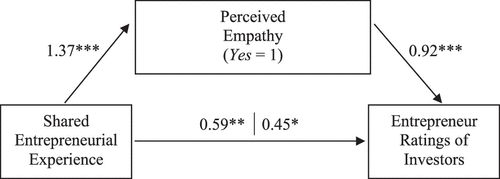
Notes. Conducted via the STATA/SE 18.5 “mediate” command (Luedicke 2023) with model controls, clustering robust standard errors within investor ID via “vce(cluster ID)” and treating the mediator as a binary variable via the “, logit” extension, which yields an indirect effect of IE = 0.14***, SE = 0.04; z = 3.47; CI95 [0.06, 0.21] via mechanical detection depicted above and IE = 0.14***, SE = 0.04; z = 3.86; CI95 [0.07, 0.21] via manual coding. Basic models yield IE = 0.09**, SE = 0.03; z = 2.89; CI95 [0.03, 0.15] via mechanical detection and IE = 0.20***, SE = 0.04; z = 4.97; CI95 [0.12, 0.28] via manual coding. c | c′ denotes the total effect | pure natural direct effect of x on y. Shared Entrepreneurial Experience denotes entrepreneur-turned-investor. *p < 0.05; **p < 0.01; ***p < 0.001.
Robustness Checks
Checks conducted via manual coding reinforced the results derived from mechanical detection. As additional support for Hypothesis 1, shared entrepreneurial experience predicted the perception that the investor was empathetic when detected via manual coding as well (coeff = 1.03, SE = 0.23; z = 4.39, p < 0.001). Average empathy detected for the entrepreneurs-turned-investors was again at least three times higher than for the (non)entrepreneurs-turned-investors (0.23 versus 0.07; Mdiff = 0.16, SE = 0.03; t = 5.49, p < 0.001, d = 0.55). Lending further support to Hypothesis 2, investors’ perceived ability to empathize had a positive effect on entrepreneur ratings of investors (coeff = 1.68, SE = 0.35; z = 4.85, p < 0.001). The average rating was 9.42 for the 82 investors perceived as empathetic versus 7.90 for the 326 investors not perceived as empathetic (Mdiff = 1.52, SE = 0.31; t = 4.86, p < 0.001, d = 0.60). Corroborating the support for Hypothesis 3, mediation testing returned an indirect effect of IE = 0.14, SE = 0.04; z = 3.86, p < 0.001; CI95 [0.07, 0.21]. Approximately the same proportion was mediated by perceived empathy when coded manually as via mechanical detection (at 23.33%), and the direct effect was again observed to decrease in the presence of this mediator.
Additional Analyses
The pairwise correlations featured in Table 1 indicate that two variables—the former experience and ratings of investors—each had a negative relationship with investor gender that merited further analysis as regressions and descriptive comparisons. Investor gender (woman = 1) negatively predicted entrepreneurial experience (coeff = −1.32, SE = 0.39; z = −3.42, p < 0.001). In terms of percentages, male investors had at least twice the incidence of entrepreneurial experience as female investors (43.14% versus 19.61%; Mdiff = 0.24, SE = 0.07; t = 3.24, p = 0.0013, d = 0.47). Investor gender (woman = 1) also exerted a negative effect on ratings (coeff = −0.90, SE = 0.39; z = −2.28, p = 0.023). On average, male investors were rated 8.31, whereas female investors were rated 7.48 (Mdiff = 0.83, SE = 0.39; t = 2.13, p = 0.034, d = 0.32). Investor gender did not, however, return support for an interaction with investors’ entrepreneurial experience to predict entrepreneur ratings of the investors.2
Study 1 Discussion
The archival study provided correlational evidence for Hypotheses 1–3, having confirmed investors’ comparability of perceived competence and accounted for their objective access to resources. In the field, entrepreneurs were more likely to perceive investors with entrepreneurial experience as being empathetic toward them than investors without that experience. Those investors perceived to be empathetic were evaluated more favorably, receiving higher ordinal ratings from entrepreneurs. This study also provided evidence to support a positive indirect effect of shared entrepreneurial experience on ratings of investors through perceived empathy. Despite its external validity, the archival study was not designed to confirm a causal relationship between the variables of interest. The study was also unable to account for the personal characteristics of the predominantly anonymous entrepreneurs serving as evaluators. These factors inspired the development of an experiment, serving as the second study.
Study 2: Experimental Measurement of Entrepreneurs Evaluating Investors
The archival study’s correlational relationships informed the design of a preregistered and ethically approved experimental study investigating causal evidence for the hypothesized paths. Mirroring Study 1, perceptions of investor competence were pretested. Based on Study 1’s model adjustments, indications of investors’ resource access were controlled for in the profile manipulations. The experimental design helped disentangle perceptions and evaluations induced by this disclosed cue from reactions to specific behaviors enacted within idiosyncratic interactions. In doing so, the experiment captured participating entrepreneurs’ personal background characteristics unobservable in Study 1 because of the predominantly anonymous nature of entrepreneurs rating investors online.
Data collection, condition assignment of entrepreneurs as participants, variable capture, and treatment of check failures as well as primary and secondary analyses expressly followed those set forth in the preregistration and ethics approval documentations. The “Process” document details the design elements, recruitment details, experimental profile conditions, survey instrument elements, validation and reliability of empathy detection, text excerpts, competence pretesting, alternative model specifications including Tobit and linear models, and additional coded bases for shared experience. The online appendix contains outputs for the pretesting of perceived competence, hypothesis testing via manual coding, alternative mediation via the PROCESS macro, basic models, nonbinary treatments of mechanically generated empathy detection, uncleaned (of check failures) sample results, subtype testing of cognitive and affective perspective taking, and a separate preregistered experiment conducted on another sample of entrepreneurs treating perceived empathy as an ordinal measure via a validated scale.
Study 2 Method
Recruitment
I relied on online research platform Prolific to recruit 520 participants who prescreened as being entrepreneurs located in the United States with fluency in English and a willingness to spend 10 minutes sharing their thoughts on an investor profile in exchange for market compensation. Via additional in-survey screening, participants who did not self-identify as a “founder,” “entrepreneur,” or “founder and therefore entrepreneur” (i.e., answered “none of these”) were not permitted to continue with the survey. As such, this one-time survey job filled at a total of 516 completions; as preregistered, analyses were conducted on the entire sample of these completions and the 481 participants (51% treatment, 49% control) who passed the manipulation and attention checks, with and without accounting for the controls, achieving results consistency across all tests.
Instrument
The survey minimized demand characteristics and maximized external validity by simulating how entrepreneurs are apt to evaluate investors. A between-subjects design randomly assigned participants to one of two conditions manipulated for treatment (including a former entrepreneur disclosure as the entrepreneur-turned-investor condition) versus control (including a former banker disclosure as the (non)entrepreneur-turned-investor condition) within otherwise comparable investor profiles they would encounter on Crunchbase when familiarizing themselves with an investor during the fundraising process. Participating entrepreneurs were instructed to imagine having engaged in a series of interactions with an investor while raising a first round of funding for their own ventures. Participants were shown a Crunchbase profile, which held the overview constant based on the most frequently observed characteristics in Study 1 for investor gender and title as well as affiliated fund, ranking, founding year, region served, and operating status that served as controls in Study 1’s full models.
The profile featured investor summary components observed in Study 1, manipulated for the portion “operating and personal fundraising experience as a prior entrepreneur” versus “operational and client financing experience as a prior banker,” ensuring linguistic comparability between conditions. For ecological validity, the survey instrument simulated the RMI user experience by prompting participants to provide feedback on the investor via the same open-ended text and ordinal ratings sections. Participants then completed a multiple-choice manipulation check question to select the investor’s former experience (resulting in 35 check failures), an attention check question to identify a soft item (resulting in zero check failures), and background information questions about themselves as self-reported covariates that can influence their perceptions and ratings.
Measures
Participants were asked to reflect on their long-term interpersonal relationship potential with the investor based on a series of imagined interactions with them before sharing their feedback on the experience in past tense form with an imposed character minimum. Following this guidance closely, the text submissions were deeply personal. Open-ended responses revealed that the entrepreneurs drew upon past interactions with investors who possessed characteristics resembling the randomly assigned profiles.3 For instance, respondents were apt to incorporate versions of the phrase “I have interacted with this type of investor before, so…” As in Study 1, participants went on to rate the investor based on their interactions (in this case, imagined) on a scale from 1 (the lowest) to 10 (the highest). For the mechanical procedure, I again uploaded the empathy dictionary into LIWC, which generated a binary measure (with a 0.43 average as to whether one or more of the dictionary words had been detected in the open-ended text = 1 and 0 otherwise).
As robustness checks, two coders blind to the hypotheses familiarized themselves with the definition of empathy (Singer and Fehr 2005, Stocks and Lishner 2012) before manually coding each of the open-ended text submissions for a binary measure (resulting in a 0.23 average as to whether empathy was detected = 1 and 0 otherwise). These raters achieved 97.29% agreement to generate a Cohen’s kappa of 0.92, surpassing the threshold for “almost perfect” interrater agreement (Landis and Koch 1977). Notably, the mechanically detected binary measure predicted the manually coded binary measure for the entire sample, accounting for word count (coeff = 0.90, SE = 0.22; z = 4.02, p < 0.001).
As in Study 1, participant perceptions of the investor’s ability to empathize with them were tied to a recognition of their shared entrepreneurial background. Mechanically and manually detected empathy included excerpts such as “His firsthand experience in fundraising created a unique connection, fostering empathy during the lows.” Appendix B showcases entry excerpts. As preregistered exploratory analyses theorized in the hypotheses (Stocks and Lishner 2012), empathy was subdivided into two blind coded components (with a 0.17 detected average for perceived ability to engage in cognitive perspective taking and a 0.12 detected average for perceived ability to engage in affective perspective taking).
Participant covariates included self-identified gender (51.98% men = 1, denoting profile match), age (M = 39.83), ethnicity (57.38% white, denoting profile match), education (66.94% with bachelor’s or above degrees), socioeconomic status (mid-high household income), region (20.17% Northeastern = 1, denoting profile match), entrepreneurship status (92.72% currently active = 1 and recently active = 0), fundraising type (65.70% having prior interactions with accredited investors = 1 based on inclusion of angels, venture capital funds, banks, and asset managers and = 0 if only raised from friends and family and crowdfunding platforms), and prior banking experience (21.83% with that experience = 1). Word count (85.44 average) was again detected as well. See Table 3 for summary statistics and pairwise correlations.
|
Table 3. Study 2 Summary Statistics and Pairwise Correlations
| M | SD | Min | Max | 1 | 2 | 3 | 4 | 5 | 6 | 7 | 8 | 9 | 10 | 11 | 12 | 13 | |
|---|---|---|---|---|---|---|---|---|---|---|---|---|---|---|---|---|---|
| Entrep-Turned-Inv | 0.51 | 0.50 | 0.00 | 1.00 | 1.00 | ||||||||||||
| Investor Rating | 7.43 | 1.87 | 1.00 | 10.00 | 0.10 | 1.00 | |||||||||||
| Perceived Empathy | 0.43 | 0.50 | 0.00 | 1.00 | 0.22 | 0.18 | 1.00 | ||||||||||
| Participant Gender | 0.52 | 0.50 | 0.00 | 1.00 | 0.02 | −0.02 | 0.01 | 1.00 | |||||||||
| Participant Age | 39.83 | 12.14 | 18.00 | 73.00 | −0.07 | 0.10 | 0.05 | −0.04 | 1.00 | ||||||||
| Participant Ethnicity | 0.57 | 0.50 | 0.00 | 1.00 | −0.02 | −0.04 | −0.01 | 0.05 | 0.18 | 1.00 | |||||||
| Participant Education | 2.78 | 1.06 | 1.00 | 5.00 | −0.06 | −0.02 | −0.02 | −0.02 | 0.27 | −0.09 | 1.00 | ||||||
| Participant SES | 2.79 | 0.61 | 1.00 | 4.00 | −0.12 | 0.10 | 0.01 | 0.04 | 0.14 | −0.07 | 0.31 | 1.00 | |||||
| Participant Region | 0.20 | 0.40 | 0.00 | 1.00 | −0.09 | −0.05 | −0.09 | 0.02 | 0.02 | 0.02 | 0.08 | −0.01 | 1.00 | ||||
| Participant Ent Status | 0.93 | 0.26 | 0.00 | 1.00 | −0.03 | 0.03 | 0.05 | −0.01 | −0.02 | 0.03 | 0.01 | 0.01 | 0.04 | 1.00 | |||
| Participant Fund Exp | 0.66 | 0.48 | 0.00 | 1.00 | −0.00 | 0.09 | 0.06 | 0.04 | 0.14 | −0.02 | 0.05 | 0.09 | −0.08 | −0.05 | 1.00 | ||
| Participant Bank Exp | 0.22 | 0.41 | 0.00 | 1.00 | −0.03 | 0.06 | −0.02 | 0.12 | 0.07 | −0.04 | 0.15 | 0.15 | 0.06 | −0.03 | 0.11 | 1.00 | |
| Word Count | 85.44 | 41.83 | 34.00 | 389.00 | 0.05 | −0.01 | 0.23 | 0.05 | 0.02 | 0.09 | −0.04 | −0.06 | −0.02 | 0.00 | 0.10 | 0.03 | 1.00 |
Notes. Conducted via STATA/SE 18.5 “summarize” and “pwcorr” commands for the N = 481 observations, appending “, print(0.001),” “, print(0.01),” and “, print(0.05)” commands for the demarcation of significance levels. p < 0.001 at |0.15| or higher, p < 0.01 at |0.12| or higher, p < 0.05 at |0.09| or higher. M, Mean; SD, Standard Deviation; Min, Minimum; Max, Maximum. Entrep-Turned-Inv denotes condition = 1 of entrepreneur-turned-investor, Perceived Empathy = binary dictionary measure of whether perceived empathy was detected = 1, Participant Gender = 1 if identified as a man, Participant Ent Status = 1 if current and 0 if recent entrepreneur, Participant Fund Exp = 1 if participant had interactions with accredited investors and 0 if interacted with nonaccredited investors, Participant Bank Exp = 1 if participant had experience in banking.
For validation purposes, a separate preregistered (https://aspredicted.org/WPC_TF7) within-subjects Prolific experiment exposed 399 participating entrepreneurs in the United States to both investor profile manipulations. This study design captured entrepreneurs’ perceptions of each investor's empathy potential based on the five-item, five-point Jefferson Scale (Hojat et al. 2001, with sample item: “Can view things from my perspective (sees things as I see them)”). The entrepreneur-turned-investor profile predicted a higher potential to empathize, accounting for the above sociodemographic covariates in a multilevel model that allowed for within-participant nesting (coeff = 1.57, SE = 0.12; z = 13.12, p < 0.001). Participants perceived the entrepreneur-turned-investor as having an average empathy of 3.59 versus 3.04 for the (non)entrepreneur-turned-investor, with a paired Mdiff = 0.54, SE = 0.04; t = 12.98, p < 0.001, d = 0.71. Results were consistent for each individual item that was tested as well.
Study 2 Results
Comparability Pretesting
Similar to the pretesting conducted on the field investors that preceded Study 1’s hypothesis testing, analyses were first conducted to determine the comparability of the investor profiles in terms of their perceived competence. A preregistered (https://aspredicted.org/WFV_XBB) between-subjects design randomly assigned 120 entrepreneur participants on Prolific to either the entrepreneur-turned-investor or the (non)entrepreneur-turned-investor profile. This experiment captured entrepreneurs’ responses to an established six-item measure of the competence of the individual whose profile they viewed on a seven-point Likert agreement scale (Abele et al. 2016, Fiske 2018). All preregistered analyses indicated that entrepreneurs perceived the investors to be comparable; average competence for the 60 participants exposed to the entrepreneur-turned-investor profile was M = 5.53 (SD = 0.85) and that of the 60 participants exposed to the (non)entrepreneur-turned-investor profile was M = 5.55 (SD = 0.87); Mdiff = −0.02, SE = 0.16; t = −0.11, p = 0.916. The online appendix displays the confirmed comparability for each individual item comparison as well.
Main Results
In support of Hypothesis 1, exposure to investor condition (entrepreneur-turned-investor = 1) caused entrepreneurs to perceive investors as being empathetic toward them (coeff = 0.92, SE = 0.20; z = 4.59, p < 0.001). Average perceived investor empathy for the entrepreneur-turned-investor was 0.53 versus 0.32 for the (non)entrepreneur-turned-investor; Mdiff = 0.21, SE = 0.04; t = 4.85, p < 0.001, d = 0.43. Lending support for Hypothesis 2, entrepreneurs’ perceptions of investors’ ability to empathize caused them to rate the investors more favorably (coeff = 0.52, SE = 0.17; z = 3.11, p = 0.002). Entries for the 205 investors perceived as empathetic had average investor ratings of 7.81 versus 7.14 for the 276 not perceived as empathetic (Mdiff = 0.67, SE = 0.17; t = 3.95, p < 0.001, d = 0.37). See Table 4.
|
Table 4. Study 2 Testing of Hypotheses 1 and 2
| Effect on outcome | Perceived Empathy | Ordinal Rating | ||
|---|---|---|---|---|
| Model (1) | Model (2) | Model (3) | Model (4) | |
| Predicted by the following | ||||
| Shared Entrepreneurial Experience (Yes = 1) | 0.89*** | 0.92*** | ||
| (0.19) | (0.20) | |||
| Perceived Empathetic (Yes = 1) | 0.54*** | 0.52** | ||
| (0.16) | (0.17) | |||
| Controlling for | ||||
| Participant Gender (Profile match = 1) | 0.01 | −0.13 | ||
| (0.20) | (0.17) | |||
| Participant Age | 0.01 | 0.02** | ||
| (0.01) | (0.01) | |||
| Participant Ethnicity (Profile match = 1) | −0.18 | −0.20 | ||
| (0.20) | (0.17) | |||
| Participant Education | −0.06 | −0.18* | ||
| (0.10) | (0.09) | |||
| Participant SES | 0.16 | 0.32† | ||
| (0.17) | (0.17) | |||
| Participant Region (Profile match = 1) | −0.36 | −0.17 | ||
| (0.26) | (0.22) | |||
| Participant Entrepreneurship Status (Current = 1) | 0.54 | 0.20 | ||
| (0.40) | (0.32) | |||
| Participant Funding Experience (Accredited = 1) | 0.10 | 0.17 | ||
| (0.21) | (0.19) | |||
| Participant Banking Experience (Yes = 1) | −0.14 | 0.24 | ||
| (0.24) | (0.22) | |||
| Word Count | 0.01*** | −0.00 | ||
| (0.00) | (0.00) | |||
| Constant | −0.77*** | −3.01*** | ||
| (0.14) | (0.78) | |||
| Pseudo R2 | 0.03 | 0.09 | 0.01 | 0.02 |
| Log Pseudolikelihood | −316.77 | −300.26 | −912.19 | −901.32 |
| Wald Chi2 | 22.08*** | 42.33*** | 11.35*** | 36.11*** |
Notes. N = 481 observations for all four models, with robust standard errors in parentheses. Models 1 and 2 are logistic regressions fit for binary responses via the STATA/SE 18.5 “logit” command. Models 3 and 4 are ordered logistic regressions fit for ordinal responses via the “ologit” command. Models 1 and 3 exclude the controls. Models 2 and 4 include the controls. Shared Entrepreneurial Experience indicates the entrepreneur-turned-investor condition.
†p < 0.10; *p < 0.05; **p < 0.01; ***p < 0.001.
Exposure to investor condition (entrepreneur-turned-investor = 1) caused entrepreneurs to rate investors more favorably (coeff = 0.36, SE = 0.16; z = 2.17, p = 0.030). Participants exposed to the entrepreneur-turned-investor condition rated investors 7.61 on average versus 7.24 for those exposed to the (non)entrepreneur-turned-investor condition; Mdiff = 0.36, SE = 0.17; t = 2.15, p = 0.016, d = 0.20. Lending experimental support for Hypothesis 3, investor condition (entrepreneur-turned-investor = 1 denoting shared entrepreneurial experience) exerted a positive indirect effect on ratings of investors through perceived empathy (IE = 0.12, SE = 0.04; z = 2.87, p = 0.004; CI95 [0.04, 0.21]). The proportion mediated by perceived empathy was 28.68%, and the direct effect diminished in the presence of this mediator as predicted; see Figure 2 for the mediation paths.
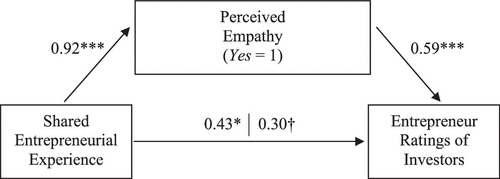
Notes. Conducted via the STATA/SE 18.5 “mediate” command (Luedicke 2023) with model controls and robust standard errors. The mediator is treated as a binary variable via the “, logit” extension, which yields an indirect effect of IE = 0.12**, SE = 0.04; z = 2.87; CI95 [0.04, 0.21] via mechanical detection depicted above and IE = 0.23***, SE = 0.06; z = 3.84; CI95 [0.11, 0.35] via manual coding. Basic models yield IE = 0.13**, SE = 0.04; z = 3.04; CI95 [0.05, 0.22] via mechanical detection and IE = 0.24***, SE = 0.06; z = 4.12; CI95 [0.12, 0.35] via manual coding. c | c′ denotes the total effect | pure natural direct effect of x on y. Shared Entrepreneurial Experience denotes entrepreneur-turned-investor. †p < 0.10; *p < 0.05; **p < 0.01; ***p < 0.001.
Robustness Checks
The robustness checks conducted via manual coding of perceived empathy were consistent with the results achieved via mechanical detection. As corroborating support for Hypothesis 1, exposure to investor condition (entrepreneur-turned-investor = 1) caused entrepreneurs to perceive investors as being empathetic toward them via the manual binary measure as well (coeff = 2.34, SE = 0.33; z = 7.17, p < 0.001). Participants exposed to the entrepreneur-turned-investor condition were associated with an average perceived empathy of 0.38 versus 0.07 for those exposed to the (non)entrepreneur-turned-investor condition (Mdiff = 0.31, SE = 0.04; t = 8.66, p < 0.001, d = 0.79).
Lending additional support for Hypothesis 2, entrepreneurs’ manually coded perception of investors’ ability to empathize caused them to rate the investors more favorably (coeff = 0.71, SE = 0.17; z = 4.25, p < 0.001). Ratings for the 109 investors perceived as empathetic averaged to 8.06 versus 7.24 for the 372 investors not perceived as empathetic (Mdiff = 0.82, SE = 0.20; t = 4.10, p < 0.001, d = 0.45). Corroborating Hypothesis 3, the indirect effect returned IE = 0.23, SE = 0.06; z = 3.84, p < 0.001; CI95 [0.11, 0.35]; 54.48% of the total effect was mediated by perceived empathy, and the direct effect was reduced in the presence of this manually coded mediator as well.
Exploratory Analyses
The preregistration specified explorations of the key components of empathy—cognitive perspective taking and affective perspective taking—that were manually blind coded for the presence of either or both in the empathy-detected submissions. Analyses returned statistical support for all three hypotheses through both forms of perspective taking (see the online appendix for details). The indirect effect for the cognitive type (IE = 0.17, SE = 0.05; z = 3.27, p = 0.0011; CI95 [0.07, 0.27]) was 1.7 times that of the affective type (IE = 0.10, SE = 0.04; z = 2.41, p = 0.016; CI95 [0.02, 0.18]). In terms of the proportion mediated, cognitive perspective taking accounted for 39.50% of the total effect, whereas affective perspective taking accounted for 23.36% of the total effect.
General Discussion
In the absence of effective tie development, most fundraising ventures fail to meet the mutual objectives that entrepreneurs and investors set forth for growth, often shuttering as a consequence (Gage 2012, Kerr et al. 2014, Blank 2018). It comes as no surprise that entrepreneurs have expressed widespread disappointment in these essential ties, which suffer from perceptual misalignments observed versus their investors (Brettel et al. 2013, Polzin et al. 2018, Vaidyanathan et al. 2019, Tata and Niedworok 2020). Two complementary studies provided correlational and causal support for the fact that entrepreneurs are vulnerable to the perception of empathy when rendering their evaluations of investors based on a key predictive factor: shared entrepreneurial experience.
An archival study offered correlational evidence that entrepreneurs were more likely to perceive investors as empathetic toward them when they possessed entrepreneurial experience, which, in turn, contributed to higher rating evaluations submitted for those investors. Mediation testing indicated that investors’ perceived ability to empathize served as a mechanism, which helped explain the positive relationship between shared entrepreneurial experience and entrepreneurs’ rating evaluations of investors. A preregistered experiment provided causal evidence for each of the paths uncovered in the archival data. This experiment indicated that merely imagining interactions with investors who disclosed entrepreneurial experience caused entrepreneurs to perceive the investors as empathetic toward them, rating the investors more favorably as a result. Together, the cross-study evidence converged on the interpretation that an experience alignment effect is at work, such that entrepreneurs see value in homophily of shared backgrounds with investors who were formerly in their shoes.
Study 1’s additional analyses replicated recent research demonstrating that men are more likely to transition from entrepreneurship into a venture capital career than women (Gompers and Mukharlyamov 2022). In fact, Study 1’s open-ended text revealed that only one out of the 101 submissions about female investors included a reference to former entrepreneurship: “Having been a female founder and gone through the fundraising process herself…” This gender distinction in entrepreneurial experience is disconcerting when considered in tandem with the lower ratings that female investors received from entrepreneurs despite comparable perceptions that were observed for their competence (Gompers et al. 2022). Study 2’s exploratory analyses revealed that both cognitive and affective perspective taking played mediating roles in the observed effect. Perceptions of cognitive perspective taking—the investor’s understanding of how an entrepreneur thinks—contributed comparatively more to the total effect than affective perspective taking, aligning with recent work on the cognitive role of empathy in entrepreneurial outcomes (Nakagawa and Kosaka 2022, Zhao et al. 2023).
Theoretical Contributions
Research on entrepreneur–investor interactions predominantly focuses on tie selection, with scholars often examining that pivotal phase from the perspective of the investor who possesses disproportionate power at that touchpoint in the process (Souitaris et al. 2020). This manuscript instead isolates a factor contributing to investor tie evaluation, viewing relationship potential through the eyes of entrepreneurs. The studies demonstrate how a shared type of experience can serve as a point of connection, challenging the literature’s conceptualization of experience as a standalone informational signal of quality (Busenitz et al. 1997, Smith 2001, Hsu 2004, Valliere and Peterson 2007, Drover et al. 2014, Falik et al. 2016, Hallen and Pahnke 2016, Vaidyanathan et al. 2019).
Reinforcing and extending recent findings in the entrepreneurial tie literature, these studies illustrate how interpersonal attraction benefits can effectively complement those of resource acquisition to improve entrepreneurs’ evaluations of investor ties (Lazar et al. 2020, 2022; Gray et al. 2024). In doing so, this research introduces into the literature the theoretical concept of entrepreneurial experience alignment—a new type of fit that enhances perceptions of empathy to yield positive evaluative consequences (Lyness and Heilman 2006, Lee and Huang 2018, Kanze et al. 2020). Finding support for entrepreneurial experience alignment, the studies reveal how a nuanced operationalization of professional experience—typically classified within coarser measurements as merely evidence of resource endowment—can also satisfy interpersonal needs beyond objective access (Souitaris et al. 2023).
This type of fit illuminates a condition under which work experience–based homophily does not have to be costly for investors, in contrast to other conditions in the homophily literature shown to be less productive (Steffens et al. 2012, Aggarwal et al. 2015, Gompers et al. 2016, Lawrence and Shah 2020, Ertug et al. 2022). Fortifying connections between the homophily and social cognition literatures of relevance to the entrepreneurship canon, this work demonstrates how a cognitive process unfolds, such that distinct perspective taking components of empathy can be derived from entrepreneurial tie homophily (Chua et al. 2008, Greenberg and Mollick 2017, Leonhardt and Pezzuti 2022, Reniers et al. 2022). The studies support the notion that investor perceptions may be diagnostic of initial tie selection, but entrepreneur perceptions appear symptomatic of enduring tie evaluation. By identifying and addressing sources of misalignment in their perspectives, we can begin to better predict tie dissolution and combat tie failure, answering an important call in the literature (Polzin et al. 2018).
Practical Implications
Accounting for sociodemographic-based homophily through the experiment’s matching variables enabled the isolation of an achieved factor that investors can leverage when interacting with entrepreneurs. This source of shared understanding is essential in such dyads where power imbalances inhibit perspective-taking potential (Galinsky et al. 2006, Souitaris et al. 2020). The results suggest that investors who have entrepreneurial experience should consider disclosing this information to fundraising entrepreneurs. Investors need research-driven encouragement to prompt their disclosure of past experiences during this uncertain early stage of limited information (Cumming and Johan 2008, Matusik et al. 2008, Mayya and Huang 2025).
In a landscape dominated by traditional finance backgrounds, this work has the potential to spark reflection and education among the investor community regarding the unique merits of entrepreneurs-turned-investors. Investor training can foster awareness of the favorable evaluations that such disclosures engender from the entrepreneurs they mentor and monitor. This training is likely to be eye-opening; investors often presume that professional experience is valued over personal experience and thus feature secondhand financial advisory rather than firsthand fundraising (Gefen et al. 2022, Legler 2023).
Investors can now be intentional about integrating these experiences into their fund theses and ongoing interactions with entrepreneurs as a point of connection. Those entrepreneurs yearning for a sense of shared understanding can consider prioritizing investors with entrepreneurial experience. Entrepreneurs can also benefit from training on how this type of homophily may influence their perceptions of investors. Both parties must work to uncover alternative sources of common ground (e.g., relevant causes, hobbies, other lived experiences) that elicit perceptions of empathy in early interactions when lacking shared entrepreneurial experience (McPherson et al. 2001, Kanze and Piazza 2025).
Behavioral training is crucial because entrepreneurs and investors hold multiple identities that may vary in salience when interacting. For example, a female experiment participant who self-identified as belonging to a lower household income bracket shared, “Some challenges I faced when working with him was the fact that he was a man from an upper-class background, so he did not understand the struggles faced by a disadvantaged female business owner.” An entrepreneur who holds multiple identities may not organically attend to an investor’s biographical details about entrepreneurial experience—a characteristic that may be less salient—unless the investor makes the effort to highlight that aspect of themselves in conversations.
This entrepreneurial experience–induced form of homophily emerges as a potential basis for interpersonal attraction found to be lacking in pairings that otherwise differ on key characteristics (e.g., those marked by gender-based misalignment, per Kanze and Piazza 2025). But to be able to disclose these entrepreneurial experiences, investors must first partake in them. Additional archival analyses on gender reinforce the need for public policymakers to help facilitate women’s transition into investing from entrepreneurship (Wang et al. 2014, Ku et al. 2015, Kanze et al. 2020, Gompers and Mukharlyamov 2022, Snellman and Solal 2023).
Limitations and Future Directions
Despite their insights, these studies are not without limitations. The archival study was limited to the observation of those entrepreneurs who self-selected to provide feedback on their dealings with investors. This sample also lacked sociodemographic data on individual commentators because of contributors’ inclinations to remain anonymous online, likely to avert retribution from prominent in-group members of the investor community (McCrea et al. 2022). Such characteristics were captured for entrepreneurs participating in the experiment, which confirmed that the results were robust to these controls. Although this multi-study approach has certain benefits, there are opportunities to maximize both internal and external validity by pursuing a single-study approach.
Based on these mixed methods findings, a single-study field experiment can be conducted that exposes entrepreneurs to substantive real-world interactions with otherwise comparable investors randomized for background experience. Such a study could be designed to capture participating entrepreneurs’ relevant personal and professional characteristics to ensure balance in treatment and control groups is achieved. A repeated measures multi-timeframe analysis can involve scale captures of empathy not used in the main experiment because of common method, halo, demand, acquiescence, and proportional odds considerations (Podsakoff et al. 2003). This approach would serve as a useful complement to the dichotomized measure of perceived empathy that was validated via mechanical and manual procedures and verified against an ordinal scale measure in these studies. To this end, a manipulation-of-mediation approach can be undertaken that randomly assigns participants to levels of perceived empathy for a methodological complement to the measurement-of-manipulation one applied across the studies here (Pirlott and MacKinnon 2016). A longitudinal approach can be embraced to track actual empathy exchanges and objective indicators of relationship health—such as frequency and longevity of contact—that were not captured because these studies pertained to subjective evaluations of the relationship.
Perceived empathy emerged as a mediator but not the only one; future research can investigate alternative mechanisms, such as those involving actual helping behaviors, which may contribute to the remaining proportion of the total effect not mediated. Behavioral measures are key as homophily and empathy are not without downsides (Batson et al. 1995, Gompers et al. 2016). Parties may make inaccurate inferences and inferior decisions based on shared backgrounds (Aggarwal et al. 2015, Gompers et al. 2016, Shen et al. 2022). They can also make assumptions that preclude both sides from exerting requisite effort (Ickes 1993, 2001; Eyal et al. 2018)—a vulnerability for empathic accuracy in entrepreneurial judgment (McMullen 2015, Packard and Burnham 2021). Likewise, disproportionate attention to those with shared background experiences can bias parties to neglect to monitor opportunities that can otherwise maximize long-term returns (Batson et al. 1995, Gompers 2022). Because empathy may involve vicarious experiences of distress, researchers can also capture biological measures (e.g., by collecting saliva samples of cortisol levels) to assess well-being in this stressful context of fundraising (Spinella 2005, Ku et al. 2015, Shepherd et al. 2023).
Depending on the independence (versus interdependence) of an interaction, the cognitive process of perspective taking can have perverse consequences for both the self and others (Ku et al. 2015, Longmire and Harrison 2018). Parties involved in the investing relationship can leverage shared backgrounds to manipulate rather than benefit one another (di Giacomo et al. 2023). Because investor relationships with entrepreneurs span both competitive (e.g., deal sourcing, term sheet negotiations) and cooperative (e.g., mentoring and monitoring of a portfolio company for survival and growth, collaboration on the sale of the venture) elements, the specific nature of the interaction at hand can be explored as a moderator (Pierce et al. 2013). Inspired by additional factors that entrepreneurs raised as considerations across the two studies, future researchers can also examine alternative characteristics that may unlock empathy and improve evaluations.
For instance, industry expertise was referenced in both the archival and experimental submissions. Further testing can determine whether investor disclosure of shared industry experience during interactions with entrepreneurs may foster a sense of fit to augment ratings (Kanze et al. 2020). Another aspect worthy of exploration is the environment that enables entrepreneurs and investors to feel vulnerable in disclosing personal information such as their past experiences (Edmondson and Lei 2014). Interview and survey methods can capture participating entrepreneur and investor self-reported measures of shared feeling as opposed to simply shared understanding as only the latter was hypothesized and observable in the current set of studies (Stocks and Lishner 2012).
Lastly, gender distinctions lie beyond the primary scope of the hypothesized effects in these studies. However, the archival study’s null interaction results involving investor gender and experience show promise that both male and female investors may potentially be able to reap benefits if given the opportunity to gain entrepreneurial experience. Future well-powered gender studies can ensure sufficient sample sizes for pairwise comparisons of perceived empathy and ratings involving female and male investors with versus without former entrepreneurial experience to determine whether this is the case.
Conclusion
Entrepreneurs struggle to achieve a sense of shared understanding with investors, compromising the subjective value they derive from these vital ties. Such shared understanding is critical during the early stages of venture relationships when high information asymmetry and uncertainty run rampant. Promisingly, this work uncovers a type of experience with the potential to improve these evaluations. Investors’ entrepreneurial experience serves as a basis for shared understanding that helps entrepreneurs feel their perspective will be considered. Entrepreneurs perceive investors with entrepreneurial experience as having the potential to empathize by understanding how they think (cognitive perspective taking) and how they feel (affective perspective taking). Such investors who are perceived as having the ability to empathize are ultimately evaluated more favorably by entrepreneurs. Because this career path is comparatively less accessible to women, structural reforms are recommended to enable their transition from entrepreneurship into investing.
The author is grateful for the thoughtful guidance of the senior editor and three anonymous reviewers as well as for the generous feedback received from several friendly reviewers. The author also thanks attendees of invited research talks and roundtables at the Annual Meeting of the Academy of Management, London Business School, and the Smith Entrepreneurship Research Conference at the University of Maryland.
Appendix A. Study 1 Exemplary Excerpts of Entries with Detected Perceptions of Empathy
|
| “As a previous operator himself, he understands that founders want fundraising to be over as soon as possible so that they can get back to building a business…” |
| “[Name] is a past operator…He’s truly on your side, empathizes with founders having been one himself…” |
| “Operating his own startup, he really can empathize with the problems we are having…” |
| “[Name] has extensive experience in both working at, and with startups. He has seen the difficulties of being [a] founder firsthand…” |
| “[Name] understands being an operator, an angel investor, and a part of a venture firm…” |
| “…entrepreneur in his own right and can easily relate to founders…” |
| “Always thinks with a founder’s mentality…” |
| “[Name] is a great example of how being an operator in his past life has truly helped him be a great asset to us. He wasn’t afraid to be down in the trenches with us to help when we really needed it, and by thinking like a founder was able to really help us out in a couple situations…” |
| “A multiple-time founder and knows what it takes…” |
| “After [Name] became an investor in our company, I realized how valuable his past experience with being a founder truly is. From immediately being able to put on his founder hat…to empathizing and offering his own experiences as advice…” |
| “…given his experience with starting and selling multiple companies in the past…He deeply understands what it’s like to be in the trenches, empathizes with founders…” |
| “Because of his previous experience as a founder, he has perspective from both sides of the table…” |
| “Being an x founder himself, he completely understands the stress founders are under and is responsive when things are good, bad or just ugly…” |
| “[Name] knows the toil of being a founder. He is empathic…” |
Appendix B. Study 2 Exemplary Excerpts of Entries with Detected Perceptions of Empathy
|
| “Their firsthand experience as an entrepreneur brought a unique perspective to our conversations, offering valuable insights into the challenges and successes of the entrepreneurial journey. The investor’s ability to empathize with…fundraising was comforting, and their practical advice and guidance were invaluable in navigating the complexities of the investment landscape…” |
| “Like myself, he started out as an entrepreneur and now has become a successful investor with his own venture organization. Not only does he have the experience of exactly what I’m going through right now, he was able to give me tips…” |
| “He had gone through the same challenges of raising funds for his own venture, so he understood and could relate to what I was going through…” |
| “With his experience, he totally understood how fundraising could be a very hectic exercise…” |
| “Interacting with this funded entrepreneur-turned-investor was an incredible experience for me as an entrepreneur. Their insights and firsthand knowledge of the ups and downs of fundraising were invaluable. They provided guidance, shared their own struggles, and offered practical advice…” |
| “He had experience on the founder/entrepreneur side as well as the advising side…He empathized with the struggles I have experienced as a founder…” |
| “His firsthand experience in fundraising created a unique connection, fostering empathy during the lows. His advice was pragmatic, drawing from personal struggles and triumphs. This authenticity instilled confidence, making the process less daunting…” |
| “[Name]’s firsthand entrepreneurial experience fostered empathy and understanding. He grasped the nuances of startup challenges, offering practical advice and tailored support…” |
1 Of 708 submissions scraped by the third party, nine were omitted as verifiable entry duplications and 22 as associated with investors lacking identifiable fund affiliation and investing history on Crunchbase.
2 In fact, investor gender failed to return statistical support for interactions with any of the key variables to predict the key outcomes in this study as both basic and full models. In line with recent findings on gender comparability of investor skills (Gompers et al. 2022), investor gender also failed to predict perceptions of the investor’s competence.
3 Note that the actual nature of the relationship between entrepreneurs and investors was not measured directly.
References
- (2016) Facets of the fundamental content dimensions: Agency with competence and assertiveness—Communion with warmth and morality. Frontiers Psych. 7:1810.Google Scholar
- (2015) Evaluating venture technical competence in venture capitalist investment decisions. Management Sci. 61(11):2685–2706.Link, Google Scholar
- (2007) Small worlds, infinite possibilities? How social networks affect entrepreneurial team formation and search. Strategic Entrepreneurship. J. 1(1–2):147–165.Crossref, Google Scholar
- (2018) Feeling capable and valued: A prosocial perspective on the link between empathy and social entrepreneurial intentions. J. Bus. Venturing 33(3):333–350.Crossref, Google Scholar
- (2024) The inside track: Entrepreneurs’ corporate experience and startups’ access to incumbent partners’ resources. Strategic Management J. 45(6):1117–1150.Crossref, Google Scholar
- (1947) The use of transformations. Biometrics 3(1):39–52.Crossref, Google Scholar
- (1995) Immorality from empathy-induced altruism: When compassion and justice conflict. J. Personality Soc. Psych. 68(6):1042–1054.Crossref, Google Scholar
- (2006) The influence of founding team company affiliations on firm behavior. Acad. Management J. 49(4):741–758.Crossref, Google Scholar
- (2015) Ethnic matching in the US venture capital market. J. Bus. Venturing 30(2):338–354.Crossref, Google Scholar
- (2010) Entrepreneurial success: Differing perceptions of entrepreneurs and venture capitalists. Internat. J. Entrepreneurship Innovation 11(3):189–198.Crossref, Google Scholar
- (2001) Neurocognitive models of aggression, the antisocial personality disorders, and psychopathy. J. Neurology Neurosurgery Psychiatry 71(6):727–731.Crossref, Google Scholar
- (2018) Why the lean start-up changes everything.Google Scholar
- (2022) The Development and Psychometric Properties of LIWC-22 (University of Texas at Austin, Austin), 1–47.Google Scholar
- (2013) The entrepreneur’s perception in the entrepreneur–VCF relationship: The impact of conflict types on investor value. Venture Capital 15(3):173–197.Crossref, Google Scholar
- (2014) Investors prefer entrepreneurial ventures pitched by attractive men. Proc. Natl. Acad. Sci. USA 111(12):4427–4431.Crossref, Google Scholar
- (2003) Team member functional background and involvement in management teams: Direct effects and the moderating role of power centralization. Acad. Management J. 46(4):458–474.Crossref, Google Scholar
- (1997) The framing of perceptions of fairness in the relationship between venture capitalists and new venture teams. Entrepreneurship Theory Practice 21(3):5–22.Crossref, Google Scholar
- (1971) The Attraction Paradigm (Academic Press, New York).Google Scholar
- (1997) A prisoner’s dilemma approach to entrepreneur-venture capitalist relationships. Acad. Management Rev. 22(1):142–176.Crossref, Google Scholar
- (2001) Entrepreneurial teams in new ventures: Composition, turnover and performance. Acad. Management Proc. 2001(1):A1–A6.Crossref, Google Scholar
- (2019) Hands-On Web Scraping with Python: Perform Advanced Scraping Operations Using Various Python Libraries and Tools Such as Selenium, Regex, and Others (Packt Publishing Ltd.).Google Scholar
- (2019) Advancing gender equality in venture capital: What the evidence says about the current state of the industry and how to promote more gender diversity, equality, and inclusion. Report, Harvard Kennedy School, Cambridge, MA.Google Scholar
- (2008) From the head and the heart: Locating cognition- and affect-based trust in managers’ professional networks. Acad. Management J. 51(3):436–452.Crossref, Google Scholar
- (2017) Is homophily always beneficial? Task-relevant homophily and VCs’ valuations and returns. Acad. Management Proc. 2017(1):16269.Crossref, Google Scholar
- (2020) Does social similarity pay off? Homophily and venture capitalists’ deal valuation, downside risk protection, and financial returns in India. Organ. Sci. 31(3):576–603.Link, Google Scholar
- (2021) The use of signals in new-venture financing: A review and research agenda. J. Management 47(1):237–259.Crossref, Google Scholar
- (2015) Exposed: Venture capital, competitor ties, and entrepreneurial innovation. Acad. Management J. 58(5):1334–1360.Crossref, Google Scholar
- (2008) Information asymmetries, agency costs and venture capital exit outcomes. Venture Capital 10(3):197–231.Crossref, Google Scholar
- (2013) Ties that last: Tie formation and persistence in research collaborations over time. Admin. Sci. Quart. 58(1):69–110.Crossref, Google Scholar
- (2003) The role of social and human capital among nascent entrepreneurs. J. Bus. Venturing 18(3):301–331.Crossref, Google Scholar
- (2008) Putting the altruism back into altruism: The evolution of empathy. Annual Rev. Psych. 59:279–300.Crossref, Google Scholar
- (2023) The dark side of empathy in narcissistic personality disorder. Frontiers Psych. 14:1074558.Crossref, Google Scholar
- (2013) Intrafamily entrepreneurship: The formation and membership of family entrepreneurial teams. Entrepreneurship Theory Practice 37(1):17–46.Crossref, Google Scholar
- (2014) Take the money or run? Investors’ ethical reputation and entrepreneurs’ willingness to partner. J. Bus. Venturing 29(6):723–740.Crossref, Google Scholar
- (2014) Psychological safety: The history, renaissance, and future of an interpersonal construct. Annual Rev. Organ. Psychol. Organ. Behav. 1(1):23–43.Crossref, Google Scholar
- (1987) The relation of empathy to prosocial and related behaviors. Psych. Bull. 101(1):91–119.Crossref, Google Scholar
- (2022) What does homophily do? A review of the consequences of homophily. Acad. Management Ann. 16(1):38–69.Crossref, Google Scholar
- (2020) Are early stage investors biased against women? J. Financial Econom. 135(3):653–677.Crossref, Google Scholar
- (2018) Perspective mistaking: Accurately understanding the mind of another requires getting perspective, not taking perspective. J. Personality Soc. Psych. 114(4):547–571.Crossref, Google Scholar
- (2016) Does startup experience matter? Venture capital selection criteria among Israeli entrepreneurs. Venture Capital 18(2):149–174.Crossref, Google Scholar
- (2018) Stereotype content: Warmth and competence endure. Current Directions Psych Sci. 27(2):67–73.Crossref, Google Scholar
- (2024) Deep dive: Founders turned VCs. VC Stack. Accessed January 22, 2024, https://www.vcstack.io/blog/deep-dive-founders-turned-vcs.Google Scholar
- (2003) A social capital model of high-growth ventures. Acad. Management J. 46(3):374–384.Crossref, Google Scholar
- (1979) Ascribed and achieved bases of stratification. Annual Rev. Soc. 5:219–242.Crossref, Google Scholar
- (2006) Entrepreneurial team formation: An exploration of new member addition. Entrepreneurship Theory Practice 30(2):225–248.Crossref, Google Scholar
- (2000) Friendship within entrepreneurial teams and its association with team and venture performance. Entrepreneurship Theory Practice 25(2):5–26.Crossref, Google Scholar
- (2006) What you are is what you like—Similarity biases in venture capitalists’ evaluations of start-up teams. J. Bus. Venturing 21(6):802–826.Crossref, Google Scholar
- (2019) Entrepreneurial cognition and the quality of new venture ideas: An experimental approach to comparing future-oriented cognitive processes. J. Bus. Venturing 34(2):327–347.Crossref, Google Scholar
- (2012) The venture capital secret: 3 out of 4 start-ups fail. Wall Street J. 20. Google Scholar
- (2025) Female entrepreneurs targeting women: Strategic redirection under scientific decision-making. Organ. Sci. 36(2):718–736.Link, Google Scholar
- (2006) Power and perspectives not taken. Psych. Sci. 17(12):1068–1074.Crossref, Google Scholar
- (2022) Choosing startup investors: Does gender matter? Working paper, National University of Singapore, Singapore.Google Scholar
- (2010) Robin Hood under the hood: Wealth-based discrimination in illicit customer help. Organ. Sci. 21(6):1176–1194.Link, Google Scholar
- (2022) From founder to funder: Insights from angel investors with an entrepreneurial background. Forbes (October 4), https://www.forbes.com/sites/mirunagirtu/2022/10/04/from-founder-to-funder-insights-from-angel-investors-with-an-entrepreneurial-background/.Google Scholar
- (2022)
Optimal investment, monitoring, and the staging of venture capital . Venture Capital (Routledge), 285–313.Crossref, Google Scholar - (2022) Transferable skills? Founders as venture capitalists. NBER Working Paper No. 29907, National Bureau of Economic Research, Cambridge, MA. Google Scholar
- (2017) Homophily in entrepreneurial team formation. NBER Working Paper No. 23459, National Bureau of Economic Research, Cambridge, MA.Google Scholar
- (2016) The cost of friendship. J. Financial Econom. 119(3):626–644.Crossref, Google Scholar
- (2020) How do venture capitalists make decisions? J. Financial Econom. 135(1):169–190.Crossref, Google Scholar
- (2022) Gender gaps in venture capital performance. J. Financial Quant. Anal. 57(2):485–513.Crossref, Google Scholar
- (2021) Making space for emotions: Empathy, contagion, and legitimacy’s double-edged sword. Organ. Sci. 32(1):42–63.Link, Google Scholar
- (2011) The necessity of others is the mother of invention: Intrinsic and prosocial motivations, perspective taking, and creativity. Acad. Management J. 54(1):73–96.Crossref, Google Scholar
- (2024) Talking past each other: Construal level, utilitarian motives, and entrepreneurial team formation. Organ. Sci. 35(5):1745–1769.Link, Google Scholar
- (2017) Activist choice homophily and the crowdfunding of female founders. Admin. Sci. Quart. 62(2):341–374.Crossref, Google Scholar
- (2012) Resource search, interpersonal similarity, and network tie valuation in nascent entrepreneurs’ emerging networks. J. Management 38(6):1760–1787.Crossref, Google Scholar
- (2016) When do entrepreneurs accurately evaluate venture capital firms’ track records? A bounded rationality perspective. Acad. Management J. 59(5):1535–1560.Crossref, Google Scholar
- (2023) Who gives back? Evidence from India on successful entrepreneurial exit and involvement in philanthropy. Organ. Sci. 34(1):329–357.Link, Google Scholar
- (2019) Prior ties and the limits of peer effects on startup team performance. Strategic Management J. 40(9):1394–1416.Crossref, Google Scholar
- (2014) Does social proximity enhance business partnerships? Theory and evidence from ethnicity’s role in US venture capital. Management Sci. 60(9):2355–2380.Link, Google Scholar
- (2007) The impact of past performance on the exit of team members in young firms: The role of team composition. Front. Entrepreneurship Res.Google Scholar
- (2017) Determinants of social entrepreneurial intentions. Entrepreneurship Theory Practice 41(1):105–130.Crossref, Google Scholar
- (2001) The Jefferson scale of physician empathy: Development and preliminary psychometric data. Ed. Psych. Measurement 61(2):349–365.Crossref, Google Scholar
- (2022) Joining forces: How can founding members’ prior experience variety and shared experience increase startup survival? Acad. Management J. 65(1):248–272.Crossref, Google Scholar
- (2004) What do entrepreneurs pay for venture capital affiliation? J. Finance 59(4):1805–1844.Crossref, Google Scholar
- (2007) Experienced entrepreneurial founders, organizational capital, and venture capital funding. Res. Policy 36(5):722–741.Crossref, Google Scholar
- (2018) The role of investor gut feel in managing complexity and extreme risk. Acad. Management J. 61(5):1821–1847.Crossref, Google Scholar
- (2017) Resources and relationships in entrepreneurship: An exchange theory of the development and effects of the entrepreneur-investor relationship. Acad. Management Rev. 42(1):80–102.Crossref, Google Scholar
- (2015) Managing the unknowable: The effectiveness of early-stage investor gut feel in entrepreneurial investment decisions. Admin. Sci. Quart. 60(4):634–670.Crossref, Google Scholar
- (2013) The benefits of emotional intelligence and empathy to entrepreneurship. Entrepreneurship Res. J. 3(3):287–294.Crossref, Google Scholar
- (1993) Empathic accuracy. J. Personality 61(4):587–610.Crossref, Google Scholar
- (2001)
Measuring empathic accuracy . Interpersonal Sensitivity (Psychology Press, New York), 237–260.Google Scholar - (2000) Does the presence of venture capitalists improve the survival profile of IPO firms? J. Bus. Finance Accounting 27(9–10):1139–1183.Crossref, Google Scholar
- (2025) When do gender-diverse teams engage more investors? Evidence of threshold alignment benefits at Techstars. Organ. Sci., ePub ahead of print 21 August, https://doi.org/10.1287/orsc.2025.20141.Link, Google Scholar
- (2018) We ask men to win and women not to lose: Closing the gender gap in startup funding. Acad. Management J. 61(2):586–614.Crossref, Google Scholar
- (2020) Evidence that investors penalize female founders for lack of industry fit. Sci. Adv. 6(48):eabd7664.Crossref, Google Scholar
- (2014) The consequences of entrepreneurial finance: Evidence from angel financings. Rev. Financial Stud. 27(1):20–55.Crossref, Google Scholar
- (2018) The role of empathy in entrepreneurial opportunity recognition: An experimental study in Japan and Pakistan. J. Bus. Venturing Insights 9:1–9.Crossref, Google Scholar
- (2018) The role of empathy in entrepreneurship: A core competency of the entrepreneurial mindset. Adv. Engrg. Ed. 7(1):1.Google Scholar
- (2012) Friends, family, or fools: Entrepreneur experience and its implications for equity distribution and resource mobilization. J. Bus. Venturing 27(5):525–543.Crossref, Google Scholar
- (2015) The promise and perversity of perspective-taking in organizations. Res. Organ. Behav. 35:79–102.Crossref, Google Scholar
- (2020) Unraveling the role of empathy and critical life events as triggers for social entrepreneurship. Frontiers Psych. 11:579500.Crossref, Google Scholar
- (1977) An application of hierarchical kappa-type statistics in the assessment of majority agreement among multiple observers. Biometrics 33(2):363–374.Crossref, Google Scholar
- (2020) Homophily: Measures and meaning. Acad. Management Ann. 14(2):513–597.Crossref, Google Scholar
- (2020) Entrepreneurial team formation. Acad. Management Ann. 14(1):29–59.Crossref, Google Scholar
- (2022) Forming entrepreneurial teams: Mixing business and friendship to create transactive memory systems for enhanced success. Acad. Management J. 65(4):1110–1138.Crossref, Google Scholar
Leaders League (2023) Private equity venture capital ranking 2023 for investment funds in the United States.Google Scholar- (2018) Gender bias, social impact framing, and evaluation of entrepreneurial ventures. Organ. Sci. 29(1):1–16.Link, Google Scholar
- (2023) The tactical guide to the venture capital career path. (February 16), https://www.goingvc.com/post/the-tactical-guide-to-the-venture-capital-career-path.Google Scholar
- (2022) Vaccination acceptance across cultures: The roles of collectivism, empathy, and homophily. J. Internat. Marketing 30(2):13–27.Crossref, Google Scholar
- (2018) Seeing their side versus feeling their pain: Differential consequences of perspective-taking and empathy at work. J. Appl. Psych. 103(8):894–915.Crossref, Google Scholar
- (2003) Relational aggression in college students: Examining the roles of social anxiety and empathy. Aggressive Behav. 29(5):430–439.Crossref, Google Scholar
- (2023) Causal mediation analysis using Stata. German Stata Conf. (No. 08). Stata Users Group.Google Scholar
- (2006) When fit is fundamental: Performance evaluations and promotions of upper-level female and male managers. J. Appl. Psych. 91(4):777–785.Crossref, Google Scholar
- (2017)
Venture capital and growth . The Blackwell Handbook of Entrepreneurship, 240–258.Crossref, Google Scholar - (2020) Entrepreneurial stories, narratives and reading—Their role in building entrepreneurial being and behaviour. Internat. J. Entrepreneurship Innovation 21(3):178–190.Crossref, Google Scholar
- (2012) Diversification in the venture capital industry: Leveraging knowledge under uncertainty. Strategic Management J. 33(4):407–426.Crossref, Google Scholar
- (2008) Values and judgment under uncertainty: Evidence from venture capitalist assessments of founders. Strategic Entrepreneurship J. 2(2):95–115.Crossref, Google Scholar
- (2025) Startup accelerators, information asymmetry, and corporate venture capital investments. Management Sci., ePub ahead of print March 3, https://doi.org/10.1287/mnsc.2020.03494.Link, Google Scholar
- (2022) Why punish critical outgroup commenters? Social identity, general norms, and retribution. British J. Soc. Psych. 61(3):711–728.Crossref, Google Scholar
- (2015) Entrepreneurial judgment as empathic accuracy: A sequential decision-making approach to entrepreneurial action. J. Inst. Econom. 11(3):651–681.Crossref, Google Scholar
- (2001) Birds of a feather: Homophily in social networks. Annual Rev. Soc. 27(1):415–444.Crossref, Google Scholar
- (2017) The experience of empathy: Intuitive, sympathetic, and intellectual aspects of social understanding. J. Humanistic Psych. 57(1):3–32.Crossref, Google Scholar
- (2012) Venturing for others with heart and head: How compassion encourages social entrepreneurship. Acad. Management Rev. 37(4):616–640.Crossref, Google Scholar
- (2007) From human capital to social capital: A longitudinal study of technology-based academic entrepreneurs. Entrepreneurship Theory Practice 31(6):909–935.Crossref, Google Scholar
- (2022) What social issues do people invest in? An examination based on the empathy–altruism hypothesis of prosocial crowdfunding platforms. Technovation 114:102508.Crossref, Google Scholar
- (2005) Networking activities in technology-based entrepreneurial teams. Internat. Small Bus. J. 23(3):257–278.Crossref, Google Scholar
- (2016) Speaking different languages or reading from the same script? Word usage of Democratic and Republican politicians. Political Comm. 33(2):212–240.Crossref, Google Scholar
- (2019) Entrepreneurs make the best tech VCs—Or do they? https://www.amadeuscapital.com/entrepreneurs-make-the-best-tech-vcs-or-do-they/.Google Scholar
- (2021) Do we understand each other? Toward a simulated empathy theory for entrepreneurship. J. Bus. Venturing 36(1):106076.Crossref, Google Scholar
- (2009) Can cognitive biases explain venture team homophily? Strategic Entrepreneurship J. 3(1):67–83.Crossref, Google Scholar
- (2013) Building entrepreneurial tie portfolios through strategic homophily: The role of narrative identity work in venture creation and early growth. J. Bus. Venturing 28(1):134–150.Crossref, Google Scholar
- (2018) Essays on Angel Investing in the Entrepreneurial Ecosystem (Columbia University, New York).Crossref, Google Scholar
- (2023) Venturing through the doors of perception. Acad. Management Discoveries 9(1):1–16.Crossref, Google Scholar
- (2013) From glue to gasoline: How competition turns perspective takers unethical. Psych. Sci. 24(10):1986–1994.Crossref, Google Scholar
- (2016) Design approaches to experimental mediation. J. Experiment. Soc. Psych. 66:29–38.Crossref, Google Scholar
Pitchbook-NVCA (2025) Pitchbook-NVCA venture monitor. https://nvca.org/wp-content/uploads/2025/01/Q4-2024-PitchBook-NVCA-Venture-Monitor.pdf.Google Scholar- (2003) Common method biases in behavioral research: A critical review of the literature and recommended remedies. J. Appl. Psych. 88(5):879–903.Crossref, Google Scholar
- (2018) Do investors and entrepreneurs match?—Evidence from The Netherlands and Sweden. Tech. Forecasting Soc. Change 127:112–126.Crossref, Google Scholar
- (2016) In user’s shoes: An experimental design on the role of perspective taking in discovering entrepreneurial opportunities. J. Bus. Venturing 31(3):287–301.Crossref, Google Scholar
- (2002) Empathy: Its ultimate and proximate bases. Behav. Brain Sci. 25(1):1–20.Crossref, Google Scholar
- (2016) Linking network ties to entrepreneurial opportunity discovery and exploitation: The role of affective and cognitive trust. Internat. Entrepreneurship Management J. 12:465–485.Crossref, Google Scholar
- (2022) Cognitive empathy and perspective taking: Understanding the mechanisms of normal and abnormal experiences and abilities. Frontiers Psych. 13:945258.Crossref, Google Scholar
- (1994) Empathy as a cognitive inhibitor of interpersonal aggression. Aggressive Behav. 20(4):275–289.Crossref, Google Scholar
- (2017) The science of empathy. J. Patient Experience 4(2):74–77.Crossref, Google Scholar
- (2025) We go way back: Affiliation‐based hiring and young firm performance. Strategic Management J. 46(3):723–749.Crossref, Google Scholar
- (2020) Mind the gap: The role of gender in entrepreneurial career choice and social influence by founders. Strategic Management J. 41(5):841–866.Crossref, Google Scholar
- (2003) The structure of founding teams: Homophily, strong ties, and isolation among US entrepreneurs. Amer. Sociol. Rev. 68(2):195–222.Crossref, Google Scholar
- (2025) On resource complementarity among startups, accelerators, and financial investors: A large-scale analysis of sorting and value creation. Organ. Sci., ePub ahead of print March 19, https://doi.org/10.1287/orsc.2022.16730.Link, Google Scholar
- (2021) Using Genderize.io to infer the gender of first names: How to improve the accuracy of the inference. J. Medical Library Assoc. 109(4):609–612.Google Scholar
- (2022) Funding ventures similar to one of us: How status dynamics within heterogeneous groups affect venture evaluation. Strategic Management J. 43(10):2135–2155.Crossref, Google Scholar
- (2015) Harsh evaluations of entrepreneurs who fail: The role of sexual orientation, use of environmentally friendly technologies, and observers’ perspective taking. J. Management Stud. 52(2):253–284.Crossref, Google Scholar
- (2023) Empathy-driven entrepreneurial action: Well-being outcomes for entrepreneurs and target beneficiaries. J. Bus. Venturing 38(2):106290.Crossref, Google Scholar
- (2005) The neuroeconomics of mind reading and empathy. Amer. Econom. Rev. 95(2):340–345.Crossref, Google Scholar
- (2001) How early stage entrepreneurs evaluate venture capitalists. J. Private Equity 4(2):33–45.Crossref, Google Scholar
- (2023) Does investor gender matter for the success of female entrepreneurs? Gender homophily and the stigma of incompetence in entrepreneurial finance. Organ. Sci. 34(2):680–699.Link, Google Scholar
- (2023) Valuing failure: An experiment of VC reactions to an entrepreneur’s record of business creation. J. Small Bus. Management 61(5):2350–2381.Crossref, Google Scholar
- (2023) Specialists, generalists, or both? Founders’ multidimensional breadth of experience and entrepreneurial ventures’ fundraising at IPO. Organ. Sci. 34(2):557–588.Link, Google Scholar
- (2020) Should I stay or should I go? Founder power and exit via initial public offering. Acad. Management J. 63(1):64–95.Crossref, Google Scholar
- (2005) Prefrontal substrates of empathy: Psychometric evidence in a community sample. Biol. Psych. 70(3):175–181.Crossref, Google Scholar
- (2012) Birds of a feather get lost together: New venture team composition and performance. Small Bus. Econom. 39:727–743.Crossref, Google Scholar
- (2013) The JOBS Act and crowdfunding: Harnessing the power—And money—Of the masses. Bus. Horizons 56(3):271–275.Crossref, Google Scholar
- (2012)
Empathy . Encyclopedia of Human Behavior, 2nd ed.Crossref, Google Scholar - (2019) Birds of a feather: The impact of homophily on the propensity to follow financial advice. Rev. Financial Stud. 32(2):524–563.Google Scholar
- (1995) When experience counts: The effects of experiential and structural similarity on patterns of support and interpersonal stress. Soc. Forces 73(4):1573–1588.Crossref, Google Scholar
- (2020) Is beauty in the eye of the beholder? An empirical study of how entrepreneurs, managers, and investors evaluate business opportunities at the earliest stages. Venture Capital 22(1):71–104.Crossref, Google Scholar
- (2019) Exploring entrepreneurs’ perceptions of venture capitalists’ added value. J. Macromarketing 39(4):447–462.Crossref, Google Scholar
- (2007) When entrepreneurs choose VCs: Experience, choice criteria and introspection accuracy. Venture Capital 9(4):285–309.Crossref, Google Scholar
- (2011) A matching theory of entrepreneurs’ tie formation intentions and initiation of economic exchange. Acad. Management J. 54(1):137–158.Crossref, Google Scholar
- (2009) Leveraging ties: The contingent value of entrepreneurial teams’ external advice networks on Indian software venture performance. Strategic Management J. 30(11):1179–1191.Crossref, Google Scholar
- (2014) Stupid doctors and smart construction workers: Perspective-taking reduces stereotyping of both negative and positive targets. Soc. Psych. Personality Sci. 5(4):430–436.Crossref, Google Scholar
- (2022) Will the startup succeed in your eyes? Venture evaluation of resource providers during entrepreneurs’ informational signaling. J. Bus. Venturing 37(5):106229.Crossref, Google Scholar
Women in VC (2020) The Untapped Potential of Women-led Funds. https://morphic-images.s3.us-east-2.amazonaws.com/267/WVC_Report_The_Untapped_Potential_of_Women_Led_Funds_a1be950fdd.pdf.Google Scholar- (2020) The dark triad, moral disengagement, and social entrepreneurial intention: Moderating roles of empathic concern and perspective taking. Frontiers Psych. 11:1520.Crossref, Google Scholar
- (2021) Impact of positivity and empathy on social entrepreneurial intention: The moderating role of perceived social support. J. Public Affairs 21(1):e2124.Crossref, Google Scholar
- (2023) The role of entrepreneurs’ empathy in new venture performance: The mediating effects of entrepreneurial orientation. Entrepreneurship Res. J. 13(4):1113–1137.Crossref, Google Scholar
Dana Kanze is an assistant professor of management in the McDonough School of Business at Georgetown University. She received her PhD in management, with a focus on organizational behavior, from Columbia University. Her research addresses sources of inequality in entrepreneurship, with an emphasis on venture funding outcomes.