


Tertius Dolens: Interalter Conflict and Its Negative Impact on Broker Performance
Abstract
Prior research on the relationship between network brokerage and firms’ innovation performance has predominantly portrayed the brokering firm as a tertius gaudens, or “the benefiting third,” which gains informational and coordination advantages from its network position by bridging disconnected and relationally neutral partner firms. We extend this view by theorizing a disadvantaged brokering firm, or broker, which spans two uncooperative partners, or alters, engaged in active conflict with one another. Described as a tertius dolens, or “the suffering third,” this broker occupies a position in which interalter conflict transforms brokerage from a structural advantage into a liability by constraining knowledge exchange, increasing coordination costs, and damaging the broker’s network reputation, thereby reducing innovation performance. We further argue that these adverse effects can be partly mitigated by structural conditions that restore balance to the broker’s position, including access to conflict-free structural holes, higher network status, and multiplex relational commitments with the conflicting alters. Using longitudinal data on 2,735 publicly listed biopharmaceutical firms and their vertical alliances from 2000 to 2009, combined with U.S. patent infringement lawsuits to capture interorganizational conflict, we find strong empirical support for these arguments. Taken together, our findings refine brokerage theory by identifying conflict among a broker’s alters as a hidden source of structural disadvantage and clarifying why brokers do not always realize the innovation benefits predicted by the tertius gaudens logic.
Supplemental Material: The online supplementary material is available at https://doi.org/10.1287/orsc.2024.19168.
Introduction
The concept of brokerage remains central in research examining the structural foundations of firm performance in interorganizational networks (e.g., Balachandran and Hernandez 2018, Kumar and Zaheer 2022, Shipilov et al. 2023). At its core, brokerage refers to an ego-network position in which the broker connects two alters who are not directly connected to one another through a positive tie (Gould and Fernandez 1989, Burt 1992, Stovel and Shaw 2012). By occupying such a position, the broker is thought to benefit from access to novel, nonredundant information; opportunities to coordinate knowledge flows; and the ability to mobilize complementary inputs across otherwise disconnected partners (Zaheer and Bell 2005, Shipilov and Li 2008, Davis and Eisenhardt 2011). These structural advantages are particularly valuable in knowledge-intensive industries, where innovation depends on the ability to recombine diverse and often tacit insights through close interorganizational collaboration (Burt and Soda 2021). As the novelty, diversity, and complexity of knowledge requirements increase, especially in dynamic environments marked by intense competition and rapid technological change, the brokering firm’s role in facilitating knowledge transfer and coordinating R&D efforts becomes critical. Prior research has thus linked brokerage to superior firm innovation outcomes across a range of technology-driven industries, including biotechnology and pharmaceuticals (Guler and Nerkar 2012, Kumar et al. 2022, Hernandez et al. 2025), fuel cells (Vasudeva et al. 2013), and semiconductors (Rosenkopf and Almeida 2003).
Much of the existing research builds on Simmel’s (1950) classical notion of tertius gaudens, or “the benefiting third,” which portrays brokerage as a structurally advantageous network position that enables brokers to access diverse information and coordinate across disconnected alters. Yet, although Simmel himself acknowledged that interalter relations may involve competition or even hostility, subsequent interorganizational research has largely conceptualized brokerage as spanning otherwise unconnected firms (e.g., Ahuja 2000, Fleming and Waguespack 2007, Lee 2010, Balachandran and Hernandez 2018, Jones et al. 2021), assumed to be indifferent to, or simply unaware of, one another (Kwon et al. 2020). This assumption may obscure an important structural reality of interorganizational networks: the absence of a positive tie between two firms may conceal not a lack of interaction but the presence of active conflict. For example, when alters are engaged in a legal dispute with one another, the broker faces two mutually antagonistic parties whose relationship is marked by resentment and distrust (Malhotra and Lumineau 2011, Sytch and Tatarynowicz 2014). Although Simmel discussed the potential power and control advantages that may arise from such conflicts—particularly at the interpersonal level of analysis—in innovation-driven settings, the emphasis shifts to how interalter conflict constrains effective information exchange, creates relational risks and costs, and undermines interfirm collaboration and innovation. We contend that these negative consequences, though theoretically salient, have been largely overlooked in prior interorganizational studies, even though they are likely to be prevalent in knowledge-intensive industries. As a result, overlooking interalter conflict has produced an incomplete and potentially misleading account of the brokering firm’s advantage in interorganizational network contexts.
Building on recent social network research that reframes brokerage as involving both benefits and costs (Lee et al. 2024) and acknowledges the coexistence of positive and negative ties (Labianca and Brass 2006), we develop an interorganizational account of how interalter conflict undermines the brokering firm’s innovation performance. To capture this condition, we advance the notion of tertius dolens, or “the suffering third.” Drawing on the same foundational mechanisms of coordination, information exchange, and reputational dynamics that underlie classical brokerage theory, tertius dolens complements the tertius gaudens logic by capturing situations in which the relational and coordination costs of brokerage outweigh its informational benefits. Traditional tertius gaudens models emphasize the advantages brokers gain from bridging disconnected alters but overlook the challenges that arise when those alters are separated by a negative, conflictual tie. In such cases, relational antagonism between the alters heightens coordination costs, constrains information flows, and exposes the broker to broader reputational risks. Recognizing this dual ledger of positive and negative relationships (Labianca and Brass 2006) and their respective benefits and costs is therefore essential for understanding how network positions that appear advantageous can, under certain relational conditions, become structural liabilities. This view also resonates with the emerging alter-oriented perspective on brokerage (e.g., Iorio 2022, Ritala et al. 2023, Rhee and Leonardi 2024), which emphasizes that the realization of broker benefits depends not only on the broker’s structural position but also on the behaviors and interrelations of the alters themselves.
Our theory posits that tertius dolens brokerage negatively affects innovation performance by restricting the broker’s access to nonredundant knowledge and imposing coordination costs to maintain productive broker-alter ties. For example, when alters engage in patent-related legal disputes, their willingness to share valuable knowledge with the broker declines. Since the broker may be perceived as a conduit to the opposing party (Marineau et al. 2016), such legal conflicts reduce alters’ readiness to engage in collaboration because of perceived risks of knowledge misappropriation or leakage (Hallen et al. 2014). At the same time, the broker incurs additional costs arising from the time and effort required to sustain those strained relationships. Unlike the strain described in tertius separans processes, where the broker’s effort is directed toward maintaining productive separation among the alters (Lee et al. 2024), the tertius dolens broker must coordinate across interalter hostility to preserve information exchange and collaborative stability. This situation amplifies coordination costs, introduces reputational damage, and restricts access to resources, thus offsetting the informational benefits typically associated with brokerage.
Although our primary theoretical focus is on the informational disadvantages caused by tertius dolens, we also theorize how certain features of the broker’s ego network and broader network position can mitigate these effects by alleviating the secondary dependence strain that emerges when interalter conflict destabilizes broker-alter relations. Drawing on Emerson’s (1962) power-dependence theory and its subsequent extension toward a social exchange perspective (Cook and Emerson 1978), we view these features as structural balancing mechanisms that allow brokers to partially restore their collaborative autonomy and stability. In our framework, interalter conflict first disrupts information flows, trust, and coordination, but it also triggers a second-order power-dependence dynamic: as conflicted alters become less cooperative, the broker’s access to external knowledge and resources becomes constrained, placing it in a weaker and more dependent position. In this context, power-dependence theory and its subsequent applications (Rogan and Greve 2015) have identified several mechanisms through which actors can rebalance such dependencies, such as cultivating alternative exchanges, leveraging social status, and reinforcing relational commitments. We adapt these ideas to the tertius dolens scenario by identifying three corresponding structural balancing conditions. First, parallel structural holes within the ego network that are free from interalter conflict provide alternative channels for accessing nonredundant knowledge, reducing the broker’s dependence on the conflicted alters. Second, high status within the alliance network mitigates reputational damages and restores credibility, counterbalancing the loss of cooperation and trust associated with tertius dolens brokerage. Third, multiplex and diverse ongoing collaborations with the conflicting alters serve as a relational commitment mechanism that stabilizes resource exchanges (Cook and Emerson 1978), fosters trust (Uzzi 1999), and facilitates relationship continuity (Rogan 2014).
We test and corroborate these arguments using a large data set of 2,735 public biopharmaceutical companies that formed vertical alliance ties with their industry partners from 2000 to 2009. To observe interorganizational conflict, we integrate the alliance data with a comprehensive registry of U.S. patent infringement lawsuits, a well-established indicator of adversarial engagement and legal enforcement among firms (Somaya 2003, Lumineau and Oxley 2012, Jones et al. 2021). The biopharma industry provides an appropriate empirical setting because it is a knowledge-intensive sector in which successful innovation depends on the recombination of specialized knowledge inputs across firm boundaries, making network brokerage a central mechanism for knowledge exchange and utilization (Powell et al. 1996, Stuart et al. 2007, Kumar and Zaheer 2022). At the same time, the industry is marked by high levels of patent litigation involving disputes over chemical compounds, R&D processes, and platform technologies (Hewitt 2005). These lawsuits represent acute high-stakes confrontations that signal a deep breakdown of cooperative norms, impose substantial legal and managerial costs, and inflict reputational damage on firms (Belenzon 2012, Cotter 2021). In this setting, the coexistence of collaborative and conflictual ties (Sytch and Tatarynowicz 2014) thus provides an ideal context for examining how the innovation benefits of brokering firms become eroded when their partners fight legal battles over patents.
Theory
The Conceptual Foundations of Tertius Dolens Brokerage
Network brokerage is commonly defined as an ego-level position that spans a structural hole between two otherwise disconnected alters (Simmel 1950, Burt 1992). Building on this foundation, interorganizational research on the performance consequences of brokerage has generally viewed these effects as arising cumulatively from all structural holes within the broker’s ego network (Fleming et al. 2007, Carnabuci and Operti 2013, Soda et al. 2021, Shipilov et al. 2023). The collective presence of such structural holes, often described as tertius gaudens, or “the benefiting third” brokerage, has been argued to provide the broker with significant informational advantages by enabling access to nonredundant knowledge and creating opportunities for recombinant innovation (Hsu and Lim 2014, Balachandran and Hernandez 2018). Central to this perspective, however, is the assumption that alters remain disconnected not only structurally but also relationally; that is, they are largely indifferent to, or even unaware of, one another. Under such conditions, alters are presumed to be willing to readily share their knowledge and information with the broker (Kwon et al. 2020, Burt and Soda 2021).
In this study, we extend the dominant perspective on brokerage by examining an alternative form in which the broker’s alters are structurally disconnected but relationally engulfed in conflict with one another. Although Simmel (1950) acknowledged the possibility of interalter antagonism, and subsequent research has examined related dynamics at the individual level of analysis (Marineau et al. 2016, Yang et al. 2019), this condition has received little systematic attention in interorganizational network studies.1 We define this brokerage form as tertius dolens, or “the suffering third.” Here, conflict denotes a direct negative relationship between alters, characterized by clear oppositional intent, overt contestation, and deliberate efforts to constrain or penalize one another, often pursued through formal litigation, boycotts, or public denouncement. Under these conditions, the structural separation between alters persists, yet the structural hole acquires a negative relational meaning that constrains information exchange, undermines coordination, and exposes the broker to reputational risks in the ego network and beyond (see Figure 1).
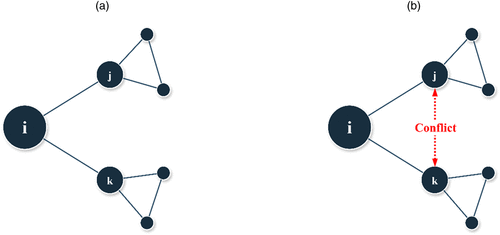
Notes. (a) Tertius gaudens: broker i spans a structural hole between two relationally neutral alters j and k. (b) Tertius dolens: broker i spans a structural hole between two conflicted alters j and k.
Although this perspective relaxes the assumption of relational neutrality that underlies existing brokerage theories, it remains conceptually consistent to treat conflict-laden structural holes as valid instances of brokerage. Interalter conflict constitutes a critical boundary condition for brokerage effects (Shipilov et al. 2023), rather than a violation of their core mechanisms. Even when alters are connected through antagonistic relations, their conflict preserves and may even deepen the separation that defines brokerage by limiting trust, communication, and strategic alignment. As a result, the informational heterogeneity central to broker advantage (Burt 2004) remains present, but it operates under adverse relational conditions. Hostility between alters diminishes their willingness to collaborate and share knowledge with the broker, heightens coordination and maintenance costs, and undermines the broker’s reputational standing as a neutral and reliable partner (Sytch and Tatarynowicz 2014, Marineau et al. 2016). Consequently, the flows of nonredundant knowledge and resources essential for innovation become constrained, transforming brokerage from a structure of advantage into one of strain and cost.
The Costs and Liabilities of Tertius Dolens Brokerage
The theoretical argument we advance builds on two complementary perspectives: the recent reconceptualization of network brokerage as involving both benefits and costs (Lee et al. 2024) and research recognizing the coexistence of positive and negative ties within social and interorganizational networks (Labianca and Brass 2006, Sytch and Tatarynowicz 2014). Together, these perspectives suggest that brokerage positions simultaneously generate opportunities and liabilities depending on the relational context in which they are embedded. In the case of tertius dolens, this context is fundamentally shaped by the interplay between positive broker-alter ties and negative alter-alter ties. When alters are in conflict, their relational antagonism undermines the broker’s capacity to sustain productive collaborations, diminishing the informational value of the brokerage position. As a result, brokering firms must devote considerable managerial attention and resources to maintaining strained partnerships and facilitating communication between increasingly adversarial partners, which diverts effort from innovation activities, amplifies coordination costs, and ultimately erodes the expected innovation benefits of brokering.
With respect to the traditional benefits of brokerage, namely, access to alters’ critical knowledge and the coordination of reciprocal exchanges, interalter conflict introduces adverse relational conditions that undermine both mechanisms. Brokering firms depend on their partners’ willingness to engage in collaborative knowledge sharing and exchange (Ritala et al. 2023). When these partners are in conflict, concerns about knowledge misappropriation and strategic leakage often reduce their willingness to share information with the broker (Hallen et al. 2014). As a result, a downstream biopharma broker with vertical ties to two conflicting biotech firms may encounter reluctance or even outright resistance from one or both partners to disclose intellectual property, while simultaneously bearing rising managerial and coordination costs required to sustain the strained relationships. One illustrative case can be traced to Pfizer’s brokerage position during Mylan’s prolonged patent disputes over market exclusivity for several brand-name drugs in the 2000s. Between 2003 and 2010, Mylan faced multiple lawsuits under the Hatch-Waxman Act, a legal framework used by brand-name manufacturers to delay generic entry (Weiswasser and Danzis 2003). During this period, Pfizer maintained alliance ties with both Mylan and several of its generic-producing legal rivals (Rein and Kessel 2006). As the Hatch-Waxman litigation progressed, uncertainty spread across Pfizer’s ego network, disrupting joint coordination and knowledge flows and contributing to project delays and changes in R&D priorities. As one legal expert noted, “Hatch-Waxman litigation can create a shadow over the entire lifecycle of a product,” affecting not only the disputing parties but also other partners connected to them. He further observed that such conflicts “can stall companies’ innovation efforts by introducing uncertainties that ripple through the industry.”
Although our primary focus remains on the broker-level implications of interalter conflict, our argument also echoes recent alter-centric perspectives emphasizing that brokers’ advantages depend in part on the behaviors and relational dynamics among alters (Iorio 2022, Hernandez et al. 2025). In tertius dolens structures, alters may interpret the broker’s intermediary position as a signal of implicit strategic alignment with the adversary (Marineau et al. 2016). Consistent with the structural balance principle that “a friend of my enemy is my enemy” (Cartwright and Harary 1956), such perceptions can weaken coordination between the brokering firm and its partners, reduce communication, and disrupt knowledge flows. Concerns over intellectual property disclosure may further intensify, leading alters to protect proprietary assets not only from their legal opponent but also from the broker itself, whom they may increasingly distrust. In prolonged and costly patent disputes, brokering firms may also face pressure to take a legal stance against one of the partners, effectively drawing them into the conflict (Sytch and Tatarynowicz 2014). One illustrative case is the high-profile litigation between Amgen and Roche over the anemia drug Mircera. In the late 2000s, Amgen accused Roche of infringing patents related to its blockbuster drug Epogen, triggering extensive legal proceedings and a temporary injunction that blocked Mircera’s U.S. launch (Pollack 2007). Cytokinetics, a San Francisco-based biotech firm with vertical ties to both Amgen and Roche, was affected by this dispute. As legal uncertainty increased and interfirm relationships deteriorated, Cytokinetics experienced substantial coordination breakdowns and delays across several research initiatives while Roche redirected resources toward managing the litigation and tightened alliance governance, ultimately reducing its openness to collaboration (Baertlein 2007). As the legal expert observed, firms in such situations often find themselves “caught in the crossfire of litigation parties, with outcomes shaped less by their own actions than by the conflicts among their partners.”
We further propose that the relational costs of tertius dolens extend beyond the broker’s direct ties with conflicting alters and permeate the broader ego network. Because brokerage effects accumulate across multiple structural holes (Burt 2004), exposure to interalter conflict in one part of the network can generate spillovers that create or amplify coordination challenges elsewhere. One pathway through which this occurs is relational fragmentation. Research in social networks shows that conflict often fosters durable relational divides and “us-versus-them” sentiments that undermine social cohesion (Krackhardt 1999), and similar processes have been linked to the decline of trust and cooperation in innovation ecosystems (Jones et al. 2021). In this context, as brokering firms reallocate time and resources toward managing tensions with conflicting partners, their capacity to sustain other productive partnerships weakens, particularly when those ties rely on frequent interaction, tacit coordination, and trust. Over time, this cumulative strain can fragment the ego network, restrict access to partners’ knowledge repositories, and limit opportunities for recombinant innovation, while also raising doubts among other firms about the broker’s reliability. A telling illustration of such broader disruption is the early-2000s dispute between Chiron and Genentech over a patent related to the breast cancer drug Herceptin, in which Chiron sought more than $300 million in damages for alleged patent infringement. During the same period, both firms maintained vertical R&D ties with Novartis (Marshall 2000). As the conflict unfolded, it reverberated across Novartis’s broader alliance portfolio, disrupting knowledge flows, straining coordination, and heightening partner concerns. The subsequent court ruling against Chiron, together with public criticism of its aggressive legal tactics (Pollack 2002), further intensified and prolonged these disruptions.
A related pathway involves the erosion of relational governance and the rising costs of formal control. Brokering firms exposed to prolonged partner disputes may come to be viewed as relationally entangled or unreliable. Even in the absence of direct opportunism, such perceptions can prompt other firms to engage more cautiously, substituting informal coordination based on goodwill and reciprocity with formalized contractual safeguards (McEvily et al. 2014). Although these mechanisms may reduce the risk of opportunism, they slow down decision making and limit the broker’s flexibility to access and integrate external knowledge. These reputational effects may eventually extend beyond the broker’s ego network as other parties infer heightened risk because of strategic bias. Over time, such spillovers can carry the dysfunction associated with current tertius dolens into future relationships, further constraining the broker’s capacity for collaborative innovation. Taken together, these direct and indirect effects suggest that interalter conflict systematically erodes the innovation benefits of brokerage, and we hypothesize:
Tertius dolens brokerage negatively affects a firm’s subsequent innovation performance.
Mechanisms Mitigating the Costs and Liabilities of Tertius Dolens Brokerage
Although our primary hypothesis posits that tertius dolens brokerage imposes substantial relational and coordination costs that ultimately diminish the broker’s innovation performance, we also argue that certain structural features of the broker’s ego network and broader network position can partially mitigate these negative effects. Drawing on Emerson’s (1962) power-dependence theory and its extension toward a social exchange perspective (Cook and Emerson 1978), we conceptualize these features as structural balancing mechanisms that help alleviate the secondary dependence strain arising from interalter conflict. Because alter antagonism not only disrupts the informational and coordination advantages of brokerage but also creates a second-order condition of dependence, the broker’s capacity to exercise influence and control over its exchanges becomes constrained. As alters withdraw or limit collaboration, the broker remains structurally connected but increasingly reliant on adversarial partners whose cooperation is both difficult and costly to sustain. To restore some autonomy and reduce this dependence, network actors can draw on several network-based balancing mechanisms, such as cultivating alternative exchange opportunities, leveraging social status, and reinforcing relational commitments with alters (Rogan and Greve 2015). Adapting this logic to the brokerage context, we identify three corresponding structural conditions that help the broker reestablish some degree of coordination and collaborative stability: (1) access to conflict-free structural holes, (2) high status within the alliance system, and (3) multiplex relational commitments with the conflicting alters. We view each mechanism as a distinct yet complementary pathway for mitigating the structural liabilities associated with tertius dolens.
We first propose that the innovation value of brokerage can be partly restored through access to alternative, more productive brokerage opportunities (Rogan and Greve 2015). These opportunities arise from the broker’s access to conflict-free structural holes within its broader ego network (Burt 1992, 2004). Because a firm’s innovation performance is shaped by the cumulative configuration of its alliance ties, rather than any single partnership (Hoehn-Weiss et al. 2017), the presence of such conflict-free structural holes can partly offset the negative consequences of conflict-laden structural holes. This mitigating effect operates through two interrelated mechanisms: providing alternative channels for accessing nonredundant knowledge, and preserving collaboration pathways that remain insulated from interalter conflicts.
First, access to conflict-free structural holes within the ego network provides functional pathways for nonredundant knowledge exchange and recombinant innovation (Carnabuci and Operti 2013, Hsu and Lim 2014). Even if certain areas of the broker’s ego network are relationally compromised by interalter conflict, the broker can still draw on other otherwise unconnected alters to access nonredundant knowledge inputs and complementary resources. In this sense, the availability of such conflict-free structural holes helps reduce, at least in part, the broker’s dependence on the conflicting alters and maintain some degree of recombinant capacity. Second, a broader portfolio of cooperative relations can also help contain the reputational and relational risks associated with exposure to interalter conflict. When other partners observe the broker actively engaged in productive, conflict-free exchanges elsewhere in the network, they are less likely to generalize the dysfunction of some alter ties to the broker’s overall conduct or reliability. Such functional exchanges can thus serve as positive signals of neutrality, trustworthiness, and ongoing collaborative value (Shah and Swaminathan 2008), reassuring partners that conflict-related disruptions are isolated rather than systemic. In doing so, they help the broker maintain informal coordination and relational governance across its broader alliance portfolio. Taken together, these arguments suggest that access to conflict-free structural holes can directly offset the innovation losses associated with tertius dolens brokerage, while also indirectly preserving the broker’s broader structural and reputational standing within the industry. This leads us to hypothesize:
The negative effect of a firm’s tertius dolens brokerage on its subsequent innovation performance is mitigated by a higher number of conflict-free structural holes in its ego network.
We next theorize a second structural mechanism that may partly mitigate the negative performance effects of tertius dolens: the broker’s status within the broader alliance system. Whereas the preceding moderator, access to conflict-free structural holes, operates at the ego-network level, status represents a higher-order dimension of structural embedding that reflects the broker’s overall standing and prestige within the interorganizational field. Drawing on Emerson’s (1962) framework, we view this mechanism as corresponding to status conferral, through which actors rebalance dependence and offset relational strain by leveraging their accumulated social standing. Whereas tertius dolens brokers depend on antagonistic alters who impose significant coordination challenges and reputational risks, high-status brokers can, to some extent, draw on their legitimacy, symbolic capital, and network visibility to counteract these relational burdens. Specifically, we propose that status can mitigate the tertius dolens liability through two complementary mechanisms: one operating within the brokerage position itself by strengthening coordination and trust with the conflicted alters, and another operating at the whole-network level by shielding the broker from reputational contagion across the network.
Through the first mechanism, status enhances the brokering firm’s legitimacy, trustworthiness, and attractiveness as an alliance partner (Rogan and Greve 2015, Zhelyazkov and Tatarynowicz 2021), thus facilitating collaboration with alters despite their mutual antagonism. Status functions as a heuristic signal of quality and dependability (Podolny 2005). This symbolic capital can lead conflicting alters to attribute collaborative dysfunction to their own dispute rather than to the broker’s role, thereby preserving the broker’s credibility and influence. In addition, status increases alter dependence and shifts power dynamics in the broker’s favor. Alters may hesitate to disengage from a high-status broker for fear of losing access to new knowledge, opportunities, or valuable status spillovers. This hesitation enables the broker to maintain effective ties with alters, as they may defer to the broker’s coordination and preserve open channels for knowledge sharing (Rider 2009). Finally, the expectation of positive endorsements and reputational benefits from association with a high-status broker can also serve as a forward-looking incentive (Hahl et al. 2016), further motivating the alters to maintain or even strengthen their ties with the broker.
The second status-based mechanism extends beyond the broker’s ties with the conflicting alters toward the entire interorganizational field. Brokers visibly embedded in conflict-laden structural holes may experience reputational spillovers that erode trust, weaken informal governance norms, and hinder their ability to coordinate joint innovation. In this context, status serves as an important reputational shield. High-status brokers are generally perceived as more legitimate, competent, and trustworthy partners (Podolny 2005), making them less susceptible to reputational contagion that can spread beyond their ego network. When third parties observe conflict surrounding a high-status broker, they are more likely to attribute the discord to the alters themselves. This symbolic insulation may help prevent localized disputes from tarnishing the broker’s broader reputation or undermining its other alliances, thereby preserving its collaborative capacity and strategic credibility within the larger alliance system.
Finally, the reputational capital associated with status can also influence how other, unconnected firms interpret and respond to the broker’s involvement with conflicting alters. Third-party actors may be less likely to reconsider their willingness to form partnerships based on isolated episodes of relational strain when the broker is perceived as a central or prestigious player in the field (Shipilov 2005). Just as existing partners may choose to maintain collaboration with a high-status broker despite localized conflict episodes elsewhere in its ego network, prospective partners may likewise view association with such a broker as relatively low-risk and strategically advantageous. This perception can further encourage new alliance formation and create additional exchange opportunities for the broker. Taken together, these arguments suggest that broker status both directly and indirectly attenuates the innovation performance penalty associated with tertius dolens brokerage. We therefore hypothesize:
The negative effect of a firm’s tertius dolens brokerage on its subsequent innovation performance is mitigated by its higher status.
The third and final mitigating condition we consider is the relational commitment between the broker and its conflicting alters, reflected in multiplex and diverse ongoing ties (Rogan 2014). As a dyadic-level construct, relational commitment conceptually complements the other two moderators, which originate at the ego-network (Hypothesis 2) and broader network (Hypothesis 3) levels of analysis. This dyadic level captures the quality and intensity of broker-alter relationships, encompassing the breadth of interaction, shared understanding, and diverse relational experiences that multiplex ties bring (Shipilov 2012, Ferriani et al. 2013). Building on Cook and Emerson’s (1978) extension of power-dependence theory to the social exchange domain, we view this condition as a relational balancing mechanism through which multilayered interactions create commitment-based dependencies that can stabilize exchanges under the strain of tertius dolens. Consistent with the conceptual logic underpinning the earlier two moderators, we argue that relational commitment also operates via two mechanisms: one that stabilizes coordination within the tertius dolens position, and another that reinforces trust and credibility across the broader ego network.
The first mechanism concerns how multiplex relationships help mitigate the direct coordination costs and challenges imposed by interalter conflict. Prior research shows that multiplex ties can foster the development of interfirm trust (Gulati 1995) and enhance collaborative quality by enabling richer communication, coordination, and integration across multiple domains (Tiwana 2008). Such relational commitments increase embeddedness (Rogan and Greve 2015), allowing brokers to reduce coordination frictions, lower transaction costs, and sustain exchanges with alters. In the context of tertius dolens, these multilayered, trust-based relationships are particularly valuable because the broker’s partnerships must simultaneously facilitate effective knowledge transfer while managing increasingly divergent relational demands from the alters. Under these complex conditions, multiplex relationships help reduce alters’ uncertainty about the broker’s strategic intentions not only because they embody higher levels of trust but also because they signal substantial joint resource commitments (Gimeno and Woo 1996, Shipilov 2012). As a result, alters connected to the broker through multiple concurrent ties are more likely to converge and maintain open communication and collaboration routines, even amidst their mutual conflict.
Moreover, because multiplex ties are typically associated with greater familiarity and strategic fit between partners, they can facilitate more open and effective knowledge sharing even under conditions of cognitive or strategic distance (Reagans and McEvily 2003). In the context of intrafirm collaboration, for example, strong interunit ties have been shown to mitigate both the sender’s concerns about knowledge misappropriation and the recipient’s reluctance to admit ignorance or adopt externally sourced ideas (Tortoriello et al. 2012, Kim et al. 2021). For the source (i.e., each of the alters, in this case), such ties may reduce concerns about broker opportunism—for instance, by lowering the risk that one alter could successfully enlist the broker’s support in its conflict against the other (Sytch and Tatarynowicz 2014). In the context of deteriorating informal governance that characterizes tertius dolens brokerage, the scope and diversity of multiplex interactions can also signal the broker’s legitimacy and integrity (Tortoriello et al. 2025), thereby reinforcing its reputation as a reliable and neutral partner. For the recipient (i.e., the broker), multiplex ties similarly reduce the perceived risks of acknowledging knowledge gaps, thereby also lowering resistance to external ideas (Kim et al. 2021). The increased receptiveness and collaborative willingness of firms connected through multiple concurrent alliances thus play an important role in mitigating the coordination and knowledge integration barriers inherent in tertius dolens scenarios.
The second mechanism concerns how the balancing effects of multiplex broker-alter ties extend across the broker’s wider alliance portfolio. First, such multiplex ties can signal the broker’s sustained relational commitment to its existing partners, thereby reducing the likelihood that other firms could interpret localized collaborative dysfunction as a sign of general opportunism or disloyalty (Halevy et al. 2019). Although this effect resembles that of status, it operates through direct, multidomain interactions and accumulated trust, rather than through symbolic prestige. Second, because multiplex ties involve collaboration in multiple domains, they foster deeper mutual understanding and more frequent communication (Gimeno and Woo 1996), which can help contain or diffuse interalter conflict before it becomes visible to other partners. This containment mechanism can prevent relational strain from escalating or spilling over into the broker’s other relationships. Finally, multiplex ties also exert a self-disciplining effect on the broker, which reduces the need for costly formal governance. By embedding the broker and its alters in multiple, diverse exchanges, such ties can lower the likelihood of opportunistic behavior, as the relational costs of misconduct are higher in relationships grounded in trust and resource commitments (Greve et al. 2010). In sum, these arguments suggest that multiplex relational commitments between the broker and its conflicting alters strengthen the broker’s position by curbing reputational contagion and reinforcing the cooperative norms that help sustain collaboration and knowledge exchange. We hypothesize:
The negative effect of a firm’s tertius dolens brokerage on its subsequent innovation performance is mitigated by higher levels of multiplex relational commitment with its conflicting alters.
Methods
To test the hypotheses set forth in this paper, we analyzed a longitudinal panel of 2,735 publicly listed biopharmaceutical firms observed from 2000 to 2009. The data set integrated information on firms’ vertical alliance networks with data on U.S. patent infringement lawsuits to capture interorganizational conflict among alliance partners, resulting in an unbalanced panel of 12,671 firm-year observations. We first describe the research context and then detail the data sources, sample construction, and measures.
Research Context
In selecting our research context, we focused on network brokerage among firms in the biopharmaceutical industry, an empirical domain characterized by a diverse array of organizational actors. These include traditional pharmaceutical companies (e.g., Novartis, Pfizer, Merck) with the resources and capabilities to manufacture and commercialize new drugs; specialized biotech firms (e.g., Genentech, Celgene, Moderna) that employ advanced drug discovery techniques such as bioengineering and bioinformatics; and a wide spectrum of public sector institutions, including universities, public research institutes, and government laboratories engaged in basic R&D. Our rationale for this focus derives from several key features of the biopharma sector that align closely with the theoretical aims of this study.
First, the biopharmaceutical industry is widely recognized as a knowledge-driven, innovation-intensive sector where interorganizational networks play a central role in shaping firms’ competitive positioning and performance (Roijakkers and Hagedoorn 2006, Stuart et al. 2007, Paruchuri 2010, Awate et al. 2025). The industry’s inherently collaborative nature and the critical importance of knowledge sharing make network brokerage in this setting not only prevalent but also particularly consequential for firms’ innovation outcomes (Zaheer and Soda 2009, Sytch et al. 2012, Balachandran and Hernandez 2018). This is due, in part, to the high levels of vertical collaboration, coordination, and interdependence that characterize the biopharma landscape (Stuart et al. 2007, Reuer and Devarakonda 2016).
Second, like many other high-technology sectors, the biopharmaceutical industry experiences elevated levels of patent litigation involving legal disputes over patented compounds, research and development processes, and platform technologies (Lumineau and Oxley 2012). Patent litigation represents a particularly salient and adversarial form of relational conflict that disrupts interorganizational trust and cooperation. Such disputes are not unique to biopharma but are also pervasive in other technology-intensive fields, such as semiconductors or consumer electronics, where overlapping intellectual property rights and cumulative innovation processes frequently generate legal confrontation. Across these contexts, patent lawsuits are rarely routine events; they are high-stakes confrontations that signal a severe breakdown of cooperative norms, impose substantial legal and managerial costs, and often produce enduring relational and reputational damage to firms (Belenzon 2012, Cotter 2021).
Lastly, the prevalence and strategic consequences of patent litigation in the biopharmaceutical industry underscore both the relevance of our empirical setting and the broader applicability of our theoretical framework. Empirical studies show that adversarial intellectual property actions can constrain alliance formation, reduce research and development productivity, and impede interfirm knowledge exchange (Oxley and Sampson 2004, Singh and Fleming 2009, Belenzon 2012). These dynamics are not unique to biopharma but reflect a broader structural tension between collaboration and conflict that characterizes innovation networks across industrial sectors (Hewitt 2005). In this respect, although the biopharmaceutical industry serves as an exemplary empirical context where the coexistence of collaborative alliances and legal patent disputes is particularly visible, it also shares important similarities with other high-technology settings in its reliance on both collaborative partnerships and patent protection. By examining this duality of positive and negative ties (Labianca and Brass 2006), our study contributes to research emphasizing the significance of interorganizational contexts in which cooperation and conflict jointly shape network structure and firm performance (Lumineau and Oxley 2012, Sytch and Tatarynowicz 2014).
Data and Sample
The firm-level panel was constructed by integrating data from multiple secondary sources. First, to identify firms’ brokerage positions in the biopharmaceutical industry, we used the Recap database provided by Clarivate. This database contains detailed descriptions of more than 25,000 collaborative agreements in biotechnology and pharmaceuticals, the majority of which are vertical alliances. The data compiled by Recap are drawn from multiple sources, including press releases, Securities and Exchange Commission (SEC) filings, corporate presentations, and public announcements at major industry events. The entities are categorized into three main groups: pharmaceutical and biotech firms, universities and research institutes, and government agencies and laboratories. Their alliance ties span the entire value chain, ranging from collaboration in basic science and R&D to licensing, manufacturing, distribution, marketing, and sales. Notably, more than 40% of the recorded alliances involve at least one publicly traded company and are therefore filed with the SEC as material contracts. This requirement has often been cited to underscore the use of Clarivate’s Recap as a trusted data source on the U.S. alliance landscape in biopharma (e.g., Stuart et al. 2007, Rothaermel and Boeker 2008, Schilling 2009).
Using this database, we identified 2,735 public biopharma companies that held vertical alliance ties between 2000 and 2009. Focusing on public companies allowed us to employ a range of financial controls that were not available for private firms. The analyzed firms in our sample were diverse, ranging from medium-sized, specialized biotechnology companies serving as critical value-chain intermediaries to large, vertically integrated pharmaceutical corporations. For each firm, we traced its vertical alliances five years backward from the current year, thereby following the moving-window approach commonly used in prior alliance network studies (e.g., Gulati and Gargiulo 1999, Powell et al. 2005, Tatarynowicz et al. 2016, Cui et al. 2018). Our analysis was restricted to the 10-year period from 2000 to 2009 to facilitate subsequent integration with data on firms’ innovation outcomes measured through patent grants. Given that the dependent variable captured the average market value of new patents granted to a focal firm in a given year, and that patent approvals in this setting can take up to 15 years because of the complexity of the review process (Khanna et al. 2018), this temporal boundary was considered appropriate. The resulting panel comprised 12,671 firm-year observations. Because some firms were not observable in every year, the panel was unbalanced, covering an average of 1,270 unique biopharma brokers per year, each holding approximately six vertical alliance ties. This reflected normal variation in firms’ alliance and litigation activity over time. Some firms entered the data set once they formed an eligible vertical alliance, whereas others exited following mergers, acquisitions, or the cessation of partnering activity. Finally, in line with previous alliance network studies (e.g., Gulati 1998, Goerzen 2007, Stuart et al. 2007), we disaggregated multiparty alliances (approximately 9% of the data set) into individual dyadic relationships.
In the second step, we integrated this information with data on interfirm conflict. These data were drawn from two major intellectual property rights (IPR) management registries specializing in U.S. patent lawsuits, MaxVal and Lex Machina, which together encompassed more than 15,000 biopharmaceutical patent infringement cases filed in U.S. federal district courts. Our comparative analysis revealed a 95% overlap between the two databases within the focal timeframe. Therefore, we used MaxVal as the primary data source and supplemented it with the remaining 5% of cases extracted from Lex Machina. To identify active patent infringement lawsuits filed between alter firms from 2000 to 2009, we employed a fuzzy string-matching procedure based on the Levenshtein distance algorithm (for a description, see online supplementary material, Section 2). This enabled us to systematically link records across our separate alliance and litigation data sets, which lacked a common firm identifier. Specifically, we matched alter firm names from the alliance database with those of the plaintiffs and defendants using information on the organizational identities of the litigating parties as well as the exact dates of case initiation and closure. We implemented the matching procedure using Python’s TheFuzz library and subsequently verified all matches through a round of manual checks to ensure accuracy and eliminate potential errors. This combined approach enabled us to assemble a comprehensive data set comprising 2,140 patent infringement lawsuits filed between the brokering firms’ alters over the entire 2000–2009 period.
A patent infringement lawsuit is filed when a patent holder alleges that another entity has directly violated their patent by “making, using, selling, or offering to sell a patented invention or importing a product covered by a patent without explicit permission of the patent holder” (35 U.S.C. § 271). In such instances, the patent holder is entitled to seek injunctive relief and demand significant financial damages (Hewitt 2005). Conversely, the court may also rule in favor of the defendant by invalidating the patent claim or rendering the plaintiff’s patent unenforceable, thus creating substantial legal risks for the plaintiff, as well. Because of their high-stakes outcomes impacting not only corporate finances but also the very basis of competitive advantage for firms (Somaya 2003), patent infringement-related lawsuits have been recognized as a particularly salient and acute form of interorganizational conflict in the biopharmaceutical industry (Lumineau and Oxley 2012, Sytch and Tatarynowicz 2014, Lumineau et al. 2015).
Our operationalization of interfirm conflict through patent infringement litigation is thus grounded in extensive prior research emphasizing the particularly intense and adversarial nature of such interactions (Somaya 2003, Hewitt 2005, Jones et al. 2021), which clearly distinguishes them from routine market competition (Lanjouw and Schankerman 2001). The financial and strategic stakes in these cases are typically substantial. Plaintiffs may seek injunctive relief to halt defendants’ activities and claim damages up to three times their estimated losses, whereas defendants risk the potential forfeiture of key intellectual property rights. Such lawsuits often entail direct and highly personalized confrontations between firms, in which the parties are fully aware of one another and engage in interactions marked by significant distrust, organizational strain, and, at times, personal animosity among executives and technical staff (Schmidt and Kochan 1972, Oberschall 1978). Thus, unlike competitive rivalry, which usually unfolds through indirect and impersonal market mechanisms, patent litigation constitutes a direct and formal confrontation between firms, characterized by explicit adversarial engagement and governed by costly and often consequential legal enforcement (Poppo and Zenger 2002, Lumineau and Oxley 2012).
Indeed, this positioning within adversarial interaction makes patent litigation a particularly salient and severe form of interorganizational conflict. Legal and governance research has described such escalation as a failure of relational contracting (Somaya 2003), and as evidence of deep relational strain (Keller et al. 2021). Related studies in economics have similarly emphasized that patent lawsuits signal profound relational breakdowns, often causing significant noneconomic harm (Cotter 2021). In innovation-driven industries, these negative consequences are amplified by high levels of technological interdependence and overlapping intellectual property portfolios that link firms within dense innovation networks (Henderson and Cockburn 1996, Arora et al. 2001, Oxley and Sampson 2004). The decision to litigate, therefore, not only erodes interfirm trust between the disputing parties (Malhotra and Lumineau 2011) but can also destabilize broader collaboration patterns by generating uncertainty and reputational spillovers for their other partners, including shared brokers (Edris et al. 2024). In this sense, patent infringement lawsuits go beyond strategic competition; they constitute visible ruptures in the cooperative fabric of an industry that can hinder information exchange and collective learning. A more detailed conceptual and empirical rationale for viewing patent infringement litigation as the primary form of interorganizational conflict is provided in the online supplementary material, Section 1.
Dependent Variable, Independent Variables, and Controls
To operationalize our dependent variable measuring the broker’s innovative performance, we used the average market value of the firm’s successfully filed patents, denoted as Patent Market Value. Defined as the absolute change in stock market valuation associated with new patent grants, this measure was derived using the two-step approach proposed by Kogan et al. (2017). In the first step, the effect of a new patent on the firm’s stock price is observed within a narrow three-day window following the United States Patent and Trademark Office’s (USPTO’s) announcement of the patent grant. This captures the immediate market reaction to the grant announcement, thus providing an objective real-time valuation of the patent’s economic worth. In the second step, a formal market model is applied to filter out other events that might influence the stock price during this window, ensuring that the observed change can be attributed specifically to the patent. This specification offers two important benefits over alternative innovation performance measures such as raw patent counts or citation-weighted counts. First, it captures the direct economic impact of a newly granted patent rather than its broader scientific influence inferred from forward citations, thereby offering a more precise indication of the patent’s present market value. Second, it is explicitly designed to control for confounding factors such as concurrent corporate announcements, which could otherwise distort the patent’s true valuation (for a detailed technical explanation, see online supplementary material, Section 3).
To align the timing of our dependent variable with other covariates, we implemented a one-year lag. This specification captures the firm’s most immediate innovation output while minimizing potential bias arising from the often lengthy and variable USPTO patent examination processes. As discussed under “Robustness Analyses,” we also tested alternative lag structures of two and three years but found that a one-year lag produced the most consistent and interpretable relationship between a firm’s tertius dolens brokerage and the economic value of its innovations (see also online supplementary material, Point 5.2). Because the dependent variable was right-skewed, we applied its natural logarithm prior to modeling it statistically.
To construct our primary independent variable that captures the extent of tertius dolens brokerage as the number of conflict-laden structural holes held by the focal firm, we integrated data on the firm’s vertical alliances with information on active patent infringement lawsuits among its alliance partners. Formally, we identified such structural holes as cases in which the focal firm i maintains concurrent alliance ties with two partners, j and k, who are engaged in an ongoing patent lawsuit with one another (for a visualization of this structure, see again Figure 1(b)). We then operationalized Tertius Dolens Brokerage as the total number of such conflict-laden structural holes within the firm’s ego network in a given year. The resulting values ranged from 0 to 13 and were logged because of a right-skewed distribution.
To test Hypotheses 2–4, we examined three moderating effects using interaction terms constructed from mean-centered variables. This procedure enhances the interpretability of both the main and interaction effects while mitigating potential multicollinearity between the interaction terms and their constituent predictors (Wooldridge 2010). First, to evaluate the moderating effect of a firm’s access to conflict-free structural holes (Hypothesis 2), we created the variable Conflict-Free Structural Holes, defined as the total number of structural holes within the focal firm’s ego network that do not involve interalter conflict. The values of this variable ranged from 0 to 6,248, with an average of approximately 36 across all brokering firms. Because of its right-skewed distribution, we applied a logarithmic transformation. To estimate the moderating role of these conflict-free structural holes on the negative effect of tertius dolens brokerage, we specified an interaction term between the two variables. All models also included the standalone term of Conflict-Free Structural Holes to control for its potential direct impact on innovation.
Second, to examine the moderating effect of a firm’s status (Hypothesis 3), we operationalized the variable Network Status using the eigenvector centrality concept (Bonacich and Lloyd 2001). Eigenvector centrality assigns higher status values to network actors who are linked to other central actors, thereby offering a more precise measure of network-based status than simple degree centrality. Mathematically, we expressed firm i’s Network Status as , where is the degree centrality of alter j and is a constant equal to the largest eigenvalue of the network. The eigenvector centrality values were computed in Stata using the “netsis” command (cf. Miura 2012) and subsequently log-transformed to account for their skewed distribution across firms. In the statistical models, we then estimated an interaction between the mean-centered values of Tertius Dolens Brokerage and Network Status.
Third, to assess the moderating effect of multiplex relational commitments between the broker and its conflicting alters (Hypothesis 4), we drew on the concept of network multiplexity, which reflects the breadth and diversity of relational exchanges between two firms across multiple collaborative domains (Shipilov 2012, Ferriani et al. 2013). To capture this construct, we extended our analysis beyond vertical alliances to include additional types of cooperative agreements recorded in the Clarivate’s Recap database. The database identifies 15 distinct alliance formats in the biopharmaceutical sector, encompassing various forms of R&D collaborations, licensing, manufacturing, marketing, and sales agreements. Based on this data, we defined Average Multiplexity as the mean number of distinct types of collaborations maintained by the brokering firm with its conflicting alters in a given year. Formally, this was expressed as , where and denote the number of different collaboration types (both vertical and horizontal) between broker i and each conflicting alter j and k, and represents the number of conflict-laden structural holes held by broker i. The resulting values ranged from 1 to 10, with an average of around two distinct alter ties per broker, and were logged to address their skewed distribution. We then tested the hypothesized moderating effect by interacting the mean-centered values of Tertius Dolens Brokerage and Average Multiplexity. In addition, we included a separate control for Average Multiplexity in all models to account for its potential direct association with innovation.
To control for other possible determinants of the innovation performance of biopharma firms, we incorporated several additional control variables. First, we controlled for the focal firm’s size by measuring its number of employees, designated as Headcount. Additionally, we included a measure of the firm’s financial health, denoted as Current Ratio, which we operationalized as the ratio of current assets to current liabilities. This control is important because, in addition to established pharmaceutical companies, our sample also includes smaller biotechnology firms for which conventional financial indicators, such as sales or profitability, are not readily comparable (Rothaermel 2001). We further controlled for the focal firm’s R&D Intensity, defined as the ratio of annual R&D expenditures to total sales. This variable captures the firm’s investment capacity in innovation, which may meaningfully influence the subsequent market valuation of its patents (Schilling and Phelps 2007). Including this control therefore ensures that the estimated performance effect of tertius dolens brokerage is not confounded by differences in firms’ underlying innovation investment levels. Because of the skewed distribution of these three control variables, we applied their logarithmic transformations in all statistical models.
Second, recognizing that biopharma firms may derive varying benefits from their vertical alliances with different types of partners (Stuart et al. 2007, Subramanian et al. 2013), we introduced specific controls to account for the partner composition of the firm’s ego network. We specifically employed a control labeled Proportion University to capture the percentage of universities and research institutes, and another labeled Proportion Pharma to capture the percentage of established pharmaceutical companies within the firm’s ego network. Building on the research of Hoang and Rothaermel (2005), we identified 118 such established pharma giants in our data set. Notably, large partners may exhibit significantly higher levels of vertical integration and thus also exert a greater influence on the firm’s innovation performance. For instance, their involvement could serve as a conduit for more valuable resources, technological expertise, and market power, thereby skewing the firm’s innovation output.
Third, as noted previously, we controlled for the standalone effects of two of our three moderator variables, Conflict-Free Structural Holes and Average Multiplexity. Because the Network Status moderator is strongly correlated with the structurally similar measure of Conflict-Free Structural Holes and partially absorbs its effect at the panel level, we excluded its standalone term from the main specification.2 However, additional tests confirmed that substituting Network Status for Conflict-Free Structural Holes yields qualitatively similar results across all models. Furthermore, we controlled for the brokering firm’s Direct Conflictual Ties, measured as the total number of patent lawsuits in which the firm was involved in a given year. Such direct conflicts may constrain broker advantage by diverting managerial attention and resources away from innovation. Although these disputes do not directly drive the tertius dolens effect we theorize, they may still shape the firm’s broader ability to leverage its brokerage position. Finally, all models included firm fixed effects (FE) to control for unobserved firm-level heterogeneity and year fixed effects to absorb time-specific factors common across biopharma firms, such as industry or technological trends and shifts in R&D funding.
Analytical Approach
To conduct the empirical analyses, we employed linear panel regression models suited to longitudinal data with a continuous dependent variable (Cameron and Trivedi 2022). To account for unobserved firm-level heterogeneity and avoid confounding from time-invariant firm characteristics, all models included firm fixed effects. The Hausman test confirmed the appropriateness of this specification, indicating that the fixed-effects estimator was preferred to the random-effects alternative. We further addressed potential autocorrelation by specifying robust standard errors clustered at the firm level.
Results
The summary statistics and pairwise correlations are reported in Tables 1 and 2. In order to account for the panel structure of the data, we followed the recommendation of Cameron and Trivedi (2022) and adjusted the panel data set using the “xtdata, fe” command in Stata. This adjustment ensures that only within-firm variation informs the estimated pairwise correlations, in line with our fixed-effects estimation strategy. The mean variance inflation factor (VIF) of 1.49 is well below the recommended threshold of 5.0 (Vittinghoff et al. 2005), indicating that multicollinearity is not a concern.
|

Table 1. Descriptive Statistics
| Variable | Mean | SD | Min | Max |
|---|---|---|---|---|
| Patent Market Value (log) | 0.585 | 1.211 | 0.000 | 6.697 |
| Headcount (log) | 1.472 | 1.834 | 0.000 | 9.067 |
| Current Ratio (log) | 1.414 | 0.698 | 0.000 | 12.322 |
| R&D Intensity (log) | 0.132 | 0.195 | 0.000 | 2.812 |
| Proportion University | 0.075 | 0.181 | 0.000 | 1.000 |
| Proportion Pharma | 0.303 | 0.334 | 0.000 | 1.000 |
| Direct Conflictual Ties (log) | 0.097 | 0.350 | 0.000 | 3.332 |
| Conflict-Free Structural Holes (log) | 1.263 | 1.692 | 0.000 | 8.740 |
| Network Status (log) | 0.010 | 0.021 | 0.000 | 0.271 |
| Average Multiplexity (log) | 0.931 | 0.382 | 0.000 | 2.303 |
| Tertius Dolens Brokerage (log) | 0.019 | 0.143 | 0.000 | 2.565 |
|
Table 2. Pairwise Correlations (Adjusted for Firm-Year Panel Data)
| Variable | 1 | 2 | 3 | 4 | 5 | 6 | 7 | 8 | 9 | 10 | 11 | |
|---|---|---|---|---|---|---|---|---|---|---|---|---|
| 1 | Patent Market Value (log) | — | ||||||||||
| — | ||||||||||||
| 2 | Headcount (log) | −0.01 | — | |||||||||
| (0.13) | — | |||||||||||
| 3 | Current Ratio (log) | 0.03 | −0.07 | — | ||||||||
| (0.00) | (0.00) | — | ||||||||||
| 4 | R&D Intensity (log) | 0.00 | −0.02 | −0.31 | — | |||||||
| (0.91) | (0.06) | (0.00) | — | |||||||||
| 5 | Proportion University | 0.00 | 0.01 | 0.04 | −0.02 | — | ||||||
| (0.99) | (0.52) | (0.00) | (0.01) | — | ||||||||
| 6 | Proportion Pharma | 0.01 | −0.02 | −0.04 | 0.04 | −0.19 | — | |||||
| (0.12) | (0.08) | (0.00) | (0.00) | (0.00) | — | |||||||
| 7 | Direct Conflictual Ties (log) | −0.01 | 0.03 | 0.00 | −0.02 | 0.02 | 0.00 | — | ||||
| (0.50) | (0.00) | (0.59) | (0.07) | (0.08) | (0.86) | — | ||||||
| 8 | Conflict-Free Structural Holes (log) | 0.02 | 0.06 | 0.02 | 0.00 | 0.04 | 0.00 | 0.00 | — | |||
| (0.07) | (0.00) | (0.09) | (0.74) | (0.00) | (0.68) | (0.93) | — | |||||
| 9 | Network Status (log) | 0.03 | 0.08 | 0.02 | −0.02 | 0.00 | 0.11 | −0.03 | 0.44 | — | ||
| (0.00) | (0.00) | (0.06) | (0.01) | (0.95) | (0.00) | (0.00) | (0.00) | — | ||||
| 10 | Average Multiplexity (log) | −0.01 | 0.07 | −0.02 | 0.01 | 0.01 | 0.03 | 0.01 | 0.11 | 0.04 | — | |
| (0.36) | (0.00) | (0.04) | (0.11) | (0.27) | (0.00) | (0.42) | (0.00) | (0.00) | — | |||
| 11 | Tertius Dolens Brokerage (log) | −0.03 | 0.03 | −0.01 | 0.00 | 0.01 | 0.00 | −0.06 | 0.08 | 0.23 | 0.00 | — |
| (0.00) | (0.00) | (0.34) | (0.60) | (0.37) | (0.73) | (0.00) | (0.00) | (0.00) | (0.98) | — |
Note. p-values in parentheses; correlations are computed after applying the within transformation associated with the FE estimator, thereby reflecting within-firm covariance net of all time-invariant firm-level heterogeneity.
Table 3 reports the main results of the linear panel regression models. Model 1 includes the control variables, whereas Models 2–5 sequentially add the predicted effects corresponding to Hypotheses 1–4. As shown in Model 1, the only significant control in our data is the positive effect of Conflict-Free Structural Holes on the firm’s innovation performance (b = 0.0153; p = 0.035). Given extensive prior research documenting the positive returns to conventional tertius gaudens brokerage composed of such structural holes in biopharmaceutical alliance networks (Guler and Nerkar 2012, Balachandran and Hernandez 2018), including studies that use patents as a measure of innovation performance (Paruchuri 2010, Kumar and Zaheer 2019), this finding is both expected and important for establishing the empirical baseline from which we analyze the effects of tertius dolens brokerage in subsequent models. The remaining firm-level controls are not statistically significant, reflecting the fact that these variables are largely stable within firms and therefore absorbed by the firm fixed effects used in our specification.
|
Table 3. Statistical Estimation of Patent Market Value (log)
| FE linear panel models; DV: Patent Market Value (log) | |||||
|---|---|---|---|---|---|
| Variables | Model 1 | Model 2 | Model 3 | Model 4 | Model 5 |
| Predicted effects | |||||
| Tertius Dolens Brokerage (log) | −0.0874** | −0.3615*** | −0.2340*** | −0.2713*** | |
| (0.045) | (0.000) | (0.000) | (0.001) | ||
| Tertius Dolens Brokerage (log) × Conflict-Free Structural Holes (log) | 0.0626*** | — | — | ||
| (0.004) | — | — | |||
| Tertius Dolens Brokerage (log) × Network Status (log) | 1.7203*** | — | |||
| (0.009) | — | ||||
| Tertius Dolens Brokerage (log) × Average Multiplexity (log) | 1.0078*** | ||||
| (0.007) | |||||
| Controls | |||||
| Headcount (log) | 0.0322 | 0.0331 | 0.0578** | 0.0313 | 0.0328 |
| (0.177) | (0.165) | (0.015) | (0.190) | (0.169) | |
| Current Ratio (log) | 0.0177 | 0.0177 | 0.0302** | 0.0174 | 0.0170 |
| (0.175) | (0.174) | (0.020) | (0.182) | (0.191) | |
| R&D Intensity (log) | 0.0389 | 0.0387 | 0.0968** | 0.0443 | 0.0396 |
| (0.424) | (0.426) | (0.046) | (0.362) | (0.416) | |
| Proportion University | 0.0059 | 0.0064 | 0.0184 | 0.0074 | 0.0060 |
| (0.910) | (0.902) | (0.724) | (0.887) | (0.909) | |
| Proportion Pharma | 0.0216 | 0.0216 | 0.0301 | 0.0114 | 0.0217 |
| (0.464) | (0.462) | (0.305) | (0.700) | (0.461) | |
| Direct Conflictual Ties (log) | −0.0073 | −0.0099 | 0.0087 | −0.0068 | −0.0097 |
| (0.719) | (0.629) | (0.671) | (0.741) | (0.634) | |
| Conflict-Free Structural Holes (log) | 0.0153** | 0.0163** | 0.0159** | — | 0.0164** |
| (0.035) | (0.024) | (0.028) | — | (0.023) | |
| Average Multiplexity (log) | 0.0189 | 0.0183 | 0.0273 | 0.0211 | 0.0363* |
| (0.301) | (0.318) | (0.135) | (0.247) | (0.062) | |
| Network Status (log) | — | — | — | 2.0920*** | — |
| — | — | — | (0.004) | — | |
| Intercept | 0.4143*** | 0.4141*** | 0.3661*** | 0.4161*** | 0.4117*** |
| (0.000) | (0.000) | (0.000) | (0.000) | (0.000) | |
| Firm fixed effects | Incl. | Incl. | Incl. | Incl. | Incl. |
| Year fixed effects | Incl. | Incl. | Incl. | Incl. | Incl. |
| Observations | 12,671 | 12,671 | 12,671 | 12,671 | 12,671 |
| Firms | 2,735 | 2,735 | 2,735 | 2,735 | 2,735 |
| Log-likelihood | −8,222 | −8,220 | −8,188 | −8,211 | −8,215 |
Notes. p-values in parentheses; two-tailed tests. DV, dependent variable.
*p < 0.10; **p < 0.05; ***p < 0.01.
In Model 2, we build on this foundation and test our primary Hypothesis 1. The corresponding coefficient of Tertius Dolens Brokerage is negative and significant (b = −0.0874; p = 0.045), thus supporting the hypothesis. This effect remains consistent across all subsequent model specifications and even strengthens in both magnitude and statistical significance. In Models 3–5, we examine the mitigating effects of Conflict-Free Structural Holes, Network Status, and Average Multiplexity, as proposed in Hypotheses 2–4, respectively. Because of high multicollinearity among these interaction terms, each moderating effect is estimated separately.3 Model 3 tests the Tertius Dolens Brokerage × Conflict-Free Structural Holes interaction, yielding a positive and significant result (b = 0.0626; p = 0.004). Model 4 tests the Tertius Dolens Brokerage × Network Status interaction, which is also positive and significant (b = 1.7203; p = 0.009). Finally, Model 5 tests the Tertius Dolens Brokerage × Average Multiplexity interaction, which again yields a positive and significant coefficient (b = 1.0078; p = 0.007).
To meaningfully interpret these results in light of our theoretical hypotheses, we examine the combined effects of the interaction terms and their corresponding main effects. To this end, we adopt the conditional marginal-effects approach proposed by Busenbark et al. (2022a), which offers a clear and robust way to assess the relationship between an independent variable and a dependent variable in the presence of a continuous moderator. Figure 2 presents the conditional marginal effects of Tertius Dolens Brokerage on broker performance across varying levels of (a) Conflict-Free Structural Holes, (b) Network Status, and (c) Average Multiplexity. The gray-shaded area in each plot represents the 95% confidence interval, with marginal effects considered statistically significant when this interval does not include zero, as indicated by the horizontal dashed line (Busenbark et al. 2022a). The vertical dashed line denotes the range containing 95% of the observed values of each moderator.
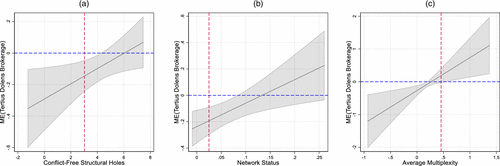
Notes. (a) Tertius Dolens Brokerage × Conflict-Free Structure Holes. (b) Tertius Dolens Brokerage × Network Status. (c) Tertius Dolens Brokerage × Average Multiplexity. ME, marginal effect.
Consistent with the theoretical predictions, the plots show that each moderator weakens the negative effect of tertius dolens brokerage on innovation performance. This pattern is reflected in the upward-sloping relationship between the predicted marginal effect and each moderator, with the 95% confidence interval remaining below zero across a substantial portion of the observed range. The predicted marginal effects turn positive only within a narrow upper range of each moderator, generally above the 95th percentile. This pattern indicates that although conflict-free structural holes, network status, and multiplex ties meaningfully attenuate the performance penalty associated with interalter conflict, they rarely eliminate it entirely. Instances of full reversal are confined to brokers with very high levels of these attributes and, except for Average Multiplexity, are not statistically significant. Taken together, these results provide strong and consistent support for the four theoretical hypotheses advanced in this study.
To assess the substantive magnitude of these effects, in the final step we translate our statistical estimates into economic terms (Table 4). Our dependent variable captures the absolute change in a firm’s market capitalization attributable to patent grant announcements, expressed in millions of U.S. dollars. Based on Model 2, a 1% increase in Tertius Dolens Brokerage (log) is associated with a 0.09% decline in value, equivalent to approximately −$5,920 at the sample mean of $6.75 million per firm and patent. A one-unit increase in Tertius Dolens Brokerage (equivalent to one additional conflict-laden structural hole) corresponds to an estimated 5.78% reduction in patent market value, or roughly −$390,000 per patent and firm. These magnitudes are economically meaningful in the biopharma context, with an average firm filing about 14 patents per year (SD = 85). The cumulative loss associated with tertius dolens may thus reach several million dollars in lost innovation value annually. At the same time, the moderating effects in Models 3–5 offset some of this penalty. For Conflict-Free Structural Holes (log) (Model 3), a 1% increase corresponds to a 0.02% rise in patent value (≈ +$1,200), whereas a one-unit increase in Conflict-Free Structural Holes yields a 2.07% rise (≈ +$140,000). For Network Status (log) (Model 4), a one-standard-deviation increase mitigates the dolens effect by 3.6% (≈ +$241,000). Finally, for Average Multiplexity (log) (Model 5), a one-standard-deviation increase reduces the loss in innovation value by 1.4% (≈ +$94,300).
|
Table 4. Predicted Effects of Tertius Dolens Brokerage and Mitigating Conditions on Patent Market Value (PMV)
| Effect/moderator | Change in variable | % Change in PMV | $ Change in PMV |
|---|---|---|---|
| Tertius Dolens Brokerage (log) | +1% | −0.09% | −$5,920 |
| Tertius Dolens Brokerage | +1 unit | −5.78% | −$390,000 |
| Conflict-Free Structural Holes (log) | +1% | +0.02% | +$1,170 |
| Conflict-Free Structural Holes | +1 unit | +2.07% | +$140,000 |
| Network Status (log) | +1 SD | +3.57% | +$241,000 |
| Average Multiplexity (log) | +1 SD | +1.40% | +$94,300 |
Notes. Predicted effects are based on within-firm estimates (Table 3, Models 2–5). Dollar effects are approximate and computed at the sample mean of $6.75 million per patent per firm.
Addressing Endogeneity and Identification
To account for potential endogenous self-selection of brokers into tertius dolens positions, we estimated fixed-effects two-stage least squares (FE-2SLS) models using a Bartik-style instrumental variable approach (Goldsmith-Pinkham et al. 2020). This strategy is particularly suited to panel data settings where endogeneity arises from firms’ differential exposure to a treatment rather than from sample selection itself (Heckman 1979).4 The instrument was constructed by interacting an exogenous industry-level shock, that is, the yearly patent litigation intensity within the biopharmaceutical sector, with each broker’s baseline exposure to alter-alter pairs, measured in the firm’s first observed year and held constant thereafter. This interaction generates firm-specific, time-varying predicted values of tertius dolens exposure that are plausibly exogenous to firm-level innovation shocks, because fluctuations in industry-wide litigation are outside any single firm’s strategic or operational control. Because both firm and year fixed effects are included, identification relies solely on this exogenous interaction, whereas the baseline exposure itself is directly entered into the model to absorb any independent effects of potential alter pairs. The first-stage model confirms the instrument’s strength (F = 363.677, p = 0.000). In the second-stage model, the estimated coefficient on tertius dolens brokerage remains negative and highly significant (b = −2.8589, p = 0.000). This pattern indicates that even after accounting for the possibility of endogenous sorting, wherein the observed tertius dolens brokers might nonrandomly self-select into conflict-laden structural holes, the negative performance effect persists. In other words, the decline in innovation performance associated with tertius dolens brokerage is unlikely to be driven by firm intent or unobserved strategic preferences but rather reflects an exogenous structural disadvantage (online supplementary material, Point 4.1).
Moreover, we addressed endogeneity concerns potentially arising from time-varying omitted variables (Busenbark et al. 2022b). To this end, we followed the recommended Impact Threshold of a Confounding Variable (ITCV) approach (Frank 2000), which quantifies the degree to which an omitted variable would need to correlate with both the independent and dependent variables to meaningfully bias the results. Higher ITCV values reflect lower susceptibility to omitted-variable bias and therefore suggest greater robustness of the study’s findings despite the unavoidable presence of unobserved factors (Busenbark et al. 2022b). We estimate an ITCV of 0.30, which indicates that any confounding variable would need to correlate at least 0.30 with both the covariates and the dependent variable to substantially affect our results. This estimate suggests a low risk of bias, because any omitted variable would need to account for around 84.4% of the explained variance to meaningfully affect the study’s findings.
Finally, to assess whether lower innovation performance could potentially increase a broker’s likelihood of occupying tertius dolens positions, we estimated models including both current tertius dolens brokerage in year t and a lead variable capturing future tertius dolens brokerage in year t + 1 while retaining our complete set of controls. The results show that future tertius dolens brokerage does not significantly predict innovation, whereas current tertius dolens brokerage continues to exert a negative and significant effect (online supplementary material, Point 4.2). Although no single econometric procedure can fully eliminate endogeneity concerns in panel data analysis (Hamilton and Nickerson 2003), the combined 2SLS, ITCV, and reverse-causality tests provide strong evidence that the demonstrated negative relationship between tertius dolens brokerage and innovation performance is unlikely to be an artifact of endogeneity.
Robustness Analyses
In additional analyses, we systematically assessed the robustness of our results to other dependent variables, construct definitions, sample specifications, outlying observations, and alternative explanations.
First, we substituted our main dependent variable, Patent Market Value, with an alternative measure of firm innovation performance based on raw patent filings (e.g., Baum et al. 2000, Whittington et al. 2009, Hess and Rothaermel 2011). We used two versions of this variable: a log-transformed count that enabled us to apply the same linear panel estimation as in our main analyses and a raw count that required the use of a fixed-effects negative-binomial regression given the variable’s overdispersion. We then verified that both specifications yield consistent results, providing support for all the study’s hypotheses (online supplementary material, Point 5.1).5
Second, we tested alternative lag specifications for Patent Market Value. Although our main models apply a one-year lag to account for the time needed for alliance or litigation events to affect the brokering firm’s innovation, recent work has suggested that robustness to different lag lengths is important for strengthening causal claims (Vaisey and Miles 2017). We therefore reestimated the panel models using two-year and three-year lags. The results for Hypothesis 1 remain consistent, with the negative performance effect of tertius dolens brokerage persisting at similar magnitudes and levels of statistical significance (online supplementary material, Point 5.2). However, the moderation effects predicted in Hypotheses 2–4 are not significant when applying longer lags, suggesting that the structural rebalancing mechanisms we theorize may operate over shorter timeframes. Given these findings, and to maintain close alignment with the theorized relationships, we have retained the one-year lag in our main analysis.
Third, our main models do not include a control for the brokering firm’s ego-network closure, as this effect is negatively correlated with Conflict-Free Structural Holes and positively correlated with Network Status and Average Multiplexity. In further tests, we included a control for ego-network closure while omitting these two collinear terms. To capture closure, we used Burt’s (1992) network constraint measure. Rather than simply counting closed triads among the broker and its alters, this measure accounts for both the number of such triads and the strength of the relationships within them. Prior work has identified an ambidextrous relationship between network constraint and firms’ innovation performance: although networks with high constraint may foster trust and relational norms (Reagans and McEvily 2003), which enhance exploitative innovation, they may also restrict access to diverse ideas and new technological opportunities, constraining explorative innovation (Ahuja 2000). In our case, controlling for ego-network closure yields qualitatively consistent results for Hypothesis 1 (b = −0.0890, p = 0.004). Notably, the constraint variable exhibits a statistically significant negative effect (online supplementary material, Point 5.3).
Fourth, we relaxed the definition and measurement of the tertius dolens construct by allowing the broker to maintain conflictual ties with alters alongside collaborative ones, thereby capturing additional tensions that may arise from direct broker-alter patent disputes (Marineau et al. 2016). This extension yields higher observed values of Tertius Dolens Brokerage (Relaxed), with the maximum of 33. After this adjustment, all three hypothesized moderating effects remain significant and consistent with the theoretical expectations. However, the standalone effect of Tertius Dolens Brokerage (Relaxed) is not significant in the baseline model without the interaction terms. Whereas the original construct isolates the consequences of interalter conflict as a third-party-driven negative force, the extended construct introduces relational dynamics that are more directly manageable by the broker and therefore potentially distinct from the theorized indirect effects. Overall, this test yields qualitatively similar results but reinforces the precision of the main tertius dolens specification (online supplementary material, Point 5.4).
Fifth, we further assessed the tertius dolens measure by testing alternative specifications that distinguish between different frequencies of interalter conflict: (1) single-instance brokerage, where alters are engaged in one ongoing lawsuit; (2) repeated brokerage, where the alters are seen to litigate again following a prior dispute; and (3) multiplex brokerage, where the alters are involved in multiple simultaneous lawsuits. We found that 76% of observed tertius dolens positions are single-instance, 22% are repeated, and 12% are multiplex. Only single-instance tertius dolens exhibits a statistically significant negative effect on broker performance, whereas repeated or multiplex tertius dolens do not. This pattern suggests that the tertius dolens performance penalty is primarily driven by novel and potentially acute instances of interalter conflict, which more strongly disrupt coordination and trust between alters, rather than by recurrent and routinized ones. Notably, however, the aggregate measure encompassing all three forms exhibits greater statistical significance (p = 0.023, compared with p = 0.051), thereby more precisely capturing the hypothesized negative effect (online supplementary material, Point 5.5).
Sixth, we conducted two complementary outlier-sensitivity tests. First, we ran jackknife-style “leave-one-out” analyses at both the firm (LOFO) and year (LOYO) levels by iteratively reestimating the panel models after excluding one firm or one year at a time. The resulting coefficient changes are normally distributed and tightly centered around zero, indicating minimal variation across iterations. The largest change for Tertius Dolens Brokerage is Δb = 0.025 (LOFO) and Δb = −0.052 (LOYO), both small relative to the baseline estimate. Second, following standard econometric practice for outlier mitigation, we winsorized the tertius dolens variable at the 99th percentile, which also preserves the negative and significant coefficient (b = −0.0194, p = 0.001) (online supplementary material, Point 5.6).
Finally, we addressed an alternative explanation that our results could reflect competition, rather than conflict, among alters. Our argument distinguishes patent litigation from market competition by emphasizing that patent lawsuits represent more targeted, deliberate, and adversarial interactions between firms. Nonetheless, to empirically assess this alternative account, we defined Interalter Competition as the extent to which a brokering firm’s partners patent in closely related technological areas, as indicated by overlap in their patents’ three-digit Cooperative Patent Classification (CPC) subclasses (Lanjouw and Schankerman 2001, Aharonson and Schilling 2016). In models estimated without the main effect of tertius dolens brokerage, this variable is statistically insignificant. When included alongside tertius dolens brokerage, all hypothesized effects remain robust and directionally consistent (online supplementary material, Point 5.7).
Discussion
This study advances research on the performance consequences of network brokerage by shifting attention from its well-established benefits to its structural liabilities under specific relational conditions. Prior interorganizational network research has largely emphasized the innovation advantages of tertius gaudens brokerage (Fleming et al. 2007, Carnabuci and Operti 2013, Kumar et al. 2022, Shipilov et al. 2023). Rooted in Burt’s (1992) theory of structural holes, this dominant account portrays brokering firms as spanning structurally disconnected and relationally neutral partners, or alters, thereby gaining access to novel and nonredundant knowledge inputs. We relax this assumption by examining brokerage positions in which alters remain structurally disconnected but relationally engaged in active conflict with one another. Under these conditions, brokers become disadvantaged because their capacity to coordinate, mediate, and derive value from exchange relationships with conflicting alters is impaired. This reframing introduces tertius dolens brokerage as the negative counterpart to tertius gaudens. Consistent with this extension, our analysis shows that tertius dolens brokerage has a negative effect on brokering firms’ innovation performance.
At the same time, our findings indicate that the liabilities associated with tertius dolens brokerage can be partially mitigated by certain structural features of the broker’s network position, including access to conflict-free structural holes, higher network status, and multiplex relational commitments with conflicting alters. Drawing on Emerson’s (1962) theory of power-dependence and its social exchange-oriented extension (Cook and Emerson 1978, Rogan and Greve 2015), we theorize these features as structural balancing mechanisms that allow brokers to partly mitigate the strain of tertius dolens and regain some effective coordination with alters. However, although access to conflict-free structural holes and high network status attenuate the negative performance impact, only multiplex relational commitments yield a statistically significant positive net effect. For most brokers exposed to interalter conflict, including those with otherwise favorable structural positions, the overall performance consequences of tertius dolens remain negative. This asymmetry underscores both the limits of structural buffering and the broader repercussions of conflict-laden structural holes. Reputational spillovers and the erosion of relational governance can extend beyond the focal conflict-laden position, weaken coordination and trust even in otherwise productive relationships, and constrain the brokering firm’s ability to capitalize on alternative exchange opportunities. In this sense, tertius dolens brokerage represents not only a localized structural liability but also a potential source of network-wide disruption.
Contributions to Brokerage Theory
Our findings contribute to brokerage theory by relaxing a core assumption underlying the tertius gaudens logic, namely, that structurally disconnected alters are also relationally neutral toward one another, allowing the broker to coordinate and mediate knowledge exchanges freely. Our theory and evidence show that this neutrality cannot be assumed. When the absence of a positive tie masks the presence of active interalter conflict, brokerage ceases to function as a source of network advantage (Greve et al. 2013). Instead, mutual hostility among alters introduces coordination costs, reputational risks, and informational frictions that impair the broker’s ability to mediate exchanges and extract innovative value. By distinguishing between neutral disconnection and antagonistic separation among alters, this study identifies interalter conflict as an important and previously underexplored boundary condition that meaningfully refines and extends existing theories of brokerage (Shipilov et al. 2023).
More broadly, our research clarifies why prior work has offered an important but incomplete account of brokerage effects by implicitly treating all structural holes as functionally equivalent. By obscuring the critical distinction between the absence of a positive interalter tie and the presence of a negative one, network studies have subsumed uncooperative and potentially disadvantageous brokerage forms into the same category as cooperative and advantageous ones. As a result, prior conclusions may reflect a compositional averaging problem in which opposing effects offset one another (Gelman and Hill 2007). Building on recent work that explicitly recognizes the coexistence of broker benefits and costs (Lee et al. 2024), and the simultaneous presence of positive and negative ties in networks (Labianca and Brass 2006, Sytch and Tatarynowicz 2014), we conceptualize tertius dolens as a scenario in which alter hostility radically reshapes the informational advantages of structural holes. Although the tertius gaudens tradition emphasizes brokers’ access to diverse and nonredundant knowledge as the structural foundation of broker advantage, our analysis shows that such access fails to yield innovative gains when relational conflict among alters suppresses information flows, undermines collaboration, and erodes trust toward the broker. This core finding extends brokerage theory by demonstrating that structural openness alone is insufficient to generate innovation benefits for brokers and that the relational content among alters must also be taken into account. By distinguishing tertius dolens from more agentic forms of brokerage that emphasize the deliberate manipulation of interalter relations, such as divide et impera or tertius separans (Simmel 1955, Lee et al. 2024), we further clarify that these drawbacks arise not from brokers’ actions toward their alters but from the alters’ actions toward one another.
Broader Implications and Future Research
In addition to introducing tertius dolens into the broader discourse on network brokerage, this study offers several implications beyond brokerage theory. First, it advances a more nuanced understanding of interorganizational conflict by identifying the conditions under which such ties may persist and their negative effects may be attenuated. Prior research, particularly in the structural balance tradition (e.g., Sytch and Tatarynowicz 2014, Rawlings and Friedkin 2017), has portrayed conflict as a destabilizing force that ultimately leads to network fragmentation. Our findings refine this view. On the one hand, interalter conflict imposes coordination costs and reputational liabilities on the broker, consistent with the expectation that such positions are relationally unstable and should decay over time. On the other hand, the balancing mechanisms identified in this study can partially buffer brokers from the negative performance consequences of tertius dolens. Together, these results raise broader questions about the conditions under which conflict-laden structural holes persist despite their inherent relational instability, and about the factors that sustain them over time.
Although we do not directly observe the network microdynamics that give rise to tertius dolens brokerage, our supplementary analyses point to an important distinction between the transience of its performance effect and the conditional persistence of the underlying ego-network position. Most (76%) observed instances of tertius dolens involve single episodes of interalter conflict, suggesting that the associated performance penalty reflects an acute disruption to coordination and knowledge exchange, rather than a cumulative effect of prolonged exposure (online supplementary material, Point 5.5). In this sense, tertius dolens may operate as a shock that temporarily undermines the otherwise positive returns to brokerage by abruptly altering the broker’s relational constraints and opportunities (Tasselli and Kilduff 2021). At the same time, our post hoc analyses reveal that, on average, conflict-laden structural holes tend to decay over time but that these dynamics unfold more slowly for some brokering firms (online supplementary material, Point 6.1). This attenuation likely reflects limits on brokering firms’ ability to rapidly exit or reconfigure strained relationships, arising from both structural features of the ego network and institutional constraints characteristic of pharmaceutical R&D such as long-term alliance contracts, shared intellectual property, and high asset specificity (Reuer and Ariño 2007, Ozmel et al. 2017). Importantly, these patterns should not be interpreted as evidence of deliberate network action or intent, which remains unobservable in our setting (Hernandez et al. 2025); rather, they point to constrained agency in the face of severe relational disruption (Gulati and Srivastava 2014). From this perspective, tertius dolens brokerage reflects a structural condition whose performance impact is often episodic and short-lived, even as the underlying network position may persist for some brokering firms. Future research that observes the formation, escalation, and resolution of interalter conflicts at the micro level could clarify when tertius dolens positions dissipate quickly or endure, as well as how firms adapt to or disengage from them over time.
Relatedly, in addition to their temporal dynamics our study prompts the question of how brokers may come to occupy conflict-laden structural holes in the first place. Brokers are unlikely to be randomly sorted into these positions; instead, exposure to interalter conflict may result from strategic trade-offs, behavioral tendencies, or broader environmental conditions (Hernandez et al. 2025). Although our extended endogeneity and identification checks (online supplementary material, Section 4) provide evidence that the demonstrated associations are not driven by endogenous broker selection into tertius dolens, the possibility that certain firms may be systematically more likely to encounter interalter conflict remains theoretically salient. For instance, the Bartik-style instrumental variable analysis offers some intuition that firms operating in more litigious and high-risk environments could face greater baseline exposure to interalter disputes, irrespective of whether that exposure shapes the performance consequences of tertius dolens. Similarly, cognitive biases or relational inertia could lead some firms to enter conflict-laden structural holes despite their associated liabilities (Kim et al. 2006). Identifying which actors are more likely to enter such positions could help clarify the boundary conditions of the tertius dolens framework and support the development of a more agentic or process-driven account. We hope this study provides a foundation for such work.
A second implication concerns the role of alters in shaping the broker’s advantage. Prior research has largely adopted a broker-oriented perspective that treats alters as relatively passive actors. Our results suggest that this perspective underestimates the extent to which alters may influence the broker’s capacity to derive innovative value. Although we focus on the alters’ engagement in mutual conflict, other attributes, such as strategic priorities, relational histories, or status, may also shape their willingness to share knowledge and collaborate with the broker (e.g., Iorio 2022, Ritala et al. 2023, Rhee and Leonardi 2024). Future research could therefore adopt a more alter-oriented perspective that considers not only the broker’s position relative to the alters, but also the alters’ position relative to one another, including the quality and valence of their relationship. For example, conflicts between more central or powerful alters may impose greater informational and coordination burdens, particularly when those alters also broker ties elsewhere in the network. Similarly, conflicts between alters with distinct and complementary knowledge bases may be more detrimental to the broker’s innovation performance than conflicts between functionally redundant partners.
Third, our research points to several extensions of the tertius dolens framework beyond the three balancing mechanisms examined here. One promising direction concerns variation in the intensity of interalter conflict. Although patent disputes provide salient indicators of interorganizational animosity, confidentiality restrictions surrounding such lawsuits limit our ability to directly observe their relational depth, escalation dynamics, and financial consequences (for a discussion, see Patterson 2018). That said, more severe conflicts may generate stronger disruptions—a possibility that future research could examine using qualitative approaches or more fine-grained legal data. Additional broker-level contingencies may also matter. Brokers with greater slack resources may be better positioned to absorb the costs of disrupted ties or to activate alternative exchange pathways. Finally, the broker’s position within the broader alliance system may condition the severity of the tertius dolens performance penalty. For example, conflict at the network periphery, where alliances often connect firms to novel knowledge domains, may be more damaging than conflict in the core, whereas positions spanning core-periphery boundaries may be especially vulnerable because of their role in bridging distinct knowledge domains (Dahlander and Frederiksen 2011).
Finally, this study advances our understanding of the network-level drivers of innovation in knowledge-intensive sectors. The biopharmaceutical industry relies heavily on collaborative learning and innovation through R&D alliances (Whittington et al. 2009). Against this backdrop, the tertius dolens framework highlights the multifaceted challenges that such alliances may face. Interalter conflict not only undermines the effectiveness of the brokering firm’s R&D ties with specific partners but also generates spillover effects that weaken its role within the broader alliance system. These consequences may extend beyond individual broker-alter ties and disrupt the collaborative fabric of an entire industry (Sytch and Tatarynowicz 2014). In this sense, our study lays the groundwork for a broader research agenda on how interfirm conflict and collaboration shape organizational outcomes at the level of whole networks.
Limitations
Our research is subject to several theoretical and empirical limitations. First, our theory applies to contexts in which broker ties are intended to facilitate the exchange, integration, and codevelopment of new knowledge. The informational bottlenecks and coordination failures we theorize presuppose an active intermediary role in linking otherwise disconnected but complementary knowledge holders. In other settings, such as those centered on market access, political capital, or cost sharing, the relational and performance implications of interalter conflict may differ. Moreover, the tertius dolens logic assumes meaningful broker dependence on its alters. Where some alters are dominant, or where brokers can readily redirect attention to alternative knowledge sources, the disruptive effects of interalter conflict may be attenuated. Future research could therefore relax these boundary conditions by examining how tie purpose and the broker’s structural flexibility shape both exposure to and the effects of interalter conflict.
Second, the empirical context of this study may limit the generalizability of its findings, and it remains an open question whether similar dynamics operate in other industries or forms of interfirm collaboration. Collaborative R&D involves high strategic interdependence, tacit knowledge exchange, and close coordination across the innovation value chain, which makes it particularly vulnerable to relational disruption through third-party litigation. In settings where horizontal alliances are more prevalent or where collaboration involves less complex or sensitive knowledge, the effects of tertius dolens brokerage may differ in strength or form. Similarly, in industries less dependent on knowledge exchange, reputational spillovers from legal conflict may be more muted. We therefore encourage future research to examine the tertius dolens framework across a broader range of interorganizational contexts. Relatedly, subsequent studies could explore alternative strategies for managing relational tensions, such as strengthening alter dependence (Gulati and Sytch 2007), adopting hybrid governance forms (Reuer and Devarakonda 2016), or facilitating reconciliation between alters (Obstfeld et al. 2014). By tracing how brokers respond to and manage alter tensions over time, future research could develop a richer, context-driven account of tertius dolens brokerage that builds on the structural foundations established in this study.
Finally, two methodological considerations merit acknowledgment. First, although we employ a comprehensive econometric identification strategy, our analysis remains observational. Accordingly, although the results corroborate our theoretical predictions and are robust to extensive endogeneity checks, they should be interpreted as associational rather than strictly causal. Second, although patent-based indicators are widely used in innovation research, concerns persist regarding their validity as measures of inventive performance. To address these concerns, our methodological approach relies on the market-based patent valuation measure developed by Kogan et al. (2017), rather than on raw patent or citation counts. This approach mitigates common limitations of traditional patent metrics, including variation in citation practices, strategic patenting, and firms’ differential propensities to patent (Gittelman 2008). To further validate our findings, we conducted post hoc analyses using detailed patent-text-based measures of technological novelty (online supplementary material, Point 6.2). These analyses indicate that the disadvantages associated with tertius dolens brokerage extend beyond market valuation and are also reflected in the objective technological quality of brokering firms’ patents, thereby reinforcing our core conclusions.
This paper and its earlier versions have benefited from insightful comments by Professors Martin Kilduff and Pavel Zhelyazkov, as well as from feedback received from seminar participants at NOVA School of Business and Economics, Singapore Management University, and the University of Vienna. The authors are especially grateful to Senior Editor Michelle Rogan for her careful stewardship of the review process and to three anonymous reviewers for their thoughtful and constructive guidance throughout. Any remaining errors and omissions are the authors’ own.
1 This structural variant resonates with Simmel’s (1950) original conception of the tertius gaudens as an actor who may benefit from alter competition, as well as with Marsden’s (1982) emphasis on the absence of access or trust between alters. Simmel, for example, acknowledged that alters may be aware of one another and even relate antagonistically, noting that a tertius may gain advantage when “two parties are hostile toward one another and therefore compete for the favor of a third element” (Simmel 1950, pp. 154–155). This perspective thus allows for relational tension among alters, such as competition for the broker’s attention. However, its conceptual focus and implied performance consequences differ from the innovation-oriented context we examine here, where interalter conflict constrains coordination and knowledge exchange rather than enabling the broker to gain additional power and control. We thank an anonymous reviewer for drawing our attention to this potential parallel.
2 Although the within-firm residual correlation in Table 2 is 0.44 after the within transformation, the pooled correlation between Conflict-Free Structural Holes and Network Status is 0.77. This strong association increases the risk of multicollinearity, because pooled correlation effectively determines coefficient stability in panel models (Cameron and Trivedi 2022). Consequently, the mean VIF rises from 1.49 to 5.72 when both controls are included, exceeding established thresholds (Vittinghoff et al. 2005).
3 Estimating each moderation effect separately follows recommended econometric practice for reducing variance inflation and preserving coefficient stability (Wooldridge 2010). Nevertheless, we also estimated a fully saturated model. In that specification, the main effect of Tertius Dolens Brokerage remains negative, and most moderating effects retain their expected direction and magnitude, although the Tertius Dolens Brokerage × Conflict-Free Structural Holes interaction loses statistical significance. This attenuation likely reflects two statistical issues: strong pooled (i.e., between-plus-within) correlation of 0.77 between the structurally similar measures of Conflict-Free Structural Holes and Network Status and substantial multicollinearity among the three interaction terms. The latter is evidenced by high pairwise correlations (up to 0.92) and individual VIFs that significantly exceed accepted levels: 11.86 for Tertius Dolens Brokerage, 21.61 for Tertius Dolens Brokerage × Conflict-Free Structural Holes, and 8.73 for Tertius Dolens Brokerage × Network Status (Vittinghoff et al. 2005)
4 In our case, potential bias stems from endogenous treatment assignment, that is, firms’ dynamic entry into tertius dolens brokerage positions. Traditional selection models, such as the Heckman two-stage model, address truncation or missingness when observations are excluded from the sample because of an unobserved selection process. In contrast, all firms in our panel are observed, and the concern is that unobserved firm-level characteristics may jointly influence both entry into tertius dolens and subsequent innovation outcomes. A Bartik-style instrument is therefore appropriate, as it introduces plausibly exogenous firm-level variation through the interaction of a common industry shock with cross-sectional heterogeneity in baseline firm atrributes (Goldsmith-Pinkham et al. 2020). Although industry-wide patent litigation intensity may correlate with broader industry dynamics, such common shocks are fully absorbed by the year fixed effects, and identification relies on differential firm-level exposure to the same industry fluctuation rather than on industry-level variation itself. Baseline exposure is measured in the firm’s first observed year, held constant over time, and entered directly in the model to net out any differences associated with firms’ prior strategic or network positioning. Under these conditions, the interaction term provides within-firm variation that is plausibly orthogonal to contemporaneous firm-specific innovation shocks. Consistent with the intended use of Bartik instruments, our FE-2SLS results are therefore intended as a conservative robustness check against endogenous selection rather than as a primary source of causal identification.
5 Analyses using citation-weighted patents measured over a five-year window following the patent grant yield qualitatively consistent results.
References
- (2016) Mapping the technological landscape: Measuring technology distance, technological footprints, and technology evolution. Res. Policy 45(1):81–96.Crossref, Google Scholar
- (2000) Collaboration networks, structural holes, and innovation: A longitudinal study. Admin. Sci. Quart. 45(3):425–455.Crossref, Google Scholar
- (2001) Markets for technology and their implications for corporate strategy. Indust. Corporate Change 10(2):419–451.Crossref, Google Scholar
- (2025) Big shoes to fill: How star search behavior and network structure influence coinventor mobility and innovation performance upon star exit. Organ. Sci. 36(6):2264–2283.Link, Google Scholar
- (2007) Amgen says court backs one patent claim vs Roche. Reuters (August 29), https://www.reuters.com/article/business/healthcare-pharmaceuticals/amgen-says-court-backs-one-patent-claim-vs-roche-idUSN28294393/.Google Scholar
- (2018) Networks and innovation: Accounting for structural and institutional sources of recombination in brokerage triads. Organ. Sci. 29(1):80–99.Link, Google Scholar
- (2000) Don’t go it alone: Alliance network composition and startups’ performance in Canadian biotechnology. Strategic Management J. 21(3):267–294.Crossref, Google Scholar
- (2012) Cumulative innovation and market value: Evidence from patent citations. Econom. J. 122(559):265–285.Google Scholar
- (2001) Eigenvector-like measures of centrality for asymmetric relations. Soc. Networks 23(3):191–201.Crossref, Google Scholar
- (1992) Structural Holes: The Social Structure of Competition (Harvard University Press, Cambridge, MA).Crossref, Google Scholar
- (2004) Structural holes and good ideas. Amer. J. Sociol. 110(2):349–399.Crossref, Google Scholar
- (2021) Network capabilities: Brokerage as a bridge between network theory and the resource-based view of the firm. J. Management 47(7):1698–1719.Crossref, Google Scholar
- (2022a) A marginal effects approach to interpreting main effects and moderation. Organ. Res. Methods 25(1):147–169.Crossref, Google Scholar
- (2022b) Omitted variable bias: Examining management research with the impact threshold of a confounding variable (ITCV). J. Management 48(1):17–48.Crossref, Google Scholar
- (2022) Microeconometrics Using Stata, Second Edition, Volume I: Cross-Sectional and Panel Regression Models (Stata Press, Los Angeles).Google Scholar
- (2013) Where do firms’ recombinant capabilities come from? Intraorganizational networks, knowledge, and firms’ ability to innovate through technological recombination. Strategic Management J. 34(13):1591–1613.Crossref, Google Scholar
- (1956) Structural balance: A generalization of Heider’s theory. Psych. Rev. 63(5):277–293.Crossref, Google Scholar
- (1978) Power, equity and commitment in exchange networks. Amer. Sociol. Rev. 43(5):721–739.Crossref, Google Scholar
- (2021) Damages for noneconomic harm in intellectual property law. UC Law J. 72(4):1055–1120.Google Scholar
- (2018) Attacking your partners: Strategic alliances and competition between partners in product markets. Strategic Management J. 39(12):3116–3139.Crossref, Google Scholar
- (2011) The core and cosmopolitans: A relational view of innovation in user communities. Organ. Sci. 23(4):988–1007.Link, Google Scholar
- (2011) Rotating leadership and collaborative innovation: Recombination processes in symbiotic relationships. Admin. Sci. Quart. 56(2):159–201.Crossref, Google Scholar
- (2024) Types of common R&D partners and knowledge leakage to rivals: The role of IP litigation reputation. Technovation 131:102955.Crossref, Google Scholar
- (1962) Power-dependence relations. Amer. Sociol. Rev. 27(1):31–41.Crossref, Google Scholar
- (2013) The social and economic bases of network multiplexity: Exploring the emergence of multiplex ties. Strategic Organ. 11(1):7–34.Crossref, Google Scholar
- (2007) Brokerage, boundary spanning, and leadership in open innovation communities. Organ. Sci. 18(2):165–180.Link, Google Scholar
- (2007) Collaborative brokerage, generative creativity, and creative success. Admin. Sci. Quart. 52(3):443–475.Crossref, Google Scholar
- (2000) Impact of a confounding variable on a regression coefficient. Sociol. Methods Res. 29(2):147–194.Crossref, Google Scholar
- (2007) Data Analysis Using Regression and Multilevel/Hierarchical Models (Cambridge University Press, Cambridge, UK).Crossref, Google Scholar
- (1996) Economic multiplexity: The structural embeddedness of cooperation in multiple relations of interdependence. Adv. Strategic Management 13(3):323–361.Google Scholar
- (2008) A note on the value of patents as indicators of innovation: Implications for management research. Acad. Management Perspect. 22(3):21–27.Crossref, Google Scholar
- (2007) Alliance networks and firm performance: The impact of repeated partnerships. Strategic Management J. 28(5):487–509.Crossref, Google Scholar
- (2020) Bartik instruments: What, when, why, and how. Amer. Econom. Rev. 110(8):2586–2624.Crossref, Google Scholar
- (1989) Structures of mediation: A formal approach to brokerage in transaction networks. Sociol. Methodology 19(1):89–126.Crossref, Google Scholar
- (2010) Organizations gone wild: The causes, processes, and consequences of organizational misconduct. Acad. Management Ann. 4(1):53–107.Crossref, Google Scholar
- (2013) The Network Advantage (Wiley, New York).Google Scholar
- (1995) Does familiarity breed trust? The implications of repeated ties for contractual choice in alliances. Acad. Management J. 38(1):85–112.Crossref, Google Scholar
- (1998) Alliances and networks. Strategic Management J. 19(4):293–317.Crossref, Google Scholar
- (1999) Where do interorganizational networks come from? Amer. J. Sociol. 104(5):1439–1493.Crossref, Google Scholar
- (2014)
Bringing agency back into network research: Constrained agency and network action . Brass DJ, Labianca G, Mehra A, Halgin DS, Borgatti SP, eds. Contemporary Perspectives on Organizational Social Networks, Research in the Sociology of Organizations, vol. 40 (Emerald, Cambridge, MA), 73–93.Crossref, Google Scholar - (2007) Dependence asymmetry and joint dependence in interorganizational relationships: Effects of embeddedness on a manufacturer’s performance in procurement relationships. Admin. Sci. Quart. 52(1):32–69.Crossref, Google Scholar
- (2012) The impact of global and local cohesion on innovation in the pharmaceutical industry. Strategic Management J. 33(5):535–549.Crossref, Google Scholar
- (2016) Knowledge asymmetry and brokerage: Linking network perception to position in structural holes. Strategic Organ. 14(2):118–143.Crossref, Google Scholar
- (2019) Brokerage and brokering: An integrative review and organizing framework for third party influence. Acad. Management Ann. 13(1):215–239.Crossref, Google Scholar
- (2014) How do social defenses work? A resource-dependence lens on technology ventures, venture capital investors, and corporate relationships. Acad. Management J. 57(4):1078–1101.Crossref, Google Scholar
- (2003) Correcting for endogeneity in strategic management research. Strategic Organ. 1(1):51–78.Crossref, Google Scholar
- (1979) Sample selection bias as a specification error. Econometrica 47(1):153–161.Crossref, Google Scholar
- (1996) Scale, scope, and spillovers: The determinants of research productivity in drug discovery. RAND J. Econom. 27(1):32–59.Crossref, Google Scholar
- (2025) Toward an improved causal test of network effects: Does alliance network position enhance firm innovation? Strategic Management J. 46(4):863–897.Crossref, Google Scholar
- (2011) When are assets complementary? Star scientists, strategic alliances, and innovation in the pharmaceutical industry. Strategic Management J. 32(8):895–909.Crossref, Google Scholar
- (2005) Patent Infringement Litigation (Aspatore Books, Boston).Google Scholar
- (2005) The effect of general and partner-specific alliance experience on joint R&D project performance. Acad. Management J. 48(2):332–345.Crossref, Google Scholar
- (2017) Examining alliance portfolios beyond the dyads: The relevance of redundancy and nonuniformity across and between partners. Organ. Sci. 28(1):56–73.Link, Google Scholar
- (2014) Knowledge brokering and organizational innovation: Founder imprinting effects. Organ. Sci. 25(4):1134–1153.Link, Google Scholar
- (2022) Brokers in disguise: The joint effect of actual brokerage and socially perceived brokerage on network advantage. Admin. Sci. Quart. 67(3):769–820.Crossref, Google Scholar
- (2021) The evolution of cooperation in the face of conflict: Evidence from the innovation ecosystem for mobile telecom standards development. Strategic Management J. 42(4):710–740.Crossref, Google Scholar
- (2021) Alliance governance mechanisms in the face of disruption. Organ. Sci. 32(6):1542–1570.Link, Google Scholar
- (2018) Entangled decisions: Knowledge interdependencies and terminations of patented inventions in the pharmaceutical industry. Strategic Management J. 39(9):2439–2465.Crossref, Google Scholar
- (2006) Framing interorganizational network change: A network inertia perspective. Acad. Management Rev. 31(3):704–720.Crossref, Google Scholar
- (2021) Clustering and connectedness: How inventor network configurations within incumbent firms influence their assimilation and absorption of new venture technologies. Acad. Management J. 64(5):1527–1552.Crossref, Google Scholar
- (2017) Technological innovation, resource allocation, and growth. Quart. J. Econom. 132(2):665–712.Crossref, Google Scholar
- (1999)
The ties that torture: Simmelian tie analysis in organizations . Andrews SB, Knoke D, eds. Networks in and Around Organizations, Research in the Sociology of Organizations, vol. 16 (JAI Press, Greenwich, CT), 183–210.Google Scholar - (2019) Ego-network stability and innovation in alliances. Acad. Management J. 62(3):691–716.Crossref, Google Scholar
- (2022) Network stability: The role of geography and brokerage structure inequity. Acad. Management J. 65(4):1139–1168.Crossref, Google Scholar
- (2022) How much does the firm’s alliance network matter? Strategic Management J. 43(8):1433–1468.Crossref, Google Scholar
- (2020) Network brokerage: An integrative review and future research agenda. J. Management 46(6):1092–1120.Crossref, Google Scholar
- (2006) Exploring the social ledger: Negative relationships and negative asymmetry in social networks in organizations. Acad. Management Rev. 31(3):596–614.Crossref, Google Scholar
- (2001) Characteristics of patent litigation: A window on competition. RAND J. Econom. 32(1):129–151.Crossref, Google Scholar
- (2010) Heterogeneity, brokerage, and innovative performance: Endogenous formation of collaborative inventor networks. Organ. Sci. 21(4):804–822.Link, Google Scholar
- (2024) The strain of spanning structural holes: How brokering leads to burnout and abusive behavior. Organ. Sci. 35(1):177–194.Link, Google Scholar
- (2012) Let’s work it out (or we’ll see you in court): Litigation and private dispute resolution in vertical exchange relationships. Organ. Sci. 23(3):820–834.Link, Google Scholar
- (2015) Inter-organizational conflicts: Research overview, challenges, and opportunities. J. Strategic Contracting Negotiation 1(1):42–64.Crossref, Google Scholar
- (2011) Trust and collaboration in the aftermath of conflict: The effects of contract structure. Acad. Management J. 54(5):981–998.Crossref, Google Scholar
- (2016) Direct and indirect negative ties and individual performance. Soc. Networks 44:238–252.Crossref, Google Scholar
- Marsden PV (1982) Brokerage behavior in restricted exchange networks. Marsden PV, Lin N, eds. Social Structure and Network Analysis (Sage, Beverly Hills, CA), 201–218.Google Scholar
- (2000) Biotech giants butt heads over cancer drug. Science 288(5475):2303.Crossref, Google Scholar
- (2014) More formally: Rediscovering the missing link between formal organization and informal social structure. Acad. Management Ann. 8(1):299–345.Crossref, Google Scholar
- (2012) Stata graph library for network analysis. Stata J. 12(1):94–129.Crossref, Google Scholar
- (1978) Theories of social conflict. Annual Rev. Sociol. 4(1):291–315.Crossref, Google Scholar
- (2014)
Brokerage as a process: Decoupling third-party action from social network structure . Brass DJ, Labianca G, Mehra A, Halgin DS, Borgatti SP, eds. Contemporary Perspectives on Organizational Social Networks, Research in the Sociology of Organizations, vol. 40 (Emerald, Cambridge, MA), 135–159.Crossref, Google Scholar - (2004) The scope and governance of international R&D alliances. Strategic Management J. 25(8–9):723–749.Crossref, Google Scholar
- (2017) Network prominence, bargaining power, and the allocation of value capturing rights in high-tech alliance contracts. Organ. Sci. 28(5):947–964.Link, Google Scholar
- (2010) Intraorganizational networks, interorganizational networks, and the impact of central inventors: A longitudinal study of pharmaceutical firms. Organ. Sci. 21(1):63–80.Link, Google Scholar
- (2018) Confidentiality in patent dispute resolution: Antitrust implications. Washington Law Rev. 93(2):827–889.Google Scholar
- (2005) Status Signals (Princeton University Press, Princeton, NJ).Google Scholar
- (2002) Chiron loses patent lawsuit against Genentech cancer drug. New York Times (September 7), https://www.nytimes.com/2002/09/07/business/chiron-loses-patent-lawsuit-against-genentech-cancer-drug.html.Google Scholar
- (2007) Amgen wins patent battle over Roche’s anemia drug. New York Times (October 24), https://www.nytimes.com/2007/10/24/business/24amgen.html.Google Scholar
- (2002) Do formal contracts and relational governance function as substitutes or complements? Strategic Management J. 23(8):707–725.Crossref, Google Scholar
- (1996) Interorganizational collaboration and the locus of innovation: Networks of learning in biotechnology. Admin. Sci. Quart. 41(1):116–145.Crossref, Google Scholar
- (2005) Network dynamics and field evolution: The growth of interorganizational collaboration in the life sciences. Amer. J. Sociol. 110(4):1132–1205.Crossref, Google Scholar
- (2017) The structural balance theory of sentiment networks: Elaboration and test. Amer. J. Sociol. 123(2):510–548.Crossref, Google Scholar
- (2003) Network structure and knowledge transfer: The effect of cohesion and range. Admin. Sci. Quart. 48(2):240–267.Crossref, Google Scholar
- (2006) Mylan v FDA: Another court decision in favour of ‘authorised generics’. J. Generic Medicines 4(1):46–52.Crossref, Google Scholar
- (2007) Strategic alliance contracts: Dimensions and determinants of contractual complexity. Strategic Management J. 28(3):313–330.Crossref, Google Scholar
- (2016) Mechanisms of hybrid governance: Administrative committees in non-equity alliances. Acad. Management J. 59(2):510–533.Crossref, Google Scholar
- (2024) Borrowing networks for innovation: The role of attention allocation in secondhand brokerage. Strategic Management J. 45(7):1326–1365.Crossref, Google Scholar
- (2009) Constraints on the control benefits of brokerage: A study of placement agents in U.S. venture capital fundraising. Admin. Sci. Quart. 54(4):575–601.Crossref, Google Scholar
- (2023) Orchestrating knowledge networks: Alter-oriented brokering. J. Management 49(3):1140–1178.Crossref, Google Scholar
- (2014) Executive departures without client losses: The role of multiplex ties in exchange partner retention. Acad. Management J. 57(2):563–584.Crossref, Google Scholar
- (2015) Resource dependence dynamics: Partner reactions to mergers. Organ. Sci. 26(1):239–255.Link, Google Scholar
- (2006) Inter-firm R&D partnering in pharmaceutical biotechnology since 1975: Trends, patterns, and networks. Res. Policy 35(3):431–446.Crossref, Google Scholar
- (2003) Overcoming local search through alliances and mobility. Management Sci. 49(6):751–766.Link, Google Scholar
- (2001) Complementary assets, strategic alliances, and the incumbent’s advantage: An empirical study of industry and firm effects in the biopharmaceutical industry. Res. Policy 30(8):1235–1251.Crossref, Google Scholar
- (2008) Old technology meets new technology: Complementarities, similarities, and alliance formation. Strategic Management J. 29(1):47–77.Crossref, Google Scholar
- (2009) Understanding the alliance data. Strategic Management. J. 30(3):233–260.Crossref, Google Scholar
- (2007) Interfirm collaboration networks: The impact of large-scale network structure on firm innovation. Management Sci. 53(7):1113–1126.Link, Google Scholar
- (1972) Conflict: Toward conceptual clarity. Admin. Sci. Quart. 17(3):359–370.Crossref, Google Scholar
- (2008) Factors influencing partner selection in strategic alliances: The moderating role of alliance context. Strategic Management J. 29(5):471–494.Crossref, Google Scholar
- (2005) Should you bank on your network? Relational and positional embeddedness in the making of financial capital. Strategic Organ. 3(3):279–309.Crossref, Google Scholar
- (2012) Strategic multiplexity. Strategic Organ. 10(3):215–222.Crossref, Google Scholar
- (2008) To have a cake and eat it too? Structural holes’ influence on status accumulation and market performance in collaborative networks. Admin. Sci. Quart. 53(1):73–108.Crossref, Google Scholar
- (2023) Network advantage: Uncontested structural holes and organizational performance in market crises. Strategic Management J. 44(13):3122–3154.Crossref, Google Scholar
- (1950)
The triad . Wolff KH, ed. The Sociology of Georg Simmel (Free Press, New York), 145–169.Google Scholar - (1955) Conflict and the Web of Group-Affiliations (Free Press, New York).Google Scholar
- (2009) Lone inventors as sources of breakthroughs: Myth or reality? Management Sci. 56(1):41–56.Link, Google Scholar
- (2021) Networks, creativity, and time: Staying creative through brokerage and network rejuvenation. Acad. Management J. 64(4):1164–1190.Crossref, Google Scholar
- (2003) Strategic determinants of decisions not to settle patent litigation. Strategic Management J. 24(1):17–38.Crossref, Google Scholar
- (2012) Brokerage. Annual Rev. Sociol. 38(1):139–158.Crossref, Google Scholar
- (2007) Vertical alliance networks: The case of university-biotechnology-pharmaceutical alliance chains. Res. Policy 36(4):477–498.Crossref, Google Scholar
- (2013) When birds of a feather don’t flock together: Different scientists and the roles they play in biotech R&D alliances. Res. Policy 42(3):595–612.Crossref, Google Scholar
- (2014) Friends and foes: The dynamics of dual social structures. Acad. Management J. 57(2):585–613.Crossref, Google Scholar
- (2012) Toward a theory of extended contact: The incentives and opportunities for bridging across network communities. Organ. Sci. 23(6):1658–1681.Link, Google Scholar
- (2021) Network agency. Acad. Management Ann. 15(1):68–110.Crossref, Google Scholar
- (2016) Environmental demands and the emergence of social structure: Technological dynamism and interorganizational network forms. Admin. Sci. Quart. 61(1):52–86.Crossref, Google Scholar
- (2008) Do bridging ties complement strong ties? An empirical examination of alliance ambidexterity. Strategic Management J. 29(3):251–272.Crossref, Google Scholar
- (2012) Bridging the knowledge gap: The influence of strong ties, network cohesion, and network range on the transfer of knowledge between organizational units. Organ. Sci. 23(4):1024–1039.Link, Google Scholar
- (2025) The ties that nurture: Expressive Simmelian ties, instrumental brokerage, and individual performance. Acad. Management J., ePub ahead of print November 7, https://doi.org/10.5465/amj.2024.0234.Crossref, Google Scholar
- (1999) Embeddedness in the making of financial capital: How social relations and networks benefit firms seeking financing. Amer. Sociol. Rev. 64(4):481–505.Crossref, Google Scholar
- (2017) What you can—and can’t—do with three-wave panel data. Sociol. Methods Res. 46(1):44–67.Crossref, Google Scholar
- (2013) The embeddedness of networks: Institutions, structural holes, and innovativeness in the fuel cell industry. Organ. Sci. 24(3):645–663.Link, Google Scholar
- (2005) Regression Methods in Biostatistics: Linear, Logistic, Survival, and Repeated Measures Models (Springer Publishing, New York).Google Scholar
- (2003) The Hatch-Waxman Act: History, structure, and legacy. Antitrust Law J. 71(2):585–608.Google Scholar
- (2009) Networks, propinquity, and innovation in knowledge-intensive industries. Admin. Sci. Quart. 54(1):90–122.Crossref, Google Scholar
- (2010) Econometric Analysis of Cross Section and Panel Data (MIT Press, Boston).Google Scholar
- (2019)
Negative ties at work . Brass DJ, Borgatti SP, eds. Social Networks at Work (Taylor & Francis, London), 49–78.Crossref, Google Scholar - (2005) Benefiting from network position: Firm capabilities, structural holes, and performance. Strategic Management J. 26(9):809–825.Crossref, Google Scholar
- (2009) Network evolution: The origins of structural holes. Admin. Sci. Quart. 54(1):1–31.Crossref, Google Scholar
- (2021) Marriage of unequals? Investment quality heterogeneity, market heat, and the formation of status-asymmetric ties in the venture capital industry. Acad. Management J. 64(2):509–536.Crossref, Google Scholar
Adam Tatarynowicz is full professor of strategy and innovation at Nova School of Business and Economics in Lisbon, Portugal. He received his PhD from the University of St. Gallen, Switzerland, and previously held tenured positions at Singapore Management University and Tilburg University. His research focuses on social networks, interorganizational collaboration and conflict, brokerage, and innovation with particular emphasis on the strategic consequences of technological novelty.
Thomas Keil holds the Chair in International Management at the University of Zurich, Switzerland. Thomas received his DSc (Tech) at Helsinki University of Technology (today Aalto University), Finland. In addition to the current work, his research focuses on the behavioral theory of the firm, learning and cognition, M&A, corporate entrepreneurship, CEOs, and corporate governance.

