Organization Design, Proximity, and Productivity Responses to Upward Social Comparison
Abstract
We investigate the mechanisms that shape social comparison in organizations and generate social comparison costs. In particular, we focus on heterogeneity in the strength and type of incentives and argue that, from an efficient design perspective, such variance in rewards is a double-edged sword. While the sorting and incentive effects that result may increase productivity, the social comparison processes that arise may dampen it. We posit that the mechanisms underlying these behavioral costs are shaped not only by the magnitude of reward variance, but by the formal and informal design elements shaping the distance of advantaged peers. In other words, the more proximate socially, structurally, or geographically are those to whom one socially compares, the larger the behavioral response. Empirically, we use an unanticipated event during which outlets of a bank, previously operating under essentially homogenous incentives, were assigned to tournament groups with differing ex ante probabilities of winning a prize—an event that increases variance in awards and hence generates an impetus for social comparison. We find that units with more socially, geographically, and structurally proximate peers assigned to ”advantaged” tournament groups decreased their productivity. We discuss implications of these results for organizational design and boundaries.
The online appendix is available at https://doi.org/10.1287/orsc.2016.1103.
Introduction
For those designing organizations, promoting variance in the rewards employees receive is a double-edged sword. Variance facilitates incentives that attract, motivate, and retain talent, but it also fuels processes of social comparison that confound and complicate incentive outcomes (Larkin et al. 2012, Dushnitsky and Shapira 2010). Employees are prone to socially compare, and this process defines individual perceptions of current position and future opportunities in ways that shape emotions and prompt behaviors (Pigou 1920, Festinger 1954, Adams 1963, Fliessbach et al. 2007, Möller and Marsh 2013). While downward comparisons to those with lesser rewards may prompt sentiments of compassion (Grund and Sliwka 2005), upward social comparisons to those earning greater rewards are more pervasive and appear to generate stronger emotions and behavioral responses (Pfeffer and Langton 1993, Fehr and Schmidt 1999).
Responses to upward social comparison take one of two general forms. Upward comparisons may encourage productive behaviors, as employees seeking higher rewards increase effort and push to learn, thereby complementing the intended effects of reward variance (Schaubroeck and Lam 2004, Cohen-Charash 2009). Through social comparison employees compare their relative inputs to reward outcomes (Gino and Pierce 2009), and may elevate their inputs in pursuit of higher rewards (Tai et al. 2012). Alternatively, employees may upwardly compare, observe others’ higher rewards, deem their basis as unfair, and respond with emotions of envy and injustice that trigger a range of behaviors potentially harmful to productivity (Nickerson and Zenger 2008, Rawley and Simcoe 2010, Tai et al. 2012). Rawls (1971, p. 533) describes this negative emotional and behavioral sequence in these terms: “the better situation of others catches our attention. We are downcast by their good fortune and no longer value as highly what we have; and this sense of hurt and loss arouses our rancor and hostility.” In response to the negative emotions that accompany upward comparisons, scholars point to at least three productivity-dampening, negative behavioral responses. First, employees may directly harm or sabotage the efforts of those receiving greater rewards (Cohen-Charash and Mueller 2007; Gino and Pierce 2009, 2010). Second, employees may lobby those allocating rewards to alter their distribution in ways that benefit them (Milgrom and Roberts 1988). And, third, employees may simply reduce their effort on the job, perhaps as a means of protesting or harming the organization that composed the unfair allocation or simply decreasing the inputs that resulted in an unsatisfactory relative outcome (Levine 1993, Fehr and Schmidt 1999, Cohn et al. 2014). The effect of upward social comparison on organizational productivity is therefore the net effect of a range of behaviors that enhance or undermine productivity. Accordingly, an efficient organizational designer seeks to elevate the benefits of reward variance and to minimize the costly behavioral responses that accompany social comparison.
Importantly, individuals are selective in their social comparisons, choosing what Festinger (1954) labels reference groups. Organization design may play a central role in shaping these reference groups and therefore the behavioral responses that result from social comparison (Nickerson and Zenger 2008). Accordingly, recent work has explored social comparison from an organizational perspective, defining both the resulting behavioral costs and the design efforts taken to alleviate them (Englmaier and Wambach 2010, Rawley and Simcoe 2010, Dunn et al. 2012, Bidwell et al. 2013). While Aristotle (2010, p. 126) famously commented that “we envy those who are near us in time, place, age, or reputation,” little empirical research has examined how the formal or informal organizational structure that shapes the proximity of others with whom comparisons are made defines the behavioral responses that result. We fill this important gap in the literature and specifically test if the physical, social, and structural distance of those receiving higher rewards shapes the magnitude of the behavioral response. Exploring the empirical validity of these predictions is critical to composing a robust theory of organization design—one that encompasses both the functional or “intended” outcomes of the upward social comparison prompted by divergent rewards and the negative and often overlooked productivity-dampening behaviors that also accompany them.
In this paper, we investigate the organizational determinants of reactions to upward social comparison using data from the field. We empirically investigate the productivity responses to a sudden shift in a firm’s incentive system—one that while seeking to motivate performance also gives rise to a new basis for upward social comparison. In particular, we examine how the pattern of productivity responses is shaped by the proximity of objects of upward social comparison. First, we show that productivity decreases with the number of socially proximate (connected) peers receiving greater rewards. Second, we demonstrate that the negative productivity effects are exacerbated when these objects of upward comparison are physically proximate. Third, we show that the negative effects increase with more objects of upward comparison that are structurally proximate. Finally, in our supplemental analyses, we demonstrate that the negative effects of proximate advantaged peers on productivity do not attenuate over time and are not explainable by preexisting patterns of productivity prior to the adoption of the tournament. Importantly, our empirical design allows us to clearly identify the effects of advantaged proximate peers, controlling for the pure incentive effects of reward heterogeneity. Overall, our results point to important ways in which the design and formal and informal structure of firms shape emotions and behaviors that social comparisons generate, and may thereby in turn influence the structural and incentive choices that define organizations.
Social Comparison and Organizational Incentives
Organizational designers generally seek to configure employee rewards and incentive structures in ways that elevate organizational outcomes, with variance in rewards a central feature of most design efforts (Zenger 1992). This variance may reflect either the level and structure of rewards ex ante or the payouts that result ex post. In terms of ex ante design, different employee groups may require different levels of pay to lure them from alternative outside options, or they may benefit from differently structured incentive systems that range from high-powered performance-contingent rewards, typical of a sales setting, to lower-powered rewards, typical of a setting where tasks are team based and observability is low (Che and Yoo 2001). Variance in rewards received ex post may also result even if the structure of rewards is homogenous ex ante. Differences in individual effort and ability or fully exogenous performance-shaping events will ensure variable performance and rewards. While reward systems with variable pay are designed to elevate productivity by directly rewarding effort and ability, several indirect emotional and behavioral responses may also accompany variance in pay (Gartenberg and Wulf 2017, Larkin et al. 2012). In particular, these reward systems cause individuals to socially compare upwardly to those receiving greater rewards.
These upward comparisons complicate and expand the behaviors that occur in response to variance in rewards. While individuals’ propensity to socially compare (Festinger 1954) may simply enhance the effectiveness of performance-contingent rewards by motivating productive effort from those who perceive themselves as underrewarded (Adams 1963, Mui 1995), upward social comparisons also trigger emotions that may undermine organization performance (Pfeffer and Langton 1993, Tai et al. 2012, Nickerson and Zenger 2008). In particular, upward social comparisons may prompt two problematic emotions. One emotion is envy (Salovey 1991, Salovey and Rodin 1991)—an emotion that arises when one person lacks what another possesses and “either desires it or wishes that the other lacked it” (Parrott and Smith 1993, p. 906).1 The other emotion, injustice, arises when individuals deem the basis for others’ higher rewards as unfair (Colquitt et al. 2005), a claim employees appear to have little difficulty making, as all too often, objective performance measures do not exist or the objective measures that do exist are strongly shaped by factors outside employees’ control. In other words, as Pfeffer and Langton (1993, p. 385) argue “what is fair or just is open to interpretation.” Hence, in the face of divergent rewards, with perceptions of fairness often entirely subjective and requiring no social validation by others (Smith et al. 1994), individuals are prone to seeing injustice whenever rewards vary.
Although these emotions of envy and injustice, surfacing in response to variance in rewards, are distinct and can arise in the absence of one another (Cohen-Charash 2009), they commonly co-occur and appear to function as emotional complements (Ben-Ze’ev 1992, Smith 1991). Perceived injustice heightens the emotion of envy. When employees perceive the basis for others’ higher rewards as unfair, envy is amplified because now, as Cohen-Charash and Mueller (2007, p. 667) suggest, “the person has two reasons to be envious: the original envy-provoking disadvantage… and the disadvantaging treatment or procedure the person received.” Consistent with this logic, empirical studies confirm that emotions of envy are higher when individuals perceive their situations as unfair (Lieblich 1971, Smith et al. 1994). At the same time, envy triggered by upward social comparison may prompt feelings of injustice, with some claiming that “envy creates the desire for justice” (Forrester 1997, p. 20; see Smith and Kim 2007 for discussion), or that feelings of injustice always accompany feelings of envy (Smith 1991). Furthermore, the presence of envy toward others renders any perceived unfairness rather personally focused, as the envied person is “blamed for his or her advantage, even if the advantage and/or the unfairness was caused by the organization or the supervisor” (Cohen-Charash and Mueller 2007, p. 668). At a minimum, the emotions of envy and injustice are frequently coincident in organizational settings where rewards diverge.
Our interest in this paper is not teasing these emotions apart, but rather examining how a change in incentive structure that elevates variance in rewards and targets elevated productivity also provides a basis for these emotions that shape and potentially temper productivity. Several reactions are possible. As discussed earlier, in response to envy, individuals may simply increase effort, desiring to match or exceed the rewards of others they envy through productive behavior (Mui 1995, Tai et al. 2012). However, other responses, damaging to productivity, are also likely. These responses may reflect general reactions to the emotions of envy or injustice (Lind and Tyler 1988, Mikula et al. 1998) or behaviors specifically targeted at harming or influencing those deemed responsible for these emotions, either peers or managers (Fox and Spector 1999). Perceptions of unfairness may provoke feelings of inferiority that harm one’s self concept (Lind and Tyler 1988), increase one’s negative emotional state (Mikula et al. 1998), or increase stress (Greenberg 1994)—all emotions that may distract and dampen efforts that fuel productivity. Emotions of envy and injustice may also provoke behaviors that directly target those peers receiving greater rewards or others in the organization who are believed, however rightly or wrongly, to be the source of feelings of envy or injustice. Efforts to harm envied peers (or those who provoke upward social comparison) may include sabotaging peers’ efforts at being productive. Behaviors targeting those who determine the allocation of rewards may range from reduced effort in protest, hostility toward designers, departure, or active lobbying for change (Milgrom and Roberts 1988, Cropanzano et al. 2003, Khan et al. 2014). All these behaviors either directly reduce productivity or distract employees from otherwise productive efforts. Similarly, even harming activities are likely to be associated with decreased productivity for both those sabotaged as well as those sabotaging, as such actions shift attention from productive tasks and toward obstructing others’ outcomes.
Despite the importance of social comparison for organization, design there is scarce evidence of these effects in organizations (Gartenberg and Wulf 2017). Pfeffer and Langton (1993) find, in the context of academic institutions, that wage dispersion is negatively associated with productivity in general, and that this effect is especially pronounced when uncertainty about the link between objective performance criteria and subsequent relative rewards is high. Presumably in this setting, given the subjective nature of performance evaluation, individuals view pay variance as unfair and respond negatively. Similarly, Cohn et al. (2014) recently documented, in a controlled setting of teams selling promotional cards, that an employee’s productivity response is more negative when an employee is the only one receiving a pay cut and less negative when all employees receive the same pay cut. The interpretation is that uniquely receiving a pay cut invites greater upward social comparison with negative productivity consequences. While this empirical setup seems to nicely isolate a negative effect of upward social comparison on productivity, empirical work remains quite limited.
One of the challenges in exploring the relationships between incentives, social comparison, and productivity is that the observed productivity response results from both direct responses to incentives and indirect responses through social comparison. Accordingly, it is difficult to discern the degree to which what we observe in productivity reflects social comparison processes or incentive design. Additionally, causal inferences are complicated by the fact that differences in effort and resulting productivity could both result from and drive reward heterogeneity (Cohn et al. 2014). To tease apart these behavioral and design dynamics, we would ideally examine how an exogenous shift in incentives that, for instance, elevates heterogeneity in rewards or the structure of rewards, and prompts emotions of envy and injustice, affects productivity, while controlling for any direct change in monetary payoffs from effort. If social comparison is operating to influence behavior, then changes in an individual’s productivity should be shaped by two factors that define patterns of upward social comparison: (1) the degree to which an individual is comparatively disadvantaged, and thus has a basis for upward social comaparison and (2) the degree to which the set of other individuals to whom the focal individual compares rewards is more advantaged. If upward social comparisons shape productivity, either positively or negatively, then having a greater number of advantaged individuals among comparison referents should heighten the productivity response.
Organization Design and Productivity Responses to Social Comparison
Prior research documents that individuals carefully choose similar, observable, and salient others when they make comparisons (Festinger 1954, Taylor and Lobel 1989, Kulik and Ambrose 1992). A salient referent observed to receive higher rewards is thus the primary prompt for feelings of envy or injustice. Organization design, including incentive structure, organizational boundaries, hierarchical structure, and physical location, shape both the basis for upward social comparison and the composition and location of salient referents (Nickerson and Zenger 2008). In particular, we posit that the proximity of those with more advantaged rewards, as measured by physical, structural, and social distance within the organization, may profoundly shape salience and observability and thereby define the pattern and strength of the emotional and behavioral response that upward social comparisons prompt.
While the importance of these proximity dimensions has been argued to affect related phenomena such as the efficiency of communication (Gatignon and Robertson 1985), formation of subjective work environments (Lawrence 2006), strength of social norms (Di Stefano et al. 2014), quality of knowledge transfer and ensuing innovative patterns (Singh 2005), and even happiness (Fowler and Christakis 2008), we are unaware of empirical work examining their influence in shaping productivity responses to upward social comparison. Anecdotal evidence, however, seems abundant. Consider the experience of a large industrial manufacturer that physically housed two rather distinct employee groups with very different reward structures in a common location.2 One of these two groups was composed of highly educated and technically trained client-facing engineers who were constantly poached by competing firms. The other group was primarily production employees working in a factory. Both were housed in the same building. Efforts to elevate the pay of the first group to ensure retention were plagued by unrelenting social comparison from those less highly paid and by negative behavioral responses to the emotions of envy and injustice they felt. The less highly paid group responded with reduced effort and actively politicked for change. Organizational designers took a succession of steps in response—all targeted at reshaping reference groups by reducing the proximity of the envied from the envious. They first attempted to isolate the higher paid group at the same site—constructing a brick wall down the middle of the building, creating separate entrances, and dividing the parking lot, thus limiting social interactions. They then placed the first group into a joint venture with another company, creating further structural boundaries between the units, but both groups remained housed in the same building. When all of that proved insufficient to quell the negative behavioral responses from social comparison, they physically moved the high-paid group to a new location several miles away. All of these actions are easily viewed as efforts to limit the negative effects of upward social comparisons by increasing social, structural, and geographic distance of those with divergent rewards. In theory, of course, close proximity could elevate productivity, as those “underpaid” increase efforts to elevate pay, while increasing distance could diminish productivity by removing this potential stimulus for effort. In this illustration at least, the negative behavioral responses swamped any potential positive responses, and increased proximity only elevated the negative net productivity effects.
Our general prediction, then, is that physical, social, and structural proximity will elevate the behavioral responses to reward heterogeneity, whether positive or negative. To establish an empirical basis for our theoretical arguments, three relationships must hold. First, holding observability of performance and hierarchical position constant, the behavioral consequences of upward social comparison on productivity must be greater among individuals who are physically proximate. In other words, if the objects of upward social comparison are more geographically proximate, reductions (or increases) in productive effort in response to an increase in the heterogeneity of rewards should be greater. Second, the behavioral consequences of upward social comparisons should be greater among individuals who are socially connected. In other words, if the salient advantaged peers are close personal friends, reductions (or increases) in effort in response to an increase in the heterogeneity of rewards should be greater. Third, and finally, if objects of upward comparison are housed within the same formal organizational unit, reductions (or increases) in effort in response to an increase in the heterogeneity of rewards should be greater. The ensuing analysis aims at establishing the validity of these hypothesized relationships as well as establishing whether the productivity effects (or net productivity effects) shaped by proximity are positive or negative.
Research Design and Data Sources
Our empirical strategy aims to examine how productivity responses to an unexpected shift in the structure of rewards with distributional implications are shaped by the formal and informal design of the organization. We follow an “insider econometrics” research design, drawing on detailed intrafirm data from primary and secondary sources coupled with extensive fieldwork within the focal organization (Bartel et al. 2004, Frank and Obloj 2014). We study an independent retail bank operating through a network of small outlets and focused on selling simple banking products such as deposit accounts and personal loans to mass market customers. Our data include detailed daily sales records at the bank outlet level, incentive design structure and changes, and the information gathered through a survey instrument administered to all outlet managers.
We study this organization during a two-month sales contest where its 164 banking outlets competed for valuable prizes. A sales tournament was appended to an existing incentive system that provided month-end piece-rate bonuses. This abrupt incentive change imposed important and unanticipated heterogeneity in the reward structure across branches. The contest created four distinct tournament groups with employees competing (as outlets) within each of these tournament groups for a varying number of identical prizes. The tournament’s objective was to increase new customer acquisition, as measured by sales of primary personal loans. Three features of the new incentive design made this setting an ideal laboratory for our empirical identification.
First, all outlets were divided into four tournament groups of 41 outlets each. The allocation was based on the prior productivity of the outlets measured with the mean monthly number of personal loans sold over a period of four months preceding the tournament. The composition of tournament groups was fixed over the duration of this temporary incentive scheme so that no outlet could change the initial allocation group. Similarly, the headquarters imposed participation in the tournament, eliminating any empirical problem with outlets self-selecting their participation (see Casas-Arce and Martinez-Jerez 2009). This structure also ensured that competition for prizes was constrained for each outlet to only 40 other peer units.3
Second, outlets within each tournament group competed for a different number of prizes. The most historically productive 41 outlets competed for four prizes, the average outlets competed for three and two prizes, and the 41 least productive (in terms of pretournament sales) outlets competed for only one prize. The prizes were all equal and consisted of a one-week holiday at an exotic resort for all employees of a given outlet, paid by the bank. The competition for prizes was solely between, not within, outlets: all employees of the prize-eligible outlet received the same prize, independent of the number of employees in this branch. For each of the employees, the value of the prize roughly corresponded to 150% of a net monthly salary.4 The heterogeneity in the number of prizes across tournament groups provides a shock to incentive attractiveness and expected awards across organizational members, which we leverage in our empirical analysis. Prior to its implementation, employees of all outlets faced an essentially homogenous incentive structure in the form of a fixed wage plus a piece-rate bonus. During the tournament, employees of some outlets—those assigned to a tournament group with more prizes—faced a higher ex ante probability of benefiting from a prize compared to employees from outlets belonging to a less advantaged tournament group.
Third and finally, the tournament was handicapped to give all outlets within a tournament group a roughly equal chance of winning even though the odds of winning varied significantly across tournament groups. The objective function on which tournament winners were selected was the sales of loans (measured in number of loans sold), compared to an outlet-specific benchmark. For example, an outlet with a four-month pretournament average monthly sales history of 100 personal loans that sold 200 loans during the tournament outperformed an outlet that sold 300 loans but had a pretournament history of 200 loans. This sales contest was a temporary incentive regime appended to an existing piece-rate-based bonus system. Under the ongoing piece-rate bonus scheme, each of the outlets was assigned by the headquarters a monthly sales target for loans. After an outlet crossed a given sales performance threshold, employees would start receiving a piece-rate bonus for each additional loan sold.5
Differences in the number of prizes allocated to each tournament group provide a new basis for upward social comparison. Specifically, outlet members in tournament groups competing for a lesser number of prizes (and hence with lower ex ante probability of winning) are likely to compare themselves to outlet members in “better” tournament groups—those competing for more prizes. The resulting emotions of envy or injustice may in turn affect productivity, all else equal. Moreover, we predicted that the influence on productivity should be greater when the objects of upward social comparison, i.e., outlets competing for more awards, are either geographically, structurally, or socially proximate.
Empirical Approach
Our key empirical objective is to link changes in incentives that differentially shape the basis for social comparison to changes in outlet-level productivity. We first test the productivity effects of allocation to different tournament groups. This baseline, cross-tournament group comparison, yields a very clear empirical pattern, i.e., the positive productivity effect of the tournament is stronger for outlets in groups with more prizes. However, the attribution of these productivity differences to patterns of upward social comparison created by the imposition of this tournament can be spurious, and we are therefore careful to focus on identifying the underlying mechanisms, rather than drawing inferences from this baseline result.
Two arguments temper any simple attribution of a positive correlation between the absolute number of prizes and subsequent change in productivity to the effects of social comparison. First, while the standard tournament theory predicts no effort consequences to increasing the number of prizes, this result is quite sensitive to the modeling assumptions. In particular, an efficient handicapping procedure (as the one described above) is essential for this general result to hold because it reduces the tournament to one of competition among equals. In such tournaments, standard tournament theory results apply, and the number of prizes should not affect the provision of effort (Lazear and Rosen 1981). This is because while the absolute probability of winning one of the prizes increases with the number of prizes, it is the marginal probability that shapes effort, and this marginal probability is constant across the tournament groups (Orrison et al. 2004). As with any formal representation of complex organizational reality, however, the standard tournament theory models are based on fairly restrictive assumptions. Indeed, for some model specifications, this general independence of effort from the number of prizes only holds for a very limited set of distributions of the error in measuring performance, such as uniform. However, for a large class of models using symmetric unimodal errors (such as normally distributed), the power of incentives can actually increase (up to a certain level) with the number of prizes (Gibbs 1996). This sensitivity of the independence result is especially important in light of some recent experimental evidence showing that the provision of effort does in fact respond to the number of prizes, even in absence of any triggers of social comparison (Orrison et al. 2004, Harbring and Irlenbusch 2008).
Second, in our empirical setting, the allocation to tournament groups is not random. Rather, by construction, outlets within and across groups differ in their average pretournament productivity—more productive outlets compete for more prizes. In turn, these productivity differences could be a function of exogenous factors such as location (large versus small town, affluent versus modest neighborhood), but also of the human capital and pretournament motivation of employees. For example, employees of historically more productive outlets could simply be more responsive to extrinsic incentives. This, in turn, could affect the cross-group heterogeneity in responses to incentive change. Also, while the objective function of the tournament is the growth in sales, it is hard to simply infer effort allocation by comparing this metric across tournament groups. Indeed, less productive outlets may have an advantage over more productive outlets provided that the returns to scale are diminishing and therefore outlets with higher benchmarks within a given tournament group could perceive the handicapping design as only imperfect. This assertion, again, is consistent with our data. Therefore, inference based on comparison of productivity across tournament groups would not allow us to conclusively tease out the behavioral patterns tied to social comparison from the pure incentive effects.
To remedy these concerns, we take two key steps in formulating our empirical strategy. First, in the empirical analysis, we exploit heterogeneity in the exposure to upward social comparisons at the outlet level within tournaments groups. We therefore adopt the banking outlet as our primary unit of analysis. Second, because the actual strength of social comparison is unobservable, we examine whether the mechanisms predicted to enhance the salience and ease of social comparison (structural, geographical, and social distance of outlets in more advantaged tournament groups) affect productivity. Thus, for each outlet, we build measures of the proximity of objects of upward social comparison, specifically the geographic, structural, and social proximity of peer outlets competing for more awards. Consistent with representation of the utility function in theoretical models by Fehr and Schmidt (1999) and Grund and Sliwka (2005), we use an approach where the strength of social comparison is increasing as the perceived distribution of rewards moves away from equal. We therefore estimate variants of the following productivity equations:
Measures
Independent VariablesDirectly measuring the emotions arising from upward social comparison in our context is beyond the scope of this manuscript, as it is either impossible or prohibitively costly in the field. Rather, our approach is based on the assumption that individuals more acutely feel envy or injustice when the basis for upward comparisons with proximate others increases. More precisely, our measures are based on the premise that the magnitude of employees’ emotional reactions from a focal outlet increases with the proximity of employees in cognitively salient outlets that received what could be interpreted as preferential treatment from headquarters (i.e., placement in a tournament group with more awards). Accordingly, we explore three mechanisms that affect this proximity to these objects of upward social comparison. Our first measure, physical proximity to advantaged peers assumes that geographic proximity shapes the ease and salience of social comparisons (Luttmer 2005). Thus, the strength of the behavioral response should increase as the number of geographically proximate, “better-off” peers increases. Our variable is therefore constructed as the count of all outlets in the intersection of two sets: outlets within a given physical radius—15 kilometers (∼10 miles) for reported regressions—of a focal outlet and outlets allocated to a tournament group with more prizes compared to a focal unit. On average, in this specification, outlets have just over four neighbors, 1.65 of which have a higher ex ante probability of winning a prize. We check the robustness of our results with respect to enlarging and limiting this perimeter. We also test our measure of physical proximity, alternatively defined as the proportion of all outlets within a given radius that are allocated to tournament groups with more prizes. By construction, in this case, the smallest parameter value has to ensure that a large enough number of outlets has at least one neighbor. (A 10 mile radius allows us to keep 82% of data points.)
To construct a second measure, social proximity, we use data obtained through a tailored survey instrument administered to all managers of bank outlets. In the survey, bank managers were asked to indicate their personal friendship ties with employees in other outlets.6 Using these responses, for each outlet, we construct an ego-centered network of personal ties. Consistent with previous work using such network measures, we allow for asymmetry in relationships. Therefore, if a manager of an outlet A indicated that her peer from an outlet B is a friend, but the reverse was not true, we treat this tie as present only for outlet A. Because of the scale difficulty with asking each manager for such information for all other outlets of the bank, the choice set of respondents was limited to a subset of peers, specifically those within the outlet’s geographical region. The bank divides the country into five such regions. Out of 164 outlets participating in the tournament, 33 were in the central region, 31 in the northern region, 40 in the southern region, 26 in the eastern region, and 34 in the western region. We use region fixed effects in all our regressions to account for unequal size of the choice set of respondents.
There are two important limitations in our construction of the social network structures. The first concern is that by limiting the choice set, we induce errors of omission, as some of the outlets did not have a chance to indicate all existing relationships. This concern is partially alleviated by two factors. First, most of the formal activities that facilitated socialization such as training and team-building sessions occurred within these geographical regions. Second, ties that cross these regional boundaries are most likely to be formed within a limited geographical and structural distance and hence should be captured by our first and third measures of proximity. The second potential limitation is that, while we use this measure to proxy for outlet-level phenomenon, we only have data on social network ties for outlet managers, not all outlet employees. However, given that the outlets we analyze are rather small (with an average of three or four employees plus an outlet manager) and that managers themselves are active in selling loans, the managers have a large influence over outlet-level conduct and productivity. Using the survey above, we compose a measure social proximity that is a count of the outlet manager’s friends who also run outlets allocated to tournament groups with more prizes. On average, outlet managers indicated two such peers, out of five social connections.
Our third and final proximity mechanism assumes that envy and injustice are shaped by the organization’s structure. Within the bank, there were eight microregions with distinct managers supervising respective outlets. This formal structure, while related to geography, is not perfectly overlapping, as some managers supervised dispersed outlets. As before, our structural proximity measure is constructed as a count (or relative count) of outlets in the intersection of those belonging to the same microregion and those allocated to “better” tournament groups.
ProductivityFor our dependent variable, productivity, the archival data provides information on all loans issued by all outlets participating in the tournament over its entire period. We aggregate loans sold each day to compose an outlet-day measure of productivity: number of loans sold. This measure directly reflects the objective function of the tournament and targets the bank’s main goal of building its customer base. It also closely reflects outlet employees’ effort. On average, during the two months of the tournament, bank outlets were selling 2.7 loans per day.
Control VariablesOur core set of control variables aims at accounting for the incentive effects of tournament and piece-rate bonuses. In a static, one-shot tournament where participants of equal ability compete for prizes, there is no temporal variation in incentive intensity (Lazear and Rosen 1981). However, in a dynamic tournament that is played over multiple periods (like the one we study), participants are likely to dynamically update their winning probabilities and adjust effort accordingly. Indeed, Casas-Arce and Martinez-Jerez (2009) show that in such settings, participants far behind and far ahead of the winning threshold will decrease their effort levels, compared to those in the middle of the stack, who are closer to the winning thresholds. Those far behind perceive their probability of winning as minimal and hence restrain from “wasting” costly effort, while participants far ahead of prize-eligibility thresholds constrain effort that is no longer necessary to maintain the lead. Importantly, and allowing an accurate updating, in our setting, outlet managers could perfectly observe their daily relative position in the contest. To account for these dynamic effects, we construct control measures for trailing distance and winning distance. Trailing distance is the difference in the tournament’s objective function between the lowest prize-eligible outlet and the focal outlet. It is equal to zero if the focal outlet currently occupies one of the winning positions. Conversely, if the focal outlet occupies one of the prize-eligible positions, winning distance is a difference between the performance of the focal outlet and that of the lowest prize-eligible outlet in a given group. For outlets trailing behind this threshold and for outlets belonging to the group competing for only one prize, winning distance is equal to zero.7
As mentioned above, the tournament was an incentive instrument appended to an existing piece-rate bonus scheme. Therefore, tournament participants’ effort is also likely to depend on where they stand with respect to payoffs that are conditional on their cumulative sales benchmarked against the budgeted target set each month by the headquarters (Oyer 1998, Frank and Obloj 2014). To help separate this piece-rate effect from the tournament incentive effect, we control for outlet’s position on a day t with respect to sales target: piece rate. This measure is operationalized as the ratio of cumulative sales of loans over the sales target and ranges, in our data from 0 to 1.94. Alternatively, we define and check the robustness of our models with respect to including a variable constructed as the actual current monetary value of the piece-rate paid for each loan sold—the contemporary marginal revenue to effort. This variable is equal to zero when performance against sales target is below 0.8 and then increases in a stepwise fashion with every 0.05 increment of meeting the target until it flattens out at the maximum level of 1.3. Out of 164 outlets, 58% finished the first month of the tournament “in the money,” reaching, on average, a mark of 86% of the sales target. This figure rose to 63% and, on average, 87% of the sales target in the second month of the tournament. In the robustness section of this paper we also discuss additional tests pertaining to the possible effects of social comparison based on variance in these piece-rate incentives.
Because our proximity variables are time invariant, in our daily-level regressions, we cannot identify empirically productivity effects using outlet-level fixed effects. However, within the confines of our data, we control for unobserved heterogeneity in several additional ways. First, we introduce day of the month and month fixed effects in all models to account for market-level fluctuations in the demand for loans. Second, we use geographic region fixed effects corresponding to the clustering of outlets at the geographical level. Third, and most importantly, we use tournament group fixed effects to control for possible heterogeneous incentive intensity of simply having a differing number of prizes assigned. To control for the ability at the outlet level, we use the same benchmark that was used for tournament group allocation as a control in our models. We also control for the total number of outlets that are geographically, socially, and structurally proximate to the focal outlet, irrespective of their belonging to a higher, the same, or a lower tournament group. Accounting for these baseline effects of physically, socially, and structurally proximate peers is essential for our identification strategy given that outlets with a greater number of peers are also likely to face a higher exposure to objects of upward social comparison. Finally, in the robustness checks section we report some additional results using pretournament data that allow us to use outlet fixed effects specification.
We also introduce several additional outlet-level controls. To account for factors that could affect productivity over and above the already mentioned variables, we control for size and marketing expenditures. We measure unit size using the count of all employees working in a given outlet. The number varies from one to nine, with a mean of four, and varies at the outlet-month level. Importantly, while average pretournament productivity differs significantly across tournament groups, this is not the case with size, with the number of employees only weakly increasing in the number of prizes. Additionally, units have some discretion over a small marketing budget. This variable is correlated with the size of the outlet, but managers can decide when to use it. As a proxy for this, we observe total unit costs incurred by a given outlet. These costs include the above-mentioned marketing budget, but also expenditures such as real estate cost and utilities, which we assume remain stable over the duration of the tournament. Consequently, observed heterogeneity in this measure will mostly reflect marketing expenses. We linearly rescaled this measure for confidentiality reasons. Last, we control for several demographic characteristics of the focal outlet’s manager. These include gender, age, tenure at the organization (in years), education (measured on a five-point Likert scale), and marital status.
The final sample consists of 8,553 outlet-day observations (6,939 when we use survey-based questions). This means that for each outlet, on average, we observe over 52 productivity outcomes. This is below a theoretical maximum of 61 (the length in days of the tournament duration) because most outlets were closed on Sundays. Summary statistics for all variables and correlations are reported in Table 1.
|

Table 1: Summary Statistics and Correlations
| Variable | Mean | S.D. | Min. | Max. | 1 | 2 | 3 | 4 | 5 | 6 | 7 | 8 | 9 | 10 | 11 | 12 | 13 |
|---|---|---|---|---|---|---|---|---|---|---|---|---|---|---|---|---|---|
| 1. Daily number of loans sold | 2.71 | 2.01 | 0 | 15 | |||||||||||||
| 2. Daily profits on loans | 18.65 | 17.87 | 0 | 139.25 | 0.90 | ||||||||||||
| 3. Structural proximity to advantaged peers | 7.81 | 6.55 | 0 | 16 | −0.21 | −0.25 | |||||||||||
| 4. Social proximity to advantaged peers | 1.96 | 3.17 | 0 | 20 | −0.19 | −0.19 | 0.37 | ||||||||||
| 5. Physical proximity to advantaged peers | 1.68 | 2.85 | 0 | 11 | −0.25 | −0.19 | 0.46 | 0.41 | |||||||||
| 6. Physical proximity to peers | 4.03 | 4.37 | 0 | 17 | −0.04 | −0.03 | 0.29 | 0.38 | 0.42 | ||||||||
| 7. Social proximity to peers | 5.55 | 5.34 | 0 | 34 | −0.01 | −0.02 | 0.28 | 0.45 | 0.33 | 0.21 | |||||||
| 8. Structural proximity to peers | 16.5 | 22.1 | 16 | 23 | 0.02 | 0.01 | 0.47 | 0.32 | 0.30 | 0.18 | 0.14 | ||||||
| 9. Tournament benchmark | 15.19 | 6.11 | 3.75 | 35.33 | 0.36 | 0.34 | −0.43 | −0.40 | −0.44 | −0.15 | −0.05 | 0.02 | |||||
| 10. Winning distance | 0.01 | 0.03 | 0 | 0.68 | 0.09 | 0.08 | −0.04 | −0.02 | 0.02 | 0.14 | 0.00 | 0.04 | 0.09 | ||||
| 11. Trailing distance | 0.57 | 0.54 | 0 | 2.88 | −0.21 | −0.26 | 0.28 | 0.23 | 0.28 | 0.04 | 0.01 | 0.07 | −0.21 | −0.16 | |||
| 12. Unit size | 4.5 | 1.53 | 1 | 9 | 0.10 | 0.06 | 0.07 | 0.13 | 0.23 | 0.29 | 0.03 | 0.02 | 0.12 | 0.03 | 0.08 | ||
| 13. Unit costs | 0.33 | 0.11 | 0.14 | 0.81 | 0.08 | 0.16 | −0.18 | −0.14 | 0.03 | 0.04 | −0.01 | 0.00 | 0.31 | 0.17 | −0.15 | 0.49 | |
| 14. Piece rate | 0.45 | 0.31 | 0 | 1.94 | 0.13 | 0.12 | 0.02 | 0.03 | 0.01 | 0.04 | 0.03 | 0.06 | 0.02 | 0.13 | −0.11 | −0.01 | 0.12 |
Estimation
In choosing the estimation technique applied to the productivity Equation (1), we took into consideration the nature of our dependent variable as well as the time-series and cross-sectional structure of the data. In our main models, we implement negative binomial regressions on the daily number of loans sold by a focal outlet. Given that our main independent variables of interest are constant over time, we adopt a conservative approach and in all models report standard errors block bootstrapped by outlet. Bootstrapping is a common technique used to correct for data interdependence within blocks—in our case, outlets (Lahiri 2003, Gubler et al. 2016). Alternatively, because the number of loans sold is a count variable with a highly skewed distribution, we also report linear regression results based on log-linearly transformed dependent variable. Our results are robust to using models correcting for serial correlation that can arise in daily-level sales data.
Results
First, several patterns emerge from simple summary statistics. Plain correlations indicate that our measures of proximity to advantaged peers are negatively correlated with outlet-level productivity. In Table 2, we compare, for each tournament group, average productivity outcomes of units that are above and below mean on the respective scores for proximity. This analysis reveals a consistent pattern for all measures. Outlets with above-mean levels of proximate advantaged peers have lower productivity than their counterparts. Most of these differences are also statistically significant at conventional levels. These basic patterns are also consistent when analyzed using distributional comparisons, reported in the respective rightmost columns of the table.
|
Table 2: Comparison of Average Daily Productivity (Number of Loans Sold) Within Tournament Groups
| Physical proximity to advantaged peers | Social proximity to advantaged peers | Structural proximity to advantaged peers | ||||||||||
|---|---|---|---|---|---|---|---|---|---|---|---|---|
| Group | Above mean | Below mean | Diff. | M−W Statistic | Above mean | Below mean | Diff. | M−W Statistic | Above mean | Below mean | Diff. | M−W Statistic |
| 1 | 1.45 | 1.71 | −0.26∗∗ | 4.20∗∗∗ | 1.47 | 1.68 | −0.21∗∗ | 2.68∗∗∗ | 1.44 | 1.69 | −0.25∗∗ | 3.12∗∗∗ |
| 2 | 2.06 | 2.12 | −0.06 | 1.89∗ | 2.03 | 2.16 | −0.13∗ | 1.27 | 2.05 | 2.10 | −0.05 | 1.65 |
| 3 | 2.75 | 2.90 | −0.15∗ | 2.33∗∗ | 2.68 | 2.96 | −0.28∗∗ | 3.82∗∗∗ | 2.73 | 2.90 | −0.13 | 2.18∗∗ |
Notes. The table reports within-tournament-group comparisons of the daily number of loans sold over the tournament duration. Group rows correspond to the number of prizes in respective tournament groups. Negative values in the “Diff. columns are consistent with a prediction that bank outlets that have more proximate advantaged peers will have lower productivity. The M–W statistic corresponds to value of the Mann–Whitney two-sample test.
∗p < 0.10; ∗∗p < 0.05; ∗∗∗p < 0.01.
Table 3 reports regression results explaining productivity. Model (1) shows estimates from regressions that include control variables only. Models (2)–(4) introduce controls for proximate peers along with our proximity to advantaged peers measures, one by one, and Model (5) reports results from joint inclusion of our three measures. Finally, Model (6) reports an ordinary least squares (OLS) specification using a natural logarithm of daily sales as our dependent variable.
|
Table 3: Predicting Productivity
| (1) | (2) | (3) | (4) | (5) | (6) | |
|---|---|---|---|---|---|---|
| Negative binomial estimates | OLS | |||||
| Tournament benchmark | 0.036∗∗∗ (0.007) | 0.034∗∗∗ (0.007) | 0.033∗∗ (0.013) | 0.035∗∗∗ (0.006) | 0.032∗∗∗ (0.011) | 0.024∗∗∗ (0.004) |
| Winning distance | −0.321 (0.417) | −0.268 (0.419) | −0.304 (0.405) | −0.330 (0.398) | −0.294 (0.392) | −0.121 (0.240) |
| Trailing distance | −0.218∗∗∗ (0.047) | −0.219∗∗∗ (0.034) | −0.175∗∗∗ (0.052) | −0.217∗∗∗ (0.041) | −0.177∗∗∗ (0.050) | −0.159∗∗∗ (0.018) |
| Unit size | −0.034∗∗∗ (0.009) | −0.031∗∗∗ (0.008) | −0.034∗∗∗ (0.011) | −0.034∗∗∗ (0.008) | −0.033∗∗∗ (0.010) | −0.027∗∗∗ (0.005) |
| Unit costs | 0.268∗ (0.137) | 0.326∗ (0.187) | 0.299∗ (0.178) | 0.272∗ (0.144) | 0.320∗ (0.171) | 0.266∗∗ (0.106) |
| Piece rate | 0.538∗∗∗ (0.076) | 0.533∗∗∗ (0.081) | 0.636∗∗∗ (0.096) | 0.537∗∗∗ (0.079) | 0.637∗∗∗ (0.078) | 0.441∗∗∗ (0.063) |
| Physical proximity to peers | 0.001 (0.005) | 0.001 (0.004) | 0.001 (0.004) | |||
| Social proximity to peers | 0.000 (0.003) | 0.000 (0.002) | −0.000 (0.001) | |||
| Structural proximity to peers | −0.002 (0.002) | −0.001 (0.001) | −0.002 (0.002) | |||
| Physical proximity to advantaged peers | −0.019∗∗ (0.008) | −0.014∗∗ (0.006) | −0.007∗∗ (0.003) | |||
| Social proximity to advantaged peers | −0.014∗∗ (0.006) | −0.011∗∗ (0.005) | −0.006∗∗ (0.002) | |||
| Structural proximity to advantaged peers | −0.010∗∗ (0.004) | −0.009∗ (0.005) | −0.006∗ (0.003) | |||
| Region/Calendar day/Month FE | Yes | Yes | Yes | Yes | Yes | Yes |
| Tournament group FE | Yes | Yes | Yes | Yes | Yes | Yes |
| Personal traits | Yes | Yes | Yes | Yes | Yes | Yes |
| N | 8,553 | 8,553 | 6,939 | 8,553 | 6,939 | 6,939 |
| Chi-squared | 2,389.51∗∗∗ | 2,521.05∗∗∗ | 2,197.44∗∗∗ | 2,462.39∗∗∗ | 2,679.83∗∗∗ | 7,916.95∗∗∗ |
Notes. The dependent variable is daily number of loans sold. The table reports negative binomial regression estimates for Models (1)–(5) and OLS estimates in Model (6). The dependent variable is logged in Model (6). Block bootstrapped standard errors are in parentheses. A constant is included but not reported.
∗p < 0.10; ∗∗p < 0.05; ∗∗∗p < 0.01 (two-tailed tests).
Overall, the regression results provide strong evidence that increased proximity of those who are more advantaged by the new incentive design results in decreased productivity. Higher levels of proximate advantaged peers cause significant drops in effort, as measured by sales outcomes, across all our measures. When entered independently or jointly, geographical, social, and structural proximity all have a negative effect on sales of personal loans. The moderate levels of correlation between our distance measures (ρ between 0.37 and 0.46) as well as their joint significance in our models also indicate that these proximity dimensions constitute independent factors driving outlet-level productivity.8
To assess the economic importance of the statistical results we document, in Table 4 we report the marginal effects of a unit change in our three proximity measures on the daily number of loans sold by a given outlet, calculated at their median values. An addition of one advantaged peer outlet to the set of physically proximate outlets results in an average drop in productivity of 3%. For measures of proximity based on social and structural distance, these substantive effects are one percentage point lower. Importantly, while the tournament did on average increase productivity compared to the pretournament outcomes, outlets with an above-mean score on all our proximity measures actually decreased their sales during the tournament period.
|
Table 4: Marginal Effects
| Predicted number of loans sold at median values for all variables | 2.58 | |
|---|---|---|
| Variable | Change in variable | Predicted average change in DV (%) |
| Physical proximity to advantaged peers | −2.9 | |
| Social proximity to advantaged peers | Median value to (median + 1) | −1.8 |
| Structural proximity to advantaged peers | −1.7 | |
Last, some observations are in order regarding the control variables. First, the results indicate that the ongoing incentive regime, a piece-rate bonus, had a strong effect on effort. The coefficient on piece rate is positive and strongly statistically significant, as expected. Therefore, outlets are more productive as the marginal returns to selling loans increase. Although a full analysis of the interactions between different incentive instruments is well beyond the scope of this paper, we find suggestive evidence of negative spillover effects, consistent with Gubler et al. (2016). Outlets more highly exposed to advantaged peers respond less strongly to piece-rate incentives during the tournament. This suggests that the total magnitude of social comparison costs arising in response to heterogeneous awards may be greater than the ones we can estimate.
Second, the regression results are consistent with scant prior research documenting dynamic incentive effects of tournaments (Casas-Arce and Martinez-Jerez 2009). In all specifications, the coefficient on the variable trailing distance—corresponding to the gap between the performance of the focal outlet and first prize-eligible position—is negative and statistically significant. This indicates that outlets decrease their effort when they perceive the performance gap as not reparable. The theory also predicts that outlets will decrease effort as their advantage over competitors increases. However, we find mixed evidence of this mechanism. In all specifications, the coefficient on winning distance is indeed negative, as expected, but the statistical significance of this effect of tournament leadership on outcomes is above conventional levels. This could be driven in part by the fact that the number of prizes is relatively small (2.5 on average) and hence there were few cases where leading outlets could feel entirely unthreatened by their lower-ranked contenders. Finally, across all specifications, sales are greater among outlets with higher pretournament performance and higher expenditures. However, controlling for cost structure and prior performance, output decreases as the number of employees in an outlet increases. This may reflect a simple shirking or social loafing problem that increases with team size.
Supplementary Analyses and Robustness Tests
One of the limitations of our empirical design is that the tournament affected all outlets in our sample, although with varying strength. Therefore, we do not have an ideal control group that would allow us to better identify the productivity effects of proximity to advantaged peers among outlets treated by the tournament incentive structure. Still, in this subsection, we report results that take advantage of the pretournament data and show suggestive evidence that the productivity-dampening effects of proximity to advantaged peers were driven by the introduction of the tournament incentive structure and that our measures of proximity to advantaged peers did not affect productivity prior to the tournament introduction, consistent with our theory. Using pretournament data is additionally important as it allows us to directly control for unobserved outlet-level heterogeneity in productivity, previously impossible because of the time-invariant nature of our proximity measures.
The effects of the proximity of advantaged peers during the tournament period are easily observed in the raw data. Figure 1 plots the average differences in daily productivity between outlets that were exposed to an above-mean number of physically proximate and advantaged peers compared to outlets that were exposed to below-mean levels.9 The graph suggests two patterns that are consistent with our prior findings. First, outlets with many physically proximate peers advantaged by the tournament do not perform, on average, worse than the comparison set before the tournament introduction. Second, however, subsequent to the tournament introduction, there is a visible relative average underperformance for the set of outlets we claim are more exposed to upward social comparison. Finally, there appear to be few pretournament and during-tournament trends, indicating that the social comparison effects are not short lived and that the observed average differences during the tournament are not driven by an ongoing pretournament trend.
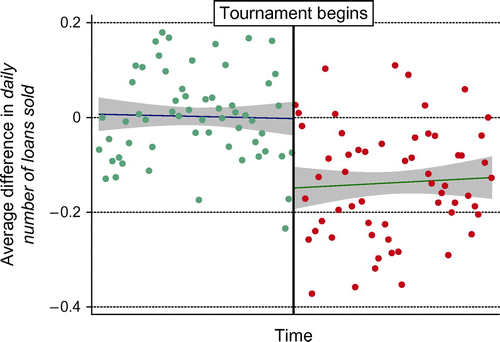
Notes. Each data point in the figure corresponds to the average daily difference in sales between outlets with above- and below-average (within tournament group) numbers of physically proximate advantaged peers. Solid lines, with shaded 95% confidence intervals, are trends estimated separately for pretournament and tournament periods.
We now turn to exploring these relationships with multivariate analyses, extending the data used to include 61 days preceding the introduction of the tournament. In particular, we estimate several variants of the following equation:
|
Table 5: Predicting Productivity Before and During Tournament Duration
| (1) | (2) | (3) | (4) | |
|---|---|---|---|---|
| Winning distance | −0.258 (0.240) | −0.286 (0.245) | −0.280 (0.239) | −0.276 (0.245) |
| Trailing distance | −0.146∗∗ (0.061) | −0.118∗∗ (0.047) | −0.147∗∗ (0.066) | −0.123∗∗ (0.050) |
| Unit size | −0.010 (0.012) | −0.014 (0.016) | −0.018 (0.013) | −0.012 (0.016) |
| Unit costs | 0.487∗∗ (0.216) | 0.483∗∗ (0.225) | 0.493∗∗ (0.209) | 0.468∗∗ (0.225) |
| Piece rate | 0.722∗∗∗ (0.041) | 0.709∗∗∗ (0.049) | 0.716∗∗∗ (0.056) | 0.717∗∗∗ (0.038) |
| Tournament duration | 0.158∗∗∗ (0.005) | 0.177∗∗∗ (0.006) | 0.160∗∗∗ (0.006) | 0.172∗∗∗ (0.007) |
| Physical proximity to advantaged peers × Tournament duration | −0.023∗∗∗ (0.006) | −0.015∗ (0.008) | ||
| Social proximity to advantaged peers × Tournament duration | −0.016∗∗∗ (0.005) | −0.020∗∗∗ (0.006) | ||
| Structural proximity to advantaged peers × Tournament duration | −0.012∗∗ (0.005) | −0.006∗∗ (0.002) | ||
| Outlet fixed effects | Yes | Yes | Yes | Yes |
| N | 15,528 | 12,657 | 15,528 | 12,657 |
| Chi-squared | 4,347.18∗∗∗ | 3,594.70∗∗∗ | 3,955.27∗∗∗ | 5,230.13∗∗∗ |
Notes. The dependent variable is daily number of loans sold. In this table, we use four months of data: two months before the tournament introduction and the whole period of the tournament duration. Tournament duration is a dummy variable equal to one when the tournament is in place. Personal characteristics and uninteracted proximity to (advantaged) peers are absorbed by outlet fixed effects. Block-bootstrapped standard errors are in parentheses.
∗p < 0.10; ∗∗p < 0.05; ∗∗∗p < 0.01.
As in most organizations, the incentive system at the bank we study was complex, including several simultaneously operating incentive mechanisms. In particular, and as mentioned earlier, the tournament we examine was a temporary award program that was offered in parallel with an ongoing piece-rate bonus scheme. Under this established piece-rate regime, outlet employees were paid a bonus for each loan they sold, with this piece-rate bonus fixed at zero until 80% of the sales target was reached, and then stepping upward for every 5% to a maximum level of 130% of the reached sales target. Although in our study we focus on the effects of social comparison arising in response to the tournament incentives, social comparison across outlets may also occur in response to these sales targets. In other words, one outlet may envy or deem unjust another outlet’s current sales target. However, the rules determining sales targets remain unchanged during our observation period, and therefore we cannot identify any such effects empirically. Still, we can partially control for any such effects, so as to not misattribute performance variation to our tournament-driven social comparison. To do so, we constructed, for each outlet, measures of physical, social, and structural proximity to peers benefiting (in prior month) from a higher piece-rate bonus, perhaps a result of sales targets set “too low.” These measures are hence constructed in an analogous fashion to our measures of proximity to objects of upward comparison used in the main models. We find no evidence in our data of the productivity implications of social comparison based on piece-rate levels. Full results of these analyses are included in the online supplement to this paper.
Two factors may contribute to this lack of results. First, sales targets and the piece rates that resulted were not public knowledge, at least not openly public, as was relative performance in the tournament. Second, the dynamic process of setting piece rates over time is somewhat self-correcting. In other words, an outlet with an enviably low sales target in an initial period may as a result generate very high sales in the next to take advantage of the higher piece rate for rather low sales. However, in the subsequent period, this higher performance will result in a ratchet effect on the sales target. Unless an outlet is disciplined in its sandbagging, the elevated effort and higher sales will remedy the problem.
To further explore the substantiveness of our claims as well as address concerns about potential alternative explanations of our findings, we have performed a series of additional robustness tests and supplementary analyses. Because of space constraints, we provide only a brief summary of these analyses and results in Table 6. Actual results and more extensive discussion are included in the online supplement.
|
Table 6: Summary of Robustness Tests and Analyses Described in Detail in the Online Supplement
| Robustness tests/Concerns | |
|---|---|
| Underestimated standard errors | Given the time-invariant nature of our proximity measures, one may be concerned that using daily-level productivity outcomes may lead to underestimation of standard errors (Bertrand et al. 2004). While we use a standard technique of block bootstrapping adjustment to account for possible correlation in error terms within outlets, we run a series of additional tests. Accordingly, we report regression results based on aggregated data where we observe one, average productivity outcome per banking outlet, both for the tournament period only and for the comparison of pretournament and during-tournament time windows. |
| Social comparison effects are short lived; the reported results are a result of the Hawthorne effect | To investigate the temporal stability of social comparison, we reran our models including a measure for the number of days elapsed since the beginning of the tournament and its interaction with our measures of proximity. Using several forms of this measure, we found no indication of the diminishing effects of proximity on productivity over time, consistent with the visual evidence in Figure 1. |
| Reported results are driven by a tournament-induced increase in interoutlet competition for customers | An important alternative explanation of our results of the negative productivity impact of proximate (especially physically) advantaged peers is that these effects could partially be driven by an increased intensity of rivalry across outlets, following the introduction of the tournament incentives, rather than social comparison. We performed two additional tests to further account for this alternative mechanism, including the sensitivity of productivity to historically more productive and proximate outlets that were not advantaged by the tournament design as well as an exclusion test of most physically proximate outlets. We found no evidence to support this alternative explanation. |
| Changes in productivity are driven by pricing decisions of outlet managers, substitution of effort to/from other products sold, or changes in portfolio quality rather than provision of effort | We reran all our analyses with an alternative dependent variable: daily revenues on loans sold. While the actual objective function of the tournament was measured in the number of loans sold, this alternative measure may better reflect the objective function of the bank we study and accounts for pricing behavior. We checked the robustness of our results with respect to the inclusion of sales of other products (such as secondary loans) that the banking outlets were selling contemporaneously with personal loans. Our results remain robust to this further test. We checked the sensitivity of our results with respect to the exclusion of more risky loans. |
| Supplementary analyses | |
| Does downward social comparison (proximity to disadvantaged peers) affect productivity? | Individuals may be generally inequity averse—averse to not only others receiving greater rewards, but others receiving lesser rewards as well (Fehr and Schmidt 1999). We checked whether physical, structural, and social proximity to those with a lesser number of rewards affect productivity. We found no evidence of such compassion-based behavioral effects in our data. |
| Does proximity to tournament group thresholds elevate the behavioral effects of social comparison? | We might expect that for banking outlets that narrowly miss the allocation to a “better” tournament group, the negative response to emotions of envy or injustice from upward social comparisons will be greater. To check for such behavioral reactions, we ran several regression discontinuity models. As expected, we found that higher-ranked outlets that barely missed allocation to a tournament group with more awards underperformed significantly, during the tournament duration, those more distant from this cutoff. |
Discussion
In this paper, we offer a first empirical test of the behavioral consequences of comparisons to proximate advantaged others when prompted by an abrupt shift in the heterogeneity of incentives. While we argued that upward social comparisons may prompt either productive or unproductive behavioral responses, we find evidence that these processes dampen productivity and that variance in rewards is thus a double-edged sword. On the one hand, efficiency considerations often prescribe such design choices to motivate desired behaviors, reward different tasks, or attract and retain rare human capital (Baker et al. 1994). On the other hand, such variance fuels social comparison processes that may outweigh at times any productive consequences (Nickerson and Zenger 2008). Analyzing a detailed database from a large retail bank, we show that the imposition of a heterogeneous reward structure, in the form of tournament incentives in which groups of outlets compete for differing numbers of prizes, while appearing to generate an overall increase in productivity, also introduces an impetus for upward social comparison that dampens productivity selectively. Moreover, we find that the proximity of the advantaged peers significantly shapes the magnitude of productivity-reducing behaviors.
Our results specifically highlight three forms of proximity that heighten behavioral responses to social comparisons with more privileged others. We present evidence that productivity decreases when managers are socially proximate to those more advantaged by the new incentive structure. We also demonstrate that outlets that are more geographically proximate to other, more advantaged outlets generate lower productivity. Finally, we show that outlets that are structurally proximate to others advantaged by the new incentive structure (i.e., within the same broader division) generate lower productivity. These findings all tell a rather consistent story. Proximity, whether social, geographical, or structural, to peers that are perceived as more advantaged by organizational designers leads to upward social comparison costs and costly behaviors in response that decrease the provision of effort. We also find that the economic significance of these effects is nonnegligible.
Our study contributes to an important ongoing discussion about the importance of accounting for social preferences in models of behavior (see, for example, a recent debate: Binmore and Shaked 2010, Fehr and Schmidt 2010). In particular, some scholars have raised concerns about the economic significance and prevalence of other-regarding preferences in real organizations, and hence the generalizability of what has, up until now, been largely experimental evidence on the topic (Falk and Heckman 2009, Cohn et al. 2014; see also a discussion in Fehr et al. 2006 on the sensitivity of results to a chosen subject pool in experiments). To build a comprehensive theory, accounting for drivers and consequences of social comparison, we need more evidence from the field. Our work helps to close this critical gap and shows important behavioral and economic consequences of social comparison in an organizational context.
Our work thus also contributes to the broad research stream documenting various forms of adverse consequences of social comparison in organizations and their underlying drivers. Arguably, the majority of work has focused on the costs associated with influence activities and actions aimed at sabotaging the performance of advantaged others (Cropanzano et al. 2003, Gino and Pierce 2009). While engaging in such harming behaviors can reduce cognitive frustration and compensate for unequal distribution of rewards (see Cohen-Charash and Mueller 2007), the productivity consequences are often only indirect. In our work, we document and estimate the magnitude of direct productivity and effort responses of organizational members in reaction to inequity-elevating design choices. Importantly, our results extend existing scarce evidence linking heterogeneous ex post outcomes of performance-contingent incentives to social comparison that arises from the ex ante design of varying reward structures that implies unequal treatment. We show that ex ante heterogeneity may lead to productivity-dampening effects irrespective of the ex post realizations of awards. Hence, jointly with prior work, our findings suggest that both the actual structure underlying the allocation of rewards and the actual distribution of rewards give rise to costly social comparison processes in organizations.
Finally, our work contributes to the efforts aimed at building a comprehensive theory of the firm, one encompassing costs and benefits of choosing to integrate or outsource. Recent work has argued that social comparison creates costs that result in managerial diseconomies of scale and scope, and hence profoundly shape the composition of incentives and the design and boundaries of organizations (Nickerson and Zenger 2008). In related empirical work, scholars have also argued that concerns of internal fairness shape the provision of incentives in organizations (Dushnitsky and Shapira 2010, Gartenberg and Wulf 2017). While abundant theory and evidence point to the productivity benefits of high-powered incentives for those thereby motivated, their use is less frequent than theory might predict (Zenger 1992, Lawler 2003, Larkin et al. 2012). The processes of social comparison and the imposed costs in terms of dampened productivity provide one important explanation. The key insight is that the effects of incentives, perhaps targeted to motivate only one group, are not merely isolated to those targeted for motivation. Incentives are imposed within an established social structure in which social comparison is ubiquitous. Thus, the task of the organizational architect is not merely to compose incentives that optimize the behavioral response of those targeted for motivation, but to also account for the costs and consequences of social comparison for the remainder of the organization. While these costs may appear in many forms, we suggest they aggregate to dampen productivity. These costs may encourage firms to simply constrain the variability of rewards to minimize these costs.
Simply avoiding or suppressing variance in pay is, of course, but one possible design response from an organizational architect. Our work implies that firms may seek to minimize the costly responses to social comparison through other features of organization design, those affecting the structure of the comparison group and salience of the advantaged others. Consistent with work by Nickerson and Zenger (2008) and Aristotle’s (2010) early intuition, our study suggests that increasing the distance (socially, structurally, or physically) between those disadvantaged and those advantaged may reduce the productivity-dampening effects. Distance can be shaped in a variety of ways. Firms may geographically or, more broadly, spatially separate those with distinct rewards or reward structures to minimize social comparison. Firms may also structurally separate those with divergent pay, composing homogenous subgroups structurally distant from other homogenous groups with divergent pay. Structural separation may increase the firm’s ability to avoid social comparison while composing divergent incentives. Yet part of the benefit of structural distance may also arise from eliminating a boss with common control of groups with divergent pay. If a common boss imposes what are deemed to be inequitable rewards, the salience of these rewards and the corresponding negative emotional response may be much greater than when the responsible bosses are separate and distant, and supervised by someone several levels up the hierarchical ladder. Such logic is closely related to the work of Milgrom and Roberts (1988) on influence activities. In this case, clever design may minimize the costly influence activities that accompany variance in rewards. We also find evidence that a negative response is greater when objects of upward comparison are within one’s circle of social affiliates. Observing close friends receiving rewards you perceive as inequitable evokes more costly negative response than observing socially distant acquaintances receiving similarly divergent rewards. Of course, the flip side of these observations is that by increasing social, structural, and geographic distance, one can decrease the negative effects of social comparison, confirming the age-old adage: out of sight, out of mind.
One of the most common paths to reducing the costs that accompany upward social comparison is to simply hold outside the firm those activities that are quite divergent in the rewards or reward structure that efficient design merits. Outsourcing these activities entirely dramatically elevates social, structural, and typically physical distance. Such logic helps explain the common observation that big pharma firms access the largely early stage output of small biotech firms by funding and licensing their output rather than by purchasing these firms outright. The common logic is that attempts to acquire such small start-up firms are highly problematic because big pharma firms cannot internally replicate the very high-powered incentives required to retain top talent, because of the inherent social comparison problems that result. Efforts to implement such incentives inside these large firms simply invite widespread upward comparisons that encourage turnover, influence activities, and reduced effort from those not part of the acquired venture. While acquiring small biotech firms and simply abandoning their prior incentives is not uncommon, the result is often a loss of the key talent that prompted the purchase. The more common result is therefore to contract for their research output.
Our broad observation is that managers have a remarkably naïve understanding of social comparison and social comparison costs. Consistent with the motivating example of the industrial producer in the theory section seeking to craft effective but divergent incentives, all too often managers seem surprised by negative or costly responses to the imposition of an incentive pay system—particularly by responses from those not directly rewarded by the incentive system. This may reflect, in part, the predominant focus in the literature on the value-enhancing role of differentiated design choices in organizations. We suspect that more careful documentation of the behavioral effects that we study, clear evidence of their associated costs, and a clear understanding of those factors that mitigate and accelerate these costs are critical to making improved design choices in practice. While there is abundant and growing research documenting the powerful influence of rewards on those rewarded, there is less research on the broader costs and benefits imposed. Our aim here has been to contribute to this literature and in the process provide a basis for deeper understanding of the design and structure of both incentives and organizations.
Despite our efforts to carefully identify and measure the proximity mechanisms underlying upward social comparison arising in response to incentive heterogeneity in organizations, we acknowledge several limitations that also constitute exciting avenues for future work. First, we do not directly observe or measure emotions arising in response to social comparison. Rather, our aim in this paper was to focus on the mechanisms that are likely to increase the salience of comparison and document their performance consequences. Future work, including experimental studies, may focus on precisely identifying the magnitude and type of emotional response that award variance prompts. A related limitation of our data is that we observe outcomes at the banking outlet level (usually comprised of several individuals) but draw on social comparison theory that is essentially predicting individual-level responses. Therefore, an implicit assumption behind our identification strategy is that we can attribute varying levels of social comparison due to proximity to advantaged others at the group level. While we acknowledge this assumed aggregation process, we note that we are not making any assumptions about group processes. Indeed, because observed productivity is an outcome of individual and joint efforts of banking outlet employees, for our identification strategy to be valid, it is sufficient that only one member of the focal branch experiences envy or injustice and lowers productivity. Research in social psychology, however, indicates that feelings, moods, and emotions are contagious in small groups (Neumann and Strack 2000, Ashkanasy 2003). As Barsäde and Gibson (1998, p. 81) note “groups are emotional entities.” Therefore, the feelings of envy or injustice are not likely to be neutralized by the social aggregation process. These aggregation processes nonetheless merit exploration.
As discussed earlier, most employees in modern firms are simultaneousy exposed to a multitude of performance-based incentive mechanisms—ranging from promotion tournaments to bonuses or awards. Designing such incentive systems is a magnificent task, given important interdependencies and interactions between these elements (Holmstrom and Milgrom 1994). Indeed, prior work has studied the related issues of crowding out and motivational spillovers across tasks and incentive mechanisms (see Gubler et al. 2016). Although our empirical design does not allow us to directly examine this question, the social comparison costs may represent yet another behavioral mechanism that proves to be subject to such spillovers. If this is the case, then both the order in which incentives are introduced and the relative power of incentive mechanisms could generate very different social comparison consequences even for firms arriving, in equilibrium, at a similar set of motivating tools. We believe that this area constitutes a fascinating avenue for future research.
The authors would like to thank conference participants at the 2014 Academy of Management, 2014 Strategy Science INFORMS, 2015 Strategic Management Society, and 2015 Strategy Research Forum meetings, as well as seminar participants at Bocconi University, Cambridge University, INSEAD, LMU Munich, London Business School, and SKEMA Business School for their helpful comments. They owe special thanks to Lamar Pierce, Andy King, Nicholas Argyres, and three anonymous reviewers.
1 Cohen-Charash and Mueller (2007, p. 666) similarly define envy as occurring when “Person A notices that a similar other, Person B, has something (e.g., material or personal) that Person A wants but does not have, and the desired object or condition is central to A’s self concept.”
2 This example is based on private conversations of the second author with managers at General Electric.
3 Importantly, based on the interviews with bank outlet employees, we are confident that neither the tournament’s introduction nor its rules were anticipated by the participants prior to the contest’s announcement three days before it began.
4 While the nominal value of finishing the tournament among prize-eligible contestants was significant, the expected value (given the size of tournament groups) was, of course, more modest, possibly raising concerns about its salience in prompting behavior. The growing literature on awards (Gubler et al. 2016, Frey 2007) suggests, however, that such programs provide organizations with powerful motivating tools by coupling monetary and nonmonetary incentives, including the status associated with winning. Our interviews also suggest that bank employees saw the tournament as an important event, as one of the interviewed managers mentioned: “During the tournament, we all put our act together. It became a question of honor for us to finish as one of the winners.”
5 These piece rates may also create patterns of social comparison, which we address in our supplemental analysis and robustness section.
6 We were able to gather the social tie information for 136 out of 164 outlets, leading to a response rate of 83.5%. We found no significant non-response bias with regard to outlet type, location, size, pretournament and during-tournament performance, or outlet managers’ personal traits such as gender, age, tenure, or marital status.
7 As an alternative specification and a robustness test, we used the ordinal rank of a focal outlet rather than the tournaments objective function: places away and places ahead. For example, in this specification, an outlet occupying, on day t, a 10th position in a group competing for three prizes has a measure of places ahead of zero and places away of seven. Our results were materially unaffected by this redefinition of the control variables.
8 Although the magnitude of pairwise correlations is not alarming, we check if multicollinearity could be affecting our results. We find no evidence of this mechanism.
9 Visual patterns in the data are similar for our other dimensions of proximity to advantaged peers.
10 It is important also to explain here why we do not report these results using extended data as our main analyses. In fact, to run these models we had to simulate an artificial structure of the tournament on data preceding its operation. Therefore, we artificially had to extend the duration of the tournament from two to four months. To allocate outlets into tournament groups, we used the same benchmark that was actually used by the designer of the tournament (or the one that would have been used had the tournament been implemented two months prior to its actual taking place). While this exercise allows us to estimate our terms of interest, it also means that some of our control variables (such as dynamic incentive controls), have no economic meaning for half of our time series. Therefore, while these results increase our confidence in the reported effects, they have to be treated with caution. The online supplement includes several additional analyses based on pretournament comparisons.
References
- (1963) Towards an understanding of inequity. J. Abnormal Soc. Psych. 67(5):422–436.Crossref, Google Scholar
Aristotle (2010)Cope EM, Sandys JE, eds. Aristotle: Rhetoric,Vol. 2. Cambridge Library Collection–Classics (Cambridge University Press, Cambridge, UK).Google Scholar- (2003) Emotions in organizations: A multi-level perspective. Dansereau F, Yammarino FJ, eds. Multi-Level Issues in Organizational Behavior and Strategy (Emerald Group Publishing Limited, Bingley, UK), 9–54.Crossref, Google Scholar
- (1994) The internal economics of the firm: Evidence from personnel data. Quart. J. Econom. 109(4):881–919.Crossref, Google Scholar
- (1998) Group emotion: A view from top and bottom. Res. Managing Groups Teams 1(82):81–102.Google Scholar
- (2004) Using “insider econometrics” to study productivity. Amer. Econom. Rev. 94(2):217–223.Crossref, Google Scholar
- (1992) Envy and inequality. J. Philos. 89(11):551–581.Crossref, Google Scholar
- (2004) How much should we trust differences-in-differences estimates? Quart. J. Econom. 119(1):249–275.Crossref, Google Scholar
- (2013) The employment relationship and inequality: How and why changes in employment practices are reshaping rewards in organizations. Acad. Management Ann. 7(1):61–121.Crossref, Google Scholar
- (2010) Experimental economics: Where next? J. Econom. Behav. Organ. 73(1):87–100.Crossref, Google Scholar
- (2009) Relative performance compensation, contests, and dynamic incentives. Management Sci. 55(8):1306–1320.Link, Google Scholar
- (2001) Optimal incentives for teams. Amer. Econom. Rev. 91(3):525–541.Crossref, Google Scholar
- (2009) Episodic envy. J. Appl. Soc. Psych. 39(9):2128–2173.Crossref, Google Scholar
- (2007) Does perceived unfairness exacerbate or mitigate interpersonal counterproductive work behaviors related to envy? J. Appl. Psych. 92(3):666–680.Crossref, Google Scholar
- (2014) Social comparison and effort provision: Evidence from a field experiment. J. Eur. Econom. Assoc. 12(4):877–898.Crossref, Google Scholar
- (2005) What is organizational justice? A historical overview. Greenberg J, Colquitt JA, eds. Handbook of Organizational Justice (Lawrence Erlbaum Associates, Mahwah, NJ), 3–58.Google Scholar
- (2003) Deontic justice: The role of moral principles in workplace fairness. J. Organ. Behav. 24(8):1019–1024.Crossref, Google Scholar
- (2014) Kitchen confidential? Norms of the use of transferred knowledge in gourmet cuisine. Strategic Management J. 35(11):1645–1670.Crossref, Google Scholar
- (2012) It hurts both ways: How social comparisons harm affective and cognitive trust. Organ. Behav. Human Decision Processes 117(1):2–14.Crossref, Google Scholar
- (2010) Entrepreneurial finance meets organizational reality: Comparing investment practices and performance of corporate and independent venture capitalists. Strategic Management J. 31(9):990–1017.Crossref, Google Scholar
- (2010) Optimal incentive contracts under inequity aversion. Games Econom. Behav. 69(2):312–328.Crossref, Google Scholar
- (2009) Lab experiments are a major source of knowledge in the social sciences. Science 326(5952):535–538.Crossref, Google Scholar
- (1999) A theory of fairness, competition, and cooperation. Quart. J. Econom. 114(3):817–868.Crossref, Google Scholar
- (2010) On inequity aversion: A reply to Binmore and Shaked. J. Econom. Behav. Organ. 73(1):101–108.Crossref, Google Scholar
- (2006) Inequality aversion, efficiency, and maximin preferences in simple distribution experiments: Comment. Amer. Econom. Rev. 96(5):1912–1917.Crossref, Google Scholar
- (1954) A theory of social comparison processes. Human Relations 7(2):117–140.Crossref, Google Scholar
- (2007) Social comparison affects reward-related brain activity in the human ventral striatum. Science 318(5854):1305–1308.Crossref, Google Scholar
- (1997) Dispatches for the Freud Wars (Harvard University Press, Cambridge, MA).Google Scholar
- (2008) Dynamic spread of happiness in a large social network: Longitudinal analysis over 20 years in the Framingham Heart Study. British Medical J. 337:a2338.Google Scholar
- (1999) A model of work frustration-aggression. J. Organ. Behav. 20(6):915–931.Crossref, Google Scholar
- (2014) Firm-specific human capital, organizational incentives, and agency costs: Evidence from retail banking. Strategic Management J. 35(9):1279–1301.Crossref, Google Scholar
- (2007) Awards as compensation. Eur. Management Rev. 4(1):6–14.Crossref, Google Scholar
- (2017) Pay harmony? Social comparison and performance compensation in multi-business firms. Organ. Sci. 28(1):39–55.Link, Google Scholar
- (1985) A propositional inventory for new diffusion research. J. Consumer Res. 11(4):849–867.Crossref, Google Scholar
- (1996) Promotions and incentives. Working paper, University of Chicago, Chicago.Google Scholar
- (2009) Dishonesty in the name of equity. Psych. Sci. 20(9):1153–1160.Crossref, Google Scholar
- (2010) Lying to level the playing field: Why people may dishonestly help or hurt others to create equity. J. Bus. Ethics 95(S1):89–103.Crossref, Google Scholar
- (1994) Using socially fair treatment to promote acceptance of a work site smoking ban. J. Appl. Psych. 79(2):288–297.Crossref, Google Scholar
- (2005) Envy and compassion in tournaments. J. Econom. Management Strategy 14(1):187–207.Crossref, Google Scholar
- (2016) Motivational spillovers from awards: Crowding out in a multitasking environment. Organ. Sci. 27(2):286–303.Link, Google Scholar
- (2008) How many winners are good to have?: On tournaments with sabotage. J. Econom. Behav. Organ. 65(3–4):682–702.Crossref, Google Scholar
- (1994) The firm as an incentive system. Amer. Econom. Rev. 84(4):972–991.Google Scholar
- (2014) Episodic envy and counterproductive work behaviors: Is more justice always good? J. Organ. Behav. 35(1):128–144.Crossref, Google Scholar
- (1992) Personal and situational determinants of referent choice. Acad. Management Rev. 17(2):212–237.Crossref, Google Scholar
- (2003) Resampling Methods for Dependent Data (Sinpring-Verlag, New York).Crossref, Google Scholar
- (2012) The psychological costs of pay-for-performance: Implications for the strategic compensation of employees. Strategic Management J. 33(10):1194–1214.Crossref, Google Scholar
- (2003) Pay practices in Fortune 1000 corporations. WorldatWork J. 12(4):45–54.Google Scholar
- (2006) Organizational reference groups: A missing perspective on social context. Organ. Sci. 17(1):80–100.Link, Google Scholar
- (1981) Rank-order tournaments as optimum labor contracts. J. Political Econom. 89(5):841–864.Crossref, Google Scholar
- (1993) What do wages buy? Admin. Sci. Quart. 38(3):462–483.Crossref, Google Scholar
- (1971) Antecedents of envy reaction. J. Personality Assessment 35(1):92–98.Crossref, Google Scholar
- (1988) The Social Psychology of Procedural Justice (Springer Science & Business Media, Berlin).Crossref, Google Scholar
- (2005) Neighbors as negatives: Relative earnings and well-being. Quart. J. Econom. 120(3):963–1002.Google Scholar
- (1998) The role of injustice in the elicitation of differential emotional reactions. Personality Soc. Psych. Bull. 24(7):769–783.Crossref, Google Scholar
- (1988) An economic approach to influence activities in organizations. Amer. J. Sociol. 94:S154–S179.Crossref, Google Scholar
- (2013) Dimensional comparison theory. Psych. Rev. 120(3):544–560.Crossref, Google Scholar
- (1995) The economics of envy. J. Econom. Behav. Organ. 26(3):311–336.Crossref, Google Scholar
- (2000) “Mood contagion”: The automatic transfer of mood between persons. J. Personality Soc. Psych. 79(2):211–223.Crossref, Google Scholar
- (2008) Envy, comparison costs, and the economic theory of the firm. Strategic Management J. 29(13):1429–1449.Crossref, Google Scholar
- (2004) Multiperson tournaments: An experimental examination. Management Sci. 50(2):268–279.Link, Google Scholar
- (1998) Fiscal year ends and nonlinear incentive contracts: The effect on business seasonality. Quart. J. Econom. 113(1):149–185.Crossref, Google Scholar
- (1993) Distinguishing the experiences of envy and jealousy. J. Personality Soc. Psych. 64(6):906–920.Crossref, Google Scholar
- (1993) The effect of wage dispersion on satisfaction, productivity, and working collaboratively: Evidence from college and university faculty. Admin. Sci. Quart. 38(3):382–407.Crossref, Google Scholar
- (1920) The Economics of Welfare (Macmillan, London).Google Scholar
- (2010) Diversification, diseconomies of scope, and vertical contracting: Evidence from the taxicab industry. Management Sci. 56(9):1534–1550.Link, Google Scholar
- (1971) A Theory of Justice (Oxford University Press, New York).Crossref, Google Scholar
- (1991) The Psychology of Jealousy and Envy (Guilford Press, New York).Google Scholar
- (1991) Provoking jealousy and envy: Domain relevance and self-esteem threat. J. Soc. Clinical Psych. 10(4):395–413.Crossref, Google Scholar
- (2004) Comparing lots before and after: Promotion rejectees' invidious reactions to promotees. Organ. Behav. Human Decision Processes 94(1):33–47.Crossref, Google Scholar
- (2005) Collaborative networks as determinants of knowledge diffusion patterns. Management Sci. 51(5):756–770.Link, Google Scholar
- (1994) “People like us:” The influence of personal deprivation and group membership salience on justice evaluations. J. Experiment. Soc. Psych. 30(3):277–299.Crossref, Google Scholar
- (1991) Envy and the sense of injustice. Salovey P, ed. The Psychology of Jealousy and Envy (Guilford Press, New York),79–112.Google Scholar
- (2007) Comprehending envy. Psych. Bull. 133(1):46–64.Crossref, Google Scholar
- (2012) Envy as pain: Rethinking the nature of envy and its implications for employees and organizations. Acad. Management Rev. 37(1):107–129.Crossref, Google Scholar
- (1989) Social comparison activity under threat: Downward evaluation and upward contacts. Psych. Rev. 96(4):569–575.Crossref, Google Scholar
- (1992) Why do employers only reward extreme performance? Examining the relationships among performance, pay, and turnover. Admin. Sci. Quart. 37(2):198–219.Crossref, Google Scholar
Tomasz Obloj is associate professor of strategy at HEC Paris. He received his Ph.D. from INSEAD. His research interests include behavioral and competitive strategy, the economic theory of incentives, and organization design.
Todd Zenger is an N. Eldon Tanner Professor of Strategy and Strategic Leadership at the David Eccles School of Business at the University of Utah and holds the University of Utah designation as presidential professor. He received his Ph.D. from UCLA. He recently published Beyond Competitive Advantage: How to Solve the Puzzle of Sustaining Growth While Creating Value (HBR Press, 2016). His research interests include corporate strategy, strategic leadership, and organization design.