


The Liminality of Trajectory Shifts in Institutional Entrepreneurship
Abstract
In this paper, we develop a process model of trajectory shifts in institutional entrepreneurship. We focus on the liminal periods experienced by institutional entrepreneurs when they, unlike the rest of the organization, recognize limits in the present and seek to shift a familiar past into an unfamiliar and uncertain future. Such periods involve a situation where the new possible future, not yet fully formed, exists side-by-side with established innovation trajectories. Trajectory shifts are moments of truth for institutional entrepreneurs, but little is known about the underlying mechanisms of how entrepreneurs reflectively deal with liminality to conceive and bring forth new innovation trajectories. Our in-depth case study research at CarCorp traces three such mechanisms (reflective dissension, imaginative projection, and eliminatory exploration) and builds the basis for understanding the liminality of trajectory shifts. The paper offers theoretical implications for the institutional entrepreneurship literature.
Introduction
History is filled with stories of organizations failing to leverage new ideas that could spawn innovation. From corporate boardrooms to MBA classes, these stories are taught as cautionary tales of the “innovator’s dilemma” (Christensen 1997). Yet some organizations do create successful innovation trajectories stimulated by ideas quite alien to their existing capabilities. In such cases, they embark on innovation trajectories that diverge from institutionalized practices (Garud and Karnøe 2001, Munir and Phillips 2005). It is therefore not surprising that significant attention has been paid to the organizational members who initiate trajectory changes and actively participate in them (Battilana et al. 2009).
Portrayed as institutional entrepreneurs, such actors establish new trajectories as they develop a vision, mobilize people, and motivate others to achieve and sustain the vision (Battilana et al. 2009). They take initiatives that typically break with trajectories institutionalized in skills, technology, management systems, and values (cf. Leonard-Barton 1992), struggling to realize their visions. In this regard, institutional entrepreneurs, here understood as individual agents, are vital for igniting organizational changes that may eventually lead to field-level change.
We define the notion of innovation trajectory as the direction and future path of human activity intended to develop new products and services. As institutional entrepreneurs envision and materialize a new trajectory, they must simultaneously handle taken-for-granted knowledge of the past and the unknown future of the change initiative. In this article, we focus on this past–future tension as it plays out at the microlevel of institutional entrepreneurial action (Barley 2008, Smets et al. 2012). Seeking to understand its underlying mechanisms, we treat success and failure symmetrically, rather than adopt a variance logic of consequentiality (see Garud and Karnøe 2001). We take an ontological position from which institutional entrepreneurs are viewed as reflective agents capable of positioning themselves in the ambiguities emerging from the past–future tension.1
Reflecting a broader discussion on institutional change (Benson 1977, DiMaggio 1988, Seo and Creed 2002), prior literature has studied the role of institutional entrepreneurship in such change (Battilana et al. 2009, Garud et al. 2007) as it is manifested in discursive strategies (Munir and Phillips 2005), boundary spanning (Levina and Vaast 2005, Tushman 1977), and process dynamics (Greenwood and Suddaby 2006). However, there is a paucity of research that seeks to understand trajectory shifts as the period of institutional entrepreneurship when the possible future, yet not fully formed, coexists with existing innovation trajectories. This period represents a moment of truth for institutional entrepreneurs and the organizations they represent because it determines the fate of what may become a path-changing innovation. It is therefore of considerable interest to inquire into the mechanisms that organizational members enact in moving forward from this twilight zone of innovation to form a new trajectory. Similar to Garud and Rappa’s (1994) seminal study of cochlear implants, our inquiry into these mechanisms covers both individual validation within the firm and consensual validation across firms at the field level. In this regard, we take on a notion of institutional entrepreneurship that spans two levels, something that is rarely done in the prior literature (for an exception, see Smets et al. 2012).
Drawing on in-depth case study research at CarCorp, we found the notion of liminality (Turner 1969) useful for conceptualizing trajectory shifts in institutional entrepreneurship. Originally referring to the middle stage of rituals, liminality “earned its way” (Strauss and Corbin 1998, p. 292) as a useful metaphor for characterizing the ambiguity we observed among the institutional entrepreneurs at CarCorp who found themselves in the borderland between the past and the future. Our research makes at least two contributions. First, we offer a process model of trajectory shifts in institutional entrepreneurship, where emerging new trajectories continuously challenge—and are challenged by—existing ones. Second, we propose three mechanisms (reflective dissension, imaginative projection, and proactive elimination) that serve as engines of trajectory shifts as institutional entrepreneurs deal with liminality to achieve their objectives.
Trajectory Shifts in Institutional Entrepreneurship
Institutional Entrepreneurship
Alexander Graham Bell, Thomas Edison, Gustaf de Laval, and Steve Jobs are all examples of iconic inventors who figure in our collective memory of innovation. They managed to create new institutions by combining excellent engineering and entrepreneurial skills with an understanding of how to locate innovative ideas within an existing institutional context. For example, Edison managed “to invoke the public’s familiarity with the technical artifacts and social structures of the existing gas and water utilities, telegraphy, and arc lighting” as he became the first inventor among many who made incandescent lighting commercially successful (Hargadon and Douglas 2001, p. 477). In the midst of many possible trajectories for electric lighting, his capacity to align the new invention with the institutional forces of gas lighting gave initial legitimacy and eventually replaced the incumbent rival and outcompeted other alternatives. As evident in Hargadon and Douglas’ (2001) detailed examination of Edison’s institutional entrepreneurship, however, what in hindsight seems to be a relatively smooth process involved significant struggle to deal with setbacks and uncertainties to create new opportunities.
Institutional entrepreneurship has emerged as a field of organization studies that examines such struggles as they can be traced back to the tension between institutional determinism and agency (DiMaggio 1988, Seo and Creed 2002). It focuses on those actors “who leverage resources to create new institutions or to transform existing ones” (Maguire et al. 2004, p. 657) and therefore need to deal with the past and the future simultaneously as they successively establish a new innovation trajectory. Institutional entrepreneurs, whether individuals or groups of individuals (Maguire et al. 2004) or organizations (Garud and Jain 2002), both initiate changes that diverge with existing trajectories and participate in the implementation of those changes (Battilana et al. 2009). In this regard, institutional entrepreneurs play a significant role as organizations struggle with new ideas. Ideally, they mobilize the resources needed to materialize an interest that they value (DiMaggio 1988, Dorado 2005), and they subsequently overcome existing capabilities and values that may establish themselves as core rigidities (Leonard-Barton 1992).
Existing literature positions institutional entrepreneurship at the intersection of past practices and emergent futures (Garud et al. 2002, Greenwood and Suddaby 2006, Maguire et al. 2004, Munir and Phillips 2005), where intimate knowledge about the past remains central to enable resource allocation and gain legitimacy for the new innovation trajectory (Battilana et al. 2009). This invokes an image of innovation as inseparable from the history of organizational affairs, directing the study of entrepreneurship to activities that connect the past to the new future envisioned by entrepreneurs. Maguire et al. (2004) note how the institutionalization of new practices requires alignment to stakeholders’ routines and values, Garud et al. (2002) show how the shaping and sponsorship of technological standards require significant understanding of existing technological fields, and Greenwood and Suddaby (2006) clarify how the combination of exposure to field-level contradictions, low embeddedness, and motivation to change make central actors institutional entrepreneurs.
Trajectory Shifts
Drawing on Garud and Rappa (1994), our micro-level conceptualization of institutional entrepreneurship sees trajectory shifts as change in at least one of three constitutive elements of a technological innovation: beliefs, artifacts, and evaluation routines. First, beliefs are central for how organizations face technological change. Organizational members develop cognitive representations of the world (Weick 1979), which form beliefs about the market, product, and technology related to the firm’s own idiosyncratic historical contexts (Kaplan and Tripsas 2008) and external forces, such as government, media, users, and technology standards (Garud et al. 2002, Hargadon and Douglas 2001, Kaplan and Tripsas 2008). Second, artifacts are the tangible embodiment of a particular design. The artifact can be seen, heard, touched, and used; it performs a set of specific functions that create value for users (Baldwin and Clark 2000), which ultimately is at the heart of making a successful business. Last, evaluation routines are the values and assessment practices that legitimize a particular innovation. Sometimes understood as the external manifestation of beliefs (Garud and Rappa 1994), they serve as standards for determining the value of a new innovation within an institutionalized setting.
During a trajectory shift—that is, when a new innovation trajectory is conceived—the new trajectory is fragile relative to the established trajectory. The struggle between past views and the emergent future is uneven; the unfamiliar trajectory is always at risk of being absorbed by the power of the familiar trajectory and its associated practices. Yet trajectory shifts do happen, a recognition that has stimulated prior literature to examine the structural conditions that created these shifts. One such condition concerns the location of actors. For instance, certain actors may be placed in unique positions that make it possible for them to assume the role of institutional entrepreneurs, possibly detecting external innovation trajectories that can be adopted as future directions within the organization (Thornton et al. 2012). Drawing on network location theory and dialectical theory, Greenwood and Suddaby (2006), for example, show how some organizations, such as major accounting firms, may occupy a network location that exposes them to field-level contradictions, making them aware of other possibilities. Similarly, on the organizational level, research shows that the occupation of subject positions that involve legitimacy and bridge diverse stakeholders increases the potential for agency (Maguire et al. 2004). In a similar vein, the boundary-spanning literature focuses on actors who operate at the periphery or boundary of an organizational entity, relating the entity to elements outside it (e.g., Cohen and Levinthal 1990, Tushman 1977). Special boundary roles increase the likelihood of discovering information that may be used to initiate divergent trajectories, whose materialization typically relies on the establishment of a new field of practice (Levina and Vaast 2005).
Another stream of literature considers the dynamism through which the initiation and implementation of trajectory shifts unfold over time. As in any process of organizational transformation (Van de Ven et al. 1999), shifting an innovation trajectory takes time (Jelinek and Schoonhoven 1990) and may be portrayed as a metamorphosis rather than a sudden change (Orlikowski 1996). In this vein, trajectory shifts can be seen as a gradual process that is initiated and rolled out through logics of action and mobilization (Dorado 2005) or as theorization of new practices through discursive and political means that are institutionalized by connecting them to stakeholders’ routines and values (Maguire et al. 2004). This view of trajectory shifts as the gradual transformation of beliefs, artifacts, and evaluation routines may be further enhanced by extending the conceptualization of institutional entrepreneurship to include the microlevel interaction between the past and the future that involves continuous renegotiation of the new innovation trajectory. Continuous renegotiation makes new innovation trajectories inherently fragile, where the institutional entrepreneur faces multiple options in going forward (Garud et al. 2002). Shifting trajectories is therefore much about handling the institutional multiplicity (Benson 1977, Berente and Yoo 2012, Thornton et al. 2012) playing out on the microlevel, where the new innovation trajectory coexists and competes with established trajectories, as well as other emerging trajectories pointing in other directions. Each progress along a new trajectory establishes yet another temporary plateau from which new past–future encounters are born. Invoking this notion of a trajectory shift suggests a knowledge-generating opportunity that we set out to address.
Bringing Forth a New Innovation Trajectory
Seeing institutional entrepreneurship as trajectory shifts, we argue for the need of a new language that allows us to think about the ambiguity faced by institutional entrepreneurs when their new possible innovation trajectory is not yet fully formed. Prior literature on innovation as gradual transformation (Jelinek and Schoonhoven 1990, Orlikowski 1996, Van de Ven et al. 1999) and structural conditions of trajectory shifts (Battilana 2011, Maguire et al. 2004), including the boundary-spanning literature (Cohen and Levinthal 1990, Tushman 1977), offers at best partial views of this ambiguity. Because these are moments when the new promising trajectory exists without the conditions under which the shifts initiated can be considered implemented, it is important to address this gap in the literature.
In pursuing such an inquiry, there are a number of assumptions worth making. First, the knowledge of the new innovation trajectory is not evenly shared in organizations; entrepreneurs are fully aware of this and take it into account in their entrepreneurship (Garud and Karnøe 2003, Garud et al. 2010). Second, going beyond the state of ambiguity is vital for generating a momentum for the trajectory within the organization. Such momentum offers the necessary time frame for entrepreneurs to trigger the generative impulse to explore new aspects that can move the trajectory further (see Garud and Karnøe 2001). Giving temporary rest and excitement to institutional entrepreneurs, the momentum is typically manifested in changes of beliefs, artifacts, and/or evaluation routines. Last, new innovation trajectories are pregnant with multiple possible outcomes, where the undertaking emerges from entrepreneurs’ mindful deviation from institutional settings (Boland et al. 2007, Garud and Karnøe 2001) and can be viewed as in a state of becoming (Benson 1977, Tsoukas and Chia 2002, Yoo et al. 2006). Rather than taking on a variance logic of consequentiality, it is therefore useful to treat success and failure symmetrically, paying tribute to actors’ capacity to overcome constraining forces of the past (Garud et al. 2010). In this sense, it is important to note how institutional entrepreneurs continue to probe the contour of new possible futures (Pickering 1993).
In this paper, we zoom in on the periods when a new idea can go either way. An idea represents an opportunity but exists in a twilight zone where the result may be a new powerful innovation, or may be one of the many ideas that are filed as premature, or ill-thought-out (Pickering 1993). Whereas some institutional entrepreneurs successfully emerge from trajectory shifts with a fermented new innovation trajectory, others are unable to do so, thus squandering new ideas. Seeking to further our understanding of the means by which institutional entrepreneurs complete trajectory shifts, we therefore argue that it is important to unpack the notion of trajectory shift and the action formation mechanisms underpinning the creation of new innovation trajectories. Viewing such mechanisms as a description of “how a specific combination of individual desires, beliefs, and action opportunities generate a specific action” (Hedström and Swedberg 1998, p. 23), our perspective focuses on institutional entrepreneurship as mindful action formation that leads to an innovation trajectory shift. We embark on this theory building using an empirical case study in which we seek to answer the following research question: What is the process by which institutional entrepreneurs conceive and bring forth a new innovation trajectory as they deal with the ambiguity of shifts?
Trajectory Shifts at CarCorp
Case Selection and Methods
We conducted a nine-year case study at CarCorp, a small European automaker founded in 1937. CarCorp is known for its eccentric design and innovative features, and it has a small but devoted customer base primarily in Europe and the United States. In 2000, CarCorp became fully owned by a major global automaker, GlobalCarCorp. Sharing product platforms with other automakers within GlobalCarCorp, CarCorp’s product innovation was integrated with the major automaker’s global organization. CarCorp was given significant global responsibility for car infotainment, the technology in focus here. In the aftermath of the global financial crisis (after our study ended), another firm acquired CarCorp in 2012 to build electronic vehicles.
CarCorp was selected as a case for studying trajectory shifts in institutional entrepreneurship for a number of reasons. First, the case included a number of trajectories in the innovation of car infotainment—that is, information and entertainment features for drivers and/or passengers. Some of these trajectories were envisioned but not realized as shifts. Other trajectories were realized as shifts from which new momentum and exploratory acts emerged. Second, CarCorp had a clearly identifiable group of people who qualify as institutional entrepreneurs as it both initiated divergent changes to CarCorp’s institutionalized template for designing infotainment solutions and actively participated in realizing these changes (see Battilana et al. 2009). At the same time, these people did not occupy unique structural positions that would make them likely to assume the role of institutional entrepreneurs (see Greenwood and Suddaby 2006). Two of them were engaged in what eventually became the open car communications platform during the entire period of time. Third, we were able to build the necessary trust to enable the collection of longitudinal data on this group’s entrepreneurial actions across two phases.
Reflecting our involvement over time, we collected data in two phases. The data sources for the first collection phase (May 2002–November 2004) were observations of 24 project meetings and workshops, six semistructured interviews, informal interviews, and observational data of CarCorp’s attempts to formulate a new car connectivity concept. We initiated the second data collection phase (October 2006–March 2011) when CarCorp launched a new platform project in late 2006. During this phase, we conducted 59 semistructured interviews and participated in 55 meetings, including project meetings, steering committee meetings, workshops, and CarCorp project gate meetings.
As Table 1 shows, we used three methods to collect our data: interviews, participant observation, and document analysis. We organized and recorded this data in a single research database using the ATLAS.ti software for qualitative analysis. First, we conducted 65 semistructured interviews with a total of 57 respondents (we interviewed five respondents more than once). The mean interview length was 67 minutes (S.D. = 21 mins). All interviews but one were tape recorded and transcribed verbatim, producing 72 hours of recorded material amounting to approximately 655,000 words. Among the 57 respondents, 38 were CarCorp and GlobalCarCorp engineers and managers working in car infotainment. The remaining 19 respondents worked for automotive suppliers, consultancy organizations, mobile device manufacturers, vehicle manufacturers, and mobile network operators engaged in CarCorp infotainment projects.
|

Table 1 Data Collection
| Data source | Cycle 1 (May 2002–Nov 2004) | Cycle 2 (Oct 2006–March 2011) | Total |
|---|---|---|---|
| Interviews | 6 | 59 | 65 interviews
|
| Participant observation | 24 | 55 | 79 occasions (249 h)
|
| Archival data | Project descriptions, sales forecasts, technical specifications | ||
Second, participant observation was another important source of data. We spent 249 hours observing more than 79 meetings related to CarCorp’s research and development projects in infotainment, including project meetings, workshops, steering committee meetings, and project gate meetings. Nine of the meetings were recorded and transcribed. For meetings that we did not record (for either confidentiality or logistical reasons), we took notes for inclusion in our research database. In addition to these discrete events, we conducted ongoing debriefings after meetings and numerous informal interviews with CarCorp employees. We also made field visits to various CarCorp and GlobalCarCorp sites in both Europe and North America.
Finally, our study included a significant volume of archival data, including reports, strategies, and sales forecasts. The most significant of these reports were technical specifications that helped us trace how CarCorp’s rethinking of infotainment was reflected in the technology. Although many of the documents were confidential and could not be used directly in this research, the material has served to confirm or disconfirm interpretations we made throughout the data analysis process.
We conducted the data collection and data analysis in tandem to benefit from the understanding emerging from recursively iterating between theoretical conceptions and the empirical material (Klein and Myers 1999). This strategy reflects the hermeneutic circle, which is a foundational principle for conducting interpretive case study research. In the online appendix (available as supplemental material at http://dx.doi.org/10.1287/orsc.2013.0883), we show how our research compares to this central principle of interpretive research, as well as Klein and Myers’ (1999) supporting principles. Specifically, our data analysis is an iterative four-step process to generate process theory (Langley 1999). First, we used an open coding procedure to discover concepts and their properties and dimensions (Charmaz 2006, Strauss and Corbin 1998). To reduce overlap in the initial set of several hundred descriptive concepts, we reviewed and compared all concepts to formulate preliminary definitions of more than 200 mutually exclusive concepts.
Second, consistent with the principle of abstraction and generalization (Klein and Myers 1999), we spent considerable effort iterating between theoretical abstractions related to the institutional entrepreneurship and change literature (including concepts such as path creation and dependence, institutional logics, and contradiction) and the descriptive concepts generated in the first step. This iteration between abstracted conceptions and empirical observations resulted in an emergent understanding of trajectory shifts as the conception of innovation trajectories. We noted that trajectory shifts were associated with an ambiguity among institutional entrepreneurs, when they, unlike the rest of the organization, recognize limits in the present and seek a familiar past into an unfamiliar and uncertain future. Although there existed multiple candidates in our interpretation of the data, we identified three such periods that we use as a basis for our case study. These trajectory shifts can be identified in the case study as the redefinition of car connectivity as user-centric service, open software platform design, and the developer program.
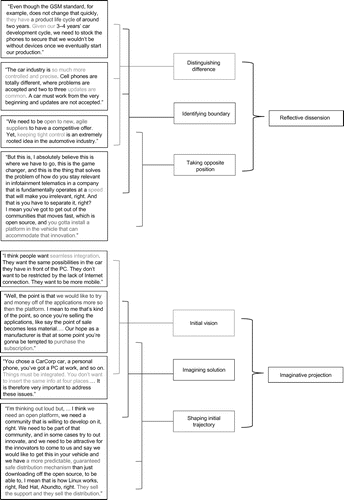
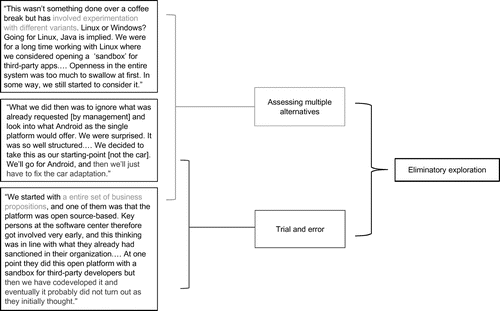
Third, with trajectory shifts in focus, we then started to examine the action sequences associated with completing the shifts. Using the notion of an action formation mechanism (Hedström and Swedberg 1998), we explored the mechanisms at play as the design group at CarCorp dealt with the ambiguity perceived during trajectory shifts. In addition to real-time data collection and interpretation focusing on entrepreneurial actions, this process involved critical reflection of the social and historical background to account for how the current situation under investigation has emerged. Once faced with intermediate versions of the three mechanisms identified in this paper (contradicting, projecting, and tuning; see Figure 2 for a summary), we engaged in retroduction (Sayer 1992), where we challenged our emergent understanding in view of other plausible mechanisms. Finally, based on the previous steps, we synthesized our process model (see Figure 3) using Pawson and Tilley’s (1997) generic contextual conditions-mechanisms-outcome structure.
The Car Communications Platform at CarCorp
In March 2011, CarCorp launched an open car communications platform that would enable car users to download applications, online services, and multimedia functions through a dedicated application store. This was the world’s first Android-based platform and generated considerable attention, not only in automotive circles but also in software development communities, as it broke radically with the institutionalized tradition of in-house development. It offered third-party developers a vehicle application programming interface (API) that provided access to more than 500 signals from different sensors in the vehicle. Supported by a new organizational unit, this initiative promised to spur innovation within a car subsystem well documented for its inability to evolve with technological change over a car’s product life cycle. As the head of after sales said at the time, “With [the platform], there are no limits to the potential for innovation. We will be inviting the global Android developer community to use their imagination and ingenuity…. [The platform] will give them [customers] the convenient, seamless connectivity they enjoy with smartphones, while adding new car-specific programs and services.” In the language of Munir and Phillips (2005), CarCorp’s open car communications platform exemplified a successful outcome of institutional entrepreneurship in the way it was eventually embedded into existing institutional practices, created new roles, and paved the way for the creation of new institutions at the field level.
On the surface, CarCorp appeared to have made a radical and decisive shift in the area of car communications. However, Figure 1 documents how the shift involved a series of events over a nine-year period, each relating primarily to beliefs, artifacts, or evaluation routines (see Garud and Rappa 1994). The story leading to the new innovation trajectory shift involved significant ambiguity, as early versions of the platform existed side-by-side with established trajectories. It started in 2002, when a design group at CarCorp began exploring the opportunity to connect the car to external networks and devices. Recognizing the automobile’s ongoing digitization, the designers, unlike the rest of the organization, envisioned offering novel information and entertainment services to customers. The initiative was a response to the commercial failure of car-integrated phone solutions, which totally dominated the car infotainment market at the time and whose product architecture served as the institutionalized template for innovation in the area. The integrated phone had not gained any real momentum among customers, however, and the designers increasingly recognized it as a dead end. In addition to being too expensive for most users, the integrated solution was considered hopelessly out-of-date and did not support a typical cell phone’s functionality. It was also costly to maintain and modify.
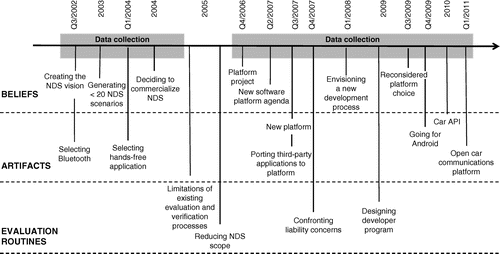
As an outlier in view of the ongoing refinement of the current trajectory of entirely integrated systems, in 2002, the group of CarCorp designers formed a project on a new type of infotainment technology referred to as nomadic device solutions (NDS). NDS was a gateway solution that interconnected the driver’s (or a passenger’s) cell phone with in-car resources such as displays, the loudspeaker system, and steering wheel controls. This was controversial at CarCorp because it left the control of the most vital part of the system with cell phone manufacturers. Although cost savings was communicated as the main advantage to management, the key vision of the NDS project, as framed by the designers, was ubiquitous information access for users. They believed that modern customers would demand car connectivity in the near future, and they considered the current trajectory of fully integrated systems as incapable of meeting that demand. As one of them noted at the time, “The customer has a life outside the car, too,” and to make car infotainment part of that life, seamless transitions across contexts were essential.
Early in the process, the design group chose to use the Bluetooth protocol, an emerging telecommunication industry standard at the time, to enable connectivity between customer devices and the car. This decision was partly forced, as stage gate project procedures at GlobalCarCorp required early commitment to a technical artifact and the designers did not want to loose their initial momentum. They remained enthusiastic and managed to generate more than 20 ubiquitous information access concepts based on their belief in Bluetooth technology. The concepts included hands-free cell phone use, infotainment remote control, games, a portable driver’s log, location-based to-do notifications, seamless voice memo, and a service reminder application.
With most of the infotainment budget allocated to infotainment projects aligned with the established trajectory, however, all but one (the hands-free application) were discontinued. Implementing the Bluetooth-enabled NDS solution, CarCorp designers soon confronted some unanticipated problems. Because cell phone manufacturers interpreted and implemented the Bluetooth protocols differently as they designed new devices, interoperability problems emerged. Given the steady stream of new cell phones with new features, it became virtually impossible to keep pace with cell phone developments using traditional infotainment evaluation and verification practices. As an infotainment engineer explained,
The automotive industry has always been quite conservative about new technology. It takes longer time to fulfill all requirements. Consider the temperature and environmental requirements. If you purchase a car for 50,000 dollars, it just has to work whether you are at the Polar Circle or Sahara. A cell phone is a throwaway product. There is a huge difference in the testing procedures.
As a result, CarCorp management decided to only support a limited range of popular cell phones.
The infotainment product manager at the time said,
Sadly, we cannot support the latest cell phones. We’re working on it, but we’re facing a tough automotive reality. We have not been able to change our processes. It takes a very long time to introduce software updates. The software has to be validated as part of a system. This is related to safety, and the fact that we must guarantee the endurance and quality of our systems over time.
Whereas CarCorp management took the evaluation and verification problems as a sign of the immaturity of NDS, the design group took this as yet another facet of the incompatibility between the new world of digital solutions and the old world of manufacturing. The evaluation and verification process used had evolved from a context where the functionality of the systems could remain untouched until the next facelift, or even the next generation of a car model.
Although not recognized widely at CarCorp, especially not in view of the mixed Bluetooth results, problems accelerated for CarCorp’s infotainment business throughout 2004 and 2005. The rapid consumer uptake of cell phones, portable music players, and portable navigation devices—combined with significant improvements in the functionality, price, and device portability—created significant competitive pressure on the car infotainment market. The designers were convinced that a new innovation agenda at CarCorp was urgently needed. As one designer put it, “Our dilemma in infotainment is that there’s a market outside the car that hijacks our functionality and business.” In essence, the challenge was to support an array of mobile devices—some of which would not even be on the market when the car was designed—or face an increasingly shrinking market share.
Around 2006, the designers’ impatience was beginning to be boldly communicated to management at CarCorp. As one of the leading designers noted,
We are a couple of people who think that [selling embedded navigation, integrated phone functionality, and CD changers] won’t be possible in the future…. When you have navigation in your pocket, why have an integrated navigation system in the car? You will not have a CD changer in the car and and a MP3 player in your pocket.
Having developed an alternative to integrated in-house navigation systems and phones, the core members of the design group managed to initiate a project that would develop a new infotainment open platform. Rather than holding on to the automotive design tradition of focusing on a system’s predefined functionality, the project manager of the platform project believed in a software platform architecture that would be malleable to environmental changes through software updates and new functionality. This shift involved considering off-the-shelf technologies popular in consumer electronics and telecommunications. The new vision called for a platform that was device-independent and supported multiple communication protocols (e.g., Bluetooth, FireWire, USB). Unlike the previous generation, the new design was developed to support a wider range of devices such as portable navigation systems, music players, and DVD players.
To this end, CarCorp developed APIs that would let device manufacturers download software on the traditionally closed in-car platform. They also wanted to give third-party developers the opportunity to use in-car resources, such as sensor data, screens, and loudspeaker systems, for developing applications. CarCorp designers formed a project team to explore new design options. The team, which initially included an online navigation vendor, a system integrator, and a large device manufacturer, decided to develop a new platform based on embedded Linux and a Java virtual machine. With such a platform, CarCorp would be able to engage in dedicated projects that allowed application developers to port their applications for in-car use. But as the platform was evaluated for commercial introduction, system architects and marketing people voiced concerns about software control and liability, and they eventually forced designers to take a step back. As a reflection of the voiced concerns and the risk that management would sidestep the project for a Microsoft solution used by Fiat and Ford, the platform and its interface were ultimately configured to work as a resource for preferred vendors only. Rather than developing an open platform, the designers’ scope was reduced to flexible integration.
With this experience, the designers began searching in a slightly new direction in 2008. By this time, CarCorp departments such as product planning and advanced engineering began appreciating the need for flexible software platforms. They saw other automakers adopting Microsoft’s solution and increasingly recognized the shaky market outlooks of CarCorp’s infotainment offer. However, the designers were dissatisfied with the prospect of using Microsoft’s solution and were already seeking new directions for augmenting the infotainment trajectory that they had worked so hard to develop. They had gradually realized that successful platform thinking required new infotainment application governance processes where, for instance, control concerns could be mitigated. The generic product development process at CarCorp still assumed integrated solutions and long-term supplier relations, as was the case in car subsystems such as powertrain and safety. With the current organization increasingly seen as a potential “showstopper,” the designers regularly discussed the need to circumvent existing practices. New energy was generated as approval was given for designers to pursue a project intended to reorganize the infotainment design process to better cater to the possibilities inherent in the new platform thinking formulated.
CarCorp designers were particularly inspired by the possibility of setting up a developer program. The Apple, Sony Ericsson, Nokia, Navteq, T-Mobile, and Android projects all exemplified attempts to create a governance structure for organizing, controlling, and monetizing open platforms. The designers envisioned the design of an API and a software development kit for application developers who became members of CarCorp’s developer program. The program was viewed as a win–win strategy: application developers would be able to reach CarCorp’s customers, and CarCorp’s infotainment platform would be more up-to-date and attractive. Ultimately, the vision was that independent content developers (whether they were into games, media, or digital maps) would be able to develop applications that would receive information from car sensors and utilize in-car hardware resources.
Shaping the developer program, CarCorp designers also reconsidered the platform choice. They recognized the potential risk that application developers would not consider a homegrown platform sufficiently attractive. After trying out several different options, CarCorp decided to use Google’s Android platform in its original form, adding a CarCorp API that would provide access to in-car resources. The fact that there were already more than 10,000 Android applications in September 2009 was imperative in making this decision. Building on a revenue-sharing (with application developers) business model and a powerful prototype car, the entire developer program concept based on the Android-platform gained top management support. In early February 2010, CarCorp’s executive management board decided to adopt the concept for CarCorp’s new midsized car model. Besides the business case, management was very impressed by both the performance and user experience of the technical artifact. For instance, Android-based navigation apps could be ported to the demo car’s in-car platform in just a few hours—an effort that would have normally taken more than a year with a conventional infotainment system.
After nearly nine years of struggle, CarCorp designers felt that they had finally created a car communications platform that until that time was virtually unthinkable. The infotainment project manager, who had participated in the path creation process since 2002 and was named partner program manager in the new organizational unit, summarized the feeling of those involved:
I think this journey has been incredibly important for our company. We have now sanctioned the project throughout the organization and received a great response…. This wouldn’t have happened without the early efforts. I don’t think that the company has been mentally prepared to make this journey until now…. It’s fantastic. Sometimes I have to pinch my arm, confirming that I’m not dreaming. So many years, so much fighting, and suddenly it happens and everything works out—it feels very strange.
In sum, CarCorp’s initial embedded phone system was eventually replaced by an open Android-based platform with a developer program. As the testimony of the new partner program manager above suggests, CarCorp’s institutional entrepreneurship did not follow a series of clean-cut visionary actions. Instead, the process was laden with partial and uneven beliefs about the new technology’s possibilities. The process was filled with serendipity and surprises, setbacks and disappointments, as CarCorp designers engaged in sensemaking and improvisation. In each step, the new innovation trajectories were not fully formed but existed side-by-side with established trajectories. The designers had to confront ambiguous periods of sociotechnical reality, pregnant with the indeterminate fate of their actions. Our analysis shows that CarCorp designers enacted three contingent mechanisms to deal with this liminality (see Figure 2). In what follows, we focus on these three mechanisms in detail.
Reflective Dissension
Our data analysis showed a significant ability among the designers to reflectively distinguish difference between the innovation trajectory that they pursued and the established beliefs, artifacts, and evaluation routines at CarCorp. To do this, the designers deliberately positioned themselves at the periphery of established practices. Because other engineers and managers at CarCorp tended to view the design group’s work through the eyes of the dominant innovation trajectory, the designers’ active work to identify the boundaries of that trajectory served as a radical way to illuminate the need of a new trajectory. We refer to this mechanism as reflective dissension, which denotes the process by which institutional entrepreneurs establish disagreement as they position themselves at the periphery of established practices to highlight the need for a new innovation trajectory.
The reflective dissension mechanism at CarCorp should be viewed in the context of the product development organization’s consistent challenge to find the time and resources to explore trajectories that did not readily fit past experience. Being controlled by a large global firm suffering from financial problems and meager market outlooks, CarCorp’s advanced engineering projects were rigorously assessed and monitored in view of the GlobalCarCorp’s overall project portfolio. GlobalCarCorp was instrumental in their efforts to avoid redundancy and overlaps between projects across their many sites across the globe. Business intelligence and technology monitoring were therefore centralized to organizational entities well beyond CarCorp designers’ reach. In fact, the only way that the CarCorp designers ever come across market and technology outlooks produced by outside analysts such as Gartner was through contacts at suppliers or consultancy organizations. The typical input channel was the forecasts produced by CarCorp’s marketing and product planning department. These forecasts, typically documented in Excel spreadsheets, contained guestimates of the future penetration of specific functionality in different regions of the world (such as in-car Internet radio in Japan) and a penetration target for the next generation of car product lines.
Given this way of managing the global project portfolio, CarCorp designers were seemingly ill-positioned to detect information that contradicted the current trajectory of innovation (cf. Greenwood and Suddaby 2006). In many ways, they were in the hands of global product planning providing functionality penetration forecasts. Because the best way to gain resource allocation for a new project was to align the objectives of the proposed project to such forecasts, divergent project directions were difficult to initiate as they were unlikely to be prioritized. Yet our data show that the group of designers repeatedly highlighted the differences between the assumptions on which CarCorp forecasting were based and the reality of infotainment that they themselves envisioned and believed in. As one of the champions behind the NDS concept stated, “We have always worked on ideas and solutions that have been difficult to appreciate from an automotive perspective. We have always seen ourselves as outsiders in view of the mainstream automotive designer.”
One of the boundaries identified early on, which then surfaced in new shapes multiple times over the nine-year period, was related to speed and what the designers referred to as the life cycle problem. Given the increasing digitalization of the car, the designers were concerned about the way the firm’s manufacturing heritage negatively affected the speed by which they could introduce new digitally enabled functionality. The temporal differences in product life cycle and development between the automotive industry on one hand and other industries conceived as increasingly related because of digitalization on the other hand were considered a significant problem by the designers:
The most striking problem is the difference in product life cycle and product development life cycle between industries that traditionally have not worked together. Now, we need to coexist, and then the automotive industry is very slow compared to the device industry.
Similarly, a consultant saw the NDS solution as a response to such life cycle difference because “we can use the technology that’s developing so much faster,” suggesting that moving toward telecom and consumer electronics by supporting Bluetooth in the car would shortcut the life cycle difference. The same temporal problem was highlighted when motivating the open platform and the developer program initiatives. For instance, in the first infotainment project descriptions related to the developer program (December 2008), one could read, “The consumer electronics industry is generally much faster in developing new functionality. This velocity difference basically threatens to outperform existing and upcoming functionality in the [GlobalCarCorp] infotainment offer. This fact is a long-term problem that needs to be addressed not only to safe-guard existing business but also to stimulate new potential revenue streams.” In this stage, however, the designers proposed going towards the use of open source software and hypothesized that “these challenges be best handled by developing an open innovation strategy that creates a distributed innovation network benefiting from external application developers’ innovative capacity.”
Another boundary that designers identified was related to control. Repeatedly, the difference between an open platform and strict control was used to take an opposite position from the control agenda of the mainstream engineer. For instance, the project manager of the developer program project in 2009 noted that “you really need to be creative to avoid CarCorp’s organization and the stop signals it entails” and further underlined that “I very much believe in not trying to do everything for ourselves—and pretend we are the champions—but rather to trust in the capacity of others to generate creative and useful ideas.” Yet the infotainment product manager underlined the ambivalence felt by many involved in the open platform project:
We see great promise in the idea of developing a general API that gives third-party developers the opportunity to develop in-car applications. By definition, the problem is that we won’t know what will happen. What applications will be developed? The stakes involved in openness are big; they involve huge uncertainty, ignorance, and some fear about which direction this will take. That’s how conservative CarCorp and the automotive industry are.
Imaginative Projection
Our research shows that the designers at CarCorp felt that the threat posed to core infotainment applications was not broadly acknowledged in the firm. In parallel with reflective dissension, therefore, they engaged in trajectory shaping. We refer to this mechanism as imaginative projection, i.e., the process by which institutional entrepreneurs create the contours of an innovation trajectory as they envision a new future to redirect innovation practices.
Throughout the process, the design group allocated resources to their projection by repeatedly searching for a way to redefine their funded projects to envision an alternative future. Such a vision for an alternative future brought renewed energy to the project and enabled designers to continue to explore the possibilities of their beliefs. For example, in the early phases, CarCorp imagined a solution as designers redefined car connectivity as a seamless user-centric service rather than thinking of it as car-centric. In 2003, an infotainment designer, who later became the most dedicated proponent of the new infotainment path, noted,
It’s important to think about infotainment from the customer’s point of view: “These are my tools—my personal choices that I make to increase convenience in all situations, and they should work together.” If you’ve chosen a CarCorp car, chosen a personal handset, chosen a PC at work, then you must be able to get these devices to work together.
This redefinition of car connectivity spurred a lot of energy and excitement among the designers. They saw it as something radically new in the automotive world and thought that the modern customer would demand car connectivity of this kind in the near future.
In 2006, after confronting Bluetooth interoperability problems, similar visionary work was practiced when the CarCorp designers negotiated resources for the new open platform project. They redefined the means to achieve seamlessness to be about software-based flexibility rather than communication interfaces. The appointed project manager reflected on current systems and the road ahead:
We are envisioning a software design that boosts the car’s capacity to handle the digital world. The solution must enable us to follow the technical development in telecommunications during both the construction and production time of the car, which, taken together, is around seven years.
These words of the project manager reflected a radical reorientation of the designers’ alternative future. Rather than holding on to the automotive design tradition of focusing on an application’s predefined functionality, he envisioned a software platform architecture that would be malleable to environmental changes through software updates. CarCorp designers realized that they had to broaden their scope beyond specific applications and devices to eventually realize a successful car connectivity solution. As one designer commented,
The car has a long life cycle and a slow development life cycle. We therefore need a flexible software-based connection for nomadic devices that can adapt the car to modern technology after the point of sale. We need this in order to offer new applications in a flexible and agile way.
With the new platform, CarCorp would be able to engage in dedicated projects that allowed application developers to port their applications for in-car use. In the envisioned future, software updates and the addition of new functionality would be normal practice. The senior architect continued,
You should be able to exchange a software module for enabling new functionality and interoperability with new devices, cell phones, and so on. It might not be possible to have a standard that lives and guarantees that everything fits, so you might need to adapt the platform over time.
Another example of imaginative projection is the vision of an open platform to deal with the problem of control. Its early visions got a significant pushback from outside stakeholders because of its immature control rationale with reference to the integrity of the platform and the business model. Dealing with the control flaws that challenged the initial idea, CarCorp designers reconfigured and repositioned the platform and its interface to work as a flexible resource for dedicated development projects with preferred vendors only. After successful initial results in 2007, which included three different architectures tying the car, the “cloud” (i.e., distributed computing resources), and devices together, the team demonstrated the project’s results for multiple CarCorp managers, convincing them to seriously consider the new platform for a series of vehicle rollouts. Reflecting on how to manage the platform through smarter organization of control, the designers decided to design a form of control that would not hamper the generativity associated with a “true” open platform.
Eliminatory Exploration
The last contingent mechanism that we identified is eliminatory exploration, defined as the process by which institutional entrepreneurs temporarily ferment an innovation trajectory after experimenting with multiple options to materialize a new solution by eliminating insufficient alternatives. An important aspect of this mechanism is how the designers negotiate between the unknown, often unknowable, technology and existing institutional forces. Eliminatory exploration entails how designers materialize the vision that emerges from imaginative projection with concrete and immediate materials and institutional practices.
As the designers materialized future projections in solutions at different stages of the nine-year period, they experimented extensively. This experimentation involved multiple possible ways to implement the vision, drawing on what was available to the designers. For instance, in the NDS case, although the initially open-ended project soon took a pragmatic turn (early commitment to the Bluetooth communications standard) because of management’s project portfolio management pressure, designers generated an entire range of use cases realizing user-centered car connectivity. Some of these use cases replicated existing in-car functionality in a nomadic device context; other use cases were radically new. The user evaluation of prototypes based on these concepts (in five demo cars) surprised designers in that, even among technology literate users, it was not necessarily the sophisticated functionality that received most attention but rather the interoperability between everyday services running on the cell phone and the in-car system. For instance, the convenience to move a call from the car to the device, and vice versa, was important. This example, among many, made designers concentrate on how to design user interfaces that accommodated the interaction between the previously separated use contexts and eliminate services that were complex from a user point of view. At the point of commercialization, they further learned that the interoperability problems of Bluetooth as a standard were a much bigger threat to the user experience than the user interface itself. This insight made the designers concentrate on a short list of NDS-compatible cell phones.
Another example of eliminatory exploration concerned the materialization of the vision of an open platform. Although the idea of an open platform that ties vehicle, cloud, and devices together certainly was an important breakthrough for the CarCorp design group, managers still had to design a form of control that would work in a real-life context. Lacking examples from the automotive world, the designers started to look at the output-centered control that existed in the world of software and their development communities. Rather than working with dedicated partners to achieve (process) control, the designers advanced a new angle on control, where emphasis would be on controlling software at the point of deployment rather than throughout the development process. This insight ignited the idea of a developer program including governance mechanisms through which the platform would be open to anyone who was willing to adhere to control points established when applying to have an application approved for the CarCorp app store. Along the way, although not without significant modification, the open platform, accompanied by its output control, gained wide support within different organizational units at CarCorp, including technical development, marketing, and after sales.
In parallel with the new form of output control reflected in the developer program, CarCorp designers also reconsidered the platform choice and eliminated the homegrown platform because it would essentially mean building a developer community from scratch. However, it was not only the designers’ options Java/Linux, GENIVI/Qt, and Android that were compared. Moreover, the contested Microsoft Auto platform also emerged from outside the design team (product planning). As the intense discussion around these options matured, the designers eliminated Microsoft Auto, Java/Linux, and GENIVI/Qt options as alternatives by pointing at the lack of vibrant user and developer networks compared with Android. Reflecting a slight shift from CarCorp’s typical evaluation criteria where cost and technical feasibility were prioritized, the fact that there were already more than 10,000 Android applications in September 2009 was a very important factor in convincing management to make the “right” decision. The project manager commented,
The number of already existing applications is a huge advantage. It’s extremely efficient in terms of development effort. It takes the focus away from technical development to business development. That’s a completely new and exciting challenge for us.
After meeting Android officials at Google’s headquarters, it became clear that Google had no short-term ambition to make the car another officially sanctioned Android platform. The market was not there yet, Google reasoned, and CarCorp designers had to reconsider their initial ambition to set up their store in close association with Android’s official app store, Android Markets. Going back and forth between different options, CarCorp then decided to use the platform in its original form, adding a CarCorp API that would provide access to in-car resources.
Discussion
Institutional entrepreneurs skillfully draw on established practices and trajectories as they envision alternative futures (Battilana et al. 2009, Benson 1977, Hargadon and Douglas 2001, Thornton et al. 2012), eventually shifting a firm’s innovation trajectory and providing the basis for field-level changes when they are successful (Munir and Phillips 2005). The conception of such shifts is inherently fragile as the new trajectory must not only offer a vision around which resources can be mobilized (Battilana et al. 2009) but also be actively located within an institutional context (Hargadon and Douglas 2001). Considerable attention has therefore been paid to the structural conditions that engender trajectory shifts. In particular, the notion that some actors are uniquely positioned to assume the role of institutional entrepreneurs recurs in the literature (Battilana 2011). For instance, boundary spanners (Cohen and Levinthal 1990, Levina and Vaast 2005, Tushman 1977) may exploit their location at the boundary of heterogeneous practices to detect contradictions, whether they surface on the field level (Greenwood and Suddaby 2006) or practice level (Smets et al. 2012).
However, our case study at CarCorp indicates that institutional entrepreneurs may not always occupy a favorable organizational position (Maguire et al. 2004), or social position (Battilana 2011), to initiate and implement divergent action. Whereas CarCorp designers certainly spanned boundaries to bring forth a new innovation trajectory over time, their ability to distinguish difference and imagine solutions were largely related to their entrepreneurial actions. Just as Spence Silver, the 3M scientist who discovered the weak glue used in Post-it notes, actively crossed boundaries as part of his discovery process (Garud and Karnøe 2001), CarCorp designers mindfully sought after boundaries that were powerful enough to serve as a basis for divergent action. We propose that the CarCorp case, and the above-mentioned 3M example, should not be understood as exceptional cases with “heroic entrepreneurs…who have unbridled ability to freely manipulate institutions” (Thornton et al. 2012, p. 8); rather, our study shows how the designers had to struggle with uncertain periods of liminality. As Thornton et al. (2012, p. 9) note, “Absent in this research [institutional entrepreneurship] is a theory of how institutional entrepreneurs discover their ideas and are embedded in or autonomous from the social systems that motivate their ideas.” By investigating trajectory shifts in institutional entrepreneurship, we uncover the fragility and multiplicity of such discovery, and we examine how entrepreneurial action may ferment an innovation trajectory that eventually may result in field-level change.
We use the notion of liminality to frame the dynamics of trajectory shifts. Liminality is a notion originally coined by anthropologists seeking to make sense of the middle stage of rituals. It refers to the ambiguity experienced by an actor who has left its preritual status but has not yet gained the status that she will hold once the ritual is over (Turner 1969). In organization studies, the term “liminality” has been used to study temporary employees (Garsten 1999), individual and organizational learning (Tempest and Starkey 2004), and technology implementation (Wagner et al. 2012). We refer to the liminality of institutional entrepreneurship as the state of ambiguity faced by institutional entrepreneurs when their new possible innovation trajectory is not fully formed but coexists side-by-side with established trajectories. Dealing with the liminality of institutional entrepreneurship can be likened to a blind man climbing a mountain, using only a stick to sense his next step. Not knowing how close he is to the mountain’s summit, each step becomes an occasion for sensemaking (Weick 1995), initiated to discover the next possible higher plateau. Similarly, institutional entrepreneurs are unable to see the next plausible steps because they are constrained by current innovation trajectories and rival alternatives. However, whereas the blind man is on an actual mountain, the innovation landscape does not exist in a fixed form. Instead, it is constantly being constructed and reconstructed by initiatives undertaken by the institutional entrepreneurs and others. This means that the institutional entrepreneur cannot control the outcome in terms of success and failure but has to trust her capacity to skillfully position herself in the liminalities of trajectory shifts.
Our research contributes to the institutional entrepreneurship literature by offering a detailed understanding of trajectory shifts. We offer three action formation mechanisms (Hedström and Swedberg 1998)—reflective dissension, imaginative projection, and eliminatory exploration—that serve a specific function in the process by which institutional entrepreneurs conceive and bring forth a new innovation trajectory as they deal with the liminality of trajectory shifts. Reflective dissension establishes differences and boundaries that highlight the need for a new innovation trajectory, imaginative projection repairs the ruptures by shaping the contours of a new innovation trajectory, and eliminatory exploration ferments an innovation trajectory to materialize a new solution.
Previous process models either deal with the field level of analysis (Greenwood and Suddaby 2006) or link the practice-level with field-level outcomes (Munir and Phillips 2005, Smets et al. 2012). Our process model complements these previous process models by focusing on the microlevel dynamics of shifts, rather than the antecedents of shifts (Greenwood and Suddaby 2006), or what interconnects practices and field-level change (Munir and Phillips 2005, Smets et al. 2012). Our model provides a theoretical account of how institutional entrepreneurs come up with new ideas, which has largely remained a blind spot in the literature (Thornton et al. 2012). In this regard, the action formation mechanisms explicate the endogenous side of trajectory shifts. Our model also stresses the symmetry between success and failure, where the institutional entrepreneur is fully aware that the outcome of her actions may or may not result in success.
Toward a Process Theory of Trajectory Shifts in Institutional Entrepreneurship
We propose a process model (see Figure 3) that focuses on (a) contextual triggers that bring institutional entrepreneurs to a liminal period, (b) the action formation mechanisms that move entrepreneurs through the liminal period of trajectory shifts, and (c) its outcomes (cf. Pawson and Tilley 1997).
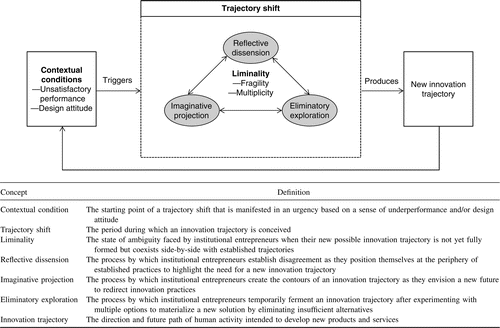
How does a trajectory shift start? Our research at CarCorp shows that a trajectory shift is triggered by a sense of urgency of institutional entrepreneurs (Smets et al. 2012) based on either the recognition of unsatisfactory performance of the current solution or the belief that the current situation can be improved if they seek an alternative solution. For example, the designers at CarCorp took the commercial failure of their efforts at car-integrated phone solutions as a sign of underperformance. Similarly, after the successful implementation of Bluetooth, they found that the performance of Bluetooth did not live up to their expectations as a result of incompatibility problems and the rapidly changing consumer electronics market. In both cases, it was the recognition of unsatisfactory performance of the current solution that led these institutional entrepreneurs to actively search for a new innovation trajectory.
However, when the designers completed the open platform project, their decision to seek an alternative, which eventually led them to develop the Android-based car communications platform including an app store and a developer program, was not necessarily driven by unsatisfactory performance. In fact, the open platform solution was not even commercialized, and therefore it was premature to conclude that it was a failure. Instead, their actions to seek alternative solutions were driven by their belief that the current solution could be better. Boland and Collopy (2004) refer to such an attitude as a design attitude. It comes from the “unhappy consciousness” of institutional entrepreneurs who have “the capacity to see the world as it is not, but as it could be” (Dahlbom 2002, p. 31). This design attitude is the raison d’être for institutional entrepreneurs.
Action Formation MechanismsThe three action formation mechanisms serve as a motor of entrepreneurs’ agentic actions as they deal with the liminality of a trajectory shift. However, they are not deterministic causal forces; rather, they should be understood as causal powers (Sayer 1992). Mindfully considering their position in the innovation process, institutional entrepreneurs may decide not to contradict, for instance, as actors continuously gauge whether there is value and legitimacy in deviation from the established trajectory.2 Concurring with the logic of mindful deviation (Garud and Karnøe 2001), actors are capable of reflectively evaluating their position. In other words, the outcomes that the mechanisms have the powers to instantiate may remain unactualized because the triggering of mechanisms is contingent upon other mechanisms (Elder-Vass 2010, Fleetwood 2009).
Reflective DissensionThe first mechanism is reflective dissension, which captures the process by which institutional entrepreneurs establish disagreement as they position themselves at the periphery of established innovation practices. In doing this, they distinguish difference and bring forth a previously unnoticed boundary between established practices and the practices of another field (cf. Levina and Vaast 2005). They find inspiration in alternative institutional logics (Thornton et al. 2012) as a way of overcoming their current situation. Reflective dissension highlights ruptures and incompatibilities that become the necessary conditions for new innovation trajectories (Benson 1977, Seo and Creed 2002). Institutional entrepreneurs reveal the limits of the current innovation trajectory and the need for a new one. In so doing, they engage in processes of deframing (Dunbar et al. 1996), unlearning (Hedberg 1981), or even discrediting (Weick 1979), which ultimately intend to “disembed from localized contexts of meaning” (Garud and Karnøe 2001, p. 14). Reflective dissension increases multiplicity but also constitutes a way for institutional entrepreneurs to create a cognitive structure to manifest the urgency that initially triggered the conception of a trajectory shift.
Imaginative ProjectionThe second mechanism is imaginative projection, which refers to the process by which institutional entrepreneurs create the contours of a new innovation trajectory by imagining a possible new solution. This new solution is imagined as entrepreneurs actively try to repair ruptures and incompatibilities established through reflective dissension. In so doing, entrepreneurs feed on the new field from which they try to reframe the problem (Dougherty and Dunne 2012). The new solution is provisional and emergent (Tsoukas and Chia 2002); although the new possible solution imagined is fragile (Garud et al. 2002), it is temporally enduring as it provides a higher-level goal that entrepreneurs are inspired to attain. The vision of the future solution remains ephemeral in that there are many different ways to obtain that goal. The vision emerges as the institutional entrepreneurs address the incompatibilities actively established, pulling them toward a new innovation trajectory. This allows the institutional entrepreneurs to direct resources to shift the established innovation trajectory.
Eliminatory ExplorationThe final mechanism is eliminatory exploration, which denotes the process by which institutional entrepreneurs ferment a new innovation trajectory by experimenting with multiple options to create a new solution by eliminating insufficient alternatives. Institutional entrepreneurs do not decisively know the contour of the newly envisioned solution in advance but actively bend, twist, and eventually transform the initial inspirations (cf. Barrett et al. 2012). The contour is unknown because the process (a) involves new technology artifacts, (b) is inconsistent with beliefs shaped by the established innovation trajectory, and (c) suffers from the lack of established evaluation routines. As such, institutional entrepreneurs must continually create the substance of the new innovation trajectory throughout the trajectory shift by addressing new problems. In doing this, institutional entrepreneurs improvise and actively experiment with multiple ideas. Such experimentation is not only about coming up with new solutions but also about eliminating insufficient ones. In fact, institutional entrepreneurs are often disappointed by setbacks and failures. They need to overcome these surprises by eliminating options that do not help create the substance of the solutions envisioned through imaginative projection. Active probing with both technology and institutional practices to discover the practically feasible ways to create and ferment a new trajectory marks this process.
The Outcome of a Trajectory ShiftThe outcome of a successful trajectory shift is a new innovation trajectory—that is, a new direction and future path of human activity intended to develop new products and services. As depicted in Figure 3, such an outcome can be appreciated by examining the microlevel dynamics of institutional entrepreneurial action. In essence, a trajectory shift starts with a sense of urgency, occasioned by a perception of underperformance or a design attitude concerned with what the world could be rather than what it is. Triggered by this contextual condition, institutional entrepreneurs position themselves at the periphery of established innovation practices to highlight the need for a new innovation trajectory (reflective dissension). With multiplicity in the form of alternatives in place, entrepreneurs begin an abductive process by which they shape the contours of an innovation trajectory and envision a new trajectory (imaginative projecting). These contours enable experimentation and options elimination intended to create a new solution (eliminatory exploration). However, the fermenting of the new innovation trajectory is conditioned by the established innovation trajectory that still exists side-by-side with the new one. If proactive elimination works out, a new innovation trajectory is established once it overshadows the previous trajectory.
The new innovation trajectory should be considered a state generated by the three action formation mechanisms. However, the new trajectory is inherently temporary in nature as entrepreneurs soon discover the limitations of the current goal as they travel through the new trajectory. Such recognition provides a contextual trigger that moves the entrepreneurs to the boundary through reflective dissension. In this sense, the end of one liminal period may overlap with the beginning of another one.
Implications
Our study offers a number of implications for the literature on institutional entrepreneurship. First, although unique location can be an important structural condition for detecting field-level contradictions (Greenwood and Suddaby 2006, Maguire et al. 2004), the agency of boundary spanners is an equally important source of new trajectories. The designers at CarCorp were not located to detect field-level contradictions. They could have remained within the boundary of established innovation practices of CarCorp, which reflected the automotive industry at large. Yet when driven by their urge to seek new solutions, they deliberately and actively assumed the role of boundary spanners. More broadly, this finding implies that the new innovation trajectory is not out there to be discovered but needs to be created. This idea of “agency as being distributed within the structures that actors themselves have created” helps us understand that “embedding structures…provide a platform for the unfolding of entrepreneurial activities” (Garud et al. 2007, p. 961) yet benefits from a model that manifests such insight by specifying the contextual triggers, mechanisms, and outcome of trajectory shifts.
Second, liminality in institutional entrepreneurship emerges because the shifts of the three constitutive elements of technological innovations—beliefs, artifacts, and evaluation routines—rarely occur simultaneously. There is no teleological trajectory shift involving all three of its constitutive elements at the same time. Instead, a new trajectory is conceived, discovered, and constructed in a partial way. Institutional entrepreneurs are caught in the liminal stages where the elements of the past and the future coexist. As a result, institutional entrepreneurs must be open to long-term work on promising yet not realized shifts to increase the chances of success. Indeed, the ability to deal with such liminality is probably one of the key skills of the inventors who find a place in our collective memory of innovation.
Finally, the unique character of technology may deserve a more prominent role in studies of institutional entrepreneurship. To CarCorp engineers, technology was not a completely exogenous, mysterious, and unproblematic black box that they could plug right into their work, nor was it something that they could fully master. Rather, it was something that they had to learn how to tame. The liminality of trajectory shifts and the ambiguity that comes with it stem from the unknowable characteristics of technology and the institutional entrepreneurs’ efforts to discover and deal with such unknowable objects (Kallinikos et al. 2013). In this regard, technology is inseparable from institutional entrepreneurship. Therefore, as we are advancing our understanding of how information technology shapes, and is shaped by, human agency in organizations (Leonardi and Barley 2008), we believe that scholars in institutional entrepreneurship can gain greater insight by considering the role of technology and its materiality in shaping the innovation trajectory in organizations.
Future Research
Our study provides at least three opportunities for future research on trajectory shifts. First, Tripsas (2009) notes that the identity of a firm plays an important role in maintaining the institutional status quo. Future research should explore how reflective dissension and imaginative projection in particular are linked to a firm’s identity. In the CarCorp case, it is especially interesting to see how the new car communications platform, incomplete by design (Garud et al. 2008), enabled novel customer connections with the potential to redefine the product’s meaning. It is likely that automakers’ ability to pursue digital innovation and entrepreneurship will depend on reconceiving their internal and external identities (Tripsas 2009).
Second, reflective dissension tends to involve acts of disengaging from both the established innovation practices and the emerging new path that designers simultaneously pursue. Prior research has shown that innovators who face institutional pressure must demonstrate this ability to detach (Garud and Karnøe 2001). Similarly, scholars studying design practice noted that the act of stepping back is an important element of successful innovation (Verganti 2009). It appears that detachment is an important and necessary condition for institutional entrepreneurs to transform the deepening disagreement into an opportunity for furthering their design vision. Future research can explore entrepreneurial action that involves the act of stepping back and how it facilitates trajectory shifts.
Finally, it is important to explore how trajectory shifts championed by a group of institutional entrepreneurs at the firm level shape and are shaped by other firms. Based on earlier studies (Boland et al. 2007), there are good reasons to assume that internal changes observed at CarCorp take place within the context of wakes of innovations that ripple through multiple firms intertwined in their innovation journeys. Future research should look at the dynamism and complex interactions within and between firms as they all try to innovate. A particularly critical issue is how previously unrelated firms discover and mutually influence each other, and how such firm-level interactions affect design actions.
Conclusion
We see organizations struggle with new ideas all the time. Yet some are better off than others in that they manage to successfully transform novel ideas into new innovation trajectories. Such trajectories help them give direction to human activity intended to develop novel products and services. In conducting this study, we were interested in the conditions of such shifts and the role of institutional entrepreneurship in making them happen. To this end, we propose a microlevel understanding of entrepreneurial action that complements and augments existing approaches to institutional entrepreneurship.
We portray trajectory shifts as liminal periods of time when entrepreneurs recognize limits in the present and pursue a new possible future, not fully formed but existing side-by-side with established innovation trajectories. This paper details a process model that seeks to explain the process by which institutional entrepreneurs conceive and bring forth a new innovation trajectory as they deal with such liminality. We hope that the model may serve as a foundation for informing our understanding, as well as future studies, of the endogenous side of trajectory shifts in institutional entrepreneurship.
Supplemental Material
Supplemental material to this paper is available at http://dx.doi.org/10.1287/orsc.2013.0883.
The authors thank Fredrik Svahn, Rikard Lindgren, the three anonymous reviewers, and senior editor Ann Majchrzak for constructive and insightful comments on earlier versions of this manuscript. They are also thankful for the feedback received when presenting this research at Aalto University, Case Western Reserve University, New York University, Temple University, and the University of Oslo. Finally, the research benefitted from a number of VINNOVA-funded projects in which the collaboration with Helén Falkås has been especially valuable.
1 We are indebted to one of the anonymous reviewers for pointing this out.
2 We are indebted to one of the anonymous reviewers for pointing this out.
References
- (2000) Design Rules—The Power of Modularity (MIT Press, Cambridge, MA).Crossref, Google Scholar
- (2008) Coalface institutionalism. Greenwood R, Oliver C, Sahlin K, Suddaby R, eds. The Sage Handbook of Organizational Institutionalism (Sage, London), 490–515.Crossref, Google Scholar
- (2012) Reconfiguring boundary relations: Robotic innovations in pharmacy work. Organ. Sci. 23(5):1448–1466.Link, Google Scholar
- (2011) The enabling role of social position in diverging from the institutional status quo: Evidence from the UK national health service. Organ. Sci. 22(4):817–834.Link, Google Scholar
- (2009) How actors change institutions: Towards a theory of institutional entrepreneurship. Acad. Management Ann. 3(1):65–107.Crossref, Google Scholar
- (1977) Organizations: A dialectical view. Admin. Sci. Quart. 22(1):1–21.Crossref, Google Scholar
- (2012) Institutional contradictions and loose coupling: Postimplementation of NASA’s enterprise information system. Inform. Systems Res. 23(2):376–396.Link, Google Scholar
- (2004) Managing as Designing (Stanford University Press, Stanford, CA).Google Scholar
- (2007) Wakes of innovation in project networks: The case of digital 3-D representations in architecture, engineering, and construction. Organ. Sci. 18(4): 631–647.Link, Google Scholar
- (2006) Constructing Grounded Theory: A Practical Guide Through Qualitative Analysis (Sage, Thousand Oaks, CA).Google Scholar
- (1997) The Innovator’s Dilemma: The Revolutionary Book That Will Change the Way You Do Business (HarperCollins, New York).Google Scholar
- (1990) Absorptive capacity: A new perspective on learning and innovation. Admin. Sci. Quart. 35(1): 128–152.Crossref, Google Scholar
- (2002) The idea of an artificial science. Dahlbom B, Beckman S, Nilsson GB, eds. Artifacts and Artificial Science (Almqvist and Wiksell International, Stockholm), 9–44.Google Scholar
- (1988) Interest and agency in institutional theory. Zucker LG, ed. Institutional Patterns and Organizations: Culture and Environment (Ballinger, Cambridge, MA), 3–21.Google Scholar
- (2005) Institutional entrepreneurship, partaking, and convening. Organ. Stud. 26(3):385–414.Crossref, Google Scholar
- (2012) Digital science and knowledge boundaries in complex innovation. Organ. Sci. 23(5): 1467–1484.Link, Google Scholar
- (1996) A frame for deframing in strategic analysis. J. Management Inquiry 5(1):23–34.Crossref, Google Scholar
- (2010) The Causal Power of Social Structures: Emergence, Structure and Agency (Cambridge University Press, Cambridge, UK).Crossref, Google Scholar
- (2009) The ontology of things, properties and powers. J. Critical Realism 8(3):343–366.Crossref, Google Scholar
- (1999) Bewixt and between: Temporary employees as liminal subjects in flexible organizations. Organ. Stud. 20(4): 601–617.Crossref, Google Scholar
- (2001) Path creation as a process of mindful deviation. Garud R, Karnøe P, eds. Path Dependence and Creation (Lawrence Erlbaum Associates, Mahwah, NJ), 1–38.Google Scholar
- (2003) Bricolage versus breakthrough: Distributed and embedded agency in technology entrepreneurship. Res. Policy 32(2):277–300.Crossref, Google Scholar
- (1994) A socio-cognitive model of technology evolution: The case of cochlear implants. Organ. Sci. 5(3): 344–362.Link, Google Scholar
- (2007) Institutional entrepreneurship as embedded agency: An introduction to the special issue. Organ. Stud. 28(7):957–969.Crossref, Google Scholar
- (2002) Institutional entrepreneurship in the sponsorship of common technological standards: The case of Sun Microsystems and Java. Acad. Management J. 45(1): 196–214.Crossref, Google Scholar
- (2008) Incomplete by design and designing for incompleteness. Organ. Stud. 29(3):351–371.Crossref, Google Scholar
- (2010) Path dependence or path creation? J. Management Stud. 47(4):761–774.Crossref, Google Scholar
- (2006) Institutional entrepreneurship in mature fields: The big five accounting firms. Acad. Management J. 49(1):27–48.Crossref, Google Scholar
- (2001) When innovations meet institutions: Edison and the design of the electric light. Admin. Sci. Quart. 46(3):476–501.Crossref, Google Scholar
- (1981) How organizations learn and unlearn. Nystrom PC, Starbuck WH, eds. Handbook of Organizational Design, Vol. 1 (Oxford University Press, New York), 3–27.Google Scholar
- (1998) Social mechanisms: An introductory essay. Hedström P, Swedberg R, eds. Social Mechanisms: An Analytical Approach to Social Theory (Cambridge University Press, Cambridge, UK), 1–31.Crossref, Google Scholar
- (1990) The Innovation Marathon: Lessons from High Technology Firms (Basil Blackwell, Oxford, UK).Google Scholar
- (2013) The ambivalent ontology of digital artifacts. MIS Quart. 37(2):357–370.Crossref, Google Scholar
- (2008) Thinking about technology: Applying a cognitive lens to technical change. Res. Policy 37(5):790–805.Crossref, Google Scholar
- (1999) A set of principles for conducting and evaluating interpretive field studies in information systems. MIS Quart. 23(1):67–93.Crossref, Google Scholar
- (1999) Strategies for theorizing from process data. Acad. Management Rev. 24(4):691–710.Crossref, Google Scholar
- (1992) Core capabilities and core rigidities: A paradox in managing new product development. Strategic Management J. 13(S1):111–125.Crossref, Google Scholar
- (2008) Materiality and change: Challenges to building better theory about technology and organizing. Inform. Organ. 18(3):159–176.Crossref, Google Scholar
- (2005) The emergence of boundary spanning competence in practice: Implications for implementation and use of information systems. MIS Quart. 29(2):335–363.Crossref, Google Scholar
- (2004) Institutional entrepreneurship in emerging fields: HIV/AIDS treatment advocacy in canada. Acad. Management J. 47(5):657–679.Crossref, Google Scholar
- (2005) The birth of the “Kodak moment”: Institutional entrepreneurship and the adoption of new technologies. Organ. Stud. 26(11):1665–1687.Crossref, Google Scholar
- (1996) Organizational transformation over time: A situated change perspective. Inform. Systems Res. 7(1):63–92.Link, Google Scholar
- (1997) Realistic Evaluation (Sage, London).Google Scholar
- (1993) The mangle of practice: Agency and emergence in the sociology of science. Amer. J. Sociol. 99(3):559–589.Crossref, Google Scholar
- (1992) Method in Social Science: A Realist Approach (Routledge, New York).Google Scholar
- (2002) Institutional contradictions, praxis, and institutional change: A dialectical perspective. Acad. Management Rev. 27(2):222–247.Crossref, Google Scholar
- (2012) From practice to field: A multilevel model of practice-driven institutional change. Acad. Management J. 55(4):877–904.Crossref, Google Scholar
- (1998) Basics of Qualitative Research: Techniques and Procedures for Developing Ground Theory (Sage, London).Google Scholar
- (2004) The effects of liminality on individual and organizational learning. Organ. Stud. 25(4):507–527.Crossref, Google Scholar
- (2012) The Institutional Logics Perspective: A New Approach to Culture, Structure, and Process (Oxford University Press, Oxford, UK).Crossref, Google Scholar
- (2009) Technology, identity, and inertia through the lens of “The Digital Photography Company”. Organ. Sci. 20(2): 441–460.Link, Google Scholar
- (2002) On organizational becoming: Rethinking organizational change. Organ. Sci. 13(5):567–582.Link, Google Scholar
- (1969) The Ritual Process: Structure and Anti-Structure (Aldine de Gruyter, New York).Google Scholar
- (1977) Special boundary roles in the innovation process. Admin. Sci. Quart. 22(4):587–605.Crossref, Google Scholar
- Van de Ven AH, Polley DE, Garud R, Venkataraman S, eds. (1999) The Innovation Journey (Oxford University Press, New York).Google Scholar
- (2009) Design-Driven Innovation: Changing the Rules of Competition by Radically Innovating What Things Mean (Harvard Business Press, Boston).Google Scholar
- (2012) Enterprise systems projects: The role of liminal space in enterprise systems implementation. J. Inform. Tech. 27(4):259–269.Crossref, Google Scholar
- (1979) The Social Psychology of Organizing, 2nd ed. (McGraw-Hill, New York).Google Scholar
- (1995) Sensemaking in Organizations (Sage, Thousand Oaks, CA).Google Scholar
- (2006) From organization design to organization designing. Organ. Sci. 17(2):215–229.Link, Google Scholar
Ola Henfridsson is professor of information systems and management at Warwick Business School, University of Warwick, United Kingdom. He is also a visiting professor at the Department of Applied Information Technology at Chalmers University of Technology, Sweden. His research interests include digital innovation, digital infrastructure, platforms, and technology management. His work has been published in leading journals such as MIS Quarterly, Information Systems Research, and Organization Science.
Youngjin Yoo is director of Center for Design + Innovation at Temple University, where he is professor in management information systems and strategy and Irwin L. Gross Senior Research Fellow. He was previously Lewis-Progressive Chair of Management at Case Western Reserve University. He also leads Urban Apps & Maps Studios, which is a university-wide interdisciplinary research and development program for urban civic innovations. Interests include digital innovation, design, and experiential computing.

