


Creating and Capturing Value in Repeated Exchange Relationships: The Second Paradox of Embeddedness
Abstract
Prior empirical studies suggest repeated exchange develops increasing value in buyer–supplier relationships. A first order implication of this finding is that buyers will concentrate exchange among a relatively small number of suppliers to generate maximum value in relationships. However, buyers are equally concerned with value capture. By distributing rather than concentrating exchange, buyers may position themselves to capture more of the value created, leaving buyers potentially conflicted concerning the choice. We label this dynamic the second paradox of embeddedness, distinguishing it from Uzzi’s [Uzzi B (1997) Social structure and competition in inter-firmnetworks: The paradox of embeddedness. Admin. Sci. Quart. 42(1):35–67.] paradox driven by technological uncertainty. By examining the procurement activities of a large, diversified manufacturing company, we then test for supplier and buyer behavior consistent with the conditions that give rise to the second paradox and behaviors that result from it.
1. Introduction
A broad scholarly literature argues that repeated exchange between firms improves the efficiency of exchange by mitigating ex post opportunism and fostering value-creating adaptation (e.g., Granovetter 1985, Williamson 1996, Dyer 1997, MacLeod 2007). Repeated exchange develops trust (Zaheer et al. 1998, Jeffries and Reed 2000), interorganizational routines (Dyer and Singh 1998), social connections between individuals in each firm (Levinthal and Fichman 1988, Uzzi 1999), and heightened expectations of relationship continuity (Parkhe 1993). Together, these factors expand the value created in exchange—value that dynamically increases with evolving exchange histories (Kale et al. 2000, Gulati and Sytch 2008). Over the past two decades, the value-creating potential of such “embedded” interorganizational relationships has been well documented empirically (e.g., Gulati 1995, Zollo et al. 2002, Dyer and Chu 2003, Gulati and Nickerson 2008), including direct evidence that economic value produced by relationships increases with exchange history within a dyad (Elfenbein and Zenger 2014). A clear first-order implication of the buildup of relationship value through repeated exchange is for buyers to focus their exchange, developing increasingly deep relationships with a limited set of capable suppliers, to maximize value creation.
At the same time, scholars have highlighted a number of hazards associated with relationships. If changing exchange conditions or production technology undermine current suppliers’ advantages, concentrating exchange and developing only a handful of these deep, socially embedded exchange relations may leave buyers “stuck” in suboptimal long-term relationships (Blau 1964, Uzzi 1997, Afuah 2000). Moreover, interpersonal affinity that develops through repeated exchange may also shape (or distort) the selection of exchange partners. As Blau (1964, p. 161) articulates rather simply, “strong attachments prevent individuals from exploring alternative opportunities.” The result is a “dark side” to relationships, or an embeddedness paradox (Uzzi 1997), where buyers benefit from relationships in the present but at the cost of neglecting to identify or to choose a set of suppliers better suited to future needs.
Yet, even in the absence of these traditionally cited dark side problems of deep (and potentially exclusive) relationships, concentrating exchange in the hands of a few may not be value maximizing for the buyer. This stems from two fundamental tensions that have been largely, if not completely, ignored in the literature on relationships. First, a buyer’s choice of supplier in the present can either increase the maximum relationship value available for future appropriation or increase the minimum it is assured of appropriating, but not both. Second, a buyer’s choice of supplier reveals information to the supplier about the value the buyer assigns to relationships, making it easier for the supplier to claim a portion of the value that is “up for grabs” in the future. In the spirit of the prior literature, we denote these tensions as the “second paradox of embeddedness.” The focus of this paper, then, is to define the tensions that comprise the second paradox and highlight their boundary conditions. We also provide evidence consistent with their existence in an empirical context in which relationships create value, but the traditional dark side challenges have been mitigated by a routinized process of extensive search for and screening of potential new suppliers and by a transparent, de-socialized supplier selection process that minimizes distortions due to interpersonal affinity.
Our main theoretical argument builds on the value-based strategy literature (Brandenburger and Stuart 1996, Lippman and Rumelt 2003, MacDonald and Ryall 2004, Stuart 2016) that focuses on how a firm’s added value constrains its capacity to capture value as it engages competitively or cooperatively with other firms in generating value. Drawing inspiration from bi-form games (Brandenburger and Stuart 2007, Bennett 2013), we describe how the future added value of suppliers changes as a consequence of the buyer’s current decision, and we demonstrate the dilemma the buyer faces. In simple terms, the buyer’s dilemma is between growing the minimum appropriable value by distributing exchange and growing the maximum appropriable value by focusing exchange. Focus creates deep relationships and larger value with a single (or few) seller(s) but leaves the division of this greater value between buyer and seller uncertain. Distribution restricts the maximum value created by relationships, but also diminishes the uniqueness (i.e., added value) of any given supplier’s relational history and thereby elevates the value that a buyer can appropriate with certainty. We further describe how this dilemma is also shaped by buyers’ beliefs about suppliers’ future strategies for claiming value that is up for grabs.
Our empirical analysis examines the procurement efforts of a large manufacturing corporation that performs a significant portion of its parts sourcing via Internet-based reverse (procurement) auctions.1 As the preceding discussion suggests, we potentially face a conceptual challenge in interpreting any empirical results as multiple theories predict the same behavior. In particular, both the first and our second paradox suggest a buyer may distribute exchange across suppliers rather than concentrate it. Therefore, we select an empirical setting where the buyer’s selection of suppliers is unlikely to be shaped by the challenges inherent in the first paradox of embeddedness, leaving us more confident that the behavior we observe reflects our theorized second paradox. This setting also provides fine-grained detail about final supplier prices of bids both accepted and rejected as well as extensive detail about exchange history, providing us with the rare capacity to examine both the total value the buyer associates with exchange history and suppliers’ attempts to appropriate it.
In this empirical setting, the buyer we examine typically awards three-year supply contracts to one of several bidders who compete for the contract. Bidding for supply contracts is strictly limited to those suppliers pre-qualified by a dedicated team of supply chain professionals as possessing a capacity to manufacture and reliably deliver that specific set of items. All supplier bids, supplier and product characteristics, and the buyer’s choices are observable.
While the parts procured through these auctions are predictably more standardized than those manufactured internally, important exchange hazards remain. Although all suppliers are prequalified as capable of high quality production and reliable delivery, such performance over the lifetime of the agreement is a supplier choice. In addition, some exchange-specific investments may be required that, if ignored, compromise quality or reliable delivery. In this context, repeated exchange can generate relationships that remedy these exchange hazards, facilitating joint problem solving and cooperative behavior that generates value. Indeed, previous research in this empirical context demonstrates that a history of prior exchange with a supplier raises the buyer’s willingness-to-pay (see Elfenbein and Zenger 2014), creating what others have termed as valuable “relational capital” (Kale et al. 2000).2
Although the buyer in these auctions may choose any supplier that bids, the choice commits the buyer to the bid price. Thus, bid prices represent suppliers’ proposed division of value, including the value embedded in exchange history. Our ability to examine the array of prices offered from these suppliers, each with a unique relationship history, provides a window into the dynamics of buyer and supplier efforts to create and capture value in relationships. We use this unique empirical setting to test for evidence consistent with hypotheses derived from our theoretical articulation of the second paradox of embeddedness. Our results support our hypotheses. We view our theory and results as contributing to the literature on buyer–supplier relationships by offering an alternative mechanism through which firms forgo the benefits of deep relationships in favor of shallower ones. We do not claim primacy of this mechanism over others, but we do provide evidence consistent with its existence in an economically important setting. Additionally, we contribute to a small but growing set of empirical studies on value appropriation in interfirm relationships (e.g., Lavie 2007, Chatain 2011, Adegbesan and Higgins 2011, Grennan 2014) and broader theoretical investigations of how value creation and value appropriation concerns shape performance differences in and across firms over time (e.g., Ryall and Sorenson 2007; Chatain and Zemsky 2007, 2011; Bennett 2013; Obloj and Zemsky 2015).
2. Theory and Predictions
2.1. Repeated Exchange, Relational Capital, and Buyer Willingness-to-Pay
A central tenet of modern economic theory is that writing and enforcing contracts that completely specify each party’s obligations in all states of the world is rarely possible (Williamson 1975). Many of the activities that generate (or destroy) value within an exchange are simply noncontractible (Hart 1995). They require adaptation and real-time problem solving. Hence, performance on these dimensions must, instead, be promoted through other means, such as bringing the transactions inside the firm (Williamson 1985), or as discussed below, through repeated exchange relations.
As the frequently cited alternative to integration, repeated exchange relationships can improve performance along noncontractible dimensions of exchange through several related mechanisms. Repeated exchange promotes embedded social relationships, social norms, and personal attachments (Dore 1983, Gerlach 1992, Macneil 1978, Granovetter 1985) that reduce fears of opportunistic behavior (Zaheer et al. 1998, Dyer and Chu 2003, Gulati and Nickerson 2008, Puranam and Vanneste 2009, Bradach and Eccles 1989). Repeated exchange also fosters information exchange, norms of flexibility, and joint problem solving (Uzzi 1997, Dyer and Singh 1998, Poppo and Zenger 2002), collectively combining to support the adaptation critical to effective exchange. In aggregate, deeper histories of repeated exchange with suppliers enhance a buyer’s confidence that the suppliers, when faced with competing interests (i.e., the interests of other buyers), will possess both the will and means to both fulfill contract terms and to respond flexibly and effectively to unexpected circumstances; this raises the buyer’s willingness-to-pay by diminishing costly inventory holding and reducing expected costs of adaptation or renegotiation should unexpected circumstances arise.3 In summary, a broad set of arguments all support a conclusion that a history of repeated exchange generates a valuable asset (Nahapiet and Ghoshal 1998)—one that supports adaptation and problem solving, and deters opportunistic behavior.4
Prior empirical analysis is also consistent with a conclusion that value accumulates with increased relationship history. A meta-analysis of 39 studies documents a positive and significant association between relationship duration and trust (Vanneste et al. 2014). Other work suggests that costs fall as a consequence of repeated dyadic interaction between contractors and subcontractors (Gil and Marion 2013). More directly, our own prior study in this empirical setting reveals a buyer whose willingness to pay for a relationship is strongly shaped by the level and duration of repeated exchange; these relationships are more highly valued by the buyer when exchanges are subject to greater hazards, specifically when suppliers are required to make co-specialized investments (Elfenbein and Zenger 2014).
Considered in isolation, this evidence that relational capital accumulates through repeated exchange should cause a buyer’s supply network to become more concentrated over time, especially for transactions subject to exchange hazards. A supplier with greater relational capital is simply more attractive to a buyer and more likely to be chosen, ceteris paribus, leading to focused rather than distributed exchange. However, as we develop and test below, the desire to optimize the value created and captured leads to more complex predictions about buyer behavior. In particular, we argue that the buyer faces a dilemma in choosing between further increasing value in the most valuable exchange relationships and instead developing a more diverse set of relationships that ensure a greater minimum level of value appropriation. We label this phenomenon the “second paradox of embeddedness,” articulate the conditions under which it can emerge, and provide evidence of behavior consistent with its influence and presence.
2.2. Sequential Selection of Suppliers and Appropriation of Relationship Value
When valuable relational capital accumulates as a function of repeated exchange, a buyer’s choice of supplier in the present not only affects the current stream of relational rents it receives, but also the amount of future relational value available to divide between buyer and suppliers and the likely future division of that value. In this section, we develop a simple model to illustrate the paradoxical nature of the buyer’s choice and demonstrate how value creation and value appropriation dynamics affect it.5
We consider a two-period setting in which a buyer chooses an exclusive supplier in each period for an input it cannot produce itself. For simplicity, we focus on a choice between two potential suppliers, both prescreened to possess identical production capabilities and thus a capacity to deliver the same gross contractible value, v, if chosen. Further, we assume that it is prohibitively costly to write a contract that covers both periods, perhaps because the specifications for parts needed in period 2 are unknown at the beginning of period 1.6
Following the previous discussion, a supplier will be expected to deliver (noncontractible) value that is a positively increasing function of its relationship history with the buyer. We denote this prior exchange history between the buyer and the supplier as h and the value associated with this history as V(h), with V(0) = 0 and dV/dh > 0. The function V(h) reflects the value to the buyer of relational capital.7
Since we are interested in the conditions that lead a buyer to distribute rather than concentrate exchange, we focus on the case in which one potential supplier, labeled the “incumbent,” has a history of prior exchange, h > 0, and the second potential supplier, the “new supplier,” has no prior history with the buyer, i.e., h = 0.8 In period 1, then, choosing the incumbent supplier generates gross value v + V(h), whereas choosing the new supplier only generates gross value v.
Because relational capital accumulates with exchange, the buyer’s choice of supplier in period 1 affects the relational capital held with that supplier in future periods. We designate the increase in exchange history generated during period 1 production as Δ. For simplicity in the discussion that follows, we assume that h > Δ; however, our main results do not depend on this assumption. If the incumbent is chosen in both periods, then the gross (contractible and noncontractible) value delivered to the buyer will be 2v + V(h) + V(h + Δ). By contrast, choosing the incumbent in one period and the new supplier in another yields 2v + V(h).9 Selecting the new supplier in both periods yields 2v + V(Δ). Intuitively, then, it follows that choosing the incumbent supplier in both periods maximizes the total value created. Ignoring issues of value capture, the greater noncontractible value available for appropriation makes choosing the incumbent more attractive for the buyer, ceteris paribus.
Value created, however, is quite distinct from value captured. To examine value appropriation, we draw upon the value-based business strategy approach of Brandenburger and Stuart (1996) and MacDonald and Ryall (2004).10 The key proposition of this approach is that no player may appropriate more than its “added value”—defined as the loss in total value that can be created when that player is removed from the economic system.11 In this literature, each player’s contribution to total value created acts as a constraint on the division of value but may not determine it completely.12 Given our assumptions (in particular that both suppliers are known to be able to produce contractible value v), added value for suppliers in this setting comes entirely from differences in relationship histories. In period 1, then, the added value of the incumbent and new supplier are V(h) and 0, respectively.
The added value of each player in period 2, however, depends on the buyer’s choice of supplier in period 1. Table 1 illustrates this and shows how the period 1 choice, in turn, affects the minimum and maximum value that can be appropriated by the buyer in period 2. While the buyer is guaranteed contractible value, v, in period 2 regardless of choice, selecting the incumbent supplier in period 1 increases the maximum value the buyer can receive to v + V(h + Δ); however, selecting the incumbent leaves the minimum value it can appropriate unchanged at v. By contrast, choosing the new supplier in period 1 raises the minimum value that the buyer is guaranteed to capture in period 2 from v to v + V(Δ), while leaving the maximum value the buyer can capture in period 2 unchanged at v + V(h).13 This trade-off generates a paradox—for the buyer, choosing the incumbent can be both better and worse for capturing value from relationships in the future.
|

Table 1: Minimum and Maximum Value Appropriation Opportunities in Period 2 are Shaped by Buyer Choices in Period 1
| Incumbent added value in period 2 | New supplier added value in period 2 | Minimum buyer can appropriate in period 2 | Maximum buyer can appropriate in period 2 | |
|---|---|---|---|---|
| Buyer choice in period 1: | ||||
| Incumbent | V(h + Δ) | 0 | v | v + V(h + Δ) |
| New supplier | V(h) − V(Δ) | 0 | v + V(Δ) | v + V(h) |
Notes. If h < Δ and the new supplier is chosen, then in period 2 the incumbent’s added value is 0, the new supplier’s added value is V(Δ) − V(h), the minimum the buyer can appropriate will be v + V(h), and the maximum will be v + V(Δ).
Ultimately, how the buyer resolves this paradox depends on the proportion of added value it expects each supplier to capture in future periods. As we described above, relationship histories with the suppliers (and the difference between them) determine the minimum and maximum amount of value that the buyer can capture. To illustrate how the buyer’s expectations are critical, we introduce the parameter γ, as the proportion of the incumbent’s added value that the buyer expects the incumbent to capture in period 2. By definition, all remaining value is captured by the buyer. Given γ, then, choosing the new supplier in period 1 generates higher profits for the buyer in period 2 if the captured value from choosing the new supplier is greater than the captured value from choosing the incumbent, or
Or rearranging,
In (2), V(h + Δ) − V(h) represents the growth in the future value the incumbent can provide if it is chosen in period 1, while V(Δ) is growth in the future value the new supplier can provide if it is chosen in period 1. Intuitively, the expression on the right-hand side of (2) represents the ratio defined by the incremental future relationship value generated by selecting the incumbent and the sum of the individual increases in relationship value were both suppliers separately awarded the entire contract.14
The buyer’s choice of supplier in period 1 is likely to be a function both of value it captures in period 1 and its expectation for period 2. Let pI represent the price premium, relative to the new supplier, demanded by the incumbent in period 1.15 Then the expected total two-period profits from choosing the new supplier in period 1 are greater if
Rearranging terms yields the critical value of γ above which, the buyer prefers to choose the new supplier in period 1:
Inequality (4) indicates that the buyer’s optimal choice in period 1 depends on the price premium the incumbent seeks, i.e., pI, and the buyer’s conjecture about the proportion of added value the incumbent will successfully capture in the period 2, i.e., γ .16
2.2.1. Supplier Value Appropriation, the Second Paradox of Embeddedness, and the Buyer’s ResponseWhile our model is stylized along a number of dimensions, it highlights the tension that a buyer faces in managing value creation and value capture through the selection of suppliers and development of relationships. The buyer’s beliefs about the share of future added value that suppliers will capture (γ) critically shapes its decision to concentrate relationships in the hands of a few suppliers (akin to choosing the incumbent in the discussion above) or distribute contracts to many. Moreover, our model shows that a paradox exists only if the true proportion of added value captured by suppliers is sufficiently high.
We argue that the buyer generates predictions about γ based on the supplier behavior that it observes.17 This has several empirical implications. First, if the buyer observes that incumbent suppliers do not seek to appropriate value from relational capital, then we should observe the buyer concentrating relational capital in the hands of few (i.e., the incumbents in the discussion above), raising the asymmetry of relational capital. Under these conditions, the buyer faces no paradox.18 The second paradox arises when incumbent suppliers do seek to appropriate significant value from relational capital by requesting higher final prices. Relatedly, if, as our model implicitly assumes, incumbent suppliers moderate the proportion of relationship value they seek when they compete against other suppliers that also possess relational capital with the buyer, then reducing asymmetries between suppliers by distributing exchange leads to greater value capture for the buyer.
Second, if the buyer observes that the proportion of relationship value incumbents seek increases as they win more contracts, then buyers are also likely to more evenly distribute relational capital. This sort of “value capture creep” could be generated if suppliers are initially uncertain about the added value of their relationships—either because there is asymmetric information about its value to the buyer (i.e., the buyer knows it but the suppliers do not) or because the supplier lacks accurate knowledge of its rivals’ exchange history—and follow a Bayesian updating process, revising upward estimates of their relationship added value and their capacity to appropriate it after contract wins, and reducing them after contract losses. Clearly, if γ, the buyer’s expectation of future added value captured by the leading supplier, is increasing with the supplier’s current contract wins, condition (4) is more likely to hold.
In summary, under these conditions discussed above, we expect the second paradox of embeddedness to be manifest, and we expect buyers to respond by distributing exchange rather than solely exchanging with incumbents. To guide our empirical analysis, we make predictions about the type of supplier behavior that is likely to lead to the paradox, and then conditional on observing the predicted supplier behavior, we hypothesize how the buyer should respond. In particular, consistent with suppliers’ effort to capture a portion of their relational capital with the buyer, we predict the following:
The prices suppliers seek will be increasing in their prior exchange history with the buyer.
The presence of rivals with prior exchange history with the buyer, and the magnitude of rival bidders’ exchange history, will reduce the rate at which incumbent suppliers’ own relationship history with the buyer leads to increases in requested prices.
Further, if, as noted above, suppliers are uncertain about the true value buyers assign to relational capital then we would expect to see suppliers update their estimates of this value as they win and lose contracts with the buyer over time. Consistent with asymmetric information between buyer and supplier about the value assigned to prior exchange history and suppliers updating beliefs about their relationship added value based upon buyer decisions, we predict and test the following condition that, if present, deepens the paradox:
The price premiums sought by suppliers with prior exchange histories should increase following winning bids and should decrease following losing bids.
If the first set of hypotheses (H1A and H1B) is supported, then a necessary condition for the existence of the paradox is satisfied. If additionally, H2 is supported, the paradox becomes even more likely. Although neither is a sufficient condition, we make the following prediction about the buyer’s response:
If H1 and H2 are supported, then the buyer’s awards will tend to increase the symmetry of relational capital among suppliers, leading to a reduced concentration of relational capital in the supplier base; otherwise the buyer’s awards should focus relational capital among suppliers.
The buyer may not simply react to suppliers’ value appropriation behavior, but instead seek to shape it. Inequality (3) compares the expected total (two-period) profits from choosing the new supplier in the first period with the expected profits from choosing the incumbent. We note that both sides of this inequality are decreasing in γ, indicating that reductions in the proportion of relationship added value appropriated by suppliers are valuable to the buyer entirely independent of its choice in the first period.
One mechanism through which the buyer may shape sellers’ value appropriation attempts is to restrict sellers’ capacity to learn about the the value it assigns to relationships (i.e., the function V), causing sellers to either underestimate or be more uncertain about this value. In response to increased uncertainty about this value function, a risk averse supplier may correspondingly decrease its bid prices to increase its perceived odds of winning a contract. Moreover, a buyer may wish to shape sellers’ expectations about the division of added value that it is willing to accept. As in a repeated ultimatum game, the buyer may seek to develop a reputation for only accepting low prices (Roth 1995, Nowak et al. 2000). The buyer may also resort to deceptive tactics to influence sellers’ assessments of its willingness-to-accept (Boles et al. 2000) or may engage in “signal jamming” by adding noise to the selection process to make the bidders inference problem more difficult (Fudenberg and Tirole 1986, Stein 1989). In our setting, the buyer may find it strategically advantageous to keep the seller guessing as to the value assigned or simply lower the seller’s estimate of the value assigned.
Viewed from an alternative perspective, consistent choices based upon (4) should enable incumbent suppliers ultimately to discover γ and then submit prices just under levels that would cause the buyer to switch. To prevent this, in selecting among bids, the buyer may vary the weight it assigns to relational capital, making more difficult the supplier’s task of inferring the buyer’s value function and the share it is willing to accept. This predicted behavior is an additional manifestation of the paradox, insofar as it offers a mechanism through which the buyer’s choice of an “inferior” supplier in the present may make the buyer better off in the future. This logic suggests the following hypothesis regarding buyer behavior:
To prevent sellers from accurately inferring its willingness-to-pay for a history of exchange, the buyer will avoid appearing to assign a consistent value to this history over time.
3. Empirical Setting
We test our theoretical predictions using rather unique data assembled from the procurement operations of a large, global diversified manufacturing company with headquarters in the midwestern United States. We refer to this company as Buyco. Beginning in 2000, Buyco relied increasingly on Internet-enabled reverse auctions to procure intermediate parts for use in manufacturing. The use of Internet-enabled procurement auctions was a key strategic initiative at Buyco aimed at reducing overall manufacturing costs. These procurement auctions enabled greater direct competition between suppliers and also elevated the transparency of purchasing decisions, thereby reducing potential distortions to prices shaped by the presence of personal relationships. We highlight the most significant aspects of this procurement process in the ensuing discussion; we discuss the setting in greater detail in Elfenbein and Zenger (2014).
A procurement auction, or competitive bid event (CBE), as Buyco labeled it, began with the identification of a bundle of items which Buyco believed could be efficiently provided by a single supplier. A given CBE could include a single bundle of products or could include several bundles. Buyco typically restricted the bundles in a CBE to a single narrowly defined commodity category—e.g., plastic parts, stamped parts, or fasteners—taking advantage of the commodity-specific knowledge of its procurement staff.
After identifying a common bundle or set of bundles, Buyco scheduled a competitive bid event. Buyco used the event to solicit bids from invited suppliers for long-term contracts to deliver the parts (the median contract length was three years). Invited suppliers’ bids became final at the end of the event; further negotiations following the conclusion of bidding was prohibited. Buyco, however, was not restricted to picking the supplier who provided the lowest bid.19 For each auction, we observe a menu of bidders and prices from which Buyco selects a single bidder.
Critically, Buyco limited participation in the CBE to bidders that had been prequalified. A dedicated team of supply chain specialists travelled globally to identify and inspect potential bidders. These procurement professionals assessed suppliers’ capability and ensured that only those with the capability to produce and deliver the expected quality and quantity received invitations to participate. Bidders frequently were qualified to bid on some, but not all, of the contracts in the CBE. According to standard documents provided by Buyco to potential bidders,
[Buyco] has rigorously reviewed supplier information to determine which suppliers are qualified to participate in this bid opportunity. Qualified suppliers have been invited to bid on a [bundle] by [bundle] basis. [Buyco], working with [auctioneer], will grant [bundle]-level access to suppliers.
Thus, prior to the initiation of a bid event, two drivers of the standard embeddedness paradox (Uzzi 1997)—uncertainty about requisite capability of suppliers and development of a set of capable alternatives—had been addressed.
While the extensive prequalification process excludes bidders who do not possess the manufacturing capabilities to produce inputs of sufficient quality, the process does not resolve uncertainty about the potential for supplier opportunism over the duration of the supply contract. Given this extensive pre-qualification, and careful corporate scrutiny of all selections not consistent with lowest price, differences in bid prices across suppliers likely reflect bidders’ beliefs about value in relationships and the bidder’s efforts to capture this value, rather than differences in production quality above and beyond the stipulated standard that have no economic benefit to Buyco, as well as (unobservable) differences in their opportunity costs.
4. Data
4.1. The Sample
To construct the data, we selected CBEs performed during an 18-month period covering April 2005 to September 2006. This period corresponded to the beginning of a transition to a new application service provider that supplied technology and other support for the auctions. We limited our attention to economically important CBEs (more than $40,000 in expected annual spending) for items used directly in the manufacturing process. All auctions for indirect, i.e., overhead expenses, were omitted. This yielded an initial set of 242 CBEs representing procurement activity for 928 item bundles. We discarded all observations in which the winning bid was more than double that of the lowest bid. In these situations, we believed that the bids had been miscoded.20 Missing data on the identity of the contract winner or missing information about suppliers led to further attrition in this sample. Additionally, we dropped from our data all reverse auctions in which only one official bid was submitted, as these do not help us identify any relationships of interest. Our final data set consists of 183 CBEs, for 557 items, with 3,032 bids from 860 bidders. In discussing the variables below, we index CBEs by m, item bundles by i, and bidders by j.21
4.1.1. Relationship HistoryOur theoretical discussion focuses on the role that repeated exchange plays in creating valuable relational capital and the appropriation dynamics that ensue between buyers and sellers over this jointly owned asset. We measure hjm, repeated exchange between Buyco and supplier j at the time of the CBE m, using data collected from a central accounting database used by Buyco that contains monthly data on the dollar value of all transactions with parts suppliers from 2002 to mid-year 2006.22 In all, this accounting database contained more than one million transactions with more than twenty thousand distinct suppliers. We used text matching algorithms and visual inspection to correct for different spellings of suppliers in this database, an unfortunately common occurrence. We aggregated the part-level data to create a cumulative measure of each distinct supplier’s quarterly dollar sales to Buyco. We use this data to create the variable, logsalesjm, which is the natural log of sales from the supplier to Buyco in the prior four quarters plus a constant. The results that we report in the main body of the paper use this measure of relationship history. These data are also used to construct measures of the exchange histories of j’s rival bidders, which we use to test H1B In Table A.1 in the appendix, we report the main results using an alternative measure based on relationship length, the log of the number of consecutive quarters with positive sales between the supplier and Buyco + 1. Our results are largely invariant to the measure of relationship history employed.
4.1.2. Dependent VariablesTo examine bidder’s tactics (H1–H2), our main dependent variable is pij, the final bid offer by bidder j for item i. These data are drawn directly from the auctioneer’s records. This value reflects the product of unit price offered by the bidder and the number of units that Buyco anticipates purchasing. We use the log of this measure and denote this variable logbidij and corroborate our results using the variable premiumij, which we calculate as the percent difference between j’s bid and the lowest bid for item i.
To test H3, we construct two measures of exchange history asymmetry. The first measure examines the difference between the two highest levels of hj among bidders for item i. We designate the bidder with the highest level of hj as h1 and the bidder with the second highest level as h2. We generate a normalized measure of the difference between these two exchange histories at the time of the CBE as h1 − h2/(h1 + h2) and label this variable exchange history gap. When the top two bidders have identical exchange histories, the value of this measure is 0; when only bidder 1 possesses an exchange history, the measure takes on the value 1. Additionally, we generate an entropy measure that captures the distribution of relational capital among all bidders for item i, following Jacquemin and Berry (1979). Let sij represent the share of relational capital possessed by bidder j in the auction for item i, i.e., .
The relative concentration of relational capital among bidders in auction i, then is
When all relational capital is concentrated in the hand of a single supplier, Ei = 0; this measure increases both in the number of suppliers with exchange histories and with the relative similarity in exchange histories among suppliers with nonzero exchange histories. We construct these measures at the time of the CBE, and prospectively at a time one year after the exchange, by recalculating the winning bidder’s exchange history to incorporate the value of the award. We employ the dollar value of sales between Buyco and j at the time of the CBE as the measure of hj in these analyses.23
Finally, to investigate H4, we construct a dependent variable yij for each bidder-bundle pair that takes on the value 1 if bidder j is awarded the contract for i and 0 if j places a bid for item i but does not win (H4). We examine whether the bidder’s willingness-to-pay for relational capital varies over time using conditional logit estimates of a discrete choice model to examine how changes in pij and logsalesjm impact the likelihood that yij = 1, holding other attributes of the auction fixed. The method we use to infer the willingness-to-pay associated by Buyco is described in greater detail in Elfenbein and Zenger (2014).
4.1.3. Prior AwardsTo test H2, we additionally construct priorwinjk as ratio of the number of contracts won by j in its kth CBE in the sample to the total number of items bid upon by j in its kth CBE. We construct this variable only for bidders who appear in three or more CBEs in our sample.
4.1.4. Exchange CharacteristicsPrior work suggests that the value of relational capital may be moderated by characteristics of an exchange. In particular, exchange hazards such as need for investment or maintenance of relationship-specific investments, product complexity, demand unpredictability, technological change, and number of alternative suppliers, may be systematically related to the improvement in exchange efficiency generated by relationships (Williamson 1996, Gulati and Nickerson 2008). If the average suppliers’ exchange history systematically varies with the characteristics of the exchange, an omitted variable bias may result in estimating the relationship between price, relationship value, and exchange history. Thus, we collect information on these potential governance hazards using the evaluations of two procurement experts. For each CBE, the expert raters were supplied with detailed descriptions and drawings of the bundle of products within the CBE. Each expert then scored the products in each CBE along several dimensions using a seven-point Likert scale, comparing them to the universe of products sourced via reverse auctions.24 Using these survey data, we obtained measures of complexitym of the parts procured, asset specificitym of production equipment, demand predictabilitym over time, technological changem in the prior five years, and number of worldwide suppliersm, a measure of the thickness of the market.
Table B.1 reports the survey questions used to measure each construct, along with inter-rater reliability levels for each measure, all of which are acceptable. To facilitate the analysis and interpretation of results when these characteristics are interacted with hjm, we employ as measures the z-scored average of the experts’ ratings.
4.1.5. Other Control VariablesTo examine H1 and H4, we construct additional control variables that affect the relative attractiveness of bidder j’s offer and thereby influence pricing and selection decisions. Models that seek to explain bilateral trade between nations emphasize that distance is an important explanatory variable. We calculate the distancej between Buyco’s HQ and the supplier’s HQ as the log of distance in miles. To account for differences in contract enforcement between countries, we incorporate as a control Transparency International’s Corruption Perceptions Indexj25 in 2006 in the bidder’s home country. To account for a potential preference toward dealing with partners who share a common language, we incorporate common-languagej as a direct control in our analysis as well. Additionally, we construct a dummy variable, multinationalj, that takes on the value of 1 if the firm owns facilities in multiple countries.26
To account for potential economies of scope, we construct two measures of bidder j’s bidding strategy in other auctions in the CBE. Savings(−i)jm measures the difference between j’s bids and the second highest bids in other auctions in the CBE, summed over all auctions other than i in m in which j chose to bid. This variable takes on a positive value only if j is the low bidder for other bundles in the CBE. Other bidsjm simply measures the number of other bids in the CBE in which bidder j submitted a valid bid.
4.2. Summary Statistics
Table 2 summarizes the data we analyze. In this data set, the mean bid in the sample is $138,700, and the mean winning bid is $103,770. Bids range from roughly $1,000 to $8 million. The median item received five bids, and Buyco selected the lowest-priced bidder 43.2% of the time. The median “premium,” i.e., the difference between the bid submitted by the lowest-priced bidder and the winning bidder, paid by BUYCO was 0.5% (average 6.7%). The median winning bidder offered the second lowest price. Although only 58.9% of bids were submitted by bidders with some prior relationship with Buyco, 71.4% of awards went to bidders with a prior relationship. Thirty-eight percent of the bidders had yearly average transactions in excess of $100,000 and 17% had yearly average transactions in excess of $1 million. The median bid was submitted by a firm with $31,000 in sales to Buyco in the prior year (75th percentile: $849,000; 90th percentile: $3.2 million). The average (normalized) difference in exchange histories between the bidder with the highest value of hj and the second highest value of hj was 0.579, indicating a ratio of greater than 3.75:1. The average estimated exchange history gap one year following the CBE was 0.387, corresponding to a ratio of 2.26:1. The average supplier entropy values before and after the CBE were 0.604 and 0.660. We do not report values of exchange history gap or supplier entropy gap for auctions in which no suppliers have positive values of hj. Table 3 provides correlations between the bidder-level variables used in the analysis.
|
Table 2: Summary Statistics
| Obs | Mean | Std dev | Min | Max | |
|---|---|---|---|---|---|
| Panel A: Auction/Item-level data | |||||
| Percent difference between winning bid and lowest bid for item | 557 | 6.80 | 14.70 | 0 | 98.50 |
| Log of winning bid (USD) for item | 557 | 11.57 | 1.48 | 6.89 | 15.72 |
| Number of bidders | 557 | 5.73 | 3.51 | 2 | 21 |
| Price rank of winning bidder | 557 | 2.33 | 1.72 | 1 | 11 |
| Award goes to lowest bidder | 557 | 0.420 | 0.494 | 0 | 1 |
| Award goes to experienced bidder | 557 | 0.711 | 0.453 | 0 | 1 |
| Complexity of items in CBE | 557 | 0.147 | 0.979 | −2.89 | 3.47 |
| Asset specificity of items in CBE | 557 | 0.100 | 0.963 | −1.82 | 1.90 |
| Technological change rate of items in CBE | 557 | 0.247 | 1.01 | −2.52 | 3.53 |
| Demand predictability of items in CBE | 557 | 0.155 | 1.02 | −2.64 | 2.82 |
| Number of worldwide suppliers for items in CBE | 557 | 0.302 | 1.09 | −2.25 | 2.78 |
| Exchange history gap at CBE | 535 | 0.579 | 0.342 | 0 | 1 |
| Exchange history gap following CBE | 557 | 0.387 | 0.343 | 0.0001 | 1 |
| Exchange history entropy at CBE | 557 | 0.604 | 0.507 | 0 | 2.210 |
| Exchange history entropy following CBE | 557 | 0.660 | 0.499 | 0 | 2.213 |
| Panel B: Bid-level data | |||||
| Log bid (USD) | 3,032 | 11.84 | 1.36 | 6.88 | 15.91 |
| Bid premium over lowest (percent) | 3,032 | 16.80 | 20.80 | 0 | 99.60 |
| Any prior relationship in past 12 months? (1 = Yes) | 3,032 | 0.584 | 0.493 | 0 | 1 |
| Log(sales by bidder to Buyco in prior 12 months in USD + 1,000) | 3,032 | 10.39 | 3.41 | 6.91 | 17.83 |
| Log(consecutive quarters with sales to Buyco + 1) | 3,032 | 1.24 | 1.18 | 0 | 2.56 |
| Is the bidder a multinational? | 3,032 | 0.270 | 0.444 | 0 | 1 |
| Log(distance between Buyco and bidder home country in miles) | 3,032 | 7.84 | 1.33 | 4.63 | 9.20 |
| Common language | 3,032 | 0.469 | 0.499 | 0 | 1 |
| Corruption Perceptions Index (2006) of bidder home country | 3,032 | 5.78 | 1.94 | 2.20 | 9.20 |
| Percent savings in other auctions | 3,032 | 0.839 | 10.40 | −75 | 75 |
| Log number of bids in same CBE | 3,032 | 1.35 | 0.876 | 0 | 3.60 |
| Log mean sales of j rivals for item i | 3,032 | 5.94 | 2.02 | 0 | 10.24 |
| Fraction of experienced j rivals for item i | 3,032 | 0.582 | 0.268 | 0 | 1 |
| Panel C: Repeat bidder data | |||||
| Premium over lowest bid | 1,337 | 0.2149 | 0.2659 | 0 | 1.00 |
| Fraction of most recent CBE items won | 1,337 | 0.1174 | 0.2656 | 0 | 1.00 |
| hjm >0 at time of CBE | 1,337 | 0.6477 | 0.4779 | 0 | 1.00 |
| log(lowest bid for item) | 1,337 | 11.58 | 1.28 | 6.88 | 15.72 |
| Number of bidders for item | 1,337 | 8.71 | 4.33 | 2 | 21 |
| Date | 1,337 | 16,891.00 | 85.14 | 16,5820 | 17,050 |
| Bid time index | 1,337 | 3.33 | 1.87 | 2 | 12 |
|
Table 3: Correlations
| No. | Variable | (1) | (2) | (3) | (4) | (5) | (6) | (7) | (8) | (9) | (10) | (11) | (12) | (13) | (14) | (15) | (16) |
|---|---|---|---|---|---|---|---|---|---|---|---|---|---|---|---|---|---|
| (1) | Bidder wins the auction | ||||||||||||||||
| (2) | Log bid (USD) | −0.093 | |||||||||||||||
| (3) | Any relationship in prior four quarters? (1 = Yes) | 0.121 | −0.012 | ||||||||||||||
| (4) | Log(sales in prior 4 quarters + 1,000) | 0.135 | 0.009 | 0.861 | |||||||||||||
| (5) | Log(consecutive quarters with sales to Buyco + 1) | 0.134 | −0.029 | 0.886 | 0.928 | ||||||||||||
| (6) | Fraction of experiencedjrivals for itemi | −0.034 | −0.040 | 0.157 | 0.110 | 0.152 | |||||||||||
| (7) | Log mean sales ofjrivals for itemi | −0.106 | 0.129 | 0.024 | 0.004 | 0.010 | 0.588 | ||||||||||
| (8) | Bidder is multinational | 0.018 | 0.086 | 0.239 | 0.170 | 0.160 | 0.093 | 0.052 | |||||||||
| (9) | Log(distance between bidder HQ and Buyco HQ in miles) | −0.097 | −0.057 | −0.197 | −0.220 | −0.238 | −0.139 | −0.018 | 0.075 | ||||||||
| (10) | Corruption Perceptions Index (2006) | 0.067 | 0.024 | 0.318 | 0.259 | 0.258 | 0.195 | 0.013 | 0.340 | −0.547 | |||||||
| (11) | Log(total savings for other items in same CBE) | 0.072 | −0.015 | −0.092 | −0.084 | −0.110 | 0.088 | 0.174 | −0.029 | 0.158 | −0.192 | ||||||
| (12) | Log(number of bids for other items in same CBE) | −0.008 | −0.282 | −0.076 | −0.031 | −0.065 | −0.023 | 0.108 | −0.128 | 0.096 | −0.193 | 0.303 | |||||
| (13) | Common language | 0.082 | 0.049 | 0.234 | 0.241 | 0.270 | 0.184 | 0.043 | −0.000 | −0.910 | 0.646 | −0.141 | −0.103 | ||||
| (14) | Technological change | −0.078 | −0.050 | 0.042 | 0.053 | 0.044 | 0.084 | 0.164 | −0.056 | 0.142 | −0.097 | 0.048 | 0.276 | −0.126 | |||
| (15) | Complexity | −0.096 | 0.059 | 0.036 | 0.059 | 0.053 | 0.072 | 0.204 | −0.024 | 0.057 | −0.008 | 0.073 | 0.187 | −0.040 | 0.711 | ||
| (16) | Asset specificity | −0.109 | 0.124 | 0.005 | −0.031 | −0.030 | 0.010 | 0.080 | −0.046 | 0.082 | −0.066 | 0.048 | 0.046 | −0.079 | 0.568 | 0.616 | |
| (17) | Demand predictability | −0.045 | −0.084 | 0.079 | 0.045 | 0.065 | 0.143 | 0.093 | −0.040 | −0.053 | 0.043 | −0.002 | 0.119 | 0.031 | 0.487 | 0.552 | 0.492 |
Notes. N = 3,032. For variable 8, higher scores indicate lower levels of corruption. Correlations with absolute value greater than 0.035 are statistically significant at the p < 0.05 level.
5. Analysis
The analysis proceeds in three parts. We first investigate bidder behavior, testing H1A, H1B, and H2. To do this, we explore whether bidders bid less aggressively (i.e., submit higher prices) when they possess higher levels of relational capital, and higher levels relative to other bidders. Following our investigation of seller behavior, we examine how the buyer’s decisions either concentrate exchange in the hands of a few suppliers, increasing the relational rents created by these relationships, or distribute it more evenly across suppliers, improving conditions for value appropriation (H3). We conclude this section by examining the buyer’s promotion of uncertainty (signal jamming), by alternating periods in which choices are governed by relational considerations with periods in which relational considerations are largely ignored (H4).
5.1. Do Bidders Seek to Appropriate Relational Capital Added Value? (H1A/1B)
We examine attempts by bidders to appropriate the value of relational capital jointly possessed with Buyco. We interpret each seller’s formal bid as representing a proposed division of rents from relational capital. If repeated exchange creates value that bidders attempt to appropriate, then in a given auction, bidders with greater exchange histories, particularly when high in comparison to other bidders, should submit higher bids. If repeated exchange generates valuable relational capital, but bidders do not attempt to appropriate it, or if repeated exchange reflects a supplier’s historical cost advantage, then we might expect a negative relationship between bid price and prior exchange. To examine this, we estimate the following:
In Equation (6), αi represents an item-level fixed effect, which incorporates differences in products and competition in the bundle i. The variable logsalesjm measures prior exchange between bidder j and BUYCO as measured at the time of CBE m. In robustness checks in the appendix, we replace logsalesjmwith log(relationship history)jm. The vector Xm comprises a set of attributes of all items in m. The variable represents exchange histories of competing bidders for item i. The vector Zjm contains both (and the characteristics of bidder j including its strategies in bidding for other items in m, and ɛijm is an error term. To test robustness, in some regressions we replace with the fraction of experienced j rivals for item i. We report robust standard errors, clustered on CBE (m) to allow for nonindependence of bids across the CBE. Hypotheses H1A and H1B predict β1a > 0, and β1b < 0, respectively.27
Table 4 reports estimates of Equation (6). The baseline specification with logsalesjm and control variables is reported in column 1. In columns 2 and 3 we test the interaction of logsalesjm with two distinct measures of rivals’ exchange histories: the log of the mean sales of rivals bidding for i, and the fraction of rivals for i who sold to Buyco in the prior year. In columns 4–6 we repeat the analysis from columns 1–3 including interactions with exchange characteristics. In all specifications we find is positive and significantly different from zero at the p < 0.05 level. The estimates in columns 1 and 4 indicate that an increase in prior exchange history from the 25th to the 75th percentile was associated with an increase in bid of 1.8% on average in the sample. Similarly, the estimates of are, as predicted, negative and statistically significant at the p < 0.1 level or better. Based on the estimates in column 5, an analysis of marginal effects, which includes the direct impact of , shows that the total impact of a unit increase in logsalesjm falls from 0.0104 (s.e. 0.0045) at the 10th percentile of the distribution of to 0.0009 (s.e. 0.0014) at the 90th percentile of this distribution. Replacing replace with the fraction of experienced j rivals for item i, as in column 6, yields results that show a more precisely estimated decline. We report results in which relationship history is measured via the log of relationship length in Appendix Table A.1. The results are nearly identical. Thus, the analysis supports H1A and H1B.
|
Table 4: Fixed Effects Regression of Supplier Bids on Exchange History and Rivals’ Exchange History
| Column: | (1) | (2) | (3) | (4) | (5) | (6) |
|---|---|---|---|---|---|---|
| logsalesjm (H1A) | 0.0027∗∗ (0.0006) | 0.0152∗∗ (0.0012) | 0.0062∗∗ (0.0018) | 0.0028∗∗ (0.0008) | 0.0164∗∗ (0.0076) | 0.0069∗∗ (0.0019) |
| …×log(mean sales of j rivals for i) (H1B) | −0.0018∗ (0.0010) | −0.0019∗ (0.0002) | ||||
| …×(fraction of experienced j rivals for i) (H1B) | −0.0053∗∗ (0.0025) | −0.0067∗∗ (0.0025) | ||||
| log(mean sales of j rivals for i) | 0.0273∗ (0.0144) | 0.0286∗ (0.0159) | ||||
| fraction of experiencedjrivals fori | 0.0747∗ (0.0384) | 0.0783∗∗ (0.0381) | ||||
| Exchange characteristics | ||||||
| logsalesjm × complexity | −0.0004 (0.0013) | −0.0006 (0.0013) | −0.0004 (0.0012) | |||
| logsalesjm × asset specificity | 0.0025∗∗ (0.0010) | 0.0023∗∗ (0.0010) | 0.0026∗∗ (0.0009) | |||
| logsalesjm × technological change | 0.0003 (0.0011) | 0.0006 (0.0011) | 0.0001 (0.0011) | |||
| logsalesjm × demand variation | −0.0004 (0.0007) | −0.0004 (0.0007) | −0.0000 (0.0007) | |||
| logsalesjm × number of ww suppliers | −0.0012 (0.0009) | −0.0016∗ (0.0009) | −0.0014∗ (0.0008) | |||
| Control variables | ||||||
| multinationalj | −0.0049 (0.0068) | −0.0044 (0.0068) | −0.0043 (0.0067) | −0.0051 (0.0068) | −0.0047 (0.0067) | −0.0048 (0.0067) |
| distancej | −0.0079∗∗ (0.0033) | −0.0079∗∗ (0.0035) | −0.0081∗∗ (0.0034) | −0.0072∗∗ (0.0035) | −0.0074∗ (0.0036) | −0.0070∗ (0.0036) |
| common languagej | −0.0149 (0.0144) | −0.0146 (0.0147) | −0.0150 (0.0146) | −0.0130 (0.0148) | −0.0131 (0.0149) | −0.0125 (0.0151) |
| Corruption Perceptions Indexj | 0.0111∗∗ (0.0025) | 0.0110∗∗ (0.0026) | 0.0108∗∗ (0.0026) | 0.0108∗∗ (0.0026) | 0.0104∗∗ (0.0026) | 0.0106∗∗ (0.0026) |
| other bidsjm | −0.0051∗∗ (0.0006) | −0.0051∗∗ (0.0006) | −0.0051∗∗ (0.0006) | −0.0051∗∗ (0.0006) | −0.0051∗∗ (0.0006) | −0.0051∗∗ (0.0006) |
| savings(−i)jm | −0.0241∗∗ (0.0071) | −0.0242∗∗ (0.0070) | −0.0242∗∗ (0.0070) | −0.0237∗∗ (0.0069) | −0.0241∗∗ (0.0069) | −0.0238∗∗ (0.0069) |
| Constant | 11.859∗∗ (0.0363) | 11.812∗∗ (0.0460) | 11.682∗∗ (0.0980) | 11.853∗∗ (0.0371) | 11.8668∗∗ (0.0108) | 11.807∗∗ (0.0451) |
| Observations | 3,032 | 3,032 | 3,032 | 3,032 | 3,032 | 3,032 |
| R2 (within) | 0.2156 | 0.2160 | 0.2164 | 0.2175 | 0.2183 | 0.2183 |
| Market basket | 553 | 553 | 553 | 553 | 553 | 553 |
Notes. The dependent variable is the natural logarithm of the bidder’s bid, in USD. The model incorporates market basket-level fixed effects. Robust standard errors, clustered on bid event, in parentheses; ∗∗p < 0.05, ∗p < 0.1 (two-sided test). Asset specificity remains statistically significant when other interaction terms are dropped.
5.2. Do Suppliers’ Bids Reflect “Value Capture Creep?” (H2)
Next, we examine H2, which predicts that bidders who possess relational capital at the time of a CBE, reflected by positive measures of sales to Buyco, will increase (decrease) their bids following wins (losses), as they infer the value Buyco associates with their relationship histories and their added value. We denote k as the kth time, ordered chronologically, that we observe j bidding in our data set. Using bidder fixed effects, we examine whether the premium over the lowest bid for item i in j’s kth CBE relates to the fraction of items bid upon and won by j in its prior k − 1th CBE. In other words, we explore whether the bidder raises or lowers its bid relative to others differently following bid events in which it wins versus following bid events in which it loses. To do this, we must narrow the sample to those whose bids we observe three or more times. We must also drop the first observation for each bidder, as it provides the lagged independent variable. The use of bidder fixed effects further eliminates any identification from bidders who appear only once in the sample. Thus, we estimate the following:
The variable premiumijkm represents j’s bid for item i divided by the lowest bid for item i; αj is a bidder fixed effect, which accounts for the average aggressiveness of the bidder across all auctions; priorwinj, k−1 is the fraction of items that j bids upon in its k − 1th appearance in the sample; relationshipjm is a dummy variable that takes on the value 1 if bidder j has positive sales to Buyco in the quarter leading up to the CBE, and Xim is a vector of auction-level characteristics for item i, such as the log of the lowest bid, the number of bidders and the square of the number of bidders, the date of the bid event and k, to account for a time trends and an experience levels, respectively.28 The mean time between bids for suppliers in this subsample is 89.4 days (standard deviation 90.1 days).
We report the results of this estimation in Table 5. Across time, the overall trend in the data is for bidders to become more competitive, i.e., to lower their bids and bring them closer to the lowest bid. Individual bidders, however, submit significantly higher bids following winning episodes. Across the sample, these differences are economically significant—winning 25% more bids in the k − 1th auction leads a bidder to raise his bid on items in his kth auction by 2%—and they are statistically significant at the p < 0.01 level as well (see column 1). In column 2, we divide the sample into those with a relationship with Buyco in the quarter prior to the submission of the bid by interacting priorwini, k−1 with a dummy variable indicating the existence of prior history of repeated exchange. Bidders with a prior exchange history raise their bids significantly following wins, whereas those with none do not adjust their bids following wins.29 These results support H2 and are consistent with the phenomenon of “value capture creep,” i.e., bidders who are consistently chosen over other suppliers may attempt to appropriate a greater share of relational rents over time.
|
Table 5: Regression of Premium Over Lowest Bids as a Function of Prior Outcomes, with Bidder Fixed Effects
| Dependent variable: Premium over lowest bidder | (1) | (2) |
|---|---|---|
| priorwinij, k−1 (Fraction of most recent CBE bids won by j) | 0.0801∗∗ (0.0279) | −0.0048 (0.0446) |
| ×(Relationship History (H2) at CBE > 0) | 0.1689∗∗ (0.0539) | |
| log(lowest bid for item i) | −0.0400∗∗ (0.0084) | −0.0403∗∗ (0.0083) |
| Number of bidders for item i | 0.0382∗∗ (0.0068) | 0.0397∗∗ (0.0069) |
| Number of bidders for item i squared | −0.0009∗∗ (0.0002) | −0.0010∗∗ (0.0003) |
| Date of CBE | −0.0002 (0.0003) | −0.0002 (0.0003) |
| Bid time index (k) | 0.0092 (0.0169) | 0.0103 (0.0171) |
| Number of observations | 1,337 | 1,337 |
| Number of bidders | 205 | 205 |
| R-squared (within) | 0.1278 | 0.1331 |
Notes. Robust standard errors, clustered on bid event, in parentheses; ∗∗p < 0.05, ∗p < 0.1. (two-sided test).
5.3. Examining the Second Paradox: Do Buyer Choices Concentrate Relational Capital or Reduce Future Asymmetries in Relational Capital Among Bidders? (H3)
The prior analysis suggests that suppliers do attempt to capture a significant (and growing) share of relational rents. Under these conditions we predict the buyer will strategically assemble a portfolio of relationships that distributes relational capital more evenly across suppliers (H3).
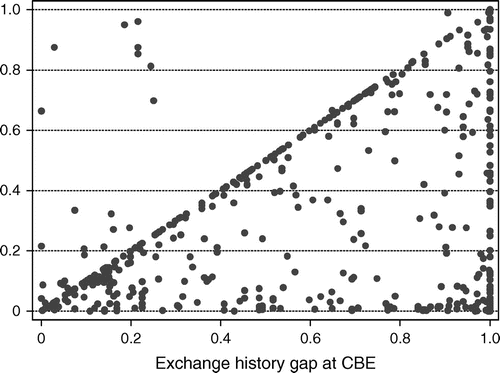
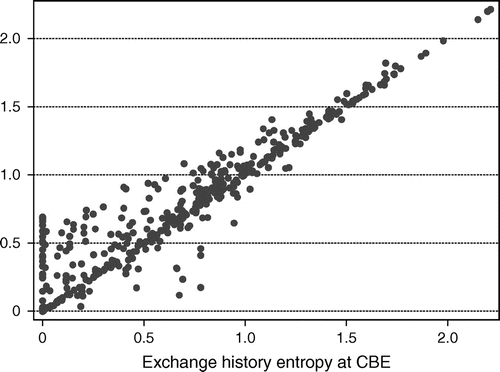
We examine H3 by comparing the exchange history gap at CBE with the forecast exchange history gap following CBE, which examines whether the buyer’s choice of supplier raised the asymmetry of the top two suppliers or reduced it. Figure 1(a) plots these two variables. Points above the 45-degree line indicate that the choice of supplier increased the asymmetry between the two most experienced suppliers, and points below the 45-degree line indicate that the choice of supplier reduced this asymmetry. (Points on the 45-degree line indicate that the asymmetry between the top most experienced suppliers was unaffected by Buyco’s choice.) Similarly, we compare exchange history entropy at CBE with exchange history entropy following CBE, plotting these two variables in Figure 1(b). In this figure, points above the 45-degree line indicate that the choice of supplier increased the measure of entropy, corresponding to a more even distribution of relational capital across suppliers. Both figures graphically illustrate the tendency of the buyer during our period of study to reduce asymmetries among suppliers. We corroborate these figures with t-tests comparing the means of exchange history gap at CBE and exchange history gap following CBE and exchange history entropy at CBE with exchange history entropy following CBE. In both cases the null hypothesis of equal means is rejected at p < 0.0001.
5.4. Buyer Strategy: Manipulating Supplier Inferences About the Value of Relational Capital (H4)
Next we turn to examining our final hypothesis, H4, which predicts that Buyco will be disadvantaged if suppliers can easily infer the value of relational rents. Placing a consistent, unchanging value on relationship history over time makes it more likely that suppliers will develop bid strategies to appropriate relational rents. By contrast, ignoring relationship history during certain periods may cause suppliers to reduce their estimates of the value the buyer assigns to relationships and may also enable Buyco to generate a reputation for “toughness” in negotiation.
To investigate H4, we examine whether Buyco places a stable weight on relational capital over our period of study. Following Elfenbein and Zenger (2014), we estimate a discrete choice conditional logit model (McFadden 1973) with the dependent variable yij, which takes on the value 1 if supplier j wins the contract for item bundle i and 0 otherwise. Let the variables pij and logsalesjm be defined as above, and let zijm be a vector of the remaining control variables describing the bidder and its bid strategy in the CBE. The utility Buyco obtains for selecting bidder j for item i in CBE m can be represented as
We estimate Equation (8) via maximum likelihood and focus on coefficient β2, which represents the importance of exchange history. To examine whether the importance of exchange history remains constant over time, we split the sample into six distinct quarters and estimate the coefficients on β2 separately in each quarter. While we recognize that our division of periods is arbitrary, we note that it is sufficient to uncover differences in the importance placed on partner exchange history over time if they exist. We make no claims that this represents the true frequency with which Buyco should modify the signals it sends to suppliers about the value of relational capital.30
Table 6 reports the results of these estimates. Column 1 reports the baseline specification, and column 2 includes interactions between logsalesjm and Xm as in Equation (6); these interactions essentially serve as controls for the mix of items being auctioned in the CBE, for which the importance of relational capital may vary. In column 3, we report results of the model that estimates individual coefficients for each of the six quarters under study. This specification indicates that Buyco places a large weight on logsalesjm during three of the six quarters and a small weight, not significantly different from zero, on logsalesjm in the other three quarters. Moreover, the pattern of weight placed on logsalesjm quarter by quarter tends to oscillate. A test of joint equality rejects the null hypothesis at . Column 4 includes interaction terms between logsalesjm and Xm. When these controls for differences in the mix of items being auctioned are included, the pattern remains but becomes less pronounced. The test of joint equality rejects the null at p < 0.1. We interpret these results as providing support, albeit indirect, for H4.
|
Table 6: Conditional Logit Estimation of Changes in Impact of Relationship History on the Probability of Winning Bid Over Time
| (1) | (2) | (3) | (4) | |
|---|---|---|---|---|
| logsalesjm | 0.1372∗∗ (0.0368) | 0.1781∗∗ (0.0274) | ||
| logsalesjm… | ||||
| × Q2 2005 | 0.0888 (0.0714) | 0.1317∗ (0.0700) | ||
| × Q3 2005 | 0.2638∗∗ (0.0880) | 0.2781∗∗ (0.0904) | ||
| × Q4 2005 | 0.2242∗∗ (0.0476) | 0.2364∗∗ (0.0552) | ||
| × Q1 2006 | 0.0212 (0.0550) | 0.0824∗ (0.0470) | ||
| × Q2 2006 | 0.2316∗∗ (0.0478) | 0.2372∗∗ (0.0473) | ||
| × Q3 2006 | 0.0993 (0.0863) | 0.0966 (0.0899) | ||
| × complexity | 0.0474 (0.0403) | 0.0226 (0.0357) | ||
| × asset specificity | 0.0717∗ (0.0383) | 0.0622∗ (0.0349) | ||
| × technological change | −0.1172∗∗ (0.0435) | −0.0880∗∗ (0.0361) | ||
| × demand variation | 0.0143 (0.0319) | 0.0037 (0.0343) | ||
| × number of worldwide suppliers | −0.0125 (0.0280) | −0.0140 (0.0253) | ||
| Control variables | ||||
| logbidij | −5.466∗∗ (0.8253) | −5.771∗∗ (0.8936) | −5.668∗∗ (0.8469) | −5.829∗∗ (0.8970) |
| distancej | −0.2649∗∗ (0.0910) | −0.2454∗∗ (0.0900) | −0.2590∗∗ (0.0878) | −0.2504∗∗ (0.0896) |
| multinationalj | 0.0750 (0.0711) | 0.0495 (0.0665) | 0.0676 (0.0662) | 0.0546 (0.0666) |
| Corruption Perceptions Indexj | 0.0631 (0.1862) | 0.0310 (0.1875) | 0.0262 (0.1879) | 0.0021 (0.1941) |
| common languagej | −0.1551 (0.2688) | −0.0911 (0.2585) | −0.1628 (0.2562) | −0.1267 (0.2588) |
| savings(−i)jm | 0.1707∗ (0.0881) | 0.1535∗∗ (0.0708) | 0.1556∗∗ (0.0734) | 0.1505∗∗ (0.0685) |
| other bidsjm | −0.2738 (0.1874) | −0.2437 (0.1831) | −0.2854 (0.1913) | −0.2637 (0.1853) |
| p-value in test of equality of relational capital coefficients (H4) | 0.0405 | 0.0980 | ||
| N | 3,029 | 3,029 | 3,029 | 3,029 |
| Log likelihood | −722.7 | −702.0 | −703.1 | −693.5 |
| Pseudo R-squared | 0.1513 | 0.1755 | 0.1743 | 0.1859 |
Note. Robust standard errors, clustered on bid event, in parenthesis; ∗∗p < 0.05, ∗p < 0.1. (two-sided test).
6. Discussion
Our results suggest that our buyer and its array of potential and current suppliers recognize value in relationships and actively seek to appropriate this value. The analysis of suppliers’ bidding behavior generates results that are largely consistent with our hypotheses. Sellers increase the prices they propose as the level of relational capital with the buyer increases. Moreover, sellers more actively seek to appropriate returns to relational capital when they recognize rival bidders have weaker relationships, consistent with theories of added value. Furthermore, the bids of sellers with relational capital are highly dependent on results of the bid events immediately prior, consistent with the idea that these bidders may be uncertain about the value of their relational capital and Buyco’s willingness-to-pay for it. Other interpretations of this result, however, are possible.31
The analysis of buyer behavior also yields results that are consistent with our hypotheses. The results highlight a forward-looking buyer that evaluates both the benefits of relationships with incumbents and initiates the formation of relational capital with new suppliers to restrict sellers’ pricing leverage. In addition, our data suggest that a buyer may actively seek to keep the seller uncertain as to the value the buyer assigns to relational capital. Such uncertainty may cause the seller to constrain its efforts to appropriate more of the returns from relational capital. These results all point to a buyer who confronts a second paradox in crafting exchange relationships—one that is quite distinct from that articulated in prior literature (Uzzi 1997, Lazzarini et al. 2008). Here relationships are distributed not due to uncertainty about capability or technology, as this issue is dealt with through prequalification processes, but rather stems from an effort to both create and capture value.
Our theory suggests, and our empirical evidence corroborates, the existence of a second paradox of embeddedness that occurs even in the complete absence of any relationship dark side (Anderson and Jap 2005, Day et al. 2013). Thus, even if alternative mechanisms can be found to limit the problems of over-embeddedness previously discussed in the literature, a forward-looking buyer may well limit the development of some relationships to improve long-run value appropriation, preferring a larger share of a smaller pie.
6.1. Limitations
Our study is subject to several limitations. First, although we examine the behavior of many sellers, we study the behavior of a single buyer. Accordingly, we are unable to explore empirically whether relationship Histories, in addition to composing value for the buyer (in the form of reduced fears of opportunistic behavior and enhanced coordination and problem solving), also create reduced costs for sellers that would be reflected in differing prices offered to differing buyers with whom they have differing relationship histories. Access to multiple buyers purchasing similar products across a long history from multiple sellers would allow us to explore this. Second, although we can observe bidders’ attempts to appropriate value directly by examining their bids, we can only infer indirectly the parameters that affect Buyco’s decisions. Moreover, the supplier decisions made by Buyco represent the outcome of a complex (and sometimes varying) organizational process that involves multiple procurement professionals, engineers, prequalification teams, and business unit or factory managers. The importance of exchange history may vary substantially across these actors, in no small part because they face differing incentives. Our inferences from Buyco’s choices thus represent averages, not only across different product categories, but over different decision makers as well. Finally, it is possible that an omitted variable explains the formation of the prior relationship, the value of the relationship to Buyco, and attempts by bidders to appropriate value. The extensive prequalification of bidders and the commodity nature of the products involved, however, restrict the degree to which differences in production capacity and capability to produce the physical product can be driving the results.
6.2. Further Qualitative Evidence
To further examine our theory, we presented our theory and findings to a team of Buyco corporate procurement specialists, who were largely unaware of the nature or content of our study. Over a two-and-half hour session, we asked for their evaluation and assessment. Our results and conclusions were generally corroborated. On the value of relationships, the group acknowledged that “we do value relationships, but that’s not good enough,” and that “in some countries …relationships are more important than others.” Interestingly we learned that efforts were made following the period of our study to directly quantify the value of relationships to “take the emotion out [of the decision].” Procurement specialists and factory managers were asked to translate the value of relationships into differences in lead time, engineering time, and risk for prospective suppliers.
With respect to bidders’ attempts to capture value from relationships, they stated that “incumbent” suppliers would “take advantage of the relationship” by “not bidding aggressively” and that “quite often [we need to] send a clear message to the incumbent.” Awards were granted “strategically” and “with future considerations in mind.” However, their comments also suggest that these future considerations were often evaluated at a higher level than our theoretical discussion implies. Rather than focusing on trade-offs between deepening relationships and creating bargaining leverage through new relationships for each bundle of items, we learned that it was typical for top management to issue broad directives to the procurement teams to “expand the supply base” and alternatively to “support our [existing] suppliers.”32 This type of movement back and forth between objectives is broadly consistent with our H4. It may be that mixing these objectives over time may be the most practical way to balance the appropriation and creation of value through relational capital over time.
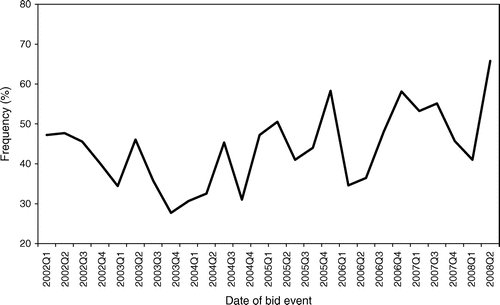
A further piece of evidence lends some support for this view. Although Buyco’s corporate procurement team did not keep data about premiums that they paid over the lowest bid for each auction, they provided us with a key performance indicators database which recorded the name of the lowest bidder by price and the awardee by auction. We used this data to construct Figure 2, which shows the fraction of all auctions in which Buyco chose the lowest bidder in each quarter from 2002Q1 through 2008Q2. Averaged over several hundred auctions in each quarter, this figure shows differences of 20% or more from quarter to quarter. Although this figure is consistent with the notion that weight placed on relationships varied over time (presumably when the low price bidder was not chosen, a bidder with relational capital was chosen instead), we cannot determine from this figure whether these “oscillations” were intended to exploit uncertainty, to balance the creation and capture of relational rents, or both.
7. Conclusion
Buyers and suppliers seek to both create relational assets and to appropriate the rents that flow from them. The buyer–supplier networks that we observe are a complex outcome of buyer and supplier efforts to create and capture value in relationships. Maintaining continuity with a particular supplier may increase the maximum value cocreated by both parties. At the same time, developing relationships with new suppliers can improve the minimum value the buyer is guaranteed to appropriate. From the buyer’s perspective, where the balance lies between these two alternatives depends on suppliers’ behavior in appropriating their added value. More aggressive value appropriation behavior on the part of suppliers, along with “value capture creep,” may limit the degree to which stable, ongoing relationships are desirable, and it may encourage players to develop multiple, but shallower, relationships to improve the value that they are able to appropriate.
Thus, in addition to the “paradox of embeddedness” described by Uzzi (1997), the issue of value appropriation, too, may limit the degree to which embedded supply relationships are desirable. Our contribution is to highlight these issues theoretically and to show that, at least in one context, we observe dynamics consistent with firms’ jockeying over the benefits of relational capital.
The Boeing Center for Technology, Information, and Manufacturing provided generous research support for this project. The authors thank Joel Baum, Jeff Dyer, Ranjay Gulati, Olav Sorenson, and seminar participants at Bocconi University, Massachusetts Institute of Technology, University of Amsterdam, University of Illinois, and University of Michigan, the 2009 University of Utah/BYU Winter Strategy Conference, the 2009 Atlanta Competitive Advantage Conference, and the 2009 Sumantra Ghoshal Conference at London Business School, the 2010 Israel Strategy Conference, 2014 INFORMS, and 2015 ISNIE, for helpful comments. The authors also thank Dan Douglass and Tracy Smith Clyburn for many helpful conversations, and they thank Ellen Wen, Nina Noll, Jon D’Antonio, Chase Zenger, and Andrew Zenger for research assistance in assembling these data. We are grateful for financial support from the Boeing Center for Technology, Information, and Manufacturing at Washington University in St. Louis.
Appendix A. Robustness to Alternative Measures of Exchange History
|
Table A.1: Fixed Effects Regression of Supplier Bids on Exchange History and Rivals’ Exchange History (Length Measure of Relationship History)
| Column: | (1) | (2) | (3) | (4) | (5) | (6) |
|---|---|---|---|---|---|---|
| log(relationship lengthjm) (H1A) | 0.0093∗∗ (0.0020) | 0.0435∗∗ (0.0124) | 0.0212∗∗ (0.0066) | 0.0097∗∗ (0.0026) | 0.0459∗∗ (0.0140) | 0.0224∗∗ (0.0073) |
| ×log(mean relationship of j rivals for i) (H1B) | −0.0164∗∗ (0.0058) | −0.0169∗∗ (0.0064) | ||||
| ×(fraction of experiencedjrivals fori) (H1B) | −0.0164∗ (0.0090) | −0.0178∗ (0.0095) | ||||
| log(relationship length ofjrivals fori) | 0.0531∗∗ (0.0176) | 0.0548∗∗ (0.0199) | ||||
| fraction of experiencedjrivals fori | 0.0527∗∗ (0.0266) | 0.0478∗ (0.0285) | ||||
| Exchange characteristics | ||||||
| × complexity | −0.0017 (0.0041) | −0.0021 (0.0041) | −0.0019 (0.0040) | |||
| × asset specificity | 0.0074∗∗ (0.0033) | 0.0047 (0.0033) | 0.0068∗∗ (0.0031) | |||
| × technological change | 0.0000 (0.0034) | 0.0018 (0.0035) | 0.0003 (0.0031) | |||
| × demand variation | −0.0008 (0.0023) | 0.0005 (0.0025) | 0.0000 (0.0024) | |||
| × number of worldwide suppliers | −0.0030 (0.0029) | −0.0047∗ (0.0027) | −0.0037 (0.0028) | |||
| Control variables | ||||||
| multinationalj | −0.0048 (0.0067) | −0.0056 (0.0066) | −0.0052 (0.0067) | −0.0053 (0.0067) | −0.0060 (0.0065) | −0.0051 (0.0066) |
| distancej | −0.0078∗∗ (0.0032) | −0.0075∗∗ (0.0034) | −0.0079∗∗ (0.0033) | −0.0070∗∗ (0.0034) | −0.0067∗ (0.0036) | −0.0069∗ (0.0035) |
| common languagej | −0.0152 (0.0143) | −0.0148 (0.0145) | −0.0153 (0.0145) | −0.0136 (0.0148) | −0.0131 (0.0150) | −0.0132 (0.0150) |
| Corruption Perceptions Indexj | 0.0110∗∗ (0.0025) | 0.0109∗∗ (0.0026) | 0.0108∗∗ (0.0026) | 0.0108∗∗ (0.0026) | 0.0106∗∗ (0.0027) | 0.0106∗∗ (0.0027) |
| other bidsjm | −0.0051∗∗ (0.0006) | −0.0050∗∗ (0.0006) | −0.0051∗∗ (0.0006) | −0.0051∗∗ (0.0006) | −0.0050∗∗ (0.0006) | −0.0050∗∗ (0.0006) |
| savingsi(−j)m | −0.0237∗∗ (0.0071) | −0.0234∗∗ (0.0071) | −0.0238∗∗ (0.0071) | −0.0234∗∗ (0.0070) | −0.0236∗∗ (0.0070) | −0.0235∗∗ (0.0070) |
| Constant | 11.8761∗∗ (0.0346) | 11.7775∗∗ (0.0514) | 11.8816∗∗ (0.0354) | 11.8695∗∗ (0.0354) | 11.7690∗∗ (0.0539) | 11.8403∗∗ (0.0402) |
| Observations | 3,032 | 3,032 | 3,032 | 3,032 | 3,032 | 3,032 |
| R2 (within) | 0.2163 | 0.2195 | 0.2172 | 0.2181 | 0.2209 | 0.2191 |
| Market basket | 553 | 553 | 553 | 553 | 553 | 553 |
Notes. The dependent variable is the natural logarithm of the bidder’s bid, in USD. The model incorporates market basket-level fixed effects. Robust standard errors, clustered on bid event, in parenthesis; ∗∗p < 0.05, ∗p < 0.1 (two-sided test). Asset specificity remains statistically significant when other interaction terms are dropped.
Appendix B. Characteristics of Parts Procured via Reverse Auctions
To measure attributes of the exchange settings for items in a CBE, we administered a questionnaire to procurement experts at Buyco. We pretested our questionnaire with a cross-functional team at Buyco including both engineers and procurement experts to ensure that our questions were well understood. We then obtained ratings from two procurement experts at Buyco. From our interviews with Buyco’s procurement staff, we concluded that because common parts were clustered within a CBE, the heterogeneity in procured products was largely at the level of the CBE.33 For each CBE, the expert raters were supplied with detailed descriptions and drawings of the bundle of products within the CBE. Each expert then scored the products in each CBE along a dozen dimensions using a seven-point Likert scale. Using these survey data, we obtained five measures of exchange attributes: asset specificity of production equipment, the rate of technological change, predictability in demand over time, the number of capable worldwide suppliers, and complexity of the parts procured. Table A.1 provides data on the survey items used in measuring each construct. Our experts’ ratings were well correlated, yielding average reliability of between 0.66 and 0.90. To facilitate the analysis and interpretation of results, we utilize as measures the z-scored average of the two experts’ ratings.
|
Table B.1: Survey on Characteristics of Parts in Competitive Bid Event
| Concept: | Question(s): | Median summed score∗ | Average reliability |
|---|---|---|---|
| Asset specificity | To provide these parts, the awarded supplier will need (or has already made, if the incumbent supplier) to make substantial investments in tooling and equipment that are specific to Buyco. | 5 | 0.75 |
| Number of worldwide suppliers | There are numerous suppliers in the world with the capability to supply these parts | 8 | 0.66 |
| Demand variation | There can be a high level of variance month-to-month or season-to-season from the forecast demand for these parts | 7 | 0.67 |
| Technological change | The underlying technology required to manufacture these products has changed rapidly over the past five years | 6 | 0.77 |
| Complexity (α = 0.88) | 1: These represent complex parts that are difficult to manufacture | 7 | 0.90 |
| 2: There is extensive, specialized skill, knowledge, and experience required to generate these parts | 7 | ||
| 3: Very small variations from production specs render these parts completely unusable | 7 | ||
∗Answers were on a seven-point Likert scale, so the maximum summed response is 14.
1 This is the same empirical context examined in Elfenbein and Zenger (2014). Whereas that paper documented the emergence of relational capital through repeated exchange, this paper focuses on the division of relationship value between buyer and supplier and how this constrains the buyer’s choice of suppliers.
2 In many settings there may be symmetry to the value embedded in an exchange relationship. A history of repeated exchange may not only enhance the buyer’s willingness to pay by enhancing coordination and problem solving capacity and reducing fears of opportunism, as discussed below, but may also lower costs for the supplier, enabling such suppliers to offer lower prices. Due to the nature of the rather simple parts we examine, as well as data constraints (i.e., we only observe a suppliers’ prices to a single buyer) and the fact any such symmetry would only bias us against finding any significant results, we have chosen to theoretically and empirically focus on the value to the buyer of an exchange history.
3 Gubler (2015) shows that relationships are associated with better performance even in the absence of the shadow of the future, which he attributes to more effective information sharing and higher motivation.
4 Some scholars have referred to the idiosyncratic value that emerges through these interactions as “relational rents” (Dyer and Singh 1998, Lavie 2006).
5 We seek not to create a comprehensive model to predict the buyer’s decisions but rather to show the main features of the decision-making process that generate tension and, thereby, to identify the necessary conditions for observing a paradox, if it exists. Board (2011) develops a theoretical model investigating similar issues, in which the central tension results from a trade-off between exploiting the gains from trade in the present transaction and developing (costly) new relationships.
6 We ignore discounting across the periods, as it does not materially affect the analysis, though our assumption of two periods is a stylized representation of more complex intertemporal phenomenon.
7 Conceptually, we think of relational capital as being an increasing function of exchange history, e.g., R(h), and the value of relational capital as being a function of relational capital, i.e., V(R(h)). For simplicity, we suppress the function R() from the discussion below as it does not affect our analysis in any way.
8 The analysis that follows is robust to a variety of alternative and more general assumptions.
9 The analysis is also robust to allowing the incumbent’s relational capital to depreciate between periods if it is not selected. This might be akin to decreasing motivation due to losing the period 1 contract. Ceteris paribus, such an assumption would lead to greater concentration of exchange among a small set of suppliers.
10 While we draw inspiration from bi-form games (Brandenburger and Stuart 2007, Bennett 2013), we depart from it in some important ways to match our theoretical development more closely to our setting. In particular, in our setting final prices are formed via reverse auctions, leading us to modify the depiction of bargaining ability (referred to in bi-form games with the parameter α).
11 This results from the fact that, were a player to appropriate more than he “brings to the table,” then other players would be better off cutting that player out and transacting among themselves.
12 Although the standard assumptions of this literature of full information and unrestricted bargaining are not technically met in this setting, the fact that the buyer has enough information to form expectations about the value of both suppliers and can (and will) exclude a party that seeks to appropriate more than it is worth are sufficient for the standard results about added value to apply.
13 Note that our fundamental assumption that relational capital accumulates with repeated exchange is crucial here. If relational rents were simply present (the supplier is trustworthy) or absent (the supplier is unknown), based upon prior experience, then this choice would simply reduce to forgoing relational rents in a single period to create an equivalent second source.
14 We note that if V(h) displays diminishing marginal returns, the threshold value of γ will be lower than if V(h) displays constant returns to scale.
15 In our setting, prices are set via reverse auction, and this price premium is known to the buyer at the time of choosing the supplier for period 1. In principle, pI can take on any value. An alternative theoretical approach—in which unrestricted bargaining takes place in both periods—leads to a similar formulation in which the decision to choose the new supplier in the first period depends on beliefs about value appropriation in the second period. This alternative approach yields theoretical predictions that are consistent with all of the hypotheses in the next section.
16 As described, we assume that the length of the supply contracts has been chosen optimally based upon considerations outside our model. Since neither supplier is able to commit to a price in the second period—nor is the buyer able to commit to choosing a particular supplier in the second period—the buyer’s decision and the existence of our second paradox of embeddedness then turns on buyers’ conjectures about γ .
17 Alternatively, the buyer could, at least in principal, use a game theoretic approach to generate predictions about γ . Doing so in practice, however, would require extensive information about supplier’s opportunity costs, their discount rates, suppliers’ expectations about future transactional opportunities, as well as a precise specification of the price-setting processes.
18 This could occur for several reasons. Suppliers might not recognize that relational capital generates value for the buyer and increases its willingness-to-pay. Suppliers may recognize that relational capital generates value for the buyer, but not be fully aware of the relational capital possessed by rivals or the value the buyer assigns to relational capital and may, therefore, negotiate (or bid) conservatively. Third, incumbent suppliers might negotiate (or bid) conservatively, with the intention of benefitting from continuity through eliminating switch-over costs or by making other specific investments to reduce the cost to serve the buyer.
19 Buyco, however, did take precautions to ensure that the decision makers avoided overpaying for familiar suppliers. As one procurement manager commented, division managers would “need to have a good explanation when not awarding to the low bidder” and “anything that is not quantifiable [is] looked at very critically.”
20 Our results are robust to including all bids and to tighter cut-off points for exclusion.
21 Because multiple bundles may be procured during a single CBE, i is nested within m. In the discussion below, we use m only when necessary to indicate that the relevant variation occurs across CBEs rather than across bundles.
22 Prior to 2002, this database is incomplete. Thus, we cannot trace all relationships back to their origin.
23 While we can, in principle, calculate exchange history gap and entropy using measures of relationship length, the prospective calculations using these measures are highly sensitive to our counterfactual assumptions, so we do not report them.
24 We examine a subset of the attributes for which we collected data in this paper. Incorporating the remaining attributes in our empirical analysis does not affect the significance of our results.
25 The Corruption Perceptions Index 2006 by Transparency International can be found at https://www.transparency.org/research/cpi/cpi_2006/0/.
26 We drop from our sample bids made by a handful of suppliers whose headquarters we are unable to locate. In no cases did these suppliers win the supply contract.
27 This approach identifies β1, based on differences in exchange histories between bidders. As stated above, the fixed-effect, αi, incorporates differences in competition for the contract for the bundle of parts in i. Thus, we are unable to distinguish between situations in which two players with similarly high levels of relational capital compete aggressively, pricing in such a way that Buyco receives the lion’s share of V, from one in which these suppliers collude, resulting in the winning bidder capturing a large share of V. Given, however, that the median number of bidders for an item is 5, we suspect that competition for the bid contract is likely to be intense, i.e., that potential rents from similar levels of relational capital are likely to be competed away.
28 Given truncation of the dependent variable (at zero) a Tobit specification would be preferable. However, the random effects assumptions are violated, and Honore’s (1993) method of estimating fixed-effects models with censored data will not produce consistent estimates given the length of the (unbalanced) panel.
29 Winning bidders that have no relational capital are bidders whose winning contracts have not started by the time of the subsequent competitive bid event.
30 The theory, in fact, simply predicts that Buyco will simply ignore relational capital in some subset of auctions, but it makes no prediction about the timing of these changes.
31 Sellers’ capacity constraints, for example, might explain a similar pattern.
32 In practice, it may be quite difficult to generate an appropriate incentive mechanism that prompts a buying agent to effectively weigh future bargaining considerations in making present choices. In particular, problems of turnover, performance measurement, and private incentives may preclude the effectiveness of any such incentives. Top-down, hierarchically imposed mandates regarding procurement choices may provide an alternative mechanism that encourages strong but not unique relationships or relationships that balance value creation and value appropriation. These top-down mandates may take the form of “choose a new supplier” or “choose the lowest bidder.” If improvements in future bargaining scenarios are uncertain, are difficult to measure, or are only revealed over time, then balancing value creation and value appropriation may require the organization to oscillate between “maximize present value of the supply contracts” and “minimize price, while expanding the supply base.” A similar situation is explored in the context of governance choices in Nickerson and Zenger (2002).
33 Recall that products in a CBE were always in the same product category and typically were in rather narrow range, designed to provide incentives for appropriate bidders to bid in the auctions.
References
- (2011) The intra-alliance division of value created through collaboration. Strategic Management J. 32(2):187–211.Crossref, Google Scholar
- (2000) How much do your co-opetitors’ capabilities matter in the face of technological change? Strategic Management J. 21(3):387–404.Crossref, Google Scholar
- (2005) The dark side of close relationships. MIT Sloan Management Rev. 46(3):75–82.Google Scholar
- (2013) Organization and bargaining: Sales process choice at auto dealerships. Management Sci. 59(9):2003–2018.Link, Google Scholar
- (1964) Exchange and Power in Social Life (Wiley, New York).Google Scholar
- (2011) Relational contracts and the value of loyalty. Amer. Econom. Rev. 101(7):3349–3367.Crossref, Google Scholar
- (2000) Deception and retribution in repeated ultimatum bargaining. Organ. Behav. Human Decision Processes 83(2):235–259.Crossref, Google Scholar
- (1989) Price, authority, and trust: From ideal types to plural forms. Annual Rev. Sociol. 15(1):97–118.Crossref, Google Scholar
- (1996) Value based business strategy. J. Econom. Management Strategy 5(1):5–24.Crossref, Google Scholar
- (2007) Biform games. Management Sci. 53(4):537–549.Link, Google Scholar
- (2011) Value creation, competition, and performance in buyer–supplier relationships. Strategic Management J. 32(1):76–106.Crossref, Google Scholar
- (2007) The horizontal scope of the firm: Organizational tradeoffs vs. buyer–supplier relationships. Management Sci. 53(4):550–565.Link, Google Scholar
- (2011) Value creation and value capture with frictions. Strategic Management J. 32(11):1206–1237.Crossref, Google Scholar
- (2013) Trust and relational embeddedness: Exploring a paradox of trust pattern development in key supplier relationships. Indust. Marketing Management 42(2):152–165.Crossref, Google Scholar
- (1983) Goodwill and the spirit of market capitalism. British J. Soc. 34(4):459–482.Crossref, Google Scholar
- (1997) Effective interfirm collaboration: How firms minimize transaction costs and maximize transaction value. Strategic Management J. 18(7):535–556.Crossref, Google Scholar
- (2003) The role of trustworthiness in reducing transaction costs and improving performance: Empirical evidence from the United States, Japan, and Korea. Organ. Sci. 14(1):57–68.Link, Google Scholar
- (1998) The relational view: Cooperative strategy and sources of interorganizational competitive advantage. Acad. Management Rev. 23(4):660–679.Crossref, Google Scholar
- (2014) What is a relationship worth? Repeated exchange and the development and deployment of relational capital. Organ. Sci. 25(1):222–241.Link, Google Scholar
- (1986) A “signal-jamming” theory of predation. RAND J. Econom. 17(3):366–376.Crossref, Google Scholar
- (1992) Alliance Capitalism: The Social Organization of Japanese Business (University of California Press, Berkeley).Google Scholar
- (2013) Self-enforcing agreements and relational contracting: Evidence from California highway procurement. J. Law, Econom. Organ. 29(2):239–277.Crossref, Google Scholar
- (1985) Economic action and social structure: The problem of embeddedness. Amer. J. Soc. 91(3):481–510.Crossref, Google Scholar
- (2014) Bargaining ability and competitive advantage: Empirical evidence from medical devices. Management Sci. 60(12):3011–3025.Link, Google Scholar
- (2015) Leveraging social capital: How transacting with socially-affiliated clients impacts expert and firm performance. Working paper, University of California, Riverside, Riverside, CA.Google Scholar
- (1995) Does familiarity breed trust? The implications of repeated ties for contractual choice in alliances. Acad. Management J. 38(1):85–112.Crossref, Google Scholar
- (2008) Interorganizational trust, governance choice, and exchange performance. Organ. Sci. 19(5):688–708.Link, Google Scholar
- (2008) Does familiarity breed trust? Revisiting the antecedents of trust. Managerial Decision Econom. 29(2–3):165–190.Crossref, Google Scholar
- (1995) Firms, Contracts, and Financial Structure (Oxford University Press, New York).Crossref, Google Scholar
- (1993) Orthogonality conditions for Tobit models with fixed effects and lagged dependent variables. J. Econometrics 59(1–2):35–61.Crossref, Google Scholar
- (1979) Entropy measure of diversification and corporate growth. J. Indust. Econom. 27(4):359–369.Crossref, Google Scholar
- (2000) Trust and adaptation in relational contracting. Acad. Management Rev. 25(4):873–882.Crossref, Google Scholar
- (2000) Learning and protection of proprietary assets in strategic alliances: Building relational capital. Strategic Management J. 21(3):217–237.Crossref, Google Scholar
- (2006) The competitive advantage of interconnected firms: An extension of the resource-based view. Acad. Management J. 31(8):638–658.Google Scholar
- (2007) Alliance portfolios and firm performance: A study of value creation and appropriation in the U.S. software industry. Strategic Management J. 28(12):1187–1212.Crossref, Google Scholar
- (2008) Dealing with the paradox of embeddedness: The role of contracts and trust in facilitating movement out of committed relationships. Organ. Sci. 19(5):709–728.Link, Google Scholar
- (1988) Dynamics of interorganizational attachments: Auditor-client relationships. Admin. Sci. Quart. 33(3):345–369.Crossref, Google Scholar
- (2003) A bargaining perspective on resource advantage. Strategic Management J. 24(11):1069–1086.Crossref, Google Scholar
- (2004) How do value creation and competition determine whether a firm appropriates value? Management Sci. 50(10):1319–1333.Link, Google Scholar
- (2007) Reputations, relationships, and contract enforcement. J. Econom. Literature 45(3):595–628.Crossref, Google Scholar
- (1978) Contracts: Adjustment of long-term economic relations under classical, neoclassical, and relational contract law. Northwestern University Law Rev. 72(6):854–905.Google Scholar
- (1973) Conditional logit analysis of qualitative choice behavior. Zarembka P, ed. Frontiers of Econometrics (Academic Press, New York), 105–142.Google Scholar
- (1998) Social capital, intellectual capital, and the organizational advantage. Acad. Management Rev. 23(2):242–266.Crossref, Google Scholar
- (2002) Being efficiently fickle: A dynamic theory of organizational choice. Organ. Sci. 13(5):547–566.Link, Google Scholar
- (2000) Fairness versus reason in the ultimatum game. Science 289(5485):1773–1775.Crossref, Google Scholar
- (2015) Value creation and value capture under moral hazard: Exploring the microfoundations of buyer–supplier relationships. Strategic Management J. 36(8):1146–1163.Crossref, Google Scholar
- (1993) Strategic alliance structuring: A game theoretic and transaction cost examination of interfirm cooperation. Acad. Management J. 36(4):794–829.Crossref, Google Scholar
- (2002) Do formal contracts and relational governance function as substitutes or complements? Strategic Management J. 23(8):707–725.Crossref, Google Scholar
- (2009) Trust and governance: Untangling a tangled web. Acad. Management Rev. 34(1):11–31.Crossref, Google Scholar
- (1995) Bargaining experiments. Kagel J, Roth AE, eds. Handbook of Experimental Economics (Princeton University Press, Princeton, NJ), 253–348.Crossref, Google Scholar
- (2007) Brokers and competitive advantage. Management Sci. 53(4):566–583.Link, Google Scholar
- (1989) Efficient capital markets, inefficient firms: A model of myopic corporate behavior. Quart. J. Econom. 104(4):655–669.Crossref, Google Scholar
- (2016) Value gaps and profitability. Strategy Sci. 1(1):56–70.Link, Google Scholar
- (1997) Social structure and competition in inter-firm networks: The paradox of embeddedness. Admin. Sci. Quart. 42(1):35–67.Crossref, Google Scholar
- (1999) Embeddedness in the making of financial capital: How social relations and networks benefit firms seeking financing. Amer. Soc. Rev. 64(4):481–505.Crossref, Google Scholar
- (2014) Trust over time in exchange relationships: Meta-analysis and theory. Strategic Management J. 35(12):1891–1902.Crossref, Google Scholar
- (1975) Markets and Hierarchies (Free Press, New York).Google Scholar
- (1985) The Economic Institutions of Capitalism (Free Press, New York).Google Scholar
- (1996) The Mechanisms of Governance (Oxford University Press, New York).Crossref, Google Scholar
- (1998) Does trust matter? Exploring the effects of interorganizational and interpersonal trust on performance. Organ. Sci. 9(2):141–59.Link, Google Scholar
- (2002) Interorganizational routines and performance in strategic alliances. Organ. Sci. 13(6):701–713.Link, Google Scholar
Daniel W. Elfenbein is associate professor of organization and strategy at the Olin Business School, Washington University in St. Louis. He received his Ph.D. in business economics jointly from Harvard Business School and the university’s Economics Department. His research focuses on how firms and employees create and capture value through reputations and relationships, on entrepreneurship, and on corporate social responsibility. His research has been published in leading management and economics journals. Prior to academia, he worked as a strategy consultant at Monitor Company and as an economist in the President’s Council of Economic Advisers.
Todd Zenger is the N. Eldon Tanner Professor of Strategy and Strategic Leadership at the David Eccles School of Business at the University of Utah and holds the university designation as Presidential Professor. He received his Ph.D. from the University of California, Los Angeles. He recently published Beyond Competitive Advantage: How to Solve the Puzzle of Sustaining Growth While Creating Value (HBR Press, 2016). His research interests encompass corporate strategy, entrepreneurship, and organization design. He has widely published in the leading journals in management and strategy.

