


Attention to Exploration: The Effect of Academic Entrepreneurship on the Production of Scientific Knowledge
Abstract
We study how becoming an entrepreneur affects academic scientists’ research. We propose that entrepreneurship will shift scientists’ attention away from intradisciplinary research questions and toward new bodies of knowledge relevant for downstream technology development. This will propel scientists to engage in exploration, meaning they work on topics new to them. In turn, this shift toward exploration will enhance the impact of the entrepreneurial scientist’s subsequent research, as concepts and models from other bodies of knowledge are combined in novel ways. Entrepreneurship leads to more impactful research, mediated by exploration. Using panel data on the full population of scientists at a large research university, we find support for this argument. Our study is novel in that it identifies a shift of attention as the mechanism underpinning the beneficial spillover effects from founding a venture on the production of public science. A key implication of our study is that commercial work by academics can drive fundamental advances in science.
Introduction
Science represents a distinct social system dedicated to the production of knowledge, often openly shared as a public good in scientific journals (Merton 1973, Polanyi 2000). Science is also a font of technological opportunities and has proven instrumental in the development of many innovations (Dasgupta and David 1994, Rosenberg 1994, Cohen et al. 2002, Nelson 2004). An important channel through which opportunities arising from scientific discoveries are exploited is by way of academic entrepreneurship, where academic scientists found a firm to commercialize their inventions or expertise (Zucker and Darby 1996, Hughes 2001, Shane 2001, Powell and Sandholtz 2012).
Although the impact of science on academic entrepreneurship is well documented, we know less about the reverse relationship. Academic entrepreneurs often remain at their universities while developing a venture (Lacetera 2009, Powell and Sandholtz 2012). Many universities promote this course of action as they seek to facilitate the commercial exploitation of scientific discoveries. However, entrepreneurial engagement will likely impact academics’ core task of conducting research. Entrepreneurship may affect individuals’ commitment toward research projects, and take a toll on the time they can dedicate (Buenstorf 2009, Jain et al. 2009). Conversely, there may be complementarities with research, as the entrepreneurial project may require additional research or inspire new research questions (Rosenberg 1982, Shane 2004, Azoulay et al. 2009).
Extant research points to a positive association of academic entrepreneurship and research performance (Louis et al. 2001, Lowe and Gonzalez-Brambila 2007, Abramo et al. 2012, Shichijo et al. 2015), with some exceptions (Buenstorf 2009). Regardless of this empirical ambiguity, we know little about the mechanism responsible for generating beneficial effects—if any—from entrepreneurship. Therefore, in this article we ask: How does engaging in entrepreneurship affect an academic’s scientific performance? Given that there are approximately 1.4 million higher education researchers across the Organisation for Economic Co-operation and Development (OECD) alone, working on research costing 230 billion USD annually,1 the question of how launching a venture shapes academics’ subsequent research is highly relevant.
We develop an attention view of the effect of entrepreneurship on a scientist’s subsequent knowledge production. We pose that involvement in a venture shifts the scientist’s attention away from problems associated with a scientific discipline and toward problems arising from the commercialization project associated with the venture. Addressing these latter problems will create opportunities for scholarly contributions in domains that are new to the scientist. We characterize this as exploration; a search in new knowledge domains (March 1991, Rosenkopf and Nerkar 2001). We further argue that this shift toward exploration will enable scientists to generate more impactful research as they redeploy concepts and frameworks from the technology domain into the scientific domain. In sum, we propose that academic entrepreneurship will increase a scientist’s chances to advance science, mediated by a shift toward exploration.
Examining our research question represents a major empirical challenge because entrepreneurship is not exogenous to scientists’ choice of research projects and research outputs. Also, any observed effect on research output could then simply occur because an academic is a better scientist or has accomplished a scientific breakthrough. It is therefore important to separate causality from correlation. We use inverse probability of treatment weights (IPTW) estimations, a technique to control for selection into treatment (entrepreneurship) on the basis of time-varying observables (Robins and Finkelstein 2000, Azoulay et al. 2009). Although this approach does not rule out selection into entrepreneurship on the basis of unobservables, it enables us to control for time-varying covariates that predict the probability of becoming an entrepreneur. The focus on time-varying characteristics is important because selection into entrepreneurship may be spurred by temporary circumstances in a scientist’s career, such as the attainment of a scientific breakthrough. We then use the weights to recalibrate the subsequent exploration and research impact models.
We analyze a panel data set covering the full population of researchers at a large research university, Imperial College London, between 2001 and 2012 and find support for our conjectures. Our study is novel in that it provides an explanation of how commercial work by scientists can help advance fundamental understanding in science. Entrepreneurship prompts a shift of an academic’s search toward new topics, which enables them to produce better and more impactful science. Our findings also have implications for theories of employee entrepreneurship that tend to assume that entrepreneurs remain in employment to mitigate the risk associated with a venture. In our setting, becoming an entrepreneur had positive repercussions on workers’ core organizational tasks, suggesting complementarities between founding a venture and core employee performance.
Theoretical Background and Hypotheses
Academic Entrepreneurship
Even though public science represents a relatively self-contained social system with distinct operating procedures, norms, values, and resource flows, it interconnects in many ways with wider society (Sauermann and Stephan 2013). Recent work has placed particular emphasis on the economic impact of public science and the various channels through which such impact is effected (Cohen et al. 2002, Owen-Smith and Powell 2004). These channels include collaboration between university scientists and companies (Perkmann et al. 2021), contract research (Fini et al. 2018), the commercialization of intellectual property generated within universities (Agrawal and Henderson 2002), and the founding of new ventures by academic scientists (Zucker and Darby 1997).
Extant work has amply documented the economic impact of public science and its limits in this respect (Jaffe 1989, Cohen et al. 2002, Murray 2002, Azoulay et al. 2019). Scholars have also examined the reverse impact of economic links on public science itself, responding to concerns that commercially oriented activity by academic scientists may adversely affect their research productivity, the direction of their science, and their willingness to render findings openly (Huang and Murray 2009, Perkmann and Walsh 2009, Perkmann et al. 2013). This work has established a largely positive effect of industry collaboration on academics’ scholarly production (Gulbrandsen and Smeby 2005, Bikard et al. 2019), with some authors suggesting a curvilinear pattern (Banal-Estanol et al. 2015). Researchers have also generally found a positive relationship between academics’ patenting and their subsequent scholarly production (Owen-Smith 2003, Breschi et al. 2007, Stephan et al. 2007, Azoulay et al. 2009, Buenstorf 2009) or the impact of their articles (Agrawal and Henderson 2002). Although Gittelman and Kogut (2003) find that this positive relationship between publishing and patenting does not hold on the aggregate level of biotech firms, they establish that the presence of individuals performing highly, both as scientists and inventors, will have positive effects on a firm’s overall patent quality.
There has been less attention on the impact on science of academic entrepreneurship, for example, the founding of a company by an academic (Shane 2004). Compared with patenting and industry collaboration, academic entrepreneurship requires academics to become more comprehensively involved with the commercialization of their research (Agrawal 2006), hence its effects on their research production may differ. Many academic entrepreneurs choose to remain focused on their academic career,2 and pursue their commercial activities in close connection with their research agendas (Nicolaou and Birley 2003, Jain et al. 2009, Powell and Sandholtz 2012, Hmieleski and Powell 2018) as commercial projects may help provide insights into new research problems and motivate new research projects (Fini et al. 2009, D’Este and Perkmann 2011), mobilize financial support for research (Meyer 2003), and generate intangible benefits such as peer recognition (O’Gorman et al. 2008, Hayter 2015).
Previous research suggests a primarily positive correlation between entrepreneurship and research performance by academics, shown with data sets from the United States, Canada, Italy, and Japan (Louis et al. 2001, Lowe and Gonzalez-Brambila 2007, Abramo et al. 2012, Shichijo et al. 2015). Conversely, Buenstorf (2009), studying a sample of senior scientists at the German Max Planck Society, found that the effect on research performance of having inventions licensed to academics’ own ventures is positive, but the effect of being involved in a venture is negative. Toole and Czarnitzki (2010) also established a negative effect of entrepreneurship on the research performance of academic life scientists. However, their finding pertains exclusively to those who exit their academic employment to pursue a venture.
Although some, but not all, previous research points to a positive relationship between entrepreneurship and subsequent research performance, the mechanism by which this might occur has remained undetermined. Buenstorf (2009) offers a typology of possible mechanisms drawn from the broader literature on commercialization that includes learning effects and resource effects. Accordingly, commercial work can afford academics an opportunity for learning more about their subject, particularly when complementarities with their research projects are present (Murray 2002, Stephan et al. 2007). Resource effects occur when resources flow from a start-up firm back into a researcher’s laboratory, for instance as grants (see also Louis et al. 2001). Nonetheless, extant work has yet to settle on the precise nature of how academic entrepreneurship may affect subsequent research. Against this background, in the following we present theoretical arguments that emphasize the impact of entrepreneurship on the direction of an academic’s research and hypothesize how a shift onto new topics may lead to higher-impact research.
For clarity, our focus is on the effect of entrepreneurship on the research of academics who remain in full-time employment. These individuals have an incentive to continue their research and participate in academic publishing, and will also remain exposed to the normative pressures of the public science system (Jain et al. 2009), compared with those who exit the university (Toole and Czarnitzki 2010). The latter will have little motivation to continue publishing, and hence any negative effect of entrepreneurship would simply be due to individuals’ voluntary exit from academia. By contrast, for those choosing to continue their university career, any effect of founding a venture on their research production is more likely to result from either synergies or tensions arising from combining both research and venturing (Gittelman and Kogut 2003, Stern 2004, Perkmann et al. 2019).
Search in Public Science
We now set out to theorize how engagement in a venture might affect an academic scientist’s research. We graphically depict our hypotheses in Figure 1. We start by considering the impact of commercialization on a scientist’s search (March and Simon 1958). Search refers to an activity whereby an agent seeks to identify solutions within a search space that ranges from local to distant (Rosenkopf and Nerkar 2001). Previous work suggests that the breadth of individuals’ search—the degree to which they combine knowledge from different domains—impacts invention and innovation outcomes (Gruber et al. 2013, Dahlander et al. 2016). Broad search equates to exploration, as proposed by March (1991), where agents transcend their local search space and access distant knowledge that can in turn be combined with existing knowledge to create new knowledge combinations (Schilling and Green 2011, Kneeland et al. 2020).
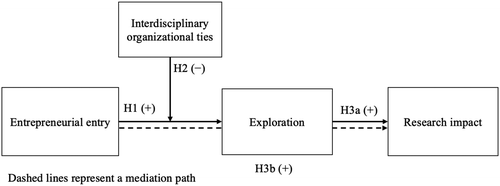
Scientists tend to be confined within the search space provided by their academic discipline. The set-up of public science favors narrow search in the pursuit of normal science (Kuhn 1962, Polanyi 2000), hence favoring tradition over innovation (Foster et al. 2015). Peer reviews and grant evaluations encourage academics to engage with a limited, canonical set of scientific puzzles (Evans 2010), reinforced within disciplines by journal rankings and agenda setting of highly influential researchers. Scientists therefore often resist solutions that radically diverge from accepted theory, and avoid reaching beyond their discipline because they believe other communities may not value their ideas (Chai 2017). Multidisciplinary researchers face higher hurdles when publishing their work, as their research is seen as lower quality or confusing to specialized peer reviewers (Leahey et al. 2017). Operating within the confines of the discipline is hence a reliable strategy for obtaining recognition and building reputation—the main currency in academia (Merton 1973, Whitley 2000)—whereas innovation is a “risky gamble” (Foster et al. 2015, p. 879).
If adhering to disciplinary tradition is the baseline scenario, then the question arises: What will upend this order and encourage researchers to expand their search? We propose a conceptualization inspired by the attention view of organizational life. This cognitively oriented view suggests that decision makers are bounded in their ability to process information and optimize decisions, and are therefore only able to pay attention to a limited set of issues and circumstances (March and Simon 1958). The attention of decision makers is channeled by the specific distribution of rules, resources, players, and social positions (Ocasio 1997). Previous research provides rich evidence of how factors, including status (Simcoe and Waguespack 2011, Azoulay et al. 2014, Reschke et al. 2018), signals of credibility (Polidoro and Theeke 2012), certifications (Polidoro 2013), social context (Maggitti et al. 2013), search strategy (Dahlander et al. 2016), or the institutional and geographic origin of research (Bikard 2018, Bikard and Marx 2020), channel the attention of researchers and other actors in science and technology. This work represents our starting point for theorizing how entrepreneurship shapes a scientist’s research.
Entrepreneurship and Attention
What happens when a scientist founds a venture? Commercial work reorients academics’ attention and thereby shapes where individuals search (Li et al. 2013, Dahlander et al. 2016). The entrepreneurial event constitutes a change in organizational conditions that alters individuals’ attention with respect to where they search. Organizational conditions can change in two ways.
First, the involvement in a venture may socialize an entrepreneurial academic into a context where disciplinary priorities are replaced by commercialization-related priorities. Van Maanen and Schein (1977, p. 4) defined socialization as the “fashion in which an individual is taught and learns what behaviors and perspectives are customary and desirable within the work setting as well as what ones are not.” A socialization effect is documented by Cirillo et al. (2014), who illustrated how corporate inventors who join a spinout company experience desocialization from their original employer. As they break free from the core set of their prior corporate environment, and are socialized into the start-up’s organizational code, they challenge their assumptions and learn new ways of working (Cirillo et al. 2014).
One may argue for a similar socialization effect to occur in an academic context whereby the relevant unit of socialization is the academic discipline, rather than a corporate employer. Prior research has already demonstrated that socialization, notably during their PhD training, plays a role in influencing academics to become entrepreneurs (Stuart and Ding 2006, Bercovitz and Feldman 2008). Once this occurs, academics may feel less compelled to conform to disciplinary imperatives as they become immersed in a new, commercial context with its own priorities and norms.
Second, academics starting a venture will be exposed to new social networks. Lifshitz-Assaf (2018) illustrated how NASA researchers were forced to transcend disciplinary boundaries when their organization embarked on an open innovation program that required increased cross-disciplinary engagement with external stakeholders. Intradisciplinary networks are different from those relevant to commercialization. For instance, firms citing academic patents are different from those citing academic articles (Agrawal and Henderson 2002), and there is limited overlap between patent holders and scientists, even if they work on the same topic (Murray 2002). As they become an entrepreneur, academics will (have to) make new connections as they develop their venture—including scientists from other disciplines, industrial scientists, consultants, and venture capitalists—and depend on commercially relevant expertise and resources from that network.
Both socialization into a commercial context and exposure to newly relevant networks are likely to impact an academic entrepreneur’s research agenda: The individual’s attention shifts from the disciplinary quest for new general theories, and toward resolving problems arising from the commercialization challenge (Stokes 1997, Evans 2010). Compared with regular science, technology research is oriented upon a different logic where the priority-based publication system is subordinated to the usefulness of knowledge for innovation (Gittelman and Kogut 2003, Evans 2010, Perkmann et al. 2019).3 As technology is characterized by distinct problems, solutions, techniques, and methods that are independent of disciplines, disciplinary questions are no longer relevant (Evans 2010, Powell and Sandholtz 2012). In practical terms, technology research may include broadening a technology’s application scope (Rosenberg 1998, Murray and Tripsas 2004), applying a technology to fit a certain product space, integrating technology into a larger system, or achieving scale in manufacturing (Pisano 1996, Maine and Thomas 2017).
How will this shift in research priorities shape a researcher’s contribution to public science? As Evans (2010) proposed, public science and technology research form two different planes that are obliquely related, meaning that projections between both planes are distorted. Once a researcher moves along the technology research plane, this will generate unanticipated experiments and questions projected back into disciplinary science. This makes it more likely that new research directions in public science are not precisely aligned with the original disciplinary specialty of the researcher (Gibbons et al. 1994, Azoulay et al. 2009). Evans (2010, p. 400) characterizes this shift as the loosening of the (disciplinary) knots of scientific activity, resulting in a more “expansive weave to the scientific network.” Indeed, Rosenberg (1982) documented, for instance, how the deployment of long-distance telephony prompted new areas of research on noise and signaling theory. Similarly, the commercial deployment of porous polymer research to deliver large-molecule drugs led to a new research area in physics and mathematics called percolation theory (Prokesch 2017). For an academic entrepreneur, this means, for instance, that experiments conducted as part of a commercialization project may result in anomalies or unexpected results that may motivate follow-on research. Alternatively, instruments or tools developed or used in commercialization may offer opportunities for investigating scientific problems in new ways.
Overall, then, the focus on research topics related to the commercialization attempt redirects a scientist’s search away from topics prescribed within their disciplinary area toward technological research that is needed for a new venture. This in turn will generate new experiments and questions that will make it more likely, compared with the baseline scenario, for researchers to transcend their disciplinary specialization and conduct research relevant to disciplines that are new to them. In other words, as seen from the vantage point of public science, researchers engage in exploration as they go beyond their local search space.4 We pose the following hypothesis.
Engaging in entrepreneurship will increase an academic’s propensity for exploration.
Moderating Role of Interdisciplinarity
An assumption underpinning our argument is that, like actors more generally, scientists favor local search (March and Simon 1958, Rosenkopf and Nerkar 2001), a tendency uprooted by entrepreneurial entry. Nearby options are more visible, less expensive to access and mobilize, and lower risk, compared with attempting to conduct search in more distant cognitive spaces (Winter et al. 2007). If this is correct, entrepreneurship will have the strongest impact on those who, in the course of their ongoing work, are the least exposed to distant cognitive spaces; conversely, it will have the lowest impact on those who already experience cognitive diversity.
In science, cognitive diversity often manifests as interdisciplinarity, which refers to the tendency of an individual to integrate perspectives, theories, information, and tools from two or more disciplines (Leahey et al. 2017). Recent work suggests that diversified researchers—scientific jacks of all trades—have a more pronounced ability to explore new knowledge domains (Nagle and Teodoridis 2020). They are more likely to become aware of new knowledge and have a superior ability to successfully combine new knowledge with their existing expertise.
Integrating this insight with our previous arguments, it follows that the attention-shifting effect of entrepreneurship may affect those individuals to a lesser extent who already routinely experience interdisciplinary exposure. In our context, we specifically consider individuals who have a track record of collaborating and coauthoring with colleagues affiliated to different disciplines. These individuals are likely to be more diversified in their expertise (Nagle and Teodoridis 2020), rendering them more likely to both encounter new ideas and have the skills to integrate them to form new associations and linkages (Amabile 1988, Cohen and Levinthal 1990). Overall, then, the search pattern of an academic already exposed to interdisciplinary work with colleagues from different disciplines will be less affected by the exploratory force exerted by entrepreneurship, compared with somebody primarily working on an intradisciplinary basis. Therefore, we post the following hypothesis.
The increase in propensity for exploration due to engaging in entrepreneurship will be less pronounced for academics with more interdisciplinary organizational ties.
Mediating Role of Exploration for the Effect of Entrepreneurship on Research Impact
If entrepreneurship widens a scientist’s search toward new disciplines, the next question is how this affects the quality, and hence, the probable impact of their research. Prior work suggests that valuable new knowledge is created as a recombination of extant knowledge elements (Schumpeter 1934, Levin et al. 1987). Although new ideas resulting from the combination of more distant domains may exhibit greater quality variance, they also tend to be the most valuable (Ahuja and Lampert 2001, Katila and Ahuja 2002, Kotha et al. 2013, Uzzi et al. 2013). The underlying reason is that, inside established knowledge domains, many of the fruits from possible knowledge combinations have already been picked; hence, a greater search scope increases the chances that a researcher will combine knowledge in a novel way to resolve hitherto intractable problems (Fleming 2001), the very definition of valuable novelty.
Earlier we argued that entrepreneurship will compel academics to explore new knowledge domains in their public science work, but this implied no judgment as to how valuable the resulting new knowledge combinations would be. In this section, we propose that entrepreneurship-induced exploration will result in more valuable knowledge recombination overall, and thereby increase the impact of an academic’s research once they become entrepreneurs.
We start from the argument that once scientists get involved in commercialization, they take part in technology, a field of knowledge production distinct from disciplinary science (Evans 2010). Also, as they continue to take part in (disciplinary) public science, this means scientists-turned-entrepreneurs will then be operating within two evolving domains of knowledge production. For instance, a life scientist interested in the physiological mechanisms underlying obesity may specialize in the study of the role of certain peptides in the human body and participate in the academic community focused on peptides. Once the researcher decides to embark on the commercialization of chemical compounds for treating obesity, the individual will be exposed to the field structured around the treatment of diabetes in a clinical environment.
This situation generates opportunities for borrowing concepts, models, and techniques and transfers them from one domain to another (Klein 1990, Maggitti et al. 2013). Scientists may be able to appropriate models or approaches from the commercial domain and deploy them productively within their scientific work (Rosenberg 1982). For the latter, this will amount to an import of novelty, yet the concept will have already been validated in the technology domain, and hence avail of a certain degree of robustness. This in turn may increase the chances that the outcome from a distant recombination—bridging the researcher’s scientific home domain and technology—may bring useful and valuable (as opposed to random) novelty to their research agenda. This mechanism was characterized as bisociation by creativity theorist Koestler (1964, p. 108), who argued that the “probability for a relevant discovery to be made is the greater the more firmly established and well exercised each of the still separate skills, or thought-matrices, are.”
This means, as a scientist learns more about the area pertaining to the commercialization of the technology, the chances of high-quality recombination increase as an individual’s proficiency in specific areas is an important predictor of creativity (Amabile 1983). Supporting this conclusion, Audia and Goncalo (2007) found that inventors in the disk drive industry who engaged in exploration—their inventions diverged from their previous inventions—experienced a greater impact of their inventions as a result. Overall, we propose that the explorative opportunities afforded by entrepreneurship enable a scientist to generate subsequent research outputs that are judged as more valuable, and hence more impactful, by the scientific audience, compared with a scenario where entrepreneurship is absent. This requires us to test the following hypotheses.
A greater propensity for exploration by an academic will increase the scientific impact of the individual’s research.
The positive relationship between engaging in entrepreneurship and the scientific impact of an academic’s research will be mediated by the individual’s propensity for exploration.
Data and Methods
Sample and Data
To test our theory, we require data from a public research organization that allows employees to engage in entrepreneurship while maintaining their employment. We use data from Imperial College London, a large science, technology, engineering, and math (STEM)-focused research university, which, like many other universities, encourages such behavior. The university had approximately 15,000 students and 3,700 academics, of which 1,250 were faculty and the remaining were primarily postdoctoral researchers. Our baseline data set encompasses information for the full population of 9,502 academics employed between 2001 and 2011 in 25 departments across the four faculties (schools) of the university (i.e., engineering, natural sciences, medicine, business). Imperial faculty participated in their respective disciplinary communities within global public science and benefited from support structures regarding research and technology transfer similar to those of other institutions, meaning our setting is reasonably representative of other international research universities.
From Imperial’s records, we retrieved year-by-year information for each individual, including departmental affiliation, rank, tenure, salary, research grants and contracts acquired, as well as involvement in technology transfer activities. We extracted information on each individual’s publications from a university software application that harvested publications from four major publication repositories (including ISI Web of Knowledge and PubMed) and requested individuals to confirm their authorship for each publication before it was listed on individuals’ official professional webpages. Each publication included in our database is therefore author approved, resolving name disambiguation issues that commonly affect bibliographic data. For each journal contained in the publication data, we downloaded its yearly journal impact factor from the ISI Web of Knowledge and the yearly journal commercial impact factor from the Reliance on Science in Patenting database5 (Marx and Fuegi 2020).
For each individual, we accessed information on entrepreneurship via the Fame Bureau van Dijk database, which includes time-variant information on directorships and shareholders of more than nine million British and Irish companies drawn from Companies House, the United Kingdom’s official company registry. Information on patents was retrieved from the European Patent Office (EPO) database. From the full population of 9,502 academics, we excluded individuals employed as teaching personnel as well as those who had established at least one company before entering the panel (n = 284).
Overall, our effort resulted in an unbalanced panel data set of 33,633 scientist-year observations, with 221 individuals engaged in entrepreneurship, corresponding to 2.4% of the population under scrutiny. Given the lagged structure of our data and the need to observe individuals over multiple years, the final sample consisted of 6,653 individuals for the entrepreneurial entry and exploration models (two-year lag) and 4,730 individuals for the research impact models (three-year lag), generating two panel data sets of 24,179 and 17,526 individual-year observations. In these samples, the share of entrepreneurs amounted to 2.1% and 2.5%, respectively (143 and 116 individuals).
Empirical Strategy
Selection into entrepreneurship is not random but driven, for instance, by quality characteristics, past research performance, or the achievement of scientific breakthroughs. Any impact on research performance following entrepreneurial entry may then be the result of these factors, rather than entrepreneurial entry itself. One method to account for selection bias is to estimate a two-stage model, predicting entrepreneurial entry in the first stage and entrepreneurial outcomes in the second (Heckman 1979). Yet, to account for endogenous sorting into entrepreneurship, appropriate exclusion restrictions are required, that is, instrumental variables that predict entry, but not final outcomes. This is particularly challenging in our context, where many individual characteristics and context conditions are likely to affect both treatment and outcomes. Furthermore, entry into entrepreneurship is likely to be driven by temporary circumstances in a scientist’s career, such as scientific discoveries and other outputs from research programs.
To overcome these challenges, we use an inverse probability of treatment weighted (IPTW) estimation, which originates in biostatistics (Robins and Finkelstein 2000) and has been used in other studies of academic science (Azoulay et al. 2009, Buenstorf 2009, Fini et al. 2010). An IPTW estimation works by assigning to each individual at time t, a weight equal to the inverse of the probability of having been treated (i.e., entrepreneurship) up to t (Fewell et al. 2004). Essentially, individuals who are unlikely to become entrepreneurs are given a larger weight compared with those who, on the basis of relevant characteristics (e.g., past research performance), are more likely to do so.
The advantage of the IPTW method is that it can deal with treatments that occur at varying points over time, driven by time-variant observable characteristics (Azoulay et al. 2009). IPTW performs well when a large set of explanatory variables are available, treated and nontreated subjects have similar characteristics, and outcomes for both groups can be similarly measured (Fewell et al. 2004, Azoulay et al. 2009). Our sample is drawn from a single context and contains rich information on individuals’ characteristics, activities, and achievements. IPTW represents a suitable approach to identification in our setting; however, as a limitation, we cannot exclude confounding effects by unobserved factors.
Our analysis proceeds as follows. First, in stage 1, we predict selection into treatment by specifying a set of two pooled cross-sectional logit models, with robust standard errors clustered on individuals, predicting entrepreneurial entry. The first model predicts the conditional probability that a scientist will become an entrepreneur in time t, accounting for individuals’ time-varying confounders and exogenous characteristics, whereas the second logit model predicts the same dependent variable accounting for individuals’ time-varying exogenous characteristics only. Then, for any given scientist-year observation, we compute a weight by dividing the predicted values of the latter model (numerator) by the predicted values of the former (denominator). This weight is used to recalibrate the outcome equations in stages 2 and 3 (exploration and research impact).6
Second, we run models on scientist-specific outcomes in two stages. In stage 2, we specify a pooled cross-sectional logit model predicting the probability of exploration. In stage 3, given the bounded nature of the dependent variable (research impact), we employ a pooled cross-sectional tobit estimation to model the effect of exploration on the research impact of a scholar. All models account for year and department fixed effects with robust standard errors clustered on individuals.7 Then, we test the mediation effect of exploration on the relationship between entrepreneurship and research impact, estimating the direct and indirect effects, following procedures suggested by Baron and Kenny (1986) and Hicks and Tingley (2011). Finally, we submit our specifications to a series of robustness checks and corroborate our results with further analyses, interviews, and comparisons with previous research.
Dependent Variables
We defined an entrepreneur as an Imperial scientist who is a director of a for-profit company at the time of foundation, according to data from UK Companies House. We further ensured that all entrepreneurs in our sample are “persons with significant control” at the time of foundation. A person with significant control is defined by UK Companies House as someone who holds more than 25% of the shares or voting rights in a company, has the right to appoint or remove the majority of the board of directors, or otherwise exercises significant influence or control. Our definition assumes that an academic taking the role of founding director with significant control will have actual involvement in creating and developing the start-up company, rather than being a mere advisor, and hence qualifies as an entrepreneur (Vanaelst et al. 2006, Dahl and Reichstein 2007).
We use this definition to create two variables. The first is the entrepreneurial entry variable, which we use as a dependent variable for our stage 1 regressions (selection models). The variable is equal to 1 for the year t in which a scientist becomes an entrepreneur, 0 otherwise. The second is in entrepreneurship, which we use as an independent variable for stage 2 and 3 models and define further later.
To test Hypotheses 1 and 2 (stage 2), we operationalize exploration, for any given year t, as a binary variable equal to 1 if the scientist has published at least one article in an ISI journal category in which they have not published before. The variable is equal to 0 otherwise. Some journals are labelled as multidisciplinary in the ISI categorization, which may potentially confound our measure of exploration; we therefore exclude them.
To test Hypotheses 3(a) and 3(b) (stage 3), the key dependent variable is research impact, defined as the cumulative number of citations as reported by ISI Web of Knowledge, between years t + 2 and t + 4, to papers published by an individual in year t + 1 (e.g., Buenstorf 2009). As an indicator of intellectual debt to a cited publication that citing authors are “repaying” (Baldi 1998), citations quantify the worth the academic community attributes to the publication (Bornmann and Daniel 2008, Leahey et al. 2017).
Independent Variables
The value of in entrepreneurship, our key independent variable (used in stage 2 and 3 models) switches from 0 to 1 in the year in which the academic engages in entrepreneurial entry (as defined previously) and remains equal to 1 up to the end of the observation period or when the individual exits the panel. Unlike entrepreneurial entry, which is a flow variable implying a transitory impact of an entrepreneurial event (as used in stage 1), in entrepreneurship is a stock variable that indicates a more permanent change in an individual’s conditions once that individual has become an entrepreneur (as used in stages 2 and 3). We therefore use in entrepreneurship (lagged by one year) to predict exploration and research impact.
To test Hypothesis 2, we create interdisciplinary organizational ties, a variable that captures, for each individual, the number of article coauthorships with academics affiliated with other Imperial departments between t − 4 and t (McFadyen and Cannella 2005, Slavova et al. 2016). The variable captures the degree to which an academic is routinely exposed to scientific disciplines different from the individual’s own. The variable ranges from 0 to 124, is lagged by one year, and is included in stage 2 and 3 regressions.
To test Hypotheses 3(a) and 3(b) (stage 3 models), we use exploration and in entrepreneurship as independent variables, as defined previously.
Control Variables
In stage 1 models, all controls are calculated for year t − 1. We account for individuals’ academic age (i.e., years since first publication) as this may affect researchers’ propensity to explore new research directions and their research performance. This variable is operationalized as a five-level categorical variable along the academic age distribution (Azoulay et al. 2009). We also include the natural logarithmic transformation of each individual’s salary (inflation-adjusted, in £ ‘000) as this may influence the opportunity cost of being an entrepreneur (Folta et al. 2010) and is related to individual performance (Pfeffer and Langton 1993).
We control for organizational position (junior researcher, senior researcher, junior faculty, senior faculty), to capture differences in behavior and performance driven by the academic lifecycle (e.g., Bercovitz and Feldman 2008), and furthermore, for whether the academic holds a clinical position (binary). We control for the availability of resources, which can affect the number of publications (Lavie and Drori 2012) and influence explorative behavior (March and Shapira 1992). Using information on the value of grants awarded to each academic in any given year, we calculate the inverse rank in the department among individuals of the same position (research grants rank).
We control for the number of EPO patents awarded to each academic in any given year to measure an academic’s inventive activity, which may influence the individual’s decision to establish a new venture as well as the individual’s publishing performance (Azoulay et al. 2009). We account for academics’ research quality by counting the number of articles published in any given year, weighted by their ISI scientific impact factors (Toole and Czarnitzki 2010). The variable is operationalized in natural logarithmic terms. Then, for any given scientist and year, we control for the natural logarithmic transformation of the average number of coauthors per paper (number of coauthors).
To measure the degree of appliedness of an academic’s research, we count the number of articles published in applied journals as defined by the Patent Board’s research level classification in any given year (Hamilton 2003). To account for lifecycle and discipline differences, the variable is standardized per position and department. We control for the achievement of scientific breakthroughs by accounting for top papers, in line with Azoulay et al. (2011). For any given year and individual, we count the number of articles featuring in the top 1% of the distribution of citations to articles published by academics of the same Imperial faculty (school) up to t − 1. Finally, we control for the number of peer entrepreneurs in a department up to t − 1 (Kacperczyk 2013).
In stage 2 models, in addition to the previously mentioned controls (that are included in the specifications via the IPTW estimation), we control for each academic’s experience gained from external collaborations, by dividing the number of non-Imperial coauthors by the number of all coauthors, excluding the focal author. We also control for past exploration as it can influence the tendency for explorative behavior in subsequent years (Levinthal and March 1993, Dasgupta and David 1994), by cumulating the number of new ISI journal categories (compared with previous years) in which each scientist has published up to t − 1. This variable is standardized by the total number of new ISI journals’ categories in which scientists of the same position and department, as the focal individual, have published up to t − 1.
Finally, in stage 3 models, we also control for the natural logarithmic transformation of the number of articles published in ISI journals (in t + 1). All models include department and year fixed effects to account for unobserved time and institutional effects (Kacperczyk 2013).
Results
In Table 1, we provide descriptive statistics on the academic entrepreneurs at Imperial, as compared with their nonenterprising colleagues. On average, entrepreneurs are more experienced in terms of academic age, have a more accomplished publication record, and control more resources than nonentrepreneurs. We see the highest rate of entrepreneurial entry among senior faculty (6.9%, 75 individuals), followed by junior faculty (3.6%, 47), senior researchers (2.1%, 6) and junior researchers (1.2%, 93). Entrepreneurs are more likely to have achieved scientific breakthroughs (top papers), yet a separate analysis reveals that 83% of Imperial’s entrepreneurs founded a company without a scientific breakthrough.
|

Table 1. Entrepreneurs vs. Nonentrepreneurs: Mean Characteristics by Position
| Variable | Junior faculty | Junior researcher | Senior faculty | Senior researcher | All | ||||||||||
|---|---|---|---|---|---|---|---|---|---|---|---|---|---|---|---|
| Scientist established a firm during the observation period (2001–2011) | No | Yes | Pr(|T| > |t|) | No | Yes | Pr(|T| > |t|) | No | Yes | Pr(|T| > |t|) | No | Yes | Pr(|T| > |t|) | No | Yes | Pr(|T| > |t|) |
| Entrepreneurial entry | 0.00 | 0.14 | 0.000 | 0.00 | 0.24 | 0.00 | 0.00 | 0.11 | 0.000 | 0.00 | 0.10 | 0.000 | 0.00 | 0.15 | 0.000 |
| 0.00 | 0.35 | 0.00 | 0.43 | 0.00 | 0.31 | 0.00 | 0.30 | 0.00 | 0.36 | ||||||
| Academic age [1; 4] | 0.24 | 0.23 | 0.720 | 0.80 | 0.74 | 0.00 | 0.07 | 0.02 | 0.000 | 0.35 | 0.20 | 0.016 | 0.55 | 0.26 | 0.000 |
| 0.43 | 0.42 | 0.40 | 0.44 | 0.25 | 0.12 | 0.48 | 0.40 | 0.50 | 0.44 | ||||||
| Academic age [5; 8] | 0.21 | 0.28 | 0.004 | 0.11 | 0.17 | 0.00 | 0.06 | 0.04 | 0.084 | 0.09 | 0.20 | 0.004 | 0.12 | 0.14 | 0.048 |
| 0.41 | 0.45 | 0.31 | 0.37 | 0.24 | 0.20 | 0.28 | 0.40 | 0.32 | 0.34 | ||||||
| Academic age [9; 15] | 0.33 | 0.36 | 0.284 | 0.07 | 0.09 | 0.20 | 0.24 | 0.27 | 0.049 | 0.14 | 0.26 | 0.009 | 0.15 | 0.24 | 0.000 |
| 0.47 | 0.48 | 0.26 | 0.28 | 0.42 | 0.44 | 0.35 | 0.44 | 0.36 | 0.43 | ||||||
| Academic age [16; 22] | 0.14 | 0.11 | 0.072 | 0.01 | 0.00 | 0.02 | 0.29 | 0.38 | 0.000 | 0.10 | 0.08 | 0.710 | 0.09 | 0.21 | 0.000 |
| 0.35 | 0.31 | 0.12 | 0.00 | 0.45 | 0.49 | 0.30 | 0.28 | 0.29 | 0.40 | ||||||
| Academic age [23;] | 0.07 | 0.02 | 0.000 | 0.01 | 0.01 | 0.79 | 0.35 | 0.29 | 0.002 | 0.33 | 0.26 | 0.278 | 0.10 | 0.16 | 0.000 |
| 0.26 | 0.14 | 0.08 | 0.07 | 0.48 | 0.46 | 0.47 | 0.44 | 0.29 | 0.36 | ||||||
| Clinical | 0.20 | 0.34 | 0.000 | 0.11 | 0.21 | 0.00 | 0.17 | 0.36 | 0.000 | 0.05 | 0.00 | 0.066 | 0.14 | 0.30 | 0.000 |
| 0.40 | 0.47 | 0.32 | 0.41 | 0.38 | 0.48 | 0.22 | 0.00 | 0.34 | 0.46 | ||||||
| Research grants rank | 12.83 | 10.98 | 0.008 | 7.43 | 7.33 | 0.73 | 22.25 | 19.18 | 0.000 | 2.34 | 2.57 | 0.268 | 10.98 | 13.57 | 0.000 |
| 12.24 | 10.14 | 5.70 | 6.18 | 21.19 | 19.00 | 1.60 | 1.92 | 12.87 | 15.36 | ||||||
| Number of coauthors | 1.21 | 1.28 | 0.300 | 0.51 | 0.50 | 0.87 | 1.58 | 1.72 | 0.000 | 0.96 | 1.32 | 0.025 | 0.85 | 1.28 | 0.000 |
| 1.04 | 0.87 | 0.93 | 0.84 | 0.97 | 0.66 | 1.23 | 1.15 | 1.06 | 0.93 | ||||||
| Research quality | 1.54 | 1.70 | 0.043 | 0.57 | 0.61 | 0.49 | 2.38 | 2.93 | 0.000 | 1.05 | 1.90 | 0.000 | 1.10 | 2.00 | 0.000 |
| 1.39 | 1.39 | 1.08 | 1.19 | 1.52 | 1.48 | 1.31 | 1.73 | 1.43 | 1.70 | ||||||
| Patents | 0.03 | 0.13 | 0.000 | 0.01 | 0.02 | 0.17 | 0.06 | 0.19 | 0.000 | 0.02 | 0.00 | 0.433 | 0.03 | 0.12 | 0.000 |
| 0.22 | 0.56 | 0.12 | 0.16 | 0.34 | 0.62 | 0.18 | 0.00 | 0.20 | 0.52 | ||||||
| Salary | 3.97 | 4.10 | 0.000 | 3.66 | 3.71 | 0.02 | 4.22 | 4.35 | 0.000 | 3.06 | 3.04 | 0.900 | 3.80 | 4.07 | 0.000 |
| 0.58 | 0.42 | 0.45 | 0.26 | 0.73 | 0.79 | 1.23 | 1.18 | 0.64 | 0.72 | ||||||
| Appliedness | −0.01 | 0.05 | 0.300 | 0.00 | 0.09 | 0.08 | −0.03 | 0.13 | 0.000 | 0.00 | 0.12 | 0.300 | −0.01 | 0.10 | 0.000 |
| 0.99 | 1.02 | 0.99 | 1.06 | 0.98 | 1.07 | 0.91 | 1.09 | 0.98 | 1.06 | ||||||
| Top papers | 0.23 | 0.08 | 0.012 | 0.04 | 0.02 | 0.24 | 0.81 | 1.15 | 0.000 | 0.60 | 0.79 | 0.410 | 0.24 | 0.60 | 0.000 |
| 1.01 | 0.36 | 0.40 | 0.15 | 2.12 | 2.58 | 1.71 | 1.64 | 1.15 | 1.90 | ||||||
| Peer entrepreneurs | 11.25 | 11.91 | 0.097 | 12.22 | 12.90 | 0.06 | 11.44 | 12.41 | 0.000 | 10.55 | 13.32 | 0.002 | 11.84 | 12.46 | 0.001 |
| 6.94 | 6.83 | 7.06 | 7.10 | 6.81 | 7.17 | 6.72 | 6.61 | 7.00 | 7.06 | ||||||
| Exploration | 0.30 | 0.41 | 0.000 | 0.15 | 0.17 | 0.24 | 0.32 | 0.42 | 0.000 | 0.15 | 0.34 | 0.000 | 0.21 | 0.35 | 0.000 |
| 0.46 | 0.49 | 0.36 | 0.38 | 0.47 | 0.49 | 0.36 | 0.48 | 0.41 | 0.48 | ||||||
| External collaborations | 0.40 | 0.45 | 0.022 | 0.15 | 0.14 | 0.43 | 0.54 | 0.59 | 0.000 | 0.30 | 0.42 | 0.010 | 0.27 | 0.43 | 0.000 |
| 0.34 | 0.32 | 0.28 | 0.26 | 0.29 | 0.22 | 0.35 | 0.36 | 0.34 | 0.32 | ||||||
| Past exploration | 0.01 | −0.11 | 0.031 | 0.00 | 0.14 | 0.00 | −0.06 | 0.24 | 0.000 | −0.03 | −0.01 | 0.869 | −0.01 | 0.13 | 0.000 |
| 0.91 | 0.91 | 0.64 | 0.88 | 0.91 | 1.20 | 0.74 | 0.75 | 0.75 | 1.05 | ||||||
| In entrepreneurship | 0.00 | 0.48 | 0.000 | 0.00 | 0.44 | 0.00 | 0.00 | 0.59 | 0.000 | 0.00 | 0.57 | 0.000 | 0.00 | 0.53 | 0.000 |
| 0.00 | 0.50 | 0.00 | 0.50 | 0.00 | 0.49 | 0.00 | 0.50 | 0.00 | 0.50 | ||||||
| Interdisciplinary organizational ties | 1.52 | 1.66 | 0.606 | 0.33 | 0.53 | 0.03 | 3.69 | 7.29 | 0.000 | 0.63 | 2.77 | 0.000 | 1.18 | 4.09 | 0.000 |
| 4.69 | 3.46 | 1.86 | 2.03 | 9.32 | 14.71 | 2.35 | 5.98 | 4.92 | 10.83 | ||||||
| Number of articles in ISI journals | 0.92 | 1.05 | 0.003 | 0.30 | 0.34 | 0.22 | 1.50 | 1.84 | 0.000 | 0.66 | 1.07 | 0.000 | 0.65 | 1.24 | 0.000 |
| 0.80 | 0.80 | 0.58 | 0.68 | 0.92 | 0.91 | 0.79 | 1.02 | 0.85 | 1.05 | ||||||
| Research impact | 33.68 | 27.89 | 0.237 | 9.72 | 12.68 | 0.23 | 88.77 | 149.68 | 0.000 | 22.78 | 86.00 | 0.000 | 29.30 | 84.21 | 0.000 |
| 87.26 | 46.64 | 47.37 | 65.14 | 177.32 | 294.61 | 68.41 | 170.01 | 98.56 | 219.30 | ||||||
| No. of observations | 5,483 | 322 | 19,367 | 386 | 6,123 | 697 | 1,194 | 61 | 32,167 | 1,466 | |||||
| No. of individuals (In entrepreneurship 0/1) | 1,240 | 63 | 7,179 | 102 | 994 | 92 | 263 | 14 | 9,676 | 271 | |||||
| No. of individuals (Entrepreneurial entry 0/1) | 1,256 | 47 | 7,188 | 93 | 1,011 | 75 | 271 | 6 | 9,726 | 221 | |||||
Notes. Means and standard deviations (in italics) reported. Number of observations (total) = 33,633; number of individuals (total) = 9,947; number of individuals (unique) = 9,218. Individuals may change position during the observation period.
We next show results of our stage 1 analysis with entrepreneurial entry as a dependent variable. Table 2 reports the results of IPTW estimations using exponentiated coefficients (odds ratios). Model 1 includes scientists’ time-varying confounders and exogenous characteristics, and Model 2 time-varying exogenous characteristics only. Table A.1 reports descriptive statistics and correlations (exhibits prefixed with “A” appear in the appendix). Results of the regression analysis suggest that entrepreneurial entry is predicted by seniority (senior faculty), having a clinical role, being an inventor (patents), and, to an extent, a researcher’s scholarly accomplishments (research quality).8
|
Table 2. Entrepreneurial Entry Models (Stage 1)
| Model 1 | Model 2 | |
|---|---|---|
| Logit | Logit | |
| Denominator | Numerator | |
| Variable | Entrepreneurial entry (in t) | Entrepreneurial entry (in t) |
| Academic age [5; 8] (in t − 1) | 1.219 | 1.232 |
| (0.311) | (0.306) | |
| Academic age [9; 15] (in t − 1) | 0.793 | 0.839 |
| (0.200) | (0.201) | |
| Academic age [16; 22] (in t − 1) | 0.726 | 0.725 |
| (0.214) | (0.207) | |
| Academic age [23;] (in t − 1) | 0.674 | 0.676 |
| (0.216) | (0.202) | |
| Position: Junior faculty (in t − 1) | 1.496 | 1.418 |
| (0.378) | (0.337) | |
| Position: Senior faculty (in t − 1) | 2.641*** | 2.648*** |
| (0.726) | (0.605) | |
| Position: Senior researcher (in t − 1) | 1.830 | 1.881 |
| (0.734) | (0.784) | |
| Clinical (in t − 1) | 3.644*** | 3.633*** |
| (0.848) | (0.824) | |
| Research grants rank (in t − 1) | 0.984* | |
| (0.008) | ||
| Number of coauthors (in t − 1) | 0.781+ | |
| (0.115) | ||
| Research quality (in t − 1) | 1.193+ | |
| (0.123) | ||
| Patents (in t − 1) | 1.565** | |
| (0.218) | ||
| Salary (in t − 1) | 1.177 | |
| (0.220) | ||
| Appliedness (in t − 1) | 0.875+ | |
| (0.068) | ||
| Top papers (up to t − 1) | 0.995 | |
| (0.056) | ||
| Peer entrepreneurs (up to t − 1) | 1.028 | |
| (0.022) | ||
| Year fixed effects | Yes | Yes |
| Department fixed effects | Yes | Yes |
| No. of observations | 23,633 | 23,633 |
| No. of individuals | 6,653 | 6,653 |
| Pseudo R2 | 0.07 | 0.06 |
| Log pseudolikelihood | −962 | −971 |
Notes. Baselines: academic age [1; 4] (in t − 1); position: junior researcher (in t − 1). Robust standard errors in parentheses clustered on individuals. Odds ratios (ORs) reported (OR > 1 indicates increased probability of entrepreneurial entry; OR < 1 indicates decreased probability of entrepreneurial entry). Models exclude observations once an academic has established a firm.
+ p < 0.10; *p < 0.05; **p < 0.01; ***p < 0.001.
|
Table 3. Exploration Models (Stage 2)
| Model 3 | Model 4 | Model 5 | Model 6 | Model 7 | Model 8 | Model 9 | Model 10 | |
|---|---|---|---|---|---|---|---|---|
| Logit | Logit | Logit | Logit | Logit | Logit | Logit | Logit | |
| Variable | Exploration (in t) | Exploration (in t) | Exploration (in t) | Exploration (in t) | Exploration (in t) | Exploration (in t) | Exploration (in t) | Exploration (in t) |
| In entrepreneurship (in t − 1) | 1.737*** | 2.113*** | 1.288* | 1.410** | 1.715*** | 2.068*** | 1.296* | 1.413** |
| (0.224) | (0.285) | (0.155) | (0.185) | (0.219) | (0.279) | (0.154) | (0.185) | |
| Interdisciplinary organizational ties [t − 5; t − 1] | 1.063*** | 1.068*** | 1.039*** | 1.040*** | 1.063*** | 1.067*** | 1.039*** | 1.040*** |
| (0.006) | (0.006) | (0.005) | (0.005) | (0.006) | (0.006) | (0.005) | (0.005) | |
| In entrepreneurship (in t − 1) * interdisciplinary | 0.964*** | 0.986+ | 0.965*** | 0.986+ | ||||
| organizational ties [t − 5; t − 1] | (0.009) | (0.008) | (0.009) | (0.008) | ||||
| Academic age [5; 8] (in t − 1) | 1.860*** | 1.858*** | 1.861*** | 1.859*** | ||||
| (0.109) | (0.109) | (0.109) | (0.109) | |||||
| Academic age [9; 15] (in t − 1) | 1.529*** | 1.526*** | 1.531*** | 1.528*** | ||||
| (0.099) | (0.099) | (0.099) | (0.099) | |||||
| Academic age [16; 22] (in t − 1) | 1.297** | 1.295** | 1.294** | 1.292** | ||||
| (0.110) | (0.109) | (0.110) | (0.109) | |||||
| Academic age [23;] (in t − 1) | 1.002 | 1.001 | 1.002 | 1.000 | ||||
| (0.092) | (0.091) | (0.092) | (0.092) | |||||
| Position: Junior faculty (in t − 1) | 1.130* | 1.127* | 1.133* | 1.130* | ||||
| (0.065) | (0.065) | (0.065) | (0.065) | |||||
| Position: Senior faculty (in t − 1) | 1.000 | 0.998 | 0.999 | 0.997 | ||||
| (0.074) | (0.074) | (0.074) | (0.074) | |||||
| Position: Senior researcher (in t − 1) | 0.594*** | 0.595*** | 0.595*** | 0.595*** | ||||
| (0.067) | (0.067) | (0.067) | (0.067) | |||||
| External collaborations (in t − 1) | 4.738*** | 4.737*** | 4.721*** | 4.720*** | ||||
| (0.314) | (0.314) | (0.313) | (0.313) | |||||
| Past exploration (up to t − 1) | 0.880*** | 0.880*** | 0.881*** | 0.880*** | ||||
| (0.027) | (0.027) | (0.027) | (0.027) | |||||
| Year fixed effects | Yes | Yes | Yes | Yes | Yes | Yes | Yes | Yes |
| Department fixed effects | Yes | Yes | Yes | Yes | Yes | Yes | Yes | Yes |
| Probability weights | No | No | No | No | Yes | Yes | Yes | Yes |
| No. of observations | 24,179 | 24,179 | 24,179 | 24,179 | 24,179 | 24,179 | 24,179 | 24,179 |
| No. of individuals | 6,653 | 6,653 | 6,653 | 6,653 | 6,653 | 6,653 | 6,653 | 6,653 |
| Pseudo R2 | 0.02 | 0.02 | 0.11 | 0.11 | 0.02 | 0.02 | 0.11 | 0.11 |
| Log pseudolikelihood | −13,157 | −13,149 | −12,008 | −12,006 | −13,162 | −13,155 | −12,015 | −12,014 |
Notes. Baselines: academic age [1; 4] (in t − 1); position: junior researcher (in t − 1). Robust standard errors in parentheses clustered on individuals. Odds ratios (ORs) reported (OR > 1 indicates increased probability of exploration; OR < 1 indicates decreased probability of exploration). Models are pooled cross-sectional logit with time-invariant probability weights. Models using time-variant probability weights and panel estimators convey identical results and are included in Tables S8a, S8b, and S16.
+ p < 0.10; *p < 0.05; **p < 0.01; ***p < 0.001.
Table 3 exhibits the results of the hierarchical regression analysis for stage 2 with exploration as a dependent variable. Models 3 to 6 show estimations without inverse probability weights, and Models 7 to 10 with inverse probability weights. Both sets of models include baseline models without controls (Models 3 and 7), baseline models with the interaction term included (Models 4 and 8), fully specified models without interaction term (Models 5 and 9), and fully specified models (Models 6 and 10). Coefficients are reported as odds ratios (ORs). An OR > 1 indicates increased probability of entrepreneurial entry, whereas an OR < 1 indicates decreased probability of entrepreneurial entry. Table A.2 shows descriptive statistics including correlations.
|
Table 4. Research Impact Models (Stage 3)
| Model 11 | Model 12 | Model 13 | Model 14 | Model 15 | Model 16 | Model 17 | Model 18 | Model 19 | Model 20 | Model 21 | Model 22 | |
|---|---|---|---|---|---|---|---|---|---|---|---|---|
| Tobit | Tobit | Tobit | Tobit | Tobit | Tobit | Tobit | Tobit | Tobit | Tobit | Tobit | Tobit | |
| Variable | Research impact [t + 2; t + 4] | Research impact [t + 2; t + 4] | Research impact [t + 2; t + 4] | Research impact [t + 2; t + 4] | Research impact [t + 2; t + 4] | Research impact [t + 2; t + 4] | Research impact [t + 2; t + 4] | Research impact [t + 2; t + 4] | Research impact [t + 2; t + 4] | Research impact [t + 2; t + 4] | Research impact [t + 2; t + 4] | Research impact [t + 2; t + 4] |
| In entrepreneurship (in t − 1) | 163.1*** | 139.0*** | 31.3* | 27.2+ | 159.2*** | 135.4*** | 33.7* | 28.8+ | ||||
| (16.66) | (16.53) | (14.47) | (14.78) | (17.49) | (17.32) | (14.63) | (15.01) | |||||
| Exploration (in t) | 149.4*** | 146.6*** | 73.4*** | 73.2*** | 149.9*** | 147.2*** | 73.4*** | 73.3*** | ||||
| (4.41) | (4.41) | (2.96) | (2.96) | (4.42) | (4.41) | (2.97) | (2.98) | |||||
| Academic age [5; 8] (in t − 1) | 40.2*** | 40.6*** | 40.6*** | 40.1*** | 40.5*** | 40.3*** | ||||||
| (4.31) | (4.31) | (4.31) | (4.31) | (4.32) | (4.32) | |||||||
| Academic age [9; 15] (in t − 1) | 38.2*** | 42.1*** | 42.1*** | 38.1*** | 42.1*** | 41.6*** | ||||||
| (4.71) | (4.82) | (4.85) | (4.72) | (4.84) | (4.84) | |||||||
| Academic age [16; 22] (in t − 1) | 44.5*** | 50.8*** | 50.5*** | 44.2*** | 50.7*** | 49.5*** | ||||||
| (6.53) | (6.48) | (6.73) | (6.60) | (6.54) | (6.76) | |||||||
| Academic age [23;] (in t − 1) | 39.7*** | 48.6*** | 48.8*** | 39.7*** | 48.8*** | 48.0*** | ||||||
| (8.49) | (8.80) | (8.83) | (8.54) | (8.84) | (8.85) | |||||||
| Position: Junior faculty (in t − 1) | 3.1 | 3.4 | 3.1 | 3.6 | 3.5 | 4.1 | ||||||
| (4.68) | (4.91) | (4.91) | (4.69) | (4.92) | (4.93) | |||||||
| Position: Senior faculty (in t − 1) | 15.5* | 20.9* | 20.2* | 16.1* | 21.5** | 21.8** | ||||||
| (7.86) | (8.21) | (8.25) | (7.91) | (8.24) | (8.25) | |||||||
| Position: Senior researcher (in t − 1) | −8.8 | −2.1 | −2.2 | −8.7 | −1.8 | −1.1 | ||||||
| (7.45) | (7.91) | (7.93) | (7.46) | (7.91) | (7.97) | |||||||
| Interdisciplinary organizational ties [t − 5; t − 1] | 2.1** | 1.8** | 1.7* | 2.2** | 1.8** | 1.7* | ||||||
| (0.73) | (0.66) | (0.74) | (0.73) | (0.66) | (0.74) | |||||||
| Past exploration (up to t − 1) | −1.2 | 0.1 | 0.02 | −1.0 | 0.3 | 0.419 | ||||||
| (2.25) | (2.32) | (2.31) | (2.29) | (2.37) | (2.33) | |||||||
| External collaborations (in t − 1) | 103.3*** | 99.7*** | 99.9*** | 103.3*** | 99.7*** | 99.7*** | ||||||
| (5.10) | (5.30) | (5.28) | (5.24) | (5.39) | (5.35) | |||||||
| Number of articles in ISI journals (in t + 1) | 103.6*** | 96.4*** | 96.1*** | 104.1*** | 96.8*** | 96.3*** | ||||||
| (4.92) | (5.10) | (5.21) | (4.96) | (5.13) | (5.29) | |||||||
| Year fixed effects | No | No | No | Yes | Yes | Yes | No | No | No | Yes | Yes | Yes |
| Department fixed effects | No | No | No | Yes | Yes | Yes | No | No | No | Yes | Yes | Yes |
| Probability weights | No | No | No | No | No | No | Yes | Yes | Yes | Yes | Yes | Yes |
| Constant | −25.3*** | −67.9*** | −69.5*** | −145.3*** | −173.2*** | −172.9***` | −25.4*** | −68.1*** | −69.7*** | −146.2*** | −174.1*** | −178.5*** |
| (2.84) | (3.58) | (3.57) | (16.77) | (17.35) | (17.33) | (2.87) | (3.61) | (3.59) | (16.89) | (17.46) | (16.75) | |
| Sigma | 193.5*** | 189.1*** | 187.9*** | 147.2*** | 146.6*** | 146.5*** | 194.4*** | 189.9*** | 188.7*** | 147.6*** | 147.1*** | 146.9*** |
| (0.69) | (0.64) | (0.73) | (2.00) | (1.98) | (2.05) | (0.71) | (0.65) | (0.75) | (2.02) | (2.01) | (2.09) | |
| No. of observations | 17,526 | 17,526 | 17,526 | 17,526 | 17,526 | 17,526 | 17,526 | 17,526 | 17,526 | 17,526 | 17,526 | 17,526 |
| No. of individuals | 4,730 | 4,730 | 4,730 | 4,730 | 4,730 | 4,730 | 4,730 | 4,730 | 4,730 | 4,730 | 4,730 | 4,730 |
| Pseudo R2 | 0.01 | 0.01 | 0.01 | 0.07 | 0.08 | 0.08 | 0.01 | 0.01 | 0.01 | 0.07 | 0.08 | 0.08 |
| Log pseudolikelihood | −71,605 | −70,746 | −70,663 | −66,523 | −66,196 | −66,192 | −71,669 | −70,806 | −70,728 | −66,567 | −66,242 | −66,231 |
Notes. Baselines: academic age [1; 4] (in t − 1); position: junior researcher (in t − 1). Robust standard errors in parentheses clustered on individuals. Models are pooled cross-sectional tobit with time-invariant probability weights. Models using time-variant probability weights and panel estimators convey identical results and are included in Tables S8a, S8b, and S16.
+ p < 0.10; *p < 0.05; **p < 0.01; ***p < 0.001.
|
Table 5. Explanations of the Effect of Academic Entrepreneurship on Research Output
| Explanation | Core argument | Effect on research | Main works | Related literature on the effect of commercial work by scientists (patenting, licensing, industry collaboration) |
|---|---|---|---|---|
| Attention | Founding a venture shifts an academic’s research onto new topics (exploration), creating opportunities for novel recombination and leading to more impactful research | + | This article | Patenting and licensing may lead to new research ideas (Stephan et al. 2007, Azoulay et al. 2009) |
| Learning | Founding a venture helps academics improve their proficiency in their line of research, furthering research productivity and impact | + | Buenstorf (2009), Lowe and Gonzalez-Brambila (2007) (identified as possible explanation) | Working with industry allows scientists to specialize in publishing (Bikard et al. 2019) |
| Resource flows | Founding a venture generates resources that benefit founders’ research projects, leading to increased research productivity and impact | + | Buenstorf (2009), Louis et al. (2001), Lowe and Gonzalez-Brambila (2007) (identified as possible explanation) | Patenting facilitates research via a resource effect (Breschi et al. 2007) |
| Competing priorities | Founding a venture means academics devotes less time and energy to their research, reducing their research productivity | − | Toole and Czarnitzki (2010); identified as possible explanation by Buenstorf (2009) | Applied projects divert talent from fundamental research Goldfarb (2008) |
Note. The “+” and “−” signs indicate that a given explanation poses a positive and negative effect of becoming an entrepreneur on a scientist's research, respectively (as measured by research productivity or impact).
Hypothesis 1 suggests that entrepreneurship increases the likelihood of exploration. The results in Table 3 show that the effect of in entrepreneurship on exploration is positive and significant in both baseline and fully specified models. Model 9 suggests that the odds of exploration are 29% higher for academic entrepreneurs than for academic nonentrepreneurs.
We test Hypothesis 2 by interacting interdisciplinary organizational ties with in entrepreneurship. Both baseline and fully specified models (Models 4, 6, 8, 10) indicate a negative sign of the interaction term (OR < 1), which becomes marginally significant once all controls are included. Model 10 suggests that the odds of exploration for entrepreneurs with more interdisciplinary organizational ties are lower than for nonentrepreneurs with more interdisciplinary organizational ties (OR = 0.986; p < 0.1). In Figure 2, we plot the predicted probability of in entrepreneurship interacted with interdisciplinary organizational ties across the full range of values for both entrepreneurs and nonentrepreneurs. The graph shows that for both entrepreneurs and nonentrepreneurs, the odds of exploration increase as the level of interdisciplinary organizational ties increases. The slope analysis, performed with continuous variables at their means and dichotomous variables at their observed values, suggests the odds of exploration for entrepreneurs and nonentrepreneurs are different and statistically significant for values lower than 10, exhibiting a more pronounced positive slope for nonentrepreneurs. Also, the marginal effect of entrepreneurship on exploration is statistically significant for values lower than 10. Hypothesis 2 is marginally supported.
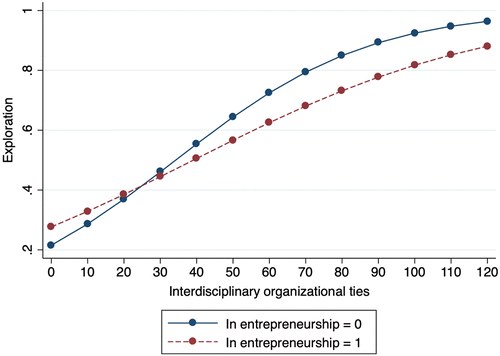
Note. Predicted probabilities estimated using Model 10
The interpretation of interaction terms in nonlinear models differs from the interpretation in linear models. To assess the magnitude and significance of an interaction effect in a nonlinear model, the focus should be on the secondary moderating effect rather than the total moderating effect, which is equal to the structural moderating effect plus the secondary moderating effect. Accordingly, we compute, for each observation, the structural and secondary (true) effects of the interactions (Bowen 2010, Bowen 2012). We implemented the procedure proposed by Ai and Norton (2003) and find that the secondary moderating effect is always negative and significant in 99% of cases at p < 0.05 (see Figure 3). These results provide further support for Hypothesis 2, within the previous limitations.
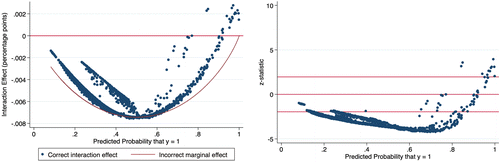
Note. Output of Stata inteff command (Ai and Norton 2003).
Next, in stage 3, we model the relationship between exploration and research impact. The control variables are the same as in prior models, except that we also control for the number of articles published in ISI journals as this may influence the citation impact of a scholar’s work. Table A.3 reports descriptive statistics and correlations, showing that both exploration and in entrepreneurship are positively and significantly correlated with research impact (0.17 and 0.11, respectively).
Table 4 exhibits the regression results for the models with research impact as dependent variable. Models 11 to 16 show estimations without inverse probability weights, and models 17 to 22 with inverse probability weights. Both sets of models include baseline models with in entrepreneurship (Models 11 and 17) and exploration (Models 12 and 18) as regressors. We then show baseline models with both in entrepreneurship and exploration as regressors (Models 13 and 19). We further show fully specified models without exploration (Models 14 and 20) and without in entrepreneurship (Models 15 and 21), respectively. Models 16 and 22 are fully specified with all variables included. Across all models, exploration relates positively and significantly to impact, providing support for Hypothesis 3(a).
Hypothesis 3(b) postulates a mediated relationship between in entrepreneurship and research impact. To validate this conjecture, we use a two-step approach. In step 1, we assess the presence of mediation, employing the stepwise procedure suggested by Baron and Kenny (1986). In step 2, we estimate the amount of mediation, computing the direct and indirect effects in nonlinear models. To corroborate our findings, we reestimate the direct and indirect effect using a structural equation model approach.
As per step 1, first, we establish that in entrepreneurship predicts research impact (β = 33.7; p < 0.05 in Table 4, Model 20). Second, we find that in entrepreneurship affects exploration (OR = 1.296; p < 0.05 in Table 3, Model 9). Third, we assess that the potential mediator exploration is positively related to research impact (β = 73.4; 73.3; p < 0.001, in Table 4, Models 21 and 22). Fourth, we establish that the magnitude of the estimated effect of in entrepreneurship on research impact decreases significantly with the inclusion of the potential mediator. As shown in Models 20 and 22, once the mediator exploration is introduced, the effect of in entrepreneurship drops from 33.7 (p < 0.05; Model 20) to 28.8 (p < 0.1; Model 22).9
As per step 2, we test the magnitude of the mediating effect of exploration on the relationship between in entrepreneurship and research impact.10 We follow Hicks and Tingley (2011), using a parametric approach for nonlinear models, which allows both continuous and binary outcome variables, and compute the direct and indirect effects of entrepreneurship on research performance. First, we find that entrepreneurs have 73 more citations than nonentrepreneurs (irrespectively of their exploration efforts) (total effect). Then, assuming no exploration, we find that entrepreneurs have 68 more citations than nonentrepreneurs (direct effect). Finally, assuming that everyone is an entrepreneur, we compare the effect of entrepreneurship on citations when exploration changes from the value of 0 to 1. Entrepreneurs who explore have five citations more than entrepreneurs who do not (indirect effect). These figures suggest that about 6.5% of the total effect of entrepreneurship on citations is mediated by exploration.
Finally, we corroborate our results by performing the mediation test using a structural equation model with standard errors bootstrapped 1,000 times (Baron and Kenny 1986, Preacher and Hayes 2004). Results are confirmed (i.e., total effect = 74; direct effect = 69; indirect effect = 5). Overall, as we find that research impact is partially mediated by exploration, we find partial support for Hypothesis 3(b).
Further Analyses
Interpretation of Results Through Interview Evidence
We undertook an interview-based study to further elucidate and interpret our results, in line with an explanatory sequential design (Creswell 2014). We report insights drawn from 10 interviews conducted with academics employed at Imperial. We used a semistructured interview guide covering key questions underpinning our postulated mechanisms.
We first focus on the effect of becoming an entrepreneur on an academic’s research agenda. Statements from our respondents support our conjecture that entrepreneurship shifts academics’ attention toward new fields of inquiry, leading them to transcend their current area of research. A researcher in medicine recounted: “[In my commercial work in drug discovery] I’ve discovered amazingly that many of my peptides, which I’m making to trial as drugs, turn out to have unusual effects, which hadn’t been understood before, throwing light on basic systems. [. . .] We then exploited the use of our drugs to explore the way the cell systems worked. We were using our applied research to do fundamental research. It was interesting how we went backwards.” Another professor in medicine recounted how commercialization prompted him to explore new domains and study vaccines: “I never had the faintest idea about vaccines before I developed this technique, but the obvious application of the technique was in vaccine development. And so, I had to learn about [. . .] what makes a good vaccine [. . .] the application of this technology led to the discovery of a specialized pathogenesis system [. . .] and, basically, I built all of the rest of my research pretty much on understanding how the system works to cause disease.” These quotes illustrate how commercialization shifted scientists’ research away from their original topics toward areas new to them.
We were able to corroborate our conjectures relating to the mechanisms helping to prompt scientists’ shift of attention, for example, desocialization and network exposure. An engineering professor stated: “Some research kicked back to our academic labs was a result of us going around and talking to people in them, saying: Have you ever thought about working on this, or have you thought about doing this? [. . .] I hadn’t planned on getting into materials research, which is outside my area of expertise, but we did because of the conversations [. . .]. So, [the venture] gives us a [. . .] different motivation to do something that is much further outside your comfort zone.” Similarly, another engineering professor said: “Our tool [that we commercialized] was initially used in chemical and energy related processes but then companies in pharmaceuticals and life sciences became interested in it and that then gave me a lot of interesting insights into some research questions in pharmaceutical and life science [. . .] and so it actually got me involved in a new domain.” Overall, these statements illustrate how the involvement in academic entrepreneurship prompted academics to explore, that is, address new topics in their research often related to disciplines other than their extant focus.
We also talked to respondents about the effects of exploration on the subsequent impact of their published work. The responses need to be interpreted with the proviso that they are informed by respondents’ own theorizing of a process that evolves independently of their volition, that is, decisions by a multitude of other researchers to cite their work. Nevertheless, our respondents’ views chimed with our conjecture that embracing novel topics across disciplines is likely to result in research outputs that garner more attention in the academic marketplace, compared with the base case. One professor even made a direct link between the “selling skills” involved in both entrepreneurship and academic publishing: “The skills you build in selling commercial products are also very similar skills that you need in selling your research.” However, most respondents’ own theorizing reflected the idea that entrepreneurship-induced exploration improved their research. A professor in engineering said: “[my entrepreneurship project] did open some technical problems which we couldn’t have foreseen [. . .]. And fixing that problem ended up with the best research I’ve done the last ten years.” Another professor said: “[Academic entrepreneurship] certainly broadened my horizons and changed my thinking. I am definitely much quicker now to identify dead ends.” These statements illustrate academics’ own theories about how exploration stemming from entrepreneurship enriches their academic work and hence provides indirect support for our conjecture.
Alternative Explanations
Although the IPTW method is suitable for addressing selection into treatment based on time-variant observables, our results may still be amenable to several alternative explanations.
First, entrepreneurship may induce scientists to produce more applied scientific work (Ahmadpoor and Jones 2017), which may be responsible for entrepreneurs’ greater research impact. We find that entrepreneurs do indeed publish more applied work—measured using journal-level classifications (Hamilton 2003)—compared with their nonenterprising counterparts (Table S1a, included in supplemental materials available online). We tested whether engaging in entrepreneurship is responsible for this effect: our results show a positive effect of entrepreneurship on appliedness (Table S1b). Further, when testing the effect of entrepreneurship on research impact controlling for appliedness, we find that entrepreneurship still predicts research impact (Table S1c). Finally, when we include the exploration variable (Table S1d), the partial mediation of exploration on the entrepreneurship-to-research impact relationship is confirmed, suggesting that appliedness alone does not explain the greater research impact of entrepreneurs.
Second, involvement in a venture may enable scientists to obtain more resources for their research, which could then lead to more impactful work. If this were correct, academics involved in resource-munificent firms, such as firms with higher turnover or more employees, should benefit from more pronounced resource effects compared with others. To address this concern, we include firm-level controls into our stage 2 and 3 regressions (Table S2a). For any given year and firm, we control for the yearly number of directors, number of employees, turnover (expressed in £ as ln), and whether a firm is supported by the technology transfer office. The estimations show no significance for these variables. A caveat is that Companies House carries turnover and employee information only for a subset of larger firms with more detailed reporting requirements (turnover and number of employees is available for 51 and 44 individuals, respectively).
Furthermore, we establish that entrepreneurs are more successful at obtaining grants and industry contracts than their nonenterprising colleagues (Table S2b). However, when we include grants and contracts as controls in our research impact models, the effect of entrepreneurship, partially mediated by exploration, is preserved (Table S2c).
Third, entrepreneurship may provide an incentive to produce higher quality science, since nonreplicable research is of little value for commercialization (Freedman et al. 2015). Because it is difficult to directly determine the intrinsic replicability (and hence quality) of an article, we use as a proxy the commercial relevance of a journal in which the article is published. We measure this via the journal commercial impact factor (JCIF), which indicates the degree to which articles in a journal are cited in patents (Marx and Fuegi 2020). We test the effect of entrepreneurship on the number of articles published by any given academic in t weighted by JCIF; the effect is positive and significant (Table S3a). We then establish that the effect of entrepreneurship on research impact is still positive and significant controlling for JCIF weighted publications (Table S3b). Finally, when the exploration variable is included in the models, the partial mediation of exploration on the entrepreneurship-to-research impact relationship is confirmed, suggesting that JCIF weighted publications alone do not explain the greater research impact of entrepreneurs (Table S3c).
Fourth, scientists may become entrepreneurs because they achieved a commercial breakthrough prompting a higher citation impact of their research. To explore this potential alternative explanation, we reestimate our stage 1 model (selection into entrepreneurship) by including a commercial breakthrough variable among the covariates (Table S4a). We operationalize this variable, for each academic, as the number of articles featuring in the top 1% of the distribution of patent citations to articles published by academics of the same Imperial faculty up to t − 1. We then recalibrate stage 2 and 3 models. Results are robust (Table S4b).
Robustness Checks and Further Analyses
We subjected our results to a battery of robustness checks. First, there may be a concern that academics’ ventures include vehicles through which they perform consulting or other services; such companies would not commonly be subsumed under a narrow notion of entrepreneurship (see related Goel and Grimpe 2012). We ran a robustness check in which we categorized the entrepreneurs according to their company’s industry (see Table S5a, Models 1–4). We excluded founders involved in firms operating in sectors most likely to be associated with providing consulting and services (e.g., business-legal consulting, civil engineering and architectural services, media and telecommunications, or other business activities). The number of entrepreneurs drops to 120, but the results remain robust. We further performed our models by weighting in entrepreneurship to reflect firm size, as measured by turnover, and number of employees (Tables S5a and b). The results are robust.
Second, a further concern may be that academics are founders of companies but are otherwise uninvolved or mere advisors. We performed our models by weighting the in entrepreneurship variable to reflect entrepreneurs’ likely greater involvement in the company. Accordingly, in separate models, we attached greater weights to entrepreneurs sharing their board of directors with fewer other directors (Table S5a, Models 5–8).
Third, we also perform our estimations by operationalizing research impact as the achievement of scientific breakthroughs. Similar to Azoulay et al. (2011), we specify dichotomous variables that equal 1 if a scientist in a given year has published at least one article featured in the top 1%, 3%, 5%, or 10%, respectively, of the distribution of citations to articles published by academics of the same Imperial faculty in the same year, and 0 otherwise. Results are confirmed for the variable defining breakthroughs as top 3% articles (Table S6), whereas the other variables show the correct sign but lack significance. This result may be because breakthroughs represent rare events. Overall, one may tentatively conclude that if the effect of entrepreneurship on research impact is positive, then this may extend to a higher likelihood of breakthroughs given that the correlation of the breakthrough variable (top 3% articles) and research impact is 0.62.
Fourth, individual research styles may influence the degree to which entrepreneurship facilitates exploration and research impact. Pasteur-type scientists (Stokes 1997), who combine basic research with an orientation toward practical usefulness, may benefit more strongly from the exploratory effect of entrepreneurship. We create a categorial variable to capture the four different types of scientists according to Stokes (1997) (Table S7a), and include the variable in our regressions (Table S7b). Results are robust.
Fifth, individuals are nested into departments; hence multilevel effects might be at play. We respecify stage 2 and stage 3 models using multilevel mixed-effects logistic and linear estimators, respectively, with robust standard errors clustered on individuals. To fully exploit the longitudinal structure of our data, we respecify stage 2 and 3 models using panel estimators. These estimators support time-invariant weights only. Results are robust and included in Table S8a and S8b.
Sixth, we operationalize the research impact variable by calculating the number of an academic’s articles weighted by journal impact factors. The absence of a significant effect of this variable may be because journal impact factors represent a rather coarse measure of research impact, as highly impactful articles are not always published in journals with the highest impact factor. We also operationalize the research impact variable by calculating the number of an academic’s articles weighted by journal commercial impact factor, as well as the number of citations of an academic’s articles in patents. These measures are not significant. These findings indicate that academics do not necessarily bring their commercial work directly into their scientific publications upon becoming entrepreneurs; rather, they use their commercialization experience to explore new avenues for scientific inquiry. There may be some tentative parallels between this finding and the work by Bikard et al. (2019), who found that academics collaborating with industry produce more academic publications but also generate fewer patents. Our findings are different in that they apply to academic entrepreneurs (not collaborators), are confined to scientific publications only, and are also less definitive, but we also find that commercial engagement boosts research (in our case scientific impact) without necessarily driving more commercially relevant scientific outputs, such as citations in patents.
Seventh, throughout our empirical strategy, we assume that the explanatory variable exploration is exogenous. This assumption may not hold as researchers’ decisions to explore may depend on future expected (scientific) benefits from engaging in a local or distant search (Thursby et al. 2007). To address this source of bias, consistent with prior work (Azoulay et al. 2009), we extend the IPTW approach to the exploration equation (dependent variable = exploration). In particular, we specify two logit models predicting individuals’ exploration whereby we include, in the former, time-varying confounders and exogenous characteristics (denominator), and in the latter, time-varying exogenous characteristics only (numerator). Then, for any given scientist-year observation, we compute a weight by dividing the numerator by the denominator. The weight for the exploration equation (stage 2) is multiplied by the weight from the entrepreneurial entry equation (in stage 1), resulting in a weight used to recalibrate the research impact equation (in stage 3). In Table S9, we then respecified the stage 3 models for research impact, using both pooled and panel estimators. Results remain robust.
Eighth, our main analysis excludes journals labelled as multidisciplinary or interdisciplinary in the ISI categorization. In Tables S10a and b, we include them when calculating exploration. Results remain robust.
Ninth, identifying moderators for a relationship between a main effect (i.e., in entrepreneurship) and a mediator (exploration) suggests the existence of a moderated-mediation path between the main predictor and the final outcome (i.e., research impact). We test whether the indirect effect of entrepreneurship on research impact is significant for high and low values of the moderator (interdisciplinary organizational ties). For low values of interdisciplinary organizational ties (one standard deviation below the mean), exploration mediates up to 9% of the effect of in entrepreneurship on performance, whereas for high values (one standard deviation above the mean) the effect drops to about 5%. In both cases, the effect is significant (Table S11).
Tenth, to address sample bias concerns, we included the 284 individuals that we had previously removed from the sample (teaching staff and individuals who had founded a company before entering the panel) in the analysis (Tables S12a and b). The resulting expanded sample of entrepreneurs did not qualitatively differ from our core sample (Table S12e versus Table 1). We replicated the same analysis including the individuals who had founded a company before entering the panel only (Tables S12c and d).
Eleventh, in Table S13, we use an alternative measure to operationalize our top papers variable (depicting breakthroughs in stage 1 models), by considering whether the individual published a top 5% article rather than a top 1% article.
Twelfth, in Table S14, we operationalize the research impact dependent variable differently, that is, by cumulating the number of citations between years t + 2 and t + 6 to papers published in t + 1.
Thirteenth, in Table S15, we reestimate stage 3 models using a linear specification. For all these tests, results remain robust.
Comparison with Previous Research
To increase confidence in the broader external validity of our findings, we compared them with a selection of prior work. Using our data, in Table S18a, b, and c, we first replicated the study by Azoulay et al. (2009) on the impact of patenting on knowledge production. As in their study, we also find a positive effect of patenting on academics’ subsequent research productivity. Then, in Table S19, we focused on firm creation, replicating Toole and Czarnitzki (2010), on the influence of entrepreneurship on research productivity of academic scientists who then leave academia (Imperial, in our case). In line with their study, we also find a negative effect. Finally, in Tables S20a and b, we replicated Buenstorf (2009), testing the effect of entrepreneurship on research productivity of academic scientists who stay in academia. We ran Buenstorf’s specification on a subsample of our population, that is, senior faculty only, because his study includes senior Max Planck Institute directors only. Differently to Buenstorf, who on some measures establishes a negative effect of entrepreneurship on research productivity, we find involvement with a start-up to have a positive effect on research impact. This may be because our sample of scientists and Buenstorf’s sample of elite scientists, which contains 11 Nobel laureates, are qualitatively different. For instance, founders at Max Planck publish a mean number of almost nine papers a year, whereas the corresponding figure at Imperial is six for senior faculty and 2.2 in the whole sample. It may also be the case that the incentive structure for senior academics to publish their research after entrepreneurial entry differs between the Max Planck Society and our setting. Overall, our baseline findings chime with most prior work, with the only exception being Buenstorf’s study that uses a qualitatively different sample.
Discussion
In this paper, we have explored the effect of becoming an entrepreneur on academics' research. We hypothesized that entrepreneurship shifts scientists’ attention toward finding solutions to commercialization problems and thereby prompts them to redirect their search toward greater exploration involving a reorientation toward other knowledge domains. In turn, entrepreneurship-induced exploration will enhance the impact of scientists’ research as they appropriate models and concepts from other disciplines, bringing novelty to their own discipline. In sum, we posit that entrepreneurship increases an academic’s chances to produce significant advances in fundamental scientific understanding. Our findings from panel data on the full population of academic scientists at a research university support our hypotheses by showing that: (a) being an academic entrepreneur has a positive effect on publishing in new subject areas (exploration); (b) publishing in new subject areas has a positive effect on the citations of subsequent publications (research impact); and (c) exploration partially mediates the effect of being an entrepreneur on research impact.
Contributions
We contribute to several bodies of literature. First, we advance understanding of the effect of entrepreneurship, and more broadly commercial work, within public research organizations. We single out reallocation of attention as a key mechanism through which academic entrepreneurship may enable scientific discoveries. This constitutes an advance over previous work, which has proposed various other possible explanations (see Table 5) but has not settled on and empirically demonstrated a specific mechanism. Our focus on attention differs from previously posited learning effects by determining a commercially motivated shift toward exploring new subjects as being responsible for research gains, rather than more generic learning effects that may, for instance, benefit a scientist’s existing agenda. Our proposed mechanism is also distinct from resource effects, such as grants, contracts, or research assistance, that may benefit a scientist’s research as a result of running a venture. Finally, by establishing a positive effect of entrepreneurship on generating advances in scientific understanding, our study does not suggest that venture involvement competes with doing science, certainly as long as a scientist remains in academic employment. As Toole and Czarnitzki (2010) show, this result is of course less likely to hold when scientists transition to being full-time entrepreneurs.
More broadly, our effort adds new insights to work on entrepreneurship in research and development (R&D) organizations that has proposed desocialization as a mechanism that shifts an R&D worker’s invention trajectory toward further exploration. According to Cirillo et al. (2014), this happens because an entrepreneurial event socially distances R&D workers from their work context and resocializes them into a new organization—the spinout company—with different priorities and routines.
Our work is placed in a different context—public science—and considers effects on scholars’ research trajectory rather than invention trajectory. We propose that in this context, the shift of attention will be spurred by a combination of desocialization and network effects. Involvement in a venture embeds scientists in a new social context and exposes them to new networks, prompting a shift of attention toward new topics, guiding their search away from the traditional topics of their discipline. Importantly, in our context, desocialization occurs relative to an academic discipline as a focal social unit that defines the norms of what should be done. This contrasts with R&D workers in a commercial context for whom their original company represents the focal unit for socialization before they join a start-up (Cirillo et al. 2014). Yet, the effect will be similar in both contexts, with the social context of a venture prompting an inventor or academic scientist to search in new domains for their inventive or research work, respectively.
We further add to the literature by simultaneously considering the impact of entrepreneurial entry on scientists’ research direction and the impact of research output. Whereas Cirillo et al. (2014) considered the inventive direction and Buenstorf (2009) analyzed the research output, our study establishes how these two possible consequences of entrepreneurship are related by posing a mediation effect. We bring together theoretical arguments from the attention view of the firm, search, and the recombination view of innovation, to propose a framework that explains both paths of mediation, that is, the effect of entrepreneurship on exploration, and the effect of exploration on research impact. This constitutes a new explanation of the consequences of entrepreneurial entry for researchers, and by implication, their organizations.
Our findings also add to the broader literature on university-industry relations and commercialization. Previous work in this space has uncovered that involvement in patenting and collaboration with industry often results in positive effects on academics’ research (Agrawal and Henderson 2002, Owen-Smith 2003, Gulbrandsen and Smeby 2005, Breschi et al. 2007, Stephan et al. 2007, Azoulay et al. 2009, Bikard et al. 2019, Sohn 2020, Perkmann et al. 2021). Founding a company is different from these forms of industrial engagement, but there are parallels. Like engaging in patenting and working with industry, academic entrepreneurship likely prompts academics to engage in technical problem solving oriented toward practical applications. This kind of activity can involve a significant task-related complementarity with academic research. However, academic entrepreneurship also differs from patenting and industry collaboration in that it encompasses a range of additional duties, from market-side engagement to staffing to investor attraction, where complementarity with research may be less present. The insight that our study adds here is that beneficial effects for research from involvement with practical problem solving even occur under the potentially challenging conditions of starting an entrepreneurial venture.
Second, our study contributes to work on employee entrepreneurship (Kacperczyk 2012, Agarwal and Shah 2014, Gambardella et al. 2014). Recent efforts have pointed to the common occurrence of hybrid entrepreneurship, and have largely focused on the antecedents of employees’ decisions to found a venture while remaining employees (Folta et al. 2010, Raffiee and Feng 2014). Though we acknowledge that academic entrepreneurship represents an idiosyncratic form of employee entrepreneurship, we extend this work by shedding light on the consequences of entrepreneurship by employees in public science, and specifically, the effects on their performance in their standard organizational roles. Extant work has found that entrepreneurship by academic scientists is detrimental for their scientific production if they exit their employment to dedicate themselves fully to their venture (Toole and Czarnitzki 2010). Our study suggests that when remaining in employment, scientists’ scholarly production benefits as they are drawn to new fields of knowledge, which in turn makes their research more impactful. Overall, our finding of positive complementarity between public science and commercialization is likely subject to the boundary condition of having to occur within the confines of the university, given evidence of tensions between public science and commercialization in commercial contexts (Gittelman and Kogut 2003, Toole and Czarnitzki 2010).
Moreover, extant work on hybrid entrepreneurship emphasizes that remaining in employment while founding a venture lowers the opportunity cost of entrepreneurship, as the individual gains time to learn more about the business opportunity (Raffiee and Feng 2014). Our findings raise the intriguing possibility that this effect may be mitigated—in the context of public science—by the fact that entrepreneurship enhances academics’ proficiency as researchers, making them more valuable to their employers, which in turn may increase the opportunity cost of leaving (Sørensen and Fassiotto 2011). In other words, whereas on the demand side, the opportunity costs of entrepreneurship may reduce over time as the venture is derisked, on the supply side, the opportunity costs may increase as the researcher generates more valuable research.
Third, we contribute to understanding of the consequences of exploration at the individual level (Lee and Meyer-Doyle 2017). Exploration involves experimenting with alternatives, often with more uncertain and distant outcome prospects (March 1991) and requiring investments in new bodies of expertise (Audia and Goncalo 2007). Previous work has therefore found evidence for negative performance effects of exploration on individuals’ performance. For instance, Groysberg and Lee (2009) find that Wall Street analysts who move to cover new sectors experience a drop in their performance as measured by a public ranking. Our findings suggest the opposite: Scientists experience positive performance effects from moving into new areas of research. However, there are several provisos to this result requires further research. Our setting is specific to public science, which has features that do not always generalize to other contexts. For instance, public science is a highly collaborative field of activity, and one may surmise that the extent and nature of collaborations maintained by a scientist may constitute an important boundary condition for the performance outcomes of exploration (moving into new fields of research). Collaborating with others may reduce the unavoidable cost of learning how to master a new field of expertise. Moreover, our study uses distinctive measures for both exploration and subsequent performance. For instance, our measure for performance is strictly related to the artefact (i.e., the research article) rather than the holistic performance of an individual as it may be captured by promotion outcomes or other organizational recognition measures. Overall, the repercussions of exploration on individual performance outcomes are a promising area for future inquiry.
Our results also have implications for managerial practice. First, many public research organizations, where individual performance is measured primarily as contribution to scientific knowledge, simultaneously provide incentives to staff to commercially exploit their work. However, the two activities may not be perceived as compatible. Our framework provides an integrative view, suggesting that, for researchers, the overall effect—subject to the boundary conditions we identified—of entrepreneurially exploiting their research on their subsequent research impact is indeed positive. This has implications for scientists facing pressure to achieve research impact while deciding whether entrepreneurial engagement will damage or further their careers. There are also organization-level implications for designing strategies to bridge the (seemingly) conflicting demands of knowledge production and economic exploitation. In this respect, our study suggests that entrepreneurship may help overcome the myopia of path-dependent learning inside scientific disciplines and propel more innovative and impactful research (Conti et al. 2013, Dahlander et al. 2016). This finding is relevant for university leaders, policymakers, and indeed individual scientists to overcome the path dependency and conservatism built into scientific disciplines.
This conclusion should of course be tempered by the very likely possibility that entrepreneurship may not be the only, and not the most effective, way of facilitating scientific exploration. Therefore, the conclusion from our study is not that all academics should be pushed into becoming entrepreneurs. In this respect, it is also important to consider that individuals choose to become entrepreneurs on the basis of opportunities that they generate from their research at certain times. Although our data do not capture the quality of the opportunities that the entrepreneurs in our sample decided to commercialize, we know that entrepreneurs outperform their nonentrepreneurial colleagues in a number of dimensions, such as patenting. From this, one may infer that they act upon valuable opportunities when becoming entrepreneurs. Accordingly, one may conclude that university leaders should not indiscriminately encourage their faculty to become entrepreneurs but rather confine such encouragement to those with potentially valuable opportunities on hand. Once this condition is fulfilled, this may not only lead to promising ventures but also result in valuable new research outputs.
Limitations and Future Research
Our study has several limitations that may be addressed by future research. Although we use rich longitudinal archival data on academic entrepreneurs and their counterparts, we cannot observe the degree of actual involvement of academics in their company’s strategy or management. Although we have a good indication that our findings apply to academics closely involved in entrepreneurial opportunity recognition and development, we cannot rule out that some academics in our population are only tangentially involved in their start-up. In this case, our findings would however still apply to individuals complying with a broader notion of entrepreneurially involved individuals. Future work may distinguish different types, and different degrees, of academics’ involvement in their start-ups, by capturing their leadership and management roles, and investigate the resulting impact on their research.
Moreover, our archival data allow us to observe the influence of entrepreneurship on academics’ impact outcomes, yet our theory assumes that individuals care about this impact after they have become entrepreneurs. This assumption might not hold for all individuals as some may simply bide their time until they are confident about the future of their venture. In any case, however, this means that our results are conservative and that the effect of entrepreneurship on research may become stronger once one controls for the career intentions of employees.
Further, though we propose a shift toward exploration as driving academic entrepreneurs’ ability to generate scientific advances, we empirically only establish partial, rather than full, mediation. This means that it is likely that the superior research performance by academic entrepreneurs is codetermined by other factors, in addition to the mechanism we propose. However, it may also be the case that our measure of exploration is too coarse, and that a more fine-grained measure may be more adept at picking up effects of exploration on scientific output. Future research is required to explore the exploration effect that we propose in this paper in two ways. On the one hand, researchers could deploy measures of exploration that are more fine-grained as well as sensitive to cognitive distance. This would allow for a further validation of the external validity of the framework we put forward in this paper. On the other, it would be desirable for future research to identify in a more granular way what exploration by academic entrepreneurs means in concrete terms. For instance, for academic entrepreneurs, opportunities for explorative follow-on research may arise more directly from the research requirements linked to the need to improve a technology or product, or more tangentially from unexpected results or anomalies encountered, or the affordances provided by new tools and methods.
Finally, the IPTW approach is unbiased only if there are no unmeasured confounders. Despite extensive archival information on scientists from one institution, we cannot entirely rule out the possibility of unmeasured confounders. Overall, we cannot rely on a truly exogenous variation of the costs and benefits of becoming an entrepreneur to identify the effect of it on research production. However, considering our further analyses and checks, we believe that we can establish the correct direction and approximate magnitude of the proposed relationships.
Conclusion
We studied how an academic scientist’s research is affected by founding a company while remaining employed at a public research organization. By considering the effect of entrepreneurship on both the direction and the impact of research production, our results show that founding an academic spinout company likely generates positive individual-level spillover effects for subsequent research. Our work illustrates that under certain conditions, the evolution of science benefits from distractions that motivate researchers to pursue unusual investigative pathways that diverge from disciplinary agendas. Entrepreneurship, representing such as distraction, may then have both a purpose in itself—creating innovations—and a role in driving advancement in science.
The authors thank senior editor Gary Dushnitsky and three anonymous reviewers for their guidance throughout a fruitful review process. They are grateful to the following individuals for their comments on previous drafts: Christine Beckman, Tiziana Casciaro, Paola Criscuolo, Alfonso Gambardella, Tim Folta, Jonathan Haskell, Karin Hoisl, Mark Kennedy, Keld Laursen, Ammon Salter, Andrew Shipilov, Mary Tripsas, Chris Tucci, and Maurizio Zollo. The authors appreciate the research assistance of Stefano Benigni and Cleo Silvestri. Special thanks to Okan Kibaroglu for helping to create the data set for this research, and the Imperial academics who kindly offered to be interviewed. They are grateful to Francesco Lissoni for sharing the Academic Patenting in Europe (APE-INV) database, and Harry P. Bowen for his advice. All three authors contributed equally to this work and are listed in alphabetical order.
Appendix A
|
Table A.1. Descriptive Statistics and Pairwise Correlations: Entrepreneurial Entry Models (Stage 1)
| Variable | Mean | Std. Dev. | Min | Max | 1 | 2 | 3 | 4 | 5 | 6 | 7 | 8 | 9 | 10 | 11 | 12 | 13 | 14 | 15 | 16 | 17 | 18 | |
|---|---|---|---|---|---|---|---|---|---|---|---|---|---|---|---|---|---|---|---|---|---|---|---|
| 1. | Entrepreneurial entry (in t) | 0.01 | 0.09 | 0.00 | 1.00 | 1.000 | |||||||||||||||||
| 2. | Academic age [1; 4] (in t − 1) | 0.48 | 0.50 | 0.00 | 1.00 | −0.015 | 1.000 | ||||||||||||||||
| 3. | Academic age [5; 8] (in t − 1) | 0.13 | 0.34 | 0.00 | 1.00 | 0.006 | −0.370 | 1.000 | |||||||||||||||
| 4. | Academic age [9; 15] (in t − 1) | 0.17 | 0.38 | 0.00 | 1.00 | 0.006 | −0.437 | −0.177 | 1.000 | ||||||||||||||
| 5. | Academic age [16; 22] (in t − 1) | 0.11 | 0.31 | 0.00 | 1.00 | 0.006 | −0.333 | −0.135 | −0.160 | 1.000 | |||||||||||||
| 6. | Academic age [23;] (in t − 1) | 0.11 | 0.31 | 0.00 | 1.00 | 0.004 | −0.337 | −0.137 | −0.162 | −0.123 | 1.000 | ||||||||||||
| 7. | Position: Junior faculty (in t − 1) | 0.20 | 0.40 | 0.00 | 1.00 | 0.004 | −0.260 | 0.146 | 0.219 | 0.058 | −0.063 | 1.000 | |||||||||||
| 8. | Position: Junior researcher (in t − 1) | 0.53 | 0.50 | 0.00 | 1.00 | −0.028 | 0.624 | −0.017 | −0.258 | −0.319 | −0.348 | −0.528 | 1.000 | ||||||||||
| 9. | Position: Senior faculty (in t − 1) | 0.23 | 0.42 | 0.00 | 1.00 | 0.029 | −0.465 | −0.110 | 0.109 | 0.326 | 0.402 | −0.271 | −0.581 | 1.000 | |||||||||
| 10. | Position: Senior researcher (in t − 1) | 0.04 | 0.20 | 0.00 | 1.00 | −0.001 | −0.063 | −0.017 | −0.021 | −0.005 | 0.149 | −0.104 | −0.222 | −0.114 | 1.000 | ||||||||
| 11. | Clinical (in t − 1) | 0.14 | 0.35 | 0.00 | 1.00 | 0.053 | −0.052 | −0.010 | 0.048 | 0.040 | −0.004 | 0.085 | −0.109 | 0.074 | −0.055 | 1.000 | |||||||
| 12. | Research grants rank (in t − 1) | 11.46 | 13.48 | 1.00 | 87.00 | 0.004 | −0.238 | −0.043 | 0.067 | 0.178 | 0.167 | 0.042 | −0.321 | 0.408 | −0.141 | 0.278 | 1.000 | ||||||
| 13. | Number of coauthors (in t − 1) | 0.97 | 1.08 | 0.00 | 8.04 | 0.009 | −0.516 | 0.140 | 0.238 | 0.214 | 0.173 | 0.139 | −0.384 | 0.318 | 0.011 | 0.119 | 0.252 | 1.000 | |||||
| 14. | Research quality (in t − 1) | 1.26 | 1.47 | 0.00 | 6.37 | 0.024 | −0.547 | 0.111 | 0.262 | 0.240 | 0.197 | 0.115 | −0.446 | 0.430 | −0.019 | 0.204 | 0.330 | 0.821 | 1.000 | ||||
| 15. | Patents (in t − 1) | 0.03 | 0.23 | 0.00 | 7.00 | 0.021 | −0.087 | 0.010 | 0.054 | 0.025 | 0.038 | 0.014 | −0.087 | 0.096 | −0.010 | −0.006 | 0.014 | 0.072 | 0.117 | 1.000 | |||
| 16. | Salary (in t − 1) | 3.84 | 0.64 | 0.00 | 5.74 | 0.027 | −0.250 | 0.020 | 0.130 | 0.178 | 0.043 | 0.113 | −0.282 | 0.348 | −0.253 | 0.196 | 0.229 | 0.209 | 0.274 | 0.056 | 1.000 | ||
| 17. | Appliedness (in t − 1) | 0.00 | 1.01 | −0.69 | 32.67 | −0.003 | −0.071 | 0.046 | 0.033 | 0.012 | 0.012 | 0.003 | 0.008 | −0.014 | 0.003 | 0.070 | −0.008 | 0.151 | 0.177 | 0.007 | 0.008 | 1.000 | |
| 18. | Top papers (up to t − 1) | 0.29 | 1.26 | 0.00 | 25.00 | 0.010 | −0.205 | −0.032 | 0.029 | 0.087 | 0.240 | −0.022 | −0.198 | 0.229 | 0.058 | 0.063 | 0.099 | 0.344 | 0.320 | 0.086 | 0.066 | 0.037 | 1.000 |
| 19. | Peer entrepreneurs (up to t − 1) | 11.74 | 6.90 | 0.00 | 27.00 | 0.012 | 0.034 | −0.004 | −0.004 | 0.016 | −0.060 | −0.033 | 0.067 | −0.031 | −0.036 | 0.296 | 0.430 | 0.074 | 0.095 | −0.032 | 0.043 | −0.011 | 0.007 |
Notes. N = 23,633. Correlations above |0.014| are significant at 0.05.
|
Table A.2. Descriptive Statistics and Pairwise Correlations: Exploration Models (Stage 2)
| Variable | Mean | Std. Dev | Min | Max | 1 | 2 | 3 | 4 | 5 | 6 | 7 | 8 | 9 | 10 | 11 | 12 | 13 | |
|---|---|---|---|---|---|---|---|---|---|---|---|---|---|---|---|---|---|---|
| 1. | Exploration (in t) | 0.24 | 0.43 | 0.00 | 1.00 | 1.000 | ||||||||||||
| 2. | Academic age [1; 4] (in t − 1) | 0.47 | 0.50 | 0.00 | 1.00 | −0.191 | 1.000 | |||||||||||
| 3. | Academic age [5; 8] (in t − 1) | 0.13 | 0.34 | 0.00 | 1.00 | 0.106 | −0.365 | 1.000 | ||||||||||
| 4. | Academic age [9; 15] (in t − 1) | 0.18 | 0.38 | 0.00 | 1.00 | 0.110 | −0.435 | −0.178 | 1.000 | |||||||||
| 5. | Academic age [16; 22] (in t − 1) | 0.11 | 0.31 | 0.00 | 1.00 | 0.063 | −0.334 | −0.137 | −0.163 | 1.000 | ||||||||
| 6. | Academic age [23;] (in t − 1) | 0.11 | 0.32 | 0.00 | 1.00 | −0.007 | −0.336 | −0.138 | −0.164 | −0.126 | 1.000 | |||||||
| 7. | Position: Junior faculty (in t − 1) | 0.20 | 0.40 | 0.00 | 1.00 | 0.087 | −0.256 | 0.149 | 0.219 | 0.052 | −0.068 | 1.000 | ||||||
| 8. | Position: Junior researcher (in t − 1) | 0.52 | 0.50 | 0.00 | 1.00 | −0.137 | 0.627 | −0.016 | −0.256 | −0.321 | −0.347 | −0.523 | 1.000 | |||||
| 9. | Position: Senior faculty (in t − 1) | 0.24 | 0.42 | 0.00 | 1.00 | 0.101 | −0.468 | −0.114 | 0.106 | 0.331 | 0.402 | −0.276 | −0.583 | 1.000 | ||||
| 10. | Position: Senior researcher (in t − 1) | 0.04 | 0.20 | 0.00 | 1.00 | −0.045 | −0.062 | −0.016 | −0.023 | −0.007 | 0.149 | −0.103 | −0.218 | −0.115 | 1.000 | |||
| 11. | External collaborations (in t − 1) | 0.32 | 0.34 | 0.00 | 1.00 | 0.268 | −0.552 | 0.134 | 0.249 | 0.242 | 0.190 | 0.152 | −0.445 | 0.380 | 0.004 | 1.000 | ||
| 12. | Past exploration (up to t − 1) | 0.00 | 0.82 | −2.53 | 5.66 | 0.030 | −0.219 | 0.000 | 0.082 | 0.079 | 0.169 | 0.007 | 0.003 | −0.009 | −0.004 | 0.181 | 1.000 | |
| 13. | In entrepreneurship (in t − 1) | 0.02 | 0.13 | 0.00 | 1.00 | 0.058 | −0.097 | −0.010 | 0.042 | 0.071 | 0.043 | 0.011 | −0.105 | 0.117 | −0.008 | 0.083 | 0.054 | 1.000 |
| 14. | Interdisciplinary organizational ties [t − 5; t − 1] | 1.44 | 5.43 | 0.00 | 124.00 | 0.158 | −0.215 | −0.014 | 0.096 | 0.119 | 0.120 | 0.006 | −0.208 | 0.252 | −0.028 | 0.214 | 0.261 | 0.147 |
Notes. N = 24,179. Correlations above |0.028| are significant at 0.05.
|
Table A.3. Descriptive Statistics and Pairwise Correlations: Research Impact Models (Stage 3)
| Variable | Mean | Std. Dev | Min | Max | 1 | 2 | 3 | 4 | 5 | 6 | 7 | 8 | 9 | 10 | 11 | 12 | 13 | 14 | 15 | |
|---|---|---|---|---|---|---|---|---|---|---|---|---|---|---|---|---|---|---|---|---|
| 1. | Research impact [t + 2; t + 4] | 48.19 | 137.28 | 0.00 | 3,966.00 | 1.000 | ||||||||||||||
| 2. | Academic age [1; 4] (in t − 1) | 0.40 | 0.49 | 0.00 | 1.00 | −0.218 | 1.000 | |||||||||||||
| 3. | Academic age [5; 8] (in t − 1) | 0.14 | 0.35 | 0.00 | 1.00 | 0.013 | −0.336 | 1.000 | ||||||||||||
| 4. | Academic age [9; 15] (in t − 1) | 0.20 | 0.40 | 0.00 | 1.00 | 0.086 | −0.408 | −0.204 | 1.000 | |||||||||||
| 5. | Academic age [16; 22] (in t − 1) | 0.13 | 0.33 | 0.00 | 1.00 | 0.120 | −0.314 | −0.157 | −0.191 | 1.000 | ||||||||||
| 6. | Academic age [23;] (in t − 1) | 0.13 | 0.33 | 0.00 | 1.00 | 0.084 | −0.313 | −0.157 | −0.190 | −0.146 | 1.000 | |||||||||
| 7. | Position: Junior faculty (in t − 1) | 0.23 | 0.42 | 0.00 | 1.00 | −0.028 | −0.230 | 0.158 | 0.200 | 0.028 | −0.096 | 1.000 | ||||||||
| 8. | Position: Junior researcher (in t − 1) | 0.46 | 0.50 | 0.00 | 1.00 | −0.193 | 0.613 | −0.006 | −0.229 | −0.301 | −0.320 | −0.497 | 1.000 | |||||||
| 9. | Position: Senior faculty (in t − 1) | 0.27 | 0.44 | 0.00 | 1.00 | 0.257 | −0.449 | −0.134 | 0.086 | 0.316 | 0.381 | −0.331 | −0.558 | 1.000 | ||||||
| 10. | Position: Senior researcher (in t − 1) | 0.05 | 0.21 | 0.00 | 1.00 | −0.030 | −0.044 | −0.019 | −0.039 | −0.012 | 0.143 | −0.119 | −0.200 | −0.133 | 1.000 | |||||
| 11. | Interdisciplinary organizational ties [t − 5; t − 1] | 1.57 | 5.41 | 0.00 | 118.00 | 0.260 | −0.200 | −0.022 | 0.092 | 0.107 | 0.101 | −0.008 | −0.195 | 0.242 | −0.035 | 1.000 | ||||
| 12. | Past exploration (up to t − 1) | 0.01 | 0.87 | −2.53 | 5.66 | 0.153 | −0.231 | −0.012 | 0.084 | 0.076 | 0.176 | 0.005 | 0.006 | −0.008 | −0.006 | 0.258 | 1.000 | |||
| 13. | External collaborations (in t − 1) | 0.35 | 0.34 | 0.00 | 1.00 | 0.325 | −0.513 | 0.104 | 0.221 | 0.217 | 0.163 | 0.121 | −0.420 | 0.361 | −0.009 | 0.200 | 0.190 | 1.000 | ||
| 14. | Number of articles in ISI journals (in t + 1) | 0.93 | 0.93 | 0.00 | 4.74 | 0.503 | −0.502 | 0.092 | 0.224 | 0.211 | 0.161 | 0.074 | −0.428 | 0.434 | −0.051 | 0.321 | 0.202 | 0.599 | 1.000 | |
| 15. | In entrepreneurship (in t − 1) | 0.02 | 0.14 | 0.00 | 1.00 | 0.112 | −0.090 | −0.013 | 0.037 | 0.072 | 0.028 | 0.003 | −0.092 | 0.107 | −0.014 | 0.150 | 0.058 | 0.074 | 0.123 | 1.000 |
| 16. | Exploration (t) | 0.27 | 0.44 | 0.00 | 1.00 | 0.174 | −0.152 | 0.094 | 0.092 | 0.043 | −0.029 | 0.079 | −0.110 | 0.075 | −0.055 | 0.149 | 0.037 | 0.231 | 0.316 | 0.058 |
Notes. N = 17,526. Correlations above |0.027| are significant at 0.05.
1 See https://read.oecd-ilibrary.org/science-and-technology/higher-education-researchers-in-full-time-equivalent_50101078-en#page1, accessed September 11, 2019.
2 For instance, Audretsch and Stephan (1999) found 70% of academic founders of biotechnology firms in their sample remained full-time at their university. In the population we use for this article, 74% of founders remain employed at the university for at least a year after the founding event.
3 One symptom of this difference is that scientists accept lower wages in return for being able to freely pursue curiosity-driven research (Stern 2004).
4 In line with March (1991), we use “exploration” in the sense of distant search. In our context, this relates to scientists expanding their search beyond their discipline. Other work has defined exploration differently, for example, conducting science more generally (Rothaermel and Deeds 2004). The opposite of exploration in our sense is exploitation, understood as searching locally (e.g., within disciplines); the opposite of exploration in the latter sense is exploitation, understood as commercialization and product development.
5 See https://doi.org/10.5281/zenodo.3755799, accessed September 21, 2020.
6 Pooled cross-sectional logit models allow for both time-variant and time-invariant probability weights. In the estimations included in robustness checks and further analysis sections, we employ panel and multilevel estimators that allow for time-invariant probability weights only (see Tables S8a and b). To ensure results are comparable across different specifications, in the main analysis we use time-invariant weights. Results are similar when time-variant weights are employed.
7 We test the predictive power of stage 2 and 3 models using the procedure suggested by Blattberg et al. (2008). We contrast the predictive power of the fully specified models with the baseline models. In both stage 2 and 3 equations, the predictive power reduces when control variables are excluded from the models (see Figure S1 and Table S17 in the online supplement).
8 The pseudo-R2 values for our models suggest caution with respect to explanatory power; however, we are reassured that the values generally improve as we add our explanatory variables to our models. Published work on similar empirical contexts deploying IPTW models shows comparable R2 values (Breschi et al. 2007, Fini et al. 2010, Colombo et al. 2013).
9 We performed a Wald test to compare coefficients between models. The effect of entrepreneurship is significantly different (χ2(1) = 11.2; Prob > χ2 = .001) between Model 20 (the one including the key variable only) and Model 22 (the fully specified one).
10 For both exploration and research impact models we use baseline specifications with year and department fixed effects including inverse probability weights (Models 7 and 19).
References
- (2012) An individual‐level assessment of the relationship between spin‐off activities and research performance in universities. R & D Management 42(3):225–242.Crossref, Google Scholar
- (2006) Engaging the inventor: Exploring licensing strategies for university inventions and the role of latent knowledge. Strategic Management J. 27(1):63–79.Crossref, Google Scholar
- (2002) Putting patents in context: Exploring knowledge transfer from MIT. Management Sci. 48(1):44–60.Link, Google Scholar
- (2014) Knowledge sources of entrepreneurship: Firm formation by academic, user and employee innovators. Res. Policy 43(7):1109–1133.Crossref, Google Scholar
- (2017) The dual frontier: Patented inventions and prior scientific advance. Sci. 357(6351):583–587.Crossref, Google Scholar
- (2001) Entrepreneurship in the large corporation: A longitudinal study of how established firms create breakthrough inventions. Strategic Management J. 22(6–7):521–543.Crossref, Google Scholar
- Ai C, Norton EC (2003) Interaction terms in logit and probit models. Econom. Lett. 80(1):123–129.Google Scholar
- (1983) The social psychology of creativity: A componential conceptualization. J. Personality Soc. Pysch. 45(2):357–376.Crossref, Google Scholar
- (1988) A model of creativity and innovation in organizations. Res. Organ. Behav. 10:123–167.Google Scholar
- (2007) Past success and creativity over time: A study of inventors in the hard disk drive industry. Management Sci. 53(1):1–15.Link, Google Scholar
- (1999) Knowledge spillovers in biotechnology: Sources and incentives. J. Evolutionary Econom. 9(1):97–107.Crossref, Google Scholar
- (2009) The impact of academic patenting on the rate, quality, and direction of (public) research output. J. Indust. Econom. 57(4):637–676.Crossref, Google Scholar
- (2011) Incentives and creativity: Evidence from the academic life sciences. RAND J. Econom. 42(3):527–554.Crossref, Google Scholar
- (2014) Matthew: Effect or fable? Management Sci. 60(1):92–109.Link, Google Scholar
- (2019) Public R&D investments and private-sector patenting: Evidence from NIH funding rules. Rev. Econom. Stud. 86(1):117–152.Crossref, Google Scholar
- (1998) Normative vs. social constructivist processes in the allocation of citations: A network-analytic model. Amer. Sociol. Rev. 63(6):829–846.Crossref, Google Scholar
- (2015) The double-edged sword of industry collaboration: Evidence from engineering academics in the UK. Res. Policy 44(6):1160–1175.Crossref, Google Scholar
- (1986) The moderator–mediator variable distinction in social psychological research: Conceptual, strategic, and statistical considerations. J. Personality Soc. Pysch. 51(6):1173–1182.Crossref, Google Scholar
- (2008) Academic entrepreneurs: Organizational change at the individual level. Organ. Sci. 19(1):69–89.Link, Google Scholar
- (2018) Made in academia: The effect of institutional origin on inventors’ attention to science. Organ. Sci. 29(5):818–836.Link, Google Scholar
- (2020) Bridging academia and industry: How geographic hubs connect university science and corporate technology. Management Sci. 66(8):3425–3443.Link, Google Scholar
- (2019) When collaboration bridges institutions: The impact of university–industry collaboration on academic productivity. Organ. Sci. 30(2):426–445.Link, Google Scholar
- (2008) Why database marketing? Blattberg RC, Kim B-D, Neslin SA, eds. Database Marketing (Springer, New York), 13–46.Crossref, Google Scholar
- (2008) What do citation counts measure? A review of studies on citing behavior. J. Documentation 64(1):45–80.Crossref, Google Scholar
- (2010) Total, structural and secondary moderating effects in the Tobit model and their computation using Stata. Discussion paper, McColl School of Business, Queens University of Charlotte, Charlotte, NC.Google Scholar
- (2012) Testing moderating hypotheses in limited dependent variable and other nonlinear models: Secondary vs. total interactions. J. Management 38(3):860–889.Crossref, Google Scholar
- (2007) The scientific productivity of academic inventors: New evidence from Italian data. Econom. Innovation New Tech. 16(2):101–118.Crossref, Google Scholar
- (2009) Is academic entrepreneurship good or bad for science? Individual-level evidence from the Max Planck Society. Res. Policy 38(2):281–292.Crossref, Google Scholar
- (2017) Near misses in the breakthrough discovery process. Organ. Sci. 28(3):411–428.Link, Google Scholar
- (2014) The rejuvenation of inventors through corporate spinouts. Organ. Sci. 25(6):1764–1784.Link, Google Scholar
- (1990) Absorptive capacity: A new perspective on learning and innovation. Admin. Sci. Quart. 35(1):128–152.Crossref, Google Scholar
- (2002) Links and impacts: The influence of public research on industrial R&D. Management Sci. 48(1):1–23.Link, Google Scholar
- (2013) Public subsidies and the employment growth of high-tech start-ups: Assessing the impact of selective and automatic support schemes. Indust. Corporate Change 22(5):1273–1314.Crossref, Google Scholar
- (2013) Learning to be Edison: Inventors, organizations, and breakthrough inventions. Organ. Sci. 25(3):833–849.Link, Google Scholar
- (2014) Research Design: Qualitative, Quantitative, and Mixed Methods Approaches (Sage, London).Google Scholar
- (2007) Are you experienced? Prior experience and the survival of new organizations. Indust. Innovation 14(5):497–511.Crossref, Google Scholar
- (2016) One foot in, one foot out: How does individuals’ external search breadth affect innovation outcomes? Strategic Management J. 37(2):280–302.Crossref, Google Scholar
- (1994) Toward a new economics of science. Res. Policy 23(5):487–521.Crossref, Google Scholar
- (2011) Why do academics engage with industry? The entrepreneurial university and individual motivations. J. Tech. Transfer 36(3):316–339.Crossref, Google Scholar
- (2010) Industry induces academic science to know less about more. Amer. J. Sociol. 116(2):389–452.Crossref, Google Scholar
- (2004) Controlling for time-dependent confounding using marginal structural models. Stata J. 4(4):402–420.Crossref, Google Scholar
- (2009) Factors fostering academics to start up new ventures: An assessment of Italian founders’ incentives. J. Tech. Transfer 34(4):380–402.Crossref, Google Scholar
- (2018) Social valuation across multiple audiences: The interplay between ability and identity judgements. Acad. Management J. 61(6):2230–2264.Crossref, Google Scholar
- (2010) Inside or outside the IP system? Business creation in academia. Res. Policy 39(8):1060–1069.Crossref, Google Scholar
- (2001) Recombinant uncertainty in technological search. Management Sci. 47(1):117–132.Link, Google Scholar
- (2010) Hybrid entrepreneurship. Management Sci. 56(2):253–269.Link, Google Scholar
- (2015) Tradition and innovation in scientists’ research strategies. Amer. Sociol. Rev. 80(5):875–908.Crossref, Google Scholar
- (2015) The economics of reproducibility in preclinical research. PLoS Biology 13(6):e1002165.Crossref, Google Scholar
- (2014) Using what you know: Patented knowledge in incumbent firms and employee entrepreneurship. Organ. Sci. 26(2):456–474.Link, Google Scholar
- (1994) The New Production of Knowledge: The Dynamics of Science and Research in Contemporary Societies (Sage Publications, London).Google Scholar
- (2003) Does good science lead to valuable knowledge? Biotechnology firms and the evolutionary logic of citation patterns. Management Sci. 49(4):366–382.Link, Google Scholar
- (2012) Are all academic entrepreneurs created alike? Evidence from Germany. Econom. Innovation New Tech. 21(3):247–266.Crossref, Google Scholar
- Goldfarb B (2008) The effect of government contracting on academic research: Does the source of funding affect scientific output? Res. Policy 37(1):41–58.Google Scholar
- (2009) Hiring stars and their colleagues: Exploration and exploitation in professional service firms. Organ. Sci. 20(4):740–758.Link, Google Scholar
- (2013) Knowledge recombination across technological boundaries: Scientists vs. engineers. Management Sci. 59(4):837–851.Link, Google Scholar
- (2005) Industry funding and university professors’ research performance. Res. Policy 34(6):932–950.Crossref, Google Scholar
- (2003) Subfield and level of classification of journals. CHI Research No. 2012-R, Haddon Heights, NJ.Google Scholar
- (2015) Public or private entrepreneurship? Revisiting motivations and definitions of success among academic entrepreneurs. J. Tech. Transfer 40(6):1003–1015.Crossref, Google Scholar
- (1979) Sample selection bias as a specification error. Econometrica 47(1):153–161.Crossref, Google Scholar
- (2011) Causal mediation analysis. Stata J. 11(4):605–619.Crossref, Google Scholar
- (2018) The psychological foundations of university science commercialization: A review of the literature and directions for future research. Acad. Management Perspect. 32(1):43–77.Crossref, Google Scholar
- (2009) Does patent strategy shape the long-run supply of public knowledge? Evidence from human genetics. Acad. Management J. 52(6):1193–1221.Crossref, Google Scholar
- (2001) Making dollars out of DNA: The first major patent in biotechnology and the commercialization of molecular biology, 1974–1980. Isis 92(3):541–575.Crossref, Google Scholar
- (1989) Real effects of academic research. Amer. Econom. Rev. 79(5):957–970.Google Scholar
- (2009) Academics or entrepreneurs? Investigating role identity modification of university scientists involved in commercialization activity. Res. Policy 38(6):922–935.Crossref, Google Scholar
- (2012) Opportunity structures in established firms: Entrepreneurship vs. intrapreneurship in mutual funds. Admin. Sci. Quart. 57(3):484–521.Crossref, Google Scholar
- (2013) Social influence and entrepreneurship: The effect of university peers on entrepreneurial entry. Organ. Sci. 24(3):664–683.Link, Google Scholar
- (2002) Something old, something new: A longitudinal study of search behavior and new product introduction. Acad. Management J. 45(6):1183–1194.Crossref, Google Scholar
- (1990) Interdisciplinarity: History, Theory, and Practice (Wayne State University Press, Detroit, MI).Google Scholar
- (2020) Exploring uncharted territory: Knowledge search processes in the origination of outlier innovation. Organ. Sci. 31(3):535–557.Link, Google Scholar
- (1964) The Act of Creation (Arkana, London).Google Scholar
- (2013) Bridging the mutual knowledge gap: Coordination and the commercialization of university science. Acad. Management J. 56(2):498–524.Crossref, Google Scholar
- (1962) The Structure of Scientific Revolutions (University of Chicago Press, Chicago).Google Scholar
- (2009) Academic entrepreneurship. Managerial Decision Econom. 30(7):443–464.Crossref, Google Scholar
- (2012) Collaborating for knowledge creation and application: The case of nanotechnology research programs. Organ. Sci. 23(3):704–724.Link, Google Scholar
- (2017) Prominent but less productive: The impact of interdisciplinarity on scientists’ research. Admin. Sci. Quart. 62(1):105–139.Crossref, Google Scholar
- (2017) How performance incentives shape individual exploration and exploitation: Evidence from microdata. Organ. Sci. 28(1):19–38.Link, Google Scholar
- (1987) Appropriating the returns from industrial research and development. Brookings Papers Econom. Activity 1987(3):783–820.Crossref, Google Scholar
- (1993) The myopia of learning. Strategic Management J. 14:95–112.Crossref, Google Scholar
- (2013) Top management attention to innovation: The role of search selection and intensity in new product introductions. Acad. Management J. 56(3):893–916.Crossref, Google Scholar
- (2018) Dismantling knowledge boundaries at NASA: The critical role of professional identity in open innovation. Admin. Sci. Quart. 63(4):746–782.Crossref, Google Scholar
- (2001) Entrepreneurship, secrecy, and productivity: A comparison of clinical and non-clinical life sciences faculty. J. Tech. Transfer 26(3):233–245.Crossref, Google Scholar
- (2007) Faculty entrepreneurs and research productivity. J. Tech. Transfer 32(3):173–194.Crossref, Google Scholar
- (2013) The complex search process of invention. Res. Policy 42(1):90–100.Crossref, Google Scholar
- (2017) Raising financing through strategic timing. Nature Nanotech. 12(2):93–98.Crossref, Google Scholar
- (1991) Exploration and exploitation in organizational learning. Organ. Sci. 2(1):71–87.Link, Google Scholar
- (1992) Variable risk preferences and the focus of attention. Psych. Rev. 99(1):172–183.Crossref, Google Scholar
- (1958) Organizations (Wiley, New York).Google Scholar
- (2020) Reliance on science: Worldwide front‐page patent citations to scientific articles. Strategic Management J. 41(9):1572–1594.Crossref, Google Scholar
- (2005) Knowledge creation and the location of university research scientists’ interpersonal exchange relations: Within and beyond the university. Strategic Organ. 3(2):131–155.Crossref, Google Scholar
- (1973) The Sociology of Science: Theoretical and Empirical Investigations (University of Chicago Press, Chicago).Google Scholar
- (2003) Academic entrepreneurs or entrepreneurial academics? Research-based ventures and public support mechanisms. R & D Management 33(2):107–115.Crossref, Google Scholar
- (2002) Innovation as co-evolution of scientific and technological networks: Exploring tissue engineering. Res. Policy 31(8, 9):1389–1403.Crossref, Google Scholar
- (2004) The exploratory processes of entrepreneurial firms: The role of purposeful experimentation. Adv. Strat. Management 21:45–75.Google Scholar
- (2020) Jack of all trades and master of knowledge: The role of diversification in new distant knowledge integration. Strategic Management J. 41(1):55–85.Crossref, Google Scholar
- (2004) The market economy, and the scientific commons. Res. Policy 33(3):455–471.Crossref, Google Scholar
- (2003) Social networks in organizational emergence: The university spinout phenomenon. Management Sci. 49(12):1702–1725.Link, Google Scholar
- (1997) Toward an attention-based view of the firm. Strategic Management J. 18(S1):187–206.Crossref, Google Scholar
- (2008) How scientists commercialise new knowledge via entrepreneurship. J. Tech. Transfer 33(1):23–43.Crossref, Google Scholar
- (2003) From separate systems to a hybrid order: Accumulative advantage across public and private science at Research One universities. Res. Policy 32(6):1081–1104.Crossref, Google Scholar
- (2004) Knowledge networks as channels and conduits: The effects of spillovers in the Boston biotechnology community. Organ. Sci. 15(1):5–21.Link, Google Scholar
- (2009) The two faces of collaboration: Impacts of university-industry relations on public research. Indust. Corporate Change 18(6):1033–1065.Crossref, Google Scholar
- (2019) Protecting scientists from Gordon Gekko: How organizations use hybrid spaces to engage with multiple institutional logics. Organ. Sci. 30(2):298–318.Link, Google Scholar
- (2021) Academic engagement: A review of the literature 2011–2019. Res. Policy 50(1):104114.Crossref, Google Scholar
- . (2013) Academic engagement and commercialization: A review of the literature on university-industry relations. Res. Policy 42(2):423–442.Crossref, Google Scholar
- (1993) The effect of wage dispersion on satisfaction, productivity, and working collaboratively: Evidence from college and university faculty. Admin. Sci. Quart. 38(3):382–407.Crossref, Google Scholar
- (1996) Learning-before-doing in the development of new process technology. Res. Policy 25(7):1097–1119.Crossref, Google Scholar
- (2000) The republic of science: Its political and economic theory. Minerva 38:1–32.Crossref, Google Scholar
- (2013) The competitive implications of certifications: The effects of scientific and regulatory certifications on entries into new technical fields. Acad. Management J. 56(2):597–627.Crossref, Google Scholar
- (2012) Getting competition down to a science: The effects of technological competition on firms’ scientific publications. Organ. Sci. 23(4):1135–1153.Link, Google Scholar
- (2012) Amphibious entrepreneurs and the emergence of organizational forms. Strategic Entrepreneurship J. 6(2):94–115.Crossref, Google Scholar
- (2004) SPSS and SAS procedures for estimating indirect effects in simple mediation models. Behav. Res. Methods Instruments Comput. 36(4):717–731.Crossref, Google Scholar
- (2017) The Edison of medicine. Harvard Bus. Rev. (March–April):134–143.Google Scholar
- (2014) Should I quit my day job? A hybrid path to entrepreneurship. Acad. Management J. 57(4):936–963.Crossref, Google Scholar
- (2018) Status spillovers: The effect of status-conferring prizes on the allocation of attention. Admin. Sci. Quart. 63(4):819–847.Crossref, Google Scholar
- (2000) Correcting for noncompliance and dependent censoring in an AIDS clinical trial with inverse probability of censoring weighted (IPCW) log‐rank tests. Biometrics 56(3):779–788.Crossref, Google Scholar
- (1982) Inside the Black Box: Technology and Economics (Cambridge University Press, Cambridge, UK).Google Scholar
- (1994) Exploring the Black Box: Technology, Economics, and History (Cambridge University Press, Cambridge, UK).Crossref, Google Scholar
- (1998) Uncertainty and technological change. Neef D, Siesfeld GA, Cefola J, eds. The Economic Impact of Knowledge (Butterworth Heinemann, Boston), 17–34.Google Scholar
- (2001) Beyond local search: Boundary-spanning, exploration, and impact in the optical disk industry. Strategic Management J. 22(4):287–306.Crossref, Google Scholar
- (2004) Exploration and exploitation alliances in biotechnology: A system of new product development. Strategic Management J. 25(3):201–221.Crossref, Google Scholar
- (2013) Conflicting logics? A multidimensional view of industrial and academic science. Organ. Sci. 24(3):889–909.Link, Google Scholar
- (2011) Recombinant search and breakthrough idea generation: An analysis of high impact papers in the social sciences. Res. Policy 40(10):1321–1331.Crossref, Google Scholar
- (1934) The Theory of Economic Development: An Inquiry into Profits, Capital, Credit, Interest, and the Business Cycle (Harvard University Press, Cambridge, MA).Google Scholar
- (2001) Technological opportunities and new firm creation. Management Sci. 47(2):205–220.Link, Google Scholar
- (2004) Academic Entrepreneurship: University Spinoffs and Wealth Creation (Edward Elgar, Cheltenham, UK).Crossref, Google Scholar
- (2015) How does the entrepreneurial orientation of scientists affect their scientific performance? Evidence from the quadrant model. Tech. Anal. Strategic Management 27(9):999–1013.Crossref, Google Scholar
- (2011) Status, quality, and attention: What’s in a (missing) name? Management Sci. 57(2):274–290.Link, Google Scholar
- (2016) Learning by hiring: The effects of scientists’ inbound mobility on research performance in academia. Organ. Sci. 27(1):72–89.Abstract, Google Scholar
- (2020) How local industry R&D shapes academic research: Evidence from the agricultural biotechnology revolution. Organ. Sci., ePub ahead of print December 7, https://doi.org/10.1287/orsc.2020.1407.Link, Google Scholar
- (2011) Organizations as fonts of entrepreneurship. Organ. Sci. 22(5):1322–1331.Link, Google Scholar
- (2007) Who’s patenting in the university? Evidence from the survey of doctorate recipients. Econom. Innovation New Tech. 16(2):71–99.Crossref, Google Scholar
- (2004) Do scientists pay to be scientists? Management Sci. 50(6):835–853.Link, Google Scholar
- (1997) Pasteur’s Quadrant: Basic Science and Technological Innovation (Brookings Institution Press, Washington, DC).Google Scholar
- (2006) When do scientists become entrepreneurs? The social structural antecedents of commercial activity in the academic life sciences. Amer. J. Sociol. 112(1):97–144.Crossref, Google Scholar
- (2007) Are there real effects of licensing on academic research? A life cycle view. J. Econom. Behav. Organ. 63(4):577–598.Crossref, Google Scholar
- (2010) Commercializing science: Is there a university “brain drain” from academic entrepreneurship? Management Sci. 56(9):1599–1614.Link, Google Scholar
- (2013) Atypical combinations and scientific impact. Sci. 342(6157):468–472.Crossref, Google Scholar
- (1977) Toward a theory of organizational socialization. Staw BM, ed. Research in Organizational Behavior, vol. 1 (JAI Press, Greenwich, CT), 209–264.Google Scholar
- (2006) Entrepreneurial team development in academic spinouts: An examination of team heterogeneity. Entrepreneurial Theory Practice 30(2):249–271.Crossref, Google Scholar
- (2000) The Intellectual and Social Organization of the Sciences (Oxford University Press, Oxford, UK).Google Scholar
- (2007) The value of moderate obsession: Insights from a new model of organizational search. Organ. Sci. 18(3):403–419.Link, Google Scholar
- (1996) Star scientists and institutional transformation: Patterns of invention and innovation in the formation of the biotechnology industry. Proc. Natl. Acad. Sci. USA. 93(23):12709–12716.Crossref, Google Scholar
- (1997) Individual action and the demand for institutions: Star scientists and institutional transformation. Amer. Behav. Scientist 40(4):502–513.Crossref, Google Scholar
Riccardo Fini is an associate professor of innovation management and entrepreneurship at University of Bologna, director of the entrepreneurship hub at Bologna Business School, and a fellow at Imperial College London. He received his PhD in management from University of Bologna. His research interests include entrepreneurship, science commercialization, and societal impact.
Markus Perkmann is a professor of innovation and entrepreneurship at Imperial College Business School, Imperial College London. He received his PhD in sociology from Lancaster University, and is joint editor in chief of Innovation: Organization & Management. His research interests are in organizational theory, particularly hybrid organizations and social valuation, and the study of innovation and entrepreneurship in science-intensive contexts.
Jan Michael Ross is an associate professor of strategy at Imperial College Business School, Imperial College London. He received his PhD from University of Augsburg. His research interests include competitive dynamics, entrepreneurial strategies, and investment decisions under uncertainty.

