


Cooperation Beyond the Network
Abstract
It is well known in economics, law, and sociology that reputation costs in a closed network give insiders a feeling of being protected from bad behavior in their relations with one another. A person accustomed to doing business within a closed network is, therefore, likely to feel at unusual risk when asked to cooperate beyond the network because of absent reputation-cost security. It follows that business leaders in more closed networks should be less likely to cooperate beyond their network (Hypothesis 1). Success reinforces the status quo. Business leaders successful with a closed network associate their success with the safety of their network, so they should be even less likely to cooperate with a stranger (Hypothesis 2). We combine network data from a heterogeneous area probability survey of Chinese CEOs with a behavioral measure of cooperation to show strong empirical support for the two hypotheses. CEOs in more closed networks are less likely to cooperate beyond their network, especially those running successful businesses: successful CEOs in closed networks are particularly likely to defect against people beyond their network. The work contributes to a growing literature linking network structure with behavior: here, the closure that facilitates trust and cooperation within a network simultaneously erodes the probability of cooperation beyond the network, thereby reinforcing a social boundary around the network. Taking our results as a baseline, we close sketching new research on personality, homophily, network dynamics, and variation in the meaning of “beyond the network.”
There is strong empirical support for the competitive advantage of network brokers: brokers are more creative and innovative and receive more positive performance evaluations, higher compensation, and more likely promotions (e.g., Burt et al. 2013). Yet how exactly do brokers generate value from information diversity (Obstfeld 2005; Burt 2010, 2021; Vissa 2012; Quintane and Carnabuci 2016; Soda et al. 2018)? Broker advantage could be a purely structural story about brokers being in the right place at the right time to access and arbitrage valuable bits of information across groups. Broker advantage could also be a social psychological story about accumulated managerial skills and competencies groomed and developed as a by-product of the broker’s network within and across groups.
The empirical challenge is to distinguish structural advantage from behavioral advantage. A first generation of work focuses on structural advantage in keeping with the then-prevalent focus on structure in network theory (see Burt 2021 for review). Calls for more attention to broker behavior initiated a second generation of work (several called, but Obstfeld (2005) especially drew attention). For example, Burt’s (2010) analysis of network brokers and success in multiple organizations shows that broker advantage is not generated by spillover from neighboring networks, which shifts network effect from getting information to processing information, highlighting the importance of agency. Quintane and Carnabuci (2016) propose a similar argument of managerial capabilities and skill sets as crucial network correlates. Their analysis of email traffic over time within a study organization shows that brokers display distinct behavioral styles as they are more likely to engage in unembedded brokerage interactions. Related work by Goldberg et al. (2016) and Soda et al. (2018), respectively, describe manager communication behavior and behavioral preferences affecting the rewards associated with structural holes in a manager’s network.
To more clearly see structure associations with behavior, we study how the network structure around a person is associated with the person’s behavior far beyond the network, specifically cooperative behavior with strangers. Cooperation is not brokerage, but it is certainly a component. Communicating novel information between people, the essence of brokerage, is more likely when two people are cooperative with each other and less likely when one or the other is exploitative (Reagans and McEvily 2003, Tortoriello and Krackhardt 2010).
Network research to date focuses on trust and cooperation facilitated by network closure embedding relations that exist, have existed, or are available for activation in a defined study population. The seminal field study by Festinger et al. (1950) described acquaintance relations emerging between students whose homes position them to bump into one another from which friendships emerge and cliques emerge among friends of friends (cf. Feld 1981; Feld et al. 2021 on “social foci”). The Festinger et al. (1950) study is a gem in a continuing research tradition on balance theory, the core of which is that social relations cluster: the more mutual friends two people have, the more likely they have a positive connection with each other (and vice versa; see Doreian et al. 1996; Burt 2005, chapter 3, for review and Huang et al. 2015 for a succinct application to social media conditioned on user demographics). Illustrative empirical work with management networks over time include Kleinbaum (2018) describing socializing relations in an MBA cohort over time, Quintane and Carnabuci (2016) describing email relations among employees in a small advertising organization, and Burt (2002, 2005) describing collaborative work between investment bankers. Such studies have traditionally described relations forming and decaying within a bounded population, such as students in the same cohort in the same school or colleagues in the same organization, often in the same division of an organization. But how much does an association between structure and behavior in such populations hinge on both parties being embedded in a broader population of friends of friends or colleagues of colleagues, with which reputations can guide behavior even between people who are currently strangers to one another? Vissa’s (2012) complex study is a productive exception to the tradition in that he describes entrepreneurs securing new contacts outside their own firm in potential alliance, customer, or supplier organizations. Still, the selected 59 study entrepreneurs operate in the IT industry anchored in India’s “Silicon Valley,” so it is entirely possible that initial relations were subject to reputation effects within the industry (e.g., Vissa 2012, p. 507, concludes, “Entrepreneurs using more network-broadening actions form more new economic exchanges due (in part) to their decreased reliance on referral-based search”).
Our results extend received knowledge to describe how the closure that facilitates trust and cooperation within a network simultaneously erodes the probability of cooperation beyond the network, which, in turn, reinforces a social boundary around the network. Of course, “beyond the network” can mean different things to different people in different networks, an issue to which we return at the end of the paper when we discuss next steps in research. Meanwhile, we use “beyond the network” to refer to encounters with strangers, by which we mean new contacts beyond direct or indirect social control within a person’s network (Friedkin 1983).
Interest in encounters beyond the network is not an exercise in academic minutia. With respect to general theory, study of the behavioral argument outside of a well-defined network is a crucial test of the suggested role of social structure as a forcing function for the development of skills and behavioral preferences (Burt 2010). Our study also contributes to work on network stability and autocorrelation. Zaheer and Soda (2009) report stability in access to structural holes in their population of Italian TV production teams. Sasovova et al. (2010) report that continuing access to structural holes in a Dutch hospital includes access to structural holes that existed before. Burt and Merluzzi (2016) report that access to structural holes is correlated 0.64 between years in their study population of bankers. Structural explanations clearly matter, as do personality and situational constructs, but behavioral preferences learned in a network context may add an important component in understanding the development of networks over time. Shifting to more practical issues, encounters with strangers deserve attention as a source of novel business ideas and value creation (Ingram and Morris 2007, Vissa 2012, Perry-Smith and Mannucci 2017), especially in situations that involve radical forms of specialization departing from familiar activities (Lazzarini et al. 2008). Indeed, cooperation beyond the immediate network can be argued essential to solidarity in our increasingly heterogeneous societies (Baldassarri and Abascal 2020).
To test our argument, we combine traditional survey network data from a large area probability sample of entrepreneurs with data on their decisions in an incentivized one-shot prisoner’s dilemma game (PDG). The mixed-method design offers several advantages. First, we preserve the statistical power of survey network data while pushing into significant behavioral phenomena beyond the reach of traditional network research strategies. Second, one-shot PDGs have sufficient precedent to provide a reliable measure of a person’s willingness to cooperate (Sally 1995), and we know that decisions tend not to be game-specific (Yamagishi et al. 2013). Finally, by combining network data with data from a game against a stranger with defined attributes, we open a door to separating cooperation from homophily or other attributes of the opponent to which respondents might feel drawn (McPherson et al. 2001; Reagans 2005, 2011; Brashears 2008; Kleinbaum et al. 2013; Ertug et al. 2018). For example, Barker (1942) had a dozen college students—unknown to each other and new to a course in which they were enrolled—stand in a circle and evaluate each other student as a person next to whom they would like to sit in class. Their evaluations at that initial meeting turned out to be a good predictor of friendships that developed by the end of the course. Barker’s point was that we use characteristics of people we meet to distinguish the ones with potential from those without. The ones with potential get time and attention from which social relations sometimes grow.
The paper is in four parts: We first propose our hypotheses about managers in closed networks being less likely to cooperate in encounters with strangers. We then describe our research design combining incentivized game behavior with survey network data on a large area probability sample of Chinese CEOs leading private enterprises. Third, empirical results show strong support for our hypotheses, especially in describing the lack of cooperation from the subset of closed-network CEOs who have managed to be successful with a closed network. We also show that the empirical support is robust to some likely alternative explanations. Fourth, we conclude enthusiastic about research frontiers opened by combining survey network data with incentivized game behavior.
Network as a Forcing Function for Cooperation
Consider the example of Zhu Jinhong, an entrepreneur from China’s Zhejiang province (for details, see Nee and Opper 2012). Mr. Zhu benefited from a fortuitous meeting with a complete stranger—an Italian businessman—at a trade fair in Guangdong province. The two men struck up a friendly conversation that got around to differences in drinking habits in China and Europe. Reflecting on the encounter, Mr. Zhu realized that he might just have learned about a new business opportunity. He arranged for a follow-up meeting with his new acquaintance. His idea was to utilize his village’s production of aluminum scrap to manufacture Italian-style, stove-top aluminum coffee makers. Without signing a formal contract, the Italian encouraged Mr. Zhu by putting in an initial order for a small batch of the future coffee makers. Even though neither the risk of reputation costs nor third-party enforcement protected the deal, Mr. Zhu did not shirk on quality, and the Italian did not withhold payment. We cannot know for sure why both men decided to deliver on the agreed terms, which, in retrospect, marked the birth of China’s largest production facility for Italian-style coffee makers. We suspect that each man’s accumulated interpersonal behavior shaped his behavior in this event, and his accumulated behavior can be traced to the social network within which each operated.
A starting point for our argument is that daily challenges and routines vary widely in the social structures surrounding individuals. Differences in network structure come with different social processes that cumulate over time to influence an individual’s cognition, skills, and behavioral predispositions. We begin with a review of work documenting behavior within closed and open networks. We expand to predict how learned network behavior shapes cooperation in encounters with people beyond the network.
Cooperation Is Less Likely Beyond a Closed Network
Imagine two project teams each led by an able individual, respectively, Jim and Bob. Jim’s team contains colleagues who share a similar background and are mostly acquainted from previous projects. They are close with one another—certainly closer than they are with people who do not share their mutual history. Team members discuss new ideas as right or wrong depending on idea fit with views held in common within the team. In contrast, Bob’s team contains colleagues from diverse backgrounds who are together mostly for the first time on this project. Discussion of new ideas is an exploration as people learn one another’s views, trying to identify interesting and productive contributions. People on both projects are enthusiastic and have deep respect for their project leaders, yet behavioral strategies and value creation are likely to differ significantly between the teams.
Jim’s team is a closed network. Closing the network creates a reputation cost for bad behavior in the sense that mutual colleagues are likely to discover and impose penalties for behavior that violates team expectations. An effective reputation cost for bad behavior lowers the risk of bad behavior in the network, which lowers the risk of trust, increasing the probability of cooperation between people in the network. In-group cooperation is more likely, and abusive behavior is less likely (Granovetter 1985; Coleman 1988, 1990; Greif 1989; Ellickson 1991; Bernstein 1992; Reagans and McEvily 2003; see Burt 2005, chapters 3 and 4, for review, and for evidence in China, see Keister 2001, Burt and Burzynska 2017, Burt et al. 2018). For a person accustomed to life in a closed network, cooperation with insiders feels safe. This is the common image of closure as a story of integration and close connections within the network. The other side of the same image is a story of social monopoly and control (nicely illustrated in Barker’s (1993) ethnography of oppressive control in a closed network). As a person’s network becomes more closed with fewer contacts, each more strongly interconnected, the distinction between inside and outside becomes more sharply defined. Value creation happens inside the group, and cooperation with outsiders can appear alien, fraught with perceived risk. To the extent that Jim’s project excels, it will likely be for consistency and efficiency inside the group.
The diversity of colleagues on Bob’s team implies that the team network reaches across groups separated by structural holes. Members of Bob’s team bring different experience, ideas, and views to the project. They are accustomed to diversity and to working with heterogenous contacts in distinct groups and specializations. Over time, the people in Bob’s team likely develop a skill set that facilitates communication and cooperation with and between people who see things differently. To the extent that Bob’s team excels, it will be for creativity, innovation, and growth, facilitated by accumulated skills in boundary-spanning activity. The example entrepreneur with whom we began this section fits such an image. Mr. Zhu was lured by the potential he saw. Even though he could not know whether the Italian would honor his side of the deal and even though Mr. Zhu could have maximized his own short-term gain by defecting and delivering subquality products, he chose to cooperate. He behaved like an intrepid broker “motivated by the lure of gain, and less troubled by a fear of failure” (Burt 2010, p. 280).
Behavioral strategies prevalent inside a person’s network can be expected to inform behavior in future exchanges. Cook et al. (2009, pp. 5–6) draw on work reported in their edited book to speculate, “To the extent that group boundaries are broadly defined, trusting relations are more likely to be established that lead to cooperation even among those who do not initially know each other within the group. However, if such boundaries are narrowly drawn, within group trust can lead to selective exclusion and potentially distrust of those on the outside.” With a more specific focus on the association between network structure and behavior, Gargiulo and Benassi (2000) describe in their article “Trapped in Your Own Net?” how managers in closed networks encounter problems adapting to new collaboration requirements. Results from more recent work exploring network dynamics and brokerage processes fit the narrative. Quintane and Carnabuci (2016) show that brokerage behavior reflects the structural features found in the existing network structure in such a way that brokers are more likely to reach out to unembedded contacts than their embedded network peers. These results, however, come from work studying existing networks in predefined populations of active as well as inactive contacts (as drawn from population registers of organizations or educational programs). One can wonder whether the documented association depends on the broader social structure in which an individual’s network is embedded or the individual’s behavior learned from experience within the individual’s personal network. Support for a behavioral argument comes from experiments in cognitive science showing that intuition—hence, reliance on accumulated social experience—informs how people respond in social dilemma situations (Rand et al. 2014, 2015). However, this line of work offers no answer to the question of what it is about social experience that has the effect.
Reasoning from social heuristics associated with cooperation and behavioral correlates of network structure, we have our first hypothesis.
The more closed the network around a person, the less likely the person will cooperate with a stranger.
The hypothesized association does not require a person to be sociologically aware of the person’s network. Ego need not know the parameters of the network or understand the link between reputation and network closure. The person just needs to be accustomed to the protective environment of a closed network. If ego is accustomed to dealing with friends and friends of friends, then when asked to cooperate with a stranger, cooperation is absent the usual network protection: we expect the person to become more cautious, more alert to the risk of being exploited. If, on the other hand, ego is a network broker accustomed to dealing with people beyond a core set of friends, cooperation with a stranger is business as usual.
With our cross-sectional survey evidence, we are not able to rule out the possibility that causality works in both directions. We argue that external cooperation is inhibited by life in a closed network. An argument can also be made about more passive people: a lack of external cooperation allows a person to indulge in closing the network around oneself. Exploring that issue is a task for future research after we have established a systematic connection between closure and external cooperation.
Success Amplifies the Closed-Network Effect
A network rich in structural holes defines numerous opportunities for brokerage, but access does not guarantee success; it merely increases “the risk of a productive accident” (Burt 2005, p. 95; 2010, p. 5; 2021). The more opportunities one has, then the more likely one of them could be beneficial. Similarly, the lack of access to structural holes does not eliminate success. For example, Tortoriello et al. (2015) show that access to external industrial and scientific knowledge can broaden information diversity in a productive way, especially for those embedded in a closed network. Aral and Van Alstyne (2011) show that, even though access to diverse information is less likely within closed networks, success is likely if the exchange of diverse information happens nonetheless. Finally, random events and success factors other than the business network around a person mean that achievement sometimes occurs for people in closed networks.
Whatever the reason for a person’s success, that person sees the self as a key agent. The successful person feels that he or she is smarter than competitors, faster, prettier, more pleasant, whatever. The person’s network is baked into the rationalization. The network around a successful person is the network associated with the person’s success, whether the network is rich in structural holes or a pabulum of homogeneous contacts bereft of holes. If I am successful, and networks matter for success, I must have a good network.1
Tying together insights from social network analysis with behavioral and cognitive science, we expect people successful in closed networks to feel reinforced in their distinction between insiders and outsiders. Thus, our second hypothesis follows:
The negative association between closure and cooperation is especially strong for successful people.
The hypothesized effect requires neither repeated nor honestly-won success. Ego could have inherited the business from ego’s father, won the business in a poker game, or built the business with ego’s own hard work. Regardless of how ego got to where ego is, ego is to the people around him the person who runs a successful business. Running a successful business elicits positive notice from others, whatever the reason for success, and ego assumes credit for the success, associating it with ego’s network behavior, whatever the behavior and whatever the network in which that behavior is embedded.
Data
We have background data, game behavior, and ego networks from a 2012 survey of CEOs in 500 companies selected as a stratified area probability sample of private enterprises in China’s Yangtze Delta region. Most respondents are owners (85.8%) and founders (77.6%) of the sample company of which they are CEO. A core requirement to enter the survey was formal registration with the government as a private company, which required a minimum of seven full-time employees. In addition, the sample only included companies with more than three years of business experience.
The sample companies are stratified by city, industry, and size. Sample firms were drawn from five major cities in the three provinces surrounding the Yangtze River Delta: China’s financial center, Shanghai, two cities in Jiangsu Province immediately to the north of Shanghai (Changzhou and the province capital Nanjing), and two cities in Zhejiang Province immediately to the south of Shanghai (Wenzhou and the province capital Hangzhou). The three provinces accounted in 2013 for 20.2% of China’s gross domestic product and 31.9% of China’s imports and exports. Institutionally, the region is one of China’s most advanced and liberalized regions (Fan and Wang 2009). The sample includes firms from five manufacturing industries, ranging from labor- to technology-intensive: textiles, machinery, transportation equipment (auto and vehicle parts), pharmaceuticals, and electronics (computer and communication equipment). Supplemental Section S1 gives a tabulation of the sample by city and industry.
Within cities and industries, the sample includes small (less than 100 employees), medium (101 to 300 employees), and larger companies (more than 300 employees). On average, the sample firms had been in business for 11.8 years with the oldest founded 30 years prior to the survey. The typical company is medium sized with an average of 127 employees, average assets of CNY 21.8 million, and average annual profits of CNY 4.5 million (which is close to national averages for private firms: 121 employees, CNY 20.7 million in assets, and profits of CNY 5.5 million; State Statistical Bureau 2012). Briefly, our sample CEOs capture business leaders in charge of average, medium-sized private companies operating in China. These are relevant operations that represent the most common type of business in China, but we acknowledge that these are not corporate leaders.
The interview covered a main module asking about the company and respondent, followed by a behavioral game module, then a network module. All interviews were conducted by teams of two professional interviewers: one interviewer was in charge of the main module, and the other was in charge of the game and network modules. In total, 23 interviewers participated in the study (we find no significant interviewer differences in our results; see endnote 3). Interviews took place at the firm site, usually in a conference room or at the respondent’s private office with only the respondent and interviewers present during the interview. To ensure standardized delivery of the three survey modules, interviewers went through a two-day training workshop.
Dependent Variable: Cooperative Game Play
We measure cooperation behaviorally by having each respondent play a one-shot PDG with a real but unknown partner. The only information provided about the other player is that the other player is “a CEO of a Chinese firm and a citizen of China.” Reference to the fact that the other player is of the same profession provides a certain level of homophilous association but does not interfere with our ambition of describing a player situated beyond the player’s network horizon. At the time of the survey, the five survey cities alone had a total of close to 25,000 industrial firms with annual sales of more than CNY 100 million (EPS China Data). In total, the three provinces were home to about four million private firms, including small-scale establishments (Annual Report of Nonstate Economy in China 2015). Hence, broad reference to a not-specified CEO does not imply that the other player is likely to be part of the respondent’s direct network or associated as a colleague of a colleague. Reference to the same profession could have led to higher average cooperation rates than we would have found without further specification of the other player’s background. However, there is no indication that the existence of homophilous association affects how social heuristics influence the dynamics of cooperation decisions (Rand et al. 2014).
Table 1 summarizes the payoff structure in our PDG, in which the individually rational decision to defect would result in a low return of CNY 100 for each player. Cooperation by both players would generate a payment of CNY 250 for each, generating the socially optimal amount of CNY 500. Supplemental Section S2 contains interviewer and respondent instructions.
|

Table 1. A Behavioral Measure of Cooperation
| Move by other player | ||
|---|---|---|
| Your move | Cooperate | Defect |
| Cooperate | 250, 250 | 50, 400 |
| Defect | 400, 50 | 100, 100 |
Notes. “Like you, the other player is a CEO of a Chinese firm and a citizen of China.” Game version: abstract (table); concrete (train needed employee talent or hire it from other CEO’s firm). Game order: first in a sequence of three kinds of games during the interview, second in the sequence of three, third in the sequence of three.
After the respondent made a choice to cooperate or defect, we asked the respondent to guess the percentage of CEOs that the respondent believed would make the cooperative choice. We use this information to see how the network effect stands up to respondent beliefs about the behavior of others.
The respondent was compensated for play in the game and for the accuracy of the respondent’s guess about how other CEOs would play the game. To be able to pay monetary rewards on the spot, we collected the strategic decisions of a group of 11 CEOs (introduced in the game as “person X”) before initiating the survey and game. The behavior of the 11 CEOs is of no interest to this study but is necessary for us to be able to avoid deceiving the respondents. We used the average behavior of the pretest interviewees to define how other CEOs behaved in each game. We compensated respondents for their accuracy in guessing the average behavior of the pretest interviewees. Respondents earned an average of CNY 262 (US$42 at the exchange rate for December 2012). Assuming an average time of 12 minutes to complete the games, average hourly earnings were CNY 1,310 (US$210), which was at the time a competitive wage for CEOs of medium-sized businesses in China.
To test for a framing effect on cooperation, the game occurs in one of two versions (Levin et al. 1998). One version is framed in the abstract: respondents did not receive any information beyond the game rules and the payoff matrix in Table 1. The other version framed the dilemma concretely in terms of a common business problem: should the respondent provide costly in-house training (strategy A) or recruit qualified workers away from other local firms (strategy B), taking into account the likely strategy followed by person X representing another firm.
We are agnostic about how framing affects cooperation. Cooper et al. (1999) report that the use of concrete frames reinforces strategic behavior by managers, whereas Cubitt et al. (2011) report the opposite for experienced subjects. Research on the role of social heuristics in cooperation decisions, in contrast, does not identify significant framing effects (Rand et al. 2015). Given these mixed results, our interest is to know whether the network effect on cooperation is robust across abstract and concrete frames. The two game versions were randomly distributed across respondents, so half responded to the abstract version and half to the concrete. The PDG was one of three types of games respondents played during the interview. To avoid order effects, the respondents were divided into six different groups so that both versions of the PDG were played with equal frequency in the first, second, and third game order. We include controls in the analysis for game version and order.
Independent Variable: Network Closure
Network data were obtained with name generator and interpreter items. Such items are routine in survey network research (Marsden 2011, Perry et al. 2018), familiar in network surveys of management populations (Burt 2010, appendix A), and have precedent in China (Ruan 1998, the 2003 Chinese General Social Survey, Xiao and Tsui 2007, Bian and Li 2012, Batjargal et al. 2013). Respondents were informed that they could use alias names when listing their contacts and were invited to remove any auxiliary forms on which they named the network contacts. Maintaining complete anonymity of named contacts has two advantages: First, respondents had no reason to name contacts—to signal power or prestige—that are, in fact, not part of their network. Second, respondents had no reason to underreport ties that might not be deemed legitimate or status-enhancing. Table 2 lists the name generators and interpreters used here.
|
Table 2. A Network Measure of Respondent’s Social Style
| Name generator items | Name interpreter items |
|---|---|
| (Founding) Who was the one person who was most valuable to you in founding the firm? (500 contacts cited) | Contact gender (male, female) |
| Emotional closeness to contact (especially close, close, less close, distant) | |
| (Three to five other events) Now please do the same thing for each of the significant events you listed. The first significant event you listed was (say first event) in (say year). Who was the person most valuable to you during that event? (1,955 contacts cited) | Duration of connection with contact (years known) |
| (Core current) Shifting now to business this year and thinking about people inside or outside your firm, who are the three or four people who have been most valuable to your business activities this year? (1,689 contacts cited) | Frequency of contact (daily, weekly, monthly, less often) |
| (Difficult) In contrast to people who help and are valued in your business activities, there are usually some people who make life difficult. Without mentioning the person’s name, who was the most difficult person to deal with in your business activities this year? Just jot a name or initials in the box below. Only you are going to know who this person is. (500 contacts cited) | Trust in contact (one to five, low to high trust) “Think about your trust level towards him/her. Please circle the closest option (1 least trust; 5 highest trust).” In Chinese: 想一想您对他/她的信任程度; 请在表意最接近的选项上画圈 (1最不信任-5最信任) |
| (Employee) Shifting to happier thoughts, who do you think was your most valuable senior employee this year? (500 contacts cited) | Contact role (circle all that apply: family, extended family, neighbor, party, childhood, classmate, colleague, military, business association, other) |
| (N.E.C.) Now that you have a list of contacts on the roster worksheet, please look it over quickly. Is there anyone particularly significant for your business who has not been mentioned? If yes, please enter their name at the bottom of the list. There are many people you could mention. These would just be people particularly significant for your business. (16 contacts cited) | Matrix of connections between contacts (especially close, distant, or something in between) |
| Network size: number of people cited | |
| Network density: mean connection between people cited (mean zij, varies from zero to one with connection strength). | |
| Network constraint, C, measures closure around ego i: |
Notes. Name generators, listed in order asked in interview, identify respondent contacts (number of cited contacts in parentheses). In total, 3,164 different contacts are cited. Name interpreters flesh out relationships with each cited contact and define connections among the contacts. The name generators are asked first in the interview, followed by the name interpreters.
Our name generators asked for “current contacts” as well as “event contacts” (Burt and Opper 2017). It was possible to cite the same person on multiple name generators. Current contacts include (1) the people most valuable to the respondent’s business this year (1,689 people named), (2) the most valuable employee in the business this year (500 people named), (3) the person most difficult to deal with in the respondent’s business this year (500 people named), and (4) a residual category of people significant to the business but not covered by the first three categories (bottom name generator in Table 2; 16 people named).
To stretch the network data back in time, respondents were asked about contacts associated with up to five “significant” events in the firm’s history. The survey did not provide an objective definition of what makes an event significant. We wanted to capture what the respondent deemed significant (akin to the “important matters” name generator in the General Social Survey). The only guidance respondents received was that events should be important in the overall “history of the company development” to be regarded as significant. The idea was to create a timeline of concrete events and then ask for the contacts who were most valued during each event. All respondents cited a contact deemed most valuable in founding the business. Most respondents then named five subsequent events and a person most valued for help during each event. We reference contacts cited in association with significant events as “event contacts.” It was possible to cite the same contact(s) in association with multiple events. The 500 respondents cited a total of 3,164 contacts, most of whom are current contacts (71%), and about half are people also cited as most valued during significant events in the history of the business (53%). Skeptics might wonder whether respondents have accurate recall of past contacts. Memory tends to perform reliably when recalling events of personal or emotional significance. Such events as well as central facts about the event are typically remembered for relatively long periods of time (Rubin and Kozin 1984, Rivers 2001). Also, the survey instrument incorporated the construction of a calendar timeline to facilitate recall with the help of temporal reference points (Shum 1998). In light of the fact that business founding and the evolving years after the founding are generally associated with high personal risks and strong emotions, one can be relatively sure that milestone events—even those far back in time—are still remembered.
Name interpreter items elicited information on the kind and strength of relations with and among all cited contacts. Respondents were asked to indicate which of multiple roles are played by each contact (immediate family, extended family, childhood friend, classmate, colleague, comember of a business association, military, party, other). Relation strength is measured in terms of emotional closeness, duration, frequency, and trust. To scale relations, respondents were asked to describe whether their relation with each contact was “especially close,” “close,” “less close,” or “distant” and whether the connection between each named contact was “especially close,” “distant,” or something in between (“neither distant nor especially close”). There is always some concern whether respondents are in a good position to assess “closeness” between others. In our sample, we believe such concerns are not justified. In total, the 500 respondents cited 3,164 contacts with an average network size of 6.6 contacts. Given that contacts have been known for an average of 10.4 years, one can safely assume that respondents know fairly well how their contacts feel about each other.
We measure closure in the network around a respondent by the network constraint index (Burt 1992). The index is widely used to estimate network associations with cognition, personality, and performance (Burt et al. 2013). Intuitively, network constraint increases from zero to one with the proportion of a person’s network time and energy consumed by one group. Multiplied by 100 so we can talk in terms of points of constraint, a constraint score of 100 indicates that a person’s contacts are all directly or indirectly connected with one another. Constraint decreases toward zero with the extent to which a person has many contacts (network size or degree), increases with the extent to which the person’s network is closed by strong direct connections between contacts (network density), and increases with the extent to which the person’s network is closed by an individual through whom contacts are strongly connected indirectly (network hierarchy or centralization).
Firm Success
To test our second hypothesis on the moderating effect of success, we define less-successful respondents as those whose profits in the year preceding the survey were lower than the sample median. Statistical results are the same if success is measured as a ratio of profits to assets, but the key contingency on success is more obvious using a simple dichotomy between high and low profits (see control variables). Low-success respondents are not failures. They have a business up and running. It is just that returns are low for a business of their size, in their industry, running for as long as it has, which may give respondents the sense that their personal efforts and behavior have not led to the success other peers have experienced in their industry.
Control Variables
We test the stability of our results across respondent differences in background and business. Education and age have been linked with cooperativeness (Thöni et al. 2012), and a person’s income is likely to affect strategic behavior at large (Andersen et al. 2011). Income is also an important control as decisions in the PDG may reflect the risk (monetary loss) a person accepts when cooperating while the other defects (Rapoport and Chammah 1965; for a meta-analysis of 96 studies, see Mengel 2017). Gender has been associated with social and risk preferences (Croson and Gneezy 2009, Dohmen et al. 2011). Further, we include number of siblings and percentage of family in a respondent’s network as both have been confirmed in prior work using the same network data as important to trust and business success among the sample CEOs (Burt and Opper 2017, Burt et al. 2018). Business control variables include the location of the company, industry, company size (log of assets), and age of the company as well as the availability of an R&D department to proxy the technical sophistication of the firm. We also control for companies managed by the founder.
Results
The empirical evidence supports our hypotheses. The scatterplot in Figure 1 displays cooperation decreasing as network constraint increases. To simplify the plots, respondents are grouped into five-point categories of network constraint. Each data point in the graph is the proportion of respondents in the category who cooperated (vertical axis) and the mean level of constraint (horizontal axis). These are observed associations. No respondent or business differences are held constant.
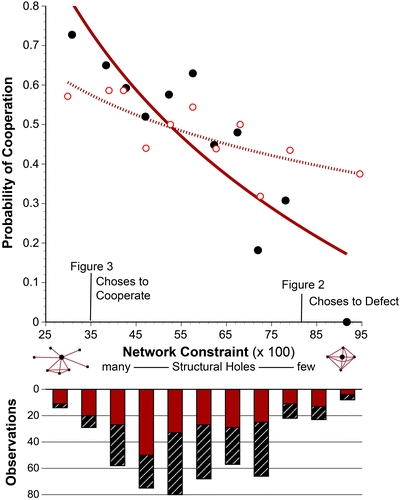
Notes. Observations are averages for five-point intervals on X with thin tails of X truncated for infrequency. More/less success is above/below median profit last year. Bars below the graph show the number of observations averaged for data points in the graph (solid bars count as high-success businesses).
Two cooperation associations are plotted. The dashed line through hollow dots describes cooperation in the whole sample. A strong negative association (−0.77 correlation) shows the probability of cooperation decreasing from 0.6 among open networks to the left in the graph to 0.4 among closed networks to the right in the graph.
The negative association is misleading in that it is strikingly inconsistent across CEOs. This is in line with our second hypothesis. There is no association between network structure and cooperation for less-successful CEOs. The association is concentrated in CEOs running successful businesses. It would seem that the hubris of success encourages more extreme network-induced behavior in whatever network a CEO has built up. The CEOs in open networks are more likely to cooperate, and those in closed networks more likely to defect. This is consistent with our hypothesis that behavior associated with distinct network structures becomes internalized and informs exchange relations with those located beyond the network horizon, especially if past behavior is associated with success.
The solid line through solid dots in Figure 1 shows a negative association twice as strong as the association across the whole sample. Correlations for the two trend lines are similarly high (−0.77 and −0.87), but the solid line for successful CEOs has a −0.58 slope versus −0.20 for the dashed line. Cooperation decreases with constraint on successful CEOs from highly likely (0.8) among CEOs in open networks to the left in the graph to highly unlikely (0.2) among CEOs in closed networks to the right (versus the more modest 0.6 to 0.4 decrease for the whole sample). Allowing for higher cooperation levels among our respondent CEOs, the predicted 0.2 probability of cooperation from CEOs in closed networks leads us to expect almost no cooperation from closed-network successful people in the usual subject pools used for PDGs.2
Illustrative Networks
To connect the results to concrete images of the CEO networks, Figure 2 displays the closed network around a sample CEO, and Figure 3 displays the open network around another. In three ways, the network in Figure 2 is more closed than the network in Figure 3: First, the network in Figure 2 is smaller with stronger connections among the CEO’s contacts (five contacts with 47.3 density versus 10 contacts in Figure 3 with 26.6 density). Network constraint on the CEO in Figure 2 is accordingly high at 81.2 points (1.74 z-score) as indicated by the note on the horizontal axis in Figure 1. Network constraint on the CEO in Figure 3 is relatively low at 34.7 points (−1.56 z-score), also indicated in Figure 1. Second, the network in Figure 2 is more composed of family, which adds its own kind of closure to the structure (60% family in Figure 2 versus 0% in Figure 3). Third, the CEO in Figure 2 makes more repeated use of the same people for support. He went to his uncle for help in founding the business and then returned when a new CEO was needed and again when a major supplier was lost (significant events one and two to the lower right in the figure). He went to his brother of 18 years for help with a particularly large contract and when he made a large capital investment in new equipment (events three and four). The financial crisis rolled over China just after the CEO in Figure 2 invested in new equipment. Company sales were hard hit. He went to his other brother for help in dealing with that event. In short, the Figure 2 CEO is going back to his family again and again for help. In contrast, no contacts in Figure 3 are cited for more than one significant event, and most of the contacts cited as valued during events are met currently but are not included among the respondent’s most valued current contacts.
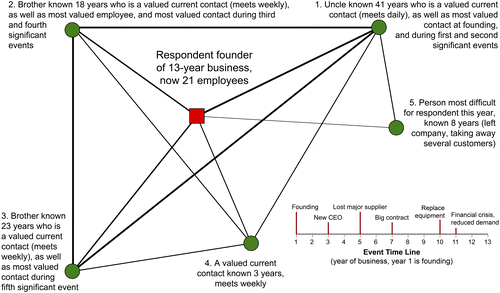
Notes. Line thickness indicates closeness. No line is “distant” relation. Square is respondent. (81.2 network constraint, 1.74 z-score).
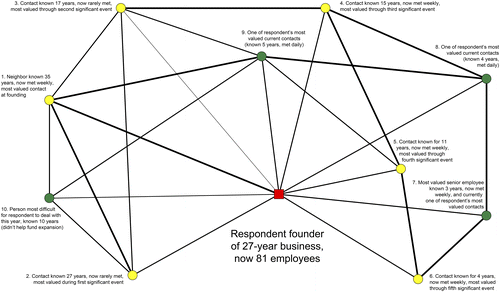
Notes. Line thickness indicates closeness. No line is “distant” relation. Square is respondent. Gold/gray dots are people not cited as currently most valued contacts. (34.7 network constraint, −1.56 z-score).
Given the more closed network in Figure 2, our hypothesis predicts that the CEO in Figure 2 would be less likely to cooperate with unknown people beyond his network. As predicted, he defects against his opponent in the game. Also as predicted, the respondent in Figure 3 with the relatively open network cooperates in the game.
Regression Results
Logit regression results in Table 3 show that the Figure 1 associations are robust to a variety of controls for personal and business factors (Table 4 contains descriptive statistics and correlations) supporting both hypotheses. As predicted by our second hypothesis and illustrated by the dashed line in Figure 1, the probability of cooperation decreases with increasing closure (−1.08 coefficient, −2.35 test statistic, P ∼ 0.02) and even less so if those embedded in a closed network are successful with the network they have. Success really brings out our first hypothesis predicting the negative association between closure and cooperativeness (as illustrated by the solid line in Figure 1). The −1.08 logit coefficient in Model A doubles to −2.24 in Model B (test statistic increases to −3.31, P ∼ 0.001). Running a less-successful business has no association with cooperation (−0.25 coefficient, −0.27 test statistic, P ∼ 0.36), and the cooperation association with network constraint disappears for CEOs running less-successful businesses (statistically significant slope adjustment of 2.65 applied to −2.24 leaves a 0.41 cooperation association for which the negligible test statistic is 0.62, P ∼ 0.53). In light of our argument about network structure as a forcing function for the development of distinct behavioral styles (here, cooperativeness), we infer from the results that the internalization of in-group behavioral strategies and capabilities is indeed reinforced by the success respondents experience with the networks they have. A related, slightly different reading of these results could be that unsuccessful brokers are less likely to develop the behavioral style and capabilities that typically generates advantage in open networks.
|
Table 3. Predicting Cooperation
| Model A | Model B | |||
|---|---|---|---|---|
| Log network constraint | −1.08 | (0.46)* | −2.24 | (0.67)*** |
| Low success | — | −0.25 | (0.27) | |
| Constraint with low success | — | 2.65 | (0.92)** | |
| Respondent and business controls | ||||
| Education | 0.09 | (0.10) | 0.05 | (0.10) |
| Income | 0.02 | (0.05) | 0.01 | (0.06) |
| Age (decades) | −0.05 | (0.15) | −0.05 | (0.16) |
| Female | −0.01 | (0.26) | 0.01 | (0.27) |
| Number of siblings | 0.06 | (0.10) | 0.05 | (0.11) |
| Percentage family in network | 0.02 | (0.01) | 0.02 | (0.01) |
| Percent family × siblings | 0.01 | (0.004)* | 0.01 | (0.005)* |
| Founder | −0.36 | (0.26) | −0.37 | (0.27) |
| R&D department | 0.21 | (0.21) | 0.16 | (0.21) |
| Company size (log assets) | −0.10 | (0.09) | −0.15 | (0.12) |
| Company age (years) | −0.05 | (0.02) | −0.05 | (0.02) |
| Design controls | ||||
| Task order, first | −0.17 | (0.24) | −0.20 | (0.24) |
| Task order, second | 0.36 | (0.24) | 0.36 | (0.24) |
| Abstract prisoner’s dilemma | −0.36 | (0.19) | −0.31 | (0.20) |
| City, Nanjing | 0.50 | (0.32) | 0.45 | (0.33) |
| City, Changzhou | −0.56 | (0.32) | −0.59 | (0.32) |
| City, Shanghai | 0.85 | (0.35)* | 0.85 | (0.36)* |
| City, Wenzhou | 0.51 | (0.33) | 0.46 | (0.33) |
| Industry, pharmaceuticals | 0.61 | (0.36) | 0.63 | (0.37) |
| Industry, machinery | −0.33 | (0.29) | −0.29 | (0.29) |
| Industry, transportation equipment | 0.34 | (0.29) | 0.36 | (0.30) |
| Industry, electronics | 0.13 | (0.32) | 0.18 | (0.33) |
Notes. Coefficients are from logit regression models predicting which of the 500 CEOs made the cooperative move in a one-shot PDG. The intercept for Model A is 5.21 with a 0.09 pseudo-R2 and, respectively, 10.49 and 0.10 for Model B. Parentheses contain robust standard errors. “Constraint with low success” is the low-success dummy variable times log constraint measured as a deviation from average (Log C − mean log C), so the direct effect of low success is measured for an average network. Network constraint and the low-success dummy are discussed in the text. Abstract PDG is one if respondent was presented with the abstract version of the game. Education is five levels (less than high school, high school, some college, college, more than college). Years of education yields the same negligible coefficient. Income is 12 categories of annual income to respondent from the business (skewed bell curve distribution, same negligible coefficient with log income). Reference category for city differences is Hangzhou. R&D department is one if respondent said the company had a R&D department. Reference category for industry is textiles.
*p ≤ 0.05; **p ≤ 0.01; ***p ≤ 0.00.
|
Table 4. Descriptive Statistics for Variables in Table 3
| Mean | Standard deviation | 1 | 2 | 3 | 4 | 5 | 6 | 7 | 8 | 9 | 10 | 11 | 12 | 13 | ||
|---|---|---|---|---|---|---|---|---|---|---|---|---|---|---|---|---|
| 1 | Cooperate | 0.49 | 0.50 | — | ||||||||||||
| 2 | Ln constraint | 3.99 | 0.23 | −0.08 | — | |||||||||||
| 3 | Low success | 0.50 | 0.50 | −0.05 | 0.13 | — | ||||||||||
| 4 | Education | 1.66 | 1.18 | 0.10 | −0.06 | −0.21 | — | |||||||||
| 5 | Income | 5.16 | 2.06 | 0.04 | −0.08 | −0.34 | 0.14 | — | ||||||||
| 6 | Age (decades) | 4.53 | 0.82 | 0.01 | −0.03 | −0.01 | −0.16 | −0.09 | — | |||||||
| 7 | Female | 0.16 | 0.37 | 0.03 | −0.09 | 0.05 | 0.08 | −0.06 | −0.08 | — | ||||||
| 8 | Number of siblings | 2.65 | 1.39 | 0.04 | −0.05 | 0.02 | −0.28 | −0.08 | 0.58 | −0.05 | — | |||||
| 9 | Percent family | 7.44 | 12.71 | 0.01 | 0.28 | −0.06 | −0.02 | 0.09 | 0.02 | 0.03 | −0.01 | — | ||||
| 10 | Founder | 0.78 | 0.42 | −0.06 | 0.07 | 0.12 | −0.13 | 0.11 | 0.15 | −0.08 | 0.06 | 0.07 | — | |||
| 11 | R&D department | 0.53 | 0.50 | 0.02 | 0.08 | −0.24 | 0.08 | 0.15 | −0.03 | −0.04 | 0.02 | 0.07 | −0.06 | — | ||
| 12 | Firm size | 6.79 | 1.18 | −0.01 | −0.06 | −0.65 | 0.10 | 0.29 | 0.04 | −0.02 | 0.08 | 0.09 | −0.22 | 0.29 | — | |
| 13 | Firm age | 11.83 | 4.92 | −0.06 | −0.06 | −0.12 | −0.09 | −0.07 | 0.23 | −0.01 | 0.18 | −0.03 | −0.18 | 0.10 | 0.26 | — |
Notes. Variables are rows in Table 3, excluding the two interaction terms between variables in the table and design fixed effects for order, framing, city, and industry. N = 500.
Table 3 shows no significant adjustments in cooperation for our control variables with two marginal exceptions (in the sense of marginal statistical significance). The two exceptions are city and family. Cooperation is higher in the largest and most cosmopolitan city, Shanghai (0.85 logit coefficient, 2.36 test statistic, P ∼ 0.02). Presumably, cooperation with strangers is more common in Shanghai. The other exception is family. We hold constant the size of the respondent’s nuclear family (number of siblings) and the extent to which the respondent’s key business contacts are family (percentage of family in network). The two family controls are uncorrelated (Table 4) and have no independent association with cooperation (Table 3), but together, they are associated with a slight increase in cooperation (0.01 logit coefficient, 2.36 test statistic, P ∼ 0.02). To the extent that this result is replicated in other studies, it implies that closure brought about by family connections is less corrosive to cooperation than is closure brought about by the respondent. At this point, it is useful to note that family contacts—against all beliefs held in the West—are not disproportionately found in business networks in China. We have a mean of 7.4% family contacts in the sample business networks, and 66.8% of respondents do not list any family member in their business network (see Burt et al. 2021, for elaboration). Interestingly, cooperation does not vary with respondent education, income, or age. Also, cooperation does not differ between industries or across our design controls for game order and framing (abstract versus concrete).3
Robustness
We tested the stability of the network-cooperation association: First, we explored whether implementation and game design influenced our results. Second, we were curious to see whether correlates of network structure other than the assumed behavioral effect might explain variation in game cooperation. Finally, we looked at the specific research setting for effects.
Implementation of the PDG
The incentivized game required more interviewer guidance than the usual interviewer task of eliciting responses to opinion items, so we were concerned about unknown interviewer differences affecting game play. However, the results in Table 3 are robust across the 23 interviewers. Adding 22 dummy variables to Model B in Table 3 adds nothing to the prediction (19.13 chi-square, 22 d.f., P ∼ 0.58), and the hypothesized network effects remain strong: −2.33 coefficient for log network constraint (3.34 test statistic, P ∼ 0.001) and 2.86 slope adjustment for the interaction of log constraint with low success (3.00 test statistic, P ∼ 0.003).
Second, respondents varied considerably in the time they spent with the interviewer. The time spent on games varied from 7 to 30 minutes around a median of 12 minutes. Time spent on the network instrument varied from 11 to 45 minutes around a median of 24 minutes. Going through the interview quickly could indicate a respondent not thinking carefully about game choice or not paying attention to the details of the game. Going through the interview slowly could indicate that the respondent was making very careful deliberations or, alternatively, was chatty during the interview, was confused, or had frequent business interruptions during the interview. We tested the stability of the cooperation association for the number of minutes by which an interview was shorter than the median time and across adjustments for number of minutes longer than the median time. Adjustments for interview length are negligible (Supplementary Section S3).
Third, memory of events of personal importance is typically stable over extended periods of time (Rubin and Kozin 1984, Shum 1998, Rivers 2001), but the sample respondents could have experienced different levels of personal commitment and emotional involvement. For example, not all individuals were in leadership roles when the firm was founded, which might have created quality variation in the network data. We estimated Table 3 using only responses from CEOs who founded or cofounded their business, which promises high emotional involvement and attention to the company’s milestone events. The cooperation association with network constraint is negligibly different for CEOs who were founders versus those who came to the business after it was founded (Supplemental Section S4).
Distinguishing Behavior from Known Network Correlates
Emotional Correlates
Our argument is that capabilities, behavioral strategies, and preferences shaped by network structure influence cooperation beyond the network. An alternative perspective would be that higher emotional closeness and trust upheld within closed networks explains a lower willingness to cooperate with those located outside of the network (Cook et al. 2009). To learn whether emotional correlates rather than network structure guided behavioral choices in game play, we replaced the network constraint measure in Table 3 with respondent average emotional closeness to contacts, and average trust in their contacts. Neither average is associated with cooperation (Supplemental Section S5).
Social Expectations
A related question is whether the demonstrated network-cooperation association is not so much a reflection of behavioral capabilities and preferences as it is a reflection of varying levels of distrust in contacts outside of the network boundaries (Ellickson 1991, Cook et al. 2009). To separate social expectation from network structure, we asked respondents to guess what move, on average, would be made by other CEOs who live and work in China (specifically, “What percent would choose option A?” which is the cooperate option). After respondents made their game move, they were asked “…to think hard about this and we will pay you according to how close your guess is to the true percentage.” (The exact protocol is given in Supplemental Section S2.) Responses have the lumpy distribution displayed in the histogram to the left in Figure 4. The most popular response is to say that 50% of CEOs would select the cooperate choice. The next most popular response is “60%.”
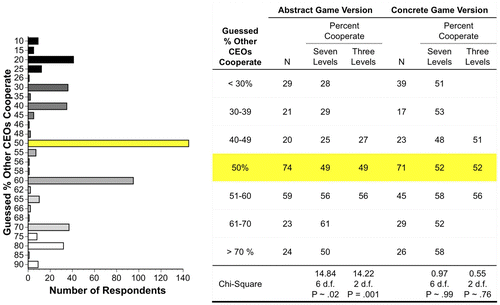
Respondents tend to behave as they say other CEOs would behave. The social expectations question was asked after the respondent made a game choice, so a belief association with choice indicates respondents justifying their choice. The question was not a prompt that could affect choice (Costa-Gomes and Weizsäcker 2008). A logistic regression predicting cooperation from the guesses in the Figure 4 histogram shows a statistically significant tendency for cooperation from respondents who believe other CEOs would cooperate (2.16 test statistic, P ∼ 0.01). The less dark a data bar is in Figure 4, the more likely respondents guessing that percentage were cooperative. Bars at the top of the histogram are darker than bars at the bottom, showing that uncooperative respondents tended to guess that other CEOs on average would not be cooperative.
More specifically, the table in Figure 4 shows that it is the respondents playing the abstract version of the game whose behavior most resembled what they believed would be the behavior of other CEOs. In the abstract version of the game, respondents had no information other than the payoff matrix in Table 1. Respondents did what they believed other CEOs would do (14.22 chi-square, 2 d.f., p < 0.001). Respondent behavior is independent of other CEOs in the concrete version of the game (0.55 chi-square, 2 d.f., P ∼ 0.75). When respondents can reason from their business experience with employee training, there is less sensitivity to the behavior of other CEOs.
Given an association between cooperation and belief about how other CEOs would behave, we hold belief constant in Table 5. The results in Table 5 include all of the controls in Table 3, but we only present here the immediately relevant results (Supplemental Section S6 contains the complete Table 5). “Belief about Cooperation by Other CEOs” is the three-category distinction in Figure 4 between respondents who say that less than half of other CEOs would cooperate in the game (−1), about half would cooperate (0), or more than half would cooperate (1). “Belief × Abstract PDG” in Table 5 is the product of the three-category guess times a dummy variable for assignment to the abstract version of the game.
|
Table 5. Cooperation Predicted from Social Expectations About Other CEOs
| A | B | |
|---|---|---|
| Log network constraint | −1.14 (0.47)** | −2.38 (0.69)*** |
| Low success | — | −0.22 (0.27) |
| Constraint with low success | — | 2.86 (0.95)** |
| Female respondent | 0.15 (0.27) | 0.15 (0.28) |
| Belief about cooperation by other CEOs | 0.10 (0.18) | 0.14 (0.18) |
| Belief × abstract PDG | 0.53 (0.24)* | 0.52 (0.25)* |
| Belief × female respondent | −0.77 (0.32)* | −0.80 (0.25)* |
| Probability no cooperation association with belief about other CEOs (χ2 with 3 d.f.) | 13.32, P ∼0.004 | 13.81, P ∼ 0.003 |
| Probability no cooperation association with network (one predictor in Model A; χ2 with 2 d.f. for Model B) | P ∼ 0.02 | 12.62, P ∼ 0.002 |
Notes. Coefficients are from logit regression models predicting which of the 500 CEOs make the cooperative move in a one-shot PDG. Parentheses contain robust standard errors. The first three rows correspond to the same rows in Table 3. All controls in Table 3 are held constant here (see Supplementary Section S6 for the full table). “Belief about cooperation by other CEOs” is the three-category contrast in Figure 4. Summary test statistics for no cooperation association with belief are tests for coefficients in the last three rows being equal to zero.
*p ≤ 0.05; **p ≤ 0.01; ***p ≤ 0.001.
We take three points from Table 5. First, cooperation is associated with social expectations about other CEOs. Respondents who cooperate in the abstract game are likely to say that other CEOs cooperate in the game (“Belief × Abstract PDG” row). Both summary test statistics in the second-to-the-bottom row of Table 5 reject the null hypothesis of no association.
Second, the network association with cooperation is not diminished by controls for social expectations about other CEOs. In fact, effects in the first and third rows of Table 5 are stronger than the corresponding network effects reported in Table 3. We are reinforced in believing that the network effect is grounded in a respondent’s behavioral preferences rather than in the respondent’s beliefs about how peers would behave.
Third, gender is a provocative control in Table 5. There is no tendency for women to be more or less cooperative than men on average, but their cooperation is affected by their belief about other CEOs. As women are a minority among CEOs in China (which is accurately reflected in our sample with eighty of our 500 respondents being women), women’s elicited beliefs about others are mainly beliefs about the opposite gender, whereas male beliefs about others are mainly beliefs about the same gender. This may affect how women and men act on their beliefs about other CEOs. To control for such potential gender effects moderating beliefs, we included “Belief × Female CEO” in Table 5 as the product of the three-category guess times a dummy variable distinguishing female respondents. Women who believe CEOs in general would cooperate tend to defect against their likely male counterpart in both the abstract and the concrete versions of the game.4 We get the same result if we use the continuous measure of beliefs rather than the three-category measure. Following initial work by Rapoport and Chammah (1965), there is an extensive literature focused on gender differences in prisoner’s dilemma games (for review, see Balliet et al. 2011). The literature does not imply a robust association between gender and game behavior. The modest but robust gender effect in Table 5 adds to the literature on cooperation games and raises further speculation about gender in China, but we do not have data with which to dig into the effect. We note the effect as an interesting question for future research.
Personality Traits
There is a history of research on personality traits associated with network structures (for review, see Fang et al. 2015, Kilduff and Lee 2020) with a focus in recent years on the tendency for people in closed networks to be low in self-monitoring (i.e., presenting one identity in all situations regardless of differences between situations). Results are inconsistent on success correlates of network closure versus personality (e.g., Mehra et al. 2001, Burt 2012), but it seems likely that network brokers have self-monitoring as a personality characteristic (Mehra et al. 2001, Sasovova et al. 2010, Burt et al. 2013, Fang et al. 2015). A natural question is whether the association between closure and failure to cooperate is—as we suggest—a result of behavioral skills and preferences developed within a person’s network or personality traits the person brought to the network.
One can hope for future research on the question. Here, in the absence of personality measures, we are limited to informed speculation and circumstantial evidence. To begin, personality is unlikely to play an important role in one-shot (hence, noninteractive) laboratory games. One-shot games do not imply personal consequences resulting from strategic responses of other players. One-shot games establish “strong” situations for which psychologists expect relatively weak influence of personality traits but strong situational triggers (Weiss and Adler 1984). For example, the self-monitoring correlate so often reported in network studies does not appear to predict behavior in one-shot PDGs though it does in repeated versions of the game (Boone et al. 1999). Although other personality traits, such as risk aversion, offer an intuitive alternative explanation, there is no literature supporting a robust association between subjective risk aversion and decisions in one-shot PDGs. Risk in PDGs is defined by the payoff structure of the game (Rapoport and Chammah 1965; for a meta-analysis of 96 studies, see Mengel 2017), which is why we control for income.
Further, variance in personality traits is likely to be larger in mixed samples of different professions and ranks. Owner entrepreneurs and founders tend to have smaller in-group variation and differ from their nonentrepreneurial peers with respect to self-monitoring and Big Five personality traits (for review, see Zhao and Seibert 2006, Brandstätter 2011). Yet even a focus on founder–CEOs alone did not affect our central findings.
Finally, confirmation of our second hypothesis highlighting the reinforcement effect of success is consistent with the suggested association between learned network behavior and cooperation but less so with stable personality traits as an underlying factor.
To analytically tackle the remaining concerns regarding the distinction between network behavior and stable personality traits, we exploit the fact that behavioral effects should develop over time, whereas personality traits should be independent of network history. In other words, if fixed personality traits drive the observed network structure–cooperation association, network constraint calculated from more recent contacts should have the same association as network constraint calculated from long-time contacts. In contrast, if network structure is associated with behavioral learning, the network structure–cooperation association should be stronger under inclusion of long-time contacts.
Analytically, we approach the question by constructing a series of network constraint measures for each respondent. Starting with a respondent’s current contacts, we sequentially add event contacts (a maximum of five event contacts plus founding contact as the earliest contact) to construct a sequence of constraint measures. Table 6 shows the results of reconstructing the network around each respondent for seven different dates. In the first row, networks and corresponding constraint are defined by current contacts. The average respondent named four and a half current contacts (2,244 contacts in the first row of Table 6 divided by 500 respondents is 4.49). In the second row, we add to current networks the contacts cited on the most recent significant event for the respondent’s business. Many of the people cited were already cited as current contacts, so the number of contacts increases by 160 rather than one per respondent. The second column in Table 6 shows that the 160 additional contacts were cited for events that occurred on average 1.6 years before the survey. Each subsequent row in Table 6 contains networks augmented by the contacts cited for the next event further back in time. In the bottom row, founding contacts not already named are added. The networks in the bottom row are the networks containing all cited contacts, which are the networks in Table 3. The third column in Table 6 shows older networks as less closed. On average, people who are not current contacts but have been key contacts in significant events have relatively weak connections with current contacts. The further back in time we go, the more open the network around a respondent appears. By including the history of a person’s network, we eliminate false negatives: people look like they have a closed network but in fact have had open networks in the recent past.
|
Table 6. Cooperation and Network History
| Network effects | |||||
|---|---|---|---|---|---|
| Events go back | Mean network constraint | Coefficient for successful | Adjustment for low success | Test statistic no network effect | |
| Only current contacts (2,244 contacts) | 0.0 years | 69.6 | −0.71 (0.71) | 1.74 (0.95) | 3.69, P ∼ 0.16 |
| Plus event-5 contacts (add 160 contacts) | 1.6 years | 66.7 | −1.15 (0.82) | 2.55 (1.03)* | 6.69, P ∼ 0.04 |
| Plus event-4 contacts (add 164 contacts) | 3.6 years | 63.78 | −1.57 (0.78)* | 2.69 (1.00)** | 7.28, P ∼ 0.03 |
| Plus event-3 contacts (add 166 contacts) | 5.8 years | 61.4 | −2.14 (0.77)** | 3.09 (0.98)** | 10.35, P ∼ 0.005 |
| Plus event-2 contacts (add 153 contacts) | 8.2 years | 59.4 | −1.79 (0.65)** | 2.51 (0.89)** | 9.08, P ∼ 0.01 |
| Plus event-1 contacts (add 178 contacts) | 10.7 years | 57.0 | −1.90 (0.63)** | 2.51 (0.88)** | 10.14, P ∼ 0.006 |
| Plus founding contacts (add 99, total 3,164) | 11.8 years | 55.7 | −2.24 (0.67)*** | 2.65 (0.92)** | 11.58, P ∼ 0.003 |
Notes. Each row contains estimated logit coefficients and robust standard errors for the two network effects in Model B in Table 3 when networks are composed of different contacts. Networks in the top row exclude all contacts not cited as current. Networks in the bottom row include all current and all event contacts, which are the networks used for the estimates in Table 3. “Events go back” is the average number of years ago that the oldest include event occurred. All controls in Table 3 are held constant here (see Supplemental Section S7 for the full tables for each row except the bottom row for which the full table is Table 3). The summary test statistic for no network effect is a chi-square with 2 d.f.
*p ≤ 0.05; **p ≤ 0.01; ***p ≤ 0.001.
The remaining three columns in Table 6 show what happens to the cooperation-network association as networks extend back in time. The “coefficient for successful” is the Model B coefficient in the first row of Table 3 (note that the −2.24 logit coefficient in the bottom row of Table 6 matches the same coefficient in the first row of Model B in Table 3). The “adjustment for low success” is the Model B coefficient in the third row of Table 3 that adjusts the network effect for successful CEOs down to the association for the less successful (again the 2.65 coefficient in the bottom row of Table 6 matches the coefficient in row three of Model B in Table 3). The coefficients in Table 6 are estimated with all the controls in Table 3, but we only present here the network coefficients (Supplemental Section S7 contains the complete tables).
The point demonstrated in Table 6 is that the network-cooperation association gets stronger as networks are taken further back in time. There is no cooperation association with the networks of current contacts (first row). Results in the second row show that adding the contacts from up to a year and a half ago strengthens the aggregate network effect, but the tendency for CEOs in closed networks to defect remains negligible. The network-cooperation association is almost up to full strength once we go back six years (fourth row) and continues strong down the rows to its maximum strength when all contacts are included in the network (bottom row of Table 6 and Model B in Table 3). History clearly matters. Although these results are still no evidence of structure as a forcing function for capability development and behavioral preferences, these results are inconsistent with the counterargument that the network structure–cooperation association merely reflects stable personality traits.
Research Setting
Could our research setting have affected the observed association between network structure and cooperation? We are not concerned about cultural embeddedness. Recent work has demonstrated that the usual network structure–performance hypothesis is valid in China as well as in the West (Batjargal et al. 2013, Burt 2019), which undermines a suggested cultural contingency effect (Xiao and Tsui 2007).5 Therefore, we do not expect network structure to nourish different behavioral preferences in China than in the West. A more critical concern might be the fact that network contacts joined the respondent’s networks over an extended period of time with some founding events as early as 1982 and first important events distributed between the years 1984 and 2011. During this period, China’s business environment went through extensive institutional transformation toward a market economy. Our research site in particular progressed quickly. Shanghai, Jiangsu, and Zhejiang provinces are consistently rated as institutionally most advanced by both domestic (Fan and Wang 2009) as well as international rating agencies (IMD 2005). Zhejiang province, with the capital of Hangzhou, for instance, is today rated as comparable with Western countries. As formal institutions affect cooperation and exchange relations (Zucker 1986; for laboratory evidence, see Peysakhovich and Rand 2016), one could argue that network closure and openness have not groomed the same behavioral capabilities in China’s earliest nonmarket environment as in today’s more liberalized environment.
A particularly significant change in the institutional environments of our sample businesses is the 2004 enactment of a constitutional amendment that put private enterprise on an equal status with state-owned enterprises and provided institutional protection of private property.6 Suspecting that network utility and exercised behavior may change with the institutional environment, we added level and slope adjustments to Table 3 to distinguish respondents founding their business in 2004 or later. Both adjustments are negligible. Cooperation is negligibly more likely from the CEOs running businesses founded after the amendment (1.10 and 1.23 logit test statistics in Models A and B, respectively) and negligibly less associated with network constraint (1.00 and 1.12 test statistics in Models A and B, respectively).
Conclusion
To test for a connection between network structure and cooperation beyond the network, we combined network data from a large area probability sample of Chinese CEOs with behavioral data elicited in an incentivized one-shot PDG that all respondents played with an anonymous partner described as a Chinese CEO. In line with our prediction, respondents in more closed networks are less likely to cooperate, and success amplifies the tendency (Figure 1). Successful CEOs in closed networks are particularly likely to defect against people beyond their network (e.g., Figure 2). Successful CEOs with networks rich in structural holes are particularly likely to cooperate beyond their network (e.g., Figure 3).
Contributions
We see three contributions from the analysis. The core substantive contribution is to extend received knowledge by describing how the closure that facilitates trust and cooperation within a network simultaneously erodes the probability of cooperation beyond the network, which, in turn, reinforces a social boundary around the network. In other words, the network dynamics by which network closure sustains the status quo occur both within and beyond the network around a person. The behavioral correlate of network structure, presumably groomed and developed over time, adds to the literature studying network dynamics in given organizational populations. Network stability and replication of comparable structures seems an obvious consequence of structural path dependence (Ingram and Morris 2007) and homophilous association (Barker 1942), but behavioral preferences are likely to play a role as well. In a broader perspective, our results are consistent with the idea of network structure as a forcing function for personal capabilities and behavioral preferences (Burt 2010) and so contribute to an ongoing research program seeking to identify underlying mechanisms explaining successful brokerage (see Burt 2021 for review). Of course, a single cooperative move elicited in game play is not the same as tie formation observed in studies on network dynamics. The point remains that cooperation in first encounters can keep the window open for ensuing tie formation, and the lack of it can inhibit future exchange.
Second, there are practical implications for policy intended to improve cooperation by enhancing group solidarity. One often hears about dense networks around well-connected actors facilitating cooperative diffusion processes. The quality is attractive for many tasks and policy outcomes—for instance, for aid and service distributions in developing countries (see, for instance, Banerjee et al. 2013), but it can be, at the same, time an unattractive learned pathology. Consider Gargiulo and Benassi’s (2000) Italian managers in closed networks having a difficult time adapting to the coordination changes required by new assignments. A person who has learned to cooperate within the emotionally secure social environment of closed networks understands cooperation as behavior under the governance of reputation among interconnected, homogeneous people. That person, so apt for certain tasks, could be inept at higher-level tasks that require cooperation between groups with distinct, even contradictory interests—inept not only because opportunities to benefit from cooperation beyond one’s own group would be, for the person, more difficult to detect, but also because cooperation with outsiders is, for that person, not a learned and reinforced capability.
Third, we see a valuable technical innovation in combining standard metrics of network structure with laboratory games designed to elicit behavioral preferences. By studying behavior far removed from the network structure in which a person is embedded, our results provide exceptionally clear evidence of structure’s impact on behavior. Similar results from the more usual research design describing the emergence and decay of relations within a bounded study population are confounded with reputational effects from direct and indirect social control within the population. More generally, laboratory research struggles with the fact that social history and, specifically, the substance of social heuristics are not easily reproduced in experimental treatments (Goette et al. 2012). More, random assignment to group structures can only deliver a situational construct (even in repeated games), but it cannot imitate how individual behavior has been shaped over time by social experience. Inclusion of established social network metrics offer a handle to study consequences of the social experience subjects bring to the game. At the same time, social network analysis gains a research strategy to isolate a broad variety of behavioral correlates associated with distinct network structures without running the risk that network logistics or personal attributes of network contacts influence game behavior. Here, we use one of the simplest cooperation games available, the prisoner’s dilemma game, but survey network data can be coupled with a rich diversity of other games well known in economics, political science, psychology, and sociology (as others have done previously with survey network data on cluster and convenience samples, e.g., Barr et al. 2009, Baldassarri 2015).
Limitations
Immediate limitations are four: personality, homophily, cross-sectional evidence, and our definition of “beyond the network.” Each is now, given our results as baseline, an opportunity for future research likely to be productive.
We discussed the likelihood that our results are robust to personality, but the fact is that we have in our data no direct measures of personality. There is sufficient evidence from other studies to expect an association between network structure and certain personality measures, most notably self-monitoring (Tasselli and Kilduff 2018). Given the association in past research between open networks and self-monitoring and given the association here between open networks and cooperation, the question for future research is the extent to which personality versus network are responsible for cooperation being less likely from low-self-monitors in a closed network versus more likely from high-self-monitors in networks rich in structural holes.
We discussed the likelihood that our results are not peculiar to China, but the fact remains that all of our respondents are CEOs of small and medium private enterprises in China. This is a point on which research can productively combine behavioral games with network data from area probability surveys. Even if one continues with the simple PDG, there is a wealth of productive research possible. An immediate step is to study cooperation contingent on gender, race, age, kind of firm, job rank, nationality, and so on. We studied CEOs of Chinese small and medium private enterprises (SMEs) playing against a peer. Would cooperation be higher or lower with people not like the respondent? Close relations are often assumed to be more likely between socially similar people (McPherson et al. 2001), but Yenkey (2017) shows business fraud is more likely between socially similar people. There is modest but robust evidence in Table 5 of women being more likely to exploit the other CEO if they believe CEOs are cooperative, which could be treated as a homophily effect because most Chinese CEOs are male. But what happens if the other CEO is known to be a woman? How would the cooperation we observe be different if respondents were told the other player is CEO of a state-owned Chinese enterprise, from a prosperous family, from Japan, or an American CEO leading a similar kind of organization? How would the results change if we had a sample of German CEOs in SMEs playing against someone in a similar role who is English, Italian, or a Turk? How would the results change if we had a sample of African-American entrepreneurs in the United States playing against a peer African-American CEO versus an Asian CEO versus a White CEO?
Also, we are curious to see what happens to the network association when people other than entrepreneurs play the game. Would managers of stock-listed or state-owned firms show the same network cooperation association? We assume they would if the behavioral correlate of network structure does indeed drive our findings. Yet we have different expectations for people in lower ranks, doing work that offers less autonomy. Holm et al. (2020) compare a sample of CEOs and non-CEOs playing a one-shot PDG in two cities in China and find CEOs to be significantly more cooperative. The authors had no network data but report a suspicion that CEOs are more used to exchanges with strangers and situations that require cooperative moves. Their inference is consistent with our study results and also implies that the network cooperation association could be less prominent in samples involving individuals of lower status and less experience.
With respect to our cross-sectional evidence, consider network dynamics. We infer from our findings that behavioral correlates of network structure are reinforced by success. Successful closure comes with defection, reinforcing closure. Successful openness comes with cooperation, allowing for inclusion of novel, unembedded ties. A change of a given network trajectory, in contrast, is more likely for entrepreneurs unsuccessful with whatever network style they have as they seem less likely to follow social heuristics to replicate past behavior. These behavioral considerations are consistent with the commonly observed stability of network structure over time (Zaheer and Soda 2009, Sasovova et al. 2010, Burt and Merluzzi 2016) and stability in networking behavior (Vissa 2012, Quintane and Carnabuci 2016). New questions arise: Is the network cooperation association amplified or inhibited by an external shock such as immigrating to a new country (Weiner 2016), or exposure to a frightening event (Smith et al. 2012)? How quickly and in what manner does cooperation become less likely as a person’s network becomes more closed? There are many ways a network can become more closed or open to span more structural holes. What are the kinds of changes that most directly or quickly affect cooperation? Network history is a related issue. We find the network cooperation association most evident with network data that include long-term contacts (Table 6). If confirmed, the importance of network history implies that more compelling evidence will come from network instruments that explicitly solicit information on long-term contacts, contacts easily overlooked by name generators designed to capture a person’s current professional situation.
A fourth limitation is our extreme definition of “beyond the network.” We test for association between the network structure around a person and the person’s cooperative behavior toward a stranger, a person far removed from the person’s immediate network. How far removed is illustrated in Table 7. Obtained in the course of an executive education program, the data in Table 7 describe relations among 396 senior managers in a large financial organization of about 50,000 employees scattered across the globe with concentrations in Asia, the European Union, and the United States. In response to a network survey, the 396 senior managers made 1,580 citations to colleagues with whom they had “frequent and substantive” work contact. Many of the citations went to colleagues in the senior management population (765). Slightly more went to colleagues in lower job ranks (815 or 52% of citations). Almost everyone in the senior management population is connected directly or indirectly. The first row in Table 7 shows 765 direct contacts cited in the network survey through whom managers reach another 3,050 senior managers who are two step removed contacts and down the rows of Table 7 to the longest path distances, 10 step removed contacts, concluding with a dyad of two senior managers who cite each other and contacts in job ranks below senior management. None of the other 394 senior managers cite either person in the dyad, so the pair end up an isolated dyad in the senior population (generating the 788 disconnections at the bottom of Table 7). The strength of the relationship between each pair of senior managers is measured in Table 7 on a zero to one scale by the relative frequency of emails between them over the last three months and whether either cited the other in the last 360 evaluation process.7
|
Table 7. Relationship Strength by Increasing Path Distance Within a Senior Management Population
| Email and 360 relationship | ||||
|---|---|---|---|---|
| Manager path distance | Dyads | Mean strength | Standard deviation strength | Strength-closure correlation |
| 1 | 765 | 0.711 | 0.245 | 0.346 |
| 2 | 3,050 | 0.140 | 0.205 | 0.663 |
| 3 | 8,916 | 0.032 | 0.079 | 0.588 |
| 4 | 18,296 | 0.011 | 0.022 | 0.379 |
| 5 | 21,577 | 0.009 | 0.011 | 0.107 |
| 6 | 14,664 | 0.009 | 0.011 | † |
| 7 | 7,175 | 0.009 | 0.011 | † |
| 8 | 2,420 | 0.009 | 0.011 | † |
| 9 | 509 | 0.009 | 0.010 | † |
| 10 | 50 | 0.010 | 0.012 | † |
| Disconnection | 788 | 0.008 | 0.010 | † |
| Total | 78,210 | 0.024 | 0.092 | 0.666 |
Notes. Dyads are path distances defined by sociometric choice in a study population of 396 senior managers (choices are treated as symmetric). Strength of relationship between each pair of people in the study population is defined by email messaging and binary 360 evaluations as sociometric citations (normalized within each row to vary from zero to one; see endnote 7). Last column is relationship strength correlated with the log number of mutual contacts (see endnote 8).
†correlation undefined because there are no mutual contacts at the row path distance.
Much of what we know about network brokerage and closure comes from data corresponding to the top rows of Table 7. We hasten to emphasize that the top rows are a productive place for such work because that is where relationships are strongest on average (“Mean Strength” column in Table 7), variation in relation strength is greatest (“Standard Deviation in Strength”), and evidence is most abundant on closure facilitating strong relations (last column in Table 7).8 For example, Sasovova et al. (2010) is often cited as a study of network broker dynamics. The data come from two panels, nine months apart, on about 140 employees—from all job ranks—in the radiology department of a Dutch hospital. The employees are few and colocated, so reputation effects must be present and path distances through mutual acquaintances must be relatively short, putting the study data in the top rows of Table 7. Quintane and Carnabuci (2016) study brokerage and closure dynamics in continuous time using eight months of email data on 129 employees in all job ranks within a digital advertising organization that has employee concentrations in the European Union and the United States. Here again, relations emerging in the small EU and U.S. organizations must be affected by reputation effects and short path distances. Burt’s (2002) study of decay in relations between 345 senior investment bankers is over a longer period (four annual panels) in a larger organization (several thousand employees with concentrations in Asia, the European Union, and the United States). Regardless, the senior bankers are elements in a dense global network (average path distance is 2.3, Burt 2015), and consistent with the top rows of Table 7, network closure stabilizes relations among the bankers (Burt 2010, chapter 6). Vissa (2012) stands out in this context. For a select 59 IT entrepreneurs in India’s Silicon Valley, Vissa makes four observations over a two-month period, recording relations each entrepreneur gains and loses with contacts in supplier, customer, and peer organizations. Such relations are well beyond the last row in Table 7, making Vissa’s (2012) results a particularly welcome complement to results obtained from studies of relations at the top of Table 7.
Like Vissa (2012), we go beyond an entrepreneur’s organization. More, we go beyond the entrepreneur’s city and industry. And the marriage of behavioral games with traditional area probability sampling gives us an advantage in generalizing results to large, heterogeneous populations. Our respondents only know that the person with whom they are playing the game is, like the respondent, a Chinese citizen and CEO of a private enterprise. Consider that in light of the illustrative data in Table 7. The 396 senior managers have 78,000 possible relations among themselves (bottom row of the table), beyond which they have 20 million possible relations with employees at lower job ranks in their organization (396 × (50,000 − 396)), hundreds of millions possible with other people in their city of two and a half million, and billions possible with other citizens of their country. At these further removes, average relationship strength is well below the 0.008 at the bottom of Table 7 because most relations are zero, and closure through mutual friends disappears in Table 7 when path distances exceed a handful of links. In other words, these relations far beyond the network around a person are bridges to other social worlds, the foundation for brokerage. The stranger with whom our respondents played prisoner’s dilemma lie out there—no more than a citizen of your country doing similar work. That is at once a strength and limitation to our results. The strength is that we can show a network effect on cooperation despite the lack of social control within the immediate network around the potential cooperator. The limitation is that private cooperation at such remove is rarely asked of a person. The task now is to explore more usual network boundaries. Reintroduce industry, city, organization, and variably present colleagues, moving up the rows of Table 7 to discover the point at which closure’s negative effect on cooperation with people beyond the network turns into the familiar positive effect on cooperation within the network. In the management population described in Table 7, we expect the turning point to be just before or after a path distance of four because closure’s correlation with relation strength drops sharply at four steps and quickly disappears thereafter. We anticipate a complication in such analysis: the turning point is likely to be obscured by learned differences in network perception. Individuals accustomed to life in a closed network can require the strong presence of colleagues before cooperation is comfortable (Centola and Macy 2007, Tortoriello and Krackhardt 2010, Centola 2018). For these individuals, “beyond the network” could occur relatively high in Table 7. For example, Friedkin (1983) suggests that professors live in relatively closed networks in that work by colleagues beyond two steps is unlikely to be familiar. In contrast, network brokers are accustomed to living with structural holes between distant contacts. They can feel comfortable with a group when they have only the slimmest of relationships into the group. For network brokers, “beyond the network” is more broker-specific and could extend well beyond the most distant connections in Table 7.
The text has benefitted from thoughtful comments by the journal editor and two of the reviewers in addition to comments at the 2017 Arne Ryde workshop in experimental economics at Lund University and a 2017 research seminar at Bocconi University, Milan, as well as 2018 presentations at the School for Humanities and Social Science, Xi’an Jiaotong University; the Center for Reputation Research at Oxford Said Business School; the annual meetings of the Academy of Management; and INSEAD Fontainebleau.
1 Of course, the idea of success as behavioral reinforcement is not new. Evolutionary anthropologists and biologists document how individual and group success solidifies adherence to behavioral norms (Richerson and Boyd 2005, Boyd and Richerson 2009). Behavioral and cognitive scientists make similar arguments (Rand et al. 2015) and assume that experience accumulated in the past is more likely to steer cooperation decisions if past strategies were successful in previous social interactions (Cone and Rand 2014, Rand et al. 2014, Raihani and Bshary 2015).
2 Our respondents are running private enterprises in China, and the large majority are entrepreneurs in the sense that they founded their business, so our respondents are probably more comfortable with strategic risk than would be expected from people of the same age and gender in the general population (Holm et al. 2013). If that inference is correct, our respondents should be more comfortable taking the risk of cooperation with another Chinese CEO even if a stranger. As it turns out, our respondents are more cooperative at least relative to subjects in experiments with prisoner’s dilemma games (also see Holm et al. 2020). Two hundred forty-seven of our 500 respondents cooperated, a 49.4% level of cooperation. American college students are in the 20% to 40% range (e.g., about 30% for Reed College students in Lave 1962 and 38% for University of Iowa students in Cooper et al. 1996).
3 The incentivized game required more interviewer guidance than the usual interviewer task of eliciting responses to opinion items, so we were concerned about unknown interviewer differences affecting game play. However, the results in Table 3 are robust across the 23 interviewers. Adding 22 dummy variables to Model B in Table 3 adds nothing to the prediction (19.13 chi-square, 22 d.f., P ∼ 0.58), and the hypothesized network effects remain strong: −2.33 coefficient for log network constraint (3.34 test statistic, P ∼ .001) and 2.86 slope adjustment for the interaction of log constraint with low success (3.00 test statistic, P ∼ 0.003).
4 This sentence summarizes two logit models predicting cooperation from gender. First, there is a negligible zero-order association between cooperation and gender (0.60 logit test statistic). Second, in a logit model predicting cooperation from gender, abstract PDG, the three-category belief variable in Figure 4, and all four interaction terms among the three predictors, there is no three-way interaction among the three predictors (−0.43 test statistic), and there is no tendency for women to be more or less cooperative on the abstract PDG (0.51 test statistic). The other terms are included in Table 5. We also checked for gender interaction with our hypotheses. There is no gender difference in tendency to cooperate (in Table 3) and no gender difference in the greater tendency for defection from women in closed networks regardless of success (4.07 chi-square, 2 d.f., P ∼ 0.13).
5 Xiao and Tsui (2007), for instance, claim that the widely reported network structure–performance association depends on cultural embeddedness. They support their claim with network data from low-rank employees. The problem is that low-rank employees rarely have the social standing to be accepted as network brokers. Similar results on low-rank managers in the West, therefore, undermine the cultural contingency argument. Burt and Batjargal (2019) discuss cultural contingency with respect to China (including Xiao and Tsui’s (2007) analysis).
6 See articles 11 and 12 at http://www.npc.gov.cn/englishnpc/Constitution/node_2825.htm.
7 The email connection from manager i to j is the number of messages in the last three months that i sent to j only (group messages ignored) divided by the largest number of messages i sent to any one of the other 395 senior managers. Connection by 360 evaluation is binary and equal to one if i asked for and received a work evaluation from senior manager j in the annual evaluation process. The email and 360 are combined to define relation strength in Table 7: the symmetric connection between managers i and j is the strongest of i’s email connection to j, j’s email connection to i, or one if either manager did a 360 evaluation of the other.
8 Relationship strength increases quickly through low levels of closure and then slowly across higher levels, so we correlate relationship strength with log closure in Table 7 (see Burt et al. 2018 for Chinese entrepreneurs and references to similar results with managers in the West). We measure closure around two managers i and j by the aggregate strength of indirect connection between the managers through symmetric connections with mutual contacts: Σk zik zkj, k ≠ i, j, where zkj is the strongest of three kinds of connections between k and j: 360 citation, proportional email, or emotional closeness from scaled network survey data (1.00 for “especially close,” 0.67 for “close,” 0.33 for “less close,” and 0.10 for “distant”). Setting ties to the strongest of survey, email, or 360 connection is useful in this population because the managers work in a small world of dense social clusters sparsely interconnected. The average ego network contains 14 contacts at 0.271 density when networks include all of ego’s connections stronger than 0.09 (to include all contacts cited in the survey). In contrast, 0.024 is the average connection strength between all 396 managers (bottom row of Table 7).
References
- (2011) Stakes matter in ultimatum games. Amer. Econom. Rev. 101(7):3427–3439.Crossref, Google Scholar
- Annual Report of Non-State Economy in China [Zhongguo minying jingji fazhan baogao] (2015) (Social Sciences Academic Press, Beijing).Google Scholar
- (2011) The diversity-bandwidth tradeoff. Amer. J. Sociol. 117(1):90–171.Crossref, Google Scholar
- (2015) Cooperative networks: Altruism, group solidarity, reciprocity, and sanctioning in Ugandan producer organization. Amer. J. Sociol. 121(2):355–395.Crossref, Google Scholar
- (2020) Diversity and prosocial behavior. Sci. 369(6508):1183–1187.Crossref, Google Scholar
- (2011) Sex differences in cooperation: A meta-analytic review of social dilemmas. Psych. Bull. 137(6):881–909.Crossref, Google Scholar
- Banerjee A, Chandrasekhar AG, Duflo E, Jackson MO (2013) The diffusion of microfinance. Sci. 341(6144).Google Scholar
- (1942) The social interrelations of strangers and acquaintances. Sociometry 5(2):169–179.Crossref, Google Scholar
- (1993) Tightening the iron cage: Concertive control in self-managing teams. Admin. Sci. Quart. 38(3):408–437.Crossref, Google Scholar
- (2009)
Social networks and trust in cross-cultural economic experiments . Cook KS, Levi M, Hardin R, eds. Whom Can We Trust? (Russell Sage Foundation, New York), 65–90.Google Scholar - (2013) Institutional polycentrism, entrepreneur’s social networks, and new venture growth. Acad. Management J. 56(4):1024–1049.Crossref, Google Scholar
- (1992) Opting out of the legal system: Extralegal contractual relations in the diamond industry. J. Legal Stud. 21(1):115–157.Crossref, Google Scholar
- (2012) The Chinese General Social Survey (2003-8). Chinese Sociol. Rev. 45(1):70–97.Crossref, Google Scholar
- (1999) The impact of personality on behavior in five prisoner’s dilemma games. J. Econom. Psych. 20(3):343–377.Crossref, Google Scholar
- (2009) Culture and the evolution of human cooperation. Philos. Trans. Roy. Soc. B 364(1533):3281–3288.Crossref, Google Scholar
- (2011) Personality aspects of entrepreneurship: A look at five meta-analyses. Personality Individual Differences 51(3):222–230.Crossref, Google Scholar
- (2008) Gender and homophily: Differences in male and female association in Blau space. Soc. Sci. Res. 37(2):400–415.Crossref, Google Scholar
- (1992) Structural Holes (Harvard University Press, Cambridge, MA).Crossref, Google Scholar
- (2002) Bridge decay. Soc. Networks 24(4):333–363.Crossref, Google Scholar
- (2005) Brokerage and Closure (Oxford University Press, Oxford, UK).Crossref, Google Scholar
- (2010) Neighbor Networks (Oxford University Press, Oxford, UK).Google Scholar
- (2012) Network-related personality and the agency question: Multirole evidence from a virtual world. Amer. J. Sociol. 118(3):543–591.Crossref, Google Scholar
- (2015) Reinforced structural holes. Soc. Networks 43:149–161.Crossref, Google Scholar
- Burt RS (2019) Network disadvantaged entrepreneurs: Density, hierarchy, and success in China and the West. Entrepreneurship Theory Practice 43(1):19–50.Google Scholar
- (2021)
Structural holes: Capstone, cautions, and enthusiasms . Small ML, Perry BL, Pescosolido B, Smith EB, eds. Personal Networks (Cambridge University Press, New York).Crossref, Google Scholar - (2019) Comparative network research in China. Management Organ. Rev. 15(1):3–29.Crossref, Google Scholar
- (2017) Chinese entrepreneurs, social networks and guanxi. Management Organ. Rev. 13(2):221–260.Crossref, Google Scholar
- (2016) Network oscillation. Acad. Management Discoveries 2(4):368–391.Crossref, Google Scholar
- (2017) Early network events in the later success of Chinese entrepreneurs. Management Organ. Rev. 13(3):497–537.Crossref, Google Scholar
- (2018) More or less guanxi: Trust is 60% network context, 10% individual difference. Soc. Networks 53:12–25.Crossref, Google Scholar
Burt RS ,Kilduff M ,Tasselli S (2013) Social network analysis: Foundations and frontiers on network advantage. Annual Rev. Psych. 64:527–547.Crossref, Google Scholar- (2021) Social network and family business: Uncovering hybrid family firms. Soc. Networks 65:141–156.Crossref, Google Scholar
- (2018) How Behavior Spreads (Princeton University Press, Princeton, NJ).Google Scholar
- (2007) Complex contagions and the weakness of long ties. Amer. J. Sociol. 113(3):702–734.Crossref, Google Scholar
- (1988) Social capital in the creation of human capital. Amer. J. Sociol. 94:S95–S120.Crossref, Google Scholar
- (1990) Foundations of Social Theory (Harvard University Press, Cambridge, MA).Google Scholar
- (2014) Time pressure increases cooperation in competitively framed social dilemmas. PLoS One 9(12):e115756.Crossref, Google Scholar
- (2009) Whom Can We Trust? (Russell Sage Foundation, New York).Google Scholar
- (1996) Cooperation without reputation: Experimental evidence from prisoner’s dilemma games. Games Econom. Behav. 12(2):187–218.Crossref, Google Scholar
- (1999) Gaming against managers in incentive systems: Experimental results with Chinese students and Chinese managers. Amer. Econom. Rev. 89(4):781–804.Crossref, Google Scholar
- (2008) Stated beliefs and play in no-form games. Rev. Econom. Stud. 75(3):729–762.Crossref, Google Scholar
- (2009) Gender differences in preferences. J. Econom. Literature 47(2):448–474.Crossref, Google Scholar
- (2011) Framing and free riding: Emotional responses and punishment in social dilemma games. Experiment. Econom. 14(2):254–272.Crossref, Google Scholar
- (2011) Individual risk attitudes: Measurement, determinants, and behavioral consequences. J. Eur. Econom. Assoc. 9(3):522–550.Crossref, Google Scholar
- (1996) A brief history of balance through time. J. Math. Sociol. 21(1–2):113–131.Crossref, Google Scholar
- (1991) Order Without Law (Harvard University Press, Cambridge, MA).Crossref, Google Scholar
- EPS China Data. Accessed February 5, 2019, http://www.epschinadata.com/data-resource.html.Google Scholar
- (2018) Homophily and individual performance. Organ. Sci. 29(5):912–930.Link, Google Scholar
- (2009) NERI Index of Marketization of China’s Provinces (National Economic Research Institute, Beijing).Google Scholar
- (2015) Integrating personality and social networks: A meta-analysis of personality, network position, and work outcomes in organizations. Organ. Sci. 26(4):1243–1260.Link, Google Scholar
- (1981) The focused organization of social ties. Amer. J. Sociol. 86(5):1015–1035.Crossref, Google Scholar
- (2021)
Reflections on “the focused organization of social ties” and its implications for bonding and bridging . Small ML, Perry BL, Pescosolido B, Smith EB, eds. Personal Networks (Cambridge University Press, New York).Crossref, Google Scholar - (1950) Social Pressures in Informal Groups (Harper, New York).Crossref, Google Scholar
- (1983) Horizons of observability and limits of informal control in organizations. Soc. Forces 62(1):54–77.Crossref, Google Scholar
- (2000) Trapped in your own net? Network cohesion, structural holes, and the adaptation of social capital. Organ. Sci. 11(2):183–196.Link, Google Scholar
- (2012) The impact of social ties on group interactions: Evidence from minimal groups and randomly assigned real groups. Amer. Econom. J. Microeconomics 4(1):101–115.Crossref, Google Scholar
- (2016) Fitting in or standing out? The tradeoffs of structural and cultural embeddedness. Amer. Sociol. Rev. 81(6):1190–1222.Crossref, Google Scholar
- (1985) Economic action, social structure, and embeddedness. Amer. J. Sociol. 91(3):481–510.Crossref, Google Scholar
- (1989) Reputation and coalitions in medieval trade: Evidence on the Maghribi traders. J. Econom. Hist. 49(4):857–882.Crossref, Google Scholar
- (2020) Strategic decisions: Behavioral differences between CEOs and others. Experiment. Econom. 23(1):154–180.Crossref, Google Scholar
- (2013) Entrepreneurs under uncertainty: An economic experiment in China. Management Sci. 59(7):1671–1687.Link, Google Scholar
- (2015) Triadic closure pattern analysis and prediction in social networks. IEEE Trans. Knowledge Data Engrg. 27(12):3374–3389.Crossref, Google Scholar
- (2007) Do people mix at mixers? Structure, homophily, and the “life of the party.” Admin. Sci. Quart. 52(4):558–585.Crossref, Google Scholar
Institute for Management Development (2005) IMD World Competitiveness Yearbook, 2005 (Institute for Management Development, Lausanne, Switzerland).Google ScholarKeister LA (2001) Exchange structures in transition: Lending and trade relations in Chinese business groups. Amer. Sociol. Rev. 66(3):336–360.Crossref, Google Scholar- (2018) Reorganization and tie decay choices. Management Sci. 64(5):2219–2237.Link, Google Scholar
- (2013) Discretion within constraint: Homophily and structure in a formal organization. Organ. Sci. 24(5):1316–1336.Link, Google Scholar
- (2020) The integration of people and networks. Annual Rev. Organ. Psych. Organ. Behav. 7:155–179.Crossref, Google Scholar
- (1962) An empirical approach to the prisoner’s dilemma game. Quart. J. Econom. 76(3):424–436.Crossref, Google Scholar
- (2008) Dealing with the paradox of embeddedness: The role of contracts and trust in facilitating movement out of committed relationships. Organ. Sci. 19(5):709–728.Link, Google Scholar
- (1998) All frames are not created equal: A typology and critical analysis of framing effects. Organ. Behav. Human Decision Processes 76(2):149–188.Crossref, Google Scholar
- (2011)
Survey methods for network data . Scott JP, Carrington PJ, eds. The SAGE Handbook of Social Network Analysis (Sage, Thousand Oaks, CA), 370–388.Google Scholar - (2001) Birds of a feather: Homophily in social networks. Annual Rev. Sociol. 27:415–444.Crossref, Google Scholar
- (2001) The social networks of high and low self-monitors: Implications for workplace performance. Admin. Sci. Quart. 46(1):121–146.Crossref, Google Scholar
- (2017) Risk and temptation: A meta-study on prisoner’s dilemma games. Econom. J. (London) 128(616):3182–3209.Google Scholar
- (2012) Capitalism from Below (Harvard University Press, Cambridge, MA).Crossref, Google Scholar
- (2005) Social networks, the tertius iungens orientation, and involvement in innovation. Admin. Sci. Quart. 46(1):121–146.Google Scholar
- (2018) Egocentric Network Analysis (Cambridge University Press, New York).Crossref, Google Scholar
- (2017) From creativity to innovation: The social network drivers of the four phases of the idea journey. Acad. Management Rev. 42(1):53–79.Crossref, Google Scholar
- (2016) Habits of virtue: Creating norms of cooperation and defection in the laboratory. Management Sci. 62(3):631–647.Link, Google Scholar
- (2016) How do brokers broker? Tertius gaudens, tertius iungens, and the temporality of structural holes. Organ. Sci. 27(6):1343–1360.Link, Google Scholar
- (2015) Why humans might help strangers. Frontiers Behav. Neurosci. 9(39):1–11.Google Scholar
- (2015) Social context and the dynamics of cooperative choice. J. Behav. Decision Making 28(2):159–166.Crossref, Google Scholar
- (2014) Social heuristics shape intuitive cooperation. Nature Comm. 5:3677.Crossref, Google Scholar
Rapoport A ,Chammah AM (1965) Sex differences in factors contributing to the level of cooperation in the prisoner’s dilemma game. J. Personality Soc. Psych. 2(6):831–838.Crossref, Google Scholar- (2005) Preferences, identity, and competition: Predicting tie strength from demographic data. Management Sci. 51(9):1374–1383.Link, Google Scholar
- (2011) Close encounters: Analyzing how social similarity and propinquity contribute to strong network connections. Organ. Sci. 22(4):835–849.Link, Google Scholar
- (2003) Network structure and knowledge transfer: The effects of cohesion and range. Admin. Sci. Quart. 48(2):240–267.Crossref, Google Scholar
- (2005) Not by Genes Alone (University of Chicago Press, Chicago).Google Scholar
- (2001) Retrospective reports of school bullying: Stability of recall and its implications for research. British J. Developmental Psych. 19(1):129–142.Crossref, Google Scholar
- (1998) The content of the General Social Survey discussion networks: An exploration of General Social Survey discussion name generator in a Chinese context. Soc. Networks 20(3):247–264.Crossref, Google Scholar
- (1984) Vivid memories. Cognition 16(1):81–95.Crossref, Google Scholar
- (1995) Conversation and cooperation in social dilemmas: A meta-analysis of experiments from 1958 to 1992. Rationality Soc. 7(1):58–92.Crossref, Google Scholar
- (2010) Network churn: The effects of self-monitoring personality on brokerage dynamics. Admin. Sci. Quart. 55(4):639–670.Crossref, Google Scholar
- (1998) The role of temporal landmarks in autobiographical memory processes. Psych. Bull. 124(3):423–442.Crossref, Google Scholar
- (2012) Status differences in the cognitive activation of social networks. Organ. Sci. 23(1):67–82.Link, Google Scholar
- (2018) Harvesting value from brokerage: Individual strategic orientation, structural holes and performance. Acad. Management J. 61(3):896–918.Crossref, Google Scholar
State Statistical Bureau (2012) China Statistical Yearbook 2011 (Statistic Press, Beijing).Google Scholar- (2018) When brokerage between friendship cliques endangers trust: A personality-network fit perspective. Acad. Management J. 61(3):802–825.Crossref, Google Scholar
- (2012) Microfoundations of social capital. J. Public Econom. 96(7–8):636–643.Crossref, Google Scholar
- (2010) Activating cross-boundary knowledge: The role of Simmelian ties in the generation of innovations. Acad. Management J. 53(1):167–181.Crossref, Google Scholar
- (2015) Being a catalyst of innovation: The role of knowledge diversity and network closure. Organ. Sci. 26(2):423–438.Link, Google Scholar
- (2012) Agency in action: Entrepreneurs’ networking style and initiation of economic exchange. Organ. Sci. 23(2):492–510.Link, Google Scholar
- (2016) The Geography of Genius (Simon and Schuster, New York).Google Scholar
- (1984) Personality and organizational behavior. Res. Organ. Behav. 6:1–50.Google Scholar
- (2007) When brokers may not work: The cultural contingency of social capital in Chinese high-tech firms. Admin. Sci. Quart. 52(1):1–31.Crossref, Google Scholar
- (2013) Is behavioral pro-sociality game-specific? Pro-social preference and expectations of pro-sociality. Organ. Behav. Human Decision Processes 120(2):260–271.Crossref, Google Scholar
- (2017) Fraud and market participation: Social relations as a moderator of organizational misconduct. Admin. Sci. Quart. 63(1):43–84.Crossref, Google Scholar
- (2009) Network evolution: The origins of structural holes. Admin. Sci. Quart. 54(1):1–31.Crossref, Google Scholar
- (2006) The big five personality dimensions and entrepreneurial status: A meta-analytical review. J. Appl. Psych. 91(2):259–271.Crossref, Google Scholar
- (1986) Production of trust: Institutional sources of economic structure. Res. Organ. Behav. 8(1):53–111.Google Scholar
Ronald S. Burt is the Charles M. Harper Leadership Professor of Sociology and Strategy at Booth School of Business, University of Chicago and a senior professor in the Department of Management and Technology at Bocconi University. He received his PhD in sociology from University of Chicago. His work describes cooperation and achievement as a function of the surrounding social network.
Sonja Opper is a professor in the Department of Management and Technology at Bocconi University. She received her PhD in economics from University of Tübingen. Her current research focuses on explanations of patterns of institutional change, the interplay between networks and institutions, and social heuristics of strategic decisions.
Håkan J. Holm is a professor of economics in the School of Economics and Management, Lund University, where he received his PhD. His current research interests include experimental economics, behavioral game theory, and the use of experimental methods in the study of business leaders and entrepreneurs.

