Working with the “Enemy”: Supervised Space, Free Space, and Cross-Border Collaboration amid Geopolitical Rivalry
Abstract
As the world grapples with intensifying geopolitical competition and ideological conflict, many organizations face the daunting task of navigating the complexities of geopolitics and fostering effective cross-border partnerships. For members of these organizations, such political dynamics might create new barriers to their ability to carry out collaborative activities. In a historical case study of the Apollo–Soyuz Test Project—an unprecedented partnership between the space programs of the United States and the Soviet Union at the height of the Cold War—we identify how organizational members navigated the turbulent geopolitical environment. We found that collaborative meetings between organizational members were limited to a supervised space that ensured government oversight but created interactional barriers. Organizational members realized that their ability to overcome these challenges would require them to develop practices outside of the organization, using boundary work to carve out free space outside the purview of political supervision. The free space served as a laboratory in which they reconciled informational, techno-cultural, and ideological differences and created solutions to the challenges they faced in the supervised space through translation work. Our study theorizes how geopolitics complicates the interactional processes of cross-border partnerships and underscores the importance of free space for fostering collaboration amid geopolitical rivalry.
Supplemental Material: The online appendix is available at https://doi.org/10.1287/orsc.2021.15574.
Introduction
Since the end of the Cold War, globalization has accelerated international trade, global capital markets have grown, and economic development has become a common goal (Sassen 2007). However, the economic conflict between the United States and China, the Russian invasion of Ukraine, and the war in the Middle East suggest that the long era of globalization unburdened by major geopolitical risks is ending (Ullman 2022). The emergence of this new turbulent environment creates a perilous landscape for organizations operating in a global context (Baracuhy 2022, Beugelsdijk and Luo 2024). Attuned to these shifts, both academics and practitioners have called for a better integration of geopolitics into organizational analysis (Phan 2019b, Li et al. 2022a, Buckley 2023, Cui et al. 2023), particularly as rivalries intensify in strategic areas such as artificial intelligence, bioengineering, and space technology (Gupta et al. 2024).
Historically, geopolitics has had a complex and intertwined relationship with technological innovation and cross-border collaboration. This is perhaps best evidenced in the Cold War period (1947–1991) when the United States of America and the Union of Soviet Socialist Republics (USSR) engaged in the space race. This proxy competition tasked the National Aeronautics and Space Agency (NASA) and the Soviet Space Program (SSP) with achieving spacefaring supremacy for their respective countries, a symbol of national and ideological superiority and evidence of military and technological dominance (Sagdeev 2007). Surprisingly, the same two organizations would collaborate just a few years after the Americans landed on the moon. Despite being in the depths of the Cold War, organizational members from these rival nations worked closely together from 1972 to 1975 on the Apollo–Soyuz Test Project (ASTP) with the objective of docking an American and Soviet spacecraft in orbit. Such a high-stakes partnership provided a glimpse into what it would take to bring together geopolitical foes for technological progress: “…the ASTP, although only a one-flight program, marked the first international manned space flight. It was conducted by the only two nations engaging in manned space flight, perhaps symbolically ending a nearly 20-year bitter, hard-fought and expensive space race. Casting political differences aside temporarily, the world looked on as two enemy superpowers successfully completed the first joint on-orbit manned space operation” (Lethbridge 2023, p. 1).
Yet little is known about how organizational members confront and overcome geopolitical rivalry in cross-border collaborations. Geopolitical rivalry, or the competition that arises between different countries because of their divergent interests, ideologies, and ambitions (Anievas 2014), is a powerful force that affects organizations operating in a global context (Phan 2019a, Sun et al. 2021, Cui et al. 2023). Competing state interests can trigger secrecy activities and incentivize acts of espionage and theft of classified information (Buchanan 2020). Contrasting economic systems can drive the creation of divergent technological systems and approaches in different nations (Luo 2022). And rivalries between countries can create and reinforce ideological differences and impart a sense of moral superiority (Boone and Özcan 2016). Ultimately, these higher level geopolitical dynamics may produce interactional barriers that impede the effectiveness of interorganizational collaboration.
Current research often treats geopolitical dynamics as an external condition to cross-border relations, influencing the decision to engage in economic exchanges (Guiso et al. 2009), make investments (Li et al. 2022b), and form alliances (Arikan and Shenkar 2013). This perspective severely limits our understanding of the role of geopolitics as an ever-present factor in the day-to-day activities of an ongoing collaboration. For example, prior research states that successful partnerships require organizations to establish procedures that facilitate knowledge transfer between members of the two organizations (Argote and Miron-Spektor 2011), yet such procedures may be complicated by state restrictions on information exchanges. Interorganizational teams are expected to create a shared understanding and arrive at mutually beneficial solutions to emerging challenges in a collaboration (Lumineau and Oliveira 2018), which can be challenging amid geopolitical conflict because of competing political ideologies and worldviews. Geopolitical rivalry, thus, poses a significant challenge for cross-border partnerships as it brings secrecy, animosity, and political intervention, yet successful collaboration demands interactions building from openness, sharing, and trust (Mäkelä et al. 2012, Bertello et al. 2022).
Similar to management studies, research in political science and public administration mainly takes a macroscopic view of geopolitics in collaboration except that they focus on state governance in mitigating the effects of geopolitical rivalry (e.g., Jensen et al. 2014, Earle and Gehlbach 2015, Ruffini 2017). However, it is the on-the-ground engagement between organizational members that has transformational effects on the success of the collaboration (Marchington and Vincent 2004, Salvato et al. 2017). Therefore, the existing literature stops short of explaining how organizational members overcome the barriers to cross-border collaborations imposed by geopolitical rivalry. Our paper, thus, asks the question: how do organizational members address the interactional barriers produced by geopolitical rivalry to develop successful cross-border collaboration?
To answer this question, we conduct a historical case study of the ASTP. We took an inductive approach to the case using a variety of sources, such as historical accounts, declassified documents, and oral history records, to construct a narrative of the partnership and develop a model of cross-border collaboration amid geopolitical rivalry. We first observed the presence of a supervised space: a scheduled, scripted, government-supervised organizational space within the facilities of the collaborating agencies. This space was constructed to organize members’ activities and satisfy the desire of both governments to oversee collaborative interactions. The constant state oversight constrained members’ interactions, particularly around information exchange, cultural differences, and ideological understanding. Sensing the constrained relations in the supervised space, members from both organizations began to develop collaborative interactions in free space, or extraorganizational settings that subverted governmental control. Free space enabled open information sharing, mutual appreciation of differences, and relationship building. Organizational members constructed and protected free space with boundary work, simultaneously engaging in translation work to navigate between supervised and free space and modify counterproductive terms in the supervised space. At the interplay of these two spaces, organizational members were able to address the geopolitical barriers to collaboration, making the joint project between two geopolitical “enemies” a surprising success.
Our study makes important contributions to the literature on cross-border partnerships and organizational space. First, we respond to recent calls to expand upon the political challenges that organizations and partnerships face (Phan 2019b, Sun et al. 2021). By linking broader geopolitical dynamics with interorganizational collaboration at the interactional level, we expand our understanding of how geopolitical rivalry shapes collaboration on the ground, moving beyond current literature’s focus on macrolevel organizational processes (Arikan and Shenkar 2013, Jensen et al. 2014, Fjellström et al. 2023). Our study shows how political dynamics create multiple interactional barriers: state intervention constrains information exchange and technological alignment, whereas ideological differences impact organizational members’ willingness to collaborate and their ability to develop mutual identification. This political contamination of collaborative interactions challenges the field’s implicit assumption of political neutrality in cross-border collaborations and reveals the need to theorize how geopolitical conflict constrains microlevel and meso-level collaborative processes.
Second, our discovery of supervised space questions the functioning of organizational spaces by revealing how political oversight fundamentally alters their collaborative function (Heinze and Weber 2016, Cartel et al. 2019). Whereas prior research assumes that organizational spaces naturally promote open interaction and trust building (Taylor and Spicer 2007, Stephenson et al. 2020), we show how political supervision can transform these spaces into arenas that heighten ideological divisions and impede relationship development. Paradoxically, our study finds that this restricted environment may foster alternative approaches as organizational members from competing political groups seek out interactions in the less regulated free space. We thereby challenge existing assumptions that free space primarily unites those with shared identities and mindsets (Polletta 1999). Instead, free space can serve as a melting pot in which individuals with competing ideologies develop common ground through boundary and translation work. This interplay between supervised and free space reveals novel dynamics in how organizational members navigate political tensions to achieve collaboration. Together, our study points to the importance of complex spatial dynamics in reconciling the interactional challenges that emerge from geopolitical rivalry.
Cross-Border Collaboration and Organizational Space
Organizations rely on cross-border collaborations to access new knowledge and localized expertise, improve operational efficiencies with shared resources, and develop innovation through diverse perspectives (Hinds et al. 2011, Salvato et al. 2017, George et al. 2024). Working with a partner from another nation provides organizations with opportunities to adapt their key capacities and strategic capabilities by applying foreign practices and routines to their domestic problem solving (Kim and Inkpen 2005). At the core of these arrangements are the organizations’ employees, who are tasked with translating strategic objectives into tangible outcomes through their collaborative efforts (Salvato et al. 2017). Interorganizational relationships, thus, require significant links at the operational level to be developed and sustained (Marchington and Vincent 2004). Through these links, interorganizational teams create shared understanding, learn from one another, and develop solutions to emerging challenges (Mäkelä et al. 2012, Lumineau and Oliveira 2018).
Nonetheless, cross-border collaborations are fraught with complexity and risk (Hinds et al. 2011), which manifest into interactional challenges for collaborating members (Morris et al. 2008). Cultural differences often lead to friction in collaborative activities, complicating coordination and understanding (Thomas and Peterson 2018). Linguistic barriers can amplify communication challenges and make it difficult for teams to operate efficiently (Tenzer and Pudelko 2017). And varying regulatory frameworks across countries can create obstacles for data sharing and complicate intellectual property agreements (Zhou 2015). At a deeper level, research shows that individuals from different national contexts are likely to diverge in their fundamental assumptions, values, information processing methods, and approaches to problem solving (Hinds et al. 2011). These cross-border differences manifest in coordination challenges and incompatibility issues for collaborative activities and interactions.
A key area of inquiry into collaboration at the interactional level lies in the role of organizational space. Defined as “the built environments that emerge from organizational activities, objects, arrangements, and social practices” (Stephenson et al. 2020, p. 797), organizational space fundamentally shapes collaboration among employees. Rather than viewing organizational space as “fixed, dead and immobile” (Taylor and Spicer 2007, p. 325), contemporary research emphasizes how space is constituted through “processual and performative actions” (Beyes and Steyaert 2012, p. 48; Wright et al. 2023) that influences interactions and relationships. This view reveals how organizational space actively shapes organizing with material and temporal demarcations that separate individuals and groups from others (Langley et al. 2019). By delineating boundaries, organizational space enables certain types of behaviors and constrains others (Hatch 1987, Taylor and Spicer 2007, Ashforth et al. 2024). For example, studies show how spatial configurations can alter patterns of communication (Nilsson and Mattes 2015), transform work practices (Baldry and Barnes 2012), and encourage particular forms of interaction (Fayard and Weeks 2007). Additionally, organizational space shapes collaboration through assembling or bringing together different human actors, practices, and material features into meaningful configurations (Beyes and Steyaert 2012). These assemblages connect workers (Dale 2005), creating opportunities for both planned and spontaneous interactions, which help foster the development of positive relational dynamics among members and teams (Lee et al. 2020).
Importantly, organizational space creates environments that shape collaborative interactions and establish expectations for collective work. Moving beyond early studies that focus on physical layouts such as factory floorplans (Taylor 1911), contemporary research often examines how organizational members actively participate in organizing through ongoing spatial activities. For instance, studies show how organizational space can promote the development and maintenance of social relationships through the positioning of material elements and repeated boundary practices (Hirst 2011, Siebert et al. 2017), which actively constitute how organizational members relate to and work with one another (Jarzabkowski et al. 2015). These spatial processes are particularly important for building trust and reducing uncertainties in collaborative relationships (Ring and Van De Ven 1994, Stephenson et al. 2020). When teams from different geographic areas come together in a shared space, for example, the assemblage of people, practices, and material features promotes trust building among members (Nilsson and Mattes 2015). Similarly, research on open office designs reveals how spatial configurations foster organizational culture and collaboration by enabling spontaneous encounters and informal conversations (Song et al. 2007, Salvato et al. 2017).
Whereas research shows how organizational spaces shape collaborative environments by structuring activities and interactions, we know little about these spatial processes in cross-border collaborations in which participants bring different cultural perspectives and practices. A notable exception is the Cartel et al. (2019) study of Eurelectric, which shows how experimental space enabled innovation across national boundaries by assembling members from different countries in protected environments. This space fostered collective learning and trust building among participants from diverse national backgrounds by creating opportunities for professional interactions and buffering external media pressures. Similar to research on organizational space in domestic contexts (Taylor and Spicer 2007, Stephenson et al. 2020), individual participants in cross-cultural experimental space (Cartel et al. 2019) have the freedom to interact openly. In fact, Eurelectric granted participants greater autonomy to work under the radar, enabling them to better leverage organizational space for collaboration.
Nonetheless, organizational spaces and the interactions within them cannot be isolated from the social and political contexts in which they are embedded (Taylor and Spicer 2007, Leonard 2013). Activities in cross-border collaborations are inherently shaped by higher level sociopolitical dynamics (Harvey 1990, Massey 2005). These dynamics can impose demands on partners from rival nations, infiltrate organizational structures, and influence members’ attitudes and behaviors, ultimately disrupting the collaborative interactions that organizational spaces aim to foster. Examining cross-border collaboration amid geopolitical rivalry, thus, provides an opportunity to advance research on the processes and politics of organizational space in cross-border collaborations.
Collaboration Amid Geopolitical Rivalry
Political institutions shape organizations and their members through top-down systems of influence (Shi et al. 2016). These externally privileged actors, such as state authorities (e.g., Huising 2014), can influence the decision-making processes of organizations and their members through various levers (Weber and Waeger 2017). Amid geopolitical rivalry, strategic political objectives can lead government entities to intervene in market processes (Alvarez and Rangan 2019). Competing state interests can incentivize acts of espionage (Buchanan 2020) and lead governments to take unforeseen hostile actions toward the partnership, such as trade protectionism, or engage in rent-seeking behavior, such as the predatory regulation and expropriation of assets (Hasija et al. 2020). For example, in response to the recent invasion of Ukraine, the U.S. and UK governments pushed space-related companies to suspend all operations with Russian companies, leaving individuals unsure of the state of their collaborative initiatives and programs (Sandle 2022).
Moreover, political institutions anchor and perpetuate ideological belief systems. Organizations and their members hold connections to political systems and national affiliations that shape their ideological beliefs and bias their heuristic frames and decision making within the organization (Swigart et al. 2020, Ertug et al. 2024). Geopolitical rivalries are often entrenched in decades of economic and cultural conflicts between nation-states, which can lead to divergent ideological beliefs. Political ideology, or deeply held beliefs about the proper order of society (Jost et al. 2009), is a strong force on organizational members’ interpretations and understanding of their social environment (Fewer and Tarakci 2024). Differences in political ideology can impair organizational interactions and drive people to stereotype those holding opposing ideological beliefs as outgroup members (Gift and Gift 2015). Frequent conflict between nations can then imprint “considerable animosity, hatred, and prejudice” toward those from a particular country (Bar-Tal 2000, p. 355), producing and reinforcing distrust between organizational members (Guiso et al. 2009, Li et al. 2017). Ideological differences stemming from competing national interests also extend to technological philosophies and approaches, leading to the construction of incompatible technological systems (Luo 2022).
The management literature provides limited insight into how organizational members navigate interactional barriers in cross-border collaborations amid geopolitical rivalry. Instead, scholars tend to focus on macroscopic interorganizational processes, such as home–host conflicts and foreign direct investment (Wang et al. 2021), international expansion in times of geopolitical tensions (Fjellström et al. 2023), and national animosity and the formation of cross-border alliances (Arikan and Shenkar 2013, Ertug et al. 2024). Political science and public administration scholars have explored how policy-level governance mechanisms can mitigate geopolitical tensions—for instance through transparent policies (Jensen et al. 2014), stable government leadership (Earle and Gehlbach 2015), and scientific diplomacy (Ruffini 2017)—but we still lack understanding of how people address day-to-day interactional challenges in cross-border collaboration amid geopolitical conflict.
Specifically, we lack a clear understanding of organizational space in cross-border collaboration marked by geopolitical rivalry. The nature of organizational space—particularly organizing activities and facilitating interactions—may be fundamentally altered when political tensions heighten cross-border divisions. Whereas organizational space typically enables collaboration through material and temporal demarcations that bring people together (Langley et al. 2019), geopolitical rivalry can transform these boundaries into ideological divides that separate rather than connect organizational members (de Vaujany and Vaast 2014, Sun et al. 2021). Similarly, whereas organizational space normally configures people, practices, and material features to foster trust and positive relationships (Beyes and Steyaert 2012, Lee et al. 2020), antagonistic political beliefs may disrupt these configurations by introducing competing priorities and suspicion into collaborative interactions (Ring and Van De Ven 1994, Jost et al. 2009), and escalating political tensions may fundamentally undermine their capacity to facilitate cross-border collaboration. Understanding how organizational space functions amid geopolitical rivalry, thus, represents a critical frontier for advancing our knowledge of cross-border collaborations and their spatial dynamics.
Research shows that, when organizational members face restrictive political environments, they often seek out alternative spaces that offer greater freedom for interaction and exchange (Stephenson et al. 2020). In this paper, we observe how geopolitical rivalry may constrain organizational interactions and necessitate the creation of free space: protected environments in which individuals can experiment with new ideas, challenge conventional practices, and share knowledge without fear of interference or retribution (Polletta 1999). The free space presented in this paper emerged outside of the organizational context and were deliberately positioned to buffer participants from political supervision. Within free space, individuals were able to connect based on shared interests (Furnari 2014) and develop new work arrangements (Daskalaki and Kokkinidis 2017) that were not possible in more formal organizational space. This relative detachment from dominant institutional pressures enabled organizational members to collectively and flexibly respond to geopolitical challenges. In the following sections, we elaborate on our research context, methodology, key findings, and the theoretical implications from our historical analysis.
Case Background: The Apollo–Soyuz Test Project
Following World War II, a new global conflict began between the capitalist United States and the communist Soviet Union. The relationship between these two nations was characterized by mistrust, clashing ideologies, and overt acts of hostility such as the Cuban Missile Crisis (Sagdeev 2007). Both nations sought to expand their ideological sphere of influence, undertaking a nuclear arms race that produced more than 70,000 nuclear warheads and engaging in proxy warfare during the Korean (1950–1953) and Vietnam (1955–1975) conflicts. In its simplest form, the Cold War was an ideological struggle between capitalism and communism (Burrows 1998). Perhaps the most famous depiction of the relationship between these Cold War adversaries can be seen in the space race, an extremely competitive contest to reach the outer atmosphere of Earth and beyond by the two nations’ space programs from 1957 to 1975. During this period, outer space was the premier arena for Cold War competition with victory symbolizing national and ideological superiority as well as political and military dominance (Sagdeev 2007).
Although the two nations engaged in a bitter space competition, they flirted less publicly with the idea of cooperation in space for several decades. Eventually, on May 24, 1972, U.S. President Richard Nixon and USSR Premier Alexi Kosygin signed the Agreement Concerning Cooperation in the Exploration and Use of Outer Space for Peaceful Purposes, signaling a period of détente (known as razryadka in Russian) with the relaxation of belligerent relations between the two nations. Although this mission had a scientific objective, it was driven primarily by political interests aimed at reducing the hostility between the two nations (Ellis 2018). The agreement also included the legal framework for the ASTP, a joint mission aimed at docking U.S. and Soviet spacecraft. According to the agreement, both countries would separately send manned spacecraft into orbit with the objective of connecting them in space (see Figure 1 for a profile of the ASTP mission).
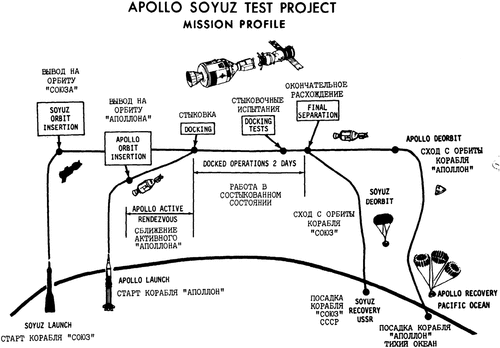
Source. NASA.gov (date taken March 1st, 1973).
From 1972 to 1975, personnel from NASA and the SSP worked closely together on creating and achieving the technical objectives of the ASTP. Despite this effort, the United States and USSR remained locked in a Cold War, dominated by political and ideological confrontation. Although collaboration was the stated goal, activities in this partnership were subject to close monitoring by state agencies. Thus, this context provides an ideal opportunity for examining how organizational members confront and manage geopolitical rivalry in cross-border collaborations.
Methods
We explored the issues discussed above through a historical case study of the ASTP. The single case approach is appropriate for building and refining theory (Eisenhardt 1989, Siggelkow 2007). Historical cases in particular (Hampel and Tracey 2017, Carton 2018, Roy 2025) can serve as revelatory cases (Flyvbjerg 2006, Eisenhardt and Graebner 2007, Yin 2018), well suited to theorizations that focus on the specific temporal context of action and the analysis of a phenomenon in light of knowable outcomes. They provide a strategic view that considers the consequences of past actions across time (Yates 2014, Hargadon 2015) and are arguably the most effective way to study “sequences of conditions, actions, and effects that have happened in natural settings” (Stinchcombe 2005, p. 5). In addition, historical analyses of exemplary cases enable us to recognize the uniqueness of a given case within a specific context and apply lessons from that case to other contexts (Hargadon and Wadhwani 2023). This approach is particularly advantageous for achieving the combined effect of historical accuracy and theoretical soundness demanded of organizational history research (Maclean et al. 2016).
We chose our empirical case because of its historical significance (Yates 2014). The ASTP was sensitive to the historical context of its time and serves as a microcosm of the geopolitical relations between rival nations (Welch et al. 2011). To ensure an authentic representation of the case, we triangulated a variety of sources to reconstruct key historical events and sought explanatory power through the careful construction of a chain of evidence (Gill et al. 2018) connecting partner interactions with the success of the collaboration. In doing so, this study answers a call for more historical research in organizational studies (Kieser 1994, Kipping and Üsdiken 2014) and joins recent efforts to integrate historical case analysis into contemporary organization studies (Suddaby et al. 2020).
Collection of Case Material
A historical approach tasks researchers with (i) determining the internal and external validity of materials (Gill et al. 2018), (ii) using “multiple procedures (triangulation)…to reduce possible sources of error” (Berg and Lune 2012, p. 296), and (iii) iterating between situating texts in their historical context and in relation to other texts (Kipping et al. 2014). Thus, we used a variety of sources in our analysis, including oral histories of the participants involved in the collaboration and other primary historical accounts from NASA and the SSP, editorials and media publications, and government reports about the ASTP. Table 1 lists these sources.
|

Table 1. Distribution of Sources
| Source | Topic | Historical sources (1960–1977) | Contemporary sources (1978–2021) | Total sources |
|---|---|---|---|---|
| Archival documents | 31 | |||
| Meeting minutes | 5 | 5 | ||
| Memorandums | 2 | 2 | ||
| Published reports | 7 | 2 | 9 | |
| Contracts | 2 | 2 | ||
| Historical account | 3 | 3 | ||
| Media articles | 3 | 4 | 7 | |
| Speeches | 1 | 1 | ||
| Interviews | 2 | 2 | ||
| Written works | 37 | |||
| Books | 7 | 18 | 25 | |
| Memoirs | 2 | 2 | ||
| Journal articles | 2 | 8 | 10 | |
| Oral histories | 133 | |||
| NASA–JSC History Office | 120 | 120 | ||
| SSP–Slava Gerovitch (2014) | 13 | 13 | ||
| Total | 31 | 170 | 201 |
First, we gathered historical accounts and documents related to the ASTP published by NASA and the U.S. government, declassified documents from the U.S. Central Intelligence Agency (CIA), books written about the space programs from the American and Soviet perspectives, and newspaper and magazine articles written before and during the ASTP. These data were useful in understanding the ASTP meetings and events over time. Whereas most of this information has been made publicly available online, we ensured the completeness of our collection of materials by having one researcher visit the NASA Archives at NASA Headquarters in Washington, DC. Second, we relied on firsthand accounts of contractors, scientists, engineers, and astronauts/cosmonauts in the ASTP. Specifically, we drew from oral histories and autobiographies of NASA and SSP personnel. Oral histories are particularly useful for ascertaining the meaning of events and experiences to the individuals who lived them (Moss 1988). They allow a narrator to “weave their story with those of significant others” (Haynes 2010, p. 5), shedding light on relationships between social groups. Oral histories are, thus, particularly relevant to our study as they focus on the actors and the rationales for their actions as well as how these actors made sense of and reflected on their lived experiences and the work they did.
We gathered oral histories collected by the NASA Johnson Space Center History Office, which provides public access to press kits, mission transcripts, news releases, and more than 300 space-related websites. Its Oral History Project contains more than 1,300 oral histories, including the firsthand experiences of NASA employees, contractors, government officials, and more than two dozen SSP employees. These oral histories provided details about the procedures, processes, and rationales of the operations and actions. We identified all relevant oral histories in this database through project-related keyword searches and by scanning posted biographical data sheets (curriculum vitae). Whereas these oral histories provide rich detail about the collaboration, we note that they predominantly capture American perspectives because of NASA’s extensive archival practices and the greater accessibility of American sources. We did, however, draw on the oral histories from the Slava Gerovitch 2014 book Voices of the Soviet Space Program: Cosmonauts, Soldiers, and Engineers Who Took the USSR into Space, a series of interviews with 13 individuals who worked for the SSP. Gerovitch presents the “divergent perspectives of Soviet military officers, space engineers, and members of the cosmonaut corps” within the SSP (Gerovitch 2014, p. 1). This book offers insights into the events and experiences within the SSP, which is very important because a great deal of information associated with the Soviet’s space program remains clouded in secrecy.
To further triangulate and validate the findings of our case (Howell and Prevenier 2001, Gill et al. 2018), we collected all of the relevant autobiographies of NASA and SSP personnel available in English. These sources allowed us to not only verify our findings, but also address potential source bias in the oral histories. These books differ from official accounts to the extent that they are not state sponsored, and the individuals who wrote them are no longer associated with the space programs or governments.
Analytical Approach
We adopted an inductive approach to analyze our data, aligning with a grounded theory methodology (Strauss and Corbin 1998, Charmaz 2014). We approached the data without an extant theoretical perspective of the processes behind successful collaboration between these organizations (Glaser and Strauss 1967). Our analysis began with a preliminary understanding of the case, particularly interested in the cross-border collaboration between geopolitical rivals. We initiated our exploration by examining the oral history interviews. The first author read through these interviews comprehensively, coding each separately based on in vivo terms at the sentence level (Miles and Huberman 1984). This initial engagement with oral histories led to the identification of several intriguing observations. Organizational members frequently remarked on the setting of their collaborative interactions as occurring in various organizational and extraorganizational settings. They also frequently remarked on the kinds of interactions they had with partners, including the topics they discussed and the activities they conducted, which looked like a remarkable difference between the way they interacted in organizational settings and in the meetings when they were together outside of the organization.
The first author shared this insight with the other authors, who agreed it was an interesting observation and helped with a deeper analysis of the data. The first two authors used a thematic analysis to map the connection between context and member interaction, recoding the oral histories in vivo. In parallel, the third author was tasked with collecting materials from other sources to triangulate the findings with what was emerging from the oral histories. It became clear that the nature of the collaborative interactions was associated with the physical setting in which the interaction took place. For example, interactions inside organizational settings often involved members withholding information, whereas interactions outside the organization involved members sharing organizational secrets. For example, in Thomas Stafford’s (October 15, 1997) oral history, he described a dinner at a restaurant with some Soviet colleagues. He said, “Here it’s on TV shows Alexey floating around. It looked like no problem. Well, I didn’t know he nearly got killed out there…he barely made it back in. He told me that one night at a Georgian restaurant, training during Apollo-Soyuz. First anybody’s ever heard what happened to him.” This was coded in vivo as “I was able to learn secrets about the Soviets,” and it was noted that this was an interaction that took place in an extraorganizational setting. Whenever members mentioned their interactions within the organizational context, they reflected on more formal meetings and obstacles for collaboration. In contrast, we noticed their interactions outside of the organization were much lighter and often punctuated by descriptions of information sharing and transgressive behaviors.
As these insights emerged, we concurrently returned to the literature, seeking to understand how prior research had theorized the association between internal and external contexts and the interaction between organizational members. Our search led us to the literature on organizational space. However, the conceptualizations of organizational space described in prior work diverged from what we observed in our case study. Whereas previous studies emphasized openness, flexibility, and autonomy, we found an organizational space that was scripted, formalized, and constantly monitored. We, thus, labeled this as supervised space. The interactions members had outside of the organization differed widely from the descriptions they provided about the work within the supervised space. It seemed as though the interactions forbidden or suppressed within the supervised space found an outlet in external settings. The refuge members found in these extraorganizational spaces reminded us of the construct of free space from political science, which refers to physical places where individuals or groups can freely express themselves outside the constraints of oppression or censorship. We then used this notion of free space in contrast to the idea of supervised space.
With this literature in mind, the first two authors used an axial coding approach to begin to identify relationships among the first order codes and develop the second order themes. This was also when the authors brought in the additional data collected by the third author, which consisted of archival materials from diverse sources, including meeting minutes, memos, reports, contracts, autobiographies, memoirs, and media interviews. Using this data, the three authors validated the initial interpretation and gained a more holistic understanding of key collaborative meetings and interactions within the historical context in which they took place. This constant comparative approach allowed for an exploration of how the broader context and specific content of interactions influenced each other, revealing a complex interplay between the more formal interactions in supervised space and the more informal exchanges in free space.
We then focused on this interplay. Using all of the available archival data, we were able to triangulate the dates of coded events and interactions. This provided the basis for the historical narrative (Maclean et al. 2016), and enabled us to gain insights into the progression of the collaboration over time. Individuals mentioned the intense rivalry and lack of trust between partners at the beginning of the collaboration and how that was exacerbated by the experience of tight control and constant vigilance in the supervised space. They suggested that things changed over time as they became better acquainted with one another and leveraged meetings outside of the organization (free space) to supplement the kinds of interactions they could not develop within the supervised space. We then followed the data to understand how the emergence of free space allowed them to overcome the barriers to collaboration posed by the supervised space.
Our analysis of the extraorganizational interactions revealed that organizational members actively sought each other out in environments free from political interference. We observed their strategies for orchestrating meetings in these spaces, which included efforts to avoid surveillance and bypass security protocols. To maintain the freedom to interact in these spaces, participants needed to keep them isolated from political interests and shielded from government oversight, practices we labeled as boundary work. We then focused on understanding how these protected interactions influenced their work within the supervised space. Having identified that free space enabled interactional patterns, we analyzed how organizational members leveraged these settings to overcome the challenges to collaboration. We reread our data and documented instances in which free space interactions informed changes in supervised space. However, we found that, because these spaces remained separate, solutions developed in the free space required careful adaptation to the supervised space. This adaptation process, which we termed translation work, was necessary because of the fundamental differences in interaction in supervised versus free space. The following section details these findings, which include the historical narrative of the ASTP and the collaborative processes embedded therewithin. The structure of the findings is displayed in Figure 2, including first order in vivo codes, second order themes, and aggregate dimensions.
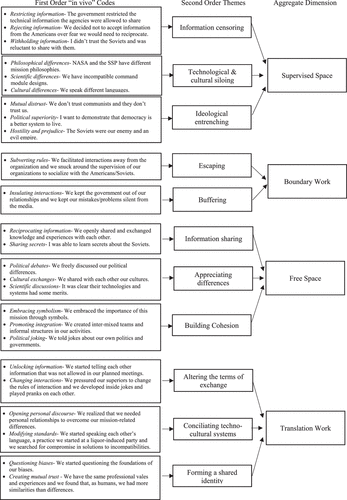
Findings
We assimilate the dimensions and themes in Figure 2 with the narrative of the ASTP to develop a general framework of the findings, displayed in Figure 3. Our framework describes a process of cross-border collaboration amid geopolitical rivalry. First, we represent the dynamics of information censoring, technological and cultural siloing, and ideological entrenching that constitute the supervised space and how they lead organizational members to engage in boundary work to find solace in free space. Second, we describe how free space allows members to engage in information sharing, appreciating differences, and building cohesion and how they maintain boundary work to keep free spaces outside of the realm of political control. Third, we show how the separateness between spaces creates a productive tension that fosters an iterative process in which organizational members interact across spaces, translating the solutions they developed in free space to the supervised space to confront and overcome the barriers to collaboration by altering the terms of exchange, conciliating techno-cultural systems, and forming a shared identity.
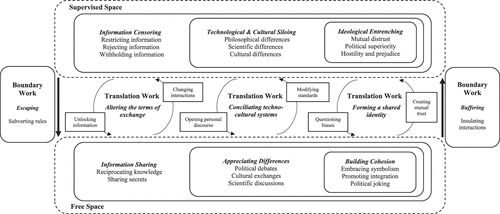
Supervised Space
In the late 1960s and early 1970s, the Cold War began to thaw. A period of competition between the nations for superiority and dominance in space was replaced by discussions of cooperation in it. Leaders of the two nations saw collaboration in space science as a way “to harness the emotive power of a pre-existing idea of space brotherhood” that could “convince the public that détente was a hopeful new dawn rather than a cynical ruse” (Ellis 2018, p. 768). On May 24, 1972, U.S. President Richard Nixon and USSR Premier Alexi Kosygin signed the Agreement Concerning Cooperation in the Exploration and Use of Outer Space for Peaceful Purposes, which detailed how the United States and USSR would work together “in developing compatible rendezvous and docking systems of U.S. and Soviet manned spacecraft and stations in order to enhance the safety of manned flights in space and to provide the opportunity for conducting joint scientific experiments in the future. [They] planned that the first experimental flight to test these systems be conducted during 1975, envisaging the docking of a U.S. Apollo-type spacecraft and a Soviet Soyuz-type spacecraft with visits of astronauts in each other’s spacecraft” (National Archives 1972, p. 121).
In response to the announcement of a joint docking mission (hereafter referred to as the ASTP), NASA Deputy Administrator Dale Myers sent a memo to NASA directors outlining updated, government-mandated organizational policies regarding interactions and exchanges with the Soviets (Ezell and Ezell 1978). A three-year detailed plan of joint activities was then created by NASA’s manager of the ASTP, Glynn Lunney, along with SSP project director of the ASTP Konstantin Bushuyev (Ezell and Ezell 1978). As Bushuyev later described,
From the very beginning three documents were drawn up, jokingly known as the three “whales”; these formed the basis for our project. The primary one was the “Organizational Plan,” which defined as far as in advance as possible all the precise norms of the joint relations and norms of the work’s organization which must be complied within the future. The second document was called “Technical Proposals.” It was essentially the main project material. It formulated the technical aspects of the project and mapped out the problems which would have to be worked on. This document was expanded and supplemented as the work progressed. The third “whale” was the “Schedule Plan,” which strictly regulated the course of all of the operations and their sequence in time; moreover, a document known as the “Schedule Plan for the First and Second Level” was drawn up. The first of these was a comprehensive and consolidated schedule of operations for the project as a whole, while the second dealt with the individual sections—for example, the docking device (Ostroumov 1976a, p. 275).
Published from July 10 to 17, 1972, these three documents very clearly defined and arranged the partnership’s terms of engagement and exchange. The frequency and location of interactions among organizational members were meticulously planned as eight different schedules were included within the schedule plan to ensure that the project met various milestones, ranging from the docking system schedule to the flight operations support schedule (NASA Archives Box 5/3/4-12; see Online Item A1). The content of these interactions was also scripted in the technical proposal. This document defined “all major elements of the project which interface between the two space systems…to provide a basis for future work” (NASA Archives Box 5/3/4-13, p. 1). However, it was the organization plan that demonstrated that these interactions were not only scheduled and scripted, but also supervised by administrators (NASA Archives Box 5/3/4-12, pp. 8–9):
Written correspondence—All project correspondence for transmittal to the other party should be addressed to the Technical Project Director with an indication of any other individuals the information is of particular interest. All correspondence will be signed by the Technical Project Director or his appointed alternate to ensure consistency with project objectives.
Meetings—Plenary sessions of all working groups are carried out on an arranged basis alternately in both countries… Requests for unplanned meetings are transmitted in writing to the Technical Director of the other country four (4) weeks prior to the proposed date and must include the proposed agenda of the meeting, references to previous meetings or agreements, location, and names of persons who will participate from the country originating the request.
The organizational plan also delineated when technical information was to be exchanged on a “preplanned” and “scheduled basis” (p. 10). These plans established and structured continuous meetings between ASTP working groups for the next 43 months. Six working groups were created as temporary teams of subject-matter experts brought together to collaborate on specific tasks, projects, or challenges (see Table 2 for details on these working groups, and Online Item A2 for the working groups’ schedule). The joint meetings scheduled by Lunney and Bushuyev generally lasted from one to three weeks and, depending on the working groups involved, included various tasks. These joint meetings took place in a variety of organizational locations, such as NASA headquarters in Washington, DC; the Johnson Space Center in Houston; Cape Canaveral in Florida; the Soviet Academy of Sciences in Moscow; and the Baikonur Cosmodrome in Kazakhstan. These meetings occurred within a supervised space, a scheduled, scripted, government-supervised space within the facilities of the collaborating agencies.
|
Table 2. ASTP Working Groups and Select Task and Social Meetings
| Working group | Members |
|---|---|
| WG 0 | Technical project director (Apollo Spacecraft Program Office) |
| WG 1 | Mission model (flight operations) |
| WG 2 | Guidance and control docking aids (engineering and development) |
| WG 3 | Mechanical design (engineering and development) |
| WG 4 | Communications and tracking (engineering and development) |
| WG 5 | Life support and crew transfer (engineering and development) |
| Date | Task event | Social event |
|---|---|---|
| November–December 1972 | Working groups meet in Houston to discuss control systems, rendezvous analysis and tracking requirements, and docking targets. | |
| May–June 1973 | Working groups meet in USSR. |
|
| July–August 1973 | Ten cosmonauts and four Soviet training specialists travel to Houston for flight training. Soviets listen to taped recordings of Apollo air-to-ground conversations. They fly to the Rockwell construction facility in California. |
|
| October 1973 | ASTP midterm review in Moscow. Language barrier is identified as a problem, and language training becomes an important objective. |
|
| October–December 1973 | Working group 3 tests the developmental version of the Apollo–Soyuz docking module and system in Houston; 236 test-runs are simulated, subjecting both American and Soviet gear to worst case scenarios. |
|
| January 1974 | Joint systems testing in Houston. These tests consisted of manned simulated mission tests and unmanned functional performance tests. Three transfers are simulated. |
|
| February–April 1974 | Integrated testing of the Soyuz life support system in Moscow. Chairman of working group 5 publicly announces his unwavering faith in the Soyuz environmental control systems. |
|
| June 1974 | Crew training in Florida. Crew then travels to Washington, DC. |
|
| February 1975 | Final round of crew training in Florida. |
|
Source. NASA.gov, JSC Oral History Project, Gerovitch (2014), NTRS Archives, Ezell and Ezell (1978), Ostroumov (1976a, b).
The historic geopolitical rivalry between the United States and USSR inflicted lasting damage on the ability of organizational members to engage in collaborative activities despite the mandate of space collaboration. Politics did not just shape the initiation of the mission; it ruled the collaboration because of the history of geopolitical rivalry. The long-standing political function of the space programs meant that “political and prestige considerations were ever-present passengers aboard the Soviet and American missions of the 1960s” (Ellis 2018, p. 63). We saw that, because of the geopolitical rivalry between the United States and USSR, the organizational members’ collaborative interactions in the supervised space were defined by (i) information censoring, (ii) cultural and technical siloing, and (iii) ideological entrenching. Table 2 lists the working groups and provides a timeline of selected supervised space meetings and their objectives.
Information Censoring.
Despite the agreement to collaborate on the ASTP, the governments retained a mutual suspicion of their counterparts’ intentions. Reluctance to share their technical capacities meant that there was significant information censoring within the supervised space or the restricting, rejecting, and withholding of information related to the collaboration. First, the governments restricted the technical data that could be shared between the organizations. Despite the technical objective of the docking mission, “technology transfer [was] not an objective of the Apollo-Soyuz Test Project and, in fact, the project [was] organized and conducted to minimize the transfer of technology in either direction” (Gray 1975, p. 2). The governments adopted this attitude because “there was still an undeniable aura of distrust, secrecy and distortion going on behind the scenes [so that] apart from the common docking system, the two nations would use their own equipment, as the project was structured to keep any crucial exchanges of technical information and data to a minimum” (Burgess and Hall 2009, p. 313). As a result, organizational members were restricted in the information that they could share about their own systems, complicating their ability to exchange the information necessary to collaborate. The frequent presence of political motives reinforced this aura of secrecy and censorship among organizational members:
The Soviet engineer who designed the docking module for ASTP, Vladimir Syromiatnikov, remembered a seemingly Soviet ritual of secrecy when he was working in Rockwell facilities in Downey, California. He encountered what the Russians called a “regime establishment,” including US security officials who followed him everywhere, even to the bathroom. He looked down at the desktop he was using and noticed a loose-leaf calendar left by his American predecessor. The pages of each month contained “advice on how to keep classified information,” reminding the desk’s occupant that “a potential enemy was spying and eavesdropping and doing other things that we, even quite experienced in these matters, did not know about yet” (Jenks 2020, p. 674).
Second, organizational members frequently rejected receiving any information from their counterparts, fearing that they would have to reciprocate and share information that was outside the boundary set by the government. As such, organizational members declined to access information provided by their counterparts, limiting their ability to exchange information that was critical to the collaboration:
To achieve successful technical communication, it was best for NASA to provide the Soviets with information on their systems before requesting the same information on Soyuz systems. In some cases, the Soviets, knowing that they would need to provide the same detailed information in return (which they did not want to do), would not accept the information from NASA. Technical data exchange and review was limited to the Apollo and Soyuz spacecrafts and did not cover the Soyuz or Apollo launch vehicles (Thelen and Wood 2010).
Third, in some instances, organizational members in supervised space self-censored what information they would share, withholding critical information from their partners. Doing so was motivated by the perception that “Soviet scientists and engineers operate not as individuals but as agents of the Soviet government” (letter from NASA Deputy Director Arnold Fruitkin in 1968), and that “Soviet engineers and scientists [were] spies tasked with uncovering America’s technological secrets” (Ellis 2018, p. 66). Believing that their counterparts were acting as spies, some said that they had no interest in sharing information with other colleagues when the collaborative project was announced (Henry Hartsfield June 15, 2001).
Technological and Cultural Siloing.
The bitterness of the Cold War meant that NASA and the SSP developed vastly different approaches to space exploration. In essence, their space programs were developed in silos as the state restricted the release of detailed technical information, and each side had limited knowledge about the technological approaches of the other. Given the legacy of secrecy, the historical absence of scientific collaboration, and the linguistic barriers between the two countries, “Soviet space technology developed along independent lines with design philosophies and engineering practices that were substantially different from those of the United States” (Gray 1975, p. 30). This scientific isolation created incompatibilities in their ability to dock the Apollo and Soyuz spacecraft:
The technology that went into the design and development of Soyuz is distinctively Soviet. It is characterized by a design philosophy and by designs, developments, and techniques that are essentially “Soviet ways of doing things” as readily distinguishable from “U.S. ways of doing things” (Gray 1975, p. 20).
When the logistics of the docking mission were first being negotiated, “the list of differences ranged from ideas concerning the shape of our planet and its field of gravity to specifications as to the fabric of the uniforms” (Ostroumov 1976b, p. 51). Additionally, because of the geopolitical rivalry between the United States and USSR, organizational members had limited knowledge of the customs, values, and norms of their counterparts. In fact, the collaboration was further complicated by the fact that none of the NASA astronauts spoke Russian, and only a handful of those affiliated with the SSP spoke English (Ezell and Ezell 1978). Accordingly, the history of the geopolitical rivalry between the United States and USSR entrenched incompatible technological and cultural features between NASA and the SSP. The supervised space consisted of technological and cultural siloing, in which organizational members’ interactions were driven by numerous philosophical, scientific, and cultural differences.
First, NASA and the SSP had different philosophies about conducting space missions, and organizational members diverged on what they regarded as the appropriate approach for this mission. For example, the SSP relied on more raw power than NASA to launch its vehicles. It also favored more in-flight software and less control by the cosmonauts over the spacecraft than NASA (Peterson 2017). The SSP also used land landings of the command module in contrast to NASA’s water landings (Office of Technology Assessment 1985). These factors were all relevant to the docking mission as the Soyuz had relatively little ability to maneuver in space and launch with a docking module in its payload (Cassutt 2018). SSP scientist Georgiy Priss (May 23, 2002) noted that NASA’s scientific approach was “more conservative” than that of the SSP (Gerovitch 2014). These differences made collaborative interactions much more complex as they had to confront fundamental differences about the philosophical foundations of the mission.
Second, organizational members had different beliefs about the scientific approaches that should guide the collaboration, which resulted in tension within the supervised space around how they would create a compatible docking mechanism. NASA and the SSP had vastly different designs for the command module, so much so that some individuals suggested that the mission was impossible because the spacecraft were incompatible for docking altogether (Bushuyev 1976). In their discussions about the ASTP, “the designers of the ships diverged on a number of points [as] each group of designers had its own ideas about the atmosphere that should be provided inside the ships, which radio frequencies were most convenient for communications, and which design was best for link-up and crew exchanges” ( Ostroumov 1976b, p. 50). These core differences meant that the organizational members’ interactions were continuously complicated by their extant scientific beliefs.
Third, such differences between NASA and the SSP made it difficult for organizational members to communicate in the supervised space. The importance of communication can be seen in a retroactive analysis of the prospects of United States–USSR collaboration by the U.S. Congress, which concluded that, “sometimes the disparity in the success or failure of individual experiences has been affected by knowledge or lack of knowledge of the Russian language among U.S. scientists” (Office of Technology Assessment 1985, p. 94). Soviet cosmonauts underscored the importance of this barrier, stating that, “language is an important element [to international spaceflights]. As soon as preparations began for the Apollo-Soyuz flight, the language barrier became a problem to overcome” (Leonov et al. 1976, p. 3). Other cultural differences between the two sides also existed, as Henry Hartsfield (June 15, 2001) explained, “[The Soviets] got a different way of doing business, a different culture. The experts will tell you it’s an Oriental culture. That’s something the U.S. don’t know how to deal with. Time is not important to them; personal relationships [are].” These cultural differences complicated their interactions, as individuals lacked the language and knowledge important to their ability to work together.
Ideological Entrenching.
Political ideology formed the basis of deeply ingrained differences and made it very difficult for organizational members to engage in planned collaborative interactions and activities (Wolfe 2013). This complexity stemmed from the scientists’ identification with their countries as “science cannot…by itself overcome the political barriers to cooperation. Scientists are as likely as other citizens to be loyal to their national governments and as subject to authority and policies of their governments which may impede international cooperation” (Schauer 1976, p. 199). As a result, the ideological beliefs of the Americans and Soviets posed the most significant barrier to collaborative interactions and exercised an influence on informational, technical, and cultural differences: “The greatest barriers to space cooperation are unquestionably political differences between states… To these policy differences must be added factors which make for preconceived hostilities between states, and in particular, the communists’ definition of capitalism and capitalist states as the inevitable enemies of socialist states” (Schauer 1976, p. 203).
The supervised space was complicated by ideological entrenching, whereby interactions were subject to preconceived distrust and sentiments of political superiority. These ideologies created a deeply rooted barrier to their willingness to engage collaboratively within the supervised space. For example, when asked to participate in the ASTP, NASA astronaut Charles Bolden (January 6–15, 2004) recalled that his initial response was “No way. I have spent my entire life hating these guys. I did not have any desire to work with the Russians. Period.”
Similarly, NASA engineer Brock Stone October 31, 2006) recalled how mutual mistrust affected the ability of the Americans and Soviets to understand one another: “So the procedures and the interfaces that we had to develop with our Russian counterparts were extensive and really made that flight complicated from the standpoint that…there was kind of a distrust of each other. We certainly didn’t trust them. They certainly didn’t trust us. And in the Russian culture, you have to build that one-on-one trust before you can get anything done technically, and that was a big challenge.”
On the other side, Soviet distrust of the Americans was predictable in light of the Soviet media’s characterization of the capitalist system as immoral and determined to destroy the USSR (Rhodes 1976). “There was still an undeniable aura of distrust, secrecy and distortion going on behind the scenes” (Burgess and Hall 2009, p. 313).
ASTP Cosmonaut Alexei Leonov recounted how this distrust was reinforced by ideological paranoia: “In the beginning there was some aggravation between our two teams. I learned later that the Americans often complained that they were monitored the whole time they were in the Soviet Union. A lot of this paranoia was cultivated, I think, by the American intelligence services. The mistrust was mutual. The first time I visited the United States I used to clap my hands loudly every time I entered my hotel room at night. ‘Attention, please,’ I’d say, for the benefit of those I believed to be bugging my room. ‘Let’s go’” (Scott and Leonov 2004, p. 579).
This distrust was reinforced within the supervised space as “policy reflected this perception. Cooperative dialogue was closely monitored as it flowed through the proper channels, insulating NASA personnel from spontaneous contact with their Soviet counterparts” (Ellis 2018, p. 66). For example, the USSR constructed an “‘American Hotel’ especially built for the American delegations” and “conveniently located outside the fence of the actual training center, undoubtedly in order to prevent the Americans from getting too nosy” (Hall et al. 2005, p. 12). Deke Slayton (p. 199) recounted how, in this hotel, “the walls had ears” and “whenever we wanted something, all we had to do was speak.” Curiously, a pool table appeared in their hotel common room after the astronauts complained among each other about wanting to play pool the night prior. Their interactions were even secretly monitored by intelligence agencies as evident in one press conference in 1973, in which “Bob Overmyer [an ASTP support crew member] moved his chair and saw a hidden microphone come loose” (Peterson 2017, p. 389). Such surveillance actions were rooted in the ultimate power of governments, as “people-to-people interactions were framed by the specific regulations and agreements of each country” (Krasnyak 2018, p. 429).
Organizational members’ ideological differences also led them to express their perceptions of political superiority over and hostility to their counterparts. For example, “both sides accused the other of having more dangerous and less secure technology” (Jenks 2021, p. 104). One NASA astronaut recalled a conversation with a politician about the prospect of working with the Russians before the agreement in spring 1972: “The bottom line was our profound belief that we had to demonstrate democracy was a better system under which to live” (David Scott, Scott and Leonov 2004, p. 534). These perceptions of political superiority were also closely linked to the hostility they expressed toward their counterparts. NASA employees described the Soviets as “our enemies” (engineer John Hirasaki, April 10, 2009), the “evil empire” (astronaut Joseph Allen, March 16, 2004), and “pretty aggressive people” and “monsters” (Apollo astronaut during ASTP Vance Brand, July 25, 2000). Others expressed their attitudes more bluntly, stating that, “the Soviets were the enemy. I was pretty conservative in those days and believed we had to get rid of the communists wherever we found them” (David Scott, Scott and Leonov 2004, p. 41). The Soviets too were guided by their strong belief in socialist values and desire to overcome “ruthless capitalism” (Gerovitch 2014, pp. 5, 14). Ingrained ideological differences, reinforced by the scripted and monitored nature of the supervised space, hindered organizational members from engaging in collaborative activities.
Boundary Work
Despite the collaborative objective of the ASTP, the complexities stemming from geopolitical rivalry complicated the ability of organizational members to work together to create a compatible docking system within the supervised space. The deep-rooted ideological differences prevented their willingness to work together and compromise on technical and cultural disparities. The informational challenges that accompanied their interactions and exchanges exacerbated the situation. Whereas the supervised space was meant to provide structure to collaborative activities, its scheduled, scripted, monitored nature hindered interactions. In fact, both NASA and SSP personnel saw the limitations of meeting in such politically controlled settings. Soyuz cosmonaut Alexei Leonov (1976, p. 2) stated that, “an important requirement is the capacity to take on the role of communications partner…understanding of gestures and identification with the partner [and] mutually disclose their inner worlds.” In 1972, U.S. aerospace contractor Randy Brinkley (February 24, 2016) similarly said, “We realized we were never going to be successful if we didn’t establish personal relationships. And we had to find common ground—couldn’t do it the NASA way—we had to find common ground.”
Escaping.
Gradually, organizational members recognized that the political control over their interactions prevented their ability to address the collaborative barriers. In response, they engaged in boundary work or the creation and reinforcement of demarcations around extraorganizational space to separate their interactions from political control. Their actions involved the creation and maintenance of boundaries shielding their interactions from the influence of political forces. Through escaping, evident in the conscious but secretive attempt to subvert the existing rules of interaction, organizational members worked to break away from the political control over their collaborative interactions. For example, Battaglia (2012, p. 84) described the “hospitality adventures” within the ASTP protocols, recalling how astronaut Deke Slayton managed “to slip [the Soviet’s] bodyguards and take his guests off for a little hunting expedition in the American wilderness.” Apollo commander of the ASTP Thomas Stafford (October 15, 1997) told a similar story about an event in July 1973, describing how he and Soyuz backup commander Anatoliy Filipchenko left an embassy bar and evaded Filipchenko’s Soviet handlers by evasive driving on Moscow’s Garden Ring road. Although not always requiring such dramatic evasive moves, boundary escaping distanced the participants’ social interactions from political control and marked the point of separation between the supervised and free space.
Buffering.
Once these interactions were established outside the purview of political control, they were also subject to pressure by external political actors. Organizational members frequently discussed how government bodies, organizational powers, and the media engaged in actions aimed at altering the nature of these unsupervised interactions. For instance, Caldwell C. Johnson (April 1, 1998) recalled that
the CIA had briefed us, and the Army intelligence had briefed us, and the FBI [Federal Bureau of Investigation], and everybody and his brother, ‘Oh, don’t drink a vodka with them. Don’t even wink at one of the women. Don’t walk around the streets by yourself,’ and all this kind of stuff. That was a bunch of crap. Nothing like that went on. It was all fine. But I could see their cloak and dagger guys and our cloak and dagger guys hang around in the background, you know. It looked like a movie. And they all wore trench coats, just like in the damned movies, and a fedora. You wouldn’t believe it.
To guard these extraorganizational interactions from external political control, organizational members insulated their meetings through buffering. One such example is seen in the vignette provided by NASA scientist Robert Hendricks (June 3, 2014), who was approached by the CIA during the ASTP to gain information from the Soviets with whom he had developed an amicable relationship. Hendricks noted that those who responded to the CIA’s request lost their relationships with their Soviet counterparts, but those who resisted this political pressure maintained their strong personal relationships:
Détente was quite an experience, and we learned a lot. As for those people who went there with the CIA, the CIA wanted to know everything you did when you came back. The CIA wanted you to act as one of their agents. I said “no.” I said, “I’m not going to do that.” Those people who did got in a lot of trouble. They didn’t get any information from the Russians. We did; we had no problems. They knew who we were, we knew who they were, they wanted to know more about our life, we wanted to know more about their life. We formed a bridge. I hope it eventually led to the bridge that I still hope exists.
Tom Stafford (2002, p. 169) recounted a similar story of rejecting the CIA’s request for information: “Given my prominence, I knew any contact between me and the CIA would eventually become public. So I made it clear to NASA management that I wanted no contact with the agency and didn’t want to know of any.”
Another example of political interventionism attempting to shape relationships is how politicians and members of the media probed organizational members with political talking points. In one joint press conference in June 1975, media members attempted to convince the Americans that the Soviets were not a worthy partner, saying “that America should not cooperate with the Soviet Union because [they] were only out to steal America’s technology secrets.” Stafford publicly rejected this media criticism by saying, “I have full faith in my Soviet colleagues” (Scott and Leonov 2004, p. 550). When one politician confronted an individual at NASA, the technologist “did not pass up the opportunity…to ‘put in their place’ [the politician], who just before the flight [was] spreading alarm in the United States, arguing that the Soyuz was not up to this joint effort, that the Soviet Union was not able to guarantee the flight’s safety.” The astronaut kept this political perspective out of their relations, stating that now “the American and Soviet engineers, astronauts, and cosmonauts worked in close cooperation and had an excellent knowledge of what both teams were doing” (Ostroumov 1976a, p. 265). By buffering these interactions from political intervention, organizational members were able to maintain that these extraorganizational interactions were not subject to the same political constraints as the supervised space.
Free Space
Boundary work enabled the NASA and SSP employees to interact outside of the supervised space. Accordingly, we found that there were meetings in informal, out-of-work settings in parallel with nearly every formally planned joint meeting. These informal meetings included, but were not limited to, dinners at restaurants and barbeques at employees’ homes, visits to theme parks and malls, weekend vacations and trips to historical sites, and vecherinka (small Russian parties). We termed these spontaneous, extraorganizational, informal social settings that subverted governmental control the free space.
Although NASA and the SSP sponsored some informal events, such as a Thanksgiving dinner in Houston on November 22, 1972 (Smith 1972), these organization-sponsored events remained subject to surveillance and had formal characteristics similar to those in the supervised space. Scott’s recounting of how an outing was organized in an awkwardly formal manner demonstrates this point (Scott and Leonov 2004, pp. 340–341). In contrast, the detached, employee-initiated meetings provided a freer platform for interactions, allowing employees to interrelate without political supervision. By “hijacking plans for scheduled tours” and “pushing the ludic limits of Mission Control and of state authorities,” these meetings provided a “casual, private environment.” In contrast to the monitored interactions in the supervised space, social interactions in the free space were more spontaneous as “the crews—and sometimes also the backup crews—spent good portions of their free time together. When the cosmonauts were in the United States for joint training, the astronauts took them sightseeing and to a variety of social events” (Froehlich 1976, p. 57).
Although scholars note the importance of free space for collective action (Polletta 1999), it typically occurs in contexts in which individuals had substantial freedom in choosing where to meet and whom to meet. In our case, individuals had much less freedom to do so given the extensive political control amid geopolitical conflict. Therefore, “free” in our case means sheltered from political control. Such spaces took substantial effort to build and protect. Disconnected from political control, free space provided a venue where organizational members could (i) openly share information, (ii) appreciate their differences, and (iii) build cohesion. Table 2 lists some of the more notable meetings reported in our sources.
Information Sharing.
Free space provided a channel for exchanging personal and confidential information, which contrasted with the censoring of interactions in the supervised space. Unlike the limited information sharing during scripted and scheduled organizational meetings, the free space enabled unrestricted information sharing. In fact, the interactions in the free space consisted of the growing reciprocal sharing of knowledge. For example, NASA scientist James Head (June 6, 2002) recounted a 1974 dinner at Astronaut John Young’s house where they, along with several Soviets involved in the Lunokhod missions, “had this incredible time where [John] described what it was like to walk on the craters, and [the Soviets] described what it was like to drive on them.”
Moreover, free space provided an opportunity for organizational members to begin to share secrets about their space program. In a private meeting in Moscow in 1973, Leonov shared details with David Scott about the Soviets’ lunar training (Phelan 2010). David Scott recalled, “It was fascinating to learn that the Russians had been that far along the path toward a lunar landing and to learn that Alexei was their key man… Our mindset at the time was that the Russians did not tell anyone anything, so the openness with which Alexei and I talked that night was, to me, quite fascinating” (Scott and Leonov 2004, p. 564). Stafford’s discussion (October 15, 1997) about Leonov disclosing his near-death spaceflight experience when at a Georgian restaurant in 1973, an occurrence covered up by the SSP, shows how free space opened the door for NASA personnel to learn more about the history of the SSP.
Appreciating Differences.
Whereas the controlled nature of the supervised space reinforced the differences between the groups by preventing a frank discussion of their technological and cultural features, the neutral nature of the free space and its open exchanges provided the opportunity for interactions centered on reconciling disparities. In the free space, interactions no longer reinforced different technological and cultural features, but became focused on appreciating differences through the gradual exposure to and acknowledgement of diverse perspectives, experiences, and cultural elements among the organizational members. The first point of interaction that we identified about appreciating differences was in discussions of their divergent political views. For example, Alexei Leonov (Scott and Leonov 2004, pp. 339, 556) recalled a meeting with David Scott in his private art studio in March 1973, in which they had an uncomfortable conversation about “how different life was in the United States and the Soviet Union.” They had a “tough exchange” with each individual voicing the belief that his nation’s political and economic system was superior. Leonov went on to say that, “despite the harsh words we had exchanged, that night we felt the beginnings of a camaraderie which would grow.” Later that year, astronaut Frank Borman had a similar experience with cosmonaut Gherman S. Titov and his wife Tamara. Borman suggested they play a game, “Capitalist versus Communist,” in which they would debate the merits of their respective ideologies. Borman later claimed to Titov, “I can’t make a capitalist out of you and you can’t make a communist out of me, but it’s a starting point for friendship…the only way we’re going to end up as true friends is by trying to understand each other” (Ellis 2019, p. 61).
Also important in the process of appreciating differences were cultural exchanges through food, drink, and travel. For example, NASA administrator George Abbey recalled how the Soviet docking module team rented out apartments in the fall of 1973 in a “redneck area” of Texas. SSP docking specialist Vladimir Syromyatnikov displayed a Soviet flag in honor of the Russian Revolution, inviting his neighbors and NASA colleagues to the celebration, which consisted of a “limitless supply of vodka and singing Soviet songs” (Cassutt 2018, p. 216). David Scott recalled a similar experience the following year, hosting a cookout with “the other side” at which the cosmonauts brought a traditional Russian instrument as a gift and played Russian folk songs (Scott and Leonov 2004, p. 572). These “cultural exchanges” (Stafford 2002, p. 183) “became hospitality adventures in ways that space-as-itself did not allow” (Battaglia 2012, p. 84), providing the opportunity for the participants to see their counterparts outside of the political organizational context.
NASA’s technical director for the ASTP, Glynn Lunney (October 18, 1999), described the effects of such cultural exchanges. Contrasting his strong anti-Soviet stance at the start of the collaboration, Lunney says, “There were times when, for example, the Soviets would be in town, we would invite them to our homes. I remember one occasion he [Konstantin Bushuyev, Lunney’s counterpart] was at our house [in 1973], and our youngest son…about seven or eight years old…would show him everything that he played on…and I, likewise, had visited his apartment, had dinner with his wife and daughter, and met some of his family that way…he was quite a gentleman, and everybody on the team, on the American side, especially, came to admire him and respect him.”
Finally, we saw instances of organizational members discussing the merits of their technologies and flight systems. Pointed discussions took place about everything from the spacecraft’s functionality and proper atmosphere to spacesuits and the astronauts’ clothing (Ostroumov 1976b). Such discussions led organizational members to acknowledge the advantages of the others’ systems. From the cultural exposure experiences during a trip to Houston in July 1973, Lenov and Kubasov learned about the sheer number of switches and displays onboard American spacecraft. Whereas this meant more studying, preparation, and human error, they realized it brought “a greater reward for an Apollo astronaut than a Soyuz cosmonaut: the ability to exert more control over a flight, which all self-respecting pilots wanted” (Peterson 2017, p. 386).
These free-flowing scientific discussions also had the effect of changing perceptions about what the other side had accomplished. One technologist recounted how, “analyzing the past fifteen years, it becomes obvious that the Soviet achievements in space have been primarily of the propaganda and public relations variety—not technical. The Apollo-Soyuz mission of 1975 was tailor-made for that role. Who was most in need of space ‘cooperation’ in the early seventies and also best prepared to exploit it?” (Cunningham 1977, p. 277). However, the technologist goes on to say that, “the door opened a crack in 1972, and over the next three years our scientists, technicians, and astronauts gradually and cautiously gained some trust and peeked further inside… We had seen shadows on the wall and imagined monsters… The fact was the Russians deserved great credit for what they had achieved” (Cunningham 1977, p. 284).
Building Cohesion.
Together with the open exchange of information and the appreciation of differences, the neutral nature of the free space enabled interactions around building cohesion. Through this process, the team could build unity, camaraderie, and mutual support through shared experiences, symbolic gestures, and informal interactions. Here, we first see that organizational members began embracing the symbolism of their mission as a sign of unity between the two nations. In one instance, astronauts and cosmonauts came together for one final time before their mission in 1975, embracing the imagery of the mission: “When they gathered together for the last time at Leonov’s place in Zvezdnyy, they drank half of a bottle of Vodka and then signed their names on the label and left the rest until their return to earth” (Ostroumov 1976b, p. 62). This was motivated by the belief that “symbolic gestures [are] important psychologically…to understand how our partners in space were thinking (Alexei Leonov, Scott and Leonov 2004, p. 579).
The creation of mixed teams and structures in informal group activities is another example of how they built cohesion. During a snowball fight on the road to visit Kaluga in March 1975, the astronauts and cosmonauts “played like children, throwing snowballs” indiscriminately at their compatriots and their partners alike (Ostroumov 1976a, p. 17). In another case, Aleksey Arkhipovich described the self-organized physical training exercises in Zvezdnyy, where they were “playing on mixed teams, [they] played volleyball, basketball, and soccer, and [even] had firing range competitions” (Ostroumov 1976a, p. 17). In another example, the Americans decided to appoint a “deputy drunk” for every party with the Russians, whose “job was to keep up glass for glass with the cosmonauts and leave the others free to circulate and survive” (Cunningham 1977, p. 274). These informal group mixings helped to break down the dichotomy between Americans and Soviets in the free space.
Organizational members also cultivated a sense of solidarity through political jokes, reducing the tensions of their ideological differences. Such jokes showed an awareness of their different perspectives and lightened the animosity surrounding their interactions. Within the Soviet Union, political jokes were quite abundant, serving as a reflection of the widespread social discontent arising from the regime’s political control (Davies 2007). When Soviet cosmonauts shared political jokes with their American counterparts, the importance of ideological rivalry was weakened, helping to create more amicable communication. For example, in May 1975, David Scott (Scott and Leonov 2004, p. 405) recalled a joke told to him on a bus ride to training by Alexei Leonov:
At one point, he asked whether I minded if he told a political joke. “No,” I said, a little surprised. “That’s fine.”
“Well, we’re not too far from Borodino, where the Russians turned back Napoleon in the dead of winter in 1812,” he began. “We’re also not too far from the place where the Russians turned back Hitler, also in the dead of winter, in 1942,” he continued. “You know the Moscow winters are very, very difficult.”
“Yes,” I said. “I imagine they are.”
“You know we are advisers now to the Egyptians in the Middle East,” he said.
“Yes, I know,” I said. In the wake of the 1967 Six Day War there had been frequent clashes between Israel and Egypt. The United States supported the former and the USSR the latter.
“Well, you know what our latest advice to the Egyptians is, if the Israelis attack again?” Alexei asked with a broad, slightly crooked smile.
I waited.
“Fall back to Cairo and wait for winter.”
That was pretty funny. We both rocked with laughter.
These three dynamics within free spaces did not take place separately. In fact, they were dynamically connected with and mutually influenced one another. Sharing information opened possibilities for appreciating differences that, in turn, helped individuals build cohesiveness with one another. Similarly, the willingness to speak each other’s languages and share their cultures without prejudice had positive effects on opening new communication channels and strengthening the ties within the group. Finally, their ability to build solidarity created a sense of belonging and togetherness beyond political affiliations, supporting informational, cultural, and technological exchanges. These processes did not remain restricted to the free space, either. Instead, they continuously evolved in conjunction with the dynamics in the supervised space.
Translation Work
The information sharing, appreciating differences, and building cohesion that accompanied the interactions in the free space provided the basis for reconciling the complexities of the supervised space. Through translation work, or the conversion of problems and solutions across spatial boundaries, individuals were able to traverse between the two spaces to address the complexities of their collaboration and exchange problems and solutions between them. Organizational members iterated between spaces to discuss the obstacles they faced in the supervised space and develop solutions in the free space that could be translated into practices for the professional setting. Importantly, the shared understanding and trust formed in free space interactions had a significant impact on their ability to collaborate successfully in the supervised space. The uncontrolled nature of the free space allowed them to overcome the barriers to collaboration stemming from political surveillance in the supervised space.
Altering the Terms of Exchange.
The first action of translation work that we observed was altering the terms of exchange, which refers to the process of modifying the conditions under which information and collaboration occurred between the organizational members. The strict regulation of information in the supervised space contrasted strongly with the atmosphere of information sharing in the free space. Moving from the supervised interactions to the free space interactions, organizational members began unlocking the information that they would share with their partners. In one of the private meetings, “Leonov could not contain himself any longer” and shared information that had never reached NASA’s astronaut corps (Burgess 2010, p. 71). By moving their interactions to the free space and unlocking information that was restricted in the supervised space, they were able to broaden the opportunities for exchanges. From their amicable free space interactions, organizational members worked to weaken the regulated conditions of exchanges in the supervised space. For example, following a trip to the United States when the Soviets visited NASA’s launch facilities in Florida and attended a cookout at Astronaut David Scott’s house (Scott and Leonov 2004), Tom Stafford (2002, p. 180) began asking his counterparts if the Americans could visit the Soviet’s Baikonur facilities. After Leonov told him it would be “impossible,” Stafford then told his Soviet partners, “If I don’t get to see inside that Soyuz, I’m not flying this mission.” Soviet scientist Vladimir Shatalov (Gerovitch 2014, p. 174) described how a band of scientists and cosmonauts returned from the United States and put pressure on their superiors to allow Stafford and the others to visit the Soviet launch facilities at Baikonur: “The American crew was supposed to visit the cosmodrome to see the Soyuz spacecraft. Yet some people at the top did not want to let them come, fearing that they might see something they were not supposed to see. We said, ‘But they see everything from space anyway, so what are we hiding?’ Then we put pressure on our superiors. We said, ‘We went to the United States, we visited their cosmodrome, and we saw Apollo. Will the Americans see Soyuz only in orbit?’ Eventually they agreed to bring the Americans to the cosmodrome and show them Soyuz.”
Changes to the supervised space’s terms of exchange are also evident in how the relaxation and amicability developed in the free space gradually shaped the supervised interactions. Whether it was the cosmonauts referring to Stafford as “grandpa” after observing his kind and reasonable nature in their personal interactions (Ostroumov 1976a, p. 153), cartoons of Leonov drifting in space after learning of his spacewalk (NASA Archives Box 5/3/4-6) and the Soviets’ depicting NASA astronauts as cowboys on a spacecraft after spending time together in Texas (Ostroumov 1976a), or NASA engineers “distributing semipornographic photographs to a visiting Soviet delegation,” both NASA and SSP employees frequently presented “anecdotes of fraternity-house-style high jinks” (Ellis 2019, p. 761). It was believed that “the tension of the work is best relieved by joking” (Ostroumov 1976a, p. 137), and thus, the inside jokes developed in the free space helped relieve some of the political tension in the supervised space. In the context of ASTP, organizational members specifically noted that the new forms of interaction that developed in the free space intermingled with the ways of doing things in the supervised space.
Conciliating Techno-Cultural Systems.
The second action of translation work observed was conciliating techno-cultural systems, which involves the process of reconciling and harmonizing the technological and cultural differences between organizational members. Whereas such differences were reinforced in the supervised space, the appreciation of differences in the free space enabled the participants to gradually realize that these complexities were not insurmountable. Individuals saw the need to develop relationships with their counterparts to reduce ambiguity, eliminate misconceptions, and reach common ground (Perry 2005). As organizational members moved from the supervised space to the free space, they realized that they needed to open up personal, nonwork discussions to reconcile their fundamental differences.
As they built up an appreciation of their vast differences in the free space, organizational members worked to modify their technical standards and reach shared technical and cultural ground. In one media interview, Soviet Technical Director Professor Konstantin Bushuyev described the multistage, iterative adjustment process for the atmospheric design mechanism, saying, “There was a natural ‘adjustment period’ and there was some suspiciousness between the two sides—it was not clear whether we would understand one another well enough or whether we speak the same technical language.” But they “came to work in an atmosphere of mutual understanding” and “never tried to drive one another into a corner, rather [they] found ways to compromise” (Bushuyev 1976, p. 276). Such an amicable atmosphere in 1975 likely also benefited from the Americans’ strengthening respect for Bushuyev during their various free space interactions in 1973 and 1974 (see Lunney’s recounting of a party he held at his home with the Soviets above and Cassutt 2018). SSP engineer Victor Blagov (May 28, 1998) described how personal relationships led them to “share [their] experience with the American colleagues so that they won’t repeat [their] mistakes,” which “will allow [the partnership] to move forward more quickly.”
Candid free space interactions also allowed the participants to reconcile difficulties in mission breakdowns, especially given the tradition that failures in outer space were often closely guarded secrets during the Cold War. For example, in August 1974, Soyuz 15 launched with the objective of docking to the Salyut 3 space station. After the craft was unable to dock, the Soviets merely claimed that the mission was intended to practice docking maneuvers with the Salyut 3 station. However, American intelligence pointed to a malfunction that exposed a number of serious design flaws that would impact the ASTP. If the media found out that the Soviets were lying, the mission would be jeopardized. As Stafford (2002, p. 176) recounted,
The next evening there was a small dinner and reception for the crew… As the last toast were offered, Shatalov, Forostenko, and I went to my suite… I poured us each a drink of Scotch then told Shatalov, ‘We have a problem. We have to know the truth about Soyuz 15 because you just don’t go to a space station that’s already been occupied, fly around, and come home… If you say you didn’t have a problem, and somebody from an intelligence agency knows differently, and Congress leaks that you really did have a problem, ASTP is dead.’ Shatalov agreed to go to the Soviet embassy the next morning. On Monday, from Moscow, Professor Bushuyev made the announcement that a malfunction on Soyuz 15 during the docking phase of this mission had precluded a successful docking.
This blunt conversation over drinks had the important effect of smoothing their approach to similar future situations. Just before the mission on April 5, 1975, Soyuz 18 experienced a launch failure, and “unlike Soyuz 15, the Soviets spoke right up about the problem” (Stafford 2002, p. 181).
Another case of conciliating techno-cultural systems can be seen in how language differences were frequently confronted and resolved. For example, methods for dealing with the language differences developed among drunk astronauts and cosmonauts in the free space were taken to the supervised space to better facilitate their interactions. Thomas Stafford’s (October 15, 1997) vignette describes how a method for dealing with language difficulties developed at a party carried over to their formal training regimen the following day:
They continued to have these little parties for us called [vecherinka], usually a U-shaped table with water, vodka, cognac, crab, caviar, bread, fish. I was talking with the back-up commander, Anatoliy [V.] Filipchenko. He’d been a Soviet test pilot and flown once. We were trying to converse, and it just wasn’t—we just weren’t—it was like ESP [extrasensory perception] that came to us both at the same time. I said, “Look, I’ll speak Russian to you, and you speak English to me. Maybe we can understand it better.” So we started, and, boy, it worked slick as a whistle. So we had a couple more drinks, and it even started working better. [Chuckles] So we said next day at the negotiating table we’d see about practicing this way because if you are not extremely fluent in a foreign language, you’ll always speak it more distinctly and you’ll speak it slower, and that’s what I did in space. All the things to them I spoke in Russian. They spoke English to me.
This procedure was ultimately adopted in the supervised space. ASTP members reported that they “have been working with the Russians for a long time and have established good personal relationships. Now we have hit upon a useful idea on how to exchange information during the flight. The Americans will speak in Russian and the Russians will speak in English” (Ostroumov 1976a, p. 64).
After the success of the docking operation, Dr. Christopher C. Kraft, director of the Johnson Space Center, provided a summary of the situation in which he noted the importance of their ability to overcome differences in reconciling technical and cultural systems:
Speaking frankly, four years ago, when we had just begun to work on the EPAS [ASTP], we had serious reservations—we doubted whether we would be able to achieve that which has been so successfully accomplished in recent days. We not only spoke different languages—we had a different way of thinking. Your space systems and ours were also significantly different. And during the first stages of the joint undertaking, a ten-minute matter would take a day’s worth of effort. But then everything went as it should. Meeting each other half-way, we achieved mutual understanding and mutual trust. The success of the past six days of the joint flight has strengthened this feeling of mutual trust. Our engineers have learned to understand not only with their mind but also their heart, that such flights are very beneficial to both countries. And they hope that our cooperation will be continued (Ostroumov 1976a, p. 242).
Forming a Shared Identity.
The third action of translation work we identified was forming a shared identity, as individuals reassessed their biases and came to develop a shared identity based on trust. Organizational members began by questioning their biases about their partners as a political enemy. According to Leonov, “We had been looking at each other as enemies for so long” and “when such meetings did take place we had the feeling that we were just the same, that, like us, the American astronauts had their joys and sorrows” (Scott and Leonov 2004, p. 228).
By questioning their preconceptions and biases about their partners as they moved from supervised to free space, they were able to open the door to developing a deeper understanding of who they really were. Together with the cohesion developed in the free space, individuals began developing a shared identity. For example, astronauts’ memoirs “frequently detail friendly interactions with their Soviet equivalents characterized by an affinity that stemmed from shared backgrounds as pilots and a mutual respect for each other’s courage” (Ellis 2019, p. 750). Describing a free space interaction with a cosmonaut, David Scott reported that, “any feelings of rivalry were subsumed by our mutual interest in what the other guys were up to. It was as if we were all members of an elite club. Being a member of that club dominated all other considerations. It subsumed politics. It rose above the bitter fray of the Cold War” (Scott and Leonov 2004, p. 248). Individuals began identifying the professional similarities they had in common with their counterparts. Similarities in backgrounds, experiences, and scientific interests were revealed in the free space, leading individuals to see the Soviets as part of the same professional scientific community. Alexei Leonov recalled a private meeting with David Scott in his art studio, where he explained how he saw a shared professional identity with his counterpart: “But as the evening wore on we both started to realize there was more that united than divided us. We were both professionals trying to solve problems which most people could not even begin to understand. We were both professional pilots first and foremost. We had undergone similar training, we had flown similar planes. Although I had been a cosmonaut longer, David had already achieved the goal I had treasured for so long: he had landed on the Moon” (Scott and Leonov 2004, pp. 401–402).
As their relationships deepened, the participants also identified a common human identity. Vance Brand (July 25, 2000) illustrated this point when referring to the cultural excursions that they would take with the Soviets, including a trip to the village in which crewmate Valeri Kubasov grew up. When reflecting upon the importance of these interactions, Brand remarked, “We very quickly broke through [thinking that they are aggressive people and monsters], because when you deal with people that are in the same line of work as you are, and you’re around them for a short time, why, you discover that, well, they’re human beings.” Highlighting the importance of free space interactions to the supervised space, Brand goes on to say, “When we got with the Soviets, they had their security monitors, and you could see that it was a less trusting, more closed society, but on the other hand, as human beings [they] opened up more and more, I thought, in our relationships. We actually came to have a very close relationship with the Soviet crew.” A similar impression was shared by Arnold Aldrich, deputy manager of the Apollo Spacecraft Program Office, who stated that, “without a doubt we have become not only technical specialists whose ideas are interacting very well on a common basis but also simply friends…the fruits of this are to be seen not only in the technical advances and unanimity of technical thinking but also in simply drawing us closer together as human beings” (Ostroumov 1976b, p. 57). Recalling some of the excursions on which he went with the Soviets, Charles Busch, NASAs’ chief of communications operations integration plans, remarked, “We discovered that on both sides we had sons who needed haircuts and kids who listened to too much loud music. We found we had things in common and we became friends” (Froehlich 1976, pp. 54–58).
The shared identity that gradually emerged had the important effect of bridging the trust formed in the free space with their ability to engage in the technical elements of the collaboration in the supervised space. The process of developing trust was critical to such high-stakes collaboration, in which both sides were vulnerable to national embarrassment and the crews would be killed if their partners had a misstep. Mutual trust took a long time to create and effort to sustain. Those intimate, private meetings among crewmembers just before the spaceflight (Ostroumov 1976b) proved vital in reinforcing the trust they developed over the three-year partnership.
The cosmonaut trainer General Shatalov remarked, “People on earth do not find it easy to imagine what the joining of two spaceships involves.” The creation of mutual trust among adversaries “was so necessary during training for the flight and [perhaps] is even more essential than the flight itself” (Ostroumov 1976a, p. 126). Alexei Leonov described the effect of the private interactions in the free space on developing trust, saying that, “slowly, each side came to understand the other better. Trust developed. Parties we organized in our homes for the astronauts and the hospitality their families showed us, when we visited the United States, went a long way toward cultivating better relations” (Scott and Leonov 2004, p. 416). As collaborative challenges emerged, the two sides were able to use these relationships to work out an “efficient method of operations characterized by mutual trust [and a] genuine desire to solve all problems, whether of major or minor importance, as soon as they arose” (Bushuyev 1976, p. 19).
Ultimately, utilizing free space to reconcile supervised space barriers via translation work proved effective as the Apollo and Soyuz spacecraft successfully docked in space on July 17, 1975. For 44 hours, the American and Soviet crews exchanged gifts, shared meals, and conducted joint experiments before successfully returning to Earth. For the first time in history, a Soviet cosmonaut and an American astronaut came face to face in space. When the hatch first opened, Leonov gave Tom Stafford a bear hug, saying that he was “very, very happy to see you.” Tom replied in Russian, “Tovarich! [Friend!]” (Scott and Leonov 2004, p. 358).
Discussion
This paper examines the processes of interorganizational collaboration amid intense geopolitical rivalry. In the case presented, organizational members were tasked with collaborating with those from a rival political nation on a high-stakes, technologically intensive project. To demonstrate to the world that the United States and the USSR could coexist peacefully, political leaders gave their space programs what appeared to be a simple mandate in May 1972: dock an American and Soviet spacecraft in space. However, for the technologists, astronauts, and administrators who would work with their geopolitical enemies over the course of the next three years, this objective was anything but simple.
Rooted in the mutual distrust of and suspicion about their counterparts’ motives, NASA and the SSP created scheduled, scripted, and supervised joint meetings between the organizations that would bring them from a point of animosity to mission success. This plan organized all the collaborative activities and interactions between members from the two agencies to accomplish the mission. However, the supervised space in which collaborative activities were supposed to function exacerbated the geopolitical challenges of cross-border collaboration. Instead of streamlining the efficiency of concerted activities and preventing secret information from spilling over to the other side, the political oversight imposed interactional barriers to collaboration, further dividing the organizational members.
Within the supervised space, information flow between the organizations was stifled as the members managed top-down government restrictions and the clear plan of engagement unexpectedly created barriers to the voluntary exchange of information. The historical conflict between the two nations meant that organizational members were unfamiliar with their counterparts and constantly encountered technological and cultural differences. The rigid points of interaction in the supervised space constrained the organizational members’ attempts to break down these differences. Preconceived distrust and sentiments of political superiority exacerbated their general unwillingness to engage collaboratively and find common resolutions to their array of challenges. The monitored nature of the supervised space created a lingering sense of political competition that reinforced divisions by reminding the members of the overarching geopolitical rivalry.
Organizational members realized that their ability to overcome the challenges of the supervised space would require them to develop practices and relationships outside of the scope of political control. Through boundary work, they created and maintained physical and symbolic distance between their work interactions within the supervised space and their social interactions outside of it. Engaging with one another away from organizational settings allowed them to start freeing themselves from the scripts of interaction and the entrenched biases of the supervised space. Using free space, such as employees’ homes, theme parks, historical sites, and restaurants, they established an informal arena for social interactions. Such interactions contrasted with interactions in the tightly controlled supervised space. Within the unmonitored free space, they could share their experiences and secrets and engage in meaningful debates about politics, culture, and science. Importantly, individuals were able to develop new routines and processes that addressed some of the challenges they faced in the supervised space. By insulating their social relationships from the prying eyes of political actors, free space became the basis for building cohesion between spacefarers from geopolitical rival countries.
The relationships and interactional processes that people created within the free space benefited their collaboration within the supervised space. During the three-year project, organizational members frequently encountered challenges to their ability to collaborate. As they moved between the two spaces, they found solutions to these problems. They engaged in translation work to adapt the solutions they developed in the free space to help them deal with the obstacles to interaction in supervised space. Leveraging the relationships and interaction strategies they developed in the free space, they progressively moved information more freely within the supervised space. Based on their discussions about their differences in the free space, they confronted and modified the technical and cultural frameworks that guided their activity in the supervised space. The sense of cohesion established outside of the purview of antagonistic political supervision enabled the organizational members to gradually weaken the ideological constraints and develop more trust-based interactions in the supervised space. It was through these two contrasting spaces and the dance of organizational members between them as they confronted and overcame the interactional challenges that made this collaboration of geopolitical rivals an unusual success.
Contributions
This paper contributes to scholarly conversations at the nexus of cross-border collaborations, geopolitics, and organizational space. First, we demonstrate what happens in organizational collaborations amid geopolitical rivalry, in which organizational members’ interactions and activities are shaped by broader political agendas and ideological tensions. Extant research has long noted the complexity and risk associated with bringing together organizations that are embedded in different national contexts (Hinds et al. 2011). For members of these organizations, cultural differences, linguistic barriers, and different regulatory frameworks are shown to complicate collaborative interactions and activities (Tenzer and Pudelko 2017, Thomas and Peterson 2018). However, the literature pays far less attention to how broader geopolitical dynamics can affect collaborative interactions within interorganizational relationships (Phan 2019b, Sun et al. 2021). The dominant focus on geopolitics as affecting only macrolevel organizational processes (Arikan and Shenkar 2013, Jensen et al. 2014, Fjellström et al. 2023, Ertug et al. 2024) overlooks the critical role of political dynamics in shaping collaborative interactions. Our study unpacks how geopolitical rivalry contaminates interactive, on-the-ground collaborative processes in cross-border relationships.
On the one hand, amid geopolitical rivalry, state intervention can prompt political oversight that limits organizations’ ability to set their own terms for collaborative interactions. The censoring of information within the supervised space, for example, suggests that state actors might limit the ability for organizational members to exchange key knowledge within a collaboration (Knight 2015, Uribe et al. 2020). This means that, when cross-border collaborations intersect with geopolitical objectives (Alvarez and Rangan 2019, Beugelsdijk and Luo 2024), the government may interfere with the collaboration and constrain what information organizational members can share. Collaborations involving organizations from strategic sectors, such as aerospace technology, can lead to the imposition of limits on what information can be accessed by foreign collaborators because of the role of these organizations in national and economic security and the threat of espionage and theft of classified information (Buchanan 2020). In such situations, it becomes increasingly difficult for members to engage in task-critical information exchanges. Political influence over organizations may also shape technological processes. Historical political animosity prevents the fluid exchange of information about technical and scientific approaches between nations and limits prior interactions between organizations, resulting in the production of divergent technological approaches (Luo 2022). Not only is cooperative interaction constrained by current political forces, but also the starting point of the collaboration is fractured by past cultural and technological protectionism. This finding calls for a reconsideration of the prevailing assumption of political neutrality in cross-border collaborations and the theorization of the impact of different levels of political influence and intervention in determining how geopolitical dynamics might constrain information exchanges and technological paradigms between people from partnering organizations.
On the other hand, geopolitics may impact how organizational members create their collaborative role and their willingness to partner. Our findings note that not only do state constraints shape information exchange, but organizational members might also self-censor their disclosures because of pervasive political influences (Walker 1995) and the resulting antipathy toward political outgroups (Huddy 2001). Political differences can, thus, create misaligned interests between the organization’s collaborative objectives and organizational members’ unwillingness to collaborate. Differing political agendas might impede efforts to achieve technical solutions by dampening organizational members’ desire to offer help and reach mutual solutions (Tjosvold 1984, Ring and Van De Ven 1994). Sentiments of cultural superiority stemming from the political divide may impart a sense of moral righteousness to one’s own technical approach, making it more difficult for members to mitigate cultural misunderstandings. At the core of these challenges are ideological differences, which represent fundamental beliefs about the proper organization of society (Swigart et al. 2020, Fewer and Tarakci 2024). Ideological entrenching within the ASTP was grounded in both the organizational members’ capitalist or communist political values (Jost et al. 2009) and their American or Soviet political identity (Iyengar et al. 2019). Given that geopolitical tensions often map to ideological divides, our study shows that geopolitics may impart an unwillingness among organizational members to engage in effective collaborative interactions, even with a mandate to cooperate, because of meaningfully perceived ideological differences.
Geopolitical tensions, therefore, have direct consequences on how organizational members form collaborative interactions. Whereas the literature notes that successful collaborations require members to develop knowledge and transfer it between the two organizations (Argote and Miron-Spektor 2011), geopolitics can limit what knowledge is transferred, reducing organizational members’ desire to do so. Research on technological differences in interorganizational collaborations typically emphasizes the capacity of organizational members to develop processes that manage or mitigate incompatibilities (Hardy et al. 2003, Faems et al. 2008, Majchrzak et al. 2015). Geopolitical rivalry, however, may undermine this capacity because of historical technological divides and members’ sentiments of design superiority. Besides, scholars note that, to build effective collaborative interactions, organizational members need to create mutual identification with their counterparts (Nygaard and Dahlstrom 2002, Hoetker and Mellewigt 2009, Gal et al. 2014). Our research demonstrates how geopolitical rivalry impedes this process by introducing and reinforcing politically based divides. Our findings call for scholars to pay more attention to the issues of politics and geopolitical rivalry in cross-border and interorganizational relationships, specifically considering how they interact with other known obstacles to effective partnerships, how partners experience political contradictions at the interaction level, and how organizational members develop strategies to overcome them.
Second, our study of collaboration amid geopolitical rivalry exposes key learnings and critical assumptions about organizational space in an international and interorganizational context. In this study, the supervised space can be seen as a type of organizational space, in which opposing administrators and political leaders engaged in “assigning membership, deciding on when and where members meet, as well as what they do within the space” (Cartel et al. 2019, p. 66; see also Bucher and Langley 2016, Bucher et al. 2016). Organizational space serves to promote collaboration by organizing exchanges and assembling opportunities for developing social bonds (Taylor and Spicer 2007). Such processes may, therefore, operate in tandem to ensure that collaborative interactions are task-based and trust-based (Kornberger and Clegg 2004, Nilsson and Mattes 2015). However, the presence of geopolitical tensions within organizational space exposes some important dynamics of how politics shapes spatial interactions.
Without considering broader political forces, the literature on space operates with an assumption that organizational spaces consistently organize activities and assemble interactions in ways that promote effective collaboration (Courpasson et al. 2017). Yet, in contexts of geopolitical rivalry, these spatial processes may be fundamentally altered by political and ideological divisions. Americans and Soviets were much less likely to see each other as “idiosyncratic persons, but as embodiments of the prototype” of their nationalities (Tindale et al. 2001, p. 7), categorizing each other as enemies (Hogg et al. 2017), and fundamentally undermining the social solidarity required by many scientific and technological collaborations (Parker and Hackett 2012). These elements were exacerbated by the constant presence and interference of external political forces and their symbolic relevance to the relationship between nation states. Thus, whereas organizational space typically organizes people and practices to enable collaboration through various material configurations (Baldry 1999, Halford 2004, Kornberger and Clegg 2004), these spatial processes may operate differently when state involvement introduces politically motivated oversight. As supervised space transfers political predispositions into the collaborative context, it privileges exchanges that strengthen existing ideological differences.
Scholars who look at collaboration also tend to view organizational space as naturally producing the conditions for building relationships (e.g., Zietsma and Lawrence 2010, Canales 2016). Here, bringing geographically dispersed teams together in face-to-face meetings promotes trust among members (Nilsson and Mattes 2015) as they can connect based on shared interests (Furnari 2014). However, our finding that the supervised space heightened the barriers to collaborative interactions suggests that geopolitics may undermine organizational space’s purpose of assembling trust-based relationships and information sharing. Thus, such spaces supposedly designed to facilitate collaborative interactions are not necessarily imbued with an ability for building productive work relationships (cf. Claggett and Karahanna 2018). Rather the opposite: the demand for close monitoring and secrecy protection may impair collaborative interaction. Supervised space is, thus, characterized by a tension between the need to build trustful relationships and share information between partners and, at the same time, protect information from spilling to geopolitical rivals.
To manage some of the challenges within organizational space, studies have found people to move to spaces on the fringe of the organization, such as hallways, basements, and toilets (Boon 2007, Shortt 2015, Courpasson et al. 2017). Scholars have catalogued liminal space, relational space, and experimental space (Turner 1974, Polletta 1999, Kellogg 2009) as providing a creative and flexible environment on the periphery of organizations in which individuals can experiment with new ideas, challenge conventional practices, and share knowledge freely without fear of interference or retribution (Cartel et al. 2019). Temporarily suspending organizational norms, these spaces allow employees to relax, resist, and engage in collective action (Stephenson et al. 2020). Importantly, these studies assume that certain individuals are kept away from such spaces (Boon 2007, Kellogg 2009). Geopolitics, reflecting political interests into the organization, reduces the potential for these spaces to reconcile these challenges as, in the voice of one NASA employee, “the walls had ears” and escaping the control of political surveillance was difficult.
Thus, in order to create new arrangements and challenge the patterns of organizing in supervised organizational space (cf. Nilsson and Mattes 2015, Daskalaki and Kokkinidis 2017), movement may be necessary into an external free space, a place for generating productive interactions. In contrast to the social science literature, which assumes that free space is a meeting point for people who share a similar identity, mindset, or goal (e.g., Evans and Boyte 1992, Polletta 1999), our case marks a novel departure from the existing literature by showing that free space is an arena for partners to negotiate ideological differences and develop common ground. In fact, the social processes underlying the formation of free space in our case demonstrate that free space itself can be a melting pot for building a shared mindset among people with competing ideologies. Shared professionalism and humanity can take precedence over ideological differences with free space, helping to smooth the hostility and prejudice stemming from contrasting beliefs. Free and open engagement prompts a deeper understanding of each other and the creation of a broader sense of identification that can cut across the political boundaries of the partnership. Research needs to pay more attention to the ways in which free space fosters identification between heterogeneous or even conflicting mindsets, enhancing the effectiveness of collective action (e.g., technological collaboration in our case).
The literature often depicts an antagonistic relationship between political control and free space (Polletta 1999), which, transposed to the context of organizations, may imply that free space is separated from and has autonomy vis-à-vis organizational space. Indeed, the literature theorizes free space as a space for people to mobilize against dominant political regimes (e.g., Evans and Boyte 1992, Rao and Dutta 2012). Our study suggests that, despite the tension between the function of supervised and free spaces and organizational members’ efforts to protect the latter from political interference, these two spaces are not hermetically disconnected. Supervised space itself represents a paradox: intense political focus creates interactional barriers that motivate the pursuit of free space to subvert this political control. Geopolitical rivalry may prompt political institutions to maintain oversight over a collaboration through supervised space, leading to the need for interactions in free space. Supervised space, thus, looks like an important precondition for the emergence of free space.
Our study also adds an important nuance to how local boundary work relates to broader boundary politics (cf. Langley et al. 2019). Specifically, we find that organizational boundaries, although subject to political control, are not entirely constrained by it. The agency of organizational members enabled them to create and uphold free space boundaries detached from their formal political affiliations. Whereas politics-based boundaries are “emotionally engaging” because of deep connections to institutionalized models of action (Fan and Zietsma 2017), these boundaries are more malleable than previously assumed. Traversing spatial boundaries proved crucial for the collaboration as practices and interactions outside of political supervision led to the modification of organizational space arrangements through translation work. Whereas previous literature on boundary work focuses on translating ideas or meanings across different spaces (Czarniawska and Joerges 1996), our study reveals the importance of translating practices across physical spaces. Thus, constrained organizational space may require movement into less controlled extraorganizational spaces that enable the development of new patterns of interactions (Nilsson and Mattes 2015) and the transformation of how collaborative work is performed (Baldry and Barnes 2012).
Contemporary Relevance and Avenues for Future Research
Given today’s intensifying geopolitical conflicts, our historical analysis is timely and important. The historic success of ASTP provides an exceptional opportunity for investigating the spatial dynamics leading to effective cross-border collaboration amid geopolitical rivalry. For example, the distrust between the United States and China and between the democratic West and Russia could possibly lead to political surveillance in science and technology collaborations between these geopolitical rivals. In our case, the overarching goal of the U.S.–USSR space collaboration was to reduce geopolitical tension during détente; in contemporary contexts, the goal could be collaboration between geopolitical rivals on critical scientific, public health, and social welfare (George et al. 2024, Gupta et al. 2024). When the United States and China collaborate on emerging technologies to solve problems such as climate change and disease control (Burrows and Muller-Kaler 2021), the intensifying conflict between these two countries may influence how organizational spaces are structured. Our work can guide researchers investigating how supervised and free spaces interact and are shaped by boundary work and translation work. Similarly, as researchers continue to use macrostructural lenses to examine the collaboration between Russia and Western countries in the international space station (Pace 2023), our study suggests that they should also pay attention to the role of interactional processes in the cross-border collaboration between contemporary geopolitical rivals.
Future research should also consider the domestic applicability of our study in reducing political biases. Although supervised space may be less intense in a domestic context, our findings on the role of spaces in heightening or mitigating political biases have important implications for management and political science studies given that we still lack substantive research on the complex, real-world political environment (Iyengar et al. 2019). Amid the backdrop of growing political polarization among the public, unpacking if and how free space can reduce political biases is a critical theoretical and practical advancement (Swigart et al. 2020). Our analysis also offers insights for the growing literature on sociopolitical polarization. We reveal how political tensions between countries shape the political ideologies held by organizational members and how the ideological divide might be heightened through the strategic planning of partner interactions and the design of supervised spaces. It is, therefore, important for research on alliances and joint ventures to pay more attention to geopolitics and to the role of free space in mitigating ideological divides and facilitating collaboration.
Limitations and Boundary Conditions
Several limitations and boundary conditions of our study should be considered when interpreting and generalizing our findings. First, whereas we drew from multiple data sources to triangulate our analysis, our data skews toward the American perspective because of greater availability of NASA archival materials, oral histories, and autobiographies compared with Soviet sources. Although we incorporated available Soviet accounts through translated documents and Gerovitch’s (2014) oral histories, the relative scarcity of Soviet archival materials and firsthand accounts means our understanding of how Soviet organizational members experienced and navigated these spaces may be incomplete. Second, the ASTP was a collaboration mandated by the American and Soviet governments. Whereas this mandate provided a unique opportunity to examine high-stakes collaboration amid historic levels of geopolitical animosity, the top-down nature of the partnership may have shaped how organizational spaces functioned. In voluntary cross-border collaborations, organizational spaces may operate differently as members have more agency in deciding whether and how to engage with their counterparts. Third, NASA and the SSP were state-sponsored organizations deeply embedded in Cold War politics. Governments might exert greater control over communication and interactions when they hold both resource-based and authoritative power over the organizations. The spatial dynamics we observed may operate differently in commercial organizations in which state intervention takes more indirect forms. Fourth, our findings emerged from studying a single, high-profile technological collaboration in the aerospace sector during a specific historical period. The strategic importance of space technology during the Cold War likely intensified both political oversight and the need for technical cooperation. Organizations collaborating in less strategically sensitive sectors or time periods may experience different tensions between supervised and free spaces. Finally, whereas our process model highlights the importance of boundary work and translation work in navigating between supervised and free spaces, we likely captured only some of the spatial activities involved in cross-border collaboration amid geopolitical rivalry. The historical nature of our data, although rich in detail, may not have preserved all the nuanced ways organizational members moved between and constituted different types of spaces.
Conclusion
Cross-border collaborations, celebrated for uniting diverse expertise and resources, face unique hurdles under the shadow of geopolitical rivalry. This study unravels how such rivalries infuse cross-border partnerships with challenges through a historical case study of the Apollo–Soyuz Test Project. Here, organizational members navigated two parallel realms: supervised, politically monitored space and unsupervised, informal free space. Whereas the former strained collaboration with oversight and reinforced ideological divides, the latter nurtured openness, trust, and mutual understanding. The interplay between these contrasting spaces highlighted the adaptive strategies needed to bridge political chasms. Through free space interactions, participants shared knowledge, embraced differences, and built cohesion, translating newfound insights back into the structured, monitored setting. These insights allowed them to dismantle barriers that once seemed insurmountable and forge a collaborative path forward. Ultimately, this study underscores that successful interorganizational collaboration amid geopolitical tension requires more than formal agreements; it demands the creation of spaces in which human connection can thrive beyond political scripts. This nuanced dance between control and freedom reveals not just a strategy for past collaborations but a blueprint for overcoming political divisions in future global partnerships.
The authors gratefully acknowledge the helpful guidance of the editor, Ruthanne Huising, and three anonymous reviewers. The authors thank Murat Tarakci, Forrest Briscoe, Daan van Knippenberg, VK Narayanan, and Rajiv Nag for amazing friendly reviews. The authors also thank the seminar participants at the 2020 Academy of Management and 2021 American Sociological Association Annual Meetings and Drexel University and Erasmus University for their warm and constructive feedback.
References
- (2019) Editors’ comments: The rise of nationalism (redux)—An opportunity for reflection and research. Acad. Management Rev. 44(4):719–723.Crossref, Google Scholar
- (2014) Capital, the State, and War: Class Conflict and Geopolitics in the Thirty Years’ Crisis, 1914–1945 (University of Michigan Press, Ann Arbor, MI).Crossref, Google Scholar
- (2011) Organizational learning: From experience to knowledge. Organ. Sci. 22(5):1123–1137.Link, Google Scholar
- (2013) National animosity and cross-border alliances. Acad. Management J. 56(6):1516–1544.Crossref, Google Scholar
- (2024) My place: How workers become identified with their workplaces and why it matters. Acad. Management Rev. 49(2):366–398.Crossref, Google Scholar
- (1999) Space—The final frontier. Sociology 33(3):535–553.Google Scholar
- (2012) The open-plan academy: Space, control and the undermining of professional identity. Work Employment Soc. 26(2):228–245.Crossref, Google Scholar
- (2000) Shared Beliefs in a Society: Social Psychological Analysis (Sage Publications, Thousand Oaks, CA).Crossref, Google Scholar
- (2022) Corporate geopolitics: How boards navigate a complex and volatile world. World Econom. Forum (October 14).Google Scholar
- (2012) Arresting hospitality: The case of the “handshake in space.” J. Roy. Anthropological Inst. 18:S76–S89.Google Scholar
- (2012) Qualitative Research Methods for the Social Sciences (Pearson, Boston).Google Scholar
- (2022) Unveiling the microfoundations of multiplex boundary work for collaborative innovation. J. Bus Res. 139:1424–1434.Crossref, Google Scholar
- (2024) The politicized nature of international business. J. Internat. Bus. Stud. 55:281–284.Crossref, Google Scholar
- (2012) Spacing organization: Non-representational theory and performing organizational space. Organization 19(1):45–61.Crossref, Google Scholar
- (2007) Working within the front-of-house/back-of-house boundary: Room attendants in the hotel guest room space. J. Management Organ. 13(2):160–174.Crossref, Google Scholar
- (2016) Ideological purity vs. hybridization trade-off: When do Islamic banks hire managers from conventional banking? Organ. Sci. 27(6):1380–1396.Link, Google Scholar
- (2020) The Hacker and the State: Cyber-Attacks and the New Normal of Geopolitics (Harvard University Press, Cambridge, MA).Google Scholar
- (2016) The interplay of reflective and experimental spaces in interrupting and reorienting routine dynamics. Organ. Sci. 27(3):594–613.Link, Google Scholar
- (2016) Contestation about collaboration: Discursive boundary work among professions. Organ. Stud. 37(4):497–522.Crossref, Google Scholar
- (2023) Corporate reactions to the fracturing of the global economy. Internat. Bus. Rev. 32(6):102014.Crossref, Google Scholar
- , ed. (2010) Footprints in the Dust: The Epic Voyages of Apollo, 1969–1975 (University of Nebraska Press, Lincoln, NE).Google Scholar
- (2009) The First Soviet Cosmonaut Team (Springer, Heidelberg, Germany).Crossref, Google Scholar
- (1998) This New Ocean: The Story of the First Space Age (Random House, New York).Google Scholar
- (2021) Smart partnerships amid great power competition: AI, China, and the global quest for digital sovereignty. Atlantic Council, GeoTech Center, Washington, DC.Google Scholar
- (1976)
An atmosphere of harmony . Ostroumov G, ed. Handshake in Space: A Special Publication (Izvestiya Press, Moscow), 274–278.Google Scholar - (2016) From ideals to institutions: Institutional entrepreneurship and the growth of Mexican small business finance. Organ. Sci. 27(6):1548–1573.Link, Google Scholar
- (2019) Just for fun! How experimental spaces stimulate innovation in institutionalized fields. Organ. Stud. 40(1):65–92.Crossref, Google Scholar
- (2018) “I’m not mopping the floors, I’m putting a man on the moon”: How NASA leaders enhanced the meaningfulness of work by changing the meaning of work. Admin. Sci. Quart. 63(2):323–369.Crossref, Google Scholar
- (2018) The Astronaut Maker: How One Mysterious Engineer Ran Human Spaceflight for a Generation (Chicago Review Press, Chicago).Google Scholar
- (2014) Constructing Grounded Theory (Sage Publications, Inc., Thousand Oaks, CA).Google Scholar
- (2018) Unpacking the structure of coordination mechanisms and the role of relational coordination in an era of digitally mediated work processes. Acad. Management Rev. 43(4):704–722.Crossref, Google Scholar
- (2017) Politics of place: The meaningfulness of resisting places. Human Relations 70(2):237–259.Crossref, Google Scholar
- (2023) Decoupling in international business: The “new” vulnerability of globalization and MNEs’ response strategies. J. Internat. Bus. Stud. 54:1562–1576.Crossref, Google Scholar
- (1977) The All-American Boys (Macmillan Publishing Co., New York).Google Scholar
- Czarniawska B, Joerges B (1996) Travels of ideas. Czarniawska B, Sevón G, eds. Translating Organizational Change (De Gruyter, Berlin, Germany), 13–47.Google Scholar
- (2005) Building a social materiality: Spatial and embodied politics in organizational control. Organization 12(5):649–678.Crossref, Google Scholar
- (2017) Organizing solidarity initiatives: A socio-spatial conceptualization of resistance. Organ. Stud. 38(9):1303–1325.Crossref, Google Scholar
- (2007) Humour and protest: Jokes under communism. Internat. Rev. Soc. History 52(S15):291–305.Crossref, Google Scholar
- (2014) If these walls could talk: The mutual construction of organizational space and legitimacy. Organ. Sci. 25(3):713–731.Link, Google Scholar
- (2015) The productivity consequences of political turnover: Firm-level evidence from Ukraine’s orange revolution. Amer. J. Political Sci. 59(3):708–723.Crossref, Google Scholar
- (1989) Building theories from case study research. Acad. Management Rev. 14(4):532–550.Crossref, Google Scholar
- (2007) Theory building from cases: Opportunities and challenges. Acad. Management J. 50(1):25–32.Crossref, Google Scholar
- (2018) Reds in Space: American Perceptions of the Soviet Space Programme from Apollo to Mir 1967–1991 (University of Southampton).Google Scholar
- (2019) “Howdy partner!” Space brotherhood, detente, and the symbolism of the 1975 Apollo-Soyuz Test Project. J. Amer. Stud. 53(3):744–769.Crossref, Google Scholar
- (2024) The effect of nationalism on governance choices in cross-border collaborations. J. Management 50(7):2597–2640.Crossref, Google Scholar
- (1992) Free Spaces: The Sources of Democratic Change in America (University of Chicago Press, Chicago, IL).Google Scholar
- (1978) The partnership: A history of the Apollo-Soyuz test project. Accessed July 20, 2021, NASA.gov.Google Scholar
- (2008) Toward an integrative perspective on alliance governance: Connecting contract design, trust dynamics, and contract application. Acad. Management J. 51(6):1053–1078.Crossref, Google Scholar
- (2017) Constructing a shared governance logic: The role of emotions in enabling dually embedded agency. Acad. Management J. 60(6):2321–2351.Crossref, Google Scholar
- (2007) Photocopiers and water-coolers: The affordances of informal interaction. Organ. Stud. 28(5):605–634.Crossref, Google Scholar
- Fewer TJ, Tarakci M (2024) CEO political partisanship and corporate misconduct. Acad. Management J., ePub ahead of print August 23, https://doi.org/10.5465/amj.2022.0909.Google Scholar
- (2023) Springboard internationalisation in times of geopolitical tensions. Internat. Bus. Rev. 32(6):102144.Crossref, Google Scholar
- (2006) Five misunderstandings about case-study research. Qualitative Inquiry 12(2):219–245.Crossref, Google Scholar
- Froehlich W (1976) Apollo Soyuz (United States Government Printing Office, Washington, DC).Google Scholar
- (2014) Interstitial spaces: Microinteraction settings and the genesis of new practices between institutional fields. Acad. Management Rev. 39(4):439–462.Crossref, Google Scholar
- (2014) Identity orientation, social exchange, and information technology use in interorganizational collaborations. Organ. Sci. 25(5):1372–1390.Link, Google Scholar
- (2024) Partnering for grand challenges: A review of organizational design considerations in public–private collaborations. J. Management 50(1):1557–1211.Google Scholar
- (2014) Voices of the Soviet Space Program: Cosmonauts, Soldiers, and Engineers Who Took the USSR into Space (Springer, Heidelberg, Germany).Crossref, Google Scholar
- (2015) Does politics influence hiring? Evidence from a randomized experiment. Political Behav. 37(3):653–675.Crossref, Google Scholar
- (2018) Constructing trustworthy historical narratives: Criteria, principles and techniques. British J. Management 29(1):191–205.Crossref, Google Scholar
- (1967) The Discovery of Grounded Theory: Strategies for Qualitative Research (Aldine DeGruyter, New York).Google Scholar
- Gray LM (1975) Working paper on a case study on the transfer of space technology. Defense Advanced Research Projects Agency, Columbus, OH.Google Scholar
- (2009) Cultural biases in economic exchange? Quart. J. Econom. 124(3):1095–1131.Crossref, Google Scholar
- (2024) Venture Meets Mission: Aligning People, Purpose, and Profit to Innovate and Transform Society (Stanford University Press, Stanford, CA).Crossref, Google Scholar
- (2004) Towards a sociology of organizational space. Sociol. Res. Online 9(1):13–28.Crossref, Google Scholar
- (2005) Russia’s Cosmonauts (Springer, Heidelberg, Germany).Google Scholar
- (2017) How organizations move from stigma to legitimacy: The case of cook’s travel agency in Victorian Britain. Acad. Management J. 60(6):2175–2207.Crossref, Google Scholar
- (2003) Resources, knowledge and influence: The organizational effects of interorganizational collaboration. J. Management Stud. 40(2):321–347.Crossref, Google Scholar
- (2015)
From what happened to what happens: Using microhistorical case studies to build grounded theory in organization studies . Elsbach K, Kramer R, eds. Handbook of Qualitative Organizational Research (Routledge, New York), 122–133.Google Scholar - (2023) Theorizing with microhistory. Acad. Management Rev. 48(4):681–696.Crossref, Google Scholar
- (1990) Between space and time: Reflections on the geographical imagination. Ann. Assoc. Amer. Geographers 80(3):418–434.Crossref, Google Scholar
- (2020) Navigating the new normal: Political affinity and multinationals’ post‐acquisition performance. J. Management Stud. 57(3):569–596.Crossref, Google Scholar
- (1987) Physical barriers, task characteristics, and interaction activity in research and development firms. Admin. Sci. Quart. 32(3):387–399.Crossref, Google Scholar
- (2010) Other lives in accounting: Critical reflections on oral history methodology in action. Critical Perspect. Accounting 21(3):221–231.Crossref, Google Scholar
- (2016) Toward organizational pluralism: Institutional intrapreneurship in integrative medicine. Organ. Sci. 27(1):157–172.Link, Google Scholar
- (2011) Putting the global in global work: An intercultural lens on the practice of cross-national collaboration. Acad. Management Ann. 5(1):135–188.Crossref, Google Scholar
- (2011) Settlers, vagrants and mutual indifference: Unintended consequences of hot‐desking. J. Organ. Change Management 24(6):767–788.Crossref, Google Scholar
- (2009) Choice and performance of governance mechanisms: Matching alliance governance to asset type. Strategic Management J. 30(10):1025–1044.Crossref, Google Scholar
- (2017) Social identity: The role of self in group processes and intergroup relations. Group Processes Intergroup Relations 20(5):570–581.Crossref, Google Scholar
- (2001) From Reliable Sources: An Introduction to Historical Methods (Cornell University Press, Ithica, NY).Google Scholar
- (2001) From social to political identity: A critical examination of social identity theory. Political Psych. 22(1):127–156.Crossref, Google Scholar
- (2014) The erosion of expert control through censure episodes. Organ. Sci. 25(6):1633–1661.Link, Google Scholar
- (2019) The origins and consequences of affective polarization in the United States. Annual Rev. Political Sci. 22(1):129–146.Crossref, Google Scholar
- (2015) Constructing spaces for strategic work: A multimodal perspective. Brit. J. Management 26(S1):S26–S47.Crossref, Google Scholar
- (2020) Securitization and secrecy in the late Cold War: The view from space. Kritika 21(3):659–689.Crossref, Google Scholar
- (2021) U.S.-Soviet handshakes in space and the cold war imaginary. J. Cold War Stud. 23(2):100–132.Crossref, Google Scholar
- (2014) Unbundling the relationship between authoritarian legislatures and political risk. Brit. J. Political Sci. 44(3):655–684.Crossref, Google Scholar
- (2009) Political ideology: Its structure, functions, and elective affinities. Annual Rev. Psych. 60(1):307–337.Crossref, Google Scholar
- (2009) Operating room: Relational spaces and microinstitutional change in surgery. Amer. J. Sociol. 115(3):657–711.Crossref, Google Scholar
- (1994) Why organization theory needs historical analyses—And how this should be performed. Organ. Sci. 5(4):608–620.Link, Google Scholar
- (2005) Cross-border R&D alliances, absorptive capacity and technology learning. J. Internat. Management 11(3):313–329.Crossref, Google Scholar
- (2014) History in organization and management theory: More than meets the eye. Acad. Management Ann. 8(1):535–588.Crossref, Google Scholar
- (2014)
Analyzing and interpreting historical sources: A basic methodology . Organizations in Time: History, Theory, Methods (Oxford University Press, Oxford, UK).Google Scholar - (2015)
Government intervention in international business . Stone J, Rutledge DT, Rizova P, Xiaoshuo H, Dennis R, eds. The Wiley Blackwell Encyclopedia of Race, Ethnicity, and Nationalism (John Wiley & Sons, Ltd., Oxford, UK), 1–2.Crossref, Google Scholar - (2004) Bringing space back in: Organizing the generative building. Organ. Stud. 25(7):1095–1114.Crossref, Google Scholar
- (2018) The Apollo–Soyuz Test Project: Construction of an ideal type of science diplomacy. Hague J. Diplomacy 13(4):410–431.Crossref, Google Scholar
- (2019) Boundary work among groups, occupations, and organizations: From cartography to process. Acad. Management Ann. 13(2):704–736.Crossref, Google Scholar
- (2020) Fostering positive relational dynamics: The power of spaces and interaction scripts. Acad. Management J. 63(1):96–123.Crossref, Google Scholar
- (2013) Changing organizational space: Green? Or lean and mean? Sociology 47(2):333–349.Crossref, Google Scholar
- (1976) The problem of interpersonal communication in international space flights. Current Digest Soviet Press 26(16):1–11.Google Scholar
- (2023) Apollo-Soyuz Test Project Fact Sheet (Spaceline.org).Google Scholar
- (2022a) Corporate diplomacy in the age of U.S.–China rivalry. Acad. Management Perspect. 36(4):1007–1032.Crossref, Google Scholar
- (2022b) Foreign direct investment along the belt and road: A political economy perspective. J. Internat. Bus. Stud. 53(5):902–919.Crossref, Google Scholar
- (2017) Embracing the foreign: Cultural attractiveness and international strategy. Strategic Management J. 38(4):950–971.Crossref, Google Scholar
- (2018) A pluralistic perspective to overcome major blind spots in research on interorganizational relationships. Acad. Management Ann. 12(1):440–465.Crossref, Google Scholar
- (2022) Illusions of techno-nationalism. J. Internat. Bus. Stud. 53(3):550–567.Crossref, Google Scholar
- (2016) Conceptualizing historical organization studies. Acad. Management Rev. 41(4):609–632.Crossref, Google Scholar
- (2015) A review of interorganizational collaboration dynamics. J. Management 41(5):1338–1360.Crossref, Google Scholar
- (2012) Interpersonal similarity and knowledge sharing within multinational organizations. J. Internat. Bus. Rev. 21(3):439–451.Crossref, Google Scholar
- (2004) Analysing the influence of institutional, organizational and interpersonal forces in shaping inter-organizational relations. J. Management Stud. 41(6):1029–1056.Crossref, Google Scholar
- (2005) For Space (Sage Publications, London).Google Scholar
- (1984) Drawing valid meaning from qualitative data: Toward a shared craft. Ed. Res. 13(5):20–30.Crossref, Google Scholar
- (2008) Culture and coworker relations: Interpersonal patterns in American, Chinese, German and Spanish divisions of a global retail bank. Organ Sci. 19(4):517–532.Link, Google Scholar
- (1988) Oral History—What is It and Where Did It Come From? The Past Meets the Present (Lanham, New York).Google Scholar
- National Archives (1972) Cooperation in space. Accessed July 20, 2021, https://www.archives.gov/presidential-libraries/events/centennials/nixon/exhibit/nixon-online-exhibit-agreement.html#:~:text=On%20May%2024%2C%201972%2C%20President,with%20a%20Soyuz%20command%20module.Google Scholar
- (2015) The spatiality of trust: Factors influencing the creation of trust and the role of face-to-face contacts. Eur. Management J. 33(4):230–244.Crossref, Google Scholar
- (2002) Role stress and effectiveness in horizontal alliances. J. Marketing 66(2):61–82.Crossref, Google Scholar
Office of Technology Assessment (1985) U.S.-Soviet Cooperation in Space. A Technical Memorandum (Washington, DC).Google Scholar- (1976a) Handshake in Space: A Special Publication (NASA, Washington, DC).Google Scholar
- (1976b)
Top of the pyramid. Notes of a journalist concerning the Soyuz-Apollo Project . Ostroumov G, ed. Handshake in Space: A Special Publication (Izvestiya Press, Moscow), 46–63.Google Scholar - (2023) U.S. space policy and theories of international relations: The case for analytical eclecticism. Space Policy 65:101538.Crossref, Google Scholar
- (2012) Hot spots and hot moments in scientific collaborations and social movements. Amer. Sociol. Rev. 77(1):21–44.Crossref, Google Scholar
- (2005) Multi-National Cooperation in Space Operations (Naval Postgraduate School).Google Scholar
- (2017) A Fire to be Lighted: The Training of American Astronauts from 1959 to the Present (Texas A&M University).Google Scholar
- (2019a) Implications for management research in the new political economy. Acad. Management Perspect. 33(4):367–370.Google Scholar
- (2019b) International politics and management research: A glaring white space calling out to be filled. Acad. Management Perspect. 33(1):1–2.Crossref, Google Scholar
- (2010)
The eagle and the bear . Burgess C, ed. Footprints in the Dust: The Epic Voyages of Apollo, 1969–1975 (University of Nebraska Press, Lincoln), 43–77.Google Scholar - (1999) “Free spaces” in collective action. Theory Soc. 28(1):1–38.Crossref, Google Scholar
- (2012) Free spaces as organizational weapons of the weak: Religious festivals and regimental mutinies in the 1857 Bengal Native Army. Admin. Sci Quart. 57(4):625–668.Crossref, Google Scholar
- (1976) Propaganda: The Art of Persuasion: World War II (Chelsea House Publishers, New York).Google Scholar
- (1994) Developmental processes of cooperative interorganizational relationships. Acad. Management Rev. 19(1):90–118.Crossref, Google Scholar
- (2025) Governance of knowledge development in a public-private partnership: NASA’s efforts to design the Space Shuttle. Res. Policy 54(2):105151.Crossref, Google Scholar
- (2017) What is science diplomacy? Science and Diplomacy: A New Relationship of International Relations (Springer International Publishing, London), 11–26.Google Scholar
- (2007) United States-Soviet space cooperation during the Cold War. NASA.gov. Accessed February 6, 2021, https://www.nasa.gov/50th/50th_magazine/coldWarCoOp.html.Google Scholar
- (2017) Cooperation across disciplines: A multilevel perspective on cooperative behavior in governing interfirm relations. Acad. Management Ann. 11(2):960–1004.Crossref, Google Scholar
- (2022) UK satellite company OneWeb suspends Baikonur launches. Reuters (March 3), https://www.reuters.com/business/aerospace-defense/uk-satellite-company-oneweb-suspends-baikonur-launches-2022-03-03/.Google Scholar
- (2007) A Sociology of Globalization (Norton, New York).Google Scholar
- (1976) The Politics of Space: A Comparison of the Soviet and American Space Programs (Holmes & Meier Publishers, New York).Google Scholar
- (2004) Two Sides of the Moon: Our Story of the Cold War Space Race (Thomas Dunne Books, New York).Google Scholar
- (2016) A geopolitical perspective into the opposition to globalizing state-owned enterprises in target states. Global Strategy J. 6(1):13–30.Crossref, Google Scholar
- (2015) Liminality, space and the importance of “transitory dwelling places” at work. Human Relations 68(4):633–658.Crossref, Google Scholar
- (2017) “Devils may sit here”: The role of enchantment in institutional maintenance. Acad. Management J. 60(4):1607–1632.Crossref, Google Scholar
- (2007) Persuasion with case studies. Acad. Management J. 50(1):20–24.Crossref, Google Scholar
- Smith HE Jr (1972) Memo to Lunney: “Debriefing activities and future plans, status of Working Group No. 2.” July 27. The NASA History Series, Scientific and Technical Information Office, Washington, DC.Google Scholar
- (2007) The effect of IT and co‐location on knowledge dissemination. J. Product Innovation Management 24(1):52–68.Crossref, Google Scholar
- (2002) We Have Capture: Tom Stafford and the Space Race (Smithsonian Institution Press, Washington, DC).Google Scholar
- (2020) Process studies of organizational space. Acad. Management Ann. 14(2):797–827.Crossref, Google Scholar
- (2005) The Logic of Social Research (University of Chicago Press, Chicago).Crossref, Google Scholar
- (1998) Basics of Qualitative Research: Techniques and Procedures for Developing Grounded Theory (Sage Publications, Inc., Thousand Oaks, CA).Google Scholar
- (2020) History and the micro‐foundations of dynamic capabilities. Strategic Management J. 41(3):530–556.Crossref, Google Scholar
- (2021) Navigating cross-border institutional complexity: A review and assessment of multinational nonmarket strategy research. J. Internat. Bus. Stud. 52(9):1818–1853.Crossref, Google Scholar
- (2020) Working while liberal/conservative: A review of political ideology in organizations. J Management 46(6):1063–1091.Crossref, Google Scholar
- (1911) The Principles of Scientific Management (Harper & Brothers Publishers, New York).Google Scholar
- (2007) Time for space: A narrative review of research on organizational spaces. Internat. J. Management Rev. 9(4):325–346.Crossref, Google Scholar
- (2017) The influence of language differences on power dynamics in multinational teams. J. World Bus. 52(1):45–61.Crossref, Google Scholar
- Thelen DF, Wood BM (2010) NASA astronauts on Soyuz: Experience and lessons for the future. NASA Center for AeroSpace Information, Hanover, MD.Google Scholar
- (2018) Cross Cultural Management: Essential Concepts, 4th ed. (Sage Publications, Thousand Oaks, CA).Google Scholar
- (2001)
Shared cognition in small groups . Blackwell Handbook of Social Psychology: Group Processes (Wiley, Hoboken, NJ), 1–30.Crossref, Google Scholar - (1984) Cooperation theory and organizations. Human Relations 37(9):743–767.Crossref, Google Scholar
- (1974) Dramas, Fields and Metaphors (Cornell University Press, Ithica, NY).Google Scholar
- (2022) America’s new era of dangerous coexistence. The Hill (August 1), https://thehill.com/opinion/national-security/3581478-americas-new-era-of-dangerous-coexistence/.Google Scholar
- (2020) When friends become foes: Collaboration as a catalyst for conflict. Admin. Sci. Quart. 65(3):751–794.Crossref, Google Scholar
- (1995) The Cold War: A History (Macmillan, London).Google Scholar
- (2021) Leviathan as foreign investor: Geopolitics and sovereign wealth funds. J. Internat. Bus. Stud. 52(7):1238–1255.Crossref, Google Scholar
- (2017) Organizations as polities: An open systems perspective. Acad. Management Ann. 11(2):886–918.Crossref, Google Scholar
- (2011) Theorising from case studies: Towards a pluralist future for international business research. J. Internat. Bus. Stud. 42(5):740–762.Crossref, Google Scholar
- (2013) Competing with the Soviets: Science, Technology, and the State in Cold War America (JHU Press, Baltimore).Crossref, Google Scholar
- (2023) The role of space and place in organizational and institutional change: A systematic review of the literature. J. Management Stud. 60(4):991–1026.Crossref, Google Scholar
- (2014)
Understanding historical methods in organization studies . Bucheli MR, Wadhwani D, eds. Organizations in Time: History, Theory, Methods (Oxford University Press, Oxford, UK), 265–283.Google Scholar - (2018) Case Study Research and Applications (Sage, Thousand Oaks, CA).Google Scholar
- (2015) Supervising across borders: The case of multinational hierarchies. Organ. Sci. 26(1):277–292.Link, Google Scholar
- (2010) Institutional work in the transformation of an organizational field: The interplay of boundary work and practice work. Admin. Sci. Quart. 55(2):189–221.Crossref, Google Scholar
Thomas John Fewer is an assistant professor of strategic management in the school of business at Rutgers University–Camden and vice president at NobleReach Foundation. He received his PhD in business administration with a specialization in strategic management from Drexel University. His research focuses on the complex dynamics between business, government, and political institutions, with a mission to create a positive societal impact.
Dali Ma is an associate professor of management at Drexel University. His special interests are entrepreneurship, social networks, status, sociology of science and technology, and Chinese organizations. His work has appeared in journals such as Social Forces, Social Networks, and Academy of Management Journal; he is serving as senior editor at Management and Organization Review. He received his PhD in sociology from the University of Chicago.
Diego M. Coraiola is a Professor of Entrepreneurship at the Peter B. Gustavson School of Business, University of Victoria, Canada. He also holds affiliations at EAESP FGV, Brazil and IAE Business School, Argentina. His research focuses on collective action, including topics such as memory work, sociohistorical injustices, and Indigenous organizing. His work has been published in journals such as the Academy of Management Annals, Strategic Management Journal, and Journal of Management.