


The Career Consequences of Workplace Protest Participation: Theory and Evidence from the NFL “Take a Knee” Movement
Abstract
Despite recognizing potential ramifications for employees who protest in the workplace, researchers rarely explore the career consequences that stem from such instances of workplace protest participation. We integrated research on employee activism, workplace deviance, and careers to theorize that workplace protest represents a perceived deviation from workplace norms that can influence an individual’s organizational and labor market mobility outcomes. We investigated this premise with the 2016 National Football League “take a knee” protests as a strategic research setting. The results indicate that protesting is associated with an increase in organizational exit although this effect is moderated by the degree to which the organization is sensitive to the underlying social movement (with an organization’s movement sensitivity operationalized with a four-part index composed of the team’s managers, personnel decision makers, owners, and customers). Protesting also is associated with labor market sorting across organizations as players who protest are more likely to make subsequent transitions to more movement-sensitive teams compared with players who do not protest. Overall, our findings offer contributions for research on employee activism, workplace deviance, and careers.
Employee activism, including workplace protest participation, has been on the rise in recent years with workers taking stands on a range of social issues at their places of work (Weber Shandwick 2019, Ma 2020, Amiel 2021, Briscoe and Gupta 2021). Scholars and practitioners alike note the outcomes that can stem from such activism, such as organizational, industry, and societal changes that align with activist goals (e.g., Raeburn 2004, Briscoe and Safford 2008, Banaszak 2010, Mabud 2019, DeJordy et al. 2020, Buchter 2021). Interestingly, the ramifications of protesting for employees themselves have received less attention.
Prior scholarship leads us to believe that employees face significant risks when engaging in individual or collective social protests at the workplace (Zald and Berger 1978, Kellogg 2012, Soule 2012). Most employees are highly dependent on their organizations, making them vulnerable to negative repercussions from disapproving managers and other organizational decision makers who may directly or indirectly influence the protesting employee’s reputation, career, and material well-being (King and Pearce 2010, DeCelles et al. 2020, Bond and Poskanzer 2023). In the case of public and contentious employee activism, which has increased in recent years (e.g., Google, Amazon, Wayfair, and Walmart have all faced employee walkouts and/or protests in the past few years), the risks for employees may be even greater given their protest’s visibility to broader external audiences, including the organization’s stakeholders.
To theorize about the influence of workplace protest participation on subsequent career outcomes, we build on the notion that protesting constitutes a deviation from workplace behavioral norms, otherwise referred to as workplace deviance (Robinson and Bennett 1995, Warren 2003, Vadera et al. 2013). Specifically, protesting at work on behalf of personally relevant social issues breaks workplace norms around both “typical” and “ideal” worker behavior (more on this later). Such workplace deviance is often perceived negatively or as a form of “destructive” deviance, particularly when it is viewed as disruptive to the organization or its products/services, members, or stakeholders (Bennett and Robinson 2000, Rojas 2006). Alternatively, protesting may be perceived positively or as “constructive” deviance (Spreitzer and Sonenshein 2004, Vadera et al. 2013) when it is perceived as being conducted with honorable intent (Spreitzer and Sonenshein 2003). This suggests that whether workplace protest participation is viewed as destructive or constructive deviance may be in the eye of the beholder. Such assessments affect whether and how the protest has ramifications for protesting employees’ careers.
We argue that organizational members and stakeholders generally view workplace protest as a destructive form of deviance because of its potential disruptiveness to the employee’s organization. Managers, decision makers, organizational leaders, and stakeholders who observe protests may infer that protesting employees lack commitment to their job or organization (Acker 1990, Williams 2000, Blair-Loy 2003) or that the protest activity is harmful to the organization’s operations and reputation. When these observers interpret workplace protest as destructive deviance, it affects how they view the protesting workers themselves, leading to negative career consequences for those workers (Kmec et al. 2014, Dumas and Sanchez-Burks 2015).
Importantly, we theorize that this negative view of workplace protest as destructive deviance may be tempered and even reversed under certain conditions. If the organizational environment (encompassing managers, decision makers, leaders, and stakeholders) is sensitive to or supportive of the social movement or issue that the protest represents, protesting employees may be assessed in a more forgiving or favorable way. This is because observers see protest participation as a form of constructive deviance, committed with a positive intent to bring about desirable societal change. These positive assessments of protesting workers can mitigate the otherwise negative effects of protesting on those employees’ careers.
We test these arguments by analyzing differences in organizational exit rates between protesting and nonprotesting employees and the degree to which exit rate differences are mitigated in organizational environments that are sensitive to the underlying protest movement. We extend this analysis by testing protesting’s effect on employees’ labor market transitions between environments that are more or less sensitive to the underlying protest movement. Our empirical research setting is the career histories of professional National Football League (NFL) athletes during the period of the “take a knee” national anthem protests. This protest movement was initiated by San Francisco 49ers quarterback Colin Kaepernick in solidarity with the larger Black Lives Matter (BLM) movement. This is an ideal setting to examine the career consequences of workplace protest participation because protesting is fully observable, and we are able to study the entire pool of individuals at risk for protesting in the labor market. In addition, the fine-grained data on worker quality, performance, and mobility available in this context enable us to observe and make close comparisons between the career trajectories of professionals who did and did not protest, which is not possible in many other contexts.
This paper contributes to multiple areas, including employee activism (and protest), workplace deviance, and careers. First, we contribute to research on employee activism by theorizing when and how employees suffer career-related consequences for participating in protests at their place of work. Second, we integrate theory about workplace deviance to develop contingent expectations of the career consequences of workplace protest that stem from the reactions of relevant decision makers. We theorize that these effects are rooted in the degree to which protesting is perceived as destructive or constructive deviation from workplace norms, revealing heterogeneity in responses to differentially perceived norm violations. Finally, we demonstrate how an employee’s participation in a visible norm-violating event can leave a lasting mark on the employee’s career.
Workplace Protest Participation as Workplace Deviance
Workplace protest is a form of social protest in a workplace that is intended to influence the knowledge, attitudes, and behaviors of the public and/or the policies of organizations and institutions in society (Gamson 1975, Klandermans 1997). Research on social movements highlights what motivates people to participate in social protest from the desire to enact a social identity (Reicher 1996, Drury and Reicher 1999) to expressing personal or social grievances (Lind and Tyler 1988, Klandermans 1997) to gaining public attention to bring about societal change (Gurr 1970, McCarthy and Zald 1977). Whereas scholarship on social protest focuses mostly on protests in which people take to the streets to voice their demands, protest by employees in the workplace (Zald and Berger 1978) has recently gained renewed attention (Weber Shandwick 2019, Briscoe and Gupta 2021). For example, prior scholarship examines employee workplace protests in support of lesbian, gay, bisexual, and transgender (LGBT) worker rights (Creed and Scully 2000, Raeburn 2004), work–life balance (Kellogg 2011), and environmental sustainability (Soderstrom and Weber 2020). Further, the popular press notes an increase in workplace protest with workers at Amazon, Wayfair, Google, and Walmart engaging in protests and walkouts at their places of work. In these and other cases, employees speak out on social issues when in the workplace, hoping to induce organizational change (Lounsbury 2001, Kellogg 2011) and/or gain a broader stakeholder audience to help advance wider societal change (Rheinhardt et al. 2023).
Whereas social protests that take place outside the workplace are primarily viewed through the theoretical lens of social movements scholarship, protests that take place in the workplace can benefit from the additional theoretical lens of organizational behavior because they occur within the boundaries of an organization. When viewed through this latter lens, protesting constitutes a form of workplace deviance because it lies outside established organizational and professional norms (Robinson and Bennett 1995, Vadera et al. 2013) and lacks a legitimating institutionalized framework (King and Soule 2007). Even if protesting workers aim to improve their workplace or society, the protest behavior itself is outside of and often counter to the expectations of them in their role as workers, employees, or professionals. Protesting implies taking time and/or using resources from the workplace without approval or permission from the organization, and it, therefore, entails some level of challenging of the organization’s status quo (Warren 2003). For these reasons, employee protests, as can other forms of employee activist behavior (e.g., related to tempered radicalism (Meyerson and Scully 1995), voicing, and issue selling) that fall outside the norms of typical workplace behavior, can be construed as workplace deviance.
As can other forms of workplace deviance theorized in organizational behavior research, employee protests can be viewed either negatively or positively. Past scholarship often focuses on the two extremes of workplace deviance. Destructive deviance is conceived of as acts that are universally seen as negative, such as lying and stealing (Robinson and Greenberg 1998), whereas constructive deviance, on the other hand, is conceived of as acts that are universally seen as positive, such as organizational citizenship and prosocial behaviors (Spreitzer and Sonenshein 2004). In other words, destructive deviance is that which is perceived to harm the organization, whereas constructive deviance is seen as benefitting the organization (Warren 2003).
In between these two extremes lie more ambiguous nonnormative workplace behaviors that are not so readily defined as strictly negative or positive—such as voicing, whistleblowing, and creative disobedience—in that they may be perceived as either harmful or beneficial for the organization and/or broader society depending on who observes the behavior and how they interpret it (Warren 2003). We propose that protesting constitutes one such workplace behavior that can be perceived either negatively as destructive deviance or positively as constructive deviance and that the degree to which the protest is viewed as one or the other can determine whether protesting workers experience career consequences.
Workplace Protest as Destructive Deviance
In addition to being seen as deviance, workplace protest may also be perceived as disruptive to the organization and, therefore, as a destructive form of deviance. Four interrelated factors can contribute to this perception. First, employees who are protesting are not fully engaged in their work, and this displacement of time and attention can be viewed as an impediment to fulfilling their usual duties on which the organization relies for its overall performance. In this regard, protest participation represents a break not only from workplace norms, but also from “ideal worker” or “ideal professional” norms that expect individuals to demonstrate “full devotion to the organization” (Dumas and Sanchez-Burks 2015, p. 821) (Ely and Meyerson 2000, Correll et al. 2007) and which are widely endorsed across organizational stakeholders, labor markets, and society at large (Sanchez-Burks and Lee 2007, Uhlmann et al. 2013, Rivera and Tilcsik 2016). Whereas not as starkly transgressive as workplace lying or stealing, behaviors that deviate from such ideal worker norms are often seen as disruptive. To the extent that organizational leaders focus on protests’ disruptiveness, they are perceived as destructive deviance.
Second, workplace protests are apt to be perceived as disruptive because they bring conflict into the organization (Briscoe and Gupta 2016, Weber and Waeger 2017). Protests introduce political contention into the workplace (Zald and Berger 1978), potentially leading to interpersonal conflicts among workers and managers and detracting from work and organizational performance. Protests also often involve workers commandeering organizational spaces and physical resources (Lammers 1969), sparking questions and conflict over the legitimacy of using organizational resources for purposes related to protesting rather than work.
Third, publicly visible protests can also undermine the organization’s image or reputation with external stakeholders, such as customers, and particularly those whose personal values do not align with the protest movement (Piercy and Lane 2009, McDonnell and Cobb 2020). These stakeholders may avoid transacting with the organization based on this value misalignment or question the organization’s reliability as a producer in the marketplace (Stout 2012). If organizational leaders learn about such concerns from external stakeholders or even simply anticipate and worry about such negative external perceptions, they are further inclined to view workplace protest as disruptive.
Finally, because workplace protests are unsanctioned, worker participation in protests also represents a challenge to organizational leaders’ authority (Rojas 2006), which has the potential to inspire further challenges from others both within and outside the organization. This can further fuel perceptions of workplace protest as disruptive by organizational leaders who seek to maintain their clear authority over the organization to internal and external stakeholders.
In sum, we argue that most organizational leaders and stakeholders perceive protesting as a destructive deviation from workplace norms (Taylor and Raeburn 1995, Kellogg 2012, Soule 2012) because it threatens to disrupt organizational operations and performance, stimulate conflict, impact external reputation, and pose a challenge to leader authority. This may be particularly the case for workplace protests related to social issues, which tend to be viewed by organizational leaders as lacking in strategic relevance for the organization (Piderit and Ashford 2003), notwithstanding activist claims to the contrary. Supporting a conceptualization of workplace protests as disruptive, researchers find that organizational leaders and members engage in short-term actions to dissuade or punish employee activists, such as through denigrating (Kellogg 2012), disciplining (Rojas 2006), or refusing to promote them (Taylor and Raeburn 1995, Raeburn 2004).
When managers, workers, and organizational decision makers assess a protest to be destructive workplace deviance, they may subsequently assess those workers who participated in the protest negatively as well. Supervising managers and coworkers who provide inputs to employee assessments may directly devalue employees based on protest participation or indirectly reflect such devaluation by conveying the view that those who protested are less committed to their jobs and/or the organization. As past research indicates, such assessments affect career outcomes, especially when managers and coworkers have discretion over subjective evaluations based on hard-to-measure qualities such as organizational commitment, citizenship, and leadership (Petersen and Saporta 2004, Ng et al. 2005, Blair-Loy 2009, Castilla and Benard 2010, Davies and Frink 2014, Merluzzi and Phillips 2016). Downgraded assessments based on protest behavior then naturally translate into reduced managerial and coworker support for an employee to remain in the organization regardless of the employee’s objectively demonstrated performance (Judiesch and Lyness 1999, Coltrane et al. 2013).1
In sum, we argue that organizational members and stakeholders tend to perceive workplace protest participation as a destructive deviation from workplace norms because of the multiple ways by which protest can disrupt the organization. Such perceptions, in turn, can lead to negative assessments of workers who protest, leading to adverse career consequences and increased risk of organizational exit. Thus, we formally hypothesize the following.
Workplace protesting is associated with an increase in an employee’s likelihood of organizational exit.
Workplace Protest as Constructive Deviance
The perception that a particular instance of protest behavior is a destructive form of workplace deviance is unlikely to be monolithic. Consider that protest movements usually include a narrative about how achieving the movement’s goals benefit society (which also assumedly encompasses the employee’s organization). Within this narrative, protest behavior aimed at furthering the movement’s goals can be viewed as constructive. Even when protest is viewed as a violation of workplace norms and disruptive to the organization, some observers may perceive such deviance as justifiable or even necessary when they deem the underlying social cause to be sufficiently critical (Warren 2003, Spreitzer and Sonenshein 2004). Such assessments, rooted in a social movement lens rather than an organizational behavior lens, may make observers more apt to overlook the protest’s potential disruptiveness to the organization.
Whereas protesting employees may claim this narrative of making constructive change, its wider acceptance depends on how sensitive the organizational environment is to the underlying social movement. In other words, organizations comprising managers, decision makers, and top leaders as well as the organization’s important stakeholders, such as customers, may interpret workplace protest as destructive or constructive deviance depending on whether they align or agree with the underlying social cause. The presence of others who support the underlying social movement can create an environment for employees that is more conducive to protest participation.
We argue that managers and decision makers, particularly those involved in personnel decisions, who share a social identity and/or grievance with the protesting employee are more likely to be sensitive to the underlying social movement and perceive the protest behavior as justified even if it is disruptive to their organization. For protests related to racial justice, for example, members of racial minority groups may be more likely to sympathize with the grievance underlying the protest and, therefore, to perceive the protest as a constructive form of deviance (van Stekelenburg 2013). Whereas they may still recognize the protest as a deviation from workplace norms, they may be more apt to view it as constructive deviance in that the underlying intentions of the protesting employee are “honorable” and that the protest may help bring about positive societal change (Vadera et al. 2013). Even more distal leaders within the organization, such as CEOs, may also inform the organization’s response to protests among workers. Indeed, past work reflects the influence of the CEO’s ideological values on employees’ willingness to engage in activism at the workplace despite the hierarchical distance between these top leaders and frontline employees (Briscoe et al. 2014).
Research also suggests that organizations are often influenced by the opinions or actions of their most powerful stakeholders (Cobb 2019), which typically include customers. Indeed, Hambrick and Wowak (2021) theorize that CEOs consider the potential responses of their organization’s customers when deciding whether to take a public stance on a social or political issue. In the case of workplace protests, customers are apt to notice protests and consequently make inferences about both the protesting employee and their organization (Vasi et al. 2015). We theorize that organizations with customers who are more sensitive to a social movement are less likely to expect their customers to react negatively to protests in support of that movement and, thus, are less likely to impose career consequences on protesting employees.
In light of this, we propose that employees who protest in relatively more movement-sensitive environments incur less negative career consequences compared with protesters in less movement-sensitive environments based on the supportiveness of organizational managers, decision makers, top leaders, and customers. In more movement-sensitive environments, these individuals are less likely to perceive protesting entirely through a destructive organizational behavior lens and more likely to view protesting through a constructive social movement lens, which may temper the otherwise negative assessments associated with protesting. Organizations with more supportive environments may not necessarily retain protesters on the basis of wholeheartedly embracing their protest but should at least be relatively more willing to overlook these acts in the face of other objective performance indicators. More formally, we hypothesize the following.
The positive association between protesting and organizational exit is diminished for employees in more movement-sensitive environments.
The Broader Labor Market Effects of Workplace Protest Participation
Subjective assessments of protesters may further spill over into the broader labor market as managers and decision makers at other organizations can also witness workplace protest from afar and alter their perceptions of protesting employees. These broader labor market evaluations are particularly likely in cases of employee protest that are highly visible, such as those conducted in public and/or broadcast arenas. As with assessments within the employee’s organization, such assessments in the labor market may be either positive or negative, and here, we argue they can shape worker mobility patterns.
As argued, some organizational environments may be more sensitive or sympathetic to protesting employees and/or the underlying social movement. Even for organizations that are not particularly oriented for or against the protest movement’s goals, instances of employee protest in the labor market may provide an opportunity to clarify their identity or values in relation to the movement’s goals, associated social issues, or forms of activism (Gioia et al. 2000, Baron 2004). By prompting all organizations in the labor market to consider how they treat current and prospective employees who protest, protest events provide the impetus (or even the mandate) for organizations to affirm or modify their implicated values. For some organizations, this may mean reinforcing values that run contrary to a particular social movement by positioning employee protest as destructive workplace deviance. For other organizations, this may involve tempering norms and a newfound openness to deviant workplace behaviors so long as those behaviors support social issues deemed important by the organization.
These differential assessments of protest participation in the labor market may lead to protesting workers sorting into environments that are relatively more sensitive to their cause and away from those that are less sensitive. This notion is supported by Schneider’s (1987) attraction–selection–attrition (ASA) model, which contends that employees tend to leave organizations—whether voluntarily or not—that represent a poor person–organization fit and are attracted to and selected by organizations with better fit. Whereas the ASA model is largely used to examine alignment based on various dimensions of personality (e.g., Kristof-Brown et al. 2005, Oh et al. 2018), scholars more recently theorize that it may also apply to fit between employees’ personal values and the shared values of their organization (Gupta et al. 2017) as well as to fit between employees’ race and the organization’s culture (of inclusivity) (Williams et al. 2022). This is also consistent with other matching approaches to careers and labor market mobility (Jovanovic 1979, Bidwell and Briscoe 2010).
Along these lines, we posit that protesting employees are more likely to move to organizational environments that are more sensitive to the protest movement following their workplace protest. More formally, we hypothesize the following.
Workplace protesting is associated with a subsequent increase in an employee’s mobility to a more movement-sensitive environment relative to the previous environment.
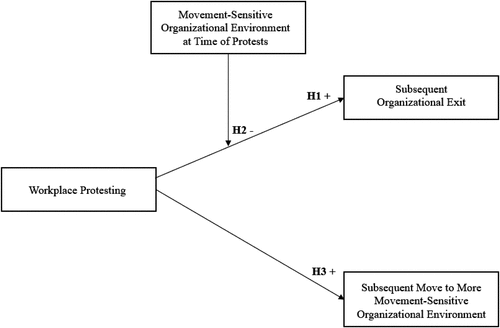
See Figure 1 for a visual representation of our three hypothesized relationships.
Data and Methods
Research Setting: The NFL and the 2016 Take a Knee Movement
To examine the career consequences of workplace protest participation, we study the careers of NFL players who protested as part of the take a knee movement. In solidarity with the larger BLM movement, NFL players protested during the pregame national anthem ceremony starting in the 2016 season. The goal of the protests was to draw attention to police brutality and racial inequality in the United States. The protest actions, which included sitting, kneeling, and raising a fist, sparked considerable discord with many fans and team owners perceiving this protest as violating workplace norms and as disruptive to organizations. As an example, one anonymous NFL fan wrote,
When the players are on the field, they are at their place of work. Part of their job (especially while “on the clock”) is to promote the business they work for (the NFL) in a good light. This is no different than a McDonalds’ employee coming to work wearing and utilizing their right to free speech by telling the customers that Wendy’s food is better. I’m pretty sure that McDonald’s employee would face some discipline (if not be outright fired) from his supervisor for hurting the business. I guess there are different sets of rules for pampered millionaires than for the common man.
The NFL take a knee protests were highly visible to organizations, their stakeholders, and the wider society. The protests were often perceived as being disruptive to NFL team organizations by bringing politics into the workplace and interfering with fans’ consumptive enjoyment of the cultural product being sold to them. This disruption caused many fans, other stakeholders, and the media to engage in contentious discourse centered on their organizations as exemplified by the quote.
Some stakeholders and observers, however, appreciated the risk some players took by engaging in the protests at their workplace and expressed sensitivity or sympathy with the grievances being aired by the protesting players. Along these lines, another anonymous fan claimed, “Good for you for kneeling for what you believe in. These are times when we all need to stand in solidarity against racism, homophobia, sexism, hatred and violence. Many of us are watching you with pride and honor your courage.”
Although players protested in subsequent seasons, we focus our analysis on the 50 players who protested in the initial (2016) season. We made this decision because, at the beginning of the 2017 season, then-President Donald Trump made a public statement in which he called for protesting NFL players to be fired. In opposition to the President’s remarks, entire teams began demonstrating, including many NFL coaches and team owners. This collective (and almost league-wide) action suggests decision makers altered their stances on the players’ movement—at least temporarily—such that protests that took place after Trump’s comments were treated differently than those before the comments.
Our analysis includes all active players who were employed by the 32 separate NFL team organizations at the start of 2016. All these teams had similar structures, and all had to follow certain league-wide rules, but each team had discretion over player personnel decisions, including hiring, contract design, compensation, and dismissal. League guidelines set a minimum base salary for players and a maximum salary cap that teams could allocate among their players, but each team had total discretion over which players they employed and whether and how they (re)negotiated player contracts. Teams selected players to employ based on their anticipated future performance, marketing appeal to fans and stakeholders, the perceived value of their on-field position and their “intangibles,” such as a reputation as a “team player” (Mental Floss 2016).
Players could exit their teams in multiple ways. First, at any point, a team that decided it was no longer interested in employing a player could release that player or trade the player to another team. In addition, when a player’s contract expired, the player could voluntarily choose to leave the team to either move to another team that was bidding to employ the player or retire from the NFL entirely. In addition, when under contract, players who wanted to leave could petition their team for a release or request a trade. Generally, a player’s exit from team indicates that the player was traded or released or that the team did not offer a contract as compelling as that offered by another team. It is also important to note that the terms of a player’s contract were not always guaranteed at the time the contract was signed (Christopherson 2020) and, in some cases, could be renegotiated if the team’s desire to employ that player changed because of either on-field performance or off-field factors (Investing Answers Expert 2021) or if the player desired a new contract. Our models incorporate variables that measure each player’s contract situation.
The NFL is a strategic site to test whether protest participation was associated with career consequences for individual players. Unlike many other contexts, it is possible to ascertain career-relevant information for every player employed by each NFL team throughout the duration of the movement, enabling close comparisons between protesters and nonprotesters. This includes details such as mobility between organizations, the timing of organizational exits, performance at work, and salary. All player engagement in protest is observable. Additionally, a significant amount of demographic, performance, and position data are available for each player, allowing for fine-grained controls on other factors that could influence career trajectories. Thus, by studying the NFL, we can observe careers unfold at speed and with detailed data.
Our general theory that workplace protesting constitutes a deviation from workplace norms also applies in this research context. The NFL is a norm-filled labor market with league-wide written manuals governing personal player conduct and game operations that dictate what players can and cannot do, including how they should conduct themselves both on and off the football field. For example, the second sentence of the 2016 Personal Conduct Policy reads “Everyone who is part of the league must refrain from ‘conduct detrimental to the integrity of and public confidence in’ the NFL.” This document goes on to list expectations and standards of conduct for players as well as consequences for perceived violations (National Football League 2016). Whereas most stated forms of prohibited conduct are related to violence and crime, there is an additional emphasis on avoiding behavior that could jeopardize the integrity of the NFL or may be deemed disrespectful by the public. Along these lines, the game operations manual (in 2016) outlined appropriate player conduct for the pregame national anthem ceremony, suggesting that players “should stand” during this ritual. Thus, when the take a knee protests occurred, teams and their stakeholders were likely to interpret these protests as deviations from norms.
The league and its stakeholders also developed unwritten expectations that players should refrain from behavior deemed distracting to their work or which may be perceived as disruptive to the employing organization and should put football and their team first. This sentiment was echoed by NFL coaches and owners across the league in regard to the player protests. Shahid Khan, the owner of the Jacksonville Jaguars, stated, “…we have to recognize, people are there to watch a sport—for the entertainment aspect. I think the 20 days football is played have to be treated a little bit differently than the other 345 days. …I think the days football is played have to be treated very special, and you can’t have distractions.”
Another anonymous football executive discussed why the team was not interested in signing Kaepernick after his contract with the San Francisco 49ers ended at the conclusion of the 2016 season: “It is really not about his ability. It’s about the risk of what happens to the team concept when you sign a guy—a quarterback—who has put his personal agenda ahead of what we are all charged to do, which is put the team first. As a team builder, I cannot risk that happening again, especially for a borderline starter who needs the entire offense catered to his style.”
In sum, many NFL teams and their stakeholders viewed the protests as deviations from workplace norms as well as disruptive to their teams, the league, and/or the game of football. This sets the stage to test our predictions of increased organizational exit and mobility for protesting players and our further predictions that players in more movement-sensitive environments are treated differently.
Data Sources and Analytic Models
We collected data on the careers of players who were on NFL rosters at the start of the 2016 season (when the protests occurred). We tracked those players’ careers through the end of the 2019 season2 although some careers only span part of that time period. All data used were publicly available and obtained from the following websites unless otherwise specified: pro-football-reference, overthecap, and spotrac. To test our hypotheses, we analyzed organizational exit (Hypotheses 1 and 2) separately from mobility to a more movement-sensitive environment (Hypothesis 3).
Organizational Exit (Hypotheses 1 and 2).
We use logistic regression to test whether protesters are more likely to exit their organization. This analysis uses a player–year panel data set consisting of one observation for each player in each year in our study period. Organizational exit is coded with a value of one in the year that a player left the team the player was with at time of the protests. Organizational exit is coded with a value of zero in years that players remained with the team they were with at the time of the protests. Players are removed from the data set in years after they exited the organization they were with at the time of the protests. Thus, organizational exit can take two values: a one in years that a player exited the organization at the time of the protests and zero in years when the player remained with that team. We run logistic regressions predicting organizational exit, which estimate the likelihood that a player exits the organization in a given year.3
Players can exit their organization by moving to another team or exiting the NFL entirely. When players move to another team, they are coded as having exited their original organization at the first game in which they appear with another team. When players exit the NFL entirely, they are coded as having exited their organization at the time of their last NFL employment.
Mobility to a More Movement-Sensitive Environment (Hypothesis 3).
To test whether protesters were more likely to transition to more movement-sensitive environments, we use multinomial logistic regression to predict one of four different, mutually exclusive destination states: moving to a more movement-sensitive team, moving to a less movement-sensitive team, exiting NFL employment entirely, or staying with the same team they were with at the time of the protest. We model the three types of moves (to a more sensitive team, to a less sensitive team, or exiting NFL employment) and the one nonmove (staying with the player’s team) simultaneously as these event states cover all logically possible, mutually exclusive states that players could experience in a given year. Consistent with our analyses of organizational exit, we only consider the player’s first move away from the team they the player was on at the time of the protests. Once the player leaves the original team, subsequent movement is not included in the analysis.
To identify a move to a more movement-sensitive environment, we use the movement-sensitivity index described in detail as follows. If a player moved to a team with a higher level of this index than the team at the time of the protests, the player was coded with a one for a move to a more sensitive environment in that year. If a player moved to a team with a lower value of the index than the team at the time of the protests, the player was coded with a one for a move to a less sensitive environment in that year. Players were coded with a one for exiting the NFL entirely in the year they left NFL employment. Players were coded with a one for having stayed with their original team in each year they remained with the team that employed them at the time of the protests (i.e., no movement and no league exit). We analyze these outcomes with multinomial logistic regression, which produces separate coefficients for the three movement outcomes (move to more sensitive team, move to less sensitive team, exit NFL employment) relative to the reference category likelihood that the player remained with the team the player was on at the time of the protests.
Independent Variables
We measure workplace protest participation using the dummy variable Player Protested, coded one for players who protested at any point during the 2016 season and zero otherwise. We obtained data on employee protests from the Entertainment and Sports Programming Network (ESPN), which provided names of players who protested each week. Following ESPN’s lead, we coded any act that did not constitute normative player behavior and that occurred during the pregame national anthem ceremony as a form of protest. These acts included sitting, kneeling, raising a fist, placing a hand on a teammate’s shoulder, linking arms with a teammate, and remaining in the locker room.
To operationalize movement-sensitive environments in the NFL team context, we created a four-part, equallyweighted formative index that reflects the movement sensitivity of an organization’s managers, personnel decision makers, owners (as top organizational leaders; most teams do not have CEOs), and customers. Formative indexes are aggregations of unique and independent component variables to measure an overall concept (Diamantopoulos and Winklhofer 2001, McDonald et al. 2008, Chin et al. 2013).4 Thus, each variable that is used as a component variable in the index has a distinct and cumulative contribution to the overall measure.
We use four variables to create a formative index of a movement-sensitive environment. These variables are (a) percentage of the team’s coaches that are Black, (b) whether the team’s general manager is Black, (c) the proportion of the team owner’s political donations that went to the Democratic Party, and (d) the proportion of the team’s fans that identify as “very liberal.” Each NFL team had a unique value of the index. To create this index, we first standardized each of the four component variables so each had a mean of zero and a standard deviation of one. The movement-sensitive environment index for each team is the average of the four standardized component variables. This method of producing an index is used in previous research (e.g., Chatterjee and Hambrick 2007, Chin et al. 2013). Lower scores represent less movement sensitivity, whereas higher scores represent greater movement sensitivity. This index is interacted with protesting to test Hypothesis 2 and used to identify transitions to more movement-sensitive environments to test Hypothesis 3. We describe each component measure in greater detail.
To measure the presence of a concentration of movement-sensitive managers, we used the percentage of a team’s coaches that are Black. This measure includes both the head coach and all assistant coaches. Coaches are similar to managers in other organizations as they assign tasks and roles to players and contribute to player evaluations in the organization and are accountable for the performance of the players that they oversee. Head coaches oversee all players on the team, evaluate them, and distribute opportunities for playing time. Head coaches can also influence personnel decisions, have wide-ranging supervisory responsibilities, and work with other coaches who more directly manage players. Position and assistant coaches more directly oversee and are accountable for certain subsets of players, such as all defensive players or all players of a particular role. Assistant and position coaches influence personnel decisions by reporting their evaluations of players to superiors in the organization, thereby shaping their impressions, and via direct involvement in group decision processes regarding player assessments. Altogether, coaches have the ability to advocate on behalf of a player to decision-making personnel or, conversely, make work hostile for players of whom they do not approve.
Within the context of the NFL protest movement in which protesters’ grievances primarily centered on racial inequality and police brutality (against Black citizens), we suggest that whether others are sensitive to the underlying social movement stems in part from a shared racial (social) identity. Racial issues were at the core of the protest movement, and every protester in our sample (i.e., for the 2016 season) is Black, supporting the notion that those belonging to a social group that has been particularly aggrieved are more likely to sympathize with and demonstrate on behalf of that group or cause (Klandermans 1997). Coaches who are Black are, therefore, more likely to support protesting players on their teams because of a shared social identity and/or shared grievances or emotions (van Stekelenburg and Klandermans 2013).
To measure the organization’s movement-sensitive personnel decision makers, we incorporated whether a team’s general manager is Black.5 In the NFL context, a team’s general manager is the primary decision maker regarding player personnel, including decisions related to hiring, compensation, and termination. In particular, the general manager makes decisions related to whether the team continues to employ players already on the team, which new players are hired, and the contract offers made to players. Thus, the general manager has significant influence over player exits and hiring.
To measure teams’ movement-sensitive top leaders, we measured the proportion of the team owner’s political donations that were made to the Democratic Party. This method is utilized as a measure of CEO political ideology in past research (Chin et al. 2013, Briscoe et al. 2014). Owners that made more donations to the Democratic Party were more likely to be sensitive to the overall BLM movement and, thus, to view employee protests in support of that movement in a positive light.
NFL team owners act similarly to business ownership in other contexts. With one exception (the Green Bay Packers), all NFL teams are privately owned and must have one controlling owner who owns at least a 30% stake in the team. Team owners hire at the highest levels of the organization and oversee the team’s activities. In many cases, the team’s owner also holds the title of CEO. Team owners are also responsible for any profits or losses produced by the team’s operations. Owners are, thus, likely to be concerned with player protest activity in terms of both their personal values as well as any impact the protest could have on the team’s ability to market itself or generate revenue.
To measure movement-sensitive customers, we measure the proportion of the team’s fans who are politically “highly liberal.” This measure was compiled from data provided by the Norman Lear Center, a research and public policy center that “studies the social, political, economic, and cultural impact of entertainment on the world” by using Facebook data that groups users into five political typologies based on their activity—very liberal, liberal, moderate, conservative, very conservative—on the site. Facebook users were determined to be fans of a particular NFL team based on whether they “liked” or posted about a particular team.
An NFL team’s fans are important stakeholders for teams and players. Teams rely on fans for revenue from game attendance, memorabilia, and television viewing. Thus, teams are likely to be concerned with how fans, among their most important customers, respond to the team’s treatment of protesting players and whether those fans feel that the team’s actions align with their values. Political liberalness among the fanbase is likely to correlate with support for protesting players and the broader Black Lives Matter movement (Tetlock 2000).
Control Variables
Our models include control variables that are likely to affect NFL players’ career prospects from the 2016 season on. First, we control for each Player’s Salary in 2015 (logged). 2015 is the most recent year before the protests, and a player’s salary in that year measures variation in the player’s ability to command salary from NFL employment as well as anchoring effects in which past salaries could affect future labor market outcomes.
We also include a measure of each player’s quality in the 2016 season. Player Quality should have a clear effect on labor market outcomes as NFL teams are interested in hiring high-quality professionals to help their team win games. We use Pro Football Reference’s Annual Value to measure player quality. In each season, Pro Football Reference (an online football statistics archive) assesses each player’s quality based on performance in that season. This measure is estimated by staff who are unaffiliated with teams and players and can evaluate performance without being biased by outside interests. The measure ranges from 0 to 21 with higher values representing better performance.
Multivariable models also include two measures of a player’s tenure as a professional football player. First, we include League Tenure, the number of seasons that the player has played in the NFL. As with many professional sports leagues, the NFL prioritizes youth as football careers can be quite short, and teams prefer to hire players with longer potential futures as a productive player. Thus, players with less tenure may have better career prospects than comparably skilled players with longer tenures. Further, longer tenured players are closer to the end of their careers. We also include Team Tenure, the number of seasons that the player has played with the current team to control for variation in organization-specific capital that players could have built.
In many cases, NFL salaries and exit are not determined in a year-to-year spot market. Our analyses include two variables on the player’s long-term contract to reflect this. Often, players sign contracts that last for multiple seasons and guarantee that players are paid a certain minimum amount of money for those seasons regardless of their performance. In our models, we control for the number of Years Remaining on Contract at the time of the protests (i.e., the number of years that the player’s contract extended beyond the year of the protests). Players with contracts that ended after the year of the protests (2016) are coded with a value of one, those that extended for one additional future season are coded with a value of two, etc.
We also control for the Salary Remaining on Contract (logged) at the time of the protest (i.e., the amount of salary that the player was owed when the protests occurred). NFL contracts have two dollar figures attached: an agreement of how much salary can be paid to the player if the team chooses to employ the player for the entire contract and an agreement of how much money the player is guaranteed to receive whether the team chooses to employ them. We only use the amount of money the player is guaranteed to earn in our model because whether the team chooses to pay the player the full amount of discretionary salary in the contract could be informed by whether the player protests. The amount of salary that the team is committed to paying a player regardless of the protest activity could shape the player’s career trajectory.
Finally, we include a number of important fixed effects. Year fixed effects control for time changes in the NFL labor market. Player position fixed effects control for differences in the labor market prospects for different playing positions. For example, some positions (such as quarterbacks) are more valued by teams than others. Other positions (such as running backs) are more likely to experience injuries and often have shorter careers than others. When possible, we include Team fixed effects for the player’s team in the year of the protests as teams can vary in their propensity to rehire its players or players from some teams can be more attractive on the open labor market than others. For all nonlinear regression models, fixed effects are included as conditional fixed effects.
Results
Table 1 shows descriptive statistics and bivariate correlations for players in our sample. Of note, protesting is positively correlated with player quality ratings (correlation = 0.066), tenure in the NFL at the time of the protests (0.052), and salary earned in the year before the protests (0.079).6 As the movement-sensitivity index is an aggregation of four variables that are standardized and have a mean of zero, the mean of the index is very close to zero. Table 2 shows descriptive statistics of the four component variables that comprise the movement-sensitivity index. Appendix D provides additional detail on this index.
|

Table 1. Descriptive Statistics and Bivariate Correlations
| Variables | Mean | Standard deviation | 1 | 2 | 3 | 4 | 5 | 6 | 7 | 8 |
|---|---|---|---|---|---|---|---|---|---|---|
| 1. Player Protested | 0.025 | NA | ||||||||
| 2. Player Exited Organization | 0.307 | NA | 0.018 | |||||||
| 3. Organizational Movement Sensitivity | 0.006 | 0.488 | −0.025 | 0.030 | ||||||
| 4. Player Quality | 3.283 | 3.426 | 0.066 | −0.164 | −0.024 | |||||
| 5. Tenure with Team, years | 1.727 | 2.297 | 0.023 | −0.042 | −0.019 | 0.316 | ||||
| 6. Tenure in NFL, years | 3.343 | 3.113 | 0.052 | 0.079 | 0.033 | 0.248 | 0.562 | |||
| 7. Salary in 2015 (log) | 11.176 | 5.560 | 0.079 | 0.051 | −0.019 | 0.294 | 0.430 | 0.579 | ||
| 8. Salary Remaining on Contract (log) | 8.620 | 6.669 | 0.067 | −0.149 | −0.032 | 0.405 | 0.154 | 0.117 | 0.132 | |
| 9. Years Remaining on Contract | 2.228 | 1.183 | 0.007 | −0.176 | −0.002 | 0.198 | −0.125 | −0.303 | −0.355 | 0.495 |
Notes. Player Exited Organization is measured at the player-year level. All other variables are not time-varying and are measured at the player level.
|
Table 2. Descriptive Statistics of Component Variables in Index of Movement-Sensitive Environments
| Component of index | Mean | Standard deviation | Minimum | Maximum |
|---|---|---|---|---|
| Proportion Black Coaches | 0.269 | 0.092 | 0.105 | 0.500 |
| Team has Black General Manager | 0.219 | NA | 0 | 1 |
| Proportion of Liberal Fans | 0.237 | 0.074 | 0.120 | 0.390 |
| Proportion of Owner Political Donations to Democrats | 0.336 | 0.331 | 0 | 1 |
Notes. All variables are measured and calculated at the team level. All variables are standardized before being aggregated into the movement-sensitivity index.
Protest, Organizational Exit, and Mobility
Table 3 shows the results of tests of our first hypothesis: that players who protest experience an increase in the likelihood of organizational exit. Models 1–4 add fixed effects and control variables in a stepwise fashion. Model 1 shows the relationship between protest and likelihood of organizational exit without controls and estimates that protesting players were more likely to exit their organizations in a given year (β = 0.284, p = 0.069) than nonprotesters. Model 2 adds team- and year-level fixed effects, whereas Model 3 adds key controls for the player’s career standing: the playing quality, tenure in the NFL and tenure with the team. Model 4 adds further controls for the player’s contractual situation and, thus, includes our full set of controls. Appendix B models organizational exit adding controls in stepwise fashion. In Model 4, the coefficient on Player Protested indicates that protesting players had a 58.57% greater risk of leaving their team in given year after the protests (β = 0.461, p < 0.05) than nonprotesters. Overall, these results provide support for our first hypothesis. Several controls are also significant predictors of organizational exit. Higher quality players, those who have longer tenures with their teams, and those with more salary remaining on their contracts are less likely to exit their organizations. Players with long tenures in the NFL and who earned more salary in 2015 were more likely to exit their organizations.
|
Table 3. Logistic Regressions Predicting Organizational Exit
| Model 1 | Model 2 | Model 3 | Model 4 | Model 5 | |
|---|---|---|---|---|---|
| Player Protested | 0.284† | 0.347† | 0.482* | 0.461* | 0.415† |
| (0.156) | (0.206) | (0.210) | (0.225) | (0.214) | |
| Player Protested × Team Movement Sensitivity | −0.850* | ||||
| (0.430) | |||||
| Player career variables | |||||
| Player Quality | −0.221*** | −0.189*** | −0.190*** | ||
| (0.014) | (0.014) | (0.014) | |||
| Tenure with Team | −0.132*** | −0.149*** | −0.150*** | ||
| (0.021) | (0.022) | (0.219) | |||
| Tenure in NFL | 0.255*** | 0.197*** | 0.197*** | ||
| (0.017) | (0.018) | (0.018) | |||
| Player contract variables | |||||
| Salary in 2015 (log) | 0.038*** | 0.039*** | |||
| (0.009) | (0.009) | ||||
| Years Remaining on Contract | −0.225*** | −0.226*** | |||
| (0.043) | (0.043) | ||||
| Salary Remaining on Contract (log) | 0.034*** | −0.035*** | |||
| (0.007) | (0.007) | ||||
| Constant | −0.844*** | −1.315*** | −1.487*** | −1.002*** | −0.915*** |
| (0.026) | (0.200) | (0.227) | (0.250) | (0.253) | |
| Observations | 5,344 | 5,344 | 5,344 | 5,344 | 5,344 |
| Year conditional fixed effects | No | Yes | Yes | Yes | Yes |
| Team (at protests) conditional fixed effects | No | Yes | Yes | Yes | Yes |
| Playing position fixed effects | No | No | Yes | Yes | Yes |
Notes. All models cluster standard errors at the level of the individual player. Data are a panel of player-years from 2016 to 2019.
***p < 0.001; **p < 0.01; *p < 0.05; †p < 0.10 (two-sided tests).
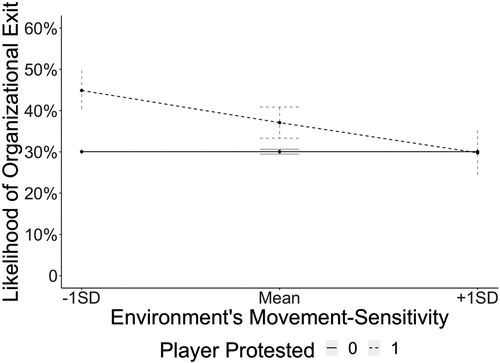
Model 5 tests our second hypothesis: that the relationship between protest and organizational exit is diminished in more movement-sensitive environments. This model predicts the likelihood of organizational exit with an interaction between a player having protested and the movement-sensitivity of the environment as measured by the formative index described. Supporting Hypothesis 2, we find that the relationship between player protest and likelihood of exit is diminished among players on more movement-sensitive teams (β = −0.850, p < 0.05). Figure 2 plots the marginal effects of this regression. On a team with a movement sensitivity index one standard deviation below the mean, protesting players are predicted to be 14.87 percentage points more likely to exit the organization in a given year than nonprotesting players (predicted exit rates of 44.87% and 30.00%). On teams with a mean value of the movement-sensitivity index, protesting players are predicted to be 7.08 percentage points more likely to exit. Finally, protesting and nonprotesting players are comparably likely to exit the organization on teams with a movement-sensitivity index value that is one standard deviation above the mean.
Hypothesis 3 predicts that protesting players are more likely to move to movement-sensitive environments relative to other players. Table 47 displays the results of a multinomial logistic regression that predicts transitions to more movement-sensitive environments along with the two other possible moves (transitions to less movement-sensitive environments and exiting the NFL). The model’s reference category is the player staying with the current team, and coefficients for each of the three outcomes shown report effects relative to that reference category. The coefficient on Player Protested in the first column of the table (“Move to more sensitive team”) indicates support for Hypothesis 3 (β = 0.769, p < 0.01). Protesting players were more likely to move to a more movement-sensitive team compared with their team at the time of the protests relative to nonprotesting players. In contrast, the Player Protested coefficient in the second column (“Move to less sensitive team”) is not significant (p = 0.416), indicating that protesting players were no more likely than nonprotesters to move to less movement-sensitive teams relative to their team at the time of the protests.
|
Table 4. Multinomial Logistic Regression Predicting Player Mobility
| Move to more sensitive team | Move to less sensitive team | Exit NFL employment | |
|---|---|---|---|
| Player Protested | 0.769** | 0.292 | 0.408 |
| (0.292) | (0.359) | (0.298) | |
| Player career variables | |||
| Player Quality | −0.172*** | −0.155*** | −0.233*** |
| (0.019) | (0.020) | (0.024) | |
| Tenure with Team | −0.164*** | −0.140*** | −0.150*** |
| (0.031) | (0.031) | (0.026) | |
| Tenure in NFL | 0.118*** | 0.130*** | 0.285*** |
| (0.027) | (0.027) | (0.022) | |
| Player contract variables | |||
| Salary in 2015 (log) | 0.079*** | 0.033** | −0.003 |
| (0.013) | (0.012) | (0.012) | |
| Years Remaining on Contract | −0.175** | −0.285*** | −0.188** |
| (0.064) | (0.065) | (0.059) | |
| Salary Remaining on Contract (log) | −0.042*** | −0.023* | −0.038*** |
| (0.011) | (0.011) | (0.009) | |
| Constant | −4.031*** | −3.477*** | −1.535*** |
| (0.292) | (0.278) | (0.222) | |
| Observations | 5,344 | ||
| Year conditional fixed effects | Yes | ||
| Player position conditional fixed effects | Yes | ||
Note. Data are a panel of player-years from 2016 to 2019.
***p < 0.001; **p < 0.01; *p < 0.05; †p < 0.10 (two-sided tests).
Additional Analyses
The analyses described, as do all correlational analyses, limit us from making strong causal inferences. Whereas our models account for several potential confounding factors, in this section, we address additional potential omitted variables and factors that could affect the relationship between protest activity and organizational exit.
One possible concern is that protest is associated with greater likelihood of organizational exit because players who anticipated exiting the organization were more likely to protest because they either planned to exit or were aware the team did not plan to retain them. We address this explanation using data on whether a player was in the final year of the contract at the time of the protests because players in the final year of their contract would be more likely to anticipate exiting the organization. If the main results occur because players who anticipate exiting the organization were more likely to protest, players in the final year of their current contract should be more likely to protest, and the relationship between protest and organizational exit should be strongest among players in the final year of their contract. Model 1 in Table 5 shows that players in the last year of their contract were not more likely to protest (β = −0.191, p = 0.605). Model 2 tests whether the relationship between protest and organizational exit is stronger among players who are likely to anticipate exiting the organization by interacting the dummy variables for protest and being in the final year of a contract. The relationship between protest and exit is not stronger among players in the final year of their contract (β = 0.214, p = 0.654), indicating that our main results are not driven by players who anticipate exiting their organization.
|
Table 5. Additional Logistic Regressions Predicting Protest and Organizational Exit
| Player Protests | Player Exits Organization | |||
|---|---|---|---|---|
| Model 1 | Model 2 | Model 3 | Model 4 | |
| Player Protested | 0.421 | 0.447† | 0.458* | |
| (0.269) | (0.232) | (0.230) | ||
| Protested × Last Year of Contract | 0.214 | |||
| (0.478) | ||||
| Protested × Fellow Alumni Teammates that Protested | 0.325 | |||
| (0.869) | ||||
| Predicted Probability of Player Protest | −0.024 | |||
| (0.078) | ||||
| Player career variables | ||||
| Player Quality | 0.060 | −0.197*** | −0.189*** | −0.193*** |
| (0.050) | (0.014) | (0.014) | (0.015) | |
| Tenure with Team | −0.039 | −0.147*** | −0.149*** | −0.146*** |
| (0.077) | (0.022) | (0.022) | (0.024) | |
| Tenure in NFL | 0.051 | 0.201*** | 0.197*** | 0.216*** |
| (0.065) | (0.018) | (0.018) | (0.021) | |
| Player contract variables | ||||
| Salary in 2015 (log) | 0.142* | 0.051*** | 0.038*** | 0.038*** |
| (0.064) | (0.008) | (0.009) | (0.011) | |
| Years Remaining on Contract | −0.225*** | −0.228*** | ||
| (0.043) | (0.045) | |||
| Last Year of Contract | −0.191 | 0.269** | ||
| (0.370) | (0.095) | |||
| Salary Remaining on Contract (log) | 0.142*** | −0.048** | −0.034*** | −0.034*** |
| (0.064) | (0.006) | (0.007) | (0.008) | |
| Constant | −3.758*** | −1.619*** | −1.001*** | −0.999*** |
| (0.891) | (0.241) | (0.255) | (0.260) | |
| Observations | 1,997 | 5,344 | 5,344 | 5,344 |
| Year Conditional Fixed Effects | Yes | Yes | Yes | Yes |
| Team (at Protests) Conditional Fixed Effects | Yes | Yes | Yes | Yes |
| Player Position Conditional Fixed Effects | Yes | Yes | Yes | Yes |
Notes. All models cluster standard errors at the level of the individual player. Data in Model 1 are all players in the sample. Data in Models 2–4 are a panel of player-years from 2016 to 2019.
***p < 0.001; **p < 0.01; *p < 0.05; †p < 0.10 (two-sided tests).
Another possible concern is that social networks could be a key omitted variable in the relationship between protest and organizational exit. Players may be influenced by others in their network to both protest and exit the organization. We measure the presence of protesting peers in a player’s social network by measuring whether each player had a teammate who protested and also attended the same college as players are more likely to have social relationships with others who attended their college. Model 3 in Table 5 estimates that the relationship between protest and organizational exit is not stronger among players who had a teammate that attended the same college and protested (β = 0.325, p = 0.708), indicating that social networks do not lead to the relationship between protest and organizational exit.
Next, we address endogeneity between selection into protesting and organizational exit more generally. To do so, we use a two-stage model with an exogenous instrument for protesting. In the first stage, we calculate the probability that a player protests based on the controls used in our main models and the instrument.8 In the second stage, we estimate the relationship between protest activity and organizational exit, controlling for the probability that they protested as calculated in the first stage. This approach is used to address endogeneity in time-series data in other studies (e.g., Rogan 2014, Gupta et al. 2017, Kumar and Zaheer 2022).
The instrument we use is the proportion of people in the metropolitan statistical area (MSA) of the player’s team that voted for the Democratic candidate in the 2016 Presidential election. This variable should predict protesting but have no relationship with career outcomes other than through protest activity. Players in more liberal MSAs are more likely to protest because they encounter more people either at work in the organization or in their daily lives who support the overall protest movement and, thus, expect a more positive reaction to protesting. In the first stage model (shown in Appendix C), we indeed find that players in more liberal MSAs were more likely to protest. However, an MSA’s political orientation should not directly affect a player’s likelihood of exiting the organization other than through protest activity. How often players exit teams for reasons other than protest does not systematically correlate with the political orientation of their surrounding MSA. To the extent that teams have different strategies about how often they move on from players, it is unlikely that these strategies are correlated with the city’s political orientation. Thus, there is no reason to expect a direct relationship between MSA political orientation and player exit rates. Consistent with this, MSA Democratic vote share is not a significant predictor of organizational exit independent of protest activity.
Model 4 in Table 5 replicates Model 4 in Table 3 with the predicted probability that a player protested (computed from the first stage model in Appendix C) included as a control. This model estimates that protest is associated with a 58.1% greater likelihood of organizational exit (β = 0.458 p = 0.047), a very similar estimate to Model 4 in Table 3.
Together, these additional analyses help address potential concerns over omitted variables and endogeneity in our analysis of protest activity and organizational exit.
Our analysis of protest influencing transitions to more movement-sensitive environments can also benefit from additional analysis. One potential concern for this analysis is a mechanical sorting process in which protesting players were more likely to exit from low movement-sensitivity environments, implying that they would have more options to move to higher movement-sensitivity environments by default compared with nonprotesting players. In other words, if protesting players that exit their organizations primarily come from low movement-sensitivity environments, they could end up moving to higher movement-sensitivity environments even if they randomly selected a new team.
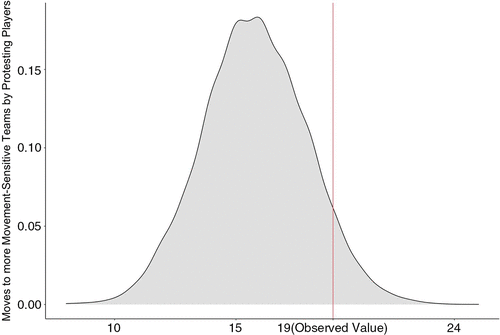
We used a simulation analysis to test our results’ robustness to this potential pattern. Specifically, we simulate how often protesting players would move to more and less movement-sensitive teams if they chose new teams at random. In each round of the simulation, we randomly assigned each protesting player that moved between teams in the observed data to move to a randomly selected team. We then collect how many players moved to more movement-sensitive teams. The simulation was run 10,000 times, producing a distribution of how often protesting players would move to more movement-sensitive teams if they selected their new teams randomly given the movement-sensitivity levels of the teams they left.
Figure 3 shows the distribution of the proportion of protesting players that would move to more movement-sensitive teams if they chose their new teams at random. More players moved to more movement-sensitive teams than we observed in the actual data in only 4.40% of the simulations. Thus, protesting players were more likely to move to more movement-sensitive teams than would be expected given the movement-sensitivity levels of the teams on which they started. This provides evidence that protesters’ greater likelihood of moving to more movement-sensitive environments is not a mechanical product of protesting players primarily leaving low movement-sensitivity environments.
Finally, we also explore the effects of protesting and associated career effects on employees’ cumulative financial compensation. The increases in mobility that we find after protesting suggest further long-term effects on protesters’ cumulative income. When employees move organizations, their new salary negotiations reflect information about their recent performance and key decision makers’ perceptions of their actions relative to ideal worker and professional norms as well as the bargaining power players have if they receive employment offers from multiple organizations. Whereas interorganizational mobility can occur for many reasons, including positive employee performance, our theorization of visible employee protesting as a workplace norm violation suggests that protest activity may harm salary negotiations associated with employee career movement in the time period after protests occur. Teams may offer players lower salaries because they view them as less valuable for having deviated from ideal worker norms, or players that protested could receive fewer employment offers between which to bargain. Cases in which players exited their organization after protesting and left NFL employment entirely are also associated with a decline in income as players’ NFL careers ended sooner and with that their ability to obtain compensation for their specialized professional skills.
To predict cumulative player compensation, we used the (logged) total sum of all salary that each player received from NFL teams from the beginning of the 2016 season to the end of the 2020 season (five seasons).9 At the time of the protests, 97.40% of players in our sample were under contract for less than five years, meaning this period involved at least one contract negotiation for the majority of players in the sample.
In the NFL, players can be compensated through bonuses that are paid at prespecified points in time and salaries that are paid more regularly. We include both of these payment methods in our measure of compensation.10 When players exit NFL employment and do not participate in a given season, they are coded as having not accrued any NFL salary in that season, and their cumulative salary earned does not increase for that year.11 In addition to testing for a main negative relationship between protesting and financial compensation, we also tested for counterveiling positive effects of protesting in movement-sensitive environments.
The results, shown in Table 6, indicate that protesting players did not have lower cumulative income in the period after the protest overall. The coefficient for Player Protested in Model 1 is not significant. However, Model 2 estimates that protesting players earned more salary after protesting if they were on a movement-sensitive team (p = 0.057). Because the dependent variable in these analyses is logged cumulative salary, these differences amount to millions of dollars in pay. This suggests that the decision to protest in the workplace and the movement-sensitivity of a protester’s environment can affect long-term financial earnings.
|
Table 6. OLS Regressions Predicting Cumulative Five-Year Postprotest Financial Compensation
| Model 1 | Model 2 | |
|---|---|---|
| Player Protested | 0.130 | 0.171 |
| (0.146) | (0.148) | |
| Player Protested × Team Movement Sensitivity | 0.550† | |
| (0.289) | ||
| Player career variables | ||
| Player Quality | 0.212*** | 0.213*** |
| (0.008) | (0.008) | |
| Team Tenure | 0.084*** | 0.084*** |
| (0.012) | (0.012) | |
| League Tenure | −0.036*** | −0.036*** |
| (0.010) | (0.010) | |
| Contract variables | ||
| Player Salary in 2015 (log) | 0.030*** | 0.030*** |
| (0.005) | (0.005) | |
| Years Remaining on Contract | 0.097*** | 0.097*** |
| (0.026) | (0.026) | |
| Salary Remaining on Contract (log) | 0.058*** | 0.058*** |
| (0.004) | (0.004) | |
| Constant | 13.235*** | 13.269*** |
| (0.153) | (0.156) | |
| Observations | 1,997 | 1,997 |
| Player position fixed effects | Yes | Yes |
| Year fixed effects | Yes | Yes |
***p < 0.001; **p < 0.01; *p < 0.05; †p < 0.10 (two-sided tests).
Discussion
With employee activism on the rise and increasing numbers of workers taking stands on social issues at their places of work, the time is ripe to unpack the ramifications of such activism for individual employees. Accordingly, this study investigated the career consequences of employees engaging in a particularly contentious and risky form of activism—workplace protesting—that is highly visible to organizational stakeholders and the broader labor market. We develop theory conceptualizing protest as a workplace behavior that is norm-violating and, thus, constitutes a form of workplace deviance. Because of its potential disruptiveness to the organization and its stakeholder relationships, we theorized that workplace protests are generally perceived as destructive deviance because of their potential for organizational disruption. This perception leads to negative evaluations and career consequences for protesting employees. However, we also theorize a mitigating effect in which movement-sensitive environments can create conditions whereby organizational members and stakeholders view protesting as constructive deviance, mitigating negative career effects associated with protesting.
We tested our theory using data on protest participation in the NFL take a knee movement. We found that protesting was associated with an increased likelihood of organizational exit (as measured by departure from the team that the player was with at the time of the protests). However, this effect was notably weaker for protesting players in more movement-sensitive environments. In additional analyses, we also found a corresponding contingent effect of protesting on players’ cumulative incomes. Finally, we observed a relationship between protest activity and labor-market sorting. Protesting players were more likely to move to more movement-sensitive environments compared with nonprotesters.
Our theory should extend to other types of workplace behavior, subject to certain scope conditions. Most directly, our theory applies to other types of protest and other workplace behaviors perceived as both a deviation from workplace norms and as potentially disruptive to the organization in the eyes of managers, decision makers, top leaders, and stakeholders. Under this logic, protests that more directly target the employing organization, industry, or profession also meet the conditions for our theory to apply. In either case, if the protest is externally visible, this should strengthen the perceived potential for organizational disruption and increase the impact of protest on sorting in the wider labor market and protesters’ subsequent careers.
Beyond generalizing to other instances of employee protests, our theory applies to other forms of workplace behavior that meet our scope conditions. Employee behaviors, such as voice and issue selling, are widely viewed as forms of workplace deviance. Whereas these are typically seen as constructive deviance and, thus, less likely to induce negative effects for the focal employee, our theory suggests that there may be some cases that are particularly disruptive to the organization that consequently are perceived as destructive and bring on negative career repercussions. For example, an employee who posts about a controversial social issue on an organizational social media forum that is viewed by stakeholders or expresses political opinions in front of customers, may face negative career outcomes. At the same time, employee behaviors that are typically viewed as conforming to institutionalized workplace norms, such as union activity, may sometimes cross the threshold into norm-deviating behavior. For instance, whereas strikes are normative union activity under collective bargaining laws (Freeman and Medoff 1984, Kochan et al. 1986), strikes that turn violent may violate norms of acceptable behavior. Trade union activity in support of societal issues outside the workplace (Osterman 2006) may also be viewed as disruptive deviation from workplace norms. Thus, we see a range of workplace behaviors that can activate our theorizing rooted in perceptions of destructive workplace deviance.
Finally, our theory also holds relevance for employees in all manner of positions and roles within the organization. Whereas lower level employees directly depend on their organization and leaders, upper level leaders, including CEOs, are dependent upon various groups of stakeholders. In either case, activism may be perceived as a deviation from typical organizational behavior and as disruptive to the organization and, thus, may lead to career consequences.
Contribution to Research on Employee Activism and Protest Participation
This paper contributes to research on employee activism and protest participation by exploring when and how employees suffer career-related consequences for engaging in protest at their place of work. Past studies of employee activism discuss the significant inherent risks involved in such activism, suggesting that these risks may prevent many employees from engaging in workplace activism in the first place (Friedman and Craig 2004, Briscoe and Gupta 2016). Yet, whereas these risks are more extensively theorized as antecedents of activism (i.e., negatively predicting employee activism) (King 2008, Briscoe et al. 2014), they are rarely assessed as outcomes of activism. Most studies of employee collective action indeed pay greater attention to organization-level outcomes stemming from employee protests and activist efforts (Kellogg 2011, 2012; Soderstrom and Weber 2020) with individual-level outcomes receiving less attention. In terms of employee consequences, Kellogg (2012) examines shorter term organizational consequences for activist employees across two hospitals, and Taylor and Raeburn (1995) survey sociologists engaging in LGBT-based workplace activism. The latter survey finds that participants who engaged in activism were more likely to report having faced bias in hiring, tenure, and promotion processes compared with nonactivists although the conclusions were limited by the self-reported nature of the data.
We offer a theoretical anchor for future research on the career consequences of employee activism by conceptualizing protest participation as a workplace behavior that deviates from ideal worker norms. As with other norm violations, the consequences of this deviation depend on the perceptions of organization and labor market decision makers. For employee protests, this deviating behavior could be interpreted as destructive or constructive to the organization. Theorizing protest participation as an ambiguous behavior whose evaluation is in the eye of the beholder enables us to begin unpacking the organizational conditions under which such behavior is more likely to be punished. Broadly speaking, our worker-norms framework for employee protest accords with research proposing that organizational decision makers vary in their orientation toward employee activism (Briscoe et al. 2014) and extends theoretically and empirically to the labor market and career setting.
We further contribute to the growing body of work examining the personal, political, and professional outcomes for individuals engaging in social activism or protest outside of work (McAdam 1986, 1988, 1989; Marwell et al. 1987; Whalen and Flacks 1989; Wiltfang and McAdam 1991). Several past studies find that the effects of protest participation can be long-lasting. As a review by Vestergren et al. (2017) uncovers, a history of activism can influence or correlate with career- and work-related behaviors, including choice of job and industry (Fendrich and Tarleau 1973, McAdam 1989, Sherkat and Blocker 1997). Yet, as we demonstrate, when disruptive protest occurs in the context of work, the career consequences associated with this past activist behavior may be more negative. We find that, under certain conditions, engaging in protest is associated with an accelerated end to one’s career with a particular organization. Future work would benefit from further disentangling the career outcomes for individual activists with particular attention paid to the context of such activism.
Contribution to Research on Careers, Mobility, and Employee Deviation from Workplace Norms
Our findings regarding protester mobility also suggest labor market sorting consequences of activism. Employee activism can reveal workers’ values-based labor market preferences in a manner that leads to stronger sorting of workers into organizations with aligned values, in which their protests may not be stigmatized and may even be regarded as a prosocial contribution to the organization’s marketplace reputation or identity. This represents an extension of Schneider’s (1987) foundational attraction–selection–attrition framework, whereby an employee’s fit with the organization may not only be influenced by the employee’s personality or ideology (Bermiss and McDonald 2018), but also, at times, by the actions the employee takes—at the workplace—on behalf of the social issues that are meaningful to the employee. At the same time, we suggest that acts of protest may provide occasions for organizations to reassess their labor market identities and the underlying values that are important to them (Baron 2004).
Our theory and findings are also relevant for research on the structure of careers, particularly recent research on nonstandard, erratic, or category-spanning career mobility (Leung 2014, Pedulla 2020). Much of this research looks at the consequences for those individuals whose job sequences do not follow a traditional skill-based career path (Bidwell and Briscoe 2010) or whose career moves span occupational or organizational categories that are not normally crossed. Our research offers one explanation for the occurrence of such nonstandard careers even when they carry penalties: they can be a consequence when people express their social values at work, and that behavior, in turn, leads workers to move or be moved in the direction of positions and organizations that align with their revealed values.
In theorizing workplace protest as a deviation from workplace norms, we conceptually align protest with other research on workplace norm violations. Such research often draws on the ideal worker concept rooted in an idealized image of worker behavior that symbolically conveys full commitment to work (whether it impacts actual work performance) and focuses on cases of part-time work (e.g., Williams et al. 2013), maternity/paternity leaves (Cabeza et al. 2011), and workers who do not fit job or occupational norms (e.g., related to gender or leader stereotypes) (Caleo and Heilman 2013). We extend the concept of workplace deviance to include workplace protesting, an unsanctioned behavior that can be perceived as disruptive and, therefore, compromising one’s full commitment to work. As with other deviations from ideal worker norms, we find workplace protest to be associated with negative career outcomes for many participating employees.
In theorizing different responses to deviation from workplace norms, our research also joins a small but growing group of deviance scholars who conceptualize deviation as having both negative and positive interpretations by managers and other organizational and stakeholder audiences. In particular, we theorize how protesting—as a form of deviant behavior—may be viewed either positively or negatively depending on the priorities, values, and identities of the observer. We also theorize perceived disruptiveness as a characteristic of workplace behavior that may tip the scales in one direction or the other such that behaviors that are perceived as less disruptive to the organization are more likely to be construed as constructive deviance, whereas those that are perceived as more disruptive are interpreted as destructive. We suspect an increasing amount of norm-violating workplace behavior may implicate social or political identities or issues that are likely to produce similarly variegated responses and career consequences. Future work may examine additional factors or conditions related to the behavior itself that influence perceptions of constructiveness versus destructiveness.
Limitations and Future Research Opportunities
The NFL movement served as a strategic research setting for us to unpack the objective career consequences of individual employees participating in protest at their place of work. Supporting our primary empirical findings, several additional analyses helped us address specific omitted variable and endogeneity concerns. Still, as is often the case, we cannot fully rule out the possibility of unmeasured individual characteristics partly influencing the outcomes we observe.
Limitations in our study also suggest fruitful avenues for future research. For example, future research can explore factors that may enhance or mitigate the effects of protesting on one’s career beyond those we were able to capture. Such factors may stem from either the employee engaging in activism or the observer(s) of the employee protest. Regarding the latter, scholars could examine the influence of top leaders, other employees, customers, or other stakeholders in influencing the fate of protesting employees. Along these lines, a number of stakeholder attributes could be examined, including values, demographics, and identities, to name a few. Finally, future research may seek to capture the mediating pathways between protests and career outcomes. For example, surveys could reveal the subjective perceptions of different organizational stakeholders observing workplace protest, and an ethnographic approach could uncover the interactional processes that influence workers’ evaluations and career outcomes.
More research is also needed to understand the growing variety of workplace activism settings and issues as illustrated by Starbucks employees protesting during the George Floyd protests, Google employees staging a public walkout on behalf of the #MeToo movement, and Wayfair workers demonstrating about immigration issues. Future work could also explore the full repertoire of workplace activism behaviors, including drafting and signing open letters to leadership that are posted online, posting social issue messages on social media sites, and engaging in public walkouts at the place of work. In each of these cases, the visibility of worker participation in activism may lead organizations and the broader labor market to enact the processes we theorize up to and including the dismissal of employees associated with highly public demonstrations (Wong 2019, Sonnemaker 2020). Finally, scholarship would also benefit from a more fine-grained understanding of how the external visibility of workplace activism shapes its impact on individuals’ careers.
Conclusion
In a time when employee activism and workplace protest participation are on the rise, we need to better understand the ramifications of such activism for individual employees. Our research finds that some employees experience negative career consequences subsequent to participating in protest at their place of work. Through building on and integrating literatures on employee activism, careers, and deviation from workplace norms, we offer an initial foundation for understanding when and how the risks of activism are made real.
The authors are grateful for contributions to the research from two anonymous reviewers and Editor Adam Cobb. Alexandra Rheinhardt and Ethan J. Poskanzer contributed equally to the manuscript. Earlier versions of this paper were presented at HEC Paris, Northwestern University, University of British Columbia, University of California at Irvine, University of Connecticut, University of Minnesota, and the Academy of Management meeting in Seattle and the European Group for Organization Studies meeting in Vienna. The first and second authors contributed equally to this work.
Appendix A. Ordinary Least Squares (OLS) Replications
The following analysis replicates logistic regressions shown in the main text using OLS regression with otherwise identical specifications. Table A.1 replicates Table 3 and similarly shows that protest is associated with greater likelihood of organizational exit. All results are similar to those shown in Table 3. Model 4, with all controls, estimates that protesting players were 7.4 percentage points more likely to exit their organization (although p = .053). Model 5 estimates that team movement sensitivity moderates the relationship between protest and organizational exit (β = −0.128, p = 0.082).
|
Table A.1. Results of OLS Regressions Predicting Organizational Exit
| Model 1 | Model 2 | Model 3 | Model 4 | Model 5 | |
|---|---|---|---|---|---|
| Player Protested | 0.062† | 0.069† | 0.079* | 0.074† | 0.063† |
| (0.036) | (0.042) | (0.038) | (0.038) | (0.038) | |
| Player Protested × Team Movement Sensitivity | −0.128† | ||||
| (0.073) | |||||
| Player career variables | |||||
| Player Quality | −0.033*** | −0.027*** | −0.027*** | ||
| (0.002) | (0.002) | (0.002) | |||
| Tenure with Team | −0.024*** | −0.026*** | −0.026*** | ||
| (0.004) | (0.003) | (0.003) | |||
| Tenure in NFL | 0.043*** | 0.033*** | 0.033*** | ||
| (0.003) | (0.003) | (0.003) | |||
| Player contract variables | |||||
| Salary in 2015 (log) | 0.006*** | 0.006*** | |||
| (0.001) | (0.001) | ||||
| Years Remaining on Contract | −0.036*** | −0.036*** | |||
| (0.006) | (0.006) | ||||
| Salary Remaining on Contract (log) | −0.006*** | −0.006*** | |||
| (0.001) | (0.001) | ||||
| Constant | 0.301*** | 0.240*** | 0.227*** | 0.326*** | 0.340*** |
| (0.005) | (0.041) | (0.041) | (0.042) | (0.043) | |
| Observations | 5,344 | 5,344 | 5,344 | 5,344 | 5,344 |
| Year conditional fixed effects | No | Yes | Yes | Yes | Yes |
| Team (at protests) conditional fixed effects | No | Yes | Yes | Yes | Yes |
| Playing position fixed effects | No | No | Yes | Yes | Yes |
Notes. All models cluster standard errors at the level of the individual player. Data are a panel of player-years from 2016 to 2019.
***p < 0.001; **p < 0.01; *p < 0.05; †p < 0.10 (two-sided tests).
Appendix B. Replication Adding Controls in Stepwise Fashion
We show the analysis shown in Table 3 in the main text, adding controls one at a time (Table B.1). This analysis better articulates the relationships between the control variables. Across all models, protest is positively associated with organizational exit.
|
Table B.1. Models Predicting Organizational Exit Adding Controls in Stepwise Fashion
| Dependent variable: | ||||||||||
|---|---|---|---|---|---|---|---|---|---|---|
| Player exits organization | ||||||||||
| Model 1 | Model 2 | Model 3 | Model 4 | Model 5 | Model 6 | Model 7 | Model 8 | Model 9 | Model 10 | |
| Player Protested | 0.284† | 0.356† | 0.357† | 0.634** | 0.628** | 0.564** | 0.482* | 0.401† | 0.439* | 0.461* |
| (0.156) | (0.198) | (0.206) | (0.206) | (0.208) | (0.203) | (0.210) | (0.219) | (0.223) | (0.225) | |
| Player career variables | ||||||||||
| Player Quality | −0.159*** | −0.167*** | −0.203*** | −0.221*** | −0.237*** | −0.201*** | −0.189*** | |||
| (0.010) | (0.011) | (0.013) | (0.014) | (0.014) | (0.014) | (0.014) | ||||
| Tenure with Team | 0.036* | −0.150*** | −0.132*** | −0.149*** | −0.148*** | −0.149*** | ||||
| (0.017) | (0.022) | (0.021) | (0.021) | (0.022) | (0.022) | |||||
| Tenure in NFL | 0.234*** | 0.255*** | 0.208*** | 0.187*** | 0.197*** | |||||
| (0.018) | (0.017) | (0.018) | (0.018) | (0.018) | ||||||
| Player contract variables | ||||||||||
| Salary in 2015 (log) | 0.055*** | 0.029*** | −0.189*** | |||||||
| (0.008) | (0.008) | (0.014) | ||||||||
| Years Remaining on Contract | −0.340*** | −0.149*** | ||||||||
| (0.037) | (0.022) | |||||||||
| Salary Remaining on Contract (log) | 0.197*** | |||||||||
| (0.018) | ||||||||||
| Constant | −0.844*** | −1.731*** | −1.315*** | −1.024*** | −1.071*** | −1.476*** | −1.487*** | −1.893*** | −0.878*** | −1.002*** |
| (0.026) | (0.063) | (0.200) | (0.214) | (0.215) | (0.222) | (0.227) | (0.240) | (0.252) | (0.250) | |
| Observations | 5,344 | 5,344 | 5,344 | 5,344 | 5,344 | 5,344 | 5,344 | 5,344 | 5,344 | 5,344 |
| Year conditional fixed effects | No | Yes | Yes | Yes | Yes | Yes | Yes | Yes | Yes | Yes |
| Team (at protests) conditional fixed effects | No | No | Yes | Yes | Yes | Yes | Yes | Yes | Yes | Yes |
| Playing position fixed effects | No | No | No | No | No | No | Yes | Yes | Yes | Yes |
Notes. All models cluster standard errors at the level of the individual player. Data are a panel of player-years from 2016 to 2019.
***p < 0.001; **p < 0.01; *p < 0.05; †p < 0.10 (two-sided tests).
Appendix C. First Stage of Two-Stage Model Predicting Exit and Controlling for Likelihood of Protest
In Model 4 in Table 5, we estimate the relationship between protest and organizational exit, controlling for the probability that a player protests. Table C.1 shows the first-stage model used to predict the probability that each player protested. This model is a probit and is estimated in a data set of each player in the sample. The model uses the full set of controls with two exceptions. First, we do not use playing position fixed effects because of insufficient variation in the dependent variable for some playing positions. The results of both this model and the model shown in Model 4 in Table 5 are highly similar if playing position fixed effects are included, and we drop playing positions that did not have at least one player who protested and one player who did not. Second, we do not use team fixed effects because the instrument used (Democratic vote share in MSA) is measured at the team level.
|
Table C.1. Predicting Relationship Between Democratic Vote Share in MSA and Protest Likelihood
| Dependent variable | |
|---|---|
| Player Protested | |
| Model 1 | |
| Democrat Vote Share in MSA | 1.743** |
| (0.515) | |
| Player career variables | |
| Player Quality | −0.021 |
| (0.019) | |
| Tenure with Team | −0.030 |
| (0.031) | |
| Tenure in NFL | 0.007 |
| (0.025) | |
| Player contract variables | |
| Salary in 2015 (log) | 0.061** |
| (0.023) | |
| Years Remaining on Contract | 0.001 |
| (0.066) | |
| Salary Remaining on Contract (log) | 0.021 |
| (0.013) | |
| Constant | −4.006*** |
| (0.460) | |
| Observations | 1,977 |
| Team (at protests) conditional fixed effects | No |
| Playing position fixed effects | No |
| Wald test | 11.46*** |
Notes. Model is probit regression. Data are all players who appear in the sample.
***p < 0.001; **p < 0.01; *p < 0.05; †p < 0.10 (two-sided tests).
Providing evidence that the instrument increases likelihood of protest, Democratic vote share in MSA is strongly and positively associated with likelihood of protest (β = 0.1743, p = 0.001). A Wald test provides further evidence that Democratic vote share in MSA affected likelihood of protest (χ2 = 11.46, p < 0.001).
Appendix D. More Detail on Movement-Sensitivity Index
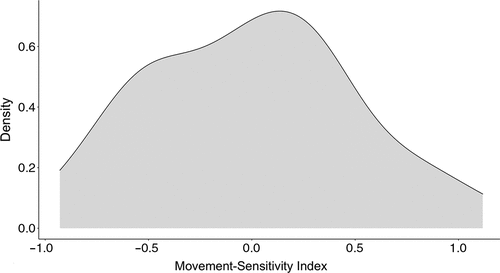
Figure D.1 shows the distribution of the formative index used to measure movement sensitivity. As the index is an aggregation of four variables that were standardized to have a mean of zero, the mean of the index itself is also very close to zero.
1 Of course, many other factors prompt organizational exit, including worker mobility to more attractive labor market opportunities (including under conditions theorized as follow). Our argument here is that, on balance, negative organizational responses to protesting contribute to overall exit rates. This influence can operate directly by contributing to an organizational decision to terminate the worker. It can also operate indirectly by causing the worker to perceive diminished support and opportunities within the organization, contributing to their voluntary decision to exit in order to seek or accept employment elsewhere.
2 By this point, 44 of 50 protesters had exited the organization they were with at the time of the protests.
3 Results are similar using OLS regression with the same fixed effects and control variables (shown in Appendix A).
4 This is distinct from unidimensional constructs, which aggregate multiple strongly correlated components.
5 Two teams did not have an employee with the title “general manager” in 2016. In these cases, we used the race of the team’s primary decision maker with regard to player personnel.
6 To test for multicollinearity, we estimated a linear model predicting organizational exit using protest and our full set of controls (the same specification as Model 4 in Table 3) and performed a variance inflation factor test. No variable in the model has a variance inflation factor above 2.30, indicating that multicollinearity is not a concern.
7 This model does not control for team fixed effects at the time of the protest because of insignificant variation in the dependent variables within each conditional fixed effect.
8 This probability is calculated using a probit model. The model uses most of the same controls as in other analyses. The model does not control for team fixed effects because MSA Democratic vote share is calculated at the team level or player position fixed effects because of insufficient variation in the dependent variable in some player position categories. The results are highly similar when we include player position fixed effects and drop observations in positions that did not have at least one player that did and did not protest.
9 The results are very similar if we analyze three- and four-year cumulative income after the protests.
10 For these analyses, we were unable to observe players’ nonleague income. Exiting individuals may continue to find productive employment or business opportunities, but on average, exit is associated with a large reduction in income (Perry 2009). Weir et al. (2009) report $85,000 median total income from all sources for NFL retirees aged 30–49 in 2008 compared with $930,600 and $295,000 for the median and minimum NFL player salaries that year, respectively.
11 In some cases, players do not participate in an NFL season but still receive salary that was contractually agreed to and guaranteed. This salary is counted in cumulative earnings.
References
- (1990) Hierarchies, jobs, bodies: A theory of gendered organizations. Gender Soc. 4(2):139–158.Crossref, Google Scholar
- (2021) Resist, resign and playing for time: French health workers bid to avoid compulsory COVID vaccination. Euro News Online (August 8), https://www.euronews.com/2021/08/11/resist-resign-and-play-for-time-french-health-workers-bid-to-avoid-compulsory-covid-vaccin.Google Scholar
- (2010) The Women’s Movement Inside and Outside the State (Cambridge University Press, Cambridge, UK).Google Scholar
- (2004) Employing identities in organizational ecology. Indust. Corporate Change 13(1):3–32.Crossref, Google Scholar
- (2000) Development of a measure of workplace deviance. J. Appl. Psych. 85(3):349–360.Crossref, Google Scholar
- (2018) Ideological misfit? Political affiliation and employee departure in the private-equity industry. Acad. Management J. 61(6):2182–2209.Crossref, Google Scholar
- (2010) The dynamics of interorganizational careers. Organ. Sci. 21(5):1034–1053.Link, Google Scholar
- (2003) Competing Devotions: Career and Family Among Women Executives (Harvard University Press, Cambridge, MA).Google Scholar
- (2009) Work without end? Scheduling flexibility and work-to-family conflict among stockbrokers. Work Occupations 36(4):279–317.Crossref, Google Scholar
- (2023) Striking out swinging: Specialist success following forced task inferiority. Organ. Sci. Forthcoming.Link, Google Scholar
- (2016) Social activism in and around organizations. Acad. Management Ann. 10(1):671–727.Crossref, Google Scholar
- (2021) Business disruption from the inside out. Stanford Soc. Innovation Rev. 19(1):48–54.Google Scholar
- (2008) The Nixon-in-China effect: Activism, imitation and the institutionalization of contentious practices. Admin. Sci. Quart. 53(3):460–491.Crossref, Google Scholar
- (2014) CEO ideology as an element of the corporate opportunity structure for social activists. Acad. Management J. 57(6):1786–1809.Crossref, Google Scholar
- (2021) Escaping the ellipsis of diversity: Insider activists’ use of implementation resources to influence organization policy. Admin. Sci. Quart. 66(2):521–565.Crossref, Google Scholar
- (2011) Glass ceiling and maternity leave as important contributors to the gender wage gap. Southern J. Bus. Ethics 3:73–85.Google Scholar
- (2013)
Gender stereotypes and their implications for women’s career progress . Vinnicombe S, Burke RJ, Blake-Beard S, Moore LL, eds. Handbook of Research on Promoting Women’s Careers (Edward Elgar Publishing Limited, Northampton, MA), 143–161.Crossref, Google Scholar - (2010) The paradox of meritocracy in organizations. Admin. Sci. Quart. 55(4):543–576.Crossref, Google Scholar
- (2007) It’s all about me: Narcissistic chief executive officers and their effects on company strategy and performance. Admin. Sci. Quart. 52(3):351–386.Crossref, Google Scholar
- (2013) Political ideologies of CEOs: The influence of executives’ values on corporate social responsibility. Admin. Sci. Quart. 58(2):197–232.Crossref, Google Scholar
- (2020) The art of NFL contracts part 5: How it all fits together. Sports Illustrated Online (June 12), https://www.si.com/nfl/chiefs/gm-report/the-art-of-nfl-contracts-part-5.Google Scholar
- (2019) Managing the conflicting interests of workers and shareholders: Evidence from pension-assumption manipulations. Indust. Labor Relations Rev. 72(3):523–551.Crossref, Google Scholar
- (2013) Fathers and the flexibility stigma. J. Soc. Issues 69(2):279–302.Crossref, Google Scholar
- (2007) Getting a job: Is there a motherhood penalty? Amer. J. Sociol. 112(5):1297–1339.Crossref, Google Scholar
- (2000) Songs of ourselves: Employees’ deployment of social identity in workplace encounters. J. Management Inquiry 9(4):391–412.Crossref, Google Scholar
- (2014) The origins of the ideal worker: The separation of work and home in the United States from the market revolution to 1950. Work Occupations 41(1):18–39.Crossref, Google Scholar
- (2020) Examining anger’s immobilizing effect on institutional insiders’ action intentions in social movements. Admin. Sci. Quart. 65(4):847–886.Crossref, Google Scholar
- (2020) Inhabited ecosystems: Propelling transformative social change between and through organizations. Admin. Sci. Quart. 65(4):931–971.Crossref, Google Scholar
- (2001) Index construction with formative indicators: An alternative to scale development. J. Marketing Res. 38(2):269–277.Crossref, Google Scholar
- (1999) The intergroup dynamics of collective empowerment: Substantiating the social identity model of crowd behavior. Group Processes Intergroup Relations 2(4):381–402.Crossref, Google Scholar
- (2015) The professional, the personal, and the ideal worker: Pressures and objectives shaping the boundary between life domains. Acad. Management Ann. 9(1):803–843.Crossref, Google Scholar
- (2000) Theories of gender in organizations: A new approach to organizational analysis and change. Res. Organ. Behav. 22:103–151.Crossref, Google Scholar
- (1973) Marching to a different drummer: Occupational and political correlates of former student activists. Soc. Forces 52(2):245–253.Crossref, Google Scholar
- (1984) What Do Unions Do? (Basic Books, New York).Google Scholar
- (2004) Predicting joining and participating in minority employee network groups. Indust. Relations 43(4):793–816.Crossref, Google Scholar
- (1975) The Strategy of Social Protest (Dorsey Press, Homewood, IL).Google Scholar
- (2000) Organizational identity, image, and adaptive instability. Acad. Management Rev. 25(1):63–81.Crossref, Google Scholar
- (2017) Red, blue and purple firms: Organizational political ideology and corporate social responsibility. Strategic Management J. 38(5):1018–1040.Crossref, Google Scholar
- (1970) Why Men Rebel (Princeton University Press, Princeton, NJ).Google Scholar
- (2021) CEO sociopolitical activism: A stakeholder alignment model. Acad. Management Rev. 46(1):33–59.Crossref, Google Scholar
- Investing Answers Expert (2021) Making sense of the NFL’s million dollar salaries. Investing Answers. Accessed July 2021, https://investinganswers.com/articles/making-sense-nfls-million-dollar-salaries.Google Scholar
- (1979) Job matching and the theory of turnover. J. Political Econom. 87(5):972–990.Crossref, Google Scholar
- (1999) Left behind? The impact of leaves of absence on managers’ career success. Acad. Management J. 42(6):641–651.Crossref, Google Scholar
- (2011) Challenging Operations: Medical Reform and Resistance in Surgery (University of Chicago Press, Chicago).Crossref, Google Scholar
- (2012) Making the cut: Using status-based countertactics to block social movement implementation and microinstitutional change in surgery. Organ. Sci. 23(6):1546–1570.Link, Google Scholar
- (2008) A social movement perspective of stakeholder collective action and influence. Bus. Soc. 47(1):21–49.Crossref, Google Scholar
- (2010) The contentiousness of markets: Politics, social movements, and institutional change in markets. Annual Rev. Sociol. 36(1):249–267.Crossref, Google Scholar
- (2007) Social movements as extra-institutional entrepreneurs: The effect of protests on stock price returns. Admin. Sci. Quart. 52(3):413–442.Crossref, Google Scholar
- (1997) The Social Psychology of Protest (Blackwell, Oxford, UK).Google Scholar
- (2014) Not ideal: The association between working anything but full time and perceived unfair treatment. Work Occupations 41(1):63–85.Crossref, Google Scholar
- (1986) The Transformation of American Industrial Relations (Basic Books, New York).Google Scholar
- (2005) Consequences of individuals’ fit at work: A meta-analysis of person-job, person-organization, person-group, and person-supervisor fit. Personnel Psych. 58(2):281–342.Crossref, Google Scholar
- (2022) Network stability: The role of geography and brokerage structure inequity. Organ. Sci. 65(4):1139–1168.Google Scholar
- (1969) Strikes and mutinies: A comparative study of organizational conflicts between rulers and ruled. Admin. Sci. Quart. 14(4):558–572.Crossref, Google Scholar
- (2014) Dilettante or renaissance person? How the order of job experiences affects hiring in an external labor market. Amer. Sociol. Rev. 79(1):136–158.Crossref, Google Scholar
- (1988) The Social Psychology of Procedural Justice (Plenum, New York).Crossref, Google Scholar
- (2001) Institutional sources of practice variation: Staffing college and university recycling programs. Admin. Sci. Quart. 46(1):29–56.Crossref, Google Scholar
- (2020) ‘Social movements are contagious’: Protests within Mass. companies are part of a growing trend. WBUR News. Accessed July 2021, https://www.wbur.org/news/2020/08/04/company-protests-black-lives-matter-whole-foods.Google Scholar
- (2019) Two lessons from the Wayfair walkout. Forbes Online (July 12), https://www.forbes.com/sites/rakeenmabud/2019/07/12/two-lessons-from-the-wayfair-walkout/?sh=53bd047a3a88.Google Scholar
- (1987) The persistence of political attitudes among 1960s civil rights activists. Public Opinion Quart. 51(3):359–375.Crossref, Google Scholar
- (1986) Recruitment to high-risk activism: The case of freedom summer. Amer. J. Sociol. 92(1):64–90.Crossref, Google Scholar
- (1988) Freedom Summer (Oxford University Press, New York).Google Scholar
- (1989) The biographical consequences of activism. Amer. Sociol. Rev. 54(5):744–760.Crossref, Google Scholar
- (1977) Resource mobilization and social movements: A partial theory. Amer. J. Sociol. 82(6):1212–1241.Crossref, Google Scholar
- (2008) What do they know? The effects of outside director acquisition experience on firm acquisition performance. Strategic Management J. 29(11):1155–1177.Crossref, Google Scholar
- (2020) Take a stand or keep your seat: Board turnover after social movement boycotts. Acad. Management J. 63(4):1028–1053.Crossref, Google Scholar
Mental Floss (2016) 11 things you might not know about athlete salaries. Mental Floss. Accessed July 2021, https://www.mentalfloss.com/article/84792/11-things-you-might-not-know-about-athlete-salaries.Google Scholar- (2016) The specialist discount: Negative returns for MBAs with focused profiles in investment banking. Admin. Sci. Quart. 61(1):87–124.Crossref, Google Scholar
- (1995) Crossroads tempered radicalism and the politics of ambivalence and change. Organ. Sci. 6(5):585–600.Link, Google Scholar
National Football League (2016) Personal conduct policies for players. Accessed July 2021, https://static.nfl.com/static/content/public/photo/2017/08/11/0ap3000000828506.pdf.Google Scholar- (2005) Predictors of objective and subjective career success: A meta-analysis. Personnel Psych. 58(2):367–408.Crossref, Google Scholar
- (2018) Do birds of a feather flock, fly, and continue to fly together? The differential and cumulative effects of attraction, selection, and attrition on personality-based within-organization homogeneity and between-organization heterogeneity progression over time. J. Organ. Behav. 39(1):1347–1366.Crossref, Google Scholar
- (2006) Community organizing and employee representation. British J. Indust. Relations 44(4):629–649.Crossref, Google Scholar
- (2020) Making the Cut: Hiring Decisions, Bias, and the Consequences of Nonstandard, Mismatched, and Precarious Employment (Princeton University Press, Princeton, NJ).Google Scholar
- (2009) Rising income inequality and the NFL. American Enterprise Institute. Accessed July 2021, https://www.aei.org/economics/rising-income-inequality-and-the-nfl/.Google Scholar
- (2004) The opportunity structure for discrimination. Amer. J. Sociol. 109(4):852–902.Crossref, Google Scholar
- (2003) Breaking silence: Tactical choices women managers make in speaking up about gender-equity issues. J. Management Stud. 40(6):1477–1502.Crossref, Google Scholar
- (2009) Corporate social responsibility: Impacts on strategic marketing and customer value. Marketing Rev. 9(4):335–360.Crossref, Google Scholar
- (2004) Changing Corporate America from Inside Out: Lesbian and Gay Workplace Rights (University of Minnesota Press, Minneapolis).Google Scholar
- (1996) “The battle of Westminster”: Developing the social identity model of crowd behavior in order to explain the initiation and development of collective conflict. Eur. J. Soc. Psych. 26(1):115–134.Crossref, Google Scholar
- (2023) Organization-as-platform activism: Theory and evidence from the National Football League “take a knee” movement. Admin. Sci. Quart. 68(2):395–428.Crossref, Google Scholar
- (2016) Class advantage, commitment penalty: The gendered effect of social class signals in an elite labor market. Amer. Sociol. Rev. 81(6):1097–1131.Crossref, Google Scholar
- (1995) A typology of deviant workplace behaviors: A multidimensional scaling study. Acad. Management J. 38(2):555–572.Crossref, Google Scholar
- (1998)
Employees behaving badly: Dimensions, determinants and dilemmas in the study of workplace deviance . Cooper CL, Rousseau DM, eds. Trends in Organizational Behavior, vol. 5 (John Wiley & Sons Ltd., New York), 1–30.Google Scholar - (2014) Too close for comfort? The effect of embeddedness and competitive overlap on client relationship retention following an acquisition. Organ. Sci. 25(1):185–203.Link, Google Scholar
- (2006) Social movement tactics, organizational change and the spread of African-American studies. Soc. Forces 84(4):2147–2166.Crossref, Google Scholar
- (2007)
Cultural psychology of workways . Kitayama S, Cohen D, eds. Handbook of Cultural Psychology (Guilford Press, New York), 346–369.Google Scholar - (1987) The people make the place. Personnel Psych. 40:437–453.Crossref, Google Scholar
- (1997) Explaining the political and personal consequences of protest. Soc. Forces 75(3):1049–1070.Crossref, Google Scholar
- (2020) Organizational structure from interaction: Evidence from corporate sustainability efforts. Admin. Sci. Quart. 65(1):226–271.Crossref, Google Scholar
- (2020) USA: Amazon may have violated labor laws by firing worker involved in protest, New York attorney general says; incl. company response. Bus. Insider. Accessed July 2021, https://www.businessinsider.com/amazon-may-violated-labor-law-firing-worker-new-york-attorney-2020-4.Google Scholar
- (2012) Social movements and markets, industries, and firms. Organ. Stud. 33(12):1715–1733.Crossref, Google Scholar
- (2003)
Positive deviance and extraordinary organizing . Cameron K, Dutton J, Quinn R, eds. Positive Organizational Scholarship (Berrett-Koehler, San Francisco), 207–224.Google Scholar - (2004) Toward the construct definition of positive deviance. Amer. Behav. Sci. 47(6):828–847.Crossref, Google Scholar
- (2012) The Shareholder Value Myth: How Putting Shareholders First Harms Investors, Corporations, and the Public (Berrett-Koehler Publishers, San Francisco).Google Scholar
- (1995) Identity politics as high-risk activism: Career consequences of lesbian, gay, and bisexual sociologists. Soc. Problems 42(2):252–273.Crossref, Google Scholar
- (2000) Cognitive biases and organizational correctives: Do both disease and cure depend on the politics of the beholder? Admin. Sci. Quart. 45(2):293–326.Crossref, Google Scholar
- (2013) Acting professional: An exploration of culturally bounded norms against nonwork role referencing. J. Organ. Behav. 34(6):866–886.Crossref, Google Scholar
- (2013) Constructive deviance in organizations: Integrating and moving forward. J. Management 39(5):1221–1276.Crossref, Google Scholar
- van Stekelenburg J (2013) The political psychology of protest: Sacrificing for a cause. Eur. Psych. 18(4):224–234.Google Scholar
- van Stekelenburg J, Klandermans B (2013) Social movements and the dynamics of collective action. Huddy L, Sears DO, Levy JS, eds. Oxford Handbook of Political Psychology (Oxford University Press, Oxford, UK), 774–811.Google Scholar
- (2015) “No fracking way!” Documentary film, discursive opportunity, and local opposition against hydraulic fracturing in the United States, 2010 to 2013. Amer. Sociol. Rev. 80(5):934–959.Crossref, Google Scholar
- (2017) The biographical consequences of protest and activism: A systematic review and a new typology. Soc. Movement Stud. 16(2):203–221.Crossref, Google Scholar
- (2003) Constructive and destructive deviance in organizations. Acad. Management Rev. 28(4):622–632.Crossref, Google Scholar
- (2017) Organizations as polities: An open systems perspective. Acad. Management Ann. 11(2):886–918.Crossref, Google Scholar
Weber Shandwick (2019) Employee activism in the age of purpose: Employees (up)rising. Accessed July 2021, https://www.webershandwick.com/news/employee-activism-age-of-purpose/.Google Scholar- (2009) National Football League Player Care Foundation: Study of Retired NFL Players (University of Michigan Institute for Social Research, Ann Arbor, MI).Google Scholar
- (1989) Beyond the Barricades: The Sixties Generation Grows Up (Temple University Press, Philadelphia).Google Scholar
- (2000) Unbending Gender: Why Family and Work Conflict and What to Do About It (Oxford University Press, New York).Google Scholar
- (2013) Cultural schemas, social class, and the flexibility stigma. J. Soc. Issues 69(2):209–234.Crossref, Google Scholar
- (2022) Black physicians’ experiences with anti-Black racism in healthcare systems explored through an attraction-selection-attrition lens. J. Bus. Psych. 38(1):75–88.Crossref, Google Scholar
- (1991) The costs and risks of social activism: A study of sanctuary movement activism. Soc. Forces 69(4):987–1010.Crossref, Google Scholar
- (2019) Google fires employee who protested company’s work with US border patrol. The Guardian. Accessed July 2021, https://www.theguardian.com/technology/2019/nov/25/google-firing-protest-rebecca-rivers.Google Scholar
- (1978) Social movements in organizations: Coup d’etat, insurgency, and mass movements. Amer. Sociol. Rev. 83(4):823–861.Crossref, Google Scholar
Alexandra Rheinhardt is an assistant professor of management and entrepreneurship at the University of Connecticut’s School of Business. She received her PhD in management from the Pennsylvania State University. Her research focuses on organizational behavior and organizational theory with recent projects on employee activism, careers, identity, and mindfulness.
Ethan J. Poskanzer is an assistant professor of Strategy and Entrepreneurship at the University of Colorado, Boulder. He studies how organizations select ideas to pursue, build social networks, and manage human capital. He earned his BA in economics and international relations from Syracuse University and doctorate in economic sociology from the Massachusetts Institute of Technology.
Forrest Briscoe is professor of management and organization and Frank & Mary Jean Smeal Research Fellow at the Pennsylvania State University’s Smeal College of Business. He received his PhD in management from the MIT Sloan School. His research focuses on organization theory, including recent projects on moral markets, contentious careers, and stakeholder strategies.

