


The Returns to Nonmarket Strategies During Institutional Transitions: Investor Reactions to Actor and Tie Characteristics
Abstract
We explain how investor perceptions of nonmarket strategies’ legitimacy, and thereby value, change during institutional transitions toward greater legal compliance. Indirect influence strategies should be better aligned with the transition and therefore become more legitimate than those associated with direct co-optation and control. Moreover, investors should assess this alignment based on two defining characteristics of firms’ nonmarket strategies, namely, the nonmarket actors and the ties involved. We, therefore, expect investors to value firms’ ties to nongovernmental organizations (NGOs) more than to political actors and ties formed via donations more than board ties. We test our hypotheses in the context of seven police raids that took place in Brazil in 2014; these raids launched “Operation Car Wash,” an anticorruption probe that signaled to investors a shift toward greater legal compliance at that point in time. Ultimately, we find that firms benefited the most when both nonmarket actors and ties were aligned with the institutional transition (i.e., NGO donations), and they suffered the most when both characteristics were misaligned (i.e., political board ties). Our findings integrate nonmarket strategies’ political and social facets by showing how actor and tie characteristics jointly explain their success or failure. They also contribute to explaining which firms will be better positioned to weather institutional transitions between legal capture and legal compliance.
Funding: This work was supported by Getúlio Vargas Pesquisa-Fundação Getúlio Vargas; Govil Family Faculty Scholar Award; Wharton School, University of Pennsylvania.
Supplemental Material: The online appendices are available at https://doi.org/10.1287/orsc.2022.1616.
1. Introduction
Nonmarket strategy designates firms’ interactions with nonmarket actors (i.e., political and social actors) to pursue economic rents (Dorobantu et al. 2017). A central mechanism through which nonmarket strategy can enhance firm performance is influencing investors (Hillman et al. 1999, Shiu and Yang 2017, Werner 2017, Hawn et al. 2018, El Nayal et al. 2021). Specifically, investors reward those nonmarket strategies that are consistent with prevailing institutional logics (Flammer 2013, Ioannou and Serafeim 2015), that is, the “historically variant sets of assumptions, beliefs, values, and rules by which individuals interpret organizational reality and what constitutes appropriate behavior” (Zajac and Westphal 2004, p. 433). Thus, nonmarket strategies’ success in an institutional context depends on their alignment with the overarching institutional logic at a particular point in time and the legitimacy this alignment signals to investors.
Although this general mechanism is well established, how do investors assess the relative value of different nonmarket strategies when institutional logics are not stable—as in the case of emerging markets, which are often highly volatile (Makino et al. 2004, Marquis and Raynard 2015)? In particular, the legal environment represents a critical institutional dimension for firms (Haveman et al. 2017). It can “undulate” over time between vulnerability to legal capture and enforced legal compliance: under the logic of legal capture, firms can control the political process to divert the legal system toward their business interests to a greater extent, whereas under the logic of legal compliance, the coercive power of the state forces firms to more stringently respect legal edicts (Giorgi et al. 2019, p. 804). Transitions between these logics are especially prevalent in emerging markets and can swiftly be reversed (Uhlenbruck et al. 2006, Lee and Weng 2013, Birhanu et al. 2016, Krammer 2019). Thus, understanding how investors react to different nonmarket strategies during institutional transitions of this nature is essential to determine which firms will best weather such environments.
We advance that, during a transition toward greater legal compliance, investors will perceive nonmarket strategies aiming to directly co-opt and control external actors as more aligned with legal capture and therefore less legitimate than alternative, more indirect forms of influence better aligned with legal compliance. Moreover, based on recent calls to jointly study corporate political activity (CPA) and corporate social responsibility (CSR) within nonmarket strategy research ( Zhang et al. 2016, Werner 2017, Jia et al. 2018, Rehbein et al. 2018), we contend that investors will assess institutional alignment based on two defining characteristics of firms’ nonmarket strategies. These characteristics relate to the nature of nonmarket actors and the types of ties they have to firms. Thus, we contrast ties to political actors, which CPA research has primarily focused on as a form of direct co-optation, with ties to nongovernmental organizations (NGOs), which CSR research has primarily focused on as a more indirect form of influence. We also contrast the two types of ties that have been a significant focus of both of these research streams within nonmarket strategy (Hillman et al. 1999, Krause et al. 2019, Seo et al. 2021), namely, direct forms of co-optation via board ties and indirect influence via corporate donations.
We test our predictions on investor reactions to a series of seven police raids in 2014 that launched “Operation Car Wash” (OCW), the largest corruption probe in Brazilian history. Brazil is an ideal research setting for our purposes, given the tendentious nature of the institutional environment and the importance of relationships for business development (Lazzarini 2011, Perkins and Minefee 2015, Perkins and Zajac 2020). Moreover, these initial police raids signaled an unexpected shift toward more stringent legal enforcement of anticorruption laws at a singular moment in time, which accords well with the theory’s emphasis on inflection points marking periods of undulation between legal compliance and legal capture (Giorgi et al. 2019).
Our results confirm that the alignment of nonmarket actors and tie types with this institutional transition both influenced investors: ties to NGOs added more to firm value than ties to political actors during OCW, and corporate donations added more value than board ties. Ultimately, firms benefited the most when both nonmarket actors and ties were aligned with the institutional transition (i.e., NGO donations), and they suffered the most when both characteristics were misaligned (i.e., political board ties). These findings contribute to a growing literature integrating the political and social facets of firms’ nonmarket strategies by showing how actor and tie characteristics explain their success or failure. They also advance nonmarket strategy research on institutional change by explaining which firms will be better positioned to weather sudden inflection points in the balance between legal capture and legal compliance.
2. Theory Development
In this section, we consider to what extent nonmarket strategies are aligned with an institutional transition toward more stringent legal compliance. In other words, their characteristics must be congruent with the institutional logic of legal compliance (where firms bend to the state’s coercive power) rather than legal capture (where firms can divert the legal system toward their interests). Greater alignment with legal compliance should make investors perceive nonmarket strategies as more legitimate and, therefore, more valuable to the firm (Zajac and Westphal 2004, Flammer 2013, Ioannou and Serafeim 2015).
To establish when investors should perceive that such alignment exists, we distinguish between two distinctive facets of nonmarket strategies: the nature of the actors involved and the ties connecting them to the firm. We characterize these two facets of nonmarket strategies depending on whether they are associated with attempts to exert more direct or indirect influence over regulatory processes (Giorgi et al. 2019). We expect that nonmarket strategies associated with direct co-optation and control should be associated more with legal capture, whereas strategies seeking to exert indirect influence through, for instance, constituency-building tactics should be better aligned with legal compliance.
2.1. Nature of Nonmarket Actors: Politicians vs. NGOs
We start by comparing two major categories of nonmarket actors, which are increasingly being considered jointly within the nonmarket strategy literature (Zhang et al. 2016, Werner 2017, Jia et al. 2018, Rehbeinet al. 2018): political actors and NGOs.
2.1.1. Ties to Political Actors.
Ties to political actors should lose legitimacy during an institutional transition toward greater legal compliance. Indeed, such ties are traditionally associated with co-optation and control over actors with public influence, which firms seek to appropriate for their interests: per Hillman and Hitt (1999, p. 826), “in general, corporate political behavior is an attempt to use the power of government to advance private ends (Mitnick 1993).” Such aims are misaligned with an institutional shift away from legal capture and toward legal compliance. Indeed, the benefits of political ties are high when countries have greater levels of relational capitalism (Rajan and Zingales 1998) because politicians more readily redirect institutional favor toward firms to which they are connected (Fisman 2001, El Nayal et al. 2021). However, when the institutional environment shifts away from such an approach, political ties will be more closely and negatively associated with cronyism, defined as “the resources available to firms through political favoritism” (Johnson and Mitton 2003, p. 352).
During an institutional transition toward greater legal compliance, gaining benefits through cronyism loses its legitimacy (Gelos and Werner 2002, Faccio 2006, Feinberg et al. 2015). In particular, it may become riskier and more challenging for politicians to grant favors when this is no longer considered a legitimate practice for firms to pursue (Morck et al. 1998, Johnson and Mitton 2003, Leuz and Oberholzer-Gee 2006). In these circumstances, investors will likely reassess the value of corporate political ties in light of greater transparency and the improved rule of law (Gelos and Werner 2002, Faccio 2006, Feinberg et al. 2015).
2.1.2. Ties to NGOs.
This loss of political actors’ legitimacy may influence investors to consider alternative ways for firms to manage their external environment, namely, through ties with NGOs. These ties are imperfect substitutes for political ties because NGOs do not directly influence policymaking or implementation (Walton 2015). However, a growing body of literature has documented their operational and reputational benefits, indirectly enhancing firms’ political capital.
For instance, the strategic CSR literature has highlighted NGOs’ role in firms’ social investments (Seitanidi and Crane 2009). Investors should see this role as valuable because it can accomplish some similar ends as CPA, especially in emerging markets (Walker and Rea 2014, Doh et al. 2015, Feinberg et al. 2015). For example, NGO ties can help firms address social issues of mutual concern (Kaul and Luo 2018) and fill voids in market-based institutions (Mair et al. 2012, Dutt et al. 2015), including generating more robust legal frameworks for business activities (Gatignon and Capron 2021).
As a result, investors may also see NGO ties as a form of constituency building, whereby firms gain the support of other societal members who can then express their preferences to political decision makers (Hillman and Hitt 1999, Walker and Rea 2014). In particular, NGO ties help firms engage in community mobilization (Ingram et al. 2010, Hiatt and Park 2013, Rehbein and Schuler 2015). Such mobilization may help firms avoid getting “blacklisted” by political actors following social activists’ attacks (McDonnell and Werner 2016). These reputational benefits of NGO ties are precious during institutional transitions that threaten the legitimacy of specific corporate political ties (Darendeli and Hill 2016).
Consistent with this constituency-building role, the strategic CSR literature has also shown that firms may seek to use NGO ties to indirectly influence political actors (Rehbein and Schuler 2015, Werner 2017, Bertrand et al. 2020). Indeed, NGO ties have been described as “a nexus between government and business” (Zheng et al. 2019, p. 658). Hence, they can indirectly grant better access to policymakers by improving the firm’s sociopolitical reputation (Werner 2015), helping firms win government procurement contracts (Flammer 2018), and influencing legislation in their favor (Tesler and Malone 2008).
Accordingly, rather than associating ties to NGOs with direct co-optation and control, investors should associate them with indirect forms of influence more aligned with the logic of legal compliance. Thus, investors should perceive them as more legitimate alternatives to ties with political actors during institutional transitions toward greater legal compliance. However, the legitimacy of corporate ties to politicians and NGOs may also depend on the nature of the ties connecting firms to those actors. We, therefore, consider investor reactions to different nonmarket ties next.
2.2. Nature of Nonmarket Ties: Board Ties vs. Donations
Board ties and donations constitute two major types of ties studied in the nonmarket strategy literature, which apply to political and NGO actors. Board ties refer to corporate board members with direct political or NGO connections that they can leverage for the firm’s benefit, whereas donations refer to gifts that the firm makes to support a political campaign or NGO project. We consider the extent to which each type of tie is aligned with an institutional transition toward greater legal compliance, affecting their relative legitimacy and, therefore, investor perceptions of their value to the firm.
2.2.1. Board Ties.
Politically connected actors often receive invitations to sit on corporate boards (Lester et al. 2008, Hillman et al. 2009, El Nayal et al. 2021). Investors value these direct ties to political actors because they can provide inside information on the policy process, access to political decision makers, influence over policy choices, and legitimacy (Hillman 2005). However, the first three of these benefits (inside information on the policy process, access to political decision makers, and influence over policy choices) aim to co-opt and control politicians and the legislative process for the firm’s interest. As a result, political board ties should no longer convey the fourth benefit, of legitimacy, to the same extent during an institutional transition toward greater legal compliance.
Moreover, if direct co-optation becomes less legitimate during an institutional transition toward legal compliance, investors could also become more apprehensive about the potential for board ties to act as a conduit for external control over the firm. Indeed, board ties can be a way for external (nonmarket) actors to take control of the firm’s resources for their interests, raising investor concerns over agency problems (Westphal and Zajac 1998). Thus, investors should become more cognizant that politically connected board members “may be neither appropriately motivated nor particularly capable to serve as vigilant guardians of shareholder interests (Shleifer and Vishny 1994)” (El Nayal et al. 2021, p. 457). In sum, such agency problems should become more salient for investors under a legal compliance logic, whereas they may have been accepted as the cost of doing business under a logic of legal capture.1
NGO board ties are structurally similar to political board ties: although NGO representatives are not typical on corporate boards, corporate board members can and often do sit on NGO boards (Krause et al. 2019). Investors may also become more skeptical of this practice during a transition toward greater legal compliance that decreases the legitimacy of co-optation and control strategies. First, a transition toward greater legal compliance could diminish the expected reputational benefits of NGO board ties for the firm, as such ties can be associated with co-optation and control over NGOs. Indeed, NGO boards should oversee and monitor ethical behavior to preserve organizational logic and identity (Golden-Biddle and Rao 1997). However, having corporate directors sit on NGO boards can detract from their identity as nonprofit organizations (Hwang and Powell 2009, Krause et al. 2019).
Second, although NGO board ties do not create the same risk of external co-optation and control as political board ties, they are not entirely devoid of such risks. When the legitimacy of co-optation and control strategies is in question, investors may come to perceive these risks as more salient. Indeed, NGOs invite corporate representatives to sit on their boards to serve their interests (Regan and Oster 2005).
For example, NGO board ties function as information conduits (Hwang and Powell 2009, Krause et al. 2019) that could expose the firm’s practices to greater scrutiny by NGOs. They could also siphon board members’ time and attention away from their commitment to the corporation, insofar as NGOs expect their board members to take on operational duties in addition to fundraising and oversight (Regan and Oster 2005). Investors may also worry that NGO board ties could detract from the firm’s focus on profit making by rendering competing stakeholder claims more salient to corporate board members (Hillman and Keim 2001). Finally, investors may be concerned about more insidious forms of co-optation of corporate interests through exposure to nonprofit practices. For example, Krause et al. (2019) show that corporate directors who also sat on nonprofit boards internalized coercive pressures to minimize overhead to the extent that they suppressed valuable investments in intangible assets on corporate boards as well.
2.2.2. Donations.
In contrast to board ties, donations offer a more indirect means of gaining access to nonmarket actors: even if they can form the basis for relationship-building and thus accrue some similar advantages, such arms-length transactions between independent parties imply fewer and less direct interactions than do board ties. Accordingly, donations should be more aligned with a transition toward greater legal compliance.
In the CPA literature, donations are often viewed as a more appropriate instrument for pursuing an issue-by-issue, short-term transactional approach than a long-term relational one (Hillman and Hitt 1999). As such, they represent a form of indirect political participation more than a way to derive direct private benefits (Ansolabehere et al. 2003). Indeed, because money is fungible, political donations can be easily replicated, and their rents can be competed away by other interest groups. Compared with board connections, these characteristics make donations less well suited to developing preferential relationships in which the firm’s interests are prioritized over others. Instead, political campaign donations are typically considered a type of legislative subsidy provided by firms, which can facilitate access to allied politicians (Hall and Deardorff 2006) but not provide control over them or their stance on political issues. Thus, even when donations are conceptualized as “interested money,” they are seen less as a bribe that buys favors and more as an entrance fee that buys access (Milyo et al. 2000). In other words, political donations can be useful instruments for gaining information about policy decisions but do not necessarily grant firms any sway over those decisions (Kalla and Broockman 2016). Hence, donations fall short of the direct co-optation tactics associated with board ties, even while allowing for some degree of indirect influence more aligned with a transition toward greater legal compliance.
Firms can also donate to NGOs as corporate philanthropy (Ballesteros and Gatignon 2019, Seo et al. 2021). Ansolabehere et al. (2003) describe such NGO donations as offering a similar opportunity for indirect participation as political donations. Indeed, NGO donations constitute arms-length contributions, although they can form the basis for more interactive forms of collaboration (Rondinelli and London 2003). In either of these forms, however, NGO donations should support the beneficiary’s operations. Thus, research on strategic CSR has often focused on identifying areas of alignment between NGOs’ social objectives and corporate interests via donations (Ballesteros et al. 2017, Kaul and Luo 2018) rather than the co-optation of NGO interests. Accordingly, rather than associating corporate donations with direct co-optation and control, investors should associate them with indirect forms of influence more aligned with the logic of legal compliance. Thus, investors should perceive corporate donations as more legitimate alternatives to board ties during institutional transitions toward greater legal compliance.
We, therefore, conclude that both the actor’s nature (i.e., politicians versus NGOs) and the type of tie (i.e., board ties versus donations) should matter when explaining how investors react to different nonmarket strategies during an institutional transition toward greater legal compliance. Indeed, these characteristics convey their (mis)alignment with the transition to investors, whose assessments of corporate practices depend on their legitimacy. Accordingly, we expect investors to react more favorably to ties with NGOs than with political actors and more favorably to donations than board ties.
This reasoning leads us to formulate two sets of hypotheses. The first set concerns the relative legitimacy of nonmarket actors and, therefore, differences in how investors perceive firms’ ties to them:
Investors will perceive donations to NGOs more favorably than donations to politicians during an institutional transition toward greater legal compliance.
Investors will perceive board ties to NGOs more favorably than board ties to politicians during an institutional transition toward greater legal compliance.
The second set of hypotheses concerns the relative legitimacy of nonmarket ties and, therefore, differences in how investors perceive firms’ engagement with nonmarket actors via such ties:
Investors will perceive donations to NGOs more favorably than board ties to NGOs during an institutional transition toward greater legal compliance.
Investors will perceive donations to political actors more favorably than board ties to political actors during an institutional transition toward greater legal compliance.
3. Empirical Setting: Operation Car Wash
We test our hypotheses in the context of the launch of an anticorruption probe that initially signaled a sudden transition toward legal compliance in Brazil. Operation Car Wash started as an investigation into a money-laundering operation run by four criminal organizations out of a car wash and gas station in the capital city of Brasilia. During the investigation, the Federal Police of Brazil found evidence of an extensive corruption scheme involving the state-owned oil company Petrobras and political parties. For at least a decade, a cartel of construction companies quoted high prices for lucrative contracts with Petrobras. In exchange for a guarantee that only cartel members would be able to bid, their tenders included a kickback representing between 1% and 9% of the contracts’ value,2 going to politicians from across party lines and to Petrobras’ politically appointed leadership.
OCW proceeded via a series of secret police raids, each referred to as a different “phase” with a corresponding codename. Our analysis focuses on the first seven of these phases as described in Figure 1, which covers the complete set of police raids in 2014. Each police raid followed the same pattern.3 A group of federal prosecutors and the head of the Federal Police planned police raids based on the investigation’s progress. At 6 a.m. on the raid day, officers deployed to search target locations, seize evidence, and conduct arrests. The field operatives themselves were only informed of their destination when boarding transportation to the raid site. The Minister of Justice was informed between 6 a.m. and 6:15 a.m. The Federal Police then made a speech to the press and issued a press release.
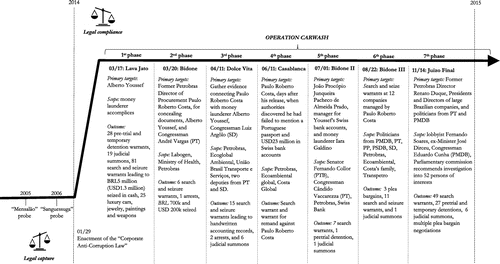
We relied on extensive academic references to confirm our understanding of the setting and its suitability for our study (e.g., Padula and Albuquerque 2018, Bechara and Goldschmidt 2020, Gaspar 2020, Mészáros 2020, Lagunes 2021) and qualitative data. We interviewed six Brazilian academics (financial and legal scholars and political scientists) with expertise on OCW, nine business leaders, seven investment fund managers (two of which are Environment, Social & Governance (ESG) specialists), two government relations managers, six NGO representatives, and OCW’s lead federal prosecutor. We asked respondents about (1) the practical, legal, and political underpinnings of OCW in 2014; (2) how OCW was viewed at the time; and (3) in what ways OCW impacted investors, companies, politicians, NGOs, and the public (depending on each respondent’s perspective). We also attended three academic presentations on OCW and two speaking engagements featuring one of OCW’s leading judges and its lead federal prosecutor, respectively.
These data confirmed that the 2014 OCW phases are well suited to test our hypotheses as they marked a distinctive inflection point in the undulation between legal capture and legal compliance (Giorgi et al. 2019): when OCW punished political cronyism with steep fines and jail time for those involved, it signaled to investors a shift toward greater legal compliance. Before OCW, the six major corruption scandals that triggered police raids in Brazil between the 1990s and 2014 rarely, if ever, resulted in prison sentences. For example, following a 2005 corruption probe dubbed the “Mensalão” (or monthly allowance), eight years passed before 24 prison sentences were finally pronounced, most of which were commuted to community work, house arrest, or parole. Then, in the 2006 “Sanguessuga” (leeches) probe, “none of the three senators and 70 federal deputies involved in the case lost their mandate” (Leite and De Macedo 2017, p. 114). However, four aspects of OCW distinguished it from this status quo in 2014, generating a credible signal to investors of an institutional transition toward greater legal compliance.
First, OCW immediately followed the new Corporate Anti-Corruption Law’s enactment on January 29, 2014. This legislation reinforced existing laws holding corporations liable for “acts against the public administration.”4 The law also provided for fines ranging from 0.1% –20% of the previous year’s gross revenues (and never less than the advantages procured via acts of corruption). A “penalty of disrepute” (pena de inidoneidade) also barred guilty corporations from government contracts and listed them on a national registry, with full details of their sentence.
Second, investigators employed an innovative set of practices5 that distinguished OCW from prior anticorruption cases in Brazil, raising its profile as a more effective tool for legal enforcement. For instance, the new anticorruption law facilitated recourse to plea bargains in an unprecedented way. These were central to OCW’s early stages because they revealed complex money-laundering operations that investigators could not otherwise have uncovered. OCW investigators cross-referenced multiple data sources within a sophisticated information registry, tracking targets and their connections based on these plea bargains. OCW’s extensive international cooperation was also distinctive, as it revealed new sources of information and prevented suspects from hiding funds or traveling overseas. Moreover, the Federal Prosecutor’s office actively publicized each investigative development to create a narrative that would build public support for institutional change. This publicization initially aimed to counter powerful targets’ attempts to undermine the investigation. The Federal Prosecutor’s office, therefore, communicated more closely with the media about each new development and created for the first time a publicly accessible website6 sharing details about each phase and metrics tracking OCW’s progress.
Third, as a result of these innovations, the scale of OCW police raids was also unprecedented,7 thereby signaling that the government was taking a firmer stance in enforcing laws and regulations. As part of OCW, the Brazilian police had confiscated 1.592 USB keys, 985 hard drives, 967 mobile phones, and 725 computers and mobilized 4,220 police officers to enforce 844 arrest warrants as of 2017. As of May 2021, the police had investigated 12.5 trillion Brazilian reais’ (BRL) (approximately USD 2.3 trillion at the time) worth of financial operations, leading them to block or seize 2.4 billion BRL (USD $450 million) in assets as part of OCW. Additionally, companies targeted by OCW in 2014, such as OAS, Camargo Corrêa, or Odebrecht, were fined between 1.3 and 2.7 billion BRL (USD $2.5–4.9 million).
Fourth, the scope of the 2014 OCW police raids signaled a profound, broad-based transition rather than a narrow, more targeted intervention. Using data from the Federal Public Prosecutor’s Office8 and the media,9 we used Gephi software to depict in Online Appendix A the set of actors and relationships under investigation during 2014 (i.e., who were the object of search and seize warrants, were brought in for questioning, or were imprisoned). The resulting network shows how OCW investigations into highly connected actors implicated a wide range of individuals, companies, and political affiliations. Online Appendix B relates supporting evidence from interview quotes emphasizing the 2014 investigation’s unprecedented breadth. This portrayal accords with published accounts that the police imprisoned influential company directors and politicians from across party lines and seized their assets (Gaspar 2020, Mészáros 2020). Indeed, OCW deeply implicated iconic Brazilian firms, such as Petrobras and Odebrecht; powerful contractors who worked for them; and suppliers to all these companies as well as many others. By 2018, 33 out of the country’s 35 political parties had been implicated in the investigation; and 13 (involving both the governing coalition and its opposition10) had members directly investigated, denounced, or detained.11 Our interviews also confirmed the perceived scope of this shift, per Online Appendix B. For example, one investment fund manager recalled:
After OCW, you could tell that companies were more concerned and professionals were also more concerned because people were arrested: managers, directors, business owners. And many times, someone thought something was a practice that would not cause any kind of problem, would not even affect them, and they were arrested. So, in a way, people were more scared. They said, ‘we will try to be more by the book because if there is a problem, I will be arrested’. Things started to get a lot more serious.
Furthermore, these signals of institutional change were of particular relevance to investors. They related directly to the enforcement of corporate anticorruption legislation (like Jiang et al. 2021) and imposed a heavy economic and reputational burden on firms involved. Additionally, OCW’s lead prosecutor reported that investors requested to discuss the case together from the start and said they expressed their enthusiasm for the promise of institutional change that would lay stronger economic foundations for business activity in Brazil and attract more foreign investment.
However, in line with the theory on institutional undulation (Giorgi et al. 2019) in emerging markets (Birhanu et al. 2016), this signal did not necessarily translate into a long-term, linear evolution toward legal compliance. Indeed, after 2014, it becomes difficult to distinguish specific police raids from other events affecting the institutional environment (e.g., the impeachment of then-President Dilma Rousseff and investigations against former President Lula da Silva, which were later overturned) and the politicization of OCW’s judicial process (Folha de São Paulo 2015a, b; Monteiro and Kertesz 2021). Thus, although OCW enacted its 79th raid in January 2021,12 we restrict our analysis to the inflection point and information signals represented by the 2014 OCW police raids.
4. Data and Methods
Having established the suitability of OCW in 2014 to test our hypotheses, we proceed in three steps. The first two steps follow Larcker et al. (2011). First, we examine the cumulative average abnormal returns to each event. The results (reported in Online Appendix C, Table C.1) confirm that the OCW police raids represented unanticipated shocks for investors. Second, we use a pooled sample of all seven OCW police raids in 2014 and estimate panel regression models to explain interfirm variation in investor reactions as a function of firms’ preexisting nonmarket ties. Third, we test our hypotheses by comparing the regression coefficients for different nonmarket ties.
4.1. Model Specification
We follow prior research that has examined the impact of firms’ nonmarket strategies on their cumulative abnormal returns (CARs) during a specific type of event (Flammer 2013, Shiu and Yang 2017, Werner 2017, Hawn et al. 2018). In our case, similar to the Larcker et al. (2011) study of corporate governance regulations, we pool similar events affecting all of our sample firms. Equation (1) presents the model specification as follows:
Our dependent variable, is the cumulative abnormal return of each sample firm i for each event e accumulated in the event window of length w; Zi is the vector of independent variables from our hypotheses; Xi is a vector of firm-level control variables for firm I; Xe is a vector of control variables for event e; and ψj are industry fixed effects at the two-digit level using the North American Industry Classification System classification.
4.2. Event Windows
Before running our analyses, we sought to determine the appropriate event windows for our study, namely, the time period during which new information about the police raids was made available to investors. To accomplish this objective, we analyzed media coverage of OCW in the Brazilian press using Factiva. We counted the number of articles covering OCW from the day before each raid until no further news coverage was forthcoming, as summarized in Online Appendix D by the number of daily news articles across the seven phases. We noted a systematic spike in news coverage on the day of the event, consistent with a surprise announcement. We also found that the news cycle exhausted itself after seven business days as no new information came to light. We then analyzed media content by hand, reading over 700 articles from the principal news outlets in the country to identify the type of information released and common patterns across phases (summarized in Online Appendix D).
We defined the length of our event windows based on prevailing practice (Barnett and King 2008, Oler et al. 2008,13 Perkins and Zajac 2020) and our media analysis. A common assumption in event study analysis has traditionally been that the market responds immediately to exogenous shocks and stock prices adjust rapidly to new market information (Fama et al. 1969, Fama 1970). We, therefore, consider the [−1,+1] event window in our analyses, although the secretive nature of the events and its confirmation through interview and media analyses should minimize the need to account for the day before the event.
However, more recent studies in financial economics (Bhattacharya et al. 2000, Henry 2000, Morck et al. 2000) show that longer event windows are necessary for emerging market settings because of lags in the dissemination of information to market participants (Henry 2000) and slower stock turnover (Bhattacharya et al. 2000). Alternative event windows are also commonly employed when studying investor reactions to nonmarket strategy (e.g., Flammer 2013, Werner 2017, Hawn et al. 2018). Indeed, investors continue to receive information about such complex events after their occurrence because their characteristics may take longer to establish (Barnett and King 2008, Flammer 2013) and react to (Werner 2017).
Thus, in addition to the [−1,+1] event window, we also use extended event windows starting on the day when information about a police raid became public and covering the entire period during which the media released new information about those police raids. We, therefore, calculate the CARs for our sample firms in each window from the day of the event (t0, or the [0,1] event window) until t+6 (the [0,7] event window). Hence, we consider that the seven-day window accounts for full disclosure of relevant information and allows sufficient time for investors to update their prior beliefs (Oler et al. 2008).
4.3. Sample and Data Sources
As a signal of institutional transition, it stands to reason that OCW should lead investors to re-evaluate all firms’ nonmarket strategies. Thus, we seek to understand how investors reacted to nonmarket ties during OCW for all publicly listed firms. Accordingly, our sample covers all nonfinancial firms14 listed in 2013 on the São Paulo Stock Exchange (termed “B3”) except three firms directly implicated in OCW in 2014, which we include only in robustness tests.
We used Capital IQ and Economatica to gather financial information about our sample firms. From the initial sample of 245 companies, we dropped 74 firms because of missing data and 66 firms because of confounding events15 during our event windows. The final sample size varies across event windows according to how many confounding events occurred in those windows. We also dropped the first police raid from our analyses for the [0,5] and [0,7] event windows: the first and second OCW phases took place within a short time frame (Figure 1), causing their effects to overlap in the two longer event windows. Thus, the longest event window ([0,7]) covers 122 firms across nine industries, totaling 725 firm-event observations. Tables 1 and 2 provide descriptive statistics based on the [0,7] event window sample.
|

Table 1. Descriptive Statistics
| Variables | Obs. | Mean | Std. dev. | Min | Max |
|---|---|---|---|---|---|
| (1) CARs [0,7] | 725 | 0.008 | 0.086 | −0.407 | 0.436 |
| (2) Political donations | 725 | 7.644 | 23.879 | 0 | 224 |
| (3) NGO donations | 725 | 2.93 | 6.536 | 0 | 55 |
| (4) Pol. board ties (#) | 725 | 14.23 | 17.01 | 0 | 83 |
| (5) NGO board ties (#) | 725 | 5.83 | 6.82 | 0 | 33 |
| (6) Total board members | 725 | 18.21 | 8.00 | 6 | 44 |
| (7) Government ownership (%) | 725 | 4.253 | 13.063 | 0 | 78.011 |
| (8) Family ownership (%) | 725 | 9.096 | 15.054 | 0 | 87.571 |
| (9) International shareholders (%) | 725 | 1.939 | 6.213 | 0 | 41.852 |
| (10) Institutional ownership (%) | 725 | 47.646 | 26.894 | 0 | 99.678 |
| (11) B3 index | 725 | 0.43 | 0.495 | 0 | 1 |
| (12) Sales growth | 725 | 0.977 | 0.23 | 0.071 | 1.96 |
| (13) Leverage | 725 | 1.413 | 1.123 | 0.007 | 5.786 |
| (14) Size(ln) | 725 | 13.203 | 2 | 4.491 | 17.584 |
| (15) Return on assets | 725 | 0.769 | 0.079 | 0.36 | 0.887 |
| (16) Market–to-book | 725 | 0.52 | 0.569 | 0.02 | 4.001 |
Note. Std. dev., standard deviation; Obs., observations; Pol., political.
|
Table 2. Correlation Matrix
| Variables | (1) | (2) | (3) | (4) | (5) | (6) | (7) | (8) | (9) | (10) | (11) | (12) | (13) | (14) | (15) | (16) |
|---|---|---|---|---|---|---|---|---|---|---|---|---|---|---|---|---|
| (1) CARs [0,7] | 1.000 | |||||||||||||||
| (2) Political donations | 0.028 | 1.000 | ||||||||||||||
| (3) NGO donations | 0.031 | 0.056 | 1.000 | |||||||||||||
| (4) Political board ties (#) | −0.024 | 0.014 | 0.315* | 1.000 | ||||||||||||
| (5) NGO board ties (#) | 0.018 | 0.242* | 0.383* | 0.351* | 1.000 | |||||||||||
| (6) Total board members | −0.028 | 0.185* | 0.254* | 0.609* | 0.457* | 1.000 | ||||||||||
| (7) Gov. ownership (%) | 0.029 | −0.058 | 0.092* | 0.522* | 0.245* | 0.335* | 1.000 | |||||||||
| (8) Family ownership (%) | 0.034 | −0.102* | −0.159* | −0.318* | −0.087* | −0.250* | −0.172* | 1.000 | ||||||||
| (9) Intl. shareholders (%) | 0.058 | 0.002 | 0.067 | −0.057 | −0.062 | −0.053 | −0.026 | −0.064 | 1.000 | |||||||
| (10) Inst. ownership (%) | −0.048 | −0.011 | −0.065 | −0.037 | −0.271* | −0.127* | −0.304* | −0.501* | −0.082* | 1.000 | ||||||
| (11) B3 index | 0.088* | −0.061 | −0.049 | −0.091* | −0.070 | −0.003 | −0.132* | 0.082* | 0.249* | −0.238* | 1.000 | |||||
| (12) Sales growth | −0.061 | −0.124* | −0.101* | −0.143* | −0.031 | −0.117* | −0.081* | 0.050 | −0.069 | −0.055 | −0.019 | 1.000 | ||||
| (13) Leverage | −0.015 | −0.020 | −0.022 | 0.075* | −0.000 | 0.157* | −0.056 | −0.088* | 0.107* | 0.075* | 0.153* | −0.075* | 1.000 | |||
| (14) Size(ln) | −0.020 | 0.240* | 0.317* | 0.325* | 0.325* | 0.424* | 0.052 | −0.236* | 0.101* | −0.118* | 0.251* | −0.146* | 0.349* | 1.000 | ||
| (15) Return on assets | 0.115* | 0.015 | 0.072 | 0.053 | 0.093* | 0.051 | 0.031 | 0.037 | 0.066 | −0.049 | 0.010 | 0.039 | −0.202* | 0.130* | 1.000 | |
| (16) Market-to-book | 0.031 | −0.073* | 0.050 | −0.018 | 0.059 | 0.052 | −0.084* | 0.045 | −0.054 | −0.189* | 0.089* | 0.226* | −0.333* | 0.034 | 0.379* | 1.000 |
Note. Gov., government. Intl., international; Inst., institutional.
*p < 0.05.
To measure firms’ nonmarket ties, we relied on multiple data sources readily available to investors online through the Brazilian government, which investors confirmed to us in interviews as important resources in their decision making (see Online Appendix E). Since 1998, the Brazilian Superior Electoral Court (“Tribunal Superior Eleitoral”) has published data about political donations, available online.16 To measure board ties and NGO donations, we coded data that are available to investors via the “Comissão de Valores Mobiliarios” (CVM),17 which is the equivalent of the Securities and Exchange Commission in the United States. Since 2001, Brazilian Law 10.303 has established clear timelines for firms to disclose to CVM their financial statements, annual reports, reports of internal and external auditors, the composition of their board of directors, and other information. Interview respondents confirmed that in addition to CVM’s website, they also accessed these same data converted to highly user-friendly formats via companies’ investor relations portals, third-party websites targeted toward investors,18 or in-house software allowing them to quickly pull information on any given company.
For our data sources to be valid, in addition to confirming that they were readily available to investors, we also had to confirm that investors would be using them to assess nonmarket ties in Brazil. Prior academic work has shown that investors are aware of and respond to board interlocks in Brazil (Mendes-da-Silva 2011, De Sousa Barros et al. 2021, Mbanyele and Wang 2021). Moreover, Previ (2011) has shown that many Brazilian pension funds incorporate social and environmental criteria in their investment policies, whereas Frynas and Yamahaki (2016) highlight growing interest in responsible investment in Brazil. Insights from the business press and our interviews support this perspective: they showcase the relevance of nonmarket ties for investors and their close analysis of the data sources leveraged here to identify relevant information on each type of tie, per Online Appendix E and as detailed below.
4.4. Variables
4.4.1. Cumulative Abnormal Returns.
The economy-wide nature of the events poses a potential problem for expected return models that rely on market efficiency assumptions of the market portfolio to detect abnormal returns (Roll 1977). Indeed, economy-wide event effects can bias the calculation of a firm’s stock return unconditional on the event (Brown and Warner 1980). Therefore, we employed the constant mean return model instead of relying on market models that use market portfolio returns after the event as the benchmark. This model uses a historical benchmark based on the assumption that the expected return of a given stock after the event is constant and a function of the stock’s average return before the event (MacKinlay 1997). It is more straightforward than models that rely on market indices as benchmarks. However, the constant mean return model has been shown to yield similar and sometimes more powerful results, including in settings examining daily returns (Brown and Warner 1980; 1985), with the added advantage of not relying on somewhat arbitrary choices of market portfolios (Roll 1977, Masulis 1980). Event studies in several areas have used the constant mean return model, including corporate finance (Arnaboldi et al. 2021), banking and finance (Merz and Riepe 2021, Schertler 2021), and regulation (Lambe 2012).
Thus, Equation (2) shows that our dependent variable, , corresponds to the accumulation of firm i’s abnormal returns in a window of length w after an event e. The abnormal returns are the differences between the realized daily return on a day t in window w and the constant expected returns given by the mean return of the stock computed in an estimation window of 100 days before the events.
4.4.2. Measuring Nonmarket Ties.
We measured political donations (per Claessens et al. 2008, Lazzarini et al. 2015) as the number of politicians supported through campaign donations in the 2010 election using data from the Brazilian Superior Electoral Court. Two considerations underlie this operationalization. First, a campaign donation establishes a tacit contract between donors and recipients that facilitates access during the political actor’s mandate (in our case, four years) (Jackson and Engel 2003, Hall and Deardorff 2006). Second, these ties were evident to investors and complied with legal parameters. Thus, corporations could donate up to 2% of their gross revenue and represented Brazil’s most significant donor group financing elections (Speck 2016). The recipient was legally bound to disclose these contributions to the Federal Electoral Court, and failure to do so could have severe consequences. Exceeding the donation limit also exposed firms to significant fines (10% of the amount above the limit). In other words, political donations were thoroughly disclosed in our setting. This corroborates the extent to which they were deeply embedded in a logic of legal compliance, in line with our theory.
We measured NGO donations as the total number of NGOs supported via financial or in-kind gifts, as reported at the time of the events. This measure thus includes joint activities (Rondinelli and London 2003) insofar as those activities require financial contributions or company time, goods, or services. As described previously, we collected these data through content analysis of companies’ annual reports available to investors online via CVM. Not only are such reports considered valid sources of public self-presentation in other contexts (Fiss and Zajac 2004) but investors explicitly value the information they contain on NGO donations in our setting. For instance, in an article devoted to NGOs,19 one financial analysis website explained:
It is extremely common for NGOs to have, in addition to the support of the government, financial support and resources from large companies, especially those listed on the stock exchange. This is because supporting NGOs’ social actions can generate interesting returns for companies (…). The development of social projects in partnership with NGOs can leverage a company’s market position by giving its actions a positive image with consumers, and consequently improving its stock performance.
Accordingly, we coded firms’ annual reports using a two-step process. First, for each firm, we counted the number of NGOs mentioned in its 2013 annual report as well as the annual reports for its corporate foundations where applicable20 because such organizations distribute grants using their sponsoring firm’s money and (often) their name or affiliation (Bertrand et al. 2018; 2020). We obtained a total of 163 corporate annual reports and 10 of their foundations’ annual reports in 2013. We followed Gatignon and Capron’s (2021) approach to hand code these annual reports and draw up a list of NGOs, which we then cross-checked with a database from the Brazilian government’s Institute for Applied Economics Research (IPEA). Until 2019, IPEA maintained a database of 820,000 NGOs nationwide, compiling information from the National Registry of Legal Entities and the Ministry of Labor and Employment. This step led us to identify 1,050 NGOs mentioned across all annual reports.
In a second step, we assessed the materiality of firm-NGO ties to exclude symbolic or superficial mentions of NGOs. First, we performed a pretest on 10 annual reports to identify the verbs commonly used in the same sentence as an NGO organization’s name to denote material contributions. We also identified synonyms for each verb using a thesaurus of Brazilian Portuguese. In total, we identified 26 verbs and 96 synonyms (available upon request). We followed the Henisz et al. (2014) approach to manually identify relevant verb phrases connecting firms and NGOs. Finally, we counted every instance mentioning an NGO on our list and one of these verbs in the same sentence.
We measured political board ties as the number of political connections held by board members in 2013. First, we collected 5,489 resumes of all board members in our sample firms for 2013 using the CVM data, as investors can easily access this information online for any given firm in which they are interested. Moreover, multiple investors we interviewed confirmed that board members’ resumes were a critical piece of information in their investment decisions. Within each resume, we then manually identified keywords that referred to political connections based on classifications from Hillman (2005), Faccio (2006), and Goldman et al. (2009). We counted board members’ political connections based on whether they held or had held an (elected or appointed) office in the local, state, or national government21 or occupied a managerial position in a state-owned company.22 Accounting for their network based on their current and prior political experiences reflects the full range of ties and knowledge that politically connected board members can bring to the firm based on their established connections over time. Indeed, the literature has established the benefits of this so-called practice of the “revolving door” (Luechinger and Moser 2014, Acemoglu et al. 2016, Jordi et al. 2018, Tabakovic and Wollmann 2018): they include influencing the legislative process or understanding the preferences of particular constituencies and play a vital role in the strength of political board ties (Okhmatovskiy 2010, Hoitash 2011, Sun et al. 2012, Fan et al. 2019)
We measured corporate representation on NGO boards (NGO board ties) as the share of NGO connections among corporate board members in 2013. We followed Krause et al. (2019) in hand collecting data from publicly available information about board members concerning their external board seats. Sitting on an NGO board is sufficiently prestigious (showcasing leadership, prosocial behavior, and social influence) to be included on corporate board members’ resumes, which investors confirmed were of particular interest when seeking information on socially responsible practices (i.e., ESG metrics). We manually reviewed each of these resumes to identify all NGOs listed in the IPEA database. As with political board connections, the measure incorporates current and past positions because investors expect board members to retain the connections made through those positions even once they are no longer current. Reflecting that expectation, board members rarely specify the time span of their involvement in their resumes, so our measure also corresponds to the information available to investors.
4.4.3. Control Variables.
We control for several firm characteristics that could also affect investor reactions during OCW. First, investors’ reactions may differ when assessing firms that were more proximate to the scandal. Our main analyses exclude the three firms directly implicated. None of the firms in our sample had donated money to politicians that OCW implicated in 2014. Neither were those politicians on the boards of any of our sample companies. However, firms could still be more proximate to OCW if they depended more on the government and therefore came under greater suspicion. To account for this possibility, we controlled for the proportion of shares owned by the government. The federal government could own shares directly (as is the case for our eight partially state-owned firms) or indirectly via government investors, such as the National Development Bank and state-owned firms’ pension funds (Sun et al. 2012).
Second, we control for governance characteristics in several ways. We account for the number of board members at each firm23 to control for board size. We include a dummy variable assuming a value of one if the firm was listed in the Sao Paulo stock exchange’s “Good Governance” Index (B3 “Novo Mercado”) and zero otherwise, per Perkins and Zajac (2020), as this may be another signal of alignment with the institutional transition. We account for different ownership forms that can also substantially impact corporate governance and investor valuations, especially in Latin America (Aguilera 2009, Perkins and Zajac 2020). Thus, we include two control variables reflecting the percentage of shares controlled by family owners and international investors in 2013. Moreover, we control for the percent of shares owned by institutional investors, who have more difficulty divesting their shares because of the more significant equity stakes they tend to hold in firms (Westphal and Zajac 1998).
Third, in addition to industry dummies, we include firm-level control variables that account for firm size and resource slack (John et al. 2015). These include sales growth, financial leverage, total liabilities divided by total assets, total revenue, return on assets, and market-to-book ratio. We also include dummy variables for each event (OCW phase) to mitigate potential problems with contemporaneous correlations because the events affect all firms simultaneously (Certo and Semadeni 2006).
5. Results
Table 3 shows the model estimation results for each of our event windows. The [−1,+1] event window results are similar to the [0,+1] window, confirming the secretive nature of OCW police raids. We discuss and compare the statistical significance and direction of the estimated coefficients before describing the results for control variables and alternative specifications.
|
Table 3. Regression Results for CARs Using One-Day to Seven-Day Windows
| (1) | (2) | (3) | (4) | (5) | |
|---|---|---|---|---|---|
| Variables | CARa[-1,1] | CAR[0,1] | CAR[0,3] | CAR[0,5] | CAR[0,7] |
| Political donationsb | 0.0002** | 0.0002** | 0.0002** | 0.0002** | 0.0003* |
| (0.0001) | (0.0001) | (0.0001) | (0.0001) | (0.0001) | |
| NGO donations | 0.0010* | 0.0010* | 0.0017* | 0.0007* | 0.0007* |
| (0.0005) | (0.0005) | (0.0007) | (0.0004) | (0.0004) | |
| Political board ties | −0.0001 | −0.0001 | −0.0003 | −0.0002 | −0.0005† |
| (0.0002) | (0.0002) | (0.0003) | (0.0002) | (0.0003) | |
| NGO board ties | −0.0003 | −0.0003 | −0.0011 | 0.0004 | 0.0009 |
| (0.0006) | (0.0006) | (0.0011) | (0.0005) | (0.0007) | |
| Board size | 0.0002 | 0.0002 | 0.0008† | −0.0003 | −0.0003 |
| (0.0004) | (0.0004) | (0.0005) | (0.0005) | (0.0005) | |
| Government ownership (%) | −0.0000 | −0.0000 | 0.0001 | −0.0001 | 0.0003 |
| (0.0001) | (0.0001) | (0.0001) | (0.0001) | (0.0003) | |
| Family ownership (%) | 0.0001 | 0.0001 | 0.0002 | 0.0001 | −0.0002 |
| (0.0001) | (0.0001) | (0.0002) | (0.0002) | (0.0005) | |
| International shareholders (%) | −0.0002 | −0.0002 | −0.0001 | −0.0006 | 0.0001 |
| (0.0002) | (0.0002) | (0.0004) | (0.0004) | (0.0005) | |
| Institutional ownership (%) | 0.0001 | 0.0001 | 0.0001 | 0.0001 | −0.0001 |
| (0.0001) | (0.0001) | (0.0001) | (0.0001) | (0.0002) | |
| B3 Good Governance index | 0.0222** | 0.0222** | 0.0349** | 0.0248** | 0.0333** |
| (0.0080) | (0.0080) | (0.0114) | (0.0077) | (0.0124) | |
| Sales growth | −0.0124 | −0.0124 | −0.0215 | −0.0204 | −0.0351 |
| (0.0397) | (0.0397) | (0.0399) | (0.0381) | (0.0393) | |
| Leverage | 0.0005 | 0.0005 | −0.0004 | 0.0007 | 0.0062 |
| (0.0008) | (0.0008) | (0.0010) | (0.0008) | (0.0045) | |
| Size (ln) | −0.0055 | −0.0055 | −0.0057 | −0.0057 | −0.0079 |
| (0.0050) | (0.0050) | (0.0051) | (0.0051) | (0.0087) | |
| Return on assets | 0.0372 | 0.0372 | 0.0499 | 0.0901* | 0.1529* |
| (0.0444) | (0.0444) | (0.0419) | (0.0427) | (0.0603) | |
| Market-to-book | 0.0006 | 0.0006 | 0.0025 | 0.0026 | 0.0114 |
| (0.0062) | (0.0062) | (0.0077) | (0.0047) | (0.0073) | |
| Constant | 0.0561 | 0.0561 | 0.0617 | 0.0203 | 0.0193 |
| (0.1030) | (0.1030) | (0.1035) | (0.1057) | (0.1189) | |
| Wald H1a (βNGO donation - βPol. donation) | 0.0007* | 0.0007* | 0.0015* | 0.0005 | 0.0004 |
| Wald H1b (βNGO board - βPol. board) | 0.0014 | 0.0014 | 0.008 | 0.0005 | 0.0014† |
| Wald H2a (βNGO donation - βNGO board) | 0.0011 | 0.0011 | 0.0027† | 0.0010 | 0.0001 |
| Wald H2b (βPol. donation – βPol. board) | 0.0035† | 0.0035† | 0.0004† | 0.0003 | 0.0007** |
| Observationsc | 826 | 826 | 796 | 679 | 725 |
| Industry dummy | Yes | Yes | Yes | Yes | Yes |
| Event dummy | Yes | Yes | Yes | Yes | Yes |
| Number of firms | 142 | 142 | 143 | 141 | 122 |
Notes. Two-tailed tests. Robust standard errors are clustered at the firm level and presented in parentheses. The results do not change when standard errors are clustered at the firm and event date level. H1a, Hypothesis 1a; H1b, Hypothesis 1b; H2a, Hypothesis 2a; H2b, Hypothesis 2b.
***p < 0.001; **p < 0.01; *p < 0.05; †p < 0.10.
aResults were unchanged when this variable was winsorized at the 1% level to account for outliers.
bResults were unchanged when this variable was winsorized at the 1% level to account for outliers.
cWe drop firms with confounding events in certain windows, which explains the differences in number of firms and observations across the event windows. Moreover, windows [0,1] and [0,3] consider all seven OCW phases. In windows [0,5] and [0,7], we drop the first phase because it overlaps with the second in the latter part of those event windows (i.e., days 4–7).
5.1. Main Analysis
Hypotheses 1a and 1b compares investors’ perceptions of ties to NGOs versus ties to political actors. First, Hypothesis 1a predicts higher returns for donations to NGOs than for donations to political actors. The effect of NGO donations is positive and statistically significant at p < 0.05 for all event windows. A tie established via an NGO donation is associated with an increase of 0.07–0.17 percentage points in cumulative abnormal returns. The effect of donations to political actors is positive and statistically significant at p < 0.01 until the seven-day window, when it becomes significant at p < 0.05. A tie established via a political donation is associated with an increase of 0.02–0.03 percentage points in cumulative abnormal returns. We used a Wald test to compare the coefficients and find support for Hypothesis 1a in the [−1,1], [0,1], and [0,3] event windows: the difference between the effects of donations to NGOs and donations to politicians is positive and statistically significant at p < 0.05 and varies from 0.07–0.15 percentage points in cumulative abnormal returns.
Second, Hypothesis 1b predicts higher returns for board ties to NGOs than for board ties to politicians. The effect of NGO board ties is not significant and ranges from −0.11 to 0.09 percentage points in CAR. In contrast, the effect of political board ties is negative and statistically significant at p < 0.1 in the seven-day window. The coefficient’s value signifies that an additional political connection per board member yields a 0.5 percentage point decrease in CAR. A Wald test shows that the difference between board ties to NGOs and board ties to political actors is statistically significant at p < 0.1 in the seven-day window.
Hypotheses 2a and 2b compares investors’ perceptions of donations versus board ties. First, Hypothesis 2a predicts greater returns for donations to NGOs than for board ties to NGOs. As described above, donations to NGOs have a positive and significant effect, whereas board ties to NGOs do not have a significant effect. A Wald test shows that the difference between them is positive and statistically significant at p<0.1 in the three-day window, representing 0.27 percentage points in cumulative abnormal returns.
Second, Hypothesis 2b predicted greater returns for donations to political actors than for board ties to political actors. As described above, donations to political actors have a positive effect, whereas board ties to political actors have a negative effect. The difference between the two coefficients is positive and statistically significant at p < 0.1 in the [−1,1], [0,1], and [0,3] event windows and at p<0.01 in the seven-day window, ranging from 0.04–0.35 percentage points in cumulative abnormal returns.
Hence, the regression results are consistent with our theoretical rationale, and comparisons between the coefficients support our hypotheses. In other words, they indicate that, during OCW, investors were sensitive to the relative legitimacy of NGOs over political actors (Hypotheses 1a and 1b), and they were also sensitive to the relative legitimacy of donations over board ties (Hypotheses 2a and 2b). Furthermore, comparing the results across event windows suggests that investors were initially more attentive to donations and updated their priors about these ties very quickly, whereas it took them longer to penalize board ties.
In addition to the effects’ direction and statistical significance, we also consider the economic significance of having different nonmarket ties. The impact of each nonmarket tie results from a diffuse, indirect effect via an economy-wide event. Hence, we should expect the impact to be lower than firm-specific events (Flammer 2013, Werner 2017, Hawn et al. 2018). Nevertheless, their effects are, in fact, on a similar order of magnitude as those found in other event studies conducted in Brazil (Antunes and Procianoy 2003, Carvalho et al. 2008) and can be consequential. Moreover, the cumulative effects can be much larger for individual firms if they have multiple nonmarket ties.
Turning to the effect of control variables, it is worth noting that the “Good Governance” tier (Perkins and Zajac 2020) had the most substantial effect. The coefficient value ranged from 0.022–0.035 (p < 0.01). Thus, firms that signaled their commitment to transparency and accountability were perceived more favorably by investors during OCW. Prior financial performance (i.e., 2013 returns on assets) also had a positive and significant effect in the five-day and seven-day windows (β = 0.09 and β = 0.15, p < 0.05).
5.2. Supplementary Analyses and Robustness Tests
Our hypotheses compare nonmarket actors across similar ties and nonmarket ties across similar actors. However, we can extend the underlying theoretical rationale to an additional comparison across nonmarket actors and types of ties. If our logic holds, we should expect investors to perceive NGO donations (where both actor and tie type are institutionally aligned) more favorably than political board ties (where both actor and tie type are institutionally misaligned). The former has the most positive significant effects, whereas the latter has the most adverse significant effects; moreover, the difference between the two is positive and significant (p < 0.05) in the seven-day event window. This result further validates the mechanisms on which we base our theory development.
In contrast, the theory cannot extend to predict investors’ preferences for donations to political actors (i.e., misaligned actor but aligned tie type) versus NGO board ties (i.e., aligned actor but misaligned tie type). We can assess this distinction empirically, however. The difference is positive and statistically significant (with p-values ranging from 0.03–0.1) in all but the seven-day event window. This result would suggest that investors punish misaligned ties more than they punish misaligned actors.
We conduct several robustness tests to verify the validity of our results and rule out alternative explanations. First, we use different samples in a series of robustness checks. Our main model is estimated using a restricted subsample that excludes the three firms directly implicated in OCW to ensure those firms do not drive the results. The results are unchanged when incorporating these firms in the sample, supporting our view of a broader effect on investors’ valuations. In addition, we dropped the first and second phases entirely from all event windows (as opposed to only those in which they overlapped), and the regression results hold24 (Online Appendix F, Model 1).
We also consider different sources of heterogeneity within actor and tie type. First, Perkins and Zajac (2020) identify a risk of decoupling between symbolic and substantive adoption of good governance practices in Brazil, which investors fail to detect. This decoupling could manifest in our setting if investors did not distinguish between NGO donations and nonmaterial mentions of NGO connections in annual reports (e.g., dialogue without involving material resource contributions). We assess this by adopting an alternative measure of NGO donations from our coding of annual reports. We include mentions of NGO connections that do not specify the nature of material interactions. The results remain unchanged (Online Appendix F, Model 2), suggesting that investors either are equally satisfied with the benefits of such relationships or that they are unable to distinguish them from material donations.
Second, we sought to assess whether investors account for tie strength. For donations, we used alternative measures of political donations using the dollar amount where available, with similar results25 (Online Appendix F, Model 3). Because disclosure of NGO donations is not mandatory, there is insufficient data to run the same test. The donation amount is largely undisclosed, so it is unlikely to impact investor reactions.
For board ties, we also measured these as the total ties held across board members divided by board size (Online Appendix F, Model 4). We found similar regression results,26 suggesting that, overall, investors consider the ties held by board members to be relevant regardless of whether they assess these in absolute terms or proportional to board size. In contrast, accounting only for the proportion of board members with any political connections, regardless of how many they held, did not yield significant results (Online Appendix F, Model 5). Hence, these robustness tests support the revolving door perspective on board ties, whereby investors expect board members to tap into their full range of connections from prior experience to benefit the firm (Luechinger and Moser 2014, Acemoglu et al. 2016, Jordi et al. 2018, Tabakovic and Wollmann 2018).
We also consider whether investors view political board ties unfavorably because they represent a future risk if legal compliance is more stringently enforced. This possibility is not inconsistent with our theorizing, although neither would it explain our results concerning other nonmarket ties. We control for this explanation by running two different analyses. First, we recalculated our measure of political board ties to exclude current officeholders, and the results are like the main results (Online Appendix F, Model 6). We recalculated the measure to include only current officeholders in the second analysis. These board members would represent an ongoing reputational risk if they abuse their political position. The results are negative but nonsignificant, again highlighting the salience of the revolving door effect (Online Appendix F, Model 7).
Another possibility is that investors might focus only on the top officers representing a firm. Thus, in robustness tests, we distinguished between political and NGO board ties held by the firm’s CEO, chairperson, and independent directors versus other board members (i.e., councilors and internal directors who make up 81% of board members in our sample). The estimates hold for the latter but not the former, likely because only a few people are top officers on boards. Instead, investors seem to consider the full range of ties that other board members contribute (Online Appendix F, Model 8).
We also examined the possible interconnections between political and NGO ties (Werner 2015; Bertrand et al. 2018; 2020). We included interaction effects between the different types of ties and found no statistically significant results (available upon request). We also sought to account for the possibility that specific NGO donations could, in fact, more closely correspond to political donations. We dropped firms’ ties with nonprofit organizations categorized as political by the Brazilian Institute of Statistics.27 We also explicitly excluded trade associations from NGO ties as they are both closely affiliated with the private rather than the nonprofit sector and are “predominantly political creatures” (Fligstein 2001, p. 106). The results were unchanged (Online Appendix F, Model 9).
As discussed when we described our empirical setting, at least in 2014, OCW initially signaled a wide-sweeping institutional transition rather than isolated incidents targeting specific business interests or only a political vendetta against the party in power. However, to rule out the latter possibility, we included a control for the proportion of political donations connecting the firm with the governing coalition (Online Appendix F, Model 10). The coefficient was not significant, nor did the overall results change.
6. Discussion and Conclusion
By studying investor reactions to firms’ nonmarket strategies during OCW in 2014, this paper disentangles the effects of nonmarket actors’ characteristics (i.e., NGO versus political actors) and tie characteristics (i.e., donations versus board ties) as a function of their alignment with an institutional transition toward greater legal compliance and, therefore, their legitimacy. We show that investors valued ties to NGOs more than ties to political actors and donations more than board ties. These results support our theoretical predictions, according to which ties to NGOs and donations should be more aligned with an institutional transition toward greater legal compliance as forms of indirect influence and constituency building. In contrast, ties to political actors and board ties should be more aligned with legal capture as more direct forms of co-optation and control.
6.1. Contributions to Nonmarket Strategy
Our study’s contributions lie at the intersection of research on nonmarket strategy and institutional change. Specifically, its findings advance our understanding of how institutional dynamics affect the returns to nonmarket strategy. Prior work has shown that firms’ ability to influence political actors via a nonmarket strategy depends on its alignment with institutions rewarding legal compliance or legal capture (Giorgi et al. 2019). It has also examined long-term changes in investor reactions to nonmarket strategy as institutions evolve steadily over time (Flammer 2013, Ioannou and Serafeim 2015). Our paper bridges these two perspectives by zooming in on investor reactions during inflection points as the regulatory environment undulates between legal capture and legal compliance (Jiang et al. 2020).
Our results show that investors quickly react to signals of institutional transition and do so in a nuanced way by assessing the relative value of different nonmarket strategies based on their multiple characteristics. As a result, our findings can help predict which firms will be better situated to weather institutional transitions of this nature. Our results can also contribute to our understanding of anticorruption shocks in particular and their effects on firms (Jiang et al. 2020).
One implication is that future research on CPA or CSR should account for the nature of the actors involved and the ties that connect them to firms. Researchers studying CSR should be mindful that not all types of NGO connections are equally beneficial for the firm, as the tie’s nature can undermine the actor’s legitimacy. Researchers studying CPA more often distinguish between different types of ties. However, although they have identified the drawbacks of specific political board ties during regime change (Fisman 2001, Siegel 2007), we show that political board ties as a whole can also become liabilities during institutional transitions.
Another implication of our results is to support a growing trend toward studying CPA and CSR in combination (Zhang et al. 2016, Werner 2017, Jia et al. 2018, Rehbein et al. 2018). Contrasting the different nonmarket actors involved in one versus the other types of nonmarket strategy can be a fruitful avenue for doing so, although future work in this vein should also explicitly account for the nature of firms’ ties to those actors. Indeed, although prior research into the intersection of these different nonmarket strategies has not discriminated between actors and ties, we show that untangling these two characteristics matters. Future work could also deepen our findings by exploring further nuance within categories of actors. For instance, prior work shows that positive investor reactions to corporate ties with politically connected NGOs (Werner 2017) can become negative if those NGOs are deemed controversial (Minefee et al. 2021).
6.2. Limitations and Future Extensions
As the mechanisms and phenomenon we investigate are of general relevance (Giorgi et al. 2019, Jiang et al. 2021), we expect that the direction of effects should hold across different settings, but their magnitude may vary. This expectation should spur future research to explore these contingencies in different countries and at different times. The most direct extension of our results would be to other emerging markets. Despite variations across these countries, they share a longstanding struggle between legal compliance and legal capture, which has recently come to a head in many places. In recent years, governments’ declarations of their intent to curb corruption have risen to prominence. Examples include the first election of Indian Prime Minister Narendra Modi on the back of an anticorruption movement or the Chinese anticorruption reform launched in 2012 (Lin et al. 2016). Despite this trend, and much as with the post-2014 environment in Brazil (Monteiro and Kertesz 2021), such efforts have not necessarily been successful—or only temporarily or superficially so (Uhlenbruck et al. 2006, Lee and Weng 2013, Birhanu et al. 2016, Krammer 2019).
However, the results could still hold in more stable institutional settings where institutional undulations are also found (Giorgi et al. 2019). This generalization is especially likely to be valid as corporate political ties have rapidly fallen out of public favor worldwide (Sun et al. 2015, McDonnell and Werner 2016). Indeed, the past few years have heightened global attention to allegations of political corruption. Accordingly, the public perceives the government in many countries as the most unethical of institutional actors because it is “corrupt and biased” (Edelman Trust Barometer 2020). Moreover, this backlash against corporate political activity coincides with a greater acceptance and even embrace of CSR. Scholars have mainly studied the rising acceptance of CSR-related practices in high-income countries (Flammer 2013, Hawn et al. 2018), although this trend no longer appears limited to those economies (Ioannou and Serafeim 2015, Jain et al. 2020). These parallel movements questioning CPA and supporting CSR could presumably trigger the same types of institutional alignment or misalignment as described here across a wide variety of settings.
Even more broadly, institutional transitions and their reversals are not limited to legal compliance and capture. For example, Dorobantu and Zelner (2015) describe a similar process with industry privatization worldwide, making it clear that firms cannot take the institutional environment for granted and that investors should prepare for change. Although the outcomes may be very different, our general approach of contrasting actor type and tie characteristics based on their alignment with the overarching institutional logic during a transition may be a valuable lens to apply. Hence, future studies adapting our theoretical framework to different settings could provide a more actionable basis for understanding, predicting, and preparing for the effects of changing institutions on nonmarket strategy and firms’ financial performance.
Finally, this paper identifies changes in how investors evaluate firms’ nonmarket ties. The corollary is that firms should seek to adjust their behavior accordingly. Firms cannot rapidly nor easily reconfigure the relationships we study over the short event windows under consideration. However, over a longer time horizon, some firms may seek to adjust their portfolios of nonmarket ties to better align with institutional transitions or prepare for rapid reversals in the institutional environment. Understanding which firms elect to do so and which ones succeed could have valuable implications for which types of nonmarket strategies come to predominate and how they affect the competitive landscape.
The authors thank Senior Editor Timothy Werner and three anonymous reviewers for their invaluable suggestions and guidance. The authors’ thanks also go to Ana Paula Passos, Eleandra Meneghini, Rodrigo Assunção, Fernanda Ferrer, Flávia Souza, Gabriel Cunha, and Pablo Leão for their research assistance and to interview respondents for sharing their insights with us. The authors are grateful for helpful comments on previous versions of this manuscript from Leandro Andrade, Paulo Roberto Arvate, Edimilson Costa, Mauro Guillén, Tony He, Witold (Vit) Henisz, Jeferson Lana, Mary-Hunter (Mae) McDonnell, Pedro Piccoli, Rafael Felipe Schiozer, Catherine Schrand, Omer Unsal, Tyler Wry, the Women in Strategy Research Group, and seminar participants at the Academy of Management Strategy Symposium on Firm State Ties: Addressing the Grand Challenges, Strategic Management Society annual meeting, University of North Carolina, Université Paris Dauphine, Pontifícia Universidade Católica–Paraná, and Instituto de Ensino e Pesquisa. The authors are solely responsible for any errors.
1 More stringent legal enforcement may decrease the actual probability of corporate board members’ behaving opportunistically in the future by increasing the likelihood that such activity will be punished. Yet the decreased legitimacy of such practices and higher reputational risk if discovered would still make the possibility of their occurrence less palatable to investors than previously.
2 See http://www.mpf.mp.br/grandes-casos/lava-jato/acoes/lavajato-acoes-view and https://istoe.com.br/nova-fase-da-lava-jato-cumpre-22-mandados-de-prisao/.
4 See https://www.gov.br/cgu/pt-br/assuntos/responsabilizacao-de-empresas/lei-anticorrupcao.
7 See http://www.mpf.mp.br/grandes-casos/lava-jato/resultados.
10 See https://veja.abril.com.br/politica/lista-do-petrolao-reune-cupula-do-congresso-e-5-partidos/.
12 See http://www.mpf.mp.br/grandes-casos/lava-jato/linha-do-tempo.
13 Oler et al. (2008) review the literature and observe that most studies use five-day windows, and another 22.6% extend further up to 60 days.
14 We dropped financial firms because their financial capital leverage is approximately 20 times that of firms in other industries (limit of the Basel Accords), distorting capital structure variables.
15 We identified confounding events using the Comissão de Valores Mobiliarios database on corporate press releases to investors. Confounding events included joint ventures, Mergers and Acquisitions, litigation, executive changes, layoffs, price changes to products/services, new product announcements, dividend announcements, changes in forecasted earnings, and debt-related events (per Werner 2017). They also included institutional events, such as changes in ministerial appointments that affected firms or changes in subsidies and tariffs.
17 See https://sistemas.cvm.gov.br/.
18 For example, see http://infoinvest.com.br or http://www.infomoney.com.br.
19 See https://comoinvestir.thecap.com.br/osc-organizacao-da-sociedade-civil.
20 Fifty-five firms in our sample had corporate foundations.
22 See http://www.agu.gov.br/page/content/detail/id_conteudo/220492.
23 Listed companies in Brazil must have a board of directors with a minimum of three members who can stay in the position for three years before leaving or being reelected to a different function on the board (e.g., going from chair to independent director). Although there is no maximum number of board members, there are typically between 5 and 11 members with different experiences and qualifications.
24 Regression results for board political connections improved slightly, as did the Wald test for Hypothesis 1a, although the Wald test for Hypothesis 1b lost significance.
25 Results for the Wald test improved for Hypothesis 1a in the seven-day window, whereas significance dropped slightly for Hypothesis 2b.
26 The value of the negative coefficient on political board ties is slightly greater. The Wald test for Hypothesis 1a improved slightly but lost significance for Hypothesis 1b.
27 This category includes political parties, labor unions, business or professional associations, and farmer associations.
References
- (2016) The value of connections in turbulent times: Evidence from the United States. J. Financial Econom. 121(2):368–391.Crossref, Google Scholar
- (2009)
A comparative analysis of corporate governance systems in Latin America: Argentina, Brazil, Chile, Colombia and Venezuela . McGee RW, ed. Corporate Governance in Developing Economies (Springer, Boston), 151–171.Crossref, Google Scholar - (2003) Why is there so little money in U.S. politics? J. Econom. Perspect. 17(1):105–130.Crossref, Google Scholar
- (2003) Os efeitos das decisões de investimentos das empresas sobre os preços de suas ações no mercado de capitais. Rev. ADM 38(1):5–14.Google Scholar
- (2021) Gender diversity and bank misconduct. J. Corporate Finance 71:101834.Crossref, Google Scholar
- (2019) The relative value of firm and nonprofit experience: Tackling large‐scale social issues across institutional contexts. Strategic Management J. 40(4):631–657.Crossref, Google Scholar
- (2017) Masters of disasters? An empirical analysis of how societies benefit from corporate disaster aid. Acad. Management J. 60(5):1682–1708.Crossref, Google Scholar
- (2008) Good fences make good neighbors: A longitudinal analysis of an industry self-regulatory institution. Acad. Management J. 51(6):1150–1170.Crossref, Google Scholar
- (2020) Lessons of Operation Car Wash. Report, Wilson Center, Washington, DC.Google Scholar
- (2020) Tax-exempt lobbying: Corporate philanthropy as a tool for political influence. Amer. Econom. Rev. 110(7):2065–2102.Crossref, Google Scholar
- (2018) Hall of mirrors: Corporate philanthropy and strategic advocacy. NBER Working Paper No. 25329, National Bureau of Economic Research, Cambridge, MA.Google Scholar
- (2000) When an event is not an event: The curious case of an emerging market. J. Financial Econom. 55(1):69–101.Crossref, Google Scholar
- (2016) Bribery and investment: Firm‐level evidence from Africa and Latin America. Strategic Management J. 37(9):1865–1877.Crossref, Google Scholar
- (1980) Measuring security price performance. J. Financial Econom. 8(3):205–258.Crossref, Google Scholar
- (1985) Using daily stock returns. The case of event studies. J. Financial Econom. 14(1):3–31.Crossref, Google Scholar
- (2008) Reação dos preços das ações de companhias que compõem o IGC à divulgação das ITRs e IANs. Bornia AC, ed. XV Congresso Brasileiro de Custos (Congresso Brasileiro de Custos, Curitiba-Paraná, Brazil), 1–16.Google Scholar
- (2006) Strategy research and panel data: Evidence and implications. J. Management 32(3):449–471.Google Scholar
- (2008) Political connections and preferential access to finance: The role of campaign contributions. J. Financial Econom. 88(3):554–580.Crossref, Google Scholar
- (2016) Uncovering the complex relationships between political risk and MNE firm legitimacy: Insights from Libya. J. Internat. Bus. Stud. 47(1):68–92.Crossref, Google Scholar
- (2021) The effect of interlocking directorates on mergers and acquisitions in Brazil. J. Management Governance 25(3):811–839.Crossref, Google Scholar
- (2015) CSR and sustainability in emerging markets: Societal, institutional, and organizational influences. Organ. Dynam. 44(2)112–120.Crossref, Google Scholar
- (2017) Nonmarket strategy research through the lens of new institutional economics: An integrative review and future directions. Strategic Management J. 38(1):114–140.Crossref, Google Scholar
- (2015)
States, markets, and the undulating governance of the global electric power supply industry . Lawton TC, Rajwani TS, eds. The Routledge Companion to Non-Market Strategy (Routledge, London), 301–314.Google Scholar - (2015) How open system intermediaries address institutional failures: The case of business incubators in emerging-market countries. Acad. Management J. 59(3):818–840.Crossref, Google Scholar
Edelman Trust Barometer (2020) 2020 Edelman Trust barometer. Accessed July 1, 2022, https://www.edelman.com/trustbarometer.Google Scholar- (2021) Ties that bind and grind? Investor reactions to politician appointments to corporate boards. J. Management 47(2):456–487.Crossref, Google Scholar
- (2006) Politically connected firms. Amer. Econom. Rev. 96(1):369–386.Crossref, Google Scholar
- (1970) Efficient capital markets: A review of theory and empirical work. J. Finance 25(2):383–417.Crossref, Google Scholar
- (1969) The adjustment of stock prices to new information. Internat. Econom. Rev. 10(1):1–21.Crossref, Google Scholar
- (2019) Board-CEO friendship ties and firm value: Evidence from US firms. Internat. Rev. Financial Anal. 65(July):101373.Crossref, Google Scholar
- (2015)
An institutional perspective on non-market strategies for a world in flux . Lawton TC, Rajwani TS, eds. The Routledge Companion to Non-Market Strategy (Routledge, London), 29–46.Google Scholar - (2001) Estimating the value of political connections. Amer. Econom. Rev. 91(4):1095–1102.Crossref, Google Scholar
- (2004) The diffusion of ideas over contested terrain: The (non)adoption of a shareholder value orientation among German firms. Admin. Sci. Quart. 49(4):501–534.Crossref, Google Scholar
- (2013) Corporate social responsibility and shareholder reaction: The environmental awareness of investors. Acad. Management J. 56(3):758–781.Crossref, Google Scholar
- (2018) Competing for government procurement contracts: The role of corporate social responsibility. Strategic Management J. 39(5):1299–1324.Crossref, Google Scholar
- (2001) Social skill and the theory of fields. Sociol. Theory 19(2):105–125.Crossref, Google Scholar
Folha de São Paulo (2015a) Atos criticam governo, mas defendem Dilma e rebatem impeachment. Folha de São Paulo, A. Accessed July 1, 2021, https://m.folha.uol.com.br/poder/2015/03/1602392-atos-criticam-governo-mas-defendem-dilma-e-rebatem-impeachment.shtml.Google ScholarFolha de São Paulo (2015b) Protestos contra o governo reúnem quase 1 milhão pelo país. Folha de S. Paulo. Accessed July 1, 2022, http://www1.folha.uol.com.br/poder/2015/03/1603286-protestos-contra-o-governo-reune-quase-1-milhao-pelo-pais.shtml.Google Scholar- (2016) Corporate social responsibility: Review and roadmap of theoretical perspectives. Bus. Ethics 25(3):258–285.Crossref, Google Scholar
- , ed. (2020) A Organização: A Odebrecht e o Esquema de Corrupção Que Chocou o Mundo (Companhia das Letras, São Paulo, Brazil).Google Scholar
- (2021) The firm as an architect of polycentric governance: Building open institutional infrastructure in emerging markets. Strategic Management J. 1–38. https://doi.org/10.1002/smj.3124.Google Scholar
- (2002) Financial liberalization, credit constraints, and collateral: Investment in the Mexican manufacturing sector. J. Development Econom. 67(1):1–27.Crossref, Google Scholar
- (2019) On the relationship between firms and their legal environment: The role of cultural consonance. Organ. Sci. 30(4):803–830.Link, Google Scholar
- (1997) Breaches in the boardroom: Organizational identity and conflicts of commitment in a nonprofit organization. Organ. Sci. 8(6):593–612.Link, Google Scholar
- (2009). Do politically connected boards affect firm value? Rev. Financial Stud. 22(6):2331–2360.Crossref, Google Scholar
- (2006) Lobbying as legislative subsidy. Amer. Political Sci. Rev. 100(1):69–84.Crossref, Google Scholar
- (2017) The dynamics of political embeddedness. Admin. Sci. Quart. 62(1):67–104.Crossref, Google Scholar
- (2018) Do investors actually value sustainability? New evidence from investor reactions to the Dow Jones Sustainability Index (DJSI). Strategic Management J. 39(4):949–976.Crossref, Google Scholar
- (2014) Spinning gold: The financial returns to stakeholder engagement. Strategic Management J. 35(12):1727–1748.Crossref, Google Scholar
- (2000) Stock market liberalization, economic reform, and emerging market equity prices. J. Finance 55(2):529–564.Crossref, Google Scholar
- (2013) Lords of the harvest: Third-party influence and regulatory approval of genetically modified organisms. Acad. Management J. 56(4):923–944.Crossref, Google Scholar
- (2005) Politicians on the board of directors: Do connections affect the bottom line? J. Management 31(3):464–481.Crossref, Google Scholar
- (1999) Corporate political strategy formulation: A model of approach, participation, and strategy decisions. Acad. Management Rev. 24(4):825–842.Crossref, Google Scholar
- (2001) Shareholder value, stakeholder management, and social issues: What’s the bottom line? Strategic Management J. 22(2):125–139.Crossref, Google Scholar
- (2009) Resource dependence theory: A review. J. Management 35(6):1404–1427.Crossref, Google Scholar
- (1999) Corporate political strategies and firm performance: Indications of firm-specific benefits from personal service in the U.S. government. Strategic Management J. 20(1):67–81.Crossref, Google Scholar
- (2011) Should independent board members with social ties to management disqualify themselves from serving on the board? J. Bus. Ethics 99(3):399–423.Crossref, Google Scholar
- (2009) The rationalization of charity: The influences of professionalism in the nonprofit sector. Admin. Sci. Quart. 54(2):268–298.Crossref, Google Scholar
- (2010) Trouble in store: Probes, protests, and store openings by Wal-Mart, 1998–2007. Amer. J. Sociol. 116(1):53–92.Crossref, Google Scholar
- (2015) The impact of corporate social responsibility on investment recommendations: Analysts’ perceptions and shifting institutional logics. Strategic Management J. 36(7):1053–1081.Crossref, Google Scholar
- (2003) Friends don’t let friends vote for free trade: The dynamics of the labor PAC punishment strategy over PNTR. Political Res. Quart. 56(4):441–448.Google Scholar
- (2020) New development: Corporate philanthropy to mandatory corporate social responsibility (CSR)—A new law for India. Public Money Management 41(3):276–278.Crossref, Google Scholar
- (2018) Value creation and value capture in governing shareholder relationships: Evidence from a policy experiment in an emerging market. Strategic Management J. 39(9):2466–2488.Crossref, Google Scholar
- (2020) Riding the storm or going ashore: Corporate political strategy in a turbulent political environment. Working paper, Tulane University, New Orleans, LA.Google Scholar
- (2021) Cleaning house before hosting new guests: A political path dependence model of political connection adaptation in the aftermath of anticorruption shocks. Strategic Management J. 42(10):1793–1821.Crossref, Google Scholar
- (2015)
Corporate political activity . Lawton TC, Rajwani TS, eds. The Routledge Companion to Non-Market Strategy (Routledge, London), 115–140.Google Scholar - (2003) Cronyism and capital controls: Evidence from Malaysia. J. Financial Econom. 67(2):351–382.Crossref, Google Scholar
- (2018) American Economic Association revolving door lobbyists. Amer. Econom. Rev. 102(7):3731–3748.Google Scholar
- (2016) Campaign contributions facilitate access to congressional officials: A randomized field experiment. Amer. J. Political Sci. 60(3):545–558.Crossref, Google Scholar
- (2018) An economic case for CSR : The comparative efficiency of for‐profit firms in meeting consumer demand for social goods. Strategic Management J. 39(6):1650–1677.Crossref, Google Scholar
- (2019) Greasing the wheels of change: Bribery, institutions, and new product introductions in emerging markets. J. Management 45(5):1889–1926.Crossref, Google Scholar
- (2019) The coercive isomorphism ripple effect: An investigation of nonprofit interlocks on corporate boards. Acad. Management J. 62(1):283–308.Crossref, Google Scholar
- (2021) Corrupção e o Escândalo da Lava Jato na América Latina. 1st ed. (FGV Editora, Rio de Janeiro, Brazil).Google Scholar
- (2012) Is insider trading regulation effective? Evidence from UK takeover activity. J. Governance Regulation 1(2):24–48.Crossref, Google Scholar
- (2011) The market reaction to corporate governance regulation. J. Financial Econom. 101(2):431–448.Crossref, Google Scholar
- (2011) Capitalismo de Laços: Os donos do Brasil e suas conexões. 1st ed. (Elsevier Editora Ltda, Rio de Janeiro, Brazil).Google Scholar
- Lazzarini SG, Musacchio A, Bandeira-de-Mello R, Marcon R (2015) What do state-owned development banks do? Evidence from BNDES, 2002–09. World Development, 66, 237–253.Google Scholar
- (2013) Does bribery in the home country promote or dampen firm exports? Strategic Management J. 34(2):1472–1487.Crossref, Google Scholar
- (2017) Corrupção política : A colonização do Brasil. Periódico Científico Outras Palavras 13(1):108–120.Google Scholar
- (2008) Former government officials as outside directors: The role of human and social capital. Acad. Management J. 51(5):999–1013.Crossref, Google Scholar
- (2006) Political relationships, global financing, and corporate transparency: Evidence from Indonesia. J. Financial Econom. 81(2):411–439.Crossref, Google Scholar
- (2016) Anti-corruption reforms and shareholder valuations: Event study evidence from China. Preprint, submitted February 6, https://dx.doi.org/10.2139/ssrn.2729087.Google Scholar
- (2014) The value of the revolving door: Political appointees and the stock market. J. Public Econom. 119:93–107.Crossref, Google Scholar
- (1997) Event studies in economics and finance. J. Econom. Literature 35(1):13–39.Google Scholar
- (2012) Building inclusive markets in rural Bangladesh: How intermediaries work institutional voids. Acad. Management J. 55(4):819–850.Crossref, Google Scholar
- (2004) Does country matter? Strategic Management J. 25(10):1027–1043.Crossref, Google Scholar
- (2015) Institutional strategies in emerging markets. Acad. Management Ann. 9(1):291–335.Crossref, Google Scholar
- (1980) The effects of capital structure change on security prices. A study of exchange offers. J. Financial Econom. 8(2):139–178.Crossref, Google Scholar
- (2021) Board interlocks and stock liquidity: New evidence from an emerging market. Emerging Markets Finance Trade 58(5):1415–1429.Google Scholar
- (2016) Blacklisted businesses: Social activists’ challenges and the disruption of corporate political activity. Admin. Sci. Quart. 61(4):584–620.Crossref, Google Scholar
- (2011) Small worlds e board interlocking no Brasil: Estudo longitudinal das Redes Corporativas, 1997–2007. Revista Brasileira de Finanças 9(4):521–548.Google Scholar
- (2021) SMEs with legally restricted banking access: Evidence from the US marijuana industry. J. Bus. Econom. 91(6):797–849.Crossref, Google Scholar
- (2020) Caught in an authoritarian trap of its own making? Brazil’s ‘Lava Jato’ anti-corruption investigation and the politics of prosecutorial overreach. J. Law Soc. 47(S1):S54–S73.Crossref, Google Scholar
- (2000) Corporate PAC campaign contributions in perspective. Bus. Politics 2(1):75–88.Crossref, Google Scholar
- (2021) Reexamining investor reaction to covert corporate political activity: A replication and extension of Werner (2017). Strategic Management J. 42(6):1139–1158.Crossref, Google Scholar
- (1993)
Choosing agency & competition . Mitnick BM, ed. Corporate Political Agency: The Construction of Competition in Public Affairs (Sage Publications, Thousand Oaks, CA), 1–12.Google Scholar - (2021) Doing business in Brazil after Operation Car Wash (B) (No. 6404). INSEAD, 1–30.Google Scholar
- (1998) Management ownership and market valuation: An empirical analysis. J. Financial Econom. 20(1–2):293–315.Google Scholar
- (2000)
Inherited wealth, corporate control and economic growth: The Canadian disease . Concentrated Corporate Ownership (National Bureau of Economic Research, Cambridge, MA), 319–372.Crossref, Google Scholar - (2010) Performance implications of ties to the government and SOEs: A political embeddedness perspective. J. Management Stud. 47(6):1020–1047.Crossref, Google Scholar
- (2008) The danger of misinterpreting short-window event study findings in strategic management research: An empirical illustration using horizontal acquisitions. Strategic Organ. 6(2):151–184.Crossref, Google Scholar
- (2018) Corrupção governamental no mercado de capitais : Um estudo. Revista de Administração de Empresas 58(4):405–417.Crossref, Google Scholar
- (2015)
Jeitinho Brasileiro: Adopting non-market strategy in Brazil . Lawton TC, Rajwani TS, eds. The Routledge Companion to Non-Market Strategy (Routledge, London), 390–411.Google Scholar - (2020) On the polylithic nature of family-owned businesses: Heterogeneous responses to—and from—Brazilian financial market reform. Preprint, submitted June 11, https://ssrn.com/abstract=3625167.Google Scholar
Previ (2011) Investimentos responsáveis: Incorporação de práticas nas políticas de investimentos. ABRAPP Seminar Sustainability and Role of Pension Funds, 1–128.Google Scholar- (1998) Power in a theory of the firm. Quart. J. Econom. 113(2):387–432.Crossref, Google Scholar
- (2005) Does the structure and composition of the board matter? The case of nonprofit organizations. J. Law Econom. Organ. 21(1):205–227.Crossref, Google Scholar
- (2015) Linking corporate community programs and political strategies: A resource-based view. Bus. Soc. 54(6):794–821.Crossref, Google Scholar
- (2018) Aligning adverse activities? Corporate social responsibility and political activity. Bus. Soc. 360(2):295–324.Crossref, Google Scholar
- (1977) A critique of the asset pricing theory’s tests. J. Financial Econom. 4(4):223–256.Google Scholar
- (2003) How corporations and environmental groups cooperate: Assessing cross-sector alliances and collaborations. Acad. Management Executive 17(1):61–76.Google Scholar
- (2021) Listing of classical options and the pricing of discount certificates. J. Banking Finance 123:106011.Crossref, Google Scholar
- (2009) Implementing CSR through partnerships: Understanding the selection, design and institutionalisation of nonprofit-business partnerships. J. Bus. Ethics 85(S2):413–429.Crossref, Google Scholar
- (2021) Giving a little to many or a lot to a few? The returns to variety in corporate philanthropy. Strategic Management J. 42(9):1734–1764.Crossref, Google Scholar
- (2017) Does engagement in corporate social responsibility provide strategic insurance‐like effects? Strategic Management J. 38(2):455–470.Crossref, Google Scholar
- (1994) Politicians and firms. Quart. J. Econom. 109(4):995–1025.Crossref, Google Scholar
- (2007) Contingent political capital and international alliances: Evidence from South Korea. Admin. Sci. Quart. 52(4):621–666.Crossref, Google Scholar
- (2016) To influence elections or ensure access to the elected politicians? The dilemma of the companies that fund election campaigns. Novos Estud. CEBRAP 35(1):39–59.Google Scholar
- (2012) The contingent value of corporate political ties. Acad. Management Perspect. 26(3):68–82.Crossref, Google Scholar
- Sun P, Mellahi K, Wright M, Xu H (2015) Political tie heterogeneity and the impact of adverse shocks on firm value. J. Management Inquiry 52(8):1036–1063.Google Scholar
- (2018) From revolving doors to regulatory capture? Evidence from patent examiners. NBER Working Paper No. 24638, National Bureau of Economic Research, Cambridge, MA.Google Scholar
- (2008) Corporate philanthropy, lobbying, and public health policy. Amer. J. Public Health 98(12):2123–2133.Crossref, Google Scholar
- (2006) The impact of corruption on entry strategy: Evidence from telecommunication projects in emerging economies. Organ. Sci. 17(3):402–414.Link, Google Scholar
- (2014) The political mobilization of firms and industries. Annual Rev. Sociol. 40:281–304.Crossref, Google Scholar
- (2015) Defining corruption where the state is weak: The case of Papua New Guinea. J. Development Stud. 51(1):15–31.Crossref, Google Scholar
- (2015) Gaining access by doing good: The effect of sociopolitical reputation on firm participation in public policymaking. Management Sci. 61(8):1989–2011.Link, Google Scholar
- (2017) Investor reaction to covert corporate political activity. Strategic Management J. 38(12):2424–2443.Crossref, Google Scholar
- (1998) The symbolic management of stockholders: Corporate governance reforms and shareholder reactions. Admin. Sci. Quart. 43(1):127–153.Crossref, Google Scholar
- (2004) The social construction of market value: Institutionalization and learning perspectives on stock market reactions. Amer. Sociol. Rev. 69(3):433–457.Crossref, Google Scholar
- (2016) Do political connections buffer firms from or bind firms to the government? A study of corporate charitable donations of Chinese firms. Organ. Sci. 27(5):1065–1341.Link, Google Scholar
- (2019) Non-profit organizations as a nexus between government and business: Evidence from Chinese charities. Strategic Management J. 40(4):658–684.Crossref, Google Scholar
Aline Gatignon is an assistant professor of management and the Govil Family Faculty Scholar at the Wharton School of the University of Pennsylvania. She received her PhD from INSEAD. Her research interests include cross-sector partnerships, nonmarket strategy, emerging markets, and corporate social responsibility.
Marina A. B. Gama is an assistant professor of business strategy at the São Paulo School of Business Administration, Fundação Getúlio Vargas. She received her PhD from the São Paulo School of Business Administration, Fundação Getúlio Vargas. Her research interests include the role of institutions in business strategy, nonmarket strategy, cross-sector partnerships, and the intersection of corporate political activity and corporate social responsibility.
Rodrigo B. DeMello is an associate professor of strategy and international business at the Girard School of Business, Merrimack College. He is also a visiting professor at the Fletcher School of Tufts University and at Paris Dauphine University. His research interests include nonmarket strategies, with particular emphasis on corporate political strategies and the role of political institutions and the competitive advantage of business groups in Latin America.

