


Setting Gendered Expectations? Recruiter Outreach Bias in Online Tech Training Programs
Abstract
Competence development in digital technologies, analytics, and artificial intelligence is increasingly important to all types of organizations and their workforce. Universities and corporations are investing heavily in developing training programs, at all tenure levels, to meet the new skills needs. However, there is a risk that the new set of lucrative opportunities for employees in these tech-heavy fields will be biased against diverse demographic groups like women. Although much research has examined the experiences of women in science, technology, engineering, and mathematics (STEM) fields and occupations, less understood is the extent to which gender stereotypes influence recruiters’ perceptions and evaluations of individuals who are deciding whether to apply to STEM training programs. These behaviors are typically unobserved because they occur prior to the application interface. We address this question by investigating recruiters’ initial outreach decisions to more than 166,000 prospective students who have expressed interest in applying to a midcareer level online tech training program in business analytics. Using data on the recruiters’ communications, our results indicate that recruiters are less likely to initiate contact with female than male prospects and search for additional signals of quality from female prospects before contacting them. We also find evidence that recruiters are more likely to base initial outreach activities on prospect gender when they have higher workloads and limited attention. We conclude with a discussion of the implications of this research for our understanding of how screening and selection decisions prior to the application interface may undermine organizational efforts to achieve gender equality and diversity as well as the potential for demand-side interventions to mitigate these gender disparities.
Funding: We gratefully acknowledge Harvard Business School and MIT Sloan School of Management for generously funding this work.
Supplemental Material: The online appendix is available at https://doi.org/10.1287/orsc.2022.16499.
1. Introduction
STEM (science, technology, engineering, and mathematics) is a traditionally male-dominated domain in which women are underrepresented across many fields of study (Ceci et al. 2009, Carrell et al. 2010). The underrepresentation of women in STEM is particularly problematic given the current shift in demand for data-driven job skills that require competence in new technologies, such as artificial intelligence (AI), data science, and cybersecurity (Cutter 2019). If women are not to be left behind relative to men in this latest wave of technological transition, positive steps need to be taken to facilitate broader access to the acquisition of new tech skills.
For knowledge workers seeking to upskill, an attractive option is to pursue online tech training programs, which are a growing class of continuing education degree and certificate programs within STEM offered by universities to help midcareer professionals address the growing tech skills gap in the labor force. For instance, in the focal program we study, 40% of graduates obtain a salary increase and/or promotion by the end of the program, whereas 36% report taking on new job responsibilities. Six months after graduation, these percentages increase to 70% and 42%, respectively.1 The positive improvements in career outcomes are consistent with the view that investments in human capital tend to accrue as increases in job status and pay (Becker 1993) and may be viewed as critical for getting ahead in the labor market. Because of their potential to improve career outcomes for midcareer professionals, it is critical to examine the ability of online technical training programs to attract midcareer men and women to apply.
Entry into online tech training programs is facilitated by online program managers (OPMs; Manoff 2019), which are for-profit organizations that partner with universities to design, run, and market their programs in an online format acting as labor market intermediaries (LMIs) (Bonet et al. 2013, Rubineau and Fernandez 2015) to enable “upskilling” of working professionals. In contrast to the traditional bilateral relationship between universities and students, OPMs create “triadic” relationships (Bidwell and Fernandez-Mateo 2008) that begin even before the university and a prospective student or “prospect” come to know of each other’s existence and continue through to the culmination of degree or certificate. Given the crucial role played by OPMs in recruiting students to university training programs, we focus our study on the details of the recruiting process and how the gender of prospects may shape recruiters’ initial outreach activities prior to the application interface.
There are three reasons why our focus on the initial outreach activities of demand-side recruiters to midcareer prospects is of interest from a theoretical perspective. First, “demand-side” studies tend to examine the screening and selection decisions of recruiters after candidates have applied to skills training programs (Moss-Racusin et al. 2012, Reuben et al. 2014, Williams and Ceci 2015). This means that we have limited knowledge of how recruiters’ decisions of whom to contact, potentially steer members of certain demographic groups toward or away from applying to online tech training programs. This shortfall in our understanding is an important one to address, given that recruiters’ choices prior to applying can shape the composition of the applicant pool of who eventually decides to apply.
Second, the recent boom in online job boards (e.g., Monster.com, CareerBuilder.com) and social media sites (e.g., LinkedIn) is facilitating ease in demand side–initiated contact to a broader range of active and passive candidates at an unprecedented level and volume (Bonet et al. 2013, Piskorski 2014) but also opening the door to the use of heuristics, such as gender stereotypes, to simplify decision making. Although recent work suggests that the language of ads can influence the gender composition of the applicant pool (Gaucher et al. 2011, Marinescu and Wolthoff 2020, Castilla and Rho 2023), there is limited research examining how active recruiters use the information collected from online platforms to initiate contact with potential candidates and the extent to which recruiters’ choices may disadvantage women relative to men in male-dominated domains. Given that recruitment to online training programs is often managed by OPMs, whose recruiters are benchmarked against short-term incentives that prioritize efficiency (Manoff 2019), it is critical to understand the extent to which these efficiency-based performance metrics may potentially intensify their reliance on heuristics to simplify their decision making.
Third, most studies on gender segregation in STEM focus on the experiences of students and early-career professionals within STEM domains (Correll 2001, 2004; Cech et al. 2011; Seron et al. 2016) rather than midcareer professionals who have already experienced some success in the labor force (Leslie et al. 2017). Counter to beliefs that gender bias may be more likely to affect early-career women, a recent survey of more than 100 senior executive women suggests that the intensity of gender bias may be highest at the midcareer stage among women in their mid-30 s to late 40 s (Ammerman and Groysberg 2022). Therefore, it is critical to closely examine the experiences of midcareer professionals, and the types of demand-side biases they might face in STEM domains, such as tech.
In this paper, we investigate how demand-side initial outreach decisions prior to application shape the realized applicant pool into online tech programs. Specifically, we focus on understanding whether and how OPM recruiters are gender biased in this process. We study the recruitment process for a competitive, executive-level STEM-related online training program in business analytics offered by an elite U.S. university. The program we study attracts highly educated and experienced professionals (e.g., 65% hold an advanced degree and have 18 years of work experience on average) from a range of industries including employees of some of the largest and most exclusive companies in the Fortune 500. Students in the program learn a variety of skills, such as programming, statistical analysis, machine learning, data science, digital and artificial intelligence strategy, operations management, people analytics, leadership and change, and data-driven marketing.
For the first time in the literature, we have access to the detailed records of a leading OPM’s (OnlineEdCo, a pseudonym) recruitment process that contain rarely available data on the count and duration of 44 recruiters’ initial outbound calls and emails to 166,000 prospects over two years from 2017 to 2019. We also have information about the prospects’ credentials, which are reported on a standard web-based intake form and used by recruiters to make their outreach choices. A critical feature of our context that differentiates it from prior work on early demand-side processes is that prospects are randomly assigned to recruiters. This eliminates the possibility that recruiters are selecting prospects who are easier to convert based on features that are unobservable to us as researchers. It also removes the influence of confounds and supports our goal of making causal inferences about how gender affects recruiters’ initial outreach decisions (Angrist and Pischke 2008).
Our analysis reveals several important patterns that contribute to the literature on demand-side explanations for gender differences in recruitment. Consistent with the idea that recruiters rely on gender stereotypes, our results indicate that recruiters initiate more outbound calls to male prospects compared with similarly qualified female prospects in this male-dominated STEM domain. Accompanying our main finding, we show that the recruiters’ gendered outreach dissipates amongst the most highly qualified male and female prospects and that recruiters are more likely to show gender bias in their outbound call volumes when they have higher workloads and have less time to allocate to each prospect (Gigerenzer and Gaissmaier 2011, Kahneman 2011). Together, these findings suggest that the recruiters might be applying statistical discrimination in this high-volume environment to simplify their choice set of prospects to initiate contact with.
Our study has implications for our understanding of demand-side explanations for gender differences in recruitment. By showing that demand-side gender bias can emerge early in the process, even before prospects apply, we shed light on the fact that recruiters’ initial outreach behaviors can reinforce gender segregation in STEM domains by steering women away from applying and potentially furthering gender inequality in male-dominated settings. Moreover, although recent work on gender differences in recruitment on online labor marketplaces and platforms suggests that conditional on applying, female applicants may experience an advantage in being hired or funded relative to their male counterparts (Chan and Wang 2017, Greenberg and Mollick 2017, Bapna and Ganco 2021), our study expands on this literature by highlighting the importance of examining the behaviors of online decision makers prior to the application interface. In particular, studies that investigate outcomes at the application interface may inadvertently miss subtle gender biases that arise as recruiters sort through a high volume of candidates to decide whom to contact.
2. Online Education Rewired: Rise of OPM Partners
Online degree and certificate programs are one of the fastest-growing areas of education. Over the last decade, many of the most selective institutions in the United States have turned to OPM partners to launch a variety of online programs, such as MBAs, nursing degrees, and MS and PhD degrees, primarily targeted at working professionals, ranging from recent graduates to executives (Manoff 2019). More recently, the fast pace of technological change in the workplace (Deming and Noray 2020) has led to an increase in online tech training programs in business analytics, data science, and AI for the purposes of training midcareer professionals to make data-driven managerial decisions, and to improve career mobility and advancement (Rainie and Anderson 2017). Our study focuses on this segment of midcareer professionals, which range from middle managers to senior executives, who are looking to upskill in the latest technologies.
OPMs are LMIs that play an important role in helping universities scale their online professional programs. LMIs are for-profit organizations that possess expertise in areas that universities have not traditionally supported, such as developing, marketing, delivering online programs, as well as recruiting prospects to apply (Hill 2018). In return for their upfront investments into the program, OPMs tend to take a share of tuition revenue from the program, typically between 40% and 80% (Hall and Dudley 2019). Some institutions report relying on OPMs for as much as 50% of their total student enrollment (Vasquez 2022).
In terms of recruiting prospects for online professional programs, OPMs offer two important services. First, OPMs are information providers that collect and aggregate detailed demographic, educational, and career history data across prospects (Bonet et al. 2013). This makes them like online job boards and social media sites that enable individuals to post and enter information about themselves related to their job function, location, and years of work experience. OPMs use ad-serving algorithms targeted via social media platforms such as LinkedIn, Google, Facebook, and Instagram to market programs to working professionals, called preprospects. Consequently, OPMs have the potential to reach any individual with an Internet connection (Lambrecht and Tucker 2019) and tend to attract a high volume of preprospects to the program (Grushka-Cockayne and Lakhani 2020). When preprospects click on an ad, they are redirected to the University program’s landing page, where they can request more information about the program by filling out an intake form which asks for their name, contact information, as well as some basic information about their background and training (see details in Section 3.1). After completing the intake form, a preprospect becomes a prospect and is randomly assigned to a recruiter who is responsible for initiating contact via phone and encouraging them to apply.
Second, OPMs are matchmakers that mediate between the university and the prospect, playing an active role in supplying information to both parties and acting as the first filter of the candidate pool (King et al. 2005, Bonet et al. 2013). Like search firms and placement agencies, OPM recruiters use a range of selection criteria to shape the applicant pool into online professional programs. Often, a single recruiter will manage several hundred prospects in their workflow at a time (Manoff 2019). Because the recruiters’ initial outreach activities to prospects occur before prospects apply to the program, this makes it an appropriate stage in the recruitment process to observe how recruiters use prospect gender—which can be inferred from a prospect’s first name on the intake form—to initiate contact and potentially steer members of underrepresented demographic groups away from applying.
Despite the parallels between OPMs and traditional LMIs, there are at least three key differences that make the relationship between OPMs and prospects theoretically interesting to study. First, there have been relatively few studies that have examined the decisions of online recruiters (Bills et al. 2017), who need to manage an unprecedentedly high volume of prospects with diverse backgrounds, experiences, and motivations. The large number of candidates managed by each recruiter creates novel decision-making challenges because it is not possible to initiate contact with every prospect in a recruiter’s workflow (Piezunka and Dahlander 2015). Second, unlike typical labor market settings, the prospect is unaware of the “triadic” relationship, as the recruiter calls on behalf of the university’s focal program. This means that the OPM’s existence as a separate entity is typically undisclosed to prospects (Bannon and Smith 2022). Indeed, the OPM recruiters use email addresses with an “.edu” suffix. Our interviews with students in the program revealed that they were unaware of the OPM’s existence and responsibilities. Because disclosure of the recruiters’ OPM employer is not a requirement, this may reduce the reputational mechanisms that incentivize recruiters to invest heavily in identifying suitable prospects for the program. Unlike typical labor market settings, where LMIs might be bound by reputational constraints (Bonet et al. 2013), these issues may matter less in this less-than-transparent setting. This gives OPM recruiters more freedom to rely on shortcuts and heuristics as they do their work.
Third, unlike search consultants, OPM recruiters are banned by law from receiving direct compensation for having prospects apply (see details in Section 3.1). Instead, the incentive structure is arranged at the institutional level in which the OPM and university client operate as partners that share the revenue generated from enrolling students into the program. To manage their recruiters’ performance, OPMs use internal performance-based metrics, which hold recruiters accountable for their outreach choices to prospects and incentivize them to make informed yet efficient choices.
2.1. Recruiters and Gendering of Applications
The high volume of prospects that enter a recruiter’s workflow likely necessitates the use of heuristics—or mental shortcuts that ease the cognitive load of making decisions (Gigerenzer and Gaissmaier 2011) on how to allocate their attention and time to prospects. These heuristics may be based on concrete and visible heuristics such as a prospect’s educational background and work experience (King et al. 2005), as well as more subtle heuristics, such as a prospect’s gender (Fernandez-Mateo and King 2011, Botelho and Abraham 2017). In our study context, recruiters are assessed according to two equally weighted performance metrics. First, recruiters are measured according to their weekly outbound call volumes to prospects. The second criterion is the number of prospects that apply to each cohort of the program. Although ideally, all the contacted prospects would apply, in practice, very few (e.g., 0.5%–1.5% in our focal program) end up applying. This means that many of the contacts end up being wasted. Consequently, OPM recruiters may need to ration their time to target prospects who would be most likely to complete an application. To the extent OPM recruiters hold stereotypical views of who is likely to be interested in the program, recruiters are liable to use gender as a signal to choose prospects with a higher likelihood of completing an application.
We draw on the “lack of fit” model (Heilman 1983) to theorize how demand-side gender biases may emerge in the recruitment of female prospects relative to their male counterparts into this male-dominated STEM training program. Given the historical underrepresentation of women in STEM fields and occupations, particularly in managerial or leadership positions that require the use of technology, data, and quantitative skills (Eagly and Karau 2002, Cech et al. 2011, Seron et al. 2016), recruiters may stereotype women as a poor fit for the training program. This perceived lack of fit (Heilman 1983, Heilman and Eagly 2008, Biernat et al. 2012, Kanze et al. 2020) will influence recruiters’ perceptions that the likelihood of completing an application for this STEM-related program is lower for female than male prospects. To the degree that recruiters hold these beliefs, recruiters will be less likely to reach out to female than male prospects to encourage them to apply—resulting in a gender skew in recruiters’ overall call volumes toward more male than female prospects. In terms of outbound calls to individuals in their work queue, there are two ways this gender skew may emerge: first, recruiters may be less likely to contact female than male prospects to encourage them to apply—meaning that the likelihood of contact is lower for female than male prospects; second, recruiters may demonstrate lower persistence in their continuing outreach to female than male prospects—meaning that the number of times (i.e., the intensity of outreach) a recruiter attempts to reach a certain female prospect (if they do not immediately respond) is lower than for male prospects. Both behaviors would result in fewer calls to female than male prospects.
The net effect of the recruiters’ gendered initial outreach activities is that they may steer female prospects away from applying to the online tech training program. Although such demand-side steering has been documented in several domains (Turner et al. 1991, Pager and Western 2005, Fernandez and Mors 2008, Fernandez-Mateo and King 2011), with few exceptions (Fernandez-Mateo and Fernandez 2016), such behaviors have been observed after the candidate applies, and not as we are examining in this case, prior to the application decision. In this way, initial outreach behaviors can bias the gender composition of the realized application pool to online tech training programs. Based on these reasons, we hypothesize the following.
Gendered Outreach: Recruiters initiate less outreach to female prospects compared with similarly qualified male prospects in male-dominated online tech training programs.
It is possible that a cognitive load and attention pathway may activate the recruiters’ gender bias in the male-dominated online tech training program. Evaluators are prone to use gender-stereotypical information when they have a higher cognitive load, and less attention to allocate to each potential candidate (Botelho and Abraham 2017). A cognitive load and attention pathway may be particularly relevant in the recruitment process into online tech training programs. As we noted above, by their advertising practices, OPMs tend to attract a high volume of preprospects to consider applying to the program. However, a heavy volume has important consequences for the gendered nature of recruiters’ outreach. Because of a need to manage and reduce the number of prospects in their queue, a higher workload reduces the amount of time a recruiter has available to allocate to each prospect even further. In terms of call volumes, recruiters may contact a lower proportion of prospects in their queue and make fewer calls per prospect. This can translate into a lower likelihood of contacting each prospect and lower intensity of contact with any given prospect.
Because recruiters are incentivized by call volumes and conversion targets on the number of students that apply, there are real pressures for recruiters to be efficient with their time. During higher workload periods, recruiters may be more likely to reach out to prospects who they stereotypically believe are easier to convert into applicants. By contrast, during less busy intervals, recruiters might have more time to dedicate to each prospect, allowing them to call more prospects and make more calls to each prospect to encourage them to apply. To the extent that the program may be a harder sell to female prospects than their male counterparts, then lower workloads may offer recruiters more time to dedicate to each prospect, thereby reducing their reliance on gender stereotypes to inform their outreach patterns.
Under lower workload periods, the additional time may also allow recruiters to search for individuating information (e.g., LinkedIn profiles and other social media platforms) before initiating contact, which they would be unable to do when they have higher workloads. When such individuating information is available, decision-makers are less likely to rely on noisy signals of quality, such as a prospect’s gender. These status-based cues are readily accessible, but they are less pertinent to people’s expected performance in a domain (i.e., likelihood of applying to an online tech training program) than more specific information, such as individual’s prior training, occupation, and job roles that would be stronger indicators of their fit and potential interest in online tech training programs (Podolny 1993, Kovács and Sharkey 2014, Botelho and Abraham 2017). Following this logic, during periods of higher workloads, recruiters would have less time to search for individuating information about prospects than they might have when they have lower workloads and greater attention to allocate to each prospect (Botelho and Abraham 2017, Criscuolo et al. 2017). This suggests that in the male-dominated domain of online tech training programs, recruiters will be more likely to rely on stereotypes and bias their initial outreach activities toward male compared with female prospects when they have high workloads. This suggests the following hypothesis.
Cognitive Load: Recruiters’ gender difference in initial outreach to fewer female than male prospects in male-dominated online tech training programs is greater under conditions of high workload than low workload.
Prior research on gender stereotypes in male-dominated domains, such as STEM, suggests that women’s qualifications are discounted and their competence to perform a job or role is questioned compared with similarly qualified men (Biernat and Kobrynowicz 1997, Goldin and Rouse 2000, Kanze et al. 2018, Sarsons et al. 2021, Campbell and Hahl 2022). Consequently, another way in which recruiters may enact gender stereotypes in male-dominated domains is by requiring that female prospects show additional qualifications or credentials compared with their male counterparts. Recruiters may hold female prospects to double standards—or to stricter evaluative criteria than male prospects—as a way of compensating for their presumed poorer performance (Foschi 1996, 2000; Botelho and Abraham 2017). If recruiters devalue female prospects’ credentials and abilities relative to their male counterparts, then women may need to outperform otherwise similar men to receive comparable evaluations and accolades. Because STEM is a male-dominated domain (Cech et al. 2011), recruiters may search for additional signals of quality when considering women prospects (Card et al. 2020, Campbell and Hahl 2022) before deciding to initiate contact with female prospects, but not impose a similar search strategy for male prospects (Foschi et al. 1994, Foschi 1996, Correll et al. 2007). For instance, recruiters may look for additional years of work experience from female prospects as a signal of quality to overcome their lack of fit with a STEM training program, but not have such expectations from male prospects (Botelho and Abraham 2017, Quadlin 2018, Kanze et al. 2020, Sarsons et al. 2021). If recruiters are searching for signals of quality from female prospects, then we would expect the gender difference in outreach behaviors to be smaller among male and female prospects with the highest credentials or qualifications. In contrast, the gender difference in recruiters’ initial outreach activities will be larger among prospects with the lowest levels of credentials and qualifications—initiating more contact with less qualified male prospects than female prospects.
Qualifications: Recruiters’ gender difference in initial outreach to fewer female than male prospects in male-dominated online tech training programs is smaller among prospects with the highest credentials.
3. Research Setting
We investigate how recruiters engage in outbound contact with prospects who have completed an online intake form and expressed interest in applying to a 9- to 24-month online tech training program in business analytics from 2017 to 2019 (tuition for comparable programs ranges between $35,000 and $70,000). The program we study is designed for business leaders, including MBA graduates who are seeking to learn new ways to analyze, interpret, and take advantage of increasingly complex data across industries. The courses help students develop core skills in analytics, software design, architecture, and data science and their application to a variety of business settings including strategy, marketing, operations, and leadership. The program’s participant population had an average of 18 years of work experience and an average age of 42, 66% had advanced degrees, 58% were at the director level or above in their organizations, and the population represents a diverse range of industries. The end-of-program survey data (see Endnote 1) and interviews with former students offer evidence of the positive career returns on job status, pay, and responsibilities to program graduates. For example, according to one female graduate of the program, “As a former university professor for 15 years, the [online tech training] program provided me with the knowledge, skills, and tools…that enabled me to make a career pivot from academia to business that doubled my salary and more than returned my [program tuition] investment while I was a student in the program.”
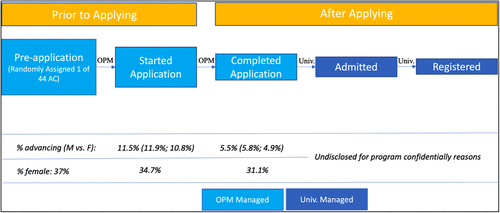
The program is male dominated, with women representing roughly 37% of the incoming prospect pool (Figure 1). To market and recruit the program, the university has partnered with a leading OPM that manages the marketing of the program on social media to recruit prospects and encourage them to apply. OnlineEdCo employs program-dedicated recruiters, who evaluate and consult with prospects as they move through the recruitment process from the preapplication stage until they complete an application. The university’s own admissions team then decides whether to accept or reject program applicants. It is important to emphasize that the recruiters are paid a salary and are incentivized to meet weekly outbound communication targets and longer-term conversion targets of prospects into applicants, but as noted previously, they are prohibited by a U.S. Department of Education law from receiving commissions for converting prospects into enrolled students.
3.1. Key Stages in the Admissions Process
Figure 1 illustrates the recruitment process for the business analytics online training program, the conditional probabilities of advancing between stages for all prospects, male, and female prospects, as well as the female representation at each stage.
Recruiters oversee three major stages of the recruitment process. The first stage is the Preapplication stage, which is the sole focus of this study and corresponds to the pool of prospects who have filled out the intake form and requested more information about the program—but have not started an application. This is an appropriate stage to examine the recruiters’ initial outreach activities because it exists prior to any contact has occurred between recruiters and prospects and before the prospects start an application. At the preapplication stage, recruiters’ initial outreach decisions to prospects are based on information collected on the prospect intake form. This form contains the prospect’s name and contact information, as well as basic credentials, such as their years of work experience and academic achievement. At this stage, recruiters play an essential evaluative role in deciding which prospects to contact to sell the value of the program.
Importantly in our context, recruiters are randomly assigned prospects at the preapplication stage. Recruiters then decide which individuals to contact from among these randomly assigned prospects. The goal of the initial phone call is to explain the value of the program and answer any questions the prospect might have about the program. However, this interaction is unscripted, and a recruiter has discretion in deciding how to engage with prospects.
The second stage is the Started application stage, which corresponds to all prospects who have begun filling out an application for the program. The third and final stage managed by the recruiter is the Completed application stage, which includes all prospects who have completed an application and thus have formally applied to the program. For these latter stages—that is, at the started and completed application stages—the recruiter transitions to a consultative role, offering support and assistance as prospects make progress toward completing an application. Complete applications include personal and academic background, professional experience, essays, transcripts, and letters of recommendation. It is only after an application is completed that the recruiter passes over responsibility to the university’s admissions team to screen the applications and decide whether to admit an applicant into its program. Admitted applicants then decide whether to enroll in the program.
It is important to note that U.S. federal law passed in 2010 (and as enforced by the U.S. Department of Education) prohibits incentive-based compensation, such as bonuses, commissions, or other rewards based on success in securing student enrollment to recruiters in higher education.2 Nevertheless, recruiters are indirectly incentivized as they are assessed by OnlineEdCo’s internal performance-based metrics based on weekly outbound call volumes and conversion targets on the number of students that apply to each cohort of the program. Hence, recruiters are under pressure to be efficient and productive in how they allocate their time in reaching out to prospects, likely prioritizing prospects who based on their credentials and career goals have the highest potential to apply to the program.
Our analysis focuses only on the preapplication stage that reflects the incoming supply of prospects who have clicked on a social media ad (on LinkedIn, Facebook, Instagram, etc.), and filled out the intake form to request more information about the program from a recruiter. About 95% of prospects learn about the program through social media. Online Figure A1 shows a screenshot from the landing page of the program, which includes an intake form that requests the name, highest level of education, undergraduate GPA, work experience, undergraduate major, and contact details of everyone who arrives on the program’s landing page. Once a prospect enters a recruiter’s workflow, a recruiter needs to decide whether to initiate outreach with him or her, typically with a phone call or an email. During these interactions, the recruiter seeks to sell the value of the program to the prospect. As noted previously, although these phone calls are unscripted, they can range from under a minute to over an hour.
Three important features of the preapplication stage allow us to examine recruiters’ initial outreach decisions to prospects. First, as noted previously, prospects are randomly assigned to recruiters through OnlineEdCo’s workflow scheduler. This means that recruiters cannot choose the prospects to which they are assigned and that both observed and unobserved characteristics of the prospects and recruiters are randomized across recruiter-prospect matches. This bolsters our confidence that in this setting gender differences in recruiter treatment are causal and are not due to confounds, whether observed or unobserved.
Second, the preapplication stage is the first point of possible contact between prospects and recruiters, making it an appropriate stage to examine how recruiters choose to initiate contact with prospects prior to applying. Through our interviews with OnlineEdCo managers, we also verified that this is the first point in the recruitment process where gender can be reliably inferred through the first name on the intake form.
Third, OnlineEdCo trains recruiters to prioritize their outreach to prospects using a tiered system that ranks prospects according to their undergraduate GPA and years of work experience; both credentials are collected via the prospect intake form. This prioritization system is intended to simplify decision making and provides a standardized approach for initiating contact with prospects, particularly in a high-volume environment where each recruiter manages an average of several hundred prospects in their workflow at a time. It is important to note that gender is not one of the criteria used in the tiering system, which enables us to examine how gender and qualifications frame the recruiters’ initial outreach decisions.
Figure 1 illustrates that the recruitment process begins at the preapplication stage, where one of 44 recruiters is randomly assigned to each prospect. After the preapplication stage, prospects enter the started application stage, which means that a prospect has clicked on the application and has begun filling it out.3 There is a sharp fall off from the preapplication stage, as only 11.5% of prospects (11.9% male, 10.8% female) end up starting applications. Figure 1 shows that only 5.5% (5.8% male, 4.9% female) of the started applications make it to the completed application stage. Once an application is completed, the prospect’s application materials are sent to the university’s admissions team, which decides whether to admit an applicant into the program. Lastly, once admitted, the registered stage refers to whether a prospect decides to enroll in the incoming cohort, defer or decline admission. We have blinded information on admission and registration rates for confidentiality reasons.
Figure 1 also shows how the gender composition changes across the stages of the recruitment process. We see that the gender composition of the incoming prospect pool at the preapplication stage is 37.0% female and that the gender composition becomes even more male-skewed over the next three application stages, dropping to 31.1% female at the completed application stage.
Our analysis that follows makes two important assumptions. First, although we are not able to directly observe whether the recruiters might use other metrics to guide their decision making, we assume that recruiters are aware of the prioritization system and that it can inform their initial outreach decisions to prospects. Specifically, our hypotheses are guided by the idea that recruiters use the number of weekly outbound calls and the number of prospects converted into program applicants per cohort as their primary performance metrics to inform their initial outreach to prospects. We validated these metrics by examining job postings and LinkedIn profiles of actual recruiters at OnlineEdCo. In both the job descriptions and the recruiters’ own LinkedIn profiles, we found descriptions of outbound call volumes and conversion rates into program applicants as two key metrics used to assess the recruiters’ performance. Second, we cannot directly observe whether recruiters search for individuating information during lower workload periods to further inform their decision making. Although other factors might also be at play, our analyses can only rule out whether there is an empirical pattern consistent with this mechanism, that is, that there is less evidence of gender bias observed during slack times.
4. Sources of Data and Variables
4.1. Recruitment Flow Data
Our data include 198,522 U.S. prospects and 44 recruiters that were randomly assigned to each prospect at the preapplication stage over the 26-month period between October 2017 to November 2019. For legal reasons, our access was limited to U.S. prospects (U.S. citizens residing in the United States). For each prospect, we have their first name, undergraduate major (collected on the form as “business, nonbusiness, not known”), undergraduate GPA range (collected as “2.49 and below, 2.99–2.50, 3.49–3.00, 3.50 and above”), years of work experience (“<5 years, 5–10 years, >10 years”), and whether they have served in the military. In addition, we have data on the month (and year) that the prospect requested more information about the program, the lead source (e.g., LinkedIn, Instagram, Facebook, Google search) that an individual clicked on to land on the program website, and the landing page version (e.g., desktop or mobile version, organic search versus paid search)4 that appeared when the prospect first entered the program’s website.
The gender of the prospects and recruiters are inferred from their first names using the “gender” package in the statistical software “R” (Blevins and Mullen 2015), which returned the predicted gender (i.e., male or female), proportion female, and proportion male based on the U.S. Social Security Administration baby name data for 186,218 (93.8%) of the 198,522 prospects. We used a threshold of 0.65 to infer the final sample of 184,383 male and female prospects, of which 166,375 did not convert without a call (see Endnote 3) and were at risk for being contacted by a recruiter. We also imputed the gender of the recruiters using the same approach, which returned the gender for 42 of the 44 recruiters, after applying the 0.65 thresholds. Our results are robust to using a continuous gender variable and different thresholds for inclusion in our sample of prospects.5 Our final data sample for regression analyses is based on the 166,375 prospects for whom we have complete gender information and demographic information and were at risk for being contacted by a recruiter.
4.2. Dependent Variables
We measure the dependent variables using detailed communications data on the outbound phone communications between each recruiter-prospect pair at the preapplication stage. This information is automatically recorded in OnlineEdCo’s database. Therefore, the communications data in this setting is not subject to differences in self-reporting among recruiters or prospects.
Our two main dependent variables capture both the likelihood and intensity of recruiter outreach, as both measures have the potential to contribute to gendered outbound call volumes. The first main dependent variable, Probability of an Outbound Call, is a likelihood measure that refers to the probability that a recruiter makes a call attempt to a prospect (equal to one if there is at least one instance of an outbound call and zero otherwise). The second dependent variable, No. of Outbound Calls, is an intensity measure that refers to the number or count of call attempts from the recruiter to the prospect (i.e., the number of times the recruiter called a prospect, regardless of whether the prospect responded to the call attempt). Although not formally hypothesized, we complement the count of outbound call attempts that resulted in a meaningful conversation with a prospect of at least one minute in duration using the count variable, No. of Meaningful Outbound Calls.
Table 1 presents the summary statistics for the communication data at the preapplication stage, showing both the probability and counts of communication prior to an application. In Table 2, we present summary statistics on the number of preapplication calls between recruiters and prospects split by whether a prospect started an application and completed an application (conditional on starting an application). In terms of the likelihood of receiving a call, prospects who started an application were significantly more likely to receive a call than those that did not, but we do not find a meaningful effect size of being contacted at the preapplication stage on completed applications. With respect to outbound call intensity, prospects who started and completed an application received significantly more outbound calls and outbound meaningful calls at the preapplication stage, respectively. Notably, at the completed application stage, prospects who completed an application had a mean of 2.18 outbound calls and 0.95 meaningful outbound calls compared with 1.69 outbound calls and 0.34 meaningful outbound calls for those who did not complete their applications. Overall, the summary statistics indicate that prospects who received more outbound calls at the preapplication stage were more likely to start an application and convert into program applicants.
|

Table 1. Summary Statistics on Recruiters’ Outbound Communication at the Preapplication Stage
| Variable | All prospects (N = 166,375) | Male prospects (N = 104,312) | Female prospects (N = 62,063) | Difference (t test) | Cohen’s d |
|---|---|---|---|---|---|
| Prob. of outbound call | 0.857 | 0.859 | 0.852 | 0.007*** | 0.02 |
| No. of outbound calls | 1.622 | 1.636 | 1.602 | 0.034*** | 0.03 |
| No. of outbound meaningful calls | 0.253 | 0.273 | 0.218 | 0.055*** | 0.10 |
Note. Summary statistics (means) exclude prospects that converted without a call; t tests are two-tailed.
***p < 0.01; **p < 0.05; *p < 0.1.
|
Table 2. Summary Statistics on Likelihood of Starting and Completing an Application by Recruiters’ Outbound Communication at the Preapplication Stage
| Variable | Started vs. did not start an application (N = 166,375) | Completed vs. did not complete an application (N = 3,347) |
|---|---|---|
| Prob. of outbound call | Started: 0.955 (0.207) Did not start: 0.854 (0.354) Difference = 0.101***; d = 0.29 | Completed: 0.943 (0.231) Did not complete: 0.958 (0.202) Difference = 0.019**; d = 0.097 |
| No. of outbound calls | Started: 1.781 (1.320) Did not start: 1.620 (1.255) Difference = 0.161***; d = 0.13 | Completed: 2.182 (1.692) Did not complete: 1.691 (1.204) Difference = 0.491***; d = 0.37 |
| No. of meaningful outbound calls | Started: 0.454 (0.814) Did not start: 0.249 (0.543) Difference = 0.205***; d = 0.37 | Completed: 0.949 (1.086) Did not complete: 0.343 (0.693) Difference = 0.606***; d = 0.74 |
Notes. The summary statistics at the completed application stage exclude any prospects that did not start an application. We use two-tailed t tests and report Cohen’s d effect sizes.
***p < 0.01; **p < 0.05; *p < 0.1.
4.3. Independent Variables
Our main independent variable is Female prospect, which is a dummy variable corresponding to whether a prospect is female. We also construct a categorical variable, Priority tier, to reflect the prospect’s priority in the tiered qualification system as implemented by OnlineEdCo. Specifically, OnlineEdCo prioritizes initial outreach to prospects based on their academic achievement or undergraduate GPA range (low: < 3.00, medium: 3.00–3.50 and high: >3.50) and years of work experience (low: <5 years; medium: 5–10 years; high: >10 years). The variable takes three values: top tier (high undergraduate GPA range and high years of work experience); middle tier (having either a high undergraduate range or high years of work experience but not both); bottom tier (having either low or medium undergraduate GPA range and work experience).
In addition, we control for all prospect characteristics that appear on the prospect intake form (i.e., military affiliation, undergraduate major type), as well as the lead source (i.e., social media source) the prospect clicked on and the landing page version that the prospect was routed to. We include these characteristics as controls since this information is available to the recruiters at the point of initial outreach to prospects and may inform their outreach decisions. Moreover, we incorporate year-month dummies to account for seasonality trends. As discussed in Endnote 3, we excluded cases where the prospects converted without a call immediately after filling out the prospect intake form because these prospects were not at risk for being contacted at the preapplication stage. Table A2 shows the summary statistics from the randomization of prospects by recruiter gender, and indicates that other than military affiliation, the randomization achieved balance on the prospect-level covariates available on the prospect intake form.
Table A3 presents summary statistics for the prospect level characteristics and qualifications by prospect gender at the preapplication stage. All the reported information in Table A3 (except for the priority tier) is collected on the prospect intake form. Consistent with the summary statistics reported in Tables A2 and A3, we observe no difference in the likelihood of being assigned a female recruiter by prospect gender (χ2(1) = 0.106, not significant). We observe that male prospects are more likely to be affiliated with the military than female prospects (χ2(1) = 1,900, p < 0.01). Examining undergraduate major type, we observe that 50.23% of male prospects are business majors compared with 46.34% of female prospects (χ2(2) = 238.273, p < 0.01).
Turning to undergraduate GPA and years of work experience, which are the two criteria OnlineEdCo combines to determine a prospect’s priority tier, the χ2 tests of distributions by prospect gender show that female prospects have higher undergraduate GPAs but slightly fewer years of work experience than male prospects. In terms of academic achievement, 38.21% of male prospects have undergraduate GPAs of 3.50 and above compared with 50.58% of female prospects (χ2(2) = 2,900, p < 0.01). In terms of work experience, 84.18% of male prospects and 82.27% of female prospects have more than 10 years of work experience (χ2(2) = 120.793, p < 0.01). Finally, in terms of the priority tiers, female prospects have better credentials overall, with 41.68% of female prospects in the top tier category compared with 32.10% of male prospects (χ2(2) = 1,600, p < 0.01). Table A4 shows the correlations between the main variables at the preapplication stage.
4.4. Estimation Strategy
We use linear probability models (LPMs) for all regressions involving the recruiters’ likelihood of outreach (see Brands and Fernandez-Mateo (2017) for a similar approach) and Poisson models for all regressions involving the recruiters’ outbound call counts due to the discrete nature and nonnegative integer values of the data (Cameron and Trivedi 1986). In all regressions, we include prospect-level controls available on the intake form, lead source, and landing page version controls, and use year-month fixed effects.
To examine how recruiter workload affects outreach behaviors, we use the continuous variable, log(monthly workload), which is the logarithm of the number of prospects randomly assigned to a recruiter per month (see Online Figure A2 for distribution of log(monthly workload)). On average, a recruiter is assigned a mean number of 499.28 prospects per month (standard deviation (SD) = 216.46).
As noted previously, recruiters are randomly assigned to prospects at the preapplication stage. This means that within the limits of random error, the coefficient estimates are not biased by observable or unobservable factors arising from features of the prospect, recruiter, or prospect-recruiter pair. We adjust for heteroskedasticity with robust standard errors. In the online appendix, we include recruiter fixed effects to our main regression tables to mitigate concerns regarding unobservable differences between recruiters, such as their gender, effectiveness, or tenure. The results are robust to recruiter fixed effects, which means that the gender biases we report are occurring within recruiter (Tables A5–A8).
5. Results
5.1. Recruiter Gender Bias and Initial Outbound Communication Decisions
Hypothesis 1 theorized that recruiters initiate less contact with female prospects than similarly qualified male prospects at the initial preapplication stage of the recruitment process, that is, when prospects first enter recruiters’ workflow. To test Hypothesis 1, we examine the recruiters’ outbound communication at the preapplication stage. As noted, this is the critical point of initial communication between recruiters and prospects, occurring after a prospect learns about the program and enters a recruiter’s work queue, but before he or she starts an application.
As described in Section 4.2, we model both the recruiters’ likelihood and intensity of initial outreach to prospects at the preapplication stage. In Table 3, we present the LPM results for the likelihood of initial outreach, modeled as the probability of an outbound call (Model 1). Table 4 presents the Poisson regression results for the intensity of initial outreach, modeled as the number of outbound calls (Model 1), and the number of outbound meaningful calls (≥1 minute; Model 2) at the preapplication stage on prospect gender. All models in Tables 3 and 4 include the priority tier, and all prospect-level controls available on the intake form, lead source, and landing page version, and use year-month fixed effects to adjust for program-level seasonality trends.
|
Table 3. Linear Probability Models of Recruiter Outreach Likelihood at Preapplication Stage on Prospect Gender and Priority Tier
| Variables | Model 1 P(call out) | Model 2 P(call out) |
|---|---|---|
| Female prospect | −0.00833*** | −0.0254*** |
| (0.00176) | (0.00745) | |
| Middle tier | 0.192*** | 0.188*** |
| (0.00375) | (0.00458) | |
| Top tier | 0.234*** | 0.224*** |
| (0.00378) | (0.00466) | |
| Female prospect × Middle tier | 0.0128 | |
| (0.00783) | ||
| Female prospect × Top tier | 0.0274*** | |
| (0.00784) | ||
| Constant | 0.800*** | 0.807*** |
| (0.0229) | (0.023) | |
| Observations | 166,375 | 166,375 |
| R2 | 0.082 | 0.082 |
Notes. All models include the following controls: military affiliation, undergraduate major type, lead source, landing page version, and year-month dummies. Robust standard errors in parentheses.
***p < 0.01; **p < 0.05; *p < 0.1.
|
Table 4. Poisson Regression Models of Recruiter Outreach Intensity at Preapplication Stage on Prospect Gender and Priority Tier
| Variables | Model 1 No. of calls out | Model 2 No. of calls out ≥ 1 min | Model 3 No. of calls out | Model 4 No. of calls out ≥ 1 min |
|---|---|---|---|---|
| Female prospect | −0.0160*** | −0.202*** | −0.0587*** | −0.239*** |
| (0.00375) | (0.0116) | (0.0167) | (0.0443) | |
| Middle tier | 0.334*** | 0.328*** | 0.321*** | 0.319*** |
| (0.00829) | (0.0215) | (0.0102) | (0.0256) | |
| Top tier | 0.417*** | 0.419*** | 0.398*** | 0.403*** |
| (0.00841) | (0.0222) | (0.0104) | (0.0266) | |
| Female × Middle tier | 0.0399** | 0.0302 | ||
| (0.0174) | (0.0470) | |||
| Female × Top tier | 0.0532*** | 0.0502 | ||
| (0.0176) | (0.0477) | |||
| Observations | 166,375 | 166,375 | 166,375 | 166,375 |
Notes. All models include the following controls: military affiliation, undergraduate major type, lead source, landing page version, and year-month dummies. Robust standard errors in parentheses.
***p < 0.01; **p < 0.05; *p < 0.1.
First, turning to the likelihood of initiating outreach, we observe in Table 3, Model 1, that recruiters are 0.8 percentage points (pp) less likely to initiate a call with a female than male prospect (Model 1: −0.00833, p < 0.01). Second, we turn to Table 4 to examine the intensity of the recruiters’ initial outreach to male and female prospects. Examining the coefficients for Priority tier in Models 1 and 2, we observe that consistent with OnlineEdCo’s stated practices, recruiters are more likely to initiate outbound calls with prospects who have higher credentials based on their work experience and GPAs (which are the two criteria OnlineEdCo uses to determine a prospect’s priority tier).6 Turning to Model 1, we observe that recruiters have 1.6% fewer calls with female than male prospects (Model 1: −0.0160, p < 0.01) and have 18% fewer meaningful conversations of over one minute with female prospects compared with male prospects (Model 2: −0.202, p < 0.01).7 Comparing the ratio of outbound calls to outbound meaningful calls, we find that recruiters need to make on average, one more outbound call to have a meaningful conversation with a female relative to a male prospect.8 This pattern suggests that recruiters are less successful in reaching female prospects relative to their male counterparts. However, because meaningful calls are shaped by supply- and demand-side factors, the shorter conversations between recruiters and female prospects can be driven by explanations on both sides, such as recruiters making less effort or women being less interested. Moreover, we observe in Tables A5 and A6 that the gender biases against reaching out to women relative to men are occurring within recruiter, and that gendering of outbound calls are consistent for both male and female recruiters (Tables A10 and A11).
These results indicate that recruiters make fewer calls to female prospects compared with similarly qualified men (in terms of both their intensity and likelihood of their outreach). Thus, our results support Hypothesis 1.
5.2. Recruiter Initial Outbound Communication and Cognitive Load
Hypothesis 2 theorized that the recruiters’ gendered initial outreach behaviors at the preapplication stage would be more likely to occur when they have higher cognitive loads and hence less time to dedicate to each prospect. Recruiters are more likely to have higher cognitive loads during busier months in which they are assigned a high volume of prospects at the preapplication stage and have higher workloads.
In Tables 5 and 6, we examine how a recruiter’s workload affects their reliance on gender stereotypes when deciding how to allocate their outbound communication to prospects at the preapplication stage. Beginning with the likelihood of outreach, in Table 5, Models 1 and 2, we add the continuous variable, log(monthly workload) to Model 1 in Table 3, followed by the interaction term between Female prospect × log(monthly workload) in Model 2. Turning to the intensity of outreach, in Table 6, Models 1 and 2, we add the continuous variable, log(monthly workload) to Models 1 and 2 in Table 4, followed by the interaction term between Female prospect × log(monthly workload) in Models 3 and 4.
|
Table 5. Linear Probability Models of Recruiter Outreach Likelihood at Preapplication Stage on Prospect Gender by Workload
| Variable | Model 1 P(call out) | Model 2 P(call out) |
|---|---|---|
| Female prospect | −0.00821*** | −0.00708 |
| (0.00176) | (0.0153) | |
| Log(monthly workload) | −0.0200*** | −0.0200*** |
| (0.00147) | (0.00173) | |
| Female × log(monthly workload) | −0.000187 | |
| (0.00253) | ||
| Middle tier | 0.192*** | 0.192*** |
| (0.00374) | (0.00374) | |
| Top tier | 0.234*** | 0.234*** |
| (0.00378) | (0.00378) | |
| Constant | 0.924*** | 0.924*** |
| (0.025) | (0.0252) | |
| Observations | 166,375 | 166,375 |
| R2 | 0.083 | 0.083 |
Notes. All models include the following controls: military affiliation, undergraduate major type, lead source, landing page version, and year-month dummies. Robust standard errors in parentheses.
***p < 0.01; **p < 0.05; *p < 0.1.
|
Table 6. Poisson Regression Models of Recruiter Outreach Intensity at Preapplication Stage on Prospect Gender by Workload
| Variables | Model 1 No. of calls out | Model 2 No. of calls out ≥ 1 min | Model 3 No. of calls out | Model 4 No. of calls out ≥ 1 min |
|---|---|---|---|---|
| Female prospect | −0.0155*** | −0.202*** | 0.0596 | −0.0402 |
| (0.00374) | (0.0116) | (0.0433) | (0.121) | |
| Log(monthly workload) | −0.0882*** | −0.0917*** | −0.0839*** | −0.0833*** |
| (0.00430) | (0.0118) | (0.00456) | (0.0125) | |
| Female × log(monthly workload) | −0.0125* | −0.0269 | ||
| (0.00708) | (0.0200) | |||
| Middle tier | 0.333*** | 0.327*** | 0.333*** | 0.326*** |
| (0.00827) | (0.0215) | (0.00827) | (0.0215) | |
| Top tier | 0.416*** | 0.418*** | 0.416*** | 0.418*** |
| (0.00840) | (0.0222) | (0.00840) | (0.0222) | |
| Observations | 166,375 | 166,375 | 166,375 | 166,375 |
Notes. All models include the following controls: military affiliation, undergraduate major type, lead source, landing page version, and year-month dummies. Robust standard errors in parentheses.
***p < 0.01; **p < 0.05; *p < 0.1.
First, examining the likelihood of initial outreach in Table 5, where the dependent variable is the probability of an outbound call (Models 1 and 2), we observe that the coefficient for log(monthly workload) is negative and significant (Model 1: −0.0200, p < 0.01), but the interaction term between Female × log(monthly workload) is not significant (Model 2: −0.000187). Second, examining the intensity of initial outreach in Table 6, where the dependent variable is the number of outbound calls (Models 1 and 3) and the number of outbound meaningful calls (Models 2 and 4), we observe in Models 1 and 2 that the coefficient for log(monthly workload) is negative and significant for both the number of outbound calls (Model 1: −0.0882, p < 0.01) and outbound meaningful calls (Model 2: −0.0917, p < 0.01). These coefficients suggest that the recruiters make fewer outbound calls (−8.4%) and have fewer meaningful conversations (−8.7%) when they have higher workloads. This pattern is consistent with the notion that recruiters have less time to allocate to each prospect during busier months. Turning to the interaction term between Female prospect × log(monthly workload) in Models 3 and 4, we observe that the coefficient is negative and marginally significant for the number of outbound call attempts (Model 3: −0.0125, p < 0.10). The coefficient in Model 3 can be interpreted as follows: Female prospects receive 1.2% fewer calls relative to male prospects for each unit increase in log(workload). The interaction term is also directionally negative for meaningful calls (Model 4: −0.0269, not significant). In Tables A7 and A8, we show that the reported results in Tables 5 and 6 are robust to recruiter fixed effects, which indicates that the estimated relationships are occurring within recruiter.
Hence, we find partial support for the cognitive load in Hypothesis 2: Recruiters are more likely to use gender stereotypes to inform the intensity of their outbound call volumes to prospects when they have higher workloads and fewer attentional resources to dedicate to each prospect.
5.3. Recruiter Initial Outbound Communication and Qualifications
Last, Hypothesis 3 theorized that within the male-dominated STEM domain of online tech training programs, recruiters are more likely to search for additional signals of quality from female than male prospects to overcome their gendered double standards. The net consequence of these behaviors is that the gender bias in outreach against female prospects will be smaller among more qualified female and male prospects compared with less qualified female and male prospects.
As noted, OnlineEdCo uses a tiering system to prioritize outreach based on a prospect’s undergraduate GPA and years of work experience. To test for gendered double standards in terms of likelihood of making a call and intensity of calls, we add the interaction term between Female prospect × Priority tier in Table 3 (Model 2) and Table 4 (Models 3 and 4), respectively. If recruiters use double standards when initiating outreach with prospects, then the gender difference in outbound communication would be smaller (larger) among female prospects who are more (less) skilled or competent and are assigned to a higher (lower) priority tier. First, examining the recruiters’ likelihood of initial outreach in Table 3, which we model as the probability of an outbound call, Model 2 shows that the interaction term between Female × Middle tier is directionally positive (Model 2: 0.0128, not significant) and is positive and significant for Female × Top tier (Model 2: 0.0274, p < 0.01). That is, compared with bottom tier female prospects, those in the top tier of the qualifications distribution are 2.7 pp more likely to receive an outbound call. Second, we examine the intensity of the recruiters’ outreach in Table 4, where the dependent variable is the number of outbound call attempts. Consistent with their stated procedures, the middle and top tier prospects are more likely to be contacted than those at the bottom tier. Importantly, the interaction terms indicate that the coefficient for Female x Middle tier is positive and significant for outbound calls (Model 3: 0.0399, p < 0.05), suggesting that relative to bottom tier female prospects, middle tier female prospects receive 4.1% more outbound call attempts. Similarly, the coefficients for Female x Top tier are positive and significant for outbound calls (Model 3: 0.0532, p < 0.01), and suggest that top tier female prospects receive 5.4% more outbound call attempts relative to their bottom tier female counterparts. By contrast, we find no significant differences for outbound meaningful calls in Model 4 (Middle tier: 0.0302, not significant; Top tier: 0.0502, not significant). The results in Model 4 are noteworthy as they suggest that upon connecting with a female prospect, there is no observed difference in the number of meaningful conversations across the qualifications distribution.
Taken together, the reported results indicate that we find partial support for Hypothesis 3.
6. Discussion
Our study investigates the initial demand-side outreach decisions of recruiters for an online tech training program for midcareer professionals at an elite university. The training program we study is in a STEM field, a male-dominated domain in which women have been underrepresented at each career stage. Using unique data on the recruiters’ outbound communications, we first examine whether and under which conditions the recruiters’ initial outreach decisions are gender biased and disadvantaging of female prospects. We find evidence that recruiters use gender stereotypes to initiate more calls and have longer conversations with male prospects over similarly qualified female prospects. Examining plausible mechanisms for the gendered outreach, our results provide evidence that recruiters are more likely to use gender stereotypes when they have higher workloads and have limited attention to allocate to each prospect. We also find that recruiters search for additional signals of quality from female prospects when deciding whom to contact in this male-dominated domain of an online tech training program. Importantly, in our setting, we have the rare benefit of recruiters being randomly assigned to prospects, thereby mitigating concerns about unobserved factors which might affect recruiters’ choices.
Our study contributes to the understanding of the growing class of online and social media platforms that are being used to recruit talented individuals to apply for jobs and training programs in hiring and education. Although prior research has primarily focused on how recruitment practices at the application interface may favor members of certain demographic groups in offline settings, there has been less attention paid to the growing prevalence of online recruitment practices, in which recruiters initiate contact with an unprecedented large volume of high potential candidates even before they have applied to a program or position. The ease of reaching a large diverse population of prospects using online advertising and social media introduces new challenges to recruiting that remain less understood (Bills et al. 2017). Building on recent studies that have examined how subtle differences in the language and content of ads shape the gender composition of job applicant pools (Gaucher et al. 2011, Marinescu and Wolthoff 2020), our study investigates how active recruiters choose to engage with promising candidates prior to an application, and how their decisions may encourage members of certain demographic groups to apply, while simultaneously steering members of other demographic groups away from applying.
Our study’s findings also contribute to our understanding of when and potentially why demand-side gender biases against midcareer women might arise in online recruiting. Despite their rich human capital and career accomplishments that these individuals have already achieved, our study suggests that high-achieving midcareer women may nevertheless be subjected to gender bias in male-dominated domains. One plausible explanation of why such demand-side biases exist is because of the lack of individuating information about the true quality of prospects. Absent detailed information, recruiters rely on gender stereotypes to assess the suitability of male and female prospects for online tech training programs as opposed to the prospects’ past experiences, skills, training, and prior career successes (Heilman et al. 1989). Perhaps unwittingly, it is the OPM’s emphasis on short-term, volume-driven performance metrics that may be reinforcing the recruiters’ reliance on gender stereotypes to initiate contact with prospects. To be efficient with their time, the recruiters appear to be statistically discriminating, using gender as a heuristic to inform their outreach decisions. It is noteworthy that we find these effects albeit studying a conservative case of steering (i.e., the recruiters are by law not able to be directly compensated for converting prospects into applicants and do not work with the prospects after they apply to the program). This means that our results may offer a lower bound of how prospect gender affects decision-makers’ choices in male-dominated online settings.
The recruiters’ gendered behaviors have implications beyond the focal online tech training program we study. The positive returns of such programs on career outcomes (see Endnote 1) suggest that the recruiters’ behaviors may hinder continued progress toward pay equity and the reduced ascension of midcareer women relative to men into critical data-driven decision-making roles within their organizations. These findings have practical considerations for universities’ decisions to partner with OPMs, and importantly how universities might restructure organizational incentives with their OPM partners to mitigate the use of efficiency-based metrics in their recruitment tactics. Furthermore, because recruiters reach out to prospects on behalf of the online program (and typically without disclosing their role as an LMI), it is possible that partnering with online LMIs may result in new reputational concerns for universities as they scale up their online programs.
Although we focused on how prospect gender shapes demand-side initial outreach decisions, it is important to note that supply-side processes might also be at play affecting the gender composition of the preprospect stage. During informal interviews with enrolled students in the program, we observed that female students were more likely than male students to mention a fear of rejection from the program. This is consistent with research indicating that women tend to screen themselves prior to applying for opportunities in male-dominated domains (Fernandez-Mateo and Fernandez 2016; Brands and Fernandez-Mateo 2017; Kanze et al. 2018, 2021). It is possible that these supply-side gender differences may serve to reinforce recruiters’ gendered outreach decisions. Our analyses revealed that the recruiters spend more time and effort (i.e., more outbound calls) to secure a meaningful conversation with female prospects, relative to their male counterparts (see Endnote 7). Consistent with these findings, in supplementary analysis, we also examined the prospects’ inbound callbacks, which indicated that an inbound callback required roughly five additional calls to a female prospect compared with a male prospect.9 Because inbound calls can only occur after a recruiter initiates contact with a prospect, these patterns further suggest that recruiters need to expend additional effort to reach female prospects. Although the results should be interpreted cautiously due to the supply- and demand-side factors driving meaningful conversations and the lack of insight into their content, there is suggestive evidence that female prospects are less interested in the program compared with males, which may reinforce recruiters’ behavior of contacting them less often. Of course, we need to keep in mind that the recruiters may also be expending less effort in convincing the female prospects to apply.
An important area of future work is to examine the extent that interactions between supply-side and demand-side processes are confirmatory or self-reinforcing of decision-makers’ prior beliefs about gender stereotypes in male-dominated domains (Nickerson 1998, Marks and Fraley 2006). Indeed, it has been argued that matching the gender of the decision maker to that of the candidate—in this context, the gender match or mismatch of the recruiter-prospect pair—can be an effective lever for bias mitigation (Eagly et al. 1992, Fernandez and Sosa 2005, Gorman 2005, Greenberg and Mollick 2017). However, in this setting, the findings are consistent with several other studies that find no effect of gender matching (Ridgeway 1997, Ridgeway and Correll 2004, Heilman and Haynes 2005, Moss-Racusin et al. 2012, Srivastava and Sherman 2015), and the gendered outreach biases against female prospects are occurring within recruiter as well (Table A5). Thus, in this setting also, female recruiters appear to work more as “cogs in the machine” than “agents of change” (Srivastava and Sherman 2015, Abraham 2017).
Moreover, we think that the analyses we have provided here aid our understanding of gender bias in demand-side outreach behaviors in male-dominated domains and serve as a useful framework for addressing demographic disparities that may arise in other contexts as well. The problem of biased choice against underrepresented groups is quite general. Across a range of organization and institutional contexts, whether it be funding projects (Greenberg and Mollick 2017, Kanze et al. 2018), selecting job candidates (Fernandez and Sosa 2005, Fernandez-Mateo and Fernandez 2016, Kacperczyk and Younkin 2021, Campbell and Hahl 2022), admissions (Castilla 2022), or choice of cultural products (Kovács and Sharkey 2014, Kim and DellaPosta 2021), evaluators are faced with the challenge of choosing among a set of actors or products with limited information in a resource-constrained environment. A direct consequence is that decision makers tend to rely on noisy signals to infer the expected quality of choices or candidates with stereotyping surfacing as a likely result (Botelho and Abraham 2017).
Finally, our findings suggest there is likely value in importing interventions from other domains into this setting to support gender equality. For example, blind screening has been effectively used in the labor market recruitment context to encourage gender-equitable results. Our finding that the outreach to prospects with gender-neutral names is unbiased suggests this policy can work to good effect here as well. Going further, this suggests that in parallel fashion to the well-known orchestra study of Goldin and Rouse (2000), efforts to conceal the name of prospects until after recruiters have initiated outbound communication with candidates can pay dividends in the quest for greater gender equality in STEM programs and fields of study. Overall, we think that this study paves the way for future work on transforming women’s experiences and achievements in male-dominated STEM domains.
The authors thank seminar participants at Massachusetts Institute of Technology Economic Sociology Working Group, Harvard Business School Technology and Operations Management and Laboratory for Innovation Science at Harvard (LISH), and Northwestern Institute on Complex Systems, Isabel Fernandez-Mateo, Yael Grushka-Cockayne, Laura Huang, senior editor Olenka Kacperczyk, and two anonymous referees for valuable feedback on earlier versions of this paper.
1 Career outcomes are based on participants’ self-reports to the return-on-investment (ROI) survey administered at the end of the program (396 respondents) and six months following the end of the program (112 respondents) between February 2019 and August 2021.
2 See https://www2.ed.gov/policy/highered/reg/hearulemaking/2009/compensation.html (accessed May 10, 2023).
3 Note that 9.7% of prospects started an application immediately after completing the intake form, before they were contacted by recruiters. We excluded the prospects who converted without call from the analyses because they were not at risk for being contacted by a recruiter at the preapplication stage (also see Section 4.3).
4 Organic search refers to people who have found the landing page through basic search or word of mouth, whereas paid search refers to people who have found the landing page because of paid promotions.
5 In additional analyses, we used the 1,654 gender neutral names (<0.65 proportion female or male) as a counterfactual. See Table A1 for additional analyses of gender-neutral prospects. Unlike strongly gendered names (e.g., Mary, Andrew), where gender differences should be captured by both differences in behaviors on the prospect side and differences in treatment from the recruiters, any gender differences associated with gender neutral names (e.g., Lindsey, Alex) should stem only from the behaviors of the prospect. We find little evidence of demand-side differences in treatment at the preapplication stage for gender neutral names, which is consistent with the idea that recruiters are using strongly gendered names in deciding who to contact.
6 In supplementary analyses (Table A9), we show that the coefficient for Female prospect is negative and significant in alternative specifications of the Poisson regression models, in which we control for all information collected on the prospect intake form rather than using Priority tier (which is based on a prospect’s undergraduate GPA and work experience). This suggests that the results with respect to gender are not an artefact of the use of the Priority tier measure.
7 Whereas the first meaningful call duration between a recruiter and a male prospect is on average 5.42 minutes (standard deviation = 6.43 minutes), it tends to be 0.40 minutes (24 seconds) shorter with female prospect (t = 5.50, p < 0.001).
8 Consistent with this explanation, we also examine the ratio of outbound calls to meaningful calls by gender. We find a mean ratio of 0.17 (standard deviation = 0.32), which suggests that on average, a recruiter needs to make six outbound calls to have one meaningful conversation. However, we observe that the mean ratio for male prospects is 0.18 (standard deviation = 0.33) compared with 0.15 (standard deviation = 0.31) for female prospects (t = 18.00, p < 0.01).
9 Examining the ratio of inbound call backs to outbound calls, we find a mean ratio of 0.053 (standard deviation = 0.24), which suggests that on average, a recruiter needs to make 19 outbound calls to have one inbound call back from a prospect. However, we observe that the mean ratio for male prospects is 0.057 (standard deviation = 0.25) compared with 0.045 (standard deviation = 0.22) for female prospects (t = 9.00, p < 0.01). This suggests that compared with male prospects, female prospects require five additional outbound calls to receive an inbound call back.
References
- (2017) Pay formalization revisited: Considering the effects of manager gender and discretion on closing the gender wage gap. Acad. Management J. 60(1):29–54.Crossref, Google Scholar
- (2022) 3 workplace biases that derail mid-career women. Harvard Bus. Rev. Accessed May 10, 2023, https://hbr.org/2022/09/3-workplace-biases-that-derail-mid-career-women.Google Scholar
- (2008) Mostly Harmless Econometrics: An Empiricist’s Companion (Princeton University Press, Princeton, NJ).Crossref, Google Scholar
- (2022) That fancy university course? It might actually come from an education company. Wall Street Journal (July 6). Accessed May 10, 2023, https://www.wsj.com/articles/that-fancy-university-course-it-might-actually-come-from-an-education-company-11657126489.Google Scholar
- Bapna S, Ganco M (2021) Gender gaps in equity crowdfunding: Evidence from a randomized field experiment. Management Sci. 67(5):2679–2710.Google Scholar
- (1993) The economic way of looking at life. Coase-Sandor Institute for Law & Economics Working Paper No. 12.Google Scholar
- (2008) Three’s a crowd? Understanding triadic employment relationships. Cappelli P, ed. Employment Relationships: New Models of White Collar Work (Cambridge University Press, Cambridge, UK), 142–178.Google Scholar
- (1997) Gender-and race-based standards of competence: Lower minimum standards but higher ability standards for devalued groups. J. Personality Soc. Psych. 72(3):544.Crossref, Google Scholar
- (2012) The language of performance evaluations: Gender-based shifts in content and consistency of judgment. Soc. Psych. Personality Sci. 3(2):186–192.Crossref, Google Scholar
- (2017) The demand side of hiring: Employers in the labor market. Annu. Rev. Sociol. 43:291–310.Crossref, Google Scholar
- (2015) Jane, John… Leslie? A historical method for algorithmic gender prediction. DHQ Digital Humanity Quart. 9(3). Accessed May 10, 2023, http://www.digitalhumanities.org/dhq/vol/9/3/000223/000223.html.Google Scholar
- (2013) Labor market intermediaries and the new paradigm for human resources. Acad. Management Ann. 7(1):341–392.Crossref, Google Scholar
- (2017) Pursuing quality: How search costs and uncertainty magnify gender-based double standards in a multistage evaluation process. Admin. Sci. Quart. 62(4):698–730.Crossref, Google Scholar
- (2017) Leaning out: How negative recruitment experiences shape women’s decisions to compete for executive roles. Admin. Sci. Quart. 62(3):405–442.Crossref, Google Scholar
- (1986) Econometric models based on count data. Comparisons and applications of some estimators and tests. J. Appl. Econometrics 1(1):29–53.Crossref, Google Scholar
- (2022) He’s overqualified, she’s highly committed: Qualification signals and gendered assumptions about job candidate commitment. Organ. Sci. 33(6):2451–2476.Link, Google Scholar
- (2020) Are referees and editors in economics gender neutral? Quart. J. Econom. 135(1):269–327.Crossref, Google Scholar
- (2010) Sex and science: How professor gender perpetuates the gender gap. Quart. J. Econom. 125(3):1101–1144.Crossref, Google Scholar
- (2022) Gender, race, and network advantage in organizations. Organ. Sci. 33(6):2364–2403.Link, Google Scholar
- (2023) The gendering of job postings in the online recruitment process. Management Sci. Forthcoming.Link, Google Scholar
- (2011) Professional role confidence and gendered persistence in engineering. Amer. Sociol. Rev. 76(5):641–666.Crossref, Google Scholar
- (2009) Women’s underrepresentation in science: Sociocultural and biological considerations. Psych. Bull. 135(2):218.Crossref, Google Scholar
- Chan J, Wang J (2017) Hiring preferences in online labor markets: Evidence of a female hiring bias. Management Sci. 64(7):2973–2994.Google Scholar
- (2001) Gender and the career choice process: The role of biased self-assessments. Amer. J. Sociol. 106(6):1691–1730.Crossref, Google Scholar
- (2004) Constraints into preferences: Gender, status, and emerging career aspirations. Amer. Sociol. Rev. 69(1):93–113.Crossref, Google Scholar
- (2007) Getting a job: Is there a motherhood penalty? Amer. J. Sociol. 112(5):1297–1338.Crossref, Google Scholar
- (2017) Evaluating novelty: The role of panels in the selection of R&D projects. Acad. Management J. 60(2):433–460.Crossref, Google Scholar
- (2019) Amazon to retrain a third of its US workforce. Wall Street Joural (July 11). Accessed May 10, 2023, https://www.wsj.com/articles/amazon-to-retrain-a-third-of-its-u-s-workforce-11562841120.Google Scholar
- (2020) Earnings dynamics, changing job skills, and STEM careers. Quart. J. Econom. 135(4):1965–2005.Crossref, Google Scholar
- (2002) Role congruity theory of prejudice toward female leaders. Psych. Rev. 109(3):573.Crossref, Google Scholar
- (1992) Gender and the evaluation of leaders: A meta-analysis. Psych. Bull. 111(1):3.Crossref, Google Scholar
- (2008) Competing for jobs: Labor queues and gender sorting in the hiring process. Soc. Sci. Res. 37(4):1061–1080.Crossref, Google Scholar
- (2005) Gendering the job: Networks and recruitment at a call center. Amer. J. Sociol. 111(3):859–904.Crossref, Google Scholar
- (2016) Bending the pipeline? Executive search and gender inequality in hiring for top management jobs. Management Sci. 62(12):3636–3655.Link, Google Scholar
- (2011) Anticipatory sorting and gender segregation in temporary employment. Management Sci. 57(6):989–1008.Link, Google Scholar
- (1996) Double standards in the evaluation of men and women. Soc. Psych. Quart. 59(3):237–254.Crossref, Google Scholar
- (2000) Double standards for competence: Theory and research. Annu. Rev. Sociol. 26(1):21–42.Crossref, Google Scholar
- (1994) Gender and double standards in the assessment of job applicants. Soc. Psych. Quart. 57(4):326–339.Crossref, Google Scholar
- (2011) Evidence that gendered wording in job advertisements exists and sustains gender inequality. J. Personality Soc. Psych. 101(1):109.Crossref, Google Scholar
- (2011) Heuristic decision making. Annu. Rev. Psych. 62:451–482.Crossref, Google Scholar
- (2000) Orchestrating impartiality: The impact of” blind” auditions on female musicians. Amer. Econom. Rev. 90(4):715–741.Crossref, Google Scholar
- (2005) Gender stereotypes, same-gender preferences, and organizational variation in the hiring of women: Evidence from law firms. Amer. Sociol. Rev. 70(4):702–728.Crossref, Google Scholar
- (2017) Activist choice homophily and the crowdfunding of female founders. Admin. Sci. Quart. 62(2):341–374.Crossref, Google Scholar
- Grushka-Cockayne Y, Lakhani KR (2020) 2U: Higher education rewired. Harvard Business School Case 620–044.Google Scholar
- (2019) Dear Colleges: Take Control of Your Online Courses (Century Foundation).Google Scholar
- (1983) Sex bias in work settings: The lack of fit model. Res. Organ. Behav. 5:269–298.Google Scholar
- (2008) Gender stereotypes are alive, well, and busy producing workplace discrimination. Industry Organ. Psych. 1(4):393–398.Crossref, Google Scholar
- (2005) No credit where credit is due: Attributional rationalization of women’s success in male-female teams. J. Appl. Psych. 90(5):905.Crossref, Google Scholar
- (1989) Has anything changed? Current characterizations of men, women, and managers. J. Appl. Psych. 74(6):935.Crossref, Google Scholar
- (2018) Online program management: Spring 2018 view of the market landscape. Accessed May 10, 2023, https://eliterate.us/online-programmanagement.Google Scholar
- (2021) A founding penalty: Evidence from an audit study on gender, entrepreneurship, and future employment. Organ. Sci. 33(2):716–745.Google Scholar
- (2011) Thinking, Fast and Slow (Macmillan, New York).Google Scholar
- (2021) The motivation of mission statements: How regulatory mode influences workplace discrimination. Organ. Behav. Human Decision Processes 166:84–103.Crossref, Google Scholar
- (2018) We ask men to win and women not to lose: Closing the gender gap in startup funding. Acad. Management J. 61(2):586–614.Crossref, Google Scholar
- (2020) Evidence that investors penalize female founders for lack of industry fit. Sci. Adv. 6(48):eabd7664.Crossref, Google Scholar
- (2021) The fickle crowd: Reinforcement and contradiction of quality evaluations in cultural markets. Organ. Sci. 33(6):2496–2518.Google Scholar
- (2005) The ‘bounded’career: An empirical study of human capital, career mobility and employment outcomes in a mediated labour market. Human Relations 58(8):981–1007.Crossref, Google Scholar
- (2014) The paradox of publicity: How awards can negatively affect the evaluation of quality. Admin. Sci. Quart. 59(1):1–33.Crossref, Google Scholar
- (2019) Algorithmic bias? An empirical study of apparent gender-based discrimination in the display of STEM career ads. Management Sci. 65(7):2966–2981.Link, Google Scholar
- (2017) Why and when does the gender gap reverse? Diversity goals and the pay premium for high potential women. Acad. Management J. 60(2):402–432.Crossref, Google Scholar
- (2019) How they (online graduate programs) get you. Accessed May 10, 2023, https://www.theatlantic.com/education/archive/2019/08/online-graduate-programs-recruitment/596077/.Google Scholar
- (2020) Opening the black box of the matching function: The power of words. J. Labor Econom. 38(2):535–568.Crossref, Google Scholar
- (2006) Confirmation bias and the sexual double standard. Sex Roles 54(1):19–26.Crossref, Google Scholar
- (2012) Science faculty’s subtle gender biases favor male students. Proc. National Acad. Sci. USA 109(41):16474–16479.Crossref, Google Scholar
- (1998) Confirmation bias: A ubiquitous phenomenon in many guises. Rev. General Psych. 2(2):175–220.Crossref, Google Scholar
- (2005) Race at work: Realities of race and criminal record in the NYC job market (December). Reiman J, Leighton P, eds. The Rich Get Richer and the Poor Get Prison: A Reader (Taylor & Francis Group, London).Google Scholar
- (2015) Distant search, narrow attention: How crowding alters organizations’ filtering of suggestions in crowdsourcing. Acad. Management J. 58(3):856–880.Crossref, Google Scholar
- (2014) A Social Strategy (Princeton University Press, Princeton, NJ).Crossref, Google Scholar
- (1993) A status-based model of market competition. Amer. J. Sociol. 98(4):829–872.Crossref, Google Scholar
- (2018) The mark of a woman’s record: Gender and academic performance in hiring. Amer. Sociol. Rev. 83(2):331–360.Crossref, Google Scholar
- (2017) The Future of Jobs and Jobs Training (Pew Research Center).Google Scholar
- (2014) How stereotypes impair women’s careers in science. Proc. National Acad. Sci. USA 111(12):4403–4408.Crossref, Google Scholar
- (1997) Interaction and the conservation of gender inequality: Considering employment. Amer. Sociol. Rev. 62:218–235.Crossref, Google Scholar
- (2004) Unpacking the gender system: A theoretical perspective on gender beliefs and social relations. Gender Soc. 18(4):510–531.Crossref, Google Scholar
- (2015) How do labor market networks work? Scott R, Kosslyn S, eds. Emerging Trends Soc. Behav. Sci. Interdisciplinary Searchable Linkable Resources (John Wiley & Sons, Inc, Hoboken, NJ), 1–15.Google Scholar
- (2021) Gender differences in recognition for group work. J. Political Econom. 129(1):101–147.Crossref, Google Scholar
- (2016) Persistence is cultural: Professional socialization and the reproduction of sex segregation. Work Occupations 43(2):178–214.Crossref, Google Scholar
- (2015) Agents of change or cogs in the machine? Reexamining the influence of female managers on the gender wage gap. Amer. J. Sociol. 120(6):1778–1808.Crossref, Google Scholar
- (1991) Housing discrimination study: Analyzing racial and ethnic steering. (US Department of Housing and Urban Development, Office of Policy Development, Washington, DC).Google Scholar
- (2022) Online program management firms are thriving and these Democrats want answers. Accessed May 10, 2023, https://www.chronicle.com/article/online-program-management-firms-are-thriving-and-these-democrats-want-answers?cid=gen_sign_in.Google Scholar
- (2015) National hiring experiments reveal 2: 1 faculty preference for women on STEM tenure track. Proc. National Acad. Sci. USA 112(17):5360–5365.Crossref, Google Scholar
Jacqueline N. Lane is an assistant professor of business administration at Harvard Business School and a faculty member of The Digital, Data, and Design Institute at Harvard. She received her PhD from Northwestern University and was a postdoctoral fellow at the Laboratory for Innovation Science at Harvard. Her research focuses on technology management and the evaluation and selection of early-stage innovations.
Karim R. Lakhani is the Dorothy & Michael Hintze professor of business administration at the Harvard Business School and co-founder and chair of The Digital, Data, and Design Institute at Harvard. He received his PhD from MIT Sloan School of Management. His research focuses on technology management, innovation, digital transformation, and artificial intelligence.
Roberto M. Fernandez is the William F. Pounds professor in management and a professor of organization studies at the MIT Sloan School of Management. He received his PhD from the University of Chicago. His research focuses on the areas of organizations, social networks, and race and gender stratification.

