Migration and Global Network Formation: Evidence from Female Scientists in Developing Countries
Abstract
As agents who have the opportunity to develop connections in multiple geographic locations and networks, migrants are uniquely suited to play brokerage roles in science, innovation, and entrepreneurship. But can they succeed in connecting others in their home and host environments? We investigate this question in the context of women in science in the developing world. We hypothesize that the extent to which such scholars facilitate connections will depend upon the extent to which their home and host country institutional environments support them in this brokerage role. Specifically, we propose that the effectiveness of female migrants as brokers is mitigated by national level gender parity, which we expect influences their level of legitimacy and opportunity for brokerage. Our analysis finds that female migrants in science are more likely to share international connections with non-migrants at home if their home countries and host countries have high levels of gender parity. We interpret these findings as providing evidence that institutional support is critical for migrant brokerage and the globalization of knowledge production.
History: This paper has been accepted for the Organization Science Special Issue on Migration & Organizations.
Funding: This work was supported by the National Bureau of Economics Research Science of Science Funding program (Science of Science Funding program) J. L. Furman gratefully acknowledges financial support from NSF SciSIP grant, SES-1564368.
Supplemental Material: The e-companion is available at https://doi.org/10.1287/orsc.2023.1683.
1. Introduction
In the early 2010 s, Aissatou of Cameroon and Aamira of Sudan each received fellowships to complete their natural science PhDs at the University of Cape Town.1 Following receipt of the fellowship, both women achieved substantial success in their academic careers and made connections in both their home and host countries. They differed, however, in one major respect. Whereas Aissatou brokered numerous relationships between her home institution colleagues in Cameroon and researchers in South Africa, none of Aamira’s home institution colleagues developed collaborative relationships with researchers in South Africa. Even though migrants are particularly well suited to brokering connections across organizational and country borders, these scholars achieved heterogeneous outcomes, which raises a question. What are the circumstances under which migrants can facilitate connections?
While a burgeoning literature documents the value of migrants in transferring knowledge and resources across organizations and borders (Saxenian 2002, 2005, 2006; Kerr 2008; Oettl and Agrawal 2008; Nanda and Khanna 2010; Agrawal et al. 2011; Hernandez 2014; Ganguli 2015; Wang 2015; Choudhury 2016; Kahn and MacGarvie 2016; Choudhury and Kim 2019; Balachandran and Hernandez 2021), less is known about the circumstances under which migrants enable others to make connections that span the migrants’ interlocking networks. Understanding the role of migrants in facilitating connections for others, particularly connections that result in new collaborative teams, is crucial because such connections multiply the potential impact of migration and because cross-country collaborative teams increasingly play a key role in knowledge flows, resource exchange, and the production of new, high-impact knowledge (Adams et al. 2005, Wuchty et al. 2007, Wagner et al. 2017).
We address this question of when migrants can facilitate others’ connections and contribute to our understanding of brokerage by building on theory on the role of institutions in network outcomes. We draw from insights in Wang (2015), Xiao and Tsui (2007), and Vasudeva et al. (2013), each of which relate features of national environments to features of cross-border networks. Wang (2015) demonstrated that migrants’ ability to transfer knowledge back home is correlated with the extent of their embeddedness in home- and host-country workplace environments. Xiao and Tsui (2007) and Vasudeva et al. (2013) argued that the features of national institutions influence the extent to which network positions affect innovation. We extend this line of inquiry by investigating the extent to which institutional environments support different migrants differently. We argue that the home and host institutional environments can determine the nature of legitimacy and opportunity for some migrant brokers more than others and, thus, influence the extent to which they facilitate cross-border connections among members of their networks. For example, in countries with high levels of gender discrimination, expectations of women’s roles and traditional norms and conventions may create challenges for female migrants to network effectively, thus dampening their ability to broker.
Specifically, we hypothesize that within our study context—female migrants in science in developing countries, a group of migrants for whom institutional context is likely to matter—the level of national gender parity, a measure of the level of female education, health, and labor force or economic outcomes, in the migrant’s home and host country influences the extent to which female migrants facilitate connections. Numerous and potentially complementary mechanisms may underlie this relationship, including the prospect that women in high-gender-parity countries may be perceived by themselves and/or others as more legitimate brokers or because women in countries with greater gender parity may have both more opportunity and better formal and informal positions from which to build and share their networks.
There are numerous empirical challenges in investigating this hypothesis. Among these are challenges associated with the endogeneity of network connections and of identifying a counterfactual network (Manski 1993, Jackson and Wolinsky 1996). Our empirical context provides us the opportunity to overcome these challenges. First, it enables us to evaluate the impact of a female scientist’s migration on the research collaboration patterns of her nonmigrant colleagues. Second, our context allows us to measure changes in the rate at which nonmigrant colleagues in the home institution of a female scientist who migrates collaborate with researchers in the fellow’s host country before and after the migration event, holding fixed migrant and nonmigrant features.
We conduct our analysis using data that reflect the migration of scientists participating in the PhD fellowship program of the Organization for Women for Science in Developing Countries (OWSD) during the years 1996 to 2016. We supplement our quantitative data with interviews with OWSD members. OWSD’s innovative and unique fellowship program awards grants to female scientists in developing countries to support their PhD studies in another developing country. Using affiliations in publication data, we construct a panel data set comprising the complete publication history of 3,179 nonmigrant scientists in developing countries who work in the same scientific field and in the same academic home institution as 64 OWSD fellows. Combining these data with data on nonmigrant scientists working in the home institutions of unsuccessful applicants to the OWSD fellowship, we can control for career, field, and temporal changes in collaboration patterns. Difference-in-differences regressions compare within-scientist changes in collaboration patterns of nonmigrant researchers following the migration of a female scientist from their institution with changes in collaboration patterns of nonmigrant researchers following the unsuccessful application of a female scientist from their institution. We explore variation in the impact of the fellowship by the gender parity of the home and host country of the migrating fellow.
The results document that, on average, nonmigrant scientists in organizations with OWSD-winning fellows experience a modest increase in collaborations with researchers in the country that hosted the fellow. This average effect masks important heterogeneity. Consistent with our central propositions, we find that migrant female scientists are not always able to facilitate connections but that they are more successful when their home country and host country have high levels of gender parity. These results are accentuated if the host country also has high gender parity. We explore alternative mechanisms that could be driving the observed findings and fail to find evidence that the results are driven by a mechanical correlation between a possible elevated effect of a female migrant on nonmigrant women and higher proportions of female scientists in organizations in countries with higher levels of gender parity. In addition, the results do not appear to be driven by a spurious correlation between country-level gender parity and migrant quality, location, or country-level scientific or economic advancement or a general cultural acceptance of brokerage.
Our paper contributes to work on migration and brokerage by showing (a) that those connected to a broker can sometimes benefit from accessing the broker’s connections, (b) that cross-country brokerage of connections by migrants is contingent rather than certain, and (c) that its prospects for success are enhanced when a migrant’s host and home environments offer substantial institutional support for their role as brokers. By focusing on migrants’ ability to facilitate connections rather than on their ability to transfer knowledge and resources, we examine an understudied brokerage mechanism through which migrants enable the transfer of knowledge and resources across borders without direct involvement. We introduce the idea that the extent to which the institutional environment supports the migrant’s ability to facilitate connections can help to explain the circumstances under which members of some migrant groups can overcome challenges to successful brokerage. Complementing our theoretical contributions, our empirical analysis leverages novel data and a differences-in-differences approach focused on the nonmigrating colleagues of migrant researchers. As a result, we believe that this paper presents the first empirical analysis of the ability of migrants to facilitate cross-border scientific connections and the first to do so in the important and understudied context of female scientists in developing countries. Our paper also sheds light on some of the limitations to brokering connections and thus identifies some boundary conditions regarding when migration initiates a dynamic change in the overall network structure beyond the migrant’s own direct ties. It is important to note that our sample and results speak to the institutional conditions that enable female migrants to be effective brokers and might not generalize to other migrant populations. Future research should seek to explore the extent to which these dynamics apply more generally to other groups of migrants, particularly those who face discrimination and biases.
The remainder of the paper proceeds as follows. Section 2 discusses the theoretical framework. Section 3 describes the empirical setting, data construction, and descriptive statistics. Section 4 presents the results. Section 5 concludes and outlines implications of the findings.
2. Migrants and Cross-Country Collaboration Formation
2.1. Migrants and Cross-Border Brokerage
Much research on networks and migrants has focused on migrant behaviors and the direct impact of migrants on network outcomes. For example, important work has explored the role of networks on migrants’ propensity to move (Greenwood 1969, Azoulay et al. 2017, Munshi 2020), their assimilation after moving (Hagan 1998, Curran et al. 2005), and the benefits to migrants of being in the position in the network between different countries and organizations (Hoisl 2007, Fernández-Zubieta et al. 2016).
Additional work has broadened perspectives on migration, considering potential spillovers to the migrant’s home and host organization and country. One line of research explores the idea that because migrants span national and organizational borders, they can be conceptualized as brokers in a social network, that is, as individuals who connect two or more otherwise disconnected individuals or groups. Whether migrants stay abroad or return home following an international experience, research recognizes that migrants can leverage their networked positions to transfer knowledge or other valuable resources (Saxenian 2002, 2005, 2006; Kerr 2008; Nanda and Khanna 2010; Agrawal et al. 2011; Wang 2015; Choudhury 2016; Balachandran and Hernandez 2021).
Less attention in this literature has examined the possibility that migrants can facilitate connections across organizational and country borders beyond those in which they are directly active. That is, in addition to being able to broker connections in which they are actively involved, migrants have a unique opportunity to enable members of their multiple networks to form connections. Considering the central role that internationally collaborative teamwork plays in the production of new knowledge (Adams et al. 2005, Wuchty et al. 2007, Wagner et al. 2017), it is important to obtain a better understanding of the extent to which migrants can facilitate the formation of new collaborative relationships.
2.2. (When) Can Migrants Facilitate the Formation of Cross-Border Collaborations?
Collaborative tie formation can be considered as a matching process (Fafchamps et al. 2010). Several factors can play a role in the decision to collaborate (or “match”), such as the complementary skills of potential collaborators, research interests, access to relevant resources, quality, reputation, and personal chemistry. Because some of these factors are difficult to observe, there exist significant frictions in the matching process. Although recent research documents the role of geographic proximity in alleviating some of these frictions in collaborative tie formation (Boudreau et al. 2017, Catalini 2018, Chai and Freeman 2019), locating near other researchers is not always possible. Being in the same organization or country as another individual migrating between organizations and countries could be another mechanism by which these frictions are reduced. Once in their new location, migrants can facilitate connections by sponsoring individuals or organizations, by making introductions and acting as intermediaries between groups that may not otherwise understand or trust one another (Choudhury and Kim 2019), and by facilitating the transfer of information about disconnected groups between countries. In this way, migrants can play a role in the formation of global networks.
Several celebrated cases suggest that migrants can play this role quite effectively. Saxenian (2002) described several instances in which migrants contribute to the formation of global networks, writing, “For example: the region’s Chinese engineers constructed a vibrant two-way bridge connecting the technology communities in Silicon Valley and Taiwan; their Indian counterparts became key middlemen linking U.S. businesses to low-cost software expertise in India” (p. 18). Beyond these cases, recent research documenting the role of migrants in facilitating venture capital investments abroad (Balachandran and Hernandez 2021), foreign expansion of firms (Hernandez 2014), and foreign direct investment (Shukla and Cantwell 2018) suggests that migrants can contribute to knowledge flows and connection building around the world. Additional research by Fry (2023) documents that after migrant scientists return home to African institutions following training in the United States, there is a boost in research productivity, particularly among internationally collaborative publications, among nonmigrant scientists in these institutions.
Limited research, however, has measured cross-border connection formation as an outcome of interest. We explore when migrants can facilitate connections by leveraging insights from related work, including that of Wang (2015), Xiao and Tsui (2007), and Vasudeva et al. (2013), each of which argued for and found evidence consistent with institutional environments playing a role in migrants’ network outcomes. We extend this work (a) by focusing on the relationship between institutional environments and migrants’ ability to facilitate connections and (b) by documenting that some institutional environments are more helpful for some migrants over others, that is, that supportive national institutional environments can enable a migrant group to facilitate the formation of cross-border connections among members of their networks.
2.3. Institutional Support
Institutions shape the norms, roles, and conventions of actors (Scott 2001). Prior research has demonstrated a relationship between institutional context and the way that actors broker and leverage network positions (Xiao and Tsui 2007, Vasudeva et al. 2013, Wang 2015). This work argues that some institutional environments provide greater support for brokers and that such support can affect the benefits gained from a brokerage role. This research has typically assessed the impact of institutional environment across the range of actor types in a particular network position. However, it is plausible that institutional environments can also affect the ability of groups of actors to activate network benefits.
In the context of migration, it is possible that the extent to which a migrant’s home and host country institutional environments support them in a brokerage role influences their ability to facilitate cross-border connections. That is, features of institutional environments could determine the nature of legitimacy and opportunity for some migrant brokers and, therefore, might provide support for some groups of migrants to facilitate connections more than others.
In this paper, we focus our hypotheses and analysis on a set of migrants for whom a supportive institutional environment may be particularly important in enabling them to facilitate network connections: women in science in developing countries.
2.4. Women in Science in Developing Countries
Female migrants constitute an important and growing group of highly skilled migrants (Dumont et al. 2007). However, some evidence suggests that female migrants may face challenges in brokering connections. For example, a broad set of studies has documented that women face significant challenges accessing and leveraging social networks (Brass 1985, Ragins and Cotton 1993, Burt 1998, Abraham 2020; see Ibarra 1993 for a review of early literature on this topic).2 Perceptions of gender roles and stereotypes is one such challenge. For example, given its relationship to arbitrage and leadership and resource control, brokerage has been described as “man’s work” (Brands and Kilduff 2014, p. 1531), and women might be evaluated negatively in this role and perceived to be less legitimate brokers. In other words, expectations of women shaped by stereotypes could impede women’s efforts to leverage social networks and to fulfill the role of a broker.
Consistent with this idea, recent research has found that women have a lower propensity to connect others as compared with men (Nicolaou and Kilduff 2023) and that women do worse than men do in brokering positions (Burt 1998). Relatedly, Brands and Kilduff (2014) found that people underestimate the extent to which women are brokers. Beyond these external perceptions, negative expectations of women in brokerage positions can be internalized, for example, via self-stereotyping (Coffman 2014, Brands and Mehra 2019), perhaps making women less likely to initiate and share contacts. In addition, facilitating connections could require a level of authority and power that women may struggle to achieve (Smith 2002). For instance, Stuart et al. (1999) found that the benefit that entrepreneurial firms gain from an endorsement from more established network connections increases with the prominence of the connection. To the extent that women face challenges occupying formal or informal positions of authority, their ability to share connections via introductions or endorsements may be limited.3
In science in general, and especially in some developing countries, we expect brokering connections to be challenging for women. Science is highly skewed, with some people holding most of the resources and the collaborations (Merton 1968, Newman 2001). Women are underrepresented in science overall, particularly in senior research positions, leadership positions, and other positions that come with control of substantial resources (NSF 2004a, b; Ginther and Kahn 2009). This is especially true in many developing countries, which also have lower levels of gender equality, in which women are even less well represented in the scientific workforce (Quadrio-Curzio et al. 2020).4 Even conditional on achieving a high level of academic success or central positions in global scientific networks, it may be difficult for women in science in the developing world to perceive of themselves or be perceived by others as trusted or legitimate brokers and, thus, to facilitate connections across their networks.
2.5. Country-Level Gender Parity and Sharing Connections in Science
Economic barriers, policies, and cultural differences all contribute to what Pfau-Effinger (2012) called the “gender culture” of a given country. Hofstede (1980) described culture as a social program that determines the set of values and norms shared by members of a social community. There is significant cross-country variation in gender culture or societal norms about women and women’s work and the stereotypes and expectations about the roles they assume, and this has been found to be correlated with levels of education of women (Yount 2005) and labor force participation (Fortin 2005, Fernandez 2007). Countries with high levels of gender parity are those with high levels of female education, health, and labor force or economic outcomes, and gender parity of a country has been found to correlate with opportunities for women and expectations of roles for men and women (Eden and Gupta 2017).
Encouraged by recent evidence that, relative to men, women’s propensity to broker, and specifically to connect others, is affected by environmental influences such as stereotyping and discrimination (Nicolaou and Kilduff 2023), we expect that the level of gender parity in a country can frame the extent to which women develop and share their international connections with others in their home country organization. In countries with lower levels of gender parity, we would expect there to be a greater persistence of the expectation of traditional gender roles and greater barriers to women obtaining optimal positions, both formally and informally, in the workforce. We argue that these environments offer less support to women in the brokerage role. This might affect brokering ability through several possible mechanisms, including the perceived legitimacy of female brokers and opportunities to be in positions to network or to leverage formal or informal power to build and share connections.
Traits and skills sometimes considered more “masculine,” such as networking, assertiveness, charisma, and independence, are important in building and brokering connections in science. To broker connections in science, particularly in some developing countries, women often need to build unique connections at home and away, for example, by networking, attending international conferences, and achieving recognition independent of their advisors. They also need to endorse other scientists to colleagues or facilitate introductions. Because science operates via informal channels, successful networking will require female scientists to be assertive, to identify other scientists who are willing to associate with them, and to be perceived as credible in offering high-quality, unique connections. Female scientists might find it more challenging to act with legitimacy in these roles in low-gender-parity environments because of homophily, gender discrimination, self-selection, or other behavioral reasons. Therefore, we anticipate that the challenges female migrants face in building and brokering connections are likely to be exacerbated in contexts in which women are expected to occupy more “feminine” roles and in which there are fewer opportunities for women to network. A Nigerian female scientist who migrated to China for her PhD fellowship, whom we interviewed, described the challenges of networking and acting assertively in a manner consistent with this logic: “Back in Nigeria—as a woman you need support… If you go for conferences, people in Nigeria ask, ‘who is cooking for your kids’?” Relatedly, women may also face challenges occupying an optimal formal or informal position in an organization in low-gender-parity countries, which can thus affect their ability to build and credibly share their connections.5
Taken together, we expect that it is more likely that female migrants in a country with high levels of gender parity develop and share connections. This leads us to our first hypothesis:
H1: Female scientific migrants from countries with higher levels of gender parity are more likely to facilitate connections among non-migrants in their home country organization and individuals in their host country.
Following a similar line of logic, we expect that the gender parity level in the host country of the female migrant will reflect the extent to which women are supported in network facilitation and will be correlated with the extent to which they connect home and host country individuals. Female migrants visiting host countries with higher levels of gender parity are more likely to be able to develop and share connections. This in turn influences the likelihood that they connect individuals in their host country with those in their home country through a similar set of mechanisms as described above.
However, to connect otherwise disconnected individuals, a migrant requires relationships with both sides of the potential new relationship. This suggests that the benefits of high gender parity in the home country and the host country will be complementary. High levels of gender parity for the migrant in the host country means little if the migrant cannot convince home country individuals to engage in the relationship and vice versa. Therefore, we hypothesize:
H2: the positive effect of home country gender parity in the extent to which female scientific migrants facilitate connections among non-migrants in their home country organization and individuals in their host country organization increases with the level of host country gender parity.
3. Research Design, Context, and Data
3.1. Research Design
Several empirical challenges complicate the effort to estimate the ability of migrants to influence their colleagues’ networks. One of the most fundamental of these is that the structure, the outcomes, and the characteristics and opportunities of nodes in such networks are simultaneously determined (Manski 1993, Jackson and Wolinsky 1996, Stuart and Sorenson 2007, Goldsmith-Pinkham and Imbens 2013). For example, several potentially important features of migrants and their colleagues that may have determined their network position as well as their outcomes might not be directly observable in data on existing networks. A second challenge is that data on existing networks will shed light on connections that have been made but fail to identify the counterfactual connections that might have been made under different circumstances.
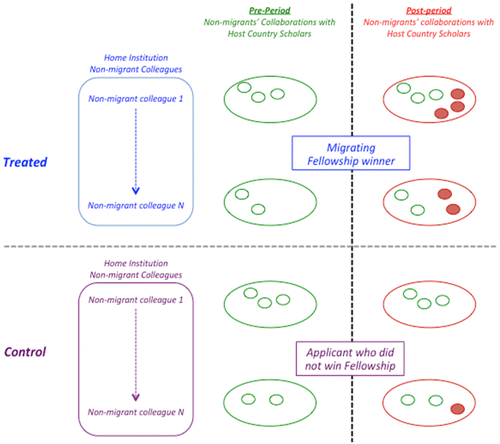
To address these challenges, we leverage administrative and bibliometric data on grantees of a fellowship program that offers dissertation grants to women in science in developing countries to study abroad in other developing countries. Our empirical approach (illustrated in Figure 1) evaluates the impact of associating with migrant scientists. Specifically, we compare changes in the connections of a fellowship winner’s nonmigrant home country colleagues, hereby referred to as the treated scientists, to a counterfactual based on the connections of nonmigrant colleagues of potential migrants who applied for but did not win the fellowship (control scientists). Examining changes in non-migrants’ connections enables us to control for time-invariant nonmigrant characteristics using individual fixed effects. The effectiveness of the analysis based on our control group rests on the assumption that any differences in the characteristics of the nonmigrant colleagues of grant winners before they received the fellowship versus those of the colleagues of nonwinners do not drive differences in the trajectory of collaboration patterns, that is, that the trajectories of connections among the colleagues of applicants that win would be similar to those of colleagues of applicants that do not win the grants in the absence of the fellowship.
3.2. Context: Organization for Women in Science in the Developing World
The fellowship program that we study is a program operated by the Organization for Women in Science for the Developing World (OWSD). As a unit of UNESCO, OWSD aims to provide training, career development, and networking opportunities for female scientists in the developing world without inducing a brain drain (Quadrio-Curzio et al. 2020). OWSD provides grant opportunities for doctoral students and awards for research excellence for early career scholars. In addition, OWSD offers researchers, including those who do not apply for OWSD fellowships, the opportunity to become members of its formal organization, of which there are several national chapters, and provides its members opportunities for networking and skill-building events.6 Building robust research networks is a challenge throughout science and is a particularly vexing challenge in developing countries, which often face constrained resources and infrastructure, and for underrepresented individuals, including women in developing countries (Fry 2023).
OWSD’s most significant activity is its PhD Fellowship Program. This program places women PhD students from science- and technology-lagging countries in natural, engineering, and information technology sciences at a host institution in another developing country. The fellowship covers a monthly living allowance, conference allowances, travel costs, and study fees. At the point of application, women can choose between a full-time fellowship, which supports the completion of their PhD degree research at a host institution for up to a maximum of four years, or a sandwich fellowship, which supports a shorter episode of PhD research in a host institution in another developing country. The applicants select their host institute and provide a letter of support from the host organization supervisor during the application process. In our sample, the average fellowship length is two years, nine months. The average sandwich fellowship is one year, seven months whereas the average full-time fellowship is three years, six months.
Fellows are selected by a committee of distinguished researchers who are experts in applicants’ field of study and who are familiar with the challenges facing female researchers in developing countries. Selection committee members are asked to consider two factors: the quality of the research proposal and the applicant’s research profile. Research proposals are evaluated based on the relevance and expected impact of the research problem they identify, the feasibility of completing the proposal, the match between the proposal and the potential host institution, the quality of the connection that the applicant has made with the host and other relevant partner organizations, the potential impact of the research on affected communities, and the extent to which the research project will be inclusive of diverse communities and the ethical, environmental, and risk factors associated with the project. Applicants’ research profiles are evaluated based on their scientific excellence, leadership skills, and outreach skills. OWSD also aims to achieve diversity each year in terms of the location of fellows and scientific fields.
Between 1996 and 2020, more than 700 women had been selected into and had graduated from the program. Many have achieved considerable career success, and several of the grantees with whom we spoke credit the program for broadening their research horizons, expanding their research networks, fueling their curiosity, and contributing to their success.
3.3. Sample Construction
The core sample we analyze in the paper is the nonmigrant colleagues in the home organization of OWSD fellowship-winning applicants. To identify these colleagues, however, we began by working with OWSD to identify a set of PhD fellows.
3.3.1. OWSD PhD Fellows.
OWSD was able to identify and receive permission to share the names of 135 women who had received an OWSD fellowship between 1996 and 2014. Of these, we were able to identify 64 fellows with complete information and whose home organization also had a profile with associated publications indexed in the Elsevier Scopus publication database so that we could identify their nonmigrant colleagues.
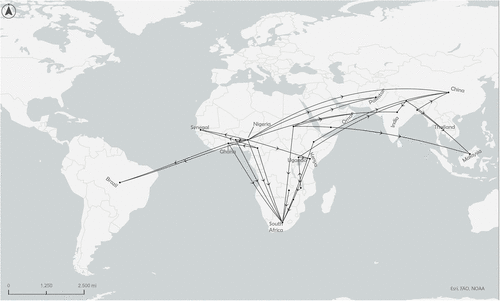
For each of the fellows in our data, OWSD was able to provide information on their home organization, proposed host organization, year of fellowship, and field of study. On their application form, fellows identify their proposed host organization and name their home organization and where they are based as students (e.g., undergraduate or master’s) or are working (e.g., as a lecturer or researcher) at the time of their application. In the case of a sandwich fellowship, the home organization is the institution where they are based (i.e., as doctoral students) at the time of the application and to which they return after their visit abroad. We match the names of the fellows with their publication data, if any, using the Elsevier Scopus publication database, and generate statistics on their location each year using affiliation data, their publication output, and collaboration patterns. The home and host locations of fellows are provided in Figure 2, and we report summary statistics for the sample of 64 fellows used in the main analysis in Table 1.
|

Table 1. Summary Statistics for OWSD Fellows in the Year of the Application (N = 64)
| OWSD Fellows (N = 64) | |||
|---|---|---|---|
| Mean | Median | SD | |
| Application year | 2007 | 2009 | 4.82 |
| Sandwich fellowship | 0.52 | 1 | 0.50 |
| No. of years since first publication (= 0 if no prior publications) | 0.98 | 0 | 3.22 |
| Any prior publications | 0.17 | 0 | 0.38 |
| No. of publications in year of application | 2.91 | 2 | 3.20 |
| No. of publications with host country collaborators in year of application | 0.00 | 0 | 0.00 |
| No. of researchers in organization/field in year of application | 7.81 | 3.5 | 15.26 |
| No. of women in organization/field in year of application | 0.56 | 0 | 1.46 |
| High-gender-parity home country in year of application | 0.11 | 0 | 0.31 |
| High-gender-parity host country in year of application | 0.77 | 1 | 0.43 |
| African | 0.88 | 1 | 0.33 |
| Asian | 0.13 | 0 | 0.33 |
Notes. Sample consists of 64 OWSD fellows for whom we gathered information. Variables are measured at the year of the application.
3.3.2. Nonmigrant Treated Scientists.
Because the primary objective of this study is to measure the impact of associating with migrant scientists, we focus on all scientists working in the home organizations and in the same scientific field of fellows at the time of the fellowship. Scientists affiliated with the home organization who have at least one publication in the three years prior to the fellowship year and who produce at least one publication in the subject area of the fellow prior to the fellowship year are considered treated by the event of the fellowship of the OWSD fellow.
To identify treated scientists, we use publication data in the Elsevier Scopus database. We chose this source because it has considerable representation of journals based in developing countries. Using the Scopus database, we generate a sample of scientists affiliated with the home organization of the fellow who publish in the same subject area7 in the three years prior to the fellowship application, and we document their publication history. There are several challenges associated with developing and using publication data in studies that require full publication histories for researchers in a particular location, institution, or field. The first is the “common names problem,” that is, the fact that some scientists have common names (for example, “Smith J”), which makes it difficult to determine which “Smith J” published which paper. In addition, individual scientists may change names (e.g., because of a change in marital status) or use multiple versions of their name (e.g., including middle names or abbreviations of their first name, etc.). This is one of the areas in which the Elsevier Scopus publication database offers advantages relative to other sources of publication data. It provides a unique author identifier for everyone whose name appears on a publication in the database. The author identifier is developed and maintained by Elsevier, and it uses an algorithm that incorporates scientist name, coauthors, and topic type, and it allows for scientists to change affiliations across publications. The algorithm is not perfect, but it addresses the “names problem” to a greater degree than alternative data sources, like the Web of Science.
3.3.3. Nonmigrant Control Scientists.
Because the fellowship is mechanically correlated with career age and calendar year (Levin and Stephan 1991), we incorporate a control group of researchers who are in the home organization of unsuccessful applicants. To identify this control group, we collected the names of unsuccessful applicants who met the OWSD eligibility requirements and who have also agreed to have their names used in the study. With the assistance of OWSD, we were able to identify 63 unsuccessful applicants and their home institutions, proposed host institutions, and field of study. We generated the sample of nonmigrant control scientists in an identical manner to which the sample of nonmigrant treated scientists is generated, only this time they were affiliated with the same home institution and published in the same scientific field as the unsuccessful applicants.
To avoid identification problems associated with staggered treatments outlined in De Chaisemartin and d’Haultfoeuille (2020), we wanted to ensure that the analyses using control scientists were never treated. We first selected treated scientists without replacement from the entire sample of developing-country scientists. From the remainder of the list, we then identified controls that had an unsuccessful applicant in their home organization and field. For each treated and control scientist, we considered the first treatment in their career in the instance that there were multiple treatments over time.8 Carrying out this procedure yielded 3,179 scientists treated by an OWSD fellow in the home organization at some point in their career and 1,917 control scientists affiliated with the home organization of an unsuccessful applicant. The treated and control scientists were located across 80 organizations in 18 countries in Africa and Asia (Online Appendix B, Table B.1).
We matched each treated and control nonmigrant scientist with their full publication record and generated annual variables on their collaborative patterns and publication outcomes for the three years before and six years after the fellowship (or unsuccessful application). This observation window was sufficiently long to enable us to measure both prefellowship trends, which allowed us to check whether the parallel trends assumption holds and to observe the postfellowship impact on researchers’ networks.
3.4. Variables and Measurement
3.4.1. Dependent Variables.
We consider two principal outcome measures, which we generated using the publication record of the nonmigrant scientists. Specifically, we measured:
- the number of publications with coauthors from the fellow’s (or unsuccessful applicant’s) host country in each year;
- the number of new coauthoring relationships with scientists from the fellow’s (or unsuccessful applicant’s) host country in each year. In other words, if the focal nonmigrant scientist collaborated with a scientist from the host country for the first time in a given year, that counted as one new coauthoring relationship that year.
3.4.2. Independent Variables.
The main independent variable is based on the organizational affiliation of nonmigrant scientists and their field of research at the time of the fellowship (or unsuccessful application). The method we used to ascertain treated and control scientists using publication data are described above.
3.4.3. Gender Parity.
We incorporated measures of gender inequality at the home and host country level in the year of fellowship (or unsuccessful application) using the Gender Development Index (GDI) from the United National Development Programme (UNDP). Covering 162 countries from 1995 to 2019, the index measures gender inequality in three main ways: health, measured by female and male life expectancy at birth; education, measured by female and male expected years of schooling for children and female and male mean years of schooling for adults ages 25 years and older; and command over economic resources, measured by female and male estimated earned income. The further the value of the GDI from 100, the more disparity between males and females in the country in the year. We incorporated the definition of a high-parity country from the UNDP and classified countries as having low equality between men and women if they had an absolute deviation from gender parity of more than 10%. We interpolated the data for the country-years in which data were absent. For robustness, we also used a measure of the absolute inequality index measure.9
In robustness checks, we also examined additional measures of gender inequality in the home country in the year of the fellowship (or unsuccessful application). For example, in an alternative specification we employed the HDR Gender Inequality Index, an index that measures gender inequality in a country via reproductive health, measured by maternal mortality ratio and adolescent birth rates; empowerment, measured by proportion of parliamentary seats occupied by females and proportion of adult females and males aged 25 years and older with at least some secondary education; and economic status, expressed as labor market participation and measured by labor force participation rate of female and male populations aged 15 years and older. We also used a United Nations Global Parity Index measure of the ratio of girls to boys in secondary education in each home country year and data from the Inter-Parliamentary Union (IPU) to measure the share of parliamentary seats held by women in each home country year.
3.4.4. Ascertaining Nonmigrant Gender.
For each nonmigrant scientist who has a first name in the Elsevier Scopus database, we also attempted to estimate the gender of the scientist using a commercial database obtained from the company, Ethnic Technologies, of first names, which was mapped to our database of treated and control scientists. The strength of the database obtained from Ethnic Technologies is the identification of gender from first names from a broad range of names that are uncommon and tied to diverse ethnic groups. Overall, this approach enabled us to assign a gender to 32% of the nonmigrant sample. A total of 58% of the sample of non-migrants did not have a first name in the Elsevier Scopus database, and thus we were unable to assign a gender. Of the remaining 42% of the sample, 10% were unassigned gender due to ambiguity in the gender of the name. Overall, the sample of non-migrants with assigned gender contained 34% females and 66% males.10
3.4.5. Descriptive Statistics.
The descriptive statistics in Table 2 describe the set of 5,096 treated and control scientists. Variables reporting information on publications and collaborations are measured in the year of the application to the fellowship. There are several notable similarities between the treated and control groups. For example, the distribution of male and female scientists and subject area is roughly the same. In addition, country-level features are similar for treated and control scientists. Overall, just 11% of the sample scientists are in a high-gender-parity country, and the probability that a nonmigrant is in a high-gender-parity country at the time of the fellowship application is identical for treated and control scientists.
|
Table 2. Summary Statistics for Fellow’s Colleagues, or Nonmigrant Scientists, in the Year of Fellowship Application
| Control scientists (N = 1,917) | Treated scientists (N = 3,179) | |||||
|---|---|---|---|---|---|---|
| Mean | Median | SD | Mean | Median | SD | |
| No. of years since first publication at time of application (= 0 if no prior publications) | 6.60 | 4 | 7.35 | 8.22*** | 5 | 8.66 |
| Female | 0.080 | 0 | 0.27 | 0.087 | 0 | 0.28 |
| Male | 0.23 | 0 | 0.42 | 0.25* | 0 | 0.43 |
| Life sciences | 0.63 | 1 | 0.48 | 0.65 | 1 | 0.48 |
| Health and medical sciences | 0.18 | 0 | 0.39 | 0.18 | 0 | 0.39 |
| Physical sciences | 0.18** | 0 | 0.39 | 0.16 | 0 | 0.37 |
| No. of publications | 1.15 | 1 | 1.83 | 1.52*** | 1 | 2.20 |
| No. of SNIP weighted publications in year of application | 0.72 | 0 | 1.88 | 1.17*** | 0.40 | 2.78 |
| No. of publications with home organization collaborators in year of application | 0.78 | 0 | 1.19 | 0.98*** | 1 | 1.39 |
| No. of new home organization collaborators in year of application | 2.06 | 0 | 5.03 | 3.12*** | 0 | 7.11 |
| No. of publications with host country collaborators in year of application | 0.023 | 0 | 0.24 | 0.045*** | 0 | 0.29 |
| No. of new host country collaborators in year of application | 0.090 | 0 | 1.08 | 0.16* | 0 | 1.30 |
| No. of researchers in the organization in year of application | 191.33 | 120 | 183.88 | 285.95*** | 222 | 182.51 |
| No. of female researchers in the organization in year of application | 26.58 | 14 | 32.18 | 40.66*** | 30 | 32.95 |
| Inequality measure home country in year of application | 0.87*** | 0.87 | 0.029 | 0.86 | 0.86 | 0.030 |
| High-gender-parity home country in year of application | 0.17*** | 0 | 0.38 | 0.078 | 0 | 0.27 |
Notes. Variables are measured at the year of the application. Differences of means test compare mean values across unsuccessful and successful sample applicants in the year of the fellowship application.
*Significance at p = 0.1; **significance at p = 0.05; ***significance at p = 0.01.
There are, however, some important differences among the treated and control scientists. On average, treated scientists have higher scientific productivity, have more extensive global networks, and are in larger organizations. While the levels of publication outcomes and collaborative patterns are different across treated and control scientists, the trends leading up to the fellowship application year are similar (Figure 3). This is consistent with the parallel trends assumption and enables us to provide consistent estimates of the effect of the fellowship given that our approach compares outcomes within an individual before and after the fellowship (or unsuccessful application). In addition, robustness checks described in the following section verify whether these level differences are driving any observed effects (such as an analysis with a subsample of treated and control scientists who are precisely matched on levels of key observables and analysis just employing the treated scientists and exploiting the timing of the fellowship event) and probe the sensitivity of the results to alternative estimation procedures that account for dynamic treatment effects (Callaway and Pedro 2020, De Chaisemartin and d’Haultfoeuille 2020).
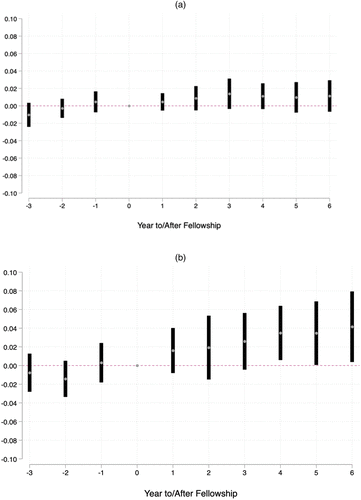
Notes. (a) Number of collaborative publications with host country researchers; (b) number of new coauthors from host country. The solid dots in the above plots correspond to coefficient estimates stemming from ordinary least squares fixed-effects specifications in which counts of outcomes per scientist in the year of observation are regressed onto year effects and career age effects as well as interaction terms between treatment status and the number of years before/after the fellowship. All specifications also include a full set of lead and lag terms common to both the treated and control articles to fully account for transitory trends in collaborations around the time of the fellowship. The 90% confidence interval of the robust standard errors clustered at the institution level is plotted with black bars.
4. Results
4.1. Econometric Framework
To evaluate the impact of the fellowship on non-migrants in the home institution of the fellows, we compare their collaboration patterns after the fellowship is awarded to a researcher in their organization relative to before, using a scientist fixed-effects specification. The estimating equation (Equation 1) relates nonmigrant scientist i’s outcomes in year t to the fellowship award to a scientist in their organization:
We cluster standard errors at the level of the fellow (or unsuccessful applicant), reflecting the potential correlation among repeated observations among individuals in the sample. Most of the dependent variables of interest are skewed and nonnegative. Because of the large number of zeroes in the data set, we estimate most specifications using ordinary least squares regression with inverse hyperbolic sine transformed outcome variables.11
4.2. Impact of Fellowship on Non-migrants
4.2.1. Average Effects.
Table 3 reports results estimating the specification presented in Equation 1.12 Column 1 reveals that following the migration of a female fellow from their institution, on average, non-migrants do not experience a significant increase in the number of collaborative publications with the host country. However, when publications including the migrating fellow are removed (column 3), and when the publications are adjusted for the journal impact factor (a measure of publication quality) (column 4), there is a small yet statistically significant increase in collaborative publications with the host country for non-migrants affiliated with institutions with a successful fellow. This implies that the impact of the migration is particularly effective for increasing high-quality publications with host country scientists and for facilitating the formation of collaborations that are independent of the migrant. Column 2 reveals that following the migration of a female fellow from their institution, non-migrants experience an increase in the formation of new collaborative relationships with scientists from the host country of the migrant. Specifically, having a successful fellow in their organization increases the number of new collaborative relationships with foreign scientists in the host country of the fellow (or unsuccessful applicant) by 3.3%. We explore the dynamics of these effects in Figure 3, which depicts the results of a specification in which the treatment effect is interacted with a set of indicator variables corresponding to a particular year before or after the fellowship application. The effects do not appear to be transitory, and they do not appear to be growing significantly prior to the fellowship. One OWSD fellow to whom we spoke described these spillover benefits to their experience abroad with pride: “The effect of collaboration is like a ripple effect. Everyone gets to benefit from it… your university, even your nation.” The remainder of the analysis explores heterogeneity according to country-level features.
|
Table 3. Impact of OWSD Fellowship on Fellow’s Home Organization Non-migrants’ Collaboration Outcomes
| Dependent variable | No. of collaborative publications with host country | |||
|---|---|---|---|---|
| No. of collaborative publications with host country | No. of new collaborative relationships host country | Without fellow | Journal impact factor weighted | |
| (1) | (2) | (3) | (4) | |
| Post fellowship × OWSD organization | 0.012 (0.0075) | 0.033** (0.014) | 0.016* (0.0086) | 0.030** (0.013) |
| Mean of the dependent variable | 0.054 | 0.282 | 0.050 | 0.313 |
| No. of scientists | 5,096 | 5,096 | 5,096 | 5,096 |
| No. of scientist × year observations | 50,960 | 50,960 | 50,960 | 50,960 |
| No. of fellows/applicants | 127 | 127 | 127 | 127 |
Notes. Estimates are from ordinary least square regressions in which dependent variables are inverse hyperbolic sine transformed outcomes per scientist per year. All models include a full suite of calendar year, career age, and scientist-level fixed effects and a dummy for post-fellowship. Heteroskedastic robust standard errors, clustered at the fellow/applicant, are given in parentheses. Coefficients can be interpreted as elasticities.
*Statistical significance at p = 0.1; **statistical significance at p = 0.05; ***statistical significance at p = 0.01.
4.2.2. The Moderating Role of Home and Host Country Gender Parity.
Table 4 explores heterogeneity in the effect of the fellowship through separating the sample of treated and control scientists into two groups, those in countries with low levels of gender parity and those in countries with higher levels of gender parity. We interact the main independent variable of interest (post-fellowship × OWSD organization) with a dummy variable for whether the host country of the fellow has high levels of gender parity. The results provide evidence consistent with the theoretical expectations of the paper, namely that non-migrants in countries with high levels of gender parity are more likely to become connected to the fellow’s host country (Table 4, columns 2 and 6). In fact, following the fellowship award, non-migrants in high-gender-parity countries produce 10% more collaborative publications with the fellow’s host country scientists than those in lower-gender-parity countries and generate 15% more collaborative relationships with scientists in the host country of the fellow, which amounts to just over 0.2 additional relationships in a six-year period following the fellowship award. These new collaborative relationships also appear to be repeated a higher rate when the migrant is in a high-gender-parity country (Figure 4), suggesting that the non-migrants invest more into the relationships.
|
Table 4. Impact of OWSD Fellowship on Fellow’s Home Organization Non-migrants’ Collaboration Outcomes by Home and Host Country Gender Parity
| Dependent variable: | No. of collaborative publications with host country | No. of new collaborative relationships with host country | ||||||
|---|---|---|---|---|---|---|---|---|
| (1) | (2) | (3) | (4) | (5) | (6) | (7) | (8) | |
| Post-fellowship × OWSD organization | 0.012 (0.0075) | 0.0035 (0.0051) | 0.0025 (0.0065) | −0.000034 (0.0065) | 0.033** (0.014) | 0.022** (0.010) | 0.015 (0.015) | 0.012 (0.015) |
| Post-fellowship × OWSD organization × high-gender-parity home country | 0.098*** (0.020) | (0.069) | ||||||
| Post-fellowship × OWSD organization × high-gender-parity host country | 0.011 (0.0076) | 0.022 (0.017) | ||||||
| Post-fellowship × OWSD organization × (high-gender-parity home country & host country) | 0.100*** (0.020) | 0.15** (0.070) | ||||||
| Post-fellowship × OWSD organization × (high-gender-parity home country and low gender parity host country) | −0.0078 (0.0071) | −0.12*** (0.015) | ||||||
| Post-fellowship × OWSD organization × (low-gender-parity home country and high-gender-parity host country) | 0.0042 (0.0061) | 0.012 (0.015) | ||||||
| Mean of the dependent variable | 0.054 | 0.054 | 0.054 | 0.054 | 0.282 | 0.282 | 0.282 | 0.282 |
| No. of scientists | 5,096 | 5,096 | 5,096 | 5,096 | 5,096 | 5,096 | 5,096 | 5,096 |
| No. of scientist × year observations | 50,960 | 50,960 | 50,960 | 50,960 | 50,960 | 50,960 | 50,960 | 50,960 |
Notes. Estimates are from ordinary least square regressions in which dependent variables are inverse hyperbolic sine transformed outcomes per scientist per year. All models include a full suite of calendar year, career age, and scientist-level fixed effects and a dummy for post-fellowship. Heteroskedastic robust standard errors, clustered at the fellow/applicant, are given in parentheses. Coefficients can be interpreted as elasticities.
*Statistical significance at p = 0.1; **statistical significance at p = 0.05; ***statistical significance at p = 0.01.
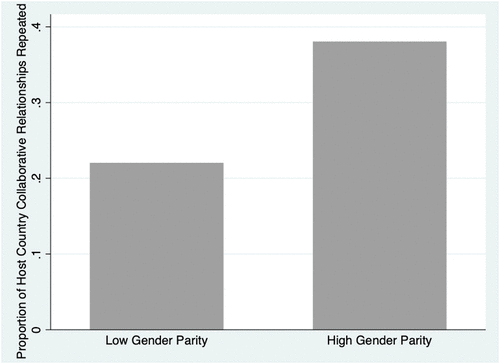
Notes. The proportion of new collaborative relationships with host country scientists for treated scientists that lead to more than one publication is plotted for non-migrants in low- and high-gender-parity countries.
In general, any additional benefit from the fellow going to a host country with high gender parity is statistically insignificant (Table 4, columns 3 and 7). In other words, high levels of gender parity in the host country alone do not appear to influence the extent to which home country non-migrants form connections with host country scientists. However, for non-migrants in countries with high levels of gender parity, host country gender parity does significantly influence the extent to which they form connections with scientists in the fellow’s host country (Table 4, columns 4 and 8). When examining the relationship between the effect of the fellowship and the combination of a fellow’s home and host country parity (Figure 5), we find that the treatment effect is greatest for instances where both home and host country have high levels of gender parity. The estimated marginal effect of treatment is approximately four times stronger for fellows in home and host countries with high levels of gender parity as compared with fellows with which one or both home or host countries have low levels of gender parity. In other words, when both home and host country have high levels of gender parity, non-migrants produce more than nine percentage points more collaborative publications with host country scientists in the post-fellowship period relative to cases where either the home or host country does not have high levels of gender parity. Overall, these findings imply that home and host country gender parity are complements rather than substitutes.
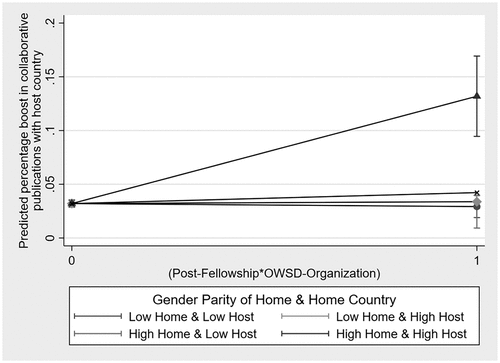
Notes. Plot displays the relationship between the change in inverse hyperbolic sine transformed counts of collaborative publications with host country researchers after treatment and the gender parity of the home and host country. The estimated marginal effect of treatment is approximately four times stronger for nonmigrant colleagues of fellows with high-gender-parity home and host countries relative to nonmigrant colleagues of fellows for whom either home or host countries have low gender parity. Estimates include fixed effects for calendar year, career age, and scientists, and standard errors are clustered at the fellow/applicant level.
4.3. Mechanisms
4.3.1. The Role of Institutional Support.
Our conceptual argument proposes that home and host country gender parity plays a role in the extent to which a female migrant can broker connections. Specifically, we anticipate that female migrants in high-gender-parity countries will be better able to share their networks because of greater support for women in brokerage roles. This could arise because women in high-gender-parity countries are perceived to be more legitimate brokers, that is, to be better able to assume a “male-type” role (an assumption that could be made either by others or by themselves, which, in turn, affects their behavior), because they are more likely to have had opportunities to build and share their network, or because they are more likely to be in better formal or informal positions to build and share their network.
Although it is difficult to test these mechanisms directly, we explore whether national-level gender parity plays a greater role in domains that are more male-typed, where gender differences and expectations in outcomes are found to be more pronounced (Abraham 2020). If the mechanism driving the effect is related to the extent to which an institutional environment is more supportive of female migrant brokers, we would expect that the benefits gained from being in a high-gender-parity country would be more relevant in more male-typed local domains, where opportunity gaps and gendered expectations are likely to be greater.
A large amount of literature explores the role of female representation within an organization in establishing the roles and norms around women in an organization and thus women’s workplace experiences. In other words, the level of female representation in an organization is likely to play a role in the expectations for women in the organization. Since Kanter’s (1977) seminal work on tokenism, researchers have argued that more equal representation of women in an organization, particularly in positions of authority, is associated with decreased stereotyped role encapsulation for women (Lockheed 1985, Ely 1995). Higher female representation of women in an organization can also result in more role models or mentors in senior positions in an organization for other women (Ibarra 1992), making it easier for the female migrant to adopt a senior position themselves or position of authority.
We test this contingency by using publication records at the level of the home and host organization of the fellow (or unsuccessful applicant) to generate a measure of the average proportion of women (as compared with men) affiliated with the home and host organization of the fellow (or unsuccessful applicant) in the three years prior to the fellowship (or unsuccessful application). We interact the main variable of interest (post-fellowship × OWSD organization) and the main interaction of interest (post-fellowship × OWSD organization × high-gender-parity home country) with the proportion of female scientists in a nonmigrant’s organization in Table 5. The results suggest that non-migrants in an organization with higher levels of female representation have a higher likelihood of collaborating with host country scientists (Table 5, columns 2 and 4), although this coefficient is measured with sufficient noise (i.e., large standard errors) that it does not achieve statistical significance. In addition, the results suggest that organizational-level features are a substitute to rather than a complement for country-level features. Interestingly, the country-level effect is of much greater magnitude than the organization-level effect. This result is not surprising, considering the significant influence that country-level culture has on both organizational processes and network outcomes (Xiao and Tsui 2007, Vasudeva et al. 2013, Wang 2015).
|
Table 5. The Role of Organizational Female Representation in the Impact of OWSD Fellowship on Fellow’s Home Organization Non-migrants’ Collaboration Outcomes
| Dependent Variable | No. of collaborative publications with host country | No. of new collaborative relationships with host country | ||||
|---|---|---|---|---|---|---|
| (1) | (2) | (3) | (4) | (5) | (6) | |
| Post-fellowship × OWSD organization | 0.0035 (0.0051) | 0.0084 (0.011) | −0.00035 (0.0075) | 0.022** (0.010) | 0.012 (0.025) | −0.0061 (0.019) |
| Post-fellowship × OWSD organization × high-gender-parity home country | 0.098*** (0.020) | 0.15*** (0.039) | 0.13* (0.069) | 0.36*** (0.13) | ||
| Post-fellowship × OWSD organization × proportion of women in home organization | 0.011 (0.019) | 0.012 (0.013) | 0.066 (0.053) | 0.085* (0.045) | ||
| Post-fellowship × OWSD organization × (high-gender-parity home country × proportion of women in home organization) | −0.160** (0.080) | −0.65** (0.28) | ||||
| Mean of the dependent variable | 0.054 | 0.054 | 0.054 | 0.282 | 0.282 | 0.282 |
| No. of scientists | 5,096 | 5,096 | 5,096 | 5,096 | 5,096 | 5,096 |
| No. of scientist × year observations | 50,960 | 50,960 | 50,960 | 50,960 | 50,960 | 50,960 |
Notes. Estimates are from ordinary least square regressions in which dependent variables are inverse hyperbolic sine transformed outcomes per scientist per year. All models include a full suite of calendar year, career age, and scientist-level fixed effects and a dummy for post-fellowship. Heteroskedastic robust standard errors, clustered at the fellow/applicant, are given in parentheses. Coefficients can be interpreted as elasticities.
*Statistical significance at p = 0.1; **statistical significance at p = 0.05; ***statistical significance at p = 0.01.
Similarly, we test for any differences between more and less male-dominated scientific fields. Physical sciences are more male dominated, and so we would expect that women in physical sciences attempting to occupy male-type roles (such as a broker) are more likely to be delegitimized. Therefore, we would expect that it is in these scientific fields that national-level gender parity matters the most. Consistent with the findings on organizational female representation, the results in Table 6 imply that female migrants in the physical sciences are less likely to share their international connections back at home, although this relationship is less salient in high-gender-parity countries. Together, these results imply that in more female-type local environments (i.e., scientific fields), national environments have a lower impact on the extent to which women can function as brokers.
|
Table 6. Results by Scientific Field
| Dependent variable: Number of collaborative publications with host country | Health and life sciences | Physical sciences | ||||||
|---|---|---|---|---|---|---|---|---|
| (1) | (2) | (3) | (4) | (5) | (6) | (7) | (8) | |
| Post-fellowship × OWSD organization | 0.020** (0.0077) | 0.010*** (0.0038) | 0.011 (0.0067) | 0.010*** (0.0038) | −0.024 (0.018) | −0.027 (0.018) | −0.032 (0.021) | −0.027 (0.018) |
| Post-fellowship × OWSD organization × high-gender-parity home country | 0.092*** (0.021) | 0.31*** (0.012) | ||||||
| Post-fellowship × OWSD organization × high-gender-parity host country | 0.010 (0.0080) | 0.011 (0.021) | ||||||
| Post-fellowship × OWSD organization × (high-gender-parity home country and host country) | 0.093*** (0.020) | 0.31*** (0.012) | ||||||
| Mean of the dependent variable | 0.049 | 0.049 | 0.049 | 0.049 | 0.078 | 0.078 | 0.078 | 0.078 |
| No. of scientists | 4,230 | 4,230 | 4,230 | 4,230 | 866 | 866 | 866 | 866 |
| No. of scientist × year observations | 42,300 | 42,300 | 42,300 | 42,300 | 8,660 | 8,660 | 8,660 | 8,660 |
Notes. Estimates are from ordinary least square regressions in which dependent variables are inverse hyperbolic sine transformed outcomes per scientist per year. All models include a full suite of calendar year, career age, and scientist-level fixed effects and a dummy for post-fellowship. Heteroskedastic robust standard errors, clustered at the fellow/applicant, are given in parentheses. Coefficients can be interpreted as elasticities.
*Statistical significance at p = 0.1; **statistical significance at p = 0.05; ***statistical significance at p = 0.01.
We next examine more directly the extent to which female migrants in high-gender-parity home and host countries are more likely to be in optimal positions for sharing their networks by exploring heterogeneity in the fellow’s formal positions and collaborative networks. We find that out of 33 fellows for whom we could source information on their role in the six years after their fellowship, 50% in high-parity countries were in senior positions (i.e., they had senior in their job title or were professors or directors), whereas 44% were in senior positions in low-gender-parity home countries. Similarly, we measure the rate at which fellows are last authors on publications in the six years following the start of their fellowship, which is an indication for a principal investigator position. We find that 13% of fellows in low-gender-parity countries and 20% in high-gender-parity countries are the last author at least once in the six years following the fellowship.
In Table 7 we report the results of a regression analysis that examines the fellows’ rate of home and host country collaborations as a function of gender parity in their home and host countries. Although the results are not statistically significant, again because of the large standard errors, we document that female migrants from high-gender-parity home countries have more home country collaborators (column 2), and female migrants going to high-gender-parity host countries have more host country collaborators (column 7). The lack of a positive relationship between home country gender parity and host country collaborators (and vice versa) suggests that the gender parity in the home and host country does not affect overall collaboration rates but rather plays a specific role in the formation of collaboration networks in that country. This result is consistent with previous studies that find that women in some countries are less likely to be able to communicate with other members of their organization. For example, Etzkowitz et al. (2000) described female scientists in Turkey in the 1980 s, saying “women report that they tend to be excluded from informal sources of communication” (p. 205).
|
Table 7. Impact of OWSD Fellowship on Fellow’s Collaboration Outcomes
| Dependent variable | No. of collaborative relationships with home country researchers | No. of collaborative relationships with host country researchers | ||||||
|---|---|---|---|---|---|---|---|---|
| (1) | (2) | (3) | (4) | (5) | (6) | (7) | (8) | |
| Fellow | 0.086 (0.055) | 0.065 (0.056) | 0.24* (0.13) | 0.062 (0.056) | 0.17*** (0.056) | 0.16*** (0.060) | 0.068 (0.061) | 0.16*** (0.060) |
| Fellow × high-gender-parity home country | 0.19 (0.21) | 0.036 (0.11) | ||||||
| Fellow × high-gender-parity host country | −0.19 (0.13) | 0.12 (0.074) | ||||||
| Fellow × (high-gender-parity home country and host country) | 0.23 (0.23) | 0.059 (0.12) | ||||||
| Mean of the dependent variable | 0.64 | 0.64 | 0.64 | 0.64 | 0.41 | 0.41 | 0.41 | 0.41 |
| No. of fellows/applicants | 127 | 127 | 127 | 127 | 127 | 127 | 127 | 127 |
| No. of fellows/applicants × year observations | 889 | 889 | 889 | 889 | 889 | 889 | 889 | 889 |
Notes. Estimates are from ordinary least square regressions with inverse hyperbolic sine transformed outcome variables. All models include a full suite of calendar year, career age (which incorporates whether they published before their application), scientific field, and time since fellowship fixed effects, and a control for the number of researchers in their home organization/field, the number of publications they author in the three years prior to the application, whether they collaborate with the host organization in the three years prior to the application. Heteroskedastic robust standard errors, clustered at the fellow/applicant, are given in parentheses. Coefficients can be interpreted as elasticities.
*Statistical significance at p = 0.1; **statistical significance at p = 0.05; ***statistical significance at p = 0.01.
Although we interpret these findings as giving evidence for a mechanism related to the extent to which the institutional environment supports female brokerage, we explore the viability of some other plausible mechanisms that could be driving these heterogeneous effects.
4.3.2. Variation in the Fellow’s Impact by Nonmigrant Gender.
An alternative possible mechanism that could explain the observed results is a mechanical correlation between a possible elevated effect of a female migrant on female non-migrants and higher proportions of female scientists in organizations in countries with higher levels of gender parity.
Specifically, we might expect that female non-migrants would benefit more from the migration of another female from their institution. Antecedent research suggests that individuals benefit from mentors and role models of the same gender (Ragins and Cotton 1993, Gaule and Piacentini 2018). This logic suggests that institutions in higher-gender-parity countries might have a higher fraction of women in them and that female migrants may have a larger average impact in such institutions. We explore whether this affects our results by investigating whether the level of sharing of host country connections differs between male or female non-migrants in the home country organization. We report the results in Table 8. These demonstrate that not only do the female migrants have a lower impact on female non-migrants (column 2) but there is also no additional benefit to female non-migrants in high-gender-parity countries. Although these results provide suggestive evidence that the main result is not driven by the proportion of female non-migrants in high-gender-parity countries, these results should be interpreted with substantial caution because the gender data for nonmigrant sample scientists are incomplete.
|
Table 8. The Impact of Female Migrant on Non-migrant Male versus Female Nonmigrants
| Dependent variable | No. of collaborative publications with host country | |||
|---|---|---|---|---|
| (1) | (2) | (3) | (4) | |
| Post-fellowship × OWSD organization | 0.012 (0.0075) | 0.014* (0.0077) | 0.0035 (0.0051) | 0.0053 (0.0051) |
| Post-fellowship × OWSD organization × female nonmigrant | −0.021** (0.0098) | −0.019** (0.0090) | ||
| Post fellowship × OWSD organization × high-gender-parity home country | 0.098*** (0.020) | 0.098*** (0.023) | ||
| Post fellowship × OWSD organization × high-gender-parity home country × female nonmigrant | −0.012 (0.060) | |||
| Mean of the dependent variable | 0.054 | 0.054 | 0.054 | 0.054 |
| No. of scientists | 5,096 | 5,096 | 5,096 | 5,096 |
| No. of scientist × year observations | 50,960 | 50,960 | 50,960 | 50,960 |
Notes. Estimates are from ordinary least square regressions in which dependent variables are inverse hyperbolic sine transformed outcomes per scientist per year. All models include a full suite of calendar year, career age, and scientist-level fixed effects and a dummy for post-fellowship. Heteroskedastic robust standard errors, clustered at the fellow/applicant, are given in parentheses. Coefficients can be interpreted as elasticities.
*Statistical significance at p = 0.1; **statistical significance at p = 0.05; ***statistical significance at p = 0.01.
4.3.3. Fellow Quality.
Researchers often propose supply-side explanations for variation in outcomes, for example, that individual attributes determine outcomes and in particular that variation across gender could arise from variation in education, effort, and choice, particularly as they pertain to family life (Jacobs 2004). Therefore, we explore whether the results could be explained by differences in supply-side factors. In other words, do women from low-gender-parity countries go to worse host institutions, do they have lower effort or general performance during and after their doctoral studies, or do they differ in other ways that matter for network sharing?
We find no support for the idea that these supply-side factors are driving the main result. To start, the fellows from low-gender-parity countries tend to apply with more publications, as opposed to fewer. On average, applicants to the fellowship from high-gender-parity countries have on average 0.1 publications at the time of application, whereas applicants from low-gender-parity countries have 0.24 publications. Applicants from high-gender-parity countries also tend to apply to lower-ranked host institutions than applicants from low-gender-parity countries. The average rank of a host institution for an applicant from a high-gender-parity country is 517, whereas the average rank of a host institution for an applicant from a low-gender-parity country is 436.
We assess whether fellows from high-gender-parity countries put in more effort to their scientific career or have more innate ability or higher performance in the six years after their fellowship application. The results in Table 9 document that fellows from high-gender-parity countries are no more productive after the start of the fellowship than those from low-gender-parity countries, which suggests that variation in fellow quality or effort is not driving the observed results.
|
Table 9. Impact of OWSD Fellowship on Fellow’s Location and Productivity
| Dependent variable | Probability of being affiliated with home country | No. of publications | ||||||
|---|---|---|---|---|---|---|---|---|
| (1) | (2) | (3) | (4) | (5) | (6) | (7) | (8) | |
| Fellow | 0.019 (0.022) | 0.011 (0.022) | 0.11** (0.048) | 0.011 (0.022) | 0.12*** (0.031) | 0.11*** (0.032) | 0.17*** (0.049) | 0.11*** (0.033) |
| Fellow × high-gender-parity home country | 0.073 (0.081) | 0.073 (0.089) | ||||||
| Fellow × high-gender-parity host country | −0.11** (0.046) | −0.062 (0.049) | ||||||
| Fellow × (high-gender-parity home country and host country) | 0.069 (0.089) | 0.082 (0.094) | ||||||
| Mean of the dependent variable | 0.099 | 0.099 | 0.099 | 0.099 | 2.09 | 2.09 | 2.09 | 2.09 |
| No. of fellows/applicants | 127 | 127 | 127 | 127 | 127 | 127 | 127 | 127 |
| No. of fellows/applicants × year observations | 889 | 889 | 889 | 889 | 889 | 889 | 889 | 889 |
Notes. Estimates are from linear probability model regressions with outcomes taking the value of 1 if a scientist is affiliated with their home country in the observation year in columns 1 − 4. Estimates are from ordinary least square regressions with inverse hyperbolic sine transformed outcome variables in columns 5 − 8. All models include a full suite of calendar year, career age, scientific field, and time since fellowship fixed effects and a control for the number of researchers in their home organization/field, the number of publications they author in the three years prior to the application, and whether they collaborate with the host organization in the three years prior to the application. Heteroskedastic robust standard errors, clustered at the fellow/applicant, are given in parentheses. Coefficients can be interpreted as elasticities.
*Statistical significance at p = 0.1; **statistical significance at p = 0.05; ***statistical significance at p = 0.01.
We also consider whether female migrants exhibit different behaviors in high-gender-parity countries with respect to sharing their connections or helping their colleagues. We use a measure for helpfulness developed in Oettl (2012) to serve as a proxy for the female migrant’s behavior. Specifically, we measure the rate at which the female migrants are mentioned in the Acknowledgments of publications and dissertations. We find that 28% of female fellows from low-gender-parity home countries feature in paper Acknowledgments, whereas only 14% of the female migrants in high-gender-parity countries are acknowledged in this way. Although this is not a perfect measure of the women’s behavior or intentions to share their connections, it does suggest that their willingness to engage in helpful roles is not driving the main result.
4.3.4. Fellow Location.
We also explore whether country-specific features affect (a) the organizational affiliation of the fellow (i.e., whether the fellow continues to be affiliated with the home institution during the fellowship), because this could affect the extent to which they connect home and host organization scientists, and (b) the extent to which the fellow collaborates with the host organization, which affects their position in the network as a broker.
The cross-sectional regression results in Table 9 demonstrate that, on average, home country gender parity does not affect the fellow’s probability of being affiliated with the home organization. However, we do observe that the fellow is less likely to be affiliated with their home country if the host country has high levels of gender parity (Table 9, column 2).
We might expect that gender parity in a fellow’s home country might affect her probability of completing a sandwich fellowship or remain in her home country, which could also impact her brokerage ability. As a result, we assess whether the effects are more salient for sandwich or full-time fellows. We present the results in Online Appendix C. The analysis finds no statistically significant difference in the effects of a sandwich fellowship versus a full-time fellowship. That said, although the variation by home country gender parity remains robust, we do observe that full-time fellows have a slightly larger impact than sandwich fellows in the period after the fellowship. This could be because a longer duration abroad enables deeper relationships with the host country researchers. We also find that the effect is stronger among the small number of fellows who are known to return after their fellowship to high-parity home countries. These results invite several follow-on research questions, one of which regards the costs and benefits of alternative migration “modes,” which, we hope, will be explored in future research.
4.3.5. Alternative Explanations and Robustness Checks.
We explore the robustness of our core findings to several possible alternative explanations and statistical approaches. One alternate explanation that could account for the heterogeneous relationship between country features and the likelihood that migrants share their international connections is that high-gender-parity countries may simply be more advanced economically or scientifically or generally more culturally accepting of brokerage. We assess the validity of this concern in Table 10 by including an interaction between measures of economic or scientific advancement of the home country in a specification with home country gender parity. Insofar as these alternative measures of economic or scientific advancement are driving the observed relationship between gender parity and brokering ability, the inclusion of the interactions should result in a drop in the main coefficient.
|
Table 10. Alternative Explanations for Home Country Gender Parity Effect
| Dependent variable | No. of collaborative publications with host country | |||||
|---|---|---|---|---|---|---|
| (1) | (2) | (3) | (4) | (5) | (6) | |
| Post-fellowship × OWSD organization | 0.0035 (0.0051) | 0.0035 (0.0070) | 0.0026 (0.0068) | 0.018* (0.010) | 0.012 (0.0087) | 0.0068 (0.0055) |
| Post-fellowship × OWSD organization × high-gender-parity home country | 0.098*** (0.020) | 0.098*** (0.020) | 0.098*** (0.020) | 0.099*** (0.021) | 0.094*** (0.020) | 0.098** (0.020) |
| Post-fellowship × OWSD organization × English first language home country | 0.000097 (0.0063) | |||||
| Post-fellowship × OWSD organization × total publications in home country | 0.00000029 (0.0000012) | |||||
| Post-fellowship × OWSD organization × total publications per capita in home country | −459.53 (301.22) | |||||
| Post-fellowship × OWSD organization × log GDP per capita in home country | −0.0000046 (0.0000039) | |||||
| Post-fellowship × OWSD organization × host institution log Scimago rank host | −0.00064 (0.00092) | |||||
| Mean of the dependent variable | 0.054 | 0.054 | 0.054 | 0.054 | 0.054 | 0.054 |
| No. of scientists | 5,096 | 5,096 | 5,096 | 5,096 | 5,096 | 5,096 |
| No. of scientist × year observations | 50,960 | 50,960 | 50,960 | 50,960 | 50,960 | 50,960 |
Notes. Estimates are from ordinary least square regressions in which dependent variables are inverse hyperbolic sine transformed outcomes per scientist per year and a dummy for post-fellowship. All models include a full suite of calendar year, career age, and scientist-level fixed effects. Heteroskedastic robust standard errors, clustered at the fellow/applicant, are given in parentheses.
*Statistical significance at p = 0.1; **statistical significance at p = 0.05; ***statistical significance at p = 0.01.
Table 10, column 2, examines whether the main coefficient is affected by the propensity for high-gender-parity countries to be English-speaking, because this could be important for building global scientific networks. In Table 10, columns 3 and 4, we investigate whether the core result is affected by national scientific capacity, measured as the number of publications per country. We construct this measure as the count of publications in the Elsevier Scopus publication database that includes at least one author affiliated with the focal country, that is, the total number of publications with an author from that country, not the fractional publications weighted by author location. We ask in Table 10, column 5, whether GDP per capita affects the core result. The results are robust to the inclusion of these measures of economic and scientific advancement; that is, the relationship between gender parity in the home country and brokering remain stable. Lastly, we assess whether fellows from high-parity home countries attend higher-ranked host institutions and whether that could be driving the result. We include a measure of host institution rank in Table 10, column 6, and find that the results are not affected to a significant degree. We interpret these analyses as suggesting there is something particular about gender parity that explains the variation in the effect of the female migrant.
Although it appears as though country-level differences in GDP or economic or scientific capabilities are not driving the main result, some countries may be more culturally accepting of brokerage than others (Xiao and Tsui 2007). If this were correlated with gender parity, then our results could be picking up variation in any brokerage, as opposed to female brokerage. Because the OWSD program only supports female migrants, it is difficult to know whether male migrants in this program would have different kinds of impacts. However, related work explores the impact of male and female African migrants who travel to the United States for a fellowship as part of the NIH Fogarty International HIV training program (Fry 2023). Specifically, Fry (2023) examined when fellows returning home after studying in the United States can connect non-migrants in their home organization with U.S.-based researchers as a function of the fellow’s gender and the home country gender parity. The results (Online Appendix Table F.1) are consistent with the OWSD findings. Namely, female returnees tend to be worse brokers, and this is especially true in low-gender-parity countries.
One additional potential explanation worthy of consideration is the prospect that non-migrants in high-gender-parity countries may also be based in better organizations and that this fact, rather than gender parity, explains the results. To investigate this possibility, we run the main analysis with a sample that excludes non-migrants in organizations in the top 75th percentile in terms of the number of researchers (Table 11, column 2), in the bottom 25th percentile (Table 11, column 3), and excluding non-migrants in organizations that never have a successful fellow (Table 11, column 4). The results remain robust to this modification. We also randomly assign a host country to each scientist and run the same analysis in Online Appendix Table H.1. If treated scientists are in faster-improving institutions, we would expect their collaboration rates with a placebo host country to also improve. However, we find no effect of the migration on collaboration rates with a placebo host, which suggests that the specific relationship with the host country of the migrant is driving the result.
|
Table 11. Robustness Checks
| Dependent variable | No. of collaborative publications with host country | ||||||||
|---|---|---|---|---|---|---|---|---|---|
| Sample | Full sample | Excluding large organizations | Excluding small organizations | Excluding never treated organizations | Excluding Nigeria | Just post 2010 | Excluding scientists with prior host country collaborations | Excluding scientists with fellow collaborations | Placebo test |
| (1) | (2) | (3) | (4) | (5) | (6) | (7) | (8) | (9) | |
| Post-fellowship × OWSD organization | 0.0035 (0.0051) | 0.0083 (0.0054) | −0.0057 (0.0071) | −0.0020 (0.0065) | 0.012** (0.0069) | −0.0015 (0.0066) | 0.010** (0.0040) | 0.0029 (0.0051) | −0.0039 (0.0044) |
| Post-fellowship × OWSD organization × high-gender-parity home country | 0.098*** (0.020) | 0.097*** (0.021) | 0.097*** (0.022) | 0.097*** (0.021) | 0.098*** (0.021) | 0.099*** (0.032) | 0.18*** (0.033) | 0.096*** (0.020) | −0.048* (0.028) |
| Mean of the dependent variable | 0.054 | 0.054 | 0.054 | 0.054 | 0.086 | 0.052 | 0.022 | 0.053 | 0.035 |
| No. of scientists | 5,096 | 3,888 | 3,913 | 4,080 | 2,413 | 3,382 | 4,770 | 5,050 | 5,096 |
| No. of scientist × year observations | 50,960 | 38,880 | 39,130 | 40,800 | 24,130 | 33,820 | 47,700 | 50,500 | 20,384 |
| No. of fellows/applicants | 127 | 109 | 62 | 93 | 81 | 74 | 126 | 127 | 127 |
Notes. Estimates are from ordinary least square regressions in which dependent variables are inverse hyperbolic sine transformed outcomes per scientist per year. All models include a full suite of calendar year, career age, and scientist-level fixed effects and a dummy for post-fellowship. Heteroskedastic robust standard errors, clustered at the fellow/applicant, are given in parentheses. In column 2, we exclude non-migrants in the top 75th percentile in terms of number of researchers in their organization in the full sample, and in column 3 we exclude non-migrants in the bottom 25th percentile in terms of number of researchers in their organization in the full sample. In column 9, we keep just preapplication data and run the specification with an event date two years prior to the actual event date. Coefficients can be interpreted as elasticities.
*Statistical significance at p = 0.1; **statistical significance at p = 0.05; ***statistical significance at p = 0.01.
We probe the robustness of the results to several other variants of the sample and measures of key independent variables. For example, because more than half of the sample of non-migrants is from Nigeria, we conduct the analysis without Nigerian non-migrants (Table 11, column 5). As well, we run the analysis without non-migrants who had a collaborative record with host country researchers before the fellowship application (Table 11, column 6). Because gender parity is positively correlated with the passing of time, we also explore whether the results simply reflect improvements in brokerage over time. In Table 11, column 7, we limit the sample of non-migrants to those who are associated with a fellow or applicant after 2010. The results are robust to these alternative samples. It is possible that the collaborative relationships with the host country were improving for treated scientists before the migration event and that this is driving both the migration and the collaborative results findings. However, we do not find convincing evidence of pretrends in the event-study figures or when we run the main analysis but move the migration date two years prior and just use premigration year data (column 9).
We also test the robustness of the results to alternative measures of country gender parity in Online Appendix A. We assess whether the results are similar if we use a continuous measure of gender parity, an alternative measure of gender parity (the Gender Inequality Index), and a country-level measure of the ratio of women to men in secondary school education. In each case, the results are similar to those in the main analysis.
Finally, we probe the robustness of the results to an alternative estimation procedure that allows for dynamic and heterogeneous effects. If the inclusion of the earlier-treated units acts as a control for the later-treated units in the pooled sample, the existence of treatment effect dynamics and heterogeneous effects could introduce bias. Therefore, we implement the procedure developed by De Chaisemartin and d’Haultfoeuille (2020) that identifies specific average treatment effects for each group of non-migrants treated in different years as a function of the years passed since treatment and then aggregate them for each year relative to treatment weighting by group size. We plot these estimates in Online Appendix E.
5. Discussion
In this paper, we examine the extent to which female migrants connect individuals across their home and host countries. In so doing, we develop a contextualized view of brokerage that considers the role of institutional environment in conditioning the potential for migrants to successfully facilitate global networks. The empirical results document that, in the context of the OWSD Fellowship Program, female migrant scientists are more likely to share international connections if their home countries have high levels of gender parity and if their host country also has high levels of gender parity. In fact, the results demonstrate that the impact of migration on network formation is not universal and, indeed, does not arise unless female migrants experience environments that are supportive of their ability to share connections.
We attempt to make several contributions in this paper. First, we highlight an underrecognized brokerage mechanism that can result in positive spillovers from migration. Prior literature on migration and brokerage has focused on the idea that migrants transfer knowledge and resources (Saxenian 2002, 2005, 2006; Kerr 2008; Oettl and Agrawal 2008; Nanda and Khanna 2010; Agrawal et al. 2011; Hernandez 2014; Ganguli 2015; Wang 2015; Choudhury 2016; Kahn and MacGarvie 2016; Choudhury and Kim 2019; Balachandran and Hernandez 2021; Hernandez and Kulchina 2021). We complement this work by highlighting another transfer that migrants can make—that of connections. Such a transfer is likely to shape the formation of global networks, which are increasingly important for the production of new knowledge. To our knowledge, this is the first paper to empirically evaluate the impact of migrants in building connections across borders, beyond those that they are directly involved in, and especially in the context of female scientists in developing countries. Indeed, it is particularly challenging to identify evidence of network effects and to obtain data on groups outside of the setting of high-income countries. Our approach and data open the door to studying these questions in a broad variety of contexts.
Second, we extend existing theory on the role of institutional context in brokerage. Extant literature in this area has focused on the idea that institutional contexts are either helpful or harmful for migrant brokerage ability. However, we suggest that the impact of some institutional contexts vary according to the migrant groups. We suggest and test the idea that some institutional environments are more propitious for groups of migrants to enact certain roles than others. Our findings also answer a call for more cross-country work on brokerage, particularly among understudied populations, including women: “Future work can examine the extent to which our findings [on female brokerage propensity] may be contingent on cultural views about the role of tertius iungens brokering.” (Nicolaou and Kilduff 2023, p. 13).
A number of limitations associated with this study could be addressed via follow-on research. First, we use publication records and academic collaborations to infer relationships between scientists. Future research could explore alternative measures of relationships and connections that, unlike publications, are not conditioned on the success of the partnership (i.e., research that results in a publication). Second, a key boundary of the present study is that we examine static rather than dynamic effects. Future research should work toward a better understanding of the intergenerational implications of these kinds of migration events. Third, this study focuses on female migrants in the context of science in developing countries. Future research should seek to expand the scope to explore settings beyond science, including entrepreneurship and firm alliances. Finally, although the results of our analysis are robust to multiple variations of the analysis, our sample size has been circumscribed by organizational constraints, and follow-on work could be done with a larger sample size to examine the sensitivity of our results and that might enable extended analyses of the underlying mechanisms.
These limitations notwithstanding, we believe that the findings in this paper have valuable implications for our understanding of the benefits from migration. More practically, the results suggest that organizations and managers seeking to benefit from employees visiting other organizations or countries should work toward creating a supportive environment for these migrants to support their ability to build global networks and, ultimately, improve performance. As the rate of migration between organizations and countries continues to rise, future research should further examine how to fully leverage the benefits associated with the global networks that migrants generate.
The authors are very grateful to the National Bureau of Economic Research Science of Science Funding program for support of the research, and UNESCO and OWSD are gratefully acknowledged. The authors thank Nikhil Kumar for excellent research assistance. The authors are grateful to Ezra Zuckerman, Laurina Zhang, Dan Wang, Megan MacGarvie, and Britta Glennon for comments on the draft paper and to organizers and participants at the following seminars for their suggestions: CCC Innovation Brown Bag, Workshop on Migration and Innovation, Migration and Organizations Conference, and the NBER Summer Institute.
1 To adhere to data protection guidelines, we have changed the names of the individuals we report in this paper. However, the anecdotes accurately reflect the data in our study and our discussions with study subjects.
2 Hagan (1998) documented an example of this in an ethnographic study of Mayan migrants from Guatemala in the 1980s following a U.S. amnesty program. Specifically, Hagan (1998) found that female migrants, who were often more limited in their work and social opportunities than their male counterparts, found it more difficult to access and benefit from social networks.
3 That said, arguments exist that suggest that women may not be disadvantaged in their efforts to facilitate network connections. Gender stereotypes vary across institutional environments, and there may be significant variation in the extent to which women are able to build their networks and the extent to which they are expected to occupy more “feminine” roles (Sczesny et al. 2004, Funk 2019). In addition, it is plausible that in some contexts, sharing connections is in line with expectations of women’s communality and helpfulness (Rudman and Glick 2001, Ellemers 2018), which could lead to women outperforming men in brokerage in general and in some cross-country contexts.
4 “What is OWSD? The Organization for Women in Science in the Developing World” (https://owsd.net/about-owsd/what-owsd).
5 This is consistent with some of the experiences described by female migrant scientists from low-gender-parity countries with whom we spoke. Following successful return from a fellowship abroad, one of the scholars we interviewed explained that her university sought out her advice in developing an Office of International Programs, which was designed to establish formal connections with research and corporate partners abroad. This scholar noted that her inclusion was unusual because nearly all of the leadership in her university and nearly all the other researchers invited to contribute to this prominent office were men.
6 OWSD refers to this organization as its “network.” We should note, however, that this group does not play a role in our analysis. Instead, our analysis is focused on the development of coauthor relationships among the nonmigrant colleagues of OWSD Fellowship applicants.
7 Subject areas of non-migrants are identified using broad field codes in publications, such as “agricultural research,” “physics,” or “economics.” A nonmigrant is considered as publishing in the same subject as a fellowship applicant if they author at least one publication with the same broad field code as the fellow (as specified in their application) prior to the application.
8 Multiple treatments to the same nonmigrant are rare. Around 6% of the sample experiences more than one fellow/applicant in their organization/field within the six-year followup period after the first fellow/applicant event.
9 The Human Development Reports (HDR) Technical Report contains details on how the index is developed and the definitions of high-gender-parity countries.
10 The high level of scientists with no assigned gender in the sample may have implications for the generation of the variables associated with female representation in the organizations. However, given that we use the proportion (see the description of how the measures are created later in this section), we do not consider this a substantial concern for interpretation, because we expect that the numbers of unassigned men and women are proportional across institutions.
11 Analyses that explore the robustness of these choices are available in Online Appendix D.
12 The main effects of home and host country are absorbed by scientist fixed effects, and so they are not reported in the regression tables.
References
- (2020) Gender-role incongruity and audience-based gender bias: An examination of networking among entrepreneurs. Admin. Sci. Quart. 65(1):151–180.Crossref, Google Scholar
- (2005) Scientific teams and institutional collaborations: Evidence from US universities, 1981–1999. Res. Policy 34(3):259–285.Crossref, Google Scholar
- (2011) Brain drain or brain bank? The impact of skilled emigration on poor-country innovation. J. Urban Econom. 69(1):43–55.Crossref, Google Scholar
- (2017) The mobility of elite life scientists: Professional and personal determinants. Res. Policy 46(3):573–590.Crossref, Google Scholar
- (2021) Mi casa es tu casa: Immigrant entrepreneurs as pathways to foreign venture capital investments. Strategic Management J. 42(11):2047–2083.Crossref, Google Scholar
- (2017) A field experiment on search costs and the formation of scientific collaborations. Rev. Econom. Statist. 99(4):565–576.Crossref, Google Scholar
- (2014) Just like a woman? Effects of gender-biased perceptions of friendship network brokerage on attributions and performance. Organ. Sci. 25(5):1530–1548.Link, Google Scholar
- (2019) Gender, brokerage, and performance: A construal approach. Acad. Management J. 62(1):196–219.Crossref, Google Scholar
- (1985) Men’s and women’s networks: A study of interaction patterns and influence in an organization. Acad. Management J. 28(2):327–343.Crossref, Google Scholar
- (1998) The gender of social capital. Rationality Soc. 10(1):5–46.Crossref, Google Scholar
- Callaway B, Pedro HC Sant’Anna (2021) Difference-in-differences with multiple time periods. J. Econometrics 225(2):200–230.Google Scholar
- (2018) Microgeography and the direction of inventive activity. Management Sci. 64(9):4348–4364.Link, Google Scholar
- (2019) Temporary colocation and collaborative discovery: Who confers at conferences. Strategic Management J. 40(13):2138–2164.Crossref, Google Scholar
- (2016) Return migration and geography of innovation in MNEs: A natural experiment of knowledge production by local workers reporting to return migrants. J. Econom. Geogr. 16(3):585–610.Crossref, Google Scholar
- (2019) The ethnic migrant inventor effect: Codification and recombination of knowledge across borders. Strategic Management J. 40(2):203–229.Crossref, Google Scholar
- (2014) Evidence on self-stereotyping and the contribution of ideas. Q. J. Econom. 129(4):1625–1660.Crossref, Google Scholar
- (2005) Gendered migrant social capital: Evidence from Thailand. Soc. Forces. 84(1):225–255.Crossref, Google Scholar
- (2020) Two-way fixed effects estimators with heterogeneous treatment effects. Amer. Econom. Rev. 110(9):2964–2996.Crossref, Google Scholar
- (2007) Women on the move: The neglected gender dimension of the brain drain.Google Scholar
- (2017) Culture and context matter: Gender in international business and management. Cross Cult. Strategic Management 24(2):194–210.Crossref, Google Scholar
- (2018) Gender stereotypes. Annu. Rev. Psychol. 69:275–298.Crossref, Google Scholar
- (1995) The power in demography: Women’s social constructions of gender identity at work. Acad. Management J. 38(3):589–634.Crossref, Google Scholar
- Etzkowitz H, Carol K, Brian U (2000) Athena Unbound: The Advancement of Women in Science and Technology (Cambridge University Press, Cambridge, UK).Google Scholar
- (2010) Matching and network effects. J. Eur. Econom. Assoc. 8(1):203–231.Crossref, Google Scholar
- (2007) Women, work and culture. J. Eur. Econom. Assoc. 5(2–3):305–332.Crossref, Google Scholar
- (2016) Productivity pay-offs from academic mobility: Should I stay or should I go? Indust. Corp. Change 25(1):91–114.Crossref, Google Scholar
- (2005) Gender role attitudes and the labour market outcomes of women across OECD countries. Oxf. Rev. Econom. Policy 21:416–438.Crossref, Google Scholar
- (2023) Bridging the gap: Evidence from the return migration of African scientists. Organ. Sci. 34(1):404–432.Link, Google Scholar
- (2019) If the shoe fits: Gender role congruity and evaluations of public managers. J. Behav. Public Admin. 2(1).Crossref, Google Scholar
- (2015) Immigration and ideas: What did Russian scientists “bring” to the United States? J. Labor Econom. 33(S1):S257–S288.Crossref, Google Scholar
- Gaule P, Piacentini M (2018) An advisor like me? Advisor gender and post-graduate careers in science. Research Policy 47(4):805–813.Google Scholar
- (2009) “
Does Science Promote Women? Evidence from Academia 1973-2001 ,” Chapter 5 in Richard B. Freeman and Daniel L. Goroff (ed.), Science and Engineering Careers in the United States: An Analysis of Markets and Employment (University of Chicago Press, Chicago), 163–194.Crossref, Google Scholar - (2013) Social networks and the identification of peer effects. J. Bus. Econom. Statist. 31(3):253–264.Crossref, Google Scholar
- (1969) The determinants of labor migration in Egypt. J. Reg. Sci. 9(2):283–290.Crossref, Google Scholar
- (1998) Social networks, gender, and immigrant incorporation: Resources and constraints. Am. Sociol. Rev. 63(1):55–67.Crossref, Google Scholar
- (2014) Finding a home away from home: Effects of immigrants on firms’ foreign location choice and performance. Admin. Sci. Q. 59(1):73–108.Crossref, Google Scholar
- (1980) Culture and organizations. Int. Stud. Manage. Organ. 10(4):15–41.Google Scholar
- (2007) “Tracing mobile inventors—The causality between inventor mobility and inventor productivity.” A study of inventors (Deutscher Universitätsverlag, Wiesbaden, Germany), 65–119.Google Scholar
- (1992) Homophily and differential returns: Sex differences in network structure and access in an advertising firm. Adm. Sci. Quart. 37(3):422–447.Crossref, Google Scholar
- (1993) Personal networks of women and minorities in management: A conceptual framework. Acad. Management Rev. 18(1):56–87.Crossref, Google Scholar
- (1996) A strategic model of social and economic networks. J. Econom. Theory 71(1):44–74.Crossref, Google Scholar
- (2004) Presidential address: The faculty time divide. Sociological Forum. Vol. 19. No. 1. Kluwer Academic Publishers-Plenum Publishers.Google Scholar
- (2016) Do return requirements increase international knowledge diffusion? Evidence from the Fulbright program. Res. Policy. 45(6):1304–1322.Crossref, Google Scholar
- (1977)
Some effects of proportions on group life . In: The Gender Gap in Psychotherapy. (Springer, Boston, MA), 53–78.Crossref, Google Scholar - (2008) Ethnic scientific communities and international technology diffusion. Rev. Econ. Stat. 90(3):518–537.Crossref, Google Scholar
- (1991) Research productivity over the life cycle: Evidence for academic scientists. Amer. Econom. Rev. 81(1):114–132.Google Scholar
- (1985) Women, girls, and computers: A first look at the evidence. Sex Roles 13.3-4 115-122.Crossref, Google Scholar
- (1993) Identification of endogenous social effects: The reflection problem. Rev. Econ. Stud. 60(3):531–542.Crossref, Google Scholar
- (1968) The Matthew effect in science: The reward and communication systems of science are considered. Science 159(3810):56–63.Crossref, Google Scholar
- (2020) Social networks and migration. Annu. Rev. Econom. 12:503–524.Crossref, Google Scholar
- (2010) Diasporas and domestic entrepreneurs: Evidence from the Indian software industry. J. Econom. Management Strategy 19(4):991–1012.Crossref, Google Scholar
National Science Foundation (NSF) (2004a) Gender Differences in the Careers of Academic Scientists and Engineers. (NSF 04-323, Project Officer, Alan I. Rapoport. Arlington, VA).Google ScholarNational Science Foundation (NSF) (2004b) Women, Minorities, and Persons with Disabilities in Sciences and Engineering (NSF 00-327, Arlington, VA).Google Scholar- (2001) The structure of scientific collaboration networks. Proc. Natl. Acad. Sci. USA 98(2):404–409.Crossref, Google Scholar
- (2023) Empowerment mitigates gender differences in tertius iungens brokering. Organ. Sci.Link, Google Scholar
- (2012) Reconceptualizing stars: Scientist helpfulness and peer performance. Management Sci. 58(6):1122–1140.Link, Google Scholar
- (2008) International labor mobility and knowledge flow externalities. J. Internat. Bus. Stud. 39(8):1242–1260.Crossref, Google Scholar
- (2012) Women’s employment in the institutional and cultural context. Int. J. Sociol. Soc. Policy. 32(9/10):530–543.Crossref, Google Scholar
- (2020) Women, science and development: The leading role of OWSD. Econom. Polit. 37:1–12.Crossref, Google Scholar
- (1993) Gender and willingness to mentor in organizations. J. Management 19(1):97–111.Google Scholar
- (2001) Prescriptive gender stereotypes and backlash toward agentic women. J. Soc. Issues. 57(4):743–762.Crossref, Google Scholar
- (2002) Silicon Valley’s new immigrant high-growth entrepreneurs. Econom. Dev. Q. 16(1):20–31.Crossref, Google Scholar
- (2005) From brain drain to brain circulation: Transnational communities and regional upgrading in India and China. Stud. Comp. Internat. Dev. 40(2):35–61.Crossref, Google Scholar
- (2006) International Mobility of Engineers and the Rise of Entrepreneurship in the Periphery. WIDER Research Paper No. 2006/142.Google Scholar
- (2001) Institutions and Organizations (Sage, New York).Google Scholar
- (2004) Gender stereotypes and the attribution of leadership traits: A cross-cultural comparison. Sex Roles 51(11):631–645.Crossref, Google Scholar
- Shukla P, Cantwell J (2018) Migrants and multinational firms: The role of institutional affinity and connectedness in FDI. J. World Business 53(6):835–849.Google Scholar
- (2002) Race, gender, and authority in the workplace: Theory and research. Annu. Rev. Sociol. 28(1):509–542.Crossref, Google Scholar
- (1999) Interorganizational endorsements and the performance of entrepreneurial ventures. Adm. Sci. Quart. 44(2):315–349.Crossref, Google Scholar
- (2007) Strategic networks and entrepreneurial ventures. Strategic Entrepreneurship J. 1(3‐4):211–227.Crossref, Google Scholar
- (2013) The embeddedness of networks: Institutions, structural holes, and innovativeness in the fuel cell industry. Organ. Sci. 24(3):645–663.Link, Google Scholar
- (2017) Growth of international collaboration in science: Revisiting six specialties. Scientometrics 110(3):1633–1652.Crossref, Google Scholar
- (2015) Activating cross-border brokerage: Interorganizational knowledge transfer through skilled return migration. Adm. Sci. Quart. 60(1):133–176.Crossref, Google Scholar
- (2007) The increasing dominance of teams in production of knowledge. Science. 316(5827):1036–1039.Crossref, Google Scholar
- (2007) When brokers may not work: The cultural contingency of social capital in Chinese high-tech firms. Adm. Sci. Quart. 52(1):1–31.Crossref, Google Scholar
- (2005) Women’s family power and gender preference in Minya, Egypt. J. Marriage Fam. 67:410–428.Crossref, Google Scholar
Caroline Fry is Assistant Professor of Management and Industrial Relations at Shidler College of Business, University of Hawai’i at Manoa. She received her PhD from the Sloan School of Management, Massachusetts Institute of Technology. Her research focuses on science, innovation, and entrepreneurship in low-income countries.
Jeffrey L. Furman is Professor of Strategy & Innovation at Boston University’s Questrom School of Business and is a Research Associate at the National Bureau of Economic Research (NBER). He received his PhD from the Massachusetts Institute of Technology’s Sloan School of Management. His research addresses issues in the economics of innovation, science and innovation policy, and business strategy.