


Managing Social Impact: An Integrated Approach and Research Agenda
Abstract
Strategy and management research has increasingly focused on understanding the role organizations play in society, offering valuable guidance for measuring social impact. In this article, we build upon multiple streams of this literature to propose an integrated approach for managing social impact of initiatives. Starting with a general definition of “impact” as the difference between the states of the world with and without the initiative, we propose a two-step approach for managing its social impact. The first is an analysis step, where the consequences of the initiative are evaluated descriptively in terms of (a) goal realization, that is, the extent to which it achieves its stated goals for contributing to society; (b) spillovers, that is, the extent to which it affects other financial or societal outcomes; and (c) alternative initiatives, that is, its effectiveness relative to alternative means of organizing to achieve the same goals. The second is an assessment step, where the initiative’s full set of benefits and costs from the first step is normatively assessed using (and potentially triangulating across) one or more of three methods: (a) using Pareto improvement as the basis for comparison, (b) calculating net impact using a single metric for aggregation, and (c) evaluating the nature of trade-offs involved (relative magnitude, equity, certainty, and agency). In addition to integrating relevant streams of existing work into a systematic approach for managing social impact, we offer an agenda for further research applying concepts and insights from management research to questions related to social impact.
1. Introduction
Examining issues at the intersection of business and society is a topic of longstanding interest for research in management and organizations (Stern and Barley 1996, Walsh et al. 2003, Tsui 2013), with repeated calls for management scholarship to take the consequences of firms’ activities for society seriously (Margolis and Walsh 2003, Mahoney et al. 2009, Cobb 2016). Much of the work in this area—including that on corporate social responsibility (CSR) or corporate philanthropy (McWilliams and Siegel 2001, Campbell 2007, Matten and Moon 2008) as well as on stakeholder management (Freeman 1984, Bosse et al. 2009, Henisz et al. 2014)—has focused on the financial consequences of these activities (Waddock and Graves 1997, Barnett 2007, Barnett and Salomon 2012). However, recent years have seen a growing interest in examining societal consequences directly (Kaul and Luo 2018, Barnett et al. 2020, Wickert 2021), as exemplified by research on corporate efforts to address societal grand challenges (George et al. 2016, Luo et al. 2018, Pongeluppe 2022), hybrid organizations like social enterprises that seek to balance financial and social objectives (Pache and Santos 2013, Battilana and Lee 2014, Pache et al. 2024), and the measurement of social impact in practice (Arvidson et al. 2013, Ebrahim and Rangan 2014).
Though the field has thus made substantial headway in thinking about social impact, several important opportunities for further progress remain. First, work on social impact remains relatively fragmented, with different studies focusing on different aspects of social impact rather than offering a comprehensive evaluation (Rawhouser et al. 2019). Consider, for instance, the research on corporate philanthropy. Recent studies document corporate philanthropy’s lack of focus (Seo et al. 2021), its limited responsiveness (Gatignon and Bode 2023), and its negative effects on the firm’s own activities (Luo et al. 2018) as well as the actions of rivals (Seo 2025). Each of these studies challenges the conventional idea of philanthropy as “doing good,” yet it remains unclear how these different critiques fit together. Without a systematic way of simultaneously considering all aspects of an initiative’s impact, evaluation of its overall social impact is often left to the eye of the beholder, opening the door to criticisms of institutional decoupling (Marquis and Qian 2014, Marquis et al. 2016, Westphal 2023) and “impact-washing” (The Economist 2022).
Second, existing work on social impact generally makes limited use of core concepts from strategy and organization theory—a prominent exception being insights on competing institutional logics (Thornton et al. 2012; Pache and Santos 2013, 2021)—and therefore remains somewhat disconnected from mainstream research. As a result, scholars examining social impact often find themselves faced with the question of why their work belongs in the field of management, and some have questioned the relevance of management theories and concepts to addressing societal challenges (Bansal et al. 2025, Davis and DeWitt 2025). There thus remains substantial opportunity to better integrate existing ideas from decades of research in strategy and organizations into the study of social impact (Foss and Klein 2025).
In this article, we build on prior work to offer an integrated approach for managing an initiative’s social impact. Our approach draws on insights from diverse streams of relevant research, while making connections to familiar concepts from strategy and organizational scholarship. Our goal here is to offer neither a comprehensive review nor a completely novel way of managing social impact (Molecke and Pache 2019, Rawhouser et al. 2019); rather, it is to try to synthesize key ideas from existing work in order to propose an integrated approach for studying social impact, and in the process highlight new opportunities for scholarly research. We start with a general definition of the “impact” of any initiative as being the difference between states of the world with and without the initiative (Brandenburger and Stuart 1996). Highlighting how the absence of traditional market mechanisms of price setting and resource allocation creates particularly unique challenges in applying this to evaluation of social impact, we propose a two-step approach toward systematically managing social impact in a manner that accounts for these challenges.
The first step of our approach, which is summarized in Figure 1, involves analyzing a focal initiative’s impact in a rigorous and fact-based way along three dimensions: (a) goal realization, that is, the extent to which the initiative achieves its stated (intermediate or final) goals for contributing to society; (b) spillovers, that is, the extent to which the initiative (positively or negatively) changes other outcomes, whether financial or societal; and (c) alternative initiatives, that is, the effectiveness of the focal initiative relative to alternative ways of organizing to achieve the same goals (either within the focal organization or through other organizations). For each dimension we highlight connections to a range of existing theories from strategy and organizational scholarship that we see as relevant to the analyses.
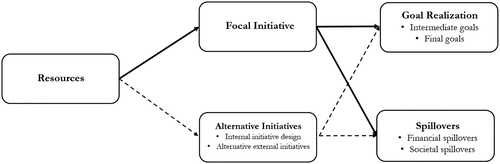
Notes. This figure illustrates step 1, where we analyze a focal initiative’s impact along three dimensions. Solid arrows denote the focal initiative’s actual effect on goals and spillovers, whereas dashed arrows denote the theoretical impact of alternative initiatives utilizing those same resources.
The second step in our approach involves a normative assessment of all of the diverse consequences identified in the first step to evaluate how the initiative affects societal well-being overall. Specifically, we propose considering the different outcomes identified in the first step and assessing them as a whole adopting one or more of three methods—(a) using Pareto improvement as the basis for comparison, (b) calculating net impact using a single metric for aggregation, and (c) evaluating the nature of trade-offs involved (in terms of aspects like their relative magnitude, equity, certainty, and agency). For each method we lay out its advantages and disadvantages, while highlighting the value of triangulating across them.
By offering an integrated perspective on social impact, we hope to advance scholarly conversation in multiple ways. First, we offer a consolidated approach for studying and managing impact, one that builds on insights from existing work and highlights the underexplored connections between them. Our approach emphasizes the need to look beyond the realization of stated goals and financial outcomes to also consider spillover effects on other societal outcomes (Molecke and Pache 2019) as well as the opportunity cost relative to other ways of organizing (Kroeger and Weber 2014). Second, by linking different dimensions of impact to relevant streams of existing scholarship in strategy and organization, we expand the agenda for research on social impact. Third, our integrated approach not only emphasizes the importance of high-quality, fact-based measurement of various outcomes related to an initiative’s impact (Gertler et al. 2011, Arvidson et al. 2013, Rawhouser et al. 2019) but also highlights different methods for assessing these outcomes, incorporating insights from work in social choice theory and ethics (Sen 2009, Sandel 2012, Jones et al. 2016).
2. A Systematic Approach for Managing Social Impact
2.1. Defining Social Impact
We begin by defining “impact” in general terms—consistent with work in value-based strategy (Brandenburger and Stuart 1996) and extensions of that tradition to global value creation (Mahoney and McGahan 2007, Mahoney et al. 2009, Bacq and Aguilera 2022), as well as with guidance on evaluating impact from the World Bank (Gertler et al. 2011)—as the difference between the state of the world in the case an initiative is carried out and what the state of the world would be if it is not carried out. The term “initiative” here could refer to any unit for which the impact is to be defined; depending on the context, it could be an entire organization or a specific division or project within it. Although the definition applies broadly to any kind of initiative, including purely for-profit business units, it gains especial relevance in the context of the management of initiatives with one or more explicitly stated societal goals—environmental, social, or political—that they are trying to achieve. These may include philanthropic or CSR projects within for-profit firms as well as separate organizations with a societal mandate, such as nonprofits, hybrid organizations, development agencies, or even government departments. Such initiatives are a particular focus of this piece, because without explicit management of social impact the desired performance of such initiatives cannot be ensured, and they risk being accused of “impact-washing.”
In the definition above, comparing the two “states of the world” means considering not only an initiative’s consequences on its focal stakeholder(s) or stated goal(s), but also the full range of other outcomes or stakeholders that might be affected, whether positively or negatively, and whether knowingly or unintentionally. Relevant considerations include, but are not limited to, a range of outcomes that can shape people’s utility, either in the form of economic outcomes for themselves or others (Hochman and Rodgers 1969; Bridoux and Stoelhorst 2014, 2016) or noneconomic outcomes like respect, status, or voice (Harrison et al. 2010). They also include outcomes that go beyond material well-being such as upholding of fundamental rights and freedoms (Pattanaik 2009, Peter 2009, Molecke and Pache 2019).
In order to keep our definition of impact as general as possible, we impose no requirement that the underlying outcomes be fully measured or quantified in practice. On the contrary, in line with a long tradition of work in this area, we recognize that measurement of social impact poses unique challenges of complexity, ambiguity, comparability, and conflicting demands, which make dealing with social impact especially difficult (Kroeger and Weber 2014, Molecke and Pinkse 2017, Molecke and Pache 2019). A root cause of these challenges is that most problems that the study of social impact seeks to examine are grounded in market failures or frictions that drive a wedge between economic performance and societal well-being (Coase 1960, Arrow 1969, Arrow and Hahn 1970). These may include externalities that result in collective action problems (Olson 1965), information asymmetries between those who benefit from an activity and those who pay for it (Bénabou and Tirole 2010, Kaul and Luo 2018), or justice-related issues arising from a lack of power of poorly endowed or marginalized stakeholders in a market setting (Odziemkowska et al. 2024; see Luo and Kaul 2019 for a detailed discussion). The implication of such frictions is that we cannot rely only on the price system to determine how resources ought to be best allocated for societal well-being and progress (Arrow 1969, 1985). Measurement of social impact is thus not easily reducible to readily observed financial metrics.1 It also means that social impact is inherently multidimensional, requiring us to consider a multiplicity of outcomes for different stakeholders (Sen 2009). Unlike financial performance, where negative feedback (such as financial losses) provides a clear signal of failure, an initiative may fail to achieve positive impact—or even cause harm—without any automatic feedback from the environment, making it essential to actively and systematically analyze and assess the various aspects of its social impact. For brevity, we speak of “impact” rather than “social impact” for the rest of the paper, though our focus is on social impact throughout.
2.2. Managing Impact
We propose a two-step approach for managing an initiative’s impact. The first step is an analysis step (the focus of Section 3) that involves gathering as much information as possible about the different kinds of consequences—both benefits and costs—the initiative might involve. This step is meant to be descriptive and fact-based, making no ethical judgment about the relative desirability of the various outcomes that are (intentionally or unintentionally) affected by the initiative. The second step is an assessment step (the focus of Section 4) that involves taking the multiple outcomes of the initiative identified in the first step for its various stakeholders and normatively evaluating these outcomes relative to each other to determine the overall desirability of the focal initiative relative to the status quo or relevant alternatives.
We prefer the term “managing impact” and not “evaluating impact” to be clear that our approach is not intended to serve merely as an ex post verdict on effectiveness: we are interested not only in rigorously and comprehensively evaluating an initiative’s past impact but also in using a systematic consideration of impact to design better initiatives or refine existing initiatives to achieve better future impact (Molecke and Pache 2019). Indeed, we view our two-step approach as providing foundational input for initiative design. First, providing the tools to manage impact systematically from the start ought to help organize the available knowledge and information in a way that facilitates better ex ante foresight. Second, taking an integrated approach to analyzing whether and how an initiative works should enable learning from past experience. Third, a critical part of both our analysis and assessment steps is comparing the focal initiative against alternative ways of achieving the same objective, including potentially novel ways of organizing.
Importantly, our proposed approach for managing impact does not assume perfect rationality or predictability. Impact is contextual and contingent; external conditions are often changing, and what is impactful in one context might fail in another, so the study of impact is necessarily an evolving process. Just as with any other strategic action, managing impact requires both planning to coordinate organizational choices and improve the probability of achieving superior performance given the available information ex ante, and learning from feedback and adapting as new information becomes available and new situations emerge ex post (Mintzberg and Waters 1985, Levinthal 2021). In the case of impact, this learning from feedback involves not only considering the descriptive facts that emerge from the analysis of an initiative’s consequences, but also normatively assessing these emergent facts. Further, it suggests a cyclical process wherein the assessment of an initiative in the light of facts established through analysis may trigger a redesign of the initiative, which will then need to be reanalyzed and reassessed. In what follows, we discuss one cycle of this process, starting first with the analysis step of getting the facts right regarding the various consequences an initiative has, and then turning to consider how these descriptive facts, once established, may be normatively assessed as a whole, laying out alternative methods for doing so.
3. Analyzing Impact
Our suggested two-step approach for managing impact starts by analyzing the various effects of an initiative, that is, developing a descriptive and fact-based understanding of how the world with an initiative differs from what the world would be without it. To make the analysis more tractable, we break it down into three logical dimensions that we see as mutually exclusive and collectively exhaustive, as previously mentioned: whether the initiative makes a difference to its stated goal (goal realization), whether it impacts other financial or societal outcomes (spillovers), and whether the same outcomes may be achieved more effectively through other means (alternative initiatives). For each dimension, we define the primary questions that the analysis should answer and also link these questions to relevant theoretical insights from strategy and organization scholarship. Table 1 summarizes our discussion in this section and also highlights opportunities for future research into each dimension (which we explore in more detail in our discussion section).
|

Table 1. Analyzing Impact
| Dimension | Goal realization | Spillovers | Alternative initiatives | |||
|---|---|---|---|---|---|---|
| Intermediate goals | Final goals | Financial spillovers | Societal spillovers | Internal initiative design | Alternative external initiative | |
| Primary question |
|
|
|
|
|
|
| Key drivers |
|
|
|
|
|
|
|
|
|
|
|
| |
|
|
|
|
| ||
|
| |||||
| ||||||
| Relevant theoretical insights |
|
|
|
|
|
|
|
|
|
|
|
| |
|
|
|
|
|
| |
|
|
|
|
| ||
| ||||||
3.1. Goal Realization
Our first suggested dimension for analyzing an initiative’s impact is: To what extent are the stated goals of the initiative being realized?2 A typical impact initiative deploys resources to pursue a set of activities based on an implicit or explicit theory of how these would help realize its desired goals (Barnett et al. 2020). This “theory of change” involves a causal chain of logic, in which the production of the initiative’s immediate outputs and the resulting changes in its intermediate and relatively short-term goals ultimately drive the desired long-term goal realization (Molecke and Pache 2019). Because realization of the final goals typically unfolds over long time horizons, ensuring timely feedback and increasing odds of success requires monitoring whether the immediate outputs and intermediate outcomes are first being realized (Gugerty and Karlan 2018), similar to how managers in business organizations often manage relevant shorter-term goals in pursuit of superior long-term organizational performance (Simon 1955, Cyert and March 1963, Levinthal 2021).
3.1.1. Intermediate Goals.
A key challenge with impact initiatives is that their supporters—including customers, employees, and policy makers, among others—are often not well informed about the targeted beneficiaries’ needs or the societal outcomes being sought (Bénabou and Tirole 2010, Kaul and Luo 2018). This information asymmetry implies that the initiatives are subject to a type of agency problem (Fama 1980, Fama and Jensen 1983), where the managers (the agents) may systematically exaggerate achievements or engage in selective disclosure to these supporters (the principals). For instance, managers may selectively share only positive anecdotes rather than systematic data on outcomes (Lyon and Maxwell 2008, Kim and Lyon 2015, Marquis et al. 2016). This challenge is aggravated by the fact that impact initiatives are generally not subject to mandatory reporting requirements, with a result that information disclosure is typically voluntary, limited, and nonstandardized (Bromiley and Marcus 1989). Further, supporters may lack the motivation to invest time and effort in staying fully informed about the actual outcomes (as experienced by beneficiaries) and instead feel content just accepting the agent’s claims at face value (Fong and Oberholzer-Gee 2011, Seo et al. 2021). In some cases, managers may also be able to get away with leaving the intermediate goals of an initiative poorly defined, enabling them to claim success regardless of their actual performance in meeting these goals.
A related problem is the difficulty of causal attribution. Defining impact as the difference between the state of the world with and without the initiative logically requires us to consider the counterfactual of how the intermediate outcomes would have naturally evolved without the initiative (Gertler et al. 2011, Molecke and Pache 2019, Barnett et al. 2020).3 Managers may themselves have an incomplete or unclear understanding of what would have happened without the initiative and therefore be unable to isolate the unique contribution of their initiatives, leading to an exaggerated sense of the benefits delivered. For instance, recent research shows that the baseline estimates on which calculations of expected impact of carbon offset projects are based may rely on flawed methodologies (West et al. 2023). In some cases, even if the intermediate goals are clear, managers may deliberately misrepresent the relevant counterfactuals and benchmark against overly pessimistic baseline scenarios to claim undue credit.
3.1.2. Final Goals.
The second question to consider for the dimension of goal realization is the extent to which the achievement of intermediate goals ultimately does translate into meeting the initiative’s stated final goals. Even if the managers and supporters of an initiative are in full alignment and successfully deliver on its intermediate targets, the initiative may still fail to achieve its final goals because the “theory of change” linking the intermediate goals to the final goals is flawed or incomplete. In particular, instead of being grounded in an evidence-driven or credible causal model, impact initiatives are frequently driven by the beliefs and priorities of managers and supporters (Chin et al. 2013, Marquis and Lee 2013, Gatignon and Bode 2023), which may involve incorrect assumptions and not align with the beneficiaries’ actual needs and the outcomes relevant for meeting them (Olopade 2014, Horvath and Powell 2016). For example, several studies based on randomized control trials in the context of microfinance find that the microcredit-based initiatives that claim to enhance entrepreneurship among low-income borrowers often fail to realize their final goal of income enhancement or poverty alleviation (Banerjee and Duflo 2012, Banerjee et al. 2015). Similar gaps between intermediate and final goals may also arise because the managers of the initiative fail to anticipate contextual constraints, for instance, how the introduction of ratings on a platform to protect workers from mistreatment might backfire in the presence of severe power disparities between workers and employers (Burbano et al. 2026).
A related problem arises when goals do not accurately reflect the real needs of the target stakeholders in the first place. This issue may be particularly acute when consulting the primary stakeholders to understand their needs is impractical, such as in environmental initiatives where the key beneficiaries are future generations, or in situations involving intergenerational wealth distribution (e.g., union negotiations or social security debates) where the preferences of older incumbents may diverge from the interests of younger workers (Rangel 2003). Such problems are also accentuated when the drivers of the final goals are complex and poorly understood to begin with, making it impractical to design initiatives backed by robust scientific evidence (Gugerty and Karlan 2018, Luo and Kaul 2019). Furthermore, the pathway to final goals may get compromised when managers face pressure to focus on symbolic or ceremonial intermediate goals (Durand et al. 2019) decoupled from the initiative’s final objectives (Meyer and Rowan 1977). This is illustrated by research showing how certification for responsible forestry practices does not always translate into true forest preservation (Whiteman and Cooper 2016) as well as work showing how firms are often able to circumvent local regulation intended to make them reduce their negative externalities by merely changing the location or ownership of their harm-causing activities rather than reforming them (Berry et al. 2021, Duchin et al. 2025).
3.2. Spillovers
Even if an initiative were successfully achieving its stated goals, that alone is not sufficient to evaluate its impact; comparing states of the world with and without the initiative means that we also need to consider other outcomes that may have changed as a result of the initiative, either knowingly or unintentionally. Our second suggested dimension for analyzing an initiative’s impact is thus: To what extent does the initiative have spillover effects (positive or negative) on outcomes other than its stated societal goals? For example, consider an impact initiative providing solar-powered home lighting to a remote low-income community with no access to electricity, with a stated goal of improving their economic productivity by allowing them to work even after it gets dark. The same initiative may also affect other social outcomes, like reducing respiratory diseases and fire-related accidents caused by traditional use of kerosene lamps, and financial outcomes, such as imposing a net cost or generating a net profit for the organization undertaking the initiative.
Identifying all possible consequences within a complex socio-economic system is nearly impossible. Any initiative will produce myriad effects, many of which are hard to predict ex ante. Nevertheless, it is usually possible to anticipate some of an initiative’s spillover effects ex ante and to design appropriate monitoring mechanisms to detect other material but unanticipated consequences ex post (Gugerty and Karlan 2018). In classifying the spillovers for an initiative, we separate its financial spillovers, that is, financial implications of implementing the initiative, from its societal spillovers, that is, changes in other societal outcomes it causes.
3.2.1. Financial Spillovers.
In examining spillovers, a natural starting point is to consider the relevant financial outcomes for the organization undertaking it.4 Prior work has highlighted that the pursuit of a prosocial mission may sometimes help boost an organization’s financial performance (Waddock and Graves 1997, Henisz et al. 2014, Flammer 2015) and that organizations may be able to simultaneously deliver superior financial and social performance by developing novel business models (Battilana and Dorado 2010, Battilana and Lee 2014). One channel for this is improving the organization’s engagement with its key stakeholders, such as employees (Bode et al. 2015, Burbano 2016, Carnahan et al. 2017, Flammer and Luo 2017) or customers (Servaes and Tamayo 2013, Fosfuri et al. 2015). Other possible channels are improvement in internal efficiencies (King and Lenox 2001) and access to new markets (Prahalad 2005). Impact initiatives that are related to other activities in the organization may also produce economies of scope through the use of cospecialized capabilities across the focal initiative and other organizational activities (Kaul and Luo 2018) or through learning across the initiative and other activities (Burbano et al. 2018, Odziemkowska and Zhu 2025).
However, the pursuit of impact initiatives may sometimes negatively affect an organization’s financial performance. In addition to the direct costs of the resources used for an initiative’s activities, there are also costs associated with gathering information, planning, and monitoring progress. Such costs may be fairly substantial (Molecke and Pinkse 2017) given the difficulty of relying on market feedback discussed earlier. Beyond these direct costs, impact initiatives may also introduce a variety of organizational or coordination costs (Williamson 1985, Jones and Hill 1988, Zhou 2011), such as weakened incentives or control from trying to combine these initiatives with other activities of the organization (Asmussen and Fosfuri 2019). Such costs may be especially formidable for large firms that already have complex operations (Wickert et al. 2016), for example, multinational corporations (Scherer et al. 2013, Minefee and Yue 2025).
Relatedly, the integration of business and social goals often triggers internal political friction. Tensions between institutional logics may necessitate difficult trade-offs (Pache and Santos 2010, 2013; Battilana et al. 2015, 2022) and debates over which issues to support may give rise to internal conflicts. This may exacerbate internal fault lines and complicate agenda setting (Bondy 2008, Barnea and Rubin 2010), as proponents struggle to garner support and resources within the broader organization (Wickert and de Bakker 2018, de Roo et al. 2025). The pursuit of specific social objectives may also increase ideological polarization within the organization (Frake et al. 2026), alienating some employees and reducing their motivation (Leslie 2019, Burbano 2021). It may also alienate external stakeholders with divergent preferences, often triggering negative reactions from customers (Hou and Poliquin 2023, Mohliver et al. 2023), policy makers (Poliquin and Hou 2025), or other vital resource providers (Molecke and Pinkse 2017) who do not support the objective, or creating confusion about the organization’s identity (Lee et al. 2020).
3.2.2. Societal Spillovers.
Although the relationship between impact initiatives’ social goals and financial performance has been extensively studied, less attention has been paid to the spillover effects of the pursuit of one societal goal on other societal outcomes. This may in part be because, as previously discussed, the presence of market frictions and the resulting lack of a quantifiable value for many societal outcomes (Coase 1960, Mahoney and Qian 2013, Luo and Kaul 2019) mean that the effects of impact initiatives on other (unpriced) societal outcomes may be more easily ignored than the financial outcomes that directly impact the focal organization.5
On the one hand, as discussed, initiatives that improve one societal outcome may also sometimes produce positive spillovers on other societal outcomes, either for the targeted stakeholders or for other stakeholders. Many initiatives offer solutions that lie at the intersection of multiple societal challenges, implying that efforts to address one outcome might have complementary intersectional benefits for others; for example, increasing female education may also help to reduce crime against women (Arvate et al. 2022). On the other hand, there are also many reasons why the pursuit of a stated societal goal may come at the cost of other societal outcomes. At the most basic level, given finite resources, an organization’s investment in a particular initiative might come at the cost of other prosocial activities (Penrose 1959, Levinthal and Wu 2010), so better outcomes in one area may be accompanied by worsened performance in another. For instance, reducing carbon emissions by cutting back on waste treatment may sometimes increase a firm’s toxic emissions (Lee and Kaul 2025), or participating in a corporate impact initiative might sometimes compromise the career prospects of certain employees (Bode et al. 2022, Gatignon 2022). Initiatives to improve a specific societal outcome may also divert managerial attention (Ocasio 1997, Joseph and Wilson 2018, Ocasio et al. 2018) away from other activities or cause managers to feel morally licensed (Blanken et al. 2015) to pay less attention to other desirable outcomes. Prominent impact initiatives may also reduce external attention and pressure on an organization to meet its other societal goals (Godfrey 2005, Luo et al. 2018, Jia et al. 2019).
Beyond spillovers from one social outcome to another within the focal organization, an initiative may also affect the activities of other organizations and the outcomes associated with those. Such beyond-the-organization, system-level spillovers may sometimes be positive. For example, an initiative by one organization may produce normative pressures on other organizations to behave more responsibly (Marquis et al. 2007, Briscoe and Safford 2008, Sharkey and Bromley 2015, Marquis and Tilcsik 2016), especially if such initiatives give beneficiaries countervailing power (Galbraith 1952, Asmussen et al. 2021), trigger actions by social movement organizations (King and Soule 2007, McDonnell et al. 2015), or spread practices through employee mobility (Pierce and Snyder 2008). Some initiatives may also produce positive learning or agglomeration effects by creating knowledge and resources that others are then able to access (Simcoe and Toffel 2014, Mawdsley et al. 2023)—especially if the initiative actively shares such knowledge or resources in the interest of societal progress (Savaget et al. 2025)—and sharing value with stakeholders more widely may help reduce societal conflict (Ganson et al. 2022).
There are, however, also ways in which system-level spillovers resulting from an initiative may be negative. To the extent that a firm investing in an initiative enjoys a first-mover advantage in using it to promote its business (Lieberman and Montgomery 1988, Cirik and Makadok 2023), investments in impact by one organization may preempt similar investments by rival organizations (Besley and Ghatak 2007, Baron 2009, Kitzmueller and Shimshack 2012); indeed, this is the logical implication of the argument that such initiatives can serve as a source of differentiation (McWilliams and Siegel 2001, Flammer 2015). Initiatives by one firm may even motivate other firms to invest in the opposite actions, either because responsible behavior by one firm creates market opportunities for other firms to benefit from behaving irresponsibly (Bennett et al. 2013, Akerlof and Shiller 2016)—for instance, Purdue Pharma’s reduction of unethical marketing practices creating an opening for other pharmaceutical firms to adopt such practices (Tan and West 2023)—or because rival firms can appeal to stakeholders who oppose the focal firm’s stand on a controversial and divisive issue, for example, Chick-fil-A’s stand in opposition to same-sex marriage helping it to gain competitive advantage relative to its rivals by appealing to consumers who shared its values (Mohliver et al. 2023, Seo 2025).
A focal initiative may also have negative spillovers if it weakens or undermines other initiatives intended to help similar beneficiaries. Support for the focal initiative may come at the cost of support for these other initiatives—such as government programs or nonprofit services (Margolis and Walsh 2003, Kaul and Luo 2018)—leading to a crowding-out of such programs (Becker and Lindsay 1994, Atkinson 2009, Isaac and Norton 2013, Horvath and Powell 2016). This may be especially problematic where the focal initiative is less inclusive than the initiatives it crowds out (Molecke and Pache 2019), or targets relatively wealthier or easy-to-serve communities (Lazzarini 2020, Kaul et al. 2024) while undermining initiatives serving more vulnerable communities, for example, private charter schools negatively affecting traditional public schools (Miron and Urschel 2010, Ravitch 2013, Boroomand 2024). In particular, private initiatives may also preempt or weaken government regulation, potentially increasing the vulnerability of already-marginalized stakeholder groups. Such preemption of regulation has long been recognized as an important motive for the pursuit of many CSR initiatives (Maitland 1985, Ostrom 1990, Ahuja and Yayavaram 2011, Prakash and Potoski 2011), and scholars have also noted the role of certain CSR activities as a form of political engagement that may undermine how democracy is meant to function (Scherer and Palazzo 2007, Bertrand et al. 2020).
3.3. Alternative Initiatives
As discussed so far, considering two kinds of outcomes—goal realization and spillovers—paints a picture of how much an initiative benefits (or harms) society. However, the analysis thus far only compares the focal initiative to the status quo, that is, what the state of the world would have been without it. The status quo is not the only relevant counterfactual to which an initiative may (and should) be compared: it is also important to consider what the goal realization and spillovers would have been if the initiative had been designed differently. Just as the value created by a business initiative must be assessed relative to the opportunity costs of the resources invested in it, that is, the returns to their next best use (Levinthal and Wu 2010, 2024; Gans and Ryall 2017), an impact initiative must be evaluated in comparison with the effectiveness of alternative ways of trying to achieve the same goals (Kroeger and Weber 2014). If such alternative initiatives would have achieved greater goal realization with the same cost and spillovers (or, equivalently, had achieved the same goal realization but at lower cost or with more-positive/less-negative spillovers), then the focal initiative, even if seeming effective relative to the status quo, would still represent an inefficient use of resources. Knowing whether effectiveness is truly being maximized relative to all possible alternatives may be impossible, but it is worth trying to identify (actual or potential) alternative initiatives—either within the same organization or through other organizations—to analyze the comparative performance of the focal initiative.
3.3.1. Internal Initiative Design.
A first question to consider is whether the focal initiative is being designed and implemented as effectively as possible within the focal organization. For example, Ghosh and Singh (2026) evaluate the effectiveness of alternative designs of a farmer engagement initiative for reducing greenhouse gas emissions in an agricultural supply chain by comparing not only the absolute level of emissions reduction achieved in each intervention but the emissions reduction achieved per dollar across the interventions that differ in both their absolute impact and their cost implications.
There can be several drivers of internal effectiveness of an initiative. First, we must consider the fit of the initiative with the organization, that is, to what extent it builds on the existing strategic resources and capabilities of the organization (Kaul and Luo 2018). This issue may be particularly salient if the choice of objectives for the initiative is driven by either private or ideological preferences of managers (Chin et al. 2013, Di Giuli and Kostovetsky 2014, Masulis and Reza 2015, Petrenko et al. 2016) or societal pressures (Marquis and Lee 2013, Marquis and Tilcsik 2016) rather than the organization’s strengths. Second, just like commercial activities, impact initiatives are likely to have a minimum efficient scale (Dobrev and Carroll 2003, Macher and Boerner 2006, Knudsen et al. 2014, Wickert et al. 2016), which may not be achieved if they are pursued symbolically rather than with a view to maximizing effectiveness (Porter and Kramer 2002, Seo et al. 2021). Third, to the extent that initiatives involve investments in scale-free resources, they may have potential for economies of scope (Penrose 1959, Montgomery and Wernerfelt 1988, Levinthal and Wu 2010), which may not be realized by being focused too narrowly, for example, serving only select communities (Galaskiewicz 1985, 1997; Marquis et al. 2013). Conversely, organizations that pursue a broad scope of impact activities, both across communities and across causes, may suffer from substantial coordination costs (Williamson 1985, Rawley and Simcoe 2010, Zhou 2011), especially if these activities are unrelated. Fourth, initiatives may also fail to realize economies of learning (Yao 1988, Argote and Epple 1990, Macher and Boerner 2006, Argote et al. 2021) if the organization keeps on switching too frequently from one societal cause to another.
3.3.2. Alternative External Initiatives.
Beyond internal design alternatives it is also valuable to consider whether the chosen organizational form is a comparatively efficient way of pursuing the stated goals in the first place (Luo and Kaul 2019). Different governance forms have distinct advantages and challenges, and choosing the appropriate form for a specific initiative can enhance its effectiveness (Coase 1960, Williamson 1985). For instance, for-profit firms have strong incentives to innovate and may be able to leverage cospecialized resources across their business and impact activities (Besley and Ghatak 2007, Ballesteros and Gatignon 2019), but these strong incentives also make them more prone to misrepresent their activities or impose deadweight losses in pursuit of profit (Kaul and Luo 2018). Conversely, nonprofit organizations may be less susceptible to opportunism given that they are governed by a nondistribution constraint, but might have weaker incentives and greater resistance to change (Hansmann 1980, 1996). Government organizations, in turn, have a unique ability to account for broad externalities and exercise probity (Stiglitz 1989, Williamson 1999), but may be inefficient given the inherently contested nature of government decision making (Maskin and Tirole 2008, Klein et al. 2013). Finally, community organizations are likely to have a superior understanding of the local context (Ostrom 1990, 2010), but their cooperation-based model may involve higher coordination costs (Jeong et al. 2025).
Admittedly, the managers of individual initiatives may not have unfettered choice over what organizational form to adopt, so the consideration of alternative external initiatives may be more relevant to researchers or policy makers than to managers. Nevertheless, analyzing the comparative efficiency of a focal initiative relative to alternative governance forms is still valuable even from a managerial perspective for two reasons. First, managers do often have a choice between pursuing an impact initiative’s activities entirely within their organization or doing so in partnership with other organizations, and considering whether the initiative would be more effective if it were pursued in partnership with others (and which organizations might be the best partners) is thus a relevant design consideration for managers (Bode and Singh 2018, Bode et al. 2019). Second, even if managers have limited flexibility in selecting a more efficient governance form on their own, they can still evaluate whether other governance forms would be more effective and assess the impact of their initiative relative to any other forms that are already active in pursuing the same ends.
In sum, the discussion in this section suggests that simply asking whether an initiative is achieving its stated (intermediate or final) goals is necessary but not sufficient to fully describe the initiative’s impact. A more holistic analysis requires us to also consider what other spillover effects the initiative may be producing and whether there are alternative ways of designing the initiative that would be more efficient. Not paying attention to all three of these dimensions risks painting an incomplete picture of an initiative’s true impact.
4. Assessing Impact
The section above highlights that there are multiple dimensions of impact from an initiative, and that a comprehensive analysis requires thoughtfully considering all of these. As previously discussed, however, understanding the descriptive facts about an initiative’s impact is only the first step in managing impact; these facts must next be normatively assessed to arrive at a holistic judgment about the initiative’s impact. What makes such an assessment challenging is precisely the multidimensional nature of impact. If we were only concerned with a single outcome, then the analysis step would be sufficient; a key challenge in assessing overall impact lies in deciding how the different dimensions are to be compared and possibly aggregated. Such a comparison is challenging. Social choice theorists as well as philosophers have long emphasized that determination of an ordering of the social desirability of all possible states of the world is often morally ambiguous, and that coming up with a general and universally acceptable formula for doing so is impractical (Arrow 1951, Sen 2009, Sandel 2010). As Amartya Sen puts it: “There may be no reasoned agreement at all, even under conditions of impartiality and open-minded scrutiny, on the ‘just society’. It is not easy to brush aside claims based respectively on the plurality of reasons and they may conflict with each other” (Sen 2009, p. 9). Thus, no single method of assessing impact can be definitive, ideal, or universally applicable.
Recognizing this, our proposed approach for assessing impact is to consider a variety of different methods suggested by diverse traditions of past work as an input into a process of “democratic dialogue” (Sen 2009). In doing so, we do not seek to champion one method over the other, but to highlight how different methods may function as distinct and complementary means of assessment, so that researchers and managers can triangulate across multiple methods to make an informed judgment. If the different methods lead to similar conclusions, the choice in terms of whether a focal initiative is superior to the status quo or any alternative initiatives it is being compared against is more straightforward. But even in cases where the different methods yield different or conflicting assessments, comparing their conclusions can help surface relevant normative considerations and trade-offs. We thus contend that considering different methods, while being aware of the pros and cons of each, is the most productive path forward for assessing impact.
Specifically, we build on prior work to discuss three potential methods for normatively assessing impact, as summarized in Table 2: (a) using Pareto improvement as the basis for comparison, (b) calculating net impact using a single metric for aggregation, and (c) evaluating the nature of trade-offs involved. These three methods are not intended to be comprehensive—other methods for assessing impact may also be valid—they are simply three methods commonly used (formally or informally), which is why we have chosen to discuss their advantages and disadvantages (while, as mentioned above, continuing to suggest multiple methods for triangulation). For each method, we consider how it would suggest comparing the goal realization of an initiative to its (financial and/or societal) spillovers. For ease of exposition, we discuss how each method would assess these outcomes—goal realization and spillovers—relative to the status quo, acknowledging that the same method could (and should) also be used to assess these outcomes relative to the corresponding outcomes from any alternative initiatives, as highlighted in the previous section.
|
Table 2. Methods for Assessing Impact
| Method | Description | Advantages | Disadvantages |
|---|---|---|---|
| Using Pareto improvement as the basis for comparison | Assess whether the initiative makes at least one stakeholder better off without making any other stakeholder worse off |
|
|
|
| ||
|
| ||
| Calculating net impact using a single metric for aggregation | Aggregate benefits and harms from an initiative into a single measure of net impact by converting all dimensions into a uniform (typically monetary) metric |
|
|
|
| ||
|
| ||
| Evaluating the nature of trade-offs involved | Combine quantitative and qualitative analyses to characterize trade-offs by comparing the nature of the benefits to the nature of the harms on multiple aspects |
|
|
|
| ||
|
|
4.1. Using Pareto Improvement as the Basis for Comparison
One method for assessing an initiative’s impact is to assess it positively relative to the status quo only if it represents a Pareto improvement; that is, it is better on one or more dimensions without being worse on any of the other dimensions (Jones et al. 2016, Kaul and Luo 2018). Thus, an initiative that only produces positive goal realization and nonnegative financial and societal spillovers would be assessed normatively better by this method, whereas initiatives that produce positive goal realization at the cost of negative spillovers for one or more of the other outcomes would be assessed as ambiguous and therefore not worth pursuing.
A key advantage of using Pareto improvement as a method for assessing impact is that it does not allow cross-dimension comparisons; that is, it does not let benefits on one dimension be compensated for by harms on another. This is especially useful when the different outcomes—goal realization or spillovers—either impact different stakeholders or are hard to compare even if impacting the same stakeholder, as is often the case with multidimensional social impact (Molecke and Pache 2019). Moreover, initiatives that produce no new harm to anyone may naturally face less opposition and hence be inherently more stable when it comes to implementation. The search for “win-win” solutions may also be generative, providing impetus for managers to think about innovative solutions instead of taking trade-offs for granted and risking slipping into an “anything goes” approach.
However, using Pareto improvement as a method for assessment also has several shortcomings. First, it would negatively assess any initiative that involved even the slightest harm on even one dimension, irrespective of how much improvement is realized on the other dimensions (Jones et al. 2016) or the overall efficiency of the proposed solution (Sallee 2019). For example, an initiative that produced any negative spillover at all would be considered unacceptable, no matter how minor the harm it did relative to the good it produced. This method thus imposes an inherent status quo bias that makes it difficult to deviate from the structures of power and influence already in place and only allows for allocative rather than distributional improvements (Arrow 1969, 1985; Jones et al. 2016). Second, this method offers only a partial ranking of different states of the world and therefore provides no guidance in how to choose between two alternatives that are both unambiguously better than the status quo but are ambiguous in their relative ordering when using Pareto comparison. Despite these challenges, Pareto assessment may at a minimum serve as a useful starting method for assessing an initiative’s impact.
4.2. Calculating Net Impact Using a Single Metric for Aggregation
A second method for assessing impact is to try to aggregate all the benefits and harms resulting from an initiative into a single measure that can be taken as the initiative’s overall net impact. This method rests on the assumption that the realized goal(s) and other outcomes are either already measured in the same numeraire (typically monetary value) or can be converted to it using an appropriate “exchange rate” (e.g., for setting the monetary societal value to be attributed to every child who is educated or every life that is saved).
Variants of the net impact method have a long history across domains. For example, traditional welfare analysis in neoclassical economics requires that individual utility be expressed in monetary terms so as to allow calculation of an aggregate consumer surplus (a sum of consumer utilities) that can be added to aggregate producer surplus (a sum of firm profits) for the economy as a whole to come up with a measure of overall social welfare. Such a reductionist approach is also often used in policy making to quantify trade-offs between various outcomes in the form of a monetary cost-benefit analysis (Gertler et al. 2011). For instance, transportation policies like setting speed limits are often based on a calculation that involves comparing the expected efficiency gains from allowing a higher speed limit with the cost of the expected increase in fatalities based on an agreed-upon “value of a statistical life” (Henderson 2020). Other similar approaches have also been gaining traction among nonprofits as well as in the business world, as evident in calls for consideration of some form of social return on investment for various interventions (Arvidson et al. 2013) as well as for standardized accounting that tries to capture a firm’s overall impact (Serafeim et al. 2019, Johnson 2025).
A key advantage of the net impact method (and its variants) is that it strives to incorporate all the effects of an initiative into a single, standardized metric, potentially providing a complete ordering of all possible societal states and allowing us to unambiguously rank any two initiatives (Gertler et al. 2011, Arvidson et al. 2013, Kroeger and Weber 2014). In doing so, it directly assesses opportunity cost—initiatives that produce greater net impact than alternative initiatives are strictly preferred—and these assessments are transitive. The net impact method may be especially appealing to business managers as it allows them not only to apply familiar tools and concepts from mainstream finance to the assessment of impact but also to do so in a way that seamlessly integrates with business decision making (Addy et al. 2019).
Notwithstanding these advantages, the net impact method is also subject to some serious concerns. Meaningfully translating the entire set of benefits and harms from an initiative into the same unit of measurement is inherently challenging and risks creating a false sense of objectivity, while concealing the incompleteness and subjective assumptions that invariably accompany the exercise (King and Pucker 2021). Further, aggregation to a single measure of net impact can lead firms to ignore or even increase harm in some critical areas, with the excuse that it can be compensated for by doing better elsewhere. This may be especially problematic if expressing all outcomes in monetary terms reifies existing endowments, because benefits (harms) to the rich and powerful are likely to be assigned a greater monetary value than equivalent benefits (harms) to the poor and vulnerable. Reducing all aspects of human well-being to a single monetary measure thus risks aggravating the status quo bias and increasing social injustice (Satz 2010, Sandel 2012). There are also reasons to be concerned about the moral or ethical acceptability of such net impact calculations (Pattanaik 2009, Peter 2009). For example, if the negative spillovers from an initiative involved, say, serious violations of fundamental human rights or other harmful actions, one may question the claimed superiority of such an initiative even if it delivers a greater net impact in quantitative terms.
4.3. Evaluating the Nature of Trade-Offs
A third method for assessing the impact of an initiative is to systematically evaluate the nature of trade-offs involved across dimensions. Although accepting that trade-offs are often unavoidable, this approach considers that attempts to reduce the consideration of trade-offs to a single quantitative number (as in the net impact method) can often be problematic. Rather, where trade-offs are required, they are examined by simultaneously considering a range of ethical or moral aspects in a way that tries to capture the inherent complexity and multidimensional nature of impact (Reyes et al. 2017). Some variants of this approach have been previously used, such as in the form of scorecards (Molecke and Pache 2019), wherein the overall assessment of impact requires an explicit step involving a subjective comparison of different outcomes on one basis or another. Pursuing this line of thinking, we propose a systematic comparison of the positive and negative outcomes from an initiative—whether in terms of goal realization or other outcomes—on a range of different aspects that ethical considerations might suggest.
Though a comprehensive discussion of all relevant aspects of comparison between the positive and negative outcomes of an initiative, even if it were possible in theory, is beyond the scope of this manuscript, for illustrative purposes, we propose four aspects that may be useful to consider. To help keep the discussion concrete, we focus on a hypothetical initiative that does produce positive goal realization but does so at the cost of a negative spillover effect, both being single-dimensional for simplicity. First, we may consider the relative magnitude of the two outcomes; that is, how substantial is the positive effect on the realized goals when evaluated in the context of the accompanying negative spillover effect (even if the two are in different units)? Second, we may consider relative equity; that is, how much weaker or more vulnerable are those benefited by goal realization than those harmed by the negative spillover? Third, we may evaluate the relative certainty of changes in the different outcomes; that is, how would we weigh the likelihood of the stated goals being realized against that of the negative spillover? Finally, we may consider relative agency; that is, how would we evaluate the rights and freedoms that might be enhanced by the realized goals compared with the rights and freedoms that might be lost as a result of the negative spillover? Table 3 summarizes these different aspects of the trade-offs involved in the assessment.
|
Table 3. Evaluating the Nature of Trade-Offs Involved
| Aspect | Question | High | Low |
|---|---|---|---|
| Relative magnitude | How substantial are the benefits from the initiative compared with its harms? | Initiative benefits many (or benefits some in a big way) while slightly inconveniencing a few | Initiative benefits only a few (or offers trivial advantage to many) while seriously harming many |
| Relative equity | How disadvantaged or more vulnerable are those benefited compared with those harmed? | Initiative is progressive; helps the weak and vulnerable at the cost of the powerful | Initiative is regressive; helps the powerful at the cost of the weak and vulnerable |
| Relative certainty | How certain are the benefits compared with the harms? | Initiative produces certain and immediate benefits but results in uncertain long-term harms | Initiative produces uncertain long-term benefits but results in certain immediate harms |
| Relative agency | What rights or freedoms are gained by those benefited compared with what rights or freedoms are lost by those harmed? | Initiative restores substantial rights and freedoms for those benefited without restricting the rights for those harmed | Initiative takes away substantial rights and freedoms for those harmed without offering additional freedoms for those benefited |
Though the value judgments described above are inherently subjective, we would generally expect trade-offs that scored higher on each dimension to be evaluated more positively by most neutral or impartial people, ceteris paribus. For instance, if the goal realization from an initiative was relatively certain and benefited especially vulnerable members of society, it seems reasonable to assess this initiative positively even if it posed a low risk of seemingly small negative spillovers on the powerful. Conversely, if the benefits from an initiative were relatively uncertain and/or its negative spillovers involved depriving the most vulnerable stakeholders of their basic human rights, then we might assess it negatively. Admittedly, there are cases in between where the decision is less obvious. Nevertheless, at the very least, assessing the nature of trade-offs in this way enables an informed and healthy debate about which trade-offs are worth making and why.
Despite its appeal, this method is not without challenges of its own. Relative to the other two methods discussed earlier, it is more likely to result in an evaluation that is more ambiguous and open to disagreement. For instance, given the choice between a certain and immediate small benefit and a potentially larger but uncertain benefit in the future, it might be unclear which is preferable. It also does not provide a straightforward formula for unambiguously ordering all possible initiatives. For instance, it is challenging to compare an initiative that scored high on one aspect but low on another (say an initiative that produced a large but uncertain benefit at a small but certain cost) to one that had the opposite profile (one that produced a small but certain benefit at large but uncertain cost). Indeed, applying this method potentially introduces a higher-order problem of finding a way to evaluate trade-offs among different aspects of the trade-offs, resolving which might require an acknowledgement that the application of at least some subjective judgment is often inevitable in making an appropriate relative assessment of multidimensional impacts.
4.4. Illustrative Application
To see how our overall approach for managing impact might be applied, consider the topic of corporate philanthropy mentioned in our introduction. We return to this topic in order to illustrate the application of our overall approach, though similar analysis and assessment could be explored for a variety of other impact initiatives, including various kinds of CSR initiatives, social enterprises, nonprofits, hybrids, etc.
In the analysis stage, our approach suggests a plethora of questions that are worth investigating beyond the common scenario of only asking how much money firms spend on societal causes and what this ends up implying for their financial performance. Thinking about goal realization could involve studying what impact corporate philanthropy might have on the performance and survival of the receiving nonprofits (intermediate goal) and whether these nonprofits become more effective in achieving the long-term societal outcomes being targeted (final goal). Considering societal spillovers could mean considering how corporate philanthropy impacts other forms of CSR (Luo et al. 2018) or broader support for nonprofits in general. Considering financial spillovers could involve asking not only whether corporate philanthropy brings any business benefits on the customer side (e.g., more sales) or employee side (e.g., greater retention), but whether it also leads to internal conflicts that limit the ability of firms to adapt and perform well. Finally, assessing opportunity costs could mean asking whether the ways of organizing corporate philanthropy that deliver the best financial performance are the same as those that generate the most positive social outcomes (internal initiative design), and whether philanthropy undertaken in collaboration with other organizations might be more effective in addressing societal challenges than when undertaken alone (alternative external initiatives).
Turning to the assessment stage, consider a case where the analysis of a philanthropic initiative shows that it would do well on its stated goal realization, but would also have significant negative spillover effects on other societal outcomes. A Pareto assessment would conclude that the initiative’s overall impact was ambiguous and it should not be undertaken. The net impact method would suggest converting both the positive goal realization and the negative spillovers into monetary terms so as to allow a direct quantitative cost-benefit analysis: the initiative is to be assessed positively if the value of the former is greater than that of the latter, and to be viewed negatively if the value of the negative spillover exceeds the value of its goal realization (see, for instance, Luo et al. 2018). Finally, the trade-off evaluation method would compare both the positive and negative outcomes not only in quantitative terms but also in asking who is being benefited and in what way, and who is being harmed and in what way. Even if the monetary value of the negative spillover was greater than the monetary value of the positive goal realization, this method might still assess the initiative positively as long as there is a strong subjective argument for doing so, such as those being benefited being especially vulnerable and those being harmed being relatively privileged or powerful. On the whole, how the initiative is designed or whether it is eventually continued would depend on how the managers making the decision weigh the different considerations highlighted by the method(s) used, with the use of multiple methods allowing a fuller assessment to inform the normative choice.
5. Discussion
5.1. Future Research Opportunities
The discussion above suggests several exciting opportunities for strategy and organizational research to contribute to the analysis of social impact. As suggested in Section 3 and highlighted in Table 1, we see substantial scope to apply existing concepts and insights from strategy and organizational scholarship to strengthening the analysis of impact. Scholars in these areas have sometimes been hesitant to study questions related to societal impact because they are seen as lying outside the “fundamental” domain of strategy (Rumelt et al. 1994); our perspective is that bringing ideas and solutions from traditional strategy and organization research to bear on addressing societal issues is an exciting research path forward, one that may both offer valuable insights for addressing these issues and strengthen strategy scholarship (Barney 2005). We acknowledge that applying these insights to thinking about societal consequences may not always be straightforward and instead require some modification or translation, but we see that as precisely what makes these opportunities exciting.
First, consider goal realization. A recognition that the failure of initiatives to realize their stated intermediate goals may reflect a form of agency or information asymmetry problem opens up pathways for research to focus on understanding the ways in which their managers may be held accountable, including study of voluntary disclosure and the design of monitoring and reporting systems to overcome relevant information hurdles (Grewal et al. 2018, Kaplan 2019, Distelhorst and McGahan 2021, Melloni et al. 2023). More work could also be done to bring in insights from corporate governance research around designing managerial incentives (Flammer et al. 2019, Aguilera et al. 2021, Battilana et al. 2022, Fangwa et al. 2024) and empowering stakeholders within the organization (Klein et al. 2019, Stoelhorst and Vishwanathan 2024) to overcome agency problems, even where public disclosure is neither viable nor desirable. Relatedly, there are opportunities to extend foundational work on incentive design to overcome problems of monitoring and observability (Holmström 1979, 1982), as well as to apply influential research on information asymmetry and the “lemons problem” (Akerlof 1970, Benner and Zenger 2016), to the pursuit of impact outcomes. On the empirical front, the difficulty of defining the correct counterfactual against which to evaluate the outcomes of initiatives invites the application of rigorous scientific methods, including not just cutting-edge econometric techniques but also randomized control trials (RCTs), to test the efficacy of impact initiatives (Banerjee and Duflo 2009, Barnett et al. 2020, Atkin et al. 2021). Additionally, recent calls for theory-based decision making (Felin et al. 2024) and a scientific approach to entrepreneurship (Camuffo et al. 2020, 2024) also offer relevant insights that may inform not only stronger goal realization but also the design of internal initiatives.
Moving beyond intermediate goals to consider final goals, the concern that managers may lack a clear understanding of the relationship between the two highlights the potential for scholarship grounded in behavioral strategy that examines the pursuit of organizational objectives by boundedly rational actors (Simon 1947, March and Simon 1958), where a canonical problem is the mapping of intermediate goals to eventual objectives (Levinthal 2021). Researchers could build on models of cognitive and experiential search (Levinthal 1997, Levinthal and Gavetti 2000) to consider how impact initiatives may explore new approaches by incorporating external knowledge (March 1991), evolve and adapt activities to improve “fitness” (Nelson and Winter 1982, Ethiraj and Levinthal 2004, Knudsen and Levinthal 2007, Csaszar and Levinthal 2016), and evaluate alternative theories of change through trial and error (Posen and Levinthal 2012), especially in contexts where actions and beliefs are not perfectly aligned (Lee and Puranam 2016). There are also opportunities to apply work on managerial cognition and the role of mental models and frames (Tripsas and Gavetti 2000, Kaplan 2008, Kaplan and Tripsas 2008) to examine how managers of impact initiatives update their beliefs and how behavioral biases might constrain realized impact (Singh et al. 2019, Lee et al. 2020).
Second, turning to spillovers, the literature on managing multiple objectives (Ethiraj and Levinthal 2009, Obloj and Sengul 2020, Kaul 2021, Szerb et al. 2026)—which highlights the need to analyze the association between objectives (Adner et al. 2014, Chen et al. 2019) and the design of monitoring and incentive systems for their simultaneous pursuit (Kerr 1975, Boettger and Greer 1994, Ethiraj and Levinthal 2009)—is directly relevant to thinking about how organizations balance multiple goals (Albert and Csaszar 2026). Relevant insights also stem from work on internal resource allocation (Busenbark et al. 2017, Maritan and Lee 2017, Levinthal and Wu 2024), organizational ambidexterity (Raisch and Birkinshaw 2008, O’Reilly and Tushman 2013), vacillation (Nickerson and Zenger 2002, Boumgarden et al. 2012), and multiobjective optimization (Deb 2001, Stavins et al. 2003). There are also opportunities to extend work on internal politics and the role of boundary-spanning units (Weber and Waeger 2017) to examine how initiatives may “sell” their agenda in internal resource markets (Wickert and de Bakker 2018, de Roo et al. 2025), as well as to incorporate insights from work on corporate purpose (Gartenberg et al. 2019, Gartenberg and Zenger 2023, Zenger 2023). Research on screening and signaling may be relevant for limiting negative spillovers due to informational challenges like adverse selection and moral hazard (Luo et al. 2018, Leslie 2019).
There are also substantial opportunities to leverage existing strategy and organizational scholarship to think about spillovers across organizations. Insights from competitive strategy can help identify conditions under which initiatives by one organization are likely to either be imitated or opposed by others (Lieberman et al. 2017, 2018; Hurst 2023; Mohliver et al. 2023), as well as how firms may position themselves in the market when faced with multiple performance attributes (Adner et al. 2016, Heyes and Martin 2017) or shape the competitive landscape to emphasize impact concerns (Gavetti et al. 2017, Helfat 2021). Strategy scholars have extensively studied agglomeration benefits and knowledge spillovers across firms (Audretsch and Feldman 1996, Shaver and Flyer 2000, Alcácer and Chung 2014), and there is substantial scope to build on this work to understand impact spillovers (Pierce and Snyder 2008). There are also several streams of strategy research that examine various forms of cooperative and collective action among firms—including work on coopetition (Brandenburger and Nalebuff 2011), standard-setting (Simcoe 2012), ecosystems (Adner and Kapoor 2010, Jacobides et al. 2018, John and Ross 2022, Savaget et al. 2025), industry associations (King and Lenox 2000, Prakash and Potoski 2011), and open innovation (McGahan et al. 2021)—all of which seem relevant to enabling positive spillovers and reducing negative spillovers from these initiatives. Finally, work in nonmarket strategy has long examined how firms engage with governments (Baron 1995, Mellahi et al. 2016) and the institutional environment (Ahuja and Yayavaram 2011, Ahuja et al. 2018), and the insights from this work may be relevant for examining the welfare impacts of such political strategies (Dorobantu et al. 2017) as well as their relationship to impact initiatives (McDonnell and Werner 2016, Lyon et al. 2018).
Third, turning to alternative initiatives, the rich tradition of work on organizational design is obviously relevant here (Baumann et al. 2023, Joseph and Sengul 2025), as is scholarship examining organizational resources and capabilities (Wernerfelt 1986, Barney 1991, Helfat et al. 2023): what they are (Barney 1991, Helfat and Winter 2011), how they evolve (Helfat and Raubitschek 2000, Helfat and Peteraf 2003), and how they are best accessed (Capron and Mitchell 2009). Insights from corporate strategy research on how firms choose the optimal scope of their activities to maximize complementarities and minimize coordination costs may also be applied to thinking about the optimal scope of impact initiatives (Penrose 1959, Montgomery and Wernerfelt 1988, Levinthal and Wu 2010, Skandera et al. 2026), as may ideas around the temporal evolution of initiatives and how organizations redeploy internal resources among initiatives (Helfat and Eisenhardt 2004, Sakhartov and Folta 2014) or build dynamic capabilities (Teece et al. 1997, Eisenhardt and Martin 2000) that enable them to sense new opportunities for impact and transform themselves to pursue these (Zollo and Winter 2002, Teece 2007). The internal design of initiatives may also be informed by work on integrated strategy (Oberholzer-Gee and Yao 2018) which highlights how firms can achieve competitive advantage by building businesses that solve existing market frictions (McGahan and Pongeluppe 2023). As with business initiatives, impact initiatives may also benefit from benchmarking their effectiveness relative to peers (Arvidson et al. 2013, Kroeger and Weber 2014).
Finally, researchers comparing alternative external initiatives might draw on insights from institutional and organizational economics (Coase 1960; Williamson 1985, 1996; Hart and Moore 1990, 2008; Ostrom 1990, 2010; Hansmann 1996) to theorize and test the comparative performance of different organizational forms—including government agencies (Lazzarini 2022), nonprofits (Ballesteros and Gatignon 2019, Boroomand 2024), and cooperatives (Jeong et al. 2025)—in pursuing different impact objectives (Luo and Kaul 2019). Such an approach may help guide initiative design, for instance, bringing insights from work on vertical integration (Williamson 1985, Hart and Moore 1990) to bear on whether and to what extent to pursue an initiative’s activities internally versus partner with other organizations (Kaul and Luo 2018, Quelin et al. 2019). Such analysis would also benefit from drawing on insights from research on various forms of cross-sector partnerships (Rangan et al. 2006, Kivleniece and Quelin 2012, Gatignon and Capron 2023, McGahan and Pongeluppe 2023) and other hybrid organizations (Williamson 1991, Makadok and Coff 2009), as well as work on alliances and interorganizational cooperation (Gulati and Singh 1998, Gulati et al. 2012, George et al. 2024) more generally. Such insights could inform the design of cross-sector partnerships in a manner that best delivers impact and particularly help strengthen stated goal realization, allowing managers to strengthen their theories of change through input from better-informed parties such as representatives of the stakeholders (e.g., community-based nonprofits) or subject-matter experts (e.g., climate scientists) (Bode et al. 2019, Luo and Kaul 2019, Odziemkowska 2022), while ensuring that they are held accountable by these partners (Luo et al. 2018, Luo and Kaul 2019, Kim 2025). Insights from strategy research may also be relevant to thinking about how to design public policy in ways that makes it effective in shaping firm strategy (Barney 2005, Li and Csaszar 2019).
5.2. Conclusion
As research in strategy and management shows increasing interest in understanding the impact organizations have on society (Margolis and Walsh 2003, Mahoney and McGahan 2007, Tsui 2013, Barnett 2019, Vishwanathan et al. 2019, Wickert 2021), several scholars have offered guidance on how to measure impact, proposing metrics and methods by which an initiative’s realization of its stated objectives may be best measured (Banerjee and Duflo 2012, Arvidson et al. 2013, Ebrahim and Rangan 2014, Kroeger and Weber 2014, Molecke and Pache 2019, Nardi et al. 2022a). The integrated approach we propose here seeks to build on and extend this work, reemphasizing the importance of measuring both activities and actual progress toward stated goals (Margolis and Walsh 2003, Ebrahim and Rangan 2014, Rawhouser et al. 2019) as well as the potential financial trade-offs from pursuing these objectives (Pache and Santos 2010, 2013; Battilana et al. 2015, 2022). In addition, we highlight the need to look beyond these stated goals of an initiative to also consider the spillover effects it may have on other social outcomes (Luo et al. 2018, Molecke and Pache 2019, Lee and Kaul 2025), recognizing that such spillovers are unlikely to be fully reflected in the financial benefits or costs of the initiative. We also stress the need to consider the opportunity cost of an impact initiative by comparing its impact to that of other ways of organizing, both within and beyond the organization (Kroeger and Weber 2014, Kaul and Luo 2018, Luo and Kaul 2019, Lee et al. 2020).
Importantly, our integrated approach goes beyond the systematic analysis of different aspects of impact to also consider a range of methods through which the different dimensions of impact, once measured, may be assessed as a whole. In doing so, we draw on insight from welfare economics, social choice theory, and ethics (Arrow 1951, Sen 2009, Sandel 2012, Jones et al. 2016). Building on this, we also propose a systematic approach for evaluating trade-offs that acknowledges the inherent multidimensionality of impact and the need for subjective judgment in assessing it.
Beyond bringing together diverse insights from work relevant for examining the issue of impact, our integrated approach also seeks to connect this work to established ideas and concepts in strategy and organization scholarship, highlighting opportunities to leverage these insights in ways that remain underexplored in the impact literature. In doing so, we suggest an agenda for future research opportunities: for researchers focused on impact to both draw on and speak to management scholarship and for researchers in traditional areas to bring their insights and expertise to bear on critical societal challenges (Barney 2005).
None of this is to deny the difficulties inherent in measuring something as ambiguous and complex as impact (Molecke and Pache 2019), difficulties that, as we stress, are a consequence of the market frictions that make the challenges of managing societal outcomes distinct from those of managing financial performance (Coase 1960, Luo and Kaul 2019). Collecting reliable data on social performance is challenging and costly, established metrics for measuring this are imperfect, and being deliberate about managing impact creates both internal coordination challenges and exposure to divergent stakeholder demands (Wickert et al. 2016, Molecke and Pinkse 2017, Nardi et al. 2022b). Given these challenges, it is tempting for organizations to engage in the symbolic pursuit of impact as a means to claim legitimacy in a manner that is decoupled from a true evaluation or realization of impact (Marquis and Qian 2014, Wickert et al. 2016, Durand et al. 2019, Westphal 2023), leading to concerns about greenwashing (Lyon and Maxwell 2008, Marquis et al. 2016, Duchin et al. 2025) and mission drift (Ebrahim et al. 2014, Grimes et al. 2019).
Though we recognize that these problems may make implementing our integrated approach challenging in practice, we also see them as making it necessary. Simply measuring organizational activities, or taking organizations’ claims about impact at face value, while allowing them complete leeway in determining how they measure impact (Molecke and Pinkse 2017, Rawhouser et al. 2019, Barnett et al. 2020), not only risks allowing insincere and ineffective impact initiatives to proliferate (Westphal 2023) but also potentially puts initiatives that seek to genuinely and thoughtfully deliver positive impact at a disadvantage as such initiatives may end up having higher costs but earn no better rewards than their less impactful peers. Moreover, limiting assessments of impact to only what may be easily measured and aggregated risks overlooking the benefits and costs to the most marginalized or vulnerable stakeholders, because these are precisely the outcomes that are likely to be hardest to prioritize or measure (Molecke and Pache 2019). For organizational scholarship to foster positive societal outcomes and address societal grand challenges (Mahoney et al. 2009; George et al. 2012, 2016; Wickert 2021), a systematic approach to studying management of impact is critical.
This is not to suggest that every impact initiative should be required to analyze and assess every dimension of impact discussed in our approach perfectly. Different initiatives may choose to focus on one or another dimension of impact depending on what is practical for their size or stage (Ebrahim and Rangan 2014, Wickert et al. 2016, Molecke and Pache 2019), and research examining impact may sometimes be better served by focusing on a single dimension and exploring it in depth. What is more important is to be clear about what aspects of impact are being measured and what aspects are not being measured, so that the latter are then examined separately or by someone else. Nor is perfect accuracy of measurement a prerequisite for our approach to be useful: we might not need to measure exact utilities to infer that a target stakeholder group is likely to value reduced mortality rates, or that an increase in the incidence and size of oil spills is value-destroying for a community. Better measurement of a specific dimension of impact is useful, but so is being sensitive to the multiple dimensions of impact, even if measurement along some of the dimensions is incomplete, crude, or imperfect. In encouraging more systematic research on impact by strategy and organization scholars, we hope to foster research on the development of general principles that could be used to improve the design of impact initiatives from the start (Molecke and Pache 2019).
To conclude, in this article we propose a systematic approach for managing impact that draws upon existing insights on how studying the realization of societal goals of an initiative needs to be complemented with analysis of its spillover effects as well as consideration of alternative initiatives, and then assesses these various consequences of the initiative as a whole by drawing upon insights from a variety of different methods. In doing so, we integrate ideas and concepts from traditional strategy and organization research that may be relevant to managing impact, while also offering managers and researchers alike a systematic way of thinking about social impact across a range of initiatives and contexts.
The authors are grateful to Senior Editor Metin Sengul and two anonymous reviewers for their guidance, and to participants at the Academy of Management Annual Conference, the Consortium for Research in Strategy, HEC S&O Conference, Humphrey School of Public Affairs Freeman Seminar, Institutional and Organizational Economics Academy, Nonmarket Strategy Research Community Doctoral Seminar, Strategic Management Society Annual Conference, Utah Winter Innovation Summit, and the Utah Winter Strategy Conference for their helpful comments and feedback. Furthermore, the authors owe a special thanks to the Dartmouth Junior Faculty Strategy Research Summer Camp for inspiring this specific line of inquiry. Authors contributed equally and are listed in alphabetical order by last name. All errors are the authors’ own.
1 As we discuss in Section 4, scholars and policy makers have certainly developed measures to convert societal outcomes to financial terms—such as the “value of a statistical life” (Henderson 2020). However, these are calculated metrics and not prices determined by market forces of supply and demand and therefore come with their own challenges.
2 Given our focus on initiatives seeking to deliver positive social impact, we consider only the social goal(s) of the initiative in this section. We recognize that some (though not all) impact initiatives may also have financial goals, and we discuss these in the next section under financial spillovers.
3 Note that this is different from the counterfactual of how the outcome would have changed if the initiative had been designed differently, which we turn to consider in Section 3.3.
4 As previously mentioned, we acknowledge that in some cases superior financial performance may be a stated goal of the initiative; we nevertheless term it a “spillover” here because our focal interest is in social impact.
5 Note that to the extent that other social outcomes are priced by the market, the positive or negative effects of the initiative on these outcomes would be reflected in its financial outcomes.
References
- (2019) Calculating the value of impact investing. Harvard Bus. Rev. 97(1):102–109.Google Scholar
- (2010) Value creation in innovation ecosystems: How the structure of technological interdependence affects firm performance in new technology generations. Strategic Management J. 31(3):306–333.Crossref, Google Scholar
- (2014) Positioning on a multiattribute landscape. Management Sci. 60(11):2794–2815.Link, Google Scholar
- (2016) Specialist versus generalist positioning: Demand heterogeneity, technology scalability and endogenous market segmentation. Strategy Sci. 1(3):184–206.Link, Google Scholar
- (2021) The corporate governance of environmental sustainability: A review and proposal for more integrated research. J. Management 47(6):1468–1497.Crossref, Google Scholar
- (2011) Perspective—Explaining influence rents: The case for an institutions-based view of strategy. Organ. Sci. 22(6):1631–1652.Link, Google Scholar
- (2018) Strategy and the institutional envelope. Strategy Sci. 3(2):ii–ix.Link, Google Scholar
- (1970) The market for “lemons”: Quality uncertainty and the market mechanism. Quart. J. Econom. 84(3):488–500.Crossref, Google Scholar
- (2016) Phishing for Phools (Princeton University Press, Princeton, NJ).Crossref, Google Scholar
- (2026) Search heuristics under multiple objectives: The case of corporate social responsibility. Acad. Management Rev. Forthcoming.Google Scholar
- (2014) Location strategies for agglomeration economies. Strategic Management J. 35(12):1749–1761.Crossref, Google Scholar
- (1990) Learning curves in manufacturing. Science 247(4945):920–924.Crossref, Google Scholar
- (2021) Organizational learning processes and outcomes: Major findings and future research directions. Management Sci. 67(9):5399–5429.Link, Google Scholar
- (1951) Social Choice and Individual Values (John Wiley & Sons, New York).Google Scholar
- (1969)
The organization of economic activity: Issues pertinent to the choice of market versus nonmarket allocation . The Analysis and Evaluation of Public Expenditure: The PPB System (U.S. Government Printing Office, Washington, DC), 59–73.Google Scholar - (1985)
The potentials and limits of the market in resource allocation . Feiwel GR, ed. Issues in Contemporary Microeconomics and Welfare (Palgrave Macmillan, London), 107–124.Crossref, Google Scholar - (1970) General Competitive Analysis (Holden Day, San Francisco).Google Scholar
- (2022) Structural advocacy organizations and intersectional outcomes: Effects of women’s police stations on female homicides. Public Admin. Rev. 82(3):503–521.Crossref, Google Scholar
- (2013) Valuing the social? The nature and controversies of measuring Social Return on Investment (SROI). Voluntary Sector Rev. 4(1):3–18.Crossref, Google Scholar
- (2019) Orchestrating corporate social responsibility in the multinational enterprise. Strategic Management J. 40(6):894–916.Crossref, Google Scholar
- (2021) Economizing and strategizing: How coalitions and transaction costs shape value creation and appropriation. Strategic Management J. 42(2):413–434.Crossref, Google Scholar
- (2021) Evaluating Sama’s training and job programs in Nairobi, Kenya. Working paper, Abdul Latif Jameel Poverty Action Lab (J-PAL), Cambridge, MA.Google Scholar
- (2009) Giving overseas and public policy. J. Public Econom. 93(5–6):647–653.Crossref, Google Scholar
- (1996) R&D spillovers and the geography of innovation and production. Amer. Econom. Rev. 86(3):630–640.Google Scholar
- (2022) Stakeholder governance for responsible innovation: A theory of value creation, appropriation, and distribution. J. Management Stud. 59(1):29–60.Crossref, Google Scholar
- (2019) The relative value of firm and nonprofit experience: Tackling large‐scale social issues across institutional contexts. Strategic Management J. 40(4):631–657.Crossref, Google Scholar
- (2009) The experimental approach to development economics. Annual Rev. Econom. 1(1):151–178.Crossref, Google Scholar
- (2012) Poor Economics: A Radical Rethinking of the Way to Fight Global Poverty (Public Affairs, New York).Google Scholar
- (2015) Six randomized evaluations of microcredit: Introduction and further steps. Amer. Econom. J. Appl. Econom. 7(1):1–21.Crossref, Google Scholar
- (2025) Strategy can no longer ignore planetary boundaries: A call for tackling Strategy’s ecological fallacy. J. Management Stud. 62(2):965–985.Crossref, Google Scholar
- (2010) Corporate social responsibility as a conflict between shareholders. J. Bus. Ethics 97(1):71–86.Crossref, Google Scholar
- (2007) Stakeholder influence capacity and the variability of financial returns to corporate social responsibility. Acad. Management Rev. 32(3):794–816.Crossref, Google Scholar
- (2019) The business case for corporate social responsibility: A critique and an indirect path forward. Bus. Soc. 58(1):167–190.Crossref, Google Scholar
- (2012) Does it pay to be really good? Addressing the shape of the relationship between social and financial performance. Strategic Management J. 33(11):1304–1320.Crossref, Google Scholar
- (2020) Beyond good intentions: Designing CSR initiatives for greater social impact. J. Management 46(6):937–964.Crossref, Google Scholar
- (1991) Firm resources and sustained competitive advantage. J. Management 17(1):99–120.Crossref, Google Scholar
- (2005) Should strategic management research engage public policy debates? Acad. Management J. 48(6):945–948.Crossref, Google Scholar
- (1995) Integrated strategy: Market and nonmarket components. Calif. Management Rev. 37(2):47–65.Crossref, Google Scholar
- (2009) A positive theory of moral management, social pressure, and corporate social performance. J. Econom. Management Strategy 18(1):7–43.Crossref, Google Scholar
- (2010) Building sustainable hybrid organizations: The case of commercial microfinance organizations. Acad. Management J. 53(6):1419–1440.Crossref, Google Scholar
- (2014) Advancing research on hybrid organizing—Insights from the study of social enterprises. Acad. Management Ann. 8(1):397–441.Crossref, Google Scholar
- (2022) Beyond shareholder value maximization: Accounting for financial/social trade-offs in dual-purpose companies. Acad. Management Rev. 47(2):237–258.Crossref, Google Scholar
- (2015) Harnessing productive tensions in hybrid organizations: The case of work integration social enterprises. Acad. Management J. 58(6):1658–1685.Crossref, Google Scholar
- (2023) Organizing for good—Using organization design to take on grand challenges. J. Organ. Design 12(4):165–176.Crossref, Google Scholar
- (1994) Does the government free ride? J. Law Econom. 37(1):277–296.Crossref, Google Scholar
- (2010) Individual and corporate social responsibility. Economica 77(305):1–19.Crossref, Google Scholar
- (2016) The lemons problem in markets for strategy. Strategy Sci. 1(2):71–89.Link, Google Scholar
- (2013) Customer-driven misconduct: How competition corrupts business practices. Management Sci. 59(8):1725–1742.Link, Google Scholar
- (2021) Follow the smoke: The pollution haven effect on global sourcing. Strategic Management J. 42(13):2420–2450.Crossref, Google Scholar
- (2020) Tax-exempt lobbying: Corporate philanthropy as a tool for political influence. Amer. Econom. Rev. 110(7):2065–2102.Crossref, Google Scholar
- (2007) Retailing public goods: The economics of corporate social responsibility. J. Public Econom. 91(9):1645–1663.Crossref, Google Scholar
- (2015) A meta-analytic review of moral licensing. Personality Soc. Psych. Bull. 41(4):540–558.Crossref, Google Scholar
- (2018) Taking a hit to save the world? Employee participation in a corporate social initiative. Strategic Management J. 39(4):1003–1030.Crossref, Google Scholar
- (2019) Sustainable cross-sector collaboration: A global platform for social impact. Acad. Management Discoveries 5(4):396–414.Crossref, Google Scholar
- (2022) Up to no good? Gender, social impact work, and employee promotions. Admin. Sci. Quart. 67(1):82–130.Crossref, Google Scholar
- (2015) Corporate social initiatives and employee retention. Organ. Sci. 26(6):1702–1720.Link, Google Scholar
- (1994) On the wisdom of rewarding A while hoping for B. Organ. Sci. 5(4):569–582.Link, Google Scholar
- (2008) The paradox of power in CSR: A case study on implementation. J. Bus. Ethics 82(2):307–323.Crossref, Google Scholar
- (2024) Children left behind: Charter schools and the privatization of public education in the US. Working paper, University of Minnesota, Minneapolis.Google Scholar
- (2009) Stakeholders, reciprocity, and firm performance. Strategic Management J. 30(4):447–456.Crossref, Google Scholar
- (2012) Sailing into the wind: Exploring the relationships among ambidexterity, vacillation, and organizational performance. Strategic Management J. 33(6):587–610.Crossref, Google Scholar
- (2011) Co-Opetition (Currency Doubleday, New York).Google Scholar
- (1996) Value-based business strategy. J. Econom. Management Strategy 5(1):5–24.Crossref, Google Scholar
- (2014) Microfoundations for stakeholder theory: Managing stakeholders with heterogeneous motives. Strategic Management J. 35(1):107–125.Crossref, Google Scholar
- (2016) Stakeholder relationships and social welfare: A behavioral theory of contributions to joint value creation. Acad. Management Rev. 41(2):229–251.Crossref, Google Scholar
- (2008) The Nixon-in-China effect: Activism, imitation, and the institutionalization of contentious practices. Admin. Sci. Quart. 53(3):460–491.Crossref, Google Scholar
- (1989) The deterrent to dubious corporate behavior: Profitability, probability and safety recalls. Strategic Management J. 10(3):233–250.Crossref, Google Scholar
- (2016) Social responsibility messages and worker wage requirements: Field experimental evidence from online labor marketplaces. Organ. Sci. 27(4):1010–1028.Link, Google Scholar
- (2021) The demotivating effects of communicating a social-political stance: Field experimental evidence from an online labor market platform. Management Sci. 67(2):1004–1025.Link, Google Scholar
- (2026) A platform rating system and vulnerable workers: Evidence from field experiments in Singapore. Organ. Sci., Articles in Advance April 21, https://doi.org/10.1287/orsc.2023.18153.Link, Google Scholar
- (2018) Pro bono as a human capital learning and screening mechanism: Evidence from law firms. Strategic Management J. 39(11):2899–2920.Crossref, Google Scholar
- (2017) A review of the internal capital allocation literature: Piecing together the capital allocation puzzle. J. Management 43(8):2430–2455.Crossref, Google Scholar
- (2007) Why would corporations behave in socially responsible ways? An institutional theory of corporate social responsibility. Acad. Management Rev. 32(3):946–967.Crossref, Google Scholar
- (2020) A scientific approach to entrepreneurial decision making: Evidence from a randomized control trial. Management Sci. 66(2):564–586.Link, Google Scholar
- (2024) A scientific approach to entrepreneurial decision‐making: Large‐scale replication and extension. Strategic Management J. 45(6):1209–1237.Crossref, Google Scholar
- (2009) Selection capability: How capability gaps and internal social frictions affect internal and external strategic renewal. Organ. Sci. 20(2):294–312.Link, Google Scholar
- (2017) When does corporate social responsibility reduce employee turnover? Evidence from attorneys before and after 9/11. Acad. Management J. 60(5):1932–1962.Crossref, Google Scholar
- (2019) Adaptation across multiple landscapes: Relatedness, complexity, and the long run effects of coordination in diversified firms. Strategic Management J. 40(11):1791–1821.Crossref, Google Scholar
- (2013) Political ideologies of CEOs: The influence of executives’ values on corporate social responsibility. Admin. Sci. Quart. 58(2):197–232.Crossref, Google Scholar
- (2023) First-mover advantages versus first-mover benefits: What’s the difference and why does it matter? Acad. Management Rev. 48(3):409–431.Crossref, Google Scholar
- (1960) The problem of social cost. J. Law Econom. 3:1–44.Crossref, Google Scholar
- (2016) How firms shape income inequality: Stakeholder power, executive decision making, and the structuring of employment relationships. Acad. Management Rev. 41(2):324–348.Crossref, Google Scholar
- (2016) Mental representation and the discovery of new strategies. Strategic Management J. 37(10):2031–2049.Crossref, Google Scholar
- (1963) A Behavioral Theory of the Firm (Prentice-Hall, Englewood Cliffs, NJ).Google Scholar
- (2025) Can strategy address the climate crisis without losing its essence? J. Management Stud. 62(2):1003–1013.Crossref, Google Scholar
- (2025) From seller to broker: When and how issue sellers engage with external stakeholders to sell issues inside organizations. Strategic Organ. 23(3):520–547.Crossref, Google Scholar
- (2001) Multi-Objective Optimization Using Evolutionary Algorithms (John Wiley & Sons, Inc., Hoboken, NJ).Google Scholar
- (2014) Are red or blue companies more likely to go green? Politics and corporate social responsibility. J. Financial Econom. 111(1):158–180.Crossref, Google Scholar
- (2021) Socially irresponsible employment in emerging-market manufacturers. Organ. Sci. 33(6):2135–2158.Link, Google Scholar
- (2003) Size (and competition) among organizations: Modeling scale-based selection among automobile producers in four major countries, 1885–1981. Strategic Management J. 24(6):541–558.Crossref, Google Scholar
- (2017) Nonmarket strategy research through the lens of new institutional economics: An integrative review and future directions. Strategic Management J. 38(1):114–140.Crossref, Google Scholar
- (2025) Sustainability or greenwashing: Evidence from the asset market for industrial pollution. J. Finance 80(2):699–754.Crossref, Google Scholar
- (2019) Willing and able: A general model of organizational responses to normative pressures. Acad. Management Rev. 44(2):299–320.Crossref, Google Scholar
- (2014) What impact? A framework for measuring the scale and scope of social performance. Calif. Management Rev. 56(3):118–141.Crossref, Google Scholar
- (2014) The governance of social enterprises: Mission drift and accountability challenges in hybrid organizations. Res. Organ. Behav. 34:81–100.Crossref, Google Scholar
- (2000) Dynamic capabilities: What are they? Strategic Management J. 21(10–11):1105–1121.Crossref, Google Scholar
- (2004) Bounded rationality and the search for organizational architecture: An evolutionary perspective on the design of organizations and their evolvability. Admin. Sci. Quart. 49(3):404–437.Crossref, Google Scholar
- (2009) Hoping for A to Z while rewarding only A: Complex organizations and multiple goals. Organ. Sci. 20(1):4–21.Link, Google Scholar
- (1980) Agency problems and the theory of the firm. J. Political Econom. 88(2):288–307.Crossref, Google Scholar
- (1983) Separation of ownership and control. J. Law Econom. 26(2):301–325.Crossref, Google Scholar
- (2024) The governance of nonprofits and their social impact: Evidence from a randomized program in healthcare in the Democratic Republic of Congo. Management Sci. 70(5):2732–2755.Link, Google Scholar
- (2024) A scientific method for startups. J. Management 50(8):3080–3104.Crossref, Google Scholar
- (2015) Does corporate social responsibility lead to superior financial performance? A regression discontinuity approach. Management Sci. 61(11):2549–2568.Link, Google Scholar
- (2017) Corporate social responsibility as an employee governance tool: Evidence from a quasi‐experiment. Strategic Management J. 38(2):163–183.Crossref, Google Scholar
- (2019) Corporate governance and the rise of integrating corporate social responsibility criteria in executive compensation: Effectiveness and implications for firm outcomes. Strategic Management J. 40(7):1097–1122.Crossref, Google Scholar
- (2011) Truth in giving: Experimental evidence on the welfare effects of informed giving to the poor. J. Public Econom. 95(5–6):436–444.Crossref, Google Scholar
- (2015) Walking a slippery line: Investments in social values and product longevity. Strategic Management J. 36(11):1750–1760.Crossref, Google Scholar
- (2025) Do we need a ‘new strategy paradigm’? No. J. Management Stud. 62(2):986–1002.Crossref, Google Scholar
- (2026) Political segregation in the US workplace. Nature Human Behav., ePub ahead of print June 22, https://doi.org/10.1038/s41562-026-02501-9.Crossref, Google Scholar
- (1984) Strategic Management: A Stakeholder Approach (Cambridge University Press, Cambridge, UK).Google Scholar
- (1985) Interorganizational relations. Annual Rev. Sociol. 11:281–304.Crossref, Google Scholar
- (1997) An urban grants economy revisited: Corporate charitable contributions in the Twin Cities, 1979-81, 1987-89. Admin. Sci. Quart. 42(3):445–471.Crossref, Google Scholar
- (1952) A Theory of Price Control (Harvard University Press, Cambridge, MA).Google Scholar
- (2017) Value capture theory: A strategic management review. Strategic Management J. 38(1):17–41.Crossref, Google Scholar
- (2022) Business and peace: The impact of firm-stakeholder relational strategies on conflict risk. Acad. Management Rev. 47(2):259–281.Crossref, Google Scholar
- (2023) The firm as a subsociety: Purpose, justice, and the theory of the firm. Organ. Sci. 34(5):1965–1980.Link, Google Scholar
- (2019) Corporate purpose and financial performance. Organ. Sci. 30(1):1–18.Link, Google Scholar
- (2022) The double‐edged sword of boundary‐spanning corporate social responsibility programs. Strategic Management J. 43(10):2156–2184.Crossref, Google Scholar
- (2023) When few give to many and many give to few: Corporate social responsibility strategies under India’s legal mandate. Strategic Management J. 44(9):2099–2127.Crossref, Google Scholar
- (2023) The firm as an architect of polycentric governance: Building open institutional infrastructure in emerging markets. Strategic Management J. 44(1):48–85.Crossref, Google Scholar
- (2017) Searching, shaping, and the quest for superior performance. Strategy Sci. 2(3):194–209.Link, Google Scholar
- (2012) Innovation for inclusive growth: Towards a theoretical framework and a research agenda. J. Management Stud. 49(4):661–683.Crossref, Google Scholar
- (2016) Understanding and tackling societal grand challenges through management research. Acad. Management J. 59(6):1880–1895.Crossref, Google Scholar
- (2024) Partnering for grand challenges: A review of organizational design considerations in public-private collaborations. J. Management 50(1):10–40.Crossref, Google Scholar
- (2011) Impact Evaluation in Practice (World Bank Publications, Washington, DC).Google Scholar
- (2026) Eliciting supplier cooperation for value chain decarbonization: A field experiment with smallholder farmers in India. Management Sci., Articles in Advance February 18, https://doi.org/10.1287/mnsc.2024.05744.Link, Google Scholar
- (2005) The relationship between corporate philanthropy and shareholder wealth: A risk management perspective. Acad. Management Rev. 30(4):777–798.Crossref, Google Scholar
- (2018) Market reaction to mandatory nonfinancial disclosure. Management Sci. 65(7):3061–3084.Link, Google Scholar
- (2019) Anchors aweigh: The sources, variety, and challenges of mission drift. Acad. Management Rev. 44(4):819–845.Crossref, Google Scholar
- (2018) The Goldilocks Challenge: Right-Fit Evidence for the Social Sector (Oxford University Press, Oxford, UK).Crossref, Google Scholar
- (1998) The architecture of cooperation: Managing coordination costs and appropriation concerns in strategic alliances. Admin. Sci. Quart. 43(4):781–814.Crossref, Google Scholar
- (2012) Meta‐organization design: Rethinking design in interorganizational and community contexts. Strategic Management J. 33(6):571–586.Crossref, Google Scholar
- (1980) The role of nonprofit enterprise. Yale Law J. 89(5):835–901.Crossref, Google Scholar
- (1996) The Ownership of Enterprise (Harvard University Press, Cambridge, MA).Google Scholar
- (2010) Managing for stakeholders, stakeholder utility functions, and competitive advantage. Strategic Management J. 31(1):58–74.Crossref, Google Scholar
- (1990) Property rights and the nature of the firm. J. Political Econom. 98(6):1119–1158.Crossref, Google Scholar
- (2008) Contracts as reference points. Quart. J. Econom. 123(1):1–48.Crossref, Google Scholar
- (2021) What does firm shaping of markets really mean? Strategy Sci. 6(4):360–370.Link, Google Scholar
- (2004) Inter‐temporal economies of scope, organizational modularity, and the dynamics of diversification. Strategic Management J. 25(13):1217–1232.Crossref, Google Scholar
- (2003) The dynamic resource‐based view: Capability lifecycles. Strategic Management J. 24(10):997–1010.Crossref, Google Scholar
- (2000) Product sequencing: Co‐evolution of knowledge, capabilities and products. Strategic Management J. 21(10–11):961–979.Crossref, Google Scholar
- (2011) Untangling dynamic and operational capabilities: Strategy for the (n)ever-changing world. Strategic Management J. 32(11):1243–1250.Crossref, Google Scholar
- (2023) Renewing the resource‐based view: New contexts, new concepts, and new methods. Strategic Management J. 44(6):1357–1390.Crossref, Google Scholar
- (2020) Reimagining Capitalism in a World on Fire (Public Affairs Press, New York).Google Scholar
- (2014) Spinning gold: The financial returns to stakeholder engagement. Strategic Management J. 35(12):1727–1748.Crossref, Google Scholar
- (2017) Social labeling by competing NGOs: A model with multiple issues and entry. Management Sci. 63(6):1800–1813.Link, Google Scholar
- (1969) Pareto optimal redistribution. J. Law Econom. Organ. 59(4):542–557.Google Scholar
- (1979) Moral hazard and observability. Bell J. Econom. 10(1):74–91.Crossref, Google Scholar
- (1982) Moral hazard in teams. Bell J. Econom. 13(2):324–340.Crossref, Google Scholar
- (2016)
Contributory or disruptive: Do new forms of philanthropy erode democracy ? Reich R, Cordelli C, Bernholz L, eds. Philanthropy in Democratic Societies: Origins, Institutions, Values (University of Chicago Press, Chicago), 87–122.Google Scholar - (2023) The effects of CEO activism: Partisan consumer behavior and its duration. Strategic Management J. 44(3):672–703.Crossref, Google Scholar
- (2023) Countervailing claims: Pro-diversity responses to stigma by association following the Unite the Right rally. Admin. Sci. Quart. 68(4):1094–1132.Crossref, Google Scholar
- (2013) Endogenous institutions and the possibility of reverse crowding out. Public Choice 156(1):253–284.Crossref, Google Scholar
- (2018) Towards a theory of ecosystems. Strategic Management J. 39(8):2255–2276.Crossref, Google Scholar
- (2025) Comparative governance of for‐profit provision of public services: Investor‐owned firms versus cooperatives as internet providers. Strategic Management J. 46(5):1217–1250.Crossref, Google Scholar
- (2019) Do firms use corporate social responsibility to insure against stock price risk? Evidence from a natural experiment. Strategic Management J. 41(2):290–307.Crossref, Google Scholar
- (2022) How a firm’s value capture affects value creation in its ecosystem. Acad. Management Rev. 47(4):646–667.Crossref, Google Scholar
- (2025) EU Parliament approves pact to alter sustainability reporting laws. ESG Dive (December 17), https://www.esgdive.com/news/eu-parliament-approves-agreement-to-alter-sustainability-reporting-laws-csrd-csddd/808155/.Google Scholar
- (1988) Transaction cost analysis of strategy‐structure choice. Strategic Management J. 9(2):159–172.Crossref, Google Scholar
- (2016) Management theory and social welfare: Contributions and challenges. Acad. Management Rev. 41(2):216–228.Crossref, Google Scholar
- (2025) Organization design: Current insights and future research directions. J. Management 51(1):249–308.Crossref, Google Scholar
- (2018) The growth of the firm: An attention‐based view. Strategic Management J. 39(6):1779–1800.Crossref, Google Scholar
- (2008) Framing contests: Strategy making under uncertainty. Organ. Sci. 19(5):729–752.Link, Google Scholar
- (2019) The 360 Corporation: From Stakeholder Trade-Offs to Transformation (Stanford University Press, Stanford, CA).Crossref, Google Scholar
- (2008) Thinking about technology: Applying a cognitive lens to technical change. Res. Policy 37(5):790–805.Crossref, Google Scholar
- (2021) Putting the horse back before the cart: Designing strategic social enterprises. J. Organ. Design 10(3):103–108.Crossref, Google Scholar
- (2018) An economic case for CSR: The comparative efficiency of for-profit firms in meeting consumer demand for social goods. Strategic Management J. 39(6):1650–1677.Crossref, Google Scholar
- (2024) Gotta serve somebody: The elitist nature of U.S. corporate philanthropy. Working paper, University of Minnesota, Minneapolis.Google Scholar
- (1975) On the folly of rewarding A, while hoping for B. Acad. Management J. 18(4):769–783.Crossref, Google Scholar
- (2025) Harambee! A triadic perspective on social impact: Organizations, evaluators, and target beneficiaries in Kenya. Admin. Sci. Quart. 70(1):246–291.Crossref, Google Scholar
- (2015) Greenwash vs. brownwash: Exaggeration and undue modesty in corporate sustainability disclosure. Organ. Sci. 26(3):705–723.Link, Google Scholar
- (2000) Industry self-regulation without sanctions: The chemical industry’s responsible care program. Acad. Management J. 43(4):698–716.Crossref, Google Scholar
- (2001) Does it really pay to be green? An empirical study of firm environmental and financial performance. J. Indust. Ecology 5(1):105–116.Crossref, Google Scholar
- (2021) The dangerous allure of win-win strategies. Stanford Soc. Innovation Rev. 19(1) (Winter 2021):35–39.Google Scholar
- (2007) Social movements as extra-institutional entrepreneurs: The effect of protests on stock price returns. Admin. Sci. Quart. 52(3):413–442.Crossref, Google Scholar
- (2012) Economic perspectives on corporate social responsibility. J. Econom. Literature 50(1):51–84.Crossref, Google Scholar
- (2012) Creating and capturing value in public-private ties: A private actor’s perspective. Acad. Management Rev. 37(2):272–299.Crossref, Google Scholar
- (2013) Capabilities and strategic entrepreneurship in public organizations. Strategic Entrepreneurship J. 7(1):70–91.Crossref, Google Scholar
- (2019) Organizational governance adaptation: Who is in, who is out, and who gets what. Acad. Management Rev. 44(1):6–27.Crossref, Google Scholar
- (2007) Two faces of search: Alternative generation and alternative evaluation. Organ. Sci. 18(1):39–54.Link, Google Scholar
- (2014) Hidden but in plain sight: The role of scale adjustment in industry dynamics. Strategic Management J. 35(11):1569–1584.Crossref, Google Scholar
- (2014) Developing a conceptual framework for comparing social value creation. Acad. Management Rev. 39(4):513–540.Crossref, Google Scholar
- (2020) The nature of the social firm: Alternative organizational forms for social value creation and appropriation. Acad. Management Rev. 45(3):620–645.Crossref, Google Scholar
- (2022) The Right Privatization: Why Private Firms in Public Initiatives Need Capable Governments (Cambridge University Press, Cambridge, UK).Crossref, Google Scholar
- (2025) Robbing Peter to pay Paul: The impact of California’s cap-and-trade program on toxic emissions. Management Sci. 71(6):5409–5418.Link, Google Scholar
- (2016) The implementation imperative: Why one should implement even imperfect strategies perfectly. Strategic Management J. 37(8):1529–1546.Crossref, Google Scholar
- (2020) Categorical cognition and outcome efficiency in impact investing decisions. Strategic Management J. 41(1):86–107.Crossref, Google Scholar
- (2019) Diversity initiative effectiveness: A typological theory of unintended consequences. Acad. Management Rev. 44(3):538–563.Crossref, Google Scholar
- (1997) Adaptation on rugged landscapes. Management Sci. 43(7):934–950.Link, Google Scholar
- (2021) Evolutionary Processes and Organizational Adaptation: A Mendelian Perspective on Strategic Management (Oxford University Press, Oxford, UK).Crossref, Google Scholar
- (2000) Looking forward and looking backward: Cognitive and experiential search. Admin. Sci. Quart. 45(1):113–137.Crossref, Google Scholar
- (2010) Opportunity costs and non‐scale free capabilities: Profit maximization, corporate scope, and profit margins. Strategic Management J. 31(7):780–801.Crossref, Google Scholar
- (2024) Resource redeployment and the pursuit of the new best use: Economic logic and organizational challenges. Strategy Sci. 10(1):32–47.Link, Google Scholar
- (2019) Government as landscape designer: A behavioral view of industrial policy. Strategy Sci. 4(3):175–192.Link, Google Scholar
- (1988) First‐mover advantages. Strategic Management J. 9(S1):41–58.Crossref, Google Scholar
- (2018) Toward a dynamic notion of value creation and appropriation in firms: The concept and measurement of economic gain. Strategic Management J. 39(6):1546–1572.Crossref, Google Scholar
- (2017) Entry, exit, and the potential for resource redeployment. Strategic Management J. 38(3):526–544.Crossref, Google Scholar
- (2019) Private action in public interest: The comparative governance of social issues. Strategic Management J. 40(4):476–502.Crossref, Google Scholar
- (2018) Winning us with trifles: Adverse selection in the use of philanthropy as insurance. Strategic Management J. 39(10):2591–2617.Crossref, Google Scholar
- (2008) Corporate social responsibility and the environment: A theoretical perspective. Rev. Environ. Econom. Policy 2(2):240–260.Crossref, Google Scholar
- (2018) CSR needs CPR: Corporate sustainability and politics. Calif. Management Rev. 60(4):5–24.Crossref, Google Scholar
- (2006) Experience and scale and scope economies: Trade‐offs and performance in development. Strategic Management J. 27(9):845–865.Crossref, Google Scholar
- (2007) The field of strategic management within the evolving science of strategic organization. Strategic Organ. 5(1):79–99.Crossref, Google Scholar
- (2013) Market frictions as building blocks of an organizational economics approach to strategic management. Strategic Management J. 34(9):1019–1041.Crossref, Google Scholar
- (2009) Perspective—The interdependence of private and public interests. Organ. Sci. 20(6):1034–1052.Link, Google Scholar
- (1985) The limits of business self-regulation. Calif. Management Rev. 27(3):132–147.Crossref, Google Scholar
- (2009) Both market and hierarchy: An incentive-system theory of hybrid governance forms. Acad. Management Rev. 34(2):297–319.Crossref, Google Scholar
- (1991) Exploration and exploitation in organizational learning. Organ. Sci. 2(1):71–87.Link, Google Scholar
- (1958) Organizations (John Wiley & Sons, New York).Google Scholar
- (2003) Misery loves companies: Rethinking social initiatives by business. Admin. Sci. Quart. 48(2):268–305.Crossref, Google Scholar
- (2017) Resource allocation and strategy. J. Management 43(8):2411–2420.Crossref, Google Scholar
- (2013) Who is governing whom? Executives, governance, and the structure of generosity in large U.S. firms. Strategic Management J. 34(4):483–497.Crossref, Google Scholar
- (2014) Corporate social responsibility reporting in China: Symbol or substance? Organ. Sci. 25(1):127–148.Link, Google Scholar
- (2016) Institutional equivalence: How industry and community peers influence corporate philanthropy. Organ. Sci. 27(5):1325–1341.Link, Google Scholar
- (2013) Golfing alone? Corporations, elites, and nonprofit growth in 100 American communities. Organ. Sci. 24(1):39–57.Link, Google Scholar
- (2007) Community isomorphism and corporate social action. Acad. Management Rev. 32(3):925–945.Crossref, Google Scholar
- (2016) Scrutiny, norms, and selective disclosure: A global study of greenwashing. Organ. Sci. 27(2):483–504.Link, Google Scholar
- (2008) Public-private partnerships and government spending limits. Internat. J. Indust. Organ. 26(2):412–420.Crossref, Google Scholar
- (2015) Agency problems of corporate philanthropy. Rev. Financial Stud. 28(2):592–636.Crossref, Google Scholar
- (2008) “Implicit” and “explicit” CSR: A conceptual framework for a comparative understanding of corporate social responsibility. Acad. Management Rev. 33(2):404–424.Crossref, Google Scholar
- (2023) A rivalry‐based theory of gender diversity. Strategic Management J. 44(5):1254–1291.Crossref, Google Scholar
- (2016) Blacklisted businesses: Social activists’ challenges and the disruption of corporate political activity. Admin. Sci. Quart. 61(4):584–620.Crossref, Google Scholar
- (2015) A dynamic process model of private politics: Activist targeting and corporate receptivity to social challenges. Amer. Sociol. Rev. 80(3):654–678.Crossref, Google Scholar
- (2023) There is no Planet B: Aligning stakeholder interests to preserve the Amazon rainforest. Management Sci. 69(12):7860–7881.Link, Google Scholar
- (2021) Tackling societal challenges with open innovation. Calif. Management Rev. 63(2):49–61.Crossref, Google Scholar
- (2001) Corporate social responsibility: A theory of the firm perspective. Acad. Management Rev. 26(1):117–127.Crossref, Google Scholar
- (2016) A review of the nonmarket strategy literature: Toward a multi-theoretical integration. J. Management 42(1):143–173.Crossref, Google Scholar
- (2023) Cashing in on the culture wars? CEO activism, wokewashing, and firm value. Strategic Management J. 44(13):3098–3121.Crossref, Google Scholar
- (1977) Institutionalized organizations: Formal structure as myth and ceremony. Amer. J. Sociol. 83(2):340–363.Crossref, Google Scholar
- (2025) Taking a stand while abroad? Towards a theory of MNCs’ sociopolitical activism in host countries. J. Internat. Bus. Stud. 56(4):510–529.Crossref, Google Scholar
- (1985) Of strategies, deliberate and emergent. Strategic Management J. 6(3):257–272.Crossref, Google Scholar
- (2010) Equal or fair? A study of revenues and expenditures in American charter schools. Education and the Public Interest Center, University of Colorado, Boulder, and Education Policy Research Unit, Arizona State University, Tempe.Google Scholar
- (2023) Corporate social counterpositioning: How attributes of social issues influence competitive response. Strategic Management J. 44(5):1199–1217.Crossref, Google Scholar
- (2019)
How do we know when social innovation works? A review and contingency model of social impact assessment . George G, Baker T, Tracey P, Joshi H, eds. Handbook of Inclusive Innovation (Edward Elgar Publishing, Cheltenham, UK), 83–105.Crossref, Google Scholar - (2017) Accountability for social impact: A bricolage perspective on impact measurement in social enterprises. J. Bus. Venturing 32(5):550–568.Crossref, Google Scholar
- (1988) Diversification, Ricardian rents, and Tobin’s q. RAND J. Econom. 19(4):623–632.Crossref, Google Scholar
- (2022a)
Impact measurement tools and social value creation: A strategic perspective . George G, Haas M, Joshi H, McGahan A, Tracey P, eds. Handbook on the Business of Sustainability (Edward Elgar Publishing, Cheltenham, UK), 459–473.Google Scholar - (2022b) Doing well by doing good, uniquely: Materiality and the market value of unique CSR strategies. Strategy Sci. 7(1):10–26.Link, Google Scholar
- (1982) An Evolutionary Theory of Economic Change (Harvard University Press, Cambridge, MA).Google Scholar
- (2002) Being efficiently fickle: A dynamic theory of organizational choice. Organ. Sci. 13(5):547–566.Link, Google Scholar
- (2013) Organizational ambidexterity: Past, present, and future. Acad. Management Perspect. 27(4):324–338.Crossref, Google Scholar
- (2018) Integrated strategy: Residual market and exchange imperfections as the foundation of sustainable competitive advantage. Strategy Sci. 3(2):463–480.Link, Google Scholar
- (2020) What do multiple objectives really mean for performance? Empirical evidence from the French manufacturing sector. Strategic Management J. 41(13):2518–2547.Crossref, Google Scholar
- (1997) Towards an attention‐based view of the firm. Strategic Management J. 18(S1):187–206.Crossref, Google Scholar
- (2018) Communication and attention dynamics: An attention‐based view of strategic change. Strategic Management J. 39(1):155–167.Crossref, Google Scholar
- (2022) Frenemies: Overcoming audiences’ ideological opposition to firm-activist collaborations. Admin. Sci. Quart. 67(2):469–514.Crossref, Google Scholar
- (2025) How social movements catalyze firm innovation. Organ. Sci. 36(4):1221–1241.Link, Google Scholar
- (2024) Missing agent problems and the limits to stakeholder management. Acad. Management Proc. 2024(1).Crossref, Google Scholar
- (2014) The Bright Continent: Breaking Rules and Making Change in Modern Africa (Houghton Mifflin Harcourt, New York).Google Scholar
- (1965) The Logic of Collective Action: Public Goods and the Theory of Groups (Harvard University Press, Cambridge, MA).Crossref, Google Scholar
- (1990) Governing the Commons (Cambridge University Press, Cambridge, UK).Crossref, Google Scholar
- (2010) Beyond markets and states: Polycentric governance of complex economic systems. Amer. Econom. Rev. 100(3):641–672.Crossref, Google Scholar
- (2010) When worlds collide: The internal dynamics of organizational responses to conflicting institutional demands. Acad. Management Rev. 35(3):455–476.Crossref, Google Scholar
- (2013) Inside the hybrid organization: Selective coupling as a response to competing institutional logics. Acad. Management J. 56(4):972–1001.Crossref, Google Scholar
- (2021) When worlds keep on colliding: Exploring the consequences of organizational responses to conflicting institutional demands. Acad. Management Rev. 46(4):640–659.Crossref, Google Scholar
- (2024) An integrative model of hybrid governance: The role of boards in helping sustain organizational hybridity. Acad. Management J. 67(2):437–467.Crossref, Google Scholar
- (2009)
Limits of utilitarianism as the ethical basis of public action . Anand P, Pattanaik P, Puppe C, eds. Handbook of Rational and Social Choice (Oxford University Press, Oxford, UK), 323–345.Crossref, Google Scholar - (1959) The Theory of the Growth of the Firm (Oxford University Press, Oxford, UK).Google Scholar
- (2009)
Rawlsian justice . Anand P, Pattanaik P, Puppe C, eds. Handbook of Rational and Social Choice (Oxford University Press, Oxford, UK), 433–456.Crossref, Google Scholar - (2016) Corporate social responsibility or CEO narcissism? CSR motivations and organizational performance. Strategic Management J. 37(2):262–279.Crossref, Google Scholar
- (2008) Ethical spillovers in firms: Evidence from vehicle emissions testing. Management Sci. 54(11):1891–1903.Link, Google Scholar
- (2025) Policymaker responses to CEO activism. Organ. Sci. 36(6):2416–2434.Link, Google Scholar
- (2022) The favela effect: Spatial inequalities and firm strategies in disadvantaged urban communities. Strategic Management J. 43(13):2777–2808.Crossref, Google Scholar
- (2002) The competitive advantage of corporate philanthropy. Harvard Bus. Rev. 80(12):56–68.Google Scholar
- (2012) Chasing a moving target: Exploitation and exploration in dynamic environments. Management Sci. 58(3):587–601.Link, Google Scholar
- (2005) The Fortune at the Bottom of the Pyramid: Eradicating Poverty Through Profits (Wharton School Publishing, Upper Saddle River, NJ).Google Scholar
- (2011) Voluntary environmental programs: A comparative perspective. J. Policy Anal. Management 31(1):123–138.Crossref, Google Scholar
- (2019) The private scope in public-private collaborations: An institutional and capability-based perspective. Organ. Sci. 30(4):831–846.Link, Google Scholar
- (2008) Organizational ambidexterity: Antecedents, outcomes, and moderators. J. Management 34(3):375–409.Crossref, Google Scholar
- (2006) Constructive partnerships: When alliances between private firms and public actors can enable creative strategies. Acad. Management Rev. 31(3):738–751.Crossref, Google Scholar
- (2003) Forward and backward intergenerational goods: Why is social security good for the environment? Amer. Econom. Rev. 93(3):813–834.Crossref, Google Scholar
- (2013) Reign of Error: The Hoax of the Privatization Movement and the Danger to America’s Public Schools (Knopf, New York).Google Scholar
- (2019) Social impact measurement: Current approaches and future directions for social entrepreneurship research. Entrepreneurship Theory Practice 43(1):82–115.Crossref, Google Scholar
- (2010) Diversification, diseconomies of scope, and vertical contracting: Evidence from the taxicab industry. Management Sci. 56(9):1534–1550.Link, Google Scholar
- (2017) Beyond win-win: Creating shared value requires ethical frameworks. Calif. Management Rev. 59(2):142–167.Crossref, Google Scholar
- (1994) Fundamental Issues in Strategy: A Research Agenda (Harvard Business School Press, Boston).Google Scholar
- (2014) Resource relatedness, redeployability, and firm value. Strategic Management J. 35(12):1781–1797.Crossref, Google Scholar
- (2019) Pigou creates losers: On the implausibility of achieving Pareto improvements from efficiency-enhancing policies. NBER Working Paper No. 25831, National Bureau of Economic Research, Cambridge, MA.Google Scholar
- (2010) Justice (Farrar, Straus and Giroux, New York).Google Scholar
- (2012) What Money Can’t Buy: The Moral Limits of Markets (Farrar, Straus and Giroux, New York).Google Scholar
- (2010) Why Some Things Should Not Be for Sale: The Moral Limits of Markets (Oxford University Press, Oxford, UK).Crossref, Google Scholar
- (2025) Social entrepreneurs as ecosystem catalysts: The dynamics of forming and withdrawing from a self‐sustaining ecosystem. J. Management Stud. 62(1):246–278.Crossref, Google Scholar
- (2007) Toward a political conception of corporate responsibility: Business and society seen from a Habermasian perspective. Acad. Management Rev. 32(4):1096–1120.Crossref, Google Scholar
- (2013) Managing legitimacy in complex and heterogeneous environments: Sustainable development in a globalized world. J. Management Stud. 50(2):259–284.Crossref, Google Scholar
- (2009) The Idea of Justice (Harvard University Press, Cambridge, MA).Google Scholar
- (2025) Counter-activism against ideological opponents: Evidence based on the competitive dynamics of corporate engagement in advocacy giving. Organ. Sci. 36(4):1333–1356.Link, Google Scholar
- (2021) Giving a little to many or a lot to a few? The returns to variety in corporate philanthropy. Strategic Management J. 42(9):1734–1764.Crossref, Google Scholar
- (2019) Impact-weighted financial accounts: The missing piece for an impact economy. White paper, Harvard Business School, Boston, MA.Google Scholar
- (2013) The impact of corporate social responsibility on firm value: The role of customer awareness. Management Sci. 59(5):1045–1061.Link, Google Scholar
- (2015) Can ratings have indirect effects? Evidence from the organizational response to peers’ environmental ratings. Amer. Sociol. Rev. 80(1):63–91.Crossref, Google Scholar
- (2000) Agglomeration economies, firm heterogeneity, and foreign direct investment in the United States. Strategic Management J. 21(12):1175–1193.Crossref, Google Scholar
- (2012) Standard setting committees: Consensus governance for shared technology platforms. Amer. Econom. Rev. 102(1):305–336.Crossref, Google Scholar
- (2014) Government green procurement spillovers: Evidence from municipal building policies in California. J. Environ. Econom. Management 68(3):411–434.Crossref, Google Scholar
- (1947) Administrative Behavior (Free Press, New York).Google Scholar
- (1955) A behavioral model of rational choice. Quart. J. Econom. 69(1):99–118.Crossref, Google Scholar
- (2019) Philanthropic campaigns and customer behavior: Field experiments on an online taxi booking platform. Management Sci. 65(2):913–932.Link, Google Scholar
- (2026) Corporate strategy and the portfolio-based view of CSR: Toward a theory of optimal CSR diversification. Acad. Management Rev., online ahead of print January 22, https://doi.org/10.5465/amr.2023.0416.Crossref, Google Scholar
- (2003) Interpreting sustainability in economic terms: Dynamic efficiency plus intergenerational equity. Econom. Lett. 79(3):339–343.Crossref, Google Scholar
- (1996) Organizations and social systems: Organization theory’s neglected mandate. Admin. Sci. Quart. 41(1):146–162.Crossref, Google Scholar
- (1989) Markets, market failures, and development. Amer. Econom. Rev. 79(2):197–203.Google Scholar
- (2024) Beyond primacy: A stakeholder theory of corporate governance. Acad. Management Rev. 49(1):107–134.Crossref, Google Scholar
- (2026) Designing dual-purpose organizations: The role of soft governance. Acad. Management Rev., online ahead of print February 9, https://doi.org/10.5465/amr.2023.0226.Crossref, Google Scholar
- (2023) Bad medicine: Litigation, competition, and the marketing of prescription opioids. Strategic Management J. 44(11):2658–2687.Crossref, Google Scholar
- (2007) Explicating dynamic capabilities: The nature and microfoundations of (sustainable) enterprise performance. Strategic Management J. 28(13):1319–1350.Crossref, Google Scholar
- (1997) Dynamic capabilities and strategic management. Strategic Management J. 18(7):509–533.Crossref, Google Scholar
The Economist (2022) ESG should be boiled down to one simple measure: Emissions. The Economist (July 21), https://www.economist.com/leaders/2022/07/21/esg-should-be-boiled-down-to-one-simple-measure-emissions.Google Scholar- (2012) The Institutional Logics Perspective: A New Approach to Culture, Structure, and Process (Oxford University Press, Oxford, UK).Crossref, Google Scholar
- (2000) Capabilities, cognition, and inertia: Evidence from digital imaging. Strategic Management J. 21(10–11):1147–1161.Crossref, Google Scholar
- (2013) 2012 Presidential address—On compassion in scholarship: Why should we care? Acad. Management Rev. 38(2):167–180.Crossref, Google Scholar
- (2019) Strategic CSR: A concept building meta‐analysis. J. Management Stud. 57(2):314–350.Crossref, Google Scholar
- (1997) The corporate social performance-financial performance link. Strategic Management J. 18(4):303–319.Crossref, Google Scholar
- (2003) Social issues and management: Our lost cause found. J. Management 29(6):859–881.Google Scholar
- (2017) Organizations as polities: An open systems perspective. Acad. Management Ann. 11(2):886–918.Crossref, Google Scholar
- (1986) The relation between market share and profitability. J. Bus. Strategy 6(4):67–74.Crossref, Google Scholar
- (2023) Action needed to make carbon offsets from forest conservation work for climate change mitigation. Science 381(6660):873–877.Crossref, Google Scholar
- (2023) Systemic symbolic management, corporate social responsibility, and corporate purpose: A cautionary tale. Strategy Sci. 8(2):221–232.Link, Google Scholar
- (2016) Decoupling rape. Acad. Management Discoveries 2(2):115–154.Crossref, Google Scholar
- (2021) Corporate social responsibility research in the Journal of Management Studies: A shift from a business-centric to a society centric focus. J. Management Stud. 58(8):E1–E17.Crossref, Google Scholar
- (2018) Pitching for social change: Toward a relational approach to selling and buying social issues. Acad. Management Discoveries 4(1):50–73.Crossref, Google Scholar
- (2016) Walking and talking corporate social responsibility: Implications of firm size and organizational cost. J. Management Stud. 53(7):1169–1196.Crossref, Google Scholar
- (1985) The Economic Institutions of Capitalism (Simon and Schuster, New York).Google Scholar
- (1991) Strategizing, economizing, and economic organization. Strategic Management J. 12(S2):75–94.Crossref, Google Scholar
- (1996) The Mechanisms of Governance (Oxford University Press, Oxford, UK).Crossref, Google Scholar
- (1999) Public and private bureaucracies: A transaction cost economics perspectives. J. Law Econom. Organ. 15(1):306–342.Crossref, Google Scholar
- (1988) Beyond the reach of the invisible hand: Impediments to economic activity, market failures, and profitability. Strategic Management J. 9(S1):59–70.Crossref, Google Scholar
- (2023) Special issue on corporate purpose. Strategy Sci. 8(2):121–122.Link, Google Scholar
- (2011) Synergy, coordination costs, and diversification choices. Strategic Management J. 32(6):624–639.Crossref, Google Scholar
- (2002) Deliberate learning and the evolution of dynamic capabilities. Organ. Sci. 13(3):339–351.Link, Google Scholar
Aseem Kaul is the Andrew Van de Ven Professor with the Strategic Management & Entrepreneurship Department of the Carlson School of Management, University of Minnesota. He received his PhD in management from the Wharton School. His research interests are in corporate strategy, technology and innovation, and nonmarket strategy, especially in understanding organizational solutions to addressing societal and environmental challenges.
Jiao Luo is an associate professor and Andrew Van de Ven Faculty Fellow at the Carlson School of Management, University of Minnesota. Her research bridges nonmarket strategy and organization theory, examining how corporate social responsibility, sustainability initiatives, and collective governance shape both firm performance and broader societal outcomes. She obtained her PhD in management from Columbia Business School.
Jasjit Singh is a professor of strategy and the Paul Dubrule Chaired Professor of Sustainable Development at INSEAD. His focus areas are sustainability strategy, inclusive business, innovation, impact entrepreneurship, impact investing, and impact evaluation. He is an associate editor at Management Science, and also serves on the editorial review boards for Strategic Management Journal and Organization Science. He earned his PhD in business economics at Harvard University.

