The Disappearance of Gender Discrimination and Advantage in Male-Dominated Professions: The Career Accounts of Compartmentalizers, Lucky Men, and Tough Women
Abstract
Discrimination against women remains common in male-dominated professions, yet people tend not to acknowledge its impacts for career inequality. Analyzing interviews with 125 journalists, we develop a novel theory on how people disappear discrimination in their accounts of their own career progress. Most participants (102/125) regarded gender discrimination to be problematic in the profession. Yet people were inconsistent in how they explained discrimination’s personal career impacts. Discrimination and advantage slipped in and out of people’s career accounts; some women and men disappeared discrimination by compartmentalizing it from their careers and relying solely on merit to explain their own progress, some men substituted luck for gender advantage as an explanation for progress that could not be explained by merit, and some women centered discrimination-countering practices in their accounts, which simultaneously subverted and disappeared discrimination. Discrimination’s inconsistent presence contrasted with the consistent presence of merit across career accounts. We theorize these contradictions as evidence of an individual-level process of disappearance of gender discrimination and specify how contextual embeddedness (i.e., close personal relationships and employment structure) shapes people’s accounts. This individual-level theory of disappearance of gender discrimination advances scholarship on gender inequality and also contributes to the growing literature on the intersection of merit and discrimination.
Funding: This work was supported by the Social Sciences and Humanities Research Council of Canada (430-2017-00592).
In North America, about half of working women report experiencing some form of workplace gender discrimination (Parker and Funk 2017, Government of Canada SC 2024, McKinsey & Company 2024). Gender discrimination1 includes multiple forms of unfair treatment, such as gender-based incivility, sexual harassment, and negatively biased assessments in hiring, performance evaluations, and rewards (Schultz 1997, 2018; Hirsh and Kornrich 2008; Dobbin 2009). Discrimination affects women’s job choices, their psychological well-being and slows their career progress relative to men (Lyness and Heilman 2006, Cortina and Areguin 2021, Heilman et al. 2024). By harming women’s careers in these ways, discrimination creates and helps maintain gender advantages for men (Berdahl 2007a, Schrock and Schwalbe 2009). Indeed, discrimination against women is particularly common in traditionally male-dominated professions (Gorman 2005, Turco 2010, Berdahl et al. 2018, Padavic et al. 2020).
Yet people’s lay theories often downplay gender discrimination’s impacts for women’s careers (Rhode 1999, Baker and Kelan 2019, Flynn 2025). Indeed, one study documented that only about a quarter of those who acknowledge that gender discrimination exists also view it as a driver of career inequality (Faniko et al. 2022). Rather than discrimination, people tend to attribute gender-unequal career outcomes to seemingly individualistic problems that they associate with women’s personal attributes and desires: work-family conflicts and preferences (Stone 2007, Ely et al. 2014, Padavic et al. 2020) as well as a lack of interest, ambition, or confidence (Funk and Parker 2018, Faniko et al. 2022).
Gender discrimination is thus well understood and yet its career impacts are seemingly ignored by many, mapping onto a phenomenon that scholars label “disappearance” (Fletcher 2001). Feminist theory on “disappearing acts” emphasizes the importance of collective narratives to the maintenance of gender inequality. Fletcher (2001) traced how women’s unique positive relational contributions in male-dominated professions are “disappeared” through collective shared narratives that suppress these contributions and valorize masculine traits (see also Carlson and Crawford 2011 and Hatmaker 2013). Other research on workplace gender inequality similarly highlights how collective narratives, norms, and organizational practices protect the gender status quo by suppressing inconvenient facts (Fernando and Prasad 2018, Hanson and Richards 2019, Padavic et al. 2020, Hershcovis et al. 2021). In the broader social sciences, scholars have also taken collective approaches to understanding disappearance, examining how nations, communities, institutions, and organizations tend to overlook facts that are inconvenient to the status quo (Douglas 1986, Scott 1990, Zerubavel 2006, Rivera 2008, Anteby and Molnár 2012).
Yet, collective-level approaches can only get us so far. Whereas current research demonstrates that collective disappearance, it does not explain the individual-level processes through which disappearance emerges. Yet gender is a system of social practices that is enacted across multiple levels of social organization: individual, interpersonal, and collective (West and Zimmerman 1987, Ely and Padavic 2007, Ridgeway 2011). With regard to the disappearance of gender discrimination, an individual lens is particularly critical: it is women and men themselves who experience and cope with gender discrimination and its impacts as they build their careers. Moreover, gender discrimination’s presence troubles the individualistic meritocratic ideal that prevails in contemporary North American workplaces: the belief that people should advance in their careers based on their skills and efforts (Scully 2002, Castilla 2008, Sandel 2020). The prevalence of meritocratic ideals is likely to complicate how women and men explain discrimination’s impacts on their own careers. Furthermore, discrimination and advantage are likely to have distinct consequences for women’s and men’s abilities to claim progress based on merit. Understanding these dynamics can help us to explain not just that disappearance occurs at the collective level but how it is generated and sustained by people themselves, how it may be gendered, and perhaps how it may be interrupted.
To build robust theory on the individual underpinnings of the disappearance of gender discrimination, we examine how women and men interpret and explain gender discrimination that they encounter in their own careers. We analyzed qualitative interviews with 125 journalists about their careers. Journalism is a male-dominated profession wherein discrimination against women is common (Women’s Media Center 2021, Liebler et al. 2024). We find that although most people acknowledge discrimination’s presence in the profession (102/125), its specific harms for women’s careers—and advantages for men’s—were nearly absent from people’s personal accounts of their career progress. Women and men employed distinct attributions that disappeared the career impacts of discrimination and advantage by compartmentalizing it (women and men), substituting luck for potential gender advantage (men), or centering their discrimination-countering practices as reasons for their progress (women). Our analysis also shows that how people engaged with discrimination and advantage in their own careers was shaped by contextual features of their work; for men, close relationships with women colleagues allowed men to see and empathize with women’s experiences, and for women, working in an organization (rather than freelance) provided them with contextual information that corroborated their personal experiences. Gender discrimination’s inconsistency within people’s accounts contrasted with the steadiness with which they referenced merit as a key reason for their career progress.
By moving beyond the collective view that has dominated the literature on disappearance, our study and the model that it informs advance theory on disappearance of gender inequality (Fletcher 2001) in three key ways. First, we illuminate the individual-level underpinnings of collective disappearance; our analysis identifies novel disappearance practices at the individual level and exposes how they together disappear not only gender discrimination but also gender advantage. Second, by considering men’s accounts alongside women’s, we illuminate how people’s positions in the gender hierarchy shape their disappearance practices. Third, we enrich and ground understanding of disappearance processes by demonstrating their contextual embeddedness. By articulating how people’s disappearance of gender discrimination in their own careers is intertwined with their claims on merit, our study also advances the literature on merit and discrimination (Scully 2002, Castilla 2008, Sandel 2020).
Theoretical Foundations
Gender Discrimination and the Collective Disappearance of Its Impacts for Career Progress
Discrimination against women encompasses a broad range of behaviors that disadvantage women, including gender harassment, incivility, demands for sexual favors, negatively biased judgments, work sabotage, name-calling, and exclusion (Schultz 1997, 2018; Hirsh and Kornrich 2008; Dobbin 2009; Doering et al. 2023). Discrimination has many negative impacts for women’s careers, including difficulties at the point of hire (Gorman 2005), blocked promotions (Beckman and Phillips 2005), lower pay (Joshi et al. 2015), and increased turnover (Sims et al. 2005, McLaughlin et al. 2017), as well as psycho-social harms (McLaughlin et al. 2017, Cortina and Areguin 2021). Although studies sometimes focus on a specific type of discrimination (i.e., pay inequity or sexual harassment), multiple forms of discrimination often co-occur in workplaces (Schrock and Schwalbe 2009, Berdahl et al. 2018, Schultz 2018).
Discrimination against women is particularly common in male-dominated professional workplaces, such as consulting (Padavic et al. 2020), STEM fields (Faulkner 2009, Joshi 2014, Blair-Loy and Cech 2022), law (Gorman 2005), and finance (Roth 2006, Turco 2010). In such fields, men are regarded as ideal role incumbents and occupy most senior roles, whereas women are regarded as “tokens,” and their gender is highly salient to others (Kanter 1977). Some work has documented how women may assimilate to masculine professional cultures, which could theoretically help them evade discrimination (see, e.g., Ely 1995, Roth 2006, Turco 2010). Yet perfect assimilation is infeasible because women are simultaneously beholden to and penalized for not upholding feminine stereotypes (Rudman and Glick 2001, Eagly and Karau 2002, Bowles et al. 2007, Faulkner 2009, Ibarra and Petriglieri 2017, Heilman et al. 2024). To address this double-bind, many women develop specific negotiation and communication skills (Kolb and Williams 2001, Bowles et al. 2019, Trzebiatowski et al. 2023) as well as other distinctive forms of relational skills (Fletcher 2001, Hart 2021, Koppman et al. 2022). For example, women surgeons, minorities in a male-dominated profession, develop extra relational skills to satisfy expectations from women subordinates (e.g., nurses) that are not levied on men surgeons (Cardador et al. 2022). Despite their effortful nature, these forms of labor typically go unrecognized and unrewarded and are not codified as part of the professional role.
The presence of gender discrimination in a field simultaneously secures gender advantage for men (Berdahl 2007a, Berdahl et al. 2018, Schultz 2018), even as not all men discriminate against women (Alonso and O’Neill 2022). Whereas women must contend with discrimination and its harms, men pursue their careers largely absent such concerns and experience reduced competition for jobs, rewards, and promotions. To date, however, research on discrimination has focused largely on understanding women’s negative experiences, not men’s perceptions or experiences of their gender advantage, nor its relationship to discrimination (for reviews, see Cortina and Areguin 2021 and Heilman et al. 2024). Yet advantage might have its own unique properties that influence whether and how men acknowledge discrimination (Knowles et al. 2014, Phillips and Lowery 2015).
Disappearance of Gender Discrimination.
Paradoxically, despite gender discrimination’s prevalence, many people do not connect it to unequal career outcomes (Rhode 1999, Baker and Kelan 2019, Flynn 2025). Early social-psychological work points out how women can acknowledge that discrimination exists but deny having been personally disadvantaged (Crosby 1984); more recently, DiBenigno’s (2026) study of a public lands management organization revealed how many women internalized their struggles with sexism, rather than naming the sexism they experienced. Indeed, one study revealed that among those who acknowledge that gender discrimination exists, only about a quarter regard it as a reason for career inequality (Faniko et al. 2022). Rather, many people attribute gender inequality in careers to seemingly individualistic preferences, such as women’s experiences of work-family conflict, and desires to work less and spend more time with their families (Belkin 2003, Stone 2007, Ely et al. 2014, Padavic et al. 2020). People also point to a lack of ambition or confidence among women (Faniko et al. 2022), or lack of interest in or exposure to a particular field (Funk and Parker 2018), or simply individual preferences about work (Stephens and Levine 2011).
This gap between discrimination’s prevalence and people’s seeming reluctance to regard it as a cause of career inequality is puzzling yet maps onto a broad body of scholarship that examines how people tend to deny, forget, and otherwise make invisible facts that threaten the status quo (Douglas 1986, Daniels 1987, Zerubavel 2006). Pressures for silence and denial both emerge from and contribute to the maintenance of accepted institutions and cherished collective myths (Anteby 2024). For instance, by triangulating between historical facts and omissions from a company’s official internal bulletins, Anteby and Molnár (2012) traced how a French aeronautics firm maintained a claim on a moral French identity by repeatedly “forgetting” the more troubling German expertise upon which it had relied during the Second World War. Similarly, a recent study showed how California tech workers consistently strove to frame their companies as “better than most” at diversity while overlooking the significant issues with diversity in their industry (Luhr 2025).
A particularly useful theoretical lens for understanding the disappearance of gender discrimination is Fletcher’s theory of disappearing acts (Fletcher 2001). This collective-level theory, developed via an ethnography of an engineering firm, examines how women’s unique relational practices are absent from shared narratives within the organization. Fletcher’s analysis revealed that women made unique contributions to organizational function through a set of relational practices, including protective connecting, mutual empowerment, and fostering group life. These practices were essential to project success but were at odds with the organization’s cultural embrace of masculine individualism. Drawing on feminist theory on relationships and organizations, Fletcher (2001) documented a collective narrative practice within the organization that “disappeared” women’s unique relational contributions. This narrative practice had three components: first, misinterpreting women’s motives for relational practices; second, using language that defined relational attributes as inappropriate to the workplace; and third, devaluing women’s relational practices because of their association with femininity. Together, these narrative “disappearing acts” reinforced the taken-for-granted, valued nature of masculine practices that dominated in the firm, erasing women’s unique contributions. Subsequent work has affirmed the value of Fletcher’s theory of disappearance (Fletcher 2001) by using it to explain how women’s contributions and professional identities are marginalized in different contexts (Carlson and Crawford 2011, Hatmaker 2013).
Other scholarship on gender inequality, although not explicitly using Fletcher’s language of disappearing acts (Fletcher 2001), also reveals collective tendencies to omit or suppress facts that trouble the gender hierarchy. Women ethnographers’ experiences of sexual harassment are erased from their profession’s narrative through the valorization of professional practices that dismiss concerns about research safety and depersonalize written work (Hanson and Richards 2019). The difficulties that fathers may have with long work hours tend to go unacknowledged in organizational narratives about work and family that center mothers’ problems with long work hours (Padavic et al. 2020). Organizational culture, managers, human resource staff, and colleagues can act as silencing forces, discouraging women from reporting harassment (Fernando and Prasad 2018, Workman-Stark et al. 2026). Furthermore, as revealed in Ahmed’s analysis of complaint processes, the very organizational systems designed to process complaints about discrimination also function to block them (Ahmed 2021).
Despite these established collective proclivities to disappear facts that challenge the gender status quo, whether and how people themselves disappear such facts in their accounts of their own careers remains an open question. Current literature on disappearance has largely overlooked how individuals themselves handle and make sense of facts that are incompatible with the status quo. Yet a rich history of scholarship on gender inequality has traced how gender operates as a system of social practices across individual, interpersonal, and collective levels (West and Zimmerman 1987, Ely and Padavic 2007, Ridgeway 2011). For example, within the workplace, at the individual level, the extent to which gender shapes women’s self-definitions and identities depends upon the proportional representation of women in the organization (Kanter 1977, Ely 1995). At the interpersonal level, gender shapes evaluations of men and women during task interactions (Ridgeway 1997). At the collective level, gendered cultural beliefs about the attributes of “ideal workers” shape definitions of jobs as well as many other aspects of organizational life (Acker 1990).
Thus, an analysis only of the collective components of disappearance, although important, might obscure distinctive patterns of individual response that shape the nature and strength of disappearance (Ramarajan and Reid 2013, Hewlin et al. 2017). People’s responses are likely to be shaped by their relationship to what is being suppressed; for instance, women and men might be more or less likely to disappear discrimination because of their own position in the gender hierarchy and to do so in different ways. Yet we might also see different responses within these groups. For instance, women are not always certain about whether an incident is discriminatory (Doering et al. 2023) and differ in their actions in response to clear instances of discrimination; some complain, others leave, and others remain silent (Cortina and Areguin 2021). Furthermore, not all men engage in discriminatory behavior, and men vary in their adoption of dominant masculine norms (Connell and Messerschmidt 2005, Reid 2015, O’Neill and Rothbard 2017, Alonso and O’Neill 2022).
Discrimination and Meritocratic Ideals.
One possible reason that gender discrimination may be disappeared in people’s career accounts is because it troubles the meritocratic status quo. The presence of gender discrimination in a profession conflicts with the meritocratic ideals that are widely endorsed in society and that tend to be particularly strong in professions (Sandel 2020, Blair-Loy and Cech 2022). These ideals include the belief that individuals are rewarded for their performance of valued skills and that there is fair opportunity for advancement on these bases (Scully 2002, 2015; Castilla 2008). Meritocratic perspectives treat skills and performance as neutral criteria, rooted in organizational needs (i.e., for a certain kind of skill) and not linked to ascriptive social groups (i.e., gender, race). An emphasis on merit places responsibility on individuals to improve their skills and performance and demonstrate their worth (Scully 2000, Major and Schmader 2001, Eren 2026). Within workplaces, meritocratic principles are formalized in role definitions, performance assessments, and hiring and promotion criteria (Rivera 2012, Castilla and Ranganathan 2020). Judgments of others’ merit are also routinely made during informal interactions, as when a colleague compliments another’s work, or when managers allocate tasks.
Because merit is defined as distinct from any demographic, aristocratic, or class-based criteria, meritocratic approaches to evaluation are often considered to be the opposite of discrimination based on social identities. Yet a growing stream of research demonstrates the frequently biased application of meritocratic criteria (Rivera 2012, Rivera and Tilcsik 2016, Correll et al. 2020, Tedder-King and Sherf 2024). Ostensibly meritocratic evaluation processes typically favor Whites and men over women and racial minorities (Castilla 2008, Castilla and Benard 2010). Other work highlights significant variation in evaluator beliefs about the bases of merit, even within the same field (Castilla and Ranganathan 2020). For example, Rivera’s study of hiring in banking, consulting, and law demonstrated how evaluators’ social class backgrounds shape their definitions of merit (Rivera 2012, 2015).
Although scholarship on merit and careers has thus examined the biased application of meritocratic criteria, little is known about how people themselves make sense of merit in relation to discrimination or advantage in their careers. Yet being able to claim success on the basis of merit contributes importantly to people’s sense of worth and self-esteem (Lamont 2023, Adler and Ayala-Hurtado 2025, Seegars et al. 2025). For women, the presence of discrimination in a field threatens one’s ability to advance based on merit, and for men, the presence of discrimination threatens one’s ability to claim having advanced based on merit, rather than gender advantage. The ways that discrimination’s presence troubles the meritocratic status quo may thus shape whether and how people themselves may engage in disappearance of discrimination in their own careers.
In sum, an individual-level approach is necessary to develop a nuanced theory of the underpinnings of collective disappearance of gender discrimination. Both gender and the prevalence of meritocratic ideals in professions are likely to complicate how people handle information about discrimination they have encountered or observed in their own careers. Thus, we examine how women and men may disappear gender discrimination and advantage as they explain their career progress.
Method
Journalism is an appropriate theoretical context for this research because it is one in which women experience multiple forms of discrimination (Byerly and McGraw 2020, Geertsema-Sligh and Vos 2022), including from colleagues and the broader public, in person and online (Ferrier 2018, Steiner 2019, Miller and Lewis 2022, Liebler et al. 2024). Women journalists are paid up to 30% less than comparable men in the United States, with pay gaps increasing at more senior levels and for racial minority women (L.A. Times Guild 2018, NewsGuild-CWA 2021). Although women comprise more than 60% of graduates from U.S. college programs in journalism and communications, they report only about 39% of U.S. print stories and lag men in key roles such as evening broadcast anchors (43% versus 57%) (NewsGuild-CWA 2021, Women’s Media Center 2021). Like other settings in which gender discrimination is prevalent (Ilies et al. 2003, Berdahl 2007b), journalism remains male-dominated at senior levels (Byerly and McGraw 2020).
To understand journalists’ career accounts, we use data from an interview study of journalists working in the United States. Interviews are useful for understanding how people interpret and assign meaning to situations, events, cultures, and their relationships to others (Weiss 1994, Lamont and Swidler 2014) and are often used to study people’s career experiences (see, e.g., Gerson 1985 and Turco 2010). The interviews analyzed here are part of a broader, grant-funded study of journalism careers. The current investigation began with an aim to better understand the role of gender in shaping people’s careers in this field. As is common in qualitative work, and described further below, our question evolved as we analyzed our data.
Data
Sample.
The first author began the study by conducting 11 pilot interviews with journalists. These interviews focused on people’s careers and perceptions of the field and indicated that men and women had different experiences in the field. These interviews showed that women were often mistreated because of their gender, affirming journalism as an appropriate context to understand gender differences in professionals’ careers. Next, the first author, working with a postdoctoral research associate, constructed a sample of women and men working in the profession. Because of the research focus on gender, women were oversampled in order to develop rich insight into their careers. We sampled purposefully (Weiss 1994) by advertising the study via three journalism associations, including a professional journalism association, a society of science journalists, and society representing demographic minorities in journalism. We also engaged in snowball sampling throughout; about 10% of participants joined the study through such referrals. The final sample was 125 journalists, including the 11 initial pilot interviews.2 Interviews were conducted between 2015 and 2016.
Interview Guide.
The interview guide followed a personal history approach often used by qualitative scholars (see, e.g., Gerson 1985), beginning with questions about participants’ education and continuing through each of their jobs. Participants were interviewed about their career paths, current job(s), ambitions, and nonwork lives. The guide was modified as the study progressed. Appendix A includes the final protocol; questions added in the course of the study are starred. The initial questions were intended to provide broad insight into people’s careers in the field, including how they compared their careers to others. We later added more detailed questions to elicit rich stories about how people went about their day-to-day work and understandings of their success relative to others’. Although women often spontaneously shared stories about experiences of gender discrimination, we also asked a question about gender dynamics in the profession in order to consistently gather observations on this topic. At the close of the interview, participants were asked a series of questions about their family structure and demographic groups in order to enable subgroup comparisons.
Interviews lasted from about 40 to 70 minutes; most were about an hour long. Because the sample was national (across the United States), most interviews were conducted by telephone; a few were conducted in person in locations of the participant’s choosing. All but five were recorded and transcribed; during the few unrecorded interviews, the interviewer took detailed notes.
Participant Characteristics.
The sample for analysis includes a total of 45 men and 80 women. Participants held a range of roles in journalism over their careers; most had worked as reporters for print, television, radio, or the Web for some period of time; many had also worked as editors. Some had begun their own news outlets, and others worked in-house at universities and think tanks. Participants changed jobs frequently; however, at the time of the interview, all identified as journalists. The average age was 43, and the age range was 22 to 68. Ninety-three identified as White; 32 identified as racial minorities. Table 1 summarizes participant characteristics.
|

Table 1. Sample Characteristics
| Count (N) | |
|---|---|
| Gender | |
| Men | 45 |
| Women | 80 |
| Race | |
| White | 93 |
| Ethnic/racial minority | 32 |
| American Indian or Alaska Native | 2 |
| Asian | 2 |
| Black or African American | 6 |
| Hispanic or Latino/a | 17 |
| Middle Eastern or North African | 1 |
| Native Hawaiian or Pacific Islander | 0 |
| Multiracial and/or multiethnic | 4 |
| Age range (average) | 22–68 (43) |
| Total participants | 125 |
Analysis.
We analyzed the data inductively (Charmaz 2006). The first author wrote brief memos about gender dynamics, including mistreatment that women participants described, while still gathering data. The second author joined the project after completion of interviews. We initially focused our analysis on how women’s careers were shaped by sexual harassment but soon recognized this as just one form of gender-based mistreatment that participants experienced and moved to consider gender discrimination more broadly. Accounts of discrimination emerged as women described their career progress and their aims when they were asked to compare their careers to those of others as well as in response to the direct question about differences in women’s and men’s careers in the field.
We inductively coded the transcripts in a software program and developed an initial set of in vivo codes categorizing experiences and observations of gender discrimination (e.g., “everyday sexism,” “avoid certain editors,” “pay gap”). We coded all observations of discrimination; of the 125 participants, 102 described one or more instances of discrimination against women in the profession. Both men and women described similar types of discrimination; for example, both women and men described pay gaps, sexual harassment, blocked promotions, and more. Among the women, we noticed that whereas some explicitly described experiences as evidence of harmful gender discrimination, others seemed to dismiss the very same experiences. For example, some women viewed pay inequity they had experienced as harmful, whereas others seemed to dismiss their own experiences of pay inequity as not overly harmful. Examining the men’s transcripts, we saw that their accounts of gender discrimination also varied, with some dismissing it and others discussing gender advantage.
Our theoretical interest in disappearance led us to focus our analysis on those who recognize gender discrimination as a problem in the field, setting aside the 23 who stated that it did not exist in their profession (Appendix B includes information on their accounts). Both methodological scholarship on qualitative analysis and existing research on disappearance emphasize the informative nature of silences and contradictions in people’s accounts (Anteby and Molnár 2012, Pugh 2013). For example, Fletcher (2001) documented disappearing acts at the organizational level by analyzing the ways that women’s relational practices, such as caring for and empowering others, which seemed core to the organization’s function, were defined in collectively shared narratives within the organization as discrepant with, separate from, and not core to the technical components of the work. Another way that scholars have shown disappearance is by showing contrasts between the hidden and the visible (Anteby 2024). For instance, Anteby and Molnár (2012) documented an organizational process of “forgetting” by comparing how a French aeronautics company elided mention in official documents of their history with foreign governments (the Nazi German government) but proclaimed its involvement with others (the postwar U.S. government).
Bringing the analytic logic for tracing disappearance to the individual level, we coded for discrepancies within individuals’ narratives. Specifically, within transcripts, we first documented within-person contradictions: discrepancies between people’s descriptions of discrimination in the field and their accounts of its impacts (or lack thereof) upon their own careers and the reasons for their career progress. Because our data are interview data, they are windows into how people assign meaning rather than objective truth (Lamont and Swidler 2014). For our purposes then, we analyzed the data not to objectively establish whether the person actually experienced or observed discrimination, but rather we focused on contradictions in their own accounts (i.e., that they experienced or observed a behavior they viewed as problematic but concluded that it did not affect their career progress).
We then examined between-person variation, comparing and contrasting across individuals’ accounts. This analysis revealed how people’s career accounts varied in whether and how they acknowledged the potential or real personal career impact of gender discrimination for women and gender advantage for men. Furthermore, some men also referenced luck as a factor in their careers. Last, we examined consistencies across participants; this analysis revealed that all participants emphasized merit (e.g., skills and performance) as fundamental for their success. Following Fletcher (2001) and Anteby (2024), we interpret contradictions (between people’s accounts of discrimination in the field versus its absence vis-a-vis their own careers) and patterns of absence and presence (the absence of discrimination in some career accounts versus the systematic presence of merit) as evidence of individual acts of disappearance.
Last, we considered reasons for variations in the accounts to which people gravitated by making comparisons across demographic subgroups and organizational factors, including race, class, age, cohort, employment structure, and personal relationships. We found strong evidence for the importance to women of employment structure (organization versus freelance) and to men of personal relationships with others in the field, and we report on those.
We now unpack our findings and label participants quoted using a numeric identifier (e.g., 1, 2) and a signifier of their gender (e.g., M, W). To protect participants’ identities, we aggregated ethnicity and racial identities into two categories (Wh = white; E/RM = ethnic/racial minority).
Findings
Most participants described discrimination against women journalists as common in their field, which they regarded as harmful to women’s ability to make career progress. Some also associated it with gender advantage for men. Yet despite this recognition of discrimination writ large, its career harms were nearly absent from many women’s personal accounts of their career progress, and gender advantages were mostly absent from men’s. Some women and men compartmentalized discrimination’s impacts on their own careers and relied on merit alone to explain their progress, some men considered the potential of gender advantage yet relied on luck to explain career progress that was inexplicable through merit, and some women centered the importance of discrimination-countering practices to their career progress alongside merit. In different ways, each of these accounts disappeared discrimination’s presence and impact on their careers. Organizational and relational context shaped people’s attributions by exposing them to difficult-to-ignore evidence of discrimination.
Recognizing Gender Discrimination in the Profession
Most women and men perceived discrimination against women to be common in their profession (102/125; 73 women, 29 men). Several forms of discrimination were described by both women and men as problematic, including missed promotions, lower pay, fewer opportunities for high-status work, losing credit for work, and interpersonal mistreatment. Participants regarded the discrimination as harmful to women’s careers, making it difficult for women to make progress based on a fair assessment of merit. Many respondents also pointed to how discrimination against women simultaneously created career advantages for men.
Many women mentioned that editors, colleagues, and sources for stories treated them less seriously than their male colleagues. One observed that editors tended to assign men more “intense stor[ies]” because they perceived men to be intrinsically more capable of reporting on a “serious situation” than women:
“Something I’ve observed, just like in the newsroom, is that like a really intense story or a really intense situation that we might need to cover, they’ll turn to one of our men reporters first, before they ask a woman to cover it. I don’t even think that they do it purposefully. I think it’s just subconsciously they think that because the men are men, they can do and know a little bit more like in terms of the serious situation” (106W, E/RM).
Several women referenced the power of male networks; one shared, “I have been in places where it’s been a boy’s club, where the girls are kind of the outsiders and the men were hanging together… There were places that I could not work my way up no matter how great my work was because I was a female.” (28W, Wh) Women also described how women colleagues had to continually “prove themselves” and cope with sexual harassment: “Women have to prove themselves every day and men don’t. You know, women have to face, you know, sexual come-ons, they have to face all sorts of things.” (63W, Wh) Overall, women perceived gender discrimination to be a pervasive and harmful to women’s careers. Furthermore, their repeated comparisons between their own experiences and men’s indicate that they regarded men as experiencing gender advantage by default.3
Many men similarly acknowledged that their women colleagues experienced gender discrimination such as denigration, mistreatment, and overt sexual harassment. One man noted that women faced specific “danger” from sources and coworkers who were attracted to them, which was not a problem for men: “What do you do when the source is attracted to you? I mean, it’s not like such a thing can’t happen to a male journalist. It’s just there’s just a little more danger there, I think.” (12M, Wh) Some linked discrimination to men’s gender advantage. For example, one had observed women becoming the target of both criticism and sexual innuendo:
“A lot of times when the readership is unhappy, they pull out the gender card. ‘Well, why did you send a woman to cover that?’ ‘Why did you send, uh, how did this woman get that information?’ Sometimes they even get even more crass than that, the comments that they make. You know, ‘I bet you’re trading sexual favors to get that information.’ The guys, male reporters, don’t have to necessarily deal with [that]” (27M, E/RM).
In observing the discrimination women experienced from the readership, this man simultaneously connected the harms women experienced to men’s experiences, who, as “guys…don’t have to deal with that.” Another described how women’s skills were often attacked by male newsroom colleagues: “Around the business, I would see editors at the community paper, they would just tear into the new female journalist. So I felt like they would always, you know, go after them harder than the men, was always really disappointing…what these [men] were doing was rationalizing their own failures.” (20M, Wh)
Thus, most participants recognized gender discrimination as a problem in the profession that was harmful to women’s careers. However, participants varied significantly in whether they regarded gender discrimination and advantage as relevant to their own careers. In what follows, we report our analysis of the career accounts of the 102 participants who recognized gender discrimination in the field. Table 2 summarizes the attributes of the different accounts people developed, Table 3 reports the sample distribution across the accounts, and Table 4 provides additional qualitative data.
|
Table 2. Key Elements of Accounts of Career Progress in Relation to Gender Discrimination and Advantage
| Accounts of career progress | Compartmentalize discrimination | Substitute luck for advantage | Center discrimination-countering practices |
|---|---|---|---|
| Who | Women and men | Men | Women |
| Gender discrimination occurs in the profession? | Yes | Yes | Yes |
| Perceived relationship between discrimination and own career progress | Gender discrimination/advantage does not affect own career progress Women:
Men:
| Gender advantage may potentially shape own career. | Gender discrimination interferes with own career progress |
| Attributions for own career progress |
|
|
|
| Implications for disappearance of gender discrimination and advantage | Disappear | Disappear | Disappear |
|
Table 3. Sample Distribution Across Accounts of Career Progress
| Accounts | Total (N) | Women (N) | Men (N) | White (N) | Ethnic/racial minority (N) | Average age (range) |
|---|---|---|---|---|---|---|
| Compartmentalize discrimination | 63 | 49 | 14 | 51 (13 men; 38 women) | 12 (1 man; 11 women) | Men: 43 (24–65) Women: 40 (22–65) |
| Substitute luck for advantage | 15 | 0 | 15 | 11 | 4 | Men: 42 (28–59) |
| Center discrimination-countering practices | 24 | 24 | 0 | 14 | 10 | Women: 43 (25–68) |
| Do not report experiencing or observing discrimination in the professiona | 23 | 7 | 16 | 17 (12 men; 5 women) | 6 (4 men; 2 women) | Men: 51 (25–65) Women: 44 (24–63) |
| Totals | 125 | 80 | 45 | 93 | 32 |
aPlease see Appendix B for more detail on these accounts.
|
Table 4. Supplemental Qualitative Data
| Categories | Additional examples from the data |
|---|---|
| Recognizing that gender discrimination occurs in the profession broadly | Recognizing gender discrimination “I’ve seen that women have been degraded and for reasons other than their work. Frequently, especially on the campaign trail. I mean I don’t experience it a lot, but that’s very disheartening to see. Especially because some of these people are my peers. And, like, I mean from the general public.” (112W, E/RM) “Another colleague of ours—and he graduated in December, and he got picked up by a smaller news organization that’s restarting up. They made him an offer, and he took it, and he went for it. And then they made [a female colleague] an offer that was $10,000 less. And she didn’t know that until she asked…When he said a figure that was $10,000 more, she knew that she was getting underpaid. And this is two undergrads, same program, same school, same volunteering experience, and yet $10,000 less. It doesn’t surprise me at all.” (105W, E/RM) “I realize that [women] may face, in a visual industry, they may face more scrutiny when they get to an older age, in holding on to those positions.” (3M, Wh). |
| Compartmentalize discrimination from career progress (women and men) | |
| Acknowledging discrimination in the field while simultaneously defining it as not relevant to their own career progress | Women: “I remember one case in particular where I had just had a baby and I got a call at midnight from a [magazine] editor. Because we, this particular editor, was in Italy at the time and so for him the time was perfect and for me, I had a new baby. And I said, ‘I had a baby two weeks ago. I need my sleep.’ And we got into a bit of a tiff—and [my editor in chief] assigned me to another editor. He didn’t come after me. He assigned me to another editor, so that was great. And I’ve since become good friends with this editor. He’s a good guy, but obviously totally oblivious...right?” (66W, Wh) Men: “It’s still very much an old boy’s club. I’ve seen a lot of just old school type newsrooms and old school type people who, I don’t know if that’s just how their culture came about or what… But, I—you know, as a guy I can’t speak too much into what it’s like being a female in a newsroom or in this industry.” (15M, Wh) |
| Career progress attributions: merit | Women: “I feel like I have hit a point in my career where I’m writing for, you know, really top-tier national and international publications, you know, plus I have experience and I’m good.” (59W, Wh) Men: “I picked up a copy of the New Republic … I feel like I’m at a position where I could finally pitch them and they would take me seriously … they also publish very talented young people, so perhaps I could’ve done it years ago, but I don’t think I had the credentials that I have now.” (12M, Wh) |
| Substitute luck for advantage (Men) | |
| Perceiving gender advantage to potentially shape own career progress | “You know, probably some sources respond better to men than to women for whatever reason, because of their own inherent biases… I feel like I’ve seen it, sort of.” (73M, Wh) “I had a colleague who worked for the city paper, and then later she was a reporter with the [national newspaper]. We were together on a trip, and very often when we were interviewing people together people would not even talk to her. She would ask the questions, and they would respond to me.” (58M, E/RM) |
| Career progress attributions: Luck and merit | One man, who recognized that some women experienced discrimination (“they may face more scrutiny when they get to an older age”) explained how his strong professional skills as a “good editor” had helped him succeed: “I think I’m a good editor. I was happy with the opportunity to start doing a professional beat 10 years ago, and I’ve tried to make the most of it. Dedicated a lot of my own time, working five days and 40 hours a week for the majority of the weeks for the last 10 years to try to make that work as well as possible. That’s [how] I’ve gotten to where I am.” (3M, Wh) Yet, even while he recognized the importance of his skills to his own progress, he also attributed some of his advancement to chance, or “being in the right place at the right time.” Indeed, he explicitly noted that generally not every opportunity is “all merit based.” “I think some of it is being in the right place at the right time. Some of it is opportunity…I don’t necessarily think that every opportunity seized is all merit based, in terms of that means that that person is that much better at the job than maybe I am.” One man shared that his career had progressed because of luck and merit (“tools”): “I was lucky. I had a lot of really good mentors coming out of journalism school…When I started working I felt like I had the tools to do the basics of my job, you know, interviewing, source collection, maintaining sources, um, follow-up, aiding, investigations, public records searching.” (20M, Wh) |
| Center discrimination-countering practices (women) | |
| Acknowledging discrimination interferes with own career progress | “There are circumstances, which women end up being in and men do not be in. A lot of this has to do with sources and how women obtain their sources. It’s always a stigma on female journalists being promiscuous. It’s very, like, gross…They’re afraid of us being, you know, receiving anything threatening or accidentally tagging something on Facebook or checking in on something on Facebook and some creepy guy is nearby and sees that you’re there, and you accidentally posted as public instead of just with your friends. And somehow you expose yourself in a way that, if you were a man, for some reason, people do not think twice about…So in that sense, contacting certain sources, I’ve been blocked from because they’re afraid that these people might lash their Twitter followers at me or something…” (112W, E/RM) |
| Career progress attributions: discrimination-countering practices and merit | One woman (119W, Wh) who learned she was paid 26% less than a less-qualified man whom she had to train countered this discrimination by confronting her supervisor about the “textbook” pay gap. Her supervisor responded by attacking her: “[The manager] said, ‘You’re getting paid this much because you don’t deserve it, because your degree’s not worth anything, because you do crap work, because you’re—’ You know. He tried to justify this by attacking me.” Yet she shared that when “HR got wind of all this …[they said] ‘actually she is right.’” Countering the discrimination allowed her to increase her salary, but she was moved into a role in which she was expected to fail. She attributed her success in this role to her merit: “So, they forced me into taking the online editor role from the copy editor role because what they thought was going to happen is that I was going to fail in that position and then they would have cause to fire me. Um, and, in fact, they told me. When they—when they, quote, promoted me, they said, ‘This isn’t gonna work, and when it doesn’t work, you’ll be gone.’ And I’m, like, ‘Thanks—’ Yeah. I was, like, ‘Thanks for the vote of confidence.’ And so, what I did was when I jumped into the online editor role, I threw everything I had into it, and I did such an amazing job, they couldn’t fire me. I turned the website around. I boosted analytics. I boosted viewership, which in turn boosted ad rates. I got us onto social media, which brought us a whole new audience. You know, I did so much work, and it turned out so well, they couldn’t get rid of me...” (119W, Wh) Another woman (72W,Wh) described working at a newspaper where discrimination against women was commonplace: “The attitude of the [paper] at the time was, you know you’re a working mother, let’s hope that you can keep up with the men…There were some dicks, but there are always dicks. And, eh, I could probably throw a dart out a window and hit several right [here], right? I mean, they always exist.” She described countering this discrimination by learning to be “tough” and “strategic” and attributed her career progress to developing these practices alongside becoming a “good investigative reporter:” “But I learned a lot from that job, in terms of toughening up— dealing with people who wanted to jerk you around, figuring out—I got much more strategic, uh, about dealing with, uh, office politics. I mean, that was one of the best lessons I got from there, as I would literally sometimes sit at my desk and work out my strategy before I’d go talk to someone—because you really had to, right? And so, it was a great learning curve for me in that sense. It was a really good place for learning how to handle yourself and to be a good investigative reporter.” (72W, Wh) |
Disappearing Through Compartmentalizing (Women and Men)
Compartmentalizing Discrimination.
Many women (49/80) and men (14/45) who recognized that discrimination occurred in the profession compartmentalized its potential impacts in their accounts of their own careers and emphasized merit. Women compartmentalized discrimination’s impacts by presenting their specific experiences of discrimination as uncommon and therefore not harmful to their careers. Women also compartmentalized by defining discrimination as a problem experienced mostly by other women and thus not harmful to their own careers. Men similarly compartmentalized discrimination by defining discrimination as a problem experienced by other people and therefore not relevant to their career progress. In their accounts, these women and men emphasized merit as the key driver of their own careers. By compartmentalizing discrimination and emphasizing merit, these women and men disappeared the possibility that the discrimination they recognized as problematic in the profession might have affected their own career progress.
One way that women compartmentalized discrimination’s personal impacts was by framing personal experiences of discrimination as one-off instances rather than repeated or pervasive problems. By positioning it as related to only a narrow portion of their own careers, they minimized its potential career harms. For example, one woman described learning that a man who replaced her had been paid considerably more than her despite less experience, suggesting that she was discriminated against. Describing this “one particular case,” she shared the following:
“I remember when I worked at one place, and I had a lot of experience there as an editor. When I left there I know that the person they hired after me who was male and did not have a lot of experience in that field, he had experience as a writer or an editor, but he hadn’t experience in this particular field. I know that he was paid $25,000.00 more a year than I was getting paid, when I had a lot more experience covering that field.” (34W, Wh)
She paused, then separated this pay inequity from her broader “treatment” in the profession, which she regarded as fair: “But I have to say in terms of just treatment, in terms of male, female reporters, whatever, I don’t think I’ve ever experienced anything that, ‘Oh, you can’t do this because you’re a woman,’ or, you know, anything like that.” She further narrowed the scope of the discrimination she had experienced: “I haven’t really seen anything in terms of sexism. Except in the pay area where there’s less parity in terms of pay.” Thus, by minimizing the pay inequity while emphasizing a broader lack of mistreatment, she constructed an account of career progress as mostly unimpeded by discrimination. She thus disappeared discrimination’s potential or actual impacts in her account of her career.
Women also compartmentalized discrimination by distancing it from their careers: defining it as a problem experienced by other women but not by them. For example, one woman had observed that women colleagues in her current workplace were mistreated relative to men colleagues yet emphasized that she had not personally experienced such mistreatment: “I wouldn’t say I necessarily experienced that for myself…I would say, though, that in my current job covering the legislature, it’s a lot of older, White, males and there is certainly a stigma on the female reporters, kind of a talking down to, if you will.” (31W, Wh) Thus, she recognized discrimination occurred to women colleagues in her workplace (“a stigma on the female reporters”). However, she distanced it from her career by presenting it as an issue for other women (“I wouldn’t say I necessarily experienced that for myself”). Absent from her account is the possibility that the generalized stigma on female reporters she recognized in her own workplace may have meant that she may have had to work harder to ensure that this stigma was not also applied to her. In this way, she disappeared discrimination and its harms from her account of her own career progress.
Men similarly compartmentalized by distancing their careers from the discrimination they recognized their women colleagues experienced by emphasizing their lack of personal knowledge of this discrimination. One reporter, for instance, described discrimination as a problem in the field and even noted a particular incident in his workplace. Yet he explicitly compartmentalized this discrimination from his own career:
“I’m sure there is discrimination in journalism… I have not really witnessed a lot of that firsthand, I would say… There was an experience when I worked full-time at a newspaper where another writer was accused of some harassment of some kind, but I never was personally witness to any of that. In general he seemed kind of a sexist guy, but I never saw any specific consequences with that; obviously there were some. Ultimately, he was reprimanded but not let go. So, that might have been an instance where those accusations weren’t taken as seriously as they should have. But again, I was never really privy to the details of any of that… I’m sure, any women that you talk to…have a lot more experience with that, and I don’t doubt that it exists. For me, it hasn’t really, thankfully it hasn’t been a factor certainly in my career.” (22M, Wh)
Thus, he knew of a specific harasser of women in his own workplace who was reprimanded, felt the accusations “weren’t taken as seriously as they should have been,” and also regarded discrimination as pervasive and real (“any women that you talk to…”). Despite noting this specific incident, he also emphasized that he had “not really witnessed” discrimination, thus disavowing personal knowledge. Furthermore, the possibility that his career might have been relatively smoother than that of his women colleagues was absent from his account; in fact, he framed discrimination as not “a factor certainly” in his own career.
Other men also compartmentalized discrimination’s impacts. One noted that women’s strengths were often not recognized in his workplace: “A couple of the women on the reporting staff were just bulldogs. And nobody seemed to appreciate that.” However, despite this understanding and direct observation of discrimination, when describing his own career, he claimed he lacked specific information about whether women and men had different career experiences and concluded that his professional experiences were the same as women’s. “If anybody was having any problems over gender issues, it was not being shared with me…. It seemed quite egalitarian…And, to the best of my knowledge, [we were] having the same professional experiences.” (77M, Wh) Ultimately, the description of his workplace as “quite egalitarian” disappeared the discrimination he had recognized earlier (i.e., women’s unappreciated tenacity) and recast his career experiences as one in which women and men were on equal footing.
Attributing Career Progress to Merit Alone.
Although, as noted, women and men in this group recognized the occurrence of gender discrimination and advantage in the profession overall, compartmentalizing the real or potential impact of discrimination on their careers that cleared a path to attributing their career progress solely to merit: their mastery of standard professional skills. One woman, for example, viewed dismissive language from the public as sexist yet emphasized that being a woman had not “inhibited” her own ability to be evaluated based on her merits:
“Once in a while you’ll get a county councilman that calls you sweetie. It’s like, that’s kind of annoying [laughter], but there’s nothing that I feel like I’ve been really inhibited by because of my gender…It’s not like they gave me some soft beat, I cover the military which is mostly male, and they thought I was up to it.” (86W, Wh)
Thus, she compartmentalized this discrimination’s potential career impact (“nothing that I feel like I’ve been really inhibited by because of my gender”) and turned quickly to claim that she was evaluated by her editors based on her merits (“they thought I was up to it”).
Other women who compartmentalized gender discrimination also echoed this emphasis on merit. One recognized discrimination in the field but explicitly defined it as not a problem in her career: “I know that men and women largely have different experiences and no, again, I haven’t necessarily [encountered them] in my own career.” She attributed her progress to merit by describing “practic[ing]” and improving her skills. She shared an account of how she got a job at a daily newspaper, which was a difficult role to land:
“I applied for a job at a daily newspaper, and got hired… They brought me up for an interview and they told me they were going to send me to a city council meeting and have me write a story about it. I was so nervous that I watched a bunch of city council meetings on YouTube beforehand. I practiced writing stories. The next morning, when my story was in a newspaper, the editor said ‘You know, to be honest, I didn’t think you were going to create anything that we were actually going to publish. And that would’ve been fine. We didn’t need to cover this meeting.’ But she was like, ‘I’m actually fairly impressed.’” (48W, Wh)
Her account emphasized her attempts to improve her skills and perform well by preparing through watching meetings in advance and practicing writing stories. By setting aside the possibility that the “different experiences” that she acknowledged women and men had could have impacted her own career progress, and relying solely on merit to explain her advancement, she disappeared gender discrimination’s role in her own career.
Men who had compartmentalized discrimination also attributed their progress to their merit alone. One recognized that some types of journalism might be unsafe for women, noting, “The industry is not overly female-dominated. There’s variety of factors for that but… international work and just the safety issue, that’s just one very pragmatic example.” Yet he also concluded, based on his own experience working for men and women editors, that gender discrimination “didn’t really seem to be a big issue anymore,” thereby distancing his career from the inequitable situations that discrimination created. Rather, he emphasized his merit (e.g., a fellowship, good reviews) as the reason why he had been recognized by his editors and won a career opportunity: “I had done a fellowship, … I had … you know, good reviews of my stories and my reader counts and all those types of things.” (49M, Wh)
Other men similarly emphasized merit as the sole engine for their career progress. One man repeatedly referred to “sons” of incumbents, “boyfriends” of editors’ daughters, and men with “prickly personalities” as favored, implicitly presenting journalism as one in which gender discrimination and advantage shaped people’s opportunities and even mentioned that he himself had found his first “copyboy” job through such a relationship. However, in his account of his career, he disappeared the old boy network’s facilitation of his career, emphasizing that his own career progress was based on his merit. He shared a story of a key moment in his career in which he won a promotion that led to further opportunities because he had written the “best boxing story” that had appeared in the newspaper in years:
“I did a feature on [a boxer]. And the sports editor called me the next day, said this is the best boxing story we’ve had in the paper in years. So I said well, that’s nice, but, you know, I didn’t think it was gonna lead to anything. But it did. They promoted me to the desk almost immediately and I was working as an editor. And then different writing jobs opened up.” (85M, Wh)
Thus, by compartmentalizing the impacts of the gender discrimination they observed in the profession from their own careers, these women and men were able to present their own career progress as based largely on merit: directly connected to their mastery of standard professional skills. Gender discrimination’s career impacts were thus largely disappeared from their accounts of their own careers.
Disappearing Through Substituting Luck for Advantage (Men)
Substituting Luck for Advantage.
Some men (15/45) viewed gender discrimination as generally harmful to women’s careers and were more certain than the prior group about its potential advantages for men. Yet they attributed their own progress primarily to merit and turned to luck to explain progress not explicable through merit. Thus, they seemed to substitute luck for gender advantage, partially disappearing its potential impact on their careers.
Compared with the men who compartmentalized, these men believed that gender discrimination not only interfered with women’s ability to make progress but also resulted in potential advantages for men, writ large. Yet, they rarely directly acknowledged the role of gender advantage in their accounts of their own careers. For example, one man observed, “I see a glass ceiling for women. You can be a reporter. You could be an editor. But rising up to the highest ranks is more difficult for women.” Turning to men in the profession, he continued:
“There are a hell of a lot of inept white men in journalism, I mean just completely inept white men. I am a white man. I hope I’m not that. But there are a hell of lot of powerful people in journalism who really don’t deserve to have their spots; they’re the Peter Principle to the extreme, you know the cliché.” (117M, Wh)
He thus presented other men as having experienced gender advantage such that those who advanced were not sufficiently competent for the roles they had won (“inept”, “don’t deserve their spots”). Yet as he moved from this general perspective to explaining his own career progress, he struggled with the possibility that he himself may have benefited from gender advantage; he “hoped” he was not one of those “inept” men who had advanced unfairly.
Other men, too, recognized but equivocated about gender advantage’s impact on their careers. One related how he had found his first job “maybe” because he was a man but also “maybe” because he was a “good writer”: “I was a freelancer who essentially dropped out of college at the time and was able to get a staff position. And maybe that’s, you know, easier for me to do as a male, or maybe it was just because I happen to be a good writer.” (23M, Wh) In explaining how he had gotten a job without a college degree this man juxtaposed two possibilities; the first explanation was potential gender advantage (“easier for me to do as a male”), and the second highlighted his merit (“good writer”). His movement between these possibilities indicates that he saw gender advantage as inconsistent with a claim on merit (“or”).
Attributing Career Progress to Luck and Merit.
Despite recognizing the difficulties that discrimination posed for women’s career advancement and the advantages that men experienced, these men remained uncertain about whether gender advantage may have shaped their own careers. They combined merit with luck as attributions for their career progress. These men viewed merit as necessary but insufficient to explain their career progress; some opportunities they had had seemed to them to be unrelated to their skills. A plausible explanation, logically consistent with their recognition of gender advantage in the profession, would be gender advantage, that they had a less challenging path relative to their women colleagues because they were men. However, they turned to luck rather than gender advantage to explain advancement that was not easily attributable to merit. For example, one clearly recognized gender advantage: “Women face in life, and in broadcasting, challenges that are unique and that men don’t face. You know, no boss has ever said to me that I could get a better job if I slept with him. It’s never happened, you know. There is the white guy effect, and it really does make a difference.” (63M, Wh) Yet the “white guy effect” was absent in his personal career narrative. Rather, he attributed his career progress to being “lucky” and “falling upward”:
“I just got very lucky…So there have been many points in my life, like really, I can look back at now and see where someone made a chance comment or a chance suggestion, or introduced me to someone, that drastically changed my life… I went to four different political conventions with the network, I covered the federal office building bombing, I covered the presidential summits. You know, and it always came from a chance comment by a friend of mine.” (63M, Wh)
He concluded that, “If I were to classify my career path in any way, it’s falling upward. I would get opportunities.” However, he also viewed his luck as intertwined with his merit; when given these opportunities, he felt that he executed his work very well. He shared the following:
“One day they had someone not show up for a newscast shift, and they knew I’d done news casting. ‘Hey, can you do a newscast?’ ‘Sure.’ Now you know, I’m scared shitless… So I went in and did the newscast—I was scared straight—I didn’t remember a thing, but I did a good newscast. And I walked out through the production area, and I was told later, when I walked out, they gave me a standing ovation.”
Other men in this group also attributed their own careers to merit and luck. One senior reporter at a national network noticed men’s relative advantages in securing coveted roles:
“Women in the newsroom had to fight harder to get certain assignments… it seemed to me that there were very qualified women who were interested in the roles like that, but there was kind of a perception you know from, I don’t, I don’t know if it was the management or it was cultural thing that those positions usually went to men. And it was noticeable, in my opinion.” (109M, E/RM)
However, he attributed his own career progress to merit and luck, not advantage. He described the importance of a series of skills he had developed, including a second language and postgraduate expertise in international affairs (“that really helped me get hired at [X] network”). He also noted that he had had “a lot of luck”: “Honestly, it’s luck, I think. I think you know luck has a lot to do with it. You’ve gotta be in the right place at the right time sometimes, and I was able to progressively get hired at places where you know the salaries are bigger and the medium is bigger.” (109M, E/RM)
Although these men clearly recognized discrimination and went further than the men who compartmentalized to recognize male advantage in the profession, they did not acknowledge advantage as a reason for their career progress. Although they could have interpreted success in their careers as at least partially enabled by the gender advantage that they observed elsewhere in the field, they instead invoked luck to explain success unattributable to merit. We theorize that this move to luck obscures the possibility of gender advantage; luck, an uncontrollable force, offered a plausible rationale for career progress not attributable to merit while also protecting their broader claims on merit.”
Disappearing Through Centering Discrimination-Countering Practices (Women)
Acknowledging Discrimination’s Interference in Their Careers.
Some women (24/80) described the same types of experiences that other women compartmentalized as directly harming their ability to advance based on their merit. They developed discrimination-countering practices in order to be able to use and receive credit for their professional skills. Women in this group consistently referred to themselves in terms such as “tough” to convey that they had succeeded despite discrimination. Despite acknowledging discrimination’s personal career impacts, through centering discrimination-countering practices as explanations for their progress, these women also disappeared discrimination, albeit in more complex ways.
These women described how discrimination had harmed their career progress. One woman had worked for years toward a dream of becoming a newspaper publisher, painstakingly cultivating experience and expertise. Yet, a new publisher opposed her simply because she was a “goddamn woman”:
“They promoted me to a newspaper in [state], with a promise that I would be the first woman publisher in the company. I was there for about a year-and-a-half, and they moved a new publisher in there who was quoted as saying he didn’t want “a goddamn woman” running his newspaper. He treated me very poorly…” (78W, Wh)
Thus, she perceived her career progress as having been stalled because of a publisher’s opposition to her based on her gender. Another woman similarly described how her gender impeded recognition of her professional accomplishments. She recounted a story of when her editors worried that there would be “gossip” and sexual innuendo about her relationships to sources and so forced her to share credit for work with a male reporter:
“I was dating a high-profile, high-up, very-high-government official. I wrote a story that was clearly a front page story and my editor said to me, ‘We can’t give you a solo byline on this ‘cause there’ll be too much gossip about how you got the story.’ ‘Cause I was already linked publicly with this guy. So, they put somebody else’s byline on it with mine. This is the kind of stuff that’s done all the time, and they wouldn’t do that with a man, with a male reporter.” (75W, Wh)
Not only did this experience communicate doubt in her skills (suggesting that she was getting stories only because of her romantic relationships), it also denied her a solo byline and so full credit for her work. Others detailed how discrimination interfered with their very ability to complete core tasks. One photographic journalist described how, unlike her male colleagues, she was held back from “the action:” “When [women] shoot sports, we’ll notice that they’ll treat the male photographers there differently, you know, by letting them get closer to the action when they tell us that they’re worried about our safety or something like that…” (11W, Wh)
These women’s accounts demonstrate how they believed that gender discrimination had slowed their career progress relative to men by interfering with their ability to practice their professional skills. Thus, in stark contrast to how the women who compartmentalized regarded gender discrimination as not harmful to their own careers, these women acknowledged that the discrimination they experienced harmed their own career progress.
Attributing Career Progress to Discrimination-Countering Practices and Merit.
These women described a repertoire of specific practices they had developed to counter discrimination. We call these discrimination-countering practices. By forestalling or challenging the discrimination, discrimination-countering practices worked to enable women to use and be rewarded for their professional skills. These women regarded the use of discrimination-countering practices as essential to their ability to make career progress based on their merit. Yet in centering these practices in their career accounts, these women emphasized their own skills and attributes (e.g., tough) in overcoming discrimination, which inadvertently decentered the harms of discrimination and disappeared it.
Women used discrimination-countering practices to establish their professional authority in their interactions with key professional counterparts, including sources, colleagues, and editors. For example, one reporter noted the difficulty of establishing her authority when working with sources despite “knowing her subject”, such as “walking into a police station or covering a lot of things where you are young and a woman and guys just laugh at you.” She described the discrimination she experienced in tandem with the practices she developed to counter it, sharing the following:
“A lot of times they just thought they could be cute and usher me right out the door. You sort of had to stand your ground, and I know that’s not [how] they would act to my male colleagues at all…You know, a lot of, ‘Oh, come on, honey; you don’t need to know that stuff,’ happened really early in my career, and you just had to stand and keep a smile on your face and say, ‘No, actually, sir, I do need to know it. Could you get me that paperwork now, please?’” (13W, Wh)
Thus, she defended against the discriminatory treatment (“come on, honey, you don’t need to know that stuff,” “usher me right out the door”) by learning countering practices (“stand your ground,” “keep a smile on your face”) that created an opportunity for her to use her professional skills.
Other women also described developing discrimination-countering practices. One was concerned about how women journalists faced pressure to trade sexual favors for career advancement: “It’s not just me, it’s also been young women journalists—faced this uncomfortable situation with older male journalists where we sometimes are courted in order to advance our career… A lot of my female colleagues have experienced being approached by male journalists in an inappropriate manner, sexually.” She then described deliberately learning skills to cope with male colleagues’ sexual advances that occurred at “networking events, conferences” because such skills were not “taught in school”: “And that has been something that like, has been a topic of discussion, like, you know, how to respond appropriately to those kinds of things. And you know, just how to take care of yourself. Because I mean, it’s one of those things that like, you weren’t taught in school…” (111W, E/RM) Overall, these women developed a range of discrimination-countering practices that aimed to enable them to use their standard professional skills and be evaluated based on the quality of their work.
These women attributed their career progress to their mastery of both discrimination-countering practices and standard professional skills. One described how her editor suggested that her reporting lacked objectivity and was biased because of her race and gender: “My editor tells me ‘You have a great review. You did great work, but I’m afraid that you are being biased with your stories.’” She asked, rhetorically, “Well, how do you respond to that, right?” She developed a repertoire of practices to counter such incidents, many of which she learned from her network of “older Latina reporters.” These included managing her editor by “documenting every conversation that we have with each other, things that he tweets, emails.” She also learned to “be firm” when working with sources, who tended to dismiss her because she was a woman:
“Most investigative journalists are men. I’m in the South right now, and the South has very strict guidelines about how Southern women should act, right? And so, I have a lot of problems because I’m very direct and very professional, but I’m very direct, and I won’t take no for an answer… So, if I didn’t get an answer, or if they were violating the state law by not providing information, then I was very firm, and it’s like being firm was the only way that I would be able to get the records that I had for my stories.” (121W, E/RM)
She attributed her career progress to her merit (“I’m really talented”), in combination with the discrimination-countering practices she had developed (“I am very aggressive”): “I feel like I’ve accomplished a lot, given where I come from, given all the difficulties I’ve had, right?… I am very aggressive but I’m also really talented. I’m also really good at what I do. It’s been a very difficult road for me.” To her, the discrimination-countering practices she had developed were critical to her ability “break into the business” and make career progress toward “something bigger and better.”
Another woman who had repeatedly encountered discrimination described learning to counter it by naming and directly challenging the mistreatment: “In my career, I’ve been in jobs where I’ve been paid less [than men], automatically paid less…I’ve confronted bosses about it.” For example, when her network tried to reassign her from a “big story,” she challenged the decision, citing her past performance:
“I said, ‘Okay, why?’ They had no reason. They absolutely had no reason. They couldn’t come up with a reason. They just said, ‘We’re making a change.’ Then they told me I might not have a job. And I said, ‘Well, wait a minute. You c—[laughter] you—I’ve had perfectly acceptable and good performance reviews. You can’t do that.’ So, they found something for me to do…This has been ongoing crap.”
She regarded such practices as essential: “We always say, here at [network], it takes a really tough woman to survive here, a really tough woman to be successful here…We’re taught the first thing we need to do is survive and compete with the men and try to make it an even playing field and all [that] other stuff.” (124W, Wh) Thus, she attributed her career progress—and that of other women—to a repertoire of practices to counter discrimination that allowed them to advance based on merit, that is, receiving fair credit for their standard professional skills (“make an even playing field”).
Although these women clearly recognized discrimination as harmful to their careers, their centering of discrimination-countering practices and merit emphasized their individual skills and ability to overcome the challenges, thus disappearing the discrimination they had named.
How Contextual Embeddedness Shapes the Degree to Which People Disappear Discrimination
Comparisons across these groups revealed that people’s attributions were in part shaped by their relational and organizational contexts, which made discrimination and advantage more or less salient to them. For men, close relationships with women in the profession provided evidence of discrimination’s harms and exposed men to potential advantages, pushing them toward acknowledgement of these potential advantages, combined with luck attributions, rather than compartmentalizing. Women who worked in organizations rather than on a freelance basis tended to see evidence of gender discrimination’s pervasiveness, pushing them toward discrimination-countering practices rather than compartmentalizing. Table 5 provides additional data on these factors.
|
Table 5. Supplemental Data on Factors Shaping Accounts of Career Progress
| Categories | Examples from the data |
|---|---|
| Close personal relationships: Men Amplifies salience of discrimination and advantage for men | “My wife is a fantastic journalist, an excellent designer and copy editor, but was never given opportunity to advance. You know, she would get into her role as copy editor and do it very well, and other people would get promoted. I mean, pretty much specifically saying because she’s a strong woman who wants to advance and do the best work she can, and it’s interesting to see her in her role and seeing mine, where maybe I’ve gotten some opportunities that I may not necessarily have deserved.” (23M, Wh) “I had a very talented coworker who was a very talented editor and designer who ended up taking a job vacated by a man who was making—I think he was making $70 something—$70,000 a year, and they offered her the job at something less than $50,000 a year, giving her twice the responsibilities. Not only did she have to edit her—her page, she had to—to design it, and when she brought this up with—with our management, you know, our boss told her, ‘Well, let me go to the editor in chief and see if I can do something.’ And she found out months later that he never had even fought for her pay. He lied to her. He admitted that he lied, that he never asked anyone about getting her more money, and I totally believe that that was a gender reason. You know, there was gender motivation behind that. You know, they would never give that position to a man ‘cause, you know, they weren’t expecting a man would take a job at that kind of salary. They knew they could manipulate her.” (33M, Wh) |
| Employment structure: Women Amplifies salience of discrimination for women | Women in news organizations: “Now, the problem is, though, that we’ve got women at the lower levels, but we have—you know, I am the highest-ranking woman at my radio station—that we don’t have any women in the leadership. We don’t have any women in upper management. I’m it.” (119W, Wh) “In the newsroom I saw it. As much as, um, there was always sort of a political correctness even before that was a term, actually, in the newsroom there were plenty of times where I saw guys just, you know, the— the men assumed to be the next heir apparent to jobs.” (13W, Wh) Women working freelance: “One of my editors, he told me I should always ask for more money, which I tend not to do. I don’t know if among freelancers men tend to get paid more than women; my guess is that they do and I don’t—I haven’t run into gender bias at least not since I’ve been freelancing...” (57W, Wh) |
Men: Close Personal Relationships.
Close relationships with women colleagues or relatives in journalism afforded men specific information about women’s experiences that seemed to make discrimination more salient to them. These men tended to acknowledge their advantage and turn to luck attributions. One man who described his own career as “lucky,” described how, while working at the same news organization, his wife had been paid less than he and had also been mistreated by coworkers and sources:
“When they hired me, they hired me at the going rate for men. When they hired her, they hired her at least $7,000 less, and there was no reason for it. We had the same training, the same qualifications, and in fact, she was a much harder worker than I was. And she got paid a lot less…It’s a male-dominated profession, and she’s not only had to deal with in terms of pay discrepancy, she had to deal with sexual harassment from coworkers, from sources.” (33M, Wh)
His wife’s experience thus made gender discrimination particularly salient to him and his own advantage (“there was no reason for it”). Another man, who also attributed his own career to a mix of merit and luck, described learning about the gender pay gap when he and his more experienced female “best friend” had had their paychecks mixed up:
“Women in newspapers, I think, get treated poorly. At the newspaper, one of my best friends there, it’s not funny, but it’s kind of funny. One day we went to cash our paychecks and we accidentally got our envelopes mixed up. She had been at the paper 10 years, and I was just in my first year there. She’s like a veteran, I’m a newcomer. I had no idea I was making almost double what she was making. And we get our paychecks mixed up. So I went to the bank, and when they handed me back my money, I’m like ‘Hey, they cheated me. This is only half of what I usually get.’ Then she was like, ‘Oh, I think we got our envelopes mixed up.’” (122M, E/RM)
He thus knew, clearly, that women in his field were “treated poorly” and that he was relatively advantaged (“She’s like a veteran, I’m a newcomer. I had no idea I was making almost double”).
Thus, for men, a window into a close woman relational partner’s career could reveal how gender discrimination interfered with women’s career progress and advantaged men’s, making it more challenging for them to use only merit in their accounts. We theorize that this information made it more difficult for them to compartmentalize, and they gravitated toward less certain accounts of career progress that mixed merit and luck.
Women: Employment Structure.
Women who worked in news organizations often referred to specific facts about gender inequality in their workplace as evidence that validated their own experiences of gender discrimination. These women were knowledgeable, for example, about gender proportions in senior managerial roles as well as in coveted reporting roles. One woman who felt she had been discriminated against described how, at the public media organization she worked for, most senior roles were occupied by men:
“When I look at the hierarchy there, the top is men. The editorial leaders are all White men, and have been for a very, very long time. There are female leaders in the HR Department and in the Marketing Department, but in the journalism area, there are no women at the top levels. The Deputy News Director is a woman. That’s the highest woman. But there are many men; the CEO is a man. The Director of Content and the Director of National Production is a man. These are all—they’re men. The Executive Editor is a man. The News Director is a man.” (5W, Wh)
Other women pointed to patterns of disparate treatment in organizations and used them to interpret their own experiences. One mother described how she was discouraged from reporting trips: “I had at one point pitched a piece that would’ve taken me traveling upstate, which is, like, an overnight trip because it’s a pretty big state. And the news director was, like, ‘Do you really wanna be away from your kids for the night?’” Yet she noticed that fathers in the organization were not asked similar questions. One complained often at work about being away from his children, but as she observed:
“No one ever said to him, ‘Hey do you really want to go on that reporting trip, don’t you want to be with your kid?’ No one ever asked him that. I found that really frustrating…Male editors in particular expect or assume that women would rather be home, they would rather be with their families, whereas I just don’t think the expectation exists for men. I think that it’s still kind of an ol’boys’ club.” (9W, Wh).
Thus, many women working in organizations turned to visible disparities in representation, or observations of disparate treatment, as corroboration of their personal career experiences. This structural evidence seemed to press women toward developing and exercising discrimination-countering practices.
Freelancers, by contrast, lacked this sort of contextual information. One, after being asked whether women had different experiences than men in the profession, mused the following:
“I’m not sure. It’s tough because I’m freelancing, and the people that I know are freelancers, it’s not like a lot of freelancers talk to each other to find out what they’re being paid for a story from one place versus the other, so I don’t really know if there are big issues with pay discrepancy…there isn’t a whole lot of clarity based on what everybody is making.” (53W, Wh)
Furthermore, because freelancers work alone, they felt “removed.” One shared, “I don’t really recall right off right now any big issues that I had on a freelance basis. But then you’re getting more removed. You’re not in a corporate setting… I don’t know.” (56W, Wh). Lacking contextual information, women who freelanced often seemed unsure of whether there was gender discrimination, or whether particular negative experiences corresponded to a pattern, and were thus more apt to compartmentalize the discrimination they had observed. Whereas freelancing or organizational employment seemed to shape women’s attributions of progress, we did not see meaningful associations with the attributions that men made.
Disappearing Gender Discrimination and Advantage in Accounts of Career Progress
Our findings build on extant theory to inform a theoretical model (Figure 1) of how people disappear the impacts of gender discrimination and gender advantage in their accounts of their own career progress. Existing scholarship on disappearance highlights the importance of pinpointing apparent contradictions and erasures (Fletcher 2001, Anteby and Molnár 2012, Anteby 2024). Our model makes such contradictions apparent. In particular, we show how even though people recognize the existence of gender discrimination against women and gender advantage for men in the profession, these are largely absent from most people’s personal attributions for their own career progress, even as attributions to merit are a consistent presence in people’s career accounts.
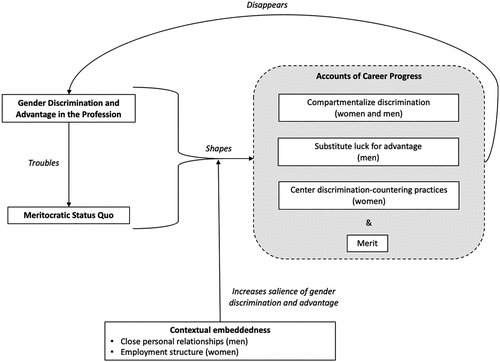
The left of the model depicts the gender discrimination and advantage in the profession, which harms women’s careers and creates gender advantage for men. As we depict, and as is consistent with extant theory, the presence of gender discrimination and advantage in the profession troubles the meritocratic status quo (Castilla 2008, Scully 2015, Sandel 2020). Thus, women and men who recognize the existence of discrimination in their profession must make sense of its real or potential impact on their own careers in their accounts of their own career progress.
The center of our model depicts the three types of accounts of career progress that emerged in our study. The first, compartmentalizing discrimination, is used by both women and men and involves defining the discrimination they recognize as problematic in the field as not relevant to their careers. To account for career progress, these individuals instead point solely to their merit. Compartmentalizing classifies some types of mistreatment as discrimination but not others (e.g., pay gaps versus interpersonal mistreatment) (Zerubavel 1991, Bowker and Star 1999) and defines discrimination as a real yet distant phenomenon, thereby shifting it out of view. Compartmentalization thus disappears discrimination in people’s accounts of their own careers by precluding discussion of discrimination’s personal harms or advantage’s personal benefits and presenting careers in the industry as meritocratic.
A second account for progress, substituting luck for possible gender advantage, is used by a group of men who recognize the harms of gender discrimination and are conscious of the potential advantages that men experience in the profession. To account for their career progress, these individuals point to both luck and also merit. The term luck describes consequential events with unpredictable outcomes that are outside the control of those affected (Sauder 2020, p. 195). In their everyday lives, people often explain their experiences through attributions to luck, yet luck remains a relatively nascent area of inquiry in scholarship on social inequality (Sauder 2020), including research on careers (Barbulescu et al. 2022, Poorhosseinzadeh et al. 2024, Tedder-King and Sherf 2024). We theorize that luck provides a simple, external, and uncontrollable explanation for personal progress not attributable to merit that protects men from acknowledging potential personal benefits from gender advantage, and its use in career accounts thereby contributes to the disappearance of gender advantage.
A third account for career progress, used by some women, involved centering discrimination-countering practices. To account for their career progress, these women point to both discrimination-countering practices and also merit. This account has complex implications for the disappearance of gender discrimination. By acknowledging discrimination’s harms and the necessary coping practices, women using this attribution are at least partially keeping discrimination in view. In this way, they seem to be subverting pressures to disappear discrimination, in contrast to the women and men who compartmentalize (Ramarajan and Reid 2013). Yet attributing career progress to discrimination-countering practices is also an individualistic attribution that emphasizes women’s strength and perseverance in overcoming challenges, for example, being “tough” enough to overcome discrimination. Moreover, these women’s very success, even if due to these practices, ironically may be used as evidence that discrimination may not be harmful to women’s careers. As such, discrimination-countering practices may also inadvertently disappear discrimination by shifting attention to women’s personal strengths and triumphs rather than the harm that they experienced to their careers and that occasioned the development of these practices. In this way, even a practice that seems to counter the status quo can also contribute to maintaining it (Ashcraft 2005).
Taken together, our study shows that although all participants recognize gender discrimination in the field, there are multiple, distinctive ways in which disappearance of gender discrimination manifests at the individual level in people’s accounts of their own careers: compartmentalization, substituting luck, and centering discrimination-countering practices. Moreover, all three groups consistently relied on attributions to merit as a basis for their career progress. Merit’s consistent and steady appearance across accounts contrasts with how discrimination and advantage slip in and out of people’s accounts. Our model suggests that in discriminatory contexts, women and men’s construction of meritocratic career accounts depends on their disappearance of discrimination and advantage. Given the co-occurrence of these practices in people’s accounts of their own careers within this field, we theorize that they function together as components of a system that disappears gender discrimination.
Our model also underscores the importance of contextual embeddedness to disappearance processes by depicting how aspects of one’s relational and organizational context can make gender discrimination and advantage salient. For men, close personal relationships with women in the field, and for women, the structure of their employment, shape their attributions for career progress. Overall, our model shows how women and men’s accounts of their own career progress are a crucial vehicle through which the individual-level disappearance of gender discrimination and advantage occurs.
Discussion
Contributions to Theory
We asked how people disappear gender discrimination and advantage that they encounter in their own careers. Scholarship on the disappearance of gender inequality has focused largely on collective and organizational processes (Fletcher 2001, Perez 2019, Padavic et al. 2020); the broader social scientific literature on phenomena that are disappeared has also taken a collective view (Douglas 1986, Daniels 1987, Anteby and Molnár 2012). This extant work is largely silent on the nature of people’s participation in this process, including whether and how they might engage in disappearance. Yet scholars have long argued that gender inequality is a system of social practices that exists at multiple levels (West and Zimmerman 1987, Ely and Padavic 2007, Ridgeway 2011). By departing from the collective-level approach to understanding disappearance, we advance theory on the disappearance of gender inequality in three key ways. First, we illuminate the individual-level underpinnings of disappearance. By uncovering three novel disappearance practices at the individual level, we expose how they may work together to simultaneously disappear related elements of the status quo, such as gender disadvantage and advantage. Second, we show how women and men’s different positions in the gender hierarchy play a central role in shaping the ways in which they disappear. Third, we show how disappearance practices are contextually embedded. In addition, our theory advances the literature on merit and discrimination (Scully 2002, Castilla 2008) by demonstrating how people’s claims on merit are intertwined with the disappearance of gender discrimination. We now unpack each of these contributions in detail.
First, our analysis shows that disappearance of gender inequality—here, the phenomenon of discrimination—is not just a collective dynamic but also an individual-level process involving people disappearing their own experiences and observations. This granular, individual-level view illuminates how disappearance of gender inequality involves the participation of all members of a social system and not only encompasses the disappearance of the focal problem but also involves the disappearance of related dynamics and consequences (i.e., harms to women’s careers, male advantage, women’s special practices). In this way, we reveal the disappearance of gender inequality as a systemic process akin to other perspectives on gender as a system of social practices that manifests at multiple levels of social organization (Ridgeway 2011). This systemic perspective differs from extant theory on disappearance, which has tended to emphasize collective processes and hegemonic accounts that serve the status quo. For instance, Fletcher’s study (Fletcher 2001) of the tech firm was theoretically groundbreaking because it theorized disappearance. Yet it emphasized the existence of a single collectively shared narrative that disappeared women’s unique relational contributions. More recent work has similarly examined collective processes, for instance, Workman-Stark et al. (2026) developed a theory on signals of silence, a seemingly unified workplace culture that suppresses the discussion of harassment. In scholarship on disappearance more broadly, Anteby and Molnár (2012) examined a “forgetting” practice that benefited the organization’s identity goals.
Similar to this extant work, our analysis shows how disappearance at the individual level serves to protect the status quo (in this case, a meritocratic one). However, by surfacing the different ways in which people disappear (compartmentalizing, substituting luck for advantage, centering discrimination countering practices), our analysis permits us to see more completely the components of the system that uphold collective disappearance. The collective disappearance of gender discrimination not only rests on individuals disappearing discrimination in their own careers but also involves disappearing its harms to women’s careers, how it creates male advantage, and the discrimination-countering practices that some women develop. Our theory suggests that future analysis of disappearance processes should take into account individual experience and attend to different voices to fully understand this complex and powerful phenomenon. For instance, in returning to Fletcher’s study (Fletcher 2001), we suspect that an individual-level perspective might deepen understanding of the disappearance of women’s relational contributions by revealing how people’s narratives taken together might disappear other aspects of organizational life that may contribute to upholding the masculine status quo (i.e., disappearing relational or feminine-coded behavior by some men).
Second, by taking both disadvantage as well as advantage seriously, our theory reveals how people’s position in the gender hierarchy shapes their engagement in the disappearance of gender discrimination, which adds critical nuance to extant theory on collective and organizational-level processes (see, e.g., Fletcher 2001 and Workman-Stark et al. 2026). Moreover, most research on gender inequality, writ large, and discrimination in particular, emphasizes women’s accounts and does not examine men’s understandings of either discrimination or their gender advantage (see, e.g., Roth 2006 and Stone 2007), thus precluding understanding of the gender system as a whole. We theorize that the distinctions we discover in women and men’s disappearance practices stem from these groups’ positions in the gender hierarchy and hence, their different stakes in the disappearance of discrimination and advantage. Status hierarchies, such as gender, expose people to distinctive opportunities and challenges in having their work recognized and rewarded (Ridgeway 2014). For women, decentering discrimination (whether by compartmentalizing it or by centering discrimination-countering practices) allows a positive focus on merit and unimpeded progress. For men, decentering discrimination (whether by compartmentalizing it or by substituting luck) protects their claims to having advanced based on merit rather than gender advantage.
We theorize women’s centering of discrimination-countering practices as a unique and complex form of disappearance. Although using these practices involves naming discrimination’s personal impact, they simultaneously contribute to its disappearance by shifting attention to women’s individual agency (e.g., becoming “tough” and skilled enough to cope with discrimination). These practices differ clearly from assimilative strategies, or ways that women learn to act as men (see, e.g., Rhode 1988 and Turco 2010): the goal of these practices was not to mimic men but to create opportunity to advance based on merit despite discrimination (i.e., women were not claiming to be “tough” to be like men, rather, toughness was necessary to counter discrimination). In naming the discrimination, these women’s accounts also contradict early social-psychological research that suggests that most women deny having personally experienced gender disadvantage (Crosby 1984). And yet these practices still function to disappear gender disadvantage because they individualize a systemic problem, consistent with research that indicates tendencies to individualize and explain away gender inequalities in careers (see, e.g., Stone 2007 and Stephens and Levine 2011). Specifically, by framing discrimination as a personal issue that they successfully managed, these accounts may inadvertently sideline the recognition of discrimination as a broad problem that might require collective solutions. Moreover, the emphasis on discrimination-countering practices as a skill and personal achievement may amplify the theme of meritocratic progress present across all accounts that we studied. Just as men who “pass” as ideal workers may contribute to this image’s persistence (Reid 2015), we speculate that the career progress that women achieve with these practices may ironically provide others with evidence that women are not harmed by discrimination, reducing pressure for collective change. While we theorized these as a complex form of disappearance, women’s willingness to name discrimination also in some ways keeps it visible; future researchers may wish to further investigate the relationship between disappearance and visibility. Finally we note that these practices (and their necessity), although critical to these women’s accounts of their careers, were absent from other participants’ accounts of gender dynamics in the field, indicating that this was largely extra labor that was invisible to others (Daniels 1987).
By directly considering men’s accounts of discrimination alongside women’s, our study revealed how male advantage both threatens men’s claims to have advanced based on merit and is disappeared in their career accounts. Men’s gender advantage is understood theoretically (Connell and Messerschmidt 2005, Schrock and Schwalbe 2009), but little empirical work examines whether men are aware of this advantage and how they might interpret it. Our analysis traces how this gender advantage is mostly overlooked by men. Yet male advantage’s benefits are simultaneously apparent in personal career accounts that are free of the routine mistreatment that women experience, that are free of some men’s culpability in that mistreatment, and, curiously, that use luck—an uncontrollable factor—as a plausible substitute to account for otherwise inexplicable career progress not attributable to merit. Our work shows how this can occur even as men broadly recognize that gender discrimination and advantage are at play in their profession.
Our work demonstrates how attributions to luck, a causal force that is often invoked by individuals (Sauder 2020), can function to obscure advantage among members of privileged groups. The relatively limited scholarship on how people think about luck in relation to their careers has traced how observers and evaluators sometimes consider the role of luck on people’s performance (Tedder-King and Sherf 2024) and how people can attribute their success and failures to luck or chance (Neeley and Dumas 2016, Barbulescu et al. 2022, Poorhosseinzadeh et al. 2024). With regard to gender, some older research indicates uneven external assignments to luck; women’s successes may be attributed by others to good luck, whereas men’s failures can be attributed by others to luck (Deaux and Emswiller 1974). Our findings point to a bridge between scholarship on luck and privilege. In particular, prior scholarship on race and class privilege shows that members of advantaged groups may distance themselves from advantage by attributing their success to merit (Knowles et al. 2014, Phillips and Lowery 2015); our work demonstrates how attributions to luck (Neeley and Dumas 2016, Barbulescu et al. 2022, Poorhosseinzadeh et al. 2024) are a way in which gender advantage and perhaps other forms of privilege are disappeared. In summary, both women and men contribute to disappearance, albeit in distinct ways.
Third, our theory specifies the contextual embeddedness of people’s disappearance practices. Aspects of one’s social context, such as interpersonal relationships and team cultures, are well known to shape how people cope with inconvenient and difficult information (Thomas 1993, Edmondson and Lei 2014, DiBenigno 2026), yet existing literature’s tendency to examine organizations or professions as a whole may have inhibited exploration of how disappearance is embedded in particular organizational and relational contexts. Our study indicates that working in organizations (rather than freelance) can provide women with everyday evidence of broad discrimination (i.e., the ability to count how many women are in senior roles) that offers validation for their personal sense that discrimination harms their own careers such that they are more likely to attribute progress to discrimination-countering skills than to compartmentalize their experiences. This underscores the importance of organizational context to people’s ability to name and respond to discrimination and offers an additional explanation for why women working in remote contexts may report themselves to be less personally exposed to discrimination (Doering and Tilcsik 2024); they may simply have less access to information that validates and helps legitimize personal experiences.
Furthermore, our study also underscores the revelatory power of close relationships in navigating inequalities (Phillips et al. 2009, Ramarajan and Reid 2020) by showing how discrimination can become more salient to men when they have close relationships with women in their profession. DiBenigno’s study of a U.S. public lands organization is a recent exception that examined the importance of relationships for women’s propensity to recognize inequality and work toward gender equality (DiBenigno 2026); our work complements and extends these findings by demonstrating the importance of cross-gender relationships for men’s access to information about discrimination. This contextually embedded view of disappearance—in organizations and relationships—offers crucial points of leverage for both individuals and organizations to disrupt the disappearance of gender discrimination and work toward collective awareness of this problem, such as by fostering cross-gender relationships and adopting transparent pay practices.
Taken together, the individual-level disappearance practices we uncovered may contribute to collective and organizational narratives that disappear discrimination and advantage and in aggregate stall reform and contribute to the persistence of collective silence on this issue. In particular, we theorize that the ways that people disappear discrimination in their own career progress will likely influence whether and how discrimination’s harms are included in public, collectively shared narratives within organizations and their profession (Scott 1990, Ewick and Silbey 1995). To the extent that harms are disappeared in shared narratives, organized efforts to challenge and alter discriminatory behavior are likely to lack support and risk being undermined (Padavic et al. 2020, Flynn 2025).
Lastly, our study also advances the growing literature on the intersection of merit and discrimination and shows how luck relates to the two. Most studies of merit have considered how evaluators assess others, often in biased ways (Rivera 2012, Castilla and Ranganathan 2020, Clarke et al. 2024). By centering the perspective of those being assessed, we advance this literature by demonstrating how traditional forms of merit (i.e., skills, performance) are only one of several available attributions for progress. The presence of discrimination-countering practices and luck alongside merit offers deeper insight into the complex ways discrimination shapes people’s notions of merit. Thus, in discriminatory contexts, we suggest that people’s accounts of their career progress, even if they appear to be neutral (e.g., emphasizing merit or luck), emerge from a process of coping with the possible implications of discrimination and advantage in relation to their own meritocratic progression.
Limitations and Future Research
Journalism offered a rich context for examining discrimination and how people interpret it in relation to their own careers. We expect that the disappearance processes we traced would occur in other male-dominated fields where gender is salient and discrimination is common (e.g., banking, consulting, engineering). Yet discrimination is not confined to male-dominated fields. Scholars could examine how discrimination is disappeared in women-dominated fields, such as nursing, where women regularly confront discrimination from not only colleagues but also those they serve (i.e., patients). Our work shows that freelance contexts may amplify disappearance because contextual information on inequality is lacking; further research is needed to specify how disappearance operates in such contexts. For instance, journalism’s precarity (Jiang and Wrzesniewski 2023) means that jobs are hard to find and keep; this might be one reason why men did not clearly perceive themselves to be advantaged and so easily turned to luck. Perceptions of advantage and luck might differ in more predictable, secure professional contexts.
Our sample permits insight into the experiences of people who stayed in the profession. It is plausible that women who experienced particularly acute mistreatment had left and were therefore not in our sample. Future work should compare the experiences of people who both stay in and leave professions following discrimination. Also, although we focused on people’s accounts at the time of the interview, people accumulate different experiences over time, and their approaches to and accounts of their careers might also change. Such evolution could be fertile terrain for future research; for instance, scholars could examine whether and how women might move from compartmentalizing to using discrimination-countering practices over time.
Interviews offer richer data than surveys and, for this research, some advantages over ethnography because some of the encounters women described might simply not occur in a researcher’s presence. Yet interview data also have limitations, including self-presentation and recall biases (Lamont and Swidler 2014). We addressed this by eliciting rich stories and searching for contradictions in accounts. However, gender discrimination is difficult to gather complete information on; women can find discrimination traumatizing to discuss, and some men may be motivated to suppress information about their own behavior. In addition, these pressures toward silence may mean that it is difficult for others to gain clear information about their colleagues’ experiences. In our analysis, we aimed to show actual experiences or observations of discrimination alongside a lack of acknowledgement of its consequences and relied on such contradictions within people’s own subjective accounts to theorize disappearance. However, as discussed in our Appendix B, some people may not have such observations at all. Thus, fully understanding gender discrimination’s scope and impact likely requires the continued use of a variety of empirical approaches.
We did not observe systematic differences in people’s tendency to disappear gender discrimination by racial background or cohort. However, racial identity may well complicate disappearance and other demographic characteristics, such as that age and life stage might matter, too. Motherhood introduces new biases (Correll et al. 2007); both women and men encounter age-based discrimination (Roscigno et al. 2007), and the form of discrimination may change over time (i.e., overt versus subtle harassment), differentially shaping experiences by cohort.
We regard discrimination-countering practices as part of a broader range of noncodified skills and practices that women develop and employ to be successful in unequal contexts, including skills for negotiation (Kolb and Williams 2001, Bowles et al. 2019), cross-occupational collaboration (Cardador et al. 2022, Koppman et al. 2022), preventing escalations into sexual harassment (Hart 2021), being heard (Trzebiatowski et al. 2023), and making career transitions (Ibarra and Petriglieri 2017). We encourage future scholars to examine how some women (but not others) learn discrimination-countering practices and how these practices relate to skills developed by members of other marginalized groups (such as code-switching among ethnic/racial minorities; see McCluney et al. 2021) and their contextual embeddedness. For instance, some branches of journalism are more male-dominated (e.g., sports versus science reporting); scholars might examine whether discrimination-countering practices are more developed, fine-grained, and frequently used in more male-dominated parts of professions than others.
Our study also underscores the need to further study men’s involvement in discrimination, including factors that enable some men’s aggression toward women but are omitted from their own accounts, as well as why some men may overlook discrimination against women. A few men that we interviewed suggested that women had particular advantages because of inclusion efforts. These comments may suggest that a loss of gender advantage may be experienced as discrimination by some men. Because these comments were made by a small minority, we had insufficient data to unpack their reasoning; we suggest this as an intriguing area for future research. Because we focused on discrimination against women, we note that our findings do not clearly apply to the experiences of men or gender minorities who experience gender discrimination. Future scholars might explore their experiences.
Lastly, we encourage research on the extent to which the individual-level disappearance processes may aggregate to collective disappearance and when and how there may be collective, shared narratives that acknowledge, rather than disappear, gender discrimination in professions. In recent years, industries such as Big Tech and Hollywood have gone through ebbs and flows regarding collective awareness and acceptance that gender discrimination is a problem (Schultz 2018, Twohey and Kantor 2019, Wong 2019). Future work could explore whether and how collective, shared narratives that acknowledge discrimination translate into impact and change in organizations, for instance, the extent to which HR practices have changed (or not) since #MeToo.
Practical Implications
Our study also has several practical implications. First, our findings regarding the importance of context in shaping people’s awareness of discrimination and advantage suggest points of intervention. Personal relationships helped men see and empathize with the gender discrimination their women peers experienced and advantage they potentially experienced; gender-diverse mentoring groups and shared tasks could provide opportune spaces in which to further grow such trusting relationships. We also encourage men who see advantage and women who center discrimination to build coalitions to create change. Transparently sharing data on remuneration and advancement can also help women and men recognize and begin to counter patterns of gender discrimination. Additionally, our study highlights the isolation and lack of information and complaint procedures available to women working freelance. Gig worker organizers and labor regulators could address this issue by devising systems to ensure transparency on representation and rewards in different areas of work (e.g., lists of average income and contract terms) and creating or reinforcing mechanisms for disputes and complaints.
For leaders, our work suggests that organizations would be better served by continuing to address discrimination, rather than withdrawing from efforts to address inequality (Sands and Ferraro 2025), and building truly meritocratic systems that work for all. For instance, rather than positioning merit and discrimination as contradictory, which suggests that organizational actions that alleviate discrimination come at the expense of meritocratic advancement, organizations and leaders should aim to help people understand and hold onto the idea that meritocratic ideals are most advanced when discrimination is challenged.
Conclusion
We asked how it is that widespread recognition of gender discrimination and advantage can be largely absent from people’s reasonings for the existence of gender-unequal career outcomes. Our work shows how disappearance is not just a collective phenomenon. It is also an individual phenomenon where people disappear discrimination while recounting their own histories. Most people’s accounts ruled discrimination and advantage to be unimportant to their own career progress. Such individual disappearance may make discrimination more challenging to contest. However, nearly all participants recognized that gender discrimination was a problem and empathized with women’s negative experiences in their profession writ large. This broad recognition may be our best hope for sparking change.
The authors are grateful to the many journalists who shared their stories with us; thank you for the window into your careers. The authors are also thankful for the support of Associate Editor Sharon Koppman and for the close reads and helpful suggestions from four expert reviewers. For research assistance, the authors thank Paula Pereda Perez and Sophie Haugen. The authors benefited from generous feedback from communities at the Davis Conference on Qualitative Methods, McMaster’s MCREW, Women and Public Policy Program at the Harvard Kennedy School, the Tuck School of Business, IESE, University of Michigan, and Georgia Tech. The authors are also grateful for comments from the GC, Michel Anteby, Nancy Rothbard, Michael Pratt, Nick Levitt, and Alex Muggah. This research was supported by a grant from the Canadian government’s Social Sciences and Humanities Research Council, the Ontario Government’s Early Researchers program, and through release time afforded by the Canada Research Chairs program and through research funding from the DRFD at Harvard Business School.
Appendix A. Interview Protocol
*Indicates question added after pilot interviews
Could you walk me through your work history to date, from when you left school (year graduated), to the present?
*What is your job now? What kind of tasks do you do?
*What kind of hours and travel does it involve? How many hours/week?
*How many hours did you work yesterday? As a guideline, could you talk me through your day, hour by hour, starting with when you woke up?
Time woke up
First hour
…etc., hour by hour
Time went to bed
*What are others’ (e.g., editors, colleagues) expectations of your availability for your work? How do you manage these?
How typical has your career been relative to others in your field?
Where do you see yourself in five years? *If not here, why? If here, in what role?
*In your experience, do most people in your current organization [industry] anticipate leaving? Why is this?
Some people I’ve spoken with in the course of this research have talked about having a professional identity. Does that term mean anything to you? If so, how would you describe it?
How important would you say your work is to your sense of self?
Is there a particular person who you view as very successful in [journalism/your subfield]?
*In what ways are you similar or different?
From what you know, are men’s and women’s experiences in this field similar or different?
From what you know, are people’s experiences in this field influenced by their race?
*Where do you think this field is going?
*If not already covered: I am interested in understanding how people combine their work with their personal lives. Can you tell me about your life outside work?
Married/serious partnership? How long?
Children? Number, age?
Extended family in the area?
Religious affiliation involvement?
Other community involvement (local boards, etc.)
*If married: Could you tell me a little bit more about your spouse?
Does your spouse work? If so, at what? What qualifications does s/he have?
How many hours a week does s/he work?
How long has s/he been working at this job/career? If less than 3 years, what did s/he do before?
What are your spouse’s career aspirations?
How do you prioritize your jobs?
What proportion of the total family income does your spouse earn?
*If married: Do you feel that your marriage has affected how you have approached your career? Do you feel that your career has affected how you have or will approach your marriage? In what ways?
*If children: Do you feel that your children have affected your work behavior or approach to your career at all? If so, how? Did your work behavior change more after your second child was born?
*If other involvements: Do you feel that your involvement in [religious affiliation, community boards, other] has affected your work behavior or approach to your career at all? If so, how?
If you were conducting this study, what would you ask that I have not?
Appendix B. Participants Who Report That They Did Not Experience or Observe Discrimination in the Profession (Women and Men)
Twenty-three journalists, including a small number of women (7/80) and some men (16/45), did not observe gender discrimination in the profession. They attributed their own career progress to merit alone, defined by performance of standard professional skills.
Perceiving No Relevance of Discrimination to Own Career Progress
When asked, these participants stated that women were not discriminated against. One woman with many years of experience shared, “From where I sit, women have not been at a disadvantage …Women are getting wonderful roles across the board.” (91W, Wh) Similarly, a man noted that, “I have not observed any differences. I’m trying to think of the women that I know who are reporters and editors. They don’t seem [to have] told me that they think they’re treated differently, and I don’t think I’ve seen it. Trying to think. I mean I really haven’t.” (6M, Wh) Another man described discrimination as largely a historical phenomenon:
“When I look back at my 40 years in the business, one of the constants has been the advancement of women in the business. When I look back at my first jobs, every decision in the newsroom of any consequence was made by men. The people taking the orders were men. And there were a few women, but they were largely not in positions of great editorial responsibility. That’s [the advancement of women] been changing for my entire career. My colleagues are women. Many of my bosses are women…When you look at what has accumulated, what has accrued over time, it certainly has been, um, a generation of tremendous progress for women in this business.” (108M, E/RM)
Thus, in contrast to most participants, these women and men did not perceive discrimination in the field.
Career Progress Attributions: Merit
These individuals attributed their career progress to their own merit. For example, one man who viewed the field as not discriminatory attributed his own progress to his professional skills—cultivating sources and writing “big stories” and “scoops”: “I got along well with a lot of scientists and found that some scientists, at [a federal agency], for example, weren’t that aware if the policy implications are going to work, so they would give me big stories about keeping an eye out on how they were working, I’d get big stories. And got some scoops that way.” (39M, Wh)
Women in this group similarly emphasized their mastery of professional skills as the reason for their career progress. One described how the quality of her articles were what had led her to land a role as a freelancer for a local paper:
“I had just noticed in the community paper that they need some freelance writers. So, I contacted them, and ironically, timing-wise, some of my articles that were in the big city newspaper happened to be that Sunday, and I had called on Monday. And, at the time I had called, the editor said, he said, ‘Are you the one that wrote this article?’ Because he had somebody in his office had actually cut out the article I had written and put it on his desk.” (7W, Wh)
Thus, this small group differed from the majority of our participants in that they did not recognize gender discrimination in the profession. Regarding the profession as fair, they attributed their own career progress to their own merit.
1 The term gender discrimination can refer to gender-based mistreatment of a range of groups, for example, women, nonbinary people, and men. In this article, we use the term gender discrimination to refer to mistreatment of women.
2 A total of 130 people were interviewed for the study; four were not included in the sample because they did not meet the study criteria (e.g., over the age of 70, never working in the United States), and one was ultimately dropped because the person had insufficient data on key constructs of interest.
3 Some women also described gender discrimination as intertwined with racial discrimination. They noted that journalism was dominated by White men. One racial minority woman shared, “the voices … that are being heard most are definitely the White male voices.” (47W, E/RM) Another racial minority woman noted, “I’m a Black female in a White-dominated industry, very male-dominated. I stand out, so people know who I am…I think that men and women overall have different experiences in journalism and even more different for journalists of color, be they men or women.” (100W, E/RM) Thus, these women felt that White men in particular were advantaged because of both race and gender.
References
- (1990) Hierarchies, jobs, bodies: A theory of gendered organizations. Gender Soc. 4(2):139-158.Crossref, Google Scholar
- (2025) A little help from my friends? Navigating the tension between social capital and meritocracy in the job search. Admin. Sci. Quart. 70(2):496–537.Crossref, Google Scholar
- (2021) Complaint! (Duke University Press, Durham, NC). Crossref, Google Scholar
- (2022) Going along to get ahead: The asymmetric effects of sexist joviality on status conferral. Organ. Sci. 33(5):1794–1815.Link, Google Scholar
- (2024) The Interloper: Lessons from Resistance in the Field (Princeton University Press, Princeton, NJ).Crossref, Google Scholar
- (2012) Collective memory meets organizational identity: Remembering to forget in a firm’s rhetorical history. Acad. Management J. 55(3):515–540.Crossref, Google Scholar
- (2005) Resistance through consent? Occupational identity, organizational form, and the maintenance of masculinity among commercial airline pilots. Management Comm. Quart. 19(1):67–90. Crossref, Google Scholar
- (2019) Splitting and blaming: The psychic life of neoliberal executive women. Human Relations 72(1):69–97.Crossref, Google Scholar
- (2022) Management of fortuity: Workplace chance events and the career projections of up-or-out professionals. J. Vocational Behav. 139(2022):1–18.Google Scholar
- (2005) Interorganizational determinants of promotion: Client leadership and the attainment of women attorneys. Amer. Sociol Rev. 70(4):678–701.Crossref, Google Scholar
- (2003) The opt-out revolution. New York Times (October 26), https://www.nytimes.com/2003/10/26/magazine/the-opt-out-revolution.html.Google Scholar
- (2007a) Harassment based on sex: Protecting social status in the context of gender hierarchy. Acad. Management Rev. 32(2):641–658.Crossref, Google Scholar
- (2007b) The sexual harassment of uppity women. J. Appl. Psychol. 92(2):425–437.Crossref, Google Scholar
- (2018) Work as a masculinity contest. J. Soc. Issues 74(3):422–448.Crossref, Google Scholar
- (2022) Misconceiving Merit: Paradoxes of Excellence and Devotion in Academic Science and Engineering (University of Chicago Press, Chicago, IL).Crossref, Google Scholar
- (1999) Sorting Things Out: Classification and Its Consequences (MIT Press, Cambridge, MA).Crossref, Google Scholar
- (2007) Social incentives for gender differences in the propensity to initiate negotiations: Sometimes it does hurt to ask. Organ. Behav. Human Decision Process 103(1):84–103.Crossref, Google Scholar
- (2019) Reconceptualizing what and how women negotiate for career advancement. Acad. Management J. 62(6):1645–1671.Crossref, Google Scholar
- (2020) Axes of power: Examining women’s access to leadership positions in the news media. Djerf-Pierre M, Edström M, eds. Comparing Gender and Media Equality Across the Globe: A Cross-National Study of the Qualities, Causes, and Consequences of Gender Equality in and through the News Media (Nordicom, Gothenburg, Sweden), 191–232.Google Scholar
- (2022) Unpacking the status-leveling burden for women in male-dominated occupations. Admin. Sci. Quart. 67(1):237–284.Crossref, Google Scholar
- (2011) Perceptions of relational practices in the workplace. Gender Work Organ. 18(4):359–376.Crossref, Google Scholar
- (2008) Gender, race, and meritocracy in organizational careers. Amer. J. Sociol. 113(6):1479–1526.Crossref, Google Scholar
- (2010) The paradox of meritocracy in organizations. Admin. Sci. Quart. 55(4):543–676.Crossref, Google Scholar
- (2020) The production of merit: How managers understand and apply merit in the workplace. Organ. Sci. 31(4):909–935.Link, Google Scholar
- (2006) Constructing Grounded Theory: A Practical Guide Through Qualitative Analysis (Sage Publications, Thousand Oaks, CA).Google Scholar
- (2024) Maintaining the meritocracy myth: A critical discourse analytic study of leaders’ talk about merit and gender in academia. Organ. Stud. 45(5):635–660.Crossref, Google Scholar
- (2005) Hegemonic masculinity: Rethinking the concept. Gender Soc. 19(6):829–859.Crossref, Google Scholar
- (2007) Getting a job: Is there a motherhood penalty? Amer. J. Sociol. 112(5):1297–1339.Crossref, Google Scholar
- (2020) Inside the black box of organizational life: The gendered language of performance assessment. Amer. Sociol Rev. 85(6):1022–1050.Crossref, Google Scholar
- (2021) Putting people down and pushing them out: Sexual harassment in the workplace. Ann. Rev. Organ. Psych. Organ. Behav. 8(2021):285–309.Crossref, Google Scholar
- (1984) The denial of personal discrimination. Amer. Behav. Sci. 27(3):371–386.Crossref, Google Scholar
- (1987) Invisible work. Soc. Problems 34(5):403–415.Crossref, Google Scholar
- (1974) Explanations of successful performance on sex-linked tasks: What is skill for the male is luck for the female. J. Personality Soc. Psychol. 29(1):80–85.Crossref, Google Scholar
- (2026) Women lifting up women: The transformative potential of parallel-peer connections. Admin. Sci. Quart., ePub ahead of print May 13, https://dx.doi.org/10.1177/00018392261436817. Crossref, Google Scholar
- (2009) Inventing Equal Opportunity (Princeton University Press, Princeton, NJ).Crossref, Google Scholar
- (2024) Location matters: Everyday gender discrimination in remote and on-site work. Organ. Sci. 36(2):547–571.Link, Google Scholar
- (2023) “Was it me or was it gender discrimination?” How women respond to ambiguous incidents at work. Sociol. Sci. 10(18):501–533.Crossref, Google Scholar
- (1986) How Institutions Think (Syracuse University Press, Syracuse, NY).Google Scholar
- (2002) Role congruity theory of prejudice toward female leaders. Psychol. Rev. 109(3):573–598.Crossref, Google Scholar
- (2014) Psychological safety: The history, renaissance, and future of an interpersonal construct. Ann. Rev. Organ. Psych. Organ. Behav. 1(1):23–43.Crossref, Google Scholar
- (1995) The power in demography: Women’s social constructions of gender identity at work. Acad. Management J. 38(3):589–634.Crossref, Google Scholar
- (2007) A feminist analysis of organizational research on sex differences. Acad. Management Rev. 32(4):1121–1143.Crossref, Google Scholar
- (2014) Rethink what you “know” about high-achieving women. Harvard Bus. Rev. (December), https://hbr.org/2014/12/rethink-what-you-know-about-high-achieving-women.Google Scholar
- (2026) When interpretations of merit thresholds vary and reproduce inequality: Entering the tech industry without computer science credentials. Organ. Sci. 37(2):490–515.Link, Google Scholar
- (1995) Subversive stories and hegemonic tales: Toward a sociology of narrative. Law Soc. Rev. 29(2):197–226.Crossref, Google Scholar
- (2022) Lack of ambition or lack of support? Diverging career experiences of men and women explain the persistence of gender bias. J. Appl. Soc. Psychol. 52(9):851–864.Crossref, Google Scholar
- (2009) Doing gender in engineering workplace cultures. II. Gender in/authenticity and the in/visibility paradox. Engrg. Stud. 1(3):169–189.Crossref, Google Scholar
- (2018) Sex-based harassment and organizational silencing: How women are led to reluctant acquiescence in academia. Human Relations 72(10):1565–1594.Crossref, Google Scholar
- (2018) Attacks and Harassment: The Impact on Female Journalists and Their Reporting (Internal Women’s Media Foundation & Troll-Busters.com, Washington, DC).Google Scholar
- (2001) Disappearing Acts: Gender, Power and Relational Practice at Work (MIT Press, Cambridge, MA).Google Scholar
- (2025) Constraints, competencies, or choices? How lay theories of the gender gap impact diversity support. Acad. Management J. 68(6):1380–1406.Crossref, Google Scholar
- (2018) Women and Men in STEM Often at Odds Over Workplace Equity (Pew Research Center, Washington, DC).Google Scholar
- (2022) Running up against a brick wall: U.S. metajournalistic discourse of gender equality in newsrooms. J. Stud. 23(14):1758–1778.Google Scholar
- (1985) Hard Choices: How Women Decide About Work, Career, and Motherhood (University of California Press, Berkeley and Los Angeles, CA).Google Scholar
- (2005) Gender stereotypes, same-gender preferences, and organizational variation in the hiring of women: Evidence from law firms. Amer. Sociol. Rev. 70(4):702–728.Crossref, Google Scholar
Government of Canada SC (2024) The daily—Gender results framework: A new data table on workplace harassment. Retrieved June 3, 2026, https://www150.statcan.gc.ca/n1/daily-quotidien/240212/dq240212a-eng.htm.Google Scholar- (2019) Harassed: Gender, Bodies and Ethnographic Research (University of California Press, Berkeley).Google Scholar
- (2021) Trajectory guarding: Managing unwanted, ambiguously sexual interactions at work. Amer. Sociol. Rev. 86(2):256–278.Crossref, Google Scholar
- (2013) Engineering identity: Gender and professional identity negotiation among women engineers. Gender Work Organ. 20(4):382–396.Crossref, Google Scholar
- (2024) Women at work: Pathways from gender stereotypes to gender bias and discrimination. Annual Rev. Organ. Psych. Organ. Behav. 11(2024):165–192.Crossref, Google Scholar
- (2021) See no evil, hear no evil, speak no evil: Theorizing network silence around sexual harassment. J. Appl. Psychol. 106(12):1834–1847.Crossref, Google Scholar
- (2017) To thine own self be true? Facades of conformity, values incongruence, and the moderating impact of leader integrity. Acad. Management J. 60(1):178–199.Crossref, Google Scholar
- (2008) The context of discrimination: Workplace conditions, institutional environments, and sex and race discrimination charges. Amer. J. Sociol. 113(5):1394–1432.Crossref, Google Scholar
- (2017)
Impossible selves: Image strategies and identity threat in professional women’s career transitions . Storberg-Walker J, Haber-Curran P, eds. Theorizing Women and Leadership: New Insights and Contributions from Multiple Perspectives (Information Age Publishing, Charlotte, NC), 19–36.Crossref, Google Scholar - (2003) Reported incidence rates of work-related sexual harassment in the United States: Using meta-analysis to explain reported rate disparities. Personnel Psychol. 56(3):607–631.Crossref, Google Scholar
- (2023) Perceiving fixed or flexible meaning: Toward a model of meaning fixedness and navigating occupational destabilization. Admin. Sci. Quart. 68(4):1008–1055.Crossref, Google Scholar
- (2014) By whom and when is women’s expertise recognized? The interactive effects of gender and education in science and engineering teams. Admin. Sci. Quart. 59(2):202–239.Crossref, Google Scholar
- (2015) When can women close the gap? A meta-analytic test of sex differences in performance and rewards. Acad. Management J. 58(5):1516–1545.Crossref, Google Scholar
- (1977) Some effects of proportions on group life: Skewed sex ratios and responses to token women. Amer. J. Sociol. 82(5):965–990.Crossref, Google Scholar
- (2014) Deny, distance, or dismantle? How white Americans manage a privileged identity. Perspect. Psych. Sci. 9(6):594–609.Crossref, Google Scholar
- (2001) The Shadow Negotiation: How Women Can Master the Hidden Agendas That Determine Bargaining Success (Simon and Schuster, New York).Google Scholar
- (2022) Overcoming conflict between symmetric occupations: How “creatives” and “suits” use gender ordering in advertising. Acad. Management J. 65(5):1623–1651.Crossref, Google Scholar
L.A. Times Guild (2018) Los Angeles Times Guild Pay Study (Los Angeles Times Guild, Los Angeles).Google Scholar- (2023) Seeing Others: How Recognition Works―and How It Can Heal a Divided World (Simon & Schuster, New York).Google Scholar
- (2014) Methodological pluralism and the possibilities and limits of interviewing. Qualitative Sociol. 37(2):153–171.Crossref, Google Scholar
- (2024) #MeToo in the newsroom: Image repair and allegations of sexual misconduct. Journalism Practice 18(6):1365–1377.Crossref, Google Scholar
- (2025) “We’re better than most”: Diversity discourse in the San Francisco Bay Area tech industry. Soc. Problems 72(1):261–276.Crossref, Google Scholar
- (2006) When fit is fundamental: Performance evaluations and promotions of upper-level female and male managers. J. Appl. Psychol. 91(4):777–785.Crossref, Google Scholar
- (2001)
Legitimacy and the construal of social disadvantage . Jost JT, Major B, eds. The Psychology of Legitimacy: Emerging Perspectives on Ideology, Justice, and Intergroup Relations (Cambridge University Press, Cambridge, UK), 176–204.Google Scholar - (2021) To be, or not to be…Black: The effects of racial codeswitching on perceived professionalism in the workplace. J. Exp. Soc. Psychol. 97(2021):1–12.Google Scholar
McKinsey & Company (2024) Women in the workplace 2024: The 10th-anniversary report. Accessed June 3, 2026, https://www.mckinsey.com/featured-insights/diversity-and-inclusion/women-in-the-workplace-2024.Google Scholar- (2017) The economic and career effects of sexual harassment on working women. Gender Soc. 31(3):333–358.Crossref, Google Scholar
- (2022) Journalists, harassment, and emotional labor: The case of women in on-air roles at US local television stations. Journalism 23(1):79–97.Crossref, Google Scholar
- (2016) Unearned status gain: Evidence from a global language mandate. Acad. Management J. 59(1):14–43.Crossref, Google Scholar
NewsGuild-CWA (2021) NewsGuild-CWA Study of Pay Equity in 14 Gannett Newsrooms (The Newsguild: Communications Workers of America, Washington, DC).Google Scholar- (2017) Is love all you need? The effects of emotional culture, suppression, and work–family conflict on firefighter risk-taking and health. Acad. Management J. 60(1):78–108.Crossref, Google Scholar
- (2020) Explaining the persistence of gender inequality: The work–family narrative as a social defense against the 24/7 work culture. Admin. Sci. Quart. 65(1):61–111.Crossref, Google Scholar
- (2017) Gender Discrimination Comes in Many Forms for Today’s Working Women (Pew Research Center, Washington, DC).Google Scholar
- (2019) Invisible Women: Data Bias in a World Designed for Men (Abrams Press, New York).Google Scholar
- (2015) The hard-knock life? Whites claim hardships in response to racial inequity. J. Exp. Soc. Psychol. 61(2015):12–18.Crossref, Google Scholar
- (2009) To disclose or not to disclose? Status distance and self-disclosure in diverse environments. Acad. Management Rev. 34(4):710–732.Crossref, Google Scholar
- (2024) Gendered constructions of luck at work: The case of career narratives of female and male managers. Gender Issues 41(6):1–18.Google Scholar
- (2013) What good are interviews for thinking about culture? Demystifying interpretive analysis. Amer. J. Cultural Sociol. 1(1):42–68.Crossref, Google Scholar
- (2013) Shattering the myth of separate worlds: Negotiating non-work identities at work. Acad. Management Rev. 38(4):621–644.Crossref, Google Scholar
- (2020) Relational reconciliation: Socializing others across demographic differences. Acad. Management J. 63(2):356–385.Crossref, Google Scholar
- (2015) Embracing, passing, revealing, and the ideal worker image: How people navigate expected and experienced professional identities. Organ. Sci. 26(4):997–1017.Link, Google Scholar
- (1988) Perspectives on professional women. Stanford Law Rev. 40(5):1163–1207.Crossref, Google Scholar
- (1999) Speaking of Sex: The Denial of Gender Inequality (Harvard University Press, Cambridge, MA).Google Scholar
- (1997) Interaction and the conservation of gender inequality: Considering employment. Amer. Sociol. Rev. 62(2):218–235.Crossref, Google Scholar
- (2011) Framed by Gender: How Gender Inequality Persists in the Modern World (Oxford University Press, Oxford, UK).Crossref, Google Scholar
- (2014) Why status matters for inequality. Amer. Sociol. Rev. 79(1):1–16.Crossref, Google Scholar
- (2008) Managing “spoiled” national identity: War, tourism and memory in Croatia. Amer. Sociol. Rev. 73(4):613–634.Crossref, Google Scholar
- (2012) Hiring as cultural matching: The Case of elite professional service firms. Amer. Sociol Rev. 77(6):999–1022.Crossref, Google Scholar
- (2015) Pedigree: How Elite Students Get Elite Jobs (Princeton University Press, Princeton, NJ).Crossref, Google Scholar
- (2016) Class advantage, commitment penalty: The gendered effect of social class signals in an elite labor market. Amer. Sociol Rev. 81(6):1097–1131.Crossref, Google Scholar
- (2007) Age discrimination, social closure and employment. Soc. Forces 86(1):313–334.Crossref, Google Scholar
- (2006) Selling Women Short: Gender and Money on Wall Street (Princeton University Press, Princeton, NJ).Google Scholar
- (2001) Prescriptive gender stereotypes and backlash toward agentic women. J. Soc. Issues 57(4):743–762.Crossref, Google Scholar
- (2020) The Tyranny of Merit: What’s Become of the Common Good? (Farrar, Straus and Giroux, New York).Google Scholar
- (2025) DEI rollbacks: Consequences and considerations for brand managers. Bus. Horizons 69(2):209–216.Crossref, Google Scholar
- (2020) A sociology of luck. Sociol. Theory 38(3):193–216.Crossref, Google Scholar
- (2009) Men, masculinity, and manhood acts. Annual Rev. Sociol. 35(2009):277–295.Crossref, Google Scholar
- (1997) Reconceptualizing sexual harassment. Yale Law J. 107(6):1683–1806.Crossref, Google Scholar
- (2018) Reconceptualizing sexual harassment, again collection: #MeToo and the future of sexual harassment law. Yale Law J. 128(8):22–66.Google Scholar
- (1990) Domination and the Arts of Resistance: Hidden Transcripts (Yale University Press, New Haven, CT).Google Scholar
- (2000)
Manage your own employability: Meritocracy and legitimation of inequality in internal labor markets and beyond . Leana CR, Rousseau DM, eds. Relational Wealth: The Advantages of Stability in a Changing Economy (Oxford University Press, Oxford, UK), 199–214.Google Scholar - (2002) Confronting errors in the meritocracy. Organization 9(3):396–401.Crossref, Google Scholar
- (2015)
Meritocracy . Cooper CL, ed. Wiley Encyclopedia of Management (John Wiley & Sons, Ltd, Chichester, UK), 1–2.Crossref, Google Scholar - (2025) Subordinating humanism: How colliding beliefs about a living wage shape personal fulfillment and “professional-class” identities in working-class jobs. Acad. Management J. 68(5):939–970. Crossref, Google Scholar
- (2005) The effects of sexual harassment on turnover in the military: Time-dependent modeling. J. Appl. Psychol. 90(6):1141–1152.Crossref, Google Scholar
- (2019) Addressing sexual harassment in journalism education. Journalism 20(1):118–121.Crossref, Google Scholar
- (2011) Opting out or denying discrimination? How the framework of free choice in American society influences perceptions of gender inequality. Psychol Sci. 22(10):1231–1236.Crossref, Google Scholar
- (2007) Opting Out? Why Women Really Quit Careers and Head Home (University of California Press, Berkeley and Los Angeles).Crossref, Google Scholar
- (2024) Fairness judgments in the context of structural sexism: The role of beliefs in individual and structural causes of success. Acad. Management J. 67(5):1234–1272.Crossref, Google Scholar
- (1993) Racial dynamics in cross-race developmental relationships. Admin. Sci. Quart. 38(2):169–194.Crossref, Google Scholar
- (2023) Managing the double bind: Women directors’ participation tactics in the gendered boardroom. Organ. Sci. 34(2):801–827.Link, Google Scholar
- (2010) Cultural foundations of tokenism: Evidence from the leveraged buyout industry. Amer. Sociol. Rev. 75(6):894–913.Crossref, Google Scholar
- (2019) She Said: Breaking the Sexual Harassment Story That Helped Ignite a Movement (Penguin Press, New York).Google Scholar
- (1994) Learning from Strangers: The Art and Method of Qualitative Interview Studies (The Free Press, New York).Google Scholar
- (1987) Doing gender. Gender & Soc. 1(2):125–151.Crossref, Google Scholar
Women’s Media Center (2021) The Status of Women in the U.S. Media 2021. Report, Women’s Media Center, Washington, DC.Google Scholar- (2019) Demoted and sidelined: Google walkout organizers say company retaliated. The Guardian (April 22), https://www.theguardian.com/us-news/2019/apr/22/google-mass-protests-employee-retaliation.Google Scholar
- (2026) How signals of silence sustain sexual harassment and what to do about it. Human Res. Management 65(4):1033–1054.Google Scholar
- (1991) The Fine Line (University of Chicago Press, Chicago).Google Scholar
- (2006) The Elephant in the Room: Silence and Denial in Everyday Life (Oxford University Press, Oxford, UK).Google Scholar
Erin Reid is professor and Canada Research Chair at McMaster University’s DeGroote School of Business. She received her PhD in sociology and organizational behavior from Harvard University. Her research explores the interrelations between gender, identity, the organization of work, and the career paths people pursue.
Lakshmi Ramarajan is the Diane Doerge Wilson Professor of Business Administration in the Organizational Behavior Unit at Harvard Business School. She earned her PhD in management from The Wharton School at the University of Pennsylvania. Her research examines the management and consequences of identities in organizations.