Reject or Protect? Corrective Action in Response to Women’s vs. Men’s Reports of Workplace Abuse
Abstract
Organizations encourage employees to report abusive behavior as such reports are believed to facilitate corrective action against transgressors. However, there are competing perspectives on whether reports made by women (versus men) will facilitate corrective action. On the one hand, a dominant stream of research suggests that reports made by women are often ignored and disregarded because women are not seen as credible. On the other hand, an emerging stream of research suggests that third parties will see reports made by women as serious and important. To reconcile these perspectives, we draw on aversive discrimination theory, which hints that the degree of corroboration about abuse plays a key role. That is, under situations of low corroboration, third parties are unlikely to take corrective action when women (versus men) make reports, but under situations of high corroboration, third parties are equally or even more likely to take corrective action when women (versus men) make reports. We additionally theorize and find that corroboration is particularly influential when the reporter’s general credibility is not established. Our empirical package includes six complementary studies: an archival data set of U.S. Government employees and five preregistered experiments.
Funding: For financial assistance, we thank the University of North Carolina at Chapel Hill [Junior Faculty Development Award].
Given the performance, well-being, and moral costs that abusive actors inflict on victims and organizations, scholars and practitioners alike have touted reporting as an avenue to mitigate such outcomes (Treviño and Victor 1992, Mayer et al. 2013). Reporting is thought to be effective because it is the clearest path to facilitate corrective action against transgressors (or attempts to remedy abusive behavior) (Mayer et al. 2013, Chen and Treviño 2023). Reporting makes the transgressor’s actions known, supposedly allowing third parties, defined here as those who receive reports of abusive behavior, to take corrective action to prevent similar behavior in the future. As a result, organizational scholars have hailed the importance of reporting and have called on employees to serve as reporters of abusive behavior (Wellman et al. 2016).
In this research, scholars remain especially focused on investigating the impact of gender on third-party responses to reports (Curry et al. 2004, O’Connor et al. 2004). However, the existing literature1 paints a contradictory picture about how reporter gender shapes corrective action. On the one hand, one stream of research suggests that when women report abusive behavior, third parties are unlikely to take corrective action. For example, research suggests that women who report abuse are often unheeded and disregarded by third parties (Lonsway et al. 2008, Dobbin and Kalev 2019, Murphy-Oikonen et al. 2022). This research implies that reports made by women are ignored and taken less seriously, resulting in less corrective action (Hershcovis et al. 2021). We refer to this perspective as the lenient perspective.
On the other hand, although less established, an emerging stream of research suggests that reports made by women (versus men) result in greater corrective action. This research suggests that third parties will engage in higher levels of corrective action because they recognize clear and significant threats. In line with this perspective, research has found that convicted transgressors who harmed women faced equal or even more severe punishment than transgressors who harmed men (Curry et al. 2004). In other work, third parties were more likely to see women (versus men) as victims (Reynolds et al. 2020) and responded to negative treatment against women (versus men) more harshly (Feess et al. 2021). This narrative implies that reports made by women will result in higher levels of corrective action against the transgressor, what we refer to as the corrective perspective.
To reconcile these perspectives, we draw on aversive discrimination theories (Dovidio and Gaertner 2004, Gaertner and Dovidio 2005) to suggest that corroboration—the quality of evidence that a third party has about the presence and severity of abuse—plays a key moderating role. In doing so, we contend that these contradictory perspectives are based on different implicit theoretical and empirical assumptions. We argue and explain that the lenient perspective inherently assumes that corroboration is low; accusations of abusive behavior are messy because information is incomplete or potentially contradictory. This research assumes that details about the abuse may not be readily evident or clear, especially because transgressors are inclined to defend themselves against the report, often resulting in contradictory claims (Fragale et al. 2009, Dodson et al. 2023). Countering this view, we argue that the corrective perspective instead assumes that corroboration is high; accusations of abusive behavior are clear, candid, and largely indisputable. That is, embedded in much of this research is the assumption that facts are known, comprehensive, and widely accepted. Thus, we argue that women are seen as less credible when they make reports without corroboration, which reduces corrective action, but the presence of corroboration removes questions of credibility, increasing corrective action against transgressors.
Our research makes several important theoretical contributions. First, we integrate competing assumptions about corrective action in response to reports made by women (versus men). We draw on aversive discrimination theories to integrate two disparate—and seemingly contradictory—streams of research into one unifying theory. Second, we draw attention to the importance of corroboration, a factor that has been taken for granted in prior work. We theorize and show that prior theoretical perspectives have implicitly made assumptions about corroboration, which have influenced their theorizing and even empirical approaches. Importantly, we show that corrective action is unlikely to be taken when there is low corroboration about abuse—a situation that is perhaps most common in organizations. Third, we encourage a body of work in behavioral ethics to reconsider assumptions about the effectiveness of reporting problematic behavior. Indeed, some scholars have suggested that “management should have a keen interest in avoiding … [undesirable] outcomes by encouraging employees to report unethical conduct internally so it can be addressed quickly and be prevented from growing into a larger crisis” (Mayer et al. 2013, p. 89) and that “reporting should benefit the complainant by resolving the harassing situation and initiating recovery from the psychological damage that occurred” (Munson et al. 2000 as cited in Bergman et al. 2002, p. 230). Instead, our theory supports perspectives that suggest that reports, particularly those lacking corroboration, can fall on deaf ears (Morrison and Milliken 2000, Pinder and Harlos 2001). In this vein, our theory pushes scholars to consider both reporting and corrective action as discrete outcomes, suggesting that they do not always work in tandem.
Theoretical Background
Abusive behavior or “displays of verbal and nonverbal hostile actions, excluding physical contact” (Tepper 2000, p. 178) are prevalent in organizations (Aquino and Lamertz 2004, Lapierre et al. 2005).2 Indeed, a 2021 survey of over 800 American employees found that approximately 44% had experienced workplace abuse (AllVoices 2021). Further, research has documented the costs of abusive behavior; it facilitates turnover (Tepper 2000, Hershcovis et al. 2021), decreases well-being (Bowling and Beehr 2006, Rayner 2012), and can have negative performance implications for employees (Jagatic and Keashly 2000, Einarsen and Mikkelsen 2003, Hoel et al. 2020). Because abusive actors often target multiple employees within organizations, their actions can exacerbate these repercussions by creating a climate of fear (Ashkanasy and Nicholson 2003, Lutgen-Sandvik 2003). Consequently, organizational scholars have called for research to investigate ways to mitigate abusive behavior (Aquino and Lamertz 2004).
Given the ill effects of abusive behavior, scholars and practitioners alike have touted the importance of reporting abusive behavior (e.g., Hertzog et al. 2008). If abusive behavior goes unreported, a transgressor may continue to act abusively (Kiewitz et al. 2016, Khalid et al. 2018). Indeed, a core reason to report abusive behavior is to bring about corrective action—defined here as any deliberate step taken by a third party to remedy the reported abusive behavior either by “restoring the state of affairs existing before the offensive action, and/or promising to prevent the recurrence of the offensive act” (Benoit and Czerwinski 1997, p. 44). Prior research suggests that corrective action is a multistage process that ultimately facilitates punishment against transgressors for their misdeeds (McDonnell and Nurmohamed 2021, Frey et al. 2023). Although not all third parties have the power to directly punish transgressors, they can take corrective action by escalating cases or suggesting punishments to those with authority (e.g., Frieder et al. 2015). Other forms of corrective action can deter future behavior (e.g., sexism confrontations can reduce the offending behavior) (Czopp and Monteith 2003) or can completely remove the problematic actor(s) from the organization (Shaw 2001). Because corrective action can shield employees from future abusive behavior, it is also conceptualized as a form of interpersonal support for the target (O’Reilly and Aquino 2011).
Scholars have called attention to gender as a critical factor that informs how third parties respond to reports of abusive behavior. However, current research paints conflicting perspectives on whether reports made by women will result in corrective action.3 On the one hand, the extant literature, what we call the lenient perspective, suggests that reports made by women (versus men) will result in lower levels of corrective action. This perspective suggests that women are less likely to be believed or seen as credible when they make reports. That is, observers may assume that women’s reports are exaggerated or inaccurate, reducing their willingness to act on them. For example, scholars have noted that third parties are prone to question the motives and veracity of victim reports (Hershcovis et al. 2021). Other research has supported this perspective, suggesting that reports made by women tend to be believed less and thus, acted on with less intensity (Vargas et al. 2022). Some research has even gone as far as to suggest that women are viewed as responsible for bringing abuse onto themselves (Payne et al. 1999, Cortina et al. 2018).
The second perspective, what we call the corrective perspective, suggests the reports made by women (versus men) will result in more corrective action. This perspective suggests that because women are often viewed as needing protection (Fiske et al. 2002, 2007), third parties will respond to reports of abuse with corrective action. As stated by Reynolds et al. (2020, p. 161), “female employees, more so than male, will be the beneficiaries of certain types of moral responses including greater recognition of and sympathy toward their suffering.” Field and experimental evidence supports this line of reasoning. In an archival study, researchers found that guilty offenders who victimized females received equal—or sometimes, more severe—sentences than offenders who victimized males (Curry et al. 2004). Moreover, in an experimental study, participants were more likely to see a female (versus a male) employee as a victim when they were told that the employee faced abuse (Reynolds et al. 2020). Other research has found that individuals have a preference to assist women (versus men) when they are facing harm (FeldmanHall et al. 2016, Navarick and Moreno 2022).
Aversive Discrimination Theory as a Theoretical Lens
To reconcile these perspectives, we draw on aversive discrimination theory (Dovidio and Gaertner 2004, Gaertner and Dovidio 2005). This theory posits that third parties often endorse egalitarian values, aiming to avoid stereotyping or discriminating against marginalized individuals. However, in situations where there is a weak normative structure or where the guideline for “social judgment is ambiguous” (Gaertner and Dovidio 2005, p. 620), aversive discrimination theory suggests that individuals often fall back on general beliefs about groups of people (or stereotypes) (Brigham 1971, McCauley et al. 1980, Ashmore and Del Boca 1981). Studies in this literature show that when participants have unclear information about individuals and their behavior, they tend to exhibit biases and act in ways that align with these beliefs (e.g., Biernat 2003). However, such biased behaviors are mitigated when the information that individuals have is clear and certain (Dovidio et al. 2017). We use this lens to understand how third parties respond to reports of abusive behavior from women versus men.
Applying this perspective to corrective action, we argue that the corroboration of abuse plays a critical moderating role—and that each stream of research has implicitly made different assumptions about corroboration. Corroboration here refers to the quality of evidence that a third party has about the presence and severity of abuse. Prior research has suggested that reports are accompanied with lower or higher levels of corroboration (e.g., Herman 2010). In line with this reasoning, some reports of abusive behavior often have low levels of corroboration. For example, reports of abuse are often based on verbal accounts of events from the past (e.g., Gutek and O’Connor 1995) or involve competing perspectives from the transgressor and the reporter (e.g., Dodson et al. 2023). This low level of corroboration is generally assumed in the lenient perspective, which often draws on reports of abusive behavior made in organizations (i.e., field research). Although these researchers have not explicitly argued that corroboration is low, reports made through reporting channels in organizations are often messy and unclear, especially before the advent of recording devices or electronic communication. In these cases, third parties often rely on anecdotal word-of-mouth accounts about the event (e.g., Fitzgerald et al. 1997). These accounts constitute lower levels of corroboration because there are often conflicting accounts from the reporter and the accused (Bergman et al. 2002).
However, other reports may be classified as high corroboration. For example, some accusations can include documentation of abuse, such as emails, recordings, or a consistent third-party verification from multiple sources. Alternatively, in cases where determining certainty is difficult, reports can be vetted or evaluated by juries or committees responsible for determining accuracy. High levels of corroboration, we argue, are implicitly assumed in the corrective perspective. For example, this research theoretically assumes that there is clear evidence or consensus that specific abusive or questionable actions took place, where authors reference examples of abuse from publicly available emails or written documents (e.g., Graso et al. 2023). Empirically, this is also assumed; researchers investigate instances where offenders are already found guilty of their crimes (e.g., Curry et al. 2004) or use designs where behaviors are directly described as occurring in a specific way without question (e.g., Reynolds et al. 2020).
Importantly, corroboration differs from the general credibility of the reporter (i.e., their history of being credible). Indeed, although corroboration is one pathway to credibility, it may be the case that individuals have established credibility through their past behavior (Near and Miceli 1995, Gao and Brink 2017). However, both streams of research generally use paradigms that do not provide information about general credibility, which makes assumptions about corroboration (i.e., case-specific credibility) particularly salient and important.
Low Corroboration.
Drawing on aversive discrimination theories, we posit that in situations of low corroboration, third parties will rely on preconceived beliefs about women that result in lower perceived credibility, defined as the perceived reliability and trustworthiness of the employee who made the report (Near and Miceli 1995). A prominent and pervasive belief about women is that they lack “veracity” and are not credible reporters of abusive behavior (Hershcovis et al. 2021, p. 1840). This belief stems from “myths” about women and abuse, leading to a general tendency to deny their accounts. These myths lead third parties to question women’s “motives for reporting harassment” and subsequently, “downplay the gravity of the offenses” (Hershcovis et al. 2021, p. 1840). Furthermore, these tendencies mean that observers believe that “women exaggerate minor misdeeds” and thus, lack credibility (Hershcovis et al. 2021, p. 1840). Consequently, in situations of low corroboration, we argue that women will be perceived as lacking credibility (Epstein and Goodman 2018).
Based on the above, we argue that when the credibility of a reporter is low, third parties are less inclined to take corrective action against the transgressor. Scholars argue that third parties evaluate a reporter’s credibility (Miceli and Near 1994), which plays a key role in driving corrective action (Taylor and Joudo 2005). When a reporter is perceived as lacking credibility, people are unlikely to take corrective action, fearing that they could punish an innocent person for unproven actions (Nalepa 2008). Moreover, third parties may be hesitant to support individuals who they see as raising illegitimate claims (Elsbach and Sutton 1992). Thus, we reason that when reports have low corroboration, women are perceived as less credible, which results in lower levels of corrective action.
High Corroboration.
According to aversive discrimination theory, in cases with high corroboration, general beliefs about a target are less likely to be activated because individuals have information that precludes the necessity to draw on these beliefs. Moreover, in cases with high corroboration, individuals may be inclined to avoid behavior that could be viewed as discriminatory (Kleck 1981). Thus, we argue that high corroboration and the associated evidence will lead third parties to avoid relying on beliefs that women are not credible.
As a result, we suggest that when reports are corroborated, third parties are still likely to take corrective action when women make reports of abusive behavior. Indeed, when information is certain and clear, aversive discrimination theory suggests that observers do not rely on general beliefs (Dovidio and Gaertner 2004, Gaertner and Dovidio 2005). In these cases, scholars argue that third parties become concerned with principally enacting a fair punishment based on the information available (Toribio-Flórez et al. 2023). Given that perceptions of credibility are heightened under situations of high corroboration, we suggest that corrective action is taken against the transgressor. Thus, collectively, this suggests that under high corroboration, third parties will take equal (or greater) corrective action to protect female reporters from future abuse.
Hypotheses
Based on the above theory, we generate two key hypotheses. First, we note that reports made in organizations generally lack corroboration, a suggestion that is echoed repeatedly in prior research. For example, as Fragale et al. (2009) write, “assigning blame … is often complicated, however, by the fact that there are likely to be conflicting accounts of the alleged wrongdoer’s behavior, resulting in ambiguity about what the accused did, what he or she knew, and whether he or she acted with intention” (Fragale et al. 2009, p. 53). Other scholars have noted that “the details about the factors that led to misconduct are often, by design, shrouded in secrecy and uncertainty” (McDonnell and Nurmohamed 2021, p. 3). This idea is echoed in related work, where Graso et al. (2020, p. 17) note that “many instances of mistreatment occur between two parties alone, leaving no objective or observable trace of the interaction. Such ambiguity makes reaching ‘fair’ verdicts based firmly on evidence almost impossible to achieve.”
Given that organizational contexts are an ambiguous, low-corroboration context, we hypothesize a main effect of gender on corrective action in line with the lenient perspective. We also test and confirm that corroboration is generally low in the field; see https://osf.io/xn48v/?view_only=2cc3dd020ebc42b89b9711c14afbc408.
Reporter gender predicts corrective action such that third parties take less (more) corrective action against a transgressor when the reporter is female (male).
Second, however, we integrate our line of reasoning about corroboration. That is, because credibility is a key underlying mechanism that explains why reports made by women do not result in corrective action, when corroboration is high—a condition that removes questions of credibility—the corrective perspective would suggest that the effects of gender are reversed such that reports made by women (versus men) receive greater corrective action. However, empirically, evidence for the reversal versus the elimination of gender differences is unclear. For example, some studies have found evidence for both the elimination and reversal of the effect depending on the operationalization of corrective action (Curry et al. 2004). Other studies that have reversed these effects used scenario approaches with levels of corroboration that are at the highest possible threshold (i.e., absolute certainty) (Reynolds et al. 2020), meaning that a complete reversal of this effect may be relatively uncommon. Thus, we do not make claims about whether this effect would reverse or simply be eliminated and instead, predict Hypothesis 2.
Corroboration moderates the relationship between reporter gender and corrective action such that the tendency to take less corrective action when the reporter is female (versus male) is eliminated or reversed when corroboration is high (versus low).
Overview of Studies
We test our hypotheses across six complementary studies. In Study 1, we test our first hypothesis in an archival sample of federal employees. In Studies 2 and 3, we test credibility as a mechanism using a “moderation-of-process design” (Spencer et al. 2005, p. 847), where we manipulate corroboration, in effect removing questions of credibility. This approach allows us to provide causal evidence of credibility as a mechanism (Imai et al. 2013). In Studies 2a and 2b, we test corroboration (eyewitness corroboration in Study 2a and physical corroboration in Study 2b) as a moderator in an immersive study with a behavioral dependent variable. Study 2c builds on Studies 2a and 2b by investigating corroboration alongside the general credibility of the reporter. In Study 3a, we constructively replicate the results from Study 2 using a stimulus sampling design that provides generalizability across different types of abuse. In Study 3b, we additionally measure credibility as a mechanism. Across each study, we attempted to constructively replicate our findings using different manipulations of gender and corroboration as well as different operationalizations of corrective action.
Data, syntax, and output for all studies can be found at https://osf.io/xn48v/?view_only=2cc3dd020ebc42b89b9711c14afbc408. This Open Science Framework (OSF) folder also includes a supplement, which we reference throughout our methods. In this information, we include a pilot study where we tested whether corroboration for reports made in the field is generally low as we assert in our theory. Our results indicated this was the case; coder-rated corroboration was rated low on average (i.e., below the midpoint), and 70% of reports relied solely on verbal accounts.
Study 1
In Study 1, we sought evidence from the field that third parties take less corrective action when women (versus men) make reports of abusive behavior. Our main effect argument (Hypothesis 1) suggests that reports made by women versus men result in less corrective action, in part because reports made in organizations, on average, have low levels of corroboration.4 As a result, we sought to test this hypothesis in a field context to substantiate this proposition.
Specifically, we used archival survey data from the U.S. Merit Board collected in 2016. This data set was ideal for several reasons. First, the data asked participants to indicate if they had experienced and subsequently reported abusive behavior, allowing us to test key tenets of our theory. Second, the data provided demographic information about employees, allowing us to test the effects of gender while controlling for other demographic factors, such as race and age. Third, the data asked questions to a variety of employees across a range of agencies, increasing the generalizability of our findings. Fourth, these data were collected in an anonymized fashion, increasing the likelihood of forthright responding.
Sample
In 2016, the U.S. Merit Board surveyed 14,515 employees. In this survey, employees were asked if they had observed and/or experienced abusive behavior at work. We only include the 6,879 employees who indicated that this was the case. Examples of abusive behavior in this survey included spreading rumors or negative comments about a person to undermine their status, undermining performance by sabotaging work or withholding cooperation, verbal intimidation (i.e., shouting, swearing, or disrespectful name-calling), and more. Second, we limit our sample to those who reported abusive behavior (either via a formal complaint or to an official), which resulted in a sample of 3,136 employees, but we explore below what happens when we include participants who did not report the abusive behavior. After list-wise deletion for missing data (i.e., nonresponses or indicating “don’t know”), our final sample included 2,469 employees, which included 51% women, 35% not-White employees, an average age above 39 years old, and an average organizational tenure between 12 and 19 years.5
Measures
Gender.
Employees reported if they were male or female. These were the only two options available in the survey. We coded this variable such that 1 = female and 0 = male.
Corrective Action.
Employees indicated if corrective action was taken against the person who they reported (1 = yes, 0 = no).
Controls.
To show that our effects are unique to gender and not to other demographic factors, we included minority status (1 = not White, 0 = White) and age (1 = over 39 years old, 0 = 39 years old and under). We also included tenure as a federal employee (1 = 3 years or less to 5 = 32 years or more) to rule out the argument that either male or female employees solely face more or less retaliation because of their tenure with the organization. Finally, we included fixed effects for the underlying reason for the abuse (16 types; for the full list, see https://osf.io/xn48v/?view_only=2cc3dd020ebc42b89b9711c14afbc408). It is important to note that our effects hold with and without these control variables.
Results
Hypothesis Testing.
Because our dependent variable is binary, we conducted logistic regression analyses. We report estimated marginal means (Ms) and associated standard errors (SEs). Table 1 reports summary statistics, and Table 2 reports the results of our logistic regression. Results indicated that less corrective action was taken when a woman (M = 0.23, SE = 0.02) versus a man (M = 0.27, SE = 0.03) reported abusive behavior (b = −0.24, SE = 0.09, p = 0.007). There was not a significant effect for minority status (b = 0.07, SE = 0.10, p = 0.474) or age (b = 0.08, SE = 0.15, p = 0.614). Thus, Hypothesis 1 was supported.
|

Table 1. Univariate Descriptive Statistics for Key Study 1 Variables
| Variable | M | SD | 1 | 2 | 3 | 4 | 5 |
|---|---|---|---|---|---|---|---|
| 1. Gendera | 0.51 | 0.50 | — | ||||
| 2. Minorityb | 0.35 | 0.48 | 0.10*** | — | |||
| 3. Tenurec | 3.21 | 1.08 | 0.05* | 0.01 | — | ||
| 4. Aged | 0.88 | 0.33 | −0.05* | −0.02 | 0.34*** | — | |
| 5. Corrective Action | 0.31 | 0.46 | −0.06** | 0.00 | 0.06** | 0.04 | — |
Notes. n = 2,469. M, mean.
a1 = female; 0 = male.
b1 = not White; 0 = White.
c1 = 3 years or less; 2 = 4–11 years; 3 = 12–19 years; 4 = 20–31 years; 5 = 32 years or more.
d1 = over 39; 0 = 39 and under.
*p < 0.05; **p < 0.01; ***p < 0.001.
|
Table 2. Study 1: Logistic Regression Results
| Dependent variable: Corrective Action | ||
|---|---|---|
| (1) | (2) | |
| Constant | −1.120*** | −1.020*** |
| (0.179) | (0.183) | |
| Minoritya | 0.042 | 0.069 |
| (0.095) | (0.096) | |
| Ageb | 0.104 | 0.075 |
| (0.149) | (0.149) | |
| Tenurec | 0.133** | 0.142** |
| (0.044) | (0.044) | |
| Femaled | −0.245** | |
| (0.091) | ||
| Fixed effects for abuse reason | Included | Included |
| N | 2,469 | 2,469 |
a1 = not White; 0 = White.
b1 = over 39; 0 = 39 and under.
c1 = 3 years or less; 2 = 4–11 years; 3 = 12–19 years; 4 = 20–31 years; 5 = 32 years or more.
d1 = female; 0 = male.
**p < 0.01; ***p < 0.001.
Supplementary Analyses.
Although we found a significant effect of gender on corrective action, one could argue that women are likely to report that there is less corrective action taken against transgressors regardless of whether they reported the behavior or not (i.e., in general). For example, one may argue that women are more sensitive to harm (e.g., Allport et al. 1954, Rodin et al. 1990, Crocker et al. 1991, Blodorn et al. 2012) and thus, view any level of corrective action as insufficient. Importantly, abusive behavior does not always need to be reported by the target to face corrective action. For example, managers may witness the behavior and take action without a report ever being made.6 Thus, to test if women always perceive corrective action as insufficient, regardless of whether a report is made, we expanded the sample to include those who did and did not report the abusive behavior (n = 4,626).
We created an interaction term for gender and reporting, and we entered it into our logistic regression. Results indicated a marginally significant interaction effect (b = −0.32, SE = 0.17, p = 0.055). Analyzing the simple slopes suggests that there is no gender difference in levels of corrective action when a report is not made (b = 0.06, SE = 0.14, p = 0.677), but there is a gender difference when reports are made (b = −0.26, SE = 0.09, p = 0.004). This supports the suggestion that there is less corrective action for women as a function of a report, not in general.
Robustness Checks.
We ran a series of robustness checks, which are available on OSF (https://osf.io/xn48v/?view_only=2cc3dd020ebc42b89b9711c14afbc408). We ran robustness checks to examine characteristics of the reporter, characteristics of the abuser, and characteristics of the abuse that might influence the relationship between the gender of the reporter and whether corrective action was taken.
First, we tested if our results systematically varied if the reporter was the key target of the abuse (or not). We tested and found that our results did not systematically vary (i.e., the interaction term was not significant) if the target of the abuse was another person (b = 0.13, SE = 0.18, p = 0.483). Second, it is possible that the gender and race of the reporter interact such that one intersecting identity receives less corrective action than another. To rule out this possibility, we tested and found that our results did not systematically vary when the reporter was a member of a minority group versus a majority group (interaction term: b = 0.20, SE = 0.19, p = 0.281). Third, it is possible that as a function of reporter gender, reports made about supervisors receive less corrective action than those made about peers or subordinates. We tested this possibility and found that the results did not systematically vary when the abuser was a direct supervisor (interaction term: b = 0.25, SE = 0.27, p = 0.341). Fourth, gender may simply be a proxy for lower power or status within organizations. We included controls for supervisory status (1 = nonsupervisor to 5 = executive), pay (1 = less than $75,000 to 4 = $150,000 or more), and telework status (1 = permitted, 0 = not permitted) in our model, finding that the effect of gender was still significant (b = −0.19, SE = 0.09, p = 0.041). Finally, although women were more likely to indicate that they experienced mistreatment (p < 0.001) and thus, were more likely to report abuse (b = 0.29, SE = 0.06, p < 0.001; 57% of women reported abuse versus 50% of men), men and women did not systematically vary in the types of abuse that they reported (no interaction between each fixed effect and gender). For full results for each of these models, see OSF (https://osf.io/xn48v/?view_only=2cc3dd020ebc42b89b9711c14afbc408).
Discussion
This study provided externally valid evidence of Hypothesis 1. In our analyses, we ruled out alternative demographic factors, showing that gender uniquely explains our effects. However, one limitation of this study is that all data were self-reported from the perspective of the reporter. Moreover, we were not able to test corroboration as a key moderator. To address this, we conducted Studies 2a–2c, which took the perspective of the third party responsible for taking corrective action.
Studies 2a and 2b
In Studies 2a and 2b, we sought to extend our results from Study 1. First, we tested our effects in an immersive experiment. In this experiment, participants were informed that they were evaluating the behavior of another Connect user, increasing the realism and degree to which their decisions resembled decisions made in organizations. Second, we used a behavioral measure of corrective action. This further increased the realism of our design as we assessed actual behavior as opposed to intentions (Staw 2016). Finally, harnessing the immersive nature of this experiment, we tested corroboration of abusive behavior as a key moderator. Doing so allowed us to test credibility as a mechanism through this “moderation-of-process” design (Spencer et al. 2005). By manipulating corroboration, we can eliminate questions of credibility, providing causal evidence for our mechanism. We tested corroboration using two different conceptualizations: eyewitness corroboration in Study 2a and physical corroboration in Study 2b.
Study 2a
Study 2a focused on testing the moderating role of corroboration through eyewitness support.
Sample, Design, and Procedures
Study 2a employed a 2 (reporter gender: man versus woman) × 2 (corroboration: high versus low) between-subjects design. This study was preregistered at https://aspredicted.org/SKK_4DS. To this end, we recruited 501 adults from Connect. Eight participants failed our preregistered exclusion criteria (i.e., correctly identifying the gender of the reporter). In our final sample (n = 493), participants had an average age of 36.48 years old (standard deviation (SD) = 11.75), were 53% male, and were 62% White.
In this study, we used an adapted design from Kundro and Nurmohamed (2021). Participants learned that they would be reading a report from a previous study run by the same researchers. The report was about abusive behavior that ostensibly occurred in a previous group study.
We would like you to evaluate behavior from a previous study. In this prior study, three participants were supposed to work together to complete a writing task. Your role is to help us determine an appropriate response to a report we received.
After reading the report, participants were provided with the opportunity to take corrective action.
Manipulation: Gender.
We manipulated the gender of the participant who made the report. To do so, we created artificial intelligence audio recordings from ElevenLabs, a platform that allows users to create realistic voice recordings. We created two versions of the same voice message, altering only the gender and names of the reporter (Michael in the male condition and Sabrina in the female condition), thus holding constant the content, tone, speaking speed, and word emphasis of the report. Below is the content of the report participants heard:
I brought some concerns to user 1828 but then they started saying some things that were just really offensive and out of line.
Manipulation: Corroboration.
We manipulated the corroboration of the report made. Participants were informed that the researchers reached out to the third team member for a statement. In the low-corroboration condition, participants were informed that “We reached out to the third member of the group who witnessed this ordeal but did not receive a response.” In the high-corroboration condition, participants read a statement that corroborated the report that was made: “We reached out to the third member of the group who witnessed this ordeal and received a response. Specifically, they wrote “yup, that happened as described. User 1828 was completely out of line. They made some derogatory comments toward [name] and then threatened to fabricate a story about [name] cheating so that [he or she] wouldn’t get paid.”
Measure
To measure corrective action, we used a priority rating system. Participants were informed that the research team uses a priority flag rating to assess cases. Participants were asked to assign a priority flag rating to this specific case (very low to very high on a five-point scale). Participants were explicitly told that a higher-priority flag meant a stronger likelihood that “user 1828” faces sanctions from the study administrators.
Results
Hypothesis Testing.
First, we tested the effect of gender on corrective action conceptualized as the priority rating system, finding that participants did not differ in corrective action when Michael made the report compared with when Sabrina made the report (F [1, 490] = 0.89, p = 0.347). However, our core hypothesis was that this effect would emerge in the low-corroboration condition. As expected, we did find a significant gender by corroboration interaction (F [1, 489] = 8.08, p = 0.005), which indicated that when corroboration was low, third parties took less corrective action when a female (M = 3.49, SD = 0.88) versus male (M = 3.76, SD = 0.80, F [1, 489] = 7.23, p = 0.007) reported the abusive behavior. In contrast, when corroboration was high, there was no difference in corrective action when a female (M = 4.25, SD = 0.63) versus a male (M = 4.12, SD = 0.74, F [1, 489] = 1.74, p = 0.187) reported abusive behavior. Thus, Hypothesis 2 was supported. See Table 3 and Figure 1.
|
Table 3. Univariate Descriptive Statistics for Study 2a Variables
| Variable | M | SD | 1 | 2 | 3 |
|---|---|---|---|---|---|
| 1. Gender Conditiona | 0.50 | 0.50 | — | ||
| 2. Corroboration Conditionb | 0.51 | 0.50 | 0.01 | — | |
| 3. Corrective Action | 3.91 | 0.82 | −0.04 | 0.34*** | — |
Note. n = 493.
a1 = female; 0 = male.
b1 = high corroboration; 0 = low corroboration.
***p < 0.001.
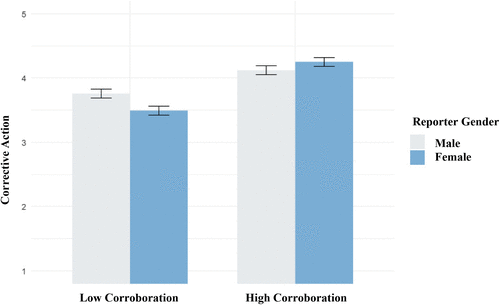
Note. Error bars are standard errors.
Study 2b
Study 2b used the exact same design and sampling approach as Study 2a, with the exception that we manipulated corroboration using physical evidence. Participants were informed that the researchers investigated the chat log to determine if the abuse occurred as described. In the low-corroboration condition, participants were informed that the research team was unable to recover the chat log: “We checked the chat log for threatening remarks, but it had expired.” In the high-corroboration condition, participants read that the chat log had been saved and read the following message that was sent by the transgressor to Michael/Sabrina: “you are useless. I am going to fabricate a story about you cheating so that you don’t get paid out.” To simplify the design, we made one additional alteration and informed participants that there were two (versus three in Study 2a) participants who worked together in the prior study.
Sample, Design, and Procedures
This study was preregistered at https://aspredicted.org/LSZ_4Q9. To this end, we recruited 501 adults from Connect. Eight participants failed our preregistered exclusion criteria (i.e., correctly identifying the gender of the reporter). In our final sample (n = 493), participants had an average age of 40.44 years old (SD = 12.77), were 51% male, and were 75% White.
Hypothesis Testing.
First, we tested the effect of gender on corrective action conceptualized as the priority ratings system, finding that participants did not differ in corrective action when Michael made the report compared with when Sabrina made the report (F [1, 490] = 0.71, p = 0.400). However, our core hypothesis was that this effect would emerge only in the low-corroboration condition. As expected, we did find a significant gender by corroboration interaction (F [1, 489] = 5.14, p = 0.024), which indicated that when corroboration was low, third parties took less corrective action when a female (M = 3.23, SD = 0.98) versus a male (M = 3.48, SD = 0.94, F [1, 489] = 4.84, p = 0.028) reported the abusive behavior. In contrast, when corroboration was high, there was no difference in corrective action when a female (M = 4.37, SD = 0.72) versus a male (M = 4.25, SD = 0.88, F [1, 489] = 1.01, p = 0.314) reported abusive behavior. Thus, Hypothesis 2 was supported. See Table 4 and Figure 2.
|
Table 4. Univariate Descriptive Statistics for Study 2b Variables
| Variable | M | SD | 1 | 2 | 3 |
|---|---|---|---|---|---|
| 1. Gender Conditiona | 0.50 | 0.50 | — | ||
| 2. Corroboration Conditionb | 0.50 | 0.50 | 0.00 | — | |
| 3. Corrective Action | 3.83 | 1.01 | −0.03 | 0.47*** | — |
Note. n = 493.
a1 = female; 0 = male.
b1 = high corroboration; 0 = low corroboration.
***p < 0.001.
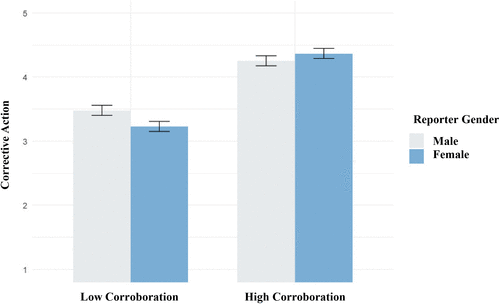
Note. Error bars are standard errors.
Study 2c
In Study 2c, we sought to extend our results from Studies 2a and 2b. We argue that these studies show evidence for credibility as a key mechanism, in part because corroboration removes questions of credibility, thus eliminating differences in corrective action regardless of the reporter gender. However, credibility may be established outside the context of a specific report, particularly based on past behavior (Near and Miceli 1995). That is, certain individuals may generally be seen as credible based on their past behavior and may not require case-specific corroboration to establish credibility. This line of reasoning would lead us to suggest that corroboration is particularly influential when past credibility is not established and is less important when it is.
Sample, Design, and Procedures
Study 2c employed a 2 (corroboration: high versus low) × 2 (general credibility: high versus low) between-subjects design. This study was preregistered at https://aspredicted.org/xpym-22rz.pdf. To this end, we recruited 500 adults from Connect. One participant failed our preregistered exclusion criteria (i.e., indicating that the participant did not pay attention). In our final sample (n = 499), participants had an average age of 40.01 years old (SD = 13.14), were 41% male, and were 71% White.
In this study, we held gender constant and used the female voice from Studies 2a and 2b. We used the same measure of corrective action as in Studies 2a and 2b.
Manipulation: Corroboration.
We used the same verbal corroboration manipulation from Study 2a.
Manipulation: General Credibility.
In the high-general credibility condition, we informed participants that “we received two reports from this person in the past. Each time, after we investigated chat logs, her reports were accurate and as she described.”
In the low-general credibility condition, participants were informed that “we received two reports from this person in the past. However, at the time, we did not have the ability to check the chat logs, so we could not verify the accuracy of her claims previously.”
Results
Hypothesis Testing.
First, we tested the effect of corroboration on corrective action conceptualized as the priority rating system, finding that participants took more corrective action in the high- versus low-corroboration condition (F [1, 496] = 39.67, p < 0.001). However, our core hypothesis was that this effect would weaken when general credibility was high (versus low). As expected, we did find significant corroboration by general credibility interaction (F [1, 495] = 11.82, p = 0.001), which indicated that when general credibility was low, third parties took more corrective action when corroboration was high (M = 3.95, SD = 0.85) versus low (M = 3.17, SD = 1.07, F [1, 495] = 47.90, p < 0.001). In contrast, when general credibility was high, the difference between low corroboration (M = 3.95, SD = 0.79) and high corroboration (M = 4.19, SD = 0.85, F [1, 495] = 4.50, p = 0.034) was less pronounced. Thus, our prediction was supported. See Table 5 and Figure 3.
|
Table 5. Univariate Descriptive Statistics for Study 2c Variables
| Variable | M | SD | 1 | 2 | 3 |
|---|---|---|---|---|---|
| 1. Corroboration Conditiona | 0.50 | 0.50 | — | ||
| 2. General Credibility Conditionb | 0.51 | 0.50 | −0.01 | — | |
| 3. Corrective Action | 3.82 | 0.97 | 0.26*** | 0.26*** | — |
Note. n = 499.
a1 = high corroboration; 0 = low corroboration.
b1 = high general credibility; 0 = low general credibility.
***p < 0.001.
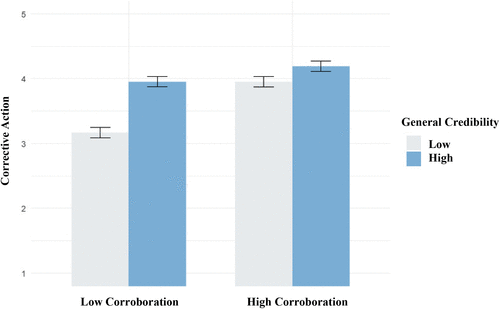
Note. Error bars are standard errors.
Discussion
Studies 2a and 2b constructively replicated the results from Study 1, finding that under conditions of low corroboration, third parties take less corrective action against transgressors when a woman (versus a man) makes the report. Importantly, this study explicitly tested the moderating role of corroboration, finding that it played a key role in determining the level of corrective action taken when women made reports of abusive behavior. In Study 2c, we extended this theoretical argument, testing the role of general credibility alongside corroboration and finding that corroboration is particularly relevant when prior credibility has not been established. More broadly, across each study, our use of a behavioral corrective action measure provides an objective means to assess corrective action.
Studies 3a and 3b
In Studies 3a and 3b, we sought to constructively replicate our results from Studies 1 and 2. To do this, we adapted a paradigm from prior research investigating corrective action and stereotypes (Ponce de Leon and Rosette 2022) that asked participants to indicate how they believe report recipients would respond to a specific report of abuse. This approach reduces demand effects when investigating stereotypes (Mishra and Kray 2022) and is predictive of participant behavior (Fernandez-Mateo and King 2011, Abraham 2020). A key benefit of this approach is that this design allowed us to stimulus sample the types of abuse, increasing the generalizability of our findings across different forms of abuse.
Study 3a
Like Study 2a, Study 3a sought to test the moderating role of corroboration conceptualized as eyewitness support.
Sample, Design, and Procedures
Study 3a employed a 2 (reporter gender: man versus woman) × 2 (corroboration: high versus low) between-subjects design. This study was preregistered at https://aspredicted.org/9KF_8SP. To this end, we recruited 452 adults from Connect. Two participants failed our preregistered exclusion criteria (i.e., indicating that they did not pay attention during the survey). In our final sample after exclusions (n = 450), participants had an average age of 37.47 years old (SD = 11.27), were 48% male, and were 64% White.
We created four scenarios for participants to evaluate. In each scenario, we described an employee who made a report about abuse that was directed at them, manipulating the gender of the employee and the level of corroboration. In each scenario, we stimulus sampled different forms of abuse. To identify different forms of abuse, we selected the most common types of abuse from the archival data in Study 1: yelling, making insults and calling rude names, spreading defamatory rumors, and giving persistent and undeserved criticism.7 This was a between-subjects design, meaning that the reporter gender and level of corroboration were randomly assigned at the participant level and kept the same in each scenario.
Manipulation: Gender.
We manipulated the gender of the individual who made the report, coded as male (zero) or female (one).
Manipulation: Corroboration.
We manipulated the level of corroboration. In the high-corroboration condition (coded as one), participants were informed that “multiple other employees were able to corroborate the story,” whereas in the low-corroboration condition (coded as zero), participants were informed that “there was no eyewitness corroboration of the story.”
Measures
To measure corrective action, we followed guidance from Mishra and Kray (2022) and generated three items to assess the extent to which participants believed report receivers would engage in corrective action. In response to each scenario, participants indicated how likely (1 = not at all to 5 = extremely) it was that report receivers would “not take the report seriously,” “the report might be ignored,” and “the report could be disregarded” (α = 0.95). We reverse coded each item so that higher scores indicated more corrective action and lower scores indicated less corrective action. Participants responded to the corrective action items for each type of abuse (i.e., each of the four scenarios).
Results
Hypothesis Testing.
Because participants rated multiple scenarios, as preregistered, we used lmer (Kuznetsova et al. 2017) and included random intercepts for both participant and scenario to account for variance associated with individual participants and specific scenarios. The estimated marginal means and their standard errors are reported below.
First, we tested the effect of gender on corrective action, finding no difference when a man made the report compared with when a woman made the report (b = −0.14, SE = 0.09, p = 0.125). However, our core hypothesis was that this effect would emerge in the low-corroboration condition. As expected, we did find a significant gender by corroboration interaction (b = 0.40, SE = 0.18, p = 0.026), which indicated that when corroboration was low, corrective action was lower when a woman (M = 2.57, SE = 0.11) versus a man (M = 2.90, SE = 0.11; b = −0.34, SE = 0.13, p = 0.008) reported abusive behavior. In contrast, when corroboration was high, corrective action was no different when a woman (M = 3.51, SE = 0.11) versus a man (M = 3.45, SE = 0.11; b = 0.06, SE = 0.13, p = 0.632) reported abusive behavior. Thus, Hypothesis 2 was supported. See Table 6 and Figure 4.
|
Table 6. Univariate Descriptive Statistics for Study 3a Variables
| Variable | M | SD | 1 | 2 | 3 |
|---|---|---|---|---|---|
| 1. Gender Conditiona | 0.50 | 0.50 | — | ||
| 2. Corroboration Conditionb | 0.50 | 0.50 | −0.01 | — | |
| 3. Corrective Action | 3.11 | 1.14 | −0.06** | 0.33*** | — |
Note. There were 1,800 observations across 450 participants.
a1 = female; 0 = male.
b1 = high corroboration; 0 = low corroboration.
**p < 0.01; ***p < 0.001.
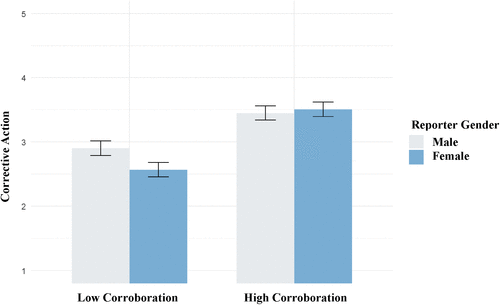
Note. Error bars are standard errors.
Study 3b
In Study 3b, we sought to build on Study 3a in three key ways. First, like in Study 2b, we tested corroboration with physical evidence. In the low-corroboration condition, participants were informed that “there was no video or eyewitness corroboration of his/her story.” In the high-corroboration condition, participants were informed that “video recordings corroborated his/her story.”
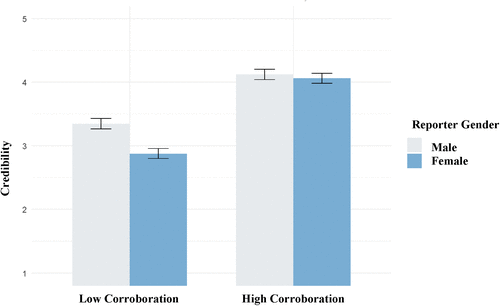
Second, although “moderation of process” studies typically do not additionally measure the mediator (e.g., Spencer et al. 2005, Lount et al. 2015), we measured credibility to confirm that it operates as we theoretically expected. We adapted three items from Armstrong and McAdams (2009): “inaccurate,” “untrustworthy,” and “not believable” (α = 0.96) with agreement anchors (1 = strongly disagree to 5 = strongly agree). We used negatively valenced items to maintain consistency with the corrective action items. Thus, like with the corrective action items, we reverse coded these so that high scores indicated high credibility and low scores indicated low credibility.
Third, given that we were testing physical corroboration in a scenario design, we reasoned that this design was the most likely to show evidence of a reversal that has been found in prior work using a similar approach (e.g., Reynolds et al. 2020). This reversal effect would suggest that under conditions of high corroboration, reports made by women (versus men) would result in greater (instead of equal) corrective action. To this end, we recruited 1,000 participants to ensure that we were appropriately powered to capture this potential effect. All other details in the study were unchanged from Study 3a.
All of these details and more were preregistered at https://aspredicted.org/V5G_T2D. We recruited 1,005 adults from Connect. Five participants failed our preregistered exclusion criteria (i.e., indicating that they did not pay attention during the survey). In our final sample after exclusions (n = 1,000), participants had an average age of 39.78 years old (SD = 13.07), were 46% male, and were 70% White.
Results
Hypothesis Testing.
Because participants rated multiple scenarios, as preregistered, we used lmer (Kuznetsova et al. 2017) and included random intercepts for both participant and scenario to account for variance associated with individual participants and specific scenarios. The estimated marginal means and their standard errors are reported below.
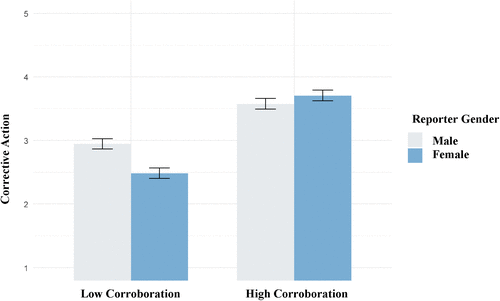
First, we tested the effect of gender on corrective action, finding less corrective action when a female versus a male made the report (b = −0.17, SE = 0.06, p = 0.010). However, our core hypothesis was that this effect would emerge in the low-corroboration condition. As expected, we did find a significant gender by corroboration interaction (b = 0.59, SE = 0.13, p < 0.001), which indicated that when corroboration was low, corrective action was lower when a woman (M = 2.48, SE = 0.083) versus a man (M = 2.94, SE = 0.08; b = −0.46, SE = 0.09, p < 0.001) reported abusive behavior. In contrast, when corroboration was high, corrective action was no different when a woman (M = 3.70, SE = 0.08) versus a man (M = 3.57, SE = 0.08; b = 0.13, SE = 0.09, p = 0.147) reported abusive behavior. Thus, Hypothesis 2 was supported. See Table 7 and Figure 5.
|
Table 7. Univariate Descriptive Statistics for Study 3b Variables
| Variable | M | SD | 1 | 2 | 3 |
|---|---|---|---|---|---|
| 1. Gender Conditiona | 0.50 | 0.50 | — | ||
| 2. Corroboration Conditionb | 0.50 | 0.50 | 0.00 | — | |
| 3. Credibility | 3.60 | 1.15 | −0.12*** | 0.43*** | — |
| 4. Corrective Action | 3.17 | 1.22 | −0.07*** | 0.38*** | 0.68*** |
Note. There were 4,000 observations across 1,000 participants.
a1 = female; 0 = male.
b1 = high corroboration; 0 = low corroboration.
***p < 0.001.
Note. Error bars are standard errors.
Next, we tested for credibility as a mediator using a traditional measurement of mediation approach. Because the participant random intercept accounted for more variance (intercept = 0.95, SD = 0.97) than the stimulus random intercept (intercept = 0.01, SD = 0.11), as we preregistered, we clustered around participant in lavaan (however, as an exploratory analysis, we tested and confirmed that the interpretation and significance of our results were unchanged if we clustered around the stimulus).
As expected, results indicated a significant interaction of gender and corroboration on credibility (b = 0.41, SE = 0.12, p < 0.001). There was a significant negative indirect effect of gender on corrective action via credibility when corroboration was low (indirect effect = −0.32, SE = 0.05, 95% confidence interval (CI) = [−0.42, −0.21]) but not when corroboration was high (indirect effect = −0.04, SE = 0.06, 95% CI = [−0.15, 0.07]), with a significant difference between these effects (index of moderated mediation = 0.27, SE = 0.08, 95% CI = [0.12, 43]). These results confirm that credibility operates as a measured mechanism in a manner consistent with our theoretical arguments. See Figure 6.
Note. Error bars are standard errors.
Discussion
Study 3 constructively replicated the results from Study 2, finding that under conditions of low corroboration, third parties take less corrective action against transgressors when a woman (versus a man) makes the report. Although this paradigm offers a less rigorous test of our model, in part because of the hypothetical nature of the design, the use of the design allowed us to use a stimulus sampling approach, where we showed that our effects are robust to various forms of abusive behavior.
General Discussion
Across six complementary studies, we found consistent evidence that women who report abusive behavior are seen as less credible, which leads third parties to take less corrective action against the transgressor. Moreover, we found that corroboration served as a key moderator. That is, under low corroboration, we found that less corrective action was taken when a female (versus male) made the report, whereas this was not the case under high corroboration. Our results from the field and online experiments provide complementary and convergent evidence for our model.
Theoretical Implications and Contributions
First, we integrate competing assumptions about whether third parties take corrective action in response to reports made by women (versus men). As highlighted in the introductory information, some perspectives suggest that reports made by women will not lead to corrective action, whereas other perspectives suggest that reports made by women are particularly likely to facilitate corrective action. However, by drawing on key tenets of aversive discrimination theory (Dovidio and Gaertner 2004, Gaertner and Dovidio 2005), we can provide some clarity to this puzzle. Although aversive discrimination theory is traditionally used outside of the gender literature (in the literature on race) (Gaertner and Dovidio 2005), we show that this established perspective can be integrated into the gender literature. In doing so, we bridge the gap between two disparate streams of research (i.e., lenient versus corrective perspective) that discuss many of the same questions but arrive at different conclusions. Thus, our manuscript provides important answers to past work while also paving the way for researchers to understand the nuanced effects of gender on corrective action.
Second, we draw attention to corroboration—a factor that has been implicitly assumed in different streams of research but not explicitly mentioned or examined. Indeed, implicit in prior work are assumptions about levels of corroboration, yet scholars have not clearly drawn attention to this factor nor have they connected it explicitly to findings on corrective action. As a result, we conceptualize and emphasize the critical role of corroboration in facilitating corrective action. This has implications not just for researchers investigating corrective action but also, for researchers investigating responses to many agentic behaviors. For example, corroboration may influence how third parties respond to moral objection (Kundro and Rothbard 2023), safety concerns (Affinito et al. 2025), or conscientious refusals (Caulfield 2023). Embedded within each of these literatures are implicit assumptions about corroboration, and our research suggests that making these assumptions explicit is critical for future scholars to uncover nuanced differences in the way that people respond to female (versus male) actors.
Still, it is important to note that we argue and find that, on average, reports in the field often have low levels of corroboration—which has implications for the tendency of reports made by women to facilitate corrective action. Although it may be the case that corroboration can mitigate gendered effects, our research still highlights that corroboration is generally low. This has ramifications for researchers investigating these topics in field versus laboratory settings.
Third, our findings challenge research, mostly from the behavioral ethics literature, that reporting problematic behaviors is generally effective. In many papers, a baseline suggestion is that reporting will be effective because it makes issues known to the organization (Mayer et al. 2013, Wellman et al. 2016). However, our research suggests that reporting behaviors do not always facilitate corrective action, in part because of how the reporter is perceived by third parties. Our work extends research on the perils of reporting (Near and Miceli 1985, Hershcovis et al. 2021), suggesting that researchers in behavioral ethics should (re-)consider the effectiveness of reporting.
Finally, our work draws attention to the importance of understanding the interplay between general credibility (i.e., past behavior) and case-specific credibility (i.e., corroboration). Although scholars in the lenient and corrective perspectives have made differing assumptions about corroboration, both streams of research rarely account for general credibility or credibility based on past behavior. However, scholars historically have theorized about and highlighted the importance of these broader forms of credibility (Near and Miceli 1995). In our work, we find that both forms of credibility are largely interchangeable; that is, holding one form of credibility, even without the other, still facilitates corrective action. This has important implications for both streams of research as we clarify that corroboration is only predictive insofar as prior credibility has not been established.
Limitations and Future Directions
The Role of Reporters.
Notwithstanding its strengths, our research has some limitations. First, although it provides important external validity, Study 1 is correlational and has limited evidence of causality because of its cross-sectional nature. Moreover, this study takes the perspective of the reporter, presenting the possibility that men and women report different types of behavior that drive effects on corrective action. Indeed, it may be that there are gender differences in the threshold for reporting that create systematically different types of abuse that are reported. However, Studies 2 and 3 held constant the type of abuse, providing important evidence of causality and ruling out the suggestion that the types of behaviors reported in Study 1 are solely driving our effects.
As we noted previously, in Study 1, the majority of reporting was from the target of the abuse (63%), and we investigated one-on-one instances of abuse in our experiments. Thus, our effects are specific to reports from targets of abuse. Scholars should consider how effects might differ based on whether the report comes from the target or observers.
The Role of Report Receivers.
As our goal was to conduct an initial investigation into third-party reactions to reported workplace abuse, we attempted to triangulate corrective action from multiple perspectives (targets or witnesses in Study 1 and third parties in Studies 2 and 3). Although this provides a general perspective on responses to reporting abusive behavior, future research should examine the role of report receivers more in depth. For example, scholars may consider whether the gender of the report receiver matters, especially because there are competing arguments as to whether men or women would engage in more or less corrective action. Some evidence suggests that men take equity-related issues seriously (Sharrow et al. 2018), even viewing women as credible experts (e.g., on experiences of discrimination) (Crosby and Monin 2013). On the other hand, women (versus men) may be more prone to engage in corrective action because of a shared sense of similarity (e.g., Ganegoda et al. 2024, Preston et al. 2024).
Previous research has found inconsistent effects for whether women experience equal or greater corrective action in high-corroboration contexts. For example, some studies have found evidence for both effects depending on the dependent variable (Curry et al. 2004). In contrast, other perspectives have found that participants were more likely to see a female (versus a male) employee as a victim when they were told that the employee faced abuse (Reynolds et al. 2020). Interestingly, our research did not find evidence for the reversal effect in any of our experiments. This may be because our experiments used designs that still present some degree of ambiguity (i.e., participants are still informed second hand about the abuse, presenting the possibility that even hard evidence is cherry picked to paint a narrative), whereas other work has instead used scenario designs where participants are informed that the behavior absolutely and certainly occurred as described (Reynolds et al. 2020, Feess et al. 2021). Future work should continue to investigate the conditions under which the reversal effect emerges.
Finally, researchers investigating gendered reports of abusive behavior should consider the changing nature of corroboration. Indeed, the increasing prevalence of electronic communication, much of which is recorded or logged electronically, may increase the levels of corroboration present in reports. Accounting for the changing nature of corroboration is important as scholars consider whether stereotypes are fundamentally changing or whether the tendency to act on these stereotypes is simply mitigated by changing contextual factors, a key tenet of aversive discrimination theories.
Practical Implications
Our research offers important practical implications to organizations. First, our research suggests that organizations should reconsider when and why reporting will be an effective strategy for managing and mitigating abusive behaviors. Indeed, our research shows that corrective action is not always likely to emerge as a function of a report. As a result, organizations should take steps to standardize and remove bias from report evaluation processes. Second, our research suggests that organizations should find ways to ensure that corroboration is present when reports are made. Finding ways to document abusive behavior, such as by storing messaging logs or other evidence, may help eliminate differences in corrective action as a function of gender. Third, our research has implications for anonymous reporting approaches. Some have suggested that employees are more likely to report abusive behavior when they have anonymous channels (e.g., AllVoices 2021). However, our research suggests that these anonymous reports may be met with skepticism, in part because of low levels of corroboration. As a result, anonymous reports may be more likely to be ignored. Thus, organizations should consider ways to increase corroboration when reports are made anonymously.
Conclusion
Up to this point, research has presented conflicting depictions of how gender influences corrective action in response to reports of abusive behavior. Our paper integrates and clarifies these perspectives by pointing to the important role of corroboration. In doing so, we reveal when and why reports of abuse by women (versus men) may go unpunished.
The authors thank Editor Daniel Feiler and three anonymous reviewers for their insight, time, and feedback. For feedback on earlier versions of this manuscript, the authors thank Nitya Chawla and Katina Sawyer. For critical guidance on this paper, especially the depiction of their model, the authors also thank Elad Sherf. The authors are grateful for helpful conversations with Salvatore Affinito, Casher Belinda, Matthew Caulfield, Michelle Cho, Shimul Melwani, Daniela Rodriguez-Mincey, and Marie Mitchell. The authors are especially grateful to Christopher Petsko for his theoretical guidance. For research assistance, the authors thank Dianne Celemen, Emily Manship, Shreeya More, Anshu Shah, Iniyan Subramanian, and Whitney Williams.
1 To summarize the different perspectives, we draw holistically from a broad range of literatures that have implications for gender and corrective action. For a full literature review, see our OSF (https://osf.io/xn48v/?view_only=2cc3dd020ebc42b89b9711c14afbc408), where we summarize the literature in table form.
2 We focus broadly on abusive behavior rather than more specific forms of abuse, like sexual harassment, which tend to be particularly targeted at women (Berdahl 2007).
3 It is important to note that although some research in this domain makes suggestions about corrective action, not all research theoretically or empirically investigates corrective action. For a full review of key citations mentioned in the following pages, please see our OSF (https://osf.io/xn48v/?view_only=2cc3dd020ebc42b89b9711c14afbc408), which includes a literature review in a digestible table.
4 We tested this assumption in a pilot study, which is available at https://osf.io/xn48v/?view_only=2cc3dd020ebc42b89b9711c14afbc408.
5 Although participants in the original survey indicated their actual age, the Merit Board turned this variable into a binary variable with this coding scheme to preserve anonymity further. We do not have access to the continuous version of this variable.
6 As expected, in this sample, reporting led to more corrective action (31%) versus no reporting (10%).
7 A broad category, verbal intimidation, was used in the archival data. Following prior work in organizational behavior that suggests that verbal intimidation can take multiple forms with differing effects (Hackney and Perrewé 2018), we split this category into two: (1) yelling and (2) making insults and calling rude names. We preregistered that we would test these four specific categories.
References
- (2020) Gender-role incongruity and audience-based gender bias: An examination of networking among entrepreneurs. Admin. Sci. Quart. 65(1):151–180.Crossref, Google Scholar
- (2025) Out of sight, out of mind: How high-level construals can decrease the ethical framing of risk-mitigating behavior. J. Appl. Psych. 110(2):177–196.Crossref, Google Scholar
- (1954) The Nature of Prejudice (Addison-Wesley, Reading, MA).Google Scholar
AllVoices (2021) The state of workplace harassment 2021. (September 1), https://www.allvoices.co/blog/the-state-of-workplace-harassment-2021.Google Scholar- (2004) A relational model of workplace victimization: Social roles and patterns of victimization in dyadic relationships. J. Appl. Psych. 89(6):1023–1034.Crossref, Google Scholar
- (2009) Blogs of information: How gender cues and individual motivations influence perceptions of credibility. J. Comput. Mediated Comm. 14(3):435–456.Crossref, Google Scholar
- (2003) Climate of fear in organisational settings: Construct definition, measurement and a test of theory. Australian J. Psych. 55(1):24–29.Crossref, Google Scholar
- (1981)
Conceptual approaches to stereotypes and stereotyping . Hamilton DL, ed. Cognitive Processes in Stereotyping and Intergroup Behavior (Psychology Press, London), 37–57.Google Scholar - (1997) A critical analysis of USAir’s image repair discourse. Bus. Comm. Quart. 60(3):38–57.Crossref, Google Scholar
- Berdahl JL (2007) The sexual harassment of uppity women. J. Appl. Psych. 92(2):425.Google Scholar
- (2002) The (un)reasonableness of reporting: Antecedents and consequences of reporting sexual harassment. J. Appl. Psych. 87(2):230–242.Crossref, Google Scholar
- (2003) Toward a broader view of social stereotyping. Amer. Psych. 58(12):1019–1027.Crossref, Google Scholar
- (2012) Responding to sex-based discrimination: Gender differences in perceived discrimination and implications for legal decision making. Group Processes Intergroup Relations 15(3):409–424.Crossref, Google Scholar
- (2006) Workplace harassment from the victim’s perspective: A theoretical model and meta-analysis. J. Appl. Psych. 91(5):998–1012.Crossref, Google Scholar
- (1971) Ethnic stereotypes. Psych. Bull. 76(1):15–38.Crossref, Google Scholar
- (2023) Between markets, politics, and ethics: On vendor conscience and impersonal markets. J. Bus. Ethics 188(2):307–326.Crossref, Google Scholar
- (2023) The consequences of ethical voice inside the organization: An integrative review. J. Appl. Psych. 108(8):1316–1335.Crossref, Google Scholar
- (2018) Beyond blaming the victim: Toward a more progressive understanding of workplace mistreatment. Indust. Organ. Psych. 11(1):81–100.Crossref, Google Scholar
- (1991) Social stigma: The affective consequences of attributional ambiguity. J. Personality Soc. Psych. 60(2):218–228.Crossref, Google Scholar
- (2013) How the opinions of racial minorities influence judgments of discrimination. Basic Appl. Soc. Psych. 35(4):334–345.Crossref, Google Scholar
- (2004) Does victim gender increase sentence severity? Further explorations of gender dynamics and sentencing outcomes. Crime Delinquency 50(3):319–343.Crossref, Google Scholar
- (2003) Confronting prejudice (literally): Reactions to confrontations of racial and gender bias. Personality Soc. Psych. Bull. 29(4):532–544.Crossref, Google Scholar
- (2019) The promise and peril of sexual harassment programs. Proc. Natl. Acad. Sci. USA 116(25):12255–12260.Crossref, Google Scholar
- (2023) Moral foundations, himpathy, and punishment following organizational sexual misconduct allegations. Organ. Sci. 34(5):1938–1964.Link, Google Scholar
- (2004) Aversive racism. Adv. Experiment. Soc. Psych. 36:1–52. Crossref, Google Scholar
- (2017)
Aversive racism and contemporary bias . Sibley CG, Barlow FK, eds. The Cambridge Handbook of the Psychology of Prejudice (Cambridge University Press, Cambridge, UK), 267–294.Google Scholar - (2003)
Individual effects of exposure to bullying at work . Einarsen S, Hoel H, Cooper C, eds. Bullying and Emotional Abuse in the Workplace (CRC Press, London), 127–144.Google Scholar - (1992) Acquiring organizational legitimacy through illegitimate actions: A marriage of institutional and impression management theories. Acad. Management J. 35(4):699–738.Crossref, Google Scholar
- (2018) Discounting women: Doubting domestic violence survivors’ credibility and dismissing their experiences. Univ. Pennsylvania Law Rev. 167:399–461.Google Scholar
- (2021) People judge discrimination against women more harshly than discrimination against men—Does statistical fairness discrimination explain why? Frontiers Psych. 12:675–776.Google Scholar
- (2016) Moral chivalry: Gender and harm sensitivity predict costly altruism. Soc. Psych. Personality Sci. 7(6):542–551.Crossref, Google Scholar
- (2011) Anticipatory sorting and gender segregation in temporary employment. Management Sci. 57(6):989–1008.Link, Google Scholar
- (2007) Universal dimensions of social cognition: Warmth and competence. Trends Cognitive Sci. 11(2):77–83.Crossref, Google Scholar
- (2002) A model of (often mixed) stereotype content: Competence and warmth respectively follow from perceived status and competition. J. Personality Soc. Psych. 82:878–902.Crossref, Google Scholar
- (1997)
But was it really sexual harassment?: Legal, behavioral, and psychological definitions of the workplace victimization of women . O’Donohue W, ed. Sexual Harassment: Theory, Research, and Treatment (Allyn & Bacon, Boston), 5–28.Google Scholar - (2009) The higher they are, the harder they fall: The effects of wrongdoer status on observer punishment recommendations and intentionality attributions. Organ. Behav. Human Decision Processes 108(1):53–65.Crossref, Google Scholar
- (2023) What we (do not) know about punishment across organizational boundaries. J. Management 49(1):196–236.Crossref, Google Scholar
- (2015) Attenuating the negative effects of abusive supervision: The role of proactive voice behavior and resource management ability. Leadership Quart. 26(5):821–837.Crossref, Google Scholar
- (2005) Understanding and addressing contemporary racism: From aversive racism to the common ingroup identity model. J. Soc. Issues 61(3):615–639.Crossref, Google Scholar
- Ganegoda DB, Shukla J, Shapiro DL (2024) Garnering support for social justice: When and why is “yes” likelier for “allies” versus “disadvantaged group advocates”? Organ. Behav. Human Decision Processes 182:104332.Google Scholar
- (2017) Whistleblowing studies in accounting research: A review of experimental studies on the determinants of whistleblowing. J. Accounting Literature 38(1):1–13.Crossref, Google Scholar
- (2020) Allegations of mistreatment in an era of harm avoidance: Taboos, challenges, and implications for management. Acad. Management Perspect. 34(1):1–27.Crossref, Google Scholar
- (2023) When do observers deprioritize due process for the perpetrator and prioritize safety for the victim in response to information-poor allegations of harm? Psych. Sci. 34(2):186–200.Crossref, Google Scholar
- (1995) The empirical basis for the reasonable woman standard. J. Soc. Issues 51(1):151–166.Crossref, Google Scholar
- (2018) A review of abusive behaviors at work: The development of a process model for studying abuse. Organ. Psych. Rev. 8(1):70–92.Google Scholar
- (2010) The role of corroborative evidence in child sexual abuse evaluations. J. Investigative Psych. 7(3):189–212.Crossref, Google Scholar
- (2021) See no evil, hear no evil, speak no evil: Theorizing network silence around sexual harassment. J. Appl. Psych. 106(12):1834–1847.Crossref, Google Scholar
- (2008) There’s a policy for that: A comparison of the organizational culture of workplaces reporting incidents of sexual harassment. Behav. Soc. Issues 17:169–181.Crossref, Google Scholar
- (2020)
Organizational effects of workplace bullying . Einarsen SV, Hoel H, Zapf D, Cooper CL, eds. Bullying and Harassment in the Workplace: Theory, Research, and Practice (CRC Press, Boca Raton, FL), 209–234.Crossref, Google Scholar - (2013) Experimental designs for identifying causal mechanisms. J. Roy. Statist. Soc. Ser. A Statist. Soc. 176(1):5–51.Crossref, Google Scholar
- (2000) Negative interactions with faculty: Graduate student experiences. Conflict Management Higher Ed. Report 1(3):1–6.Google Scholar
- (2018) When and how abusive supervision leads to knowledge hiding behaviors: An Islamic work ethics perspective. Leadership Organ. Development J. 39(6):794–806.Crossref, Google Scholar
- (2016) Suffering in silence: Investigating the role of fear in the relationship between abusive supervision and defensive silence. J. Appl. Psych. 101(5):731–742.Crossref, Google Scholar
- (1981) Racial discrimination in criminal sentencing: A critical evaluation of the evidence with additional evidence on the death penalty. Amer. Sociol. Rev. 46(6):783–805.Crossref, Google Scholar
- (2021) Understanding when and why cover-ups are punished less severely. Acad. Management J. 64(3):873–900.Crossref, Google Scholar
- (2023) Does power protect female moral objectors? How and when moral objectors’ gender, power, and use of organizational frames influence perceived self-control and experienced retaliation. Acad. Management J. 66(1):306–334.Crossref, Google Scholar
- (2017) lmerTest package: Tests in linear mixed effects models. J. Statist. Software 82(13).Crossref, Google Scholar
- (2005) Sexual versus nonsexual workplace aggression and victims’ overall job satisfaction: A meta-analysis. J. Occupational Health Psych. 10(2):155–169.Crossref, Google Scholar
- (2008) Sexual harassment mythology: Definition, conceptualization, and measurement. Sex Roles 58:599–615.Crossref, Google Scholar
- (2015) Biased perceptions of racially diverse teams and their consequences for resource support. Organ. Sci. 26(5):1351–1364.Link, Google Scholar
- (2003) The communicative cycle of employee emotional abuse: Generation and regeneration of workplace mistreatment. Management Comm. Quart. 16(4):471–501.Crossref, Google Scholar
- (2013) Encouraging employees to report unethical conduct internally: It takes a village. Organ. Behav. Human Decision Processes 121(1):89–103.Crossref, Google Scholar
- (1980) Stereotyping: From prejudice to prediction. Psych. Bull. 87(1):195–208.Crossref, Google Scholar
- (2021) When are organizations punished for organizational misconduct? A review and research agenda. Res. Organ. Behav. 41:100150.Crossref, Google Scholar
- (1994) Whistleblowing: Reaping the benefits. Acad. Management Perspect. 8(3):65–72.Crossref, Google Scholar
- (2022) The mitigating effect of desiring status on social backlash against ambitious women. J. Experiment. Soc. Psych. 102:104355.Crossref, Google Scholar
- (2000) Organizational silence: A barrier to change and development in a pluralistic world. Acad. Management Rev. 25(4):706–725.Crossref, Google Scholar
- (2000) Longitudinal analysis of dispositional influences and sexual harassment: Effects on job and psychological outcomes. Personnel Psych. 53(1):21–46.Crossref, Google Scholar
- (2022) Unfounded sexual assault: Women’s experiences of not being believed by the police. J. Interpersonal Violence 37(11–12):NP8916–NP8940.Crossref, Google Scholar
- (2008) To punish the guilty and protect the innocent: Comparing truth revelation procedures. J. Theoret. Politics 20(2):221–245.Crossref, Google Scholar
- (2022) Moral dilemmas in hospitals: Which shooting victim should be saved? Frontiers Psych. 13:770020.Crossref, Google Scholar
- (1985) Organizational dissidence: The case of whistle-blowing. J. Bus. Ethics 4(1):1–16.Crossref, Google Scholar
- (1995) Effective-whistle blowing. Acad. Management Rev. 20(3):679–708.Crossref, Google Scholar
- O’Connor M, Gutek BA, Stockdale M, Geer TM, Melancon R (2004) Explaining sexual harassment judgments: Looking beyond gender of the rater. Law Human Behav. 28:69–95.Google Scholar
- (2011) A model of third parties’ morally motivated responses to mistreatment in organizations. Acad. Management Rev. 36(3):526–543.Crossref, Google Scholar
- (1999) Rape myth acceptance: Exploration of its structure and its measurement using the Illinois rape myth acceptance scale. J. Res. Personality 33(1):27–68.Crossref, Google Scholar
- (2001)
Employee silence: Quiescence and acquiescence as responses to perceived injustice . Buckley M, Halbesleben J, Wheeler AR, eds. Research in Personnel and Human Resources Management, Research in Personnel and Human Resources Management, vol. 20 (Emerald Group Publishing Limited, Leeds, UK), 331–369.Crossref, Google Scholar - (2022) “Invisible” discrimination: Divergent outcomes for the nonprototypicality of black women. Acad. Management J. 65(3):784–812.Crossref, Google Scholar
- (2024) An ally by any other name: Examining the effects of racial minority leaders as allies for advancing racial justice. Organ. Behav. Human Decision Processes 181:104321.Crossref, Google Scholar
- (2012)
Reforming abusive organizations . Bowie V, Fisher BS, Cooper C, eds. Workplace Violence (Willan, London), 80–94.Google Scholar - (2020) Man up and take it: Gender bias in moral typecasting. Organ. Behav. Human Decision Processes 161:120–141.Crossref, Google Scholar
- (1990) Asymmetry in prejudice attribution. J. Experiment. Soc. Psych. 26(6):481–504.Crossref, Google Scholar
- (2018) The first-daughter effect: The impact of fathering daughters on men’s preferences for gender-equality policies. Public Opinion Quart. 82(3):493–523.Crossref, Google Scholar
- (2001)
Prevention and response: What works, what doesn’t? Griffith BE, ed. Sexual Harassment in the Public Workplace (American Bar Association, Chicago), 137–200.Google Scholar - (2005) Establishing a causal chain: Why experiments are often more effective than mediational analyses in examining psychological processes. J. Personality Soc. Psych. 89(6):845–851.Crossref, Google Scholar
- (2016) Stumbling toward a social psychology of organizations: An autobiographical look at the direction of organizational research. Annual Rev. Organ. Psych. Organ. Behav. 3:1–19.Crossref, Google Scholar
- (2005) The impact of pre-recorded video and closed circuit television testimony by adult sexual assault complainants on jury decision-making: An experimental study. Research and Public Policy Series No. 68, Australian Institute of Criminology, Canberra, Australia.Google Scholar
- (2000) Consequences of abusive supervision. Acad. Management J. 43(2):178–190.Crossref, Google Scholar
- (2023) “Proof under reasonable doubt”: Ambiguity of the norm violation as boundary condition of third-party punishment. Personality Soc. Psych. Bull. 49(3):429–446.Crossref, Google Scholar
- Trevino LK, Victor B (1992) Peer reporting of unethical behavior: A social context perspective. Acad. Management J. 35(1):38–64.Google Scholar
- (2022) Formal reporting of identity-based harassment at an academic medical center: Incidence, barriers, and institutional responses. Acad. Medicine 97(7):1029–1037.Crossref, Google Scholar
- (2016) When are do-gooders treated badly? Legitimate power, role expectations, and reactions to moral objection in organizations. J. Appl. Psych. 101(6):793–814.Crossref, Google Scholar
Timothy G. Kundro is an assistant professor of organizational behavior at the University of North Carolina at Chapel Hill’s Kenan-Flagler Business School. He completed his PhD in management from the Wharton School of the University of Pennsylvania. His research investigates the complexities of morality within organizations.
Alyssa Tedder-King is a PhD candidate in organizational behavior at the University of North Carolina at Chapel Hill’s Kenan-Flagler Business School. Her research investigates gender, diversity, and allyship within the workplace.
Olivia M. Walker is a PhD candidate in organizational behavior at the University of North Carolina at Chapel Hill’s Kenan-Flagler Business School. Her research explores the creation of organizational environments where individuals feel connected and valued.
Marissa Shandell is a PhD candidate in organizational behavior at the Wharton School of the University of Pennsylvania. Her research investigates the conditions that motivate employees to work not only harder but also, smarter and healthier.