


Is It Me or Her? How Gender Composition Evokes Interpersonally Sensitive Behavior on Collaborative Cross-Boundary Projects
Abstract
This paper investigates how professional workers’ willingness to act with interpersonal sensitivity is influenced by the gender and power of their interaction partners. We call into question the idea that mixed-gender interactions involve more interpersonal sensitivity than all-male interactions primarily because women demonstrate more interpersonal sensitivity than do men. Rather, we argue that the social category “women” can evoke more sensitive behavior from others such that men as well as women contribute to an increase in sensitivity in mixed-gender interactions. We further argue that the presence of women may trigger increased sensitivity such that men can also be the recipients of more sensitivity when one or more women are present on a team. In a study of 202 management consultants, we found that the willingness to act with interpersonal sensitivity increased in interactions with women. Moreover, this effect was greater in interactions with women who had low reward power—i.e., females who better fit the expectations associated with the social category “women.” We also found team-level effects. Professionals working with mixed-gender versus all-male client teams reported a greater willingness to act with interpersonally sensitive behavior toward male client team members. Our findings show that the willingness to act with interpersonal sensitivity is context dependent and shed light on the importance of studying interaction partner-level and team-level effects on willingness to act with interpersonal sensitivity.
Introduction
The term interpersonal sensitivity refers to caring and respectful treatment toward others (Cropanzano and Wright 2003, Greenberg 1993, Molinsky and Margolis 2006). In organizations, interpersonal sensitivity has been found to build trust, facilitate knowledge sharing, and decrease vengeful behavior (Bies and Tripp 1996; Greenberg 1990, 1993, 2006; Levin and Cross 2004; Tyler 1993). Likewise, interpersonal sensitivity has been found to increase individuals’ acceptance of unfavorable decisions, reduce levels of stress, reduce emotional exhaustion, and increase employees’ organizational identification (e.g., Bartel et al. 2012; Greenberg 1990, 1993, 2006; Ramarajan et al. 2008; see Colquitt et al. 2001 for a review).
However, one of the biggest problems facing organizations today may be a lack of interpersonal sensitivity. This lack of interpersonal sensitivity is most often examined under the umbrella of workplace incivility. Studies and polls indicate that Americans view disrespectful behavior in the workplace as a serious problem that is getting worse (Estes and Wang 2008, Weber Shandwick 2011). For example, at least 1 in 10 and as many as 1 in 5 employees indicate receiving persistent hostile treatment in the workplace and, as a result, report that they were looking for new employment (Nielsen et al. 2010). Studies of incivility provide insight into the cost of lapses in interpersonal sensitivity because uncivil behaviors—e.g., disrespectful, intolerant, and inconsiderate behaviors—always lack interpersonal sensitivity (Calhoun 2000).
Although researchers have documented the detrimental effects that disrespectful behaviors have in organizations (e.g., Bies and Tripp 1996, Hoel et al. 2010, Jehn 1995, Porath and Erez 2009), we know less about the contextual factors that prompt employees to use interpersonal sensitivity to reduce the negative experiences of others (e.g., Williams 2007). In this paper, we examine the willingness or behavioral intention to act with interpersonally sensitive behavior. Specifically, we investigate whether an individual’s willingness to act with interpersonally sensitive behavior is associated with the gender and power of his or her interaction partner or partners.1 In doing so, we call into question the implicit and sometimes explicit assumption that all-male interactions evidence more aggression and less interpersonal sensitivity than do mixed-gender interactions primarily because females in mixed-gender interactions demonstrate more interpersonal sensitivity than do males (e.g., Kennedy 2003, LePine et al. 2002). Rather, we investigate a complementary mechanism—i.e., that the behavior of both males and females increases in interpersonal sensitivity in response to the presence of female interaction partners.
Thus, instead of looking solely at the effect of individuals’ own gender, emotions, or relational predisposition on their willingness to act with interpersonal sensitivity (e.g., Davis 1996, Eagly et al. 2003, Galinsky et al. 2006), we shift the focus by developing and testing hypotheses regarding the effect of interpersonal context. We investigate whether people’s category-based expectations concerning males and females affect three situations: (1) how willing people are to act with interpersonally sensitive behavior toward male versus female interaction partners, (2) how willing people are to act with interpersonal sensitivity toward male versus female interaction partners who hold different levels of power, and (3) how willing men are to act with interpersonal sensitivity toward male interaction partners when they are working in the presence of female colleagues on mixed-gender versus all-male teams.
Our research seeks to advance theory in several ways. First, we contribute to the study of interaction partner-level effects by identifying two factors—the gender and power of others—that interact to lead people to show more or less willingness to act with interpersonal sensitivity. This is a potentially promising area of work in light of research on phenomena such as the bystander effect and social facilitation that demonstrate that the behavior of others or even their mere presence can cause changes related to the self (e.g., Cottrell et al. 1968, Darley and Latané 1968, Van Vugt and Iredale 2013, Wubben et al. 2008). Additionally, our work advances Ely and Padavic’s (2007) theoretical perspective that sex differences can best be understood in light of organizational features, such as organizationally derived sources of power and gender composition that influence their enactment.
Second, we build on insights regarding the warm-but-incompetent bias (for a review, see Cuddy et al. 2011) and benevolent sexism (Glick and Fiske 2011), both of which describe the benevolent judgments received by women in traditional, low power roles (e.g., “homemakers”)—in contrast to the harsh and critical judgments received by women in nontraditional roles associated with higher levels of power (e.g., “career women”; see Glick et al. 1997). For example, women who demonstrate leadership or expertise are perceived less warmly than women who do not (e.g., Rudman and Glick 1999, Thomas-Hunt and Phillips 2004). Our research extends this work by examining the possible existence of benevolent, interpersonally sensitive intentions toward career women. Although women in the upper levels of their organizations have more often been examined as recipients of hostility and backlash (Cuddy et al. 2011, Lim and Cortina 2005, Rudman and Glick 1999, Rudman and Phelan 2008), we reason that benevolent or interpersonally sensitive treatment may extend to women who are in nontraditional roles in organizations when these women have traditional interaction patterns with others—e.g., they are in need of expert help and/or are engaging in a communal rather than a competitive activity.
Third, we contribute to the literature on benevolent sexism by examining how the presence of women on a team can change benevolent, interpersonally sensitive intentions toward male team members. We not only add to the emergent literature on men’s generosity and interpersonal sensitivity in the presence of women (Hardy and Van Vugt 2006, Barclay 2010, Van Vugt and Iredale 2013) but also explore a contextual mechanism that may decrease the gender gap in interpersonal sensitivity within teams. This is important because detrimental effects are associated with receiving excessive interpersonal sensitivity (Barreto et al. 2010, Dardenne et al. 2007).
Finally, we develop and test a measure of willingness to act with interpersonal sensitivity that meets the core requirements of internal and external validity. It is noteworthy that our measure of people’s willingness or behavioral intention to act with interpersonal sensitivity toward others is significantly related to the levels of interpersonal sensitivity perceived by those others and distinct from other relationship-oriented measures.
Gender, Power, and Interpersonal Sensitivity
Willingness to Act with Interpersonal Sensitivity
We define willingness to act with interpersonal sensitivity as the behavioral intention to treat others with care and respect. Our definition is consistent with the definitions of interpersonal sensitivity used in research on interactional justice that include words such as “caring,” “polite,” and “respectful behavior” (e.g., Colquitt et al. 2001, Cropanzano and Wright 2003, Greenberg 1993), but less broad than some definitions used in social psychology, which can include emotion recognition and empathy (Decety and Batson 2007, Woolley et al. 2010).
We conceptualize the willingness to act with interpersonal sensitivity as correlated with but distinct from psychological processes that are likely to motivate caring behavior. For example, because close emotional bonds and perspective taking increase the degree to which individuals care about the welfare of others (Batson et al. 1995) and the likelihood of feeling compassion for others (Goetz et al. 2010), these processes are likely to be related to but distinct from one’s willingness to act with interpersonal sensitivity—an intention that is not always motivated by emotion.
We investigate the willingness to act with interpersonal sensitivity rather than interpersonally sensitive behavior itself because we are interested in how interpersonal context influences this motivation. By investigating the construct of willingness to act with interpersonal sensitivity, we are able to avoid two important drawbacks associated with measuring behavior: (1) individuals may be emotionally unskilled and therefore unable to accurately translate their intentions into sensitive behavior, and (2) recipients may be biased by their past experiences and misinterpret an actor’s behavior. In both of these cases, measures of behavior would not capture an actor’s intentions accurately. Measuring “willingness” also enables us to uncover motives that are consistent and inconsistent with related phenomena such as benevolent sexism.
Interpersonal Sensitivity and Related Constructs
By integrating the definitions of interpersonal sensitivity used in the literatures on interactional justice and ethics to develop our definition of willingness to act with interpersonal sensitivity (e.g., Colquitt et al. 2001, Cropanzano and Wright 2003, Greenberg 1993, Hodson 2004, Molinsky and Margolis 2006), we accomplish two goals. First, we are able to emphasize both care and respect in our definition of willingness to act with interpersonal sensitivity. Second, we can more precisely differentiate our main construct from related constructs. In this section, we differentiate our construct from three constructs that are central to scholars who focus on issues of care and respect in organizations: trust, compassion, and civility. In the trust literature, care and benevolence, which are consistent with showing sensitive behavior, are theoretically viewed as antecedents of trust and have been found to be empirically distinct from trust (Colquitt et al. 2007; for a review, see Mayer and Davis 1999). Similarly, in the justice literature, interpersonal sensitivity has been investigated as a distinct correlate of trust (Colquitt et al. 2001).
Compassionate behavior and interpersonal sensitivity are also closely related because compassionate behavior is almost always interpersonally sensitive. However, interpersonally sensitive behavior may or may not be driven by feelings of compassion and empathic concern—in other words, people can display interpersonally sensitive behavior without feeling compassionate or empathetic. Lilius et al. (2008) noted this point when they mention that citizenship behaviors and other interpersonally sensitive actions only constitute compassionate actions when they are prompted by feelings of concern for others.
Finally, civility differs from the concepts of compassion and trust in that most of the work on civility in organizations has focused on incivility (e.g., Porath and Erez 2009). This work has demonstrated important personal and performance implications of incivility (Cortina et al. 2001, Pearson and Porath 2009, Porath and Erez 2009). However, civility and incivility may have asymmetric effects. Whereas uncivil behaviors always lack interpersonal sensitivity, civil behaviors may or may not be interpersonally sensitive in terms of showing genuine respect for others and equality (Calhoun 2000). This distinction does not affect studies of incivility, but when examining civility, socially acceptable norms for civility are not static. By this we mean that norms for civility change over time and may or may not move closer to genuine respect. For example, in the United States, social norms or conventions for the civil treatment of racial minorities, immigrants, and people with handicapping conditions have changed greatly over the last 200 years. Our definition of willingness to act with interpersonal sensitivity is most closely aligned with the idea of genuine civility (i.e., genuine respect and equality for others; see Calhoun 2000, Porath 2012). Using this definition allows us to investigate contextual factors that influence the willingness to engage in interpersonal sensitivity in ways that are consistent with genuine civility and, alternatively, in ways that are consistent with convention-bound civility but inconsistent with genuine civility and equality.
Interpersonal Sensitivity and Professionals’ Own Gender
We recognize that in addition to interpersonal context, a professional’s own gender is likely to have a simultaneous influence on his or her willingness to act with interpersonal sensitivity. Scholars studying gender-role socialization, for example, argue that gender differences can result from contrasting societal expectations for men and women (Eagly 1987, Eagly and Wood 1999, Ely and Meyerson 2010, Ely and Padavic 2007). Individuals internalize these expectations and develop different skills, attitudes, and behaviors according to gender (Valian 1998). For instance, women—or, more precisely, young girls—are typically socialized to be more empathetic and concerned with relationships and equal status than are young boys (Gilligan 1982). Kennedy (2003) found that women were more likely than men to be motivated by altruistic concerns during a group decision-making task. Even as leaders, women often remain concerned with relationships (Bartunek et al. 2000, Eagly and Johnson 1990). In addition, women consistently outperform men on experimental tasks related to interpersonal perceptual accuracy (Hall and Schmid Mast 2008) and are also more accurate in judging the meaning of nonverbal cues conveyed by others and recalling those cues (Hall 1978, Hall and Schmid Mast 2008, Hojat et al. 2002, Salovey and Mayer 1990, Woolley et al. 2010).
There is also some evidence that women demonstrate more concern for others in organizational settings (Fletcher 1998, Kennedy 2003). In one example, Fletcher (1998) found that female engineers engaged in a variety of relationship-oriented interpersonal actions, even when their actions went unrewarded. In another example, female physicians were found to be more empathetic than male physicians (Hojat et al. 2002). The associations between gender and psychological processes such as empathic concern, relational and altruistic attitudes, interpersonal perceptual accuracy, and understanding nonverbal cues are important because these processes undergird one’s willingness and ability to act with interpersonal sensitivity (i.e., behave with care and respect). These associations suggest that gender will influence individuals’ willingness to act with interpersonal sensitivity.
A greater willingness to act with interpersonally sensitive behavior is also consistent with the communal norms for action that are associated with stereotypical female behavior (Eagly and Wood 1999, Heilman and Chen 2005, Ridgeway and Correll 2004) and inconsistent with the highly assertive behavior acceptable for males, particularly males in high-power positions (e.g., Pierce 1995). Moreover, intentions for displaying interpersonal sensitivity can be driven both by the internalized preferences of women themselves and by women’s efforts to avoid social sanctions for using assertive, counterstereotypical behaviors (Bowles et al. 2007, Heilman and Chen 2005, Ridgeway 2001).
Female professionals will be more willing to act with interpersonally sensitive behavior than will male professionals.
Hypothesis 1 forms a backdrop for our theory and hypotheses that are designed to articulate a missing side of mixed-gender interactions, i.e., how the gender of an interaction partner evokes different behavioral intentions. We recognize that gender-related preferences and relational propensities, such as preferences for developing close emotional bonds with others, may be operating simultaneously. We will argue that the social category “women” can evoke more sensitive behavior from others even after taking into account the impact of a professional’s own gender and his or her relational propensity for forming close emotional bonds with others.
Interpersonal Sensitivity and the Gender of One’s Interaction Partner
Although previous psychological research on interpersonal sensitivity and its correlates has investigated whether males or females are more interpersonally sensitive (e.g., Hojat et al. 2002, Kennedy 2003), this research on interpersonal sensitivity has not investigated whether people’s willingness to act with interpersonally sensitive behavior is associated with the gender of individuals with whom they are interacting. In contrast, research on benevolent sexism has directly examined kind, paternalistic behavior toward women. Whereas hostile sexism is often aggressive, benevolent sexism is “a subjectively favorable, chivalrous ideology that offers protection…to women who embrace conventional roles” (Glick and Fiske 2001, p. 109). Benevolent sexism includes interpersonally sensitive, kind, helpful behavior, but it also includes behaviors such as the use of endearing, overly intimate references such as “honey” or “sweetheart” and patronizing language that conveys beliefs about the weakness of women. For example, Good and Rudman (2010, p. 485) noted the benevolently sexist language in the following description of job requirements told to a female job applicant: “But that [part of the job] can be a little dangerous—the guys would probably be happy to help a nice young lady like you do whatever you need, though.” Such actions are considered sexist because they inhibit gender equality and reward women for conforming to a patriarchal status quo (Glick and Fiske 2001). The existence of benevolently sexist attitudes in both men and women has been confirmed across 19 nations (Cuddy et al. 2009). However, within organizational settings using samples of women in nontraditional work roles, such as female leaders and scientists, hostile forms of sexism and backlash against women have been more often investigated and found (e.g., Cuddy et al. 2011, Lim and Cortina 2005, Rudman and Glick 1999, Rudman and Phelan 2008).
In contrast, our study builds on the nascent body of experimental work looking at men’s and women’s use of benevolent sexism in the treatment of current and prospective organizational stakeholders—i.e., customers, job applicants, and employees seeking challenging developmental experiences (Good and Rudman 2010, Hebl et al. 2007, King et al. 2012). Consistent with social content theories of categorization (Fiske et al. 2002), we argue that social categorization processes may play an important role in people’s willingness to treat women versus men with interpersonal sensitivity. To date, investigating whether social categorization processes influence professionals’ willingness to act with sensitive treatment toward women who are in nontraditional roles (e.g., career women in the upper levels of their organizations) has not received much research attention.
Interpersonal Sensitivity and Social CategorizationIn their theory of social categorization, Tajfel and Turner (1986) described how people automatically group (i.e., categorize) other people based on commonalities such as gender, age, race, or political affiliation. Moreover, the groups or categories that people use represent specific patterns of thoughts, behaviors, motives, and values that people attribute to members within those categories (Fiske and Taylor 1991), such as beliefs that women are warm, communal, and nurturing (Fiske et al. 2002, Glick and Fiske 1996). Because gender is associated with prescriptive attributes—such as how women should and should not behave (Broverman et al. 1972)—the perception that women differ from men is a persistently held belief that influences how women are ultimately treated (Eagly and Karau 2002, Heilman 1983, Prentice and Carranza 2002, Ragins and Winkel 2011). In particular, Rudman and Phelan (2008, p. 63) argued that category-based beliefs associated with gender “remain extremely powerful because (a) they are evoked by highly visible, biological characteristics and (b) they are based on selective information and myth acquired throughout people’s lives….” Moreover, people in general tend to believe and act on their belief that gender differences in social behavior and emotion exist, irrespective of scientific evidence (Eagly 1987, Prentice and Miller 2006). Category-based beliefs that women are more likely to be warm, communal, and nurturing (Fiske et al. 2002, Glick and Fiske 1996) instead of tough and aggressive (Eagly and Mladinic 1994) are therefore likely to influence the behavior of both men and women. When these beliefs and social categorization processes guide behavior, explicitly or implicitly, individuals may be motivated to treat female colleagues in a more interpersonally sensitive manner. Controlling for the professional’s own gender and felt emotional bonds, we predict the following.
Both male and female professionals will show more willingness to act with interpersonally sensitive behavior when interacting with female clients than when interacting with male clients.
Interaction Partner Gender, Interaction Partner Power, and Interpersonal Sensitivity
We have argued that female interaction partners are likely to elicit more interpersonally sensitive behavior than male interaction partners. However, our argument fails to consider variations in how well an individual woman “fits” the category expectations or stereotype for women. Women with characteristics that are consistent with the beliefs about their social category will fit the expectations better and thus evoke more category-consistent treatment from others than will women with inconsistent characteristics (Becker et al. 2011, Cejka and Eagly 1999, Cuddy et al. 2004, Fiske and Taylor 1991, Glick et al. 1995, Heilman 1983, Thomas-Hunt and Phillips 2004).
For instance, the social category “women” is associated with less status than the social category “men” (Ely and Padavic 2007, Fiske 1993, Jackman 1994, Ragins and Winkel 2011, Ridgeway 2001). In other words, it is associated with less prestige, social esteem, and social worth than the category “men” (Duguid et al. 2012). Moreover, women are expected to behave in ways reflective of lower status and to structurally have access to fewer organizational resources (Ridgeway and Erickson 2000). When women do not behave consistently with category-based beliefs, they face social and economic reprisals (Rudman and Phelan 2008, Hebl et al. 2007).
These findings about the social and economic reprisals experienced by assertive women and powerful women in nontraditional roles stand in contrast to the more general finding that people tend to pay more attention to and behave more kindly toward people who are more powerful (Chen et al. 2004, de Kwaadsteniet and van Dijk 2010, Fiske 1993). Despite this contradiction, there is a growing body of evidence showing that more social rewards are accrued by women who behave in more deferential, less powerful, more category-consistent ways than by women who behave in dominant, powerful, less category-consistent ways (Bowles et al. 2007, Glick et al. 1988, Heilman 1983, Rudman and Phelan 2008; for a review, see Thomas-Hunt and Phillips 2004).
Extrapolating from this research on consistency with gender expectations, we argue that women may not experience the increased interpersonally sensitive treatment that typically accompanies power (Fiske 1993). We hypothesize that, similar to women who behave less assertively, women with lower levels of organizationally relevant sources of power should better fit both the stereotype and lower status expectations associated with the social category “women.”
Although low-status social categories and low power are expected to coincide, status and power are not inexorably linked (e.g., Blader and Chen 2012). Status, which we have discussed in association with the social category “women,” refers more generally to the amount of social esteem and respect accorded by others. Power, in contrast, refers to the amount of resources an individual controls (see Magee and Galinsky 2008 for a review). Reward power, for example, which refers to the ability to distribute valued resources (French and Raven 1959), is particularly important in cross-boundary relationships because those relationships are often less hierarchical in nature. Although status and power often overlap, women, who typically have a lower social status than men and are expected to have less power than men, may have organizational roles with high levels of reward power. Similarly, men, who typically have higher social status than women and are expected to have more power than they do, may have organizational roles with little reward power.
We argue that when female colleagues have low reward power, which is consistent with social category expectations for women, others will report a greater willingness to show those female colleagues interpersonal sensitivity than when female colleagues have higher reward power. Thus, if the status expectations tied to gender can be sufficiently disentangled from organizationally relevant sources of power, men and women with similarly low levels of power, for example, should evoke from others different levels of willingness to act with interpersonal sensitivity. Controlling for the professional’s own gender and felt emotional bonds, we predict the following.
The reward power of professionals’ clients will moderate the professionals’ willingness to act with interpersonally sensitive behavior toward those individuals. In particular, professionals will be willing to act with the most interpersonally sensitive behavior when interacting with female clients with low reward power.
Gender-Motivated Interpersonal Sensitivity and Male Interaction Partners
We have argued that the gender and power of a professional’s interaction partner are likely to influence his or her willingness to act with interpersonal sensitivity. However, gender-motivated interpersonal sensitivity may also be influenced by a team’s gender composition because people not only have category-based expectations associated with having a male versus and female interaction partner but also hold category-based expectations and scripts for behavior with members of mixed-gender versus all-male teams. Drawing on literature on men’s altruistic behavior in the presence of women (Hardy and Van Vugt 2006, Barclay 2010, Van Vugt and Iredale 2013) and mental shifts associated with the anticipation of meeting with a diverse group (Sommers 2006), we entertain the possibility that when men are on mixed-gender teams, their gender-motivated intentions may extend to their willingness to treat others, including male team members, with greater interpersonal sensitivity. In other words, not only may people hold intentions to treat women differently but the mere presence of women on a team may influence team members’ mental models for interactions within the team.
There are two mechanisms that may increase men’s general willingness to act with interpersonally sensitive behavior on mixed-gender teams. First, individuals may hold different scripts and expectations for behavior on mixed-gender teams. Traditions or convention-bound rules for behavior may suggest that more sensitive behavior is appropriate in mixed-gender groups. Even today, businessmen often refrain from swearing in mixed-gender groups (Peacock 2012). We call this the “Sorry, ma’am” phenomenon or, in more modern language, “Oh, I am sorry; please excuse my language!” (Peacock 2012). Scripts for more sensitive behavior may influence people’s expectations about the norms for sensitivity in mixed-gender groups and thereby their willingness to act with interpersonal sensitivity toward all group members, including male group members.
A parallel phenomenon has been investigated with mixed-race versus all-white groups. Sommers (2006, p. 600) found not only “that White group members behave differently depending on a group’s racial composition” but also that they think differently in anticipation of meeting with members of a mixed-race jury. Thus, simply knowing that one would be on a racially diverse jury changed how white jurors privately thought about a case with a black defendant before group deliberations (Sommers 2006). If similar processes apply to the quality of interpersonal interactions in mixed-gender teams, knowing that one will be in a mixed-gender group may change group members’ expectations for the interpersonal norms that are likely to emerge in the group and, in doing so, influence both their own actions and the norms that develop subsequently.
Second, the presence of a female observer may trigger a greater willingness to act with interpersonal sensitivity that extends to all interaction partners (male or female). Recent experimental research has demonstrated the general tendency of men to behave more generously and helpfully in the presence of a female observer (Van Vugt and Iredale 2013) and on three-person teams with one female member (Dufwenberg and Muren 2006). For example, Van Vugt and Iredale (2013) found that men contributed more to an anonymous recipient in a public goods game in the presence of a female audience. They suggest that generosity in the presence of women is evolutionary in nature and represents a costly and differentiating signal of an attractive characteristic—the ability and willingness to take care of others. Dufwenberg and Muren (2006) found that consistent with the stereotypical assumption that women are more nurturing and generous, mostly female groups were more generous and equalitarian than were all-male teams. However, in contrast to this assumption, they found that teams of two men and one woman were more generous to an anonymous recipient in the dictator game than all other three-person team combinations: all-female teams, all-male teams, and teams of two women and one man. These results suggest that the men on teams of two men and one woman adjusted their sensitivity and generosity in response to having a female team member rather than the more generally assumed process by which female team members solely drive this behavior. Moreover, this effect was not dependent on the gender of the recipient. Similarly, a classic study by Latané (1970) on bystander effects found that men who were in the presence of female friends donated more to homeless people of both sexes.
If these responses are typically observed when men are in the presence of women, they may bolster expectations for more sensitive behavior patterns on mixed-gender teams. Thus, the combination of societal conventions for greater sensitivity in the presence of women with patterns of male behavior in the presence of women (Hardy and Van Vugt 2006) may lead to a mental shift toward expectations that more interpersonally sensitive norms and behavioral scripts are appropriate in mixed-gender teams. This shift may be associated with a greater willingness to act with interpersonal sensitivity toward male group members on mixed-gender teams. Controlling for felt emotional bonds, we predict the following.
Male professionals working with a mixed-gender team will show more willingness to act with interpersonally sensitive behavior toward a male client than will male professionals with an all-male client team.
Methods
Context
To gain a deeper understanding of interpersonally sensitive behavior in the context of complex, knowledge-intensive work, we tested our hypotheses in the context of consulting projects. This context is important for two reasons. First, complex knowledge work exacerbates the potential for unintentional but nonetheless insensitive neglect and misunderstanding of others’ interests. This context also increases the opportunity for insensitive behavior that threatens colleagues’ self-esteem and self-image (Williams 2007). Second, interpersonally sensitive behavior should be relevant for reducing the conflicts and misunderstandings common to knowledge-intense work because it allows knowledge sharing without the fear of disrespectful, image-damaging interactions.
Participants
Surveys were distributed to 250 senior-level consultants from one of the top 10 international management consulting firms headquartered in the United States. These surveys were distributed to professionals in small groups of 20–30 during a time block designated by the firm. They were administered in 11 different sessions. We received 227 consultant surveys for a 91% response rate. After eliminating surveys with missing data on all relevant variables, we obtained a final sample of 211 without control variables and 202 with control variables. In the sample of 202, the average age of the consultants was 40 years old with an average firm tenure of 7 years; 85% had an MBA or other graduate degree; and 10% were women, which reflected the gender balance of the firm at the senior level. This gender balance is also consistent with the gender balance of top management teams in Fortune 500 companies. For example, in 2009, 13.5% of executive officers in Fortune 500 companies were women (Catalyst 2009b), and among those companies, one-third did not have any female executive officers. Similarly, women held 15% of the board seats at Fortune 500 companies (Catalyst 2009a). Thus, the gender balance of our sample is similar to that of many groups of professionals in male-dominated industries and many high-level teams in large corporations.
To clarify the structure of the data and sample, the consulting firm had a lead consultant, who worked with client teams. Because each consultant in our sample was working on unique interorganizational projects with a unique set of clients, there was no overlap between consultant–client dyads or projects such that the data related to each dyad were independent from one another. Thus, 202 consultants (10% of whom were women) provided data on 202 clients; 11% of those clients were women.
Our consultant–client project management teams reflected the collaborative decision-making unit for the project. They included the lead consultant from the firm and the decision makers from the client organization—decision makers who oversee the goals, budget, and other strategic-level decisions related to the project. Although the project management teams themselves were collaborative, interdependent, and relatively nonhierarchical, individual team members varied in their reward power, and each team member typically had a staff of subordinates who assisted him or her in implementing the decisions of the team. On average, lead consultants had a staff of 17 people from their firm on their projects, but these people were not part of the client project management team. The average size of the client management team was 3.5 people (5% of the teams had only one client and were excluded from the team-level analyses because they are technically dyads).
Survey Format
The survey consisted of two sections: a project section and a perceived relationship section. The project section included questions about a participant’s current project size and egocentric network measures designed to capture the general interpersonal environment of the project management team surrounding each participant. This section collected information from each consultant about the size of his or her client project management teams. Because consultants could work on more than one project team, we asked each lead consultant to provide extended project information about the size and duration of a randomly assigned project and to provide the sex of each client on the client project management team for that project. To do this, we drew extensively on the name-generating procedure used by Podolny and Baron (1997) and asked study participants for the first names or initials of key individuals on their current project management teams. In response to the generator, participants could list up to five names per project team. To test H4, we asked participants to report the gender of each of the individuals whom they had identified on that project management team.2 Study participants who provided the names of five team members were asked to estimate the number of additional people on that project who would meet the criteria of the name-generating question. We chose to limit the name generator to 5 people because although the teams ranged in size from 1 to 24 members, 97% of the teams had fewer than 13 members, and 84% of the project management teams (in our team-level analyses) had 5 members or fewer. Because we had gender information for only the first five members of each team, we ran all team-level analyses both with and without teams that included more than five members. Our results remained consistent in magnitude and significance levels across these analyses.
Last, we collected data about the focal lead consultant and one focal member of his or her client team, i.e., the first person named on the name generator, and together these individuals made up the focal consultant–client dyad used in all of our analyses. The focal lead consultant answered questions concerning the control, dependent, and moderator variables. These data were used in combination with demographic data (i.e., gender, an objective independent variable) to test H1–H4.
Interpersonal Sensitivity: Scale Development
We developed a measure of interpersonal sensitivity because willingness to act with interpersonally sensitive behavior is a new construct that is not captured by current measures of interpersonal sensitivity (e.g., Chen et al. 2002, Colquitt 2001). Our measure of interpersonal sensitivity examines the care, sensitivity, and respect that individuals are willing to show to others in the workplace (Bies and Moag 1986, Chen et al. 2002, Molinsky and Margolis 2006). It is consistent with other measures of interpersonally sensitive behavior but focuses on one’s willingness and intention to protect and promote the self-esteem of others. We developed this measure in four phases.
Phase 1: Item Development
We developed our items using procedures to promote content validity: (1) defining the area of content, (2) generating items, and (3) having independent judges evaluate the items according to the domain definitions (Ghiselli et al. 1981). The seven items generated to reflect interpersonal sensitivity were reviewed by four experts, including three experts in survey research and one expert in management consulting. All items were judged to reflect the “willingness/intent to act with interpersonal sensitivity.” However, some items were slightly reworded and one item was dropped because raters thought the item could be misinterpreted by participants. The final six items included “I make an effort to approach all situations in ways that will allow this individual to feel at ease,” “I intentionally choose behaviors that communicate concern for this person’s well-being,” “I attempt to behave in ways that allow this individual to feel good about himself/herself,” “I try to interact with this person in ways that allow him/her to feel self-confident,” “I purposely use what I know about this person to make suggestions in a nonthreatening way,” and “I consciously try to act in ways that reduce the fears this person may have.”
Phase 2: Measure Pretest (Sample 1)
The six-item measure was pretested on a sample of 442 MBA students from a private northeastern business school; 426 participants had no missing data on any of the interpersonal sensitivity items. Of these, 83% were men, and 17% were women. The interpersonal sensitivity items were embedded in a larger survey that all participants took as a program requirement. All participants received a feedback report and coaching. Responses were captured on a five-point response scale, ranging from 1 (strongly disagree) to 5 (strongly agree).
Using structural equations modeling (SEM), we performed a confirmatory factor analysis (CFA). The factor loadings were all significant, p < 0.05, with an average estimate of 0.60. We examined overall model fit using the following indices: the comparative fit index (CFI = 0.99) and the root mean square error of approximation (RMSEA = 0.05). The χ2 value was 17.98 (p < 0.05) with 9 degrees of freedom. The α internal reliability coefficient was 0.77.
Phase 3: Person-Specific Measure of Interpersonal Sensitivity
Because testing our hypotheses required a version of the willingness to act with interpersonal sensitivity scale that referred to a specific person, we tested the reliability of a version of the original scale that included the slight adaptation of referring to a specific individual. Using the sample of management consultants described in the Methods section, we examined the factor structure of the six-item measure on part of the sample (data collected from the first 4 of 11 survey administrations; n = 80 without missing data on these items) and confirmed that factor structure using another portion of the sample (data from the last 4 of 11 survey administrations; n = 106 without missing data on these items). The CFAs for both subsamples fit well. The model fit statistics for the full sample were comparable to those for each subsample—the χ2 value was 14.42 (p = 0.11) with 9 degrees of freedom, the CFI was 0.99, and the RMSEA was 0.06. The α internal reliability coefficient was 0.80.
Phase 4: Accuracy of Self-Reports
Our theoretical construct is “one’s willingness to act with interpersonal sensitivity,” and self-reporting is an appropriate way to tap into this internal state. However, we had a small sample where we were able to match these self-reports with clients’ perceptions of the consultant’s interpersonal sensitivity. We tested and found that consultants’ self-reported willingness to act with interpersonal sensitivity was significantly related to clients’ perceptions of the consultant’s interpersonal sensitivity. The client data analyzed in this section are for a small sample of consultants from the same firm as those in our main study. However, similar client data are not available for our main study.
Phase 4: Multirater SurveyWe gained data from a multirater survey of consultants that provided clients’ perceptions of our consultants’ interpersonal sensitivity. Because of the time constraints on client raters and the need for parsimony, we added a version of our measure that adapted the first three items listed above under “Phase 1: Item Development” to the format of a proprietary Internet-based, multirater tool developed and used by our research site for professional development. A client-rater version of this survey was sent to the clients of the consultant sample.
Phase 4: Data CollectionWe received survey data from 98 consultants for a 78% response rate of consultants who asked for and received feedback from their clients. These 98 consultants and more than 300 of their clients formed the sample for this exploratory analysis. Eighty-nine of these consultant–client combinations had no missing data on control variables, and consultants had an average of 3.24 client responses. Consultants received a confidential feedback report with anonymous, aggregated quantitative and qualitative feedback from their clients.
Phase 4: Reliability of Three-Item ScaleOur three-item measure of self-reported interpersonal sensitivity had sufficient reliability for the self-report data (α = 0.73). The factor loadings were all significant at p < 0.05, with an average estimate of 0.70. We next looked at the three items as reported by the client raters. The factor loadings on a random sample of one client per consultant were all significant at p < 0.05, with an average estimate of 0.80. The average internal consistency of the scale for client raters was 0.80 (across three nonoverlapping samples of one client per consultant). The intraclass correlation across a random sample of three client raters per consultant was 0.28 (p < 0.01), indicating that averaging across client raters was appropriate. The rWG statistics for the scale items had means ranging from 0.70 to 0.71, and each had a median of 0.83.
Phase 4: ResultsIn this phase we investigated whether an individual’s self-reported willingness to act with interpersonally sensitive behavior relates to other people’s perceptions of their interpersonal sensitivity. Our findings demonstrate a positive correlation: consultants’ self-reported willingness to act with interpersonal sensitivity was significantly related to average client perceptions of the consultants’ interpersonal sensitivity (r = 0.30, p < 0.01, N = 94 ).
Using a fully disaggregated structural equation model, we ran a measurement model (i.e., CFA) that included indicators for consultants’ self-rated willingness to act with interpersonal sensitivity, clients’ ratings of consultants’ sensitivity, and clients’ ratings of consultants’ trustworthiness. Our measurement model fit well (χ2(17)= 10.69, p = 0.87). The disattentuated correlation between consultants’ perceptions of their own willingness to act with interpersonal sensitivity and average client-rated perceptions of those consultants’ interpersonal sensitivity was 0.41 (p < 0.05). This significant positive relationship suggests that one’s willingness to act with interpersonal sensitivity is an important driver of others’ perceptions of one’s interpersonal sensitivity.
Phase 4: Further AnalysesWe also examined the relationship between willingness to act with interpersonal sensitivity and trustworthiness because trust is a correlate of interpersonal sensitivity that has been examined in previous research on organizational justice (see Colquitt et al. 2001 for a review). Using SEM, we found that consultants’ perceptions of their own willingness to act with interpersonal sensitivity were positively and significantly related to clients’ perceptions of their consultants’ trustworthiness (γ = 0.34, p < 0.05, controlling for the average relationship duration with clients; the following nonsignificant control variables were not included: the number of client raters and the consultant’s gender, tenure, and division).
Measures
Unless otherwise indicated, we captured responses to measures using a seven-point Likert scale, ranging from 1 (strongly disagree) to 7 (strongly agree).
Interpersonal Sensitivity Toward a Specific Focal Client
As described above in Phase 3 in the scale development section, we employed a person-specific six-item scale that measures the willingness to act with interpersonal sensitivity. All consultants reported on their willingness to act with interpersonally sensitive behavior toward one specific client.
Gender of Focal Consultant and Focal Client
Gender was reported by the focal consultant. The gender of the focal consultant and the focal client were coded as separate dummy variables with 0 for male and 1 for female.
Reward Power of Specific Focal Client
French and Raven (1959) defined reward power as the ability to distribute valued resources. Raven et al. (1998) created a three-item measure with a Likert response scale for measuring reward power in supervisor–subordinate relationships. However, because our research focuses on the reward power of a client from a partner organization, which differs in content from that of internal organizational power, we created a four-item measure that similarly captures each consultant’s perception of the reward power of his or her focal client, who was a senior-level consulting client. Consistent with French and Raven’s original definition, our scale measures a client’s ability to distribute career-related rewards to the participating consultant.
We initially developed a six-item face-valid measure of reward power in the consulting context. We examined this measure using two subsamples from the data for this study (i.e., data collected from the first four and last four survey administrations). We used the first subsample to refine our measure to a four-item measure that was internally consistent. We then conducted a CFA using a second nonoverlapping subsample and demonstrated internal consistency using that second subsample (α = 0.72 for the first subsample, n = 77; α = 0.74 for the second subsample, n = 130). The CFA fit the data reasonably well. The factor loadings were all significant at p < 0.05, with an average estimate of 0.66. The CFI was 0.98, the RMSEA was 0.11, and the χ2 value was nonsignificant, 4.51 (p = 0.11) with 2 degrees of freedom.
The final scale included the following items (α = 0.71) that tap into French and Raven’s (1959) definition and the Raven et al. (1998) operationalization of reward power, especially the facilitating a promotion content area: “This person’s recommendation for an extension will have a significant impact on my future,” “A referral from this person would lead to future opportunities,” “Retaining this client will have important benefits for the firm,” and “Praise from this client would be highly valued by partners (in my firm).”
Mixed-Gender vs. All-Male Client Teams
Team gender composition was coded with a dummy variable, 0 for all-male team of clients and 1 for mixed-gender team of clients. The average size of the client project management team was 3.5 people; 69% of the teams were all male, and 31% were mixed gender. The mixed-gender client teams had one or more female members, with most of these teams having only one female member. Our team-level analysis (for both male and female consultants) was limited to consultants working with two or more clients in charge of the high-level decision making for the project and those without missing gender information for the five or fewer client team members reported on the name-generator portion of the survey (N = 187).
Substantive Control Variables
Emotional ClosenessEmotional bonds refer to an experience of feeling “joined, as seen and felt, known, and not alone” (Kahn 1998, p. 39). Emotional closeness, a proxy for emotional bonds, was captured with a two-item measure: “I like this person” and “I feel emotionally close to this person” (α = 0.80).
Emotional closeness increases the degree to which individuals care about the welfare of those to whom they feel emotionally close and the likelihood of feeling compassion or empathic concern for them (Goetz et al. 2010). Because the tendency to feel empathic concern and value for others increases considerate, prosocial behaviors, including interpersonal sensitivity (Batson 2011), emotional closeness should be positively related to one’s willingness to act with interpersonal sensitivity.
Emotional closeness may also be correlated with gender. To the extent that women are more nurturing or concerned with relationships than men (e.g., Bartunek et al. 2000, Eagly and Johnson 1990), they may develop more emotionally close relationships than men develop. More than men, women are concerned with being connected to others and place a greater emphasis on emotional sharing (Gilligan 1982). Therefore, it may be emotional closeness rather than gender per se that prompts women to be more willing to act with interpersonally sensitive behavior. Thus, we not only expect that emotional closeness will influence individuals’ willingness to act with interpersonally sensitivity behavior but also include emotional closeness as a substantive control variable for the gender of the focal consultant.
Duration of Interpersonal Relationship with Specific ClientThe duration of the interpersonal relationship between each participating consultant and his or her client was reported by the consultant in years. Relationship duration is a substantive control variable because emotional closeness often develops over time and can influence prosocial behaviors (McAllister 1995).
Other Control Variables
We controlled for consultants’ age, firm tenure, division membership, and project size. Consultants were asked to report all variables. Age was operationalized in years. Firm tenure was reported in years. A categorical variable was constructed for the division for which each consultant worked: 1 for a large division, 2 for a small division, and 3 for a very small division. Project size/cost was measured using the number of full-time equivalents the consulting firm had working on the project. We did not control for the survey session because 10 dummy variables for survey sessions 2–11 (0 indicating not this session and 1 indicating this session), with the first session as the referent session, yielded nonsignificant results.
Analyses
Confirmatory Factor Analyses
We used SEM to perform a CFA on our scales. We conducted the CFA using a partially disaggregated approach and LISREL 8.8 software (Jöreskog and Sörbom 1997). Partial disaggregation refers to testing a model using two or more composite indicators, or parcels (Bagozzi and Edwards 1998). A parcel is achieved using the linear composites of a set of homogeneous items (in our case, the average of two items from the same scale), and each parcel is treated as a continuous indicator. Kline (2005) pointed out that the score reliability of parcels tends to be greater than that for individual items. Parcels are recommended for SEM because they reduce measurement error, the effects of nonnormality, and the minimum sample size required for the analyses (Bagozzi and Edwards 1998).
Three parcels (i.e., composite indicators) were used for interpersonal sensitivity, and two indicators each were used for power and emotional closeness. Our CFA fit well. It generated a reproduced covariance matrix that did not differ significantly from the observed covariance matrix (i.e., from the data) as indicated by the nonsignificant χ2 statistic, χ2(11) = 6.31 (p = 0.85). The model also fit well according to other goodness-of-fit criteria (CFI = 0.99) and the small size of the residuals (RMSEA = 0.00). The good fit of the measurement model indicates discriminant validity among the latent factors. A sequential χ2 difference test (Anderson and Gerbing 1988) comparing the method-only model, which constrained all of the indicators to load onto the same factor, and the three-factor model indicated that the method-only model fit significantly worse than the unconstrained model did (χ2(3) = 169.86, p < 0.00), further supporting the measures’ discriminant validity (Bagozzi et al. 1991).
A fully disaggregated model with item-level indicators had a significant χ2 statistic, χ2(51) = 78.18 (p = 0.01), but had other acceptable goodness-of-fit indicators (CFI = 0.97, RMSEA = 0.05).
Common Method Variance
When predictor and outcome variables are measured in the same survey, common method bias can influence the results (Lindell and Whitney 2001, Podsakoff et al. 2003). Our current study limits the potential effect of common method bias by using an objectively measured independent variable (i.e., gender) and by investigating a moderation effect. Because our independent variable of interest is an objective assessment of the sex of individuals and not an attitudinal variable, reports of this variable are unlikely to be a result of the measurement method.
In addition, H3 reflects a moderated relationship. According to Evans (1985), common method bias cannot generate a significant interaction effect. In a Monte Carlo study, Evans (1985, p. 305) found that “artifactual interactions cannot be created,” whereas “true interactions can be attenuated.” Thus, support for H3, if found, would be unlikely to reflect an artifact of common method bias.
Results
Table 1 shows the means, standard deviations, correlations, and reliability estimates for all variables in the analyses. The reliability coefficients for our multi-item measures range from 0.71 to 0.80, exceeding the 0.70 criterion suggested by Nunnally (1978).
|

Table 1 Descriptive Statistics and Pairwise Pearson Correlations
| Variable | Mean | SD | 1 | 2 | 3 | 4 | 5 | 6 | 7 | 8 | 9 | 10 | 11 | 12 | 13 |
|---|---|---|---|---|---|---|---|---|---|---|---|---|---|---|---|
| 1. Consultant’s Interpersonal Sensitivity (willingness) | 5.66 | 0.79 | 0.80 | ||||||||||||
| 2. Consultant’s Gender | 0.10 | 0.30 | 0.08 | – | |||||||||||
| 3. Client’s Gender | 0.11 | 0.31 | 0.14 | −0.01 | – | ||||||||||
| 4. Reward Power of Client | 5.61 | 0.95 | 0.18 | −0.04 | 0.07 | 0.71 | |||||||||
| 5. Emotional Closeness to Client | 5.43 | 0.89 | 0.30 | 0.08 | −0.04 | 0.29 | 0.80 | ||||||||
| 6. Consultant’s Perpective Taking | 5.06 | 0.72 | 0.39 | 0.03 | 0.07 | 0.28 | 0.16 | 0.76 | |||||||
| 7. Relationship Duration | 2.34 | 3.04 | 0.20 | 0.06 | −0.13 | 0.10 | 0.40 | 0.08 | – | ||||||
| 8. Consultant’s Age | 39.71 | 7.61 | 0.24 | −0.03 | −0.01 | 0.05 | 0.11 | 0.22 | 0.32 | – | |||||
| 9. Consultant’s Firm Tenure | 6.93 | 4.00 | 0.05 | 0.10 | 0.03 | −0.03 | −0.04 | −0.03 | 0.21 | 0.00 | – | ||||
| 10. Project Size (firm full-time equivalents) | 16.70 | 31.38 | 0.12 | 0.04 | −0.01 | 0.06 | 0.04 | 0.18 | 0.00 | 0.12 | 0.14 | – | |||
| 11. Consultant’s Division (1 = large, 2 = small, 3 = very small) | 1.39 | 0.57 | 0.29 | 0.12 | 0.01 | 0.00 | 0.20 | 0.19 | 0.35 | 0.39 | 0.29 | 0.27 | – | ||
| 12. Client Team Size | 3.53 | 1.25 | −0.06 | 0.06 | −0.07 | 0.32 | 0.11 | 0.02 | −0.01 | −0.15 | −0.12 | 0.16 | −0.27 | – | |
| 13. Mixed-Gender Client Team (0 = all male, 1 = mixed gender) | 0.31 | 0.46 | 0.29 | 0.03 | 0.52 | 0.10 | 0.07 | 0.09 | −0.04 | 0.00 | −0.03 | 0.15 | 0.12 | 0.08 | – |
Note. Correlations larger than 0.11 are significant at the 5% level.
Hypothesis 1, which predicted that female consultants would be more willing to act with interpersonally sensitive behavior than would male consultants, was not supported (b = 0.12, n.s.; see Table 2, Model 2).
Hypothesis 2, which proposed that consultants would have a greater willingness to act with interpersonally sensitive behavior when interacting with female clients as opposed to male clients, was supported (b = 0.38, p < 0.05; see Table 2, Model 2).
|
Table 2 Results of Regression Analysis for Interpersonal Sensitivity (Willingness)
| Variable | Model 1 | Model 2 | Model 3 | Model 4 |
|---|---|---|---|---|
| H1, H2 | H3 | H4a | ||
| Consultant’s Gender (0 = male, 1 = female) (H1) | 0.12 | 0.02 | – | |
| Client’s Gender (0 = male, 1 = female) (H2) | 0.38∗ | 0.49∗ | – | |
| Client’s Gender × Mean-Centered Reward Power (H3) | −0.58∗ | |||
| Emotional Closeness to Client (control) | 0.20∗∗ | 0.19∗∗ | 0.18∗∗ | 0.16∗ |
| Reward Power of Client (mean-centered) | 0.09 | 0.08 | 0.11† | 0.08 |
| Relationship Duration | 0.00 | 0.01 | 0.00 | 0.01 |
| Consultant’s Age | 0.01 | 0.01† | 0.02† | 0.01 |
| Consultant’s Firm Tenure | −0.01 | 0.00 | 0.00 | 0.00 |
| Project Size (firm full-time equivalents) | 0.00 | 0.00 | 0.00 | 0.00 |
| Consultant’s Division (1 = large; 2 = small, 3 = very small) | 0.36∗ | 0.23∗ | 0.25∗ | 0.14 |
| Client Team Size | −0.04 | |||
| Mixed-Gender Client Team (0 = all male, 1 = mixed) (H4) | 0.32∗ | |||
| R2 | 0.17 | 0.20 | 0.22 | 0.33 |
| N | 202 | 202 | 202 | 162 |
a Male consultant’s interpersonal sensitivity willingness toward male client.
†p < 0.10; ∗p < 0.05; ∗∗p < 0.01.
In H3, we predicted that reward power would moderate consultants’ willingness to act with interpersonally sensitive behavior such that consultants would have the greatest willingness to act with interpersonally sensitive behavior when interacting with female clients with stereotype-consistent low reward power. Hypothesis 3 was supported (b = −0.58, p < 0.05; see Table 2, Model 3). Consultants’ willingness to act with interpersonally sensitive behavior was lower when the power of their female clients was greater; moreover, consultants reported the greatest willingness to act with interpersonal sensitivity toward female clients with low reward power (see Figure 1). This result was significant and robust despite the small number of consultants in our sample working with women clients, indicating a large effect size (Cohen 1992).
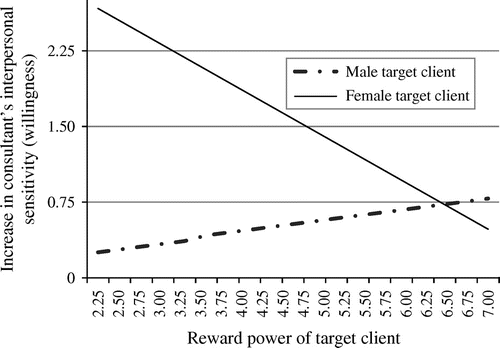
We calculated the incremental increase in the willingness to act with interpersonal sensitivity (IS) reported by consultants interacting with male and female clients with high versus low reward power. Holding values on all other variables equal, we calculated these increases using reward power scores that were one standard deviation above and below the mean for our estimates of higher and lower reward power, respectively (β0(centered) reflects the adjustment in the intercept for both men and women to maintain the original scaling of the dependent variable when centering the reward power variable):
The increase in the willingness to act with interpersonally sensitive behavior when interacting with female clients with lower reward power was 1.55. These findings suggest that for women, having higher reward power is detrimental in terms of eliciting others’ willingness to act with interpersonal sensitivity (0.67 versus 1.55). In contrast, for men, having higher reward power was beneficial in terms of eliciting this willingness from others (0.73 versus 0.52).
Interestingly, male and female clients with higher reward power elicited a similar change in consultants’ willingness to treat them with interpersonal sensitivity (0.73 versus 0.67, p = 0.34). In contrast, when compared with male clients, female clients with lower reward power elicited from consultants a significantly greater willingness to act with interpersonal sensitivity toward them than did male clients (1.55 versus 0.52, p < 0.01).
In H4, we predicted that male consultants working with a mixed-gender team of clients would show more willingness to act with interpersonally sensitive behavior toward a male client than would consultants working with an all-male team of clients. Hypothesis 4 was supported (b = 0.32, p < 0.05; see Table 2, Model 4).
Additional Results
Emotional closeness was included in our analyses as a substantive control variable. We expected that consultants would be more willing to act with interpersonally sensitive behavior toward a client when they felt they had a stronger (more emotionally close) relationship to him or her. This expectation was supported (b = 0.19, p < 0.05; see Table 2, Model 2). However, female consultants did not report having relationships that were more emotionally close than did male consultants (r = 0.08, p = 0.12). We also did not find a correlation between clients’ gender and perceptions of their power (r = 0.07, p = 0.16) or closeness to them (r = −0.04, p = 0.27). These findings suggest that our results are not influenced by differences in perceptions of the power of, or emotional closeness to, female versus male clients.
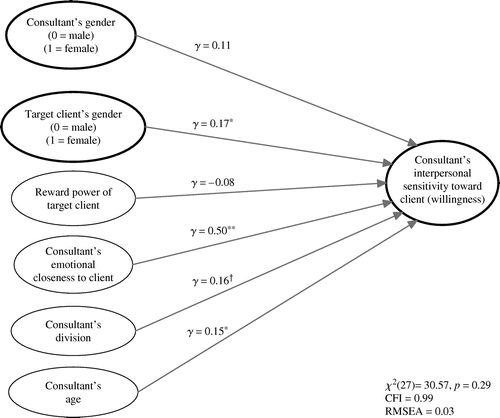
We also tested our direct gender effects using SEM. The model fit well (χ2(27) = 30.57, p = 0.29) and yielded equivalent results for H1 and H2 and emotional closeness (see Figure 2).
Finally, to ascertain whether outliers with extremely high reward power were driving our interaction effect with client gender, we eliminated the consultants with clients who were rated within the top 10% of our data on this measure. The interaction effect remained significant and almost equal in magnitude in this truncated sample (b = −0.55, p < 0.05).
Supplemental Analyses
We present three different supplemental analyses. First, with respect to H4, which focused on male consultants, the increased willingness to act with interpersonal sensitivity toward male clients when working with a mixed-gender team held for the full sample of male and female consultants combined (b = 0.41, p < 0.01).
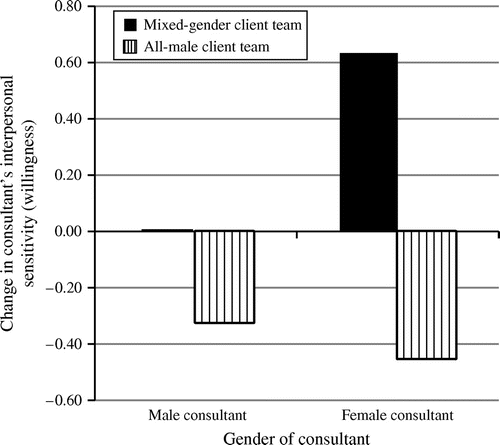
Moreover, whereas both male consultants and female consultants were significantly more willing to act with interpersonal sensitivity when working with a mixed-gender versus an all-male team of clients, the increase in willingness to act with sensitivity for female consultants was significantly greater than that for male consultants (Genderfemale × Mixed-genderclient−team; b = 0.76, p < 0.05), suggesting that the female consultants in our study were more sensitive to team demography than were our male consultants (see Figure 3). Thus, interpersonal context may be critical for interpreting our null results for H1 and understanding when women are likely to be more willing to act with interpersonal sensitivity than men and when they are not.
Second, although our analyses above provide some insight into our finding that female consultants were, in general, not more willing to act with interpersonally sensitive behavior than were male consultants, we also investigated this relationship in two additional samples. Using sample 1 from our scale development section (N = 361, with 17% women, Nwomen = 61), we found that gender and willingness to act with interpersonal sensitivity were not significantly correlated after controlling for age (r = 0.08, p = 0.15).3 In another sample of 82 evening MBA students with full-time jobs (24% women), we also found no correlation between participant gender and interpersonal sensitivity (r = 0.11, p = 0.31, N = 82, Nwomen = 20). Moreover, the mean difference between women and men was similar across all three samples (main study: Mdiff = 0.24; MBA sample used for scale development: Mdiff = 0.14; evening MBA sample: Mdiff = 0.25), and the male and female participants had equal variance on our measure of willingness to act with interpersonal sensitivity (Levene’s test for equality of variances; main study: F = 0.013, p = 0.91; MBA sample used for scale development: F = 1.54, p = 0.22; evening MBA sample, F = 0.98, p = 0.32). Thus, across three different samples of individuals with experience in a diverse set of organizational settings, we found that women did not report a significantly higher willingness to act with interpersonal sensitivity than did men.
Our null results are consistent with the growing body of research on gender differences in economic experiments that has uncovered both null results and contradictory results regarding women’s likelihood to act with other-oriented behavior (Croson and Gneezy 2009). This research suggests that women are more sensitive to social cues than are men (Croson and Gneezy 2009, pp. 20–21), and our supplemental findings were consistent with this notion of cues. Relative to men, women reported a greater increase in their willingness to act with interpersonal sensitivity when interacting within the context of a mixed-gender versus an all-male team (see Figure 3).
Third, our strong result for the influence of emotional closeness, a substantive control variable, on the willingness to act with interpersonal sensitivity was notable. To better isolate the nomological net of willingness to act with interpersonal sensitivity, we further investigated the effect of close emotional bonds from the perspective of relationship investments. For instance, in addition to emotional investments, people invest time and cognitive effort in trying to understand others. To behave in an interpersonally sensitive manner toward others, an individual must be aware of the needs and concerns of others (Atkins and Parker 2012, Kanov et al. 2004, O’Reilly and Aquino 2011). Perspective taking, imagining a situation from the point of view of another individual (Davis 1996), is one way that individuals become aware of the needs of others (Williams 2007) and build close relationships (Williams 2012). Perspective taking is a well-recognized antecedent of interpersonally sensitive behavior because it is associated with empathic feelings (Batson et al. 1995, Goetz et al. 2010) and because it encourages self–other overlap and the development of social bonds (Galinsky et al. 2005, Williams 2012). We found that perspective taking (Williams 2012; three-item measure) was distinct from our measure of willingness to act with interpersonal sensitivity in a CFA. In addition, perspective taking had a significant relationship with willingness to act with interpersonally sensitive behavior when added to either our Model 3 or Model 4 variables (b = 0.35, p < 0.05 and b = 0.32, p < 0.01, respectively). Moreover, the effect of perspective taking was not a proxy for emotional closeness. Emotional closeness remained significant in both models (b = 0.16, p < 0.05 and b = 0.17, p < 0.01, respectively) along with all of our hypotheses. These results suggest that the gender of one’s client and client team composition influence individuals’ behavioral intentions to act with interpersonal sensitivity over and above key aspects of relationship investment such as emotional closeness and perspective taking.
Discussion
Interpersonal sensitivity, the opposite of disrespectful behavior (Cropanzano and Wright 2003, Hodson 2004), has been associated with both personal and organizational benefits such as reduced levels of stress and emotional exhaustion as well as increased acceptance of unfavorable decisions by subordinates (Greenberg 1990, 1993, 2006; Molinsky and Margolis 2005; Ramarajan et al. 2008). Organization leaders also recognize the importance of interpersonal sensitivity. In a recent survey of more than 1,500 chief executive officers, 81% indicated that “‘people skills’ are a top business strategy problem” (Carr 2010). In this study, we sought to better understand the role of interpersonal context in motivating one’s willingness to act with interpersonally sensitive behavior.
Our research calls into question the assumption that the greater sensitivity in mixed-gender interactions is primarily the result of women behaving in a more sensitive manner and investigates the complementary perspective that both men and women may be more willing to act with interpersonally sensitive behavior when interacting with women. Consistent with this view, we found that professionals were more willing to act with sensitive behavior when interacting with a female colleague or with a mixed-gender (versus all-male) team of clients. Our findings were robust despite the small number of women at the top level of our firm. Moreover, we believe that this increased willingness to act with sensitive behavior when interacting with female colleagues and on mixed-gender teams is likely to have a real impact because of our finding that individuals’ self-reported willingness to act with interpersonal sensitivity was correlated with others’ perceptions of their interpersonal sensitivity and trustworthiness (see Phase 4 in the scale development section).
Furthermore, we sought to disentangle the social category expectations associated with an individual’s gender from his or her level of reward power. Thus, we refined our investigation of social categorization processes by examining how the fit (or lack of fit) between the customary low-status social category expectations for women and their level of organizationally relevant power influenced other individuals’ willingness to treat women with interpersonal sensitivity. We found that reward power had an effect consistent with category-based expectations for women. The interaction between gender and reward power showed that individuals’ willingness to act with interpersonal sensitivity was highest when interacting with women with low reward power—that is, female colleagues whose level of reward power was more consistent with the social category and lower status expectations for the category “women.” Our findings are consistent with work demonstrating that social rewards accrue to women who behave in less powerful, more category-consistent ways (Okimoto and Brescoll 2010, Rudman and Phelan 2008). However, we extend this work from investigating women who display category-consistent behavior to women who hold category-consistent levels of reward power.
In contrast, the social category “male” interacted with reward power such that individuals’ willingness to treat male clients with interpersonal sensitivity increased as the reward power of those men increased. This is consistent with arguments asserting that individuals must be more cautious around people who have either more social status or more power than they do (Chen et al. 2004, de Kwaadsteniet and van Dijk 2010, Fiske 1993, Van Vugt et al. 2008) and with research suggesting people are more polite to those with power over them (Ambady et al. 1996, Brown et al. 1987, Morand 1996). However, it reflects a trend opposite of the one that we found for individuals interacting with women with high reward power. Thus, the effect of organizationally relevant sources of power on interactions with male and female clients was not uniform but gender and stereotype dependent.
It is important to note that we did not find a backlash against women—defined as more negative treatment of women with counterstereotypically high levels of power. Individuals interacting with men and women with high reward power demonstrated equal levels of willingness to act with interpersonal sensitivity, suggesting that it might be the trajectory that differs as men and women move from low to high power rather than the absolute level of sensitivity others are willing to show them when they have high power. The experience of this negative trajectory in interpersonal sensitivity may be experienced by women as a social reprisal or backlash. Thus, this negative trajectory for women with high reward power may be a double-edged sword. Women themselves may perceive social reprisal while at the same time avoid the negative perceptions of low competence that are often associated with women receiving high levels of help and sensitivity (Barreto et al. 2010, Dardenne et al. 2007, Good and Rudman 2010).
Finally, our findings related to H1 that women were not more willing to act with interpersonally sensitive behavior than men was surprising. We found similar results in two other samples of individuals who were currently working or had recently worked in a wide variety of organizational settings. Thus, this result may in fact be an accurate reflection of the small gender differences in professional men’s and women’s willingness to act with interpersonal sensitivity, especially when context is not taken into account.
Our supplemental analyses were consistent with research that demonstrates that interpersonal and organizational contexts influence the behavior of women within organizations (e.g., Ashford et al. 1998, Bowles et al. 2007, Dutton et al. 2002, Ely and Padavic 2007) and with Croson and Gneezy’s (2009) conclusion that women are often more responsive to social cues than are men. Mixed-gender versus all-male teams, for example, may provide social cues that signal that greater willingness to act with interpersonal sensitivity is appropriate—cues such as more equalitarian behavior (Konrad et al. 1992) or more empowerment (Bartunek et al. 2000). Although we cannot determine why the women in our sample were more responsive to the context of mixed-gender teams, these women may have perceived mixed-gender teams within a male-dominated industry as a less masculine environment. Alternatively, mixed-gender client teams may have provided female consultants with freedom from being solo “tokens.” Importantly, these suggestive results underscore our main finding that interpersonal context is an important driver of one’s willingness to act with interpersonally sensitive behavior.
Contributions and Future Directions in Research
This paper adds to our understanding of interpersonal sensitivity by investigating contextual factors that influence an individual’s willingness to act with interpersonally sensitive behavior. Because a variety of organizationally relevant behaviors can be categorized as interpersonally sensitive (e.g., social support, affiliative citizenship, relationship repair), our findings suggest that a promising direction for future research would result from investigating how interpersonal context influences these processes.
It is noteworthy that this study contributes to the literature on gender differences at work by suggesting that relational differences in mixed-gender interactions may stem from the dyad-level features of the interaction itself—such as whether an individual is interacting with a male partner or with a female partner with low or high power. In the context of gender differences, many studies have investigated whether men or women demonstrate more interpersonal sensitivity and/or sensitivity to nonverbal social cues. Some researchers reported that women are more sensitive than men are (e.g., Hall 1978, Hall and Schmid Mast 2008, Hojat et al. 2002, Salovey and Mayer 1990, Woolley et al. 2010), whereas other researchers reported no differences between men and women (e.g., Betancourt 1990, Block 1976, Maccoby and Jacklin 1974). Although there is some doubt about whether women demonstrate more interpersonal sensitivity than men, our research suggests that the interpersonal context—in particular, the gender of interaction partners—is an important variable that influences women’s willingness to act with interpersonal sensitivity. Thus, examining interaction partner-level effects may help explain why some studies find women are more sensitive than men (and why some studies do not). We are reminded of Kurt Lewin’s famous equation, B = f(P, E), which states that behavior is a function of the person and her environment (Lewin 1943). Consistent with this equation, we add to the current understanding of gender dynamics in organizations by finding that increased interpersonal sensitivity is not necessarily the result of females’ increased willingness to act with interpersonally sensitive behaviors relative to males but rather the result of individuals’ (male and female) increased willingness to act with these behaviors when interacting with female colleagues.
Our findings challenge the implicit and sometimes explicit assumption that in teams with higher proportions of women, it is the behavior of the female team members, not the male members, that causes the team to demonstrate more sensitive behavior—e.g., make more altruistic decisions (Kennedy 2003) or use fewer overly aggressive decision-making strategies (LePine et al. 2002). Our findings suggest that the dynamic in mixed-gender teams may well result at least in part from the altered behavioral tendencies of male team members in the presence of women. Moreover, our results suggest a mechanism that can explain Chatman and O’Reilly’s (2004) finding that men in male-dominated groups showed the highest levels of positive affect and viewed their groups as most cooperative when compared with men on either all-male or female-dominated teams. The men on these teams may have been willing to treat each other with greater interpersonal sensitivity than men on all-male teams.
The fact that men in interdependent team settings face social demands for sensitivity when interacting in the presence of female colleagues has received little attention until recently (but see Barclay 2010, Hardy and Van Vugt 2006, Van Vugt and Iredale 2013). And the fact that in interdependent contexts it may only take one woman on a mixed-gender team to change these demands for social sensitivity suggests a fruitful direction for research. For example, future research could investigate the relationship between men’s increased willingness to act with interpersonally sensitive behavior in mixed-gender teams and group-level behaviors such as more equality in conversational turn taking—i.e., group behaviors that are positively related to group collective intelligence and performance (Woolley et al. 2010).
Moreover, our findings suggest that benevolent sexism can be directed toward women in nontraditional roles (career women) and high-level positions. These findings build on and contribute to the nascent literature on benevolent sexism toward working women, job applicants, and customers (Good and Rudman 2010, Hebl et al. 2007, King et al. 2012). Additional research is needed to determine how organizationally relevant forms of power, such as reward power and assertive behavior, as well as task characteristics, such as collaborating versus competing, simultaneously influence the likelihood that women in the upper levels of an organization will receive benevolent versus hostile or equal treatment relative to their male colleagues.
We also highlight the dark side of gender-motivated interpersonal sensitivity and need for reducing the gender gap in interpersonal sensitivity. For women, receiving interpersonally sensitive treatment in terms of extra cooperation, help, and time can lead them to doubt their own competence (Barreto et al. 2010) or perform worse (Dardenne et al. 2007) and may be viewed by observers as a signal of a woman’s incompetence (Good and Rudman 2010). For men, receiving low levels of interpersonal sensitivity may preclude the personal, relational, and team benefits of interpersonal sensitivity that are important when work is nonroutine and interdependent (Bartel et al. 2012; Bies and Tripp 1996; Greenberg 1990, 1993, 2006; Levin and Cross 2004; Molinsky and Margolis 2005; Tyler 1993).
Finally, this study highlights situations in which conventional rules for civil behavior may collide with civil behavior defined as sensitive, helpful behavior and with civil behavior defined as respectful, equality-based treatment. For example, our finding that consultants were most willing to act with sensitive behavior toward female clients with low power is consistent with benevolent sexism and with social conventions for civility (Calhoun 2000). In contrast, our finding that consultants were equally willing to act with interpersonally sensitive behavior toward male and female clients with high power is consistent with gender equity. Our findings thus have implications for understanding the relationships among interpersonal sensitivity, benevolent sexism, backlash and different conceptualizations of civility—e.g., convention-bound civility (Calhoun 2000), legal statutes for civility (Whitman 2000), and genuine civility (Calhoun 2000, Porath 2012).
Because research on civility in organizations has focused primarily on incivility, which is always insensitive (e.g., Porath and Erez 2009), organizational researchers have not paid a great deal of attention to behaviors that are civil but disrespectful or sexist in terms of signaling an underlying assumption of inequality between members of different groups (e.g., holding the door for women) and, conversely, behaviors that are less civil than social conventions would require (e.g., not giving up one’s seat for an older woman) yet more respectful than conventions permit because they signal equality among members of different groups. We provide a springboard for future research into the intersection of civility, interpersonal sensitivity, and benevolent sexism.
Strengths and Limitations
The study’s findings should be considered in light of its strengths and limitations. First, in this study, our independent variables of interest, gender and gender composition, were calculated from observed demographic variables so that common method bias should not affect our findings (Spector 2006). Moreover, our gender results remained equally strong when the perceptual control variables were removed from the model.
Second, we consider issues of range restriction, scale coarseness, and sample size. We did not find a significant relationship between the gender of the consultants in our main study and their willingness to act with interpersonal sensitivity, nor did we find a significant correlation in two other samples. Because our scale of interpersonal sensitivity had low variance, there exists the possibility that range restriction (from organization selection practices) or scale coarseness (i.e., lack of measure accuracy inherent when using a Likert scale to capture a continuous variable) could have attenuated the true correlation between consultants’ gender and their willingness to act with interpersonal sensitivity (Aguinis et al. 2009). We cannot eliminate this possibility. We also cannot eliminate the possibility that there is a small effect size associated with gender that would only be statistically significant in a larger sample of women (Cohen’s d = 0.18 for main sample, a small effect size; Cohen 1992). Despite our sample size and the possibility of range restriction, we can still conclude that the effect of participants’ gender is much less a factor in increasing their willingness to act with interpersonal sensitivity than the gender of their interaction partners and the gender composition of their teams, which are statistically significant and robust despite the same possibility of being subject to the range restriction and a similar number of women consultants and clients.
Third, on interorganizational projects, such as those that we studied, individuals may be more likely to act with interpersonal sensitivity than those in traditional hierarchical relationships within a firm. Relationship building, for instance, is not only critical for task performance in professional services but is also associated with career rewards (Maister 1997). Our consultants were also dependent on their clients’ contributions of unique skills and knowledge. This interdependence may have made interpersonally sensitive treatment a preferred strategy for maintaining cooperation. Future research should directly investigate the contextual influences of task interdependence and cross-boundary relationships on interpersonal sensitivity.
Implications for Practice
Organizations are faced with growing levels of insensitive disrespectful behavior (Pearson and Porath 2009, Pearson et al. 2001, Porath et al. 2008) and the concomitant detrimental effects of this behavior such as conflict, reduced performance, and employees’ negative emotions (e.g., Bies and Tripp 1996, Jehn 1995, Porath and Erez 2009). In contrast, interpersonal sensitivity may have quantifiable benefits because it can promote employee thriving, organizational identification, and the acceptance of unfavorable decisions as well as reduce levels of stress and support safe behavior in dangerous work contexts (e.g., Bartel et al. 2012; Ely and Meyerson 2010; Greenberg 1990, 1993, 2006; Molinsky and Margolis 2005; Spreitzer et al. 2005, 2012).
Researchers at the U.S. Veterans Administration, a healthcare provider with 243,000 full-time employees and a budget of more than $112 billion (Belton 2012), found that compared with units with low levels of interpersonal sensitivity, units with high levels of sensitivity saved an average of $61,000 per workgroup per year on Equal Employment Opportunity Commission complaints and $250 per full-time employee per year in sick leave usage (Osatuke et al. 2010, 2012).
Our study suggests that interpersonal context variables, such as interaction partners’ gender and power, influence individuals’ motivation to act with interpersonally sensitive behavior. Thus, when forming teams, managers may first assess whether relational aspects of team interactions such as interpersonal sensitivity are important for team performance and use this information to inform how they select the gender mix of teams.
On a cautionary note, although the relational mechanisms fostered by interpersonal sensitivity may enhance coordination, there is also a dark side to gender-motivated interpersonal sensitivity. Interpersonal sensitivity that springs from gender stereotypes may increase coordination but at the same time inadvertently serve to reproduce a traditional status difference between male and female team members (Ely and Padavic 2007, Glick and Fiske 1996, Jackman 1994, Jost and Kay 2005).
Conclusion
This paper contributes to our understanding of the role of context in interpersonally sensitive behavior. We provide evidence that individuals’ willingness to act with interpersonal sensitivity is not merely a dispositional or socialized tendency that is expressed by women but rather a phenomenon that is also elicited by interaction partners based on the interpersonal factors of gender and reward power. Our findings demonstrate that interpersonally sensitive behavior is context dependent and that the behavior of both male and female professionals is influenced by context. Through this paper, we sought to motivate theoretical development, empirical tests, and a more precise understanding of contextual factors that motivate the willingness to engage in interpersonal sensitivity.
The authors thank Pam Tolbert, Marya Besharov, Arturs Kalnins, Tanya Menon, Ileen Devault, and the Cornell Writing Group for comments on earlier versions of this paper. They also thank Nancy Rothbard and the anonymous reviewers at Organization Science for helpful feedback and suggestions.
1 We use the term “gender” to refer to biological sex differences rather than individuals’ level of identification with male versus female roles.
2 We expected that participants might have more than one current project, so we collected initial team information on two projects (a primary and a secondary project), and after random assignment of a project, more in-depth information about team members was collected on only one of these projects. Slightly more than half of the participants answered about one project (55%) because some people did not have a second project.
3 The sample size reported here is smaller than the pretest sample size of 426 because of missing data related to age and gender.
References
- (2009) Scale coarseness as a methodological artifact: Correcting correlation coefficients attenuated from using coarse scales. Organ. Res. Methods 12(4):623–652.Crossref, Google Scholar
- (1996) More than words: Linguistic and nonlinguistic politeness in two cultures. J. Personality Soc. Psych. 70(5):996–1011.Crossref, Google Scholar
- (1988) Structural equation modeling in practice: A review and recommended two-step approach. Psych. Bull. 103(3):411–423.Crossref, Google Scholar
- (1998) Out on a limb: The role of context and impression management in selling gender-equity issues. Admin. Sci. Quart. 43(1):23–5.Crossref, Google Scholar
- (2012) Understanding individual compassion in organizations: The role of appraisals and psychological flexibility. Acad. Management. Rev. 37(4):524–546.Crossref, Google Scholar
- (1998) A general approach for representing constructs in organizational research. Organ. Res. Methods 1(1):45–87.Crossref, Google Scholar
- (1991) Assessing construct validity in organizational research. Admin. Sci. Quart. 36(3):421–458.Crossref, Google Scholar
- (2010) Altruism as a courtship display: Some effects of third-party generosity on audience perceptions. British J. Psych. 101(1):123–135.Crossref, Google Scholar
- (2010) How nice of us and how dumb of me: The effect of exposure to benevolent sexism on women’s task and relational self-descriptions. Sex Roles 62(7–8):532–544.Crossref, Google Scholar
- (2012) Knowing where you stand: Physical isolation, perceived respect, and organizational identification among virtual employees. Organ. Sci. 23(3):743–757.Link, Google Scholar
- (2000) Dynamics and dilemmas of women leading women. Organ. Sci. 11(6):589–610.Link, Google Scholar
- (2011) Altruism in Humans (Oxford University Press, New York).Google Scholar
- (1995) Information function of empathic emotion: Learning that we value the other’s welfare. J. Personality Soc. Psych. 68(2):300–313.Crossref, Google Scholar
- (2011) Damned if she does, damned if she doesn’t: Consequences of accepting versus confronting patronizing help for the female target and male actor. Eur. J. Soc. Psych. 41(6):761–77.Crossref, Google Scholar
- (2012) CREW (Civility, Respect, and Engagement in the Workplace).
Presentation at the 3rd Annual Finger Lakes Dialog on Relational Workplaces ,June 2–3 ,Watkins Glen, NY .Google Scholar - (1990) An attribution-empathy model of helping behavior: Behavioral intentions and judgments of help-giving. Personality Soc. Psych. Bull. 16(3):573–591.Crossref, Google Scholar
- (1986) Interactional justice: Communication criteria of fairness. Bazerman MH, Lewicki R, Sheppard B, eds. Research on Negotiation in Organizations, Vol. 1 (JAI Press, Greenwich, CT), 43–55.Google Scholar
- (1996) Beyond distrust: “Getting even” and the need for revenge. Kramer RM, Tyler TR, eds. Trust in Organizations: Frontiers of Theory and Research (Sage, Thousand Oaks, CA), 246–260.Crossref, Google Scholar
- (2012) Differentiating the effects of status and power: A justice perspective. J. Personality Soc. Psych. 102(5):994–1014.Crossref, Google Scholar
- (1976) Issues, problems and pitfalls in assessing sex differences: A critical review of the psychology of sex differences. Merrill-Palmer Quart. 22(4):283–308.Google Scholar
- (2007) Social incentives for gender differences in the propensity to initiate negotiations: Sometimes it does hurt to ask. Organ. Behav. Human Decision Processes 103(1):84–103.Crossref, Google Scholar
- (1972) Sex-role stereotypes: A current appraisal. J. Soc. Issues 28(2):59–78.Crossref, Google Scholar
- (1987) Politeness: Some Universals in Language Usage. Studies in Interactional Sciolinguistics (Cambridge University Press, Cambridge, UK).Google Scholar
- (2000) The virtue of civility. Philos. Public Affairs 29(3):251–275.Crossref, Google Scholar
- (2010) The most important leadership quality for CEOs? Creativity. Fast Company (May 18) http://www.fastcompany.com/1648943/most-important-leadership-quality-ceos-creativity.Google Scholar
Catalyst (2009a) 2009 Catalyst census: Fortune 500 women board directors. Report, Catalyst, New York. http://www.catalyst.org/knowledge/2009-catalyst-census-fortune-500-women-board-directors-0.Google ScholarCatalyst (2009b) 2009 Catalyst census: Fortune 500 women executive officers and top earners. Report, Catalyst, New York. http://www.catalyst.org/knowledge/2009-catalyst-census-fortune-500-women-executive-officers-and-top-earners.Google Scholar- (1999) Gender-stereotypic images of occupations correspond to the sex segregation of employment. Personality Soc. Psych. Bull. 25(4):413–423.Crossref, Google Scholar
- (2004) Asymmetric reactions to work group sex diversity among men and women. Acad. Management J. 47(2):193–208.Crossref, Google Scholar
- (2002) Making justice sense of local-expatriate compensation disparity: Mitigation by local referents, ideological explanations, and interpersonal sensitivity in China-foreign joint ventures. Acad. Mangement J. 45(4):807–817.Google Scholar
- (2004) The role of status differentials in group synchronization. Mannix EA, Neale MA, eds. Time in Groups,
Research on Managing Group and Teams , Vol. 6 (Elsevier, London), 111–133.Google Scholar - (1992) A power primer. Psych. Bull. 112(1):155–159.Crossref, Google Scholar
- (2001) On the dimensionality of organizational justice: A construct validation of a measure. J. Appl. Psych. 86(3):386–400.Crossref, Google Scholar
- (2007) Trust, trustworthiness, and trust propensity: A meta-analytic test of their unique relationships with risk taking and job performance. J. Appl. Psych. 92(4):909–927.Crossref, Google Scholar
- (2001) Justice at the millennium: A meta-analytic review of 25 years of organizational justice research. J. Appl. Psych. 86(3):425–445.Crossref, Google Scholar
- (2001) Incivility in the workplace: Incidence and impact. J. Occupational Health Psych. 6(64):64–80.Crossref, Google Scholar
- (1968) Social facilitation of dominant responses by the presence of an audience and the mere presence of others. J. Personality Soc. Psych. 9(3):245–250.Crossref, Google Scholar
- (2003) Procedural justice and organizational staffing: A tale of two paradigms. Human Res. Management Rev. 13(1):7–39.Crossref, Google Scholar
- (2009) Gender differences in preferences. J. Econom. Literature 47(2):1–27.Crossref, Google Scholar
- (2004) When professionals become mothers, warmth doesn’t cut the ice. J. Soc. Issues 60(4):701–718.Crossref, Google Scholar
- (2011) The dynamics of warmth and competence judgments, and their outcomes in organizations. Res. Organ. Behav. 31(1):73–98.Crossref, Google Scholar
- (2009) Stereotype content model across cultures: Universal similarities and some differences. British J. Soc. Psych. 48(1):1–33.Crossref, Google Scholar
- (2007) Insidious dangers of benevolent sexism: Consequences for women’s performance. J. Personality Soc. Psych. 93(5):764.Crossref, Google Scholar
- (1968) Bystander intervention in emergencies: Diffusion of responsibility. J. Personality Soc. Psych. 8(4):377–383.Crossref, Google Scholar
- (1996) Empathy: A Social Psychological Approach (Westview Press, Madison, WI).Google Scholar
- (2007) Social neuroscience approaches to interpersonal sensitivity. Soc. Neurosci. 2(3–4):151–157.Crossref, Google Scholar
- (2010) Social status as a cue for tacit coordination. J. Experiment. Soc. Psych. 46(3):515–524.Crossref, Google Scholar
- (2006) Generosity, anonymity, gender. J. Econom. Behav. Organ. 61(1):42–49.Crossref, Google Scholar
- (2012) The impact of categorical status, numeric representation and work group prestige on preference for demographically similar others: A value threat approach. Organ. Sci. 23(2):386–401.Link, Google Scholar
- (2002) Red light, green light: Making sense of the organizational context for issue selling. Organ. Sci. 13(4):355–372.Link, Google Scholar
- (1987) Sex Differences in Social Behavior: A Social-Role Interpretation (Lawrence Erlbaum Associates, Hillsdale, NJ).Google Scholar
- (1990) Gender and leadership style: A meta-analysis. Psych. Bull. 108(2):233–256.Crossref, Google Scholar
- (2002) Role congruity theory of prejudice toward female leaders. Psych. Rev. 109(3):573–598.Crossref, Google Scholar
- (1994) Are people prejudiced against women? Some answers from research on attitudes, gender stereotypes, and judgments of competence. Eur. Rev. Soc. Psych. 5(1):1–35.Crossref, Google Scholar
- (1999) The origins of sex differences in human behavior: Evolved dispositions versus social roles. Amer. Psych. 54(6):408–423.Crossref, Google Scholar
- (2003) Transformational, transactional, and laissez-faire leadership styles: A meta-analysis comparing women and men. Psych. Bull. 129(4):569–591.Crossref, Google Scholar
- (2010) An organizational approach to undoing gender: The unlikely case of offshore oil platforms. Res. Organ. Behav. 30(1):3–34.Crossref, Google Scholar
- (2007) A feminist analysis of organizational research on sex differences. Acad. Managment Rev. 32(4):1121–1143.Crossref, Google Scholar
- (2008) Workplace incivility: Impacts on individual and organizational performance. Human Res. Development Rev. 7(2):218–240.Crossref, Google Scholar
- (1985) A Monte Carlo study of the effects of correlated method variance in moderated multiple regression analysis. Organ. Behav. Human Decision Processes 36(3):305–323.Crossref, Google Scholar
- (1993) Controlling other people: The impact of power on stereotyping. Amer. Psych. 48(6):621–628.Crossref, Google Scholar
- (1991) Social Cognition (McGraw-Hill, New York).Crossref, Google Scholar
- (2002) A model of (often mixed) stereotype content: Competence and warmth respectively follow from perceived status and competition. J. Personality Soc. Psych. 82(6):878–902.Crossref, Google Scholar
- (1998) Relational practice: A feminist reconstruction of work. J. Management Inquiry 7(2):163–186.Crossref, Google Scholar
- (1959) The bases of social power. Cartwright D, ed. Studies in Social Power (Institute for Social Research, Ann Arbor, MI), 150–167.Google Scholar
- (2005) Perspective-taking and self-other overlap: Fostering social bonds and facilitating social coordination. Group Process Intergroup Relations 8(2):109–124.Crossref, Google Scholar
- (2006) Power and perspectives not taken. Psych. Sci. 17(12):1068–1074.Crossref, Google Scholar
- (1981) Measurement Theory for the Behavioral Sciences (W. H. Freeman and Company, San Francisco).Google Scholar
- (1982) In a Different Voice (Harvard University Press, Cambridge, MA).Google Scholar
- (1996) The ambivalent sexism inventory: Differentiating hostile and benevolent sexism. J. Personality Soc. Psych. 70(3):491–512.Crossref, Google Scholar
- (2001) An ambivalent alliance: Hostile and benevolent sexism as complementary justifications for gender inequality. Amer. J. Psych. 56(2):109–118.Crossref, Google Scholar
- (2011) Ambivalent sexism revisited. Psych. Women Quart. 35(3):530–535.Crossref, Google Scholar
- (1995) Images of occupations: Components of gender and status in occupational stereotypes. Sex Roles 32(9–10):565–582.Crossref, Google Scholar
- (1988) What mediates sex discrimination in hiring decisions? J. Personality Soc. Psych. 55(2):178–186.Crossref, Google Scholar
- (1997) The two faces of Adam: Ambivalent sexism and polarized attitudes towards women. Personality Soc. Psych. Bull. 23(12):1323–1334.Crossref, Google Scholar
- (2010) Compassion: An evolutionary analysis and empirical review. Psych. Bull. 136(3):351–374.Crossref, Google Scholar
- (2010) When female applicants meet sexist interviewers: The costs of being a target of benevolent sexism. Sex Roles 62(7–8):481–493.Crossref, Google Scholar
- (1990) Employee theft as a reaction to underpayment inequity: The hidden cost of pay cuts. J. Appl. Psych. 75(5):561–568.Crossref, Google Scholar
- (1993) Stealing in the name of justice: Informational and interpersonal moderators of theft reactions to underpayment inequity. Organ. Behav. Human Decision Processes 54(1):81–103.Crossref, Google Scholar
- (2006) Losing sleep over organizational injustice: Attenuating insomniac reactions to underpayment inequity with supervisory training in interactional justice. J. Appl. Psych. 91(1):58–69.Crossref, Google Scholar
- (1978) Gender effects in decoding nonverbal cues. Psych. Bull. 85(4):845–857.Crossref, Google Scholar
- (2008) Are women always more interpersonally sensitive than men? Impact of goals and content domain. Personality Soc. Psych. Bull. 34(1):144–155.Crossref, Google Scholar
- (2006) Nice guys finish first: The competitive altruism hypothesis. Personality Soc. Psych. Bull. 32(10):1402–1413.Crossref, Google Scholar
- (2007) Hostile and benevolent reactions toward pregnant women: Complementary interpersonal punishments and rewards that maintain traditional roles. J. Appl. Psych. 92(6):1499–1511.Crossref, Google Scholar
- (1983) Sex bias in work settings: The lack of fit model. Res. Organ. Behav. 5(1):269–298.Google Scholar
- (2005) Same behavior, different consequences: Reactions to men’s and women’s altruistic citizenship behavior. J. Appl. Psych. 90(3):431–441.Crossref, Google Scholar
- (2004) Organizational trustworthiness: Findings from the population of organizational ethnographies. Organ. Sci. 15(4):432–445.Link, Google Scholar
- (2010) Organizational effects of workplace bullying. Einarsen S, Hoel H, Zapf D, Cooper CL, eds. Bullying and Harassment in the Workplace (CRC Press/Taylor & Francis, Boca Raton, FL), 129–148.Crossref, Google Scholar
- (2002) The Jefferson Scale of Physician Empathy: Further psychometric data and differences by gender and specialty at item level. Acad. Medicine 77(10, Supplement):58–60.Crossref, Google Scholar
- (1994) The Velvet Glove: Paternalism and Conflict in Gender, Class, and Race Relations (University of California Press, Berkeley).Crossref, Google Scholar
- (1995) A multimethod examination of the benefits and detriments of intragroup conflict. Admin. Sci. Quart. 40(2):256–282.Crossref, Google Scholar
- (1997) LISREL 8.14: Analysis of Linear Structural Relations (Scientific Software International, Chicago).Google Scholar
- (2005) Exposure to benevolent sexism and complementary gender stereotypes: Consequences for specific and diffuse forms of system justification. J. Personality Soc. Psych. 88(3):498–509.Crossref, Google Scholar
- (1998) Relational systems at work. Res. Organ. Behav. 20(1):39–76.Google Scholar
- (2004) Compassion in organizational life. Amer. Behav. Sci. 47(6):808–827.Crossref, Google Scholar
- (2003) Gender differences in committee decision-making: Process and outputs in an experimental setting. J. Women Politics Policy 25(3):27–45.Crossref, Google Scholar
- (2012) Benevolent sexism at work: Gender differences in the distribution of challenging developmental experiences. J. Management 38(6):1835–1866.Google Scholar
- (2005) Principles and Practice of Structural Equation Modeling, 2nd ed. (Guilford Press, New York).Google Scholar
- (1992) Diversity in work group sex composition: Implications for majority and minority members. Res. Sociol. Organ. 10(1):115–140.Google Scholar
- (1970) Field studies of altruistic compliance. Representative Res. Soc. Psych. 1(1):49–61.Google Scholar
- (2002) Sex composition, situational strength, and team decision making accuracy: A criterion decomposition approach. Organ. Behav. Human Decision Processes 88(1):445–475.Crossref, Google Scholar
- (2004) The strength of weak ties you can trust: The mediating role of trust in effective knowledge transfer. Management Sci. 50(11):1477–1490.Link, Google Scholar
- (1943) Defining the “field at a given time”. Psych. Rev. 50(3):292–310.Crossref, Google Scholar
- (2008) The Contours and consequences of compassion at work. J. Organ. Behav. 29(2):193–218.Crossref, Google Scholar
- (2005) Interpersonal mistreatment in the workplace: The interface and impact of general incivility and sexual harassment. J. Appl. Psych. 90(3):483–496.Crossref, Google Scholar
- (2001) Accounting for common method variance in cross-sectional research designs. J. Appl. Psych. 86(1):114–121.Crossref, Google Scholar
- (1974) The Psychology of Sex Differences (Stanford University Press, Stanford, CA).Google Scholar
- (2008) Social hierarchy: The self-reinforcing nature of power and status. Acad. Management Ann. 2(1):351–398.Crossref, Google Scholar
- (1997) True Professionalism: The Courage to Care About Your People, Your Clients and Your Career (Free Press, New York).Google Scholar
- (1999) The effect of the performance appraisal system on trust for management: A field quasi-experiment. J. Appl. Psych. 84(1):123–136.Crossref, Google Scholar
- (1995) Affect- and cognition-based trust as foundations for interpersonal cooperation in organizations. Acad. Management J. 38(1):24–59.Crossref, Google Scholar
- (2005) Necessary evils and interpersonal sensitivity in organizations. Acad. Management Rev. 30(2):245–268.Crossref, Google Scholar
- (2006) The emotional tightrope of downsizing: Hidden challenges for leaders and their organizations. Organ. Dynam. 35(2):145–159.Crossref, Google Scholar
- (1996) Dominance, deference, and egalitarianism in organizational interaction: A sociolinguistic analysis of power and politeness. Organ. Sci. 7(5):544–556.Link, Google Scholar
- (2010) The impact of methodological moderators on prevalence rates of workplace bullying: A meta-analysis. J. Occupational Organ. Psych. 83(4):955–979.Crossref, Google Scholar
- (1978) Psychometric Theory (McGraw-Hill, New York).Google Scholar
- (2010) The price of power: Power seeking and backlash against female politicians. Personality Soc. Psych. Bull. 36(7):923–936.Crossref, Google Scholar
- (2011) A model of third parties’ morally motivated responses to mistreatment in organizations. Acad. Management. Rev. 36(3):526–543.Crossref, Google Scholar
- (2010) Workplace civility perceptions relate to equal employment opportunity complaint rates.
Paper presented at the 116th Annual National Convention by the American Psychological Association ,August 12 , American Psychological Association, Washington, DC.Crossref, Google Scholar - (2012) Civility, respect, and engagement in the workplace (CREW) in the USA Veterans Affairs: Predictors of successful outcomes.
Paper presented at the 10th Conference of the European Academy of Occupational Health Psychology ,April 13 , European Academy of Occupational Health Psychology, Nottingham, UK.Google Scholar - (2012) Skirting the issue: “You can swear in front of me, gentlemen—I don’t give a *%?^”!! Telegraph (December 12) http://www.telegraph.co.uk/women/womens-life/9718824/Skirting-the-Issue-You-can-swear-in-front-of-me-gentlemen-I-dont-give-a-.html.Google Scholar
- (2009) The Cost of Bad Behavior: How Incivility Is Damaging Your Business and What to Do About It (Penguin Group, New York).Google Scholar
- (2001) When workers flout convention: A study of workplace incivility. Human Relations 54(11):1387–1419.Crossref, Google Scholar
- (1995) Gender Trials: Emotional Lives in Contemporary Law (University of California Press, Berkeley).Google Scholar
- (1997) Resources and relationships: Social networks and mobility in the workplace. Amer. Sociol. Rev. 62(5):673–693.Crossref, Google Scholar
- (2003) Common method biases in behavioral research: A critical review of the literature and recommended remedies. J. Appl. Psych. 88(5):879–903.Crossref, Google Scholar
- (2012) Civility. Cameron K, Spreitzer G, eds. Handbook of Positive Organizational Scholarship (Oxford University Press, New York), 439–448.Crossref, Google Scholar
- (2009) Overlooked but not untouched: How rudeness reduces onlookers’ performance on routine and creative tasks. Organ. Behav. Human Decision Processes 109(1):29–44.Crossref, Google Scholar
- (2008) Picking up the gauntlet: How individuals respond to status challenges. J. Appl. Soc. Psych. 38(7):1945–1980.Crossref, Google Scholar
- (2002) What women and men should be, shouldn’t be, are allowed to be, and don’t have to be: The contents of prescriptive gender stereotypes. Psych. Women Quart. 26(4):269–281.Crossref, Google Scholar
- (2006) Essentializing differences between women and men. Psych. Sci. 17(2):129–135.Crossref, Google Scholar
- (2011) Gender, emotion and power in work relationships. Human Res. Management Rev. 21(4):377–393.Google Scholar
- (2008) The influence of organizational respect on emotional exhaustion in the human services. J. Positive Psych. 3(1):4–18.Crossref, Google Scholar
- (1998) Conceptualizing and measuring a power/interaction model of interpersonal influence. J. Appl. Soc. Psych. 28(4):307–332.Crossref, Google Scholar
- (2001) Gender, status, and leadership. J. Soc. Issues 57(4):637–655.Crossref, Google Scholar
- (2004) Unpacking the gender system: A theoretical perspective on gender beliefs and social relations. Gender Soc. 18(4):510–531.Crossref, Google Scholar
- (2000) Creating and spreading status beliefs. Amer. J. Sociol. 106(3):579–615.Crossref, Google Scholar
- (1999) Feminized management and backlash toward agentic women: The hidden costs to women of a kinder, gentler image of middle managers. J. Personality Soc. Psych. 77(5):1004–1010.Crossref, Google Scholar
- (2008) Backlash effects for disconfirming gender stereotypes in organizations. Res. Organ. Behav. 28(1):61–79.Crossref, Google Scholar
- (1990) Emotional intelligence. Imagination Cognition Personality 9(3):185–211.Crossref, Google Scholar
- (2006) On racial diversity and group decision making: Identifying multiple effects of racial composition on jury deliberations. J. Personality Soc. Psych. 90(4):597–612.Crossref, Google Scholar
- (2006) Method variance in organizational research: Truth or urban legend? Organ. Res. Methods 9(2):221–232.Crossref, Google Scholar
- (2012) Toward human sustainability: How to enable more thriving at work. Organ. Dynam. 41(2):155–162.Crossref, Google Scholar
- (2005) A socially embedded model of thriving at work. Organ. Sci. 16(5):537–549.Link, Google Scholar
- (1986) The social identity theory of inter-group behavior. Worchel S, Austin LW, eds. Psychology of Intergroup Relations, 2nd ed. (Nelson-Hall, Chicago), 7–24.Google Scholar
- (2004) When what you know is not enough: Expertise and gender dynamics in task groups. Personality Soc. Psych. Bull. 30(12):1585–1598.Crossref, Google Scholar
- (1993) The social psychology of authority. Murnighan JK, ed. The Winner’s Curse: Paradoxes and Anomalies of Economic Life (Free Press, New York), 101–113.Google Scholar
- (1998) Why So Slow? The Advancement of Women (MIT Press, Cambridge, MA).Google Scholar
- (2013) Men behaving nicely: Public goods as peacock tails. British J. Psych. 104(1):3–13.Crossref, Google Scholar
- (2008) Leadership, followership, and evolution: Some lessons from the past. Amer. Psych. 63(3):182–196.Crossref, Google Scholar
Weber Shandwick (2011) Civility in America 2011. Report, Weber Shandwick, Baltimore. http://www.webershandwick.com/resources/ws/flash/civilityinamerica2011.pdf.Google Scholar- (2000) Enforcing civility and respect: Three societies. Yale Law J. 109(6):1279–1398.Crossref, Google Scholar
- (2007) Building genuine trust through interpersonal emotion management: A threat regulation model of trust and collaboration across boundaries. Acad. Management Rev. 32(2):595–621.Crossref, Google Scholar
- (2012) Perspective taking: Building positive interpersonal connections and trustworthiness one interaction at a time. Cameron K, Spreitzer G, eds. Handbook of Positive Organizational Scholarship (Oxford University Press, New York), 462–473.Crossref, Google Scholar
- (2010) Evidence for a collective intelligence factor in the performance of human groups. Science 330(6004):686–688.Crossref, Google Scholar
- (2008) When emotions of others affect decisions in public good dilemmas: An instrumental view. Eur. J. Soc. Psych. 38(5):823–835.Crossref, Google Scholar
Michele Williams is assistant professor of organizational behavior at Cornell University. She received her Ph.D. from the University of Michigan. Her research concentrates on gender and on the influences of interpersonal processes such as trust, emotion, perspective taking, and interpersonal sensitivity on how cooperative relationships evolve, especially on projects involving people from multiple organizations or groups within an organization.
Evan Polman is assistant professor of marketing at the Wisconsin School of Business, University of Wisconsin–Madison. He received his Ph.D. from Cornell University and carried out his postdoctoral work at New York University. His research interests include how people make choices for others and, more generally, how people manage their relationships with others.
This article appears in INFORMS Analytics Collections Vol. 13: Diversity & Inclusion: Analytics for Social Impact.
Visit this collection for free access to more articles showcasing how to put diversity, equity, and inclusion at the center of decision sciences.

