


The Radical Flank Revisited: How Regulatory Discretion Shapes the Effectiveness of Social Activism on Business Outcomes
Abstract
Although scholarship has highlighted how stakeholders can influence business outcomes, few studies have examined how simultaneous, different tactics interact to impact firms. Critical to understanding this interaction is the radical flank effect, which asserts that the moderate and radical elements of social activist tactics can interact to either enhance or diminish a movement’s ability to accomplish its goals. However, research is unclear about when and whether the radical flank effect enhances or diminishes activist influence, nor has it empirically analyzed factors that influence the direction of the effect. To address these limitations, we explore one such factor—regulatory agency discretion, or regulators’ flexibility to interpret and implement public policies. Drawing on management and political sociology studies, we argue that discretion affects the salience of regulatory accountability to the public and thereby alters the radical flank effect on business outcomes in regulated markets. We analyze stakeholder opposition to U.S. hydroelectric power facilities from 1987 to 2019. The results show that high discretion enhances the radical flank effect and detrimentally affects business outcomes, whereas low discretion reverses the radical flank effect and favorably affects business outcomes.
Funding: This work was supported by the Kauffman Foundation Doctoral Dissertation Fellowship and the Harvard Business School Division of Research.
Supplemental Material: The online appendix is available at https://doi.org/10.1287/orsc.2022.16104.
Introduction
Scholarship at the intersection of social movements and organizations has illustrated how social activists influence business outcomes directly through private politics tactics, such as boycotts (McDonnell and King 2013), protests (Hiatt et al. 2009), and name and shame campaigns (Lee et al. 2018, Reinecke and Ansari 2020), or indirectly using the state as a fulcrum to influence firms via public politics tactics, such as lobbying elected officials (York et al. 2018), congressional testimonies (Hiatt et al. 2015), and lawsuits (Walker et al. 2008, Hiatt and Park 2022). Recently, scholars have begun to focus on how various combinations of stakeholder actions may differentially impact organizational outcomes and behavior both directly (McDonnell et al. 2021) and indirectly via the state (Ozcan and Gurses 2018). A key yet underused framework for explaining the influence of these tactic portfolios is the radical flank effect. The radical flank effect asserts that stakeholders often comprise both moderate and radical groups whose interaction may enhance or diminish the greater movement’s effectiveness (Haines 2013, Schifeling and Hoffman 2019). Scholars have proposed two types of effects. A positive radical flank effect occurs when movement groups engaging in radical tactics create a contrast effect whereby other groups engaging in more moderate tactics appear more reasonable to movement targets (McAdam 1992). A negative radical flank effect occurs when radical elements create a comparison effect whereby actors engaging in moderate tactics appear just as extreme as actors engaging in more visible radical tactics (Hoffman and Bertels 2010). The former enhances stakeholders’ ability to achieve their goals, whereas the latter diminishes it.
However, empirical use of this theory to explain stakeholder tactics’ impact on firms is still in its infancy, and several important questions remain unanswered. First, although some scholars have proposed factors that may cause the radical flank effect to be positive versus negative (Hoffman and Bertels 2010), no studies to date have theorized and empirically tested factors that can influence the direction of the radical flank effect (Gupta 2002). Second, what we know of the radical flank mechanism comes primarily from public politics settings, in which activists seek to influence elected officials to change policy (Haines 2013); few studies examine this mechanism in a private politics settings where firms are the targets (Baron et al. 2016, Schifeling and Hoffman 2019). Third, research has yet to examine whether and how radical flank effects occur in regulated markets, in which activists can indirectly target firms by influencing regulatory agency decisions. This limitation is particularly important given that the business activities of many sectors of the economy—such as telecommunications, finance, energy, water, and biotechnology—are mediated by regulatory agencies (Montgomery and Dacin 2020) and that activists have long used the state as a fulcrum to exert influence over firms (Amenta et al. 2010). Hence, an understanding of how portfolios of activist tactics combine to affect firms vis-à-vis regulatory agencies is critical to understanding firm strategies and outcomes in regulated markets.
We seek to address these limitations by examining the conditions that foster a positive or negative radical flank effect in the U.S. electric power industry—a regulated market that requires government agency-approved licenses to operate. Although several unidentified external environmental or organizational factors could affect the direction of the radical flank effect, we highlight and empirically examine the role of institutional arrangements that shape the radical flank effect’s direction and subsequent firm outcomes. Specifically, we propose that increasing or decreasing regulatory discretion—defined as regulatory agencies’ freedom to interpret and implement public policies written by elected officials—can determine whether the radical flank effect enhances or diminishes activist influence on firm outcomes in regulated markets because discretion influences the degree to which regulators are accountable to the public.
We address these questions using data on the regulatory approval of new U.S. hydroelectric power facilities from 1987 through 2019. The antihydropower movement, composed of various constituencies ranging from environmentalists to fishing and hunting associations, sought to prevent hydropower firms from receiving operating licenses by influencing government officials. We use two empirical constructs of discretion to test how the degree of discretion of key regulators increased or decreased the simultaneous impact of activists’ radical and moderate tactics on licensing decisions.
Our study makes several contributions to the nonmarket strategy literature at the intersection of social movement theory and organizations. First, the study enhances our understanding of the radical flank by answering calls to examine factors that may cause the radical flank to enhance or reduce the impact of activists’ efforts (Schifeling and Hoffman 2019). Few management studies distinguish types of activists or examine the interaction of multiple, simultaneous tactics (Eesley et al. 2015, Dorobantu et al. 2017). By looking directly at how radical and moderate tactics interact, this study answers scholarly calls to attend closely to the interdependencies between movement tactics and to explore how these interdependencies may drive systemic change (Banaszak and Ondercin 2016, Wang and Soule 2016).
Second, our study contributes to the business-government relations literature by showing how activists can indirectly target businesses by influencing regulatory decision making (Briscoe and Gupta 2016). Although research has begun to move beyond exploring the direct impact of activists on firms to examining how activists can target firms indirectly via the state (Hiatt and Park 2013), little is known about how various portfolios of activist tactics may interact to influence regulatory decision making. This theoretical limitation is important because government institutions pursue distinct objectives and respond to different incentives than do businesses (Grandy and Hiatt 2020). Exploring companies in regulated markets provides a broader view of how activists can impact business outcomes beyond private politics tactics such as boycotts or name and shame campaigns. Managerially, the findings inform stakeholders seeking to influence regulatory decision-makers of when they should combine radical tactics (e.g., protests, boycotts, etc.) with moderate ones (e.g., formal communication, lobbying, etc.) or use them individually.
Theory and Hypotheses
Activism and the Radical Flank Effect
Management scholars have shown increased interest in stakeholder activists’ roles in realizing social and environmental sustainability changes in firms. Activists engage in a variety of tactics to target firms and government because conventional market or institutional channels of change are often closed to them. They lack a direct voice in corporate decision-making because they lack substantive control of shareholder wealth (Waldron et al. 2013), and some corporate targets are simply unsusceptible to conventional market influence (Baron 2001). Activist tactics can range from political strategies, such as lobbying and petitioning government officials and regulatory agencies, to confrontational and disruptive tactics, such as protests, marches, or strikes directed at corporate or government targets, to violent tactics that cause direct economic damage or loss of life, such as ecoterrorism (Taylor and Van Dyke 2004).
A small but significant body of research in this area illustrates the impact of these tactics on firms. For instance, studies have found that lobbying and congressional testimony cause changes in firms’ environmental accounting practices and technology adoption by creating uncertainty about potential regulation (Baron and Diermeier 2007, Hiatt et al. 2015). Other studies have shown how activist protests and boycotts can negatively affect a firm’s stock price (King and Soule 2007) and result in firms’ responses that vary from symbolic framing activities (McDonnell and King 2013) to concessions to activists (Eesley and Lenox 2006).
Despite increasing scholarly interest in the effects of social movement organizations’ discursive and tactical repertoires on firms, few studies have examined how various stakeholder tactics and claims may differentially influence firm outcomes and behaviors (Dorobantu et al. 2017).1 A useful approach to understanding this interaction is the radical flank effect—a situation where both radical and moderate tactics occur concurrently. This framework, rooted in sociological literature on the civil rights movement, observes that social movements often approach issues along a spectrum, from positions perceived by key audiences as more radical and confrontational to positions perceived as more moderate and collaborative (Haines 1984, Downey and Rohlinger 2008). For example, during the civil rights movement, the National Association for the Advancement of Colored People (NAACP) emerged and engaged in tactics that were directed at legal and political change. Although these tactics were initially viewed as radical, after the emergence of groups (such as the Black Panther Party) whose more radical tactics challenged police authority and engaged in protests and armed community patrols, the NAACP’s tactics were perceived as moderate. The coexistence of both radical and moderate activists eventually prompted a question: did the simultaneous presence of both radicals and moderates make it easier or more difficult for activists to accomplish their goals?
In response, scholars proposed arguments and highlighted anecdotes that supported both a negative and a positive radical flank effect. The negative radical flank effect argues that the legitimacy of moderate activists is undermined when both radical and moderate positions coexist within a larger social movement. Although radical tactics attract more public attention, their more extreme nature can produce a negative response from the public, and this response can discredit movement activities and goals as a whole and, thereby, weaken the ability of moderate activists to gain resources and legitimacy from sympathetic third parties (Haines 1984, Gupta 2002). The positive radical flank effect, in contrast, argues that the presence of more radical tactics benefits the position of moderate activists. Because radicals’ tactics typically advocate politically unpalatable changes and are more extreme, activists’ targets and third parties (such as the media, the public, or the state) perceive them as particularly threatening (Haines 1988, Schock 2013). Hence, radicals may provide a foil against which moderates are viewed as more reasonable. Although targeted organizations prefer not to concede to moderates, they do so to preempt potentially more radical concessions, should radical tactics succeed, and to resolve crises that radicals have spawned (Haines 1984).
Although scholars have reported both positive and negative effects, most literature on the subject has focused on the former (Haines 1988, McCammon et al. 2015, Truelove and Kellogg 2016). For instance, when the Rainforest Action Network, an environmental group that espouses radical tactics, targeted Staples with protests and a consumer boycott for purchasing from companies that caused deforestation in Indonesia, the company decided to cooperate with the Environmental Defense Fund. This organization focuses on more moderate tactics and, thus, was viewed as an acceptable negotiating partner (Barnett and Hoffman 2008, Baron et al. 2016). Another study on climate change activist opposition to oil and gas firms found that the interaction of radical (protests) and moderate (congressional hearings) tactics resulted in firms becoming less likely to concede to radicals and more likely to respond to moderates (Hiatt et al. 2015). Additionally, an examination of the Occupy Wall Street (OWS) movement after the 2008 economic crisis showed that the OWS movement’s radical anarchist positions enhanced more moderate socialists’ ability to place issues of income inequality onto the political agenda (Rowe and Carroll 2014).
The negative radical flank effect, which stems from observations that activists engaged in moderate tactics feared that radical tactics would create a backlash against the movement’s activities and goals (Haines 1984), has generated only a few notable studies in support. An examination of animal rights activism in the United Kingdom found that the media tarred moderates and radicals with the same brush, thus drastically reducing activists’ effectiveness (Munro 2005). Similarly, the reputation of Earth First, an environmental group, was damaged when more radical animal liberation activists joined their efforts, hindering progress toward public policy reform and changes to corporate practices (Wall 1999).
Notwithstanding the scholarly arguments and empirical evidence for positive and negative radical flank effects, research has yet to theorize and empirically test the conditions in which the radical flank enhances or diminishes activists’ influence on firms in regulated markets. This oversight may be due to the prior literature’s limited attention to institutional and organizational features that can influence whether a positive or negative effect will occur. In addressing this limitation, we explore one potentially important condition in regulated markets that could influence the direction of the radical flank effect on regulatory decision making and business outcomes: regulatory agency discretion.
Regulatory Discretion and the Radical Flank
We propose that discretion can influence the direction of the radical flank by affecting the decision-making process of regulators who decide on appropriate responses to activists’ tactics. Regulatory discretion stems from the institutional arrangements between elected officials and regulatory agencies (Grandy and Hiatt 2020). From a principal-agent perspective, regulatory agencies are elected officials’ agents who write public policies and are generally staffed with technical experts who possess more complete information about the policies’ subject matter than do the elected officials who write them (Huber and Shipan 2002). Elected officials tend to grant discretion to knowledgeable regulators so that public policies may be implemented more appropriately and effectively (Skocpol and Finegold 1982). For instance, in the context of environmental regulation, some studies have found that increased regulatory discretion allows regulatory agencies to draw on their knowledge and information about the behavior of regulated firms, resulting in increased pollution abatement relative to what formal policy mandated (Duflo et al. 2016). In addition, because writing detailed public policy detracts time and effort from campaign activities and other responsibilities, elected officials tend to write policies with vague goals and broad mandates and delegate decisions about implementation to regulatory agencies. The amount of discretion elected officials grant to the regulatory agencies varies across states and over time and is conditioned by factors such as historical norms, the professionalism of legislatures, and various state characteristics (Pires 2011).
Discretion has important implications for regulatory decision making by affecting the degree to which regulators are accountable to the public. Because of their position between elected officials and external stakeholders, regulators are held accountable for their decision making (Ingold et al. 2013). To ensure regulators implement policies consistent with their preferences, elected officials often limit regulatory discretion in interpreting and implementing policies through legislation, such as administrative procedures acts, or other mechanisms that reduce regulators’ autonomy (Scott 2000).2 However, because elected officials frequently struggle to effectively monitor regulatory agencies (McCubbins and Schwartz 1984, McCubbins et al. 1987, Maggetti and Papadopoulos 2018), they often will grant regulators greater discretion to implement policy. As regulatory discretion increases, civil society organizations, such as coalitions of concerned citizens and social movement organizations, take on the role of monitoring regulatory decisions and holding them accountable by drawing attention to their actions (Kiser 1999, Lupia and McCubbins 2000). Civil society groups have an incentive to monitor regulatory agencies and draw attention to their actions because regulatory decisions directly and indirectly affect these groups’ interests (Freeman 2000). This monitoring may compel agencies with greater discretion to change their behavior directly, by questioning the legitimacy of regulators’ decisions or tarnishing their reputation, or indirectly, by motivating elected officials to monitor regulatory decision-making more closely (Hiatt and Park 2013). For example, in the case of water pollution abatement, “riverkeeper” activists monitor many U.S. waterways by publicly releasing potential water quality violations to hold agencies accountable for enforcement (Thompson 2000).
We propose that variation in regulatory discretion is a critical factor that affects the direction of the radical flank effect. As activists target regulatory agencies to draw attention to and question agency decisions (Fremeth et al. 2021), such actions likely motivate responses (Avidan et al. 2019). Yet, we argue that responses will be conditioned by the salience of their exposure to legitimacy and reputational threats via the regulator’s discretion.
High Regulatory Discretion.
When regulators have high discretion, they have more freedom and flexibility in their regulatory decision making; however, they also become more accountable to the public for their decisions. Consequently, activists seeking to change the behavior of regulated firms can leverage their organizing and mobilizing capabilities to challenge the legitimacy of regulatory decisions. By using tactics criticizing pending decisions as harmful and by politicizing regulatory decisions, activists make regulatory agencies seem less independent, professional, and competent (Peretti 2004, Trumbull 2012). For instance, when the Federal Communications Commission (FCC) was considering loosening net-neutrality rules, activists sought to tarnish the agency’s legitimacy by highlighting the FCC chairman’s ties to lobbyists, and they accused commissioners of being too favorable to industry (Sasso 2015). Such radical tactics can initiate a legitimacy crisis for regulatory agencies because an agency’s success depends, in large part, on its reputation for capable execution of its regulatory duties (Carpenter 2010, Gilad and Yogev 2012, Koop and Lodge 2014). Surveys of regulatory agencies highlight that recognition for satisfactory work and high professional reputations are key occupational rewards (Schofield 2001, Leaver 2009). Questioning an agency’s ability to serve the public interest through its regulatory decisions harms its legitimacy—even more so when agency officials and their principals, elected officials, realize they have greater accountability for regulatory decisions (Lupia and McCubbins 2000).
Yet, radical tactics alone may be insufficient to elicit a response. The disruptive nature of radical tactics makes radicals poor negotiating partners to resolve regulatory concerns and the demands they make via these tactics typically ask for more than the regulatory agency can offer (Barnett and Hoffman 2008). Moderate tactics, such as formal complaints on regulatory filings or objections during public comment periods, may elicit a response from the regulatory agency; but they provide little motivation to act because the tactics and their more reasonable demands are unlikely to threaten a regulatory agency’s legitimacy and reputation. Prior research has found that moderate tactics alone are insufficient to affect a meaningful regulatory response (Hiatt and Park 2013). However, the combination of radical and moderate discursive tactics may increase the likelihood that moderate demands will be met because moderates are more palatable negotiating partners. This can resolve the legitimacy crisis spawned by radical tactics because acquiescing to moderates is often enough to discourage further targeting by radicals. Thus, we argue that when faced with both radical and moderate tactics, regulatory agencies with higher discretion are more likely to engage with moderate groups and acquiesce to their demands, thereby detrimentally affecting business outcomes.
When regulatory discretion is high, the combination of radical and moderate social movement tactics will be detrimental to business outcomes.
Low Regulatory Discretion.
When regulators have less discretion, they have less flexibility in their regulatory decision making and are less accountable to the public. In this context, we suggest this will lead to a negative radical flank effect for two reasons.3 First, less discretion causes regulatory agencies to make decisions in accordance with formal policies crafted by elected officials; thus, regulators recognize that regulatory decisions conform with elected officials’ preferences, not those of civil society groups. Consequently, regulatory agency officials are likely to deflect criticism from civil society groups onto the elected officials who crafted laws, thereby shielding themselves from activist tactics that threaten their legitimacy and reputation. Prior research has shown that deflecting criticism is a useful approach to protecting regulatory agency legitimacy. For instance, in a study of the agricultural-biotechnology sector, Hiatt and Park (2013) showed that the U.S. Department of Agriculture (USDA) shielded its legitimacy from threats emanating from anti-GMO protests by relying on farmer associations that advocated products’ approval as a justification for the USDA’s controversial rulings. Elected officials are a useful shield because they are accountable to the electorate only to the extent that it affects their probability of reelection (Besley and Case 1995). Given that civil society groups typically represent only a small portion of the electorate and that many other factors contribute to the likelihood of reelection (including corporate influence through political contributions to election campaigns), social activism by these groups likely poses a lesser threat to elected officials.
Second, radical tactics might discourage elected officials from considering the demands of activists delivered via moderate tactics because such radical tactics allow elected officials to categorically stigmatize the entire movement. Categorical stigmatization involves creating a negative evaluation of social actors based on their affiliation with a “group that is recognized as engaging in contested practices” (Piazza and Perretti 2015, p. 726). Unlike moderate tactics such as lobbying, congressional testimony, and participating in a public comment process, which are seen as actions from within the political system, radical tactics such as protests, strikes, and boycotts come from outside the political system and aim to cause disruption (King and Soule 2007). As such, radical tactics may be considered contested practices that are deemed illegitimate in the eyes of key audiences. When faced with both radical and moderate tactics, elected officials may try to stigmatize moderate activists as extrainstitutional extremists, thereby tarring them with the same brush as radicals. Moderates, when stigmatized as radicals, have little direct effect on elected officials because the tactics fail to engender realistic electoral promises or threats and, therefore, appeal not to elected officials’ accountability to the electorate or incentives for reelection (Soule et al. 1999, McCammon et al. 2001, Burstein and Linton 2002).4 To illustrate, when radical factions of the prolife movement engaged in violent tactics such as burning down abortion clinics, politicians capitalized on the violence to discredit the efforts of all activists, including moderate groups such as the National Right to Life Coalition, thereby harming the movement’s ability to achieve its goals (Rohlinger 2006). In sum, because low regulatory discretion may allow regulators to use elected officials as institutional shields and elected officials are more dismissive of radical tactics, we argue that low regulatory discretion will lead to a negative radical flank effect and thus will reduce activists’ ability to influence regulatory agency decisions concerning firms. Our theoretical model is illustrated in Figure 1.
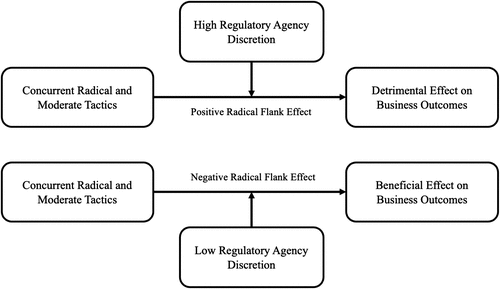
When regulatory discretion is low, the combination of radical and moderate social movement tactics will be beneficial to business outcomes.
Empirical Context
The empirical context of this study is the U.S. hydroelectric power sector from 1987 to 2019. In the United States, hydroelectric power is the largest source of renewable electricity, exceeding wind by 50 billion kWh and solar by 250 billion kWh (Figure A2 in the online appendix), and the United States is among the largest producers of hydroelectric power in the world (USEIA 2019). Although hydropower has traditionally involved the construction of large dams, modern hydroelectric power development favors smaller facilities, including: run-of-river diversions, which channel a relatively small portion of a river’s water through electricity-generating turbines; pumped storage, in which water is pumped to an upper reservoir at off-peak load times to store kinetic energy for use later during peak load; and tidal power generators, which involve placing energy-generating turbines on the ocean floor to take advantage of the rising and falling tides.
In the United States, hydroelectric power is regulated at the federal level by the U.S. Federal Energy Regulatory Commission (FERC), an independent federal agency that regulates the interstate transmission of natural gas, oil, and electricity and oversees licensing of natural gas and hydroelectric power facilities. To protect public waterways from excessive private exploitation, FERC grants hydroelectric facilities long-term licenses ranging from 30 to 50 years,5 whose approval is contingent on evaluation of both energy and nonenergy interests, such as recreational opportunities and environmental quality (FERC 2020). Although FERC ultimately regulates all hydroelectric facilities, the U.S. Clean Water Act of 1972 (CWA) grants individual states the authority to create additional license requirements for facilities operating within their jurisdictions (FERC 2020). The CWA grants states the right to certify to FERC that a new facility complies with all state water quality standards before a license can be granted. This allows U.S. states to deny or delay federal licensing by withholding certification and by imposing additional conditions or limitations on the license, which must be upheld at the federal level (Copeland 2015). Not all states take advantage of this authority equally. Some states, such as California and New York, take advantage of this power and create additional restrictions on licensing, whereas others, such as Kansas and Indiana, adhere only to applicable federal requirements by creating legislation that prevents regulators from creating additional restrictions. As a result, significant variation exists across states regarding regulatory agencies’ discretion to interpret and implement licensing legislation.
Although hydropower is considered a relatively clean energy technology because it is renewable and has no harmful emissions, the founding of hydroelectric facilities is not without controversy. All types of facilities, but particularly hydroelectric dams, draw concerns for their impacts on local communities, river ecosystems, and water rights (Reinhardt and Hiatt 2012). In the United States, several environmental groups oppose hydroelectric facilities or promote reforms to make facilities safer for fish, wildlife, and their habitats. These include large organizations like the Audubon Society, American Rivers, Ducks Unlimited, and Trout Unlimited, as well as many small groups that focus on their communities’ watersheds. These activists warn of hydroelectric facilities’ negative environmental impacts, including damaging riverbanks and riparian areas, reducing water quality, preventing fish passage, and directly killing fish in power generation turbines (Anderson et al. 2015, Stumpf 2018). Taken together, these impacts can significantly harm bird and fish populations, possibly leading to extirpation or extinction.
Social movement activists have used numerous public and private politics tactics to oppose new hydroelectric facilities. At the federal level, activists have lobbied Congress to strengthen the Clean Water Act and have lobbied FERC to ensure the act’s strict enforcement, especially regarding wetlands protection (Kosnik 2010). At the state level, activists have provided technical information to regulators and the public. They have also mobilized members to attend public meetings and have provided formal input during public comment periods of the licensing process. At both the state and federal levels, social movements have used the courts to oppose facilities by filing motions of intervention to delay or appeal licensing decisions (FERC 2020). Finally, activists have protested the approval of new facilities, often calling attention to regulatory agencies’ failures to consider the new facilities’ social and environmental impacts (Carmin 1999, Sabalow and Doyle 2015).
Methods
Data and Measures
The data contain all hydroelectric facility license applications and licensees from 1987, after the passage of the Electric Consumers Protection Act (ECPA), through 2019. The ECPA had two major impacts on the hydroelectric power sector that are relevant to our study. First, the ECPA eliminated the preference for relicensing of municipal government-owned facilities. After the ECPA’s passage, municipal facilities were treated no differently than private sector facilities. Second, the ECPA increased the importance of environmental considerations in the licensing process and eliminated the benefits of new dam facilities unless they satisfied stringent environmental conditions. Both factors enhanced environmental activists’ ability to accomplish their goals regarding facility licensing.
These data, obtained from FERC’s docket library, include 778 license applications submitted by 574 potential licensees (Figures A3 and A4 in the online appendix). Eighty-eight percent of these were ultimately licensed, 5% were withdrawn or rejected, and 7% were still awaiting approval at the end of the study period. The FERC docket library contains data on license applications by public and for-profit firms, cooperative firms, and municipal and tribal governments.6 The firms in the data set range from large multinational corporations to small partnerships and individuals applying for small-scale hydroelectric licenses. We obtained information on firm type (public for-profit, private for-profit, municipal, or cooperative), founding dates, and headquarters location from the OpenCorporates database, which aggregates data on U.S. firms from each state’s business registry, and we supplemented this with information from firms’ websites where possible.
Dependent Variable
Regulatory Approval.
Our dependent variable is license approval of hydroelectric power facilities (one if approved, zero otherwise). After a license is approved, withdrawn, or denied, the case is dropped from the data set. Regulatory approval allows firms to construct facilities and enter the hydropower market.
Predictor Variables
Radical Flank.
Our main predictor variable is the existence of a radical flank, that is, the coexistence of both radical and moderate tactics by social movement activists. Following studies on social movement tactics (Hiatt et al. 2015, Marquis and Bird 2018, Hiatt and Park 2022), we suggest that extrainstitutional tactics such as protests are more radical in the actions taken than institutional tactics such as formal objections to license applications. Activist protests of new hydropower facilities generally call for regulatory actions such as complete denial of license applications on the grounds that facilities cause unacceptable environmental damages. For instance, in 2016, protesters called for regulators to “breach the dams” and completely remove facilities that interfered with salmon spawning (Flatt 2020). In contrast, moderate tactics make their demands via institutional channels. For instance, one formal comment asked that a new facility “protect the nondevelopmental values of the river” and to ensure that regulatory “decision and implementation with respect to this project are in the public interest” (FERC 2022, docket #P-176). Both types of tactics can lead to significant delays and/or facility license denials (for full examples, see Online Appendix A5).
The radical flank variable is constructed as a dummy variable, coded as one to indicate the presence of both radical and moderate tactics during a facility’s licensing process. We construct the radical flank as a dummy variable rather than a multiplicative interaction between radical and moderate tactics because radical flank theory is premised on the presence of both radicals and moderates and says nothing about the relative magnitudes of each (Haines 1984). Hence, in testing discretion as a factor influencing the direction of the radical flank effect, we chose not to introduce an additional level of complexity not found in the original theory. Twelve percent of licenses experience a radical flank effect at some point during the licensing process.
Discretion.
Regulatory agency discretion stems from the institutional arrangements between regulatory agencies and elected officials (McCubbins et al. 1987). Because regulatory discretion is a difficult construct to operationalize, the political science literature on discretion tends to rely on formal modeling to develop insights into how discretion affects regulatory outcomes (McCubbins and Schwartz 1984, Calvert et al. 1989, Gailmard 2002). Relatively few studies have operationalized discretion for empirical analysis. A notable example is the seminal work of Huber and Shipan (2002); they operationalized discretion as a count of the number of words in pieces of legislation, under the assumption that more words imply the legislation is more specific and leaves less room for regulatory agency interpretation, hence less discretion. Other studies used participant observation (MacDonald and Franko 2007) or surveys (Hanretty and Koop 2009) to develop measures of regulatory discretion. Although innovative, these measures are not suitable for multistate, longitudinal studies in which discretion may affect many different pieces of legislation and many different agencies.
Because it is often a difficult concept to operationalize empirically, particularly in multistate, multiyear contexts, we borrow a scale from the political science literature using a weighted index of various private property rights acts (PPRAs) by state and year (Hecht 2004).7 Similar to the count of words in the measure of discretion of Huber and Shipan (2002), this index is a weighted count of PPRAs. PPRAs are administrative procedures that limit the scope of regulatory decision-making by discouraging regulations that limit the owner’s use of private property. They seek to balance the need for legitimate regulation with the possibility of excessive government interference in a property owner’s ability to use their private property. In general, these acts require state regulatory agencies to evaluate whether a rule will cause a “taking”8 and to implement safeguards ensuring that agencies cannot take actions that cause this to occur. PPRAs serve as a good proxy for discretion (which is often difficult to measure directly) because PPRAs measure regulatory agencies’ flexibility to interpret and implement public policies (Hecht 2004, Grandy and Hiatt 2020). More PPRAs imply that regulatory agencies are more constrained in implementing laws according to their own judgment. Fewer PPRAs allow regulatory agencies more flexibility to implement laws without being hindered by private property considerations. This index (Hecht 2004) is specific to environmental policy making rather than state-wide agency discretion because it examines formal limitations on regulatory agencies that inhibit their ability to make rules with respect to environmental policy; therefore, it serves as an appropriate measure of discretion for our empirical context.9 The index distills 20 different property rights acts into a single index that weights rules according to their severity. These acts include laws that lower the threshold for defining a regulatory taking, the degree to which the laws affect regulatory agencies and local government decision-making, and whether decisions require external review. The index ranges from 0 to 100; a high score indicates that regulatory agencies have little discretion, and a low score indicates that agencies have a great deal of flexibility in regulatory decision-making. For this analysis, we reverse coded this variable.
Control Variables
Firm-Level Variables.
We control for firm type by using a binary variable of whether the firm is municipal-owned, and we control for firm age by using data from the OpenCorporates database and corporate websites. We control for facility size by using the total generation capacity obtained from the Energy Information Administration. We control for each firm’s regulatory experience with a cumulative count of the number of permits held, so that we capture any potential impact of firms’ capabilities on their interactions with regulatory agencies. We obtained these data from the FERC docket library.
State- and Federal-Level Variables.
We include controls for state population and per capita gross state product, which we obtained from the Census Bureau Statistical Abstracts and Bureau of Labor Statistics. We also control for the number of hydropower applications under review in the state each year. To address the variation in the intensity of regulation at the state level, we control for the frequency of enforcement of CWA violations, which studies have identified as a useful proxy for regulatory intensity (Kahn 1997, List et al. 2003). We obtained this variable from the U.S. Environmental Protection Agency’s (EPA’s) ECHO database, and the variable represents a count of all CWA enforcement actions in each state per year, either by state regulators or the EPA. We control for the dominant political party of the state-level upper (upper house party) and lower legislative houses (lower house party) and of the governor (executive party). We coded these as one if the dominant party is Democrat and zero otherwise. To account for each state’s regulatory intensity, we include the number of state laws that affect hydropower licensing. Following prior research (Doshi et al. 2013), we control for state-level environmental sentiment by using the average score of the League of Conservation Voters Scorecard (LCV) of all federal legislators representing a state.10
License-Level Variables.
Because our radical flank variable is defined as the combination of radical and moderate tactics, we control for each. For radical tactics, we use data from the Lexis-Nexis and ProQuest newspaper databases to create a count of protests against hydroelectric facilities reported in local and national U.S. newspapers. We identify protests as those events in which activists target any existing or potential facilities on a given waterway and match those events to the related license application that was under review. Sixteen percent of facilities are protested at some point during the license review process. Although applications are under review for 4.7 years on average and up to 20 years in total, we take a conservative approach and consider a given facility license application to be affected by protests if any protest related to the waterway on which the facility is located has occurred in the past three years. For moderate tactics, we use a count of formal objections made by social activists during the public comment period of a new facility’s license application. Formal objections made by competing firms, other regulatory bodies, or parties concerned with issues not related to social activists’ concerns (such as property rights and land use) are excluded but are controlled for separately. We obtained these objections from regulatory filings in FERC’s docket library.11 Figure A6 in the online appendix illustrates the distribution of radical and moderate tactics by state.
We control for all formal objections made by stakeholders other than environmental activists. Most of these objections are from state and federal regulatory agencies (such as state Fish and Wildlife departments or the EPA) who object to the license on jurisdictional or procedural grounds. A number of these objections come from county or municipal governments, typically with budgetary or financial concerns. These objections also include those from other hydroelectric power firms who are concerned about the impact of the new facility on their own facilities. Also included are a small number of individuals and organizations who object to the license application because insufficient information was provided on specific elements of the license application (such as archaeological surveys, environmental impact statements, engineering schematics, budget forecasts, etc.). We obtained detailed information on all formal objections from FERC’s docket library.
Analysis
We use accelerated failure time (AFT) models to measure license approval (Grandy and Hiatt 2020). Given that 94% of licenses are eventually approved and because the approval time can vary from 1 year to more than 20 years (Figure A7 in the online appendix), we believe this is the most suitable analysis; it directly models each variable’s effect on the time to approval. Delayed or accelerated license approval can have significant financial implications for firms. The AFT model takes the following form:
Because several different parametric forms of the hazard function are available, we applied the Akaike information criterion and Schwarz’s Bayesian information criterion tests to determine the best fit. These analyses determined that the AFT log-logistic distribution was the best fit, although results were consistent across lognormal, Weibull, and exponential distributions, which indicates that our pattern of results is specific to a particular distribution. We used maximum likelihood estimation and the Huber-White sandwich estimator of variance, which adjusts standard errors to account for multiple observations per year. We also tested for multicollinearity by examining variance inflation factors in our analysis. We found that all were less than four and most were near one, suggesting an acceptable level of multicollinearity. Because observations within each state are unlikely to be entirely independent, we also clustered standard errors at the state level.
Results
Bivariate correlations appear in Table 1,12 and the results of the accelerated failure time survival models appear in Table 2. Model 1 of Table 2 shows the effect of control variables only; Model 2 adds formal objections and protests. Model 3 adds the radical flank dummy and illustrates results for the entire data set over all levels of regulatory discretion. To test Hypotheses 1 and 2, we split the data set at the median value of discretion across all states and years of the analysis (Figures A8 and A9 in the online appendix). As states vary over time in both the level of discretion and the number of hydropower license applications, the split results in an uneven number of dockets on each side. The high-discretion split includes 592 dockets, and the low-discretion split includes 187 dockets. Model 4 tests Hypothesis 1, using only those state-years in which regulatory discretion was above the median value. Model 5 tests Hypothesis 2, using only those state-years in which regulatory discretion was below the median.
|

Table 1. Bivariate Correlations
| Variable | Mean | Standard deviation | 1 | 2 | 3 | 4 | 5 | 6 | 7 | 8 | 9 | 10 | 11 | 12 | 13 | 14 | 15 | 16 | 17 | 18 | 19 | 20 | 21 | |
|---|---|---|---|---|---|---|---|---|---|---|---|---|---|---|---|---|---|---|---|---|---|---|---|---|
| 1 | Time to Approval | 1,695.499 | 1,628.836 | |||||||||||||||||||||
| 2 | Radical Flank | 0.018 | 0.131 | 0.051 | ||||||||||||||||||||
| 3 | Moderate Tactics | 1.061 | 5.355 | 0.199 | 0.072 | |||||||||||||||||||
| 4 | Radical Tactics | 0.030 | 0.053 | 0.076 | 0.316 | 0.069 | ||||||||||||||||||
| 5 | Original License | 0.193 | 0.395 | 0.036 | −0.010 | −0.130 | −0.095 | |||||||||||||||||
| 6 | Municipal Owned | 0.177 | 0.382 | −0.073 | −0.021 | −0.103 | 0.015 | 0.107 | ||||||||||||||||
| 7 | Firm Size | 35,906.880 | 133,998.700 | 0.043 | 0.043 | 0.122 | 0.082 | −0.099 | 0.113 | |||||||||||||||
| 8 | Firm Experience | 0.441 | 0.091 | 0.036 | 0.012 | 0.020 | 0.029 | −0.152 | −0.024 | −0.023 | ||||||||||||||
| 9 | Firm Age | 65.177 | 45.412 | 0.074 | −0.008 | −0.041 | −0.014 | −0.156 | 0.425 | 0.063 | 0.059 | |||||||||||||
| 10 | Facility Type | 0.211 | 0.408 | −0.107 | 0.015 | −0.036 | −0.012 | 0.282 | 0.086 | −0.068 | 0.000 | −0.054 | ||||||||||||
| 11 | State Population | 15.383 | 1.131 | 0.109 | −0.025 | 0.098 | −0.058 | −0.008 | 0.046 | 0.078 | 0.009 | 0.015 | 0.003 | |||||||||||
| 12 | Gross State Product | 32.632 | 10.676 | −0.063 | −0.052 | 0.001 | −0.052 | 0.097 | 0.069 | 0.130 | −0.118 | 0.017 | 0.038 | 0.247 | ||||||||||
| 13 | Regulatory Intensity | 214.068 | 84.281 | 0.079 | 0.059 | 0.038 | −0.006 | 0.058 | −0.084 | 0.057 | −0.096 | −0.070 | 0.017 | 0.416 | 0.168 | |||||||||
| 14 | Apps Under Review | 40.528 | 81.104 | 0.076 | 0.046 | 0.006 | 0.015 | −0.134 | −0.076 | −0.150 | 0.300 | −0.056 | −0.019 | −0.026 | −0.656 | −0.038 | ||||||||
| 15 | Lower House Party | 0.046 | 0.238 | 0.058 | 0.059 | 0.105 | −0.039 | −0.049 | −0.048 | 0.031 | −0.053 | −0.030 | −0.013 | 0.335 | −0.003 | 0.403 | 0.011 | |||||||
| 16 | Upper House Party | 0.012 | 0.253 | 0.016 | 0.002 | 0.089 | −0.092 | −0.058 | −0.050 | 0.025 | −0.055 | 0.012 | −0.030 | 0.100 | −0.104 | 0.021 | −0.071 | 0.671 | ||||||
| 17 | Executive Party | 0.023 | 0.477 | 0.043 | 0.011 | 0.008 | 0.010 | −0.046 | −0.036 | −0.009 | 0.005 | −0.027 | −0.037 | 0.022 | −0.118 | 0.010 | 0.148 | 0.031 | −0.064 | |||||
| 18 | LCV | 54.267 | 22.400 | 0.083 | 0.072 | 0.102 | 0.003 | −0.070 | −0.060 | −0.023 | 0.040 | −0.005 | −0.006 | 0.103 | 0.007 | 0.087 | −0.028 | 0.519 | 0.356 | −0.023 | ||||
| 19 | Other Objections | 1.077 | 2.737 | 0.098 | 0.070 | 0.016 | 0.018 | −0.048 | −0.024 | 0.063 | 0.035 | −0.055 | −0.032 | 0.083 | 0.010 | 0.049 | 0.016 | 0.122 | 0.080 | 0.012 | 0.075 | |||
| 20 | Discretion | 4.963 | 12.799 | −0.043 | 0.025 | −0.053 | 0.024 | 0.083 | 0.123 | 0.090 | −0.011 | 0.106 | 0.061 | −0.078 | 0.177 | −0.087 | −0.304 | −0.198 | −0.121 | −0.365 | −0.132 | −0.068 | ||
| 21 | Number of Agencies | 20.411 | 90.724 | 0.122 | 0.002 | 0.113 | 0.049 | 0.002 | 0.056 | 0.118 | −0.015 | 0.073 | 0.014 | 0.416 | 0.167 | 0.067 | −0.086 | 0.082 | 0.212 | −0.044 | −0.009 | 0.028 | 0.044 | |
| 22 | SMO Donations | 2.439 | 1.735 | −0.028 | −0.013 | 0.003 | −0.012 | 0.087 | 0.011 | 0.032 | −0.517 | 0.007 | 0.002 | −0.009 | 0.329 | 0.057 | −0.322 | 0.019 | 0.003 | −0.027 | 0.031 | −0.035 | 0.134 | 0.017 |
|
Table 2. Accelerated Failure Time Models of Licensing Approval
| Variables | Full data set (N = 5,885) | High discretion (N = 4,735) | Low discretion (N = 1,150) | ||
|---|---|---|---|---|---|
| Model 1 | Model 2 | Model 3 | Model 4 | Model 5 | |
| Radical Flank | 0.286 | 0.641** | −0.401* | ||
| (0.280) | (0.214) | (0.184) | |||
| Moderate Tactics | 0.142* | 0.135* | 0.058 | 0.274** | |
| (0.067) | (0.069) | (0.092) | (0.075) | ||
| Radical Tactics | 0.458 | 0.297 | −0.120 | 1.215 | |
| (0.318) | (0.434) | (0.615) | (0.954) | ||
| Original License | −0.516* | −0.474* | −0.475* | −0.564* | −0.267 |
| (0.222) | (0.224) | (0.224) | (0.261) | (0.405) | |
| Municipal Owned | −0.092 | −0.068 | −0.072 | −0.177 | 0.070 |
| (0.153) | (0.152) | (0.151) | (0.175) | (0.180) | |
| Firm Size | 0.000 | 0.000 | 0.000 | 0.000 | 0.000 |
| (0.000) | (0.000) | (0.000) | (0.000) | (0.000) | |
| Firm Experience | −0.972† | −0.942† | −0.968† | −1.131 | −0.895 |
| (0.517) | (0.514) | (0.523) | (0.916) | (0.864) | |
| Firm Age | 0.001 | 0.001 | 0.001 | 0.002 | −0.002 |
| (0.002) | (0.002) | (0.002) | (0.002) | (0.005) | |
| Facility Type | 0.303* | 0.299* | 0.300* | 0.274 | 0.182 |
| (0.147) | (0.146) | (0.146) | (0.176) | (0.171) | |
| State Population | 0.108* | 0.104† | 0.107† | 0.106 | 0.132 |
| (0.054) | (0.055) | (0.056) | (0.073) | (0.089) | |
| Gross State Product | −0.018† | −0.018† | −0.018† | −0.024* | −0.005 |
| (0.010) | (0.010) | (0.010) | (0.010) | (0.012) | |
| Applications Under Review | 0.000 | 0.000 | 0.000 | −0.001 | 0.001 |
| (0.001) | (0.001) | (0.001) | (0.001) | (0.001) | |
| Regulatory Intensity | 0.000 | 0.000 | 0.000 | −0.000 | 0.003 |
| (0.001) | (0.001) | (0.001) | (0.002) | (0.002) | |
| Lower House Party | −0.375 | −0.362 | −0.369 | −0.152 | −0.624 |
| (0.609) | (0.595) | (0.592) | (0.679) | (0.724) | |
| Upper House Party | −0.296 | −0.322 | −0.322 | −0.654 | 0.038 |
| (0.308) | (0.299) | (0.301) | (0.400) | (0.675) | |
| Executive Party | 0.113** | 0.114** | 0.113** | 0.143† | 0.155** |
| (0.031) | (0.031) | (0.031) | (0.075) | (0.028) | |
| LCV | 0.003 | 0.004 | 0.004 | 0.001 | 0.009 |
| (0.003) | (0.003) | (0.003) | (0.004) | (0.007) | |
| Other Objections | 0.114* | 0.108* | 0.107* | 0.059 | 0.176* |
| (0.052) | (0.052) | (0.051) | (0.052) | (0.083) | |
Notes. Robust standard errors in parentheses. Constant terms are not reported. Accelerated failure time coefficients are interpreted as accelerating (−) or decelerating (+) time to failure (facility licensing).
**p < 0.01; *p < 0.05; †p < 0.1.
In several models, the type of license is significant; this result suggests that original license applications are granted licenses more quickly than are relicenses. Per capita gross state product and state population have positive and significant effects on the probability of licensing, as would be expected: wealthier and more populous states are likely to have higher demand for energy. The party of the state’s executive is also significant across most models, indicating that firms obtain licenses more slowly when the governor is a Democrat. Moderate tactics are positive and significant in the low-discretion condition but not in the high-discretion condition. We believe this effect is due to lower regulator flexibility; regulators must follow the formal policies that mandate consideration of such objections submitted via institutional channels. In contrast, when discretion is high, they have more flexibility to pay less attention to formal objections; hence, they are less likely to cause a delay in decision making. Objections by stakeholders other than environmental activists is significant and positive in some models, which suggests that these objections slow the licensing process. As these objections come primarily from other regulatory agencies whose comments are not easily ignored, this result is unsurprising.
The results provide support for Hypothesis 1, which predicts that higher regulatory discretion supports a positive radical flank effect. Model 4 shows that when regulatory discretion is high (above the mean), the presence of both moderate and radical tactics delayed licensing by 90% (p = 0.003). This translates to 1,526 days longer, based on an average wait time of 1,695 days for our sample. The results also offer support for Hypothesis 2, which predicts that low regulatory discretion supports a negative radical flank effect. Model 5 shows that when regulatory discretion is low (below the mean), the presence of both moderate and radical tactics accelerated licensing by 33% (p = 0.029), or 560 days faster, based on the average wait time for our sample. This suggests that when regulatory discretion is low, radicals have a dampening effect on moderate tactics, which is consistent with a negative radical flank effect.
The split sample analyses are useful for isolating the positive and negative radical flank effects and their magnitudes. For an additional analysis, we ran an AFT regression on the full data set and interacted radical flank with the continuous discretion variable. The results, shown in Table 3 Model 9 and illustrated in Figure 2, indicate that, on average, a delay in licensing occurs when the radical flank is interacted with discretion, consistent with a positive radical flank effect.
|
Table 3. Accelerated Failure Time Model of Licensing Approval: Full Data Set (N = 5,885)
| Variables | Model 6 | Model 7 | Model 8 | Model 9 |
|---|---|---|---|---|
| Radical Flank | 0.283 | 0.283 | 0.444* | |
| (0.277) | (0.287) | (0.175) | ||
| Discretion | 0.015 | 0.012 | ||
| (0.047) | (0.048) | |||
| Radical Flank × Discretion | 0.312** | |||
| (0.106) | ||||
| Moderate Tactics | 0.131† | 0.146† | 0.139† | |
| (0.069) | (0.083) | (0.082) | ||
| Radical Tactics | 0.290 | 0.259 | 0.070 | |
| (0.429) | (0.529) | (0.608) | ||
| Original License | −0.530* | −0.490* | −0.535* | −0.539* |
| (0.216) | (0.218) | (0.218) | (0.218) | |
| Municipal Facility | −0.109 | −0.089 | −0.090 | −0.073 |
| (0.151) | (0.148) | (0.154) | (0.162) | |
| Firm Size | 0.000 | 0.000 | 0.000 | 0.000 |
| (0.000) | (0.000) | (0.000) | (0.000) | |
| Firm Experience | −1.044* | −1.039† | −1.166† | −1.168† |
| (0.529) | (0.536) | (0.672) | (0.672) | |
| Firm Age | 0.001 | 0.001 | 0.001 | 0.001 |
| (0.002) | (0.002) | (0.002) | (0.002) | |
| Facility Type | 0.299* | 0.295* | 0.327* | 0.325* |
| (0.147) | (0.146) | (0.153) | (0.154) | |
| State Population | 0.118* | 0.116* | 0.117† | 0.119* |
| (0.056) | (0.057) | (0.060) | (0.060) | |
| Gross State Product | −0.020† | −0.019† | −0.023* | −0.023* |
| (0.011) | (0.011) | (0.011) | (0.011) | |
| Applications Under Review | −0.000 | −0.000 | −0.000 | −0.000 |
| (0.001) | (0.001) | (0.001) | (0.001) | |
| Regulatory Intensity | 0.000 | 0.000 | −0.000 | −0.000 |
| (0.001) | (0.001) | (0.001) | (0.001) | |
| Lower House Party | −0.319 | −0.315 | −0.259 | −0.267 |
| (0.621) | (0.606) | (0.617) | (0.617) | |
| Upper House Party | −0.328 | −0.352 | −0.423 | −0.416 |
| (0.320) | (0.312) | (0.324) | (0.322) | |
| Executive Party | 0.109** | 0.109** | 0.087* | 0.091* |
| (0.031) | (0.031) | (0.044) | (0.045) | |
| LCV | 0.003 | 0.004 | 0.004 | 0.004 |
| (0.004) | (0.004) | (0.004) | (0.004) | |
| Other Objections | 0.115* | 0.109* | 0.100† | 0.101† |
| (0.053) | (0.051) | (0.054) | (0.054) |
Notes. Robust standard errors in parentheses. Constant terms are not reported. Accelerated failure time coefficients are interpreted as accelerating (−) or decelerating (+) time to failure (facility licensing).
**p < 0.01; *p < 0.05; †p < 0.1.

Further Evidence of Mechanism: Alternative Measure of Discretion
To assuage concerns that our measure of discretion—an index of administrative procedures acts limiting the scope of regulatory agency decision-making—accurately captures regulatory autonomy, we use an alternative measurement of government agency discretion: the number of state agencies responsible for hydropower licensing.13 Studies in the public policy literature have suggested that the number of agencies affects discretion for regulatory decision making because it increases the number of decision-making points and raises the possibility of interagency conflict (Livermore and Revesz 2012, Koop and Lodge 2014). The greater the number of agencies involved, the less discretion a single agency has for regulatory decision making. Hence, the number serves as a useful test of our discretion mechanism. In our sample, the minimum number of agencies was one and the maximum was seven (Figure A10 in the online appendix). We obtained this information from the EPA’s ECHO database.
Table A11 in the online appendix illustrates the results of our AFT models after we split the data set at the median number of agencies. Model 9 shows the results for few agencies, which is analogous to our high-discretion condition, and Model 10 shows the results for a high number of agencies, which is analogous to our low-discretion condition. The results are consistent with our main findings. When fewer agencies are involved in regulatory decision-making, we see a positive radical flank effect. In this case, the few agencies involved can be held more accountable for their decisions and are vulnerable to reputational damage when targeted by social movement activism. When more agencies are involved in regulatory decision making, we see a negative radical flank effect. In this case, the larger number of agencies involved allows each agency to (1) more easily deflect to other agencies its accountability to the public and (2) to use one another as institutional shields to deflect activist tactics (Hiatt and Park 2013).
Robustness Tests
We conducted several additional analyses to address model robustness and rule out potential alternative explanations. In addition to performing AFT models, we also ran proportional hazards survival models to examine whether discretion and radical flank effects influenced the likelihood of new facility licensing and the time to approval. The results reported in the online appendix (Table A12) are consistent with the AFT models.
Although our main analyses compare the effect of a radical flank against all other combinations of radical and moderate tactics (radical only, moderate only, and neither radical nor moderate), a narrower interpretation of the effect is the impact of the presence of the radical tactics on the effectiveness of moderate tactics. As a robustness check, we ran additional analyses that focused only on cases in which moderate tactics occurred and compared the cases that experienced radical tactics against those that did not. The results of these subsample analyses are consistent with our main findings, both in magnitude and direction (Table A14 in the online appendix). Another possible concern is that our survival analysis cannot account for unobserved differences across states that may systematically affect regulatory approval. To alleviate this concern, we ran an ordinary least squares (OLS) panel regression with state-level fixed effects to account for time-invariant state-level endogeneity. Results from OLS models predicting the likelihood of approval and time to approval were both consistent with accelerated failure time models, suggesting that state-level endogeneity is not problematic (Table A13 in the online appendix).
A counterargument may be that we capture moderates’ and radicals’ coordinated efforts to affect regulatory approval, rather than capturing a radical flank effect. Although we cannot rule out this possibility entirely, we doubt this is the case for two reasons. First, social movements scholars conceptualize the relationship between moderate and radical factions as contentious (Koopmans 1993, Snow and Cross 2011), suggesting that with radical flank effects, one group necessarily gains at the other’s expense: a positive radical flank effect results in moderates gaining moderate concessions and radicals being marginalized, whereas a negative radical flank effect results in moderates ceding to radicals their authority and position in the broader movement (Gupta 2002). Because one flank’s benefit comes at the other’s expense, coordination is a risky strategy that can backfire (Ellefsen 2018). Second, we closely examined all press releases on protests and the formal objections in the FERC docket library and found no evidence that the organizations and individuals engaging in moderate tactics were also coordinating more radical protests.
Discussion
This paper examines how various activist tactics interact to influence firms’ entry in regulated markets. Although studies have theorized both positive and negative radical flank effects, they fail to theoretically identify and empirically test factors that cause the radical flank effect to be positive and enhance activists’ influence, vs. negative and diminish their influence. This limitation has complicated application of the theory to explain how portfolios of stakeholder tactics can affect organizational outcomes. In this study, we examine the presence of both moderate and radical activist tactics and highlight how political opportunity structures, in the form of institutional arrangements between regulators and legislators, influence the direction of the radical flank effect in regulated markets. We propose that the discretion of regulators who decide appropriate responses to activist demands determines whether the radical flank enhances or diminishes stakeholders’ influence on organizational outcomes. Although discretion causes regulators to become more independent from legislators, it also increases their accountability to the public, affecting their susceptibility to pressure from a radical flank.
The results show that high discretion promotes a positive radical flank effect on regulator decision-making, whereas low discretion cultivates a negative radical flank effect. Specifically, because high discretion makes regulatory agencies more accountable to the public, it enhances stakeholder influence by making regulators’ exposure to legitimacy and reputational damage more salient. Relative to moderate tactics, radical tactics draw more public attention to regulatory decisions and can provoke a legitimacy crisis for the agency. Thus, when regulators have higher discretion and face both moderate and radical tactics, they are more likely to acquiesce to moderates’ demands to discourage further targeting by radicals. In contrast, when regulatory discretion is low, regulators are less accountable to the public, and the presence of radicals reduces the effectiveness of activists’ efforts. Under these conditions, regulators can deflect legitimacy and reputational threats to the elected officials responsible for creating formal policies because they have little choice but to follow existing policy and legislators’ bidding. Moreover, elected officials can generally resist legitimacy and reputational damage from radical tactics through the process of categorical stigmatization, wherein they tar moderate and radical activists with the same brush (Piazza and Perretti 2015).14 In this way, lower regulatory discretion diminishes stakeholders’ influence on regulatory agency decision making and firm outcomes.
Our paper contributes to social movement theory and nonmarket strategy research in several ways (Lyon 2018). First, by focusing on radical flank effects, we shed light on how multiple, simultaneous tactics may enhance or diminish social movements’ influence on firms, conditional on institutional environment factors. In doing so, we clarify the theoretical mechanisms behind radical flank effects and the broader interactions of external stakeholder tactics. Few studies have distinguished between activist types or examined the interaction of multiple, simultaneous tactics (Eesley et al. 2015, Hiatt and Park 2022), notwithstanding calls from researchers to do so (Wang and Soule 2016). Although scholars have begun to examine variation in tactics, their studies have focused largely on the signals the tactics provide to other organizational stakeholders. For instance, Dorobantu et al. (2017) found that first-mover stakeholder actions conveyed important information to subsequent stakeholders, thereby facilitating a large-scale mobilization of various stakeholders against a corporate target. Other scholars suggest that activist tactics convey information to other stakeholders by influencing public awareness and attitudes about organizational activities (Banaszak and Ondercin 2016). Our study builds on this research by going beyond informational signaling and examining the interdependencies between moderate and radical activist tactics and their influence on firms’ outcomes. Future studies exploring how multiple stakeholder tactics can influence organizational responses and performance may benefit from applying the radical flank framework.
Second, we enhance understanding of the radical flank effect by examining how different levels of regulatory discretion can determine whether the radical flank has an enhancing (positive) or diminishing (negative) effect on activists’ influence in regulated markets (Schifeling and Hoffman 2019), and we highlight how these effects can influence business outcomes. Although prior research has theorized the existence of both positive and negative radical flank effects, it has emphasized the positive effect and has largely failed to identify the factors determining which effect will occur when multiple tactics are present. Our findings suggest that the political opportunities created by regulatory discretion may influence the direction of the radical flank effect. This study also addresses scholarly calls to explore how radical flank effects can help or hinder firms at critical points of their operation (Truelove and Kellogg 2016). Although prior research has begun to examine how the radical flank can influence adoption of new technologies and practice variation, these studies have largely focused on internal organizational changes (Hiatt et al. 2015). We extend this research to examine how the radical flank can influence firm performance by influencing decision makers who play a gatekeeping role.
Third, social movement research on political opportunity structures has generally focused on the impact of political opportunity structures on legislative outcomes and has overlooked whether such structures may influence the implementation of policy by regulatory agencies (Soule and King 2006). We highlight a new political opportunity structure—regulatory discretion—and show how it can dramatically affect the ability of a social movement to influence regulatory outcomes.
Our results contribute to business-government research in a couple of ways. First, they address how government officials respond to market contention (Marquis and Bird 2018). Although scholars have examined how social activists use the state to affect other targets (Baron and Diermeier 2007), most examine how activists pressure elected officials to change public policies. Very few studies have examined how social activists target other levels of the state, such as regulatory agencies, to influence firms; nor have they examined how portfolios of activist tactics may interact to influence government actors. Because different levels of the state may have different incentives and motivations, this avenue of scholarly investigation is potentially fruitful (Grandy and Hiatt 2020). Although recent studies have shown that activist boycotts can cause elected officials to worry that their own reputations will be damaged through association with a reputationally compromised firm (McDonnell and Werner 2016), scholars have yet to examine relative differences among different levels of government, which may respond differently when targeted with the same tactic. Second, given that regulatory agencies are often the primary and more frequent point of contact for firms in their duty to interpret and implement laws (Hiatt and Park 2013, Gao and McDonald 2022), agencies may be more consequential than elected officials to firms’ outcomes on a day-to-day basis. Our study enhances understanding of this domain by introducing a novel measure of regulatory discretion that can impact agency decision making and by revealing how a radical flank may enhance or mitigate government actors’ susceptibility to reputational threats, conditional on the nature of the institutional arrangements between regulators and legislators. Given that firms are often confronted with various moderate and radical stakeholders (Schifeling and Hoffman 2019), we believe that research on corporate engagement with activists would benefit greatly by bringing in the radical flank effect to examine its effect on firm-activist engagement strategy and firm outcomes15 (McDonnell et al. 2021, Odziemkowska 2022).
Our study presents several interesting avenues for future research. First, research says little about the institutional and organizational factors that may influence the intensity of the effects on firms (Truelove and Kellogg 2016). Because “radical” and “moderate” are relative terms based on the key audiences’ perceptions, the radical flank effect depends on a clear contrast between the different types of tactics; blurring the lines between them may weaken the effect. What seems radical in one context may seem common in another (Snow and Cross 2011). In locales where disruptive tactics like protests or boycotts are common, they may be viewed as relatively less radical compared with regions where such tactics are rare. This may blur the distinction between radical and moderate tactics. Future studies would benefit greatly from exploring the conditions that impact perceptions of radical tactics. Relatedly, although our situation describes activists opposing business activities, research also illustrates cases when activists align with business interests (York et al. 2018). For instance, activists may seek to facilitate regulatory approvals of solar or wind facilities via public comments. How this alignment might influence business engagement with activists and the radical flank effect is worth exploring. Third, scholars could investigate the how the interests of administrative agencies to preserve and expand discretion interact with political opportunity structures to affect the radical flank effect. For example, regulators seeking to expand their discretion beyond the current level may be even more likely to make concessions to activists if there is legislation in consideration that could affect regulatory discretion.
Another area worth exploring is how discretion’s moderating influence on the radical flank effect may generalize to different types of targets. For instance, research might explore shifts in the direction of the radical flank effect within organizations. Managers’ discretion to respond to activist demands likely varies within and across firms depending on organizational structure, incentives, and culture (Sandhu and Kulik 2019). Additionally, different industry opportunity structures, such as firms that sell directly to the consumer (business-to-consumer) may be more likely to experience the positive radical flank effect than business-to-business companies due to a greater sense of accountability to the public (Schurman 2004). Variation in the salience of the issue raised by stakeholders may also influence the direction of the radical flank; for instance, if organizational decision makers perceive the issue salience to be low, it may not engender sufficient normative stakeholder pressure to result in a radical flank effect (Durand et al. 2019).
Our findings provide practical implications for managers, organizational stakeholders, and policy makers. For managers, this study shows that regulatory agencies can shape movement activists’ ability to negatively impact firms’ licensing. Where agencies have high discretion, firms should devise strategies to address the combination of moderate and radical activist tactics. For instance, in exploratory analyses, we found that when hydropower companies proactively addressed the concerns of regulators and moderate stakeholders, it reduced the broader movement’s ability to hinder facility licensing via the positive radical flank effect. Thus, companies must closely attend to not only the political opportunities emerging from the regulatory environment, but also the coalition of stakeholders in the regulatory environment and be prepared to proactively engage with them. We believe that future research would benefit by exploring this more fully.
For stakeholders, the findings illustrate the promise and perils of simultaneously using multiple tactics. Although scholars have studied the positive and negative impacts of social movement activists on the regulatory environment (Hiatt et al. 2009, Amenta et al. 2010), studies have not previously proposed or identified how the political opportunities emerging from institutional arrangements between regulatory agencies and legislators influence the direction of the radical flank effect. Our study suggests that state agencies may alter the activists’ effectiveness insofar as the movement simultaneously targets firms with radical and moderate tactics. Activists, therefore, would be wise to coordinate their tactics according to the character of the institutional environment.
For elected officials, fostering a diverse energy portfolio has become an important security and sustainability goal in many state and national policies. However, as research illustrates (Sine and Lee 2009, Pacheco et al. 2014, Lee et al. 2017, Hiatt and Carlos 2019), social activism can positively or negatively affect firms’ ability to enter markets, innovate, and grow. Given the role of regulatory discretion in enhancing or diminishing social activists’ power to hinder business outcomes in regulated markets, elected officials may need to think carefully about the nature of stakeholder activism in their states and the discretion granted to regulators to achieve policy goals.
The authors thank Associate Editor Mary-Hunter McDonnell and the anonymous reviewers for guidance; Brayden King, Kate Odziemkowska, Todd Schifeling, and Ed Walker for helpful comments; and seminar participants at the University of Arkansas, University of Cambridge, Católica Lisbon School of Business and Economics, the Hertie School in Berlin, IE Business School Madrid, IESE Business School, INSPER São Paulo, University of Missouri, University of Oregon, and the University of St. Gallen. A previous version of this paper won the 2019 Best Paper Award at the Sustainability, Ethics, and Entrepreneurship Conference. The authors are solely responsible for the contents of this research.
1 Although the preponderance of research on activists’ impact on firms has focused on the tactics employed because they are more visible and easily measurable, emerging research explores the extent to which what activists say matters relative to what they do. For instance, more specialized and extreme claims about the harmfulness of corporate activities may enhance the visibility of the movement, increasing the likelihood of success (Schifeling and Hoffman 2019, Fremeth et al. 2021). Claims and tactics, however, are clearly interrelated in many contexts. Studies suggest that the nature of the claims determines the tactics chosen (Wang and Piazza 2016) and that tactics based on the articulation of more narrow and focused claims are more effective because they are better at directing audience attention on the issue (Piazza and Wang 2020). In our context, because radical tactics are associated with radical claims and moderate tactics are associated with moderate claims, we focus only on tactics. However, we acknowledge that this is not necessarily always the case and encourage future research to examine how radical flank effects occur when the tactics and claims are not aligned.
2 Administrative procedure acts are legal constraints on the scope of regulatory agency decision making and on how agencies develop and implement policies (Potoski and Woods 2001).
3 The lack of a positive radical flank effect does not imply the presence of a negative radical flank effect. Neither effect could occur or radical and moderate tactics could be effective individually or not at all.
4 A notable exception would be at the early stages of the policy-making process, when protests may draw attention to issues so that they end up on the policy-making agenda (Soule and King 2006).
5 In deciding the duration of the license, FERC considers several factors including construction investment and the number of required and voluntary measures related to construction, such as fish ladders, fish hatcheries, recreational features, and storage facilities (FERC Policy Statement PL17-3-000).
6 The data also include the following: license application issue, withdrawal, and rejection dates; operational start-up/shut-down dates; project size (in MWh); facility location; type (hydroelectric dam, run-of-the-river, or pumped storage); and waterway used. Because most firms in the sample are not publicly held, much of the demographic data ordinarily used in this type of analysis was unavailable for many firms.
7 See the online appendix, Supplemental Information A1, for a deeper discussion of this measure and construction of this index.
8 A regulatory taking is when a regulatory policy deprives the property holder of economically reasonable use of the property.
9 This measure is an accepted construct that has been used previously in the economics and political science literature (Wagner 2005, Andreen 2012, Owen 2017).
10 Although hydropower potential is not distributed evenly across U.S. states, we omit it in our analyses because it correlates highly with the number of applications under review. Including it has no significant effect on our results.
11 Formal objections received no media attention outside of FERC’s docket library and government publications such as the Federal Register.
12 Although lower house party correlates highly with several variables, we include it in the main analyses as an important state-level control; however, removing it from the analyses does not substantively change our results in terms of coefficient size or statistical significance.
13 Across the 50 states, there are 116 different agencies responsible for state-level hydropower licensing. These agencies include departments of natural resources, water departments, fish and game departments, departments of agriculture, and similar agencies.
14 Future research could explore factors that might make elected officials more responsive to the radical flank effect, particularly under the low regulatory discretion condition. For instance, if an agency were captured or neglected its duty and a disaster struck as a result, the radical flank effect might turn from negative to positive if elected officials intervene to discipline the agency.
15 Indeed, Hoffman and Bertels (2010) conjecture that conflict and consensus-oriented positionings—actions that could influence firm-activist engagement—may produce a positive radical flank effect.
References
- (2010) The political consequences of social movements. Annu. Rev. Sociol. 36:287–307.Crossref, Google Scholar
- (2015) The impacts of ‘run‐of‐river’ hydropower on the physical and ecological condition of rivers. Water Environment. J. 29(2):268–276.Crossref, Google Scholar
- (2012) Of fables and federalism: A re-examination of the historical rationale for federal environment regulation. Environment. Law. 42:627–679.Google Scholar
- (2019) Opaque transparency: How material affordances shape intermediary work. Regulation Governance 13(2):197–219.Crossref, Google Scholar
- (2016) Explaining the dynamics between the women’s movement and the conservative movement in the United States. Soc. Forces 95(1):381–410.Crossref, Google Scholar
- (2008) Beyond corporate reputation: Managing reputational interdependence. Corporate Reputation Rev. 11(1):1–18.Crossref, Google Scholar
- (2001) Private politics, corporate social responsibility, and integrated strategy. J. Econom. Management Strategy 10(1):7–45.Crossref, Google Scholar
- (2007) Introduction to the special issue on nonmarket strategy and social responsibility. J. Econom. Management Strategy 16(3):539–545.Crossref, Google Scholar
- (2016) Extending nonmarket strategy: Political economy and the radical flank effect in private politics. Strategy Sci. 1(2):105–126.Link, Google Scholar
- (1995) Does electoral accountability affect economic policy choices? Evidence from gubernatorial term limits. Quart. J. Econom. 110(3):769–798.Crossref, Google Scholar
- (2016) Social activism in and around organizations. Acad. Management Ann. 10(1):671–727.Crossref, Google Scholar
- (2002) The impact of political parties, interest groups, and social movement organizations on public policy: Some recent evidence and theoretical concerns. Soc. Forces 81(2):381–408.Crossref, Google Scholar
- (1989) A theory of political control and agency discretion. Amer. J. Political Sci. 33(3):588–611.Crossref, Google Scholar
- (1999) Voluntary associations, professional organisations and the environmental movement in the United States. Environment. Politics 8(1):101–121.Crossref, Google Scholar
- (2010) Reputation and Power: Organizational Image and Pharmaceutical Regulation at the FDA (Princeton University Press, Princeton, NJ).Google Scholar
- (2015) Clean Water Act Section 401: Background and issues. Retrieved September 13, 2022, https://www.fas.org/sgp/crs/misc/97-488.pdf.Google Scholar
- (2017) Not all sparks light a fire: Stakeholder and shareholder reactions to critical events in contested markets. Admin. Sci. Quart. 62(3):561–597.Crossref, Google Scholar
- (2013) How firms respond to mandatory information disclosure. Strategic Management J. 34(10):1209–1231.Crossref, Google Scholar
- (2008) Linking strategic choice with macro-organizational dynamics: Strategy and social movement articulation. Res. Soc. Movements Conflicts Change 28:3–38.Crossref, Google Scholar
- (2016) The value of regulatory discretion: Estimates from environmental inspections in India. NBER Working Paper No. w20590, National Bureau of Economic Research, Cambridge, MA.Google Scholar
- (2019) Willing and able: A general model of organizational responses to normative pressures. Acad. Management Rev. 44(2):299–320.Crossref, Google Scholar
- (2006) Firm responses to secondary stakeholder action. Strategic Management J. 27(8):765–781.Crossref, Google Scholar
- (2015) Through the mud or in the boardroom: Examining activist types and their strategies in targeting firms for social change. Strategic Management J. 37(12):2425–2440.Crossref, Google Scholar
- (2018) Relational dynamics of protest and protest policing: Strategic interaction and the coevolution of targeting strategies. Policing Soc. 28(7):751–767.Crossref, Google Scholar
Federal Energy Regulatory Commission (FERC) (2020) Licensing processes. Retrieved September 13, 2022, https://www.ferc.gov/industries-data/hydropower/licensing/licensing-processes.Google ScholarFederal Energy Regulatory Commission (FERC) (2022) Docket Library. Retrieved September 13, 2022, https://elibrary.ferc.gov/idmws/docket_search.asp.Google Scholar- (2020) The fight over Washington’s Snake River dams is likely heading back to court. Retrieved September 13, 2022, https://www.nwpb.org/2020/10/24/the-fight-over-washingtons-snake-river-dams-is-likely-heading-back-to-court/.Google Scholar
- (2000) Private parties, public functions and the new administrative law. Admin. Law Rev. 52(3):813–858.Google Scholar
- (2021) Activist protest spillovers into the regulatory domain: Theory and evidence from the US nuclear power generation industry. Organ. Sci. 33(3):1163–1187.Link, Google Scholar
- (2002) Expertise, subversion, and bureaucratic discretion. J. Law Econom. Organ. 18(2):536–555.Crossref, Google Scholar
- (2022) Shaping nascent industries: Innovation strategy and regulatory uncertainty in personal genomics. Admin. Sci. Quart. 67(4):915–967.Crossref, Google Scholar
- (2012)
How reputation regulates the regulators: Illustrations from the regulation of retail finance . Barnett ML, Pollock TG, eds. Oxford Handbook of Reputation (Oxford University Press, Oxford, UK), 320–340.Crossref, Google Scholar - (2020) State agency discretion and entrepreneurship in regulated markets. Admin. Sci. Quart. 65(4):1092–1131.Crossref, Google Scholar
- (2002) Radical flank effects: The effect of radical-moderate splits in regional nationalist movements. Paper Presented, Conference of Europeanists, Chicago.Google Scholar
- (1984) Black radicalization and the funding of civil rights: 1957–1970. Soc. Problems 32(1):31–43.Crossref, Google Scholar
- (1988) Black Radicals and the Civil Rights Mainstream, 1954–1970 (University of Tennessee Press, Knoxville).Google Scholar
- (2013)
Radical flank effects . della Porta D, Klandermans B, McAdam D, Snow DA, eds. Wiley‐Blackwell Encyclopedia of Social & Political Movements (Wiley-Blackwell, Hoboken, NJ), 1048–1050.Crossref, Google Scholar - (2009) Measuring regulators’ statutory independence. Proc. APSA Toronto Meeting.Google Scholar
- (2004) Obstacles to the devolution of environmental protection: States’ self-imposed limitations on rulemaking. Duke Environment. Law Policy Forum 15(1):105–162.Google Scholar
- (2019) From farms to fuel tanks: Stakeholder framing contests and entrepreneurship in the emergent U.S. biodiesel market. Strategic Management J. 40(6):865–893.Crossref, Google Scholar
- (2013) Lords of the harvest: Third-party influence and regulatory approval of genetically modified organisms. Acad. Management J. 56(4):923–944.Crossref, Google Scholar
- (2022) Shared fate and entrepreneurial collective action in the U.S. wood pellet market. Organ. Sci. 33(5):2065–2083.Link, Google Scholar
- (2015) Organizational responses to public and private politics: An analysis of climate change activists and US oil and gas firms. Organ. Sci. 26(6):1769–1786.Link, Google Scholar
- (2009) From Pabst to Pepsi: The deinstitutionalization of social practices and the creation of entrepreneurial opportunities. Admin. Sci. Quart. 54(4):635–667.Crossref, Google Scholar
- (2010)
Who is part of the environmental movement ? Lyon TP, ed. Good Cop/Bad Cop: Environmental NGOs and Their Strategies Toward Business (RFF Press, New York), 48–69.Google Scholar - (2002) Deliberate Discretion? The Institutional Foundations of Bureaucratic Autonomy (Cambridge University Press, Cambridge, UK).Crossref, Google Scholar
- (2013) A social network-based approach to assess de facto independence of regulatory agencies. J. Eur. Public Policy 20(10):1464–1481.Crossref, Google Scholar
- (1997) Particulate pollution trends in the United States. Regulation Sci. Urban Econom. 27(1):87–107.Crossref, Google Scholar
- (2007) Social movements as extra-institutional entrepreneurs: The effect of protests on stock price returns. Admin. Sci. Quart. 52(3):413–442.Crossref, Google Scholar
- (1999) Comparing varieties of agency theory in economics, political science, and sociology: An illustration from state policy implementation. Sociol. Theory 17(2):146–170.Crossref, Google Scholar
- (2014) Exploring the co-ordination of economic regulation. J. Eur. Public Policy 21(9):1311–1329.Crossref, Google Scholar
- (1993) The dynamics of protest waves: West Germany, 1965 to 1989. Amer. Sociol. Rev. 58(5):637–658.Crossref, Google Scholar
- (2010) Time to pick a fight? Interest group decision making to enter the hydropower regulatory process. East. Econom. J. 36(1):11–32.Crossref, Google Scholar
- (2009) Bureaucratic minimal squawk behavior: Theory and evidence from regulatory agencies. Amer. Econom. Rev. 99(3):572–607.Crossref, Google Scholar
- (2017) Market mediators and the tradeoffs of legitimacy-seeking behaviors in a nascent category. Organ. Sci. 28:447–470.Link, Google Scholar
- (2018) From protest to product: Strategic frame brokerage in a commercial social movement organization. Acad. Management J. 61(6):2130–2158.Crossref, Google Scholar
- (2003) Effects of air quality regulation on the destination choice of relocating plants. Oxford Econom. Papers 55(4):657–678.Crossref, Google Scholar
- (2012) Regulatory review, capture, and agency inaction. Georgetown Law J. 101:1337–1398.Google Scholar
- (2000) Representation or abdication? How citizens use institutions to help delegation succeed. Eur. J. Political Res. 37(3):291–307.Crossref, Google Scholar
- (2018)
Non-market strategy and social movements research: What are the gains from trade ? Briscoe F, King B, Leitzinger J, eds. Social Movements, Stakeholders and Non-Market Strategy: Research in the Sociology of Organizations, vol. 56 (Emerald, Bingley, UK), 349–367.Crossref, Google Scholar - (2007) Bureaucratic capacity and bureaucratic discretion: Does Congress tie policy authority to performance? Amer. Political Res. 35(6):790–807.Crossref, Google Scholar
- (2018) The principal-agent framework and independent regulatory agencies. Political Stud. Rev. 16(3):172–183.Crossref, Google Scholar
- (2018) The paradox of responsive authoritarianism: How civic activism spurs environmental penalties in China. Organ. Sci. 29(5):948–968.Link, Google Scholar
- (1992) Radicals and others: The animal rights crusade. The growth of a moral protest. Science 255(5050):1448–1450.Crossref, Google Scholar
- (2015) Are you one of those women? Within-movement conflict, radical flank effects, and social movement political outcomes. Mobilization (San Diego California) 20(2):157–178.Google Scholar
- (2001) How movements win: Gendered opportunity structures and U.S. women’s suffrage movements, 1866–1919. Amer. Sociol. Rev. 66(1):49–70.Crossref, Google Scholar
- (1984) Congressional oversight overlooked: Police patrols vs. fire alarms. Amer. J. Political Sci. 28(1):165–179.Crossref, Google Scholar
- (1987) Administrative procedures as instruments of political control. J. Law Econom. Organ. 3(2):243–277.Google Scholar
- (2013) Keeping up appearances: Reputational threat and impression management after social movement boycotts. Admin. Sci. Quart. 58(3):387–419.Crossref, Google Scholar
- (2016) Blacklisted businesses: Social activists’ challenges and the disruption of corporate political activity. Admin. Sci. Quart. 61(4):584–620.Crossref, Google Scholar
- (2021) Bad company: Shifts in social activists’ tactics and resources after industry scandals. Organ. Sci. 32(4):1033–1055.Link, Google Scholar
- (2020) Water wars in Detroit: Custodianship and the work of institutional renewal. Acad. Management J. 63(5):1455–1484.Crossref, Google Scholar
- (2005) Strategies, action repertoires and DIY activism in the animal rights movement. Soc. Movement Stud. 4(1):75–94.Crossref, Google Scholar
- (2022) Frenemies: Overcoming audiences’ ideological opposition to firm-activist collaborations. Admin. Sci. Quart. 67(2):469–514.Crossref, Google Scholar
- (2017) Little streams and legal transformations. Utah Law Rev. 2017(1):1–55.Google Scholar
- (2018) Playing cat and mouse: Contests over regulatory categorization of dietary supplements in the United States. Acad. Management J. 61(5):1789–1820.Crossref, Google Scholar
- (2014) The co-evolution of industries, social movements, and institutions: The case of wind power. Organ. Sci. 25(6):1609–1632.Link, Google Scholar
- (2004)
The Nike sweatshop email: Political consumerism, Internet, and culture jamming . Micheletti M, Føllesdal A, Stolle D, eds. Politics, Products, and Markets: Exploring Political Consumerism Past and Present (Routledge, London), 127–143.Google Scholar - (2015) Categorical stigma and firm disengagement: Nuclear power generation in the United States, 1970–2000. Organ. Sci. 26(3):724–742.Link, Google Scholar
- (2020) Claim specialization, tactical diversity and the protest environment in the success of US antinuclear activism. Mobilization 25(1):93–114.Crossref, Google Scholar
- (2011) Beyond the fear of discretion: Flexibility, performance, and accountability in the management of regulatory bureaucracies. Regulation Governance 5(1):43–69.Crossref, Google Scholar
- (2001) Designing state clean air agencies: Administrative procedures and bureaucratic autonomy. J. Public Admin. Res. Theory 11(2):203–222.Crossref, Google Scholar
- (2020) Microfoundations of framing: The interactional production of collective action frames in the occupy movement. Acad. Management J. 64(2):378–408.Crossref, Google Scholar
- (2012) Colbún and the future of Chile’s power. Harvard Business School Case 713047, Harvard, Boston.Google Scholar
- (2006) Friends and foes: Media, politics, and tactics in the abortion war. Soc. Problems 53(4):537–561.Crossref, Google Scholar
- (2014) Reform or radicalism: Left social movements from the Battle of Seattle to Occupy Wall Street. New Political Sci. 36(2):49–171.Crossref, Google Scholar
- (2015) Klamath Basin water accords crumble as Congress fails to act. Sacramento Bee (December 19).Google Scholar
- (2019) Shaping and being shaped: How organizational structure and managerial discretion co-evolve in new managerial roles. Admin. Sci. Quart. 64(3):619–658.Crossref, Google Scholar
- (2015) How a ragtag band of activists won the battle for net neutrality. Retrieved September 13, 2022, https://www.theatlantic.com/politics/archive/2015/02/how-a-ragtag-band-of-activists-won-the-battle-for-net-neutrality/456606/.Google Scholar
- (2019) Bill McKibben’s influence on the US climate change discourse: Shifting field-level debates through radical flank effects. Organ. Environment. 32(3):213–233.Crossref, Google Scholar
- (2013) The practice and study of civil resistance. J. Peace Res. 50(3):277–290.Crossref, Google Scholar
- (2001) The old ways are the best? The durability and usefulness of bureaucracy in public sector management. Organization 8(1):77–96.Crossref, Google Scholar
- (2004) Fighting “Frankenfoods”: Industry opportunity structures and the efficacy of the anti-biotech movement in Western Europe. Soc. Problems 51(2):243–268.Crossref, Google Scholar
- (2000) Accountability in the regulatory state. J. Law Soc. 27(1):38–60.Crossref, Google Scholar
- (2009) Tilting at windmills? The environmental movement and the emergence of the US wind energy sector. Admin. Sci. Quart. 54(1):123–155.Crossref, Google Scholar
- (1982) State capacity and economic intervention in the early New Deal. Political Sci. Quart. 97(2):255–278.Crossref, Google Scholar
- (2011) Radicalism within the context of social movements: Processes and types. J. Strategic Security 4(4):115–130.Crossref, Google Scholar
- (2006) The stages of policy process and the equal rights amendment, 1972–1982. Amer. J. Sociol. 111(6):1871–1909.Crossref, Google Scholar
- (1999) Protest events: Cause or consequence of state action? The U.S. women’s movement and federal congressional activities, 1956–1979. Mobilization (San Diego California) 4(2):239–256.Google Scholar
- (2018) Most endangered rivers victory: Washington’s Skykomish River. Retrieved September 13, 2022, https://www.americanrivers.org/2018/04/most-endangered-rivers-victory-washingtons-skykomish-river/.Google Scholar
- (2004)
‘Get up, stand up’: Tactical repertoires of social movements . Snow D, Soule S, Kriesi H, eds. The Blackwell Companion to Social Movements (Blackwell, Malden, MA), 262–293.Crossref, Google Scholar - (2000) The continuing innovations of citizen enforcement. University Illinois Law Rev. 2000:185–1371.Google Scholar
- (2016) The radical flank effect and cross-occupational collaboration for technology development during a power shift. Admin. Sci. Quart. 61(4):662–701.Crossref, Google Scholar
- (2012) Strength in Numbers: The Political Power of Weak Interests (Harvard University Press, Cambridge, MA).Crossref, Google Scholar
U.S. Energy Information Administration (USEIA) (2019) Electricity in the United States. Retrieved September 13, 2022, https://www.eia.gov/energyexplained/electricity/electricity-in-the-us.php.Google Scholar- (2005) Stormy regulation: The problems that result when stormwater (and other) regulatory programs neglect to account for limitations in scientific and technical information. Chapman Law Rev. 9:191–232.Google Scholar
- (2013) Explaining differences in firms’ responses to activism. Acad. Management Rev. 38(3):397–417.Crossref, Google Scholar
- (2008) Confronting the state, the corporation, and the academy: The influence of institutional targets on social movement repertoires. Amer. J. Sociol. 114(1):35–76.Crossref, Google Scholar
- (1999) Earth First! And the Anti-Roads Movement: Radical Environmentalism and Comparative Social Movements (Routledge, New York).Google Scholar
- (2016) The use of disruptive tactics in protest as a trade-off: The role of social movement claims. Soc. Forces 94(4):1675–1710.Crossref, Google Scholar
- (2016) Tactical innovation in social movements: The effects of peripheral and multi-issue protest. Amer. Sociol. Rev. 81(3):517–548.Crossref, Google Scholar
- (2018) It’s not easy building green: The impact of public policy, private actors, and regional logics on voluntary standards adoption. Acad. Management J. 61(4):1492–1523.Crossref, Google Scholar
Jake B. Grandy is an assistant professor of entrepreneurship at the Walton College of Business, University of Arkansas. His research interests include nonmarket strategy, entrepreneurship, and sustainability with a focus on entrepreneurship in regulated markets. He received his PhD from the University of Southern California.
Shon R. Hiatt is an associate professor of business administration at the Marshall School of Business at the University of Southern California. He specializes in energy and agribusiness and conducts research on entrepreneurship, strategy, and innovation. He earned his PhD from Cornell University.

